--------------------------------------------------------------------------------
NORTH KOREA TESTED A THREE STAGE MISSLE IN 1998
************************************************************
1998-Mr.Parados--What do you think the North Koreans are going to put on the Three Stage Missle WHICH THEY DEVELOPED WITH CLINTON'S HELP? LOLLYPOPS??
BernardR wrote:--------------------------------------------------------------------------------
NORTH KOREA TESTED A THREE STAGE MISSLE IN 1998
************************************************************
1998-Mr.Parados--What do you think the North Koreans are going to put on the Three Stage Missle WHICH THEY DEVELOPED WITH CLINTON'S HELP? LOLLYPOPS??
According to the official White House biography, Clinton was the Forty-Second President from 1993 until 2001.
According to the CIA and other US-intelligence agencies, they had been tracking North Korea's progress toward an ICBM capability since the late 1980's.
So, according to your claim, Clinton helped them during his time as Arkansas Governor or even before as Arkansas Attorney General.
Impressive.
What kind of logic do they teach in Germany?
Mr. Hinteler said that I said that Clinton helped N Korea get ICMB knowledge and materials. Mr. Hinteler said that Clinton was governor of Arkansas until 1992 and that North Korea has been tracked as gaining ICBM knowledge since
COMMENTARY
December 2005
Who Is Lying About Iraq?
Norman Podhoretz
Among the many distortions, misrepresentations, and outright falsifications that have emerged from the debate over Iraq, one in particular stands out above all others. This is the charge that George W. Bush misled us into an immoral and/or unnecessary war in Iraq by telling a series of lies that have now been definitively exposed.
What makes this charge so special is the amazing success it has enjoyed in getting itself established as a self-evident truth even though it has been refuted and discredited over and over again by evidence and argument alike. In this it resembles nothing so much as those animated cartoon characters who, after being flattened, blown up, or pushed over a cliff, always spring back to life with their bodies perfectly intact. Perhaps, like those cartoon characters, this allegation simply cannot be killed off, no matter what.
Nevertheless, I want to take one more shot at exposing it for the lie that it itself really is. Although doing so will require going over ground that I and many others have covered before, I hope that revisiting this well-trodden terrain may also serve to refresh memories that have grown dim, to clarify thoughts that have grown confused, and to revive outrage that has grown commensurately dulled.
The main "lie" that George W. Bush is accused of telling us is that Saddam Hussein possessed an arsenal of weapons of mass destruction, or WMD as they have invariably come to be called. From this followed the subsidiary "lie" that Iraq under Saddam's regime posed a two-edged mortal threat. On the one hand, we were informed, there was a distinct (or even "imminent") possibility that Saddam himself would use these weapons against us and/or our allies; and on the other hand, there was the still more dangerous possibility that he would supply them to terrorists like those who had already attacked us on 9/11 and to whom he was linked.
This entire scenario of purported deceit has been given a new lease on life by the indictment in late October of I. Lewis (Scooter) Libby, then chief of staff to Vice President Dick Cheney. Libby stands accused of making false statements to the FBI and of committing perjury in testifying before a grand jury that had been convened to find out who in the Bush administration had "outed" Valerie Plame, a CIA agent married to the retired ambassador Joseph C. Wilson, IV. The supposed purpose of leaking this classified information to the press was to retaliate against Wilson for having "debunked" (in his words) "the lies that led to war."
Now, as it happens, Libby was not charged with having outed Plame but only with having lied about when and from whom he first learned that she worked for the CIA. Moreover, Patrick J. Fitzgerald, the special prosecutor who brought the indictment against him, made a point of emphasizing that
[t]his indictment is not about the war. This indictment is not about the propriety of the war. And people who believe fervently in the war effort, people who oppose it, people who have mixed feelings about it should not look to this indictment for any resolution of how they feel or any vindication of how they feel.
This is simply an indictment that says, in a national-security investigation about the compromise of a CIA officer's identity that may have taken place in the context of a very heated debate over the war, whether some person?-a person, Mr. Libby?-lied or not.
No matter. Harry Reid, the Democratic leader in the Senate, spoke for a host of other opponents of the war in insisting that
[t]his case is bigger than the leak of classified information. It is about how the Bush White House manufactured and manipulated intelligence in order to bolster its case for the war in Iraq and to discredit anyone who dared to challenge the President.
Yet even stipulating?-which I do only for the sake of argument?-that no weapons of mass destruction existed in Iraq in the period leading up to the invasion, it defies all reason to think that Bush was lying when he asserted that they did. To lie means to say something one knows to be false. But it is as close to certainty as we can get that Bush believed in the truth of what he was saying about WMD in Iraq.
How indeed could it have been otherwise? George Tenet, his own CIA director, assured him that the case was "a slam dunk." This phrase would later become notorious, but in using it, Tenet had the backing of all fifteen agencies involved in gathering intelligence for the United States. In the National Intelligence Estimate (NIE) of 2002, where their collective views were summarized, one of the conclusions offered with "high confidence" was that
Iraq is continuing, and in some areas expanding its chemical, biological, nuclear, and missile programs contrary to UN resolutions.
The intelligence agencies of Britain, Germany, Russia, China, Israel, and?-yes?-France all agreed with this judgment. And even Hans Blix?-who headed the UN team of inspectors trying to determine whether Saddam had complied with the demands of the Security Council that he get rid of the weapons of mass destruction he was known to have had in the past?-lent further credibility to the case in a report he issued only a few months before the invasion:
The discovery of a number of 122-mm chemical rocket warheads in a bunker at a storage depot 170 km southwest of Baghdad was much publicized. This was a relatively new bunker, and therefore the rockets must have been moved there in the past few years, at a time when Iraq should not have had such munitions. . . . They could also be the tip of a submerged iceberg. The discovery of a few rockets does not resolve but rather points to the issue of several thousands of chemical rockets that are unaccounted for.
Blix now claims that he was only being "cautious" here, but if, as he now also adds, the Bush administration "misled itself" in interpreting the evidence before it, he at the very least lent it a helping hand.
So, once again, did the British, the French, and the Germans, all of whom signed on in advance to Secretary of State Colin Powell's reading of the satellite photos he presented to the UN in the period leading up to the invasion. Powell himself and his chief of staff, Lawrence Wilkerson, now feel that this speech was the low point of his tenure as Secretary of State. But Wilkerson (in the process of a vicious attack on the President, the Vice President, and the Secretary of Defense for getting us into Iraq) is forced to acknowledge that the Bush administration did not lack for company in interpreting the available evidence as it did:
I can't tell you why the French, the Germans, the Brits, and us thought that most of the material, if not all of it, that we presented at the UN on 5 February 2003 was the truth. I can't. I've wrestled with it. [But] when you see a satellite photograph of all the signs of the chemical-weapons ASP?-Ammunition Supply Point?-with chemical weapons, and you match all those signs with your matrix on what should show a chemical ASP, and they're there, you have to conclude that it's a chemical ASP, especially when you see the next satellite photograph which shows the UN inspectors wheeling in their white vehicles with black markings on them to that same ASP, and everything is changed, everything is clean. . . . But George [Tenet] was convinced, John McLaughlin [Tenet's deputy] was convinced, that what we were presented [for Powell's UN speech] was accurate.
Going on to shoot down a widespread impression, Wilkerson informs us that even the State Department's Bureau of Intelligence and Research (INR) was convinced:
People say, well, INR dissented. That's a bunch of bull. INR dissented that the nuclear program was up and running. That's all INR dissented on. They were right there with the chems and the bios.
In explaining its dissent on Iraq's nuclear program, the INR had, as stated in the NIE of 2002, expressed doubt about
Iraq's efforts to acquire aluminum tubes [which are] central to the argument that Baghdad is reconstituting its nuclear-weapons program. . . . INR is not persuaded that the tubes in question are intended for use as centrifuge rotors . . . in Iraq's nuclear-weapons program.
But, according to Wilkerson,
The French came in in the middle of my deliberations at the CIA and said, we have just spun aluminum tubes, and by God, we did it to this RPM, et cetera, et cetera, and it was all, you know, proof positive that the aluminum tubes were not for mortar casings or artillery casings, they were for centrifuges. Otherwise, why would you have such exquisite instruments?
In short, and whether or not it included the secret heart of Hans Blix, "the consensus of the intelligence community," as Wilkerson puts it, "was overwhelming" in the period leading up to the invasion of Iraq that Saddam definitely had an arsenal of chemical and biological weapons, and that he was also in all probability well on the way to rebuilding the nuclear capability that the Israelis had damaged by bombing the Osirak reactor in 1981.
Additional confirmation of this latter point comes from Kenneth Pollack, who served in the National Security Council under Clinton. "In the late spring of 2002," Pollack has written,
I participated in a Washington meeting about Iraqi WMD. Those present included nearly twenty former inspectors from the United Nations Special Commission (UNSCOM), the force established in 1991 to oversee the elimination of WMD in Iraq. One of the senior people put a question to the group: did anyone in the room doubt that Iraq was currently operating a secret centrifuge plant? No one did. Three people added that they believed Iraq was also operating a secret calutron plant (a facility for separating uranium isotopes).
No wonder, then, that another conclusion the NIE of 2002 reached with "high confidence" was that
Iraq could make a nuclear weapon in months to a year once it acquires sufficient weapons-grade fissile material.1
But the consensus on which Bush relied was not born in his own administration. In fact, it was first fully formed in the Clinton administration. Here is Clinton himself, speaking in 1998:
If Saddam rejects peace and we have to use force, our purpose is clear. We want to seriously diminish the threat posed by Iraq's weapons-of-mass-destruction program.
Here is his Secretary of State Madeline Albright, also speaking in 1998:
Iraq is a long way from [the USA], but what happens there matters a great deal here. For the risk that the leaders of a rogue state will use nuclear, chemical, or biological weapons against us or our allies is the greatest security threat we face.
Here is Sandy Berger, Clinton's National Security Adviser, who chimed in at the same time with this flat-out assertion about Saddam:
He will use those weapons of mass destruction again, as he has ten times since 1983.
Finally, Clinton's Secretary of Defense, William Cohen, was so sure Saddam had stockpiles of WMD that he remained "absolutely convinced" of it even after our failure to find them in the wake of the invasion in March 2003.
Nor did leading Democrats in Congress entertain any doubts on this score. A few months after Clinton and his people made the statements I have just quoted, a group of Democratic Senators, including such liberals as Carl Levin, Tom Daschle, and John Kerry, urged the President
to take necessary actions (including, if appropriate, air and missile strikes on suspect Iraqi sites) to respond effectively to the threat posed by Iraq's refusal to end its weapons-of-mass-destruction programs.
Nancy Pelosi, the future leader of the Democrats in the House, and then a member of the House Intelligence Committee, added her voice to the chorus:
Saddam Hussein has been engaged in the development of weapons-of-mass-destruction technology, which is a threat to countries in the region, and he has made a mockery of the weapons inspection process.
This Democratic drumbeat continued and even intensified when Bush succeeded Clinton in 2001, and it featured many who would later pretend to have been deceived by the Bush White House. In a letter to the new President, a number of Senators led by Bob Graham declared:
There is no doubt that . . . Saddam Hussein has invigorated his weapons programs. Reports indicate that biological, chemical, and nuclear programs continue apace and may be back to pre-Gulf war status. In addition, Saddam continues to redefine delivery systems and is doubtless using the cover of a licit missile program to develop longer-range missiles that will threaten the United States and our allies.
Senator Carl Levin also reaffirmed for Bush's benefit what he had told Clinton some years earlier:
Saddam Hussein is a tyrant and a threat to the peace and stability of the region. He has ignored the mandate of the United Nations, and is building weapons of mass destruction and the means of delivering them.
Senator Hillary Rodham Clinton agreed, speaking in October 2002:
In the four years since the inspectors left, intelligence reports show that Saddam Hussein has worked to rebuild his chemical- and biological-weapons stock, his missile-delivery capability, and his nuclear program. He has also given aid, comfort, and sanctuary to terrorists, including al-Qaeda members.
Senator Jay Rockefeller, vice chairman of the Senate Intelligence Committee, agreed as well:
There is unmistakable evidence that Saddam Hussein is working aggressively to develop nuclear weapons and will likely have nuclear weapons within the next five years. . . . We also should remember we have always underestimated the progress Saddam has made in development of weapons of mass destruction.
Even more striking were the sentiments of Bush's opponents in his two campaigns for the presidency. Thus Al Gore in September 2002:
We know that [Saddam] has stored secret supplies of biological and chemical weapons throughout his country.
And here is Gore again, in that same year:
Iraq's search for weapons of mass destruction has proven impossible to deter, and we should assume that it will continue for as long as Saddam is in power.
Now to John Kerry, also speaking in 2002:
I will be voting to give the President of the United States the authority to use force?-if necessary?-to disarm Saddam Hussein because I believe that a deadly arsenal of weapons of mass destruction in his hands is a real and grave threat to our security.
Perhaps most startling of all, given the rhetoric that they would later employ against Bush after the invasion of Iraq, are statements made by Senators Ted Kennedy and Robert Byrd, also in 2002:
Kennedy: We have known for many years that Saddam Hussein is seeking and developing weapons of mass destruction.
Byrd: The last UN weapons inspectors left Iraq in October of 1998. We are confident that Saddam Hussein retains some stockpiles of chemical and biological weapons, and that he has since embarked on a crash course to build up his chemical- and biological-warfare capabilities. Intelligence reports indicate that he is seeking nuclear weapons.2
Liberal politicians like these were seconded by the mainstream media, in whose columns a very different tune would later be sung. For example, throughout the last two years of the Clinton administration, editorials in the New York Times repeatedly insisted that
without further outside intervention, Iraq should be able to rebuild weapons and missile plants within a year [and] future military attacks may be required to diminish the arsenal again.
The Times was also skeptical of negotiations, pointing out that it was
hard to negotiate with a tyrant who has no intention of honoring his commitments and who sees nuclear, chemical, and biological weapons as his country's salvation.
So, too, the Washington Post, which greeted the inauguration of George W. Bush in January 2001 with the admonition that
[o]f all the booby traps left behind by the Clinton administration, none is more dangerous?-or more urgent?-than the situation in Iraq. Over the last year, Mr. Clinton and his team quietly avoided dealing with, or calling attention to, the almost complete unraveling of a decade's efforts to isolate the regime of Saddam Hussein and prevent it from rebuilding its weapons of mass destruction. That leaves President Bush to confront a dismaying panorama in the Persian Gulf [where] intelligence photos . . . show the reconstruction of factories long suspected of producing chemical and biological weapons.3
All this should surely suffice to prove far beyond any even unreasonable doubt that Bush was telling what he believed to be the truth about Saddam's stockpile of WMD. It also disposes of the fallback charge that Bush lied by exaggerating or hyping the intelligence presented to him. Why on earth would he have done so when the intelligence itself was so compelling that it convinced everyone who had direct access to it, and when hardly anyone in the world believed that Saddam had, as he claimed, complied with the sixteen resolutions of the Security Council demanding that he get rid of his weapons of mass destruction?
Another fallback charge is that Bush, operating mainly through Cheney, somehow forced the CIA into telling him what he wanted to hear. Yet in its report of 2004, the bipartisan Senate Intelligence Committee, while criticizing the CIA for relying on what in hindsight looked like weak or faulty intelligence, stated that it
did not find any evidence that administration officials attempted to coerce, influence, or pressure analysts to change their judgments related to Iraq's weapons-of-mass-destruction capabilities.
The March 2005 report of the equally bipartisan Robb-Silberman commission, which investigated intelligence failures on Iraq, reached the same conclusion, finding
no evidence of political pressure to influence the intelligence community's pre-war assessments of Iraq's weapons programs. . . . [A]nalysts universally asserted that in no instance did political pressure cause them to skew or alter any of their analytical judgments.
Still, even many who believed that Saddam did possess WMD, and was ruthless enough to use them, accused Bush of telling a different sort of lie by characterizing the risk as "imminent." But this, too, is false: Bush consistently rejected imminence as a justification for war.4 Thus, in the State of the Union address he delivered only three months after 9/11, Bush declared that he would "not wait on events while dangers gather" and that he would "not stand by, as peril draws closer and closer." Then, in a speech at West Point six months later, he reiterated the same point: "If we wait for threats to materialize, we will have waited too long." And as if that were not clear enough, he went out of his way in his State of the Union address in 2003 (that is, three months before the invasion), to bring up the word "imminent" itself precisely in order to repudiate it:
Some have said we must not act until the threat is imminent. Since when have terrorists and tyrants announced their intentions, politely putting us on notice before they strike? If this threat is permitted to fully and suddenly emerge, all actions, all words, and all recriminations would come too late. Trusting in the sanity and restraint of Saddam Hussein is not a strategy, and it is not an option.
What of the related charge that it was still another "lie" to suggest, as Bush and his people did, that a connection could be traced between Saddam Hussein and the al-Qaeda terrorists who had attacked us on 9/11? This charge was also rejected by the Senate Intelligence Committee. Contrary to how its findings were summarized in the mainstream media, the committee's report explicitly concluded that al Qaeda did in fact have a cooperative, if informal, relationship with Iraqi agents working under Saddam. The report of the bipartisan 9/11 commission came to the same conclusion, as did a comparably independent British investigation conducted by Lord Butler, which pointed to "meetings . . . between senior Iraqi representatives and senior al-Qaeda operatives."5
What kind of logic do they teach in Germany?
If North Korea was gaining knowledge about ICBM's in the eighties it does not mean that Clinton was helping them in the eighties.
CLINTON HELPED THEM IN THE NINETIES! Apparently Mr. Hinteler does not know this. He helped them gain ICBM expertise in the NINETIES>
I am sure that Mr. Hinterler knows that ICBM expertise begins with basics and then is expanded.
Again, Governor Clinton did not help North Korea get ICBM knowledge in the EIGHTIES when he was governor of Arkansas, he helped them get ICBM knowledge in the NINETIES.
I am surprised that the learned Mr. Walter Hinteler has such a poor time sense.
Bernard, I find it fascinating how evidence for Clinton helping North Korea is far more compelling than man-caused global warming, yet what is the reluctance by libs to not see the obvious, while at the same time they swallow global warming hook line and sinker. Clinton and North Korea is history, plain and simple.
okie wrote:Bernard, I find it fascinating how evidence for Clinton helping North Korea is far more compelling than man-caused global warming, yet what is the reluctance by libs to not see the obvious, while at the same time they swallow global warming hook line and sinker. Clinton and North Korea is history, plain and simple.
What evidence okie?
What evidence is there that Clinton gave them any missile technology? NONE that I have seen.
Please present any evidence you have of Clinton giving North Korea missile technology. I will be happy to look at it.
Bernard's posting of Podhoretz editorial on Iraq for the 13th, 14th or 200th time has nothing to do with North Korea. It presents no evidence of Clinton providing anything to North Korea.
Clinton signed an agreement with North Korea. Both the US and North Korea failed to live up to the agreement. The US never built the promised light water reactors and was slow in deliveries of fuel oil. North Korea violated the spirit of the agreement in pursuing but never achieving technology for uranium enrichment.
Hot off the press:
Breaking from NewsMax.com
Newspaper Drops Ann Coulter Column
A conservative newspaper in Cedar Rapids, Iowa, has dropped Ann Coulter's column, becoming the first paper to take that action since controversy began swirling around the author of the runaway best seller "Godless, the Church of Liberalism."
Neither recent, now-disproved charges of plagiarism nor her controversial book played any part in the paper's decision, the paper's editorial page editor told NewsMax.com.
Coulter says that's nonsense.
"When the entire liberal establishment is out to destroy me, a newspaper does not drop my column just [because] of a rotation policy," Coulter told NewsMax.
In case you were unaware of it Bernard. The Apollo program used a three stage rocket. What do you think the US put on it? lollypops?
Bernie et al are so desperate to support their weak arguments he wrote:
NORTH KOREA TESTED A THREE STAGE MISSLE IN 1998
************************************************************
1998-Mr.Parados--What do you think the North Koreans are going to put on the Three Stage Missle WHICH THEY DEVELOPED WITH CLINTON'S HELP? LOLLYPOPS??
The true analysis on North Korea's missile program:
The Nodong launch facility increasingly mesmerized American security planning during the 1990s, with the various North Korean missiles tested from this site constituting the primary threat driving American theater and national missile defense programs. It is fittingly paradoxical that tens of billions of dollars should have been spent, and a range of national policies reoriented, on account of this distressing modest and underwhelming missile test facility. The newly available commercial IKONOS satellite imagery reveals the vaunted Nodong test site as a facility barely worthy of note, consisting of the most minimal imaginable test infrastructure.
It is quite evident that this facility was not intended to support, and in many respects is incapable of supporting, the extensive test program that would be needed to fully develop a reliable missile system. In the United States, typically at least twenty test flights are required in the development of a large intercontinental ballistic missile, while smaller missiles are typically tested a larger number of times before being declared operational. The most noteworthy features of the Nodong facility are those that are entirely absent: the transportation links, paved roads, propellant storage, and staff housing that would be needed to support an extensive test program.
The North Korean missile program has always been distinguished by the disparity between the extremely modest and protracted North Korean test activities and the vast scale of the American response to this program. The modest ambitions of the North Korean test program are clearly revealed by the scale and nature of the Nodong test facility, which is surely the antithesis of Cape Canaveral. The Nodong facility betrays no indication of permanent occupancy, but rather gives every evidence of consisting of a temporary encampment to which launch crews might from time to time repair to test their handiwork. There is a complete absence of any manner of industrial support or other test facilities, and the bare bones test infrastructure is connected by no more than a spidery network of unpaved trails.
The Nodong launch facilities are not designed for winter operations, but only for the occasional satellite launch campaign in the spring, summer, or fall of the year. The complex is located at some remove from major transporation nodes such as the port at Kimchaek or the highway airstrip south of Kilchli. There are no railway connections, nor even paved roads connecting the launch complex with the outside world. While this profound isolation may be only a modest barrier to a test program consisting of a single launch every few years, it is evidently inconsistent with the transportation requirements posed by a serious missile test programs with launches every few months, such as are conducted by America, Russia or China. Although the dirt and gravel roads that connect the facilities at the test site may suffice for tests at intervals of years, a serious test program would generate frequent vehicular traffic that would neccessitate paved roads, since dirt and gravel roads would quickly collapse into a sea of muddy ruts and wallows. Infrequent testing can be supported by trucking in precisely that quantity of propellant needed for the test at hand, but missile test facilities normally include separate liquid propellant storage areas sufficient to support a number of tests. While infrequent launch campaigns may be treated as campground outtings, extensive test programs require the sustained presence of hundreds of personnel, and permanent housing nearby to support this sustained presence.
North Korean ballistic missiles are test fired from a facility on North Korea's eastern coast not far from the town of Nodong, and about 10 km from the town of Taepodong. Initial construction of this missile base in Musudan-Ri, Hwadae County, North Hamgyong Province, was reportedly completed in 1988. Since that time, a total of two missile tests have been conducted from this facility. A prototype of the Nodong-1 missile was detected on a launch pad in May 1990, and the single test flight of this missile was conducted on May 29-30, 1993. And in August 1998 the longer-range Taepodong-1 missile was launched in what was claimed to be an attempt to orbit a small satellite.
During 1999 preparations were detected for the launch of the much larger Taepodong-2 missile. Since May 1999, US reconnaissance satellites monitored developments apparently related to another missile launch. Construction of a rebuilt launch pad was nearly complete by late July 1999. The new pad is evidently for launching the Taepo Dong-2, which has a longer range than the Taepo Dong-1 (with a range of more than 1,500 kilometers) was launched in August 1998. Compared to the previous pad (with a height of about 22 meters), the new pad is 1.5 times taller, standing about 33 meters. As of early August 1999 it appeared that the Taepo Dong-2 vehicle was already complete and is stored near the launch pad. However, it had not been transported over to the launch pad. It is said that it would take two days to set the missile on the launch pad and then to load liquid fuel from a tanker. Therefore, preparations for a launch could be confirmed in advance by US reconnaissance satellites. By year's end these activities were abandoned with no launch resulting.
According to some media reports, North Korea has conducted three or four static tests of Taepo-dong missile engines at Musudan Base in North Hamgyong Province between December 1999 and January 2000. The test facility is roughly triangular, consisting of a single launch pad, a range control facility located 850 meters to the Northwest of the launch pad, and a Missile Assembly Building [MAB] located about 500 meters directly due West of the launch pad. While the MAB is oriented due North, the remainder of the complex is roughly oriented 35° West of North [with incidental variations of a few degrees off this axis]. These three major elements of the test facility are connected by a network of unpaved roads and trails, some of which are evidently peculiar to the test facility, others of which may be associated with local agricultural activitiy.
According to Im Young-sun, a defector from North Korea, for security reasons all inhabitants residing in the area within a radius of 80 Km of this base were reportedly ordered to move out. This claim is evidently untrue, since a number of small agricultural settlements are located in close proximity to the test facility. Comparing the 1999 IKONOS imagery with the 1971 CORONA imagery, it is clear that there has been a significant expansion in the number of dwellings and associated structures in these settlements. Indeed, the missile test facilities are interspersed with active agricultural areas, and there is no evident security perimeter sepearating the missile test facilities from the surrounding agricultural communities.
It is equally evident that the various built-up areas surrounding the missile test facility have no functional association with this facility. There is a complete absence of residential structures that might be associated with missile test staff, as well as a complete absence of larger structures that might provide "industrial" or other operational support. While the casual use of proximate agricultural dwellings or other structures by missile test staff or operations cannot be excluded, there are no identifiable functionally related modifications in the surrounding communities indicative of such use.
parados wrote:okie wrote:Bernard, I find it fascinating how evidence for Clinton helping North Korea is far more compelling than man-caused global warming, yet what is the reluctance by libs to not see the obvious, while at the same time they swallow global warming hook line and sinker. Clinton and North Korea is history, plain and simple.
What evidence okie?
http://www.frontpagemag.com/Articles/ReadArticle.asp?ID=17007
http://www.humaneventsonline.com/article.php?id=815
Reading those would give you a start on figuring it out. But of course you will pass all of this off and instead believe Bill Clintons and Madeline Albrights "policy of engagement" was actually a potential fix for the problem. We will never agree, Parados, because you like Clinton and the rest of the Democrats actually think you can trust a nut like the North Korean leader, as well as other dictators. Sign all the treaties you want, with the North Korean guy Parados, they mean nothing. He signed the agreements so he could get aid and technology from us, Parados, which is what happened. Its history. He would not have signed if Clinton had not given him anything, so quit your arguing, you lost, Parados.
From the NYT:
July 14, 2006
Bush Would Let Secret Court Sift Wiretap Process
By ERIC LICHTBLAU
WASHINGTON, July 13 ?- After months of resistance, the White House agreed Thursday to allow a secret intelligence court to review the legality of the National Security Agency's program to conduct wiretaps without warrants on Americans suspected of having ties to terrorists.
If approved by Congress, the deal would put the court, the Foreign Intelligence Surveillance Court, in the unusual position of deciding whether the wiretapping program is a legitimate use of the president's power to fight terrorism. The aim of the plan, Attorney General Alberto R. Gonzales told reporters, would be to "test the constitutionality" of the program.
The plan, brokered over the last three weeks in negotiations between Senator Arlen Specter and senior White House officials, including President Bush himself, would apparently leave the secretive intelligence court free to consider the case in closed proceedings, without the kind of briefs and oral arguments that are usually part of federal court consideration of constitutional issues. The court's ruling in the matter could also remain secret.
The court would be able to determine whether the program is "reasonably designed" to focus on the communications of actual terrorism suspects and people in the United States who communicate with them. That determination is now left entirely in the hands of the security agency under an internal checklist.
If the court were to rule the program unconstitutional, the attorney general could refine and resubmit it or, conversely, appeal the decision to the FISA appellate court and ultimately perhaps the Supreme Court, officials said.
Mr. Specter, a Pennsylvania Republican who is chairman of the Senate Judiciary Committee, predicted that the proposal, with the White House's backing, would win approval in the Senate and the House. But it met with some immediate skepticism on Thursday from both Republicans and Democrats over whether it went far enough ?- or too far ?- in checking the president's authority.
The proposed legislation represents a middle-ground approach among the myriad proposals in Congress for dealing with the wiretapping controversy, which has allowed the security agency to eavesdrop on the international phone calls and e-mail of thousands of people in the United States with ties to terrorism suspects.
Some Democratic critics of the program have proposed that it effectively be banned and that all wiretapping should have to be approved by the intelligence court. Some Republican supporters have sought to sanction its continued use without any judicial oversight at all.
By giving the intelligence court a clear role in the program, Mr. Specter said, the proposal seeks to create balance between giving the president the powers he needs to fight terrorism and ensuring some measure of judicial oversight to guard against abuses.
c.i:Why the president Bush didn't do this from the start is the problem; he created his own problem
"It's an acknowledgment to the president that he can fight terrorism and still have the court review his program," Mr. Specter said. "And I think it allays a lot of concerns."
The Bush administration had argued since the program's disclosure last December that no Congressional or judicial oversight was needed because the surveillance fell within the president's constitutional authority.
Some critics of the program saw the White House's reversal on that issue as a significant concession. But Representative Heather A. Wilson, Republican of New Mexico, who leads the intelligence subcommittee that oversees the National Security Agency, said Thursday in an interview that she found the idea of the court ruling on the legality of the entire program "a little odd."
"That to me is not what the FISA court is set up to do," she said. "The judges approve warrants ?- they're not there to rule on matters of constitutionality."
Ms. Wilson plans to announce a legislative proposal of her own on Friday that will seek to toughen Congressional oversight of the program and "modernize" electronic surveillance tools.
In a separate interview, Representative Jane Harman of California, the ranking Democrat on the House Intelligence Committee, said she saw the Specter-White House agreement as an "end run" around the FISA law requiring the approval of individual wiretapping warrants.
"I have great respect for this guy," she said of Mr. Specter, "but he hasn't been briefed on this program, and he's giving away in this legislation a core Fourth Amendment protection by basically saying that the FISA court has permission to bless the entire program, which will abandon as best I can tell the requirement of individualized warrants."
Ms. Harman, who has introduced legislation of her own to restrict the program, said, "If we want to abandon a core Fourth Amendment protection, we should get on the Specter train, and I don't plan to get on that train." Similarly, the American Civil Liberties Union called the agreement a "sham" that was "nothing short of a capitulation by Chairman Specter to the White House."
c.i: Heck, we knew this from very early on; Spector "is" a sham; cries wolf, then concedes to Bush.
Mr. Specter, however, saw the deal as an effective compromise that would bring needed judicial oversight to the program. "I think we've got a result which is really good for the country," he said.
The deal was a result of more than three weeks of intense discussions between his staff and the White House, Mr. Specter said. The discussions followed a public flare-up between him and Vice President Dick Cheney over what the senator saw as the vice president's meddling in his efforts to subpoena telephone company executives to appear before his committee about their role in the security agency activities.
After an exchange of tense letters on the issue, Mr. Cheney indicated in a phone conversation with Mr. Specter that "the White House was serious on negotiating" about the possibility of having the FISA court review the security agency program, the senator told reporters.
The White House has said for months that while it was open to listening to ideas from Congress on the program, it saw no need for Congress or the courts to intervene. Mr. Cheney said in a television interview in February, for instance, that he was confident "we have all the legal authority we need" and that "legislation would not be helpful."
But in the recent discussions the White House, which has come under fire even from some Republicans over the program, agreed to support the FISA court's review. The White House insisted that the language of Mr. Specter's proposal make it optional, rather than mandatory, for the administration to submit the program to the court because Mr. Bush was concerned about lessening "the institutional authority of his office," Mr. Specter said.
Nonetheless, Mr. Bush committed to taking the program before the court if the legislation was enacted as now drafted, Mr. Specter and administration officials said.
But there is no assurance that any determination by the FISA court on the program will ever be made public. Mr. Specter said he hoped that such a decision would become public, but he acknowledged that the decision was up to the court. The court, whose 11 members are appointed by the chief justice of the United States, operates in secret, and while the FISA appellate panel did issue one public ruling in 2002, the court itself has never publicly issued a decision.
While some critics brand the FISA court as a "rubber stamp" for government wiretapping, the judge who leads the court, Colleen Kollar-Kotelly, is known to have voiced strong concerns about aspects of the security agency program while it was still secret. After it was publicly disclosed last December, another member of the court, Judge James Robertson, resigned in apparent protest over the fact that the full court had never been informed of the program.
The proposal does include some concessions sought by the White House. In a bow to the president's inherent authority as commander in chief, the measure states that it "does not unconstitutionally retract any constitutional authority the president has" to collect information from foreign nations and their agents.
It would also give the Justice Department greater flexibility to impose "emergency" wiretaps with a retroactive court order and to conduct "roving" wiretaps and use other technology in surveillance, and it would allow the FISA court to hear all challenges to the program, including several civil suits pending in the federal courts by the A.C.L.U. and other groups. Some critics of the program said the consolidation of the civil suits before the secret court could effectively derail them.
"This is the president and the Congress coming together to codify the capacity for future presidents to take actions to protect the country," said Dana Perino, a White House spokeswoman.
Cicerone, does anyone else read your cut and pastes? I don't. I used to try to read them, but found out they were mostly uninteresting and not that informative. There could be something informative in there once in a while, but frankly it isn't worth it to read them all.
Had to plunk this item down somewhere...
Under the heading of "moral equivalence" perhaps, or "Kenny Boy's painful time up on the cross", or "analogies so stupid that hope for mankind dims substantially"...
Quote:In 1998, three Texas men attacked a 49-year-old African-American named James Byrd. They cut his throat, chained him to the back of a pickup truck, then dragged him along a road for several miles. Byrd was alive for at least part of the ordeal; a forensic pathologist said that Byrd lived until he hit a culvert and his arm and head were severed. His attackers dragged what was left of his body for at least an additional mile.
Gruesome? Yes, but it's apparently no worse than what happened to Ken Lay.
The former Enron chairman died of a heart attack at his vacation home in Aspen, Colo., last week. At a memorial service in Houston Wednesday -- with former President George H.W. Bush in attendance -- a local pastor likened Lay's prosecution in Enron's collapse to the attack on Byrd. "Ken Lay was neither black nor poor, as James Byrd was," said the Rev. William Lawson, pastor emeritus of the Wheeler Avenue Baptist Church. "But I'm angry because Ken was the victim of a lynching."
http://www.salon.com/politics/war_room/
blatham wrote:Had to plunk this item down somewhere...
Under the heading of "moral equivalence" perhaps, or "Kenny Boy's painful time up on the cross", or "analogies so stupid that hope for mankind dims substantially"...
Quote:In 1998, three Texas men attacked a 49-year-old African-American named James Byrd. They cut his throat, chained him to the back of a pickup truck, then dragged him along a road for several miles. Byrd was alive for at least part of the ordeal; a forensic pathologist said that Byrd lived until he hit a culvert and his arm and head were severed. His attackers dragged what was left of his body for at least an additional mile.
Gruesome? Yes, but it's apparently no worse than what happened to Ken Lay.
The former Enron chairman died of a heart attack at his vacation home in Aspen, Colo., last week. At a memorial service in Houston Wednesday -- with former President George H.W. Bush in attendance -- a local pastor likened Lay's prosecution in Enron's collapse to the attack on Byrd. "Ken Lay was neither black nor poor, as James Byrd was," said the Rev. William Lawson, pastor emeritus of the Wheeler Avenue Baptist Church. "But I'm angry because Ken was the victim of a lynching."
http://www.salon.com/politics/war_room/
I really wonder about the accuracy of that quote and haven't been able to find it anywhere else. The Denver Post mentions that Dr. Lawson attended the memorial service but gives no indication that he was one of the speakers. And there is this:
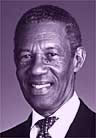
Quote:The Rev. Dr. William A. Lawson
Senior Pastor, Wheeler Avenue Baptist Church
Houston, Texas
The founding Pastor of Wheeler Avenue Baptist Church, Houston, Dr. Lawson is known and admired as an outstanding preacher and has been an international speaker in Southeast Asia, the Middle
East, Tokyo, and Japan.
He is a popular leader of numerous preaching missions, including Memphis churches. A community and social action leader, Dr. Lawson organized the United Way's Houston Homeless Initiative and established a service agency to serve needs in the inner city. He is a recipient of the Silver Beaver Award in support of Scouting.
http://www.explorefaith.org/bio.lawson_w.html
Dr. Lawson is generally billed as a civil rights leader as he marched with Martin Luther King and has been heavily involved in the efforts to gain equal rights for minorities. He has defended Ken Lay since the indictment, and he is quoted as saying the "Ken Lay was a victim of a lynching" line in several sources, but the reference to Byrd is seems to be only in Salon and in the blogs that have picked it up. Seems a bit out of character for this guy. But who knows? At any rate, I like to look at such things within their full context before drawing a judgment rather than cherry picking a single line or two that by itself is intended to make somebody look bad.
I especially think that courtesy of full context should be extended to Dr. Lawson given his exemplary track record.
Why might anyone try to make the fellow look bad? I've never heard of him previously and I doubt the writer at Salon had either. All that is in question is a bogglingly inappropriate analogy and a completely blind eye to what Lay got up to.
But if we find the quote was inaccurate, I'll get in touch with the chap and Salon and we'll get a correction noted.
blatham wrote:Why might anyone try to make the fellow look bad? I've never heard of him previously and I doubt the writer at Salon had either. All that is in question is a bogglingly inappropriate analogy and a completely blind eye to what Lay got up to.
But if we find the quote was inaccurate, I'll get in touch with the chap and Salon and we'll get a correction noted.
I left open the possibility that the quote was accurate. Maybe even inappropriate. I think intellectual honesty would have to leave open the possibility that even if it was accurate, that it might read very differently placed within the context in which it was said. Salon did not do that. Neither did you.
It looks very much that both Salon and you were eager to make the guy look bad. If you say that was not your intent, and perhaps if you explain a more edifying reason that you posted the article, I will apologize for my misperception.
blatham, I wouldn't get too excited about that poll; polls and elections are finnicky animals without much rhyme nor reason.
If it ever comes to pass that democrats take over the congress, I'm not so sure too many things will change for the better - if we go by how democrats have been voting with their republican counterparts during the past several years.
I'll wait until next year - maybe midsummer - before I come to any conclusions about how the democrats are doing as a "potential" majority.
Foxfyre wrote:blatham wrote:Why might anyone try to make the fellow look bad? I've never heard of him previously and I doubt the writer at Salon had either. All that is in question is a bogglingly inappropriate analogy and a completely blind eye to what Lay got up to.
But if we find the quote was inaccurate, I'll get in touch with the chap and Salon and we'll get a correction noted.
I left open the possibility that the quote was accurate. Maybe even inappropriate. I think intellectual honesty would have to leave open the possibility that even if it was accurate, that it might read very differently placed within the context in which it was said. Salon did not do that. Neither did you.
It looks very much that both Salon and you were eager to make the guy look bad. If you say that was not your intent, and perhaps if you explain a more edifying reason that you posted the article, I will apologize for my misperception.
No eagerness to make the fellow look bad. As I said, I've never heard of him before so have no motive or reason. I have no quarrel with Baptists (though I surely have with the SBC) and none with preachers for being preachers. My quarrel is with ideology or partisanship so thorough and extreme that big stupidness results. I take that to be the case here and it is why I posted the bit.
But if the statement is quoted accurately, what broader context could possibly justify or excuse it? Care to have a go at filling in that blank?
