Emily Heller, 39, wasn't even dressed when she heard whistles alerting the neighborhood that ICE agents were in the area this morning.
“I’ve never seen someone die in front of my house before. This was horrendous,” Heller told NBC News.
Heller said she's never been involved in activities to warn or protest the federal immigration agency, but when she walked out to her porch she said she saw six or seven ICE vehicles and a protester who had parked perpendicular to traffic.
Heller said she saw agents exit their cars and tell the driver to leave, to "get out of here."
“And then they went up to her car and started trying to open her door, and that’s when I’m sure she got spooked and tried to flee," Heller said. "So she reversed a little bit and then angled her wheels so she could drive away. And as she was trying to move forward, one of the ICE agents stepped in front of her vehicle and reached across the hood and fired his weapon about three or four times and shot her in the face."
The driver crashed into a post and hit some cars and “just slumped over in her vehicle," Heller said. She shared graphic video that shows the woman covered in blood in the driver's seat. A man with raised arms who identified himself as a physician asked ICE agents if he could check the woman's pulse but was denied, according to both Heller's account and the video.
Distraught woman says ICE killed her wife in video after deadly Minneapolis shooting
“They killed my wife,” the distraught woman says, adding, “They shot her in the head.”
Jan 07, 2026
Editor's note: Video linked in this article may be upsetting to viewers.
https://www.advocate.com/news/minnesota-ice-killed-wife
A Minnesota woman sitting in the snow with her dog told a person filming her that Immigration and Customs Enforcement agents had just shot and killed her wife — now identified as Renee Nicole Good, 37 — according to newly circulating video that has intensified scrutiny of a fatal federal shooting during a sweeping immigration enforcement operation in south Minneapolis on Wednesday.
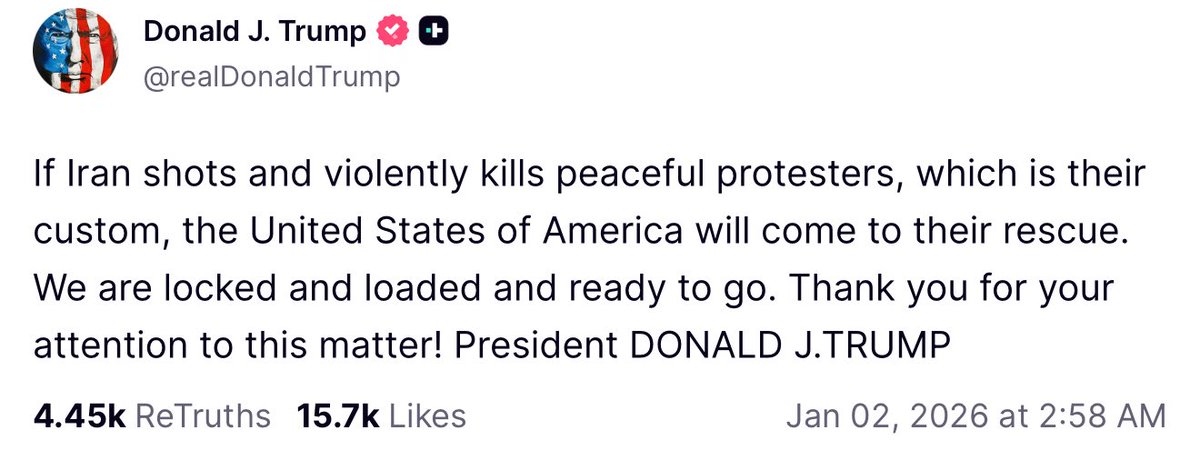
Sorry, are you implying that the US DOJ or law enforcement have used violence against anyone protesting peacefully?
This morning, a federal agent from Immigration and Customs Enforcement (ICE) shot and killed 37-year-old Renee Nicole Good as she was driving away from ICE agents on a residential street in Minneapolis, Minnesota. According to Minneapolis leaders, Good was a legal observer: a volunteer trained to observe police conduct in case of future legal action.
Three videos taken at the scene show a maroon SUV perpendicular on a snowy street. A silver SUV driving up the street stops. Two officers wearing badges that say “police” and body armor get out of the vehicle and walk toward the maroon car.
One of them says, “Get out of the f*cking car,” and the other reaches through the open driver’s side window while trying to open the door. The driver backs up the vehicle, and straightens the wheel as if making a three-point turn. Then she starts slowly to accelerate along the street.
A third officer who has been standing on the side of the road pulls out a gun as the car is turning away. He shoots three times. The maroon car does not hit anyone as it rolls up the street, hitting another vehicle and then a utility pole. The shooter walks briskly away, apparently uninjured.
Seen in slow motion, a video shows the wheels of the maroon vehicle were fully turned away from the shooting officer, who made no effort to jump away, clearly suggesting he did not feel as if he were in danger. His first shot went through the windshield; the next two went through the driver’s side window as the car moved past him. An onlooker shouted “What the f*ck?!”
Video taken by another eyewitness shows ICE agents refusing to allow a self-identified physician to tend to the victim and telling him to back up. Although there is no one tending the clearly visible woman in the car, an agent says: “We have medics on scene. We have our own medics.” When another bystander screams: “Where are they? WHERE ARE THEY?!” an agent tells her, “Relax.” “How can I relax?” she shouts. “You just killed my f*cking neighbor.”
Yesterday the Trump administration deployed federal agents and officers to Minneapolis for what they called the largest federal immigration operation ever carried out, eventually planning to deploy 2,000 agents. The administration has been attacking Minnesota’s Somali community, and Homeland Security Kristi Noem was present at an ICE arrest yesterday, telling a man in handcuffs, who Homeland Security later said was from Ecuador, “You will be held accountable for your crimes.”
Rebecca Santana and Michael Balsamo of the Associated Press reported that Minnesota governor Tim Walz called the deployment “a war that’s being waged against Minnesota.” “You’re seeing that we have a ridiculous surge of apparently 2,000 people not coordinating with us, that are for a show of cameras,” he said.
The Department of Homeland Security (DHS) insists that its actions are protecting American citizens from “the worst of the worst” criminal immigrants, so the shooting of a young white woman, the mother of a young child, and how that would look, made it appear eager to smear Good.
It immediately put out a statement that looked much like what it said after officers shot 30-year-old Chicago teaching assistant Marimar Martinez in October when it claimed she had “ambushed” agents, ramming their vehicle before an agent shot her five times. Footage showed that, in fact, the agents had rammed her car, and after the shooting one had sent a text message bragging: “I fired 5 rounds and she had 7 holes. Put that in your book boys.” The Department of Justice dropped the charges it had filed against her, asking a judge to “dismiss the indictment and exonerate” Martinez and her passenger.
Today, DHS posted on social media that “ICE officers in Minneapolis were conducting targeted operations when rioters began blocking ICE officers and one of these violent rioters weaponized her vehicle, attempting to run over our law enforcement officers in an attempt to kill them—an act of domestic terrorism. An ICE officer, fearing for his life, the lives of his fellow law enforcement and the safety of the public, fired defensive shots. He used his training and saved his own life and that of his fellow officers. The alleged perpetrator was hit and is deceased. The ICE officers who were hurt are expected to make full recoveries. This is the direct consequence of constant attacks and demonization of our officers by sanctuary politicians who fuel and encourage rampant assaults on our law enforcement who are facing 1,300% increase in assaults against them and an 8,000% increase in death threats.”
Trump jumped in with his own fact-free post lying that the shooter had been run over: “I have just viewed the clip of the event which took place in Minneapolis, Minnesota. It is a horrible thing to watch. The woman screaming was, obviously, a professional agitator, and the woman driving the car was very disorderly, obstructing and resisting, who then violently, willfully, and viciously ran over the ICE Officer, who seems to have shot at her in self defense. Based on the attached clip, it is hard to believe that he is alive, but is now recovering in the hospital. The situation is being studied, in its entirety, but the reason these incidents are happening is because the Radical Left is threatening, assaulting, and targeting our Law Enforcement Officers and ICE Agents on a daily basis. They are just trying to do the job of MAKING AMERICA SAFE. We need to stand by and protect our Law Enforcement Officers from this Radical Left Movement of Violence and Hate! PRESIDENT DONALD J. TRUMP”
That both DHS and Trump posted false accounts of the shooting even as there are four videos circulating that reveal those accounts to be lies shows they no longer are making any attempt to justify their actions. Instead, they are demanding Americans abandon reality in favor of whatever the administration says. If this works, it would be a demonstration of totalitarian power, the ability to control how people think. Accepting that lie is a loyalty test.
But it is not working.
First of all, Sarah Jeong of The Verge noted that the reason there are so many videos is because “people cared enough to show up where ICE was and record them. It wasn’t just one or two legal observers, and when Good was shot, they didn’t abandon her.”
Second, elected Democrats are pushing back. “I’ve seen the video,” Governor Walz wrote. “Don’t believe this propaganda machine. The state will ensure there is a full, fair, and expeditious investigation to ensure accountability and justice.” To reporters, he said: “We’ve been warning for weeks that the Trump administration’s dangerous, sensationalized operations are a threat to our public safety, that someone was going to get hurt. Just yesterday I said exactly that. What we’re seeing is the consequences of governance designed to generate fear, headlines, and conflict. It’s governing by reality TV and today that recklessness cost someone their life. I’ve reached out to DHS Secretary Kristi Noem and I’m waiting to hear back.”
He told Minnesotans that, like them, he was angry, but “they want a show. We can’t give it to them. We cannot. If you protest and express your First Amendment rights, please do so peacefully as you always do. We can’t give them what they want…. To Americans, I ask you this. Please stand with Minneapolis.”
Walz prepared to call out the Minnesota National Guard if necessary, demonstrating that there would be no need for Trump to invoke the Insurrection Act and send in troops. He reminded Minnesotans that the Minnesota National Guard does not wear masks and that it is theirs, not Trump’s.
Minneapolis mayor Jacob Frey told reporters that the DHS statement was “bullsh*t. This was an agent recklessly using power that resulted in somebody dying, getting killed.” “To the family, I’m so deeply sorry,” Frey said. “There’s nothing that I can say right now that’s going to make you or your relatives, friends of the victim feel any better.” To ICE and other federal agents deployed in Minnesota, he added: “Get the f*ck out of Minneapolis. We do not want you here. Your stated reason for being in this city is to create some kind of safety, and you are doing exactly the opposite. People are being hurt. Families are being ripped apart…and now somebody is dead.”
But something else was also going on today. At the same time the administration was pouring gasoline on the domestic fire ICE had sparked and the international fire it had set with its attacks on Venezuela and threats against Greenland, it was quietly making a number of major financial moves.
The smallest of those moves was that today Trump asked Fulton County, Georgia, for a $6.2 million payout in attorneys’ fees and costs after the criminal charges against him in Georgia were dismissed. Trump had been indicted for trying to overturn the 2020 presidential election in Georgia by pressuring Georgia secretary of state Brad Raffensberger to “find” 11,780 votes to give him a victory in the state of Georgia. In November 2025 a new special prosecutor dropped the charges, citing the difficulty of prosecuting a case against a sitting president. Trump boasted on social media of his victory over an “illegal, unconstitutional, and unAmerican hoax,” and continued to push the lie that Democrats stole the election.
Vicky Ge Huang of the Wall Street Journal reported that the Trump family’s cryptocurrency venture World Liberty Financial today applied for a national banking license from the U.S. Office of the Comptroller of the Currency, part of the Treasury Department. A banking license would integrate the Trump family’s cryptocurrency more fully into mainstream finance.
If the Treasury Department issues the license—a potential outcome that critics say reveals a major conflict of interest for the president—the president and chair of the new company would be Zach Witkoff, whose father is the son of Trump’s envoy to Russia Steve Witkoff, who the Wall Street Journal recently reported had been handpicked for his role by Russian president Vladimir Putin. The younger Witkoff started World Liberty Financial in 2024 with Trump’s sons Don Jr., Eric, and Barron.
Today, Energy Secretary Chris Wright told an audience at a Goldman Sachs energy industry event in Miami, Florida, that the United States will take control of all oil from Venezuela for the foreseeable future. Lisa Desjardins and Nick Schifrin of PBS NewsHour reported this afternoon that Trump administration officials have told lawmakers that they plan to put the money raised from their seizure of Venezuelan oil into bank accounts outside the U.S. Treasury. Desjardins clarified that “[s]ources said they understood these as similar [to] or decidedly ‘off-shore’ accounts.”
Yesterday, Trump announced that, as president of the United States, he would control the money from the sale of Venezuelan oil.
And then, this afternoon, Trump’s social media account first threatened the defense contractor Raytheon, saying that “[e]ither Raytheon steps up, and starts investing in more upfront Investment like Plants and Equipment, or they will no longer be doing business with Department of War.”
Then, the same account posted: “After long and difficult negotiations with Senators, Congressmen, Secretaries, and other Political Representatives, I have determined that, for the Good of our Country, especially in these very troubled and dangerous times, our Military Budget for the year 2027 should not be $1 Trillion Dollars, but rather $1.5 Trillion Dollars. This will allow us to build the ‘Dream Military’ that we have long been entitled to and, more importantly, that will keep us SAFE and SECURE, regardless of foe. If it weren’t for the tremendous numbers being produced by Tariffs from other Countries, many of which, in the past, have ‘ripped off’ the United States at levels never seen before, I would stay at the $1 Trillion Dollar number but, because of Tariffs, and the tremendous income they bring, amounts being generated, that would have been unthinkable in the past (especially just one year ago during the Sleepy Joe Biden Administration, the Worst President in the History of our Country!), we are able to easily hit the $1.5 Trillion Dollar number while, at the same time, producing an unparalleled Military Force, and having the ability to, at the same time, pay down Debt, and likewise, pay a substantial Dividend to moderate income Patriots within our Country!”
Simon Rosenberg of The Hopium Chronicles wrote: “Trump has gone completely mad.”
With a blitz of moves in his 100 days in office, President Trump has sought to greatly enlarge executive power. The typical explanation is that he’s following and expanding a legal idea devised by conservatives during the Reagan administration, the unitary executive theory.
It’s not even close. Mr. Trump has gone beyond that or any other mainstream notion. Instead, members of his administration justify Mr. Trump’s instinctual attraction to power by reaching for a longer tradition of right-wing thought that favors explicitly monarchical and even dictatorial rule.
Those arguments — imported from Europe and translated to the American context — have risen to greater prominence now than at any time since the 1930s.
Mr. Trump’s first months back in office have provided a sort of experiment in applying these radical ideas. The alarming results show why no one in American history, up until now, has attempted to put them into practice — and why they present an urgent threat to the nation.
The tradition begins with legal theorist Carl Schmitt and can be followed in the work of the political philosopher Leo Strauss, thinkers affiliated with the Claremont Institute, a California-based think tank with close ties to the Trump movement, and the contemporary writings of the legal scholar Adrian Vermeule. Many on the right have bristled at presidential power’s being constrained over the past century by two waves of administrative reform. The first dates back to the early 20th century and the rise of the bureaucratic-regulatory state during the Progressive and New Deal eras. The second wave emerged in the 1970s, as Congress responded to the abuses of power by Richard Nixon.
The presidency has evolved to become an office exercising general (and often passive) oversight of vast departments and agencies, which are staffed by career civil servants who stay on across administrations.
As a result, presidents are constrained by layers of lawyers and others determining what is allowable based on law and precedent. This evolution came about in part because the presidency can be the office most susceptible to despotic or tyrannical rule.
That’s where the more radical critique emanating from the hard right focuses its attention. Schmitt (who died in 1985) developed his most influential ideas during the turbulence and ineffectual governance of Germany’s Weimar Republic. In his view, liberalism has a fatal weakness. Its aversion to violent conflict drives it to smother intense debate with ostensibly neutral procedures that conceal the truth about the nature of politics.
That truth is revealed in emergency situations: Politics often requires making existential decisions about the good of the nation — and especially about who should be considered its friend and who its enemy. Liberalism’s supposed incapacity to make such primordial distinctions led Schmitt to the view that there exists “absolutely no liberal politics, only a liberal critique of politics.”
Sign up for the Opinion Today newsletter Get expert analysis of the news and a guide to the big ideas shaping the world every weekday morning. Get it sent to your inbox.
For Schmitt, someone must serve in the role of sovereign decider. Legislatures aren’t fit for it, because they easily devolve into squabbling factions. Neither are administrative bureaucracies, because they often defer to established rules and debate without resolution. Both contributed to making the later years of Weimar what Schmitt described, in a lecture from 1929, as an “age of neutralizations and depoliticizations.”
That leaves the executive as the best option for decisive action. It was this line of reasoning that led Schmitt to throw his support behind Adolf Hitler’s efforts in 1933 to transform himself into Germany’s sovereign decider.
Few on the American right today explicitly credit Schmitt for shaping their views of presidential power. That isn’t true of Leo Strauss (who died in 1973), the German-Jewish émigré from Weimar who has influenced several generations of conservative academics and intellectuals in the United States. In his most influential book, “Natural Right and History,” Strauss subtly tames Schmitt’s views of politics, without mentioning him by name, and presents them as the pinnacle of political wisdom.
Strauss sets out a timeless moral standard of what is “intrinsically good or right” in normal situations as the just allocation of benefits and burdens in a society. But there are also “extreme situations” — those in which “the very existence or independence of a society is at stake.” In such situations, the normally valid rules of “natural right” are revealed to be changeable, permitting officeholders to do whatever is required to defend citizens against “possibly an absolutely unscrupulous and savage enemy.”
Who gets to determine “extreme situations”? Strauss answers that it is “the most competent and most conscientious statesman” who decides. The statesman must also identify foreign enemies as well as “subversive elements” at home.
In recent decades, presidents of both parties have used emergency declarations to enhance their freedom of action. Barack Obama declared a dozen emergencies during his eight years in office. Mr. Trump declared 13 in his first presidency, while Joe Biden declared 11.
In only the first few months of his second term, Mr. Trump has declared eight. He’s invoked the authority therein to deploy the military to the southern border and to impose tariffs. He invoked the Alien Enemies Act to give himself the power — normally reserved for wartime — to round up and deport immigrants he classifies as constituting an “invasion or predatory incursion” of the nation. (The Supreme Court recently blocked the deportation of migrants under this law.)
The Claremont Institute extended this intellectual line in America. Founded in 1979 in California by four students of Harry Jaffa, who studied with Strauss in the 1940s, the institute has cultivated a distinctive account of American history. It begins with veneration for the country’s founding, which institutionalized timeless moral verities. It continues with reverence for Abraham Lincoln’s displays of statesmanship, both before and during the Civil War, which deepened and perfected the American polity by fulfilling the promise of its founding.
For the next half-century, the United States became the living embodiment of the “best regime” described in the texts of ancient political philosophers.
Then came the fall: First Woodrow Wilson and the Progressive movement, and then the New Deal during the Great Depression, introduced the notion of a “living Constitution” that evolves to permit the creation of an administrative state staffed by experts.
This form of administrative bureaucratic rule, often aided and abetted by the judicial branch, stifles statesmanship. That’s why Claremont-affiliated scholars have been at the forefront of attempts simultaneously to roll back the administrative state and to consolidate executive power in the office of the president.
Finally, Adrian Vermeule, of Harvard Law School, combines explicit Schmittian influence with a desire to revive and apply elements of medieval political theology to the contemporary understanding of the presidency.
In an essay published last July, Mr. Vermeule builds on the reasoning deployed by the Supreme Court in several recent decisions to lay out a maximalist theory that “goes to the outer logical limits of presidential power.” This theory asserts that executive power is never “given to subordinate officers or administrative agencies in their own right.” Rather, there is only the executive power of the president, “which alone incarnates and gives legal life to the legal authority of all his subordinates.” What this implies is that no executive-branch employee is independent of the president or can resist, let alone defy, his will.
What ties together these thinkers? A conviction that executive governance combines maximal leeway to act with maximal power to execute decisions without second-guessing from civil servants or lawyers or deference to judges.
No one has contributed more to this view in the administration and connected the president to these intellectual precursors than Russell Vought, the director of the Office of Management and Budget. Many of Mr. Trump’s boldest assertions of executive power can be traced back to proposals from Mr. Vought in Claremont-affiliated arenas.
Here you can see why, for instance, Mr. Trump fired inspectors general at more than a dozen federal agencies, despite law requiring the president to give Congress 30 days notice of, and provide cause for, his intent to dismiss them. You can also see why Mr. Trump rejects the very idea of a person or office in the executive branch being independent of his will. He thinks he has unlimited enforcement discretion, allowing him to choose not to enforce duly enacted legislation, as he has done with the law banning TikTok.
The great danger of such a breathtakingly expansive view of executive power is that it threatens to transform the American presidency into a dictatorial office that disregards the separation of powers and seeks unchallenged primacy in its place.
It also asserts for its expansive authority a near-permanent state of emergency.
In a liberal democracy, this can’t be the end of the story. It might be necessary in a genuine crisis for a president to act beyond the bounds of ordinary moral and legal standards to secure the common good, but it is extraordinarily risky to begin treating a state of emergency as a new normal.
Such imperial governance has already led to mass deportations of supposed Venezuelan gang members to a notorious prison in El Salvador without due process. It has also led Mr. Trump to force a showdown over the impoundment of congressionally appropriated funds, to disband whole agencies that were authorized by Congress, and to disregard rulings, on more than one occasion already, from federal judges.
That may leave liberals in the somewhat surprising position of having to remind conservatives about the crucial importance of personal character and good faith in politics. The stronger the executive, the more important it is to reserve the office for the most upstanding among us. Mr. Trump’s willingness to bend or break rules that typically constrain presidents might make him an effective wrecking ball for a right-wing agenda. But enhancing the vigor and authority of the presidency also undeniably increases the risk of dictatorial government.
The best way to mitigate that risk is to insist that presidents accept the constraints of ruling within a constitutional order defined by the separation of powers. And the only way to ensure they will accept such limits may be to demand that those who seek the nation’s highest office display an understanding of those limits and accept them as a necessary bulwark against tyranny.
There is room to increase the ability of presidents to act, but only if they show themselves worthy of being entrusted with those dangerous powers.
Senate advances resolution to block Trump from using military in Venezuela
Five Senate Republicans voted Thursday to advance a bipartisan resolution on the War Powers Act to block President Trump from using military force against Venezuela, a proposal that if enacted would unravel the administration’s plan to take control of Venezuela’s oil exports.
Sen. Rand Paul (R-Ky.), the sponsor of the bipartisan measure, voted with Sens. Lisa Murkowski (R-Alaska), Susan Collins (R-Maine), Josh Hawley (R-Mo.) and Todd Young (R-Ind.) to discharge the resolution out of committee and bring it to the floor.
A vote to pass the resolution itself is expected next week. The Senate is likely to vote to proceed to resolution on Monday and spend the rest of week debating it.
The resolution still needs to pass the House — where a similar measure failed in a close vote last month — and it faces a certain veto from Trump.
There likely aren’t enough votes in either chamber to override Trump, something that requires a two-thirds majority.
I fear for the US in the future - even if you pull yourselves out of this mire you will have this legacy diminishing you for decades. Ask Germany - and they had the Marshall Plan and support from the Western world. The US may get a lot more resentment and revenge after bridges burnt.
What’s happening to America?
Just as I predicted, America’s having a spectacular collapse. A fascist collapse. When I made this prediction, of course, many things happened. The American establishment, which I was a part of, was horrified, startled, and went ballistic on me. But here we are. And I think by now there’s broad agreement on this matter, even if many will refuse to admit that my prediction was eerily accurate.
But that’s not the point.
Americans still don’t understand what fascist collapse means. Especially next. It means that American fascism is now coming for the world. For political order, but also moral order, and as a result, economics, finance, and civilization itself.
America wishes to erase the idea of sovereignty itself. From the face of civilization itself. And that is what the essence of fascism truly is.
And in that obscene deathwish lie the shriveled seeds of a desperate, bitter future. Americans, in particular, will pay the price for all this, in hard, financial terms. I will come to that.
What is a fascist collapse? It happens in several phases. The first is the domestic evisceration of institutions. They’re demolished and destroyed. The second is the reconstruction of shadow institutions. These are Gestapos and SS’s and so forth. This, I think many will agree, is where America is, and if you’re the kind to nitpick over whether or not “it’s really a Gestapo,” please go ahead and get the **** out of here. This is not, like I said, a place for fools.
But it is the next several phases of fascist collapse which are more dangerous still. And right now, America is crossing the Rubicon into them.
What phase are things at now? America’s crossing the line into the violent expansionist phase of fascist collapse.
At the moment, Americans are told to toss around phrases like the “Donroe Doctrine,” harking back to Monroe Doctrine, which means that the US will regard the rest of the Americas as its plaything. This is true, but only on a weak level. It’s not enough, as the left tends to do, to fall for words for “hegemon,” and imagine they explain much at all. You. must think far more carefully and clearly than this.
If I say to you, “Donroe Doctrine,” what don’t you understand? The long, bleak history of fascism. America is not at all merely “doing what it did in the 19th century.” It is far more accurate to say that it is recapitulating the history of the 1930s. It’s targets aren’t just impoverished Latin American countries, but Greenland, Europe, and beyond, too.
Here’s a country with half a century of economic stagnation, at the median. In which people can’t make ends meet. Whose real economy is in tatters. Where the basics have become “unaffordable,” and they’re left for dead. Weimar Germany or Trumpist America? And where do such collapses end.
All this, the incipient stages of American collapse, were before this new line was crossed. What happened next, in the 1930s? The Nazis, famously, sought “lebensraum.” That meant “living room,” in the sense of domination, and of control, and of power. Room to live, but only for the pure and the true. Inherently, everything was to belong to them, precisely because they were superior by way of destiny. Poland was invaded, and the rest is history. The history of World War.
This is a far, far closer analog to what is happening to America, and what America is doing to the world today, than an anodyne “Donroe Doctrine.” To elide the history of fascism is to misunderstand both cause and effect in this case. America is not a young nation seeking some kind of place in the world. It is an elderly, shattered democracy, unable to govern itself, and is seeking control over the resources of a dying planet.
So. Now America is entering the violent expansionist phase of fascist collapse. And if you understand that, only then will you understand what is likely to happen next far, far more clearly than if you employ the wrong frame. Because the Donroe Doctrine suggests that America will stop at the borders of the Americas. Yet Trump is already threatening both Europe and Asia. See my point? About thinking clearly and well? Violent fascist expansionism is a very different beast.
Think about it this way. Nobody in America has the right live without violence. Now that is to be true for the world, too. A radically nihilist redefinition of its moral-existential order. The world is be Darwinian and soulless now, like America, made in its image. I’ll come back to that.
When societies enter the violent expansionist phase of fascist collapse, they do not easily stop. Nor are they bound by older understandings of geopolitics. They aren’t bound by them precisely because there is moral logic at work here, that of fascism. We are the superior ones. And it all belongs to us. We will take it by force, if we must, because it already belongs to us. It has been stolen from us. We need it—back.
And isn’t the evisceration of sovereignty precisely what Trump is doing to Greenland, Europe, and even Canada? There isn’t just some kind of logic of 19th century empire here. There is the colder, more inhuman logic of fascism. Everything belongs to us, because that is the just cosmic order between subhuman and superhuman.
So: Greenland belongs to America, and it always has. Europe stole it. Europe, meanwhile, is weak and decadent, subhuman, uncivilized (go ahead and have a hearty LOL if you’ve ever been to a Parisian cafe or the Louvre or the Sagrada Familia.)
The violent expansionist phase of America’s fascist collapse emphatically isn’t just a 19th century quest for empire. It is something far more sinister and dangerous still. It is the idea that everything in the world belongs to the superhumans—land, resources, people, and of course, in the end, the right to live itself. And that is what sovereignty truly means.
That is what “lebensraum” really meant. It was a summery euphemism: living room. How nice. One pictures walking along alpine meadows, daisies blowing in the breeze. But it’s true meaning is: the right to live belongs to us, and not to you.
This is what Trump is now saying to the world. To Europe, to China, to Asia, and of course, to the Americas, too. We are going to take all that you have, because it already belongs to us, only you have stolen it. We are the true inheritors of everything—civilization, resources, minerals, oil, dust, sand, life itself.
I am explaining this to you in a sophisticated way, the way of moral logic, so that you understand what is really going on. We are not just talking about geopolitics the way that American commentators do, in the form of power, because this cuts deeper than that. It is about an existential order, and that order is what fascism is always violently resurrecting. The order of the weak over the strong.
America, being a predatory society, is now aiming that predatory way outwards, not just inwards. For decades, its own people have suffered at the hands of this predatory way and set of norms and institutions. They have no safety nets, the weak perish, and the strong, meaning those ruthless and cunning enough to dominate them, extract untold billions.
Now this very predatory logic is being trained upon the world. And the world is not used to this. It is used to an America that preys upon its own people. And one that launches occasional incursions aimed at “regime change,” makes foolish wars every decade, or even fights a Cold War. But this is not a Cold War. It is now a real one, or beginning to be. And it is aimed not just at changing the “world order,” but the moral order of the world.
The world order is how power is distributed among nation-states. And that mirrors history’s ugly museum of inquiries, from slavery to conquest. Poor countries are those who were not so long ago conquered ones, and rich ones, still, those who conquered them.
But the moral and existential order of the world is deeper still than all this. It is the kind of world that we believe in, or aspire to, hope for, dream about, wish for. It is the kind of order we believe is just, righteous, and fair. And in that regard, moral orders of the world change. In the Dark Ages, one scarcely existed, beyond people being serfs, ruled over by lords and kings.
The moral order of the world that you and I grew up went like this: the world was to become more democratic, and in that way, more peaceful, just and cooperative, and in turn, govern itself as a hyper democracy, shared among nation-states.
America is now attempting to reconstruct the moral order of the world. And that goes far beyond a simplistic “Donroe Doctrine.” It is saying that the way the world should be organized and structured is not any of the following things: democratic, peaceful, consensual, or fair. Instead, the world already belongs to America, because America has been cheated by the world of what already belonged to it, which is the right to define who gets to exist, and how, and in what form. And now it will take existence itself back.
This is what a Reich really is. An eternal reconfiguration of moral-existential order, the right to live. It is very different from a mere empire in this way, too.
This new American moral order of the world is obscene. It is authoritarian and fascist. It is violent and nonconsensual. Grotesquely hostile. Overtly Neo-imperial. And above all, it is configured to achieve a cosmic kind of justice, in which the strong survive, and the weak perish, and civilization itself is annihilated until it is only that.
Just like nobody in America has any inherent right to anything, dignity, existence, life, water, food, air, and especially nonviolence, so, too, this is now the moral order America wished to impose on the world.
You must understand this now.
American fascism coming for the world means that America now wishes to impose a fascist moral order upon it, and destroy what is left of global democracy, peace, justice, and consent. It is much, much more than simply than saying “America wants control of the Americas,” because of course, then why Greenland, why Europe, and so on? Why the deathwish towards any form of consensual order for the world? Precisely because it is not to have the right to exist.
In this way, American fascism is now erasing the world’s sovereignty. From the Americas, to Greenland, to Canada, to Europe, to Asia. The world is only to have what diminished non-sovereignty America now allows it, and that is to be tributary, vassal, or annex.
We have been talking about “nothings.” Do you remember? In America, nobody is sovereign. No one has the inherent right to exist. And now, as American fascism comes for the world, that idea is to apply to it, too: no nation-state or political entity has the inherent right to exist now. America wants to annihilate the world’s sovereignty.
The fascism in this political and moral order is the idea that justice cannot be had until and unless the destined and superior ones take back what has always been theirs, which is the Mother Right of existence, and it is their not just right, but duty, to take it back, even by force. Only then is justice restored to the world and to existence itself. This is the point of the annihilation of sovereignty, for nations, as it was for people, and the annihilation of sovereignty is the essence of fascism.
Understand what I am teaching you carefully. Because only then will you understand the following conclusions.
Let me summarize them now for you.
American fascism is coming for the world, which means that America now wishes to annihilate the very idea of sovereignty itself, the right to exist, for the world, its nations and peoples.
And in that way, America is now entering the violent expansionist phase of fascist collapse. A search for “lebensraum,” meaning the right to exist, and it is now intent on negating everyone else’s right to exist, even Europe’s. This is a phase of fascist collapse, propelled by the resurrection of the just moral order of the world, the one that always should have existed—which is what a Reich really is, and makes it more than a mere empire, makes it something eternal. And because of that inner logic, this phase will not end here.
You may be wondering what phases are to follow. That’s a fair question. It’s also a chilling one. What followed in the 1930s, after the violent expansionist phase of fascist implosion? We’ll discuss that more, but you already guess the answer.
What all this means for capital is this. It now faces severe levels of risk. The highest in a century, and some of the highest in history, period, full stop. Capital is at risk when world orders change. But when fascist collapses gain momentum, and attempt to dramatically not just world orders, but moral orders of the world, then capital itself must ask: what is its place to be? Like everything else, it has no right to exist, unless the Reich allows it.
(...)
The world will not be the same now, after American fascism comes for it. And neither, by the way, will your wealth.


A Minneapolis pastor who joined protests Wednesday after an ICE officer fatally shot a woman in her car said that federal agents handcuffed him and threw him in the back of an SUV—before letting him free because he was white and “it wouldn’t be any fun.”
Pastor Kenny Callaghan, who initially shared his story on Facebook, told MS NOW Thursday that as he went to church the previous morning, he noticed protests were happening about a block away, so he grabbed his whistles to join them. As he was protesting, he said that they heard news of the fatal shooting nearby.
“Before I knew it, I saw ICE agents circling a young woman who appeared to be Hispanic, and so I approached her, and we were at that point chanting, ‘We are not afraid, we are not afraid.’”
Callaghan then said he told ICE officers to take him instead of harassing her. An agent then “came, got in my face, pointed a gun at me, and said, ‘Are you afraid now?’” Callaghan recalled.
After he said he still wasn’t afraid, the officer handcuffed him before putting him into the back of an SUV. “They came back three times and they asked me if I was afraid yet, to which I replied, ‘Hell no, I’m not afraid of you, and I’m never going to be afraid of you.’”
Callaghan said that he asked if he was under arrest after officers asked for him to hand over his identification and his cellphone.
“And then they said to me, ‘Well, you’re white, you won’t be any fun anyway. You can get out of the car.’”


