3
   

Wildclickers #73: Brown - The progression of life


sumac
 
  1  
Reply Wed 26 Jul, 2006 11:51 am
They all are unusual, Danon, in that I didn't recognize a "hit" among them. I once wrote down all the information. May have to do it again. Someone must collect those things, even in this age of digital remastering, or whatever the phrase is. I will look for railroad imagery when I do it. Do you know of a site that specializes in them? Some place to sell or donate them to? They are heavy and I'm tired of carting them around from place to place. They need a home where someone can listen to them.
0 Replies
 
Stradee
 
  1  
Reply Wed 26 Jul, 2006 03:06 pm
Your welcome, sue.

Canaray Row was one of my favorite Steinbeck novels, and the movie was good as well, imo.

http://www.terrace.qld.edu.au/academic/lote/french/graphics/cousteau.gif
http://www.terrace.qld.edu.au/academic/lote/french/yr5cous.htm


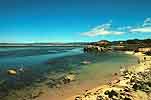
Jacques Cousteau was my hero, the inventer of SCUBA, and a frequent visitor to Monterey, diving the waters and studying the wildlife. His work with sea otters and other marine mammals that live in the waters near the Monterey coast, was instrumental in paving the way for the Monterey Bay Aquarium built over what was once an old cannery. The area is quite beautiful still drawing SCUBA divers from CA as well as many people from out of state.

Cannery Row

http://www.wfu.edu/~smithss/monterey/fishermanswharf.jpg
0 Replies
 
ehBeth
 
  1  
Reply Wed 26 Jul, 2006 06:36 pm
aktbird57 - You and your 299 friends have supported 2,488,541.4 square feet!

Marine Wetlands habitat supported: 122,794.0 square feet.
You have supported: (0.0)
Your 299 friends have supported: (122,794.0)

American Prairie habitat supported: 54,332.1 square feet.
You have supported: (13,437.6)
Your 299 friends have supported: (40,894.5)

Rainforest habitat supported: 2,311,415.4 square feet.
You have supported: (172,242.7)
Your 299 friends have supported: (2,139,172.7)

~~~~~~~~~~~~

1 Aktbird57 .. 1531 57.125 acres
0 Replies
 
danon5
 
  1  
Reply Wed 26 Jul, 2006 08:47 pm
OMG, Stradee!! I had lunch at the restaurant at the far end of the photo. Also, Monterey was - actually, Fort Ord, right next door, was the first place I visited in California way back in 1966....... Those were extremely weird days for a young s--t for brains from TX. But, I survived and went on to lesser things. grin
0 Replies
 
Stradee
 
  1  
Reply Thu 27 Jul, 2006 07:15 am
Hmmm, i believe there's a story 'bout Fort Ord, Dan. Very Happy

Records, we have records...

45's 78's and albums from the day - George Benson, Tom Scott, Jackie Wilsons gospel, Nancy Wilsons contemporary jazz and pop...Billy Holliday, Barbara Streisand. Then there's Zepplein, Bob Segar, <great> and Metallica will get the vaccuming done in record <sic> time...

Checking out album covers and without doubt, the coolest one i've found so far is Streaisands "Stoney End" theme for the record. oh wow - just found an album by the Carpenters with a colored portrait of the sibs. Whatta trip!
0 Replies
 
sumac
 
  1  
Reply Thu 27 Jul, 2006 12:50 pm
Cousteau was one of my heroes too. My first major in college, and one which I should have stayed with, was oceanography, heavily influenced by Cousteau.
0 Replies
 
Stradee
 
  1  
Reply Thu 27 Jul, 2006 02:22 pm
Sue, you could still take more classes and get that degree! Very Happy

Dan, the restaurant on the Marina side or nearest in the photo?

On the other side of the Marina is where most divers begin the first step of certification at a beach next door to the Row. Reason being, the water remains shallow for about a mile and new divers get a feel for the water, without much chance of the instructor losing any students. Diving classes are generally given in a swimming pool first - then ya graduate to the ocean. First is the written test, ya gotta pass that or no license, then all the water safety tests, and if ya don't drown or lose your diving buddy, then you'll receive your very own NAWI card, and a divers jacket patch.

The very first ocean dives are hilarious though - and anyone who has the opportunity for SCUBA diving will not be disappointed. Underwater excursions, and viewing wildlife in their natural habitat, an awsome experience.
0 Replies
 
danon5
 
  1  
Reply Thu 27 Jul, 2006 03:07 pm
Hey, Stradee, Yeah, Fort Ord was a hoot. I went through advanced infantry training there - we marched "uphill" to the training area and then at the end of the training day we marched "uphill" back to the barracks. I never did figure that one out. GRIN Ah, those were great times - young, in great health and in good shape. That's what our aged dreams are about I reckon. I don't remember the name of the restaurant - but know it was at the end of the pier and right on the water at the main harbor. It's where I had my first taste of shark. Monterey is a beautiful place. I would like to visit there again.

clicked
0 Replies
 
ehBeth
 
  1  
Reply Thu 27 Jul, 2006 04:40 pm
aktbird57 - You and your 299 friends have supported 2,490,110.1 square feet!

Marine Wetlands habitat supported: 122,934.5 square feet.
You have supported: (0.0)
Your 299 friends have supported: (122,934.5)

American Prairie habitat supported: 54,355.5 square feet.
You have supported: (13,437.6)
Your 299 friends have supported: (40,917.9)

Rainforest habitat supported: 2,312,820.2 square feet.
You have supported: (172,266.1)
Your 299 friends have supported: (2,140,554.1)

~~~~~~~~~~~~~~

exhaling

~~~~~~~~~~~~~~

finally going on a vacation
tomorrow
for a bit over a week
going to spend some time with the hamburgers

~~~~~~~~~~~~~~

1 Aktbird57 .. 1532 57.160 acres
0 Replies
 
Stradee
 
  1  
Reply Thu 27 Jul, 2006 06:09 pm
fgs "Canaray" - spelling atrocious per usual... Confused

Dan, Montery is really a beautiful place to visit, so true.


For those who have never visited the coastal town, check it out..........

http://www.qedata.se/bilder/gallerier/kalifornien/tumnagl/monterey-bukten.jpg

http://www.qedata.se/bilder/gallerier/kalifornien/tumnagl/monterey-akvarium2.jpg

http://www.carmelriverinn.com/Pictures/tour_lighthouse4sec.jpg

http://www.carmelriverinn.com/Pictures/monterey_coast_aerial6sec.jpg
0 Replies
 
sumac
 
  1  
Reply Fri 28 Jul, 2006 02:47 am
Have a good time, ehBeth. Maybe some day trips?

Stradee,
Nope, at my advanced age, even if I were to get another degree or two, no one would hire me unless I brought with me a ton of money to finance some interesting work.
0 Replies
 
sumac
 
  1  
Reply Fri 28 Jul, 2006 03:59 am
Hey, Danon, this might be a little cooler for you than Texas.

http://images.livescience.com/images/060726_blueangels_04.jpg

World's Biggest Aviation Event

Flying fanatics are flocking to Oshkosh, Wisconsin, and the 54th annual fly-in of the Experimental Aircraft Association this week, through Sunday.


What has become the world's biggest aviation event will draw some three-quarters of a million people to Whitman Field, officials say. They'll see 10,000 aircraft from all over the United States, ranging from early biplanes to the latest military jets.


When Paul Poberezny conceived the idea for the EAA in 1952, there were about 90,000 private airplanes in the country and 376,000 pilots, according to the U.S. Census Bureau. Now, there are more than 211,000 general aviation aircraft, but only 241,000 Americans hold a private pilot's license, according to the bureau.
0 Replies
 
sumac
 
  1  
Reply Fri 28 Jul, 2006 04:00 am
http://www.nytimes.com/2006/07/27/us/27butterflies.html?th&emc=th


July 27, 2006
In Texas, Conditions Lead to a Rabble of Butterflies

By RALPH BLUMENTHAL

Correction Appended

GOLIAD, Tex., July 25 ?- For a moment, Carol Cullar thought she was seeing fall leaves gusting down the highway south of Quemado, Tex., on the Mexican border.

But it is blistering midsummer, Ms. Cullar, director of the Rio Bravo Nature Center in Eagle Pass, realized. And leaves would not all be flying north at two or three feet off the ground ?- car radiator height.

These were butterflies. At least 200,000 of them, she guessed, perhaps a half-million. It was an invasion, she said, "like nothing I've ever seen."

South Texas is under siege from swarms of airborne migrants: tens of millions of Libytheana bachmanii larvata ?- snout butterflies to y'all ?- along with Kricogonia lysides, or yellow sulfurs, that have taken advantage of an unusual drought-and-deluge cycle to breed in spectacular if not record profusion.

The smallish, dull-colored snouts take their name from an appendage they attach to branches to disguise themselves as leaves.

Blinded drivers who have to pick the literally low-down critters off their grilles to avoid dangerous engine overheating are less than enthralled, as are the mottephobes, who fear butterflies and moths. But lepidopterists are thrilled with the spectacle, which they predict may be only the beginning of a population explosion of snouts.

They concede, however, that it could denude considerable swaths of Texas hackberry trees and other choice caterpillar habitats, at least for a while.

"Snouts, I'm at a loss for words," wrote Joshua S. Rose, a biologist and dragonfly specialist with the World Birding Center at Bentsen-Rio Grande Valley State Park near Mission, Tex., in an e-mail message to friends Tuesday.

"They're beyond any mere collection of individual animals," Dr. Rose wrote. "Like a flock, herd, swarm or even horde, they have more in common with a geologic or climatic force, the Gulf Stream or an Arctic front. While driving, we can't dodge butterflies, we can only aim the car at the parts of the road where the density is lowest."

Lawrence E. Gilbert, professor of integrative biology and director of the Brackenridge Field Laboratory at the University of Texas, said such mass emergences were hardly known outside the Southwest, although they also occurred with another butterfly species in Africa. Dr. Gilbert filled a bucket last week with hundreds of dead snouts and sulfurs collected from a roadside near Alice, many of which never made it to the end of their two-week life span.

The phenomenon sent Mike Quinn, an entomologist with the State Parks and Wildlife Department, beelining here on Tuesday from his Austin office to track the butterfly migration.

Cellphone pressed to his ear, Mr. Quinn, 43, polled area rangers for promising sightings. He had high hopes along the reservoir at Choke Canyon State Park. "We were told this was snout central," he said. But they had since fluttered by.

"Tons? Right as we speak, or the last few days?" Mr. Quinn asked another tipster. "Let me get a specific from you. Exactly where is everywhere?"

One parks employee, Linda Lopez, tried to be helpful. "The snout ones are the little brown ones with variegated color?" she asked.

"You got it," Mr. Quinn said. "We're looking for the river of butterflies, not just the stream."

Driving a circle of perhaps 200 miles from Goliad around Choke Canyon and back, Mr. Quinn never did find a real swarm, although he was tantalized by evidence of their ubiquitous presence on the radiators of tractor-trailers, emblazoned with crazyquilt pastiches of dead-butterfly art.

But he stamped through the brush along the water, flushing clouds of snouts, sulphurs and little blues of the kind favored by Vladimir Nabokov, which all fluttered excitedly around him. He also saw considerable evidence of the stripped Celtis trees that had nurtured the caterpillars, and specks of black caterpillar droppings called frass that fertilize the vegetation and help it recover from the feeding frenzy.

"Frass happens," Mr. Quinn said.

Mr. Quinn and Dr. Gilbert said the butterfly proliferation had been set off by drought conditions that decimated the caterpillar's natural predators, followed by drenching rains that prompted hackberry trees to put out green shoots, quickly attracting the egg-laying caterpillars that could briefly thrive without enemies.

"It was a double pop," Dr. Gilbert said, two cycles in succession that reinforced the effect over the 12-day passage of egg to adult.

With insects generally suffering a 99 percent mortality rate, said Mr. Quinn?- that is, only 1 egg of 100 laid making it to maturity ?- a sudden improvement in the odds can radically disrupt the usually exquisite balance of nature.

Where, how and why the swarms migrate is less clear. Butterflies are not social creatures flying in flocks like birds but are drawn to flowers as sources of nectar and pollen.

Dr. Gilbert said that in studying migrating snouts he was struck to find that up to 95 percent were males. "The older males get most of the matings as the hatch continues," he theorized. "Then the new guys don't have a shot because of the old guys, and they just say, The hell with this, and they go."

Correction: July 28, 2006

An article yesterday about an abundance of butterflies in South Texas misstated a step in butterfly reproduction. It is the butterfly itself, not the caterpillar, that lays eggs.
0 Replies
 
sumac
 
  1  
Reply Fri 28 Jul, 2006 04:01 am
http://www.nytimes.com/2006/07/27/opinion/27doran.html?ex=1154750400&en=4a4544fb12f29297&ei=5070


July 27, 2006
Op-Ed Contributor

Cold, Hard Facts

By PETER DORAN
Chicago

IN the debate on global warming, the data on the climate of Antarctica has been distorted, at different times, by both sides. As a polar researcher caught in the middle, I'd like to set the record straight.

In January 2002, a research paper about Antarctic temperatures, of which I was the lead author, appeared in the journal Nature. At the time, the Antarctic Peninsula was warming, and many people assumed that meant the climate on the entire continent was heating up, as the Arctic was. But the Antarctic Peninsula represents only about 15 percent of the continent's land mass, so it could not tell the whole story of Antarctic climate. Our paper made the continental picture more clear.

My research colleagues and I found that from 1986 to 2000, one small, ice-free area of the Antarctic mainland had actually cooled. Our report also analyzed temperatures for the mainland in such a way as to remove the influence of the peninsula warming and found that, from 1966 to 2000, more of the continent had cooled than had warmed. Our summary statement pointed out how the cooling trend posed challenges to models of Antarctic climate and ecosystem change.

Newspaper and television reports focused on this part of the paper. And many news and opinion writers linked our study with another bit of polar research published that month, in Science, showing that part of Antarctica's ice sheet had been thickening ?- and erroneously concluded that the earth was not warming at all. "Scientific findings run counter to theory of global warming," said a headline on an editorial in The San Diego Union-Tribune. One conservative commentator wrote, "It's ironic that two studies suggesting that a new Ice Age may be under way may end the global warming debate."

In a rebuttal in The Providence Journal, in Rhode Island, the lead author of the Science paper and I explained that our studies offered no evidence that the earth was cooling. But the misinterpretation had already become legend, and in the four and half years since, it has only grown.

Our results have been misused as "evidence" against global warming by Michael Crichton in his novel "State of Fear" and by Ann Coulter in her latest book, "Godless: The Church of Liberalism." Search my name on the Web, and you will find pages of links to everything from climate discussion groups to Senate policy committee documents ?- all citing my 2002 study as reason to doubt that the earth is warming. One recent Web column even put words in my mouth. I have never said that "the unexpected colder climate in Antarctica may possibly be signaling a lessening of the current global warming cycle." I have never thought such a thing either.

Our study did find that 58 percent of Antarctica cooled from 1966 to 2000. But during that period, the rest of the continent was warming. And climate models created since our paper was published have suggested a link between the lack of significant warming in Antarctica and the ozone hole over that continent. These models, conspicuously missing from the warming-skeptic literature, suggest that as the ozone hole heals ?- thanks to worldwide bans on ozone-destroying chemicals ?- all of Antarctica is likely to warm with the rest of the planet. An inconvenient truth?

Also missing from the skeptics' arguments is the debate over our conclusions. Another group of researchers who took a different approach found no clear cooling trend in Antarctica. We still stand by our results for the period we analyzed, but unbiased reporting would acknowledge differences of scientific opinion.

The disappointing thing is that we are even debating the direction of climate change on this globally important continent. And it may not end until we have more weather stations on Antarctica and longer-term data that demonstrate a clear trend.

In the meantime, I would like to remove my name from the list of scientists who dispute global warming. I know my coauthors would as well.

Peter Doran is an associate professor of earth and environmental sciences at the University of Illinois at Chicago.
0 Replies
 
sumac
 
  1  
Reply Fri 28 Jul, 2006 04:16 am
http://www.livescience.com/animalworld/060726_praying_mantid.html


http://images.livescience.com/images/060726_praying_mantid_01.jpg

Praying Mantids Wise to Sexual Cannibalism Risk

By LiveScience Staff

posted: 26 July 2006
02:57 pm ET


If you were a male praying mantid, the top item on your prayer list would be to survive sex.

Female praying mantids are notorious for eating males after they mate.

Now for the first time, scientists have experimentally shown that the males are hip to the risk and not too keen on being food.

The researchers toyed with the physical position of females and how hungry they were, then noted how males responded. "We know that hungry females are more likely to cannibalize and a head-on orientation makes it easier for her to attack the male with her predatory front legs," explained William Brown of SUNY-Fredonia.

The guys responded to greater risk by slowing their approach, increasing courtship behavior, and mounting from a greater?-and possibly safer?-distance, the scientists say.

"This shows that male mantids actively assess variation in risk and change their behavior to reduce the chance of being cannibalized," Brown said. "Males are clearly not complicit, and the act of sexual cannibalism in praying mantids is an example of extreme conflict between the sexes."

Brown and colleague Jonathan Lelito report their results in the August issue of the American Naturalist.

(You may have heard these insects called "praying mantis," but mantis refers to the genus Mantis. "Only some praying mantids belong to the genus Mantis," according to Gary Watkins and Ric Bessin in the University of Kentucky Department of Entomology. "Mantid refers to the entire group.")
0 Replies
 
sumac
 
  1  
Reply Fri 28 Jul, 2006 04:21 am
Fed Agencies Accused of Hiring Biased Experts for Studies
Alison Espach
Correspondent

(CNSNews.com) - A liberal-funded consumer advocacy group is alleging that government agencies created to provide independent, science-based advice to Congress and the president are instead offering slanted information to appease the industries being investigated.

The Center for Science in the Public Interest (CSPI) has targeted the National Academy of Sciences (NAS), the Food and Drug Administration (FDA) and the Environmental Protection Agency (EPA) in a new report, accusing those agencies of appointing "biased scientists" who were funded by companies with a vested interest in the outcome of the research. These conflicts of interests, the CSPI alleges, are being hidden from the public.

However, the deputy commissioner of the FDA, who also participated in a panel discussion this week at the National Press Club, said it was essential to have scientists with industry expertise, and an environmental law expert called the CSPI criticism of the government agency scientists a "witch hunt."

The CSPI investigated the backgrounds of 320 scientists from the National Academy of Sciences who were spread out over 21 committees. One hundred thirty-six of the scientists had some ties to industry or some conflict of interest and 56 had direct financial ties to companies involved in the NAS studies, according to the CSPI.

The National Academy of Sciences was also accused of promoting a culture of bias in its appointment of 66 "pro-industry" scientists and its appointment of only nine scientists who had worked for or been connected with environmental or public interest groups.

David Michaels, a George Washington University professor, voiced concern about the growing power of industry over science, claiming that the process of approving medication, food, or national policies based on the research of these "biased" scientists is dangerous.

"The work of these experts has the same relationship to science as Arthur Andersen's work for Enron had to the government," said Michaels. "These are smart people with impressive skills that help misbehaving companies usurp the law.

"They are paid to advance a certain outcome," he added.

CSPI cited examples like the 1980 report released by the NAS Food and Nutrition Board, which told Americans that they did not need to reduce their intake of cholesterol and saturated fat, even though concern was elevating about a link between blood cholesterol levels and heart disease. It was found later that three of the members who had supported the policy statement were food company officials and two others had served as consultants to egg producers, according to CSPI.

Another example cited in the CSPI report was the "State Practices in Setting Mobile Source Emissions Standards" panel. According to the CSPI, four of the 11 members had direct financial ties to oil or vehicle industries. Ten of the 11 scientists who reviewed the "Department of Energy's Carbon Sequestration Program" had ties to carbon-emitting industries, the CSPI reported.

A Union of Concerned Scientists (UCS) report from this month stated that of the 997 FDA scientists who responded to its survey, nearly one-fifth (18.4 percent) said they had been asked for non-scientific reasons "to inappropriately exclude or alter technical information or my conclusions in a FDA scientific document."

Forty percent of respondents said they feared retaliation for voicing safety concerns in public, while 47 percent said they thought the "FDA routinely provides complete and accurate information to the public."

Debate on the subject was sparked when FDA scientists complained that their findings on the painkilling drug Vioxx, manufactured by Merck Co., were dismissed. Vioxx was later taken off the market after being linked to increasing cardiovascular problems.

Michaels suggested that any scientists who have worked for or received money from an industry within the past five years should be barred from voting on panels related to that industry because they cannot be "impartial." He also demanded that all conflicts of interest be disclosed to the public.

The CSPI's website lists as its first funding source for Fiscal Year 2004 the Louis and Anne Abrons Foundation. The Foundation dispenses grants to leftist environmental and public policy groups and gave the CSPI $225,000 between 1990 and 2002, according to the website ActivistCash.com.

Scott Gottlieb, M.D., deputy commissioner of the FDA, said it is essential that scientists with ties to certain industries serve on panels because their experience and familiarity with the product under question makes them "experts."

He argued that it would be impossible to keep these scientists off panels because they are chosen one to four years in advance and they "do not know what issues will arise." Gottlieb also said this kind of "a priori" exclusion of "expertise scientists" would dramatically decrease the amount of qualified scientists available.

Legislation sponsored by U.S. Rep. Maurice Hinchey (D-N.Y.), which would prohibit the FDA from appointing scientists with conflicts of interest to advisory panels passed the House in May.

Frederick Anderson, attorney and former head of the Washington, D.C.-based Environmental Law Institute, said CSPI is "just wrong" in their accusations and that this type of law would cause severe damage to the scientific community.

"It resembles a witch hunt," Anderson said. "To me this report is perhaps the journalistic equivalent claiming to achieve cold fusion."

http://www.crosswalk.com/news/1409294.html?view=print
0 Replies
 
danon5
 
  1  
Reply Fri 28 Jul, 2006 12:29 pm
all clicked

sumac, thanks for the photo. I was in college at Texarkana, TX in 1963 - and when the Navy Aviation Cadet recruiters came by - I, along with about a hundred other people, took the written military flight exam. The five top scoring students were taken for a plane ride by the Navy pilots. We went up in the primary Navy trainer airplane and the pilot asked me if I wanted to fly it - I said yes of course and proceeded to do aerobatics with him telling me what to do - this was all prior to my getting my flying training in Atlanta, TX - that came later and probably was influenced by the Navy ride. My friend and I would hang around the local airport like puppy dogs and were finally adopted by two of the older guys who flew a lot. I soloed and got my shirttail cut off fairly quickly. I still have it framed. My friend didn't make it because of his eyesight - he could not judge the height above ground when landing.

Oh, and re the Mantis' - I am sure I met a girl like that way back when - I survived like the male Mantis' - by keeping my distance and good timing. BIG GRIN
0 Replies
 
Amigo
 
  1  
Reply Fri 28 Jul, 2006 12:32 pm
Very Happy Click
0 Replies
 
danon5
 
  1  
Reply Fri 28 Jul, 2006 12:53 pm
sumac, also, I was until recently a member of EAA and have been to Oshkosh many times. Really great aviation museum there.
0 Replies
 
Stradee
 
  1  
Reply Fri 28 Jul, 2006 03:53 pm
sue, aviation pics awsome!

And dear lady, don't sell yourself short! Opportunities abound! Who knows, you may meet interesting people who will benefit from your prior studies and experiences in the oceanography field. Any woman that can jump out of an airplane - well, you get the idea... Very Happy

###

Fed agencies hiring industry scientists? <gasp> The Department of the Interiors CEO's are the energy and oil companies! - all were working lawyers and lobbyists for industry before they were appointed by the 'dirty deeds done dirt cheap' Cheney administration.
0 Replies


Related Topics

 
Copyright © 2026 MadLab, LLC :: Terms of Service :: Privacy Policy :: Page generated in 0.03 seconds on 03/09/2026 at 02:44:55