106
   

WA2K Radio is now on the air


edgarblythe
 
  1  
Reply Mon 4 Aug, 2008 05:27 am
Rain, we desperately need. High wind and possible tornadoes, we do not need. Hopefully, the damage will be minimal. The last full blown hurricane to hit us was not that devastating this far inland.
0 Replies
 
edgarblythe
 
  1  
Reply Mon 4 Aug, 2008 06:02 am
http://www.youtube.com/watch?v=A3S63vA67PI
A weather appropriate song, this by the Classics IV
0 Replies
 
firefly
 
  1  
Reply Mon 4 Aug, 2008 06:33 am
I guess this is the best attitude to take. A different version of a classic.

http://www.youtube.com/watch?v=P8F5l4_R_38&feature=related
0 Replies
 
Letty
 
  1  
Reply Mon 4 Aug, 2008 08:59 am
Perfect report, edgar, and it is, indeed, a classic.

Hey, fly of fire. That was absolutely delightful. I did smile at their problem with the rain melting the ice.

This has been on my mind, folks, so let's listen to Glen.

http://www.youtube.com/watch?v=m1h3alZfMXw&feature=related
0 Replies
 
Letty
 
  1  
Reply Mon 4 Aug, 2008 10:36 am
Breaking news:

Morgan Freeman injured in car accident in Miss.
from The Associated Press
JACKSON, Miss. August 4, 2008, 12:21 pm ET · Oscar-winning actor Morgan Freeman has been injured in car accident in Mississippi and is in a hospital in Memphis, Tennessee.
Regional Medical Center spokeswoman Kathy Stringer says Freeman is in serious condition.
The hospital, commonly known as The Med, is an acute-care teaching facility that serves patients within 150 miles of Memphis.
Ashley Norris, manager of the Ground Zero Blues Club in Clarksdale that is owned by Freeman, confirmed the 71-year-old actor was in a wreck. Norris said she had no other details.
The accident apparently occurred in Tallahatchie County Mississippi, but the sheriff's department referred calls to the Mississippi Highway Patrol. A highway patrol spokesman wasn't immediately available for comment.

I hope he is all right. We all know this movie.

http://www.youtube.com/watch?v=5I5MkrMzAs8
0 Replies
 
firefly
 
  1  
Reply Mon 4 Aug, 2008 11:23 am
I hope Morgan will be all right too,

Lately I've been thinking about this old song.

http://www.youtube.com/watch?v=6JaAqJNdRYI


And The Browns followed up that hit with this one.

http://www.youtube.com/watch?v=rcOiaAhcsG0&feature=related
0 Replies
 
firefly
 
  1  
Reply Mon 4 Aug, 2008 11:30 am
I just found out that Edith Piaf also did the Three Bells song. It's interesting to compare the two versions.

http://www.youtube.com/watch?v=eOL61uC5Ww4&feature=related
0 Replies
 
Raggedyaggie
 
  1  
Reply Mon 4 Aug, 2008 11:36 am
Good afternoon WA2K.

Sorry to hear the news about Morgan Freeman. I hope it's not as serious as it seems in the article.

For today's birthday gallery:

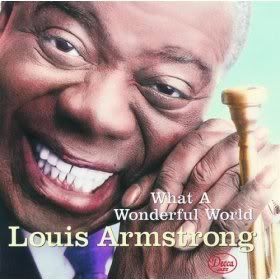
Remembering Percy Bysshe Shelley and Louis Armstrong
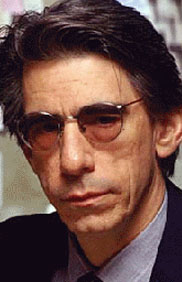
and wishing a Happy 64th to Richard Belzer; 53rd to Billy Bob Thornton and 47th to Barack Obama.

http://www.todayinliterature.com/assets/portraits/s/percy-bysshe-shelley-190x273.jpghttp://i227.photobucket.com/albums/dd121/ireneagc/LouisArmstrong.jpg
http://www.nndb.com/people/141/000023072/richard-belzer-2-sized.jpghttp://images.eonline.com/eol_images/Profiles/20061007/244.thornton.billy.100506.jpg
http://bp3.blogger.com/_Im3_DDT_eKc/SCxuS5FS4AI/AAAAAAAABr0/f0162jMzJ2I/s400/Senator%2BBarack%2BObama.jpg


and a Good Day to all. Very Happy
0 Replies
 
bobsmythhawk
 
  1  
Reply Mon 4 Aug, 2008 11:58 am
Louis Armstrong
From Wikipedia, the free encyclopedia

Background information
Birth name Louis Armstrong
Also known as Satchmo, Pops, Sachimo
Born August 4, 1901(1901-08-04)
New Orleans, Louisiana, U.S.
Died July 6, 1971 (aged 69)
Corona, Queens, New York City, NY, U.S.
Genre(s) Jazz, Dixieland, Swing, Traditional pop
Occupation(s) Trumpeter, Vocalist, American cultural icon
Instrument(s) Trumpet, Cornet
Years active c.1919-1971
Associated acts Joe "King" Oliver
Louis[1] Armstrong[2] (4 August 1901[3] - July 6, 1971), nicknamed Satchmo[4] or Sachimo[5] and Pops, was an American jazz trumpeter and singer.

Coming to prominence in the 20s as an innovative cornet and trumpet virtuoso, Armstrong was a foundational influence on jazz, shifting the music's focus from collective improvisation to solo performers. With his distinctive gravelly voice, Armstrong was an influential singer, demonstrating great dexterity as an improviser, bending the lyrics and melody of a song for expressive purposes. He was also greatly skilled at scat singing, or wordless vocalizing.

Renowned for his charismatic stage presence, Armstrong's influence extended well beyond jazz, and by the end of his career in the '60s, he was widely regarded as a profound influence on popular music in general: critic Steve Leggett describes Armstrong as "perhaps the most important American musician of the 20th century."[6]


Biography

Early life

Armstrong often stated in public interviews that he was born on July 4, 1900 (Independence Day in the USA), a date that has been noted in many biographies. Although he died in 1971, it wasn't until the mid-1980s that his true birth date of August 4, 1901 was discovered through the examination of baptismal records.[7] He was recorded as an out of wedlock black child.

Armstrong was born into a very poor family in New Orleans, Louisiana, the grandson of slaves. He spent his youth in poverty in a rough neighborhood of Uptown New Orleans, known as "Back of Town", as his father, William Armstrong (1881-1922), abandoned the family when Louis was an infant, and took up with another woman. His mother, Mary Albert Armstrong (1886-1942), then left Louis and his younger sister Beatrice Armstrong Collins (1903-1987) in the care of his grandmother, Josephine Armstrong and at times, his Uncle Isaac. At five, he moved back to live with his mother and her relatives, and saw his father only in parades. He attended the Fisk School for Boys where he likely had his first exposure to Creole music. He brought in a little money as a paperboy and also by finding discarded food and selling it to restaurants but it wasn't enough to keep his mother from prostitution. He hung out in dance halls, particularly the "Funky Butt," which was the closest to his home, where he observed everything from licentious dancing to the quadrille. He hauled coal to Storyville, the famed red-light district, and listened to the bands playing in the brothels and dance halls, especially Pete Lala's where Joe "King" Oliver performed and other famous musicians would drop in to jam.

Armstrong grew up at the bottom of the social ladder, in a highly segregated city, but one which lived in a constant fervor of music, which was generally called "ragtime", and not yet "jazz". Despite the hard early days, Armstrong seldom looked back at his youth as the worst of times but instead drew inspiration from it, "Every time I close my eyes blowing that trumpet of mine?-I look right in the heart of good old New Orleans...It has given me something to live for."[8]

After dropping out of the Fisk School at eleven, Armstrong joined a quartet of boys in similar straits as he, and they sang in the streets for money. He also started to get into trouble. Cornet player Bunk Johnson said he taught Armstrong (then 11) to play by ear at Dago Tony's Tonk in New Orleans,[9] although in his later years Armstrong gave the credit to Oliver. His first cornet was bought with money loaned to him by the Karnofskys, a Russian-Jewish immigrant family who had a junk hauling business and gave him odd jobs. To express gratitude towards the Karnofskys, who took him in as almost a family member, and fed and nurtured him, Armstrong wore a Star of David pendant for the rest of his life.[10]


Armstrong seriously developed his cornet playing in the band of the New Orleans Home for Colored Waifs, where he had been sent multiple times for general delinquency, most notably for a long term after firing his stepfather's pistol into the air at a New Year's Eve celebration, as police records confirm. Professor Peter Davis (who frequently appeared at the Home at the request of its administrator, Captain Joseph Jones)[11] instilled discipline in and provided musical training to the otherwise self-taught Armstrong. Eventually, Davis made Armstrong the band leader. The Home band played around New Orleans and the thirteen year old began to draw attention to his cornet playing, starting him on a musical career.[12]At fourteen he was released from the Home, and living again with his father and new stepmother, and then back to his mother and also back to the streets and its temptations. Armstrong got his first dance hall job at Henry Ponce's where Black Benny became his protector and guide. He hauled coal by day and played his cornet at night.

He also played in the city's frequent brass band parades and listened to older musicians every chance he got, learning from Bunk Johnson, Buddy Petit, Kid Ory, and above all, Joe "King" Oliver, who acted as a mentor and father figure to the young musician. Later, he played in the brass bands and riverboats of New Orleans, and first started traveling with the well-regarded band of Fate Marable which toured on a steamboat up and down the Mississippi River. He described his time with Marable as "going to the University," since it gave him a much wider experience working with written arrangements.

In 1919, Joe Oliver decided to go north and he resigned his position in Kid Ory's band, then regarded as the best hot jazz group in New Orleans. Armstrong replaced his mentor and played second cornet. Soon he was promoted to first cornet and he also became second trumpet for the Tuxedo Brass Band, a society band.[13]


Early career

On March 19, 1918, Louis married Daisy Parker from Gretna, Louisiana. They adopted a 3-year-old boy, Clarence Armstrong, whose mother, Louis's cousin Flora, died soon after giving birth. Clarence Armstrong was mentally disabled (result of a head injury at an early age) and Louis would spend the rest of his life taking care of him.[14] Louis's marriage to Parker failed quickly and they separated. She died shortly after the divorce.

Through his riverboat experiences, Armstrong's musicianship began to mature. At twenty, he could now read music and he started to be featured in extended trumpet solos, one of the first jazzmen to do this, injecting his own personality and style into his solo turns. He had learned how to create a unique sound, and also started using singing and patter in his performances.[15] In 1922, Armstrong joined the exodus to Chicago, where he had been invited by his mentor, Joe "King" Oliver, to join his Creole Jazz Band, and where he could make a sufficient income so that he no longer need to supplement his music with day labor jobs. It was a boom time in Chicago and though race relations were poor, the "Windy City" was teeming with jobs for blacks, who were making good wages in factories and had plenty to spend on entertainment.

Oliver's band was the best and most influential hot jazz band in Chicago in the early 1920s, at a time when Chicago was the center of the jazz universe. Armstrong lived like a king in Chicago, in his own apartment with his own private bath (his first). Excited as he was to be in Chicago, he began his career-long pastime of writing nostalgic letters to friends in New Orleans. As Armstrong's reputation grew, he was challenged to "cutting contests" by hornmen trying to displace the new phenom, who could blow two hundred high C's in a row.[16] Armstrong made his first recordings on the Gennett and Okeh labels (jazz records were starting to boom across the country), including taking some solos and breaks, while playing second cornet in Oliver's band in 1923. At this time, he met Hoagy Carmichael (with whom he would collaborate later) who was introduced by pal Bix Beiderbecke, who now had his own Chicago band.

Armstrong enjoyed working with Oliver, but Louis' second wife, pianist Lil Hardin Armstrong, urged him to seek more prominent billing and develop his newer style away from the influence of Oliver. She had her husband play classical music in church concerts to broaden his skill and improve his solo play, and she prodded him into wearing more stylish attire to make him look sharp and to better offset his growing girth. Lil's influence eventually undermined Armstrong's relationship with his mentor, especially concerning his salary and additional moneys that Oliver held back from Armstrong and other band members. Armstrong and Oliver parted amicably in 1924 and Armstrong received an invitation to go to New York City to play with the Fletcher Henderson Orchestra, the top African-American band of the day. Armstrong switched to the trumpet to blend in better with the other musicians in his section. His influence upon Henderson's tenor sax soloist, Coleman Hawkins, can be judged by listening to the records made by the band during this period.

Armstrong quickly adapted to the more tightly controlled style of Henderson, playing trumpet and even experimenting with the trombone, and the other members quickly took up Armstrong's emotional, expressive pulse. Soon his act included singing and telling tales of New Orleans characters, especially preachers.[17]The Henderson Orchestra was playing in the best venues for white-only patrons, including the famed Roseland Ballroom, featuring the classy arrangements of Don Redman. Duke Ellington's orchestra would go to Roseland to catch Armstrong's performances and young hornmen around town tried in vain to outplay him, splitting their lips in their attempts.

During this time, Armstrong also made many recordings on the side, arranged by an old friend from New Orleans, pianist Clarence Williams; these included small jazz band sides with the Williams Blue Five (some of the best pairing Armstrong with one of Armstrong's few rivals in fiery technique and ideas, Sidney Bechet) and a series of accompaniments with Blues singers, including Bessie Smith, Ma Rainey, and Alberta Hunter.

Armstrong returned to Chicago in 1925 due mostly to the urging of his wife, who wanted to pump up Armstrong's career and income. He was content in New York but later would concede that she was right and that the Henderson Orchestra was limiting his artistic growth. In publicity, much to his chagrin, she billed him as "the World's Greatest Trumpet Player". At first he was actually a member of the Lil Hardin Armstrong Band and working for his wife.[18]He began recording under his own name for Okeh with his famous Hot Five and Hot Seven groups, producing hits such as "Potato Head Blues", "Muggles" (a reference to marijuana, for which Armstrong had a lifelong fondness), and "West End Blues", the music of which set the standard and the agenda for jazz for many years to come.

The group included Kid Ory (trombone), Johnny Dodds (clarinet), Johnny St. Cyr (banjo), wife Lil on piano, and usually no drummer. Armstrong's bandleading style was easygoing, as St. Cyr noted, "One felt so relaxed working with him and he was very broad-minded...always did his best to feature each individual".[19] His recordings with pianist Earl "Fatha" Hines (most famously their 1928 Weatherbird duet) and Armstrong's trumpet introduction to "West End Blues" remain some of the most famous and influential improvisations in jazz history. Armstrong was now free to develop his personal style as he wished, which included a heavy dose of effervescent jive, such as "whip that thing, Miss Lil" and "Mr. Johnny Dodds, Aw, do that clarinet, boy!"[20]

Armstrong also played with Erskine Tate's Little Symphony, actually a quintet, which played mostly at the Vendome Theatre. They furnished music for silent movies and live shows, including jazz versions of classical music, such as "Madame Butterfly", which gave Armstrong experience with longer forms of music and with hosting before a large audience. He began to scat sing (improvised vocal jazz using non-sensical words) and was among the first to record it, on Heebie Jeebies in 1926. So popular was the recording the group became the most famous jazz band in America even though they as yet had not performed live to any great degree. Young musicians across the country, black and white, were turned on by Armstrong's new type of jazz.[21]

After separating from Lil, Armstrong started to play at the Sunset Café for Al Capone associate Joe Glaser in the Carroll Dickerson Orchestra, with Earl Hines on piano, which was soon renamed Louis Armstrong and his Stompers, though Hines was the music director and Glaser managed the orchestra. Hines and Armstrong became fast friends as well as successful collaborators.

Armstrong returned to New York, in 1929, where he played in the pit orchestra of the successful musical Hot Chocolate, an all-black revue written by Andy Razaf and pianist/composer Fats Waller. He also made a cameo appearance as a vocalist, regularly stealing the show with his rendition of "Ain't Misbehavin'", his version of the song becoming his biggest selling record to date.[22]

He started to work at Connie's Inn in Harlem, the second nightspot in fame to the Cotton Club, and a front for gangster Dutch Schultz. Armstrong also had considerable success with vocal recordings, including versions of famous songs composed by his old friend Hoagy Carmichael. His 1930s recordings took full advantage of the new RCA ribbon microphone, introduced in 1931, which imparted a characteristic warmth to vocals and immediately became an intrinsic part of the 'crooning' sound of artists like Bing Crosby. Armstrong's famous interpretation of Hoagy Carmichael's "Stardust" became one of the most successful versions of this song ever recorded, showcasing Armstrong's unique vocal sound and style, and his innovative approach to singing songs that had already become standards.

Armstrong's radical re-working of Sidney Arodin and Carmichael's "Lazy River" (recorded in 1931) encapsulated many features of his groundbreaking approach to melody and phrasing. The song begins with a brief trumpet solo, then the main melody is stated by sobbing horns, which are memorably punctuated by Armstrong's growling interjections at the end of each bar: "Yeah! ..."Uh-huh" ..."Sure" ... "Way down, way down". In the first verse, he ignores the notated melody entirely, and sings as if playing a trumpet solo, pitching most of the first line on a single note and using strongly syncopated phrasing. In the second stanza he breaks into an almost fully improvised melody, which then evolves into a classic passage of Armstrong "scat singing."

As with his trumpet playing, Armstrong's vocal innovations served as a foundation stone for the art of jazz vocal interpretation. The uniquely gritty coloration of his voice became a musical archetype that was much imitated and endlessly impersonated. His scat singing style was enriched by his matchless experience as a trumpet soloist. His resonant, velvety lower-register tone and bubbling cadences on sides such as "Lazy River" exerted a huge influence on younger white singers such as Bing Crosby.

The Depression of the early Thirties was especially hard on the Jazz scene. The Cotton Club closed in 1936 after a long downward spiral and many musicians stopped playing altogether as club dates evaporated. Bix Beiderbecke died and Fletcher Henderson's band broke up. King Olivier made a few records but otherwise struggled. Sidney Bechet became a tailor and Kid Ory returned to New Orleans and raised chickens.[23] Armstrong moved to Los Angeles in 1930 seeking new opportunities. He played at the New Cotton Club in LA with Lionel Hampton on drums, and the band drew the Hollywood crowd which could still afford a lavish night life, and radio broadcasts from the club connected with younger audiences at home. Bing Crosby and many other celebrities were regulars at the club. In 1931, Armstrong appeared in his first movie, Ex-Flame. Armstrong was convicted of marijuana possession but received a suspended sentence. He returned to Chicago in late 1931, and played in bands more in the Guy Lombardo vein and he recorded more standards. When the mob insisted that he get out of town, Armstrong visited New Orleans and got a hero's welcome, and saw old friends. He sponsored a local baseball team known as "Armstrong's Secret Nine" and got a cigar named after himself.[24] But soon he was on the road again and after a tour across the country shadowed by the mob, Armstrong decided to go to Europe to escape.

After returning to the States, he undertook several exhausting tours. His agent Johnny Collins' erratic behavior and his own spending ways left Armstrong short of cash. Breach of contract violations plagued him. Finally, he hired Joe Glaser as his new manager, a tough mob-connected wheeler-dealer, who began to straighten out his legal mess, his mob troubles, and his debts. Armstrong also began to experience problems with his fingers and lips, which were aggravated by his unorthodox playing style. As a result he branched out, developing his vocal style and making his first theatrical appearances. He appeared in movies again. In 1937, Armstrong substituted for Rudy Vallee on the CBS radio network and became the first black to host a sponsored, national broadcast.[25] He finally divorced Lil in 1938 and married longtime girlfriend Alpha.


After spending many years on the road, he settled permanently in Queens, New York in 1943 in contentment with his fourth wife, Lucille. Although subject to the vicissitudes of Tin Pan Alley and the gangster-ridden music business, as well as anti-black prejudice, he continued to develop his playing. He recorded Hoagy Carmichael's Rockin' Chair for Okeh Records.

During the subsequent thirty years, Armstrong played more than three hundred gigs a year. Bookings for big bands tapered off during the 1940s due to changes in public tastes: ballrooms closed, and there was competition from television and from other types of music becoming more popular than big band music. It became impossible under such circumstances to support and finance a 16-piece touring band.


The All Stars

Following a highly successful small-group jazz concert at New York Town Hall on May 17, 1947, featuring Armstrong with trombonist/singer Jack Teagarden, Armstrong's manager Joe Glaser dissolved the Armstrong big band on August 13, 1947 and established a six-piece small group featuring Armstrong with (initially) Teagarden, Earl Hines and other top swing and dixieland musicians, most of them ex-big band leaders. The new group was announced at the opening of Billy Berg's Supper Club.

This group was called the All Stars, and included at various times Earl "Fatha" Hines, Barney Bigard, Edmond Hall, Jack Teagarden, Trummy Young, Arvell Shaw, Billy Kyle, Marty Napoleon, Big Sid Catlett, Cozy Cole, Barrett Deems and the Filipino-American percussionist, Danny Barcelona. During this period, Armstrong made many recordings and appeared in over thirty films. He appeared on the cover of Time Magazine on February 21, 1949.

In 1964, he recorded his biggest-selling record, "Hello, Dolly!". The song went to #1 on the pop chart, making Armstrong (age 63) the oldest person to ever accomplish that feat. In the process, Armstrong dislodged The Beatles from the #1 position they had occupied for 14 consecutive weeks with three different songs.[26]

Armstrong kept up his busy tour schedule until a few years before his death in 1971. In his later years he would sometimes play some of his numerous gigs by rote, but other times would enliven the most mundane gig with his vigorous playing, often to the astonishment of his band. He also toured Africa, Europe, and Asia under sponsorship of the US State Department with great success, earning the nickname "Ambassador Satch." While failing health restricted his schedule in his last years, within those limitations he continued playing until the day he died.


Personality

The nickname Satchmo or Satch is short for Satchelmouth (describing his embouchure). In 1932, then Melody Maker magazine editor Percy Brooks greeted Armstrong in London with "Hello, Satchmo!" shortening Satchelmouth (some say unintentionally), and it stuck.

Early on he was also known as Dippermouth. This is a reference to the propensity he had for refreshing himself with the dipper (ladle) from a bucket of sugar water which was always present on stage with Joe Oliver's band in Chicago in the early nineteen-twenties.

The damage to his embouchure from his high pressure approach to playing is acutely visible in many pictures of Louis from the mid-twenties. It also led to his emphasizing his singing career because at certain periods, he was unable to play. However, after having set his trumpet aside for a while, he amended his playing style and continued his trumpet career. Friends and fellow musicians usually called him Pops, which is also how Armstrong usually addressed his friends and fellow musicians (except for Pops Foster, whom Armstrong always called "George").


He was also criticized for accepting the title of "King of The Zulus" -- in the New Orleans African-American community, an honored role as head of leading black Carnival Krewe, but bewildering or offensive to outsiders with their traditional costume of grass-skirts and blackface makeup satirizing southern white attitudes -- for Mardi Gras 1949.

Whatever the case, where some saw a gregarious and outgoing personality, others saw someone trying too hard to appeal to white audiences and essentially becoming a minstrel caricature. Some musicians criticized Armstrong for playing in front of segregated audiences, and for not taking a strong enough stand in the civil rights movement suggesting that he was an Uncle Tom. Billie Holiday countered, however, "Of course Pops toms, but he toms from the heart."

Armstrong, in fact, was a major financial supporter of Dr. Martin Luther King Jr. and other civil rights activists, but mostly preferred to work quietly behind the scenes, not mixing his politics with his work as an entertainer. The few exceptions made it more effective when he did speak out. Armstrong's criticism of President Eisenhower, calling him "two-faced" and "gutless" because of his inaction during the conflict over school desegregation in Little Rock, Arkansas in 1957 made national news. As a protest, Armstrong canceled a planned tour of the Soviet Union on behalf of the State Department saying "The way they're treating my people in the South, the government can go to hell" and that he could not represent his government abroad when it was in conflict with its own people.[27] The FBI kept a file on Armstrong, for his outspokenness about integration.[28]

He was an extremely generous man, who was said to have given away as much money as he kept for himself. Armstrong was also greatly concerned with his health and bodily functions. He made frequent use of laxatives as a means of controlling his weight, a practice he advocated both to personal acquaintances and in the diet plans he published under the title Lose Weight the Satchmo Way. Armstrong's laxative of preference in his younger days was Pluto Water, but he then became an enthusiastic convert when he discovered the herbal remedy Swiss Kriss. He would extol its virtues to anyone who would listen and pass out packets to everyone he encountered, including members of the British Royal Family. (Armstrong also appeared in humorous, albeit risqué, advertisements for Swiss Kriss; the ads bore a picture of him sitting on a toilet ?- as viewed through a keyhole ?- with the slogan "Satch says, 'Leave it all behind ya!'")[29]

The concern with his health and weight was balanced by his love of food, reflected in such songs as "Big Butter & Egg Man", "Cheesecake", "Cornet Chop Suey", and, especially, "Struttin' with Some Barbecue".[30] He kept a strong connection throughout his life to the cooking of New Orleans, always signing his letters, "Red beans and ricely yours,".[31]

Although Armstrong is not known to have fathered any children, he loved children and would go out of his way to entertain the neighborhood kids in Corona, and to encourage young musicians.

Armstrong's gregariousness extended to writing. On the road, he wrote constantly. Many of the favorite themes of his life he shared with correspondents around the world. He avidly typed or wrote on whatever stationery was at hand, instant takes on music, sex, food, childhood memories, his heavy "medicinal" marijuana use, and even his bowel movements, which were gleefully described.[32] He had a fondness for lewd jokes and dirty limericks as well.

Armstrong was an avid audiophile. He had a large collection of recordings, including reel-to-reel tapes which he took on the road with him in a trunk during his later career. He enjoyed listening to his own recordings, and comparing his performances musically. In the den of his home, he had the latest audio equipment and would sometimes rehearse and record along with his older recordings or the radio.[33]


Death

Armstrong died of a heart attack on July 6, 1971, at age 69, 11 months[34] after playing a famous show at the Waldorf-Astoria's Empire Room. Shortly before his death he stated, "I think I had a beautiful life. I didn't wish for anything that I couldn't get and I got pretty near everything I wanted because I worked for it."[35] He was residing in Corona, Queens, New York City, at the time of his passing. He was interred in Flushing Cemetery, Flushing, in Queens, New York City.

His honorary pallbearers included Governor Rockefeller, Mayor Lindsay, Bing Crosby, Ella Fitzgerald, Guy Lombardo, Duke Ellington, Dizzy Gillespie, Pearl Bailey, Count Basie, Harry James, Frank Sinatra, Ed Sullivan, Earl Wilson, Alan King, Johnny Carson, David Frost, Merv Griffin, Dick Cavett and Bobby Hackett. Peggy Lee, one of Armstrong's favorite vocalists, sang The Lord's Prayer at the services.


Music

Armstrong gained fame as a horn player, then later became better known as a bandleader, vocalist, musical ambassador, and founding figure in much modern American music.


Horn playing and early jazz

In his early years, Armstrong was best known for his virtuosity with the cornet and trumpet. The greatest trumpet playing of his early years can be heard on his Hot Five and Hot Seven records. The improvisations which he made on these records of New Orleans jazz standards and popular songs of the day continue to stack up brilliantly alongside those of any other later jazz performer. The older generation of New Orleans jazz musicians often referred to their improvisations as "variating the melody"; Armstrong's improvisations were daring and sophisticated for the time while often subtle and melodic.

He often essentially re-composed pop-tunes he played, making them more interesting. Armstrong's playing is filled with joyous, inspired original melodies, creative leaps, and subtle relaxed or driving rhythms. The genius of these creative passages is matched by Armstrong's playing technique, honed by constant practice, which extended the range, tone and capabilities of the trumpet. In these records, Armstrong almost single-handedly created the role of the jazz soloist, taking what was essentially a collective folk music and turning it into an art form with tremendous possibilities for individual expression.

Armstrong's work in the 1920s shows him playing at the outer limits of his abilities. The Hot Five records, especially, often have minor flubs and missed notes, which do little to detract from listening enjoyment since the energy of the spontaneous performance comes through. By the mid 1930s, Armstrong achieved a smooth assurance, knowing exactly what he could do and carrying out his ideas with perfectionism.


Vocal popularity

As his music progressed and popularity grew, his singing also became important. Armstrong was not the first to record scat singing, but he was masterful at it and helped popularize it. He had a hit with his playing and scat singing on "Heebie Jeebies" when, according to some legends, the sheet music fell on the floor and he simply started singing nonsense syllables. Armstrong stated in his memoirs that this actually occurred. He also sang out "I done forgot the words" in the middle of recording "I'm A Ding Dong Daddy From Dumas".

Such records were hits and scat singing became a major part of his performances. Long before this, however, Armstrong was playing around with his vocals, shortening and lengthening phrases, interjecting improvisations, using his voice as creatively as his trumpet.


Colleagues and followers

During his long career he played and sang with the most important instrumentalists and vocalists; among the many, singing brakeman Jimmie Rodgers, Bing Crosby, Duke Ellington, Fletcher Henderson, Bessie Smith, and notably with Ella Fitzgerald.

His influence upon Bing Crosby is particularly important with regard to the subsequent development of popular music: Crosby admired and copied Armstrong, as is evident on many of his early recordings, notably "Just One More Chance" (1931). The New Grove Dictionary Of Jazz describes Crosby's debt to Armstrong in precise detail, although it does not acknowledge Armstrong by name: "Crosby...was important in introducing into the mainstream of popular singing an Afro-American concept of song as a lyrical extension of speech...His techniques - easing the weight of the breath on the vocal cords, passing into a head voice at a low register, using forward production to aid distinct enunciation, singing on consonants (a practice of black singers), and making discreet use of appoggiaturas, mordents, and slurs to emphasize the text - were emulated by nearly all later popular singers".

Armstrong recorded three albums with Ella Fitzgerald: Ella and Louis, Ella and Louis Again, and Porgy and Bess for Verve Records, with the sessions featuring the backing musicianship of the Oscar Peterson Trio and drummer Buddy Rich. His recordings Satch Plays Fats, all Fats Waller tunes, and Louis Armstrong Plays W.C. Handy in the 1950s were perhaps among the last of his great creative recordings, but even oddities like Disney Songs the Satchmo Way are seen to have their musical moments. And, his participation in Dave Brubeck's high-concept jazz musical The Real Ambassadors was critically acclaimed. For the most part, however, his later output was criticized as being overly simplistic or repetitive.


Hits and later career

Armstrong had many hit records including "Stardust", "What a Wonderful World", "When The Saints Go Marching In", "Dream a Little Dream of Me", "Ain't Misbehavin'", and "Stompin' at the Savoy". "We Have All the Time in the World" featured on the soundtrack of the James Bond film On Her Majesty's Secret Service, and enjoyed renewed popularity in the UK in 1994 when it featured on a Guinness advert. It reached number 3 in the charts on being re-released.

In 1964, Armstrong knocked the Beatles off the top of the Billboard Top 100 chart with "Hello, Dolly", which gave the 63-year-old performer a U.S. record as the oldest artist to have a #1 song. In 1968, Armstrong scored one last popular hit in the United Kingdom with the highly sentimental pop song "What a Wonderful World", which topped the British charts for a month; however, the single did not chart at all in America. The song gained greater currency in the popular consciousness when it was used in the 1987 movie Good Morning, Vietnam, its subsequent rerelease topping many charts around the world. Armstrong even appeared on the 28 October 1970 Johnny Cash Show, where he sang Nat "King" Cole's hit "Rambling Rose" and joined Cash to re-create his performance backing Jimmie Rodgers on "Blue Yodel # 9.""


Stylistic range

Armstrong enjoyed many types of music, from blues to the arrangements of Guy Lombardo, to Latin American folksongs, to classical symphonies and opera. Armstrong incorporated influences from all these sources into his performances, sometimes to the bewilderment of fans who wanted Armstrong to stay in convenient narrow categories. Armstrong was inducted into Rock and Roll Hall of Fame as an early influence. Some of his solos from the 1950s, such as the hard rocking version of "St. Louis Blues" from the WC Handy album, show that the influence went in both directions.


Literature, Radio, films and TV

Armstrong appeared in more than a dozen Hollywood films, usually playing a band leader or musician. His most familiar role was as the bandleader cum narrator in the 1956 musical, High Society, in which he sang the title song and performed a duet with Bing Crosby on "Now You Has Jazz". In 1947, he played himself in the movie New Orleans opposite Billie Holiday, which chronicled the demise of the Storyville district and the ensuing exodus of musicians from New Orleans to Chicago[2]. He was the first African American to host a nationally broadcast radio show in the 1930s.

He was heard on such radio programs as The Story of Swing (1937) and This Is Jazz (1947), and he also made countless television appearances, especially in the 1950s and 1960s, including appearances on The Tonight Show Starring Johnny Carson.

Louis Armstrong has a record star on the Hollywood Walk of Fame on 7601 Hollywood Boulevard.

Many of Armstrong's recordings remain popular. Almost four decades since his passing, a larger number of his recordings from all periods of his career are more widely available than at any time during his lifetime. His songs are broadcast and listened to every day throughout the world, and are honored in various movies, TV series, commercials, and even anime and computer games. "A Kiss to Build a Dream On" was included in the computer game Fallout 2, accompanying the intro cinematic (and the year after in the movie Sleepless in Seattle). His 1923 recordings, with Joe Oliver and his Creole Jazz Band, continue to be listened to as documents of ensemble style New Orleans jazz, but more particularly as ripper jazz records in their own right. All too often, however, Armstrong recorded with stiff, standard orchestras leaving only his sublime trumpet playing as of interest. "Melancholy Blues," performed by Armstrong and his Hot Seven was included on the Voyager Golden Record sent into outer space to represent one of the greatest achievements of humanity. Most familiar to modern listeners is his ubiquitous rendition of "What a Wonderful World." In 2008, Armstrong's recording of Edith Piaf's famous "La Vie En Rose" was used in a scene of the popular Disney/Pixar film Wall-E.

Argentine writer Julio Cortázar, a self-described Armstrong admirer, asserted that a 1952 Louis Armstrong concert at the Théâtre des Champs-Élysées in Paris played a significant role in inspiring him to create the fictional creatures called Cronopios that are the subject of a number of Cortázar's short stories. Cortázar once called Louis Armstrong himself "Grandísimo Cronopio" (Most Enormous Cronopio).

Armstrong also appears as a minor character in Harry Turtledove's Timeline-191 series. When he and his band escape from a Nazi-like Confederacy, they enhance the insipid mainstream music of the North.

There is a pivotal scene in 1980's Stardust Memories in which Woody Allen is overwhelmed by a recording of Armstrong's Stardust and experiences a nostalgic epiphany[3]. The combination of the music and the perfect moment is the catalyst for much of the film's action, prompting the protagonist to fall in love with an ill-advised woman [4].

Louis Armstrong is also referred to in The Trumpet of the Swan along with Ella Fitzgerald and Billie Holiday. Three siblings in the film are named Louis, Billie, and Ella. The main character, Louis, plays a trumpet, an obvious nod to Armstrong.

In the original EB White book, he is referred to by name by a child who hears Louis playing and comments "He sounds just like Louis Armstrong, the famous trumpet player".

Legacy

On December 31, 1999, US President Bill Clinton announced that Armstrong's trumpet was among several items of national memorabilia that were to be interred in a Millennial time capsule to be opened 100 years later.[40]

Today, the house where Louis Armstrong lived at the time of his death (and which was declared a National Historic Landmark in 1977) is a museum. The Louis Armstrong House & Archives, at 34-56 107th Street (between 34th and 35th Avenues) in Corona, Queens, presents concerts and educational programs, operates as an historic house museum and makes materials in its archives of writings, books, recordings and memorabilia available to the public for research. The museum is operated by the City University of New York's Queens College, following the dictates of Armstrong's will.


The museum was opened to the public on October 15, 2003. In 2005, it was among 406 New York City arts and social service institutions to receive part of a $20 million grant from the Carnegie Corporation, which was made possible through a donation by New York City mayor Michael Bloomberg.[41][42]

The influence of Armstrong on the development of jazz is virtually immeasurable. Yet, his irrepressible personality both as a performer, and as a public figure later in his career, was so strong that to some it sometimes overshadowed his contributions as a musician and singer.

As a virtuoso trumpet player, Armstrong had a unique tone and an extraordinary talent for melodic improvisation. Through his playing, the trumpet emerged as a solo instrument in jazz and is used widely today. He was a masterful accompanist and ensemble player in addition to his extraordinary skills as a soloist. With his innovations, he raised the bar musically for all who came after him.

Some critics contend that Armstrong essentially invented jazz singing. Though widely recognized as a pioneer of scat singing, Ethel Waters precedes his scatting on record in the 1930s according to Gary Giddens and others.[43] Billie Holiday and Frank Sinatra are just two singers who were greatly indebted to him. Holiday said that she always wanted Bessie Smith's 'big' sound and Armstrong's feeling in her singing.

On August 4, 2001, the centennial of Armstrong's birth, New Orleans' airport was renamed Louis Armstrong International Airport in his honor.

In 2002, the Louis Armstrong's Hot Five and Hot Seven recordings (1925-1928) are preserved in the United States National Recording Registry, a registry of recordings selected yearly by the National Recording Preservation Board for preservation in the National Recording Registry of the Library of Congress.[44]

The US Open tennis tournament's former main stadium was named Louis Armstrong Stadium in honor of Armstrong who had lived a few blocks from the site.[45]
0 Replies
 
bobsmythhawk
 
  1  
Reply Mon 4 Aug, 2008 12:03 pm
Billy Bob Thornton
From Wikipedia, the free encyclopedia

Born Billy Bob Thornton[1]
August 4, 1955 (1955-08-04) (age 53)
Hot Springs, Arkansas, United States
Years active 1987-present
Spouse(s) Melissa Lee Gatlin
(1978-1980)
Toni Lawrence
(1986-1988)
Cynda Williams
(1990-1992)
Pietra Dawn Cherniak
(1993-1997)
Angelina Jolie
(2000-2003)
Official website
Awards won
Academy Awards
Best Adapted Screenplay
1996 Sling Blade
Other Awards
BSFC Award for Best Supporting Actor
1998 A Simple Plan
Critics Choice Award for Best Supporting Actor
1998 A Simple Plan ; Primary Colors
CFCA Award for Best Actor
1996 Sling Blade
CFCA Award for Best Supporting Actor
1998 A Simple Plan
FFCC Award for Best Actor
2001 Bandits ; The Man Who Wasn't There ; Monster's Ball
KCFCC Award for Best Actor
1996 Sling Blade
LAFCA Award for Best Supporting Actor
1998 A Simple Plan
NBR Award for Best Actor
2001 Bandits ; The Man Who Wasn't There ; Monster's Ball
OFCS Award for Best Supporting Actor
1998 A Simple Plan
OFCS Award for Best Actor
2001 The Man Who Wasn't There
SDFCS Award for Best Supporting Actor
1998 A Simple Plan
SEFCA Award for Best Actor
2001 The Man Who Wasn't There
Walk of Fame - Motion Picture
6801 Hollywood Blvd

Billy Bob Thornton[1] (born August 4 1955) is an American, Academy Award-winning screenwriter, actor and occasional director, playwright, and singer. His rise to fame began in the mid-1990s, after writing, directing, and starring in the film, Sling Blade, and he has since established a successful career as a film actor in Hollywood. Thornton has been described in media reports as "Hollywood's go-to alpha male".[2]


Biography

Early life

Thornton was born in Hot Springs, Arkansas,[1] the son of Virginia Roberta (née Faulkner), an alleged psychic, and Billy Ray Thornton, a high-school history teacher and basketball coach.[3] Thornton has three younger brothers: James Donald (Jimmy Don), born in 1958 and now deceased, James (Jim) Bean, and John David, born in 1969. Thornton lived in both Alpine, Arkansas and Malvern, Arkansas during his childhood, and also spent time with his grandfather, Otis Thornton, a forest ranger, in a small shack in the woods.[citation needed] Thornton is the cousin of noted professional wrestlers Dory Funk, Jr. and Terry Funk.[4]

Thornton was raised a Methodist.[5] A good high school baseball player, he tried out for the Kansas City Royals, but was let go after an injury.[6] After a short period laying asphalt for the Arkansas State Transportation Department, he attended Henderson State University, in Arkadelphia, Arkansas, to pursue studies in psychology, but dropped out after two semesters.

In the late 1980s, Thornton settled in Los Angeles, to pursue his career as an actor, with future writing partner Tom Epperson.[3] Thornton initially had a difficult time succeeding as an actor, and worked in telemarketing, offshore wind farming, and fast-food management between auditioning for acting jobs. He also played drums and sang with South African rock band Jack Hammer. While Thornton worked as a waiter for an industry event, he served film director Billy Wilder and struck up a conversation with Wilder, who advised Thornton to consider a career as a screenwriter.[3]


Career

Thornton first came to semi-prominence as a cast member on the CBS sitcom Hearts Afire with John Ritter and Markie Post. His role as the villain in 1992's One False Move, which he also cowrote, brought him to the attention of critics.[3] He also had small roles in the early 1990s films Indecent Proposal, On Deadly Ground, Bound By Honor, Grey Knight, and Tombstone.

Thornton put Wilder's advice to good use, and went on to write, direct and star in the independent film Sling Blade, which was released in 1996.[3] The film, an expansion of a short film titled Some Folks Call It a Sling Blade, introduced the story of Karl Childers, a mentally handicapped man imprisoned for a gruesome and seemingly inexplicable murder. Sling Blade garnered international acclaim.[3] Thornton's screenplay earned him an Academy Award for Best Adapted Screenplay, a Writers Guild of America Award, and an Edgar Award, while his performance received Oscar and Screen Actors Guild nominations for Best Actor.[3] In 1998, he portrayed the James-Carville-like Richard Jemmons in Primary Colors. Thornton adapted the book All the Pretty Horses into a 2000 film with the same name, starring Matt Damon and Penélope Cruz. The negative experience (he was forced to cut more than an hour) led to his decision to never direct another film (a subsequent release, Daddy and Them, had been filmed earlier). Also in 2000, an early script which he and Tom Epperson wrote together was made into The Gift which starred Cate Blanchett, Hilary Swank, Keanu Reeves, Katie Holmes and Giovanni Ribisi.

During the late 1990s, Thornton, who has had a life-long love for music, began a career as a singer-songwriter. He released a roots rock album entitled Private Radio in 2001, and two more albums, The Edge of the World (2003) and Hobo (2005). Thornton was the singer of a blues rock band named Tres Hombres. Guitarist Billy Gibbons referred to the band as "The best little cover band in Texas", and Thornton bears a tattoo with the band's name on it.[7] He performed the Warren Zevon song The Wind on the tribute album Enjoy Every Sandwich: Songs of Warren Zevon. Thornton recorded a cover of the Johnny Cash classic "Ring of Fire" for the Oxford American magazine's Southern Music CD in 2001.

Thornton's screen persona has been described by the press as that of a "tattooed, hirsute man's man".[2] He appeared in several major film roles following Sling Blade 's success, including 1998's Armageddon and A Simple Plan, 2001's Monster's Ball and 2004's The Alamo, in which he played Davy Crockett. He played a malicious mall Santa Claus in 2003's Bad Santa, a black comedy that performed well at the box office and established Thornton as a leading comic actor. Thornton has stated that, following Bad Santa's success, audiences "like to watch [him] play that kind of guy,"[2] and "they [casting directors] call [him] up when they need an asshole. It's kinda that simple... you know how narrow the imagination in this business can be."[8] He appeared in the comic film School for Scoundrels, which was released on September 29, 2006. In the film, he plays a self-help doctor; the role was written specifically for Thornton.[2] His most recent film roles were The Astronaut Farmer, a drama released on February 23, 2007, and the comedy, Mr. Woodcock, in which Thornton plays a sadistic gym teacher. He will next star in the drama Peace Like a River. Thornton has also expressed an interest in directing another film, possibly a period piece about cave explorer Floyd Collins,[9] based on the book Trapped! The Story of Floyd Collins by Robert K. Murray and Roger Brucker.

Thornton received a star on the Hollywood Walk of Fame on October 7, 2004.


Personal life

Thornton has repeatedly stated that he has obsessive-compulsive disorder. He and rock singer Warren Zevon became close friends after sharing their common experiences with the disorder. Various idiosyncratic behaviors have been well-documented in interviews with the actor; among these is a phobia of antique furniture ?- a disorder shared by the Dwight Yoakam character in the Thornton-penned Sling Blade, and by Thornton's own character in the 2001 film Bandits. Additionally, he has stated that he has a fear of certain types of flatware, a trait assumed by his character, Hank Grotowski, in 2001's Monster's Ball, in which Grotowski insists on a plastic spoon for his daily bowl of chocolate ice cream. In a 2004 interview with The Independent, Thornton explained: "It's just that I won't use real silver. You know, like the big, old, heavy-ass forks and knives, I can't do that. It's the same thing as the antique furniture. I just don't like old stuff. I'm creeped out by it, and I have no explanation why...I don't have a phobia about American antiques, it's mostly French ?- you know, like the big, old, gold-carved chairs with the velvet cushions. The Louis XIV type. That's what creeps me out. I can spot the imitation antiques a mile off. They have a different vibe. Not as much dust." In addition to his aversion to silver cutlery, velvet, and "creepy, castle-y stuff," Thornton confesses that "pieces from 1700 and 1800 France and England really freak me out, especially harpsichords." [10][11][12][13][14]

Thornton lives in Los Angeles. He has been married five times, most notably to actress Angelina Jolie. The pair were known for their eccentric behavior, which reportedly included wearing vials of each others' blood around their necks; Thornton later clarified that the "vials" were, instead, two small lockets, each containing only a single drop of blood. [2][15]

Thornton and Jolie adopted a child from Cambodia whom they named Maddox. Jolie's divorce petition defined the child as belonging to both her and Thornton, and requested the Court grant her custody and Thornton reasonable parenting-time. [16]

Thornton is the biological father of four children: (with his first wife, Melissa Gatlin) Amanda Spence, born June 30, 1979, (with his fourth wife, Pietra Cherniak) William Langston, born June 27, 1993, and Harry James, born June 19, 1994, and (with current girlfriend, Connie Angland) Bella, born September 22, 2004. Thornton has also stated that he will likely not marry again; he has specified that he believes marriage "doesn't work" for him. [2]
0 Replies
 
yitwail
 
  1  
Reply Mon 4 Aug, 2008 12:08 pm
Letty wrote:

Well, folks, you'll have to forgive me, but here is my telling song again, and I don't think that I have ever heard Ella sing better.

http://www.youtube.com/watch?v=REgBX5Yq_n8&feature=related


vintage performance, including her self-deprecating opening remarks. she was also backed up by a super group, i think--she mentions Tommy, whom i take to be pianist Tommy Flanagan, and i believe i see guitarist Joe Pass in the background. would love to see an uptempo clip from the same date. Very Happy
0 Replies
 
bobsmythhawk
 
  1  
Reply Mon 4 Aug, 2008 12:14 pm
Oops!


Percy Bysshe Shelley
From Wikipedia, the free encyclopedia


Born August 4, 1792(1792-08-04)
Horsham, England
Died July 8, 1822 (aged 29)
Livorno, Italy
Occupation Poet
Literary movement Romanticism

Influenced
Alfred Nobel, Gregory Corso

Percy Bysshe Shelley (August 4, 1792 - July 8, 1822; pronounced /ˈpɝːsɪ ˈbɪʃ ˈʃɛlɪ/[1]) was one of the major English Romantic poets and is widely considered to be among the finest lyric poets of the English language. He is perhaps most famous for such anthology pieces as Ozymandias, Ode to the West Wind, To a Skylark, and The Masque of Anarchy. However, his major works were long visionary poems including Alastor, Adonais, The Revolt of Islam, Prometheus Unbound and the unfinished The Triumph of Life.

Shelley's unconventional life and uncompromising idealism, combined with his strong skeptical voice, made him an authoritative and much denigrated figure during his life and afterward. He became the idol of the next two or three generations of poets, including the major Victorian and Pre-Raphaelite poets Robert Browning, Alfred Lord Tennyson, Dante Gabriel Rossetti, Algernon Charles Swinburne, as well as William Butler Yeats and poets in other languages such as Jibanananda Das and Subramanya Bharathy. He was also admired by Karl Marx, Henry Stephens Salt, and Bertrand Russell. Famous for his association with his contemporaries John Keats and Lord Byron, he was also married to novelist Mary Shelley.


Life

Education and early works

Son of Sir Timothy Shelley, a Whig Member of Parliament, and Sir Timothy's wife, a Sussex landowner, Shelley grew up in Horsham, Sussex, and received his early education at home, tutored by Reverend Evan Edwards of Warnham. In 1802, he entered the Syon House Academy of Brentford. In 1804, Shelley entered Eton College, where he fared poorly, subjected to an almost daily mob torment his classmates called "Shelley-baits". Surrounded, the young Shelley would have his books torn from his hands and his clothes pulled at and torn until he cried out madly in his high-pitched "cracked soprano" of a voice.[2]

On April 10, 1810, he matriculated at University College, Oxford. Legend has it that Shelley attended only one lecture while at Oxford, but frequently read sixteen hours a day. By all accounts, he was unpopular with both students and dons.[citation needed] His first publication was a Gothic novel, Zastrozzi (1810), in which he gave vent to his atheistic worldview through the villain Zastrozzi. In the same year, Shelley, together with his sister Elizabeth, published Original Poetry by Victor and Cazire. While at Oxford, he issued a collection of verses (perhaps ostensibly burlesque but quite subversive), Posthumous Fragments of Margaret Nicholson, with Thomas Jefferson Hogg.

In 1811, Shelley published a pamphlet The Necessity of Atheism. This gained the attention of the university administration and he was called to appear before the College's fellows. His refusal to repudiate the authorship of the pamphlet resulted in his being expelled from Oxford on March 25, 1811, along with Hogg. The re-discovery in mid-2006 of Shelley's long-lost 'Poetical Essay on the Existing State of Things', a long, strident anti-monarchical poem printed in Oxford, gives a new dimension to the expulsion, reinforcing Hogg's implication of political motives ('an affair of party').[3] Shelley was given the choice to be reinstated after his father intervened, on the condition that he would have had to recant his avowed views. His refusal to do so led to a falling out with his father. His mother died at a young age just like he did.


Married life

Four months after being expelled, the 19-year-old Shelley travelled to Scotland with the 16-year-old schoolgirl Harriet Westbrook to get married. After their marriage on August 28, 1811, Shelley invited his college friend Hogg to share their household, including his wife. When Harriet objected, however, Shelley brought her to Keswick in England's Lake District, intending to write. Distracted by political events, he visited Ireland shortly afterward in order to engage in radical pamphleteering. Here he wrote his Address to the Irish People and was seen at several nationalist rallies. His activities earned him the unfavourable attention of the British government.Unhappy in his nearly three-year-old marriage, Shelley often left his wife and child (Ianthe Shelley, 1813-76) alone, first to study Italian with a certain Cornelia Turner, and eventually to visit William Godwin's home and bookshop in London. It was here that he met Godwin's daughter, Mary Wollstonecraft Godwin, later known as Mary Shelley. Mary was the daughter of Mary Wollstonecraft, the author of A Vindication of the Rights of Women. On July 28, 1814, Shelley abandoned his pregnant wife and child when he ran away with Mary, also inviting her stepsister Jane (later Claire) Clairmont along for company. The three sailed to Europe, crossed France, and settled in Switzerland, an account of which was subsequently published by the Shelleys. After six weeks, homesick and destitute, the three young people returned to England.In the autumn of 1815, while living close to London with Mary and avoiding creditors, he wrote Alastor, or The Spirit of Solitude. It attracted little attention at the time, but it has now come to be recognized as his first major achievement. At this point in his writing career, Shelley was deeply influenced by Wordsworth's poetry and English language.


Introduction to Byron

In the summer of 1816, Shelley and Mary made a second trip to Switzerland. They were prompted to do so by Mary's stepsister Claire Clairmont, who had commenced a liaison with Lord Byron the previous April just before his self-exile on the continent. Byron had lost interest in Claire, and she used the opportunity of meeting the Shelleys as bait to lure him to Geneva. The Shelleys and Byron rented neighbouring houses on the shores of Lake Geneva. Regular conversation with Byron had an invigorating effect on Shelley's output of poetry. While on a boating tour the two took together, Shelley was inspired to write his Hymn to Intellectual Beauty, often considered his first significant production since Alastor[citation needed]. A tour of Chamonix in the French Alps inspired Mont Blanc, a poem in which Shelley claims to have pondered questions of historical inevitability and the relationship between the human mind and external nature.


Personal difficulties and second marriage

After the Shelleys returned to England, Fanny Imlay, Mary Godwin's half-sister and a member of Godwin's household, killed herself in late autumn. In December 1816, Shelley's estranged wife Harriet drowned herself in the Serpentine in Hyde Park, London. On December 30, 1816, a few weeks after Harriet's body was recovered, Shelley and Mary Godwin were married. The marriage was intended, in part, to help secure Shelley's custody of his children by Harriet, but the plan fell through: the children were handed over to foster parents by the courts.

The Shelleys took up residence in the village of Marlow, Buckinghamshire where a friend of Percy's, Thomas Love Peacock, lived. Shelley took part in the literary circle that surrounded Leigh Hunt, and during this period, he met John Keats. Shelley's major production during this time was Laon and Cythna, a long, narrative poem in which he attacked religion and featured a pair of incestuous lovers. It was hastily withdrawn after only a few copies were published. It was later edited and reissued as The Revolt of Islam in 1818. Shelley also wrote two revolutionary political tracts under the nom de plume of "The Hermit of Marlowe."


Travels in the Italian peninsula

Early in 1818, the Shelleys and Claire left England in order to take Claire's daughter, Allegra, to her father Byron, who had taken up residence in Venice. Contact with the older and more established poet encouraged Shelley to write once again. During the latter part of the year, he wrote Julian and Maddalo, a lightly disguised rendering of his boat trips and conversations with Byron in Venice, finishing with a visit to a madhouse. This poem marked the appearance of Shelley's "urbane style". He then began the long verse drama Prometheus Unbound, a re-writing of the lost play by the ancient Greek poet Aeschylus, which features talking mountains and a petulant spirit who overthrows Jupiter. Tragedy struck in 1818 and 1819, when his son Will died of fever in Rome, and his infant daughter Clara Everina died during yet another household move.

A daughter, Elena Adelaide Shelley, was born December 27, 1818 in Naples, Italy and registered there as the daughter of Shelley and a woman named Marina Padurin. However, the identity of the mother is an unsolved mystery. Some scholars speculate that her true mother was actually Claire Clairmont or Elise Foggi, a nursemaid for the Shelley family. Other scholars postulate that she was a foundling Shelley adopted in hopes of distracting Mary after the deaths of William and Clara.[4] Shelley referred to Elena in letters as his "Neapolitan ward". However, Elena was placed with foster parents a few days after her birth and the Shelley family moved on to yet another Italian city, leaving her behind. Elena died 17 months later, on June 10, 1820.

The Shelleys moved around various Italian cities during these years. Shelley completed Prometheus Unbound in Rome, and he spent the summer of 1819 writing a tragedy, The Cenci, in Livorno. In this year, prompted among other causes by the Peterloo massacre, he wrote his best-known political poems: The Masque of Anarchy and Men of England. These were most likely his most-remembered works during the 19th century. Around this time period, he wrote the essay The Philosophical View of Reform, which was his most thorough exposition of his political views to that date.

In 1820, hearing of John Keats' illness from a friend, Shelley wrote him a letter inviting him to join him at his residence at Pisa. Keats replied with hopes of seeing him, but instead, arrangements were made for Keats to travel to Rome with the artist Joseph Severn.

In 1821, inspired by the death of Keats, Shelley wrote the elegy Adonais. The text of this famous poem can be found at [1]

In 1822, Shelley arranged for Leigh Hunt, the British poet and editor who had been one of his chief supporters in England, to come to Italy with his family. He meant for the three of them ?- himself, Byron and Hunt ?- to create a journal, which would be called The Liberal. With Hunt as editor, their controversial writings would be disseminated, and the journal would act as a counter-blast to conservative periodicals such as Blackwood's Magazine and The Quarterly Review.

Leigh Hunt's son, the editor Thornton Leigh Hunt, when later asked whether he preferred Shelley or Byron as a man, replied:-

"On one occasion I had to fetch or take to Byron some copy for the paper which my father, himself and Shelley, jointly conducted. I found him seated on a lounge feasting himself from a drum of figs. He asked me if I would like a fig. Now, in that, Leno, consists the difference, Shelley would have handed me the drum and allowed me to help myself."[5]

Drowning

On July 8, 1822, less than a month before his 30th birthday, Shelley drowned in a sudden storm while sailing back from Livorno to Lerici in his schooner, Don Juan. Shelley claimed to have met his Doppelgänger, foreboding his own death. He was returning from having set up The Liberal with the newly-arrived Leigh Hunt. The name "Don Juan", a compliment to Byron, was chosen by Edward John Trelawny, a member of the Shelley-Byron Pisan circle. However, according to Mary Shelley's testimony, Shelley changed it to "Ariel". This annoyed Byron, who forced the painting of the words "Don Juan" on the mainsail. This offended the Shelleys, who felt that the boat was made to look much like a coal barge. The vessel, an open boat designed from a Royal Dockyards model, was custom-built in Genoa for Shelley. It did not capsize but sank; Mary Shelley declared in her "Note on Poems of 1822" (1839) that the design had a defect and that the boat was never seaworthy.

Many believe his death was not accidental. Some say that Shelley was depressed in those days and that he wanted to die; others that he did not know how to navigate; others believe that some pirates mistook the boat for Byron's and attacked him, and others have even more fantastical stories. There is a mass of evidence, though scattered and contradictory, that Shelley may have been murdered for political reasons. Previously, at his cottage in Tann-yr-allt in Wales, he had been surprised and apparently attacked by a man who may have been an intelligence agent.[6]


In the days before he died, he was almost shot on two separate occasions.[citation needed] A British consul defended the shooter from the first of these two incidents, keeping him from all legal consequence. Two other Englishmen were with him on the boat.[citation needed] One was a retired Navy officer, Edward Ellerker Williams; the other was a boatboy, Charles Vivien, who should have known how to navigate to the nearby coast at Livorno. The boat was found ten miles (16 km) offshore, and it was suggested that one side of the boat had been rammed and staved in by a much stronger vessel. However, the liferaft was unused and still attached to the boat. The bodies were found completely clothed, including boots.


In his 'Recollections of the Last Days of Shelley and Byron', Trelawny noted that the shirt that Williams's body was clad in was 'partly drawn over the head, as if the wearer had been in the act of taking it off [...] and [he was missing] one boot, indicating also that he had attempted to strip.' Trelawny also relates a supposed deathbed confession by an Italian fisherman who claimed to have rammed Shelley's boat in order to rob him, a plan confounded by the rapid sinking of the vessel.

The day following Shelley's death, the Tory newspaper The Courier gloated: "Shelley, the writer of some infidel poetry, has been drowned, now he knows whether there is a God or not."[7]

Shelley's body washed ashore and later, in keeping with quarantine regulations, was cremated on the beach near Viareggio. A reclining statue, of Shelley's body washed up onto the shore, created by sculptor Edward Onslow Ford at the behest of Shelley's daughter-in-law, Lady Jane Shelley, is the centerpiece of the Shelley Memorial at University College, Oxford. An 1889 painting by Louis Eduard Fournier, The Funeral of Shelley (also known as The Cremation of Shelley), contains inaccuracies. In pre-Victorian times it was English custom that women not attend funerals, for health reasons. Mary Shelley did not attend but was featured in the painting, kneeling at the left-hand side. Leigh Hunt stayed in the carriage during the ceremony but is also pictured. Also, Trelawney, in his account of the recovery of Shelley's body, records that "the face and hands, and parts of the body not protected by the dress, were fleshless," and by the time that the party returned to the beach for the cremation, the body was even further decomposed. In his graphic account of the cremation, he writes of Byron being unable to face the scene, and withdrawing to the beach.

Shelley's heart was snatched from the funeral pyre by Edward Trelawny; Mary Shelley kept it for the rest of her life, and it was interred next to her grave at St. Peter's Church in Bournemouth. Shelley's ashes were interred in the Protestant Cemetery in Rome under an ancient pyramid in the city walls with the Latin inscription, Cor Cordium ("Heart of Hearts"), and a few lines from Shakespeare's The Tempest. The grave site is the second in the cemetery. Some weeks after Shelley had been put to rest, Trelawny had come to Rome, had not liked his friend's position among a number of other graves, and had purchased what seemed to him a better plot near the old wall. The ashes had been exhumed and moved to their present location. Trelawny had purchased the adjacent plot, and over sixty years later his remains were placed there.


Shelley in fiction

Julian Rathbone's 2002 novel A Very English Agent, about a 19th century government spy Charles Boylan, carries a lengthy section on Shelley's time in Italy, in which Boylan tampers with Shelley's boat on orders from the English government, thus causing his death. Rathbone though has stated that he is "a novelist, not a historian" and that his work is very much a piece of fiction. Shelley also features prominently in The Stress of Her Regard, a 1989 novel by Tim Powers which proposes a secret history connecting the English Romantic writers with the mythology of vampires and lamia.

He also makes an appearance in Jude Morgan's 2005 novel Passion, along with Byron, Keats, Coleridge, Leigh Hunt, and a wealth of other English Romantic figures, though the novel's main focus is the lives of the women behind the famous poets: Lady Caroline Lamb, Augusta Leigh, Mary Shelley, and Fanny Brawne. Mary and Percy Shelley also appears in a 2006 novel AngelMonster, by Veronica Bennet. This book is a fictional version of Mary's and Percy's elopement and the series of depressing events.

Shelley appears in Frankenstein Unbound by Brian Aldiss. The book is a time travel romance featuring Mary Shelley. There was also a movie made, based on the novel, directed by Roger Corman and starring John Hurt and Bridget Fonda, in 1990. He makes an appearance in the alternative history novel The Difference Engine by William Gibson and Bruce Sterling. Only referenced in passing by another character, in the novel's story he does not drown in Italy, but lives to become a fierce critic (and perhaps saboteur) of Lord Byron's pro-industrial 'Radical party' government, for which he is arrested, declared insane, and placed in a madhouse.

Events in Shelley's and Byron's relationship at the house on Lake Geneva in 1816 have been fictionalized in film three times. He plays minor roles in: a 1986 British production, Gothic, directed by Ken Russell, and starring Gabriel Byrne, Julian Sands, and Natasha Richardson; and a 1988 Spanish production, Rowing with the Wind (Remando al viento), starring Lizzie McInnerny as Mary Shelley and Hugh Grant as Lord Byron. Both these movies deal mostly with Mary Shelley's creation of the Frankenstein novel, while Percy tends to be quite a minor character in both films.

Shelley is, however, the main character in a movie entitled Haunted Summer, made in 1988, starring Laura Dern and Eric Stoltz. It is set in the same time frame as Rowing with the Wind. Though somewhat sensationalistic in some scenes, Haunted Summer's strength has been called its three-dimensional characterization of Shelley, Mary Shelley and Lord Byron. The psychology of these three is quite accurate, realistic and vivid, and the movie uses words for its dialogue that the three actually said during their lives. The movie also does a good job of recreating Switzerland in 1816, where the four exiles lived.[citation needed]

Howard Brenton's play, Bloody Poetry, first performed at the Haymarket Theater in Leicester in 1984, concerns itself with the complex relationships and rivalries between Shelley, Mary Shelley, Claire Clairmont, and Byron. Shelley's cremation at Viareggio and the removal of his heart by Trelawny are described in Tennessee Williams' play Camino Real by a fictionalized Lord Byron.

Percy, Mary and her sister Claire are some of the main characters in the novel, The Vampyre: The Secret History of Lord Byron, by Tom Holland (1995). The story concerns Lord Byron, poet and friend of Percy Shelley. Their meeting and the growth of their friendship are described, along with a hypothetical account of the time the foursome shared in Switzerland. Holland provides a fictional conclusion to the mysteries that surround Shelley's death.

Shelley's strange death and his claims of having met a Doppelganger served as inspiration for the 1978 short story "Paper Boat", written by Tanith Lee. Shelley is also the main character in Bulgarian poet Pencho Slaveykov's philosophical poem, Heart of Hearts. A quote from Shelley's Prometheus Unbound is said by Captain Jean Luc Picard in Star Trek: The Next Generation, in the episode "Skin of Evil". "A great poet once said, All spirits are enslaved that serve things evil."


Advocacy of vegetarianism

Both Percy Bysshe and Mary Shelley were strong advocates of vegetarianism. Shelley wrote several essays on the subject, the most prominent of which being "A Vindication of Natural Diet" and "On the Vegetable System of Diet".

Shelley, in heartfelt dedication to sentient beings, wrote: "If the use of animal food be, in consequence, subversive to the peace of human society, how unwarrantable is the injustice and the barbarity which is exercised toward these miserable victims. They are called into existence by human artifice that they may drag out a short and miserable existence of slavery and disease, that their bodies may be mutilated, their social feelings outraged. It were much better that a sentient being should never have existed, than that it should have existed only to endure unmitigated misery;" "Never again may blood of bird or beast/ Stain with its venomous stream a human feast,/ To the pure skies in accusation steaming;" and "It is only by softening and disguising dead flesh by culinary preparation that it is rendered susceptible of mastication or digestion, and that the sight of its bloody juices and raw horror does not excite intolerable loathing and disgust."

Shelley was a strong advocate for social justice for the 'lower classes'. He witnessed many of the same mistreatments occurring in the domestication and slaughtering of animals, and he became a fighter for the rights of all living creatures that he saw being treated unjustly. How he reconciled his views with his lack of responsibility for Harriet and his offspring, both inside and outside of marriage, is a matter of some debate.


Family history

Ancestry

Shelley was a seventeenth generation descendant of Richard Fitzalan, 10th Earl of Arundel through his son John Fitzalan, Marshall of England (d. 1379). John was married to Baroness Eleanor Maltravers (1345 - January 10, 1404/1405). Their eldest son succeeded them as John FitzAlan, 2nd Baron Arundel (1365 - 1391). He was himself married to Elizabeth le Despenser (d. April 1/ April 10, 1408).

Elizabeth was a great-granddaughter of Hugh the younger Despenser by his second son Edward Despenser of Buckland (d. September 30, 1342). Her parents were Sir Edward Despenser, 1st Lord Despenser (March 24, 1336 - November 11, 1375) and Elizabeth Burghersh (d. July 26, 1409).

The eldest son of Elizabeth by Baron Maltravers was John Fitzalan, 13th Earl of Arundel. Their third son was Sir Thomas Fitzalan of Beechwood. His own daughter Eleanor Fitzalan was married to Sir Thomas Browne of Beechworth Castle. They had four sons and one daughter, Katherine Browne, who in 1471 married Humphrey Sackville of Buckhurst (1426 - January 24, 1488).

Their oldest son Richard Sackville of Buckhurst (1472 - July 18, 1524) was married in 1492 to Isabel Dyggs. Their oldest son Sir John Sackville of Buckhurst (1492 - October 5, 1557) was married to Margaret Boleyn. Margaret was a sister to Thomas Boleyn, 1st Earl of Wiltshire. His younger brother Richard Sackville had a less prominent marriage which resulted in the birth of Anne Sackville. Anne herself was later married to Henry Shelley.

Henry became father to a younger Henry Shelley. This younger Henry had at least three sons. The youngest of them Richard Shelley was later married to Joan Fuste, daughter of John Fuste from Ichingfield. Their grandson John Shelley of Fen Place was married himself to Helen Bysshe, daughter of Roger Bysshe. Their son Timothy Shelley of Fen Place (born c. 1700) married widow Johanna Plum from New York City. Timothy and Johanna were the great-grandparents of Percy.


Family

Percy was born to Sir Timothy Shelley (September 7, 1753 - April 24, 1844) and his wife Elizabeth Pilfold following their marriage in October, 1791. His father was son and heir to Sir Bysshe Shelley, 1st Baronet of Castle Goring (June 21, 1731 - January 6, 1815) by his wife Mary Catherine Michell (d. November 7, 1760). His mother was daughter of Charles Pilfold of Effingham. Through his paternal grandmother Percy was great-grandson to Reverend Theobald Michell of Horsham.

He was the eldest of seven children. His younger siblings were:

John Shelley of Avington House (March 15, 1806 - November 11, 1866; married on March 24, 1827 Elizabeth Bowen (d. November 28, 1889)
Mary Shelley
Elizabeth Shelley (d. 1831)
Hellen Shelley (d. May 10, 1885)
Margaret Shelley (d. July 9, 1887)
Shelley's uncle, brother to his mother Elizabeth Pilfold, was Captain John Pilfold, a famous Naval Commander that served under Admiral Nelson during the Battle of Trafalgar.[8]


Descendants

Three children survived Shelley: Ianthe and Charles, his daughter and son by Harriet; and Percy Florence, his son by Mary. Charles suffered from tuberculosis but died in a rain storm as he was struck by lightning in 1826. Percy Florence, who eventually inherited the baronetcy in 1844, died without children. The only lineal descendants of the poet are therefore the children of Ianthe.

Ianthe Eliza Shelley was married in 1837 to Edward Jeffries Esdaile. The marriage resulted in the birth of two sons and a daughter. Ianthe died in 1876.

Shelley's son Percy Florence Shelley, and his wife Jane, adopted Jane's niece Bessie Florence Gibson. Bessie married Leopold James Yorke Campbell Scarlett, and so the Scarletts (later the Scarlett/Abingers after their son, Shelley Leopold Laurence Scarlett, succeeded his second cousin to become the fifth Baron Abinger in 1903) became heirs to the Shelleys. Several members of the Scarlett family were born at Percy Florence's seaside home 'Boscombe Manor', in Bournemouth. The 1891 census shows Lady Shelley living at Boscombe Manor with several great nephews.


Legacy

Shelley's mainstream following did not develop until a generation after his passing. This differed from Lord Byron, who was popular among all classes during his lifetime despite his radical views. For decades after his death, Shelley was mainly only appreciated by the major Victorian poets, the pre-Raphaelites, the socialists and the labour movement. One reason for this was the extreme discomfort with Shelley's political radicalism which led popular anthologists to confine Shelley's reputation to the relatively sanitised 'magazine' pieces such as 'Ozymandias' or 'Lines to an Indian Air'.

Karl Marx, Henry Salt, Mahatma Gandhi, George Bernard Shaw, Alfred Nobel, Upton Sinclair, and William Butler Yeats were admirers of his works. Ralph Vaughan Williams, Sergei Rachmaninoff, Roger Quilter, John Vanderslice and Samuel Barber composed music based on his poems.

Critics such as Matthew Arnold endeavoured to rewrite Shelley's legacy to make him seem a lyricist and a dilettante who had no serious intellectual position and whose longer poems were not worth study. Matthew Arnold famously described Shelley as a 'beautiful but ineffectual angel'. This position contrasted strongly with the judgement of the previous generation who knew Shelley as a skeptic and radical.

Many of Shelley's works remained unpublished or little known after his death, with longer pieces such as A Philosophical View of Reform existing only in manuscript till the 1920s. This contributed to the Victorian idea of him as a minor lyricist. With the inception of formal literary studies in the early twentieth century and the slow rediscovery and re-evaluation of his oeuvre by scholars such as K.N. Cameron, Donald H. Reiman and Harold Bloom, the modern idea of Shelley could not be more different.

Paul Foot, in his Red Shelley, has documented the pivotal role Shelley's works, especially Queen Mab, have played in the genesis of British radicalism. Although Shelley's works were banned from respectable Victorian households, his political writings were pirated by men such as Richard Carlile who regularly went to jail for printing 'seditious and blasphemous libel' (ie material proscribed by the government) and these cheap pirate editions reached hundreds of activists and workers throughout the nineteenth century.[9]

In other countries such as India, Shelley's works both in the original and in translation have influenced poets such as Rabindranath Tagore and Jibanananda Das. A pirated copy of Prometheus Unbound dated 1835 is said to have been seized in that year by customs at Bombay.

In 2005 the University of Delaware Press published an extensive two-volume biography by James Bieri. In 2008 the Johns Hopkins University Press published Bieri's 856-page one-volume biography, Percy Bysshe Shelley: A Biography.
0 Replies
 
bobsmythhawk
 
  1  
Reply Mon 4 Aug, 2008 12:24 pm
Barack Obama
From Wikipedia, the free encyclopedia

(pronounced /bəˈrɑːk hʊˈseɪn oʊˈbɑːmə/; born August 4, 1961) is the junior United States Senator from Illinois. He is the presumptive nominee of the Democratic Party in the 2008 presidential election, and the first African American to be a major party's presumptive nominee for President of the United States.

A graduate of Columbia University and Harvard Law School, Obama worked as a community organizer and practiced as a civil rights attorney before serving in the Illinois Senate from 1997 to 2004. He also taught constitutional law at the University of Chicago Law School from 1992 to 2004. Following an unsuccessful bid for a seat in the U.S. House of Representatives in 2000, he announced his campaign for the U.S. Senate in January 2003. After winning a landslide primary victory in March 2004, Obama delivered the keynote address at the Democratic National Convention in July 2004. He was elected to the Senate in November 2004 with 70% of the vote.

As a member of the Democratic minority in the 109th Congress, he cosponsored legislation to control conventional weapons and to promote greater public accountability in the use of federal funds. He also made official trips to Eastern Europe, the Middle East, and Africa. In the current 110th Congress, he has sponsored legislation regarding lobbying and electoral fraud, climate change, nuclear terrorism, and care for returned U.S. military personnel. Since announcing his presidential campaign in February 2007, Obama has emphasized withdrawing American troops from Iraq, increasing energy independence, decreasing the influence of lobbyists, and promoting universal health care as top national priorities.


Early life and career

Obama was born on August 4, 1961, at the Kapiolani Medical Center in Honolulu, Hawaii, to Barack Obama, Sr., a Black Kenyan of Nyang'oma Kogelo, Siaya District, Kenya, and Ann Dunham, a White American from Wichita, Kansas. His parents met while both were attending the University of Hawaii at Manoa, where his father was enrolled as a foreign student.[3] They separated when he was two years old and later divorced.[4] Obama's father returned to Kenya and saw his American-born son only once more before dying in an automobile accident in 1982.[5] After her divorce, Dunham married Lolo Soetoro, and the family moved to Soetoro's home country of Indonesia in 1967, where Obama attended local schools in Jakarta until he was ten years old. He then returned to Honolulu to live with his maternal grandparents while attending Punahou School from the fifth grade in 1971 until his graduation from high school in 1979.[6] Obama's mother returned to Hawaii in 1972 for several years, then returning to Indonesia for her fieldwork. She died of ovarian cancer in 1995.[7]

Following high school, Obama moved to Los Angeles, where he studied at Occidental College for two years.[8] He then transferred to Columbia University in New York City, where he majored in political science with a specialization in international relations.[9] Obama graduated with a B.A. from Columbia in 1983, then worked at Business International Corporation and New York Public Interest Research Group.[10][11]

After four years in New York City, Obama moved to Chicago to work as a community organizer for three years from June 1985 to May 1988 as director of the Developing Communities Project (DCP), a church-based community organization originally comprising eight Catholic parishes in Greater Roseland (Roseland, West Pullman, and Riverdale) on Chicago's far South Side.[10][12] During his three years as the DCP's director, its staff grew from 1 to 13 and its annual budget grew from $70,000 to $400,000, with accomplishments including helping set up a job training program, a college preparatory tutoring program, and a tenants' rights organization in Altgeld Gardens.[13] Obama also worked as a consultant and instructor for the Gamaliel Foundation, a community organizing institute.[14] In mid-1988, he traveled for the first time to Europe for three weeks then Kenya for five weeks where he met many of his Kenyan relatives for the first time.[15]

Obama entered Harvard Law School in late 1988 and at the end of his first year was selected as an editor of the Harvard Law Review based on his grades and a writing competition.[16] In his second year he was elected president of the Law Review, a full-time volunteer position functioning as editor-in-chief and supervising the law review's staff of 80 editors.[17] Obama's election in February 1990 as the first black president of the Harvard Law Review was widely reported and followed by several long, detailed profiles.[17] He graduated with a J.D. magna cum laude from Harvard in 1991 and returned to Chicago where he had worked as a summer associate at the law firms of Sidley & Austin in 1989 and Hopkins & Sutter in 1990.[16][18]

The publicity from his election as the first black president of the Harvard Law Review led to a contract and advance to write a book about race relations.[19] In an effort to recruit him to their faculty, the University of Chicago Law School provided Obama with a fellowship and an office to work on his book.[19] He originally planned to finish the book in one year, but it took much longer as the book evolved into a personal memoir. In order to work without interruptions, Obama and his wife, Michelle, traveled to Bali where he wrote for several months. The manuscript was finally published as Dreams from My Father in mid-1995.[19]

Obama directed Illinois Project Vote from April to October 1992, a voter registration drive with a staff of 10 and 700 volunteers that achieved its goal of registering 150,000 of 400,000 unregistered African Americans in the state, leading Crain's Chicago Business to name Obama to its 1993 list of "40 under Forty" powers to be.[20][21]

Obama taught constitutional law at the University of Chicago Law School for twelve years, as a Lecturer for four years (1992-1996), and as a Senior Lecturer for eight years (1996-2004).[22]

In 1993 Obama joined Davis, Miner, Barnhill & Galland, a 12-attorney law firm specializing in civil rights litigation and neighborhood economic development, where he was an associate for three years from 1993 to 1996, then of counsel from 1996 to 2004, with his law license becoming inactive in 2002.[10][23]

Obama was a founding member of the board of directors of Public Allies in 1992, resigning before his wife, Michelle, became the founding executive director of Public Allies Chicago in early 1993.[10][24] He served on the board of directors of the Woods Fund of Chicago, which in 1985 had been the first foundation to fund Obama's DCP, from 1993-2002, and served on the board of directors of The Joyce Foundation from 1994-2002.[10] Obama served on the board of directors of the Chicago Annenberg Challenge from 1995-2002, as founding president and chairman of the board of directors from 1995-1999.[10] He also served on the board of directors of the Chicago Lawyers' Committee for Civil Rights Under Law, the Center for Neighborhood Technology, and the Lugenia Burns Hope Center.[10]


State legislator, 1997-2004

Obama was elected to the Illinois Senate in 1996, succeeding State Senator Alice Palmer as Senator from the 13th District, which then spanned Chicago South Side neighborhoods from Hyde Park-Kenwood south to South Shore and west to Chicago Lawn.[25] Once elected, Obama gained bipartisan support for legislation reforming ethics and health care laws.[26] He sponsored a law increasing tax credits for low-income workers, negotiated welfare reform, and promoted increased subsidies for childcare.[27] In 2001, as co-chairman of the bipartisan Joint Committee on Administrative Rules, Obama supported Republican Governor Ryan's payday loan regulations and predatory mortgage lending regulations aimed at averting home foreclosures,[28] and in 2003, Obama sponsored and led unanimous, bipartisan passage of legislation to monitor racial profiling by requiring police to record the race of drivers they detained and legislation making Illinois the first state to mandate videotaping of homicide interrogations.[27][29]

Obama was reelected to the Illinois Senate in 1998, and again in 2002.[30] In 2000, he lost a Democratic primary run for the U.S. House of Representatives to four-term incumbent Bobby Rush by a margin of two to one.[31][32]

In January 2003, Obama became chairman of the Illinois Senate's Health and Human Services Committee when Democrats, after a decade in the minority, regained a majority.[33] During his 2004 general election campaign for U.S. Senate, police representatives credited Obama for his active engagement with police organizations in enacting death penalty reforms.[34] Obama resigned from the Illinois Senate in November 2004 following his election to the US Senate.[35]


2004 U.S. Senate campaign

In mid-2002, Obama began considering a run for the U.S. Senate, enlisting political strategist David Axelrod that fall and formally announcing his candidacy in January 2003.[36] Decisions by Republican incumbent Peter Fitzgerald and his Democratic predecessor Carol Moseley Braun not to contest the race launched wide-open Democratic and Republican primary contests involving fifteen candidates.[37] Obama's candidacy was boosted by Axelrod's advertising campaign featuring images of the late Chicago Mayor Harold Washington and an endorsement by the daughter of the late Paul Simon, former U.S. Senator for Illinois.[38] He received over 52% of the vote in the March 2004 primary, emerging 29% ahead of his nearest Democratic rival.[39]

Obama's expected opponent in the general election, Republican primary winner Jack Ryan, withdrew from the race in June 2004.[40]

In July 2004, Obama wrote and delivered the keynote address at the 2004 Democratic National Convention in Boston, Massachusetts.[41] After describing his maternal grandfather's experiences as a World War II veteran and a beneficiary of the New Deal's FHA and G.I. Bill programs, Obama spoke about changing the U.S. government's economic and social priorities. He questioned the Bush administration's management of the Iraq War and highlighted America's obligations to its soldiers. Drawing examples from U.S. history, he criticized heavily partisan views of the electorate and asked Americans to find unity in diversity, saying, "There is not a liberal America and a conservative America; there's the United States of America."[42] Broadcasts of the speech by major news organizations launched Obama's status as a national political figure and boosted his campaign for U.S. Senate.[43]

In August 2004, with less than three months to go before Election Day, Alan Keyes accepted the Illinois Republican Party's nomination to replace Ryan.[44] A long-time resident of Maryland, Keyes established legal residency in Illinois with the nomination.[45] In the November 2004 general election, Obama received 70% of the vote to Keyes's 27%, the largest victory margin for a statewide race in Illinois history.[46]


U.S. Senator, 2005-present

Obama was sworn in as a senator on January 4 2005.[47] Though a newcomer to Washington, he recruited a team of established, high-level advisers devoted to broad themes that exceeded the usual requirements of an incoming first-term senator.[48] He hired Pete Rouse, a 30-year veteran of national politics and former chief of staff to Senate Democratic Leader Tom Daschle, as his chief of staff, and economist Karen Kornbluh, former deputy chief of staff to Secretary of the Treasury Robert Rubin, as his policy director.[49] He recruited Samantha Power, author on human rights and genocide, and former Clinton administration officials Anthony Lake and Susan Rice as foreign policy advisers.[50]

The Senate historian lists Obama as the fifth African American Senator in U.S. history, and the third to have been popularly elected.[51] He is the only Senate member of the Congressional Black Caucus.[52] CQ Weekly, a nonpartisan publication, characterized him as a "loyal Democrat" based on analysis of all Senate votes in 2005-2007, and the National Journal ranked him as the "most liberal" senator based on an assessment of selected votes during 2007.[53][54] Asked about the Journal's characterization of his voting record, Obama expressed doubts about the survey's methodology, blaming "old politics" labeling of political positions as "conservative" or "liberal" for creating predispositions that prevent problem-solving.[55]


Legislation

Consistent with his interests in conservation, Obama voted in favor of the Energy Policy Act of 2005. Obama took an active role in the Senate's drive for improved border security and immigration reform. In 2005, he cosponsored the "Secure America and Orderly Immigration Act" introduced by Republican John McCain of Arizona.[56] He later added three amendments to the "Comprehensive Immigration Reform Act", which passed the Senate in May 2006, but failed to gain majority support in the House of Representatives.[57] In September 2006, Obama supported a related bill, the Secure Fence Act, authorizing construction of fencing and other security improvements along the United States-Mexico border.[58] President Bush signed the Secure Fence Act into law in October 2006, calling it "an important step toward immigration reform."[59]


Partnering with Republican Senators Richard Lugar of Indiana and Tom Coburn of Oklahoma, Obama successfully introduced two initiatives bearing his name. "Lugar-Obama" expanded the Nunn-Lugar cooperative threat reduction concept to conventional weapons, including shoulder-fired missiles and anti-personnel mines.[61] The "Coburn-Obama Transparency Act" authorized the establishment of www.USAspending.gov, a web search engine launched in December 2007 and run by the Office of Management and Budget.[62] After Illinois residents complained of waste water contamination by a neighboring nuclear plant, Obama sponsored legislation requiring plant owners to notify state and local authorities of radioactive leaks.[63] A compromise version of the bill was subsequently blocked by partisan disputes and later reintroduced.[64] In December 2006, President Bush signed into law the "Democratic Republic of the Congo Relief, Security, and Democracy Promotion Act," marking the first federal legislation to be enacted with Obama as its primary sponsor.[65]

In January 2007, Obama worked with Democrat Russ Feingold of Wisconsin to eliminate gifts of travel on corporate jets by lobbyists to members of Congress and require disclosure of bundled campaign contributions under the "Honest Leadership and Open Government Act," which was signed into law in September 2007.[66] He introduced S. 453, a bill to criminalize deceptive practices in federal elections, including fraudulent flyers and automated phone calls, as witnessed in the 2006 midterm elections.[67] Obama's energy initiatives scored pluses and minuses with environmentalists, who welcomed his sponsorship with McCain of a climate change bill to reduce greenhouse gas emissions by two-thirds by 2050, but were skeptical of his support for a bill promoting liquefied coal production.[68] Obama also introduced the "Iraq War De-Escalation Act of 2007," a bill to cap troop levels in Iraq, begin phased redeployment, and remove all combat brigades from Iraq before April 2008.[69]

Later in 2007, Obama sponsored an amendment to the Defense Authorization Act adding safeguards for personality disorder military discharges, and calling for an official review following reports that the procedure had been used inappropriately to reduce government costs.[70] He sponsored the "Iran Sanctions Enabling Act" supporting divestment of state pension funds from Iran's oil and gas industry, and joined Republican Chuck Hagel of Nebraska in introducing legislation to reduce risks of nuclear terrorism.[71][72] A provision from the Obama-Hagel bill was passed by Congress in December 2007 as an amendment to the State-Foreign Operations appropriations bill.[72] Obama also sponsored a Senate amendment to the State Children's Health Insurance Program providing one year of job protection for family members caring for soldiers with combat-related injuries.[73]


Committees

Obama held assignments on the Senate Committees for Foreign Relations, Environment and Public Works and Veterans' Affairs through December 2006.[75] In January 2007, he left the Environment and Public Works committee and took additional assignments with Health, Education, Labor and Pensions and Homeland Security and Governmental Affairs.[76] He also became Chairman of the Senate's subcommittee on European Affairs.[77]

As a member of the Senate Foreign Relations Committee, Obama has made official trips to Eastern Europe, the Middle East, and Africa. In August 2005, he traveled to Russia, Ukraine, and Azerbaijan. The trip focused on strategies to control the world's supply of conventional weapons, biological weapons, and weapons of mass destruction as a first defense against terrorist attacks.[78] Following meetings with U.S. military in Kuwait and Iraq in January 2006, he visited Jordan, Israel, and the Palestinian territories. At a meeting with Palestinian students two weeks before Hamas won the legislative election, Obama warned that "the U.S. will never recognize winning Hamas candidates unless the group renounces its fundamental mission to eliminate Israel."[79] He left for his third official trip in August 2006, traveling to South Africa, Kenya, Djibouti, Ethiopia and Chad. In a speech at the University of Nairobi, he spoke about political corruption and ethnic rivalries.[80] The speech touched off controversy among Kenyan leaders, some formally challenging Obama's remarks as unfair and improper, others defending his positions.[81]


2008 presidential campaign

In February 2007, standing before the Old State Capitol building in Springfield, Illinois, Obama announced his candidacy for President of the United States in the 2008 U.S. presidential election.[82] Describing his working life in Illinois, and symbolically linking his presidential campaign to Abraham Lincoln's 1858 House Divided speech, Obama said: "That is why, in the shadow of the Old State Capitol, where Lincoln once called on a house divided to stand together, where common hopes and common dreams still live, I stand before you today to announce my candidacy for President of the United States of America."[83] Speaking at a Democratic National Committee (DNC) meeting one week before the February announcement, Obama called for putting an end to negative campaigning.[84] Since announcing his presidential campaign Obama has emphasized ending the war in Iraq, increasing energy independence, and providing universal health care as his top three priorities.[85]


Obama's campaign raised $58 million during the first half of 2007, topping all other candidates and exceeding previous records for the first six months of any year before an election year.[86] Small donors, those contributing in increments of less than $200, accounted for $16.4 million of Obama's record-breaking total, more than any other Democratic candidate.[87] In the first month of 2008, his campaign brought in $36.8 million, the most ever raised in one month by a presidential candidate in the Democratic primaries.[88]

With two months remaining before the first electoral contests in Iowa and New Hampshire, and national opinion polls showing him trailing Sen. Hillary Rodham Clinton, Obama began directly charging his top rival with failing to clearly state her political positions.[89] Campaigning in Iowa, he told The Washington Post that as the Democratic nominee he would draw more support than Clinton from independent and Republican voters in the general election.[90]

Among the first four DNC-sanctioned state contests, Obama won more delegates than Clinton in Iowa, Nevada and South Carolina while winning an equal number in New Hampshire. On Super Tuesday, he emerged with 20 more delegates than Clinton.[91] He broke fundraising records in the first two months of 2008, raising over $90 million for his primary campaign while Clinton raised $45 million in the same period.[92] After Super Tuesday, Obama won the eleven remaining February primaries and caucuses.[93] Obama and Clinton split delegates and states nearly equally in the March 4th contests of Vermont, Texas, Ohio, and Rhode Island; Obama closed the month with victories in Wyoming and Mississippi.[94]

In March 2008, a controversy broke out concerning Obama's former pastor of 20 years, Jeremiah Wright.[95] After ABC News broadcast clips of his racially and politically charged sermons,[95][96] Obama responded by condemning Wright's remarks and ending Wright's relationship with the campaign.[97] Obama delivered a speech, during the controversy, entitled "A More Perfect Union"[98] that addressed issues of race. After Wright reiterated some of his remarks in a speech at the National Press Club,[99] Obama strongly denounced Wright, who he said "[presented] a world view that contradicts who I am and what I stand for."[100] Obama resigned from Trinity on May 31, 2008, after a visiting Catholic priest, Michael Pfleger, mocked Hillary Clinton during a sermon there. Obama stated his resignation was to avoid the impression that he endorsed the entire range of opinions expressed at that church.[101][102][103]


During April, May, and June, Pennsylvania, North Carolina, Indiana, West Virginia, Kentucky, Oregon, Puerto Rico, Montana, and South Dakota held primaries; Obama won North Carolina, Oregon, and Montana, and Clinton won the rest, with an aggregate result of Obama remaining ahead in pledged delegates after these contests. During the same period, Obama received endorsements from more superdelegates than did Clinton.[104] On May 31, the Democratic National Committee agreed to seat all of the Michigan and Florida delegates at the national convention, each with a half-vote, narrowing the delegate gap between the two Democrats and increasing the number of delegates needed to win the nomination.[105] On June 3, with all states counted, Obama passed the 2118 delegate mark and became the Democratic presumptive nominee.[106] On that day, he gave a victory speech in St. Paul, Minnesota, paying tribute to his rival Clinton, who suspended her campaign and endorsed him on June 7.[107] Obama is the first African American to be the presumptive nominee of a major political party.[108]

On June 19, Obama became the first major-party presidential candidate to turn down public financing in the general election since the system was created after the Watergate scandal.[109]


Policies and proposals

On the role of government in economic affairs, Obama has written: "We should be asking ourselves what mix of policies will lead to a dynamic free market and widespread economic security, entrepreneurial innovation and upward mobility [...] we should be guided by what works."[110] Speaking before the National Press Club in April 2005, he defended the New Deal social welfare policies of Franklin D. Roosevelt, associating Republican proposals to establish private accounts for Social Security with social Darwinism.[111] In the aftermath of Hurricane Katrina, Obama spoke out against government indifference to growing economic class divisions, calling on both political parties to take action to restore the social safety net for the poor.[112] Shortly before announcing his presidential campaign, Obama told the health care advocacy group Families USA that he supports universal healthcare in the United States,[113] the same kind of health care that Members of Congress give themselves.[114]


A standard method that political scientists use for gauging ideology is to compare the annual ratings by the Americans for Democratic Action (ADA) with the ratings by the American Conservative Union (ACU).[116] Based on his years in Congress (i.e. 2005, 2006, and 2007), Senator Obama has a lifetime average conservative rating of 7.67% from the ACU,[117] and a lifetime average liberal rating of 90% from the ADA.[118]

Campaigning in New Hampshire, Obama announced an $18 billion plan for investments in early childhood education, math and science education, and expanded summer learning opportunities.[119] Obama's campaign distinguished his proposals to reward teachers for performance from traditional merit pay systems, assuring unions that changes would be pursued through the collective bargaining process.[120]

At the Tax Policy Center in September 2007, he blamed special interests for distorting the U.S. tax code.[121] His plan would eliminate taxes for senior citizens with incomes of less than $50,000 a year, repeal income tax cuts for those making over $250,000 as well as the capital gains and dividends tax cut,[122] close corporate tax loopholes, lift the $102,000 cap on Social Security taxes, restrict offshore tax havens, and simplify filing of income tax returns by pre-filling wage and bank information already collected by the IRS.[123] Announcing his presidential campaign's energy plan in October 2007, Obama proposed a cap and trade auction system to restrict carbon emissions and a 10 year program of investments in new energy sources to reduce U.S. dependence on imported oil.[124] Obama proposed that all pollution credits must be auctioned, with no grandfathering of credits for oil and gas companies, and the spending of the revenue obtained on energy development and economic transition costs.[125]

Obama was an early opponent of the Bush administration's policies on Iraq.[126] On October 2, 2002, the day President Bush and Congress agreed on the joint resolution authorizing the Iraq War,[127] Obama addressed the first high-profile Chicago anti-Iraq War rally in Federal Plaza,[128] speaking out against the war.[129] On March 16, 2003, the day President Bush issued his 48-hour ultimatum to Saddam Hussein to leave Iraq before the U.S. invasion of Iraq,[130] Obama addressed the largest Chicago anti-Iraq War rally to date in Daley Plaza and told the crowd "It's not too late" to stop the war.[131]

Obama sought to make his early public opposition to the Iraq War before it started a major issue in his 2004 U.S. Senate campaign to distinguish himself from his Democratic primary rivals who supported the resolution authorizing the Iraq War,[132] and in his 2008 U.S. Presidential campaign, to distinguish himself from four Democratic primary rivals who voted for the resolution authorizing the war (Senators Clinton, Edwards, Biden, and Dodd).[133]


Speaking to the Chicago Council on Global Affairs in November 2006, Obama called for a "phased redeployment of U.S. troops from Iraq" and an opening of diplomatic dialogue with Syria and Iran.[134] In a March 2007 speech to AIPAC, a pro-Israel lobby, he said that the primary way to prevent Iran from developing nuclear weapons is through talks and diplomacy, although not ruling out military action.[135] Obama has indicated that he would engage in "direct presidential diplomacy" with Iran without preconditions.[136][137][138] Detailing his strategy for fighting global terrorism in August 2007, Obama said "it was a terrible mistake to fail to act" against a 2005 meeting of al-Qaeda leaders that U.S. intelligence had confirmed to be taking place in Pakistan's Federally Administered Tribal Areas. He said that as president he would not miss a similar opportunity, even without the support of the Pakistani government.[139]

In a December 2005 Washington Post opinion column, and at the Save Darfur rally in April 2006, Obama called for more assertive action to oppose genocide in the Darfur region of Sudan.[140] He has divested $180,000 in personal holdings of Sudan-related stock, and has urged divestment from companies doing business in Iran.[141] In the July-August 2007 issue of Foreign Affairs, Obama called for an outward looking post-Iraq War foreign policy and the renewal of American military, diplomatic, and moral leadership in the world. Saying "we can neither retreat from the world nor try to bully it into submission," he called on Americans to "lead the world, by deed and by example."[142]

Obama has encouraged Democrats to reach out to evangelicals and other religious groups.[143] In December 2006, he joined Sen. Sam Brownback (R-KS) at the "Global Summit on AIDS and the Church" organized by church leaders Kay and Rick Warren.[144] Together with Warren and Brownback, Obama took an HIV test, as he had done in Kenya less than four months earlier.[145] He encouraged "others in public life to do the same" and not be ashamed of it.[146] Before the conference, 18 anti-abortion groups published an open letter stating, in reference to Obama's support for legal abortion: "In the strongest possible terms, we oppose Rick Warren's decision to ignore Senator Obama's clear pro-death stance and invite him to Saddleback Church anyway."[147] Addressing over 8,000 United Church of Christ members in June 2007, Obama challenged "so-called leaders of the Christian Right" for being "all too eager to exploit what divides us."[148]

Obama made several statements in a campaign video released in October 2007 related to defense spending and nuclear weapons. In addition to promising to end the war in Iraq, Obama stated that he will enact budget cuts in the range of tens of billions of dollars. He stated that he will stop investing in missile defense systems, that he will not weaponize space, that he will "slow development of future combat systems," and that he would work towards a world without nuclear weapons. To achieve this goal, Obama wishes to end development of new nuclear weapons, to reduce the current U.S. nuclear stockpile, to enact a global ban on production of fissile material, and to seek negotiations with Russia in order to take ICBMs off high alert status.[149]

Obama is a sponsor of the Global Poverty Act, which "requires the President to develop and implement a comprehensive policy to cut extreme global poverty in half by 2015 through aid, trade, debt relief, and coordination with the international community, businesses and NGOs."[150]


Family and personal life

Obama met his wife, Michelle Robinson, in June 1989 when he was employed as a summer associate at the Chicago law firm of Sidley Austin.[151] Assigned for three months as Obama's adviser at the firm, Robinson joined him at group social functions, but declined his initial offers to date.[152] They began dating later that summer, became engaged in 1991, and were married on October 3, 1992.[153] The couple's first daughter, Malia Ann, was born on July 4, 1998[154], followed by a second daughter, Natasha ("Sasha"), in 2001.[155]


Applying the proceeds of a book deal,[157] the family moved in 2005 from a Hyde Park, Chicago condominium to their current $1.6 million house in neighboring Kenwood.[158] The purchase of an adjacent lot and sale of part of it to Obama by the wife of developer and friend Tony Rezko attracted media attention because of Rezko's indictment and subsequent conviction on political corruption charges unrelated to Obama.[159][160]

In December 2007, Money magazine estimated the Obama family's net worth at $1.3 million.[161] Their 2007 tax return showed a household income of $4.2 million, up from about $1 million in 2006 and $1.6 million in 2005, mostly from sales of his books.[162]

In a 2006 interview, Obama highlighted the diversity of his extended family. "Michelle will tell you that when we get together for Christmas or Thanksgiving, it's like a little mini-United Nations," he said. "I've got relatives who look like Bernie Mac, and I've got relatives who look like Margaret Thatcher."[163] Obama has seven half-siblings from his Kenyan father's family, six of them living, and a half-sister, Maya Soetoro-Ng, the daughter of his mother and her Indonesian second husband.[164] Soetoro-Ng is married to a Chinese Canadian.[165] Obama's mother is survived by her Kansas-born mother, Madelyn Dunham.[166] In Dreams from My Father, Obama ties his mother's family history to possible Native American ancestors and distant relatives of Jefferson Davis, president of the southern Confederacy during the American Civil War.[167]

Obama plays basketball, a sport he participated in as a member of his high school's varsity team.[168] He is left-handed, but prefers his right hand for some tasks.[169] Before announcing his presidential candidacy, he began a well-publicized effort to quit smoking. Obama told the Chicago Tribune. "I've quit periodically over the last several years. I've got an ironclad demand from my wife that in the stresses of the campaign I do not succumb."[170]

In The Audacity of Hope, Obama writes that he "was not raised in a religious household." He describes his mother, raised by non-religious parents (whom Obama has specified elsewhere as "non-practicing Methodists and Baptists") to be detached from religion, yet "in many ways the most spiritually awakened person that I have ever known." He describes his Kenyan father as "raised a Muslim," but a "confirmed atheist" by the time his parents met, and his Indonesian stepfather as "a man who saw religion as not particularly useful." In the book, Obama explains how, through working with black churches as a community organizer while in his twenties, he came to understand "the power of the African-American religious tradition to spur social change."[171][172]


Books

Dreams from My Father


Obama's first book, Dreams from My Father: A Story of Race and Inheritance, was published before his first run for political office. In it he recalls his childhood in Honolulu and Jakarta, college years in Los Angeles and New York City, and his employment as a community organizer in Chicago in the 1980s. The book's last few chapters describe his first visit to Kenya, a journey to connect with his Luo family and heritage. In the preface to the 2004 revised edition, Obama explains that he had hoped the story of his family "might speak in some way to the fissures of race that have characterized the American experience."[173] In a 1995 review, novelist Paul Watkins wrote that Dreams "persuasively describes the phenomenon of belonging to two different worlds, and thus belonging to neither."[174] The audiobook edition earned Obama the Grammy Award for Best Spoken Word Album of 2006.[175]


The Audacity of Hope

His second book, The Audacity of Hope: Thoughts on Reclaiming the American Dream, was published in October 2006 and soon rose to the top of The New York Times Best Seller hardcover list.[176] Its title came from a sermon delivered by Obama's former pastor, Jeremiah Wright. The paperback edition currently ranks fifth on The New York Times nonfiction list.[177] The Chicago Tribune credits large crowds that gathered at book signings with influencing Obama's decision to run for president.[178] Former U.S. presidential candidate Gary Hart said the book's self-portrayal presents "a man of relative youth yet maturity, a wise observer of the human condition, a figure who possesses perseverance and writing skills that have flashes of grandeur."[179] Reviewer Michael Tomasky writes that it does not contain "boldly innovative policy prescriptions that will lead the Democrats out of their wilderness," but does show Obama's potential to "construct a new politics that is progressive but grounded in civic traditions that speak to a wider range of Americans."[180] In February 2008, he won a Grammy award for the spoken word edition of Audacity.[175] Foreign language editions of the book have been published in Italian, Spanish, German, French, Danish and Greek.[181]


Cultural and political image

With his Kenyan father and white American mother, his upbringing in Honolulu and Jakarta, and his Ivy League education, Obama's early life experiences differ markedly from those of African American politicians who launched their careers in the 1960s through participation in the civil rights movement.[182]

In January 2007, The End of Blackness author Debra Dickerson warned against drawing favorable cultural implications from Obama's political rise: "Lumping us all together," Dickerson wrote in Salon, "erases the significance of slavery and continuing racism while giving the appearance of progress."[183] Film critic David Ehrenstein, writing in a March 2007 Los Angeles Times article, compared the cultural sources of Obama's favorable polling among whites to those of "magical negro" roles played by black actors in Hollywood movies.[184] Expressing puzzlement over questions about whether he is "black enough," Obama told an August 2007 meeting of the National Association of Black Journalists that the debate is not about his physical appearance or his record on issues of concern to black voters. Obama said, "we're still locked in this notion that if you appeal to white folks then there must be something wrong."[185]

In a December 2006 Wall Street Journal editorial headlined "The Man from Nowhere," Ronald Reagan speech writer Peggy Noonan advised "establishment" commentators to avoid becoming too quickly excited about Obama's still early political career.[186] Echoing the inaugural address of John F. Kennedy, Obama acknowledged his youthful image, saying in an October 2007 campaign speech, "I wouldn't be here if, time and again, the torch had not been passed to a new generation."[187]

A prominent part of Obama's political image is a belief that Obama's rhetoric and actions toward political reform are matched with a political savvy that often includes a measure of expediency. In a July 2008 The New Yorker feature article, for example, Ryan Lizza wrote, "(Obama) campaigns on reforming a broken political process, yet he has always played politics by the rules as they exist, not as he would like them to exist."[188]

Although Obama is Christian, July 2008 polls have shown that some Americans believe incorrectly that he is Muslim or was raised Muslim (12% and 26%, respectively, in Pew[189] and Newsweek[190] polls). Cited the latter poll by CNN's Larry King, Obama responded, "...I wasn't raised in a Muslim home," and said that advancement of the misconception insulted Muslim Americans.[191]
0 Replies
 
bobsmythhawk
 
  1  
Reply Mon 4 Aug, 2008 12:31 pm
Richard Belzer
From Wikipedia, the free encyclopedia


Born Richard Jay Belzer
August 4, 1944 (1944-08-04) (age 64)
Bridgeport, Conn., U.S.A.
Occupation Comedian, writer,
film, television actor
Spouse(s) Gail Susan Ross (1966-1972)
Dalia Danoch (1976-1978)
Harlee McBride (1985-present)

Richard Jay Belzer (born August 4, 1944) is an American stand up comedian, writer, and actor, perhaps best known for his work as Det. John Munch, on Homicide: Life on the Street and Law & Order: Special Victims Unit.


Biography

Early life and education

Belzer was born in Bridgeport, Connecticut, USA to a Jewish family of Francis and Charles Belzer, a candy and tobacco retailer.[1] His cousin is actor Henry Winkler. Belzer grew up with his parents and older brother Leonard. As a youth, Belzer worked as a paperboy and was "kicked out of every school he attended". Nonetheless, Belzer attended and graduated from Andrew Warde High School in the neighboring town of Fairfield, Connecticut. Both parents died while he was young: His mother died of cancer when he was 18 and his father committed suicide when Belzer was 22.

After high school, he worked as a reporter for the Bridgeport Post. He attended Dean Junior College in Franklin, Massachusetts for a year and a part of a semester before being asked to leave for leading too many student demonstrations. According to one interview, he was majoring in Physical Education.[citation needed] After leaving college, Belzer was encouraged by his father to enlist in the Army. For a brief period, he studied and then later taught yoga. One of his earliest comedy routines included a character "Yogi Yogi, the Yodler" a contestant in a yodeling contest.


Stand-up comic

Belzer terminated his enlistment early. He married Gail Ross, a union that ended in divorce. Belzer relocated to New York City, and moved in with singer Shelley Ackerman, and began working as a stand-up comic at Pips, The Improv, and Catch a Rising Star. He participated in the Channel One comedy group that satirized television and became the basis for the cult movie The Groove Tube, in which as the co-star of the ersatz t.v. show, "The Dealers".

Belzer was the audience warm-up comedian for Saturday Night Live in its premiere season and made three guest appearances on the show in 1976 and 1978. (However, despite appearing as such in the film Man on the Moon, Belzer was not the first host of the show. That honor went to George Carlin.)


Film acting

In the late 1970s and early 1980s, Belzer became an occasional film actor. He is noted for his small roles in Fame, Night Shift, and Scarface. Belzer (billed as "Richard Brando") went on to provide the voice of "The Breather" in the box-office flop Student Bodies. In addition to his illustrious film career, Belzer has a place in radio history as a featured player on the National Lampoon Radio Hour, a half-hour comedy program aired on some 600 U. S. stations from 1973 to 1975. Several of his sketches were released on National Lampoon albums drawn from the Radio Hour including several bits in which he portrayed a pithy call-in talk show host named, 'Dick Ballentine'. In the late 1970s he co-hosted Brink & Belzer on 660AM WNBC (New York City). He is also a frequent guest on "The Howard Stern Show".


Hulk Hogan incident

On March 27, 1985 on his cable TV talk show Hot Properties, just days prior to the inaugural WrestleMania, Belzer requested that Hulk Hogan demonstrate one of his signature wrestling moves.[2] Hogan put Belzer in a front chin lock or sleeper hold, which caused Belzer to pass out.[2] When Hogan released him, Belzer hit his head on the floor, sustaining a laceration to his scalp which required him to be hospitalized briefly.[2] Belzer sued Hogan for $5 million and later settled out of court. Belzer used the settlement (rumored to be $1.5 million) to purchase a cottage in France, where he and his wife Harlee live when he's not working in the U.S. On October 20, 2006 on Bubba the Love Sponge it was claimed (with Hogan live in the studio) that the settlement totaled $5 million, half from Hogan and half from Vince McMahon. During his appearance June 23, 2008, on The Howard Stern Show on Sirius Satellite Radio, Belzer suggested that the real settlement amount was actually nearer to $400,000.[3]

Lying unconscious and bleeding, Belzer sprang to his feet just in time to make the necessary announcements leading out to the commercial break. Recalling the incident on Late Night With David Letterman, he explained that it was "show business in his blood" that willed him back to his feet to protect the integrity of the show.

Belzer used the incident in his HBO special Another Lone Nut as part of his stand-up routine.


Television

In the 1990s, Belzer appeared frequently on television, including a movie role in which he appeared as an LAPD detective in A Very Brady Sequel. He was a regular on The Flash television show. In several episodes of Lois and Clark: The New Adventures of Superman, he played Inspector William Henderson. He followed that success with starring roles on Homicide: Life on the Street (1993-1999) and Law & Order: Special Victims Unit (1999 - ), playing the same character (Det. John Munch) in both series.

In addition, he has also played Det. John Munch in episodes of six other series:

Law & Order - 4 episodes: "Charm City Part 1", "Baby, It's You", "Sideshow" and "Entitled Part 2".
The X-Files - 1 episode: "Unusual Suspects"
The Beat - 1 episode: "They Say It's Your Birthday"
Law & Order: Trial by Jury - 1 episode: "Skeleton (2)"

Belzer's appearance on Trial by Jury, which aired April 15, 2005, made him the third actor ever to play the same character in six different prime time TV series. The other two actors are John Ratzenberger and George Wendt who played Cliff Clavin and Norm Peterson in Cheers (1982-1993), St. Elsewhere (1985), The Tortellis (1987), Wings (1990), The Simpsons (1994) and Frasier (2002).
Arrested Development - 1 episode: "Exit Strategy" (Belzer also appeared in episode "S.O.B.s", but as himself.)
The Wire - 1 episode: "Took"
Munch is the only fictional character played by a single actor to appear on eight different television shows. These shows were on four different networks: NBC (Homicide: Life on the Street, the Law & Order shows), FOX (The X-Files, Arrested Development), UPN (The Beat), and HBO (The Wire).

He also appeared in Comedy Central's broadcast of the Friars Club roast of Chevy Chase.

Belzer was honored by the New York Friars Club and the Toyota Comedy Festival June 9, 2001 as the honoree of the first ever roast that was open to the public. Comedians and friends on the dais included Roast master Paul Shaffer, Christopher Walken, Danny Aiello, Barry Levinson, Robert Klein, Bill Maher, SVU co-stars Mariska Hargitay, Christopher Meloni, Ice-T, and Dann Florek, and Law & Order's Jerry Orbach.

Richard Belzer also voiced the character of Loogie, for most of the episode of South Park entilted The Tooth Fairy Tats 2000.


Personal life

Belzer married actress Harlee McBride in 1985. His previous marriages were with Gail Susan Ross (1966-1972) and Dalia Danoch (1976-1978).

Belzer testified on behalf of a criminal who was running from actual Baltimore police and ran onto the set of Homicide: Life on the Street. The criminal surrendered to the actors.


Health problems

Belzer survived testicular cancer in 1984. His HBO special and comedy CD Another Lone Nut[4] pokes fun at this, as well as his status as a well-known "Conspiracy Theorist".


Political Endorsements

In 2004, Belzer endorsed the presidential campaign of Senator John Kerry (D-MA) from the early days of his campaign until his loss to incumbent President George W. Bush. In 2008, Belzer officially endorsed the campaign of Senator Barack Obama (D-IL) for President of the United States.


Radio Program

Following the departure of Randi Rhodes from Air America Radio, Belzer guest hosted the afternoon program on the network.
0 Replies
 
bobsmythhawk
 
  1  
Reply Mon 4 Aug, 2008 12:41 pm
Sherlock Holmes and Dr Watson


Sherlock Holmes and Dr Watson went on a camping trip. After a good meal and a bottle of wine they lay down for the night, and went to sleep. Some hours later, Holmes awoke and nudged his faithful friend. "Watson, look up at the sky and tell me what you see." Watson replied, "I see millions and millions of stars." "What does that tell you?" Watson pondered for a minute. "Astronomically, it tells me that there are millions of galaxies and potentially billions of planets. Astrologically, I observe that Saturn is in Leo. Hierologically, I deduce that the time is approximately a quarter past three. Theologically, I can see that God is all powerful and that we are small and insignificant. Meteorologically, I suspect that we will have a beautiful day tomorrow. What does it tell you?" Holmes was silent for a minute, then spoke. "Watson, you idiot. Some one has stolen our tent."
0 Replies
 
Letty
 
  1  
Reply Mon 4 Aug, 2008 01:40 pm
firefly, I really do like The Three Bells as it simply and sweetly reflects the cycle of life. I was quite surprised that Edith Piaff had done that. She always looks so shy and worried. Loved that version, and thanks.

honu, you never cease to amaze me with your acumen on jazz. Thank you for the line up of Ella's back up, and I can guess you're appreciative of my remarks. Razz

http://www.tcastle.com/images/n143/turtle_tail_lg_wht.gif

Well, our puppy has again produced a beautiful montage of notables. Thanks again, PA

Bob of Boston, the bio's were, once again, quite informative and I was interested in Shelly as I think Ozymandius says so much about the tyrant and his legacy.

I won't answer "elementary my dear Watson" to that funny of yours as Holmes never said that.

The following video is quite strange, but I like it. Hope our listeners do as well.

http://au.youtube.com/watch?v=JUemGhK6A5A
0 Replies
 
firefly
 
  1  
Reply Mon 4 Aug, 2008 04:33 pm
Since it is Barack Obama's birthday, I thought we might enjoy the newest bit of musical political satire from JibJab. Just hit the play button. Very Happy


http://sendables.jibjab.com/
0 Replies
 
yitwail
 
  1  
Reply Mon 4 Aug, 2008 05:00 pm
Letty wrote:

honu, you never cease to amaze me with your acumen on jazz. Thank you for the line up of Ella's back up, and I can guess you're appreciative of my remarks. Razz

http://www.tcastle.com/images/n143/turtle_tail_lg_wht.gif


yes ma'am, we appreciate compliments, especially about our memory. we tend to be forgetful, but can still remember the important stuff. Laughing
0 Replies
 
Letty
 
  1  
Reply Mon 4 Aug, 2008 05:07 pm
firefly, I don't have the proper equipment to listen to that "flash" about Obama, but thanks anyway.

Hey, honu. I'll have to come up with an RNA designed especially for your ilk. Let's see now. Where did I put my old chemistry set. Razz

Love this song, folks, and it says it about all of 'em.

http://www.youtube.com/watch?v=7hsR0YKiZMQ
0 Replies
 
edgarblythe
 
  1  
Reply Mon 4 Aug, 2008 05:08 pm
From what school did you graduate, Holmes?

Elementary, my dear Watson. Elementary.
0 Replies


Related Topics

WA2K Radio is now on the air, Part 3 - Discussion by edgarblythe
 
Copyright © 2026 MadLab, LLC :: Terms of Service :: Privacy Policy :: Page generated in 0.03 seconds on 03/25/2026 at 04:13:04