Good morning to you as well, firefly, and may I say that your Glen Miller big band song was great. His body was never found, incidentally, and my husband once told me that he heard from a reliable source, that Glen was killed by a jealous lover. Who knows.
Wow! Your Alexander Calder philosophy was a mirror image of mine, and his art design unusual, but impressive. Thanks, dear.
Here's a version of a Glen Miller number that I like, probably because it was done by Gershwin, folks.
So as the light filters through our blinds, let's strike up the band.
I am convinced the storm will hit too far souh of here to disturb Tomball in the slightest. It is expected to be minimal. For that reason, if we are to have one this year, it probably would have been best if it were Dolly.
Stephen Vincent Benét
From Wikipedia, the free encyclopedia
Stephen Vincent Benét (July 22, 1898 - March 13, 1943) was an American author, poet, short story writer and novelist. He is best known for his book-length narrative poem of the American Civil War, John Brown's Body (1928), for which he won a Pulitzer Prize in 1929, and for two short stories, The Devil and Daniel Webster and By the Waters of Babylon.
Life and Career
Benet's fantasy short story The Devil and Daniel Webster won an O. Henry Award, and he furnished the material for Scratch, a one-act opera by Douglas Moore. The story was filmed in 1941 and shown originally under the title All That Money Can Buy. Benét also wrote a sequel, Daniel Webster and the Sea Serpent, in which real-life historic figure Webster encounters the Leviathan of biblical legend.
Benét was born into an Army family in Bethlehem, Pennsylvania. He spent most of his boyhood in Benicia, California. At the age of about ten, Benét was sent to the Hitchcock Military Academy. A graduate of The Albany Academy in Albany, New York and Yale University, where he was a member of Wolf's Head Society and the power behind the Yale Lit, according to Thornton Wilder.
Benét died in New York City at the age of 44. He was awarded a posthumous Pulitzer Prize in 1944 for Western Star, an unfinished narrative poem on the settling of America.
It was a line of Benet's poetry that gave the title to Dee Brown's famous history of the destruction of Native American tribes by the United States: Bury My Heart at Wounded Knee.
He also adapted the Roman myth of the rape of the Sabine Women into the story The Sobbin' Women, which in turn was adapted into the movie musical Seven Brides for Seven Brothers.
John Brown's Body was staged on Broadway in 1953, in a three-person dramatic reading featuring Tyrone Power, Judith Anderson and Raymond Massey, and directed by Charles Laughton.
Benet's brother, William Rose Benét (1886-1950), was a poet, anthologist and critic who is largely remembered for his desk reference, The Reader's Cyclopedia (1948).
0 Replies
bobsmythhawk
1
Reply
Tue 22 Jul, 2008 06:44 am
Alexander Calder
From Wikipedia, the free encyclopedia
Birth name Alexander Calder
Born July 22, 1898(1898-07-22)
Lawnton, Pennsylvania
Died November 11, 1976 (aged 78)
New York, NY
Nationality United States
Field Sculpture
Training Stevens Institute of Technology, Art Students League of New York
Movement Kinetic Sculpture
Works Cirque Calder (beg. 1926), Aztec Josephine Baker, International Mobile (Philadelphia), Flamingo (Chicago, 1976)
Alexander Calder (July 22, 1898 - November 11, 1976), also known as Sandy Calder, was an American sculptor and artist most famous for inventing the mobile. In addition to mobile and stabile sculpture, Alexander Calder also created paintings, lithographs, toys and tapestry and designed carpets.
Childhood
Born in Lawnton, Pennsylvania, on July 22, 1898, Calder came from a family of artists. His father, Alexander Stirling Calder, was a well-known sculptor who created many public installations, a majority of them located in Philadelphia. Calder's grandfather, sculptor Alexander Milne Calder, was born in Scotland and immigrated to Philadelphia in 1868. Calder's mother, Nanette Lederer Calder, was a professional portrait painter who studied at the Académie Julian and the Sorbonne in Paris from around 1888 until 1893. She then moved to Philadelphia where she met Alexander Stirling Calder while studying at the Pennsylvania Academy of the Fine Arts.[1] Calder's parents were married on February 22, 1895. His older sister, Margaret "Peggy" Calder, was born in 1896. Her married name was Margaret Calder Hayes, and she was instrumental in the development of the UC Berkeley Art Museum.[2]
In 1902, at the age of four, Calder posed nude for his father's sculpture The Man Cub that is now located in the Metropolitan Museum of Art in New York. In that same year, he completed his earliest sculpture, a clay elephant.[3]
Three years later, when Calder was seven and his sister was nine, Stirling Calder contracted tuberculosis and Calder's parents moved to a ranch in Oracle, Arizona, leaving the children in the care of family friends for a year.[4] The children were reunited with their parents in late March, 1906 and stayed at the ranch in Arizona until fall of the same year.[5]
After Arizona, the Calder family moved to Pasadena, California. The windowed cellar of the family home became Calder's first studio and he received his first set of tools. He used scraps of copper wire that he found in the streets to make jewelry and beads for his sister's dolls. On January 1, 1907, Calder's mother took him to the Tournament of Roses and he observed a four-horse-chariot race. This style of event later became the finale of Calder's wire circus shows.[6]
In 1909, when Calder was in the fourth grade, he sculpted a dog and a duck out of sheet brass as Christmas gifts for his parents. The sculptures were three dimensional and the duck was kinetic because it rocked when gently tapped. These sculptures are frequently cited as early examples of Calder's skill.[7]
In 1910, Stirling Calder's rehabilitation was complete and the Calder family moved back to Philadelphia, where he briefly attended the Germantown Academy, and then to Croton-on-Hudson in New York.[8] In Croton, during his early high school years, Calder was befriended by the painter Everett Shinn with whom he built a gravity powered system of mechanical trains. As Calder described:
We ran the train on wooden rails held by spikes; a chunk of iron racing down the incline speeded the cars. We even lit up some cars with candle lights.[9]
After Croton, the Calders moved to Spuyten Duyvil to be closer to the Tenth Street Studio Building in New York, where Stirling Calder rented a studio. While living in Spuyten Duyvil, Calder attended Yonkers High.
In 1912, Stirling Calder was appointed acting chief of the Department of Sculpture of the Panama Pacific International Exposition in San Francisco.[10] He began work on sculptures for the exposition that was held in 1915. During Alexander Calder's high school years between 1912 and 1915, the Calder family moved back and forth between New York and California. In each new location Calder's parents reserved cellar space as a studio for their son. Toward the end of this period, Calder stayed with friends in California while his parents moved back to New York so that he could graduate from Lowell High School in San Francisco. Calder graduated in the class of 1915.
Early years
Although Calder's parents encouraged his creativity as a child, they discouraged their children from becoming artists, knowing that it was an uncertain and financially difficult career. In 1915, Calder decided to study mechanical engineering after learning about the discipline from a classmate at Lowell High School named Hyde Lewis. Stirling Calder arranged for his son's enrollment at the Stevens Institute of Technology in Hoboken, New Jersey.
Calder joined the football team during his freshman year at Stevens and practiced with the team all four years, but he never played in a game. He also played lacrosse, at which he was more successful. He was a member of the Delta Tau Delta fraternity. He excelled in the subject of mathematics.
In the summer of 1916, Calder spent five weeks training at the Plattsburg Civilian Military Training Camp. In 1917, he joined the Student's Army Training Corps, Naval Section, at Stevens and was made guide of the battalion.
Calder received a degree from Stevens in 1919. For the next several years, he worked a variety of engineering jobs, including working as a hydraulics engineer and a draughtsman for the New York Edison Company, but he was not content in any of the roles.
In June 1922, Calder started work as a fireman in the boiler room of the passenger ship H. F. Alexander. While the ship sailed from San Francisco to New York City, Calder woke on deck off the Guatemalan Coast and witnessed both the sun rising and the moon setting on opposite horizons. As he described in his autobiography:
It was early one morning on a calm sea, off Guatemala, when over my couch ?- a coil of rope ?- I saw the beginning of a fiery red sunrise on one side and the moon looking like a silver coin on the other.
The H.F. Alexander docked in San Francisco and Calder traveled up to Aberdeen, Washington where his sister lived with her husband, Kenneth Hayes. Calder took a job as a timekeeper at a logging camp. The mountain scenery inspired him to write home to request paints and brushes. Shortly after this, Calder decided to move back to New York to pursue a career as an artist.
Art career
Having decided to become an artist, Calder moved to New York and enrolled at the Art Students' League. While a student, he worked for the National Police Gazette where, in 1925, one of his assignments was sketching the Ringling Brothers and Barnum and Bailey Circus. Calder became fascinated with the circus, a theme that would reappear in his later work.
In 1926, Calder moved to Paris. He established a studio at 22 rue Daguerre in the Montparnasse Quarter. At the suggestion of a Serbian toy merchant, he began to create toys with articulation. He never found the toy merchant again, but, at the urging of fellow sculptor Jose de Creeft, he submitted his toys to the Salon des Humoristes. Later that fall, Calder began to create his Cirque Calder, a miniature circus fashioned from wire, string, rubber, cloth, and other found objects. Designed to fit into suitcases (it eventually grew to fill five), Calder could travel with his circus and hold performances on both sides of the Atlantic. He gave elaborately improvised shows, recreating the performance of a real circus. Soon, his "Cirque Calder"[1][2] (usually on view at the Whitney Museum of American Art, but currently under renovation until Oct. 2008) became popular with the Parisian avant-garde. Some months Calder would charge an entrance fee to pay his rent.[3][4]
Man, a "stabile" by Alexander Calder; Terre des Hommes (Expo 67 fairground), Saint Helen's Island, Montreal.In 1927, Calder returned to the United States. He designed several kinetic wooden push and pull toys for children, which he had mass-produced by the Gould Manufacturing Company, in Oshkosh, WI. His originals, as well as playable replicas, are on display in the Berkshire Museum in Pittsfield, Massachusetts.
In 1928, Calder held his first solo show at a commercial gallery at the Weyhe Gallery in New York City. In 1934, he had his first solo museum exhibition in the United States at The Renaissance Society at the University of Chicago.
In 1929, Calder had his first solo show of wire sculpture in Paris at Galerie Billiet. The painter Jules Pascin, a friend of Calder's from the cafes of Montparnasse, wrote the preface.
In June 1929, while traveling from Paris to New York, Calder met his future wife, Louisa James, grandniece of author Henry James and philosopher William James. They married in 1931.
While in Paris, Calder met and became friends with a number of avant-garde artists, including Joan Miró, Jean Arp, and Marcel Duchamp. A visit to Piet Mondrian's studio in 1930 "shocked" him into embracing abstract art.
The Cirque Calder can be seen as the start of Calder's interest in both wire sculpture and kinetic art. He maintained a sharp eye with respect to the engineering balance of the sculptures and utilized these to develop the kinetic sculptures Duchamp would ultimately dub as "mobiles". He designed some of the characters in the circus to perform suspended from a thread. However, it was the mixture of his experiments to develop purely abstract sculpture following his visit with Mondrian that lead to his first truly kinetic sculptures, manipulated by means of cranks and pulleys.
By the end of 1931, he had quickly moved on to more delicate sculptures which derived their motion from the air currents in the room. From this, Calder's true "mobiles" were born. At the same time, Calder was also experimenting with self-supporting, static, abstract sculptures, dubbed "stabiles" by Arp to differentiate them from mobiles.
Calder and Louisa returned to America in 1933 to settle in a farmhouse they purchased in Roxbury, Connecticut, where they raised a family (first daughter, Sandra born 1935, second daughter, Mary, in 1939). Calder continued to give "Cirque Calder" performances but also worked with Martha Graham, designing stage sets for her ballets and created a moving stage construction to accompany Eric Satie's Socrate in 1936.
His first public commission was a pair of mobiles designed for the theater opened in 1937 in the Berkshire Museum in Pittsfield, Massachusetts.
During World War II, Calder attempted to join the Marines as a camofleur, but was rejected. Instead, he continued to sculpt, but a scarcity of metal led to him producing work in carved wood.
Calder's first retrospective was held in 1938 at George Walter Vincent Smith Gallery in Springfield, Massachusetts. In 1943, the Museum of Modern Art hosted a well-received Calder retrospective, curated by James Johnson Sweeney and Marcel Duchamp.
Calder was one of 250 sculptors who exhibited in the 3rd Sculpture International held at the Philadelphia Museum of Art in the summer of 1949. His mobile, International Mobile was the centerpiece of the exhibition and hangs in 2006 where it was placed in 1949.
In the 1950s, Calder increasingly concentrated his efforts on producing monumental sculptures. Notable examples are ".125" for JFK Airport in 1957 and "La Spirale" for UNESCO in Paris 1958. Calder's largest sculpture, at 20.5 m high, was "El Sol Rojo", constructed for the Olympic games in Mexico City.
In June 1969, Calder attended the dedication of his monumental stabile "La Grande Vitesse" located in the city of Grand Rapids, Michigan. This sculpture is notable for being the first public work of art in the United States to be funded with federal monies; acquired with funds granted from the then new National Endowment for the Arts under its "Art for Public Places" program.
Calder created a sculpture called WTC Stabile (also known as The Cockeyed Propeller and Three Wings), which in 1971 was installed at the entrance of the World Trade Center's North Tower. When Battery Park City opened, the sculpture was moved to Vesey and Church Streets.[12] It stood in front of 7 World Trade Center when it was destroyed on September 11, 2001.[13]
In 1973, Calder was commissioned by Braniff International Airways to paint a full-size DC-8-62 as a "flying canvas", In 1975, Calder completed a second plane, this time a Boeing 727-227, as a tribute to the U.S. Bicentennial.
Calder died on November 11, 1976, shortly following the opening of another major retrospective show at the Whitney Museum in New York. Calder had been working on a third plane, entitled Tribute to Mexico, when he died.
Legacy
Two months after his death, Calder was posthumously awarded the Presidential Medal of Freedom, the United States' highest civilian honor, by President Gerald Ford. However, representatives of the Calder family boycotted the January 10, 1977 ceremony "to make a statement favoring amnesty for Vietnam War draft resisters".[14].
In 1987, The Calder Foundation was founded by Calder's family. The Foundation not only serves as his official Estate, but also "runs its own programs, collaborates on exhibitions and publications, and gives advice on matters such as the history, authenticity, and restoration of works by Calder."[15] The U.S. copyright representative for the Calder Foundation is the Artists Rights Society[16].
Quotes
Reporter: How do you know when its time to stop [working]?
Calder: When it's suppertime.
- From a television interview
0 Replies
bobsmythhawk
1
Reply
Tue 22 Jul, 2008 06:47 am
Margaret Whiting
From Wikipedia, the free encyclopedia
Born July 22, 1924 (1924-07-22) (age 84)
Genre(s) Traditional Pop
Years active 1942-1990s
Label(s) Capitol, Dot, Verve, London
Website Musical biography of Margaret Whiting
Margaret Whiting (born July 22, 1924, Detroit, Michigan) is a singer of American popular music who first made her reputation during the 1940s and 1950s.
Margaret's musical talent may have been inherited; her father Richard Whiting, was a famous composer of popular songs. She also had an aunt, Margaret Young, who was also a singer and popular recording artist in the 1920s. In her childhood her singing ability had already been noticed, and at the age of only seven she sang for singer-lyricist Johnny Mercer, with whom her father had collaborated on some popular songs. In 1942, Mercer started Capitol Records and signed Margaret to one of Capitol's first recording contracts.
Her first recordings were as featured singer with various orchestras:
"That Old Black Magic", with Freddie Slack And His Orchestra (1942)
"Moonlight In Vermont", with Billy Butterfield's Orchestra (1943)
"It Might As Well Be Spring", with Paul Weston And His Orchestra (1943)
In 1945 she began to record under her own name, making such recordings as:
"All Through The Day" (1945, becoming a bestseller in the spring of 1946)
"In Love In Vain" (1945)
(these two from the movie "Centennial Summer")
"Guilty" (1946)
"Oh, But I Do" (1946)
"A Tree In The Meadow" (a number 1 hit in the summer of 1948)
"Slipping Around", a duet with country music star Jimmy Wakely (a number 1 hit in 1949)
"Baby, It's Cold Outside" (1949)
"Blind Date", a novelty record with Bob Hope (1950)
"Faraway Places (With Strange Sounding Names)"
Until the mid-1950s, Whiting continued to record for Capitol, but as she ceased to record songs that charted as hits, switched to Dot Records in 1958 and to Verve Records in 1960. She came back to Capitol in the mid-1960s but went with London Records in 1966. On London, Whiting landed one last major hit single in 1966, "The Wheel of Hurt", which hit #1 on the Easy Listening singles chart.
She continued to sing into the 1990s.
During the 1950s Whiting was married to record executive Lou Busch, who also recorded semi-anonymously as ragtime pianist Joe "Fingers" Carr. They had one daughter. Her late-life marriage to young porn star Jack Wrangler raised many eyebrows. When the couple first began dating, Wrangler protested, "But I'm gay!" to which Whiting replied, "Only around the edges, dear."[1]
0 Replies
bobsmythhawk
1
Reply
Tue 22 Jul, 2008 06:50 am
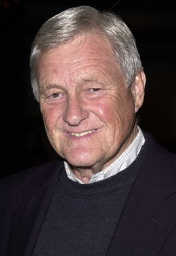
Orson Bean
From Wikipedia, the free encyclopedia
Born July 22, 1928 (1928-07-22) (age 80)
Burlington, Vermont
Occupation Film, stage, television actor
Orson Bean (born Dallas Frederick Burrows July 22, 1928) is an American film, television, and stage actor. He appeared frequently on televised game shows in the 1960s, 1970s and 1980s, but is perhaps best known as a long-time panelist on the television game show To Tell the Truth.
Bean was born in Burlington, Vermont, to George Frederick Burrows and his wife Marian A. Pollard; Bean is a second cousin to Calvin Coolidge, who was President of the United States at the time of his birth.[1] He made frequent guest appearances on The Tonight Show (with both Jack Paar and Johnny Carson). He was a regular on both Mary Hartman, Mary Hartman and its spin-off, Fernwood 2Nite, and also played storekeeper Loren Bray on the television series Dr. Quinn, Medicine Woman throughout its six-year run on CBS in the 1990s. He played John Goodman's homophobic father on the short-lived sitcom Normal, Ohio. And in a 1960 Twilight Zone episode, "Mr. Bevis", Bean played the title character.
On Broadway, he was the star of the original cast of Will Success Spoil Rock Hunter? (1955), and was featured in Subways Are for Sleeping (1961), for which he received a Tony Award nomination as Best Featured Actor in a Musical, as well as Never Too Late (1962). He also starred opposite Melina Mercouri in Illya Darling, the 1967 musical adaptation of the film Never on Sunday. In 1964 he produced the Obie Award winning Home Movies.
Two of his significant credits were playing the main characters Bilbo and Frodo Baggins in the 1977 and 1980 Rankin/Bass animated adaptations of J.R.R. Tolkien's The Hobbit, and The Return of the King.
Bean was blacklisted by the Hollywood movie studios in the 1950s for his outspokenly liberal political views.[2]
Bean has been married three times: to Jacqueline De Sibour (1956 - 1962); to Caroline Maxwell (1965 - 1981); and to actress Alley Mills (who is twenty-three years his junior) since 1993. Bean appeared in the sitcom Two and a Half Men, in a 2005 episode entitled "Does This Smell Funny to You?", playing a former playboy whose conquests included actresses Tuesday Weld and Anne Francis. More recently, he appeared in a 2007 episode of How I Met Your Mother.
He currently is the spokesman for J.G. Wentworth.
0 Replies
bobsmythhawk
1
Reply
Tue 22 Jul, 2008 06:52 am
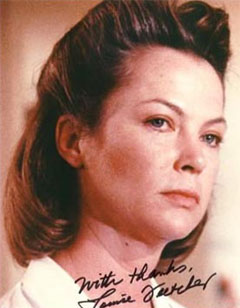
Louise Fletcher
From Wikipedia, the free encyclopedia
Born July 22, 1934 (1934-07-22) (age 74)
Birmingham, Alabama, U.S.
Spouse(s) Jerry Bick (1960-1978)
Awards won
Academy Awards
Best Actress
1975 One Flew Over the Cuckoo's Nest
BAFTA Awards
Best Actress
1975 One Flew Over the Cuckoo's Nest
Golden Globe Awards
Best Actress - Motion Picture Drama
1976 One Flew Over the Cuckoo's Nest
Louise Fletcher (born July 22, 1934) is an Academy Award- and Golden Globe-winning American actress.
Biography
Early life
Fletcher, the second of four children, was born in Birmingham, Alabama, the daughter of Estelle Caldwell and Reverend Robert Capers Fletcher, who was an Episcopalian minister from Arab, Alabama. Both of her parents were deaf and worked with the deaf and hard-of-hearing.[1] Fletcher's father founded more than 40 churches for the deaf in Alabama.[2] Fletcher and her siblings, Roberta, John and Georgianna,[2] were all born hearing without any hearing loss;[3] she was taught to speak by a hearing aunt, who also introduced her to acting. After attending the University of North Carolina, she traveled to Los Angeles, California, where she found work as a secretary by day and took acting lessons by night.
Career
Fletcher began appearing in several television productions, including the highest-rated episode of Maverick. She married Jerry Bick and took time off to raise her two children; she eventually divorced Bick, who died in 2004. In 1974, she returned to film in Thieves Like Us. Milo Forman saw her, and cast her (possibly because of her height and bearing) as McMurphy's nemesis Nurse Ratched in One Flew Over the Cuckoo's Nest, for which she won the Academy Award for Best Actress. When Fletcher accepted her Oscar, she used sign language to thank her parents,[4] having spent two hours on the phone with her sister the previous night brushing up on her signing skills.[2]
She also appeared in such films as The Cheap Detective, Exorcist II: The Heretic, Firestarter, The Lady in Red, Brainstorm, Flowers in the Attic, Big Eden, Two Moon Junction, and as Sebastian's aunt in Cruel Intentions. Fletcher also co-starred in made-for-tv movies such as The Karen Carpenter Story as Karen and Richard Carpenter's mother Agnes, and The Stepford Husbands.
Fletcher was nominated for an Emmy Award for her recurring role on the television series Picket Fences. She also had a continuing role in Star Trek: Deep Space Nine as the scheming Bajoran religious leader Kai Winn Adami. Fletcher played the character of Ruth Shorter, a supporting role, in the 2005 film, Aurora Borealis, alongside Joshua Jackson and Donald Sutherland, and appeared in the Fox Faith film The Last Sin Eater.
Personal life
Fletcher married literary agent and producer Jerry Bick in 1960, divorcing in 1977.[4] The couple had two sons, John Dashiell Bick and Andrew Wilson Bick,[5] for whom Fletcher took an 11 year hiatus from acting to raise.[4]
0 Replies
bobsmythhawk
1
Reply
Tue 22 Jul, 2008 06:56 am
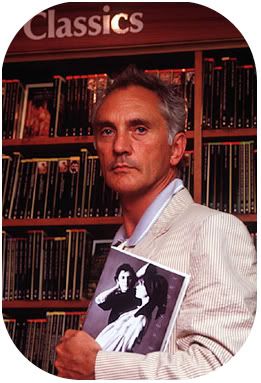
Terence Stamp
From Wikipedia, the free encyclopedia
Born July 22, 1939 (1939-07-22) (age 69)
Stepney, London, England
Terence Henry Stamp (born July 22, 1939[1]) is an Academy Award-nominated English actor.
Biography
Early life
Stamp, the eldest of five children, was born in Stepney, London, the son of Ethel Ester (née Perrott) and Thomas Stamp, who was a tugboat captain.[1][2] His early years were spent in the East End of London,[3] but later in his childhood the family moved to Plaistow, Essex (now Greater London). His brother, Chris, is a rock 'n roll impresario credited with helping to bring The Who to prominence during the 1960s. As his father was away for long periods with his job in the Merchant Navy, the young Stamp was mostly raised by his mother, grandmother, and aunts. He grew up idolizing the film actor Gary Cooper after his mother had taken him to see Beau Geste at the age of three. He was also inspired by James Dean.
On leaving school Stamp worked in a variety of advertising agencies in London, working his way up to a very respectable wage. Deep down he wanted to be an actor, a realisation that came when Stamp found he no longer had to serve two years National Service after being rejected for once having treatment on his feet.
Career
Stamp made his film debut in Peter Ustinov's 1962 film adaptation of Herman Melville's Billy Budd. Stamp's portrayal of the title character brought him not only an Academy Award nomination, but also international attention.
Stamp collaborated with some of the cinema's most revered filmmakers. Stamp starred in William Wyler's adaptation of John Fowles' The Collector (1965), opposite Samantha Eggar, and in Modesty Blaise (1966), for director Joseph Losey and producer Joe Janni. Stamp reteamed with producer Janni for two more projects: John Schlesinger's adaptation of Thomas Hardy's Far From The Madding Crowd (1967) starring Julie Christie, and Ken Loach's first feature film Poor Cow (1967).
Stamp then journeyed to Italy to star in Federico Fellini's Toby Dammit, a 50-minute portion of the Edgar Allan Poe film adaptation(s) Histoires extraordinaires (1968, aka Spirits of the Dead). Stamp lived in Italy for several years, during which time his film work included Pier Paolo Pasolini's Teorema (1968) opposite Silvana Mangano, and Stagione all'inferno, Una (1970). Stamp was considered for the title role of Alfie (1966), but turned it down.
His subsequent film credits included Alan Cooke's The Mind of Mr. Soames (1970), Richard Donner's Superman (1978) and Richard Lester's Superman II (1980) (as Kryptonian super-villain General Zod), Peter Brook's Meetings with Remarkable Men (1979), Stephen Frears' The Hit (1984). Also in 1984, he had the opportunity to play the Devil in a cameo in The Company of Wolves. He also starred in Richard Franklin's Link (1986), Ivan Reitman's Legal Eagles (1986), Michael Cimino's The Sicilian (1987), and Oliver Stone's Wall Street (1987). The film Beltenebros (1992, aka Prince of Shadows), in which Stamp starred for director Pilar Miro, was awarded the Silver Bear at the Berlin Film Festival.
Stamp began his fourth decade as an actor wearing some of the choicest of Lizzy Gardiner's Academy Award-winning costumes for the comedy The Adventures of Priscilla, Queen of the Desert (1994) for director Stefan Elliot and starring with Guy Pearce and Hugo Weaving.
In 1999, Stamp played a lead role in Steven Soderbergh's The Limey, to widespread critical acclaim at the Cannes Film Festival. For his performance, Stamp received nominations for Best Male Lead at the 2000 Independent Spirit Awards, and for Best British Actor at the London Film Critic Circle (ALFS) Awards. Stamp can also be seen in George Lucas' global blockbuster Star Wars - Episode I: The Phantom Menace (1999) as Chancellor Finis Valorum; Frank Oz's Bowfinger (1999) opposite Steve Martin and Eddie Murphy; and Red Planet (2000) opposite Val Kilmer and Tom Sizemore.
In recent years, Stamp has completed the features Ma femme est une actrice (2001, aka My Wife Is An Actress) for Timothy Burrill Productions; My Boss's Daughter (2003) opposite Ashton Kutcher; Disney's The Haunted Mansion (2003), opposite Eddie Murphy, and Elektra (2005), opposite Jennifer Garner. Stamp returned to the Superman mythos in two roles. Not only did he provide the voice of Clark Kent's father, Jor-El, in the WB\CW television series Smallville (2001-present), but, In a season six premiere, Stamp reprises his role of General Zod, his original Superman role.
In addition to his acting career, Stamp is an accomplished writer and author. He has published three volumes of his memoirs, including Stamp Album (written in tribute to his late mother), a novel entitled The Night, and a cookbook co-written with Elizabeth Buxton to provide alternative recipes for those who are wheat and dairy-intolerant.
Stamp's current projects include the video game Elder Scrolls IV: Oblivion, in which he plays the villainous Mankar Camoran, head preacher of the Mythic Dawn, an evil cult that worships the Daedra Lord Mehrunes Dagon; and the films Zombie Island and These Foolish Things. Stamp appeared in the music video for "At the Bottom of Everything" by Bright Eyes. Stamp has recently voiced the Prophet of Truth in Halo 3, replacing Michael Wincott. He next appeared as the villain in the film adaptation of Get Smart starring Steve Carell.
On July 7, 2007, Stamp gave a speech on Climate Change at the UK leg of Live Earth in Wembley Stadium, before introducing Madonna.
Personal life
In the 1960s, Stamp shared a flat with Michael Caine before and during their rise to fame.[4] In his autobiography, Double Feature, Stamp describes his life with Caine, including an incident in which Caine tried to force Stamp to reverse his decision to turn down the starring role in Alfie, which Caine later accepted. In his autobiography, What's it All About, Caine states that he "still wakes up sweating in the night as he sees Terence agreeing to accept my advice".
Stamp received extensive media coverage of his romances in the 1960s with film stars Julie Christie, Brigitte Bardot, and supermodel Jean Shrimpton. His and Julie Christie's romance, and their high profiles during London's 'swinging 60s', was at one point thought to be referenced in The Kinks' 1967 song, Waterloo Sunset, with the lines about "Terry and Julie". He and Jean Shrimpton were one of the most photographed couples of Mod London. It was after Shrimpton ended her relationship with Stamp that he moved to India. There, he lived in an ashram, dropping out from the society for several years.
On New Year's Eve 2002, Stamp married for the first time. His 29-year-old bride was Elizabeth, whom Stamp first met during the mid-1990s at a pharmacy in Bondi, New South Wales. A Eurasian of Australian and Singapore Chinese parentage, Elizabeth was raised in Singapore before moving to Australia in her early 20s to study pharmacology. The couple divorced on the grounds of his unreasonable behaviour in April 2008.[5]
0 Replies
bobsmythhawk
1
Reply
Tue 22 Jul, 2008 06:59 am
Danny Glover
From Wikipedia, the free encyclopedia
Born Danny Lebern Glover[1]
July 22, 1946 (1946-07-22) (age 62)
San Francisco, California, USA
Awards won
NAACP Image Awards
Outstanding Actor in a Motion Picture
1989 Lethal Weapon
1999 Beloved
Outstanding Actor in a Television Movie, Mini-Series or Dramatic Special
1990 Mandela
1995 Queen
2001 Freedom Song
Danny Lebern Glover[1] (born July 22, 1946) is an American actor, film director, and political activist.
Biography
Early life
Glover was born in San Francisco, California, the son of Carrie (née Hunley) and James Glover, both of whom were postal workers and were active in the NAACP. Glover grew up with a love for sports just like his father. Glover's mother, daughter of a midwife, was born in Louisville, Georgia and graduated from Paine College.[2] Glover graduated from George Washington High School (San Francisco) before attending American University and matriculating at San Francisco State University. At university, he also met his future wife Asake Bomani, whom he married in 1975. They have been divorced for some time now.
In his late twenties, Glover enrolled in the Black Actors Workshop at the American Conservatory Theater, a regional training program in San Francisco. Glover also trained with Jean Shelton at the Shelton Actors Lab in San Francisco. In an interview on Inside the Actor's Studio, Glover credited Shelton for much of his development as an actor. Deciding that he wanted to be an actor, Glover resigned from his city administration job and soon began his career as a stage actor, which eventually brought him to Los Angeles.
Glover suffered from epilepsy as a teenager and young adult; according to his own account, he "developed a way of concentrating so that seizures wouldn't happen." Using this technique, which he describes as a type of self-hypnosis, Glover says he hasn't suffered a seizure since the age of 35.[3]
Career
He has had a variety of film, stage, and television roles, and is best known for playing Los Angeles police Sgt. Roger Murtaugh in the Lethal Weapon series of action films, and the abusive husband to Whoopi Goldberg's character Celie in The Color Purple. He was given top billing for the first time in Predator 2, the sequel to the sci-fi actioner Predator. In addition, Glover has been a voice actor in many children's movies. Among many awards, he has won five NAACP Image Awards, for his achievements as an actor of color . Danny Glover also worked in 2001 blockbuster Royal Tenenbaums also starring Gywneth Paltrow, Anjelica Huston, Ben Stiller and Owen Wilson.
He joined the ranks of actors, such as Humphrey Bogart, Elliott Gould, and Robert Mitchum, who have portrayed Raymond Chandler's private eye detective Philip Marlowe in the episode 'Red Wind' of the Showtime network's 1995 series Fallen Angels. Glover made his directorial debut with the Showtime channel short film Override in 1994. Also in 1994, Glover and actor Ben Guillory formed the Robey Theatre Company in Los Angeles, focusing on theatre by and about the Black experience.
In 2005, Glover and Joslyn Barnes announced plans to make "No FEAR," a movie about Dr. Marsha Coleman-Adebayo's experience.[4] Coleman-Adebayo won a 2000 jury trial against the US Environmental Protection Agency (EPA). The jury found the EPA guilty of violating the civil rights of Coleman-Adebayo on the basis of race, sex, color and a hostile work environment, under the Civil Rights Act of 1964. Coleman-Adebayo was terminated shortly after she revealed the environmental and human disaster taking place in the Brits, South Africa, vanadium mines. Her experience inspired passage of the No FEAR Act.
In May 2007, it was announced that the Venezuelan Government would give Glover $18 million to make a film version of the 18th-century Haiti slave uprising that was led by Toussaint Louverture.[5] The Asociación Nacional de Autores Cinematográficos (ANAC) and several prominent Venezuelan filmmakers such as Solveig Hoogesteijn, Jonathan Jakubowicz, Franco de Peña and José Ramón Novoa criticized such large investment in Glover's movie since the same amount of money is equivalent to the budget for 4 years given by the Venezuelan government to the National Film Board of Venezuela (CNAC) and could could support the production of over 34 Venezuelan films.[6] An additional $9.840.505 was approved by the Venezuelan National Assembly in April of 2008.[7]
Glover is known for saying "I'm too old for this ****!" in multiple films.
Activism
While attending San Francisco State University, Glover was a member of the Black Students Union[8] who along with the Third World Liberation Front led the five month strike for Ethnic Studies. Not only did this help to create the first school of Ethnic Studies in the U.S., but it was also the longest student strike in the history of the United States.[9] During the strike, he protested alongside Hari Dillon who is now the president of the Vanguard Public Foundation, of which Glover sits on the advisory board.
Glover serves as a board member to numerous national and international organizations. He is presently chair of the TransAfrica Forum, "a non-profit organization dedicated to educating the general public ?- particularly African-Americans ?- on the economic, political and moral ramifications of U.S. foreign policy as it affects Africa and the Diaspora in the Caribbean and Latin America" and a board member of Cheryl Byron's Something Positive Dance Group. In March 1998, he was appointed ambassador to the United Nations Development Programme.
Glover is among a number of high-profile U.S. supporters of Venezuelan president Hugo Chávez. The group also includes singer Harry Belafonte and Princeton University scholar Cornel West, who have sided with the Venezuelan president against accusations of democratic abuses.[10]
Between 2007 and 2008, Glover has received loans close to U.S. $28 million from the Venezuelan government to make a film based on the life of François Dominique Toussaint-Louverture, an Haitian freedom fighter.[11][12]
He also serves on the Advisory Council for TeleSUR, "Television of the South", a pan-Latin American television network based in Caracas, financed by the Venezuelan government. It began broadcasting on July 24, 2005. His role in this capacity and his resulting interaction with Chávez have drawn criticism for Glover from some Western media.[13]
On Friday May 4, 2007 Glover endorsed former Senator John Edwards for the Democratic nomination for President in the 2008 Presidential Race.[14] After Edwards withdrew from the race, Glover endorsed Barack Obama.[15]
On January 24, 2008, he was convicted of trespassing during a union rally at a Sheraton Hotel in Niagara Falls, Ontario. He was convicted along with union representative Alex Dagg and Ontario Federation of Labour president Wayne Samuelson.[16]Although Canadian Niagara Hotels were seeking $22,000 in a private prosecution, Glover, Dagg and Samuelson were sentenced with a $100 fine on February 8, 2008. The justice of the peace suggested that "the prosecution was unnecessary to protect the interests of the hotel's owner, and that the company should have put more effort toward good faith negotiations with the union".[17]
0 Replies
bobsmythhawk
1
Reply
Tue 22 Jul, 2008 07:01 am
A minister was preoccupied with thoughts of how he was going to ask the congregation to come up with more money than they were expecting for repairs to the church building. Therefore, he talked with the organist to see what kind of inspirational music she could play after the announcement about the finances to get the congregation in a giving mood. "Don't worry," she said. "I'll think of something." During the service, the minister paused and said, "Brothers and Sisters, we are in great difficulty; the roof repairs cost twice as much as we expected, and we need $4,000 more. Any of you who can pledge $100 or more, please stand up." Just at that moment, the organist started playing, "The Star Spangled Banner."
0 Replies
Letty
1
Reply
Tue 22 Jul, 2008 08:45 am
edgar, thanks for the soft tones. That's exactly what we need this morning, and firefly, Blue Skies is perfect for the day.
Hey, hawkman. Once again we learn something from your celeb info. "Gay around the edges..."? Margaret was quite clever with that one.
Also love your little anecdote about how music got the congregation to pledge support. Thanks for the smile.
Wow! That was fabulous, edgar. You're right. I don't think many of us realize that Bobby did Ritchie.
Been having a wee bit of trouble today, y'all, and I would like to educate our listeners to the beauty of Romania. I happened to meet a man from Romania and we had a delightful exchange. He seemed pleased that I recognized Romanian as one of the Romance languages.