106
   

WA2K Radio is now on the air


hamburger
 
  1  
Reply Sat 1 Mar, 2008 04:57 pm
let's see and hear what's going on in new zealand :wink:

http://www.youtube.com/watch?v=necsU9zaLpw
0 Replies
 
Letty
 
  1  
Reply Sat 1 Mar, 2008 05:12 pm
My word, hbg. I'm not certain about those native New Zealand dances, but I know this one is maori 'cause Raggedy told me. It's one of those that I can't figure out why I know it, Canada.

http://www.youtube.com/watch?v=XgTRrrekaMo
0 Replies
 
edgarblythe
 
  1  
Reply Sat 1 Mar, 2008 05:28 pm
http://www.youtube.com/watch?v=ANRPmTZRqkg

Eddie Cantor
0 Replies
 
hamburger
 
  1  
Reply Sat 1 Mar, 2008 05:32 pm
Shocked Laughing

i don't know what's funnier , the dance or the GERMAN ( :wink: ) commentary !
perhaps the german commentator was running for cover :wink:

http://www.youtube.com/watch?v=kd0kDxP04eI
0 Replies
 
Letty
 
  1  
Reply Sat 1 Mar, 2008 06:08 pm
Well, edgar and hbg, thanks for the great songs by Eddie and that other dude. Razz

Have a dinner date tonight at a great new restaurant called Le Mer, and it's not even French.

Later all.

This is cyber space, WA2K radio
0 Replies
 
djjd62
 
  1  
Reply Sat 1 Mar, 2008 06:35 pm
this is really cool

Dolphins Play With Bubble Rings
0 Replies
 
hamburger
 
  1  
Reply Sat 1 Mar, 2008 07:36 pm
for letty !

a little AFTER DINNER MUSIC

http://www.youtube.com/watch?v=CL0IH1VTj8g

and one more time !

http://www.youtube.com/watch?v=q-9mfTn87mI&feature=related
0 Replies
 
edgarblythe
 
  1  
Reply Sat 1 Mar, 2008 11:50 pm
http://www.youtube.com/watch?v=qcQoq8cruis

Laura Nyro
0 Replies
 
Letty
 
  1  
Reply Sun 2 Mar, 2008 05:24 am
Good morning, WA2K radio audience.

I had a delightful evening and the food was par excellence.

hbg, I adored your after dinner music and the odd coincidence is that a man from Puerto Rica sat at our table and played Malaguena on acoustic guitar.

I also recognized Song of Love, and Tico Tico. Loved it.

dj, I think I watched that amazing video once before, but it was worth a second look, buddy.

edgar, Laura Nyro was absolutely marvelous. What a pity that she wasn't more popular, Texas. All this time, folks, I thought that Blood, Sweat, and Tears had originally written and performed that song, "And When I Die". Thanks to our contributors, we learn so much here on our little cyber radio. Pity that she died so early in her life.

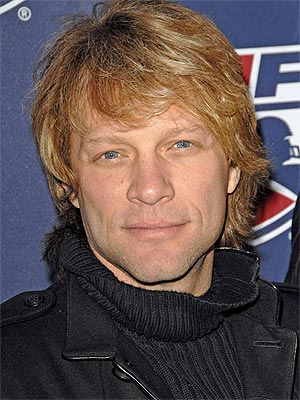
Well, today is Bon Jovi's birthday, so here is one by them.

http://www.youtube.com/watch?v=KtzcOqv_P-4
0 Replies
 
edgarblythe
 
  1  
Reply Sun 2 Mar, 2008 09:39 am
Last view ever of Laurel and Hardy

http://www.youtube.com/watch?v=IYAeYj8-G4w&feature=related
0 Replies
 
Letty
 
  1  
Reply Sun 2 Mar, 2008 09:58 am
That is one amazing video, edgar.

Oliver: Stanley, I don't believe that you have ever met my wife
Stanley: Yes, I never did. Razz

Here's a different approach to a lovely jazz ballad, y'all.

http://www.youtube.com/watch?v=HITJoI0HVjM&feature=related
0 Replies
 
bobsmythhawk
 
  1  
Reply Sun 2 Mar, 2008 11:02 am
Dr. Seuss
From Wikipedia, the free encyclopedia

Born March 2, 1904(1904-03-02)
Springfield, Massachusetts U.S.
Died September 24, 1991 (aged 87)
La Jolla, California, U.S.

Theodor Seuss Geisel (March 2, 1904 - September 24, 1991) was an American writer and cartoonist best known for his classic children's books under the pen name Dr. Seuss, including The Cat in the Hat, Green Eggs and Ham, How the Grinch Stole Christmas and One Fish Two Fish Red Fish Blue Fish. His books have become staples for many children and their parents. Among Dr. Seuss' trademarks were his rhyming text and his outlandish creatures. He wrote and illustrated 44 children's books. Many of his books have been adapted into short animated programs. His books The Cat in the Hat, The Grinch and Horton Hears a Who! have been adapted into feature films, and the musical Seussical is an adaption of all his books.


Life and career

Theodor Seuss Geisel was born on March 2, 1904 in Springfield, Massachusetts[1] to Henrietta Seuss and Theodor Robert Geisel.[2] He had two sisters, Marnie and Henrietta, who died from pneumonia just before the age of two. He attended Fremont Intermediate School from age 12 to age 14. His father was a parks superintendent in charge of Forest Park (Springfield), a large park that included a zoo and was located three blocks from a library. Both Geisel's father and grandfather were brewmasters in Springfield, which may have influenced his views on Prohibition. As a freshman member of the Dartmouth College class of 1925, he became a member of Sigma Phi Epsilon. He also joined the Dartmouth Jack-O-Lantern, eventually rising to the rank of editor-in-chief. (He took over the post from his close friend, author Norman MacLean.) However, after Geisel was caught throwing a drinking party (and thereby violating Prohibition laws), the school insisted that he resign from all extracurricular activities. In order to continue his work on the Jack-O-Lantern without the administration's knowledge, Geisel began signing his work with the pen name "Seuss" (which was both his middle name and his mother's maiden name). His first work signed as "Dr. Seuss" appeared after he graduated, six months into his work for humor magazine The Judge where his weekly feature Birdsies and Beasties appeared.[3] The family, having immigrated from Germany, would have pronounced their name as "zoice", the standard pronunciation in German (according to census, Geisel's mother was born in Massachusetts, and it was her parents who were the immigrants). Alexander Liang, who served with Geisel on the staff of the Jack-O- Lantern and was later a professor at Dartmouth, illustrated this point.

Though Geisel himself has been quoted as saying "Seuss -- rhymes with voice", the name is almost universally pronounced in English with an initial s sound and rhyming with "juice".[4] Geisel also used the pen name Theo. LeSieg (Geisel spelled backwards) for books he wrote but others illustrated.

He entered Lincoln College, Oxford, intending to earn a Ph.D in literature. At Oxford he met his future wife Helen Palmer; he married her in 1927, and returned to the United States without earning the degree. The "Dr." in his pen name is an acknowledgment of his father's unfulfilled hopes that Seuss would earn a doctorate at Oxford.

He began submitting humorous articles and illustrations to Judge, The Saturday Evening Post, Life, Vanity Fair, and Liberty. One notable "Technocracy Number" made fun of the Technocracy movement and featured satirical rhymes at the expense of Frederick Soddy. He became nationally famous from his advertisements for Flit, a common insecticide at the time. His slogan, "Quick, Henry, the Flit!" became a popular catchphrase. Geisel supported himself and his wife through the Great Depression by drawing advertising for General Electric, NBC, Standard Oil, and many other companies. He also wrote and drew a short-lived comic strip called Hejji in 1935.[3]

In 1937, while Seuss was returning from an ocean voyage to Europe, the rhythm of the ship's engines inspired the poem that became his first book, And to Think That I Saw It on Mulberry Street. Seuss wrote three more children's books before World War II (see list of works below), two of which are, atypically for him, in prose.

As World War II began, Dr. Seuss turned to political cartoons, drawing over 400 in two years as editorial cartoonist for the left-wing New York City daily newspaper, PM. Dr. Seuss' political cartoons, later published in Dr. Seuss Goes to War, opposed the viciousness of Hitler and Mussolini and were highly critical of isolationists, most notably Charles Lindbergh, who opposed American entry into the war. One cartoon[5] depicted all Japanese Americans as latent traitors or fifth-columnists, while at the same time other cartoons deplored the racism at home against Jews and blacks that harmed the war effort. His cartoons were strongly supportive of President Roosevelt's conduct of the war, combining the usual exhortations to ration and contribute to the war effort with frequent attacks on Congress (especially the Republican Party), parts of the press (such as the New York Daily News and Chicago Tribune), and others for criticism of Roosevelt, criticism of aid to the Soviet Union, investigation of suspected Communists, and other offenses that he depicted as leading to disunity and helping the Nazis, intentionally or inadvertently. In 1942, Dr. Seuss turned his energies to direct support of the U.S. war effort. First, he worked drawing posters for the Treasury Department and the War Production Board. Then, in 1943, he joined the Army and was commander of the Animation Dept of the First Motion Picture Unit of the United States Army Air Forces, where he wrote films that included Your Job in Germany, a 1945 propaganda film about peace in Europe after World War II, Design for Death, a study of Japanese culture that won the Academy Award for Best Documentary in 1947, and the Private Snafu series of adult army training films. While in the Army, he was awarded the Legion of Merit. Dr. Seuss' non-military films from around this time were also well-received; Gerald McBoing-Boing won the Academy Award for Best Short Subject (Animated) in 1950.

Despite his numerous awards, Dr. Seuss never won the Caldecott Medal nor the Newbery. Three of his titles were chosen as Caldecott runners-up (now referred to as Caldecott Honor books): McElligot's Pool (1947), Bartholomew and the Oobleck (1949), and If I Ran the Zoo (1950).

After the war, Dr. Seuss and his wife moved to La Jolla, California. Returning to children's books, he wrote what many consider to be his finest works, including such favorites as If I Ran the Zoo, (1950), Scrambled Eggs Super! (1953), On Beyond Zebra! (1955), If I Ran the Circus (1956), and How the Grinch Stole Christmas! (1957).

At the same time, an important development occurred that influenced much of Seuss' later work. In May 1954, Life magazine published a report on illiteracy among school children, which concluded that children were not learning to read because their books were boring. Accordingly, Seuss' publisher made up a list of 400 words he felt were important and asked Dr. Seuss to cut the list to 250 words and write a book using only those words. Nine months later, Seuss, using 220 of the words given to him, completed The Cat in the Hat. This book was a tour de force?-it retained the drawing style, verse rhythms, and all the imaginative power of Seuss' earlier works, but because of its simplified vocabulary could be read by beginning readers. A rumor exists,that in 1960, Bennett Cerf bet Dr. Seuss $50 that he couldn't write an entire book using only fifty words. The result was supposedly Green Eggs and Ham. The additional rumor that Cerf never paid Seuss the $50 has never been proven and is most likely untrue. These books achieved significant international success and remain very popular.

Dr. Seuss went on to write many other children's books, both in his new simplified-vocabulary manner (sold as "Beginner Books") and in his older, more elaborate style. In 1982 Dr. Seuss wrote "Hunches in Bunches". The Beginner Books were not easy for Seuss, and reportedly he labored for months crafting them.

At various times Seuss also wrote books for adults that used the same style of verse and pictures: The Seven Lady Godivas; Oh, The Places You'll Go!; and You're Only Old Once.

On October 23, 1967, during a very difficult illness, Dr. Seuss' wife, Helen Palmer Geisel, committed suicide. Seuss married Audrey Stone Dimond on June 21, 1968. Seuss himself died, following several years of illness, in La Jolla, California on September 24, 1991.

On December 1, 1995 UCSD's University Library Building was renamed Geisel Library in honor of Audrey and Seuss for the generous contributions they have made to the library and their devotion to improving literacy.[6]

In 2002, the Dr. Seuss National Memorial Sculpture Garden opened in his birthplace of Springfield, Massachusetts; it features sculptures of Dr. Seuss and of many of his characters.

Though he devoted most of his life to writing children's books, he never had any children himself.


Poetic meters


Dr. Seuss wrote most of his books in a verse form that in the terminology of metrics would be characterized as anapestic tetrameter, a meter employed also by Lord Byron and other poets of the English literary canon. (It is also the meter of the famous Christmas poem A Visit From St. Nicholas, more familiarly known as "'Twas the Night Before Christmas".)

Anapestic tetrameter consists of four rhythmic units (anapests), each composed of two weak beats followed by one strong, schematized below:

x x X x x X x x X x x X
Often, the first weak syllable is omitted, and/or an additional weak syllable is added at the end. A typical line (the first line of If I Ran the Circus) is:

In ALL the whole TOWN the most WONderful SPOT
Seuss generally maintained this meter quite strictly, until late in his career, when he no longer maintained strict rhythm in all lines. The consistency of his meter was one of his hallmarks; the many imitators and parodists of Seuss are often unable to write in strict anapestic tetrameter, or are unaware that they should, and thus sound clumsy in comparison with the original.

Seuss also wrote verse in trochaic tetrameter, an arrangement of four units each with a strong followed by a weak beat:

X x X x X x X x
An example is the title (and first line) of One Fish Two Fish Red Fish Blue Fish. The formula for trochaic meter permits the final weak position in the line to be omitted, which facilitates the construction of rhymes.

Seuss generally maintained trochaic meter only for brief passages, and for longer stretches typically mixed it with iambic tetrameter:

x X x X x X x X
which is easier to write. Thus, for example, the magicians in Bartholomew and the Oobleck make their first appearance chanting in trochees (thus resembling the witches of Shakespeare's Macbeth):

SHUFFle, DUFFle, MUZZle, MUFF
then switch to iambs for the oobleck spell:

Go MAKE the OOBleck TUMBle DOWN
On EVery STREET, in EVery TOWN!
In Green Eggs and Ham, Sam-I-Am generally speaks in trochees, and the exasperated character he proselytizes replies in iambs.

While most of Seuss' books are either uniformly anapestic or iambic-trochaic, a few mix triple and double rhythms. Thus, for instance, Happy Birthday to You is generally written in anapestic tetrameter, but breaks into iambo-trochaic meter for the "Dr. Derring's singing herrings" and "Who-Bubs" episodes.


Artwork

Dr. Seuss' earlier artwork often employed the shaded texture of pencil drawings or watercolors, but in children's books of the postwar period he generally employed the starker medium of pen and ink, normally using just black, white, and one or two colors. Later books such as The Lorax used more colors.

Seuss' figures are often rounded and somewhat droopy. This is true, for instance, of the faces of the Grinch and of the Cat in the Hat. It is also true of virtually all buildings and machinery that Seuss drew: although these objects abound in straight lines in real life, for buildings, this could be accomplished in part through choice of architecture. For machines, for example, If I Ran the Circus includes a droopy hoisting crane and a droopy steam calliope.

Seuss evidently enjoyed drawing architecturally elaborate objects. His endlessly varied (but never rectilinear) palaces, ramps, platforms, and free-standing stairways are among his most evocative creations. Seuss also drew elaborate imaginary machines, of which the Audio-Telly-O-Tally-O-Count, from Dr. Seuss' Sleep Book, is one example. Seuss also liked drawing outlandish arrangements of feathers or fur, for example, the 500th hat of Bartholomew Cubbins, the tail of Gertrude McFuzz, and the pet for girls who like to brush and comb, in One Fish Two Fish.

Dr. Seuss' images often convey motion vividly. He was fond of a sort of "voilà" gesture, in which the hand flips outward, spreading the fingers slightly backward with the thumb up; this is done by Ish, for instance, in One Fish Two Fish when he creates fish (who perform the gesture themselves with their fins), in the introduction of the various acts of If I Ran the Circus, and in the introduction of the Little Cats in The Cat in the Hat Comes Back. He was also fond of drawing hands with interlocked fingers, which looked as though the character was twiddling their thumbs.

Seuss also follows the cartoon tradition of showing motion with lines, for instance in the sweeping lines that accompany Sneelock's final dive in If I Ran the Circus. Cartoonist's lines are also used to illustrate the action of the senses (sight, smell, and hearing) in The Big Brag and even of thought, as in the moment when the Grinch conceives his awful idea.


Recurring images

Seuss' early work in advertising and editorial cartooning produced sketches that received more perfect realization later in the children's books. Often, the expressive use to which Seuss put an image later on was quite different from the original.[7]

An editorial cartoon of July 16, 1941[8] depicts a whale resting on the top of a mountain, as a parody of American isolationists, especially Charles Lindbergh. This was later rendered (with no apparent political content) as the Wumbus of On Beyond Zebra (1955). Seussian whales (cheerful and balloon-shaped, with long eyelashes) also occur in McElligot's Pool, If I Ran the Circus, and other books.
Another editorial cartoon from 1941[9] shows a long cow with many legs and udders, representing the conquered nations of Europe being milked by Adolf Hitler. This later became the Umbus of On Beyond Zebra.
The tower of turtles in a 1942 editorial cartoon[10] prefigures a similar tower in Yertle the Turtle. This theme also appeared in a Judge cartoon as one letter of a hieroglypic message, and in Seuss' short-lived comic strip Hejji. Seuss once stated that Yertle the Turtle was Adolf Hitler.[11]
Little cats A B and C (as well as the rest of the alphabet) who spring from each other's hats appeared in a Ford ad.
The connected beards in Did I Ever Tell You How Lucky You Are? appear frequently in Dr. Seuss' work, most notably in Hejii, which featured two goats joined at the beard, The 5000 Fingers of Dr. T, which featured two roller-skating guards joined at the beard, and a political cartoon in which Nazism and the America First movement are portrayed as "the men with the Siamese Beard."
Seuss' earliest elephants were for advertising and had somewhat wrinkly ears, much as real elephants do.[12] With And to Think that I Saw it on Mulberry Street (1937) and Horton Hatches the Egg (1940), the ears became more stylized, somewhat like angel wings and thus appropriate to the saintly Horton. During World War II, the elephant image appeared as an emblem for India in four editorial cartoons.[13] Horton and similar elephants appear frequently in the postwar children's books.
While drawing advertisements for Flit, Seuss became adept at drawing insects with huge stingers,[14] shaped like a gentle S-curve and with a sharp end that included a rearward-pointing barb on its lower side. Their facial expressions depict gleeful malevolence. These insects were later rendered in an editorial cartoon as a swarm of Allied aircraft[15] (1942), and again as the Sneedle of On Beyond Zebra, and yet again as the Skritz in I Had Trouble in Getting to Solla Sollew.

Adaptations of Dr. Seuss' work

For most of his career, Dr. Seuss was reluctant to have his characters marketed in contexts outside of his own books. However, he did allow a few animated cartoons, an art form in which he himself had gained experience during the Second World War.

Seuss' first cartoon adaptation was Horton Hatches the Egg in 1942. It was animated at Warner Brothers, the same studio for which he co-created Private Snafu. Directed by Robert Clampett Horton was presented as part of the Looney Tunes series and included a number of gags not present in the original narrative, such as a fish committing suicide and the lead antagonist's affinity for Katharine Hepburn.

In 1966, Seuss authorized the eminent cartoon artist Chuck Jones, his friend and former colleague from the war, to make a cartoon version of How the Grinch Stole Christmas!. Seuss, as "Ted Geisel", is credited as a co-producer along with Jones. This cartoon was very faithful to the original book. It is considered a classic by many to this day, and is in the large catalog of annual Christmas television specials. Several more animated specials based on Seuss' work followed, including cartoon versions of Horton Hears a Who!, The Lorax and The Cat in the Hat in 1971, but the latter was considered less successful.

Toward the end of his life, Seuss seems to have relaxed his policy, and several other cartoons and toys were made featuring his characters, usually the Cat in the Hat and the Grinch. A Soviet paint-on-glass-animated short film called Welcome was made in 1986; an adaptation of Thidwick the Big-Hearted Moose. The last adaptation of Seuss' works before he died was The Butter Battle Book, a TV special based on the book of the same name, and was directed by adult animation legend, Ralph Bakshi. Seuss himself called the special "the most faithful adaptation of his work." When Seuss died of cancer at the age of 87 in 1991, his widow Audrey Geisel was placed in charge of all licensing matters. She approved a live-action film version of How the Grinch Stole Christmas starring Jim Carrey, as well as a Seuss-themed Broadway musical called Seussical (both released in 2000). "The Grinch" is now in a limited engagement run on Broadway after premiering in 1998 (under the title How the Grinch Stole Christmas!) at the Old Globe Theatre in San Diego where it has become a Christmas tradition. A live-action film based on The Cat in the Hat was released in 2003, featuring Mike Myers as the title character. Audrey Geisel was said to have been very vocal in her dislike of the film, and is believed to have said there would be no further live-action adaptations of Seuss' books.[16] Set for release in 2008 is a CGI animated film adaptation of Horton Hears a Who!.

Dr. Seuss' books and characters also now appear in an amusement park: the Seuss Landing 'island' at the Islands of Adventure theme park in Orlando, Florida. Product tie-ins (cereal boxes, and so on) have also been implemented. To stay true to the books, there is not one single straight line in all of Seuss Landing: everything curves around.

Trivia


Dr Seuss was frequently confused, by the US Postal Service among others, with Dr Suess (cf Hans Suess) his contemporary living in the same locality, La Jolla. Both names have been posthumously linked together: The personal papers of Hans Suess are housed in the Geisel Library at UCSD [8].
The National Education Association celebrates March 2, Dr. Seuss' Birthday, as Read Across America Day.
In November 2004, an edition of MAD Magazine featured a cover story in which lines from Seuss' books were compared with supposedly similar lines from speeches made by George W. Bush. It was titled "The Strange Similarities Between the Bush Administration and the World of Dr. Seuss." The cover drawing was of a Cat in the Hat that resembled Bush.[17]
There is a song by the now-defunct doom metal band Acid Bath titled "Dr. Seuss is dead", from the album When The Kite String Pops.
The "filk"/parody artist Tom Smith has a song on his album "The Debasement Tapes" called
"500 Hats". [18].Set to the tune of The Proclaimers' "500 Miles", it mentions many of Dr. Seuss' works including "Butter Battle", "Cat in the Hat", "Green Eggs and Ham", and "Horton Hears a Who".
0 Replies
 
bobsmythhawk
 
  1  
Reply Sun 2 Mar, 2008 11:07 am
Desi Arnaz
From Wikipedia, the free encyclopedia

Born Desiderio Alberto Arnaz y de Acha III
March 2, 1917(1917-03-02)
Santiago de Cuba, Cuba
Died December 2, 1986 (aged 69)
Del Mar, California, United States
Years active 1936 - 1986
Spouse(s) Lucille Ball (1940 - 1960)
Edith Mack Hirsch (1963 - 1985; her death)

Desi Arnaz (born Desiderio Alberto Arnaz y de Acha III) (March 2, 1917 - December 2, 1986) was a Cuban-born American musician, actor, comedian and television producer.


Early life

Desi Arnaz was born to a wealthy family in Santiago de Cuba. His ancestors had been among the original recipients of Spanish land grants in the eighteenth century. His father, Desidero Alberto Arnaz (March 8, 1894 - May 31, 1973) was Santiago's youngest mayor and then served in the Cuban House of Representatives. The 1933 revolution, led by Fulgencio Batista, overthrew the American-backed President Gerardo Machado, landed his father in jail for six months, and stripped his family of its wealth and power. Arnaz' father was released when U.S. officials, who believed him to be neutral during the revolt, intervened on his behalf. Arnaz and his parents then fled to Miami, Florida.


Music career

Arnaz began his career as a professional musician in 1936 as an Afro-Cuban jazz musician, playing guitar and percussion for a Latin American music Latin orchestra. He took a pay cut to work in New York City for mentor Xavier Cugat, whom he would later describe as a world-class miser/cheapskate but excellent teacher. Arnaz returned to Miami six months later to lead his own Latin musical group. It was there he introduced America to the conga line. He returned to New York after forming his own orchestra.

Arnaz was equally successful artist. Beginning his musical career in 1937, he released what became his signature song, the Santeria-flavored "Babalú", in 1946. The song was written by Margarita Lecuona, a renowned composer and cousin of famed Cuban composers Ernesto and Ernestina Lecuona. "Babalú" was released for RCA Victor.


Film career

In 1939, he starred on Broadway in the successful musical Too Many Girls. He then went to Hollywood to appear in the 1940 movie version at RKO, which starred actress and comedienne Lucille Ball.

Arnaz appeared in several movies in the 1940s, most notably Bataan (1943). Shortly after he received his draft notice, but before he was actually inducted, he injured his knee. Although he made it through boot camp, he was eventually classified for limited service, and ended up directing United Service Organization (U.S.O.) programs at a military hospital in the San Fernando Valley. In his memoirs, he recalled discovering that the first thing soldiers requested was almost invariably a glass of cold milk, so he arranged for beautiful starlets to greet the wounded soldiers as they disembarked and pour milk for them. After leaving the Army, he formed another orchestra, which was successful in live appearances and recordings. After he became engaged in television, he kept the orchestra on his payroll throughout the period he remained an active producer.


I Love Lucy

Desi produced and starred in I Love Lucy, in which he played a fictitious version of himself, Cuban orchestra leader Ricky Ricardo. His co-star was his real-life wife, Lucille Ball, who played Ricky's wife, Lucy. Television executives had been pursuing Ball to adapt her very popular radio series My Favorite Husband for television. Ball insisted on Arnaz playing her on-air spouse so the two would be able to spend more time together. The original premise was for the couple to portray Lucy & Larry Lopez, a successful show business couple (he a band leader, she an actress) whose glamorous careers interfered with their efforts to maintain a normal marriage. Market research indicated, however, that this scenario would not be popular, so Arnaz changed it to make Ricky a struggling young orchestra leader and Lucy an ordinary housewife who had showbiz fantasies but no talent. Desi would often appear at, and later own, the Tropicana Club which, under his ownership, he renamed Club Babalu. Initially, the idea of having Ball and the distinctly Latino Arnaz portray a married couple encountered resistance as they were told that Desi's Cuban accent and Latin style would not be agreeable to American viewers. The couple overcame these objections, however, by touring together in a live vaudeville act they developed with the help of Spanish clown, Pepito Perez, together with Ball's radio show writers. Much of the material from their vaudeville act was used in the original "I Love Lucy" pilot, including Lucy's memorable seal routine. (The pilot originally ran as the third episode of the show's first season.)


Desilu Productions

With Ball, he founded Desilu Productions. At this time, most television programs were broadcast live, and as the largest markets were in New York, the rest of the country received only kinescope images. Karl Freund, Arnaz' cameraman, developed the multiple-camera setup production style using adjacent sets that became the standard for all subsequent situation comedies to this day. The use of film enabled every station around the country to broadcast high-quality images of the show. Initially, Arnaz was told that it would be impossible to allow an audience onto a sound stage, but he worked with the famous cameraman Karl Freund to design a set that would accommodate an audience, allow filming, and also adhere to fire and safety codes.

Network executives considered the use of film an unnecessary extravagance. Arnaz convinced them to allow Desilu to cover all additional costs associated with the filming process, under the stipulation that Desilu owned and controlled all rights to the film. Arnaz' unprecedented arrangement is widely considered to be one of the shrewdest deals in television history. As a result of his foresight, Desilu reaped the profits from all reruns of the series.

Arnaz also pushed the network to allow them to show Lucille Ball while she was pregnant. According to Arnaz, the CBS network told him, "You cannot show a pregnant woman on television." Arnaz consulted a priest, a rabbi, and a minister, all of whom told him that there would be nothing wrong with showing a pregnant Lucy or with using the word pregnant. The network finally relented and let Arnaz and Ball weave the pregnancy into the story line, but remained adamant about eschewing use of pregnant, so Arnaz substituted expecting, pronouncing it 'spectin' in his Cuban accent. Oddly, the official title of the episode announcing the pregnancy was "Lucy Is Enceinte," employing the French word for pregnant.

In addition to I Love Lucy, he produced December Bride, The Mothers-in-Law, The Lucy Show, Those Whiting Girls, Our Miss Brooks, The Danny Thomas Show, Leave It to Beaver, The Andy Griffith Show, and The Untouchables, all Top Ten shows in their time, and the 1956 feature film Forever, Darling, in which he and Ball starred. His foresight in filming and retaining post-broadcast ownership of shows had a huge impact on the future of television syndication (reruns).


Beliefs

Arnaz and Ball avoided racial or ethnic jokes. Arnaz recalled that the only exception consisted of making fun of Ricky Ricardo's accent, and noted that even these jokes worked only when Lucy, as his wife, did the mimicking. "When Fred and Ethel made fun of Ricky's accent, they didn't get a laugh".[citation needed]

Arnaz was patriotic; in his memoirs, the first object of thanks is the United States itself: "I know of no other country in the world", he wrote, in which "a sixteen-year old kid, broke and unable to speak the language" could reach the success he had. Over the show's six-year run, the fortunes of the Ricardos mirror that of the archetypal 1950s American Dream: At first, they live in a tiny brownstone apartment; Ricky's fortunes continue to improve, and they move into a slightly larger one with a view after Little Ricky is born. Later, Ricky gets his big break and goes to Hollywood; shortly after returning to New York, all of them have the chance to travel through Europe. Finally, Lucy and Ricky head for a house in the suburbs.


Marriages

Arnaz married Lucille Ball on November 30, 1940 and initiated divorce proceedings in 1944, but reconciled before the interlocutory decree became final. He and Ball are the parents of actress Lucie Arnaz (born 1951) and actor Desi Arnaz, Jr. (born 1953).

Arnaz' marriage with Ball began to collapse under the strain of his serious problems with alcohol, drugs, and womanizing. According to his memoir, the combined pressures of managing the production company as well as supervising its day-to-day operations had greatly worsened as it grew much larger. Arnaz was also suffering from diverticulitis. He and Ball divorced in 1960; she was 48 and he was 43. When Ball returned to weekly television, she and Arnaz worked out an agreement regarding Desilu, wherein she bought him out.

According to Paramount Studios[citation needed], Arnaz broke up his relationship with Lucille two years before their divorce. The last straw was when he was caught making out with another woman inside the Paramount Studios. This is where Ball says Arnaz crossed the line.[citation needed]

Arnaz married his second wife, Edith Mack Hirsch, on March 2, 1963, and greatly reduced his show business activities. He served as executive producer of The Mothers-in-Law, and during its two-year run, made four guest appearances as a Spanish matador, Señor Delgado.

Although Arnaz remarried after his divorce from Ball in 1960, they remained friends. Family home movies later aired on television showed Ball and Arnaz playing together with their mutual grandson, Simon (or "Simón", if Arnaz' mock protests are to be believed), shortly before Arnaz' death.


Later life

In the 1970s, Arnaz co-hosted a week of shows with daytime TV host/producer Mike Douglas. Vivian Vance appeared as a guest. Arnaz also headlined a Kraft Music Hall special on NBC that featured his two children, with a brief appearance by Vance. To promote his autobiography, A Book, Arnaz, on February 21, 1976, served as a guest host on Saturday Night Live, with his son, Desi, Jr., also appearing. The program contained spoofs of I Love Lucy and The Untouchables. He also read Lewis Carroll's poem "Jabberwocky" in a heavy Cuban accent (he pronounced it "Habberwocky"). Arnaz, Jr. played the drums and, supported by the SNL band, Desi sang both "Babalu" and another favorite from his dance band days, "Cuban Pete"; the arrangements similar to the ones used on I Love Lucy. He ended the broadcast by leading the entire cast in a raucous conga line through the SNL studio.

Arnaz and his wife eventually moved to Del Mar, California, where he lived the rest of his life in semi-retirement. He owned a 45-acre horse breeding farm in Corona, California and raced thoroughbreds. He contributed to charitable and non-profit organizations, including San Diego State University. Arnaz would make a guest appearance on the TV series Alice, starring Linda Lavin and produced by I Love Lucy co-creators Madelyn Pugh (Madelyn Davis) and Bob Carroll, Jr.


Death

Arnaz, a lifelong smoker, was diagnosed with lung cancer in early 1986. He died several months later on December 2, 1986, at age 69. His death came just five days before Lucille Ball received the Kennedy Center Honors. Actor Robert Stack read a written statement prepared by Arnaz days before which ended with the line, "I Love Lucy was never just a little title...."[citation needed] Arnaz' body was cremated and his ashes were scattered.[citation needed]


Legacy

Desi Arnaz has two stars on the Hollywood Walk of Fame: one at 6327 Hollywood Boulevard for contributions to motion pictures, and one at 6220 Hollywood Boulevard for television.
0 Replies
 
bobsmythhawk
 
  1  
Reply Sun 2 Mar, 2008 11:10 am
Jennifer Jones
From Wikipedia, the free encyclopedia

Born Phylis Lee Isley
March 2, 1919 (1919-03-02) (age 89)
Tulsa, Oklahoma
Years active 1939 - 1974
Spouse(s) Robert Walker (1939-1944)
David O. Selznick (1949-1965)
Norton Simon (1971-1993)
Children Robert Walker Jr. (b.1940)
Michael Walker (b.1941)
Mary Jennifer Selznick (1954-1976)
Awards won
Academy Awards
Best Actress
1943 The Song of Bernadette
Golden Globe Awards
Best Actress - Motion Picture Drama
1944 The Song of Bernadette

Phylis Lee Isley - a.k.a Jennifer Jones - (born March 2, 1919 in Tulsa, Oklahoma) is an Academy Award and Golden Globe-winning American actress.


Biography

Early life

Jones was born to Phillip R. Isley and Flora Mae Suber,[1] who toured the Midwest in a traveling tent show they owned and operated. Jones attended Monte Cassino Junior College in Tulsa and Northwestern University, where she was a member of Kappa Alpha Theta sorority, before transferring to the American Academy of Dramatic Arts in New York City in 1938. It was here she met and fell in love with fellow acting student Robert Walker. The two were married on January 2, 1939, when Jones was just 19 years old.

They returned to Tulsa for a 13-week radio programme arranged by her father, and then headed for Hollywood. Isley landed two small roles, first in a 1939 John Wayne western titled New Frontier, followed by a serial entitled, Dick Tracy's G-Men. In these two films, she was billed as "Phyllis Isley" (Phyllis now spelled with two L's). However, when she and Walker failed a screen test for Paramount Pictures, they decided to return to New York City.


Career

While Walker found steady work in radio programs, Isley worked part-time modeling hats for the Powers Agency while looking for possible acting jobs. When she learned of auditions for the lead role of Claudia in Rose Franken's hit play of the same name, she presented herself to David O. Selznick's New York office, but fled in tears after what she thought was a bad reading. Selznick, however, overheard her audition and was impressed enough to have his secretary call her back. Following an interview, she was signed to a seven-year contract. She was carefully groomed for stardom and given a new name: Jennifer Jones. Director Henry King was impressed by her screen test as Bernadette Soubirous for The Song of Bernadette, and she won the coveted role over hundreds of applicants. In 1944, Jones won the Academy Award for Best Actress for her performance as St. Bernadette. That year, Jones' friend, Ingrid Bergman, was also a Best Actress nominee for her work in For Whom the Bell Tolls. Jones apologized to Bergman, who replied, "No, Jennifer, your Bernadette was better than my Maria." Jones presented the Best Actress Oscar the following year to Bergman for Gaslight.[2]


Over the next two decades, Jones appeared in a wide range of roles selected by Selznick. Her dark beauty and sensitive nature appealed to audiences and she projected a variable range. Her initial saintly image - as shown in her first starring role - was a stark contrast three years later when she was cast as a provocative biracial woman in Selznick's controversial film Duel in the Sun. Other notable films included Since You Went Away, Love Letters, Cluny Brown, Portrait of Jennie, Madame Bovary, Carrie, Ruby Gentry, Indiscretion of an American Wife, Beat the Devil, Love Is a Many-Splendored Thing, Good Morning Miss Dove, The Man in the Gray Flannel Suit and A Farewell to Arms. Her leading men during this period included Charles Boyer, Joseph Cotten, Gregory Peck, John Garfield, Charlton Heston, Lord Laurence Olivier, Montgomery Clift, Humphrey Bogart, William Holden, Robert Stack, Sir John Gielgud, Rock Hudson and Jason Robards.


Private life

Jones' first marriage to Robert Walker produced two sons, Robert Walker Jr. (born April 15, 1940), and Michael Walker (born March 13, 1941). Both later became actors. Jones later left Walker for producer David O. Selznick.

Jones married Selznick on July 13, 1949, a marriage which lasted until his death on June 22, 1965. After his death, she semi-retired from acting; her last appearance was a strong supporting role in the 1974 film The Towering Inferno, playing the ill-fated Lisolette Mueller.

Jones' only child with Selznick, Mary Jennifer Selznick (born August 12, 1954), committed suicide in 1976 by jumping from a 20th floor window. This led to Jones' interest in mental health issues.

Jones married multi-millionaire industrialist, art collector and philanthropist Norton Simon on May 29, 1971. The couple remained married until Simon's death in June 1993. She is currently on the board of directors of the Norton Simon Museum in Pasadena.

Jennifer Jones is a breast cancer survivor. The late actress Susan Strasberg, who died of breast cancer, was married to actor Christopher Jones, and named her only child Jennifer Robin Jones, in the actress' honor.
0 Replies
 
bobsmythhawk
 
  1  
Reply Sun 2 Mar, 2008 11:16 am
Karen Carpenter
From Wikipedia, the free encyclopedia


Background information

Birth name Karen Anne Carpenter
Born March 2, 1950(1950-03-02)
New Haven, Connecticut, USA
Origin Los Angeles, California, USA
Died 4 February 1983 (aged 32)
Downey, California, USA
Genre(s) Pop
Instrument(s) Vocals, Drums, Percussion
Voice type(s) Alto
Years active 1965-1983
Label(s) A&M
Associated acts Carpenters
Richard Carpenter
Website Richard and Karen Carpenter
Notable instrument(s)
Ludwig Drums

Karen Anne Carpenter (March 2, 1950 - February 4, 1983) was a highly successful American singer and drummer. She and her brother, Richard, formed the popular 1970s duo: The Carpenters.

Carpenter was an accomplished drummer, placing first in Playboy's reader poll for Best Rock Drummer of 1975, thus pioneering the way for a plethora of female drummers to follow. She suffered from anorexia, a little known disease at the time, and eventually died from complications related to "recovering" from the illness at the age of 32, in 1983.

In recent years, artists such as Shania Twain, and k.d. Lang, among others, have cited her as a musical influence. [1]


Early life

Carpenter was born in New Haven, Connecticut to Agnes Reuwer Tatum and Harold Bertram Carpenter. [2] When she was young, she used to enjoy playing baseball with other children on the street. On the TV program, This Is Your Life, Carpenter stated that she liked pitching. [3] In the early 1970s, she went on to play as the pitcher on the Carpenters' official softball team.

Carpenter's brother Richard had developed an interest in music at an early age, becoming a piano prodigy. The family moved in June 1963 to the Los Angeles suburb of Downey, California. The move to Southern California, home of many recording studios and record companies, was intended in part to foster Richard's budding musical career.

When Karen Carpenter went to Downey High School, she asked Richard to ask the conductor of the band if she could substitute band for gym class. The conductor agreed to take her into the band, and gave her the glockenspiel. After admiring the performance of a friend named Frankie Chavez, [4] she asked the conductor if she could play the drums instead. Though her time with other instruments went nowhere, drumming came naturally to Carpenter, and she practiced for several hours a day. Her drumming can be heard in many of the Carpenters' songs.

Though uncharacteristically thin towards the end of her life, Carpenter struggled with her weight during her adolescent years. At the age of 17, she went on "The Stillman Diet" with a doctor's guidance, and lost between 20 and 25 pounds.

In 1968, John Wayne met the Carpenters on a talent show called Your All American College Show. He urged Carpenter to try out for a role in the film True Grit. Carpenter auditioned, but actress Kim Darby was selected instead.


Music career

From 1965 to 1968, Carpenter, her brother Richard and his college friend Wes Jacobs, a bassist and tuba player, formed The Richard Carpenter Trio. The trio played jazz at numerous nightclubs, and also on Your All American College Show, though Bill Sissyoev played bass for the TV appearance.

Karen, Richard, and other musicians, including Gary Sims and John Bettis, also performed as an ensemble known as Spectrum. Spectrum focused on a harmonious, vocal sound, and recorded many demo tapes in the garage studio of friend and bassist Joe Osborn.

Carpenter signed with A&M Records with her brother as "Carpenters" on April 22, 1969. She sang most of the songs on their first album, Ticket to Ride. Their only single released from that album, the title song, only reached #54 on the Billboard Hot 100 Charts. Their next album, 1970's Close to You, contained two RIAA Certified Gold Records: "(They Long to Be) Close to You" and "We've Only Just Begun." They peaked at #1 and #2, respectively. The latter song was written by Paul Williams and was originally used in a commercial for Crocker International Bank, which showed a young couple moving into their first home.

By the mid-1970s, extensive touring and lengthy recording sessions had begun to take their toll on the duo and contributed to their professional difficulties during the latter half of the decade. Karen started out as both the group's drummer and lead singer. Since Karen was the lead singer on the albums, she was pressured to sing only, while another person played the drums during live concerts. It was then agreed that she would only stand up for the popular ballads, and would perform from behind the drums on album cuts.

The rock-and-roll press did not like having to write about this middle-of-the road brother and sister act and sometimes wrote negative reviews about their image or dress, yet never about Karen's voice or the meticulous arrangements of their music. Carpenter rarely selected the songs she would sing, and often felt she had very little control over her life. She dieted obsessively and developed anorexia nervosa, which first manifested itself in 1975 when an exhausted and emaciated Karen Carpenter was forced to cancel concert tours in the UK and Japan.

At the same time, Richard developed an addiction to quaaludes, which began to affect his performance by the late 1970s and led to the end of the duo's live concert appearances for several years. On September 4, 1978, the Carpenters gave their last live concert at the MGM Grand in Las Vegas until 1981 with the release of the Made in America album, which included their final live performance together.


As a drummer

Karen's drumming was praised by fellow drummers Hal Blaine, Cubby O'Brien, Buddy Rich and "Modern Drummer" magazine. [5] Many people are unaware that Karen had an impeccable ability to play the drums, in part because the public wanted a singing Karen Carpenter, rather than a drumming Karen Carpenter. However, according to Richard Carpenter in an interview, Karen always considered herself as a "drummer who sang."

Carpenter first started playing the drums in 1964, shortly after moving to Downey, California. She was always enthusiastic about the drums, and taught herself how to play complicated drum lines with "exotic time signatures" (quoting Richard Carpenter from the "Close to You" documentary). Songs that effectively demonstrate her drumming abilities include "Caravan" and "Iced Tea," from 1965 and 1966, respectively.

After the release of "Now & Then" in 1973, the albums tended to have Karen singing more and drumming less. By 1981, Karen played on none of the songs, with drummers Hal Blaine and Ron Tutt as substitutes.


As a singer

Karen Carpenter's voice has almost always been lauded for her impeccable phrasing, control and consistent perfect pitch. Her vocal quality was melancholy, as demonstrated in their hit "Superstar" from 1971. Her voice became associated with Christmas music due to her performance of the holiday favorite, "Merry Christmas, Darling" from 1970 (also re-recorded in 1978).

In the 1960s, Karen's voice was raspy and deep, which is demonstrated in their early demo "Looking for Love" from 1966. Richard stated in interviews that he told Karen that she should use "the basement," referring to her lower register, as opposed to her higher register. However, during the 1970s, Karen's voice transformed into one of a smoother, cleaner quality. During her solo sessions in New York in 1979, Karen, who was suffering from anorexia nervosa at the time, decided to test her higher register, and record the songs with a higher pitched voice. The A&M staff weren't enthused by the songs recorded, so she decided to shelve the album. In 1983 and 1989, Richard slowly released more of Karen's solo songs. In 1996, Richard finally decided to release most of her solo songs on her self-titled, posthumous album.


Solo album

In 1979, Richard Carpenter took a year off to cure a dependency on quaaludes [6], and Karen decided to make a solo album with producer Phil Ramone. Richard wanted his sister to see a doctor about her eating disorder, but Karen refused. While staying at the home of Ramone and his family, Karen took half of a quaalude tablet and passed out on the floor. [7] She soon recovered.

Karen Carpenter's choice of more adult-oriented and disco/dance-tempo material represented an effort to retool her image. "Something's Missing (In My Life)," which didn't make it on to the final album, remains unmixed and without strings. Other unreleased songs are now available on the internet as bootlegs. Her solo works are markedly different from usual Carpenters fare, with more sexual lyrics and the use of Karen's higher vocal register.

The resulting product met a tepid response from Richard and A&M executives in early 1980, and Karen wavered in her dedication to the project. The album was shelved by A&M executive Herb Alpert, in spite of Quincy Jones' attempts to talk Alpert into allowing the release of the record. [8] According to Phil Ramone, Karen, who usually did not express her emotions in public, cried after being told her album was rejected. [9] In the process, she had to pay $400,000, and wasn't pleased. [10] The debt for the album's production was charged against future royalties of the Carpenters.

Carpenters fans got a taste of the album in 1989 when some of its tracks (as remixed by Richard) were mixed onto the album Lovelines. Seven years later, in 1996, the entire album, featuring mixes approved by Karen before her death and one unmixed bonus track, was finally released.


Personal life

Carpenter lived with her parents until she was in her mid-20s. After the Carpenters became successful in the early 1970s, she and her brother bought two apartment buildings in Downey. Called "Close To You" and "Only Just Begun," the "Close To You" apartment can still be found at 8356 East 5th, Downey, CA.

In 1976, Carpenter bought two Century City apartments, gutted them, and turned them into one condominium. Located at 2222 Avenue of the Stars, the doorbell chimed the first six notes of "We've Only Just Begun". As a housewarming gift, her mother gave her a collection of leather-bound classic works of literature. Carpenter collected Disney memorabilia, loved to play softball and baseball, and listed Petula Clark, Olivia Newton-John, and Dionne Warwick among her friends.


Carpenter's busy schedule reduced her involvement in serious long-term relationships. She dated Mike Curb, Tony Danza, Terry Ellis (manager), Mark Harmon, Steve Martin, and Alan Osmond. Carpenter went out with songwriter Tom Bahler, and broke up with him after she found out he had fathered a child with a married woman; this breakup inspired Bahler to write the Michael Jackson song She's Out of My Life. [11].

After a whirlwind romance, Carpenter married real estate developer Thomas James Burris on August 31, 1980. When they met, Burris was 39 years old and divorced, and Carpenter was 30. They were married at the Beverly Hills Hotel in the Crystal Room. A new song performed by Carpenter at the ceremony, "Because We Are In Love," was released in 1981. The couple went to Bora Bora for their honeymoon. Carpenter called her family from the island and described it as "Boring Boring."[12] However, they filed for divorce in November 1981. (The divorce never took place, as it was scheduled to be finalized on the day Carpenter died.) After going out with Carpenter's parents to celebrate her father's birthday, Karen and Thomas returned to the Carpenters' Downey home and, after a brief argument, Burris told Carpenter's parents, "You can keep her!" Carpenter never saw her husband after that night. [13]

The song "Now," recorded in April 1982, was the last song Karen Carpenter recorded. She recorded it after a two-week intermission in her therapy with psychotherapist Steven Levenkron in New York City for her anorexia, a relatively unknown disease at the time. In the midst of her therapy, she befriended recovered anorexic Cherry Boone, and embroidered a sign that read, "You Win, I Gain!" which she gave to Steve Levenkron. After her recovery, she planned to go public about her battle with anorexia.

Carpenter returned to California permanently later that year, determined to reinvigorate her career, finalize her divorce and begin a new album with Richard. She had gained 30 pounds over a two-month stay in New York, and the sudden weight gain (much of which was the result of intravenous feeding) further strained her heart, which was already weak from years of crash dieting. At the height of her illness, Carpenter, who had a normal thyroid, was taking ten times the normal daily dose of thyroid replacement medication (equivalent to 1 milligram, as opposed to the normal 100 microgram dose), in order to speed up her metabolism. This, combined with heavy doses of laxatives, weakened her heart and digestive and nervous systems even further.

On December 17, 1982 Karen Carpenter made her last public singing appearance at the Buckley School in Sherman Oaks, California. She sang Christmas carols for friends. In late January 1983, Richard and Karen took part in a group photograph of Grammy winners, Los Angeles.

A few weeks before Karen died, Richard tried to get his sister into a hospital for medical treatment, because "She didn't look well... there was no life in her eyes." [14] At a meeting with Werner Wolfen, the Carpenters' financial advisor, two weeks prior to her death, Karen told Richard to mind his own business and that she had her problem under control.


Death

On February 4, 1983, approximately a month before her thirty-third birthday, Carpenter experienced heart failure at her parents' home in Downey, California and was taken to Downey Community Hospital, where she was pronounced dead twenty minutes later. She suffered cardiac arrest at 9:51 AM Pacific Standard Time. The LA Coroner gave the cause of death as "heartbeat irregularities brought on by chemical imbalances associated with anorexia nervosa".

The autopsy stated that Carpenter's death was the result of emetine cardio toxicity due to anorexia nervosa. Under the anatomical summary, the first item was heart failure, with anorexia as second. The third finding was cachexia, which is extremely low weight and weakness and general body decline associated with chronic disease. Emetine cardio toxicity implies that Carpenter abused ipecac syrup, an easily obtained emetic medicine that is only meant to be taken by persons who have accidentally swallowed poison.

Both her late mother and her brother Richard debated this finding. Both have stated that they never found any empty vial of ipecac in her apartment nor was there any evidence that Karen had been vomiting. Richard believes that Karen was not willing to do this because it could damage her vocal cords, relying on laxatives alone to maintain her low body weight.

A documentary in the 1990s quoting medical sources and those in her immediate circle asserted that Karen Carpenter had actually died from "recovering" from anorexia?-she was recovering from the disease but her quick weight gain placed enormous pressure on her heart, which had been weakened by years of malnutrition.

Her funeral service took place on February 8, 1983, at the Downey United Methodist Church. Carpenter, dressed in a rose colored suit, lay in an open white casket. Over a thousand mourners passed through to say goodbye, among them her friends Dorothy Hamill, Olivia Newton-John, Petula Clark, Cristina Ferrare, and Dionne Warwick. Carpenter's estranged husband Tom attended her funeral, where he took off his wedding ring and threw it into the casket[15].


After Death

Carpenter's death brought lasting media attention to anorexia nervosa and also to bulimia. Carpenter's death encouraged other celebrities to go public about their eating disorders, among them Tracey Gold and Diana, Princess of Wales. Medical centers and hospitals began receiving increased contacts from people with these disorders. The general public had little knowledge of anorexia nervosa and bulimia prior to Carpenter's death, making the condition difficult to identify and treat. Her fame and her "wholesome" image may have made people reluctant to confront the possibility that she had a problem, much less to intervene directly.

Her family started the "Karen A. Carpenter Memorial Foundation," which raised money for research on anorexia nervosa and eating disorders. Today the name of the organization has been changed to the "Carpenter Family Foundation." In addition to eating disorders, the foundation now funds the arts, entertainment, and education.


Carpenters' star at the Hollywood Walk of FameOn October 12, 1983, the Carpenters received a star on the Hollywood Walk of Fame. It is located at 6931 Hollywood Blvd., a few yards from the Kodak Theater [16]. Richard, Harold, and Agnes Carpenter attended the inauguration, as did many fans.

In 1987, movie director Todd Haynes used songs by Richard and Karen in his movie Superstar: The Karen Carpenter Story. In the movie, Haynes portrayed the Carpenters as Barbie dolls. Hayes asked Richard for permission to use Carpenters music in the movie and Richard said no. Haynes went ahead and released the film with Carpenters music in it, so Richard decided to sue Haynes for copyright infringement and won. "Superstar: The Karen Carpenter Story" was then pulled from distribution. Mattel, the maker of Barbie dolls, almost certainly would have taken legal action against Haynes if Richard had not.

On January 1, 1989, TV movie The Karen Carpenter Story aired on CBS with Cynthia Gibb in the title role. Gibb lip-synced the songs to Carpenter's recorded voice. "The Karen Carpenter Story" is not to be confused with Haynes' "Superstar: The Karen Carpenter Story."

In 1990, the alternative rock band Sonic Youth recorded "Tunic (Song for Karen)" for the album Goo.[17] Sung by Kim Gordon, the song deals with Carpenter's anorexia and death.


The Carpenter Mausoleum

On December 11, 2003, at 12:30 p.m. PST, Agnes, Karen, and Harold, who remained in their original caskets and occupied 3 out of the 6 spaces in the Carpenter Private Mausoleum, were exhumed from the Forest Lawn Memorial Park in Cypress, California and re-interred at the Pierce Brothers Valley Oaks Memorial Park in Westlake Village, California. Their mausoleum is a 46,000-pound, Partenope-style structure and was constructed in Texas over seven months. It is polished sunset red, and features crystal patterns. It is located in the Tranquility Gardens section of the cemetery. Similar structures constructed at the time had a price range around $600,000.

"A Star on Earth - A Star in Heaven" was written on Carpenter's mausoleum stone prior to its move from the Forest Lawn Memorial Park.


Trivia

Admired Harry Nilsson, Dionne Warwick, Barry Manilow, and Ella Fitzgerald among others.
Had been writing her own lyrics for the first time just prior to her death.
Was a big fan of musicals.
Among her favorite Carpenters songs were "Goodbye to Love" and "I Need to Be in Love" both written by brother Richard and mutual long time friend and lyricist John Bettis.
Favorite foods were tacos and chili, bean broth, and limestone lettuce with shrimp.[18]
Ironically was a big fan of disco which is among the genres featured on her 1979 solo project.
0 Replies
 
bobsmythhawk
 
  1  
Reply Sun 2 Mar, 2008 11:20 am
The Osmonds
From Wikipedia, the free encyclopedia


The Osmonds are an American family pop group who achieved enormous worldwide success as teenage music idols in the 1970s.

The group originally comprised brothers Alan Osmond (born June 22, 1949), Wayne Osmond (born August 28, 1951), Merrill Osmond (born April 30, 1953), Jay Wesley Osmond (born March 2, 1955) and Donny Osmond (born December 9, 1957). They were later joined by younger siblings Marie Osmond (born October 13, 1959) and Jimmy Osmond (born April 16, 1963).

Older brothers George Virl Osmond, Jr. (born October 19, 1945), and Thomas Rulon Osmond (born October 26, 1947) were born deaf and did not appear on any of the records. In 1978, they made their performing debut with their siblings on The Donny & Marie Christmas Special and made occasional appearances from then on.


Career

The Osmonds' career started with a big break at Disneyland, followed quickly by regular appearances on The Andy Williams Show in the early 1960s. In the mid-60s they performed with Sweden's most popular singer Lars Lönndahl, and gained a lot of popularity in Sweden. However, their most successful period was the early and middle 1970s, when they achieved a string of chart hits.

They were joined for a time by younger brothers Donny and Jimmy Osmond. They had a self-titled Rankin/Bass-produced Saturday morning cartoon series on ABC-TV from 1972 to 1973. Donny, and to a lesser extent Jimmy, both achieved success as solo artists, as did their only sister Marie. Marie's signature hit was the country song "Paper Roses" (hence the recurring theme on their variety show where Marie sang, "I'm a little bit country," and Donny responded by singing "and I'm a little bit rock and roll"). Jimmy achieved particular success in the UK and Japan (most notably for his single "Long Haired Lover from Liverpool"), while Donny and Marie's success was nearly worldwide. Donny and Marie also performed as a duo, and hosted their own variety show, Donny & Marie, on ABC from 1976 to 1979.

The family members are well known as devout members of The Church of Jesus Christ of Latter-day Saints.

The Osmonds are of English descent on both their paternal and maternal sides, as well as Welsh descent on their maternal side. [1]


Musical success

The Osmonds' breakthrough US hit, "One Bad Apple", featuring lead vocals by Merrill and Donny, bore an uncanny similarity to the "bubblegum soul" sound of their contemporaries, The Jackson 5. The song spent five weeks at No. 1 in the Billboard Hot 100 in the winter of 1971, and even hit #6 on the R&B chart. The single and the accompanying debut album (called "The Osmonds") were recorded at Muscle Shoals by R&B producer Rick Hall.

The follow-up to "One Bad Apple", "Double Lovin'" stalled at #14, but the mildly psychedelic "Yo-Yo" climbed all the way to #3 in late 1971. "Yo-Yo" marks the point where the brothers began recording as a self-contained rock and roll band (instead of relying on session musicians.) In spite of their squeaky-clean image, the Osmonds had a soulful, sometimes raucous sound which was a precursor of the power pop of later years.[citation needed] (For a time in the mid-1970s, they were the one of the few rock acts on TV, since the entire Osmond family appeared on a variety show which was mostly devoted to Donny and Marie, but where the Brothers were given a segment or two each week to rock out.)[citation needed]

Their first single release of 1972, "Down By The Lazy River", headed to #4 and finally broke the group in the UK, where it peaked at #40. Their British fan base exploded overnight. All members of the Osmond family, counting group and solo recordings, charted an astonishing thirteen singles in the UK charts during 1973.

Their 1972 LP Crazy Horses and its title track were met with mixed critical reaction. The album attempted a more rock-oriented sound and image, its lead track, "Hold Her Tight" bearing a marked similarity to Led Zeppelin's Immigrant Song with its churning bass line and wailing guitar breaks. The album, however, was a real testament to the brothers' ability to write and play (they played all the instruments on the album) and featured some serious songwriting, singing and playing chops.

Following quickly on its heels was the ambitious 1973 release, The Plan, perhaps best described as a Mormon concept album with prog rock aspirations. These albums were followed with gentler, more sentimental songs such as "Let Me In" and "Love Me For A Reason". This music, combined with the brothers' good looks and clean image, greatly appealed to the teenybopper market. Like the word "Beatlemania", a new word, "Osmania", was coined to describe the phenomenon.

Not only just a vocal group, each brother also played an instrument and sometimes played and composed their own tracks: Merrill (bass), Donny (Keyboards), Jay (drums), Alan (guitar, trumpet), Jimmy (drums, piano) & Wayne (guitar).[citation needed]


The Osmonds today

Wayne, Jay, Jimmy, and sometimes Merrill continue to perform as The Osmond Brothers, with frequent appearances in Branson, Missouri, as well as the UK, both as a quartet with Jimmy. Merrill also performs as a solo artist, performing regularly in Branson, Missouri, and Europe. Alan no longer performs, except on very rare occasions, as he suffers from multiple sclerosis (although his Osmond motto is "I may have MS ... but, MS does not have me!"). Today, their sound is more country and western, with a bit of rock and adult contemporary thrown in.

Jimmy performs in Branson and the UK as well, and has become a successful businessman. He appeared in the third season of the UK series I'm a Celebrity... Get Me Out of Here!.

Marie has been a radio host and makes and sells dolls. At the end of March of 2007, it was announced Marie and her second husband, producer Brian Blosil are divorcing after nearly 20 years of marriage.

Donny maintains a successful touring and recording pop career in the UK, and occasionally the United States. He was a theatrical hit, starring for over 2,000 performances in the lead role of Joseph and the Amazing Technicolor Dreamcoat. Up through December 2006, he starred as Gaston in the stage production of Beauty and the Beast.

All of the brothers are married with some of them having large families. Alan's eight sons sometimes perform as "The Osmonds - Second Generation" or "2ndG." Due to a resurgence of interest, they toured the UK in 2006.

In August of 2007, the Osmonds performed for their 50th Anniversary in Las Vegas.

On October 9, [[2007],] on The Paul O'Grady Show, Donny Osmond announced that they were getting back together and touring the UK in May 2008.

Patriarch George Osmond died at 90 in Salt Lake City on November 6, 2007.[1] Prior to his death, plans were being made for him and the 120+ members of the Osmond clan to appear on The Oprah Winfrey Show to celebrate the family's 50th anniversary in show business. The family ultimately decided to go on with the show as scheduled, and on Thursday, November 9, the entire Osmond family appeared on stage with Oprah Winfrey as a tribute to their patriarch. The show aired the following day, which was also the day of Mr. Osmond's funeral.
0 Replies
 
bobsmythhawk
 
  1  
Reply Sun 2 Mar, 2008 11:24 am
Jon Bon Jovi
From Wikipedia, the free encyclopedia

Background information

Birth name John Francis Bongiovi, Jr.
Born March 2, 1962 (1962-03-02) (age 46)
Perth Amboy, New Jersey, U.S.
Genre(s) Hard rock
Occupation(s) Musician, Songwriter, Actor
Instrument(s) vocals, guitar, keyboards
Years active 1982-present
Label(s) Island Records, Mercury Records
Associated acts Bon Jovi
Website http://www.bonjovi.com

Jon Bon Jovi (born John Francis Bongiovi, Jr. on March 2, 1962) is an American musician, songwriter and actor. As lead singer and founder of the rock band Bon Jovi, he has sold over 120 million albums worldwide.[1] He is also the owner of an Arena Football League team, the Philadelphia Soul.


Biography

Early life

Bon Jovi was born John Francis Bongiovi, Jr., in Perth Amboy, New Jersey, the son of Carol Sharkey, a florist and former model, and John Francis Bongiovi, Sr., a hairdresser.[2] He is Italian-American.[3] He grew up in neighboring Sayreville, New Jersey.[4] Bon Jovi attended St. Joseph High School in Metuchen, New Jersey during his freshman and sophomore years.[5] He later transferred to Sayreville War Memorial High School in Parlin, New Jersey.[6]


1980s


When he was 17, John was working sweeping floors at his cousin Tony Bongiovi's recording studio, The Power Station. In 1980, when Meco was there recording Christmas in the Stars: The Star Wars Christmas Album, Tony recommended John for the song "R2-D2 We Wish You A Merry Christmas." This became his first professional recording (credited as John Bongiovi).[7]

After a brief stint in the band Scandal, John attracted the attention of Atlantic Records and Mercury Records. Once Bon Jovi had put together his initial band and began playing showcases and opening for local talent as the John Bongiovi Band, they caught the attention of record executive Derek Shulman, who signed John to Mercury Records, part of the PolyGram company. Because John wanted a group name, Jerry Jaffe, A&R head at PolyGram at the time, came up with Bon Jovi, changing the spelling and rationalizing that it had the cadence of Van Halen and an oblique reference to AC/DC's, Bon Scott. The band didn't really like it. (Doc McGhee scoffed that it made the band sound like "French ice cream"). But within a week it was adopted without much fanfare. John then removed the 'h' in his first name to make it Jon. He re-emerged as Jon Bon Jovi. The group was collectively known as Bon Jovi.

With the help of their new manager Doc McGhee, the band's debut album, Bon Jovi, was released on January 21, 1984. The album went gold in the US (sales of over 500,000) and was also released in the UK. The group found themselves opening for ZZ Top at the Madison Square Garden (before their first album had been released), and for Scorpions and Kiss in Europe. They also made an appearance on Dick Clark's American Bandstand.

In 1985, Bon Jovi's second album 7800°Fahrenheit was released, but the response was poor. The leading British metal magazine Kerrang!, who had been very positive about the debut record, called the album "a pale imitation of the Bon Jovi we have got to know and learned to love." Jon Bon Jovi himself later said it could have and should have been better. The band members, in interviews, have said they will not perform live any song off that album anymore.

The turning point came when they brought in songwriter Desmond Child for their third album, Slippery When Wet. With Child co-writing many of their hits on this and future albums the band shot to super-stardom around the world with songs such as "You Give Love a Bad Name", "Livin' On A Prayer", and "Wanted Dead or Alive". The band recorded the album in Vancouver, and frequented many of Vancouver's strip clubs during their time away from the studio. The name of the album is said to be an homage to those very strip clubs.

The album has sold in excess of 26 million copies worldwide since its release in late 1986.

The next album from Bon Jovi was New Jersey released in 1988. The album was recorded very shortly after the tour for Slippery, because the band wanted to prove that they were not just a one hit wonder. The resulting album is a fan favorite and a mammoth commercial success, with hit songs such as "Bad Medicine", "Lay Your Hands on Me" and "I'll Be There for You", which are still nightly stalwarts in their live repertoire. New Jersey was a commercial smash and became the first hard rock album to spawn five Top Ten singles.[citation needed] "Bad Medicine" and "I'll Be There for You" both hit number one, and "Born to Be My Baby" (#3), "Lay Your Hands on Me (#7), and "Living in Sin" (#9) rounded out the list. "Blood on Blood" was also popular among fans. New Jersey was supported by video releases such as New Jersey: The Videos and Access All Areas, as well as a massive 18-month tour, originally billed The Jersey Syndicate Tour. In 1989, the band headlined the Moscow Music Peace Festival. Despite the band achieving massive success, New Jersey almost led to the end of the band as they went straight back out on the road so soon after the heavy touring for their previous album. During the New Jersey tour, singer Bon Jovi began having vocal difficulties. The extremely high notes and unrelenting schedule threatened to damage his voice permanently. With the help of a vocal coach, he made it through the tour. Bon Jovi has tended to sing slightly lower pitches since then. This constant living on the road almost destroyed the strong bond between the band members. Sambora is noted on the albums as co-writer for many songs, yet he resented the lack of attention that was heaped on Jon alone. As mentioned in VH1's Behind the Music, the band members note that at the end of the tour, each band member went their separate way and departed in separate jets after the tour ended in Guadalajara, Mexico in early 1990. To date, the album New Jersey has sold 18 million copies worldwide.


1990s

Between 1990 and 1992, the band members went their separate ways after the very rigorous two year New Jersey Tour, which exceeded 200 shows on 5 continents. This time off also helped them determine where Bon Jovi would fit within the rapidly changing music scene upon their return. Jon Bon Jovi recorded a solo album, a soundtrack to the movie "Young Guns II" (in which he also appeared for less than a second), more commonly known as Blaze of Glory. Released in 1990, the album featured high profile guests such as: Elton John, Aldo Nova, Little Richard, and Jeff Beck, among others. The album fared well commercially and received very positive reviews and quickly achieved platinum status. The title track, "Blaze of Glory", hit number one on the Billboard Hot 100 and earned Jon an Academy Award nomination for Best Song, but he did not win the award. That same year, however, "Blaze of Glory" was awarded a Golden Globe.

The band returned with the album Keep the Faith in 1992. The album, which was produced by Bob Rock, featured a more mature sound and lyrical content than any of their previous efforts. Their fans were pleasantly surprised and the album became a moderate hit amidst the rise of grunge. Its most recognizable tunes were the hit singles "Bed of Roses", "Keep the Faith" and "In These Arms", which all hit the Top 40 in the U.S. Some other songs on the album were released as singles in other parts of the world, mainly the fan favorite epic, "Dry County" the hooky "I Believe", and the crowd favorite "I'll Sleep When I'm Dead." This album is also notable for being the first in a string of subsequent albums for Bon Jovi which proved more popular worldwide than in the U.S. The album went double platinum in the U.S., but has sold much more worldwide.

In 1994, Bon Jovi released a "greatest hits" album titled Cross Road, which also contained two new tracks: the hit singles "Always" and "Someday I'll Be Saturday Night", as well as a new, updated rendition of "Livin' on a Prayer" entitled "Prayer '94" available only on the U.S. version. The diction of 'prayer' in the new version was altered due to a mixing error, and is heard as "'rayer" on some pressings. The song "Always" was originally written for a soundtrack to the film Romeo Is Bleeding, but after seeing (and disliking) the movie, the band decided not to lend the song to the producers, and instead released it on "Cross Road". The video for "Always" featured Carla Gugino, an actress known for her roles in several TV shows' and films such as Son In Law and actor Jack Noseworthy, best known for his role in the 2000 film U-571."Always", spent thirty-two weeks on the Billboard Hot 100 and became one of Bon Jovi's all-time biggest hits. The song peaked at #4 on the US charts and at #1 in countries across Europe, Asia and in Australia. The single sold very well, going platinum in the U.S.

That same year, bassist Alec John Such left the band, the first and only lineup change since Bon Jovi began. Hugh McDonald, who was the bassist on "Runaway", unofficially replaced Such as bassist. To this day, there is still speculation on whether Alec was fired or left on his own accord. Jon has claimed that Such was making too many mistakes onstage as a result of intoxication while performing. Such denied many of these claims in an interview soon after his departure, but later admitted there was some truth to them. Jon has made it public that there has been contact between Such and other band members recently. He even rejoined the band on stage for one song ("Wanted Dead or Alive") during their "homecoming" show at Giants Stadium in 2001. While he has not been officially replaced, Hugh McDonald has handled studio and live bass duties since then, with rumours that he had also recorded bass on previous albums. Jon said, regarding the departure of Such: "Of course it hurts. But I learned to accept and respect it. The fact that I'm a workaholic, studio in, studio out, stage on, stage off, want to be dealing with music day and night, doesn't mean everyone else has to adjust to that pace. Alec wanted to quit for a while now, so it didn't come as a complete surprise."

With the 1995 album These Days, Bon Jovi took the mature rock sound they had developed on Keep the Faith further. The record as a whole was darker and more downbeat than the usual Bon Jovi flare. As a result, These Days went Platinum in the U.S. and topped the UK charts. Despite critical kudos[citation needed], it spun off only one hit single in the U.S., "This Ain't A Love Song". Nevertheless, the other tracks proved sufficiently popular to garner various successful European singles, including "Hey God", "Something for the Pain", "Lie to Me", and the title track "These Days". In 1996, Bon Jovi claimed in an interview with the German Bravo magazine that, as a result of the overwhelming success of the "These Days" tour, the album had sold in excess of 10 million copies worldwide.

By 1996, Bon Jovi had established themselves as a "force" in the music industry, proving much more durable (and successful) than most of their 80s glam peers.

Jon had since been bitten by the acting bug. He landed lead roles in movies Little City and The Leading Man, as well as in Moonlight and Valentino, Tranny Freakout!, Homegrown, and U-571, among others. While he was free between filming different movies, Jon wrote what would become his second solo album, 1997's Destination Anywhere. The album received very positive reviews and was a success across Europe. It was rumored that the record company was pursuing Jon to name the record "These Days, Part 2", since the album was somewhat of a moody progression from These Days. A short movie of the same name was recorded right around the record's release, based entirely on the songs from the record and starring Jon Bon Jovi, Demi Moore, Kevin Bacon and Whoopi Goldberg. Dave Stewart of Eurythmics played guitar on the record, as well as producing some of the tracks.

Bon Jovi reunited in 1999 to record the song "Real Life" for the movie EdTV. David Bryan didn't make it to the filming of the video for the song because of a recent hand injury sustained in a home improvement mishap, so the band used a cardboard cutout of him for the shoot. Thus, the song was such a major success.


2000s

After another lengthy hiatus of nearly three-years, during which several band members worked on independent projects, Bon Jovi regrouped in 1999 to begin work on their next studio album. Their 2000 release, Crush, enjoyed overwhelming success both in the US and overseas, thanks in part to the smash-hit single "It's My Life", co-written by famous Swedish producer Max Martin. Crush, which also produced such hits as "Say Keep the Faith, and helped introduce Bon Jovi to a new, younger fan base. The Crush Tour, which began that summer, originally encompassed only 60 or so shows and was extended due to Bon Jovi's worldwide popularity, with the band remaining on tour through mid-2001. While on tour, Bon Jovi released a collection of live performances from throughout their career in an album entitled, One Wild Night: Live 1985-2001. The Crush tour was notable in that the European 2000 leg included the band headlining two nights at Wembley Stadium, these would be the final shows ever at the venue before it was demolished.

Shortly after the terrorist attacks of September 11, 2001, the band performed as part of the historic star-studded The Concert for New York City benefit concert for victims and their families. They performed an acoustic medley of "Livin' on a Prayer" and "Wanted Dead or Alive" with a stirring finale of "It's My Life".

In late 2002, Bounce, the band's follow-up to Crush, hit stores. Though Bounce did not enjoy quite the level of success of its predecessor, the album did produce hit singles such as "Everyday" and the title track. The band went on the U.S. Bounce Tour for this album, during which they made history as the last band to play Veterans Stadium in Philadelphia before it was torn down. The band also released a promotional album through Target. The album featured eight demo and live tracks.

Following the Bounce Tour, which wrapped up in August 2003, Bon Jovi embarked on what would become a unique and ambitious project. Originally intending to produce an album consisting of live acoustic performances of various songs, the band ended up rewriting, re-recording and reinventing 12 of their biggest hits in a new and much different light. This Left Feels Right was released in November 2003, with the title referring to the "left turn" of sorts that the band took in redoing the songs heard on this record.

The following year the band released a box set entitled 100,000,000 Bon Jovi Fans Can't Be Wrong, the title an homage to Elvis Presley's 50,000,000 Elvis Fans Can't Be Wrong. The set consisted of four CDs packed with 38 unreleased and 12 rare tracks, as well as a DVD. The box set marked the sales of 100 million Bon Jovi albums and also commemorated the 20th anniversary of the release of the band's first record in 1984.

In November 2004, Bon Jovi was honored with the award for Merit at the American Music Awards, where they performed a sneak preview of an unfinished song, "Have a Nice Day". Bon Jovi also participated in Live 8 on July 2, 2005, where they debuted the full, final version of "Have a Nice Day", alongside the classics, "Livin' on a Prayer" and "It's My Life". On August 20, 2005, the band headlined Miller Brewing Co.'s Big Brew-Ha, celebrating its 150th anniversary. The free stadium concert at Miller Park in Milwaukee included one preview song from the band's forthcoming album.

Bon Jovi's long-awaited ninth studio album, Have a Nice Day, was released in September 2005. The album topped the charts around the world, giving Bon Jovi a career-best first week, selling over 202,000 albums. "Have A Nice Day" was the first single off the new album, and debuted at radio worldwide on July 18, 2005. The second single, "Who Says You Can't Go Home", was released in the U.S. in the spring of 2006, although internationally it was the third single release after "Welcome to Wherever You Are". In the U.S. a duet version of "Who Says You Can't Go Home" with country singer Jennifer Nettles of the band Sugarland was released, and in May 2006, Bon Jovi made history by becoming the first Rock & Roll Band to have a #1 hit on Billboard's Hot Country Chart. On February 11, 2007, Bon Jovi also finally won the elusive Grammy Award, for "Best Country Collaboration with Vocals" for "Who Says You Can't Go Home".

Soon after the release of Have A Nice Day, the band started gearing up for the new 2005-2006 worldwide Have A Nice Day Tour. This tour, being shorter than previous ones with only seventy-five shows originally planned, took the band to numerous stadiums and arenas throughout the world. During the tour, Bon Jovi performed as the headlining act prior to Nascar's Daytona 500 on February 19, 2006. Originally it was planned for them to be the first act to perform at the new Wembley Stadium in London, however, the construction company Multiplex who were behind the stadium's rebuilding project said the completion of the stadium had been delayed until 2007. The concert was therefore moved to the Milton Keynes National Bowl with the same performance dates.[8][9] Following dates in Japan and Europe, Bon Jovi extended the tour and returned to the US in the summer of 2006 for a few stadium shows, including 3 sold-out shows in the band's native New Jersey at Giants Stadium. Jon Bon Jovi thanked the crowd for their support because the group had now sold out Giants Stadium eight times. On February 7, 2006, a promotional album, Live from the Have a Nice Day Tour, was released through Wal-Mart, which contained six live tracks recorded in December 2005 in Boston. Three of these tracks were released in the U.K. in June 2006 as B-sides on the single "Who Says You Can't Go Home".


On November 14, 2006, Bon Jovi were inducted into the UK Music Hall of Fame alongside James Brown and Led Zeppelin, joining music legends such as The Beatles, The Rolling Stones, U2, Madonna and Elvis Presley. They will not be eligible for the U.S. equivalent until 2009.

With the end of the Have A Nice Day Tour, Bon Jovi began to throw around ideas for their next project. Among the potential offerings were going to Nashville to record with country stars (following the success of "Who Says You Can't Go Home"), a second greatest hits CD, a new studio album, and even new movies. In November 2006, Jon Bon Jovi revealed that the band were back in the studio working on a new Nashville-influenced album, and will be touring again.

In June 2007, Bon Jovi released their new tenth studio album, Lost Highway. The album debuted at number #1 on the Billboard charts, the first time that Bon Jovi have had a number one album on the US charts since the release of New Jersey in 1988. Thanks to the band's new country music fanbase, the album sold 292,000 copies in its first week on sale in the U.S., and became Bon Jovi's third US number one album. The first single from the new album was "(You Want to) Make a Memory", which debuted (and peaked) at #27 in the Billboard Hot 100, Bon Jovi's highest ever debut in the U.S. charts. The album reached Number #1 in Japan, Canada, Australia and Europe, and reached number #2 in the UK. The single (You Want to) Make a Memory was released in the UK following the opening of the O2 arena in the UK, the single debuted low at only #33, it is widely suggested that the performance of the single was hindered by Mercury UK, following supply issues and text download redemption problems.

To promote the new album, Bon Jovi appeared at the 6th annual CMT Awards in Nashville on April 16, on American Idol on May 2, on MTV Unplugged on June 22. They also performed at the Live Earth concert at Giants Stadium on July 7th[3]. Also to promote the album, the band are performing nine concerts in total in June and July 2007, a mini-tour which has unofficially been called the Lost Highway Tour by fans. As part of the 'tour', Bon Jovi were the first group to perform at London's new O2 Arena (formerly the Millennium Dome) when it opened to the public on June 24, 2007. The 23,000-seater stadium sold out within 30 minutes of tickets being released.[10]

In a September 2007 interview for Glamour Magazine Jon insulted Pete Docherty ("I've never heard a single one of his songs"), David Beckham ("past his prime"), Robbie Williams ("That guy couldn't even fill a bar") and Oasis ("couldn't fill a bar either - and they're full of themselves").[11]

Bon Jovi most recently appeared (October 30th, 2007) in Newark, New Jersey during a string of 10 shows at the Prudential Center. It marked the opening of Prudential Center, which is the first sports arena built in the New York City area since the Izod Center (formally Continental Airlines Arena), opened in the Meadowlands Sports Complex, in 1981.


Charitable work

Bon Jovi has worked on behalf of the Special Olympics, the American Red Cross, the Elizabeth Glaser Pediatric AIDS Foundation, Habitat for Humanity, and other groups.

He has been named the first Founding Ambassador of the Habitat for Humanity Ambassador program as part of the international-nonprofit organization's new advocacy outreach initiative. Bon Jovi has been raising awareness with Habitat for Humanity since 2005 when he provided the funds to build six homes in Philadelphia and built the homes alongside the homeowner families, as well as with members of his Philadelphia Soul Arena Football Team. The construction site also served as the video shoot location for his band's single, "Who Says You Can't Go Home". In 2006, Bon Jovi made a $1 million donation to build 28 Habitat homes in Louisiana in partnership with low-income families on the hurricane-stricken coast. Earlier this month, Bon Jovi announced a project that will rehabilitate a block of 15 homes in north Philadelphia. During an appearance on the Oprah Winfrey Show in 2005, the band donated $1 million to the Angel Network foundation.


Acting work

Bon Jovi is a credited actor in the movies Moonlight and Valentino, The Leading Man, Destination Anywhere, Homegrown, Little City, No Looking Back, Row Your Boat, Vampires Los Muertos, U-571, Cry Wolf and National Lampoon's Pucked. He also had a supporting role in the movie Pay It Forward, where he played Helen Hunt's abusive ex-husband. His TV series appearances include Sex and the City and an extended stint on Ally McBeal as a plumber who was Ally's boyfriend for a short period of time, as well as a guest appearance on The West Wing and Las Vegas. He was guest star on American Idol in May 2007, during the show's "Rock Week" in which the contestants all performed his or his band's songs. On October 13, 2007 Jon hosted the third episode of the 33rd season of Saturday Night Live sporting a shorter new haircut.


Personal life


In the mid 80's he was briefly linked to actress Diane Lane.

Despite his incredible musical success & demands on his personal time, Bon Jovi maintains a solid family foundation to this day. During a stop in Los Angeles on the New Jersey tour in 1989, Bon Jovi secretly took a trip to Las Vegas, where he married his high school sweetheart, the former Dorothea Hurley on April 29, 1989 at the Graceland Wedding Chapel in Las Vegas, Nevada. Together they have four children: Stephanie Rose (May 31, 1993), Jesse James (February 19, 1995), Jacob Hurley (May 7, 2002), Romeo Jon (March 29, 2004).

In 2004, he became founder and primary owner of the Philadelphia Soul of the Arena Football League with fellow band member Richie Sambora. He appeared in several television commercials for the league, typically with John Elway, Hall of Fame quarterback for the Denver Broncos. Bon Jovi has been a New York Giants fan his entire life.[12] Also, Jon and New England Patriots head coach Bill Belichick have been friends since Belichick was a coach for the Giants, and Belichick often plays Bon Jovi music at Patriots practices.

A devout Democrat, Bon Jovi toured extensively on behalf of Presidential candidate John Kerry in 2004, appearing (and playing acoustic sets with Sambora) at rallies for the Kerry-Edwards ticket throughout the United States. Bon Jovi played as a part of the Live Earth concert at the Meadowlands in 2007, with the band being introduced by former Vice President Al Gore. Bon Jovi has recently donated money to Hilary Clinton's presidential campaign.
0 Replies
 
bobsmythhawk
 
  1  
Reply Sun 2 Mar, 2008 11:26 am
Two doctors opened offices in a small town and put up a sign
reading ..."Dr. Smith and Dr. Jones, Psychiatry and Proctology".

The town's fathers were not too happy with that sign, so they
changed it to "Hysterias and Posteriors".This was not acceptable
either, so they changed the sign to "Schizoids and Hemorrhoids".
No go, so they tried "Catatonics and High Colonics".
Thumbs down again, so they tried "Manic-depressives and
Anal-retentives. " Still not good, so they tried "Minds and
Behinds". Unacceptable again, so they tried "Lost Souls and
A-holes".Still no go. Nor, did "Analysis and Anal Cysts",
"Queers and Rears", "Nuts and Butts", "Freaks and Cheeks", or
"Loons and Moons" work either.

They finally settled on "Dr. Smith and Dr. Jones, for Odds & Ends."
0 Replies
 
Letty
 
  1  
Reply Sun 2 Mar, 2008 12:53 pm
Bob, welcome back, honey. Thanks again for the great bio's. We especially like your doctor joke. What's wrong with "Loons and Moons" Razz

Ah, dear little Karen Carpenter. Let's hear one by her, shall we? We'll dedicate this to nimh who did it so long ago.

http://www.youtube.com/watch?v=tKh86kOoiWQ
0 Replies
 
Raggedyaggie
 
  1  
Reply Sun 2 Mar, 2008 01:10 pm
Good afternoon WA2K.

And here are Dr. Seuss; Desi Arnaz; Jennifer Jones; Karen Carpenter and Jon Bon Jovi.

http://www.sharonbetts.org/sshare/uploaded_images/BookNewsDrSeuss-757515.jpghttp://ecx.images-amazon.com/images/I/518R6K3Y3QL._AA240_.jpg
http://ecx.images-amazon.com/images/I/51tDak15yeL.jpghttp://www.piano-man.com/images/KarenCarpenter.jpg
http://img2.timeinc.net/people/i/2007/specials/digital_mag/celebrity_playlist/jon_bon_jovi.jpg
0 Replies


Related Topics

WA2K Radio is now on the air, Part 3 - Discussion by edgarblythe
 
Copyright © 2026 MadLab, LLC :: Terms of Service :: Privacy Policy :: Page generated in 0.34 seconds on 03/15/2026 at 01:47:38