Thank you all, my friends, for the contributions.
dj, I sang Gypsy in my Soul when I was a teenager. Wonderful memory, Canada.
hbg, those pictures were wonderful as was your Roma song. <smile>Speaking of Rome.
For our Roman Catholic friends, A vigil.

MSNBC News Services
Updated: 35 minutes ago
VATICAN CITY - Pope Benedict XVI presided over a candlelit Easter Vigil Mass in St. Peter's Basilica Saturday night, ushering in the most important event of Christian Church calendar with a lengthy service attended by thousands.
The German Pontiff walked solemnly as he began the service in the atrium of the largest church in Christendom, where he carved the Greek letters Alpha and Omega on a large candle.
The basilica, which was kept in darkness, became a sea of flickers as the congregation lit thousands of candles before the lights were turned on
The gesture symbolized the darkness in the world after Christ's death and the light of the Easter resurrection.
In his homily the Pope, wearing gold and white vestments, said the resurrection of Christ lent hope to humanity -- even in its darkest moments.
Admiration and tribute to those of all faiths the world over.
Goodnight,
From Letty with love
Good morning, WA2K folks.
Well, hamburger, if the Pope liked Louis, anything would have been appropriate, right?
I think we should dedicate this to ehBeth since she refers to it as "peas and carrots." <smile> I love it, however, and recall singing the entire oratorio in our church choir. According to Beethoven, Handel was the greatest composer ever.
Hallelujah! Hallelujah! Hallelujah! Hallelujah! Hallelujah!
For the Lord God Omnipotent reigneth.
Hallelujah! Hallelujah! Hallelujah! Hallelujah!
For the Lord God omnipotent reigneth.
Hallelujah! Hallelujah! Hallelujah! Hallelujah! Hallelujah! Hallelujah! Hallelujah!
The kingdom of this world
Is become the kingdom of our Lord,
And of His Christ, and of His Christ;
And He shall reign for ever and ever,
For ever and ever, forever and ever,
King of kings, and Lord of lords,
King of kings, and Lord of lords,
And Lord of lords,
And He shall reign,
And He shall reign forever and ever,
King of kings, forever and ever,
And Lord of lords,
Hallelujah! Hallelujah!
And He shall reign forever and ever,
King of kings! and Lord of lords!
And He shall reign forever and ever,
King of kings! and Lord of lords!
Hallelujah! Hallelujah! Hallelujah! Hallelujah! Hallelujah!
and a wonderful Easter day to everyone.
Mary Pickford
From Wikipedia, the free encyclopedia
Birth name Gladys Louise Smith
Born April 8, 1892
Toronto, Canada
Died May 29, 1979
Santa Monica, California
Other name(s) "America's Sweetheart", "The Girl With The Curls"
Spouse(s) Owen Moore
Douglas Fairbanks
Charles "Buddy" Rogers
Academy Awards
Best Actress
1929 Coquette
1976 Honorary Award
Mary Pickford (April 8, 1892 - May 29, 1979) was an Oscar-winning Canadian motion picture star and co-founder of United Artists in 1919. She was known as "America's Sweetheart," "Little Mary" and "the girl with the golden curls." She was one of the first Canadian pioneers in early Hollywood and one of film's greatest pioneers. She was an outstanding influence in the development of film acting. Because her international fame was triggered by moving images, she is a watershed figure in the history of modern celebrity. As one of silent film's most important performers and producers, her contract demands were central to shaping the Hollywood industry.
The American Film Institute named Pickford among the greatest female stars of all time (AFI's 100 Years... 100 Stars).
Early life
Mary Pickford was born Gladys Louise Smith in Toronto, Ontario, Canada. Her father, John Charles Smith, was the son of British Methodist immigrants, and worked a variety of odd jobs. Her mother, Charlotte Hennessy, was from an Irish Catholic family. She had two younger siblings, Jack and Lottie Pickford, who would also become actors. To please the relatives, Pickford's mother baptized Gladys in both the Methodist and Catholic churches (and used the opportunity to change her middle name to "Marie"). Gladys was raised Roman Catholic after Gladys's father, an alcoholic, left his family in 1895, and died three years later of a cerebral hemorrhage. Charlotte, who had worked as a seamstress throughout the separation, began taking in boarders. Through one of these lodgers, Gladys, aged seven, gained a part at Toronto's Princess Theatre in a stock company production, The Silver King. She subsequently played in many melodramas at the Princess Theatre in Toronto.
Beginning of career to stardom
Acting soon became a family enterprise, as Charlotte, Gladys, and her two younger siblings Jack and Lottie, toured the United States by rail in rag-tag melodramas. After six impoverished years of touring, Gladys gave herself a single summer to land a leading role on Broadway (she planned to quit acting if she failed). She landed a supporting role in a 1907 Broadway play, The Warrens of Virginia. The play was written by William C. deMille, whose brother, the then-unknown Cecil B. DeMille also appeared in the cast. David Belasco, the producer of the play, insisted that Gladys Smith assume the stage name Mary Pickford.[2] After completing the Broadway run and touring the play, however, Pickford was once again out of work.
On April 19, 1909, the Biograph Company director D. W. Griffith screen-tested her at the company's New York studio for a role in the nickelodeon film Pippa Passes. The role went to someone else, but Griffith was immediately taken with Pickford, who instinctively grasped that movie acting was simpler and more intimate than the stylized stage acting of the day. Within a few days, Griffith agreed to pay her an astronomical $10 a day against a guarantee of $40 a week. ("Keep it to yourself," he advised her. "There will be a riot if it leaks out." (Most Biograph actors earned $5 a day.) Like everyone at Biograph, Pickford played both bit parts and leading roles, showing a huge emotional range as mothers, ingenues, spurned women, spitfires, slaveys, native Americans, and even a prostitute. As Pickford said of her whirlwind success at Biograph: "I played scrubwomen and secretaries and women of all nationalities. I got what no one else wanted and I took anything that came my way because I decided that if I could get into as many pictures as possible, I'd become known, and there would be a demand for my work." In 1909, Pickford appeared in 51 films - almost one a week. Her charisma, range, and comic blend of sweetness and temper made her not only Biograph's most important player, but the most popular star of the nickelodeon era.[3]
In January 1910 she traveled with a Biograph crew to Los Angeles. Many other companies wintered on the west coast, escaping the weak light and short days that hampered winter shooting in the east. Pickford added to her 1909 Biographs ("Sweet and Twenty," 'They Would Elope," and "To Save Her Soul," to name a few) with films from California. Like the other players in Griffith's company, her name was not listed in the credits, but Pickford had been noticed by audiences within weeks of her first film appearance. In turn, exhibitors capitalized on her popularity by advertising on sandwich boards outside their nickelodeons that a film with "The Girl with the Golden Curls," "Blondilocks" or "The Biograph Girl" was inside.[4] Pickford left Biograph in December, 1910, and spent 1911 with the Independent Motion Picture Company (later Universal) and Majestic. Unhappy with their creative standards, she returned to work with Griffith in 1912. Uncertain if her future lay in film or theater, she made her last Biograph, The New York Hat, then starred on Broadway in the David Belasco production of A Good Little Devil. The experience was the major turning point in her career because Pickford, who had always hoped to conquer the Broadway stage, discovered she missed movie acting acutely, and in 1913 decided to turn her energies exclusively toward film. In the same year, Adolph Zukor formed Famous Players in Famous Plays (later Paramount), one of the first American feature film companies. Pickford left the stage to join his roster of stars. She instantly attracted a fanatical following, appearing in such comedy-dramas as In the Bishop's Carriage (1913) and Hearts Adrift (1914). Her appearance as a tomboyish guttersnipe in 1914's Tess of the Storm Country sent her fame into the stratosphere. Pickford's effect in this and similar roles was summed up by Photoplay magazine: "luminous tenderness in a steel band of gutter ferocity."
Pickford remained Hollywood's biggest female star throughout the silent era, earning the right not only to act in her own movies, but to produce them and (through the creation of United Artists) control their distribution. She was also the first female actor to receive more than a million dollars per year.[2] Pickford starred in 52 features. The arrival of sound, however, was her undoing. She played a reckless socialite in Coquette (1929), a role for which she cut her famous hair into a 1920s bob. Pickford's hair had become a symbol of female virtue, and cutting it was front-page news in The New York Times and other papers. But Pickford meant to signal the public that her long-standing image had been put to rest. Unfortunately, though she won the Academy Award for Coquette, the public failed to respond to her work in roles that reflected her own age. (In the silents, Pickford played adolescents and women in their early twenties, with a celebrated sideline in children's roles.) Then in her forties, Pickford was unable to play the teenage spitfires so adored by her silent-film fans; nor could she play the soigne heroines of early sound. She retired from acting in 1933, though she continued to produce films for others, including Sleep My Love (1948), an update of Gaslight with Claudette Colbert.
Relationships
Pickford was married three times. She first married Owen Moore (1886-1939), an Irish-born silent-film actor, on January 7, 1911.[5] It is believed she became pregnant by Moore in the early 1910s, but had a miscarriage or an abortion. The couple had numerous marital problems, notably Moore's alcoholism and insecurity about living in the shadow of Pickford's fame, which he expressed by abusing his wife. The couple lived apart for several years, and Pickford became secretly involved in a relationship with Douglas Fairbanks, a personable former Broadway actor whose rising stardom in Hollywood sprang from a series of light, satiric comedies between 1916 and 1920.
Pickford and Fairbanks' romance was well along by the time they toured the US in 1918 in support of Liberty Bond sales for the World War I effort, and the phrase "by the clock" became a secret message of their love. (Once during their courtship, Fairbanks was discussing his mother's recent death as the couple was driving. When he finished the story, the car clock stopped. The pair took this as a signal that Fairbanks' late mother approved of their relationship.)
Pickford finally divorced Moore on March 2, 1920, and married Fairbanks on March 28 of the same year. The tone of their European honeymoon was set by a riot in London as fans tried to touch Pickford's hair and clothes (she was dragged from her car and badly trampled). In Paris, a similar riot erupted at an outdoor market, with Pickford pulled to safety through an open window. The couple's triumphant return to Hollywood was witnessed by vast crowds who turned out to hail them at railway stations across the United States.
The Mark of Zorro (1920) and a series of other spectacular swashbucklers gave the popular Fairbanks a more romantic, heroic image, and Pickford continued to epitomise the spunky girl next door. Together, they seemed to be the ultimate symbols of optimistic American values. Even at private parties, people instinctively stood up when Pickford entered a room; she and her husband were often referred to as "Hollywood royalty." European heads of state and dignitaries visited the White House, then asked to visit Pickfair, the couple's mansion in Beverly Hills.[2]
Dinners at Pickfair were legendary; guests included George Bernard Shaw, Albert Einstein, Elinor Glyn, Helen Keller, H. G. Wells, Lord Mountbatten, Fritz Kreisler, Amelia Earhart, F. Scott Fitzgerald, Noel Coward, Max Reinhardt, Sir Arthur Conan Doyle, Austin Chamberlain and Sir Harry Lauder. Lauder's nephew, Matt C. Lauder Jr., a professional golfer who owned a property near Pasadena, California, taught Fairbanks to play golf. Pickford and Fairbanks were the first actors to leave their hand-prints in the courtyard cement at Grauman's Chinese Theatre (Pickford also left her footprints). Nonetheless, the public nature of Pickford's second marriage strained it to the breaking point. Both she and Fairbanks had little time off from producing and acting in their films. When they weren't acting or attending to United Artists, they were constantly on display as America's unofficial ambassadors to the world ?- leading parades, cutting ribbons, making speeches.
The pressures increased when their film careers both began to founder at the end of the silent era, and Fairbanks' restless nature found an outlet in almost-constant overseas travel (something which Pickford did not enjoy). The relationship was fatally damaged when Fairbanks' romance with England's Lady Sylvia Ashley became public in the early 1930s. This led to a long separation and a final divorce on January 10, 1936. Fairbanks' son by his first wife, Douglas Fairbanks Jr., claimed that his father and Pickford regretted their inability to reconcile for the rest of their lives.
On June 24, 1937, Mary Pickford married her last husband, actor and band leader Charles 'Buddy' Rogers. They adopted two children, Roxanne (born 1944, adopted 1944) and Ronald Charles (born 1937, adopted 1943, a.k.a. Ron Pickford Rogers). As a PBS "American Experience" documentary noted, Pickford's relationship with her children was tense, and actress eventually "became critical of their physical imperfections, including Ronnie's small stature and Roxanne's crooked teeth. Both children would later remark that their mother was too self-interested to provide genuine maternal love." In 2003, Ronnie recalled that "Things didn't work out that much. You know. But I'll never forget her. I think that she was a good woman." [1].
Pickford probably had no real idea of how to parent children. As a child, she felt a wild allegiance to her widowed mother (who she freely admitted she worshipped) and, by age seven, felt the need to "take my father's place in some mysterious way, and prevent anything from breaking up my family" (Sunshine and Shadow: An Autobiography, p. 46). The result, as her brother Jack observed, was that Pickford grew up much too early; she may have been the family breadwinner and her mother's confidante, but she "never learned to play." As a parent, Pickford had little concept of how an ordinary family functioned, and how to give Ronald and Roxanne a normal childhood.
Pickford also adopted at a time of personal loss and collapse. Though she married Rogers and took on various producing projects, the decimation of silent film had erased her artistic life, damaged her public stature, but erased her artistic life and ruined her self-esteem. In addition, she still hadn't recovered from a series of personal losses: her mother Charlotte in March 1928 (to breast cancer); her brother Jack in 1933 and sister Lottie in 1936 (each due to general dissipation), and Douglas Fairbanks in 1939 (a stroke). Fairbanks was still the love of Pickford's life, and upon hearing of his death, she reportedly began to weep in front of her new husband, Rogers, saying "My darling is gone". [2] (Pickford always insisted she was careful not to let Rogers see her cry.) Her panacea, alcohol, may have eased the pain of these events, but it did not help her meet the challenge of reinventing her image and career -- or of parenting adopted children.
Ronald and Roxanne each left Pickfair when they were of age. Pickford and Rogers, on the other hand, stayed together for over four decades until Pickford's death from a cerebral hemorrhage at the age of 87.[3]
The film industry
Pickford used her stature in the movie industry to promote a variety of causes. During World War I, she was the most prominent film star to promote the sale of Liberty Bonds, an exhausting series of fund-raising speeches that kicked off in Washington, D.C., where she sold bonds alongside Charles Chaplin, Douglas Fairbanks, and Marie Dressler.[5] Five days later she spoke on Wall Street to an estimated 50,000 people. Though Canadian-born, she was a powerful symbol of Americana, kissing the American flag for cameras and auctioning one of her world-famous curls for $15,000. In a single speech in Chicago she sold an estimated five million dollars' worth of bonds. She was christened the U.S. Navy's official "Little Sister"; the army named two cannons after her and made her an honorary colonel.
At the end of World War I, Pickford conceived of the Motion Picture Relief Fund, an organization to help financially needy actors. Leftover funds from her work selling Liberty Bonds were put toward its creation, and in 1921, the Motion Picture Relief Fund (MPRF) was officially incorporated with Joseph Schenck voted its first president and Mary Pickford as its vice president. In 1932, Pickford spearheaded the "Payroll Pledge Program," a payroll deduction plan for studio workers who gave one-half of one percent of their earnings to the MPRF. As a result, in 1940 the Fund was able to purchase the land and build the Motion Picture Country House and Hospital.
But Pickford's most profound influence (beyond her acting) was to help re-shape the film industry itself. When she entered features, Hollywood believed that the movies' future lay in reproducing Broadway plays for a mass audience. Pickford, who entered feature film with two Broadway credits but a far greater following among fans of nickelodeon flickers, became the world's most popular actor in a matter of months. In response to her astonishing popularity, Hollywood re-thought its vision of features as "canned theatre," and focussed instead on actors and material that were uniquely suited to film, not the footlights.
An astute businesswoman, Pickford became her own producer within three years of her start in features. According to her Foundation, "she oversaw every aspect of the making of her films, from hiring talent and crew to overseeing the script, the shooting, the editing, to the final release and promotion of each project." Pickford first demanded (and received) these powers in 1916, when she was under contract to Adolph Zukor's Famous Players in Famous Plays (later Paramount). He also acquiesced to her refusal to participate in block-booking, the widespread practice of forcing an exhibitor to show a bad film of the studio's choosing in order to also show a Pickford film. In 1916, Pickford's films were distributed, singly, through a special distribution unit called Artcraft.
In 1919, she increased her power by co-founding United Artists (UA) with Charlie Chaplin, D. W. Griffith, and her (at the time) soon-to-be husband, Douglas Fairbanks. At that time, the Hollywood studios were vertically integrated, not only producing films but forming chains of theatres in which to show them. Filmmakers relied on the studios for bookings; in return they put up with what many considered creative interference. United Artists did not produce films; it was solely a distribution company, offering independent film producers access to its own screens as well as the rental of temporarily unbooked cinemas owned by other companies. Pickford and Fairbanks produced and shot their films after 1920 at the jointly-owned Pickford-Fairbanks studio on Santa Monica Boulevard. The producers who signed with UA were true independents, producing, creating and controlling their work to an unprecedented degree. As a co-founder, as well as the producer and star of her own films, Pickford became the most powerful woman who has ever worked in Hollywood.
When she retired from acting in 1933, Pickford continued to produce films for United Artists, and she and Charlie Chaplin remained partners in the company for decades. Chaplin left the company in 1955, and Pickford followed suit in 1956, selling her remaining shares for three million dollars. [6]
Later years
After retiring from the screen, Pickford developed alcoholism, the addiction that had afflicted her father. Other alcoholics in the family included her first husband, Owen Moore; her mother Charlotte; and her younger siblings, Lottie and Jack. Charlotte died of cancer in March 1928. Within a few years, Lottie and Jack died of alcohol-related causes. These deaths, her divorce from Fairbanks, and the end of silent films left Pickford deeply depressed. Her relationship to her adopted children, Roxanne and Ronald, was turbulent at best, and each left Pickfair at an early age. Gradually, Pickford became a recluse, remaining almost entirely at Pickfair, allowing visits only from Lillian Gish, her stepson Douglas Fairbanks, Jr., and a few select others. In the mid-1960s, she often received visitors only by telephone, speaking to them from her bedroom. Buddy Rogers often gave guests tours of Pickfair, including views of a genuine western bar she had bought for Douglas Fairbanks, and a portrait of Pickford in the drawing room. Painted at the height of her fame, it emphasizes her girlish beauty and spun-gold curls. A print of this image now hangs in the Library of Congress.[6]
The "Pickford Center for Motion Picture Study" at 1313 Vine Street in Hollywood, constructed by the Academy of Motion Picture Arts and Sciences, opened in 1948 as a radio and television studio facility. The "Mary Pickford Theater" at the Library of Congress is named in her honor.[6]
In addition to her Oscar as best actress for Coquette (1929), Mary Pickford in 1976 received an Academy Honorary Award for a lifetime of achievements. The Academy sent a TV crew to her house to record her short statement of thanks upon acceptance of the award. Her frail, doll-like appearance and her nearly unintelligible speech shocked viewers, some of whom still remembered the vital, take-charge character Pickford played in silent features. [5]
Before her death, Pickford petitioned the Canadian government to restore her Canadian citizenship which she believed had been lost when she became a U.S. citizen on her marriage to Fairbanks in 1920. Due to the byzantine immigration laws of the 1920s, the Canadian government wasn't sure she had ever lost her citizenship. Nevertheless, they officially declared her to be a Canadian. As a result, long before it became fashionable to do so, Pickford became a dual citizen. She died on May 29, 1979, at the age of 87, and was buried in the Garden of Memory of the Forest Lawn Memorial Park Cemetery in Glendale, California. Buried alongside her in the Pickford private family plot are her mother Charlotte, her siblings Lottie and Jack Pickford and the family of Elizabeth Watson, Charlotte's sister, who had helped raise Mary in Toronto.[3]
Mary Pickford received a posthumous star on Canada's Walk of Fame in Toronto in 1999. In 2006, along with fellow deceased Canadian stars Fay Wray, Lorne Greene and John Candy, Pickford was featured on a Canadian postage stamp. [2]
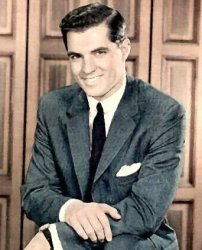
John Gavin
From Wikipedia, the free encyclopedia
John Gavin (born John Anthony Golenor on April 8, 1931 in Los Angeles) is an Academy Award nominated American film actor and a former United States Ambassador to Mexico. Gavin is half Mexican and fluent in Spanish.
Gavin is immortalised in a fashion by the fact that he was signed on for the role of James Bond in 1971's Diamonds Are Forever after George Lazenby left the role. However, he never played Bond due to Sean Connery's expensive return to the 007 franchise yet still had his contract honored in full.
Gavin's father's side, the Golenor family, of Irish origin, were early landowners in California when it was still under Spanish rule, though his father Herald changed the family's name to Gavin. His mother was a member of the powerful Pablos family in the Mexican state of Sonora.
He received a B.A. from Stanford University, where he did senior honors work in Latin American economic history, and served in the U.S. Navy in air intelligence from 1952 to 1955.
Film and stage career
Groomed as a virile, strapping, handsome leading man in the mould of Rock Hudson, some of his most famous roles include A Time to Love and A Time To Die and Imitation of Life (1959) for director Douglas Sirk and producer Ross Hunter, both of whom had earlier helped make a star of Hudson. Gavin also appeared in the seminal thriller Psycho (1960) for director Alfred Hitchcock, the epic Spartacus (1960) directed by Stanley Kubrick, and the 1920s-era Julie Andrews musical Thoroughly Modern Millie (1967) for George Roy Hill, again for producer Ross Hunter. Each of those films was among the most successful box-office attractions of their year of release. Gavin also co-starred with such top leading ladies of the era as Doris Day in the 1960 thriller Midnight Lace, Sophia Loren the same year in the comedic A Breath of Scandal and, in 1961, with Susan Hayward in the melodrama Back Street and in Romanoff and Juliet and Tammy Tell Me True, both with Sandra Dee.
He was president of the Screen Actors Guild from 1971 to 1973. There have also been rumors that he was a coach of the Walla Walla Blue Devils located in Walla Walla, WA. And might have even help coach Drew Bledsoe while he attended the school.
Gavin made a successful foray into live theater in the 1970s, showcasing his baritone voice. He toured the summer stock circuit as El Gallo in a production of The Fantasticks and later replaced Ken Howard in the Broadway musical, Seesaw (1973) opposite Michelle Lee. Gavin also toured the country in Seesaw with Lucie Arnaz. Both the Broadway and touring production were directed by Michael Bennett.
A Republican, Gavin was appointed U.S. Ambassador to Mexico in June 1981 by President Ronald Reagan and served until June 1986. Since leaving government service, he has become a successful businessman and civic leader.
He has been married to Constance Towers, a stage and television actress, since 1974. When they wed, Gavin and Towers each had two children from previous marriages, so the couple have four adult children and one grandchild. Gavin's daughter, Cristina Gavin, followed in his footsteps and became an actress.
Patricia Arquette
From Wikipedia, the free encyclopedia
Birth name Patricia T Arquette
Born April 8, 1968 (age 39)
Chicago, Illinois, USA
Spouse(s) Nicolas Cage (April 1995-February 2000
Thomas Jane (June 25, 2006- )
Patricia T Arquette (born April 8, 1968) is an Emmy Award-winning and a Golden Globe Award-nominated American actress.
Biography
Early life
Arquette was born in Chicago, Illinois. Her father was actor Lewis Arquette, and her grandfather was comedian Cliff Arquette, best remembered for his "Charley Weaver" character, a fixture on the original Hollywood Squares. Arquette's mother, Mardi Olivia Nowak, was Jewish, the daughter of a Holocaust refugee from Poland. Arquette's father was a convert to Islam and a descendant of explorer Meriwether Lewis.[1][2][3] Her siblings are actors Rosanna, Richmond, David and Alexis Arquette. Arquette is also the sister-in-law of Courteney Cox, who is married to her brother David.
Career
At the age of eighteen she got her start in show business in 1986's Pretty Smart. A year later, she gained attention for her starring role in A Nightmare on Elm Street 3: Dream Warriors, playing Kristen Parker. In 1993 she starred in Tony Scott's ultra-violent True Romance, which put Arquette on the map, so to speak. Soon after, her career took off, and she has since appeared in such critically acclaimed movies as Beyond Rangoon, Ethan Frome, Lost Highway, Stigmata, Bringing Out The Dead, Human Nature, Disney's Holes, and Flirting with Disaster. In January, 2005 she began starring in her first television series, NBC's Medium. Now in its 3rd season, the success of Medium has made Arquette a household name. She won a CableACE Award in 1991 for her portrayal of a deaf epileptic in Wildflower. She won an Emmy Award for Outstanding Lead Actress in 2005 for her role as the psychic Allison DuBois on NBC's Medium. In 2006, she was nominated for a SAG award and Golden Globe Award for her role on Medium. In 2007, she was again nominated for a Golden Globe Award for Medium.
Personal life
In April 1995, Arquette married Nicolas Cage (whom she would later co-star with in Bringing Out the Dead in 1999). They separated after nine months, but acted as a couple in public until Cage filed for divorce in February 2000.[4] The divorce petition was withdrawn, but Arquette filed again in November 2000.[5]
She and actor Thomas Jane became engaged in 2002 and married on June 25, 2006 at the Palazzo Contarini in Venice, Italy.[6] They have a daughter, Harlow Olivia Calliope, born on February 20, 2003. Arquette also has a son, Enzo (b. 1989), from her previous relationship with musician Paul Rossi.[7]
In 1997, after her mother died of breast cancer, Arquette worked to raise awareness about the disease. She has run in the annual Race for the Cure, and in 1999 was the spokesperson for Lee National Denim Day, which raises millions of dollars for breast cancer research and education.
Louis Armstrong
WHAT A WONDERFUL WORLD
(George Weiss / Bob Thiele)
I see trees of green, red roses too
I see them bloom for me and you
And I think to myself, what a wonderful world
I see skies of blue and clouds of white
The bright blessed day, the dark sacred night
And I think to myself, what a wonderful world
The colours of the rainbow, so pretty in the sky
Are also on the faces of people going by
I see friends shakin' hands, sayin' "How do you do?"
They're really saying "I love you"
I hear babies cryin', I watch them grow
They'll learn much more than I'll ever know
And I think to myself, what a wonderful world
Yes, I think to myself, what a wonderful world
Oh yeah
Well, folks, here is our hawkman with great bio's. I am especially interested in Patricia Arquette as I think Medium is one of, if not the best TV shows ever.
Loved your "bowl" story, Boston, as well as your Louis song of the day.
Searching through the archives for Mary Pickford, I was enlightened to find that she did a movie called Coquette, then found that Paul McCartney did this song by the same name.
Tell me, why you keep fooling, little coquette, making fun of the one who loves you?
Breaking hearts you are ruling, little coquette, true hearts tenderly dreaming of you.
Someday you'll fall in love as I fell in love with you.
Maybe the one you love will just be fooling too.
And when you are alone with all your regrets, you know, my little coquette, I love you.
Mm, someday you'll fall in love as I fell in love with you.
Now, maybe the one you love will just be fooling too.
And when you are alone with all your regrets, oo-oo,
now, you know, my little coquette, I love you.
What a fond memory, as we did that as a trio in middle school.
Will await our Raggedy with her famous photo's before commenting further.
There's our Raggedy, folks, with those pictures that say a thousand words. Thanks again, PA.
Well, we're looking at Mary, John, and Patricia. Since not one of them is a vocalist, how about our pun of the day.
A cattle rancher called his spread, Foci. When asked by his neighbors the reason for the name, he responded:
Well, Foci is where the sun's rays meet.
Son's raise meat.

Hey, edgar. What kid doesn't know that one, Texas. As a matter of record, what grown-up doesn't know that one. Thanks for the memory.
Interesting facts, folks.
1 - RED: this color is associated with the blood that Jesus Christ had shed for mankind. Thus the color red is a symbol of love and sacrifice for goodness of humanity.
2 - WHITE: this Easter color signifies purity and grace.
3 - GREEN: the color green brings ray of hope. Green is the color of grass.
4 - PURPLE: Easter color purple is indicative of royalty. It is said that the color purple brings wealth.
5 - YELLOW: it is the color that is related to the brightness of sun. It's a color that brings joy and happiness.
6 - BLACK: it is the color that indicates the evil side. To put it other words, we can say black signifies darkness.
7 - ORANGE: it is the color that represents hope. It is associated with the dawn of day.
8 - PINK: Easter colour pink indicates fresh beginning.
And a little Easter tune to go with the colors.
The Easter Bunny paints his eggs
All purple, pink and blue,
Now, Mother Hen, I have to ask:
Why can't you do that, too?
Jessie Gaynor
Welcome back, dys. Cowboy cafe you say? Well here's one for edgar and one for you.
For edgar:
The Carter Family
Sister Mary, she wears a golden chain
Sister Mary, she wears a golden chain
Sister Mary, she wears a golden chain
On every link there's Jesus name
There's no hiding place down here
There's no hiding place down ground
There's no hiding place down ground
Well, I run to the rocks and I hide my face
The rocks cried out, No hiding place
There's no hiding place down here
I'll pitch tent on the old camp ground
I'll pitch tent on the old camp ground
I'll pitch tent on the old camp ground
I'll give old Satan old more round
There's no hiding place down here
Oh, the devil, he wears a hypocrite's shoe
The devil, he wears a hypocrite's shoe
The devil wears hypocrite's shoe
If you don't watch, he'll slip it on you
There's no hiding place down here
For the dys.
Janis Ian
Ooo, let me be lonely
I'd rather be by myself
than with you acting holy
I want to be with the one
I want to be
or else I want to be free
Ooo, let me be lonely
Saving up for a rainy day
or donate to charity?
Impossible
Think you'll make history?
improbable
give your love to me
Ooo, let me be wanted
I've a right to tonight
to delight
when you got it you flaunt it
and if you're not
what you seem to be then
how come you're coming on strong?
Ooo, let me be wanted
all you do with your time
is tease me
Couldn't you find the time
to please me?
With your kind
it looks so easy
shoving the blues away
Time Is On My Side
The Rolling Stones
Time is on my side, yes it is
Time is on my side, yes it is
Now you always say
That you want to be free
But you've come running back
Said you will baby
You've come running back
Done that so many times before
You've come running back to me
Oh, time is on my side, yes it is
Time is on my side, yes it is
You're searching for good times
But just wait and see
You'll come running back
I won't have to worry no more
You'll come running back
Spend the rest of my life with you, baby
You'll come running back to me
Go ahead, go ahead and light up the town
And baby, do everything your heart desires
Remember, I'll always be around
And I know, I know,
like I told you so many times before
You're gonna come back, baby
'Cause I know, I know
You're gonna come back knocking
Yeah, knocking right on my door
Well, time is on my side, yes it is
Time is on my side, yes it is
'Cause I got the real love
The kind that you need
You'll come running back
Said you would, baby
You'll come running back
I don't always said you would
You'll come running back
I won't have to worry no more
Yes time, time, time is on my side, yes it is
Time, time, time is on my side, yes it is
Oh, time, time, time is on my side, yes it is
I said, time, time, time is on my side, yes it is
Oh, time, time, time is on my side
Yeah, time, time, time is on my side
Well, edgar. It's about time! :wink:
Gerald Fried and Sherwood Schwartz
It's about time,
It's about space,
About strange people in the strangest place.
It's about time,
It's about flight,
Travelin' faster than the speed of light.
About space people and a brave crew,
As through the barrier of time they flew.
Pass the Roman Senators,
Pass an armored knight,
Pass the firing Minutemen,
To this modern site.
It's about time for you and me
To meet these people of amazing feats.
It's about two astronauts and how they educate
A pre-historic woman and her pre-historic mate.
It's about time
It's about space
About strange people in the strangest place
They will be here
With all of us
Dodging a taxi, a car, a bus.
Where will they go
What will they do
In this strange place where everything is new.
Will they manage to survive
Watch each week and see.
Will they get accustomed to the Twentieth Century.
It's about time
For our good byes
To all our pre-historic gals and guys.
And now,
It's About Time
It's About Time
It's About Time
It's About Time!
hbg, did you know that Patty Andrews is still alive?

She is 89.
This makes a wonderful goodnight song for me, and the lyrics are lovely, folks.
I can see
No matter how near you'll be
You'll never belong to me
But I can dream, can't I?
Can't I pretend that I'm locked in the bend of your embrace?
For dreams are just like wine
And I am drunk with mine
I'm aware
My heart is a sad affair
There's much disillusion there
But I can dream, can't I?
Can't I adore you
Although we are oceans apart?
I can't make you open your heart
But I can dream, can't I?
I'm aware
My heart is a sad affair
There's much disillusion there
But I can dream, can't I?
Can't I adore you
Although we are oceans apart?
I can't make you open your heart
But I can dream, can't I?
(dream on, dream on, dream on)
Goodnight.
From Letty with love