Peter Fonda
From Wikipedia, the free encyclopedia
Birth name Peter Henry Fonda
Born February 23, 1940 (age 66)
New York, New York, USA
Notable roles Wyatt in Easy Rider (1969)
Dracula/Dr. Van Helsing in Nadja (1994)
Mephisto in Ghost Rider (2007)
Peter Henry Fonda (born February 23, 1940) is an American actor. More than any other actor, Fonda is associated with Western counterculture of the 1960s.
Biography
Early life
Fonda was born in New York, New York, the son of actor Henry Fonda, the younger brother of actress Jane Fonda, the father of actress Bridget Fonda. His mother, Frances Ford Seymour, took her own life in 1950 (which Fonda's character in Easy Rider bemoaned).
Fonda studied acting in Omaha, Nebraska, which was his father's home town. He began attending the University of Omaha and joined the Omaha Community Playhouse, where many actors (including his father and Marlon Brando) founded their careers. Fonda found work on Broadway where he achieved notice in Blood, Sweat and Stanley Poole, before going to Hollywood to make films.
Career
Fonda started his film career in romantic leading roles. He debuted in Tammy and the Doctor (1963), which he called "Tammy and the Schmuckface." But Fonda's intensity impressed Robert Rossen, the director of Lilith (1964). Rossen envisioned a Jewish actor in the role of Stephen Evshevsky, a mental patient. Fonda earned the role after removing his boss' glasses from his face and putting them on so as to look more "Jewish." He also played the male lead in The Young Lovers (1964), about out-of-wedlock pregnancy, and The Victors (1964), an "anti-war war movie."
By the mid-1960s, Peter Fonda was not a conventional "leading man" in Hollywood. As Playboy magazine reported, Fonda had established a "solid reputation as a dropout." He had become outwardly nonconformist and grew his hair long, alienating the "establishment" film industry. Desirable acting work became scarce.
Through his friendships with members of the Byrds, Fonda visited The Beatles in their rented house in Benedict Canyon in Los Angeles in August, 1965. While John Lennon, Ringo Starr and George Harrison were under the influence of LSD, Lennon heard Fonda say, "I know what it's like to be dead." This phrase became the tag line for their song "She Said She Said", which appeared in their groundbreaking Revolver (1966) album. In 1966, Fonda was arrested in the anti-war Sunset Strip riot which the Los Angeles Police Department ended forcefully. The band Buffalo Springfield protested the department's handling of the incident in their song "For What it's Worth."
Fonda's first counterculture-oriented film role was the lead character Heavenly Blues, a Hells Angels chapter president, in the Roger Corman-directed film The Wild Angels (1966). The Wild Angels is still remembered for Fonda's "eulogy" delivered at the fiasco of a fallen Angel's funeral service, which was sampled in the Primal Scream recording "Loaded" (1991), and in other rock songs. Then Fonda played the male lead character in Corman's film The Trip (1967), a television commercial director experiencing the ambivalence and turmoil of divorce.
In 1968, Fonda produced Easy Rider, the classic film for which he is best known. Easy Rider is about two long-haired bikers traveling through the southwest and southern United States in a world of intolerance and violence. The Fonda character was the charismatic, laconic "Captain America"/Wyatt whose motorcycle jacket bore a large American flag across the back. Dennis Hopper played the garrulous "Billy." Jack Nicholson was nominated for an Academy Award (TM) for Best Supporting Actor for his turn as George Hanson, an alcoholic civil rights lawyer who rides along. Fonda co-wrote Easy Rider with Terry Southern and Hopper, who directed.
Hopper filmed the cross-country road trip depicted in Easy Rider almost entirely on location, spending US$375,000.00, and released the film in 1969 to massive success. Robbie Robertson was so moved by an advance screening that he approached Fonda and tried to convince him to let him write a complete score, even though the film was nearly due for wide release. Fonda refused, using the Byrds' song "Ballad of Easy Rider," Dylan's "It's Alright Ma, I'm Only Bleeding" sung by the Byrds' Roger McGuinn. Fonda, Hopper and Southern were nominated for the Academy Award (TM) for Best Original Screenplay.
After the success of 'Easy Rider, both Hopper and Fonda were in a position to make any film project they wanted. Whilst Hopper chose to make the drug addled jungle epic The Last Movie, Fonda displayed considerable maturity as a film maker and directed The Hired Hand. Fonda took the lead role in a cast that also featured Warren Oates, Verna Bloom and Beat poet Michael McClure.
Fonda received critical recognition for his part in Ulee's Gold (1997). Fonda portrayed a stoic north Florida beekeeper who, in spite of his tumultuous family life, imparts a sense of integrity to his wayward convict son, and takes risks in acting protectively toward his drug-abusing daughter-in-law. Fonda's performance resulted in an Academy Award nomination (TM) for Best Actor.
Fonda's choices of film roles are notable for extreme contrasts in type: The introspective drug-dealing rebel (perhaps amoral) biker in Easy Rider is a world apart from the war-veteran father in Ulee's Gold, a man whose strength is in his benevolence.
He also lent his voice talent to the video game Grand Theft Auto: San Andreas as the hippie, The Truth. In 2002 Fonda was inducted into the AMA Motorcycle Hall of Fame.
George Harrison
From Wikipedia, the free encyclopedia
Born February 24, 1943
Liverpool, England
Died November 29, 2001 (aged 58)
Los Angeles, California
George Harrison, MBE (February 24, 1943[1] - November 29, 2001[1]), nicknamed "The Darkhorse", was an Academy Award and Grammy Award-winning English musician best known as the lead guitarist of the Beatles. Following the band's demise, Harrison had a career as a solo artist and later as part of the Traveling Wilburys super group. He was also a film producer, with his production company Handmade Films, involving people as diverse as Monty Python and Madonna. From an initial exposure whilst a member of the Beatles, he maintained a high public profile regarding his religious and spiritual life.
Overview
During the Beatles' heyday, John Lennon and Paul McCartney were its main songwriters though Harrison generally wrote and/or sang lead on one or two songs for each album. His compositions earned him growing admiration as a talent in his own right. Despite his artistic growth he remained overshadowed by the Lennon/McCartney duo. After the band's breakup it was Harrison who achieved the first #1 single ("My Sweet Lord") and #1 album (All Things Must Pass) by any ex-Beatle. Besides his notable talents as a singer, songwriter, and guitarist, he achieved some success as a record producer.
While still a Beatle, Harrison became attracted to Indian music and Hinduism. Both would subsequently play a prominent role in Harrison's life and music. His use of the sitar introduced the instrument to millions of Western listeners.
After the Beatles' breakup Harrison had an uneven but sometimes successful solo career, scoring hits with "My Sweet Lord" (1970), "Give Me Love (Give Me Peace on Earth)" (1973), "All Those Years Ago" (1981), and "Got My Mind Set on You" (1987). Harrison's landmark triple album, All Things Must Pass, currently holds the distinction of being the best selling album by a solo Beatle[2]. He also organized the first large-scale benefit concert, The Concert for Bangladesh, which took place on 1 August 1971. Harrison was inducted into the Rock and Roll Hall of Fame as a solo artist in 2004.[3]
Harrison was also a film producer and founded Handmade Films in 1979. The company's films include Monty Python's The Life of Brian (in which he had a very minor cameo), Time Bandits, Withnail and I, and Mona Lisa. Harrison also has a cameo role in the Rutles parody film All You Need Is Cash.
Biography
Early years
George Harrison was born in Liverpool, England into a Catholic family with deep roots in Ireland. His maternal grand-parents hailed from Ireland's County Wexford, and his father's lineage can be traced back to County Sligo. A good deal of confusion as to his real birthday arose from a family birth record which noted him as being born around 12:10am on 25 February 1943.[citation needed] He later confirmed his birthday was 24 February 1943 at 11:40pm. Some sources assert that his middle name was Harold, but there is no middle name listed on his birth certificate. Harold was the name of his father, as well as an elder brother.[citation needed]
Harrison's childhood home was located at 12 Arnold Grove, Wavertree, Liverpool until 1950, when the family moved to 25 Upton Green, Speke. He first attended school at Dovedale Road Infants & Juniors School, just off Penny Lane. Harrison would play guitar all night until his fingers bled. There he passed his Eleven-plus examination and was awarded a place at the Liverpool Institute for Boys (in the building now housing the Liverpool Institute for Performing Arts), which he attended from 1954 to 1959.
The Institute for Boys was an English grammar school and, despite his qualification, Harrison was regarded as a poor student; contemporaries described him as someone who would "sit alone in the corner".[citation needed] He left school in the summer of 1959 without attaining any academic credentials (or even being allowed to sit his O-levels).
Harrison got to know Paul McCartney at school but they had other things in common. Both had lived in Speke on an outer council (public housing) estate and they also travelled on the same Corporation bus (sometimes with Harrison's father at the wheel), secretly smoking cigarettes on the top deck (which McCartney has said is the inspiration for some of his portion of "A Day in the Life"), on the way to the Liverpool Institute. McCartney introduced Harrison to John Lennon and to the group. Harrison's father, as chairman of the social committee of the nearby Garston bus depot, helped them get bookings in social clubs nearby. By early 1958 Harrison had begun playing lead guitar in the band (initially called the Quarrymen, later the Silver Beetles), which in 1960 became the Beatles.
After leaving school in the summer of 1959, Harrison worked briefly as an apprentice electrician at Blacklers Stores in Liverpool.[citation needed] The training helped Harrison become the member who knew the most about rigging their sound equipment.[citation needed] Later he set up his own multitrack recording gear at his Esher home, Kinfauns, making song demos for himself and the Beatles.[citation needed]
Role in the Beatles
In the early days of the band, when it was still the Quarry Men, Harrison was asked by McCartney to join. Harrison was the youngest member of the band, initially looked upon as a kid by the others[2]. He was never officially asked to join the band, but hung out with the others and filled in when he was needed, and was soon looked upon as one of the band.[3] While McCartney was the "cute Beatle" and Lennon the leader, Harrison was still a favourite of the female fans. At some concerts, the band was occasionally showered with jellybeans, which Harrison had said to be his favourite sweet.[4]
Harrison was not regarded as a virtuoso guitarist, especially in the early days of the Beatles' recording career. Several of Harrison's Beatles guitar solos were recorded under specific directions from McCartney, who on occasion demanded that Harrison play what he envisioned virtually note-for-note.[citation needed] Other Harrison solos were directed or modified by producer George Martin, who also vetoed several of Harrison's song and instrumental offerings. Martin admitted years later, "I was always rather beastly to George."[5]
Toward the end of the 1960s, however, Harrison became known as a fluent, inventive, and highly accomplished lead and rhythm guitarist. In the 1970s and thereafter, his slide work became his signature sound.[citation needed]
Harrison was the first of the Beatles to arrive on American soil, when he visited his sister, Louise, in Benton, Illinois in September 1963, some five months before the group appeared on The Ed Sullivan Show.[6] During this visit, George browsed a record store and inquired about his group's music.[citation needed] The store owner had not even heard of them, and British pop music was conspicuously absent in the States: even top performer Cliff Richard's recent movie, Summer Holiday, was relegated to second billing when it played. Harrison returned to Britain, reporting to his bandmates that it might be difficult for them to succeed in America.[citation needed]
During the era of Beatlemania, Harrison was characterised as the "quiet Beatle", noted for his introspective manner and his tendency not to speak in press conferences.[citation needed] He studied situations and people closely, though, and was the most interested of any Beatle in the band's finances, often quizzing Brian Epstein about them.[citation needed] Despite his "quiet Beatle" image, George also had a slightly wild side. Once, at a bar, a photographer got on Harrison's bad side. He got too close, and George proceeded to throw his drink at the offending press member. [7]He could also wisecrack as well as anyone in the band; when a reporter asked what they did in their hotel suite between shows, Harrison told him, "We ice-skate."[citation needed]
During the Beatles' first trip to the U.S., in February 1964, Harrison received a new "360/12" model guitar from the Rickenbacker company; this was a 12-string electric made to look onstage like a 6-string. He began using the 360 in the studio on Lennon's "You Can't Do That" and other songs. Roger McGuinn liked the effect so much that it became his signature guitar sound with The Byrds.
Harrison wrote his first song, "Don't Bother Me", during a sick day in 1963, as an exercise "to see if I 'could' write a song", as he remembered. "Don't Bother Me" appeared on the second Beatles album (With the Beatles) later that year, on Meet the Beatles! in the US in early 1964, and also briefly in the film A Hard Day's Night. After that, The Beatles did not record another Harrison song until 1965, when he contributed "I Need You" and "You Like Me Too Much" to the album Help!.
Harrison was the lead vocal on all the Beatles songs that he wrote by himself. However, he also sang lead vocal on other songs, including "Chains" and "Do You Want to Know a Secret" on Please Please Me, "Roll Over Beethoven" and "Devil in Her Heart" on With the Beatles, "I'm Happy Just to Dance With You" on A Hard Day's Night, and "Everybody's Trying to Be My Baby" on Beatles for Sale. A turning point in Harrison's career came during an American tour in 1965, when his friend David Crosby of the Byrds introduced him to Indian classical music and the work of sitar maestro Ravi Shankar.[citation needed] Harrison quickly became fascinated with the instrument, immersed himself in Indian music and was pivotal in popularising the sitar in particular and Indian music in general in the West.
Buying a sitar himself as the Beatles came back from a Far East tour, he became the first Western popular musician to play one on a pop record, on the Rubber Soul track "Norwegian Wood (This Bird Has Flown)". He championed Shankar with Western audiences and was largely responsible for having him included on the bill at the Monterey Pop Festival in June 1967. Shankar did not admire Harrison's first Indian-influenced efforts, but the two became friends, and Harrison began his first formal musical studies with Shankar.[citation needed]
A personal turning point for Harrison came during the filming of the movie Help!, on location in the Bahamas, when a Hindu devotee presented each Beatle with a book about reincarnation. Harrison's interest in Indian culture expanded to his embracing Hinduism. A pilgrimage with wife Pattie to India, where Harrison studied sitar, met several gurus and visited various holy places, filled the months between the end of the final Beatles tour in 1966 and the commencement of the Sgt. Pepper's Lonely Hearts Club Band sessions.
It was through his wife (and when back in England) that Harrison met Maharishi Mahesh Yogi, who introduced the Beatles, their wives and girlfriends to Transcendental Meditation.[citation needed] While they parted company with the Maharishi some months afterwards, Harrison continued his pursuit of Eastern spirituality.
In the summer of 1969, he produced the single "Hare Krishna Mantra", performed by the devotees of the London Radha Krishna Temple. That same year, he and fellow Beatle John Lennon met A.C. Bhaktivedanta Swami Prabhupada, Founder-acharya of the International Society for Krishna Consciousness (ISKCON). Soon after, Harrison embraced the Hare Krishna tradition (particularly japa-yoga chanting with beads; a meditation technique similar to the Roman Catholic rosary), and remained associated with it until his death.
When, during his lifetime, Harrison bequeathed to ISKCON his Letchmore Heath mansion (renamed Bhaktivedanta Manor) north of London, he redoubled speculations that he would leave ISKCON a large sum in his will.[citation needed] Whilst some sources indicate he left nothing to the organisation (see [4]), others report he did leave a sum of 20 million pounds (see [5]).
Harrison formed a close friendship with Eric Clapton in the late 1960s, and they co-wrote the song "Badge", which was released on Cream's "Goodbye" album in 1969. Someone - variously reported as Harrison, Starr, or Clapton - misread Harrison's handwritten "bridge" (a term for a middle section of a song distinct from the usual verse-chorus parts) as "badge", and this became the title. Harrison's composition for the Beatles' Abbey Road album, "Here Comes the Sun", was written in Clapton's back garden. Clapton also guested on the Harrison-penned Beatles track "While My Guitar Gently Weeps".
Harrison's songwriting improved greatly through the years, but his material did not earn respect from his fellow Beatles until near the group's breakup (Lennon told McCartney during 1969: "George's songs this year are at least as good as ours"). Harrison later said that he always had difficulty getting the band to record his songs.
Notable 1965-69 Harrison compositions include "If I Needed Someone", "I Want to Tell You", the Indian-influenced "Love You To", "Taxman" (later referenced in Cheap Trick's "Taxman, Mr. Thief" and The Jam's "Start"), "Within You Without You", "Blue Jay Way", "Only a Northern Song", "Old Brown Shoe," "While My Guitar Gently Weeps", which was strongly influenced by the music of his friend Roy Orbison and featured lead guitar by Eric Clapton, "Piggies" (which later featured inadvertently in the notorious Charles Manson murder case, as did McCartney's "Helter Skelter"), "Long, Long, Long" and "Savoy Truffle".
Friction among Harrison, Lennon, and McCartney increased markedly during the recording of The Beatles, as Harrison threatened to leave the group on several occasions.[citation needed] Between 1967 and 1969, McCartney on several occasions expressed dissatisfaction with Harrison's guitar playing. Tensions came to a head during the filming of rehearsal sessions at Twickenham Studios for what eventually became the Let It Be documentary film. Conflicts between Harrison and McCartney appear in several scenes in the film, including one in which Harrison retorts to McCartney, "OK, well, I don't mind. I'll play whatever you want me to play or I won't play at all if you don't want me to play. Whatever it is that'll please you, I'll do it." Frustrated by ongoing slights, the poor working conditions in the cold and sterile film studio, and Lennon's creative disengagement from the group, Harrison quit the band on 10 January. He returned on 22 January after negotiations with the other Beatles at two business meetings.[8]
The group's internal relations were cordial (though still strained) during recordings for the album Abbey Road. The album included "Something" and "Here Comes the Sun", probably Harrison's two best-known Beatles songs. "Something" is considered to be one of his best works and was even covered by Elvis Presley and Frank Sinatra, who famously deemed it "the greatest love song of the last 50 years." (However, Sinatra credited the song as "(his) favourite Lennon/McCartney composition", rather than Harrison when making the compliment; the joke being that Lennon/McCartney did not write the song at all). His increasing productivity, coupled with his difficulties in getting the Beatles to record his music, meant that by the end of the group's career he had amassed a considerable stockpile of unreleased material.
When Harrison was asked years later what kind of music the Beatles might have made if they had stayed together, his answer was to the point: "The solo stuff that we've done would have been on Beatle albums." Harrison's assessment is confirmed by the fact that many of the songs on their early solo albums premiered at various times during the Beatles' recording sessions but were not actually recorded by the group.
Harrison was only 26 years old at the time of the Beatles' last recording session on 4 January 1970 (Lennon, who had left the group the previous September, did not attend the session).[9]
1970s
After the Beatles split in 1970, Harrison released a number of albums, both as solo projects and as a member of other groups, using his trademark slide guitar, with the help of Ravi Shankar who first introduced him into playing the sitar during his time of The Beatles. After years of being limited in his contributions to the Beatles, he released a large number of the songs he had stockpiled in the first major solo work released after the breakup, All Things Must Pass, the first triple album by a single artist in rock history. The album, which topped the charts, included the number-one hit singles "My Sweet Lord" and "Isn't It a Pity" as well as the top-10 single "What Is Life", the first of these over which Harrison was later sued for copyright infringement because of the supposed similarities to the 1963 Chiffons single "He's So Fine". Harrison denied deliberately stealing the song, but he lost the resulting court case in 1976. In the ruling, the court accepted the possibility that Harrison had "subconsciously copied" the Chiffons' melody as the basis for his own song. Disputes over damages dragged on into the 1990s, with manager Allen Klein changing sides by buying Bright Tunes, which published "He's So Fine", and continuing the suit after parting with Harrison. Harrison ultimately wound up as the owner of both songs (Huntley 2004).[10]
Harrison was the first rock star to organise a major charity concert. His Concert for Bangladesh on August 1, 1971, drew over 40,000 people to two shows in New York's Madison Square Garden with the intention of aiding the starving refugees from the war in Bangladesh. Ravi Shankar opened the proceedings, which included such other popular musicians as Bob Dylan (who rarely appeared live in the early 1970s), Eric Clapton, who made his first public appearance in months (due to a heroin addiction which began when Derek and the Dominos broke up), Leon Russell, Badfinger, Billy Preston and fellow Beatle Ringo Starr. Unfortunately, tax troubles and questionable expenses tied up many of the concert's proceeds (see [6]). Apple Corps released a newly arranged concert DVD and CD in October 2005 (with all artists' sales royalties continuing to go to UNICEF), which contained additional material such as previously unreleased rehearsal footage of "If Not For You", featuring Harrison and Dylan.
In addition to his own works, during this time Harrison co-wrote and/or produced several hits for Starr ("It Don't Come Easy" and "Photograph") and appeared on tracks by Lennon ("How Do You Sleep?"), Harry Nilsson ("You're Breakin' My Heart"), Badfinger ("Day After Day"), Billy Preston ("That's The Way God Planned It") and Cheech & Chong ("Basketball Jones").
Harrison's next album was Living in the Material World in 1973. "Give Me Love (Give Me Peace on Earth)" was a big hit (it reached #1 in the US), and "Sue Me Sue You Blues" was a window into the former Beatles' miserable legal travails, but overall the record was seen as too overtly religious, though it also reached number one.[citation needed]
In 1974, Harrison released Dark Horse and at the same time launched a major tour of the United States which was subsequently criticised for its long opening act of Ravi Shankar & Friends, Harrison's hoarse voice, and his frequent preaching to the audience. The album made the Top 20 in the US album chart, but was a failure in the UK, because of a combination of declining interest and negative reviews. The single "Ding Dong, Ding Dong", a Top 40 UK hit, was widely panned for its unadventurous lyric, though it has since become a favourite record with radio programmers in the closing moments of each year, and at New Year's Eve parties.[citation needed]
It was during this period while in Los Angeles, preparing for the 1974 tour, that he also opened offices for his new Dark Horse Records on the A&M Records lot, on La Brea Avenue in Los Angeles. It was in those offices that he met a beautiful young woman named Olivia Trinidad Arias, who was assigned to work at his label with Terry Doran from Apple and Jack Oliver who came over from London to run the label. The relationship with Olivia progressed during the rehearsals, and she joined Harrison on his 1974 tour, during which their relationship blossomed into something more, resulting in her permanent relocation to Friar Park in Henley-on-Thames, England, George's home.[citation needed]
Subsequent to the 1974 tour he returned to his home in the UK, and commuted between there and Los Angeles for the next few years, while Dark Horse issued a small number of records by performers such as Splinter, Attitudes and Ravi Shankar. He also planned to issue his own records through Dark Horse, after his contract with EMI expired.[citation needed]
Amid a music media rife with Beatle-reunion speculation, Harrison was probably the least accommodating of these theories, telling the press in 1974 that while he would not mind working with Lennon and Starr again, he could not see himself being involved in a band with McCartney, who had limited his contributions while in the Beatles. He told the press that if someone wanted to hear Beatles-style music, they could "go listen to Wings," McCartney's new band. (Schaffner 1977)
His final studio album for EMI (and Apple Records) was Extra Texture (Read All About It), featuring a diecast cover. The album spawned two singles, "You" and "This Guitar (Can't Keep From Crying)", which became Apple's final original single release in 1975. (Schaffner 1977)
Following the former Beatles' departure from Capitol, the record company was in a position to licence releases featuring Beatles and post-Beatles work on the same album, and used Harrison for this experiment. The Best of George Harrison (1976) combined his best Beatles songs with a slim selection of his best solo Apple work. Harrison made plain his annoyance with the track listing and the fact that he was not consulted. It did not chart in the UK.[citation needed]
Business and personal troubles took their toll on Harrison during 1976. When his first Dark Horse album (Thirty Three & 1/3, his age at the time) was due, Harrison was suffering from hepatitis and could not complete the production. After A&M threatened to take him to court, Warner Bros. Records stepped in, buying out Harrison's Dark Horse contract with A&M, and allowing him time to regain his health.[citation needed]
Thirty Three & 1/3 was his most successful late-1970s album, and it featured the hits "This Song" (a satire of the "My Sweet Lord" ruling) and "Crackerbox Palace" (a humorous and surrealistic number, looking back on his life to date; the title was the name of comedian Lord Buckley's former home in Hollywood, California, which Harrison visited, while "Mr. Greif" was George Greif, Buckley's former manager).[11]
After his second marriage and the birth of son Dhani Harrison, Harrison's next album was self-titled. 1979's George Harrison included the singles "Blow Away", "Love Comes To Everyone" and "Faster".
1980s
In 1980, Harrison became the only ex-Beatle to write an autobiography, I Me Mine. Former Beatles publicist Derek Taylor helped with the book, which was initially released in a high-priced limited edition by Genesis Publications. The book said little about the Beatles, focusing instead on Harrison's hobbies, such as gardening and Formula One automobile racing. It also included the lyrics to his songs and many rare photographs.[citation needed]
Immediately following the December 1980 murder of his friend and former bandmate John Lennon, Harrison modified the lyrics of a song he had written for Starr to make it a tribute song to Lennon. "All Those Years Ago" received substantial radio airplay, reaching #2 on the US charts. All three remaining Beatles performed on it, although it was expressly a Harrison single. "Teardrops" was issued as a follow-up single, but was not nearly as successful.
Both singles were taken from the album Somewhere in England, released in 1981. The album was originally slated for release in late 1980, but Warner Bros. rejected it, ordering Harrison to replace several tracks, and to change the album cover as well. This was another professional humiliation.
In 1981 Harrison played guitar on one track of Mick Fleetwood's record The Visitor. He played Lindsey Buckingham's song Walk a Thin Line.
Aside from a song on the Porky's Revenge soundtrack in 1984, his version of a little-known Bob Dylan song "I Don't Want To Do It", Harrison released no new records for five years after 1982's Gone Troppo was met with apparent indifference. He returned in 1987 with the highly successful album Cloud Nine, co-produced with Jeff Lynne of Electric Light Orchestra, and enjoyed a hit (#1 in the U.S.; #2 in the U.K) when his cover version of James Ray's early 1960s number "Got My Mind Set on You" was released as a single; another single, "When We Was Fab", a retrospective of the Beatles' days complete with musical flavours for each bandmate, was also a minor hit. MTV regularly played the two videos, and elevated Harrison's public profile with another generation of music listeners. The album reached #8 on the US charts.
During the late 1980s, he was instrumental in forming the Traveling Wilburys with Roy Orbison, Jeff Lynne, Bob Dylan, and Tom Petty when they gathered in Dylan's garage to quickly record an additional track for a projected Harrison European single release. The record company realized the track ("Handle With Care") was too good for its original purpose as a B-side and asked for a full, separate album. This had to be completed within two weeks, as Dylan was scheduled to start a tour. The album was released in October 1988 and recorded under pseudonyms as half-brothers (supposed sons of Charles Truscott Wilbury, Sr.), Traveling Wilburys Vol. 1.
One of Harrison's most artistically successful ventures during this period was his involvement in film production through his company Handmade Films. The Beatles had been fans of the anarchic humour of the Goons, and Harrison became a dedicated fan of their stylistic successors, Monty Python. He provided financial backing for the Python film The Life of Brian after the original backers (EMI Films) withdrew, fearing the subject matter of the film was too controversial. Other films produced by Handmade included Mona Lisa, Time Bandits, Shanghai Surprise and Withnail and I. He made several cameo appearances in these movies, including appearing as a nightclub singer in Shanghai Surprise and as Mr. Papadopolous in Life of Brian. He also appeared in an episode of the hit television series The Simpsons. One of his most memorable cameos was as a reporter in the cult Beatles parody the Rutles, created by ex-Python Eric Idle. Despite this string of successes, Handmade Films fell into mismanagement in the 1990s, much like the Beatles' Apple Corps, and the demands severely depleted Harrison's finances.[citation needed]
1989 saw the release of Best of Dark Horse 1976-1989, a compilation drawn from his later solo work. This album also included three new songs: "Poor Little Girl", "Cheer Down", and "Cockamamie Business", the last of which saw him once again looking wryly upon his Beatle past. Unlike his previous greatest hits package, Harrison made sure to oversee this one. Harrison was also featured in the Mel Gibson movie Lethal Weapon 2, where he played "Cheer Down" on the soundtrack.
1990s
The first year of the new decade saw a new Traveling Wilburys album, despite the death of Roy Orbison in late 1988. The band reportedly approached Del Shannon about filling the vacant slot, but Shannon committed suicide in February 1990. The second album, Traveling Wilburys Vol. 3 was recorded as a four-piece. It was not nearly as successful as the previous album, but still managed to spawn the singles "She's My Baby", "Inside Out", and "Wilbury Twist".
In 1991, Harrison staged a tour of Japan along with Eric Clapton. It was his first tour since the ill-fated 1974 U.S. tour, and, although he seemed to enjoy it, there were to be no others. The Live in Japan recording came from these shows. In October 1992, Harrison played three songs ("If Not For You", "Absolutely Sweet Marie", and "My Back Pages") at a huge Bob Dylan tribute concert at Madison Square Garden in New York City.
In 1994-1996, Harrison reunited with the surviving former Beatles and Traveling Wilburys producer Jeff Lynne for The Beatles Anthology project, which included the recording of two new Beatles songs built around solo vocal tapes recorded by Lennon in the 1970s, as well as the lengthy interviews on the Beatles' history. The project was spurred on in part by Harrison's financial difficulties at the time, stemming from problems with his Handmade Films venture.[citation needed]
In 1995, at the height of the britpop movement?-which was heavily influenced by Harrison's music?-he became embroiled in a feud with Oasis' Gallagher brothers. Devoted fans of the Beatles, the brothers were offended when Harrison referred to them as "silly" and "a passing fad". Noel Gallagher responded by saying "George was always the quiet Beatle?-maybe he should keep that up" whilst Liam Gallagher described him as a "nipple" and threatened to play golf off Harrison's head should they ever meet. Apparently, the feud was short lived, and when Noel Gallagher and Harrison actually met, they got on well.
Harrison later in his careerHarrison's final television appearance was not intended as such; in fact, he was not the featured artist, and the appearance was to promote Chants of India, another collaboration with Ravi Shankar released in 1997, at the height of interest in chant music. John Fugelsang, then of VH1, conducted the interview, and at one point an acoustic guitar was produced, and handed to Harrison. When an audience member asked to hear "a Beatles song," Harrison pulled a sheepish look and answered, "I don't think I know any!" He did finish the show with a loose rendition of "All Things Must Pass".
In January, 1998 Harrison attended the funeral of his boyhood idol, Carl Perkins, in Jackson, Tennessee. Harrison played an impromptu version of Perkins' song "Your True Love" during the service.
A former heavy smoker, Harrison endured an ongoing battle with cancer throughout the late 1990s, having growths removed first from his throat, then his lung.
In late 1999 Harrison survived a knife attack by an intruder in his home, which in some ways mirrored John Lennon's murder. On the evening of 30 December 1999, Michael Abram broke into the Harrisons' Friar Park home in Henley-on-Thames and stabbed George multiple times, ultimately puncturing his lung. Harrison and his wife, Olivia, fought the intruder and detained him for the police. 35-year-old Abram, who believed he was possessed by Harrison and was on a "mission from God" to kill him, was later acquitted on grounds of insanity. Harrison was traumatised by the invasion and attack and afterward severely limited his public appearances.
In 2001, Harrison appeared as a guest musician on the Electric Light Orchestra album, Zoom, played slide guitar on the song "Love Letters" for Bill Wyman's Rhythm Kings, remastered and restored unreleased tracks from the Traveling Wilburys, and wrote a new song, "Horse To The Water." The latter song ended up as Harrison's final recording session, on October 2, just 58 days before his death. It appeared on Jools Holland's album, Small World, Big Band.
Harrison was a great fan of the ukulele and usually had one with him, while travelling, in his later years.
Death
Harrison's cancer recurred in 2001 and was found to have metastasised. Despite aggressive treatment, it was soon found to be terminal. He set about getting his affairs in order and spent his final months with his family and close friends. He also worked on songs for an album with his son Dhani, which was released after his death. During this time he was also reported to have made peace with McCartney during a final emotional meeting, healing decades of hurt feelings.[citation needed]
Harrison died in a Hollywood Hills mansion that was once leased by McCartney and was previously owned by Courtney Love.[12] (Reuters reported that the house had been leased in the name of Gavin de Becker, a security consultant working for Harrison)[citation needed]. When McCartney was interviewed immediately following Harrison's death, he twice stated he had seen Harrison 'a couple of weeks ago,' suggesting he was not present when Harrison died.[13]
Harrison died on 29 November 2001. He was 58 years old.[14] Harrison's death was ascribed to lung cancer that had metastasised to the brain. He was cremated and, although it was widely reported that his ashes were scattered in the Ganges River, the ceremony was not conducted at the expected time (see [7]). The actual disposition of the ashes has not been publicly disclosed.[citation needed]
After his death, the Harrison family released the following statement: "He left this world as he lived in it: conscious of God, fearless of death and at peace, surrounded by family and friends. Harrison had often said, "Everything else can wait, but the search for God cannot wait; and love one another."[15]
Harrison and Aaliyah made UK chart history when they scored the first (and so far the only) pair of back-to-back posthumous number one hits as Aaliyah's "More than a Woman" (released on 7 January 2002 and topped the chart on 13 January 2002) was followed by Harrison's "My Sweet Lord" (re-released on 14 January 2002 and topped the chart on 20 January 2002).
Harrison's final album, Brainwashed, was completed by Dhani Harrison and Jeff Lynne and released on 18 November 2002. A media-only single, "Stuck Inside a Cloud", was heavily played on UK radio to promote the album, while the official single "Any Road", released in May 2003, reached #37 on the British chart.
On 29 November 2002, on the first anniversary of Harrison's death, McCartney, Starr, Eric Clapton, Tom Petty and the Heartbreakers, Jeff Lynne, Billy Preston, Joe Brown, Jools Holland, Sam Brown, Olivia Harrison, and Dhani Harrison were among many others that attended the Concert For George[16] at the Royal Albert Hall in London. McCartney played "Something", and started the song by playing a ukulele unaccompanied. He explained this by saying that when he and Harrison got together, they would often play Beatles songs (and their own) on a ukulele. McCartney, Clapton, and Starr reunited on "While My Guitar Gently Weeps" for the first time since the song was recorded. The profits from the concert went to Harrison's charity, the Material World Charitable Foundation.[17]
In 2003, Harrison was included in Rolling Stone Magazine's list of The 100 Greatest Guitarists of All Time.[8].
Harrison was inducted into the Rock and Roll Hall of Fame as a solo artist on 15 March 2004.[9]
The career and legacy of George Harrison were the featured cover story for the 10 December 2001, issue of Time magazine. This marked the first issue of Time magazine published after 11 September 2001 that had as its featured cover story a person or topic that was totally unrelated to the September 11, 2001 terrorist attacks.
Harrison was inducted to the Madison Square Garden Walk of Fame on 1 August 2006.
Personal and family life
Harrison was the youngest of four children (his older siblings were sister Louise and brothers Peter and Harry). His father, Harry, had been a sailor until the children came along; he then changed careers, becoming a city bus driver to stay close to home. His mother Louise taught ballroom dancing at home. The family always encouraged George; his mother lent him the money for his first guitars and kept him company (sometimes until late hours) as he taught himself to play. Harrison paid his mother back by making deliveries for the local butcher; Lennon's family were among those along his route. His next job (after leaving school) was his apprenticeship at Blacklers, while playing nights with the early Beatles; to meet their first tour commitments, Harrison had to take his summer holiday early.[citation needed]
George's father, Harry, was disappointed that George had to quit at Blacklers to make the first Beatles trip to Hamburg in 1960, wanting him instead to have a trade, but he reasoned that if things didn't work out, George was young and had time to start over. Harrison himself had hopes of being a working musician for a few years, then possibly trying to get into art school.[18]
Harrison's family remained close, even as the children grew up and the youngest became famous. Harrison bought his parents a new house with his Beatles earnings and looked after their needs. His sister Louise became an unofficial Beatles spokesperson, contributing memorabilia to display collections and answering fan questions, while brothers Peter (who had briefly formed a band called the Rebels with George) and Harry were among Harrison's co-gardeners at his eventual home, Friar Park. Sadly, tensions with his siblings in his later years strained the earlier family closeness, although Harrison made a point of reconciling with them just before his death. [10]
Harrison married model Pattie Boyd on 21 January 1966 at Leatherhead and Esher registry office, with Paul McCartney as best man, and is reputed to have written the song "Something" for her in 1969, although he himself denied this, saying he was actually thinking about a song for Ray Charles. In the late 1960s, Eric Clapton fell in love with Boyd, and famously poured out his unrequited passion on the landmark Derek and the Dominos album Layla and Other Assorted Love Songs (1970). Some time after its release Boyd left Harrison, and she and Clapton subsequently married. Despite this, the two men remained close friends, calling themselves "husbands-in-law."[19]
Harrison's mother died of cancer in 1970; his song "Deep Blue" (which appeared as a 1971 single B-side), came from his hospital visits to her and his awareness of the pain and suffering all around. His father also died of cancer, eight years later.
Harrison married for a second time, to Olivia Trinidad Arias (born 18 May 1948), in 1978. The ceremony took place on 2 September at their home, with guitarist and singer Joe Brown acting as best man. They had one son, Dhani Harrison, born the previous month (the only child of a Beatle to be born out of wedlock). Dhani looks so remarkably like his father that McCartney quipped on stage at Concert for George: "Olivia told me that it looks like George stayed young and we all got old." After the 1999 stabbing incident in which Arias subdued Harrison's assailant nearly single-handedly, Harrison was sent a fax by close friend Tom Petty that simply read, "Aren't you glad you married a Mexican girl?" [11]
Cars
Harrison was a fan of sports cars and motor racing; even before becoming a musician, he collected photos of racing drivers and their cars. He was often seen in the paddock areas of the British Grand Prix at Silverstone as well as other motor racing venues. He credited Jackie Stewart with encouraging him to return to recording in the late 1970s, and he wrote "Faster" as a tribute to Stewart, Niki Lauda and Ronnie Peterson. Proceeds from its release went to the Gunnar Nilsson cancer charity, set up following the Swedish driver's death from the disease in 1978.
Harrison was a huge fan of the small British racing car, the Mini Cooper. Throughout the 60's he drove his Minis to shows and clubs around London. In the "Beatles Anthology," there are many stories of drug-induced trips involving his Mini Cooper. There is a good deal of footage of Harrison driving his Coopers around race tracks at high speeds.
In the Beatles Anthology, Harrison, McCartney, and Starr are shown sitting around a table at Friar Park with a colour poster of the late Brazilian Formula 1 World Champion Ayrton Senna behind them. Harrison also owned a $1 million McLaren F1 road car. The 3-seater McLaren can be seen carrying Harrison, McCartney, and Starr in The "Beatles Anthology" segment prior to the "Free As a Bird" video and also in the video for "Any Road".
Honours
On 12 June 1965 Harrison and the three other Beatles were appointed Members of the Order of the British Empire (MBE), and received their insignia from the Queen at an investiture at Buckingham Palace on 26 October.
The minor planet 4149, discovered on 9 March 1984 by B. A. Skiff at the Anderson Mesa Station of the Lowell Observatory, was named after Harrison.[20]
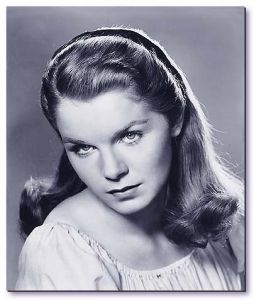
 ; Diane Varsi and Peter Fonda