Jacques Offenbach
From Wikipedia, the free encyclopedia
Jacques Offenbach (20 June 1819, in Cologne - 5 October 1880, in Paris) was a German-born French composer and cellist of the Romantic era and one of the originators of the operetta form. Of German-Jewish descent, he was one of the most influential composers of popular music in Europe in the 19th century, and many of his works remain in the repertory.
Offenbach's numerous operettas, such as Orpheus in the Underworld, and La belle Hélène, were extremely popular in both France and the English-speaking world in the 1850s and 1860s. They combined political and cultural satire with witty grand opera parodies. His popularity in France waned in the 1870s after the fall of the Second Empire, and he fled France, but during the last years of his life, his popularity rebounded, and several of his operettas are still performed. While his name remains most closely associated with the French operetta and the Second Empire, it is Offenbach's one fully operatic masterpiece, Les contes d'Hoffmann (The Tales of Hoffmann), composed at the end of his career, that has become the most familiar of Offenbach's works in major opera houses.
Biography
Offenbach's father, born Isaac Eberst in Offenbach am Main around 1780, changed his name to Offenbach when he settled down in Deutz in 1802. He was a man of many talents who worked as a bookbinder, translator, publisher, music teacher and composer and became a cantor some 30 years later. In 1816 the family moved to Cologne, where his son Jacob (later changed to Jacques) was born in 1819.
Early career
In 1833 his father took Jacob to Paris and managed to get him admitted as a cello student to the Paris Conservatoire. Financial difficulties forced Jacques, as he was known by then, to break off his studies at the end of 1834. After a few odd jobs he eventually found a position as a cellist in the orchestra of the Opéra Comique. He soon made a name for himself as a cello virtuoso, appearing with famous pianists like the young Anton Rubinstein, Liszt, Mendelssohn, and, very often, with Flotow with whom he performed jointly composed pieces. In 1844, he converted to Catholicism and married Herminie d'Alcain. He moved to Germany with his wife and daughter in 1848 (the couple eventually had four daughters) to escape revolutionary violence in France, but returned after a brief stay.
In 1850, he became conductor of the Théâtre Français, but the musical theatre establishment in Paris did not immediately accept his sometimes pointed songs and music. Therefore, in 1855, he rented for the Expo season a little theatre on the Champs-Élysées and named it the Bouffes Parisiens. In the following winter he moved the Bouffes to a larger and, above all, heatable theatre on rue Monsigny/Passage Choiseul. There he began a successful career devoted largely to composing operettas. In the early years, Offenbach's permit limited his productions to one-act works with only a few speaking or singing characters. Les deux aveugles, Ba-ta-clan (both premiering in 1855), and La bonne d'enfant were three of his popular works from this period. Only in 1858, after these restrictions had been lifted, it became possible for him to produce his first full-length work, Orpheus in the Underworld.
Offenbach wrote almost 100 operettas, some of which were wildly popular in his time, and his most popular works are still performed regularly today. The best of these works combined hilarious political and cultural satire with witty grand opera parodies. His best-known operettas in the English-speaking world are Orpheus in the Underworld (1858), La belle Hélène (1864), La vie parisienne (1866), The Grand Duchess of Gerolstein (1867), and La Périchole (1868). Les Brigands (1869) was very popular in the English-speaking world initially but was later forgotten.
Offenbach worked with the librettists Meilhac and Halévy more often than any other librettist or team and produced some of his most successful works with them. He said of his relationship with the team: Je suis sans doute le Père, chacun des deux autres est à la fois mon Fils et Plein d'Esprit (literally "No doubt I am the Father; each of the two others is at once my Son and Full of Verve"?- esprit meaning both [Holy] Spirit and wit and Plein d'Esprit rhyming with Saint Esprit).
Later years
Offenbach was much attached to his adopted country, and many of his works are very patriotic in nature. But when war broke out between France and Germany in 1870, ending the Second Empire, he was attacked in the French press as an immigrant agent of Bismarck and was forced to flee. Reviled in the German press as a traitor to his native Germany, and he brought his family to safety in Spain and then toured in Italy and Austria. When he returned to Paris in June 1871 after the war, his operettas were out of favor with the public. The political right wing felt that by "turning royalty into a farce and the army into a joke" Offenbach's parodies had undermined Napoleon III's France and were therefore the cause, or at least one of the causes, of the defeat. Ironically, the left blamed Offenbach for his perceived loyalty to the deposed emperor, and he had trouble with the police. 1875 marked a low point, and Offenbach was forced into bankruptcy. In 1876, though, a very successful tour of the United States at the occasion of the U.S. Centennial Exhibition allowed him to recover part of his losses. While there, he conducted two of his operettas, La vie parisienne and La jolie parfumeuse, and also gave as many as 40 concerts in New York and Philadelphia.
Offenbach enjoyed renewed popularity with Madame Favart (1878), which built a fantasy plot around the real-life French actress Marie Justine Favart, and La fille du tambour-major, a musically inventive piece. Most experts are of the opinion that his last work, The Tales of Hoffmann, was his only grand opera. It is more serious and more ambitious in its musical scope than his other works, perhaps reflecting the eternal wish of the humourist to be taken seriously. The opera was still unfinished at his death in 1880, but was completed by his friend Ernest Guiraud and premiered in 1881.
In 1938, Manuel Rosenthal (1904-2003) assembled the popular ballet Gaîté Parisienne from his own orchestral arrangements of melodies from Offenbach's operettas and the "barcarolle" from The Tales of Hoffman.
Offenbach is buried in the Cimetière de Montmartre, Paris, France.
0 Replies
bobsmythhawk
1
Reply
Fri 20 Jun, 2008 09:46 am
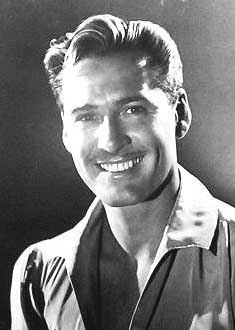
Errol Flynn
From Wikipedia, the free encyclopedia
Born Errol Leslie Thomson Flynn
June 20, 1909(1909-06-20)
Hobart, Tasmania, Australia
Died October 14, 1959 (aged 50)
Vancouver, British Columbia, Canada
Occupation actor, screenwriter, producer, singer, director
Years active 1933 - 1959
Spouse(s) Lili Damita (1931-1942)
Nora Eddington (1943-1949)
Patrice Wymore (1950-1959)
Errol Leslie Thomson Flynn (June 20, 1909 - October 14, 1959) was an Australian film actor, most famous for his romantic swashbuckler roles in Hollywood films and his flamboyant lifestyle.
Background & early life
Errol Flynn was born on 20 June 1909 in Hobart, Tasmania, Australia, where his father, Theodore Thomson Flynn was a lecturer (1909), and professor (1911) of biology at the University of Tasmania (UTAS). His mother was born Lily Mary Young. However, she dropped the first names 'Lily Mary' shortly after she was married, and changed her name to 'Marelle' instead.[1] She was a descendant of one of the Bounty mutineers.[2] Flynn described his mother's family as "seafaring folk",[3] and this appears to be where his life-long interest in ships and the sea came from. Both his parents were native Australians,[4] who had been married at St John's Church of England, Balmain North, Sydney, on 23 January 1909.[5]
Errol was taken to Sydney, New South Wales, as a child where he attended Sydney Church of England Grammar School (Shore School), from which he was expelled for fighting and, allegedly, having sex with a school laundress [6]. He was also expelled from the next schools he attended. At 20 he moved to New Guinea, where he bought a tobacco plantation, a business which failed. A copper mining venture in the hills near the Laloki Valley behind the present national capital, Port Moresby, also failed.
In the early 1930s, Flynn left for Britain and, in 1933, got an acting job with Northampton Repertory Company, where he worked for seven months. According to Gerry Connelly's book Errol Flynn in Northampton, he also performed at the 1934 Malvern Festival as well as in Glasgow and London's West End.
In 1933, he starred in the Australian film In the Wake of the Bounty directed by Charles Chauvel, and in 1934 appeared in Murder at Monte Carlo, produced at the Warner Bros. Teddington Studios, UK.. This latter film is now considered a lost film. During the filming of Murder at Monte Carlo, Flynn was discovered by a Warner Brothers executive, signed to a contract, and shipped to America as a contract actor. In 1942, Flynn became a naturalized citizen of the United States.
Acting career
Flynn became an overnight sensation with his first starring role in Captain Blood (1935). He became typecast as a swashbuckler and made a host of such films, including The Adventures of Robin Hood (1938), The Dawn Patrol (1938) with his close friend David Niven, Dodge City (1939), The Sea Hawk (1940), and Adventures of Don Juan (1948).
Flynn played opposite Olivia de Havilland in eight films, including Captain Blood, The Charge of the Light Brigade (1936), The Adventures of Robin Hood, Dodge City, Santa Fe Trail (1940), and They Died with Their Boots On (1941). While Flynn acknowledged his attraction to her, film historian Rudy Behlmer's assertions that they were romantically involved during the filming of Robin Hood (see the Special Edition of Robin Hood on DVD, 2003), have been disputed by de Havilland. Their relationship was, she said in an interview for Turner Classic Movies, platonic, mostly because Flynn was already married to Lili Damita. The Adventures of Robin Hood was Flynn's first in Technicolor.
During the shooting of The Private Lives of Elizabeth and Essex (1939), Flynn and co-star Bette Davis had some legendary off-screen fights, with Davis striking him harder than necessary while filming a scene. Their relationship was always strained, but Warner Brothers teamed them up twice. Their off-screen relationship was later reconciled. A contract was even presented to lend them out as Rhett Butler and Scarlett O'Hara in Gone with the Wind but the teaming failed to materialize.
Flynn was a member of Hollywood's cricket club along with David Niven. His suave, debonair, and devil-may-care attitude towards both ladies and life has been immortalized in the English language by author Benjamin S. Johnson as "Errolesque" in his treatise on the subject, An Errolesque Philosophy on Life. [7]
After America entered World War II Flynn was often criticised for his failure to enlist while continuing to play war heroes in films. Flynn in fact had actually attempted to join every arm of the services but been rejected for health reasons.[citation needed] The studios' failure to counter the criticism was due to a desire to hide the state of Flynn's health. Not only did Flynn have an enlarged heart, which had already resulted in several heart attacks, but he also suffered from tuberculosis, a painful back (for which he self-medicated with morphine and later, with heroin), and suffered from recurrent bouts of malaria which he had contracted in New Guinea.
By the 1950s, Flynn had become a parody of himself. Heavy alcohol and drug abuse left him prematurely aged and bloated, but he won acclaim as a drunken ne'er-do-well in The Sun Also Rises (1957), and as his idol John Barrymore in Too Much Too Soon (1958). His autobiography, My Wicked, Wicked Ways, was published just months after his death and contains humorous anecdotes about Hollywood. Flynn wanted to call the book In Like Me, but the publisher refused. In 1984, CBS produced a television mini-series based on Flynn's autobiography, starring Duncan Regehr as Flynn.
Also in the 1950s, Flynn tried his hand as a novelist, penning the adventure novel Showdown, which was published in 1952.
Private life, family and death
Lifestyle
Flynn was famous for his drinking, womanizing, and brawling. His freewheeling, hedonistic lifestyle caught up with him in November 1942 when two underage chorus girls, Betty Hansen and Peggy Satterlee, accused him of statutory rape.[8] A group was organised to support Flynn, named the American Boys' Club for the Defence of Errol Flynn (ABCDEF); its members included William F. Buckley, Jr.. The trial took place in January and February, 1943, and Flynn was cleared of the charges. The incident, however, served to increase his reputation as a ladies' man, which led to the popular belief that the term "in like Flynn" was based on Flynn's romantic exploits, but that may not be the case.[9]
Marriages
Flynn was married three times: to actress Lili Damita (who was five years his senior) from 1935 until 1942 (one son, Sean Flynn, born 1941); to Nora Eddington from 1943 until 1949 (two daughters, Deirdre born 1945 and Rory born 1947); and to actress Patrice Wymore from 1950 until his death (one daughter, former model Arnella Roma, 1953-1998). In Hollywood he tended to refer to himself as Irish rather than Australian (his father Theodore Thomson Flynn had been a biologist and a professor at the Queen's University of Belfast in Northern Ireland during the latter part of his career). Flynn lived with Wymore in Port Antonio, Jamaica in the 1950s. He was largely responsible for developing tourism to this area, and for a while owned the Titchfield Hotel which was decorated by the artist Olga Lehmann. He also popularised trips down rivers on bamboo rafts.[10]
In the late 1950s, Flynn met the 15-year-old Beverly Aadland at the Hollywood Professional School, whom he courted during his last few years, and cast in his final film, Cuban Rebel Girls (1959). According to Aadland, he planned to marry her and move to their new house in Jamaica, but during a trip together to Vancouver, British Columbia, he died of a heart attack.
His only son, Sean, an actor and later a noted war correspondent, disappeared in Cambodia in 1970 during the Vietnam War while working as a freelance photojournalist for Time magazine[11]; he was presumed killed in mid-1971 by the Khmer Rouge. Although officially declared dead in 1984, his remains have never been discovered. Sean's life was recounted in Inherited Risk by Jeffrey Meyers (Simon & Schuster) and he is also mentioned on page 194 in the Colleagues section of "Dispatches" by Michael Herr. Flynn's daughter Rory, has one son, Sean Rio Flynn, named after her half-brother. Young Flynn is an actor.[12] Rory Flynn has written a book about her father entitled The Baron of Mulholland.
Death
Numerous legends surround Flynn's death. According to Vancouver history, Flynn flew with Aadland to Vancouver on October 9, 1959, to sell his yacht Zaca to millionaire George Caldough. On October 14, Caldough was driving Flynn to the airport when Flynn felt ill. He was taken to the apartment of Caldough's friend, Dr. Grant Gould, uncle of noted pianist Glenn Gould. A party ensued, with Flynn regaling guests with stories and impressions. Feeling ill again, he announced "I shall return" and retired to a bedroom to rest. A half hour later, Aadland checked in on him and discovered him unconscious, due to suffering a massive heart attack. According to the Vancouver Sun on December 16, 2006, "When Errol Flynn came to town in 1959 for a week-long binge that ended with him dying in a West End apartment, his local friends propped him up at the Hotel Georgia lounge so that everyone would see him."
He is interred in Forest Lawn Memorial Park Cemetery, in Glendale, California. He shares coffin space with six bottles of whiskey, a parting gift from his drinking buddies. Both his parents survived him.
Post-death controversy
In 1980, author Charles Higham published a controversial biography, Errol Flynn: The Untold Story in which he alleged that Flynn was a fascist sympathizer who spied for the Nazis before and during World War II.
Subsequent biographies ?- notably Tony Thomas' Errol Flynn: The Spy Who Never Was (Citadel, 1990) and Buster Wiles' My Days With Errol Flynn: The Autobiography of a Stuntman (Roundtable, 1988) ?- have denounced Higham's claims as pure fabrication. Flynn's political leanings actually appear to have been leftist - he was a supporter of the Spanish Republic in the Spanish Civil War and of the Cuban Revolution, even narrating a documentary titled Cuban Story[13] shortly before his death.
0 Replies
bobsmythhawk
1
Reply
Fri 20 Jun, 2008 09:52 am
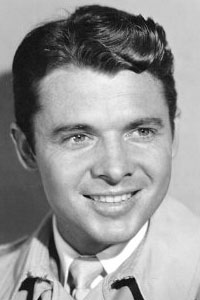
Audie Murphy
From Wikipedia, the free encyclopedia
June 20, 1926(1926-06-20) - May 28, 1971 (aged 44)
Audie Murphy, the most decorated soldier of World War II
Place of birth Kingston, Texas
Place of death Brush Mountain near Catawba or Roanoke, Virginia
Allegiance United States of America
Service/branch United States Army
Years of service 1942-1945 (US Army)
1950-1966 (Texas National Guard)
Rank First Lieutenant (USA), Major (TNG)
Battles/wars World War II: Sicily (July 1943), Salerno, Anzio, Rome, France: Operation Anvil-Dragoon (Aug. 1944), Holtzwihr (Jan. 1945)[1]
Awards Medal of Honor
Distinguished Service Cross
Silver Star (2)
Legion of Merit
Bronze Star (2)
Purple Heart (3)
French Legion of Honor[1]
French Croix de Guerre (+ Palm)[1]
Belgian Croix de Guerre 1940 Palm[1]
Other work actor, songwriter, horseracing, oil
Audie Leon Murphy (June 20, 1926 - May 28, 1971)[2] was an American soldier in World War II, who later became an actor, appearing in 44 American films.[2] He also found success as a country music composer.
In 27 months of combat action in World War II, Murphy became the most decorated United States combat soldier in United States military history.[2][3] He received the Medal of Honor, the U.S. military's highest award for valor, along with 32 additional U.S. medals,[2][3]five from France, and one from Belgium.[1][2][4]
Murphy had a successful movie career, including the extremely popular To Hell and Back (1955), based on his memoir of the same name (1949),[3] and starred in 33 Hollywood Westerns. He died in a plane crash in 1971[3] and was interred, with full military honors,[3] in Arlington National Cemetery. His is the second most-visited gravesite, after that of President John F. Kennedy.[3][4][1]
Biography
Early life
He was born in Texas,[2][5] to Emmett Berry and Josie Bell Murphy (née Killian) who was of Irish descent,[5][6] poor sharecroppers,[3][5] and grew up on farms between Farmersville and Greenville, as well as near Celeste, Texas (Hunt County).[2] Murphy was the sixth of twelve children,[6][5] nine of whom survived until the age of eighteen.[1][5] His brothers and sisters included Corinne, Charles Emmett (Buck), Vernon, June, Oneta, J.W., Richard, Eugene, Nadine, Billie, and Joseph Murphy. He went to school in Celeste until the eighth grade,[5] when he dropped out to help support his family (his father deserted them in 1936), working for a dollar a day, plowing and picking cotton on any farm that would hire him.[5] He became very skilled with a rifle, hunting small game to help feed the family.[1] One of his favorite hunting companions was neighbor Dial Henley who noticed that young Audie never missed when he shot at squirrels, rabbits, or birds. When that was pointed out to him, Murphy remarked, "Well, Dial, if I don't hit what I shoot at, my family won't eat today." During the 1930s Murphy worked at a combination general store/garage and filling station in Greenville, Texas.[2][5] At sixteen he was working in a radio repair shop when his mother died[2][5] on May 23, 1941. Later that year, in agreement with his older sister, Corrinne, Murphy was forced to place his three youngest siblings in an orphanage[5] to ensure their care (he reclaimed them after World War II).
Enlistment
After the attack on Pearl Harbor on December 7, 1941, Murphy (then just 16 years old) tried to enlist in the military, but the services rejected him for being underage.[4] In June 1942, shortly after his 17th birthday (sister Corrine adjusted his birth date so he appeared to be 18 and legally allowed to enlist, and his war memoirs, To Hell and Back, maintained this misinformation, leading to later confusion and contradictory statements as to his year of birth), Murphy was accepted into the United States Army,[3][4] at Greenville,[6] after being turned down by the Marines and the paratroopers for being too short (5'5"/1.65 m)[2] and of slight build.[3][4] He was sent to Camp Wolters, Texas, for basic training[1][6] and during a session of close order drill, passed out. His company commander tried to have him transferred to a cook and bakers' school[5] because of his baby-faced youthfulness, but Murphy insisted on becoming a combat soldier. His wish was granted: after 13 weeks of basic training,[5] he was sent to Fort Meade, Maryland for advanced infantry training.[1][6]
Battles
Murphy still had to "fight the system" to get overseas and into combat. His persistence paid off, and in early 1943 he was shipped out to Casablanca, Morocco as a replacement in Company B, 1st Battalion, 15th Infantry Regiment (United States), 3rd Infantry Division.[4] Murphy saw no action in Africa, but instead participated in extensive training maneuvers along with the rest of the 3rd Division. His combat initiation finally came when he took part in the liberation of Sicily on July 10, 1943.[1][4] Shortly after arriving, Murphy was promoted to corporal[1] after killing two Italian officers as they tried to escape on horseback. He contracted malaria[2][5] while in Sicily, an illness which put him in the hospital several times during his Army years.[5]
After Sicily was secured from the Germans, the 3rd Division invaded the Italian mainland, landing near Salerno[1] in September 1943.[4] While leading a night patrol, Murphy and his men ran into German soldiers but fought their way out of an ambush, taking cover in a rock quarry.[1] The German command sent a squad of soldiers in but they were stopped by intense machine-gun and rifle fire:[1] Three German soldiers were killed and several others captured.[1] For his actions at Salerno, Murphy was promoted to sergeant.[1]
Murphy distinguished himself in combat on many occasions while in Italy, fighting at the Volturno River,[4] at the Anzio beachhead,[4] and in the cold, wet Italian mountains. While in Italy, his instinctive skills as a combat infantryman earned him promotions and decorations for valor.[4]
Following its participation in the Italian campaign, the 3rd Division invaded Southern France[4] on August 15, 1944 (Operation Anvil-Dragoon).[4] Shortly thereafter, Murphy's best friend, Lattie Tipton (referred to as "Brandon" in Murphy's book To Hell and Back), was killed while approaching a German soldier who was feigning surrender.[1] Murphy went into a rage,[1] and single-handedly wiped out the German machine gun crew which had just killed his friend.[1] He then used the German machine gun and grenades to destroy several other nearby enemy positions.[1] For this act, Murphy received the Distinguished Service Cross[1] (second only to the Medal of Honor). During seven weeks of fighting in that campaign in France, Murphy's division suffered 4,500 casualties.[4]
Just weeks later, he received two Silver Stars for further heroic actions.[1] Murphy, by now a staff sergeant and holding the position of Platoon Sergeant, was eventually awarded a battlefield commission to second lieutenant, which elevated him to the Platoon Leader position.[1] He was wounded in the hip by a sniper's ricocheting bullet 12 days after the promotion[1] and spent ten weeks recuperating.[1] Within days of returning to his unit, and still bandaged, he became company commander (January 25, 1945), and suffered further wounds from a mortar round which killed two others nearby.
The next day, January 26 (the temperature was 14 degrees with 24 inches of snow on the ground), the battle at Holtzwihr (France) began[1][4] with Murphy's unit at an effective strength of 19 out of 128. Murphy sent all of his men to the rear[4] while he took pot-shots at the Germans until out of ammunition. He then proceeded to use an abandoned, burning tank destroyer's .50 caliber machine gun[1] to cut into the German infantry at a distance,[4] including one full squad of German infantry that had crawled in a ditch to within 100 feet of his position. Wounded in the leg during heavy fire,[1][4] he continued this nearly single-handed battle for almost an hour.[1][4] His focus on the battle before him stopped only when his telephone line to the artillery fire direction center was cut by either U.S. or German artillery. As his remaining men came forward, he quickly organized them to conduct a counter attack,[1][4] which ultimately drove the enemy away from Holtzwihr.[4] These actions earned Murphy the Medal of Honor.[1][4]
Murphy was then removed from the front lines and made a liaison officer; he was promoted to 1st lieutenant on February 22, 1945. On June 2, 1945, Lt. Gen. Alexander Patch, commander of the US Seventh Army, presented him with the Medal of Honor and Legion of Merit. The Legion of Merit was awarded for outstanding services with the 3rd Infantry Division during January 22, 1944 to February 18, 1945. On June 10, Murphy left Paris by plane, arriving in San Antonio, Texas four days later.
Audie Murphy received 33 US medals, plus five medals from France and one from Belgium.[1][4] It has been said that he received every US medal available at the time; 5 of them awarded more than once.
His height and weight at his enlistment were 5 feet 5.5 inches and 110 pounds; after his three year enlistment, they were 5 ft 7 inches and 145 lbs.
Medal of Honor citation
The official U.S. Army citation for Audie Murphy's Medal of Honor reads:[1][7]
Rank and organization: Second Lieutenant, U.S. Army, Company B 15th Infantry, 3rd Infantry Division.
Place and date: Near Holtzwihr France, 26 January 1945.
Entered service at: Dallas, Texas. Birth: Hunt County, near Kingston, Texas, G.O. No. 65, 9 August 1944.
Citation: Second Lt. Murphy commanded Company B, which was attacked by six tanks and waves of infantry. 2d Lt. Murphy ordered his men to withdraw to a prepared position in a woods, while he remained forward at his command post and continued to give fire directions to the artillery by telephone. Behind him, to his right, one of our tank destroyers received a direct hit and began to burn. Its crew withdrew to the woods. 2d Lt. Murphy continued to direct artillery fire, which killed large numbers of the advancing enemy infantry. With the enemy tanks abreast of his position, 2d Lt. Murphy climbed on the burning tank destroyer, which was in danger of blowing up at any moment, and employed its .50 caliber machine gun against the enemy. He was alone and exposed to German fire from three sides, but his deadly fire killed dozens of Germans and caused their infantry attack to waver. The enemy tanks, losing infantry support, began to fall back. For an hour the Germans tried every available weapon to eliminate 2d Lt. Murphy, but he continued to hold his position and wiped out a squad that was trying to creep up unnoticed on his right flank. Germans reached as close as 10 yards, only to be mowed down by his fire. He received a leg wound, but ignored it and continued his single-handed fight until his ammunition was exhausted. He then made his way back to his company, refused medical attention, and organized the company in a counterattack, which forced the Germans to withdraw. His directing of artillery fire wiped out many of the enemy; he killed or wounded about 50. 2d Lt. Murphy's indomitable courage and his refusal to give an inch of ground saved his company from possible encirclement and destruction, and enabled it to hold the woods which had been the enemy's objective.[1][7]
Lifted to "Living Legend" status
Audie Murphy was credited with destroying six tanks in addition to killing over 240 German soldiers and wounding and capturing many others.[4] By the end of World War II he was a legend within the 3rd Infantry Division.[3] His principal U.S. decorations included the Medal of Honor, Distinguished Service Cross, two Silver Stars, the Legion of Merit, two Bronze Stars with Valor device, and three Purple Hearts (all for genuine combat wounds). Murphy participated in campaigns in North Africa, Sicily, Italy, France and Germany, as denoted by his European-African-Middle Eastern Campaign Medal with one silver battle star (denoting five campaigns), four bronze battle stars, plus a bronze arrowhead representing his two amphibious assault landings at Sicily and southern France. During the French Campaign, Murphy was awarded two Presidential Citations, one from the 3rd Inf, Division, and one from the 15th Inf. Regiment during the Holtzwihr action.
The French government awarded Murphy its highest award, the Legion of Honor (Grade of Chevalier).[8] He also received two Croix de Guerre medals from France[8] and the Croix de Guerre 1940 Palm from Belgium.[8] In addition, Murphy was awarded the Combat Infantryman Badge. (A complete list of his awards and decorations appears later in this article.) He spent 29 months overseas and just under two years in combat with the 3rd Infantry Division, all before he turned 21.[4]
In early June 1945, one month after Germany's surrender, he returned from Europe to a hero's welcome in his home state of Texas,[4] where he was showered with parades, banquets, and speeches. Murphy was discharged from active duty with the U.S. Army as a first lieutenant, at Fort Sam Houston in San Antonio, Texas on August 17, 1945,[6] and discharged from the U.S. Army on September 21, 1945.[1][4]
He gained nationwide recognition, appearing on the cover of Life magazine for July 16, 1945.
After the Korean War broke out in June 1950, Murphy joined the 36th Infantry Division of the Texas National Guard; however, that division was not called up for combat duty. By the time he left the Guard in 1966, Murphy had attained the rank of major.
Post war illness
Murphy suffered from post-traumatic stress disorder (PTSD) after his return from the war.[2][3] He was plagued by insomnia, bouts of depression, and nightmares related to his numerous battles.[2] His first wife, Wanda Hendrix, often talked of his struggle with this condition, even claiming that he had at one time held her at gunpoint. For a time during the mid-1960s, he became dependent on doctor-prescribed sleeping pills called Placidyl.[2] When he recognized that he had become addicted to the drug, he locked himself in a motel room where he took himself off the pills, going through withdrawal for a week.[2]
Always an advocate of the needs of America's military veterans, Murphy eventually broke the taboo about publicly discussing war-related mental conditions. In an effort to draw attention to the problems of returning Korean and Vietnam War veterans, Murphy spoke out candidly about his own problems with PTSD, known then and during World War II as "battle fatigue"[2] and also commonly known as "shell shock." He called on the United States government to give increased consideration and study to the emotional impact that combat experiences have on veterans, and to extend health care benefits to address PTSD and other mental-health problems suffered by returning war veterans.[2]
Personal life
Murphy married actress Wanda Hendrix in 1949;[2] they were divorced in 1951. He then married former airline stewardess Pamela Archer who was an army nurse, by whom he had two children: Terrance Michael "Terry" Murphy (born 1952) and James Shannon "Skipper" Murphy (born 1954). They were named for two of his most respected friends, Terry Hunt and James "Skipper" Cherry, respectively. Audie became a successful actor, rancher, and businessman,[4] breeding and raising quarter horses. He owned ranches in Texas, Tucson, Arizona and Perris, California.[3]
In 1955, Murphy became interested in Freemasonry. He was encouraged by his close friend, Texas theater owner Skipper Cherry, to petition and join the Masonic Order in California. He returned to Texas to become a 32d degree Scottish Rite Mason and to join the Shriners. He was active in various Masonic events and was a member in good standing for the rest of his life.
Movie career
After seeing the young hero's photo on the cover of the July 16 edition of Life Magazine and sensing star potential,[2] actor James Cagney invited Murphy to Hollywood in September 1945. Despite Cagney's expectations, the next few years in California were difficult for Murphy. He became disillusioned by the lack of work, was frequently broke, and slept on the floor of a gymnasium owned by his friend Terry Hunt, whom Murphy later named a son after. He eventually received token acting parts in the 1948 films Beyond Glory and Texas, Brooklyn and Heaven.[2][4] His third movie, Bad Boy, gave him his first leading role.[3] He also starred in the 1951 adaptation of Stephen Crane's Civil War novel, The Red Badge of Courage, which met with critical success.[4] Murphy expressed great discomfort in playing himself in To Hell and Back. In 1959, he starred in the western film No Name on the Bullet, in which his performance was well-received despite being cast as the villain, a professional killer who managed to stay within the law.[2]
First starring role
After returning home from World War II, Murphy bought a house in Farmersville, Texas for his oldest sister Corinne, her husband Poland Burns, and their three children. The idea was that Audie's three youngest siblings, Nadine, Billie, and Joe, who had been living in an orphanage since Murphy's mother's death, would also be able to live with Corinne and Poland and would become part of a family again. Unfortunately, six children under one roof created too much stress on everyone, particularly Nadine and Joe, so Murphy came and picked them up.
Joe and Nadine wanted to stay with him, but despite a lot of post-war publicity, his acting career had gone nowhere and he was finding it difficult to survive financially. The oldest Murphy brother, Buck, and his wife agreed to take Nadine, but Murphy didn't know what to do with Joe. He approached James "Skipper" Cherry, a Dallas theater owner who was involved with the Variety Clubs International Boy's Ranch, a 4,800 acre (19 km²) ranch near Copperas Cove, Texas who arranged for the Boy's Ranch to take Joe in. He loved it there and Murphy was able to visit him, as well as Cherry, frequently. In a 1973 interview, Cherry recalled, "He was discouraged and somewhat despondent concerning his movie career."
Variety Clubs was financing a film to be called Bad Boy to help promote the organization's work with troubled children and Cherry called Texas theater executive Paul Short, who was producing the film, to suggest that they considered giving Murphy a significant role in the movie. He looked good in the screen test, but the president of Allied Artists did not want to cast someone with so little acting experience in a major role. However, by this time, Cherry, Short, and the other Texas theater owners had decided that Audie Murphy was going to play the lead or they weren't financing the film. Their money talked and he was cast, turning in such a fine performance that the Hollywood powers that be finally recognized his talent. As a direct result of the film, Universal Studios signed Murphy to his first seven-year studio contract. After a few box-office hits there, the studio bosses gave Audie latitude in choosing his roles, as long as plenty of action was included in the scenarios.
Autobiography
Murphy's 1949 autobiography To Hell and Back became a national bestseller. In the book, actually ghostwritten by his friend David "Spec" McClure, already a professional writer[9] Murphy modestly described some of his most heroic actions ?- without portraying himself as a hero. Not once does he mention any of the many decorations he received for his incredible combat exploits. Instead, he chose to praise the skills, bravery, and dedication of the other soldiers in his platoon. Murphy even attributed a song he had written to "Kerrigan".[10]
Murphy played himself in the 1955 version of his book made into a film of the same title, To Hell and Back.[2] The film grossed almost ten million dollars during its initial theatrical release, and at the time became Universal's biggest hit of the studio's 43-year history. This movie held the record as the company's highest-grossing motion picture until 1975, when it was surpassed by Steven Spielberg's Jaws.[2] Terry Murphy, who played younger brother Joe Preston Murphy (at age 4), is in fact Murphy's older son.
Audie was reluctant to star in To Hell and Back fearing that he was cashing in on his war experience - he even suggested that his role be played by Tony Curtis. The film was introduced by General Walter Bedell Smith, United States Army, Retired. During World War II, Smith had served as Chief of Staff to General Dwight D. Eisenhower.
Harold B. Simpson's 1975 comprehensive biography, Audie Murphy, American Soldier, covers the breadth of Murphy's life. The book emphasizes his military exploits, and includes photos, maps, and battle-maneuver diagrams. Murphy's post-war career is also well-documented.
Hollywood Walk of Fame
For his contribution to the motion picture industry, Audie Murphy has a star on the Hollywood Walk of Fame at 1601 Vine Street.
0 Replies
bobsmythhawk
1
Reply
Fri 20 Jun, 2008 09:54 am
Olympia Dukakis
From Wikipedia, the free encyclopedia
Born June 20, 1931 (1931-06-20) (age 77)
Lowell, Massachusetts
Spouse(s) Louis Zorich (1962-)
Awards won
Academy Awards
Best Supporting Actress
1987 Moonstruck
BAFTA Awards
Best Supporting Actress
1987 Moonstruck
Golden Globe Awards
Best Supporting Actress - Motion Picture
1988 Moonstruck
Olympia Dukakis (Greek: Ολυμπία Δουκάκη; born June 20, 1931) is an Academy Award-winning American actress.
Biography
Personal life
Dukakis was born in Lowell, Massachusetts, the daughter of Alexandra (née Christos) and Constantine S. Dukakis, who was a manager.[1][2] Her parents were Greek immigrants to the United States, her father from Anatolia and her mother from Peloponnese.[3][4] She has a brother, Apollo, and is a cousin of Michael Dukakis, former governor of Massachusetts and the Democratic nominee for president in 1988, for whom she was a delegate from New Jersey at the 1988 Democratic National Convention. She is an alumna of Arlington High School in Arlington, Massachusetts, and was educated at Boston University.
Dukakis has been married to actor Louis Zorich since 1962, with whom she has three children.
Career
Dukakis has starred in films, including Steel Magnolias, Mr. Holland's Opus, The Thing About My Folks, and Moonstruck, for which she won an Oscar for Best Supporting Actress. She also played the role of Anna Madrigal in the Tales of the City television mini-series, which garnered her an Emmy Award nomination, she also appeared on Search for Tomorrow as Dr. Barbara Moreno, who romanced Stu Bergman. Her Broadway theatre credits include Who's Who in Hell, Social Security, and the one-woman play Rose. Her theater, film, and television work has won her an Obie Award, a Drama Desk Award, a Los Angeles Drama Critics Circle Award, and a Golden Globe.
Dukakis won a BAFTA Award for Moonstruck and was nominated for the Canadian Academy Award for The Event. She provided the voice of Grandpa's love interest for The Simpsons episode "The Old Man and the Key". In 2003, Dukakis published her national bestselling autobiography Ask Me Again Tomorrow: A Life in Progress. Recent films include 3 Needles, The Librarian: Return to King Solomon's Mines, In the Land of Women, and Away From Her.
In 1998 she starred as Charlotte Kisko in the British TV drama, A Life For A Life (ITV) based on the real-life story of Stefan Kisko, a man wrongfully imprisoned for seventeen years for the murder of a young child Lesley Molseed after police suppressed evidence of his innocence.
She recently directed the world premiere production of Todd Logan's Botanic Garden at Victory Gardens Theatre in Chicago, IL.[5]
In the 2008 season of Hartford Stage, Dukakis is starring in the revival of Tennessee Williams "The Milk Train Doesn't Stop Here Anymore," opposite Kevin Anderson.
0 Replies
bobsmythhawk
1
Reply
Fri 20 Jun, 2008 09:56 am
Martin Landau
From Wikipedia, the free encyclopedia
Born June 20, 1931 (1931-06-20) (age 77)
Brooklyn, New York, U.S.
Occupation Actor
Years active 1950s-present
Spouse(s) Barbara Bain (1957-1993)
Awards won
Academy Awards
Best Supporting Actor
1994 Ed Wood
Golden Globe Awards
Best TV Star - Male
1968 Mission: Impossible
Best Supporting Actor - Motion Picture
1989 Tucker: The Man and His Dream
1995 Ed Wood
Screen Actors Guild Awards
Best Supporting Actor - Motion Picture
1994 Ed Wood
Martin Landau (born June 20, 1931) is an Academy Award-winning American film and television actor. He is perhaps best known for his roles in the television series Mission: Impossible (1966-1969) and Space: 1999 (1975-1977). He received a Golden Globe Award in 1969 for his performance in the former, playing the role of mission specialist Rollin Hand. In 1968 and 1969 he received Emmy award nominations for best actor in a dramatic series for his Mission: Impossible work. In 1994 he won several awards, including the Oscar for Best Supporting Actor, for his performance in Ed Wood. He had already received two previous Oscar nominations.
Biography
Early life
Landau was born into a Jewish family in Brooklyn, New York, the son of Selma (née Buchanan) and Morris Landau, an Austrian-born machinist.[1][2] At the age of seventeen, he began working as a cartoonist for the New York Daily News,[3] but influenced by Charlie Chaplin and the escapism of the cinema, he pursued becoming an actor. He attended the Actors' Studio in the same class with Steve McQueen and in 1957, Landau made his Broadway debut in Middle of the Night. Encouraged by his mentor Lee Strasberg, Landau also taught acting. Actors he has coached include Jack Nicholson and Anjelica Huston.
Career
In 1959, Landau made his first major film appearance in Alfred Hitchcock's North by Northwest at the age of 28. A few years later, after turning down the role of Spock in Star Trek, Landau took the role of master of disguise Rollin Hand in Mission: Impossible, becoming one of the show's best-known stars. According to The Complete Mission: Impossible Dossier, by Patrick J. White (Avon Books, 1991), Landau initially declined to be contracted to the show as he didn't want it to interfere with his film career; instead, for the first season he was credited in "special guest appearances by" him. He became a "full-time" cast member with the second season, although the studio agreed to only contract him on a year-by-year basis rather than the then-standard five years. The role of Rollin Hand required Landau to perform a wide range of accents and characters from dictators to thugs, and several episodes saw Landau playing dual roles - not only Hand's impersonation, but also the "original" person (such as in the first episode of the series).
He co-starred in the series with his then-wife, Barbara Bain, and the two left the series after the third season. Salary is the most-often cited reason for their departure, however the exact reasons are disputed.[citation needed]
In the mid-1970s, Landau and Bain, teamed with Barry Morse, returned to television in the British science fiction series, Space: 1999, produced first by Gerry Anderson in partnership with Sylvia Anderson and then by Fred Freiberger. Although it remains a cult classic due to its high production design values, the series was critically derided during its run and was cancelled after two seasons. Landau himself became very critical of the show's scripts and storylines, especially during its second season, but praised the cast and crew. He wrote forewords for Barry Morse's 2006 theatrical memoir Remember With Advantages and for Jim Smith's critical biography of Tim Burton.
After Space: 1999, Landau appeared in supporting roles in a number of films and TV shows of varying quality, including The Harlem Globetrotters on Gilligan's Island, which again co-starred Bain. This was the last time the two acted together on screen, as of December 2007.
In the late-1980s, Landau staged a major career comeback by winning an Academy Award nomination for his role in Tucker: The Man and His Dream. He later received a second nomination for Crimes and Misdemeanors and won the 1994 Academy Award for Best Supporting Actor for his uncanny portrayal of Bela Lugosi in Ed Wood. Upon accepting the award, he was visibly frustrated by the orchestra's attempt to cut short his speech. When the music level rose, he pounded his fist on the podium and yelled "No!" He later stated that he had intended to thank Lugosi and dedicate the award to him and his frustration was that he didn't get to mention the man whom he had been honoured for playing.[citation needed] Landau received a Screen Actors Guild Award, a Golden Globe, and a Saturn Award for the role, as well as awards from several critics groups.[4] Upon winning the Academy Award, a reporter for the L.A. Times stated that "the award goes to Martin Landau; its shadow goes to Bela Lugosi." Landau admitted, on the Ed Wood DVD, to having been very impressed by the comment.
In 2006, Landau made a guest appearance on the TV series Entourage, playing a washed-up, but determined and sympathetic, Hollywood producer attempting to relive his glory days. Landau received a 2007 Emmy nomination for his performance in this role.
For his contribution to the motion picture industry, Landau has a star on the Hollywood Walk of Fame at 6841 Hollywood Blvd.
Personal life
Landau has two daughters, Susan and Juliet, from his marriage to Barbara Bain. Landau and Bain married on January 31, 1957 and divorced in 1993. He lives in West Hollywood, California.
0 Replies
bobsmythhawk
1
Reply
Fri 20 Jun, 2008 10:01 am
Brian Wilson
From Wikipedia, the free encyclopedia
Background information
Birth name Brian Douglas Wilson
Born June 20, 1942 (1942-06-20) (age 66)
Hawthorne, California
Genre(s) Surf rock, Rock, Baroque pop
Occupation(s) Songwriter, Bassist, Pianist, Vocalist, Producer, Composer, Arranger
Instrument(s) Bass, Vocals, Piano
Years active 1961-present
Label(s) Capitol, Brother, Reprise, Caribou
Associated acts The Beach Boys
Website BrianWilson.com
Brian Douglas Wilson (born June 20, 1942 in Hawthorne, California) is an American musician best known as the lead songwriter, bassist, and singer of the American pop band The Beach Boys. Wilson was also the band's main producer, composer, and arranger. The lead vocal parts for The Beach Boys recordings were primarily sung by either Wilson, his brother Carl, or Mike Love.
Early influences included The Four Freshmen and Chuck Berry, among others. Wilson admired Phil Spector, considering him both a mentor and rival.[1]
Wilson was a perfectionist in the studio, and often upset the other members of the Beach Boys with this incessant drive for perfection. Though one of the first users of an eight-channel multitrack tape recorder, he shunned stereophonic sound, preferring (as Spector did) to work in monaural ?- because he believed stereo gave an incomplete "sound picture" if the listener was not directly between the speakers, although this can also be partially attributed to Wilson being deaf in his right ear.[citation needed]
Biography
The Beach Boys
Wilson formed The Beach Boys in the early 1960s with his brothers Carl and Dennis, his cousin Mike Love, and schoolfriend Al Jardine, who was briefly replaced by David Marks. They were originally named The Pendletones by Mike Love, the name being derived from Pendleton shirts which were fashionable at the time. Russ Regan, who was involved in promoting the group's first single, "Surfin'", is credited in Wilson's autobiography with renaming the group. The Beach Boys did not find out about the change, however, until they saw the new name on the "Surfin'" single's label.
In 1965, Wilson felt he could not play live with the band as well as write new material; so Glen Campbell, a regular session musician, replaced Wilson for three months of tours before quitting to pursue a solo career. Bruce Johnston then joined the band. Wilson steered the group to huge success around the world and they scored a string of international hits between 1962 and 1967, including pop classics such as "Surfin' USA," "Fun, Fun, Fun"," "I Get Around," "Help Me Rhonda," "California Girls," "Wouldn't It Be Nice," "Good Vibrations," and "Heroes and Villains." He also produced records for other artists, including Glen Campbell and the Honeys, but with nowhere near the success he had with the Beach Boys. He also co-wrote many of the biggest hits for Jan and Dean during this period.
Until mid-1967, the international success and popularity of the Beach Boys put them among the world's biggest acts of the time, such as the Beatles, who later cited Wilson's work as a major influence. Wilson in turn considered the Beatles his other chief rivals, though he and fellow bassist-keyboardist Paul McCartney, born only two days earlier than himself, became friends. McCartney has frequently expressed his opinion that Wilson's "God Only Knows" (sung by Carl Wilson) is the greatest song ever written.[2]
Wilson's creativity reached its apex during the mid-1960s with the Pet Sounds album (which, according to Paul McCartney, inspired the Beatles' Sgt. Pepper's Lonely Hearts Club Band). Various music polls have named Pet Sounds one of the greatest pop albums ever recorded, having reached #1 in Mojo's and New Musical Express all time albums-lists. Pet Sounds marked the first time Brian Wilson was featured as a solo artist when Capitol Records released the track "Caroline, No" not by The Beach Boys, but as "Brian Wilson."
This was immediately followed by their biggest chart success, the million-selling #1 hit single "Good Vibrations." Wilson then began work on a new album, originally called Dumb Angel but soon re-titled SMiLE, on which he collaborated with lyricist Van Dyke Parks, and on which "Good Vibrations" would have been included. However, the combination of resistance from within the group and Wilson's own growing personal problems led to the cancellation of the project in May of 1967.
Wilson also was the owner of a health food shop in Hollywood that lasted a year from its founding in the summer of 1969, the "Radiant Radish."
Mental illness
After production of SMiLE ceased in May 1967, Wilson prepared a single release of its central song, "Heroes and Villains". It stalled on the charts, briefly peaking at #12 in America. Psychologically overwhelmed by these failures and by the birth of his first child in 1968, Wilson began to take on a diminished creative role within the Beach Boys. Until about 1970 he remained the group's principal songwriter, but increasingly production reins were handed to younger brother Carl. Wilson mostly oversaw the albums Smiley Smile, Wild Honey and Friends, the first of which consisted mostly of recycled SMiLE material. All three were considered failures at the time. After that, he all but stopped writing songs and was frequently seen partying in the company of songwriter Tandyn Almer and Three Dog Night singer Danny Hutton. It was during this period that he was introduced to cocaine. Any hope of Wilson assuming his former level of dedication were crushed in 1969, when the single "Break Away" - produced by Brian and co-written by himself and his father Murry - reached a dismal #63 on the American charts. The contemporaneous Beach Boys album, 20/20, the group's last for Capitol, was made mostly without Wilson's participation.
After the failure of "Break Away", Wilson spent the majority of the following three years in his bedroom sleeping, taking drugs, and overeating. Some of his "new" contributions were remnants of SMiLE (e.g., "Surf's Up"); those that were genuinely new reflected his depression and growing detachment from the world ("Til I Die", the EP "Mount Vernon and Fairway"). Reportedly, Warner Brothers was so desperate for material from Wilson that the single "We Got Love" (co-written by Ricky Fataar, Blondie Chaplin, and Love) was scrapped in favor of "Sail On, Sailor", a song mostly written by committee (including Almer and Parks) that happened to draw its initial germ from a Wilson chord sequence.
In 1975, Brian's wife and family enlisted the services of controversial therapist Eugene Landy in a bid to help Brian, and as a by-product, help revive the group's ailing profile. Brian did not stay under Landy's care for long, but during this short period, the doctor managed to help him into a more productive, social frame of mind. New albums were recorded, and for the first time since 1964, Brian started to regularly appear live on stage with the band. Brian was also deemed to be well enough to do a solo performance on Saturday Night Live in November 1976. The situation continued for a few years, but by 1982, his mental state had deteriorated even further; he was taking large amounts of cocaine, he weighed over 300 pounds, and he was in danger of losing his life.
Eugene Landy was once more called into action, and a more radical program was undertaken to try to restore Brian to health. This involved firing him from the Beach Boys, isolating him from his family on Hawaii, and being put onto a rigorous diet and health regimen. This, coupled with long, extreme counselling sessions, brought Brian back to reality. He was certainly healthier and more conversant than previously, but he was also under a strict level of control by Landy. Brian's recovery continued as he joined the band on stage in Live Aid in 1985, and recorded a new eponymous album with the Beach Boys.
It was variously reported that Wilson had either schizophrenia or bipolar affective disorder. Dr. Landy's treatment regimen was not a recognized treatment for either of these mental illnesses. Some years later, during his second marriage, he was diagnosed with schizoaffective disorder, bipolar type which supposedly caused him to hear voices in his head. According to the 2006 Peter Ames Carlin biography of Wilson, Catch A Wave, by 1989 the rumor was that Brian either had a stroke or had done too many drugs and was permanently fried. The truth was equally disturbing: tardive dyskinesia, a neurological condition that develops when the system is saturated with too many antipsychotic drugs ?- like the ones Landy had been steadily prescribing for Brian since 1983.[3] Wilson's drug regimen has now been reduced to a mild combination of antidepressants, which keep him functioning at a more socially acceptable level than he has been at in decades, enabling him to record and tour.
The effects of Brian Wilson's mental illness on his parenting style were discussed by Wilson's daughter Wendy during her appearance in a February 2008 episode of the British reality television show Supernanny.[4] Wilson's daughter Carnie and granddaughter Lola also made an appearance on the episode.
Solo career
Wilson launched a career as a solo artist in 1988 with limited success. It is possible that his efforts in this regard were both encouraged and hampered by Landy's influence. Partly due to the control that Landy exercised on his life, Wilson stopped working with the Beach Boys on a regular basis after the release of The Beach Boys in 1985.
Wilson released a solo album, Brian Wilson, in 1988 and a memoir, Wouldn't It Be Nice - My Own Story, in which he spoke for the first time about his troubled relationship with his abusive father Murry and his "lost years" of mental illness. It is widely understood[citation needed] that although it was written following interviews with Brian and others, Landy was largely responsible for the book, in conjunction with People magazine writer Todd Gold. The book describes Landy in terms that could be called messianic. In a later lawsuit over the book, Wilson testified in court that he hadn't even read the final manuscript. As a result, the book was taken out of press some years later. It should also be noted that the book used parts of other Beach Boys books written by Steven Gaines and David Leaf without crediting the sources[citation needed]. They also altered these "borrowings" to put other people's words into Brian's mouth.
Landy's illegal use of psychotropic drugs on Wilson and his influence over Wilson's financial affairs was legally ended by Wilson's brother Carl. In 1995, Wilson married Melinda Ledbetter after a longstanding relationship with Stephanie Marks and subsequently the couple adopted two girls, Daria and Delanie, and, in 2004, a son, Dylan. He has two daughters from his first marriage to Marilyn Rovell: Carnie Wilson and Wendy Wilson, who would go on to musical success of their own in the early 1990s as two-thirds of Wilson Phillips.
Also in 1995 he released two albums, albeit neither containing any new original material, almost simultaneously. The first, the soundtrack to Don Was's documentary I Just Wasn't Made for These Times, consists of re-recorded versions of songs from his Beach Boys and solo catalogue produced by Was, along with a 1976-vintage demo recording. The second, Orange Crate Art, saw Wilson as lead vocalist on an album of songs produced, arranged and (mostly) written by Van Dyke Parks, and was released as a duo album under both men's names.
His final release as part of the group was on the 1996 album Stars and Stripes Vol. 1, a group collaboration with select country music artists singing the lead vocals. After considerable mental recovery, he mended his relationship with his daughters Carnie and Wendy and the three of them released an album in 1997 titled "The Wilsons."
Wilson released a second solo album of (mostly) new material, Imagination, in 1998. Following this, he learned to cope with his stage fright and started to play live for the first time in decades, going on to play the whole Pet Sounds album live on his tours of the United States, United Kingdom, and Europe. In 2004 Brian astounded the pop world by performing SMiLE (his legendary unreleased Beach Boys album abandoned in 1967) live, debuting at London's Royal Festival Hall, February 20th.
A new studio album, Gettin' in Over My Head, was released on 22 June 2004. It featured collaborations with Elton John, Paul McCartney, Eric Clapton, and Wilson's deceased brother Carl. Eric Clapton played on the track "City Blues." The album was almost entirely composed of re-recordings of unreleased material, and received mixed reviews.
SMiLE resurrected
On 28 September 2004, a newly recorded version of Wilson's previously shelved SMiLE album was released. The album had reached mythic proportions within Beach Boys fandom, and the 1966/1967 sessions had been heavily bootlegged. The 2004 recording features his backup/touring band, which consists of former Beach Boys guitarist Jeff Foskett and members of the Wondermints and others, including backup singer Taylor Mills. In this version, the song "Good Vibrations" notably features Tony Asher's original, temporary lyrics instead of the more familiar ones penned by Beach Boy Mike Love from the 1966 single version of the song.
Ironically, Wilson, long known for using the human voice as an instrument (both his own, and also those of The Beach Boys), won his first Grammy award not for Best Vocal Performance, but for best rock instrumental, the SMiLE track "Mrs. O'Leary's Cow (Fire)." He released the award-winning two-DVD "Smile" set, consisting of a documentary and a live presentation of the work. He toured the USA for the second half of 2005, also releasing a Christmas album for Arista Records, called What I Really Want for Christmas. The release hit #200 on the Billboard chart, a rarity for a holiday offering, though its sales were modest. Wilson's remake of the classic "Deck The Halls" became a surprise Top 10 Adult Contemporary hit.
Though no longer a part of The Beach Boys touring band, Brian Wilson remains a member of the Beach Boys corporation, Brother Records Incorporated.
Recent events
Recently, Brian Wilson had a cameo in Duck Dodgers in the 24½th Century as Daffy Duck's spiritual surfing advisor. He also made a musical appearance on the 2005 holiday episode of Extreme Makeover: Home Edition, performing "Deck the Halls" for a group of children with xeroderma pigmentosum (hypersensitivity to sunlight) at Walt Disney World Resort, which specially opened at night for these children.
He is back on the road again performing both newer material from his solo career, as well as his classic albums 'Smile' and 'Pet Sounds' with his latter-day band.
On July 2, 2005 Wilson performed for the Live 8 concert in Berlin, Germany.
In September 2005, fans took part in a charity drive to aid the victims of Hurricane Katrina. Brian and Melinda arranged a system whereby any and all fans who donated at least $100 or more for the cause would receive a personal phone call from Brian himself. According to the website, over $250K was raised. [5]
In 2005, former bandmate Mike Love sued Wilson over "shamelessly misappropriating... Love's songs, likeness, and the Beach Boys trademark, as well as the 'Smile' album itself" in the promotion of SMiLE and an exclusive CD collection issued through a British newspaper to promote the release. ([1]) Wilson's representatives have responded on the official message board that the lawsuit is "meritless" and that Brian "will vigorously defend himself" in court. ([2]) The lawsuit was thrown out of court on May 16, 2007 on the grounds that it was meritless. ([3])
On November 1, 2006, Wilson kicked off a small but highly anticipated tour [4][5] celebrating the 40th anniversary of Pet Sounds. The concert, at UCLA's Royce Hall in Los Angeles, was attended by a sell-out crowd, who accorded Wilson multiple standing ovations. Wilson was backed by a 12-member band, which included fellow Beach Boy Al Jardine (who himself received a standing ovation) and long-time bandmate and musical director Jeff Foskett ([6]). After a long set of oldies, most of which were written by Wilson, the band performed Pet Sounds in its entirety.
On November 14, 2006, Wilson was inducted into the UK Music Hall of Fame by legendary Pink Floyd guitarist David Gilmour, performing "God Only Knows" and "Good Vibrations" at the ceremony.
In September 2007, Wilson debuted a new song cycle entitled That Lucky Old Sun (A Narrative) at Royal Festival Hall in London, England. The new piece consists of five 'rounds', with interspersed spoken words.[7]. Wilson intends to record the piece in studio for a future release.[8]
Wilson headlined the Sydney Festival in January 2008 in front of more than 200,000 fans, performing a free concert as well as three paid appearances featuring performances of Pet Sounds and That Lucky Old Sun. [6]
Summer of 2008, Brian and his band will be performing at various venues in North America.
In September 2008, Brian Wilson and his band will perform three nights in a row at the Hollywood Bowl for the fireworks finale show. These shows will conclude the official Hollywood Bowl summer season.
Awards and recognitions
In March of 2001, TNT and Radio City Music Hall hosted "An All-Star Tribute to Brian Wilson". This event featured performances and appearances by Elton John, Billy Joel, Vince Gill, David Crosby, Paul Simon, Sir George Martin, Darius Rucker, Carly Simon, Chaz Palminteri, Ricky Martin, Wilson Phillips, Matthew Sweet, Cameron Crowe, Dennis Hopper, and others.
On November 1st 2003, Rolling Stone Magazine ranked The Beach Boys' "Pet Sounds" #2 on the list of greatest albums of all time, behind The Beatles' "Sgt. Pepper's Lonely Hearts Club Band".
In 2004, Rolling Stone Magazine awarded Brian Wilson's "SMiLE" album five stars, the highest achievable rating.
"Musicares: A Tribute to Brian Wilson" was a concert held in 2005 in Wilson's honor. Performances by: Jeff Beck, The Red Hot Chili Peppers, Earth Wind & Fire, Barenaked Ladies, John Legend, Shelby Lynne, The Backstreet Boys, and others.
2005 Grammy Award - Best Rock Instrumental Performance for Mrs. O'Leary's Cow
Wikinews has related news:
Kennedy Center names 2007 honors recipientsOn December 2, 2007, the prestigious Kennedy Center Honors committee recognized Brian for a lifetime of contributions to American culture through the performing arts in music.
The Canadian rock band, Barenaked Ladies, wrote a song entitled "Brian Wilson", which appears on their first album, Gordon. This song is now among their top three songs in the Rhapsody Music Service.
A Parody of Brian Wilson was included in a segment of 2007's "Walk Hard: The Dewey Cox Story."
0 Replies
bobsmythhawk
1
Reply
Fri 20 Jun, 2008 10:04 am
Anne Murray
From Wikipedia, the free encyclopedia
Background information
Birth name Morna Anne Murray
Also known as Anne Murray
Born June 20, 1945 (1945-06-20) (age 63)
Origin Springhill, Nova Scotia
Genre(s) Pop
Adult Contemporary
Country
Occupation(s) Singer, Talk Show Host, Actress
Instrument(s) vocals
Voice type(s) Contralto
Years active 1968 - present
Label(s) Arc, Captiol, Captiol Nashville Liberty, SBK, EMI Canada, Straight Way, Manhattan
Website Anne Murray Official Website
Anne Murray, CC, ONS (born Morna Anne Murray on June 20, 1945) is a Canadian born in Springhill, Nova Scotia, known for her rich contralto voice and her choice of songs appealing to listeners over a broad spectrum, including Pop, Country and Adult Contemporary styles.
Murray was the first Canadian female solo singer to reach #1 on the U.S. charts, and also the first to earn a gold record for one of her signature songs, "Snowbird" (1970). She is often cited as the woman who paved the way for other Canadian international success stories such as Céline Dion, Sarah McLachlan and Shania Twain. So far, her albums have sold over 54 million copies worldwide.[1] [2] She is also the first woman and the first Canadian to win "Album of the Year" at the Country Music Association Awards for her 1984 album A Little Good News.
Murray has always resided in Canada and now lives in Toronto, but spends most summers in Nova Scotia. On May 11, 2007, Murray was named the world's best female celebrity golfer by Golf For Women magazine, sporting an 11 handicap.[3]
Biography
Early career
Anne Murray was born on June 20, 1945, in the small town of Springhill, Nova Scotia. Her father, James Carson Murray, was a doctor and her mother, Marion Murray, was a registered nurse.
After expressing an early interest in music, she studied piano for six years; by age fifteen, she began taking voice lessons. Every Saturday morning, she took a bus ride from Springhill to Tatamagouche, Nova Scotia, for her singing lesson with her teacher, Karen Mills.
Following high school, Anne spent a year at Mount Saint Vincent University, a women's college in Halifax, Nova Scotia. After dropping out of Mount Saint Vincent University she went to the University of New Brunswick in Fredericton, New Brunswick, where she studied Physical Education. Anne Murray's husband, William, encouraged her to audition for the 1960s CBC music television show "Singalong Jubilee". However, the cast was full but two years later, she got a call from "Singalong Jubilee" co-host and associate producer, Bill Langstroth. She then returned for a second audition and was cast for the show.
After a summer of singing, Anne began teaching Physical Education at a high school in Summerside, Prince Edward Island. However after one year of teaching, she was offered a spot on a television show, "Let's Go" and returned to "Singalong Jubilee." A "Singalong Jubilee" soundtrack was released by Arc Records, one of Canada's first record labels. The show's musical director, Brian Ahern, advised Anne that she should record a solo album; her first album, What About Me, was produced by Ahern in Toronto and released in 1968 on the Arc label.
Success
After a year-long stint on Arc Records, Anne switched to Capitol Records in 1969 to record her second album, This Way Is My Way, which was released in the fall of the same year. This album featured the single that launched her successful career, "Snowbird," which became a #1 hit in Canada. "Snowbird" became a surprise hit on the U.S. charts as well, eventually also reaching #1 on the Billboard Hot 100 Singles chart in 1970. The song led to Anne being awarded the first gold record ever given to a Canadian solo artist in the United States. Anne became the demand of several television appearances in Canada and the United States, eventually becoming a regular on the hit U.S. TV series The Glen Campbell Goodtime Hour.
After the success of "Snowbird", Anne had a number of subsequent singles that charted both pop and country simultaneously. During the 1970s and early 1980s, her hits included Kenny Loggins' "Danny's Song" (1972) (peaked at #7 on the Hot 100) and "A Love Song" (1973); "He Thinks I Still Care" and her Top 10 cover of The Beatles' "You Won't See Me" (1974); her all-time career-peaking #1 Hot 100 hit "You Needed Me" (1978) ?- oddly, though, the biggest pop and commercially successful hit of her career (and, she claims, her personal favorite song in her entire repertoire) stalled out at #4 on Billboard's country singles chart; "I Just Fall In Love Again," "Shadows in the Moonlight," and "Broken-Hearted Me" (all from 1979); her revival of The Monkees' 1967 #1 hit "Daydream Believer" and "Could I Have This Dance?" from the Urban Cowboy motion picture soundtrack, both from 1980; "Blessed Are the Believers" (1981); "Another Sleepless Night" (1982); "A Little Good News" (1983); 1984's "Just Another Woman in Love" and "Nobody Loves Me Like You Do" (a duet with Dave Loggins of 1974's "Please Come to Boston" fame and cousin of frequent Anne Murray songwriter Kenny); and "Time, Don't Run Out On Me" from 1985.
Her hits started to taper off by the mid-'80s, and her last Hot 100 charting pop hit was "Now and Forever (You and Me)" from 1986; it also was her last #1 on both American and Canadian country charts. Her last charting single in the U.S. was 1991's "Everyday," which appeared in Billboard's Country Singles chart, and her last charting single in Canada was 2000's "What a Wonderful World."
In 1996, she signed on with a new manager, Bruce Allen, who also has managed careers for Bryan Adams and Martina McBride. She recorded her first live album in 1997 and in 1999, she released What A Wonderful World, an inspirational album. She also released Country Croonin', the follow-up to her successful 1993 album, Croonin'. In 2004, she released I'll Be Seeing You in Canada only, which features a collection of songs from the early 20th century through to the mid-1940s. The American version, titled All of Me, features a bonus disc containing many of her hit singles, followed in 2005.
Anne Murray was ranked #24 in Country Music Television's 40 Greatest Women of Country Music in 2002. [4]
Anne's current album is Anne Murray Duets: Friends & Legends, released in November 2007 in Canada and January 2008 in the U.S. The album comprises 17 tracks that include many of Anne's biggest hits over her nearly four-decade career, re-recorded as duets with other established, rising, and - in one case - deceased female singers. These artists include Canadian superstars Céline Dion and Shania Twain along with other fellow Canadians k.d. lang, Nelly Furtado, Jann Arden, a CD-closing French-language duet with Québec's Isabelle Boulay, and Murray's daughter, Dawn Langstroth; Australia's decades-long veteran Olivia Newton-John; Nashville's Emmylou Harris, Martina McBride, Shelby Lynne, and pop/country/contemporary Christian crossover artist Amy Grant; songwriting and recording legend Carole King; influential folk-rock duo Indigo Girls; Irish sextet Celtic Woman; Britain's late blue-eyed soul legend and close personal friend of Murray's, Dusty Springfield; and a duet of her landmark, career-establishing #1 hit from 1970, "Snowbird," with Britain's Andrew Lloyd Webber-theatre soprano Sarah Brightman.
Anne Murray Duets: Friends & Legends was recorded in Toronto, Nashville, and Los Angeles. According to Billboard magazine, the album has thus far reached #2 on the Canadian pop album charts and has recently been certified double platinum in Canada after merely two months, representing sales of over 200,000 units. Anne Murray Duets: Friends & Legends was the second-highest debuting CD on the Billboard Top 200 albums chart for the week ending February 2, 2008. It entered the chart at #42, making it already her highest-charting U.S. CD release since 1999's What a Wonderful World, which peaked at #38 on the Top 200 and was certified platinum by the Recording Industry Association of America (RIAA). Also for the week ending February 2, 2008, the CD debuted at #8 on Billboard's Top Country Albums chart and at #3 on its Top Internet Albums chart. Anne was nominated for the 2008 Juno Award for Album of the Year and Pop Album of the Year.
On October 10, 2007, Murray announced that she will embark on her final major tour. She will tour in February and March 2008 in the U.S. and April and May in Canada. [5]
Personal life
Anne married Bill Langstroth in 1975 and gave birth to two children: William, a computer programmer for the provincial government of Ontario; and the most well-known of her children, Dawn Langstroth, a singer, songwriter, and recording artist who has recorded with her mother a number of times. Anne and Dawn are currently featured in a mother-daughter duet on Murray's hit 2008 U.S. CD (released in late '07 in Canada), Anne Murray Duets: Friends & Legends, Murray's highest-charting release in nine years.
In recent years, she has faced many personal challenges: her departure from Capitol Records after more than a quarter-century; the apparent suicide of Gene MacLellan, the composer of her first hit single, "Snowbird," which hit #1 in both Canada and the U.S. and virtually established her international singing career overnight; the death of her beloved manager, Leonard T. Rambeau, from cancer; the separation and then divorce from her husband, Bill; her daughter Dawn's battle with anorexia (Dawn and Anne reluctantly did the U.S. talk-show circuit to raise awareness of the affliction); and most recently, the loss of her best friend to cancer (she recorded her 2005 album All of Me as a tribute to her). She overcame all of these obstacles and emerged in 1999 with her best-selling album in 20 years, What a Wonderful World, which was certified platinum by the RIAA. Her 2002 CD Country Croonin' was certified gold. Her promising new 2007-08 "Duets" CD was the second-highest debuting album on Billboard's Top 200 Albums chart (U.S.) for the week ending February 2, 2008, and is already Anne's highest-charting album in the U.S. since What a Wonderful World was released in 1999. The CD also debuted on Billboard's Top Country Albums chart at #8 and Top Internet Albums chart at #3 for the same week.
Anne has always kept strong ties with her hometown, Springhill, Nova Scotia, located about an hour south of Moncton, New Brunswick and 1½ hours north of Halifax, Nova Scotia. She has a museum there which houses her memorabilia and employs local people. She has been instrumental in the construction of the local arena, and has been a spokeswoman for many charities.
Murray performed O Canada at the first American League baseball game played in Canada on April 7, 1977, when the Toronto Blue Jays played the Chicago White Sox at Exhibition Stadium. Murray reprised the Canadian national anthem prior to Game 3 of the 1992 World Series at SkyDome.
She was a celebrity corporate spokeswoman for The Bay. Céline Dion was also a spokesperson at the same time. Murray also sang the company jingle for the CIBC bank.
Her mother, the former Marion Burke, died April 10, 2006.
In October 2007, Murray was invited to perform on The Howard Stern Show on an on-air birthday party for comedian and Murray admirer Artie Lange. Her management declined the invitation.[6]
TV work
Anne Murray has had four highly-rated US specials on CBS (over 40 million viewers each), countless Canadian specials on CBC (Anne Murray in Nova Scotia) and has appeared on Solid Gold, Sesame Street, The Muppet Show, Saturday Night Live, The Tonight Show Starring Johnny Carson, Dean Martin Summer Show, Singalong Jubilee, Dinah!, The Mike Douglas Show, The Oprah Winfrey Show, 20/20, CNN, The Glen Campbell Goodtime Hour, Live with Regis and Kathie Lee and The Pat Sajak Show. Her 2005 CBC special Anne Murray: The Music of My Life broke ratings records for a Thursday night, with more than 7 million Canadian viewers tuned in. The guests on her TV specials have included Julio Iglesias, Patti LaBelle, Céline Dion, Bryan Adams, Dusty Springfield, Bananarama, Barenaked Ladies, Alan Thicke, Roch Voisine, Glen Campbell, Valerie Harper, Diana Krall, Jann Arden, and Miss Piggy.
0 Replies
bobsmythhawk
1
Reply
Fri 20 Jun, 2008 10:07 am
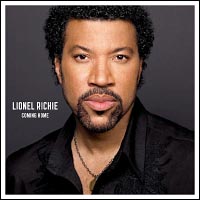
Lionel Richie
From Wikipedia, the free encyclopedia
Background information
Birth name Lionel Brockman Richie, Jr.
Born June 20, 1949 (1949-06-20) (age 59)
Tuskegee, Alabama, United States
Genre(s) R&B, soul, pop, quiet storm, soft rock, adult contemporary, country
Occupation(s) Singer, songwriter, instrumentalist, record producer, actor
Instrument(s) Singing, piano/keyboards, saxophone
Years active 1968-present
Label(s) Island, Mercury, Motown
Associated acts Commodores, Nicole Richie
Website www.lionelrichie.com
Lionel Brockman Richie, Jr. (born June 20, 1949) is an Academy Award and Grammy award-winning American singer, songwriter, record producer, and occasional actor, who has sold more than 100 million records.
Career
Early years
Born in Tuskegee, Alabama, Richie grew up on the campus of Tuskegee Institute. His grandfather's house was across the street from the home of the president of the Institute. His family moved to Illinois where he graduated from Joliet Township High School, East Campus, in Joliet. A star tennis player in Joliet, he accepted a tennis scholarship back at Tuskegee Institute and later graduated with a major in economics.
The Commodores
Back as a student in Tuskegee, he formed a succession of R&B groups in the mid-1960's. In 1968 he became the lead singer and saxophonist with the Commodores. They signed a recording contract with Atlantic Records in 1968 for one record before moving on to Motown Records, being schooled as support act to the Jackson Five. The Commodores became established as a popular soul group. Their first several albums had a danceable, funky sound (with such tracks as "Machine Gun" and "Brick House"). Over time, Richie wrote and sang more romantic, easy-listening ballads such as "Easy", "Three Times a Lady" and "Still".
By the late 1970s he had begun to accept songwriting commissions from other artists. He composed "Lady" for Kenny Rogers, which hit #1 in 1980, and he produced Rogers' Share Your Love album the following year. Richie and Rogers have maintained a strong friendship in later years. Also in 1981, Richie sang a duet with Diana Ross in the theme song for the film Endless Love. Issued as a single, the song topped the UK and U.S. pop music charts, and it became one of Motown's biggest hits. Its success encouraged Richie to branch out into a full-fledged solo career in 1982. His debut album, Lionel Richie, produced another chart-topping single, "Truly", which continued the style of his ballads with the Commodores.
Solo career
He released his self-titled debut in 1982. The album hit #3 on the music charts and sold over 4 million copies. His 1983 follow up album, Can't Slow Down, sold over twice as many copies and won the Grammy Award for the Album of the Year in 1984. His third album, Dancing on the Ceiling, which was released in 1986, spawned such hits as "Say You, Say Me", "Dancing on the Ceiling," and "Se La", but it also signified the end of his large commercial success.
In 1983, he released Can't Slow Down, which shot him into the first rank of international superstars. The album also won two Grammy Awards including Album Of The Year. It spawned the #1 hit "All Night Long", a Caribbean-flavored dance number that was promoted by a dazzling music video produced by former Monkee, Michael Nesmith.
Several more Top 10 hits followed, the most successful of which was the ballad "Hello" (1984), a sentimental love song that showed how far Richie had moved from his R&B roots. Now described by one critic as 'the black Barry Manilow', In 1985 Richie wrote and performed a suitably soothing theme song, "Say You, Say Me", for the film White Nights, winning an Oscar for his efforts. He also collaborated with Michael Jackson on the charity single "We Are the World" by USA for Africa.
In 1986, Richie released Dancing on the Ceiling, another widely popular album that produced a run of US and UK hits. The title selection, which revived the lively dance sound of "All Night Long(All Night)," was accompanied by another striking video, a feature that played an increasingly important role in Richie's solo career. [1] The critical consensus was that this album represented nothing more than a consolidation of his previous work, though Richie's collaboration with the country group Alabama on "Deep River Woman" did break new ground. By 1987, Richie was exhausted from his work schedule and after a controversial year laid low taking care for his father in Alabama. His father, Lionel Sr., died in 1990. He made his return to recording and performing following the release of his first greatest-hits collection, Back to Front, in 1992.
Since then, his ever-more relaxed schedule has kept his recording and live work to a minimum. He broke the silence in 1996 with Louder Than Words, on which he resisted any change of style or the musical fashion-hopping of the past decade. Instead, he stayed with his chosen path of well-crafted soul music, which in the intervening years has become known as Contemporary R&B.
His albums in the 1990s such as Louder Than Words and Time all failed to achieve the previous decade's commercial success. Some of his recent work such as the album Renaissance has returned to his older style, achieving success in Europe, but only modest notice in the United States. Since 2004, he has produced a total of six Top 40 singles in the UK.
Long-lasting popularity and later career
In 2002, Richie's song "Running with the Night" was featured on the Rockstar North video game Grand Theft Auto: Vice City though the song was removed from later versions of the game. In 2004, he appeared on Canadian Idol as his songs were featured during a Canadian Idol week.
In November 2005, Lionel Richie performed with Kenny Rogers on a CMT Crossroads special. The show gave an informative insight into their friendship both in and out of the music world. Richie was also the headliner at a 2000 Fourth of July tribute concert with Fantasia Barrino at the Philadelphia Museum of Art. Richie released his eighth studio album entitled " Coming Home" on September 12, 2006. The first single of the album was "I Call It Love" and was premiered in July 2006, becoming his biggest hit in the U.S. in ten years. The album was an incredible success for Richie in the United States, peaking at #6. His adopted daughter Nicole Richie stars in the music video for this track.
On December 9, 2006, Richie hosted and performed live on the British television show An Audience with Lionel Richie.
On February 11, 2007, Richie performed his 80s hit song "Hello" on the televised Grammy Awards show.
On November 25, 2007, he made a surprise appearance on the Australian Idol grand finale performing "All Night Long (All Night)" at the Sydney Opera House. Richie donated to Barack Obama's 2008 Presidential campaign.
On May 2, 2008, Richie Bennet was the 21st recipient of the George and Ira Gershwin Lifetime Achievement Award at UCLA's annual Spring Sing.
Recently, he has announced that he would like to get The Commodores back together soon, "or in the next 10 years no one will care."
Popularity in the Arab World
In recent years, Richie has become a phenomenon in various Arab states,[2][3] and has performed in Morocco, Dubai, Qatar and even Libya[4].
As ABC News reports:
Grown Iraqi men get misty-eyed by the mere mention of his name. "I love Lionel Richie," they say. Iraqis who do not understand a word of English can sing an entire Lionel Richie song.[4]
According to Richie, he was told that U.S. soldiers were playing "All Night Long" the night that Baghdad fell.[4] Said Richie, "I'm huge, huge in the Arab world. The answer as to why is, I don't have the slightest idea."[4]
Dallas Austin character witness
In July, 2006, songwriter and producer Dallas Austin was arrested and held in a United Arab Emirates prison on drug charges. The UAE consulate in Washington D.C. placed a call to Lionel Richie for a character reference.[5]
Richie recounts:
It was, 'Tell me what kind of guy is Dallas Austin.' I said, 'Listen, this is a great guy. He's done a great job for the community. A gangster, a hoodlum, a thug, he's not.'[5]
Austin was subsequently granted a pardon.[5]
Family
Marriage with Brenda Harvey
Richie married college sweetheart Brenda Harvey on Oct. 18 1975. During their marriage, Lionel began a relationship with Diane Alexander in 1986. In 1988, while separated, Brenda allegedly discovered Lionel and Alexander together in a Beverly Hills apartment. A confrontation ensued, and Brenda was then arrested for spousal abuse, trespassing and vandalism. Lionel and Brenda divorced in August 9, 1993; they had been married 17 years.[6]
Nicole Richie
In 1983, Lionel and wife Brenda informally adopted the 2-year-old daughter of people associated with Lionel's band. They raised Nicole Richie as their daughter and adopted her legally when she was nine years old. In a November 15, 2005 CNN interview with Ryan Seacrest, Richie stated that her birth father (whom she declined to identify) was not a member of Lionel's band.
Married Diane Alexander
Lionel married Alexander in December 21, 1995.[7]. They have a son, named Myles Brockman (born May 27, 1994) [8], and a daughter, named Sofia (born 26 August 1998). Lionel and Alexander divorced in January 2004.
Grandchildren
Lionel became a grandfather on January 11, 2008 when his daughter Nicole Richie gave birth to a 6 lb. 7 oz. baby girl named Harlow Winter Kate Madden. Her father is Joel Madden, lead singer of the band Good Charlotte.
0 Replies
bobsmythhawk
1
Reply
Fri 20 Jun, 2008 10:09 am
John Goodman
From Wikipedia, the free encyclopedia
Born John Stephen Goodman
June 20, 1952 (1952-06-20) (age 56)
Affton, Missouri, U.S.
Awards won
Emmy Awards
Outstanding Guest Actor - Drama Series
2007 Studio 60 on the Sunset Strip
Golden Globe Awards
Best TV Actor - Comedy/Musical
1993 Roseanne
John Stephen Goodman (born June 20, 1952) is an American Golden Globe- and Emmy-winning actor. He is also a trained classical pianist. He is married to Miranda Mirton and they have a child named Sarah.
Goodman went to The Charles Finney School and Our Lady of Mercy High School. He won a football scholarship to Rochester Institute of Technology.[1] He pledged the Sigma Phi Epsilon fraternity, but was not formally initiated until several decades later. During his college stint, he got injured ending his football career. He decided to become an actor, leaving Missouri for New York in 1975.[1] He performed off-Broadway, in dinner theatres and in television commercials before getting character roles in movies during the early 1980s.[1]
Career
Goodman is famous for his role as Dan Conner on the American sitcom, Roseanne, which aired on ABC from 1988 to 1997.[1] He had a long history of appearances on late night comedy shows, being the first guest on Late Night with Conan O'Brien, receiving the show's "First Guest Medal" (Goodman joked that he would pawn the medal for a bottle of cheap scotch). He had been a popular guest host on NBC's Saturday Night Live, having hosted the show twelve times[1] (Goodman once auditioned to be a castmember for Jean Doumanian's tumultuous 1980-1981 SNL season, but was rejected). His many appearances on Saturday Night Live can be partially attributed to his recurring role as Linda Tripp during the Lewinsky scandal.
Goodman is noted for his work in numerous films by Joel and Ethan Coen, including Raising Arizona, Barton Fink, The Big Lebowski, and len Walken. In the political drama The West Wing, his character briefly served as Acting President when President of the United States Josiah Bartlet yielded power temporarily under the terms of the 25th Amendment to the United States Constitution. [2]
Goodman replaced John Belushi as Dan Aykroyd's partner in the popular Blues Brothers Band, in which he first appeared as "Mighty" Mack McTeer on Saturday Night Live on March 25, 1995 and co-starred in the film Blues Brothers 2000. He continued to perform with Aykroyd (Elwood Blues) and Jim Belushi (Zee Blues) through 2001. Health problems eventually forced Goodman to retire the character.
Goodman's most recent project is the film version of Speed Racer in which he played the character of Pops, Speed Racer's father.
Louisiana connection
Goodman has long resided in New Orleans, Louisiana.[1] Since Hurricane Katrina, Goodman has appeared on several recovery commercials aired in Louisiana. Additionally, Goodman was at one time slated to play the role of Ignatius Reilly, the main character of a A Confederacy of Dunces by John Kennedy Toole. The story takes place almost entirely in New Orleans. However, the movie was never put into production and was scrapped.
Personal life
John met his wife, Anna Elizabeth Hartzog, in New Orleans while he was filming 1988's Everybody's All-American. They married in October 1989 and have a daughter named Molly Evangeline (born on August 31, 1990). He has a sister, Elisabeth, and a brother, Leslie.
0 Replies
bobsmythhawk
1
Reply
Fri 20 Jun, 2008 10:14 am
Nicole Kidman
From Wikipedia, the free encyclopedia
Born Nicole Mary Kidman
20 June 1967 (1967-06-20) (age 41)
Honolulu, Hawaii, U.S.A.
Years active 1983-present
Spouse(s) Tom Cruise (1990-2001)
Keith Urban (2006-present)
Awards won
Academy Awards
Best Actress
2002 The Hours
Australian Film Institute Awards
Best Actress in a Miniseries
1988 Vietnam
BAFTA Awards
Best Actress in a Leading Role
2002 The Hours
Golden Globe Awards
Best Actress - Motion Picture Musical/Comedy
1996 To Die For
2002 Moulin Rouge!
Best Actress - Motion Picture Drama
2003 The Hours
Other Awards
Saturn Award for Best Actress (film)
2001 The Others
Silver Berlin Bear for Best Actress
2002 The Hours
Nicole Mary Kidman, AC, (born 20 June 1967) is an Academy Award-winning actress. In 2006, she became one of the highest-paid actresses in the motion picture industry.[1]
After making various appearances in film and television, Kidman received her breakthrough role in the 1989 thriller Dead Calm. Her performances in several films, such as To Die For (1995), Moulin Rouge! (2001), and The Hours (2002), have won her much critical acclaim.. In 2003, Kidman received her Star on the Walk of Fame in Hollywood, California. Kidman is also a UNIFEM and UNICEF Goodwill Ambassador, and a singer. She is also well-known for her former marriage to the actor Tom Cruise and as her current marriage to the noted country musician Keith Urban. Because she was born to Australian parents in Honolulu, Hawaii, Kidman has dual citizenship of Australia and the United States of America.[2]
In 2006, Kidman was made a Companion of the Order of Australia, Australia's highest civilian honor. [3]
Early life and family
Kidman was born in Honolulu, Hawaii. Her mother, Janelle Ann (née Glenny), is a nursing instructor who edits her husband's books and was a member of the Women's Electoral Lobby. Her father, Dr. Antony David Kidman, is a biochemist, clinical psychologist and author, with an office in Lane Cove, Sydney.[4][5][6] At the time of Nicole Kidman's birth, her father was a visiting fellow at the National Institute of Mental Health of the United States. The family returned to Australia permanently when Kidman was four years old and Kidman's parents now reside on Sydney's North Shore. Kidman has a younger sister, Antonia Kidman, who is a journalist.
Kidman attended Lane Cove Public School in her primary school years, and then she attended the North Sydney Girls' High School - along with her friend Naomi Watts. She then studied at the Phillip Street Theater in Sydney. This was followed by studies at the Australian Theatre for Young People.
Career
Early career in Australia (1983-1989)
Kidman's first appearance in film came in 1983 when, as a fifteen year-old, she appeared in the Pat Wilson music video for the song Bop Girl. By the end of the year she had secured a supporting role in the television series Five Mile Creek and four film roles, including BMX Bandits and Bush Christmas. During the 1980s, she appeared in several Australian movies and TV series, notably including the soap opera A Country Practice, the mini-series Vietnam (1986), Emerald City (1988), and Bangkok Hilton (1989).
In 1982, she might have appeared in the video for Roxy Music's song "True To Life".[citation needed]
Breakthrough (1989-1995)
In 1989, Kidman starred in Dead Calm as Rae Ingram, the wife of naval officer John Ingram (Sam Neill), held captive on a Pacific Ocean yacht trip by the psychotic Hughie Warriner (Billy Zane). The thriller film garnered strong reviews; the staff of Variety.com commented: "Throughout the film, Kidman is excellent. She gives the character of Rae real tenacity and energy."[7] Meanwhile, critic Roger Ebert noted the excellent chemistry between the leads, stating, "...Kidman and Zane do generate real, palpable hatred in their scenes together."[8] In 1990, she appeared opposite Tom Cruise in Days of Thunder, a stock car racing movie. After this, Kidman starred with Cruise in Ron Howard's Far and Away (1992). In 1995, Kidman featured in the ensemble cast of Batman Forever. On November 20, 1993 she hosted Saturday Night Live.[9]
Critical success (1995-present)
Her second film in 1995, To Die For was a satirical comedy that earned her praise[10] from critics. She won a Golden Globe Award, and five other best actress awards for her portrayal of the murderous newscaster Suzanne Stone Maretto. Kidman and Cruise portrayed a married couple in Eyes Wide Shut in 1999, Stanley Kubrick's final film.
In 2002, Kidman received an Academy Award nomination for her performance in the 2001 musical film Moulin Rouge!, in which she played the courtesan Satine opposite Ewan McGregor. Consequently, Kidman received her second Golden Globe Award for Best Actress in a Motion Picture Musical or Comedy. The same year, she had a well-received starring role in the horror film The Others. While in Australia filming Moulin Rouge!, Kidman injured her ribs; as a result, Jodie Foster accepted to replace her as leading actress in the film Panic Room. In that film, Kidman's voice appears on the phone, as the mistress of the lead character's husband.
The following year, Kidman won critical praise for her portrayal of Virginia Woolf in The Hours, in which the prosthetics applied to her made her almost unrecognizable. She won the Academy Award for Best Actress for this role, along with a Golden Globe Award, a BAFTA, and numerous critics awards. Kidman became the first Australian actress to win an Academy Award. During her Academy Award acceptance speech, after tearing, Kidman made a statement about the importance of art, even during times of war: "Why do you come to the Academy Awards when the world is in such turmoil? Because art is important. And because you believe in what you do and you want to honor that, and it is a tradition that needs to be upheld."[11]
Also in 2002, Kidman starred in the stage play "The Blue Room," which opened in New York and London. The play was a stellar success, with Kidman's character briefly exposing her flesh to the audience and very famous persons competing for the best seats in the house.[12]
In the same year, Kidman starred in three very different films. Dogville, by Danish director Lars von Trier, an experimental film set on a bare soundstage. Secondly, she co-starred alongside Anthony Hopkins in the film adaptation of Philip Roth's novel The Human Stain. Cold Mountain, a love story of two Southerners separated by the Civil War, was her final release that year, and garnered her a Golden Globe Award nomination.
In 2004, Kidman appeared in the critically panned[citation needed] remake of The Stepford Wives alongside Glenn Close, Faith Hill and Bette Midler. In September of the same year, Birth, in which the 37-year-old actress' character has an encounter with a 10-year-old boy (played by Cameron Bright) who attempts to convince her that he is a reincarnation of her dead husband, was met with a mixed reception primarily due to a scene where the boy strips and joins Kidman in the bathtub.[citation needed] Despite this, the film was nominated for the Golden Lion Award at the Venice Film Festival, and Kidman was nominated for another Golden Globe Award. Kidman's two movies in 2005 were The Interpreter, directed by Sydney Pollack, the film received mixed reviews, though it did become a considerable success at the box office grossing nearly $165 million worldwide, with its $80 million budget, and Bewitched, co-starring Will Ferrell, based on the 1960s TV sitcom of the same name; the latter fared abysmally with critics and made only $131,413,159 at the box office.
In conjunction with her success in the film industry, Kidman became the face of the Chanel No. 5 perfume brand. She starred in a campaign of television and print ads with Rodrigo Santoro, directed by Moulin Rouge! director Baz Luhrmann to promote the fragrance during the holiday season in 2004, 2005, and 2006. The three-minute commercial produced for Chanel No. 5 perfume made Kidman the record holder for the most money paid per minute to an actor after she reportedly earned $US3.71 million.[13] During this time, Kidman was also listed as the 45th Most Powerful Celebrity on the 2005 Forbes Celebrity 100 List. She made a reported US$14.5 million in 2004-2005. On People magazine's list of 2005's highest paid actresses, Kidman was second behind Julia Roberts with a US$16 million to US$17 million per-film price tag.[14] She has since passed Roberts as the highest paid actress.
Recently, Kidman appeared in the Diane Arbus bio-pic Fur, she also lent her voice to the animated film Happy Feet, which quickly garnered critical and commercial success, the film grossed over $384 million dollars worldwide. In 2007, she starred in the science fiction movie The Invasion, directed by Oliver Hirschbiegel, and played opposite Jennifer Jason Leigh and Jack Black in Noah Baumbach's comedy-drama Margot at the Wedding. She also starred in the film adaptation of the first part of the planned His Dark Materials trilogy of films, playing the villainous Mrs. Coulter. However, The Golden Compass''s failure to meet expectations at the North American box office has reduced the likelihood of a sequel.[15]
She is also set to star in director Wong Kar-wai's next film, The Lady from Shanghai and Baz Luhrmann's Australian period film titled Australia, which is set in the remote Northern Territory during the Japanese attack on Darwin during World War II. Kidman will play an English woman feeling overwhelmed by the continent, opposite Hugh Jackman.
On 25 June 2007, Nintendo announced that Kidman is to be the new face of Nintendo's advertising campaign for the Nintendo DS game More Brain Training in its European market.[16]
Kidman was featured in a series of advertisements for Sky in Italy, speaking Italian during the spots.
It is reported that Kidman will star and produce in an upcoming romantic comedy film called Monte Carlo. She plays one member of a trio of school teachers on holiday who cut short their no-frills sojourn in Paris and head to Monte Carlo, where they pose as wealthy vacationers. Julia Roberts is tipped to join her in the film.[17]
Kidman was originally set to star in The Reader (film) a post-war Germany drama, but due to her pregnancy she had to back out of the film.[18] Shortly after the news of Kidman's departure, it was announced that Kate Winslet would take over the role. [19]
Singing
Not known as a singer prior to Moulin Rouge!, Kidman had several well-received vocal performances in the film. Her collaboration with Ewan McGregor on the song "Come What May" from the film's soundtrack debuted and peaked at 27 in the UK Singles Chart. Later she collaborated with Robbie Williams on the song "Somethin' Stupid", a cover of the old swing song on Williams' swing covers album Swing When You're Winning. It debuted and peaked at 8 in the Australian ARIAnet Singles Chart, and at number 1 for three weeks in the UK. It was the UK Christmas number 1 Single for 2001.
In 2006, she provided her voice for the animated movie Happy Feet, along with her vocals for her character Norma Jean's 'heartsong', which was a slightly altered version of "Kiss" by Prince.
Personal life
Relationships
Kidman met Tom Cruise on the set of their 1990 movie, Days of Thunder. Cruise was married to actress Mimi Rogers at the time, and later divorced her. Kidman and Cruise were married on Christmas Eve 1990 in Telluride, Colorado. The couple adopted two children, daughter Isabella Jane Kidman-Cruise (b. December 22, 1992) and son Connor Anthony Kidman-Cruise (b. January 17, 1995). They separated just after their 10th wedding anniversary. At the time she was 3 months pregnant and subsequently had a miscarriage.[20] Tom Cruise filed for divorce in February 2001. The marriage was dissolved in 2001, with Cruise citing irreconcilable differences as the cause of the divorce.[21] The reasons for the dissolution have never been made public. Also, in an interview for Marie Claire magazine, Kidman mentions that she had an ectopic pregnancy early in their marriage.[22] In an interview in the June 2006 issue of Ladies' Home Journal, Kidman reported that she still loved Tom Cruise. Kidman told the magazine: "He was huge; still is. To me, he was just Tom, but to everybody else, he is huge. But he was lovely to me. And I loved him. I still love him." In addition, she has expressed shock about their divorce.[21]
The 2003 film Cold Mountain was plagued by rumours that an on-set affair between Kidman and co-star Jude Law was responsible for the breakup of his marriage. Both vehemently denied the allegations, and Kidman eventually won an undisclosed sum from the British tabloids that published the story.[23] She donated the money to a Romanian orphanage in the town where the movie was filmed.[24] Robbie Williams confirmed that they had short 'romance' on her yacht in summer 2004. Shortly after her Oscar win, there were unconfirmed rumours of a relationship between her and fellow Oscar winner Adrien Brody.[25] She met musician Lenny Kravitz in 2003 and dated him into 2004.[26] Nicole has recently revealed in an interview she was secretly engaged when her divorce from Tom Cruise was legalised and before she met Keith Urban. She declined to reveal who her fiance was, but considering Kravitz was her only major relationship between her two husbands, one could assume it was him.[27]
Kidman met country singer Keith Urban at G'Day LA, an event honouring Australians in January 2005. Kidman and Urban were married on Sunday June 25, 2006, at the Cardinal Cerretti Memorial Chapel in the grounds of St Patrick's Estate, Manly in Sydney. They maintain homes in Sydney, Los Angeles and Nashville, Tennessee. In March 2008, they purchased mansions in both Los Angeles[28] and Nashville[29] within the span of a few days.
After constant speculation by the press, on January 8, 2008, it was confirmed that Kidman is 3 months pregnant and that Kidman and Urban are expecting their first child together. She is reported to be due in late July.[30]
Religion
Kidman was raised a Roman Catholic and currently is a practicing Catholic.[31] She attended Mary Mackillop Chapel in North Sydney. However, during her marriage to Tom Cruise, she was reported to be a "half-hearted" follower of Scientology.[32]
Politics
Kidman's name was included in an advertisement in the Los Angeles Times (August 17, 2006) that condemned organizations Hamas and Hezbollah, and supported Israel's efforts in the 2006 Israel-Lebanon conflict.[33]
Kidman has made numerous donations to U.S. Democratic party candidates and endorsed John Kerry in the 2004 presidential election.[34]
Charitable work
Kidman publicly supports a variety of charities and causes. She has been a Goodwill Ambassador for UNICEF Australia since 1994. She has worked to help raise money for and draw attention to the plight of the most disadvantaged children in Australia and around the world. In 2004, she was honoured as a "Citizen of the World" by the United Nations.
On January 26, 2006, Kidman received Australia's highest civilian honour when she was made a Companion of the Order of Australia, for "service to the performing arts as an acclaimed motion picture performer, to health care through contributions to improve medical treatment for women and children and advocacy for cancer research, to youth as a principal supporter of young performing artists, and to humanitarian causes in Australia and internationally."[35] However, due to film commitments and her wedding to Urban, it wasn't until 13 April 2007 that she was presented with the honour.[36] She was also nominated goodwill ambassador for UNIFEM.[37]
Kidman joined the 'Little Tee Campaign' for Breast Cancer Care to design T-shirts or vests to raise money for breast cancer.[38] Kidman's mother, Janelle, is a breast cancer survivor who was diagnosed in 1984.[39]
Press & Other
In January 2005, Kidman won interim restraining orders against two Sydney-based paparazzi photographers.[40] In 2004 Kidman became the face of chanel No5 it is recently been reported that as of 2009 the actress will no longer be representing the iconic fragrance Chanel No. 5.
0 Replies
bobsmythhawk
1
Reply
Fri 20 Jun, 2008 10:15 am
What is this?
When the waitress in a New York City restaurant brought him the soup du jour, the Englishman was a bit dismayed. "Good heavens," he said, "what is this?"
"Why, it's bean soup," she replied.
"I don't care what it has been," he sputtered. "What is it now?"
0 Replies
Letty
1
Reply
Fri 20 Jun, 2008 10:27 am
Great bio's today, hawkman, and your short but delightful "bean" story was our smile for today. Thanks.
Dean and Ricky and Walter Brennan (faking it) and their audience is John Wayne.
0 Replies
Letty
1
Reply
Fri 20 Jun, 2008 01:07 pm
edgar, I am stunned. I cannot believe that Ken Curtis had such a perfect voice. My dad loved "I'll Take You Home Again Kathleen", and although it is not Irish in origin; who cares. The combination of the beautiful chord changes on the acoustic guitar with Ken's perfect intonation, got me in the heart. My mom always, ALWAYS listened to The Sons of the Pioneers.
Although I never saw Rio Bravo, that song was perfect, Texas, and a fitting tribute to all those guys who are no longer with us.
Well, it's Lionel Richie's birthday, and I hope this connection works, folks. More problems today with our studio equipment.
We'll Let Lionel say hello to the first day of summer as well.