Hello Letty from dowunder the Eagle greet you and your listeners on this very, very cold evening. You are playing some nostalgic music, so to keep in the mood, do you remember Guy Lombardo and his Royal Canadians? http://uk.youtube.com/watch?v=GMmx0ICrFgE
0 Replies
Letty
1
Reply
Wed 28 May, 2008 06:51 am
Hey, O cosmic one. Oh, yes; I remember that royal guy (psst, don't tell hbg, but I never cared for him) Thanks for the crying song, however.
Today is John Fogerty's birthday, folks, and I like this one by him.
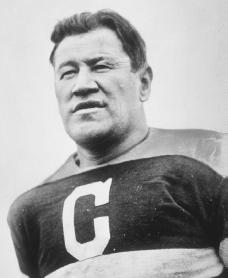
Born: May 28, 1888(1888-05-28)
Prague, Oklahoma
Died: March 28, 1953 (aged 64)
Lomita, California
Career Information
Year(s): 1920-1928
College: Carlisle Indian
Professional Teams
Canton Bulldogs
(1915-1917, 1919-1920, 1926)
Cleveland Tigers (1921)
Oorang Indians (1922-1923)
Rock Island Independents (1924-1925)
New York Giants (1925)
Chicago Cardinals (1928)
Career Stats
Games 52
Rushing TD 6
Passing TD 4
Stats at NFL.com
Career Highlights and Awards
All-Pro selection (1923)
NFL 1920s All-Decade Team
Pro Football Hall of Fame
College Football Hall of Fame
Medal record
Olympic Games
Men's Athletics
Gold 1912 Stockholm Pentathlon
Gold 1912 Stockholm Decathlon
Jacobus Franciscus "Jim" Thorpe (Sac and Fox (Sauk) from Oklahoma: Wa-Tho-Huk) (May 28, 1888 - March 28, 1953[1]) was an American athlete. Considered one of the most versatile athletes in modern sports, he won Olympic gold medals in the pentathlon and decathlon, played American football collegiately and professionally, and also played professional baseball and basketball. He subsequently lost his Olympic titles when it was found he was paid for playing two seasons of minor league baseball before competing in the games (thus violating the amateur status rules).
Thorpe was of mixed Native American and white ancestry. He was raised as a Sac and Fox, and named Wa-Tho-Huk, roughly translated as "Bright Path". He struggled with racism throughout much of his life and his accomplishments were publicized with headlines describing him as a "Redskin" and "Indian athlete". He also played on several All-American Indian teams throughout his career and barnstormed as a professional basketball player with a team composed entirely of Native Americans.
Thorpe was named the greatest athlete of the first half of the twentieth century by the Associated Press (AP) in 1950, and ranked third on the AP list of athletes of the century in 1999. After his professional sports career ended, Thorpe lived in abject poverty. He worked several odd jobs, struggled with alcoholism, and lived out the last years of his life in failing health. In 1983, thirty years after his death, his medals were restored.
Early life
Information about Thorpe's birth, full name, and ethnic background varies widely.[2] What is known is that he was born in Indian Territory, but no birth certificate has been found. Thorpe's birth is generally considered to have taken place on May 28, 1888[1] near the town of Prague, Oklahoma.[3] Jacobus Franciscus Thorpe is the name on his christening (baptismal) certificate.
His parents were of mixed descent. His father, Hiram Thorpe, had an Irish father and a Sac and Fox Indian mother, while his mother, Charlotte Vieux, had a French father and a Native American mother. Thorpe was raised as a Sac and Fox, and his native name was Wa-Tho-Huk, translated as "A path lighted by a great flash of lightning" or more simply "Bright Path".[2] As was the custom for Sac and Fox, Thorpe was named for something occurring around the time of his birth, in this case the sunlight brightening the path to the cabin where he was born. Thorpe's mother was Catholic and raised the children in the faith, which Thorpe later observed throughout his adult life.[4]
Together with his twin brother, Charlie, Thorpe went to school in Stroud, Oklahoma at the Sac and Fox Indian Agency School. Charlie died of pneumonia when he was nine years old.[5] Charlie had helped Jim through school. Thorpe did not handle his brother's death very well and ran away from school on several occasions. Hiram Thorpe then sent him to what is now known as Haskell Indian Nations University in Lawrence, Kansas, so that he would not run away again.[6] When his mother died of childbirth complications two years later,[7] Thorpe fell into a depression. After several arguments with his father, he ran away from home to work on a horse ranch.[6]
In 1904, Thorpe returned to his father and decided to join Carlisle Indian Industrial School in Carlisle, Pennsylvania, where he was coached by Glenn Scobey "Pop" Warner, one of the most influential coaches in early American football history.[8] Later that year, Hiram Thorpe died from gangrene poisoning after a hunting accident.[7] Thorpe once again dropped out of school. He resumed farm work for a few years and then returned to Carlisle, where his athletic career commenced.[6]
Amateur career
College career
Thorpe reportedly began his athletic career at Carlisle in 1907 when he walked past the track and beat the school's high jumpers with an impromptu 5-ft 9-in jump while still wearing plain clothes. [9] His earliest recorded track and field results are indeed from 1907. But track and field were certainly not the only events in which Thorpe engaged at Carlisle?-he also participated in football, baseball, lacrosse and even ballroom dancing, winning the 1912 inter-collegiate ballroom dancing championship.[10] Reportedly, Pop Warner was hesitant to allow Thorpe, his star track and field athlete, to compete in a physical game such as football.[11] Thorpe however, convinced Warner to let him run some plays against the school's defense; Warner assumed he would be tackled easily and give up the idea of playing football.[11] Thorpe "ran around past and through them not once, but twice."[11] He then walked over to Warner and said "[n]obody is going to tackle Jim," while flipping him the ball.[11]
He gained nationwide attention for the first time in 1911.[12] As a running back, defensive back, placekicker, and punter for his school's football team, Thorpe scored all of his team's points?-four field goals and a touchdown?-in an 18-15 upset of Harvard.[11] His team finished the season 11-1.
The following year, he led Carlisle to the national collegiate championship, scoring 25 touchdowns and 198 points.[8] Carlisle's 1912 record included a 27-6 victory over Army.[3] In that game, Thorpe scored a 92-yard touchdown that was nullified by a penalty incurred by a teammate; Thorpe then scored a 97-yard touchdown on the next play.[13]
During that game, future President Dwight Eisenhower injured his knee while trying to tackle Thorpe. Eisenhower recalled of Thorpe in a 1961 speech, "Here and there, there are some people who are supremely endowed. My memory goes back to Jim Thorpe. He never practiced in his life, and he could do anything better than any other football player I ever saw."[8] Thorpe was given All-American honors in both 1911 and 1912.[3]
Football was?--and would remain?--Thorpe's favorite sport,[14] and he competed only sporadically in track and field. Nevertheless, track and field would become the sport in which Thorpe would gain the most fame.
Olympic career
For the 1912 Summer Olympics in Stockholm, Sweden, two new multi-event disciplines were on the program, the pentathlon and the decathlon. A pentathlon based on the ancient Greek event had been organized at the 1906 Summer Olympics, but the 1912 edition would consist of the long jump, the javelin throw, 200-meter dash, the discus throw and the 1500-meter run.
The decathlon was an entirely new event in athletics, although it had been competed in American track meets since the 1880s and a version had been featured on the program of the 1904 St. Louis Olympics. However, the events of the new decathlon were slightly different from the U.S. version. Both events seemed a fit for Thorpe, who was so versatile that he alone had formed Carlisle's team in several track meets.[3] He could run the 100-yard dash in 10 seconds flat, the 220 in 21.8 seconds, the 440 in 51.8 seconds, the 880 in 1:57, the mile in 4:35, the 120-yard high hurdles in 15 seconds, and the 220-yard low hurdles in 24 seconds.[3] He could long jump 23 ft 6 in and high-jump 6 ft 5 in.[3] He could pole vault 11 feet, put the shot 47 ft 9 in, throw the javelin 163 feet, and throw the discus 136 feet.[3] Thorpe entered the U.S. Olympic trials for both the pentathlon and the decathlon.
He easily won the awards, winning three events, and was named to the pentathlon team, which also included future International Olympic Committee (IOC) president Avery Brundage. There were only a few candidates for the decathlon team, and the trials were cancelled. Thorpe would contest his first?--and, as it turned out, only-?-decathlon in the Olympics. Thorpe's Olympic record 8,413 points would stand for nearly two decades.[9]
Thorpe's competition schedule for the Olympics was crowded. Along with the decathlon and pentathlon, he also entered the long-jump and high-jump competitions. The first event scheduled was the pentathlon. Thorpe was the class of the field, winning four events. He placed only third in the javelin, an event he had not competed in before 1912. Although the competition was primarily decided on place points, points were also calculated for the marks achieved in the events.
The same day he won the pentathlon gold, Thorpe qualified for the high-jump final. In that final, he placed fourth and took seventh place in the long jump. Thorpe's final event was the decathlon, where tough competition from local favorite Hugo Wieslander was expected. Thorpe, however, also easily defeated Wieslander, finishing nearly 700 points ahead of him. He placed in the top four of all ten events. Overall, Thorpe won eight of the two competitions' 15 individual events.[8]
As was the custom of the day, the medals were presented to the athletes during the closing ceremonies of the games. Along with the two gold medals, Thorpe also received two challenge prizes, which were donated by King Gustav V of Sweden for the decathlon and Czar Nicholas II of Russia for the pentathlon. Legend has it that, when awarding Thorpe his prize, King Gustav said, "You, sir, are the greatest athlete in the world," to which Thorpe replied, "Thanks, King."[15] (See Sportsperson.)
Thorpe's successes had not gone unnoticed at home, and he was honored with a ticker-tape parade on Broadway.[15] He later remembered: "I heard people yelling my name, and I couldn't realize how one fellow could have so many friends."[15]
Apart from his track and field appearance, Thorpe also played in one of two exhibition baseball matches held at the 1912 Olympics, which featured two teams made up of U.S. track and field athletes. It was not Thorpe's first try at baseball, as would soon become known to the rest of the world.
Professional career
Declared a professional
In 1913, strict rules regarding amateurism were in force for athletes participating in the Olympics. Athletes who received money prizes for competitions, who were sports teachers, or who had previously competed against professionals, were not considered amateurs and were not allowed to compete in the Olympics.
In late January 1913, U.S. newspapers published stories announcing that Thorpe had played professional baseball. It is not entirely certain which newspaper first published the story; the earliest article found is from the Providence Times, but the Worcester Telegram is usually mentioned as the first.[15] Thorpe had indeed played professional baseball in the Eastern Carolina League for Rocky Mount, North Carolina, in 1909 and 1910, receiving meager pay; reportedly as little as $2 a game and as much as $35 a week.[16] College players, in fact, regularly spent summers playing professionally, but most, as opposed to Thorpe, used aliases.[8]
Although the public did not seem to care much about Thorpe's past,[17] the Amateur Athletic Union (AAU), and especially its secretary James E. Sullivan, took the case very seriously.[18] Thorpe wrote a letter to Sullivan, in which he admitted playing professional baseball:[15]
" ...I hope I will be partly excused by the fact that I was simply an Indian schoolboy and did not know all about such things. In fact, I did not know that I was doing wrong, because I was doing what I knew several other college men had done, except that they did not use their own names.... "
His letter did not help. The AAU decided to retroactively withdraw Thorpe's amateur status and asked the IOC to do the same. Later that year, the IOC unanimously decided to strip Thorpe of his Olympic titles, medals and awards and declared him a professional.
While Thorpe had played for money, his disqualification was not within the rules in place at the time. In the rulebook for the 1912 Olympics, it was stated that any protests had to be made within 30 days from the closing ceremonies of the games.[13] The first newspaper reports didn't appear until January 1913, about six months after the Stockholm Games had concluded.[13] However, AAU and IOC officials were apparently ignorant of this rule or chose to ignore it. There also is some evidence that Thorpe's amateur status had already been questioned long before the Olympics but that this had been (deliberately) ignored by the AAU until they were confronted with it in 1913.
The only positive side to this affair for Thorpe was that, as soon as the news got out that he had been declared a professional, offers came in from professional clubs.[19]
Declared a rare free agent in the era of the reserve clause, Jim Thorpe had his pick of teams for which to play.[20] He turned down a starting position with the Saint Louis Browns to be a reserve with the New York Giants. One of the immediate benefits of joining the team came that October, when the Giants joined the Chicago White Sox for a world tour.[21] Barnstorming across the United States and then around the world, Thorpe was the unquestioned star of the world tour.[22] Everywhere the teams went, Thorpe brought them publicity and increased the tour's box office receipts. Among the highlights were meetings with the Pope and the last khedive of Egypt and playing before 20,000 in London with King George V in attendance. While in Rome, Thorpe was filmed wrestling with another baseball player on the floor of the Coliseum. Unfortunately, every inch of the film has been lost to time.
Baseball, football, and basketball
Thorpe played football for Canton from 1915 through 1920. He also played 52 NFL games.Thorpe signed with the New York Giants baseball club in 1913 and played sporadically with them as an outfielder for three seasons. After playing in the minors with the Milwaukee Brewers in 1916[23], he returned to the Giants in 1917 but was sold to the Cincinnati Reds early in the season. In the "double no-hitter" between Fred Toney of the Reds and Hippo Vaughn of the Chicago Cubs, Thorpe drove in the winning run in the 10th inning.[24] Late in the season, he was sold back to the Giants. Again, he played sporadically for the Giants in 1918 and was traded to the Boston Braves on May 21, 1919, for Pat Ragan. In his career, he amassed 91 runs scored, 82 runs batted in and a .252 batting average over 289 games.[25] He continued to play baseball with teams in the minor leagues until 1922.
But Thorpe had not abandoned football either. Back in 1915, Thorpe had signed with the Canton Bulldogs. They paid him $250 a game, a tremendous wage at the time.[26] Before Thorpe's signing, Canton was averaging 1,200 fans a game; 8,000 showed up for his debut against Massillon.[26] The team won titles in 1916, 1917, and 1919. Thorpe reportedly ended the 1919 championship game by kicking a wind-assisted 95-yard punt from his team's own 5-yard line, effectively putting the game out of reach.[26] In 1920, the Bulldogs were one of 14 teams to form the American Professional Football Association (APFA), which would become the National Football League (NFL) two years later. Thorpe was nominally the APFA's first president; however, he spent most of the year playing for Canton and a year later was replaced by Joseph Carr.[27] He continued to play for Canton, coaching the team as well. Between 1921 and 1923, Thorpe played for the LaRue, Ohio, (Marion County, Ohio) Oorang Indians, an all-Native American team. Although the team went 3-6 in 1922,[28] and 1-10 in 1923,[29] Thorpe played well and was selected to the Green Bay Press-Gazette's first All-NFL team in 1923 (the Press-Gazette's team would later be formalized by the NFL as the league's official All-NFL team in 1931).[30]
Thorpe never played on an NFL championship team. He retired from pro football at the age of 41,[5] having played 52 NFL games for six teams from 1920 to 1928.
Thorpe continued to be active in sports. By 1926 he was the primary draw for the "World Famous Indians" in LaRue, which sponsored traveling football, baseball, and basketball teams. A ticket discovered in an old book recently brought to light his career in basketball. "Jim Thorpe and His World-Famous Indians" barnstormed for at least two years (1927-28) in parts of New York, Pennsylvania, and Marion, Ohio. Although pictures of Thorpe in his WFI basketball uniform were printed on postcards and published in newspapers, this period of his life was not well documented, and until 2005 most of Thorpe's biographers were unaware of his basketball career.[31]
Later life and death
In 1913, Thorpe married Iva Miller,[3] whom he had met at Carlisle. They had four children: Jim Jr. (who died at age 2), Gale, Charlotte and Grace.[3] Grace died in 2008.[32] Thorpe was a chronic alcoholic in his later years.[33] Miller filed for divorce from Thorpe in 1925, claiming desertion.[34]
In 1926, Thorpe married Freeda V. Kirkpatrick, who was born September 19, 1905, and died March 2, 2007, in Yakima, Washington. She was working for the manager of the baseball team on which he was playing at the time.[35] They had four sons: Carl, William, Richard and John.[3] William, Richard and John "Jack" survived their mother, who had divorced their father in 1941 after 15 years of marriage. After the end of his athletic career, Thorpe struggled to support his family. He found it difficult to work outside sports and never kept a job for an extended period of time. During the Great Depression in particular, Thorpe held various jobs, among others as an extra in several movies, usually playing an Indian chief in Westerns. But he also worked as a construction worker, a bouncer, a security guard, and a ditch digger, and he briefly joined the United States Merchant Marine in 1945.[36][37]
By the 1950s, Thorpe had no money left, and when he was hospitalized for lip cancer in 1950, he was admitted as a charity case.[38] At a press conference announcing the procedure, Thorpe's wife wept and pleaded for help, saying: "[W]e're broke.... Jim has nothing but his name and his memories. He has spent money on his own people and has given it away. He has often been exploited."[38] In early 1953, Thorpe suffered his third heart attack while eating dinner with his third wife, Patricia Askew, in his trailer home in Lomita, California. Artificial respiration briefly revived him, and he was able to speak to those around him but lost consciousness shortly afterward and died on March 28.[3]
Racism
Thorpe's accomplishments occurred during a period of racism and racial inequality in the United States. It has been often suggested that his medals were stripped because of his ethnicity,[39] and although this has never been proven, public outcry at the time largely reflected this view.[40] He also won his gold medals before Native Americans were recognized as citizens; American Indians were granted dual citizenship in 1924, and it was not until the passing of a 1954 Civil Rights Bill, one year after Thorpe's death, that Native Americans were granted the right to vote.[41]
While at Carlisle in particular, Thorpe's ethnicity was openly used as a marketing tool. For many, he embodied the racial stereotype of Native Americans as fierce savage warriors.[42] A photograph of Thorpe and the 1911 football team emphasized the purposeful racial split between the competing athletes. The inscription on the football reads, "1911, Indians 18, Harvard 15."[43] Additionally, the school often categorized sporting competitions as conflicts pitting Indians against whites. Newspaper headings such as "Indians Scalp Army 27-6" or "Jim Thorpe on Rampage" characterized the Indian-ness of Carlisle's football team.[42] His first appearance in The New York Times ran with the headline "Indian Thorpe in Olympiad.; Redskin from Carlisle Will Strive for Place on American Team";[12] his accomplishments were described in a similar racial context by other newspapers and sportswriters throughout his life.[44]
Legacy
When Thorpe's third wife, Patricia, heard that the small Pennsylvania town of Mauch Chunk was desperately seeking to attract business, she struck a deal with the town. Mauch Chunk bought Thorpe's remains, erected a monument to him, and renamed the town in his honor (see Jim Thorpe, Pennsylvania), despite the fact that Thorpe had never set foot in the city.[45] Thorpe's monument, featuring the quote from Gustav V, can still be found there.[7]
Thorpe also received great acclaim from the press. In 1950, an Associated Press poll of nearly 400 sportswriters and broadcasters voted Thorpe the greatest athlete of the first half of the 20th century.[46] In 1999, the Associated Press placed him third on their list of athletes of the century, behind Babe Ruth and Michael Jordan,[47] and ESPN ranked him seventh on their list of North American athletes of the century.[48] In addition, on May 27, 1999 the United States House of Representatives passed resolution 198 designating Thorpe as "America's athlete of the century".[49]
Thorpe was named the "greatest American football player" of the first half of the century by the Associated Press in 1950,[50] and was inducted into the Pro Football Hall of Fame in 1963. He is often said to be the first player inducted, although the first person inducted was Chicago Bears founder, owner, coach and player George Halas. He is memorialized in the Pro Football Hall of Fame rotunda with the larger-than-life Jim Thorpe statue as well as being a member of the college football, U.S. Olympic, and national track and field halls of fame.[8] In 1986 an award was established in his name by the Jim Thorpe Association. The Jim Thorpe Award is awarded annually to the best defensive back in college football.
Thorpe was memorialized in the film Jim Thorpe--All-American (1951) starring Burt Lancaster and directed by Casablanca's Michael Curtiz. Although Thorpe was listed as a consultant in the credits, he did not earn any money for the movie, as he had already sold the film rights to MGM in 1931 (for $1,500).[51] The movie?-titled Man of Bronze when released in the UK?--included archival footage of the 1912 and 1932 Olympics as well as a banquet in which Thorpe was honored. Thorpe was seen in some long shots in the film.
Reinstated Olympic awards
Over the years, several attempts were made to reinstate Thorpe's Olympic titles.[52] US Olympic officials, such as former teammate Avery Brundage, rebuked several attempts, with Brundage once saying, "Ignorance is no excuse."[53] Most persistent was that of Robert Wheeler and Florence Ridlon. They succeeded in having the AAU and United States Olympic Committee (USOC) overturn their decisions and restore Thorpe's amateur status prior to 1913.[54]
In 1982, they established the Jim Thorpe Foundation and managed to get support from the US Congress. Armed with this support and evidence from 1912 showing Thorpe's disqualification had occurred outside of the 30-day limit, they finally got attention from the IOC, which had not made any attempts to reinstate Thorpe.
In October 1982, the IOC Executive Committee approved Thorpe's reinstatement.[16] In an unusual ruling, however, they declared that Thorpe was now co-champion with Bie and Wieslander, even though both athletes had always said they considered Thorpe to be the only champion. In a ceremony on January 18, 1983, two of Thorpe's children, Gale and Bill, were presented with commemorative medals;[16] the original medals had both ended up in museums but were stolen and are still missing.[55
0 Replies
bobsmythhawk
1
Reply
Wed 28 May, 2008 11:24 am
Ian Fleming
From Wikipedia, the free encyclopedia
Born May 28, 1908(1908-05-28)
Mayfair, London, England
Died August 12, 1964 (aged 56)
Kent, England
Occupation Author and journalist
Nationality British
Writing period 1953 to 1964
Genres Spy fiction, Children's literature, Travel writing
Spouse(s) Anne Geraldine Charteris (1952-1964)
Ian Lancaster Fleming (May 28, 1908 - August 12, 1964) was a British author, journalist and Second World War Navy Commander. Fleming is best remembered for creating the character of James Bond and chronicling his adventures in twelve novels and nine short stories. Additionally, Fleming wrote the children's story Chitty Chitty Bang Bang and two non-fiction books.
Early life
Ian Fleming was born in Mayfair, London, to Valentine Fleming, a Member of Parliament, and his wife Evelyn St. Croix Fleming (née Rose). Ian was the younger brother of travel writer Peter Fleming and the older brother of Michael and Richard Fleming (1910-77). He also had an illegitimate half-sister, the cellist Amaryllis Fleming. He was the grandson of Scottish financier Robert Fleming, who founded the Scottish American Investment Trust and merchant bank Robert Fleming & Co. (since 2000 part of JP Morgan Chase). He was cousin to actor Christopher Lee and actress Dame Celia Johnson was his sister-in-law (wife of his brother Peter), and Great-uncle to the composer Alan Fleming-Baird[1]
Fleming was educated at Sunningdale School in Berkshire, Eton College, and the Royal Military Academy Sandhurst. He was Victor Ludorum at Eton two years running, something that had been achieved only once before him. He found Sandhurst to be uncongenial, and after an early departure from there, his mother sent him to study languages on the continent. He first went to a small private establishment in Kitzbühel, Austria, run by the Adlerian disciples Ernan Forbes Dennis and his American wife, the novelist Phyllis Bottome, to improve his German and prepare him for the Foreign Office exams, then to Munich University, and, finally, to the University of Geneva to improve his French. He was unsuccessful in his application to join the Foreign Office, and subsequently worked as a sub-editor and journalist for the Reuters news service, including time in 1933 in Moscow, and then as a stockbroker with Rowe and Pitman, in Bishopsgate. He was a member of Boodle's, the gentleman's club in St. James's Street, from 1944 until his death in 1964.[2]
His marriage in Jamaica in 1952 to Anne Charteris, daughter of Lord Wemyss and former wife of Viscount Rothermere, was witnessed by his friend, playwright Noel Coward.
World War II
In 1939, on the eve of World War II, Rear Admiral John Godfrey, Director of Naval Intelligence of the Royal Navy, recruited Fleming (then a reserve subaltern in the Black Watch) as his personal assistant. He was commissioned first as a Royal Naval Volunteer Reserve lieutenant, and subsequently promoted to Lieutenant Commander, then Commander. His known codename was 17F.[3]
In 1940 Fleming and Godfrey contacted Kenneth Mason, Professor of Geography at Oxford University, about preparing reports devoted to the geography of countries engaged in military operations. These reports were the precursors of the Naval Intelligence Division Geographical Handbook Series produced between 1941 and 1946.[4]
He also conceived of a plan to use British occultist Aleister Crowley to trick Rudolf Hess into attempting to contact a fake cell of anti-Churchill Englishmen in Britain, but this plan was not used because Rudolf Hess had flown to Scotland in an attempt to broker peace behind Hitler's back. Anthony Masters's book The Man Who Was M: The Life of Charles Henry Maxwell Knight asserts Fleming conceived the plan that lured Hess into flying to Scotland, in May 1941, to negotiate Anglo-German peace with Churchill, and resulted in Hess's capture: this claim has no other source.[5]
Fleming also formulated Operation Goldeneye, a plan to maintain communication with Gibraltar as well as a plan of defence in the unlikely event that Spain joined the Axis Powers and, together with Germany, invaded the Mediterranean colony.
In 1942, Fleming formed an Auxiliary Unit known as 30AU or 30 Assault Unit that he nicknamed his own "Red Indians"; it was specifically trained in lock-picking, safe-cracking, forms of unarmed combat, and other techniques and skills for collecting intelligence. He meticulously planned all their raids, alongside Patrick Dalzel-Job (one of the Inspirations for James Bond), going so far as to memorize aerial photographs so that their missions could be planned in detail; because of their successes in Sicily and Italy, 30AU was greatly enlarged and Fleming's direct control was increased before D-Day.[6]
Fleming even visited 30AU in the field during and after Operation Overlord, especially after the Cherbourg attack, in which he felt that the unit had been incorrectly used as a frontline force rather than as an intelligence gathering unit, and from then on tactics were revised.[7]
Writing career
As the DNI's personal assistant, Fleming's intelligence work provided the background for his spy novels. In 1953, he published his first novel, Casino Royale. In it he introduced secret agent James Bond, also famously known by his code number, 007. Legend has it that Camp X included Fleming, though there is evidence against this claim.[8] The character of James Bond was supposedly based on Camp X's Sir William Stephenson and what Fleming learned from him.[9] two men have supplied the basis for Bond's character: naval officer Patrick Dalzel-Job, and Fleming's brother, Peter.[10] Casino Royale: Bond appears with the beautiful heroine Vesper Lynd, who was modelled on SOE agent Krystyna Skarbek.[11] Ideas for his characters and settings for Bond came from his time at Boodle's. Blade's, M's club (at which Bond is an occasional guest), is partially modelled on Boodle's and the name of Bond's arch enemy, Ernst Stavro Blofeld, was based on a fellow member's name.[citation needed] Bond's name came from famed ornithologist James Bond, the son of the Bond family who allowed Fleming the use of their estate in Jamaica to write.[12] The Bonds were wealthy manufacturers whose estate outside of Philadelphia, Pa. eventually became the grounds of Gwynedd Mercy College. Fleming used the name after seeing Bond's Birds of the West Indies (1936).[citation needed]
Initially Fleming's Bond novels were not bestsellers in America, but when President John F. Kennedy included From Russia With Love on a list of his favourite books, sales quickly jumped.[13] Fleming wrote 14 Bond books in all: Casino Royale (1953), Live and Let Die (1954), Moonraker (1955), Diamonds Are Forever (1956), From Russia with Love (1957), Dr. No (1958), Goldfinger (1959), For Your Eyes Only (1960), Thunderball (1961), The Spy Who Loved Me (1962), On Her Majesty's Secret Service (1963), You Only Live Twice (1964), The Man with the Golden Gun (1965), and Octopussy and The Living Daylights (1966).
In the late 1950s, the financial success of Fleming's James Bond series allowed him to retire to Goldeneye, his estate in Saint Mary Parish, Jamaica. The name of the house and estate where he wrote his novels has many sources. Notably, Ian Fleming himself cited Operation Goldeneye, a plan to bedevil the Nazis should the Germans enter Spain during World War II. He also cited the 1941 novel, Reflections in a Golden Eye by Carson McCullers. The location of the property may also have been a factor ?- Oracabessa, or "Golden head". There is also a Spanish tomb on the property with a bit of carving that looks like an eye on one side. It is likely that most or all of these factors played a part in Fleming's naming his Jamaican home. In Ian Fleming's interview published in Playboy in December 1964, he states, "I had happened to be reading Reflections in a Golden Eye by Carson McCullers, and I'd been involved in an operation called Goldeneye during the war: the defense of Gibraltar, supposing that the Spaniards had decided to attack it; and I was deeply involved in the planning of countermeasures which would have been taken in that event. Anyway, I called my place Goldeneye." The estate, next door to that of Fleming's friend and rival Noel Coward, is now the centerpiece of an exclusive resort by the same name.
The Spy Who Loved Me (1962) stylistically departs from other books in the Bond series as it is written in the first person perspective of the (fictional) protagonist, Vivienne Michel, whom Fleming credits as co-author. It is the story of her life, up until when James Bond serendipitously rescues her from the wrong circumstance at the wrong place and time.
Besides writing twelve novels and nine short stories featuring James Bond, Fleming also wrote the children's novel Chitty Chitty Bang Bang. He also wrote a guide to some of the world's most famous cities in Thrilling Cities and a study of The Diamond Smugglers.
In 1961, he sold the film rights to his already published as well as future James Bond novels and short stories to Harry Saltzman, who, with Albert R. "Cubby" Broccoli, co-produced the film version of Dr. No (1962). For the cast, Fleming suggested friend and neighbour Noël Coward as the villain Dr. Julius No, and David Niven or, later, Roger Moore as James Bond. Both were rejected in favour of Sean Connery, who was both Broccoli and Saltzman's choice. Fleming also suggested his cousin, Christopher Lee, either as Dr. No or even as James Bond. Although Lee was selected for neither role, in 1974 he portrayed assassin Francisco Scaramanga, the eponymous villain of The Man with the Golden Gun.
Neither Saltzman nor Broccoli expected Dr. No to be much of a success, but it was an instant sensation and sparked a spy craze through the rest of the 1960s.
The successful Dr. No was followed by From Russia with Love (1963), the second and last James Bond movie Ian Fleming saw.
During the Istanbul Pogroms, which many Greek and some Turkish scholars attributed to secret orchestrations by Britain, Fleming wrote an account of the events, "The Great Riot of Istanbul", which was published in the The Sunday Times on 11 September 1955.
Later life
Fleming was a bibliophile who collected a library of books that had, in his opinion, "started something", and therefore were significant in the history of western civilization. He concentrated on science and technology, e.g. On the Origin of Species, but also included other significant works ranging from Mein Kampf to Scouting for Boys. He was a major lender to the 1963 exhibition Printing and the Mind of Man. Some six hundred books from Fleming's collection are held in the Lilly Library at Indiana University, Bloomington, Indiana, U.S.A.
In March 1960, Fleming met John F. Kennedy through Marion Oates Leiter who was a mutual friend and invited both to dinner. Leiter had introduced Kennedy to Fleming's books during his recovery from an operation in 1955. After dinner Fleming related his ideas on discrediting Fidel Castro; these were reported to Central Intelligence Agency chief Allen Welsh Dulles, who gave the ideas serious consideration.[14]
Fifty-six-year-old Ian Fleming died of a heart attack on the morning of August 12, 1964, in Canterbury, Kent, England, and was later buried in the churchyard of Sevenhampton village, near Swindon. Upon their own deaths, Fleming's widow, Ann Geraldine Mary Fleming (1913-1981), and son Caspar Robert Fleming (1952-1975), were buried next to him. Caspar committed suicide with a drug overdose.
In observance of what would have been Fleming's 100th birthday in 2008, Ian Fleming Publications commissioned Sebastian Faulks to write a new Bond novel entitled Devil May Care. The book, scheduled for release in May 2008, is credited to "Sebastian Faulks, writing as Ian Fleming".[15]
0 Replies
bobsmythhawk
1
Reply
Wed 28 May, 2008 11:28 am
Carroll Baker
From Wikipedia, the free encyclopedia
Born May 28, 1931 (1931-05-28) (age 77)
Johnstown, Pennsylvania, United States
Spouse(s) Louie Ritter (1953-1953)
Jack Garfein (1955-1969)
Donald Burton (1978-2007)
Official website
Awards won
Golden Globe Awards
Most Promising Newcomer - Female (1957)
Carroll Baker (born May 28, 1931) is a Golden Globe Award-winning and Academy Award-nominated American actress who has enjoyed popularity as both a serious dramatic actress and, particularly in the 1960s, a movie sex symbol. Despite being cast in a wide range of roles during her heyday, Baker's beautiful features, blonde hair, and distinctive drawl made her particularly memorable in roles as a brash, flamboyant woman.
Biography
Early life
Baker(born Karolina Piekarski) was born in Johnstown, Pennsylvania, the daughter of Virginia (née Duffy) and William Watson Baker, who was a traveling salesman.[1] She spent a year at community college, and subsequently worked as a magician's assistant.
Career
Baker began her film career in 1953, with a small part in Easy to Love. After appearing in television commercials and training at New York's famed Actors Studio, she took a role in the Broadway production of All Summer Long. That appearance brought her to the attention of director Elia Kazan, who cast Baker as the title character in his controversial Baby Doll. Her Tennessee Williams-scripted role as a Mississippi teenage bride to a failed middle-aged cotton gin owner brought Baker instant fame as well as a certain level of notoriety; Baby Doll would remain the film for which she is best remembered. She was nominated for the Academy Award for Best Actress for her role in the film. Also in 1956, she appeared in a supporting role in the epic Giant, opposite Elizabeth Taylor, Rock Hudson and James Dean.
She would go on to work steadily in films throughout the late fifties and early sixties, appearing in a variety of genres: romances, such as The Miracle co-starring a young Roger Moore and But Not for Me (both 1959); westerns, including The Big Country (1958) and How the West Was Won (1962); and steamy melodramas, including Something Wild (1961), directed by her then-husband Jack Garfein, and Station Six-Sahara (1962). She also found time to appear again on Broadway, this time starring in Garson Kanin's Come on Strong, produced in 1962.
Baker's flashy portrayal of a Jean Harlow-type movie star in the 1964 hit The Carpetbaggers brought her a second wave of notoriety and marked the beginning of a tumultuous relationship with the film's producer, Joseph E. Levine. Based on her Carpetbaggers performance, Levine began to position Baker to be a movies sex symbol, casting her in the title roles of two 1965 potboilers, Sylvia and Harlow. Despite much pre-publicity, the latter film was not a success, and relations between Baker and Levine soured. An apocryphal story has it that a Maasai chief offered 150 cows, 200 goats, sheep, and $750 for her while she was on location in Africa for the 1965 movie Mister Moses.
Following a protracted legal battle with Paramount Pictures and divorce from her second husband, she moved to Europe. Eventually settling in Italy, she would spend the next several years starring in hard-edged giallo thrillers, including The Sweet Body of Deborah (1968), Paranoia (1970), and Baba Yaga (1973). During those busy years, film locations would take her all around the world, including Italy, Spain, Germany, the United Kingdom, and Mexico. A lead role in Andy Warhol's Bad (1977) brought her back to American shores. The seventies also saw a return to the stage, where she appeared in productions of Lucy Crown and Motive.
By the eighties, Baker moved into character work, playing the mother of Dorothy Stratten in Star 80 (1983) and Jack Nicholson's wife in Ironweed (1987). Film and television work continued sporadically through the nineties, and the 2006 DVD release of Baby Doll features a documentary with Baker reflecting on the impact the film had on her career.
She has a star on the Hollywood Walk of Fame at 1725 Vine Street. Baker has written three books: Baby Doll, An Autobiography, published in 1983, and A Roman Tale and To Africa, With Love, both published in 1985.
Personal life
Baker has been married three times. Her first, to furrier Louie Ritter, ended before she enrolled in the Actors Studio in 1954. Her second marriage was to director Jack Garfein, a Holocaust survivor she met at the Studio and for whom she converted to Judaism. They had one daughter, Blanche Baker, born in 1956, and a son, Herschel Garfein, born in 1958. Garfein and Baker divorced in 1969.
Baker married her third husband, British theater actor Donald Burton, on March 10, 1978.[2] The couple remained together until Burton's death from emphysema at their home in Cathedral City, California, on December 8, 2007.[2]
0 Replies
bobsmythhawk
1
Reply
Wed 28 May, 2008 11:33 am
Gladys Knight
From Wikipedia, the free encyclopedia
Background information
Birth name Gladys Maria Knight
Born May 28, 1944 (1944-05-28) (age 64)
Origin Atlanta , Georgia, United States
Genre(s) R&B , Soul
Years active 1952-present
Label(s) Vee-Jay, Motown, Buddah, Columbia, MCA, Verve
Associated acts Gladys Knight & the Pips, Aaliyah
Gladys Maria Knight (born May 28, 1944) is a seven-time Grammy Award-winning American R&B/soul singer, actress and author. She is best known for the hits she recorded during the 1960s and 1970s, for both the Motown and Buddah Records labels, with her group Gladys Knight & the Pips, the most famous incarnation of which also included her brother Merald "Bubba" Knight and her cousins Edward Patten and William Guest.
Biography
Early life
Gladys Knight was born to Merald Woodlow Knight and Sarah Elizabeth Woods. She first achieved minor fame by winning Ted Mack's Original Amateur Hour TV show contest at the age of 7 in 1951. The following year, she, her brother Merald, sister Brenda, and cousins William and Elenor Guest formed a musical group called The Pips, (named after another cousin, James "Pip" Woods). By the end of the decade, the act had begun to tour, and had replaced Brenda Knight and Eleanor Guest with Gladys Knight's cousin Edward Patten and friend Langston George.
Knight discovered she was pregnant in 1960, and married her high school sweetheart James Newman. After a miscarriage, Knight returned to performing with the Pips. In 1961, Bobby Robinson produced the single "Every Beat of My Heart" for the group, which became a #1 R&B and #6 pop hit when released on Vee-Jay Records. In 1962, Langston George left the group, which at that time renamed itself Gladys Knight & the Pips and continued as a quartet.
In 1962, after scoring a second hit, "Letter Full of Tears", Knight became pregnant again, and gave birth to a son, Jimmy III, that year. She retired from the road to raise her child while The Pips toured on their own. After giving birth to a daughter, Kenya, in 1963, Knight was forced to return to recording and the Pips in order to support her family.
Success with The Pips
Gladys Knight & the Pips joined the Motown roster in 1966, and, although regarded as a second-string act, scored several hit singles, including "I Heard It Through the Grapevine," (also recorded by Marvin Gaye), "Friendship Train" (1969), "If I Were Your Woman" (1970), "I Don't Want To Do Wrong" (1971), the Grammy Award winning "Neither One of Us (Wants to Be the First to Say Goodbye)" (1972), and "Daddy Could Swear (I Declare)" (1973).
The act left Motown for a better deal with Buddah Records in 1973, and achieved full-fledged success that year with hits such as the Grammy-winning "Midnight Train to Georgia" (#1 on the pop and R&B chart), "I've Got to Use My Imagination," and "Best Thing That Ever Happened to Me." In the summer of 1974, Knight and the Pips recorded the soundtrack to the successful film Claudine with producer Curtis Mayfield. The act was particularly successful in Europe, and especially the United Kingdom. However, the Buddah hits all followed a number of years after their success in the U.S.. For example "Midnight Train to Georgia" hit the UK pop charts Top 5 in the summer of 1976, a full three years after its success in the U.S..
During this period of greater recognition, Knight made her motion picture acting debut in the film Pipe Dreams, a romantic drama set in Alaska. The film failed at the box-office, but Knight did receive a Golden Globe Best New Actress nomination.
Knight and the Pips continued to have hits until the late 1970s, when they were forced to record separately due to legal issues, resulting in Knight's first solo LP recordings--Miss Gladys Knight (1978) on Buddah and Gladys Knight (1979) on Columbia Records. Having divorced James Newman II in 1973, Knight married Barry Hankerson (future uncle of R&B singer Aaliyah), then Detroit mayor Coleman Young's executive aide. Knight and Hankerson remained married for three years, during which time they had a son, Shanga Ali. Upon their divorce, Hankerson and Knight had a heated custody battle over Shanga Ali.
In the early 1980s, Johnny Mathis invited Gladys to record two duets - "When A Child Is Born" (previously a hit for Mathis) and "The Lord's Prayer".
Signing with Columbia Records in 1980 and restored to its familiar quartet form, Gladys Knight & the Pips began releasing new material. The act enlisted former Motown producers Nickolas Ashford and Valerie Simpson for their first two LPs--About Love (1980) and Touch (1981). During this period, Knight kicked a gambling addiction to the game baccarat.
In 1987, Knight decided to pursue a solo career, and she and the Pips recorded their final LP together, All Our Love (1987), for MCA Records. Its lead single, "Love Overboard", was a successful hit and won a second Grammy for the act as well. After a successful 1988 tour, the Pips retired and Knight began her solo career. Gladys Knight & the Pips were inducted into the Georgia Music Hall of Fame[1] in 1989 and into the Rock and Roll Hall of Fame[2] in 1996.
Solo music career
While still with The Pips, Knight joined with Dionne Warwick, Stevie Wonder, and Elton John on the 1986 AIDS benefit single, "That's What Friends Are For" which won a Grammy for Best Pop Performance By A Duo Or Group With Vocal. In 1989, Gladys Knight recorded the title track for the James Bond movie Licence to Kill, a top 10 hit both in the UK and Germany.
Knight's third solo LP, Good Woman, was released by MCA in 1991. It rose to #1 on the R&B album chart and featured the #2 R&B hit "Men". The album also featured "Superwoman", written by Babyface and featuring Dionne Warwick and Patti LaBelle. Knight and LaBelle would collaborate the same year on "I Don't Do Duets", a duet with Patti LaBelle from LaBelle's album Burnin'.
Her fourth solo LP, Just for You, went gold and was nominated for the 1995 Grammy Award for Best R&B Album. During this period, Knight was briefly married to motivational speaker Les Brown. It was also during this period that her eldest son, Jimmy III, died in his sleep at the age of 36.[3]
Now married to William McDowell, Knight joined The Church of Jesus Christ of Latter-day Saints in 1997. She had occasionally teased LDS Church president, the late Gordon B. Hinckley, that his flock needs to inject some "pep" into their music.[4] Knight created and now directs the Mormon-themed choir Saints Unified Voices [1]. SUV has released a Grammy Award-winning CD titled One Voice, and occasionally performs at the Mormon church firesides.
In 2008, a duet between Knight and Johnny Mathis was released on Mathis' album A Night to Remember. Knight is ranked number eighteen on VH1 network's list of the 100 Greatest Women of Rock.
In the spring of 2008, Gladys appeared alongside Chaka Khan, Patti Labelle and Diana Ross at the 'Divas with Heart' concert in aid of cardiac research, at New York's Radio City Hall.
Acting and other work
Knight guest-starred on several television series throughout the 1980s and 1990s ,with roles on Benson, The Jeffersons, A Different World, Living Single, The Jamie Foxx Show and New York Undercover. In 1985, she co-starred on the CBS sitcom Charlie and Co. with comedian Flip Wilson. It lasted for one season.
Knight owns a chain of chicken and waffles restaurants based in Atlanta.[5] The Gladys Knight & Ron Winans' Chicken & Waffles currently have three locations - two in the Atlanta area and one in Largo, Maryland, near Washington, D.C., in The Boulevard at the Capital Centre.[6]
0 Replies
bobsmythhawk
1
Reply
Wed 28 May, 2008 11:44 am
John Fogerty
From Wikipedia, the free encyclopedia
Background information
Birth name John Cameron Fogerty
Born May 28, 1945 (1945-05-28) (age 63)
Berkeley, California, USA
Genre(s) Swamp rock, Rock, Blues
Occupation(s) Musician, Songwriter
Instrument(s) Vocals, Guitar
See: Multi-instrumentalist
Years active 1965-Present
Label(s) Fantasy, Asylum, Warner Bros., DreamWorks, Geffen
Associated acts Creedence Clearwater Revival
Website www.johnfogerty.com
Notable instrument(s)
Gibson Les Paul
John Cameron Fogerty (born May 28, 1945) is an American rock singer, songwriter, and guitarist, best known for his time with the swamp rock/roots rock band Creedence Clearwater Revival. He was born in Berkeley, California.
Creedence Clearwater Revival
Inspired by Rock and Roll pioneers, including Little Richard and Bo Diddley, John and his brother Tom Fogerty, along with Doug Clifford and Stu Cook, formed the band in El Cerrito, California, in the late 1950s as Tommy Fogerty and the Blue Velvets. After signing with the jazz label Fantasy in 1965, they became the Golliwogs and released a few singles that were largely ignored.
Fogerty was almost drafted in 1966, but instead he joined an Army reserve unit. He served at Fort Bragg, Fort Knox and Fort Lee. Fogerty was discharged from the army in 1967.
By 1968, things started to pick up for the band. The band released its first album, the self-titled Creedence Clearwater Revival, and also had their first hit single, "Susie Q". Many other hit singles and albums followed beginning with "Proud Mary" and the parent album Bayou Country.
John Fogerty, as writer of the songs and leader of the band, felt that his musical opinions should count for more than those of the others, leading to resentments within the band.[1] These internal rifts, and Tom's feeling that he was being taken for granted, caused him to leave the group in 1971. The two other group members Stu and Doug wanted a greater role in the band's future. Fogerty, in an attempt to keep things together, insisted bassist Stu Cook and drummer Doug Clifford share equal songwriting and vocal time on the band's final album, Mardi Gras, in 1972. They told him the fans would not accept it as a CCR LP, but he said, "My voice is a unique instrument, and I will not lend it to your songs." He gave them an ultimatum: either they would do it or he would quit immediately. They accepted his ultimatum, but the album received poor reviews and sold poorly. The group disbanded shortly afterwards. Creedence did reunite briefly in 1980 at Tom Fogerty's wedding.
Solo recording career
John Fogerty began a solo career, originally under the name The Blue Ridge Rangers for his 1973 debut. Fogerty played all of the instruments on covers of others' hits, such as "Jambalaya" (which was a Top 40 hit). His second solo album John Fogerty was released in 1975. Sales were slim and legal problems delayed a followup, though it yielded "Rockin' All Over the World", a top 40 hit for Fogerty in North America.
Fogerty's legal problems continued to dog him for much of his career. His music publisher, Jondora Music (affiliated with Fantasy Records), filed a suit against him, claiming that his song "Old Man Down the Road" on 1985's Centerfield album sounded too much like his earlier compositions as songwriter for CCR, notably "Run Through the Jungle."
Fogerty released an album called Hoodoo in 1976. A single preceded the album's release, but it performed poorly. The album, for which covers had already been printed, was rejected by Asylum Records on the eve of its release. Fogerty built a cabin near Troy, Oregon, where he hunted elk, and didn't release a new album for eight years. He stated that he instructed Asylum Records to destroy the master tapes for "Hoodoo" sometime in the 1980s. Fogerty is somewhat of a perfectionist, often destroying unreleased material. Fogerty says that he was unable to write music during this period of his life.
First comeback
Fogerty's solo career re-emerged in full force with 1985's Centerfield, his first album for Warner Bros. Records (which took over co-ownership of Asylum's contract with Fogerty). Centerfield went to the top of the charts and included a top-ten hit in "The Old Man Down The Road"; the title track is frequently played on classic rock radio and at baseball games to this day. But that album was not without its legal snags either.
Two songs on the album, "Zanz Kant Danz" and "Mr Greed", were believed to be attacks on Fogerty's former boss at Fantasy Records, Saul Zaentz. "Zanz Kant Danz" was about a pig who can't dance but would "steal your money". When Zaentz responded with a lawsuit, Fogerty issued a revised version of "Zanz Kant Danz" (changing the lead character's name to Vanz). Another lawsuit claimed that "The Old Man Down The Road" shared the same chorus as "Run Through The Jungle" (a song from Fogerty's days with Creedence to which Fantasy Records had owned the publishing rights). Fogerty ultimately won his case when he proved that the two songs were wholly distinct compositions.
The followup album to Centerfield was Eye of the Zombie in 1986, which was less successful. Fogerty toured behind the album, but he refused to play any Creedence material. The album took on a darker mood, talking about a troubled society, terrorism, and pop stars selling out. To this day, he refuses to play material from the Zombie album. Fogerty played Creedence material again at a concert in Washington, D.C., for Vietnam veterans that took place on July 4, 1987. The show was aired on HBO. Aside from the show at the Palomino, this was the first time Fogerty had performed any Creedence Clearwater Revival songs since 1972.
In 1990 Tom Fogerty died of AIDS (specifically from a tuberculosis infection) at the age of 48, having contracted HIV from blood transfusions for back ailments. John Fogerty has mentioned that the darkest moments in his life were when his brother took the record company's side in their royalties dispute, and when his brother died they were not speaking.
Fogerty traveled to Mississippi in 1990 for inspiration and visited the gravesite of blues legend Robert Johnson. He thought about Johnson's box set, which was selling well, and he thought about the rich lawyer who probably owned the rights to Johnson's songs. Fogerty realized that Robert Johnson was the true spiritual owner of the songs he had written, and it didn't matter who was making money off them. Fogerty decided to start making a new album and to perform his old Creedence material in concert. It was at this time visiting the Mt. Zion Missionary Baptist Church cemetery that Fogerty met Skip Henderson, a New Jersey vintage guitar dealer who had formed a nonprofit corporation The Mt. Zion Memorial Fund to honor Johnson with a memorial marker. Fogerty subsequently funded headstones for Charley Patton, James Son Thomas, Mississippi Joe Callicott, Eugene Powell, Lonnie Pitchford and helped with financial arrangements for numerous others.[citation needed]
In 1993, Creedence Clearwater Revival was inducted into the Rock and Roll Hall of Fame. John Fogerty attended the ceremony but refused to play with his former band mates and fellow inductees Stu Cook and Doug "Cosmo" Clifford for the musical finale of the induction ceremony. Instead of the surviving members of Creedence playing, Fogerty recruited Don Was (bass), Robbie Robertson (guitar), Jim Keltner (drums) and Bruce Springsteen (vocals and guitar) to perform 3 Creedence classics, "Who'll Stop The Rain", "Born On The Bayou" and "Green River". Cook and Clifford left the ceremony as the CCR musical session began. Both had fully intended to play and had their wives and children with them.
Second comeback
Fogerty returned to the commercial music industry in 1997 with Blue Moon Swamp. The layoff between Zombie and Swamp had been longer than his late '70s-early '80s break. The album was much more successful than his previous effort and won the Grammy for best rock album in 1997. A live album of the equally successful tour was released to similar acclaim and good sales.
It seemed as though Fogerty was back, but again he drifted out of the mainstream, only returning after another break in 2004. Deja Vu (All Over Again) was Fogerty's next release. His new record contract was with DreamWorks Records, which had taken over distribution of Fogerty's Warner Bros. catalog. Rolling Stone wrote: "The title track is Fogerty's indictment of the Iraq war as another Vietnam, a senseless squandering of American lives and power". On the album, Fogerty squeezed 10 songs into only 34 minutes.
The sale of Fantasy Records to Concord Records in 2004 ended the 30+-year estrangement between Fogerty and his former label as the new owners took steps to restore royalty rights Fogerty gave up in order to be released from his contract with Fantasy in the mid 1970s. In September 2005, Fogerty returned to Fantasy Records. That was made possible when DreamWorks Records' non-country music unit was absorbed by Geffen Records, which dropped Fogerty but continued to distribute his earlier solo albums. The first album released under the new Fantasy contract was The Long Road Home, a compilation CD combining his Creedence hits with solo material which was issued in November 2005. A live CD and DVD concert was released the following year.
Fogerty's touring schedule increased in the period after Deja Vu (All Over Again). In October 2004, Fogerty appeared on the Vote for Change tour, playing a series of concerts in American swing states. These concerts were organized by MoveOn.org with the general goal of mobilizing people to vote for John Kerry and against George W. Bush in that year's presidential campaign. In an ironic musical twist, George W. Bush has stated that 'Centerfield' is his favorite song. Fogerty's numbers were played with Bruce Springsteen and the E Street Band. The summer of 2006, Fogerty toured the USA with Willie Nelson. On June 29, he played his first headlining British concert since 1972, at the Hammersmith Apollo theater in London, as part of the European leg of the tour. During that leg, he also performed in Sundsvall, Sweden, where 25,000 people came to see him perform at the town square. On Thanksgiving Day of 2006, Fogerty performed at halftime at the Miami Dolphins/Detroit Lions game as well as at the Denver Broncos/Kansas City Chiefs halftime later that evening.[2][3][4]
2007 - 2008 Events
Fogerty completed his first new country and rock album in three years, Revival, which was released on October 2, 2007.[5] Although heavily promoted by the label, sales of "Revival" were lackluster. Nonetheless Revival was nominated for a Grammy Award for Best Rock and Country Album of 2008 but did not win, losing out to the Foo Fighters.
On February 10, 2008, he appeared with Jerry Lee Lewis and Little Richard on the Grammy Award's Show. Along with these rock icons and his regular touring band, he played his ultra-rare 1973 single "Comin' Down The Road" leading into Lewis and Richard's performances of "Great Balls Of Fire," and "Good Golly Miss Molly," respectively.
Also John Fogerty was ranked #40 on The 100 Greatest Guitarists of All Time by Rolling Stone.[6]
On March 16, 2008, Fogerty kicked off an Australian tour. On March 22 in Point Nepean, Australia, surprise guest Keith Urban joined Fogerty on stage, performing two songs: "Broken Down Cowboy," off Fogerty's newest album Revival, and "Cotton Fields," from CCR's album Willy & the Poor Boys.
Fogerty's current touring band includes Dave Santos on bass, Kenny Aronoff on drums, Matt Nolen on keyboards, Hunter Perrin on guitars and Billy Burnette (of Fleetwood Mac fame) on guitars.[7]
A multi-instrumentalist
Besides guitar John Fogerty played numerous other instruments on both Creedence Clearwater Revival albums and on his own solo albums. He is the sole performer on his debut Blue Ridge Rangers album playing all instruments himself. Among the musical instruments Fogerty plays are: harmonica, piano, bass, drums, banjo, percussion, keyboards, drum machine, electric sitar, irish bouzouki, trumpet, kazoo, kalimba, recorder, pedal steel guitar, trombone, dobro, mandolin, double bass, squeeze box, clarinet, accordion, vibraphone, violin and saxophone.
0 Replies
bobsmythhawk
1
Reply
Wed 28 May, 2008 11:45 am
How are you feeling?
Farmer Brown decided his injuries from the accident were serious enough to take the trucking company (responsible for the accident) to court. In court, the trucking company's fancy lawyer was questioning Farmer Brown. "Didn't you say, at the scene of the accident, 'I'm fine'?" asked the lawyer.
Farmer Brown responded, "Well I'll tell you what happened. I had just loaded my favorite mule Bessie into the..."
"I didn't ask for any details," the lawyer interrupted, "just answer the question. Did you not say, at the scene of the accident, 'I'm fine'!"
Farmer Brown said, "Well I had just gotten Bessie into the trailer and I was driving down the road..."
The lawyer interrupted again and said, "Judge, I am trying to establish the fact that, at the scene of the accident, this man told the Highway Patrolman on the scene that he was just fine. Now several weeks after the accident he is trying to sue my client. I believe he is a fraud. Please tell him to simply answer the question."
By this time the Judge was fairly interested in Farmer Brown's answer and said to the lawyer, "I'd like to hear what he has to say about his favorite mule Bessie."
Brown thanked the Judge and proceeded, "Well as I was saying, I had just loaded Bessie, my favorite mule, into the trailer and was driving her down the highway when this huge semi-truck and trailer ran the stop sign and smacked my truck right in the side."
He continued, "I was thrown into one ditch and Bessie was thrown into the other. I was hurting real bad and didn't want to move. However, I could hear ole Bessie moaning and groaning. I knew she was in terrible shape just by her groans."
"Shortly after the accident a highway patrolman came on the scene. He could hear Bessie moaning and groaning so he went over to her. After he looked at her, he took out his gun and shot her between the eyes. Then the patrolman came across the road with his gun in his hand and looked at me."
Finally, farmer Brown came to the end of the story. "The patrolman looked at me and said, 'Your mule was in such bad shape I had to shoot her. How are YOU feeling'?"
0 Replies
Letty
1
Reply
Wed 28 May, 2008 11:52 am
UhOh, Bob. Where is ticomaya?
Love that story, hawkman, and thanks again for the bio's.
Here's a tribute to the "kiss, kiss, bang, bang man". It has a few hiccups, but it's still great. Incidentally, folks, I had no idea that Ian Fleming died so young.
?- Earle H. Hagen, who co-wrote the jazz classic Harlem Nocturne and composed memorable themes for The Andy Griffith Show, I Spy, The Mod Squad and other TV shows, has died. He was 88.
Hagen, who is heard whistling the folksy tune for The Andy Griffith Show, died Monday night at his home in Rancho Mirage, his wife, Laura, said Tuesday. He had been in ill health for several months.
During his long musical career, Hagen performed with the top bands of the swing era, composed for movies and television and wrote one of the first textbooks on movie composing.
He and Dick Rogers were nominated for an Academy Award for best music scoring for the 1960 Marilyn Monroe movie Let's Make Love.
For television, he composed original music for more than 3,000 episodes, pilots and TV movies, including theme songs for That Girl, The Dick Van Dyke Show and Gomer Pyle, U.S.M.C.
"He loved it," his wife said. "The music just flowed from him, and he would take off one hat and put on another and go on to the next show."
Born July 9, 1919, in Chicago, Hagen moved to Los Angeles as a youngster. He began playing the trombone while in junior high school.
He became so proficient that he graduated early from Hollywood High School and at 16 was touring with big bands. He played trombone with Benny Goodman and Tommy Dorsey and arranged for and played with Ray Noble's orchestra.
In 1941, Hagen became a staff musician for CBS but the next year he enlisted in the military.
After the war, he worked as a composer and orchestrator for 20th Century-Fox studios on dozens of movies, including another Monroe classic, Gentlemen Prefer Blondes.
In the 1950s, he and Herbert Spencer formed an orchestra partnership that also wrote music for television, including scoring the Danny Thomas hit Make Room for Daddy.
Later, he worked as musical director for producer Sheldon Leonard, sometimes working on as many as five shows a week.
After retiring from TV work in 1986, Hagen taught a workshop in film and television scoring. His 2002 autobiography was titled Memoirs of a Famous Composer ?- Nobody Ever Heard Of.
Besides his wife, Hagen is survived by two sons, three stepchildren and four grandchildren.
dj, that was a very compelling song. I also listened to Hawksley doing "Anger as Love". I know our Dutchy will appreciate that as well, Canada.
Well, all. It's time for me to say goodnight, and my song will be dedicated to Roberto who never fails to give me a gentle hug and a tender kiss when I go to his restaurant. He is from Uruguay.



 Just hit replay. This is going to be one of those days.

