edgar, that song by Little Richard is familiar. Thanks, Texas, as I will be looking for more from you.
My goodness, hbg, I really like the way you do picture perfect songs. That one is particulary funny, especially the last line, "...but an Englishman who can last til three I've never seen before..." Love it, Canada.
Let's combine the two, listeners.
Billy Corgan
Black Irish
Emily, Emily I can't, Emily
I can't leave
so I climb, so I climb on your
so I climb on your fire escape
in the rush of stealing what was mine
I stumbled on the notion of time lost
Emily Emily I can't, Emily
I can't leave
forgive me, not today
forgive me stay in your sleep
forgive me, not today
forgive me stay
in the last hours of light
your patient pantomime
heals the stories that I tell
to myself and no one else
no whisper on my mind
no tired arms that bind
can steal you away from me this time
Emily, Emily I can't, Emily
I can't leave
so I ride, so I ride on your
so I ride on you hobby horse
find this a better way
with brides dressed in white
with dreams of starting over right
a kindred soul I'm leaving
a past that I must fight
discover my freedoms up in lights
the kiss that is America
the babes dressed in blue
my wish of starting over lies with you
0 Replies
teenyboone
1
Reply
Sun 2 Dec, 2007 06:26 pm
hamburger wrote:
sharon/teenyboone :
condolences from the other other side of lake ontario to you and your husband !
hbg
Thanks to all! Hope I get to Ontario, one day. I've visited Montreal, back in the late 90's. Canada is a really "clean" place. Canadians are so friendly and kind. Again, thanks for the sentiments. If you visit the site, http://www.app.com the obituary, is in today's Asbury Park Press,
0 Replies
Letty
1
Reply
Sun 2 Dec, 2007 07:08 pm
It took me a while to find Louise Kee Boone, Sharon, but what a tribute to your husband's mother. So, she was a teacher, was she. Well, we do have something in common.
Here's one from Sir Elton for Louise.(my students said that this one was my theme song. )
Elton John - Teacher I Need You
I was sitting in the classroom
Trying to look intelligent
In case the teacher looked at me
She was long and she was lean
She's a middle-aged dream
And that lady means the whole world to me
It's a natural achievement
Conquering my homework
With her image pounding in my brain
She's an inspiration
For my graduation
And she helps to keep the classroom sane
Oh teacher I need you like a little child
You got something in you to drive a schoolboy wild
You give me education in the lovesick blues
Help me get straight come out and say
Teacher I, teacher I, teacher I, Teacher I need you
I have to write a letter
Tell about my feelings
Just to let her know the scene
Focus my attention
On some further education
In connection with the birdies and the bees
So I'm sitting in the classroom
I'm looking like a zombie
I'm waiting for the bell to ring
I've got John Wayne stances
I've got Erroll Flynn advances
And it doesn't mean a doggoned thing
0 Replies
teenyboone
1
Reply
Sun 2 Dec, 2007 07:33 pm
Letty,
I was wondering whether you could readily find the notices on line. I belong to a group here, also. These folks, can find anything! Wish I could! Glad you could see what a celebrated life, she led. Her photo is in the newspaper, also. She was a very pretty, young woman, in her day! Thank you for all of the lovely songs and sentiments! I could feel the hug!
This group is filled with people of good will!
Sharon
Letty wrote:
It took me a while to find Louise Kee Boone, Sharon, but what a tribute to your husband's mother. So, she was a teacher, was she. Well, we do have something in common.
Here's one from Sir Elton for Louise.(my students said that this one was my theme song. )
Elton John - Teacher I Need You
I was sitting in the classroom
Trying to look intelligent
In case the teacher looked at me
She was long and she was lean
She's a middle-aged dream
And that lady means the whole world to me
It's a natural achievement
Conquering my homework
With her image pounding in my brain
She's an inspiration
For my graduation
And she helps to keep the classroom sane
Oh teacher I need you like a little child
You got something in you to drive a schoolboy wild
You give me education in the lovesick blues
Help me get straight come out and say
Teacher I, teacher I, teacher I, Teacher I need you
I have to write a letter
Tell about my feelings
Just to let her know the scene
Focus my attention
On some further education
In connection with the birdies and the bees
So I'm sitting in the classroom
I'm looking like a zombie
I'm waiting for the bell to ring
I've got John Wayne stances
I've got Erroll Flynn advances
And it doesn't mean a doggoned thing
0 Replies
hamburger
1
Reply
Sun 2 Dec, 2007 08:10 pm
after a long time , the MEN OF THE DEEPS had a show on TV again .
they are retired coal miners from cape breton , nova scotia , who worked in the coal mines that extented under the ocean .
the mines have all been closed now , but they are trying to keep the tradition of singing alive - THE LAST OF A DYING BREED ! no more coal mining in cape breton !
we've seen them in live performances over the years - just RIVETING when they come out on the dark stage with only their miners' lamps for illumination !
hbg
Quote:
Working Man
Chorus
It's a working man l am
And I've been down under ground
And I swear to God if l ever see the sun
Or for any length of time
I can hold it in my mind
I never again will go down under ground
At the age of sixteen years
Oh he quarrels with his peers
Who vowed they'd never see another one
In the dark recess of the mines
Where you age before your time
And the coal dust lies heavy on your lungs
Chorus
At the age of sixty-four
Oh he'll greet you at the door
And he'll gently lead you by the arm
Through the dark recess of the mines
Oh he'll take you back in time
And he'll tell you of the hardships that were had
Chorus
(Repeat Chorus)
(Repeat Chorus)
God I never again will go down under ground
0 Replies
edgarblythe
1
Reply
Sun 2 Dec, 2007 08:20 pm
Well, all right, so I'm being foolish
Well, all right, let people know
About the dreams and wishes you wish
In the night when the lights are low
Well, all right, well all right
We'll live and love with all our might
Well, all right, well all right
Our lifetime love will be all right
Well, all right, so I'm going steady
It's all right when people say
That those foolish kids can't be ready
For the love that comes their way
Well, all right, well, all right
We'll live and love with all our might
Well, all right, well, all right
Our lifetime love will be all right
Well, all right, well, all right
We'll live and love with all our might
Well, all right, well, all right
Our lifetime love will be all right
Buddy Holly
0 Replies
Letty
1
Reply
Sun 2 Dec, 2007 08:42 pm
hbg, I do wonder how those miners survived. I can only imagine how terrible that it must have been to work so hard for so little pay. Great picture, and it makes us remember that coal is no longer king, Canada. Doesn't a diamond come from coal?
This particular line is most impressive."....through the dark recess of the mine..."
Thank you, edgar, for the Buddy Holly song. I can still hear Don McLean singing about his widowed bride, the day the music died.
My evening song for Sunday, folks, and I send it to all of you regardless of your faith or lack thereof.
Jesus bleibet meine Freude,
meines Herzens Trost und Saft,
Jesus wehret allem Leide,
er ist meines Lebens Kraft,
meiner Augen Lust und Sonne,
meiner Seele Schatz und Wonne;
darum lass' ich Jesum nicht
aus dem Herzen und Gesicht. (from BWV 147, Chorale movement no. 10)
Wohl mir, dass ich Jesum habe,
o wie feste halt' ich ihn,
dass er mir mein Herze labe,
wenn ich krank und traurig bin.
Jesum hab' ich, der mich liebet
und sich mir zu eigen giebet,
ach drum lass' ich Jesum nicht,
wenn mir gleich mein Herze bricht. (from BWV 147, Chorale movement no. 6)
English Translation
Jesu, joy of man's desiring,
Holy Wisdom, Love most bright;
Drawn by Thee, our souls, aspiring,
Soar to uncreated light.
Word of God, our flesh that fashion'd,
With the fire of life impassion'd,
Striving still to truth unknown,
Soaring, dying, round Thy throne.
Through the way where hope is guiding,
Hark, what peaceful music rings!
Where the flock, in Thee confiding,
Drink of joy from deathless springs.
Theirs is beauty's fairest pleasure;
Theirs is wisdom's holiest treasure.
Thou dost ever lead Thine own
In the love of joys unknown.
Goodnight,
From Letty and Bach with love.
0 Replies
edgarblythe
1
Reply
Mon 3 Dec, 2007 06:01 am
Pilot Of The Airwaves
Charlie Dore
Pilot of the airwaves
Here is my request
You don't have to play it
But I hope you'll do your best
I've been listening to your show on the radio
And you seem like a friend to me
Or a record of your choice
I don't mind
I'd be happy just to hear your voice
Saying this is for the girl
Who didn't sign her name
Yes, she needs a dedication just the same
Late at night I'm still listening
Don't waste my time chasing sleep
People say I look weary
But that 's just the company I keep
Ooooh, you make the nighttime race
Ooooh, I don't need to see your face
You're sounding good (sounding good)
Sounding good to me
Pilot of the airwaves
Here is my request
You don't have to play it
But I hope you'll do your best
I've been listening to your show on the radio
And you seem like a friend to me
---- Instrumental Interlude----
Late at night I'm still listening
Don't waste my time chasing sleep
People say I look weary
But that's just the company I keep
Ooooh, you make the nighttime race
Ooooh, I don't need to see your face
You're sounding good (sounding good)
Sounding good to me
Pilot of the airwaves
Here is my request
You don't have to play it
But I hope you'll do your best
I've been listening to your show on the radio
And you seem like a friend to me
(Oooooh, I been) listening to your show on the radio
And you seem like a friend to me
Oooooh-ooooh-oooooh
Oooooh-ooooh-oooooh
Oooooh-ooooh-oooooh
Play that song for me
Oooooh-ooooh-oooooh
Oh, won't you just play that song for me
0 Replies
Letty
1
Reply
Mon 3 Dec, 2007 06:43 am
Good morning, WA2k listening audience.
ah, edgar, what a perfect song for today. Here's one for you, Texas.
I heard the bells on Christmas day
Their old familiar carols play,
And wild and sweet the words repeat
Of peace on earth, good will to men.
And thought how, as the day had come,
The belfries of all Christendom
Had rolled along the unbroken song
Of peace on earth, good will to men.
And in despair I bowed my head
"There is no peace on earth," I said,
"For hate is strong and mocks the song
Of peace on earth, good will to men."
Then pealed the bells more loud and deep:
"God is not dead, nor doth He sleep;
The wrong shall fail, the right prevail
With peace on earth, good will to men."
Till ringing, singing on its way
The world revolved from night to day,
A voice, a chime, a chant sublime
Of peace on earth, good will to men.
Interesting, folks, that the last two stanzas of Longfellow's poem were omitted because it reflected the dispair of the Civil War.
There are two melodies to this poem that was set to music. I like them both.
0 Replies
bobsmythhawk
1
Reply
Mon 3 Dec, 2007 03:01 pm
Joseph Conrad
From Wikipedia, the free encyclopedia
Born 3 December 1857
Berdichev, Ukraine, Russian Empire
Died 3 August 1924 (aged 66)
Bishopsbourne, England
Occupation Novelist
Literary movement Modernism
Joseph Conrad (born Józef Teodor Konrad Korzeniowski; 3 December 1857 - 3 August 1924) was a Polish-born English novelist. He is regarded as one of the greatest English novelists, which is even more notable because he did not learn to speak English well until he was in his 20s (albeit always with a Polish accent).
Conrad is recognized as a master prose stylist. Some of his works have a strain of romanticism, but more importantly he is recognized as an important forerunner of modernist literature. His narrative style and anti-heroic characters have influenced many writers, including Ernest Hemingway, D. H. Lawrence, Graham Greene, William S. Burroughs, Joseph Heller, John Maxwell Coetzee[1] as well as Jerzy Kosiński[citation needed] and inspired such films as Apocalypse Now (drawn from Conrad's Heart of Darkness). Writing during the apogee of the British Empire, Conrad drew upon his experiences in the British Merchant Navy to create novels and short stories that reflected aspects of a world-wide empire while also plumbing the depths of the human soul.
Early life
Conrad was born in Berdyczów (Berdichev) into a highly patriotic landowning Polish family bearing the Nałęcz coat-of-arms. His father Apollo was a writer best known for patriotic tragedies, and a translator of Shakespeare and Victor Hugo from English and French. He encouraged his son to read widely in Polish and French.
In 1861 the elder Korzeniowski was arrested by Tsarist Russian authorities in Warsaw for helping organize what would become the January Uprising of 1863-64, and was exiled to Vologda, a city with a very harsh climate, approximately 300 miles north of Moscow. His wife, Ewelina Korzeniowska (née Bobrowska), and four-year-old son followed him into exile. Due to Ewelina's weak health, Apollo Korzeniowski was allowed in 1865 to move to Chernigov, Ukraine, where wıthin a few weeks Conrad's mother died of tuberculosis. Conrad's father died four years later in Kraków, leaving Conrad orphaned at the age of eleven.
In Kraków, young Conrad was placed in the care of his maternal uncle, Tadeusz Bobrowski - a more cautious figure than his parents. Bobrowski nevertheless allowed Conrad to travel to Marseille and begin a career as a seaman at the age of 16. This came after Conrad was rejected for Austro-Hungarian citizenship, leaving him liable for 25-year conscription into the Russian Army.
Voyages
Conrad lived an adventurous life, becoming involved in gunrunning and political conspiracy, which he later fictionalized in his novel The Arrow of Gold, and apparently had a disastrous love affair, which plunged him into despair. His voyage down the coast of Venezuela would provide material for Nostromo. The first mate of Conrad's vessel became the model for Nostromo's hero.
In 1878, after a failed suicide attempt, Conrad took service on his first British ship bound for Constantinople, before its return to Lowestoft, his first landing in Britain. He did not become fluent in English until the age of 21, and in 1886 gained both his Master Mariner's certificate and British citizenship, officially changing his name to "Joseph Conrad." Conrad and his wife Jessie moved into a small semi-detached villa in Victoria Road, Stanford le Hope in 1896 and later to a medieval lath and plaster farmhouse named 'Ivy Walls' in Billet Lane. He later lived in London and near Canterbury, Kent.
Conrad was to serve a total of sixteen years in the merchant navy, with passages to the Far East, where his ship caught fire off Sumatra and he spent more than twelve hours in a lifeboat. The experience provided material for his short story, Youth. In 1883 he joined the Narcissus in Bombay, a voyage that inspired his 1897 novel The Nigger of the Narcissus. Sailing the southeast Asian archipelago would also furnish memories recast in Lord Jim and An Outcast of the Islands.
A childhood ambition to visit central Africa was realised in 1889, when Conrad contrived to reach the Congo Free State. He became captain of a Congo steamboat, and the atrocities he witnessed and his experiences there not only informed his most acclaimed and ambiguous work, Heart of Darkness, but served to crystalise his vision of human nature ?- and his beliefs about himself. These were in some measure affected by the emotional trauma and lifelong illness he contracted there. During his stay, he became acquainted with Roger Casement, whose 1904 Congo Report detailed the abuses suffered by the indigenous population.
The description of Conrad's protagonist Marlow's journey upriver closely follows Conrad's own, and he appears to have experienced a disturbing insight into the nature of evil. Conrad's experience of loneliness at sea, of corruption and of the pitilessness of nature converged to form a coherent, if bleak, vision of the world. Isolation, self-deception, and the remorseless working out of the consequences of character flaws are threads to be found running through much of his work. Conrad's own sense of loneliness throughout his exile's life would find memorable expression in the 1901 short story, "Amy Foster."
Notwithstanding the undoubted sufferings that Conrad endured on many of his voyages, he contrived to put up at the best lodgings at many of his destinations. Hotels across the Far East still lay claim to him as an honoured guest, often naming the rooms he stayed in after him: in the case of Singapore's Raffles Hotel, the wrong suite has been named in his honour, apparently for marketing reasons. His visits to Bangkok are also lodged in that city's collective memory, and are recorded in the official history of the Oriental Hotel, along with that of a less well-behaved guest, Somerset Maugham, who pilloried the hotel in a short story in revenge for attempts to eject him.
Conrad is also reported to have stayed at Hong Kong's Peninsula Hotel. Later literary admirers, notably Graham Greene, followed closely in his footsteps, sometimes requesting the same room. No Caribbean resort is yet known to have claimed Conrad's patronage, although he is believed to have stayed at a Fort-de-France pension upon arrival in Martinique on his first voyage, in 1875, when he travelled as a passenger on the Mont Blanc.
As the quality of his work declined, he grew increasingly comfortable in his wealth and status. Conrad had a true genius for companionship, and his circle of friends included talented authors such as Stephen Crane and Henry James.
Emotional development
The Roi des Belges, the ship that Conrad sailed up the Congo.A further insight into Conrad's emotional life is provided by an episode which inspired one of his strangest and least known stories, "A Smile of Fortune." In September 1888 he put into Mauritius, as captain of the sailing barque Otago. His story likewise recounts the arrival of an unnamed English sea captain in a sailing vessel, come for sugar. He encounters "the old French families, descendants of the old colonists; all noble, all impoverished, and living a narrow domestic life in dull, dignified decay. . . . The girls are almost always pretty, ignorant of the world, kind and agreeable and generally bilingual. The emptiness of their existence passes belief."
The tale describes Jacobus, an affable gentleman chandler beset by hidden shame. Extramarital passion for the bareback rider of a visiting circus had resulted in a child and scandal. For eighteen years this daughter, Alice, has been confined to Jacobus's house, seeing no one but a governess. When Conrad's captain is invited to the house of Jacobus, he is irresistibly drawn to the wild, beautiful Alice. "For quite a time she did not stir, staring straight before her as if watching the vision of some pageant passing through the garden in the deep, rich glow of light and the splendour of flowers."
The suffering of Alice Jacobus was true enough. A copy of the Dictionary of Mauritian Biography unearthed by the scholar Zdzisław Najder reveals that her character was a fictionalised version of seventeen-year-old Alice Shaw, whose father was a shipping agent and owned the only rose garden in the town. While it is evident that Conrad too fell in love while in Mauritius, it was not with Alice. His proposal to young Eugénie Renouf was declined, the lady being already engaged. Conrad left broken-hearted, vowing never to return.
Something of his feelings is considered to permeate the recollections of the captain. "I was seduced by the moody expression of her face, by her obstinate silences, her rare, scornful words; by the perpetual pout of her closed lips, the black depths of her fixed gaze turned slowly upon me as if in contemptuous provocation."
Novelist
Conrad had risen quickly from a common seaman to first mate. By 1886 he was master of his own ship, and that same year he also became a British subject and changed his name to Joseph Conrad. He sailed to many parts of the world, including Australia, ports on the Indian Ocean, Borneo, the Malay states, South America, and the South Pacific islands. During this period, he began to write.
In 1890 he went to Africa in the Belgian colonial service and sailed up the Congo River, where fever and dysentery undermined his health.
In 1894, aged 36, Conrad reluctantly gave up the sea, partly because of poor health and partly because he had become so fascinated with writing that he decided on a literary career. His first novel, Almayer's Folly, set on the east coast of Borneo, was published in 1895. Together with its successor, An Outcast of the Islands (1896), it laid the foundation for its author's reputation as a romantic teller of exotic tales, a misunderstanding of his purpose that was to frustrate Conrad for the rest of his career.
In 1896 he married a 22-year-old Englishwoman, Jessie George, by whom he had two sons, Borys and John. Though he was clearly a master of the English language, all his life he spoke it with a heavy Polish accent.
Except for several vacations in France and Italy, a 1914 journey to Poland, and a 1923 visit to the United States, he lived in England.
Financial success evaded Conrad, though a Civil List pension of £100 per annum stabilised his affairs, and collectors began to purchase his manuscripts. Though his talent was recognized by the English intellectual elite, popular success eluded him until the 1913 publication of Chance ?- paradoxically so, as it is not now regarded as one of his better novels. Thereafter, for the remaining years of his life, Conrad was the subject of more discussion and praise than any other English writer of the time.
In 1923, the year before his death, Conrad, who possessed a hereditary Polish coat-of-arms, declined the offer of a (non-hereditary) British knighthood.
Death
Joseph Conrad died 3 August 1924, of a heart attack, and was interred at Canterbury Cemetery, Canterbury, England, under the name of Korzeniowski. [2]
Legacy
Of his novels, Lord Jim and Nostromo continue to be widely read, as set texts and for pleasure. The Secret Agent and Under Western Eyes are also considered to be among his finest books. He also, over a period of a few years, composed a short series of novels in collaboration with Ford Madox Ford, writing on these at the same time that he was working independently on other publications.[3]
Arguably Conrad's most influential work remains Heart of Darkness, to which many have been introduced by Francis Ford Coppola's film, Apocalypse Now, inspired by Conrad's novella and set during the Vietnam War. The themes of Heart of Darkness, and the depiction of a journey into the darkness of the human psyche, still resonate with modern readers.
Style
Conrad, an emotional man subject to fits of depression, self-doubt and pessimism, disciplined his romantic temperament with an unsparing moral judgment.
As an artist, he famously aspired, in his preface to The Nigger of the 'Narcissus' (1897), "by the power of the written word to make you hear, to make you feel... before all, to make you see. That ?- and no more, and it is everything. If I succeed, you shall find there according to your deserts: encouragement, consolation, fear, charm ?- all you demand ?- and, perhaps, also that glimpse of truth for which you have forgotten to ask."
Writing in what to the visual arts was the age of Impressionism, Conrad showed himself in many of his works a prose poet of the highest order: thus, for instance, in the evocative Patna and courtroom scenes of Lord Jim; in the "melancholy-mad elephant" and gunboat scenes of Heart of Darkness; in the doubled protagonists of The Secret Sharer; and in the verbal and conceptual resonances of Nostromo and The Nigger of the 'Narcissus'.
The singularity of the universe depicted in Conrad's novels, especially compared to those of near-contemporaries like John Galsworthy, is such as to open him to criticism similar to that later applied to Graham Greene.[4] But where "Greeneland" has been characterised as a recurring and recognisable atmosphere independent of setting, Conrad is at pains to create a sense of place, be it aboard ship or in a remote village. Often he chose to have his characters play out their destinies in isolated or confined circumstances.
In the view of Evelyn Waugh and Kingsley Amis, it was not until the first volumes of Anthony Powell's sequence, A Dance to the Music of Time, were published in the 1950s, that an English novelist achieved the same command of atmosphere and precision of language with consistency, a view supported by present-day critics like A. N. Wilson. This is the more remarkable, given that English was Conrad's third language. Powell acknowledged his debt to Conrad.
Conrad's third language remained inescapably under the influence of his first two ?- Polish and French. This makes his English seem unusual. It was perhaps from Polish and French prose styles that he adopted a fondness for triple parallelism, especially in his early works ("all that mysterious life of the wilderness that stirs in the forest, in the jungles, in the hearts of wild men"), as well as for rhetorical abstraction ("It was the stillness of an implacable force brooding over an inscrutable intention").
T.E. Lawrence, one of many writers whom Conrad befriended, offered some perceptive observations about Conrad's writing:
He's absolutely the most haunting thing in prose that ever was: I wish I knew how every paragraph he writes (... they are all paragraphs: he seldom writes a single sentence...) goes on sounding in waves, like the note of a tenor bell, after it stops. It's not built in the rhythm of ordinary prose, but on something existing only in his head, and as he can never say what it is he wants to say, all his things end in a kind of hunger, a suggestion of something he can't say or do or think. So his books always look bigger than they are. He's as much a giant of the subjective as Kipling is of the objective. Do they hate one another?[5]
In Conrad's time, literary critics, while usually commenting favourably on his works, often remarked that his exotic style, complex narration, profound themes and pessimistic ideas put many readers off. Yet as Conrad's ideas were borne out by 20th-century events, in due course he came to be admired for beliefs that seemed to accord with subsequent times more closely than with his own.
Conrad's was, indeed, a starkly lucid view of the human condition ?- a vision similar to that which had been offered in two micro-stories by his ten-years-older Polish compatriot, Bolesław Prus (whose work Conrad admired): "Mold of the Earth" (1884) and "Shades" (1885). Conrad wrote:
Faith is a myth and beliefs shift like mists on the shore; thoughts vanish; words, once pronounced, die; and the memory of yesterday is as shadowy as the hope of to-morrow....
In this world ?- as I have known it ?- we are made to suffer without the shadow of a reason, of a cause or of guilt....
There is no morality, no knowledge and no hope; there is only the consciousness of ourselves which drives us about a world that... is always but a vain and floating appearance....
A moment, a twinkling of an eye and nothing remains ?- but a clot of mud, of cold mud, of dead mud cast into black space, rolling around an extinguished sun. Nothing. Neither thought, nor sound, nor soul. Nothing.[6]
Criticism
In 1975, Chinua Achebe published an essay, 'An Image of Africa: Racism in Conrad's "Heart of Darkness",' wherein he labeled Joseph Conrad a "thoroughgoing racist." This essay has since sparked a storm of controversy regarding Conrad's legacy. Achebe's point of view, now the single most famous piece of criticism on Joseph Conrad, is that Heart of Darkness cannot be considered "a great work of art" because it is "a novel which celebrates... dehumanization, which depersonalizes a portion of the human race."[1]
Referring to Conrad as a "talented, tormented man", Achebe drew on several instances of racism in the writings of Conrad, in which the author derided "niggers" as variously "unreasoning", "savage", and "inscrutable".[2] Conrad, for his part, has had many passionate defenders since the publication of Achebe's criticism; often, Achebe has been criticized for disregarding the "historical context" of Conrad's work, in defense of Conrad's reputation, or in defending the extant value of his work.[3][4]
Memorials
Poland's Baltic Sea coast at Gdynia features an anchor-shaped monument to Conrad.
In San Francisco, California, near Fisherman's Wharf, there is a small triangular Joseph Conrad Square, named after Conrad in the late 20th century.
0 Replies
bobsmythhawk
1
Reply
Mon 3 Dec, 2007 03:03 pm
Sven Nykvist
From Wikipedia, the free encyclopedia
Sven Vilhem Nykvist (3 December 1922 - 20 September 2006) was a Swedish cinematographer. He worked on over 120 films, but is known especially for his work with director Ingmar Bergman. He won Academy Awards for his work on two Bergman films, Cries and Whispers (Viskningar och rop) in 1973 and Fanny and Alexander (Fanny och Alexander) in 1983.
His work is generally noted for its naturalism and simplicity. He is considered by many to be one of the greatest cinematographers of all time.
Biography
Nykvist was born in Moheda, Kronobergs län, Sweden. His parents were Lutheran missionaries who spent most of their lives in the Belgian Congo, so Nykvist was raised by relatives in Sweden and saw his parents rarely. His father was a keen amateur photographer of African wildlife, which may have sparked Nykvist's interest in the visual arts.
A talented athlete in his youth, his first cinematic effort was to film himself taking a high jump, to improve his jumping technique. After a year at the Municipal School for Photographers in Stockholm, he entered the Swedish film industry at the age of 19.
In 1941, he became an assistant cameraman at Sandrews studio, working on The Poor Millionaire. He moved to Italy in 1943 to work at the Cinecittà, returning to Sweden two years later. In 1945, aged 23, he became a fully-fledged cinematographer, which his first solo credit on The Children from Frostmo Mountain.
He worked on many small Swedish films for the next few years, and spent some time with his parents in Africa filming wildlife, footage which was later released as a documentary entitled In the Footsteps of the Witch Doctor (also known as Under the Southern Cross).
Back in Sweden, he began to work with the legendary director Ingmar Bergman in 1953 on Sawdust and Tinsel (released in the US as The Naked Night). He was one of three cinematographers to work on that movie, the others being Gunnar Fischer and Hilding Bladh.
Sven Nykvist with director Ingmar Bergman during the production of Through a Glass Darkly, 1960.Nykvist would eventually become Bergman's full-time cinematographer and push the director's work in a new direction, away from the theatrical look of his earlier films. He worked as sole cameraman on Bergman's Oscar-winning films The Virgin Spring in 1959 and Through a Glass Darkly in 1960. He revolutionised the way we see close ups in Bergman's Persona in 1966.
After working with other Swedish directors, including Alf Sjöberg on The Judge (1960) and Mai Zetterling on Loving Couples (1964), he then worked in the United States and elsewhere, on: Richard Fleischer's The Last Run (1971); Louis Malle's Black Moon (1975) and Pretty Baby (1978); Roman Polanski's The Tenant (1976); Jan Troell's Hurricane (1979); Bob Rafelson's version of The Postman Always Rings Twice (1981); Agnes of God (1985); Woody Allen's Another Woman (1988) and Crimes and Misdemeanors (1989); Richard Attenborough's Chaplin (1992); Nora Ephron's Sleepless in Seattle (1993); and Lasse Hallström's What's Eating Gilbert Grape (1993).
Nykvist won the Academy Award for Best Cinematography for two of his movies, Cries and Whispers (1973), and Fanny and Alexander (1982), both of which were Bergman films. He was also nominated for a Cinematograhy Oscar for The Unbearable Lightness of Being (1988), and in the category of Best Foreign Language Film for The Ox (1991), in which he directed Max von Sydow and Liv Ullmann.
He won a special prize at the Cannes Film Festival for his work on The Sacrifice (1986), the last film of the Russian director Andrei Tarkovsky. He was the first European cinematographer to join the American Society of Cinematographers, and received a Lifetime Achievement Award from the ASC in 1996.
He wrote three books, including Curtain Call in 1999.
His wife, Ulrika, died in 1982. Nykvist's career was brought to a sudden end in 1998 when he was diagnosed with aphasia, and he died in 2006, aged 83.
He is survived by his son, Carl-Gustaf Nykvist, who directed his first film, Woman on the Roof, in 1989 and directed a documentary about his father, Light Keeps Me Company, 1999.
0 Replies
bobsmythhawk
1
Reply
Mon 3 Dec, 2007 03:06 pm
Andy Williams
From Wikipedia, the free encyclopedia
Background information
Birth name Howard Andrew Williams
Also known as Andy Williams,
A Voice of National Treasure,
The Emperor of Easy,
The Emperor of Class,
The Crooning King,
The King of Easy Listening,
Mr. Moon River
Born December 3, 1927 (1927-12-03) (age 80)
Origin Wall Lake, Iowa, USA
Genre(s) Easy Listening,
Jazz,
Country,
Pop
Occupation(s) Singer,
Songwriter,
Actor,
Producer
Years active late 1930s - Present
Label(s) Sony BMG/Columbia/Cadence
Website AndyWilliams.com
Howard Andrew Williams (born December 3, 1927 in Wall Lake, Iowa), known as Andy Williams, is an American pop singer. Andy Williams has recorded 18 Gold [1] and 3 Platinum [2] certified albums. He has performed with Ray Charles, Elton John, Ella Fitzgerald, Simon and Garfunkel, Mama Cass and Michael Jackson. When Ronald Reagan was President, he declared Andy's voice to be "a national treasure". He has had his own TV show as well as starring in a number of films. He also owns his own theatre, the Moon River in Branson, Missouri.
Early life
Williams first performed in a children's choir at the local Presbyterian church. Williams and his three older brothers Dick, Don, and Bob, formed a quartet, the Williams Brothers, in the late 1930s, and they performed on radio in the Midwest, first at WHO in Des Moines, Iowa, and later at WLS in Chicago and WLW in Cincinnati. Williams graduated from Western Hills High School in Cincinnati. The Williams Brothers appeared with Bing Crosby on the hit record "Swinging on a Star" (1944). This led to a nightclub act with entertainer Kay Thompson from 1947 to 1951.
Solo career
Williams's solo career began in 1952 after his brothers left the act. He recorded six sides for RCA Victor's label "X," but none of them were popular hits. After landing a spot as a regular on Steve Allen's Tonight Show in 1955, he was signed to a recording contract with Cadence Records, a small label in New York run by conductor Archie Bleyer. His third single, "Canadian Sunset" (1956) hit the Top Ten, and was soon followed his only Billboard #1 hit, "Butterfly" (a cover of a Charlie Gracie record on which Williams imitated Elvis Presley). More hits followed, including "The Hawaiian Wedding Song," "Are You Sincere," "The Village of St. Bernadette," and "Lonely Street," before Williams moved to Columbia Records in 1961, having moved from New York to Los Angeles. In terms of chart popularity, the Cadence era was Williams's peak although songs he introduced on Columbia became much bigger standards. Two top ten hits from the Cadence era, "Butterfly" and "I Like Your Kind of Love" were apparently believed to not suit Williams's later style; they were not included on a Columbia reissue of his Cadence greatest hits in the 1960s. In 1964, Williams ultimately became the owner of the Cadence master tapes, which he did occasionally license to Columbia, including not only his own recordings, but those of his fellow Cadence-era labelmates, The Everly Brothers, Lenny Welch, The Chordettes, and Johnny Tillotson. In 1968, although he was still under contract with Columbia for his own recordings, Williams formed a separate company called Barnaby Records not only to handle reissuing of the Cadence material, especially that of The Everly Brothers (one of the first Barnaby LPs was a double LP set of the brothers long out of print Cadence hits) but new artists as well. Barnaby also had several Top 40 hits in the 70s with novelty artist Ray Stevens (who had done a summer replacement show for Williams in 1970), including Top 10s such as "Everything Is Beautiful" in 1970, and "The Streak" in 1974. Also in 1970, Barnaby signed and released the first album by an unknown singer-songwriter named Jimmy Buffett ("Down To Earth") Columbia initially was the distributor for Barnaby, but later distribution was handled first by MGM Records and then GRT. Once Barnaby ceased operating as a working record company at the end of the 1970s, Williams licensed the old Cadence material to various other labels (such as Varese & Rhino in the U.S.) after 1980.
During the 1960s, Williams became one of the most popular vocalists in the country and was signed to what was at that time the biggest recording contract in history. He was primarily an album artist, and at one time he had earned more gold albums than any solo performer except Frank Sinatra, Johnny Mathis and Elvis Presley. By 1973 he had earned as many as 18 gold album awards. Among his hit albums from this period were Moon River, Days of Wine and Roses (number one for 16 weeks in mid-1963), The Andy Williams Christmas Album, Dear Heart, The Shadow of Your Smile, Love, Andy, Get Together with Andy Williams, and Love Story. In these recordings Williams displays an incredible vocal technique along with an uncanny ability to make each song his very own, often rivaling or surpassing the version by the original artist. These attributes, along with his natural affinity for the music of the 1960s and early 1970s, combined to make him one of the premier easy listening singers of that era. In the UK, Williams continued to reach high chart status until 1978. The albums Can't Help Falling In Love (1970), Andy Williams Show (1970) Home Lovin Man ( #1 1971), Solitaire (1973), The Way We Were (1974) and Reflections (1978) all reached the Top 10.
Williams forged an indirect collaborative relationship with Henry Mancini, although they never recorded together. Williams was asked to sing Mancini and Johnny Mercer's song "Moon River" at the 1962 Oscar Awards (where it won), and it quickly became Williams's theme song. (Interestingly, "Moon River" was never a chart hit by Andy). The next year Williams sang "Days of Wine and Roses" which was written by Mancini and Mercer (this song also won). Two years later, he sang Mancini's "Dear Heart" at the 1965 awards and "The Sweetheart Tree" (also written with Mercer) at the 1966 awards.
In 1968, Columbia released a 45-rpm record of two songs Williams sang at the funeral of Robert F. Kennedy, a close friend: "Ave Maria" and "The Battle Hymn of the Republic". These were never released on a long-playing record.
Williams also competed in the teenage-oriented singles market as well and had several charting hits including "Can't Get Used to Losing You," "Happy Heart," and "Where Do I Begin", the theme song from the 1970 blockbuster film, Love Story. In addition Williams hit the UK Top 10 singles chart with, "Almost There" (1965),"Can't Help Falling In Love" (1970), "Home Lovin' Man"(1970) and "Solitaire"(1973). Building on his experience with Allen and some short-term variety shows in the 1950s, he became the star of his own weekly television variety show in 1962. This series, The Andy Williams Show, won three Emmy Awards for outstanding variety program. Among his series regulars were the Osmond Brothers. He gave up the variety show in 1971 while it was still popular and retrenched to three specials per year. His Christmas specials, which appeared regularly until 1974 and intermittently from 1982 into the 1990s, were among the most popular of the genre. Williams has recorded eight Christmas albums over the years. He hosted the Grammy Awards for three consecutive years in the 1970s. He returned to television to do a syndicated half-hour series in 1976-77.
In the early 1990s, Williams gave up most of his touring schedule in order to open his own theatre in Branson, Missouri, the Andy Williams Moon River Theater. He continues to do 8 to 12 shows a week in the spring, fall and Christmas seasons. He occasionally makes tours of Europe and Japan in the winter and summer. Andy Williams also invites guests to star with him at his theatre. The list has included Glen Campbell, Ann-Margaret, Petula Clark, and Charo.
His 1967 recording of "Music to Watch Girls By" was a surprise UK hit in 1999, when it reached number 9 after featuring in an advert (beating the original peak of number 33 in 1967). A new generation was reminded of Williams' recordings and a sell-out UK tour followed the success of the single, and he was given the nickname "The Emperor of Easy" in the UK. In 2002 he took part in a new duet of "Can't Take My Eyes Off You" with British actress and singer Denise van Outen. Nearly everything Williams ever recorded has now been made available on CD through a series of compilations from 1997 to 2006.
Williams also sang the national anthem at Super Bowl VII in 1973 with Little Angels of Holy Angels Church in Chicago, Illinois
In 2007 Andy appeared as himself on a few episodes of As the World Turns - based at his Moon River Theatre. He has just completed a sold out ticket UK Tour 2007 in which he performed at several major concert halls including Royal Albert Hall, singing among other classics, Van Morrison's "Have I Told You Lately". This September he'll take the stage in Branson with Charo through the end of October. In November and December of this year he will present his annual Andy Williams Christmas Concert at his Moon River Theatre, followed by a "mini" Christmas tour in the western U.S. with stops tentatively scheduled in Los Angeles and Palm Desert, California among others.
Marriages
Williams met Claudine Longet when he pulled over to aid her on a Las Vegas road. She was a dancer at the time at the Folies Bergère. They married on Christmas Day, 1961, and had three children, Noelle, Christian, and Robert. They separated in 1969 and finally divorced six years later. In 1976 Longet was charged with fatally shooting her boyfriend, skier Vladimir "Spider" Sabich and Williams supported her. Williams was close friends with Robert F. Kennedy and Ethel Kennedy. The friendship with Ethel has endured, with him serving as her escort during the 1970s. He married a second time in May 1991 to the former Debbie Haas. They make their homes at Branson, Missouri and La Quinta, California. Williams' homes have been featured in Architectural Digest, and he is a noted collector of modern art. Williams is an avid golfer. He hosted a major golf tournament in San Diego from 1968 to 1988, which was known as the Andy Williams San Diego Open during that time.
Williams' birthplace is a tourist attraction open most of the year.
Trivia
Andy opened Caesar's Palace in 1966 and was the headline performer there for 20 years.
Originally, Singer/songwriters Barry and Robin Gibb offered the song How Can You Mend a Broken Heart to Williams, before ultimately recording it themselves, earning them their first U.S. #1 record on Billboard Magazine's Hot 100 list.
A persistent rumor states that Andy Williams, while a teenager, provided the dubbed singing voice of Lauren Bacall for her song "How Little We Know" in the movie To Have and Have Not. Bacall herself addressed it in her autobiography, stating that Williams did dub a couple of high notes for her, not the whole song.
The Moon River theatre was the first theatre ever to be featured in Architectural Digest.
Williams hosted Happy New Year America on CBS for a number of years. Between the start of the show and the countdown, he would try to reach a particular destination.
The Simpsons' Nelson Muntz is an Andy Williams fan. In the episode "Bart on the Road", he forces the gang to make a detour to Branson so he can see his idol. The bully is reduced to tears as Williams performs "Moon River" during the second encore.
Williams was the first host of the televised Grammy Awards.
His nephews, Andy and David Williams, were minor teen idols in the 1970s.
Opened the Moon River Grill in the spring of 2007 in Branson. The restaurant is decorated in photos from the Andy Williams' Television Show with stars including Elton John, Phyllis Diller and Sammy Davis Jr. Art is also featured in the restaurant, works by such artist as Andy Warhol and Robert Indiana.
Williams appeared on an episode of 1950s panel game show What's My Line as a mystery guest. He stumped the panel of his identity by concealing his voice. The panel thought he was a female.
Both Williams and Petula Clark recorded "Happy Heart" at the same time, just prior to his guest appearance on her second NBC-TV special. Unaware that she, too, was releasing the song as a single, he asked to perform it on the show. The exposure ultimately led to his having the bigger hit with the tune.
The song "Happy Heart" is played during the final scene, and throughout the end credits, of the Danny Boyle film Shallow Grave.
The greatest love song, according to Andy, is "Moon River", which was a hit for him in 1962.
Williams appeared in three episodes American soap opera As the World Turns in July 2007 as himself. The show shot four episodes on-location in Branson, Missouri.
Down to Earth is the first album by American popular music singer-songwriter Jimmy Buffett. It was produced by Travis Turk and was initially released in 1970 on Andy Williams's small Barnaby Records label as Z 30093.
0 Replies
bobsmythhawk
1
Reply
Mon 3 Dec, 2007 03:10 pm
Jaye P. Morgan
From Wikipedia, the free encyclopedia
Jaye P. Morgan (born Mary Margaret Morgan, December 3, 1931) is a retired popular American singer and game show panelist.
Early life
Morgan was born in Mancos, Colorado, but her family moved to California by the time she was in high school. In the late 1940s, at Verdugo Hills High School in Tujunga, Los Angeles, California, she served as class treasurer (and got the nickname "Jaye P." after the banker J. P. Morgan) and sang at school assemblies, accompanied by her brother on guitar.
1950s
In 1951, a year after graduation from Verdugo Hills, she made a recording of the song "Life Is Just a Bowl of Cherries" which made it to the Top Ten. Soon after, she received an RCA Victor recording contract and she had five hits in one year, including "That's All I Want from You," her biggest hit, which reached #3 on the charts. Other notable hits included "The Longest Walk" and "Pepper Hot Baby".
From 1954 to 1955, she was a vocalist on the television show "Stop the Music." In 1956 she had her own television show, named for her, and guested on a number of other variety shows as well. She was a charter member of the Robert Q. Lewis "gang" on Lewis's popular weekday show on CBS, and was featured on a special episode of The Jackie Gleason Show in which Lewis's entire company substituted for the vacationing Gleason.
1960s and '70s
After a period in the 1960s when she did very little in the entertainment field, confining herself to a small number of night club appearances, she returned to the public eye in the 1970s, mainly as an actress. She played herself on a 1973 episode (The Songwriter) of the sitcom The Odd Couple.
Morgan also guest starred on The Muppet Show (episode 218) in which she and Dr. Teeth and the Electric Mayhem sang "That Old Black Magic."
Game Show Panelist
It was during the 1970s when she gained a new generation of fans as a witty but cheerfully caustic panelist on the game/variety shows The Gong Show and Rhyme and Reason in the late 1970s, and in the 1980 "behind-the-scenes" movie version of The Gong Show. She was also right at home on the raunchy Playboy Channel game show Everything Goes.
The "Gong Show"
It has been widely reported that Jaye P. Morgan was fired during the The Gong Show's last season for ripping her top off (with no bra underneath) while Gene Gene The Dancing Machine was onstage. The firing came from the NBC network's Standards and Practices department and not from either Chuck Barris or the show's other producers. The censors were reportedly having to bleep Morgan's comments and gestures as much as 10 times per episode, and as the show progressed the vulgarities increased in severity and duration to the point that they would actually interfere with the flow of the show. Morgan declines to discuss the firing other than to acknowledge it happened.[citation needed]
A clip of her exposing herself was saved, and later used in The Gong Show Movie, though it was NOT the only instance of Morgan baring her breasts on the show: in the tapes to other episodes (including an episode aired on GSN in 2007), she can be seen unbuttoning her blouse while Gene-Gene The Dancing Machine" comes onstage, then a quick camera cut, and a cut back to Morgan buttoning up again and returning to her seat. It is a different clip because she is wearing different clothes.[citation needed]
In Barris' first autobiography, he also mentioned another incident where Morgan bared her breasts to another act that WASN'T Gene-Gene.[1]
0 Replies
bobsmythhawk
1
Reply
Mon 3 Dec, 2007 03:13 pm
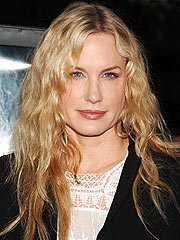
Daryl Hannah
From Wikipedia, the free encyclopedia
Birth name Daryl Christine Hannah
Born December 3, 1960 (1960-12-03) (age 47)
Chicago, Illinois, United States
Years active 1978-present
Daryl Christine Hannah (born December 3, 1960) is an American film actress. After making her screen debut in 1978, Hannah starred in a number of Hollywood films throughout the 1980s. She has recently had several notable roles, including that of Elle Driver in Kill Bill, after a hiatus from major roles during the 1990s.
Biography
Early life
Hannah was born in Chicago, Illinois, to Susan, and Don Hannah, a tugboat and barge company owner.[1] Her parents divorced shortly after her birth and her mother remarried Jerrold Wexler, a businessman and brother of Haskell Wexler, a noted cinematographer. Hannah, a vegetarian since age eleven, grew up with siblings Don Hannah and Page Hannah, as well as half sister Tanya Wexler. She attended school at Francis Parker and the Chicago Latin School in Chicago until 6th grade when she moved to Parker.
Hannah became interested in movies at a young age, due to insomnia. She was very shy and was diagnosed as 'borderline autistic'.[2] Hannah attended the private Francis W. Parker School (where she played on the boys' soccer team) and the University of Southern California.
Career
Hannah made her film debut in 1978, making a brief appearance in Brian De Palma's horror film The Fury. She subsequently appeared in several early 1980s films, the most notable role of which is probably as the replicant, Pris, in Ridley Scott's 1982 film, Blade Runner. Hannah was cast as a mermaid in Ron Howard's 1984 fantasy, Splash, which was a major financial success,[3] and established Hannah as a notable film actress.
Hannah's roles in the remainder of the 1980s ranged from successful major roles in Steel Magnolias and the Academy Award-winning Wall Street, to the 1986 film version of The Clan of the Cave Bear, Hannah also played the title role in Fred Schepisi's 1987 film Roxanne, a modern retelling of Edmond Rostand's play Cyrano de Bergerac, a performance which was described as "sweet" and "gentle" by film critic Roger Ebert.[4] She also appeared in The Pope of Greenwich Village with co-stars Mickey Rourke and Eric Roberts.
She also appeared as the daughter of Jack Lemmon's character in both of the Grumpy Old Men films. In 1995, Hannah was chosen by Empire magazine as #96 of the "100 Sexiest Stars in film history". That same year, Hannah anticipated (by a decade) her Kill Bill role when she appeared as homicidal sociopath Leann Netherwood in The Tie That Binds.
Of Hannah's most recent roles, the better-known may be that of the one-eyed assassin Elle Driver in Kill Bill Volume 1 and Kill Bill Volume 2, directed by Quentin Tarantino. Her performance in these films, as well as her appearances in other recent films, including Northfork, Micheal Radfords' Dancing at the Blue Iguana, John Sayles' Casa de los Babys and Silver City, have been described as a cinematic comeback.[5]
Hannah wrote, directed and produced a short film, The Last Supper which won an award at the Berlin Film Festival. She directed, produced and was the cinematographer for the documentary Strip Notes. The documentary, which aired on Channel 4 London and HBO, was about the research she did for her role in the Michael Radford film Dancing at the Blue Iguana.
Hannah and actress Hilary Shepard co-created two board games, "Love It or Hate It" and "LIEbrary," [6][7] the latter having been previewed by Hannah on The Ellen DeGeneres Show in December 2005.
Personal life
Hannah, a keen environmentalist, has her own weekly video blog called DH Love Life (dhlovelife.com), on sustainable solutions. She is often the sound recordist, camera person and on-screen host for the blog.[8] Her home runs on solar power and is built with green materials. She also drives a car that runs on biodiesel.[9] In late 2006, she also volunteered to act as a judge for Treehugger.com's[10] "Convenient Truths" contest.[11]
Hannah has never married, but she had long-term relationships with John F. Kennedy, Jr. and singer Jackson Browne (she is the female voice on Browne's 1985 hit song with Clarence Clemons, "You're a Friend of Mine"), and was romantically linked with actor Val Kilmer. She is the sister-in-law of well-known music producer Lou Adler, who is married to Hannah's sister, Page.
On June 13, 2006, Hannah was arrested - along with Joan Baez and Julia Butterfly Hill - for her involvement with over 350 farmers and their families and their supporters, confronting authorities trying to bulldoze the nation's largest urban farm in South Central Los Angeles. She chained herself to a walnut tree at the South Central Farm in south-central Los Angeles for three weeks in order to protest the farmers' eviction by the property's new owner. The farm had been established in the wake of the 1992 LA riots to allow people in the city to grow food for themselves. However, the land's new owner, who had paid $5 million for it, sought to evict the farmers to build a warehouse. He had asked for $16 million to sell it but turned down the offer when the activists raised that amount. Hannah was interviewed via cell phone shortly before she was arrested, along with forty four other protesters, and said that she and the others are doing the "morally right thing".[12] She spent some time in jail.[13]
Hannah was featured in a CNET article listing the "top 10 geek girls" where it was mentioned she was extremely shy during her youth and was even diagnosed as being "borderline autistic".[14]
Hannah has also worked to help end the problem of sexual slavery and is traveling around the world to make a documentary about the problem.
0 Replies
bobsmythhawk
1
Reply
Mon 3 Dec, 2007 03:16 pm
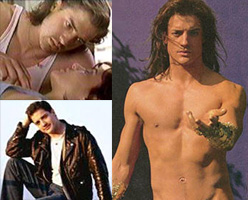
Brendan Fraser
From Wikipedia, the free encyclopedia
Born December 3, 1968 (1968-12-03) (age 39)
Indianapolis, Indiana, U.S.
Years active 1991?-present
Spouse(s) Afton Smith
Official site http://www.brendanfraser.com
[show]Awards
Screen Actors Guild Awards
Best Cast - Motion Picture
2005 Crash
Brendan James Fraser (born December 3, 1968) is a Canadian film and stage actor. He is known for having starred in several major Hollywood films, including The Mummy, its two sequels, The Quiet American, and Crash.
Biography
Early life
Fraser was born in Indianapolis, the son of Canadian parents Shirley, a sales counsellor, and Peter Frazer, a former journalist who worked as a foreign service officer for the Canadian Government Office of Tourism.[1] His great-grandfather was a Royal Canadian Mountie.[2] He has three older brothers, Kevin, Regan, and Sean. His family moved often as a child, living in Eureka, California, Seattle, Ottawa, the Netherlands and Switzerland. Frazer attended his first professional theatrical performance in London's West End. He began acting at a small acting college in New York He originally planned on attending graduate school in Texas but stopped in Hollywood on his way south and decided to stay in Los Angeles and work in movies. His original name "Frazer" was later changed to Fraser because his first agent believed the 'z' did not have the "American boy" appeal.
Career
Fraser's first film role was a brief cameo in Nancy Savoca's Dogfight (1991) and he has since garnered over 30 film credits. He had his first lead role in Encino Man (1992). That same year he played opposite Matt Damon, Ben Affleck, and Chris O'Donnell in School Ties (1992). In 1994 he co-starred alongside Adam Sandler in the comedy Airheads. He also played supporting roles such as starring alongside Viggo Mortensen and Ashley Judd in Philip Ridley's The Passion of Darkly Noon (1995), and Jennifer Beals in The Twilight of the Golds (1997). In 1997's George of the Jungle he played a fish out of the water character similar to his role in Encino Man. After this he often played many fish out of water characters in films such as Blast from the Past (1999) and Monkeybone (2001).
Brendan also starred in Gods and Monsters (1998), a film where he displayed his dramatic chops with Ian McKellen. The film was based on the life of the filmmaker James Whale (McKellen) - who made Frankenstein. This film was written and directed by Bill Condon (Dreamgirls) and was a story about the loss of creativity, ambiguous sexuality and unlikely bonds between a not-too-bright straight gardener and a gay, tortured and ailing filmmaker. Lynn Redgrave plays a devoted housekeeper. [3]
He demonstrated his ability to play an action hero role in the action adventure horror film The Mummy (1999) where he played adventurer Richard "Rick" O'Connell who was modeled on Indiana Jones. He reprised the role in the sequel The Mummy Returns (2001). Both films were huge box office hits. In 2000 he starred in the comedy film Bedazzled, a remake of the 1967 film of the same name. He has starred in two films based off of Jay Ward creations, George of the Jungle and Dudley Do-Right although he did not reprise his role in the former's sequel. In 2004 he appeared in the Academy Award-winning film Crash. He has also made guest appearances on the television shows Scrubs, King of the Hill, and The Simpsons.
In March 2006, it was announced that he would be granted a star on Canada's Walk of Fame, the first American-born actor to receive the honor. However, as of 2006, he does not have a star on the Hollywood Walk of Fame. After a six year hiatus in the franchise, Fraser will return for the second sequel to The Mummy which is set to be released in 2008 and is titled The Mummy: Tomb of the Dragon Emperor. Filming starts in Montreal on July 27th and the movie will also star Jet Li as Emperor Han. The last Mummy film grossed over 200 million in the USA and over 400 million worldwide.
Fraser also starred in the West End production at the Lyric Theatre of Tennessee Williams's "Cat on a Hot Tin Roof". The show opened right after 9/11 on September 18, 2001. Anthony Page directed. Fraser and other cast members were asked if they wanted to delay the opening of the show due to the 9/11 attacks, but the cast and producers decided it would be best to open as scheduled. Others in the production included Ned Beatty as "Big Daddy" and Frances O'Connor as Maggie the Cat. Gemma Jones, a British actress who also played the mother in Bridget Jones' Diary, also played the part of Big Momma, and Abigail McKern (daughter of Leo McKern, who played Big Daddy in the original London production many years prior) and Clive Carter rounded out the cast. The show closed on January 12, 2002. Fraser garnered many excellent reviews. [4]
Personal life
Fraser married Afton Smith on September 27, 1998, and they have three children, Griffin Arthur, Holden Fletcher, and Leland Francis. He speaks fluent French. Fraser is also an accomplished amateur photographer. Fraser resides in Los Angeles California, Tewksbury Township, in a two-story ranch-style house.[citation needed]. Fraser also serves on the Board of Directors for FilmAid International. He has a golden retriever named Brad.
Fraser loves instant photography and has used several Polaroids in movies and on tv shows, most notably on his guest roles on Scrubs. In his first appearance he used a folding pack camera (possibly a Model 450); and on his second appearance he used a Holga with a Polaroid back, a Japanese-only model. The book "Collector's Guide to Instant Cameras" has a dedication to Fraser.
Fraser is fixated with the number "42", he has worn it as his jersey number in all his sports-related films.[citation needed]
His surname is properly pronounced "Fray-zer", though some pronounce it "Frasier" (as in Kelsey Grammer's television character). The correct pronunciation of his surname is a running gag in Dickie Roberts: Former Child Star in which he has a cameo. Once during a Comedy Central promo, Fraser joked about the pronunciation of his last name by saying, "Hi, I'm Brendan Fraser and you're watching Comedy Central. That's 'Fray-zer', not 'Frasier'. If you say, 'Frasier,' I know where you live".
0 Replies
bobsmythhawk
1
Reply
Mon 3 Dec, 2007 03:18 pm
How the Holiday season began . . .
Three men died on Christmas Eve and were met by Saint Peter at the pearly gates.
"In honor of this holy season" Saint Peter said, "You must each possess something that symbolizes Christmas to get into heaven."
The first man fumbled through his pockets and pulled out a lighter. He flicked it on. "It represents a candle", he said.
"You may pass through the pearly gates" Saint Peter said.
The second man reached into his pocket and pulled out a set of keys. He shook them and said, "They're bells."
Saint Peter said "You may pass through the pearly gates".
The third man started searching desperately through his pockets and finally pulled out a pair of women's panties.
St. Peter looked at the man with a raised eyebrow and asked, "And just what do those symbolize?"
The man replied, "These are Carols."
And So The Christmas Season Begins......
0 Replies
Letty
1
Reply
Mon 3 Dec, 2007 03:38 pm
Ah, Boston Bob, that third man and his theme. Quite innovative, and we love it, hawkman. Lots of great bio's today, buddy. Thank you.
I had forgotten Joseph Conrad's Heart of Darkness, folks, and it's a bit frightening to see today's parallel
For instance, this macabre song.
You can't kill me. I am living inside you.
I am a part of your existence
Twisted thoughts in a twisted mind
Provoking you
Black is my heart - dark is my soul
My hatred I can not control
Evil seed growing stronger
Your freewill... Dying!
Inside you - heart of darkness
A part of you - heart of darkness
To deny me, is to deny yourself.
The illusion is dissolved
You are no longer in control
The facade crumbles - the transition is complete
...The transition is complete
I come to you in the night
I am your dark subconscience
I keep you awake, knowing
I am the heart of darkness
By Arch Enemy
Those lyrics made me shiver in a warm and wonderful Florida.
0 Replies
hamburger
1
Reply
Mon 3 Dec, 2007 03:49 pm
on friday we'll be taking the train to toronto for a weekend in HOGTOWN or TRANNA as it is also known :wink:
friday night we'll be at roy thompson hall to listen to AND SEE (!) the
PRESERVATION HALL JAZZ BAND !
can't wait to see and hear them again ! i'll probably go "behind the curtains" after the performance to have a cd signed and chat a bit .
we saw them first at lincoln center in the mid-seventies . only one of the originals - the trombone player - is still alive , and new members have joined in .
it's always a real thrill for me and mrs h to listen to them .
so , i'm giving you a taste of their music !
hbg
Quote:
PLEASE DON'T TALK ABOUT ME WHEN I'M GONE
WRITERS SIDNEY CLARE, SAM H. STEPT
Please don't talk about me when I'm gone,
Oh, honey though our friendship ceases, from now on;
And, listen, if you can't say anything real nice,
It's better not to talk at all, is my advice.
We're parting, you go your way I'll go mine, it's best that we do;
Here's a kiss!
I hope that this brings lots of luck to you.
Makes no difference how I carry on,
Remember, please don't talk about me when I'm gone.
and on saturday we'll be at DIRTY DANCING ! the new smash musical -
quite a change .
0 Replies
Letty
1
Reply
Mon 3 Dec, 2007 04:11 pm
Ah, hbg, you and the Mrs. are quite fortunate to be able to attend such wonderful concerts. I am never quite sure of the difference of Preservation Hall in New Orleans or the one that you are attending.
Love that song, incidentally. Did Mel Torme do that one as well?
Here's one one by Louis, folks
'Zat You, Santa Claus?
Gifts I'm preparing for some Christmas sharing,
But I pause because,
Hanging my stocking I can hear a knocking.
'Zat you, Santa Claus?
Sure is dark out, ain't the slightest spark out.
'Pon my slackened jaw!
Who's there? Who is it stopping for a visit?
'Zat you, Santa Claus?
Are you bringing a present for me,
Something pleasantly pleasant for me?
Then it's just what I've been waiting for.
Would you mind slipping it under the door?
Cold winds are howling, or could that be growling?
My legs feel like straws.
My my oh me my, kindly would you reply?
'Zat you, Santa Claus?
Hanging the stocking, I can hear a knocking.
'Zat you, Santa Claus?
I say, who's there, who is it? Are you stopping for a visit?
'Zat you, Santa Claus?
Oh there, Santa, you gave me a scare.
Now stop teasing cause I know you're there.
We don't believe in no goblins today,
But I can't explain why I'm shaking that way.
Bet I can see ole Santa in the keyhole.
I'll get to the cause.
One peek and I'll try there; oh oh, there's an eye there!
'Zat you, Santa Claus?
Please, please, pity my knees!
Say that's you, Santa Claus!
Hope our puppy is all right and not frozen.
0 Replies
Raggedyaggie
1
Reply
Mon 3 Dec, 2007 04:27 pm
Good day WA2K.
Hamburger: I hope you'll tell us what you think of the stage version of Dirty Dancing.
Today's photo gallery: Joseph Conrad; Sven Nykvist; Andy Williams; Jaye P. Morgan; Darryl Hannah and Brendan Fraser
 )
)