Well, Raggedy, so did I. Still love coming across the intercostal waterway bridge and seeing the ocean meeting the shore. Thanks again for the lovely montage, PA, and I like This is My Beloved as well.
When I first saw the name Anne Hathaway, I thought Shakespeare? Then I saw her quote by Oscar Wilde, and realized it was not the Bard's woman.
Well, our resident photographer didn't picture this guy, but I became intrigued with his aggressive approach:
Neil Young
He certainly ain't no Bush baby.
This song by Neil is interesting. Let's hear it.
"On The Beach"
The world is turnin',
I hope it don't turn away,
The world is turnin',
I hope it don't turn away.
All my pictures are fallin'
from the wall where
I placed them yesterday.
The world is turnin',
I hope it don't turn away.
I need a crowd of people,
but I can't face them
day to day,
I need a crowd of people,
but I can't face them
day to day.
Though my problems
are meaningless,
that don't make them
go away.
I need a crowd of people,
but I can't face them
day to day.
I went to the radio interview,
but I ended up alone
at the microphone,
I went to the radio interview,
but I ended up alone
at the microphone.
Now I'm livin'
out here on the beach,
but those seagulls are
still out of reach.
I went to the radio interview,
but I ended up alone
at the microphone.
Get out of town,
think I'll get out of town,
Get out of town,
think I'll get out of town.
I head for the sticks
with my bus and friends,
I follow the road,
though I don't know
where it ends.
Get out of town, get out of town,
think I'll get out of town.
'Cause the world is turnin',
I don't want to
see it turn away.
0 Replies
edgarblythe
1
Reply
Mon 12 Nov, 2007 08:27 pm
I have a video tape of neil singing All Along the Watchtower and also this:
Just Like Tom Thumb's Blues
When you're lost in the rain in Juarez
And it's Eastertime too
And your gravity fails
And negativity don't pull you through
Don't put on any airs
When you're down on Rue Morgue Avenue
They got some hungry women there
And they really make a mess outa you
Now if you see Saint Annie
Please tell her thanks a lot
I cannot move
My fingers are all in a knot
I don't have the strength
To get up and take another shot
And my best friend, my doctor
Won't even say what it is I've got
Sweet Melinda
The peasants call her the goddess of gloom
She speaks good English
And she invites you up into her room
And you're so kind
And careful not to go to her too soon
And she takes your voice
And leaves you howling at the moon
Up on Housing Project Hill
It's either fortune or fame
You must pick up one or the other
Though neither of them are to be what they claim
If you're lookin' to get silly
You better go back to from where you came
Because the cops don't need you
And man they expect the same
Now all the authorities
They just stand around and boast
How they blackmailed the sergeant-at-arms
Into leaving his post
And picking up Angel who
Just arrived here from the coast
Who looked so fine at first
But left looking just like a ghost
I started out on burgundy
But soon hit the harder stuff
Everybody said they'd stand behind me
When the game got rough
But the joke was on me
There was nobody even there to call my bluff
I'm going back to New York City
I do believe I've had enough
0 Replies
Letty
1
Reply
Mon 12 Nov, 2007 08:47 pm
I just discovered Neil on his own, edgar. Yes, dj is right. So many good songs are lyrical poems. Yours was one.
Fournd this one, and I'm going to say goodnight thinking of it, folks.
NEIL YOUNG
"From Hank To Hendrix"
From Hank to Hendrix
I walked these streets with you
Here I am with this old guitar
Doin' what I do.
I always expected
That you should see me through
I never believed in much
But I believed in you.
Can we get it together
Can we still stand side by side
Can we make it last
Like a musical ride?
From Marilyn to Madonna
I always loved your smile
Now we're headed
for the big divorce
California-style.
I found myself singin'
Like a long-lost friend
The same thing that makes you live
Can kill you in the end.
Can we get it together
Can we still stand side by side
Can we make it last
Like a musical ride?
Sometime it's distorted
Not clear to you
Sometimes the beauty of love
Just comes ringin' through.
New glass in the window
New leaf on the tree
New distance between us
You and me.
Can we get it together
Can we still walk side by side
Can we make it last
Like a musical ride?
Everything seems to be a question.
Goodnight
From Letty with love
0 Replies
bobsmythhawk
1
Reply
Tue 13 Nov, 2007 04:24 am
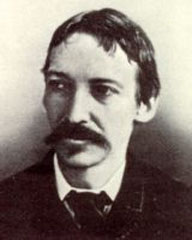
Robert Louis Stevenson
From Wikipedia, the free encyclopedia
Born November 13, 1850(1850-11-13)
Edinburgh, Scotland
Died December 03, 1894 (aged 44)
Occupation Novelist, Poet, Travel writer
Nationality Scottish
Influences Edgar Allan Poe
Influenced Jorge Luis Borges, Ernest Hemingway, Rudyard Kipling, Vladimir Nabokov
Robert Louis (Balfour) Stevenson (November 13, 1850 - December 3, 1894), was a Scottish novelist, poet, and travel writer, and a leading representative of Neo-romanticism in English literature. He was greatly admired by many authors, including Jorge Luis Borges, Ernest Hemingway, Rudyard Kipling and Vladimir Nabokov. [1]
Most modernist writers dismissed him, however, because he was popular and did not write within their narrow definition of literature. It is only recently that critics have begun to look beyond Stevenson's popularity and allow him a place in the Western canon.
He prepared for a law career but never practiced. He travelled frequently, partly in search of better climates for his weak lungs (possibly due to tuberculosis), which would eventually contribute to his death at age 44.
Early life
Stevenson[2] was born Robert Lewis Balfour Stevenson,[3] in Edinburgh, Scotland, on November 13, 1850. His father was Thomas Stevenson, and his grandfather was Robert Stevenson; both were distinguished lighthouse designers and engineers, as was his great-grandfather. It was from this side of the family that he inherited his love of adventure, joy of the sea and for the open road. Through his mother he was descended from Gilbert Elliott, 1st Baronet of Minto and the Reverend George Smith and was related to Arthur St. Clair. His maternal grandfather, Lewis Balfour, was a professor of moral philosophy and a minister, and Stevenson spent the greater part of his boyhood holidays in his house. "Now I often wonder", says Stevenson, "what I inherited from this old minister. I must suppose, indeed, that he was fond of preaching sermons, and so am I, though I never heard it maintained that either of us loved to hear them." From his mother, Margaret Balfour, he inherited weak lungs (perhaps due to tuberculosis), that kept him constantly in "the land of the counterpane" during the winter, where his nurse spent long hours by his bedside reading from the Bible, and lives of the old Covenanters. During the summer he was encouraged to play outside, where he proved to be a wild and carefree child, and by the age of eleven his health had improved so that his parents prepared him for the University of Edinburgh by attending Edinburgh Academy, planning for him to follow his father as a lighthouse engineer. During this period he read widely and especially enjoyed Shakespeare, Walter Scott, John Bunyan and The Arabian Nights.
He entered the University of Edinburgh at seventeen, but soon discovered he had neither the scientific mind nor physical endurance to succeed as an engineer. When his father took him for a voyage he found?-instead of being interested in lighthouse construction?-that his mind was teeming with wonderful romances about the coast and islands which they visited. Although his father was stern, he finally allowed him to decide upon a career in literature?-but first he thought it was wise to finish a degree in law, so that he might have something to fall back upon. Stevenson followed this course and by the age of twenty-five passed the examinations for admission to the bar, though not until he had nearly ruined his health through work and worry. His father's lack of understanding led him to write the following protest:
Say not of me that weakly I declined
The labours of my sires, and fled the sea
The towers we founded and the lamps we lit,
To play at home with paper like a child.
Marriage and travels
The next four years were spent mostly in travel, and in search of a climate that would be more beneficial for his health. He made long and frequent trips to Fontainebleau, Barbizon, Grez, and Nemours, becoming a member of the artists' colonies there. He made frequent trips to Paris visiting galleries and the theatres. It was during this period he made most of his lasting friendships and met his future wife Fanny Vandegrift Osbourne, who was married at the time. Among these friendships are: Sidney Colvin, his biographer and literary agent; William Ernest Henley, a collaborator in dramatic composition; Mrs. Sitwell, who helped him through a religious crisis; Andrew Lang, Edmund Gosse, and Leslie Stephen, all writers and critics. He also made the journeys described in An Inland Voyage and Travels with a Donkey in the Cévennes. In addition he wrote twenty or more articles and essays which appeared in various magazines. Although it seemed to his parents he was wasting his time and being idle, he was in reality constantly studying to perfect his style of writing and broaden his knowledge of life, emerging as a man of letters.
When Stevenson and Fanny Vandegrift Osbourne met in France in 1876 it was love at first sight. A few months later when she returned to her home in San Francisco, California, Stevenson was determined to follow when he learned that she was sick. His friends advised against the journey; knowing his father's temper, but he sailed without notifying his parents. He took steerage passage on the Devonian in part to save money but also to learn how others travelled, and to increase the adventure of the journey. From New York City he traveled overland by train to California. He later wrote about the experience in An Amateur Emigrant and Across the Plains. Although it was good experience for his literature, it broke his health, and he was near death when he arrived in Monterey. He was nursed back to health by some ranchers there.
In December 1879 he had recovered his health enough to continue to San Francisco, where for several months he struggled "all alone on forty-five cents a day, and sometimes less, with quantities of hard work and many heavy thoughts,"[4] in an effort to support himself through his writing; but by the end of the winter his health was broken again, and he found himself at death's door. Vandegrift ?- now divorced and recovered from her own illness ?- came to Stevenson's bedside and nursed him to recovery. "After a while," he wrote, "my spirit got up again in divine frenzy, and has since kicked and spurred my vile body forward with great emphasis and success." When his father heard of his condition he cabled him money to help him through this period.
In May 1880 he married Fanny when, as he said, he was "a mere complication of cough and bones, much fitter for an emblem of mortality than a bridegroom." With his new wife and her son, Lloyd, he traveled north of San Francisco to Napa Valley, and spent a summer honeymoon at an abandoned mining camp on Mount Saint Helena. This experience he published in The Silverado Squatters. He met Charles Warren Stoddard, co-editor of the Overland Monthly and author of South Sea Idylls, who urged Stevenson to travel to the south Pacific, an idea which would return to him many years later. In August 1880 he sailed from New York with his family back to Britain, and found his parents and his friend Sidney Colvin, on the wharf at Liverpool happy to see him return home. Gradually his new wife was able to patch up differences between father and son and make herself a part of the new family through her charm and wit.
Journey to the Pacific
For the next seven years between 1880 and 1887 Stevenson searched in vain for a place of residence suitable to his state of health. He spent his summers at various places in Scotland and England, including Westbourne, Dorset; for his winters, he escaped to sunny France, and lived at Davos-Platz and the Chalet de Solitude at Hyeres, where, for a time, he enjoyed almost complete happiness. "I have so many things to make life sweet for me," he wrote, "it seems a pity I cannot have that other one thing ?- health. But though you will be angry to hear it, I believe for myself, at least, that is best. I believed it all through my worst days, and I am not ashamed to profess it now." In spite of the blood on his handkerchief and the medicine bottle at his elbow, his optimistic spirit kept him going, and he produced the bulk of his best known work: Treasure Island, his first widely popular book; Kidnapped; The Strange Case of Dr. Jekyll and Mr. Hyde, the story which established his wider reputation; and two volumes of verse, A Child's Garden of Verses and Underwoods.
On the death of his father in 1887, Stevenson felt free to follow the advice of his physician to try a complete change of climate. He started with his mother and family for Colorado; but after landing in New York they decided to spend the winter at Saranac Lake, in the Adirondacks. During the intensely cold winter Stevenson wrote a number of his best essays, including Pulvis et Umbra, he began The Master of Ballantrae, and lightheartedly planned, for the following summer, a cruise to the southern Pacific Ocean. "The proudest moments of my life," he wrote, "have been passed in the stern-sheets of a boat with that romantic garment over my shoulders."
In June 1888, Stevenson chartered the yacht Casco and set sail with his family from San Francisco. The vessel "ploughed her path of snow across the empty deep, far from any hand of help." The salt sea air and thrill of adventure for a time restored his health; and for nearly three years he wandered the eastern and central Pacific, visiting important island groups, stopping for extended stays at the Hawaiian Islands where he became a good friend of King David Kalakaua, with whom Stevenson spent much time. Furthermore, Stevenson befriended the king's niece Princess Victoria Kaiulani, who was of Scottish heritage. He also spent time at the Gilbert Islands, Tahiti and the Samoan Islands. During this period he completed The Master of Ballantrae, composed two ballads based on the legends of the islanders, and wrote The Bottle Imp. The experience of these years is preserved in his various letters and in The South Seas.
Last years
In 1890 he purchased four hundred acres (about 1.6 square kilometres) of land in Upolu, one of the Samoan islands. Here, after two aborted attempts to visit Scotland, he established himself, after much work, upon his estate, which he named Vailima ("Five Rivers"). His influence spread to the natives who consulted him for advice, and he soon became involved in local politics. He was convinced the European officials appointed to rule the natives were incompetent, and after many futile attempts to resolve the matter, he published A Footnote to History. This was such a stinging protest against existing conditions that it resulted in the recall of two officials, and Stevenson feared for a time it would result in his own deportation. When things had finally blown over he wrote a friend, "I used to think meanly of the plumber; but now he shines beside the politician."
In addition to building his house and clearing his land and helping the natives in many ways, he found time to work at his writing. In his enthusiasm, he felt that "there was never any man had so many irons in the fire." He wrote The Beach of Falesa, David Balfour, and Ebb Tide, as well as the Vailima Letters, during this period.
For a time during 1894 Stevenson felt depressed; he wondered if he had exhausted his creative vein and completely worked himself out. He wrote that he had "overworked bitterly". He felt more clearly that, with each fresh attempt, the best he could write was "ditch water". He even feared that he might again become a helpless invalid. He rebelled against this idea: "I wish to die in my boots; no more land of counterpane for me. To be drowned, to be shot, to be thrown from a horse ?- ay, to be hanged rather than pass again through that slow dissolution." He then suddenly had a return of his old energy and he began work on Weir of Hermiston. "It's so good that it frightens me," he is reported to have exclaimed. He felt that this was the best work he had done. He was convinced, "sick and well, I have had splendid life of it, grudge nothing, regret very little ... take it all over, I would hardly change with any man of my time."
Without knowing it, he was to have his wish fulfilled. During the morning of December 3, 1894, he had worked hard as usual on Weir of Hermiston. During the evening, while conversing with his wife and straining to open a bottle of wine, he suddenly fell to the ground, asking "What's the matter with me? What is this strangeness? Has my face changed?"[citation needed] He died within a few hours, probably of a cerebral hemorrhage, at the age of 44. The natives insisted on surrounding his body with a watch-guard during the night, and on bearing their Tusitala (Samoan for "Story Writer") upon their shoulders to nearby Mt Vaea and buried him on a spot overlooking the sea. A tablet was placed there, which bore the inscription of his 'Requiem', the piece he always had intended as his epitaph:
Under the wide and starry sky,
Dig the grave and let me lie.
Glad did I live and gladly die,
And I laid me down with a will.
This be the verse you grave for me:
Here he lies where he longed to be;
Home is the sailor, home from sea,
And the hunter home from the hill.
Modern reception
Stevenson was a celebrity in his own time, but with the rise of modern literature after World War I, he was seen for much of the 20th century as a writer of the second class, relegated to children's literature and horror genres. Condemned by authors such as Virginia Woolf and Leonard Woolf, he was gradually excluded from the canon of literature taught in schools. His exclusion reached a height when in the 1973 2,000-page Oxford Anthology of English Literature Stevenson was entirely unmentioned, and the Norton Anthology of English Literature excluded him from 1968 to 2000 (1st-7th editions), including him only in the 8th edition (2006). The late 20th century saw the start of a re-evaluation of Stevenson as an artist of great range and insight, a literary theorist, an essayist and social critic, a witness to the colonial history of the South Pacific, and a humanist. He is now being re-evaluated as a peer with authors such as Joseph Conrad (whom Stevenson influenced with his South Seas fiction) and Henry James, with new scholarly studies and organizations devoted to Stevenson.[5] No matter what the scholarly reception, Stevenson remains very popular. According to the Index Translationum, Stevenson is ranked the 25th most translated author in the world, ahead of Charles Dickens, Oscar Wilde and Edgar Allan Poe.
0 Replies
bobsmythhawk
1
Reply
Tue 13 Nov, 2007 04:27 am
Hermione Baddeley
From Wikipedia, the free encyclopedia
Birth name Hermione Youlanda Ruby Clinton-Baddeley
Born November 13, 1906(1906-11-13)
Broseley, Shropshire, England
Died August 19, 1986 (aged 79)
Los Angeles, California, U.S.
Hermione Baddeley (November 13, 1906 - August 19, 1986) was a celebrated Academy Award-nominated British character actress of theatre, film and television.
Originally Hermione Youlanda Ruby Clinton-Baddeley, she was born in Broseley, Shropshire, England. A descendant of British Revolutionary War general Sir Henry Clinton, she and her older sister (the actress Angela Baddeley of Upstairs, Downstairs fame) moved in elevated social circles, Hermione's first husband being the Hon. David Pax Tennant, a descendant of William the Conqueror and elder brother of Stephen Tennant. Hermione was known for standout supporting performances in such films as Mary Poppins (as Ellen, the maidservant), The Belles of St. Trinian's, The Unsinkable Molly Brown, Passport to Pimlico, The Pickwick Papers, Tom Brown's Schooldays and A Christmas Carol, although she first began making films back in the 1920s. She was a principal character in Brighton Rock (1947).
Her television roles brought her increased visibility; besides many guest appearances she became known to American TV audiences for her roles in Little House on the Prairie and Maude. She was also a sought-after voice-over actress (The Aristocats, The Secret of NIMH).
She continued to work until shortly before her death at 79, in Los Angeles, California, of a stroke. She received her sole Oscar nomination as Best Supporting Actress for her portrayal as Simone Signoret's best friend, music teacher Elspeth, in Jack Clayton's Room at the Top (1959).
0 Replies
bobsmythhawk
1
Reply
Tue 13 Nov, 2007 04:30 am
Jack Elam
From Wikipedia, the free encyclopedia
Birth name William Scott Elam
Born 13 November 1920(1920-11-13)
Miami, Arizona, U.S.
Died 20 October 2003 (aged 82) aged 82
Other name(s) Jack Elam
Jack Elam (November 13, 1920 ?- October 20, 2003) was an American film actor. He appeared mostly in westerns.
William Scott Elam, "Jack", was born in Miami, Arizona to Millard Elam and Alice Amelia Kerby. Despite wildly spread rumors to the contrary, Alice did not die when Jack was one or two years old. She died in 1924 when he was just shy of four years old. After she died, he was raised by relatives in very unhappy circumstances. By 1930, he was once again living with his father, older sister, Mildred, and their step-mother, Flossie.
He grew up picking cotton, and as a Boy Scout he lost the sight in his left eye after another Scout threw a pencil at him at a troop meeting.[citation needed] His face became famous at least in part due to the "lazy" left eye. He was a student of both Miami High School in Gila County and Phoenix Union High School in Maricopa County and graduated from the latter in the late 1930's.
He attended Santa Monica Junior College in California and subsequently became an accountant in Hollywood and, at one time, manager of the Bel Air Hotel in Los Angeles. In 1949, Elam made his debut in "She Shoulda Said 'No'!", an exploitation film where a chorus girl's smoking marijuana ruins her career and drives her brother to suicide. He then appeared mostly in westerns and gangster films playing "heavies".
In 1963 he got a rare chance to play the good guy when he played the part of Deputy Marshall J.D.Smith in "The Dakotas", a TV western which was to run for 19 episodes. Elam was given his first comedic role in Support Your Local Sheriff!, after which he found his villainous assignments dwindling and his comic jobs increasing. He was inducted into the Hall of Great Western Performers of the National Cowboy and Western Heritage Museum in 1994.
Elam produced probably the best ever description of the stages of a moderately successful actor's life. According to him the stages are defined by the way a film director refers to the actor suggested for a part.[citation needed]
Stage 1: "Who is Jack Elam?"
Stage 2: "Get me Jack Elam."
Stage 3: " I want a Jack Elam type."
Stage 4: "I want a younger Jack Elam."
Stage 5: "Who is Jack Elam?"
Jack Elam died in Ashland, Oregon of congestive heart failure on October 20, 2003, aged 82. [1][2]
0 Replies
bobsmythhawk
1
Reply
Tue 13 Nov, 2007 04:33 am
Oskar Werner
From Wikipedia, the free encyclopedia
Oskar Werner (November 13, 1922 - October 23, 1984) was an Austrian actor. Born Oskar Josef Bschließmayer in Vienna, he started off his career as a stage actor for the famous Burgtheater until making his film debut in Der Engel mit der Posaune in 1948.
Stage career
Universally regarded as one of Western Europe's foremost stage actors, Oskar Werner was 18 years old when he made his stage bow at the Burgtheater in his native Vienna. A lifelong pacifist, Werner did everything he could to avoid conscription in the Axis army during World War II; when he finally was forced into a uniform, he deserted at the earliest opportunity.
Film career
After the war, Werner resumed his theatrical career, only reluctantly making his first film in 1948; "I am married to the theatre, and the films are only my mistress" he would later declare. In 1951, he made his English-language film debut as "Happy," an enigmatic German prisoner of war, in 20th Century-Fox's Decision Before Dawn. When Fox reneged on its promise to develop Werner into a Hollywood star, he went back to his true love, the theatre, vowing to only appear in films that intrigued him. In 1955, he essayed the title role in Mozart, and also played a smaller but no less significant part as the "Student" in Max Ophüls' Lola Montes. Then it was back to the stage, culminating with his formation of Theatre Ensemble Oskar Werner in 1959. One of Werner's most notable screen performances was the romantic intellectual, "Jules", in François Truffaut's Jules et Jim (1962), and he became an international star as a result. Although it was his portrayal of the philosophical "Dr. Schumann" in Ship of Fools (1965) that truly brought him to the attention of English-speaking movie-goers, and for his work, the actor received his only Oscar nomination and his first Golden Globe nomination. As the East German Jewish agent, "Fiedler", in The Spy Who Came in from the Cold (1965), he won a Golden Globe for Best Supporting Actor. In 1966 he was the book-burning fireman, "Montag", in Truffaut's film version of the cult-classic Fahrenheit 451 by Ray Bradbury. With Anthony Quinn as the Pope, Werner played a questioning Vatican priest in The Shoes of the Fisherman (1968).
Later career
In the 1970s and 1980s, Werner returned to the stage ?- among other things, starring in and directing "Hamlet" with his Theater Ensemble at the Salzburg Festival. During the 1970s he also spent much time traveling internationally. In an uncharacteristic television appearance, Werner played the murderer opposite Peter Falk in a made-for-TV-movie off-shoot of the Columbo television series entitled Columbo: Playback (1975), prior to his Golden Globe nominated final film appearance in Voyage of the Damned (1976). His alcoholism apparently having resulted in the decline of his acting career, Werner died of a heart attack in 1984, at the age of 61, just before he was scheduled to deliver a lecture at a German drama club.
0 Replies
bobsmythhawk
1
Reply
Tue 13 Nov, 2007 04:40 am
Jean Seberg
From Wikipedia, the free encyclopedia
Born November 13, 1938(1938-11-13)
Marshalltown, Iowa
Died September 8, 1979 (aged 40)
Paris, France
Spouse(s) François Moreuil
Romain Gary
Dennis Charles Berry
Ahmed Hasni
Jean Seberg (November 13, 1938 - September 8, 1979) was an American actress. She starred in 34 films in Hollywood and in France. Seberg became even more of an icon after her roles in numerous French films and the tragedy of her turbulent life.
Biography
Early life
Seberg was born in Marshalltown, Iowa to Edward Seberg and Dorothy Benson. Her family background was Lutheran.[1]
Career
Seberg was discovered by Otto Preminger, who directed her in her first two films. She made her film debut in 1957 in the title role of George Bernard Shaw's Saint Joan. She secured the role after being chosen from 18,000 hopeful actresses. The young Seberg was then thrust into the glaring spotlight and subject of countless Cinderella stories. Expectations were high. When the film was released, reviews were generally mediocre, praising Jean's fresh beauty, but finding her in over her head playing Joan. Preminger never came to her defense. Among her roles, she co-starred with Jean-Paul Belmondo in Jean-Luc Godard's classic work of New Wave cinema, Breathless (original French title: A bout de souffle). Seberg also appeared in the 1959 classic Peter Sellers comedy, The Mouse that Roared. In 1969, she appeared in her first and only musical film, Paint Your Wagon, based on Lerner and Loewe's stage musical, but her voice was dubbed. She was one of the many stars in the 1970 disaster film, Airport.
Personal life
During the latter part of the 1960s, Seberg used her high-profile image to voice support for the NAACP and supported Native American school groups such as the Mesquakie Bucks at the Tama settlement near her home town of Marshalltown, for whom she purchased $500 worth of basketball uniforms. She also supported the Black Panther Party.[2] FBI director J. Edgar Hoover considered her a threat to the American state. Her telephone was tapped and her private life has been closely observed. She knew about it and felt chased. In 1970, when she was seven months pregnant, FBI created a false story[3] to leak to the media that the child she was carrying was not fathered by her second husband, Romain Gary, but by a member of the Black Panthers Party. The story was reported by Joyce Haber of the Los Angeles Times newspaper.[4], and Newsweek magazine[5] She gave birth to a girl on 23 August but the infant died two days later.[6] In a press conference she presented the press with a picture of her fetus to demonstrate that the child did not have a father of African heritage. Seberg stated that the trauma of this event brought on premature labor and her child was stillborn. The child was named Nina Gary; the baby was actually fathered by Carlos Navarra.[7] According to her husband, after the loss of their child she suffered from a deep depression and became suicidal. She also became dependent on alcohol and prescription drugs. She made several attempts to take her own life, including throwing herself under a train on the Paris Métro.
Seberg's problems were compounded when she went through a form of marriage to an Algerian playboy, Ahmed Hasni, on May 31, 1979. The brief ceremony had no legal force because she had taken film director Dennis Charles Berry[8] as her third husband in 1972 and the marriage was still valid[9] In July, Hasni persuaded her to sell her opulent apartment on the Rue du Bac, and he kept the proceeds (reportedly 11 million francs in cash), announcing that he would use the money to open a Barcelona restaurant.[10] The couple departed for Spain but she was soon back in Paris alone, and went into hiding from Hasni, who she said had grievously abused her[11].
In August 1979, she went missing, and was found dead 11 days later in the back seat of her car in a Paris suburb. The police report stated that she had taken a massive overdose of barbiturates and alcohol (8g per litre). A suicide note ("Forgive me. I can no longer live with my nerves") was found in her hand, and suicide was ultimately ruled the official cause of death. However, it is often questioned how she could have driven to the address in the 16th arrondissement with that amount of alcohol in her body, and without the distance glasses she always maintained she absolutely needed for driving.[12] She was not yet 41 years old when she died. Her second husband, Romain Gary, with whom she had a son, Alexandre Diego Gary, also committed suicide a year after her death.
Seberg was interred in the Cimetière du Montparnasse, Paris, France.
Legacy
Mexican author Carlos Fuentes' novel Diana, The Goddess Who Hunts Alone (1994) is a fictionalized account of an alleged affair with Seberg, although it has not been proven whether the claims of the adulterous liaison - as both were married to others at the supposed time- is fact or just a flight of fancy. In 1995, a documentary of her life was made by Mark Rappaport, titled From the Journals of Jean Seberg. Mary Beth Hurt played Seberg in a voice-over. Coincidentally, Hurt was also born in Marshalltown, Iowa, in 1946, and attended the same high school as Seberg. Seberg was for a short time Hurt's babysitter. A musical, Jean Seberg, by librettist Julian Barry, composer Marvin Hamlisch, and lyricist Christopher Adler, based on Seberg's life, was presented in 1983 at the National Theatre in London.
The short 2000 film Je T'aime John Wayne is a tribute parody of Breathless, with Camilla Rutherford playing Seberg's role. Actress Kirsten Dunst has proposed making a film about Seberg's life. The British band, The Divine Comedy, make reference to 'Little Jean Seberg' in their song titled "Absent Friends".
In 2004, the French author Alain Absire published Jean S., a fictionalised biography. Seberg's son Alexandre Diego Gary brought a lawsuit unsuccessfully attempting to stop publication.
Marshalltown, Iowa hardcore band Modern Life is War dedicates the song "Pendulum" from their 2007 release Midnight in America to Jean Seberg, with lyrics apparently pertaining to her life.
0 Replies
bobsmythhawk
1
Reply
Tue 13 Nov, 2007 04:47 am
Whoopi Goldberg
From Wikipedia, the free encyclopedia
Birth name Caryn Elaine Johnson
Born November 13, 1955 (1955-11-13) (age 51)
New York City, New York
Occupation actress, comedian, radio DJ, author, singer
Years active 1970 - present
Spouse(s) Alvin Martin (1973-1979)
David Claessen (1986-1988)
Lyle Trachtenberg (1994-1995)
Official site Whoopi.com
[show]Awards
Academy Awards
Best Supporting Actress
1990 Ghost
BAFTA Awards
Best Actress in a Supporting Role
1990 Ghost
Emmy Awards
Daytime Emmy - Outstanding Special Class
2002 Beyond Tara: The Extraordinary Life of Hattie McDaniel
Golden Globe Awards
Best Actress - Motion Picture Drama
1986 The Color Purple
Best Supporting Actress - Motion Picture
1991 Ghost
Grammy Awards
Best Comedy Album
1985 Whoopi Goldberg: Direct From Broadway
NAACP Image Awards
Outstanding Actress in a Motion Picture
1988 The Color Purple
1990 Fatal Beauty
1992 Ghost
1993 The Long Walk Home
1994 Sister Act
Outstanding Supporting Actress in a Motion Picture
1999 How Stella Got Her Groove Back
Outstanding Actress in a TV Movie, Miniseries or Dramatic Special
2004 Good Fences
Tony Awards
Best Musical
2002 Thoroughly Modern Millie
Other Awards
NBR Award for Best Actress
1985 The Color Purple
Saturn Award for Best Supporting Actress (film)
1990 Ghost
Whoopi Goldberg (born November 13, 1955) is an American actress, comedian, radio presenter, host, and author.
Goldberg is one of only ten individuals who have won an Emmy, a Grammy, an Oscar, and a Tony Award, counting Daytime Emmy Awards. She is the second African American female performer to win an Academy Award for acting (the first being Hattie McDaniel). She has won two Golden Globe Awards. On the August 1, 2007 broadcast of The View, Barbara Walters introduced Goldberg as the show's new moderator as of September 4. Meredith Vieira and Rosie O'Donnell previously held the position.[1]
In October 2007, Goldberg announced on Larry King Live that she would be retiring from acting because she is no longer sent scripts. "You know, there's no room for the very talented Whoopi. There's no room right now in the marketplace of cinema," Goldberg told King.[2]
Early life
Goldberg was born Caryn Elaine Johnson in New York City, the daughter of Emma (née Harris), a nurse and teacher, and Robert James Johnson, a clergyman.[3][4] Goldberg's mother was a "stern, strong and wise woman" who raised her as a single mother after Goldberg's father had left the family.[5] Her stage name was taken from "whoopee cushion", which she initially used as her stage name; she stated that "If you get a little gassy, you've got to let it go. So people used to say to me, 'You're like a whoopee cushion.' And that's where the name came from."[6] She chose the surname "Goldberg" after Jewish ancestors of hers who bore the surname, having said that "Goldberg's a part of my family somewhere".[5][7] A DNA test, aired in the 2006 PBS documentary African American Lives, traced most of her ancestry to the Papel and Bayote people of modern-day Guinea-Bissau. Her racial admixture test revealed her genetic makeup to be 92% sub-Saharan African and 8% European.[8][9][10]
Career
Goldberg's on-screen talent first emerged in 1981-82 in Citizen : I'm Not Losing My Mind, I'm Giving It Away, an avant-garde ensemble feature by San Francisco filmmaker William Farley. Goldberg created The Spook Show, a one-woman show devised of different character monologues, in 1983. Director Mike Nichols was instantly impressed and offered to bring the show to Broadway. The self-titled show ran from October 24, 1984 to March 10, 1985 for a total of 156 sold-out performances. While performing on Broadway, Goldberg's performance caught the eye of director Steven Spielberg. He was about to direct the Pulitzer Prize-winning novel, The Color Purple written by Alice Walker. Having read the novel, she was ecstatic at being offered a lead role in her first motion picture. Goldberg received compliments on her acting from Spielberg, Walker, and music consultant Quincy Jones. The Color Purple was released in the late autumn of 1985 and was a critical and commercial success. It was later nominated for 11 Academy Awards including a nomination for Goldberg as Best Leading Actress. The movie did not win any of its Academy Award nominations, but Goldberg won the Golden Globe Award.
A comedic and dramatic balance, 1986-2007
Goldberg starred in Penny Marshall's directorial debut, 1986's Jumpin' Jack Flash, and she began a relationship with David Claessen, a director of photography on the set, and the couple married later that year. The movie was a success and during the next two years three additional motion pictures featured Goldberg, Burglar, Fatal Beauty, and The Telephone. Though not as successful as her prior motion pictures, Goldberg still garnered awards from the N.A.A.C.P. Image Awards. Claessen and Goldberg divorced after the box office failure of The Telephone which Goldberg was under contract to star in. She tried to sue the producers but with no luck. The 1988 movie, Clara's Heart, was critically acclaimed and featured a young Neil Patrick Harris. As the 1980s concluded, she participated in the numerous HBO specials of Comic Relief with fellow comedians Robin Williams and Billy Crystal.
In January 1990, Goldberg starred with Jean Stapleton in the TV situation comedy Bagdad Café. The show ran for two seasons on CBS. Simultaneously, Goldberg starred in The Long Walk Home, portraying a woman in the Civil Rights Movement. She played a psychic in the 1990 film Ghost, and became the first African-American female to win the Academy Award for Best Supporting Actress in nearly 50 years. Premiere Magazine named her character, Oda Mae Brown, the 95th best movie character of all time.[11]
Goldberg starred in Soapdish and had a recurring role on Star Trek: The Next Generation as Guinan which she would reprise in two Star Trek movies. On May 29, 1992, Sister Act was released. The motion pictured grossed well over $100 million dollars and Goldberg was nominated for a Golden Globe. Next, she starred in Sarafina!. During the next year, she hosted a late-night talk show, The Whoopi Goldberg Show and starred in two more motion pictures Made In America and Sister Act 2: Back in the Habit. From 1994 to 1995, Whoopi appeared in Corrina, Corrina, The Lion King (voice), The Pagemaster(voice), Boys on the Side, and Moonlight and Valentino. Goldberg became the first African-American female to host the Academy Awards in 1994.[12] She hosted the Awards again in 1996, 1999, and 2002. Goldberg released four motion pictures in 1996: Bogus (with Gerard Depardieu and Haley Joel Osment), Eddie, The Associate "the Americanized remake is l'associe with Michel Serrault (French film)" with Dianne Wiest) and Ghosts of Mississippi (with Alec Baldwin and James Woods). During the filming of Eddie, Goldberg began dating co-star Frank Langella, a relationship which lasted until early 2000.
Goldberg wrote Book in October 1997, a collection featuring insights and opinions. In November and December of 2005, Goldberg revived her one-woman show on Broadway at the Lyceum Theatre in honor of its 20th anniversary.
From 1998 to 2001, Goldberg took supporting roles in the Angela Bassett vehicle How Stella Got Her Groove Back and Kingdom Come. She starred in the successful ABC versions of Cinderella, A Knight in Camelot, and the TNT Original Movie, Call Me Claus. In 1998, she gained a new audience when she became the "Center Square" on Hollywood Squares, which was hosted by Tom Bergeron. She also served as Executive Producer, for which she was nominated for 4 Emmys. She left the show in 2002, and "Center Squares" were filled in with celebrities for the last two seasons on-air without Goldberg. In 2003, Goldberg returned to television starring in the NBC comedy, Whoopi, which was cancelled after one season. On her 48th birthday, Goldberg was honored with a star on the Hollywood Walk of Fame. During the next two years, she became a spokeswoman for Slim Fast and produced two television sitcoms: Lifetime's original drama Strong Medicine which ran for six seasons and Whoopi's Littleburg, a Nickelodeon show for younger children. Goldberg made guest appearances on the Hit CW Network comedy, Everybody Hates Chris, as an elderly character named Louise Clarkson. She produced the Noggin sitcom Just For Kicks, in early 2006. She was a guest at Elton John's 60th birthday bash and concert at Madison Square Garden on March 25, 2007.
The View
On September 4, 2007, Goldberg became the new moderator and co-host of The View, replacing Rosie O'Donnell. O'Donnell stated on her official blog[13] that she wanted Goldberg to assume her role as moderator.
Goldberg's first appearance on the show was controversial when she made statements about Michael Vick's dogfighting as being "part of his cultural upbringing" and "not all that unusual" in parts of the South.[14][15] Another comment that stirred controversy was the statement that the Chinese "have a very different relationship to cats" and that "you and I would be very pissed if somebody ate kitty."[16]
Some defended Goldberg, including her co-host Elisabeth Hasselbeck, saying that her comments were taken out of context by the press, because she repeated several times that she did not condone what Vick did.[17]
On more than one occasion, Goldberg has expressed strong disagreement and irritation with different remarks made by Elisabeth Hasselbeck. On October 3rd 2007, Hasselbeck and The View co-host Whoopi Goldberg were involved in a discussion about Hilary Clinton's new $5000 baby entitlement. The discussion became heated due to Hasselbeck's commenting on how it would lead to fewer abortions because of women wanting to keep the money. Goldberg told Hasselbeck to "back off" and asked her if she "had ever been in that position to make that decision." Goldberg added, "Most people do not want to have abortions. Most women do not have them with some sort of party going on. It is the hardest decision that a woman ever- wait- ever has to make. So, when you talk about it, a little bit of reverence to the women out there who have had to make this horrible decision. And one of the reasons that we have had to make this decision is because so many women were found bleeding, dead, with hangers in their bodies because they were doing it themselves. The idea of this was to make it safe and clean. That was the reason the law came into effect. That was why it was done."[18][19][20]
Since Goldberg's debut on The View, the ratings for the show have been higher than the show's ratings when Rosie O'Donnell was moderator.[21]
Personal life
At age 18, following Goldberg's marriage to Alvin Martin (who was 16), their first and only child Alexandrea was born c.1973. After Goldberg's divorce from Martin, she moved to California and helped found the San Diego Repertory Company, where she used the stage name Whoopi Cushion. Before succeeding as an actress, she worked as a bank teller, a bricklayer, and as staff in a mortuary. Goldberg later went on to marry David Claessen but they divorced in 1988. Whoopi later married Lyle Trachtenberg, but their marriage lasted only one year. In 2000, Whoopi broke up with her boyfriend of five years, Frank Langella.
Goldberg has three grandchildren through her daughter, Alexandrea Martin. The eldest, named Amarah Skye, was born on November 13, 1989, Goldberg's birthday.
Goldberg was briefly involved with Ted Danson, who was married at the time and was caring for his wife, who had survived a stroke. There was controversy following his stint at a comedy club, which he performed in blackface, despite the fact that his script was written by Goldberg.
Goldberg is the godmother of the Royal Caribbean International cruise ship Serenade of the Seas, and is currently a UNICEF Goodwill Ambassador.
Awards
Goldberg has received two Academy Award nominations, for The Color Purple and Ghost, winning for Ghost. She has received five Daytime Emmy nominations, winning one. She has received five Emmy nominations. She has received three Golden Globe nominations, winning two. She won a Grammy Award in 1985 and a Tony Award as a producer of the Broadway musical Thoroughly Modern Millie. She has won three People's Choice Awards. In 1999, she received the Gay and Lesbian Alliance Against Defamation Vanguard Award for her continued work in supporting the gay and lesbian community. She has been nominated for five American Comedy Awards with two wins. In 2001, she won the prestigious Mark Twain Prize for American Humor at the Kennedy Center.
Goldberg is one of few individuals to win an Oscar, a Grammy, a Tony, and an Emmy. She has starred in over 150 films, and during a period in the 1990s, Whoopi was the highest-paid actress of all time. Her humanitarian efforts include working for Comic Relief, recently reuniting with Billy Crystal and Robin Williams for the 20th Anniversary of Comic Relief.
Other media appearances
Goldberg performed the role of Califia, the Queen of California, for a theater presentation called Golden Dreams at Disney's California Adventure, the second gate at the Disneyland Resort, in 2000. The show, which explains the history of the Golden State (California), opened on February 8, 2001, with the rest of the park.
Goldberg hosted a short "Peanuts" documentary called, "The Making Of A Charlie Brown Christmas" (2001). In July 2006, Goldberg became the main host of the Universal Studios Hollywood Backlot Tour, in which she appears multiple times in video clips shown to the guests on monitors placed on the trams.
Lack of eyebrows is one of her trademarks.[22]
0 Replies
bobsmythhawk
1
Reply
Tue 13 Nov, 2007 04:50 am
Poem of English
Dearest creature in creation,
Study English pronunciation.
I will teach you in my verse
Sounds like corpse, corps, horse, and worse.
I will keep you, Suzy, busy,
Make your head with heat grow dizzy.
Tear in eye, your dress will tear.
So shall I! Oh hear my prayer.
Just compare heart, beard, and heard,
Dies and diet, lord and word,
Sword and sward, retain and Britain.
(Mind the latter, how it's written.)
Now I surely will not plague you
With such words as plaque and ague.
But be careful how you speak:
Say break and steak, but bleak and streak;
Cloven, oven, how and low,
Script, receipt, show, poem, and toe.
Hear me say, devoid of trickery,
Daughter, laughter, and Terpsichore,
Typhoid, measles, topsails, aisles,
Exiles, similes, and reviles;
Scholar, vicar, and cigar,
Solar, mica, war and far;
One, anemone, Balmoral,
Kitchen, lichen, laundry, laurel;
Gertrude, German, wind and mind,
Scene, Melpomene, mankind.
Billet does not rhyme with ballet,
Bouquet, wallet, mallet, chalet.
Blood and flood are not like food,
Nor is mould like should and would.
Viscous, viscount, load and broad,
Toward, to forward, to reward.
And your pronunciation's OK
When you correctly say croquet,
Rounded, wounded, grieve and sieve,
Friend and fiend, alive and live.
Ivy, privy, famous; clamour
And enamour rhyme with hammer.
River, rival, tomb, bomb, comb,
Doll and roll and some and home.
Stranger does not rhyme with anger,
Neither does devour with clangour.
Souls but foul, haunt but aunt,
Font, front, wont, want, grand, and grant,
Shoes, goes, does. Now first say finger,
And then singer, ginger, linger,
Real, zeal, mauve, gauze, gouge and gauge,
Marriage, foliage, mirage, and age.
Query does not rhyme with very,
Nor does fury sound like bury.
Dost, lost, post and doth, cloth, loth.
Job, nob, bosom, transom, oath.
Though the differences seem little,
We say actual but victual.
Refer does not rhyme with deafer.
Foeffer does, and zephyr, heifer.
Mint, pint, senate and sedate;
Dull, bull, and George ate late.
Scenic, Arabic, Pacific,
Science, conscience, scientific.
Liberty, library, heave and heaven,
Rachel, ache, moustache, eleven.
We say hallowed, but allowed,
People, leopard, towed, but vowed.
Mark the differences, moreover,
Between mover, cover, clover;
Leeches, breeches, wise, precise,
Chalice, but police and lice;
Camel, constable, unstable,
Principle, disciple, label.
Petal, panel, and canal,
Wait, surprise, plait, promise, pal.
Worm and storm, chaise, chaos, chair,
Senator, spectator, mayor.
Tour, but our and succour, four.
Gas, alas, and Arkansas.
Sea, idea, Korea, area,
Psalm, Maria, but malaria.
Youth, south, southern, cleanse and clean.
Doctrine, turpentine, marine.
Compare alien with Italian,
Dandelion and battalion.
Sally with ally, yea, ye,
Eye, I, ay, aye, whey, and key.
Say aver, but ever, fever,
Neither, leisure, skein, deceiver.
Heron, granary, canary.
Crevice and device and aerie.
Face, but preface, not efface.
Phlegm, phlegmatic, ass, glass, bass.
Large, but target, gin, give, verging,
Ought, out, joust and scour, scourging.
Ear, but earn and wear and tear
Do not rhyme with here but ere.
Seven is right, but so is even,
Hyphen, roughen, nephew Stephen,
Monkey, donkey, Turk and jerk,
Ask, grasp, wasp, and cork and work.
Pronunciation -- think of Psyche!
Is a paling stout and spikey?
Won't it make you lose your wits,
Writing groats and saying grits?
It's a dark abyss or tunnel:
Strewn with stones, stowed, solace, gunwale,
Islington and Isle of Wight,
Housewife, verdict and indict.
Finally, which rhymes with enough --
Though, through, plough, or dough, or cough?
Hiccough has the sound of cup.
My advice is to give up!
0 Replies
edgarblythe
1
Reply
Tue 13 Nov, 2007 06:22 am
Servants Poor Professor Higgins!
Poor Professor Higgins! Night and day
He slaves away! Oh, poor Professor Higgins!
All day long On his feet; Up and down until he's numb;
Doesn't rest; Doesn't eat;
Doesn't touch a crumb! Poor Professor Higgins!
Poor Professor Higgins! On he plods Against all odds;
Oh, poor Professor Higgins! Nine p.m. Ten p.m.
On through midnight ev'ry night.
One a.m. Two a.m. Three...! Quit, Professor Higgins!
Quit, Professor Higgins! Hear our plea
Or payday we Will quit, Professor Higgins!
Ay not I, O not Ow, Pounding pounding in our brain.
Ay not I, O not Ow, Don't say "Rine," say "Rain"...
Eliza The rain in Spain stays mainly in the plain!
Henry By George, she's got it! By George, she's got it!
Now, once again where does it rain? Eliza On the plain!
On the plain! Henry And where's that soggy plain?
Eliza In Spain! In Spain! The three
The rain in Spain stays mainly in the plain!
The rain in Spain stays mainly in the plain! Henry
In Hartford, Hereford, and Hampshire...?
Eliza Hurricanes hardly happen.
How kind of you to let me come! Henry
Now once again, where does it rain?
Eliza On the plain! On the plain! Henry
And where's that blasted plain?
Eliza In Spain! In Spain! The three
The rain in Spain stays mainly in the plain!
The rain in Spain stays mainly in the plain!
0 Replies
Letty
1
Reply
Tue 13 Nov, 2007 07:03 am
Good morning, WA2K radio audience.
Bob, thanks for the great bio's and the poem that proves the English language is the third most difficult to master.
edgar, Ah, dear Eliza. She finally managed to learn the mother tongue and capture the professor's heart.
Robert Louis Stevenson's epitaph is beautiful, and it always amazes me that a man who could do such wonderful things for children could possess such a dark side in writing.
Sheryl must have been inspired by RLS, folks.
SHERYL CROW
"A Change"
Ten years living in a paper bag
Feedback baby, he's a flipped out cat
He's a platinum canary, drinkin' falstaff beer
Mercedes rule, and a rented lear
Bottom feeder insincere
Prophet lo-fi pioneer
Sell the house and go to school
Get a young girlfriend, daddy's jewel
A change would do you good
A change would do you good
God's little gift is on the rag
Poster girl posing in a fashion mag
Canine, feline, Jekyll and Hyde
Wear your fake fur on the inside
Queen of south beach, aging blues
Dinner's at six, wear your cement shoes
I thought you were singing your heart out to me
Your lips were syncing and now I see
A change would do you good
A change would do you good
Chasing dragons with plastic swords
Jack off Jimmy, everybody wants more
Scully and angel on the kitchen floor
And I'm calling Buddy on the ouija board
I've been thinking 'bout catching a train
Leave my phone machine by the radar range
Hello it's me, I'm not at home
If you'd like to reach me, leave me alone
A change would do you good
A change would do you good
Hello, it's me, I'm not at home
If you'd like to reach me, leave me alone
A change would do you good
A change would do you good
0 Replies
Raggedyaggie
1
Reply
Tue 13 Nov, 2007 07:28 am
Good morning!
Today's birthday photo gallery:
Robert Louis Stevenson (perhaps, a Jekyll/Hyde personality, Letty, but it is hard to fathom, isn't it? - I grew up with his verses); Hermione Baddeley; Jack Elam; Oskar Werner (I loved him in the role of the compassionate doctor in "Ship of Fools"; Jean Seberg and Whoopi Goldberg
0 Replies
Letty
1
Reply
Tue 13 Nov, 2007 07:52 am
and a good morning to you, Raggedy. Thanks for the great photo's, PA. Yes, I, too, grew up with RLS's child's Garden of Verses, and recall Katherine Ann Porter's Ship of Fools along with bits and pieces of the movie.
I will never understand why The Color Purple lost to Out of Africa. I'm doing all this from memory, so if I am wrong, sorry.
Love this by Whoopi, folks.
People moving out, people moving in
Why, because of the color of their skin
Run, run, run but you sure can't hide
An eye for an eye, tooth for a tooth
Vote for me and I'll set you free
Rap on, sisters, rap on
Well, the only person talkin' 'bout love, my brother is the preacher
And it seems nobody's interested in learning but the teacher
Aggravation, humiliation, obligation to our nation
Ball of confusion (oh, yeah, yeah)
That's what the world is today
Woo, hey, hey (let me hear it, let me hear it, let me hear it, say it)
The sale of pills are at an all time high (say it)
Young folks walking 'round with their heads in the sky (oh, say it)
The cities ablaze in the summer time!
And oh, the beat goes on
Evolution, revolution, gun control, sound of soul
Shooting rockets to the moon, kids growing up too soon
Gloria (round and around and around we go)
Gloria (where the world's headed nobody knows)
Alleluia ([Whoopi] Play Alma, go ahead girl)
Oh, great googalooga, can't you hear me talking to you?
Just a ball of confusion
Oh yeah, that's what the world is today
Oi vay
Fear in the air, tension everywhere
Unemployment rising fast, hip hop music's a gas
And the only safe place to live is on the Indian Reservation
And the band played on
Eve of destruction, tax deduction, city inspectors, bill collectors
Mod clothes in demand, population out of hand, suicide, too many bills
Yuppies moving to the hills
People all over the world shouting, "End the war!"
And the band played
Ball of confusion (that's what the world is today)
Ball of confusion (that's what the world is today)
Ball of confusion (that's what the world is today)
Great googalooga, can't you hear us talking to you
Sayin'...Ball of confusion
Back later with The Land of Counterpane.
0 Replies
Letty
1
Reply
Tue 13 Nov, 2007 08:01 am
and, folks, one of my favorites from RLS. (along with Treasure Island, of course)
My mom used to pronounce the coverlet, "counterpin", so I never quite understood what it was.
The Land of Counterpane
WHEN I was sick and lay a-bed,
I had two pillows at my head,
And all my toys beside me lay
To keep me happy all the day.
And sometimes for an hour or so
I watched my leaden soldiers go,
With different uniforms and drills,
Among the bed-clothes, through the hills;
And sometimes sent my ships in fleets
All up and down among the sheets;
Or brought my trees and houses out,
And planted cities all about.
I was the giant great and still
That sits upon the pillow-hill,
And sees before him, dale and plain,
The pleasant land of counterpane.
0 Replies
teenyboone
1
Reply
Tue 13 Nov, 2007 06:23 pm
He was also a summer resident in Asbury Park, NJ. There's a reading or movie shown at the Stephen Crane House, every month!
bobsmythhawk wrote:
Stephen Crane
From Wikipedia, the free encyclopedia
Pseudonym: Johnston Smith
Born November 1, 1871(1871-11-01)
Newark, NJ, USA
Died June 5, 1900(1900-06-05)
Badenweiler, Germany
Occupation novelist, poet and journalist
Nationality US-American
Writing period Naturalism
Debut works Maggie: A Girl of the Streets
For the U.S. Continental Congress delegate, see Stephen Crane (delegate).
Stephen Crane (November 1, 1871 - June 5, 1900) was an American novelist, poet and journalist, best known for the novel Red Badge of Courage. He died at age 28 in Badenweiler, Baden, Germany.
Biography
Crane was born in Newark, New Jersey, the fourteenth child of a Methodist minister. His father died in 1880 and Crane was raised by his devout mother, who died in 1890. Crane studied at Lafayette College and Syracuse University, but attained degrees from neither. While in college he joined the Delta Upsilon Fraternity and was active in both the Lafayette and Syracuse chapter. After his mother's death Crane moved to New York City, where he lived a bohemian life working as a free-lance writer and journalist. He wrote articles for, among others, the New York Tribune.
Crane observed the poor in the Bowery slums as research for his first novel, Maggie: A Girl of the Streets (1893), a milestone in uncompromising realism and in the early development of literary naturalism. Crane was forced to print the book with money borrowed from his brother, and released it under the pseudonym "Johnston Smith." It was not a commercial success or favored by most critics of the time, though it won the admiration of Hamlin Garland and William Dean Howells.
Maggie for its few American readers, and The Red Badge of Courage (1895) for much of the international reading public, introduced Crane's innovative, painterly writing style. The Red Badge received intense international acclaim, while Maggie, re-issued in 1896, found a much less welcoming reception. [1]
Now a well-paid war correspondent, Crane became shipwrecked en route to Cuba in early 1897. He and a small party of passengers spent 30 hours adrift off the coast of Florida, an experience which Crane later transformed into his short story masterpiece, The Open Boat [2] (1898). In Florida Crane met Cora Stewart-Taylor (July 12, 1865 - Sep 4, 1910), the proprietress of a Jacksonville brothel, the Hotel de Dream. In 1897 or 1898 they were married. Taylor was also a writer and she and Crane worked together as war correspondents during the Greco-Turkish War of 1897. This experience was the basis for his novel Active Service (1899), whose main character is a journalist covering that war.
Partly to escape his past and partly to leave behind the abuse and ridicule the American press had bestowed on his work, especially his first collection of poetry, The Black Rider and Other Lines (1895), Crane and Cora moved to England. There Crane was already lionized and The Red Badge of Courage greatly admired. In 1897 the couple settled in Brede Place, an old estate in Sussex, England. Crane befriended writers Joseph Conrad, H. G. Wells, and Henry James.
After a fruitless attempt to improve his health in Greece, Crane died of tuberculosis in Badenweiler, Germany, on June 5, 1900. He is buried in Evergreen Cemetery in Hillside, New Jersey.[1]
Literary reception, influence and legacy
Crane is noted for his early employment of naturalism, a literary style in which characters face realistically portrayed and often bleak circumstances, but Crane emphasized impressionistic imagery and biblical symbolism rather than graphic realism. Crane's realism, writes William Peden, "is often more impressionistic than photographic; his interest in psychological probing, his innovations in technique and style, and his use of imagery, paradox and symbolism give much of his best work a romantic rather than a naturalistic quality. Both realism and symbolism, the two major directions of modern fiction, have their American beginnings in Crane's work." [from "Stephen Crane," Encyclopedia Americana, Volume 8, pp. 150-151 (1994)].
H.G. Wells adds that the painterly quality of Crane's prose, "the great influence of the studio," should not be ignored: "...in the persistent selection of the essential elements of an impression, in the ruthless exclusion of mere information, in the direct vigor with which the selected points are made, there is Whistler even more than there is Tolstoi in The Red Badge of Courage." Wells then selects, "almost haphazard," the following lines from that work to illustrate his point:
"At nightfall the column broke into regimental pieces, and the fragments went into the fields to camp. Tents sprang up like strange plants. Camp fires, like red, peculiar blossoms, dotted the night. ...From this little distance the many fires, with the black forms of men passing to and fro before the crimson rays, made weird and satanic effects."
The Red Badge of Courage, about a young soldier's initiation into the horrors and ironies of war set during the American Civil War, won international acclaim for its vividness and psychological depth. Crane had never experienced battle, but had read and conducted interviews with a number of veterans, some of whom may have suffered from what is now called post-traumatic stress disorder. Ernest Hemingway, who would take up several of Crane's settings and themes, called the book an American classic, and Alfred Kazin writes that The Red Badge of Courage "has long been considered the first great ?'modern' novel of war by an American?-the first novel of literary distinction to present war without heroics and this in a spirit of total irony and skepticism." [3]
In Stephen Crane. From an English Standpoint (1900), written shortly after Crane's death, Wells sums up Crane the literary figure as "the first expression of the opening mind of a new period, or, at least, the early emphatic phase of a new initiative?-beginning, as a growing mind needs begin, with the record of impressions, a record of a vigor and intensity beyond all precedent." [4]
In popular culture
The best known film of The Red Badge of Courage was directed by John Huston and released in 1951. [5]
An image of Crane is barely visible on the The Beatles' Sgt. Pepper's Lonely Hearts Club Band album cover. [6]
Crane is mentioned in the novel Changing Places (1975), one of British novelist David Lodge's campus novels.
One of Crane's poems was the basis for the 2001 film, The Dark Riders (film).
In 2007 Edmund White published the novel Hotel de Dream, based on the probably apocryphal story (from the memoirs of a Crane friend, James Gibbons Huneker) that Crane had written and then destroyed a 40-page novella fragment on a boy prostitute.[2]
0 Replies
Letty
1
Reply
Tue 13 Nov, 2007 06:39 pm
teenyboone. Welcome back. I really learned a great deal about courage from Crane's novel. One thing that still sticks in my head is the line "he was an unknown quanity..." Thank you so much for that bio. I had no idea about some of the details that you mentioned.
Black Riders Came From the Sea
Black riders came from the sea.
There was clang and clang of spear and shield,
And clash and clash of hoof and heel,
Wild shouts and the wave of hair
In the rush upon the wind:
Thus the ride of sin.
Stephen Crane
0 Replies
Letty
1
Reply
Tue 13 Nov, 2007 07:11 pm
Well, folks, our teenyboone is back with Stephen, and I just heard from our Dutchy who has a request.
So, for our downunder man, here is Johnny Cash
Boy Named Sue
Well my daddy left home when I was three
And he didn't leave much to Maw and me
Just this old guitar and an empty bottle of booze
Now I don't blame him cause he run and hid
But the meanest thing that he ever did
Was before he left, he went and named me Sue
Well he must have thought that it was quite a joke
And it got a lot of laughs from a-lots of folks
Seems I had to fight my whole life through
Some gal would giggle, and I'd get red
And some guy'd laugh, and I'd bust his head
I tell you, life ain't easy for a boy named Sue
Well I grew up quick, and I grew up mean
My fists got hard, and my wits got keen
Roamed from town to town to hide my shame
But I made me a vow to the moon and stars
I'd search the honky tonks and bars
And kill that man that give me that awful name
Well it was Gatlinburg in mid-July
And I'd just hit town, and my throat was dry
I thought I stop and have myself a brew
At an old saloon on a street of mud
There at a table dealing Stud
Sat the dirty mangy dog that named me Sue
Well I knew that snake was my own sweet dad
>From a worn out picture that my mother'd had
And I knew that scar on his cheek, and his evil eye
He was big, and bent, and grey and old
And I looked at him and my blood ran cold
And I said "My name is Sue! How do you do! Now you gonna die!"
Yeah, that's what I told him!
Well I hit him hard right between the eyes
And he went down, but to my surprise
He come up with a knife and cut off a piece of my ear
But I busted a chair right across his teeth
And we crashed through the wall and into the street
Kickin' and a gougin' in the mud and the blood and the beer
I tell you, I've fought tougher men,
But I really can't remember when
He kicked like a mule, and he bit like a crocodile
I heard him laugh, and I then heard him cuss
He went for his gun, but I pulled mine first
He stood there lookin' at me, and I saw him smile
And he said, "Son, this world is rough,
And if a man's gonna make it he's gotta be tough
And I knew I wouldn't be there to help you along
So I give you that name, and I said good-bye
I knew you'd have to get tough or die
And it's that name that helped to make you strong"
Yeah! He said "Now you just fought one hell of a fight
And I know you hate me, and you got the right
To kill me now, and I wouldn't blame you if you do
But you aughta thank me before I die
For the gravel in your guts and the spit in your eye
'Cause I'm the son of a bitch that named you Sue"
Yeah! What could I do? What could I do?
I got all choked up and I threw down my gun
And I called him my paw, and he called me his son
And I come away with a different point of view
And I think about him now and then
Every time I try, and every time I win
And if I ever have a son, I think I'm gonna name him...
Bill, or George, anything but Sue!
I still hate that name!
0 Replies
Dutchy
1
Reply
Tue 13 Nov, 2007 07:48 pm
Thank you Letty, that brought back many memories from when Mr. Cash, performed downunder.
0 Replies
Letty
1
Reply
Tue 13 Nov, 2007 08:07 pm
Well, Dutchy dear, I know you're glad to be back home, and this song says it best.
Home among the gum trees - John Williamson
I've been around the world a couple of times, or maybe more,
I've seen the sights, I've had delights on every foreign shore,
but when my mates all ask me the place that I adore,
I tell them right away.
Give me a home among the gum trees,
with lots of plum trees, a sheep or two, a ka-kangaroo.
A clothes line out the back, verandah out the front,
and an old rocking chair.
You can see me in the kitchen cooking up a roast,
or Vegemite on toast, just you and me, a cup of tea.
And later on we'll settle down and mull up on the porch,
and watch the possums play.
Give me a home among the gum trees,
with lots of plum trees, a sheep or two, a ka-kangaroo.
A clothes line out the back, verandah out the front,
and an old rocking chair.
There's a Safeway up the corner, and a Woolys down the street,
a brand new place they've opened up where they regulate the heat,
but I'd trade them all tomorrow for a simple bush retreat
where the kookaburras call.
Give me a home among the gum trees,
with lots of plum trees, a sheep or two, a ka-kangaroo.
A clothes line out the back, verandah out the front,
and an old rocking chair.
Some people like their houses with fences all around,
others live in mansions, and some beneath the ground.
But Me, I like the bush, you know with rabbits running 'round,
and a pumpkin vine out the back.
Give me a home among the gum trees,
with lots of plum trees, a sheep or two, a ka-kangaroo.
A clothes line out the back, verandah out the front,
and an old rocking chair.
Give me a home among the gum trees,
with lots of plum trees, a sheep or two, a ka-kangaroo.
A clothes line out the back, verandah out the front,
and an old rocking chair.