106
   

WA2K Radio is now on the air


bobsmythhawk
 
  1  
Reply Sun 11 Nov, 2007 10:04 am
Holmes investigation


Sherlock Holmes and Dr Watson went on a camping trip. After a good meal and a bottle of wine they laid down for the night, and went to sleep. Some hours later, Holmes awoke and nudged his faithful friend.

"Watson, look up at the sky and tell me what you see."

Watson replied, "I see millions and millions of stars."

"What does that tell you?"

Watson pondered for a minute.

"Astronomically, it tells me that there are millions of galaxies and potentially billions of planets. Astrologically, I observe that Saturn is in Leo. Horologically, I deduce that the time is approximately a quarter past three. Theologically, I can see that God is all-powerful and that we are small and insignificant. Meteorologically, I suspect that we will have a beautiful day tomorrow. What does it tell you?"

Holmes was silent for a minute, then spoke. "It tells me that someone has stolen our tent."
0 Replies
 
Letty
 
  1  
Reply Sun 11 Nov, 2007 10:14 am
Thank you once again, Bob. Loved Holmes laconic deduction as well as the good elementary doctor's. Incidentally, buddy, "My Buddy", a lovely song, got squeezed in between your bio's.

Until our Raggedy arrives, I will continue with music to salute our veterans.

The Navy Hymn.

Eternal Father, strong to save,
Whose arm hath bound the restless wave,
Who bidd'st the mighty ocean deep,
Its own appointed limits keep.

Oh hear us when we cry to Thee,
For those in peril on the sea! Amen.

Oh Trinity of love and pow'r,
Our brethren shield in danger's hour,
From rock and tempest, fire and foe,
Protect them where so e'er they go.

Thus evermore shall rise to Thee
Glad hymns of praise from land and sea! Amen
0 Replies
 
Raggedyaggie
 
  1  
Reply Sun 11 Nov, 2007 01:55 pm
Good Afternoon. Very Happy

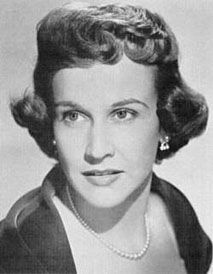
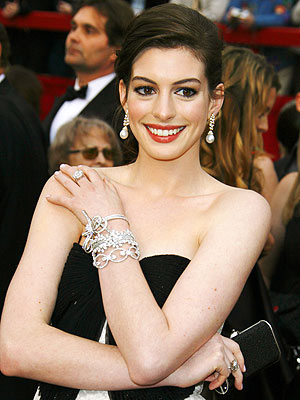
Bio photo gallery:

F. Van Wyck Mason; Howard Fast; Stubby Kaye; Jonathan Winters; Demi Moore and Leonardo DiCaprio

http://content.answers.com/main/content/wp/en/3/3e/VanWyckMason1945.jpghttp://www.identitytheory.com/idgraphics/zinn_03_2.jpghttp://www.what-a-character.com/miniphotos/982798229.jpg
http://media.npr.org/nprholidays/holiday2004/jwinters/winters200.jpghttp://www.askmen.com/specials/2005_top_99/celebs/75_demi_moore.jpghttp://www.hotelchatter.com/files/admin/leonardo_dicaprio.jpg
0 Replies
 
Letty
 
  1  
Reply Sun 11 Nov, 2007 02:24 pm
Thank you, Raggedy. I have been a bit swept away today because of the salute to the veterans. It's a passion that I feel and cannot allay. Once again you have done a magnificient collage, PA

I need to re read Bob's bio on F. Van Wyck Mason, however.

Without a doubt, Jonathan Winters is one of the funniest men I have ever watched on film. My friend Bob, a WWII veteran himself, met him. It is interesting to know that he is still alive after all these years.

Demi Moore is a lovely woman, but not one of my favorite actresses. Trying to watch her in the remake of The Scarlet Letter, was awful. Then I found that she had never read the novel.

Recently saw Leonardo DiCaprio in Blood Diamond. It was excellent.

Stubby Kaye was hilarious in Guys and Dolls, folks. This song by him is tongue in cheek of course, and a mite long but I think all of us will enjoy it.

NICELY-NICELY:
I dreamed last night I got on the boat to Heaven
And by some chance I had brought my dice along,
And there I stood, and I hollered,
"Someone fade me,"
But the passengers they knew right from wrong
For the people all said,
"Sit down, sit down you're rockin' the boat."

People all said,
"Sit down, sit down you're rockin' the boat."
"And the devil will drag you under
By the sharp lapel of your checkered coat;
Sit down, sit down, sit down, sit down
Sit down you're rocking the boat."

I sailed
Away on that little boat to Heaven
And by some chance found a bottle in my fist,
And there I stood,
Nicely passin' out the whiskey,
But the passengers were bound to resist

For the people all beware
You're on a heavenly trip."
People all said, "beware!"
"Beware you'll scuttle the ship;

And the devil will drag you under
By the fancy tie 'round your wicked throat;
Sit down,
Sit down, sit down, sit down,
Sit down you're rockin' the boat."


I laughed at those passengers to Heaven
Ah, ah, ah, ah!
A great big wave came and washed me overboard,
And as I sank, and I hollered,
"Someone save me,"
That's the moment I woke up, thank the Lord!


"Sit down you're rocking the boat."
Said to myself, "Sit down"
Said to himself, "Sit down"
"Sit down you're rocking the boat
And the devil will drag you under
With a soul so heavy you'd never float,
Sit down
Sit down, sit down, sit down, sit down,
Sit down you're rockin' the boat-
Sit down you're rockin'
Rockin' the boat
Sit down you're rockin'
Rockin' the boat
Sit down you're rockin'
Rockin' the boat
Sit down you're rockin'
Rockin' the boat...
Sit down, you Sit down you're the boat!"
0 Replies
 
edgarblythe
 
  1  
Reply Sun 11 Nov, 2007 06:21 pm
I know where I'm going, and I know who's going with me
I know who I love , and I know who I will marry
I need no robes of silk, nor shoes of fine green leather
As long as she is with me, when we stroll across the heather

Feather beds are soft and painted rooms are bonny
But I know she'd leave them all, for her loving winsom Johnny
All her wit and grace, like a starry cluster shine
Giving light and beauty to this simple soul of mine

I know where I'm going, and I know who's going with me
And I know who I love and the Dear knows who I'll marry

Harry Belafonte
I know Where I'm Going
0 Replies
 
Letty
 
  1  
Reply Sun 11 Nov, 2007 06:33 pm
More synchronicity, edgar. I just read about your experience in Nam. I really had no idea about you or your brothers.

Thanks, for the song by Harry, Texas. Love the line "..as long as she is with me when we stroll across the heather..." I still have a lovely heather plant right in my den.

If we may continue with the salute to Veteran's Day, folks.

First, a bit of history behind the song.

The music to the hymn is believed to have originated in the comic opera Geneviéve de Brabant composed by the French composer Jacques Offenbach. Originally written as a two-act opera in 1859, Offenbach revised the work, expanding it to three acts in 1867. This revised version included the song "Couplets des Deux Hommes d'Armes" and is the musical source of The Marines' Hymn.

The author of the words to the hymn is unknown. One tradition suggested that an unknown Marine wrote the words in 1847. This would have been 20 years before the music was written by Offenbach and is not likely. The first two lines of the first verse were taken from words inscribed on the Colors of the Corps.

After the war with the Barbary pirates in 1805 the Colors were inscribed with the words "To the Shores of Tripoli." After Marines participated in the capture of Mexico City and the Castle of Chapultepec (also known as the Halls of Montezuma) in 1847, the words on the Colors were changed to read "From the shores of Tripoli to the Halls of Montezuma." The unknown author of the first verse of the hymn reversed this order to read "From the halls of Montezuma to the shores of Tripoli."

For the leathernecks.

THE MARINES' HYMN

From the Halls of Montezuma
To the shores of Tripoli
We fight our country's battles
In the air, on land and sea.

First to fight for right and freedom
And to keep our honor clean;
We are proud to claim the title of
United States Marine.

Our flag's unfurled to every breeze
from dawn to setting sun.
We have fought in every clime and place,
where we could take a gun.

In the snow of far off northern lands
and in sunny tropic scenes,
You will find us always on the job,
The United States Marines.

Here's health to you and to our Corps
which we are proud to serve.
In many a strife we've fought for life
and never lost our nerve.

If the Army and the Navy ever look on heaven's scenes,
they will find the streets are guarded by
United States Marines.
0 Replies
 
edgarblythe
 
  1  
Reply Sun 11 Nov, 2007 06:41 pm
Somehow, I missed this. Hank's song, The Wild Side of Life, is a favorite of mine.

Country Singer Hank Thompson Dies at 82
By MATT CURRY Associated Press Writer
Nov 7th, 2007 | DALLAS -- Hank Thompson, who mixed honky-tonk and Western swing on such hits as "A Six Pack to Go" and "The Wild Side of Life," has died. The country singer and bandleader was 82.

Thompson died of lung cancer late Tuesday at his home in the Fort Worth suburb of Keller, said spokesman Tracy Pitcox, who is also president of Heart of Texas Records. He died just days after canceling his tour and announcing his retirement.

"He was battling aggressive lung cancer," Pitcox said Wednesday in a statement. "He remained conscious until the last couple of hours and passed away peacefully at about 10:45 p.m. on Tuesday night surrounded by his friends and family."

The last show Thompson played was Oct. 8 in his native Waco. That day was declared "Hank Thompson Day" by Gov. Rick Perry and Waco Mayor Virginia DuPuy.

Fans loved Thompson's distinctive voice and his musical style, which drew on the Western swing first developed in the 1930s by fellow Texan Bob Wills. Thompson was named to the Country Music Hall of Fame in 1989.

His first hit record was "Whoa, Sailor" in 1946. That year, he started a band called the Brazos Valley Boys, which won Billboard magazine's touring band of the year award 14 consecutive times.

Thompson had 29 hits reach the top 10 between 1948 and 1975. Some of his most famous songs include "Humpty Dumpty Heart" and "A Six Pack to Go." Among others: "Waiting in the Lobby of Your Heart," "Broken Heart and a Glass of Beer"; and "Cat Has Nine Lives." He wrote many of the songs himself, including "Whoa, Sailor."

His "The Wild Side of Life," which reached No. 1 in 1952, inspired a famous "answer song" written by J.D. Miller, "It Wasn't God Who Made Honky Tonk Angels." Recorded by Kitty Wells, the song was the first No. 1 hit by a woman soloist on the country music charts and made Wells a star.

Thompson's song was about a guy who'd lost his wife when she left him "and went back to the wild side of life." The song says, "I didn't know God made honky-tonk angels."

"It wasn't God who made honky-tonk angels, as you said in the words of your song," sang Wells, who worked with Thompson for many years. "Too many times married men think they're still single, that has caused many a good girl to go wrong."

Wells, 88, said Wednesday she never took Thompson's tune personally and didn't record the response for personal reasons.

"It was just a song," she said from her Nashville home.

The two hits were both on the charts at the same time.

"I think mine kind of helped his record, and his helped mine," she said.

Thompson's death was the country music world's second big loss in as many weeks. Porter Wagoner, the Grand Ole Opry star who helped launch the career of Dolly Parton, died Oct. 28 at age 80.

Thompson grew up a fan of Gene Autry, which fueled his love of the guitar. By the time he finished high school, he was playing on a local radio show in Waco, where he was featured as "Hank the Hired Hand."

He served in the Navy, and studied electrical engineering at Southern Methodist University, the University of Texas and Princeton.

Thompson considered a career in engineering, but remained in show business. He caught the attention of Tex Ritter, who helped him get a contract with Capitol Records.

Pitcox said Thompson requested that no funeral be held.

A "celebration of life," open to fans and friends, will be held Nov. 14 at Billy Bob's Texas, a Fort Worth honky-tonk.

Survivors include his wife, Ann. He had no children.
0 Replies
 
Letty
 
  1  
Reply Sun 11 Nov, 2007 07:22 pm
Great background on Hank, edgar. Wow! he studied engineering? and I also noted that he served in the navy.

http://www.hillbillyhits.com/Photos/Hank%20Thompson1a.jpg

Here's one that I love by Hank.


Many months have come and gone since I wandered from my home
In those Oklahoma Hills where I was born
Many a page of life has turned many a lesson I have learned
Yet I feel like in those hills I still belong

Way down yonder in the Indian nation I rode my pony on the reservation
In the Oklahoma Hills where I was born
A-way down yonder in the Indian nation a cowboy's life is my occupation
In the Oklahoma Hills where I born

But as I sit here today many miles I am away
From the place I rode my pony through the draw
Where the Oak and Blackjack trees kiss the playful prairie breeze
In those Oklahoma Hills where I was born.

Way down yonder in the Indian nation I rode my pony on the reservation
[these lyrics are found on http://www.songlyrics.com]
In the Oklahoma Hills where I was born
A-way down yonder in the Indian nation a cowboy's life is my occupation
In the Oklahoma Hills where I born

As I turn life a page to the land of the great Osage
To those Oklahoma Hills where I was born
Where the black oil rolls and flows and the snow-white cotton grows
In those Oklahoma Hills where I was born.

Way down yonder in the Indian nation I rode my pony on the reservation
In the Oklahoma Hills where I was born
A-way down yonder in the Indian nation a cowboy's life is my occupation
In the Oklahoma Hills where I born
0 Replies
 
Letty
 
  1  
Reply Sun 11 Nov, 2007 08:30 pm
The time has come to say goodnight. It's been a long but satisfying day.

NIGHTFALL

Let me sleep. The day is past,
And the folded shadows keep
Weary mortals safe and fast.
Let me sleep.

I am all too tired to weep
For the sunlight of the Past
Sunk within the drowning deep.

Treasured vanities I cast
In an unregarded heap.
Time has given rest at last.
Let me sleep.

R.F. Murray

Goodnight, my friends
From Letty with love
0 Replies
 
edgarblythe
 
  1  
Reply Mon 12 Nov, 2007 05:54 am
Someone to care,
Someone to share,
Lonely hours
And moments of despair,

To be loved, to be loved!
Oh, what a feeling,
To be loved!

Someone to kiss,
Someone to miss,
When you're away
To hear from each day.

To be loved, to be loved!
Oh, what a feeling,
To be loved!

Some wish to be a king or a queen,
Some wish for fortune and fame,
But to be truly, truly, truly loved
Is more than all of these things!

Someone to kiss,
Someone to miss,
When you're away
To hear from each day.

To be loved, to be loved
Oh, what a feeling,
To be loved

Jackie Wilson
0 Replies
 
Letty
 
  1  
Reply Mon 12 Nov, 2007 06:45 am
Good morning, WA2K listeners and contributors.

edgar, Jackie knows what is important, right?

Thinking of a Latin lover today. (not you, soccer George. Razz )

From Linda to Antonio.

Desperado

Desperado, why don't you come to your senses?
You been out ridin' fences for so long now.
Oh you're a hard one,
But I know that you've got your reasons,
These things that are pleasin' you,
Can hurt you somehow.

Don't you draw the queen of diamonds boy,
She'll beat you if she's able,
The queen of hearts is always your best bet,
Now it seems to me some fine things
Have been laid upon you table,
But you only want the ones that you can't get.

Desperado, oh you ain't gettin' no younger,
Your pain and your hunger they're drivin' you home,
And freedom, well that's just some people talkin',
Your prison is walkin' through this world all alone.

Don't your feet get cold in the wintertime?
The sky won't snow and the sun won't shine,
It's hard to tell the nighttime from the day.
You're losing all your highs and lows,
Ain't it funny how the feelin' goes away?

Desperado, why don't you come to your senses?
Come down from your fences, open the gate.
It may be rainin',
But there's a rainbow above you,
You gotta let somebody love you, (Let somebody love you)
You better let somebody love you,
Before it's too late.
0 Replies
 
bobsmythhawk
 
  1  
Reply Mon 12 Nov, 2007 10:22 am
Alexander Borodin

Alexander Porfiryevich Borodin (Russian: Александр Порфирьевич Бородин, Aleksandr Porfir'evič Borodin) (31 October/12 November 1833 - 15 February/27 February 1887) was a Russian composer of Georgian parentage who made his living as a notable chemist. He was a member of the group of composers called The Five (or "The Mighty Handful"), who were dedicated to producing a specifically Russian kind of art music[1] [2] [3]. He is best known for his symphonies, his opera Prince Igor, and for later providing the musical inspiration for the musical Kismet.


Life and profession

Borodin was born in Saint Petersburg, the illegitimate son of a Georgian noble (Saeklesio Aznauri, Baron-Vidam), Luka Simonis dze Gedevanishvili, who had him registered instead as the son of one of his serfs, Porfiry Borodin. As a boy he received a good education, including piano lessons, but he was eventually to earn a doctorate in medicine at the Medico-Surgical Academy, the later home to Ivan Pavlov, and to pursue a career in chemistry (just as his comrade César Cui would do in the field of military fortifications). As a result of his work in chemistry and difficulties in his home-life, Borodin was not as prolific in writing music as many of his contemporaries were - hence his own description of himself as a "Sunday composer." He died during a festive ball, where he was participating with much vigor; he suddenly collapsed from heart failure. He was interred in Tikhvin Cemetery at the Alexander Nevsky Monastery, in St. Petersburg, Russia.


Chemical career

In his chemical profession Borodin gained great respect, being particularly noted for his work on aldehydes[4]. Between 1859 and 1862 Borodin held a postdoctorate in Heidelberg. He worked in the laboratory of Emil Erlenmeyer working on benzene derivatives. He also spent time in Pisa, working on organic halogens. One experiment published in 1862 described the first nucleophilic displacement of chlorine by fluorine in benzoyl chloride[5]. A related reaction known to the west as the Hunsdiecker reaction published in 1939 by the Hunsdieckers was promoted by the Soviet Union as the Borodin reaction. In 1862 he returned to the Medico-Surgical Academy. There he worked on the selfcondensation of small aldehydes with publications in 1864 and 1869 and in this field he found himself competing with August Kekulé.

Borodin is also credited with the discovery of the Aldol reaction together with Charles-Adolphe Wurtz. In 1872 he announced to the Russian Chemical Society the discovery of a new by-product in aldehyde reactions with properties like that of an alcohol and he noted similarities with compounds already discussed in publications by Wurtz from the same year.

He published his last full article in 1875 on reactions of amides and his last publication concerned a method for the identification of urea in animal urine.

His son-in-law and successor was fellow chemist A. P. Dianin.


Musical avocation

As regards the significant factors of his avocational life in music, Borodin met Mily Balakirev in 1862, when under his tutelage in composition he began his Symphony No. 1 in E-flat Major, which was first performed in 1869, with Balakirev conducting. In that same year Borodin started on his Symphony No. 2 in B Minor, which was not particularly successful at its premiere in 1877 under Eduard Nápravník), but with some minor re-orchestration received a successful performance in 1879 by the Free Music School under Rimsky-Korsakov's direction.

In 1869, Borodin became distracted from initial work on the second symphony by preoccupation with the opera Prince Igor, which is seen by some to be his most significant work and one of the most important historical Russian operas. It contains the Polovetsian Dances, which are often performed as a stand-alone concert work as probably Borodin's best known composition. Unfortunately Borodin left the opera (and a few other works) incomplete at his death. Prince Igor was completed posthumously by Nikolai Rimsky-Korsakov and Alexander Glazunov.

Other well-known compositions by Borodin include the popular symphonic poem In the Steppes of Central Asia and the second of two string quartets (in D Major), in which the composer's strong lyricism is represented in the popular "Nocturne" movement.

In 1882, Borodin began composing a third symphony, but left it unfinished at his death; two movements of it were later completed and orchestrated by Glazunov. Among Borodin's other works there are several art songs, piano pieces (notably the Petite Suite), and other chamber music (notably a cello sonata based on a theme from Bach's Sonata No.1 in G minor, BWV 1001).


Musical legacy

Borodin's fame outside the Russian Empire was made possible during his lifetime by Franz Liszt, who arranged a performance of the Symphony No. 1 in Germany in 1880, and by Comtesse de Mercy-Argenteau in Belgium and France. His music is noted for its strong lyricism and rich harmonies. Along with some influences from Western composers, as a member of the The Five his music exudes also an undeniably Russian flavor. His passionate music and unusual harmonies proved to have a lasting influence on the younger French composers Claude Debussy and Maurice Ravel (in homage, the latter composed in 1913 a piano piece entitled "À la manière de Borodine").

The evocative characteristics of Borodin's music made possible the adaptation of his compositions in the 1953 musical Kismet, by Robert Wright and George Forrest, perhaps most notably in the song, Stranger In Paradise. In 1954, Borodin was posthumously awarded a Tony Award for this show. It will be produced in June/July 07 in London for the first time in nearly 50 years by English National Opera at the London Coliseum.


Related information

The Borodin String Quartet was named in his honour.
The chemist Alexander Shulgin uses the name "Alexander Borodin" as a fictional persona in the books PiHKAL and TiHKAL.
0 Replies
 
bobsmythhawk
 
  1  
Reply Mon 12 Nov, 2007 10:29 am
Jo Stafford
From Wikipedia, the free encyclopedia


Background information

Birth name Jo Elizabeth Stafford
Born November 12, 1917 (1917-11-12) (age 90), Coalinga, California, United States
Genre(s) Traditional Pop
Years active 1930s-1977 (until 1944, as part of vocal groups)
Label(s) Capitol, Columbia, Dot, Corinthian
Website Jo Stafford bio presented by Corinthian Records
Jo Stafford (born Jo Elizabeth Stafford November 12, 1917, in Coalinga, California) is an American pop singer whose career spanned the late 1930s through the early 1960s. Stafford is greatly admired for the purity of her voice and is considered one of the most versatile vocalists of the era. She is also viewed as a pioneer of modern musical parody, having won a Grammy Award for Best Comedy Album in 1961 (with husband Paul Weston) for their album Jonathan and Darlene Edwards in Paris.


Early years

Stafford was born to Grover Cleveland Stafford and Anna York Stafford, a distant cousin of Sergeant Alvin York. Originally, she wanted to become an opera singer and studied voice as a child. However, because of the economic Great Depression, she abandoned that idea and joined her sisters Christine and Pauline in a popular vocal group, "The Stafford Sisters," which performed on Los Angeles radio station KHJ.


The Pied Pipers

When her sisters married, the group broke up and Stafford joined a new vocal group, The Pied Pipers. This group consisted of eight members: John Huddleston (who was Stafford's husband at the time), Hal Hooper, Chuck Lowry, Bud Hervey, George Tait, Woody Newbury, and Dick Whittinghill, besides Stafford. The group became very popular, working on local radio and movie soundtracks, and caught the attention of two of Tommy Dorsey's arrangers, Axel Stordahl and Paul Weston.

In 1938, Weston persuaded Dorsey to sign The Pied Pipers for his radio show, and they went to New York for a broadcast date. Dorsey liked them enough to sign them for ten weeks, but after the second broadcast the sponsor heard them and disliked them, firing the group. They stayed in New York for three months, but landed only a single job that paid them just $3.60 each, though they did record four sides for RCA Victor Records.

Half the members of the Pied Pipers returned to Los Angeles, but they had a difficult time trying to make a living until they got an offer from Dorsey to join his big band in 1939. This led to success for the whole group, but especially for Stafford, who was also featured in solo performances. The group also backed Frank Sinatra in some of his early recordings.

In 1942, the group had an argument with Dorsey and left, but in 1943 it became one of the first groups signed to Johnny Mercer's new label, Capitol Records. Capitol's music director was the same Paul Weston who had been instrumental in introducing Stafford to Dorsey. Weston and Stafford married in 1952. They went on to have two children, Tim and Amy.


Solo career

In 1944, Stafford left the Pied Pipers to go solo. Her tenure with the USO, in which she gave countless performances for soldiers stationed overseas, acquired her the nickname "GI Jo."

Beginning in 1944, she hosted the Tuesday and Thursday broadcasts of an NBC musical variety radio program ?- the Chesterfield Supper Club.

In 1948 Stafford and Gordon MacRae had a million-seller with their version of "Say Something Sweet to Your Sweetheart" and in 1949 repeated their success with "My Happiness".

In 1950, she left Capitol for Columbia Records, then returning to Capitol in 1961. At Columbia, she was the first recording artist to sell twenty-five million records. During her second stint at Capitol, Stafford also recorded for Frank Sinatra's Reprise label. These albums were released between 1961 and 1964, and were mostly retrospective in nature. Stafford left the label when Sinatra sold it to Warner Bros.

In the 1950s, she had a string of popular hits with Frankie Laine, six of which charted; their duet of Hank Williams' "Hey Good Lookin'" making the top ten in 1951. It was also at this time that Stafford scored her best known hits with huge records like "Jambalaya," "Shrimp Boats," "Make Love to Me," and "You Belong to Me". The last song was Stafford's all-time biggest hit, topping the charts in both the United States and the United Kingdom (the first song by a female singer to top the UK chart).


Comedy career

Stafford briefly experimented with comedy under the name "Cinderella G. Stump" with Red Ingle and the Natural Seven. True success in the comedy genre, though, would come about almost accidentally.

Throughout the 1950s, Stafford and Paul Weston would entertain guests at parties by putting on a skit in which they assumed the identities Jonathan and Darlene Edwards, a bad lounge act. Stafford, as Darlene, would sing off-key in a high pitched voice; Weston, as Jonathan, played an untuned piano off key and with bizarre rhythms.

Finding that she had time left over following a 1957 recording session, Stafford, as a gag, recorded a track as Darlene Edwards. Those who heard bootlegs of the recording responded positively, and later that year, Stafford and Weston recorded an entire album of songs as Jonathan and Darlene, entitled Jo Stafford and Paul Weston Present: The Original Piano Artistry of Jonathan Edwards, Vocals by Darlene Edwards.

As a publicity stunt, Stafford and Weston claimed that the Edwardses were a New Jersey lounge act that they had discovered, and denied any personal connection; much time would pass before people realized (and Stafford and Weston admitted) that they were in fact the Edwardses. Jonathan and Darlene Edwards pseudonyms for legendary big band director and arranger and his singing icon wife, featured their slaughtered renditions of pop standards. The albums set the industry on its ear and became hilarious musts for every party and get together where serious music lovers appreciated the difficulty of the task at hand.

The album was a commercial and critical success. The couple continued releasing Jonathan and Darlene albums, with their 1961 album, Jonathan and Darlene Edwards in Paris winning that year's Grammy Award for Best Comedy Album (they "tied" with Bob Hope, as the Grammys decided, in a rare move, to issue two comedy awards that year. Hope was given an award for "Spoken Word Comedy.") It was the only major award that Stafford ever won.

The couple continued to release Jonathan and Darlene albums for several years, and in 1977 released a final, one-off single, a cover of The Bee Gees' "Stayin' Alive" backed with "I Am Woman." The same year also saw a brief resurgence in the popularity of Jonathan and Darlene albums, when their cover of "Carioca" was featured as the opening and closing theme to The Kentucky Fried Movie.

Today, the Jonathan and Darlene albums are seen as an important step in musical comedy, and some see them as the predecessors to parody comedians such as "Weird Al" Yankovic.


Retirement

In 1966, Stafford went into semi-retirement, retiring completely from the music business in 1975. Except for the 1977 Jonathan and Darlene Edwards version of "Stayin' Alive," Stafford wouldn't perform again until 1990, at a ceremony honoring Frank Sinatra.

Stafford won a breach-of-contract lawsuit against her former record label in the early 1990s, which won her the rights to all of her old recordings, including the Jonathan and Darlene recordings. Following the lawsuit, Stafford, along with son Tim, reactivated the Corinthian Record label which began life as a religious label the deeply religious Paul Weston had started. With Paul Weston's help, she compiled a pair of Best of Jonathan and Darlene albums, which were released in 1993. In 1996, Paul Weston died of natural causes. As of 2005, Stafford continues to operate Corinthian Records. In 2006, she donated her library and her husband's to the University of Arizona. As of March 12th 2007 there is an internet campaign in the UK to get 'No Other Love' into the top 40 of the UK singles chart.
0 Replies
 
bobsmythhawk
 
  1  
Reply Mon 12 Nov, 2007 10:32 am
Kim Hunter
From Wikipedia, the free encyclopedia

Birth name Janet Cole
Born November 12, 1922(1922-11-12)
Detroit, Michigan, U.S.
Died September 11, 2002 (aged 79)
New York, New York, U.S.
Spouse(s) William Baldwin (1944-1946)
Robert Emmett (1951-2000)
[show]Awards
Academy Awards
Best Supporting Actress
1951 A Streetcar Named Desire
Golden Globe Awards
Best Supporting Actress - Motion Picture
1952 A Streetcar Named Desire

Kim Hunter (November 12, 1922 - September 11, 2002) was an Academy Award-winning American film and stage actress.


Early life

Hunter was born Janet Cole in Detroit, Michigan, the daughter of Donald Cole and Grace Lind. She attended Miami Beach High School.


Career

Hunter performed in the original Broadway production of A Streetcar Named Desire (1947), playing the role of Stella Kowalski. She appeared in the 1951 film, for which she won both the Oscar for Best Supporting Actress and the Golden Globe Award for Best Supporting Actress - Motion Picture.

She appeared opposite Mickey Rooney in the 1957 live broadcast of The Comedian, a harrowing drama written by Rod Serling and directed by John Frankenheimer.

She was blacklisted from film and television during the Hollywood communism paranoia created by McCarthyism.


Kim Hunter playing the ape scientist Zira in Planet of the ApesHer other major film roles include David Niven's love interest in the classic film A Matter of Life and Death (1946), and Zira the chimpanzee scientist in the first three of the Planet of the Apes series. She also appeared in several soap operas, most notably as Nola Madison on The Edge of Night, for which she received a Daytime Emmy Award nomination in 1980 as Best Actress. She also starred in several episodes of the CBS Radio Mystery Theater in the mid seventies.

For her contribution to the motion picture industry, Kim Hunter has a star on the Hollywood Walk of Fame at 1617 Vine Street and a second star at 1715 Vine Street.


Death

In 2002, Kim Hunter died of cardiac arrest in New York City at the age of 79.
0 Replies
 
bobsmythhawk
 
  1  
Reply Mon 12 Nov, 2007 10:43 am
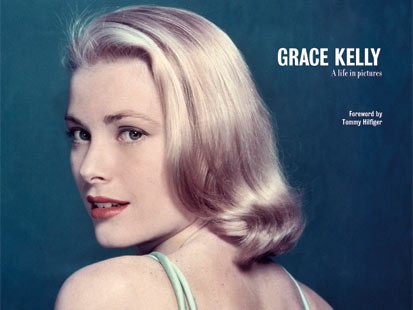
Grace Kelly
From Wikipedia, the free encyclopedia


Grace Kelly
Born November 12, 1929(1929-11-12)
Philadelphia, Pennsylvania, U.S.
Died September 14, 1982 (aged 52)
Monte Carlo, Monaco
Consort April 19, 1956-September 14, 1982
Consort to Rainier III
Issue Caroline, Princess of Hanover
Albert II of Monaco
Princess Stéphanie
Royal House Grimaldi
Father John B. Kelly, Sr.
Mother Margaret Katherine Majer

Grace, Princess of Monaco née Grace Patricia Kelly (November 12, 1929 - September 14, 1982) was an Academy Award-winning American film and stage actress who, upon marriage to Rainier III, Prince of Monaco in 1956, became Her Serene Highness The Princess of Monaco, but was generally known as Princess Grace of Monaco. Princess Grace maintained dual American and Monegasque citizenship after her marriage. The principality's current Sovereign Prince, Albert II is the son of Prince Rainier and Princess Grace. The American Film Institute ranked Kelly #13 amongst the Greatest Female Stars of All Time.


Family

Grace Patricia Kelly was born in Philadelphia, Pennsylvania, where she grew up in the East Falls section, the third of four children to John Brendan Kelly, Sr., also known as Jack Kelly, and Margaret Katherine Majer Kelly. Grace's siblings, in order of age, were Peggy, John Jr., and Lizzane. Her father was one of ten children of John Henry Kelly (1847-1897) and Mary Costello in an Irish American Catholic family (originally from Kidney Lake, Newport, County Mayo, Ireland). Already a local hero as a triple Olympic-gold-medal-winning sculler at a time when the sport of rowing was most popular, John Kelly's brick business grew to become the largest on the East Coast. The self-made millionaire and his family were introduced to Philadelphia society. Mr. Kelly's large family included two uncles prominent in the arts: Walter Kelly, a vaudevillian, and George Kelly, a Pulitzer Prize-winning playwright, who outside of Grace was assiduously looked down upon by the family because of his homosexuality.[1]

In 1935, John Kelly ran for mayor of Philadelphia, losing by the closest margin for any Democrat in Philadelphia. He later served on the Fairmount Park Commission. During World War II, President Franklin D. Roosevelt appointed him National Director of Physical Fitness, a post that allowed Kelly to use his fame to promote the virtues of physical fitness.

Grace's mother, born to Lutheran German parents (Carl Majer and Margaretha Berg), converted to Catholicism upon marrying Mr. Kelly. Like her husband, Margaret Kelly was a proponent of health and fitness, studying Physical Education at Temple University, and later becoming the first woman to head the Physical Education Department at the University of Pennsylvania.

John B. Kelly, Jr., Grace's brother, followed in the family's athletic tradition: his rowing exploits were well chronicled. He won the James E. Sullivan Award in 1947 as the top amateur athlete in the country. As a wedding gift, John, Jr., gave his sister his bronze medal from the 1956 Summer Olympics. Kelly Drive in Philadelphia is named for John, Jr., who was a city councilman there.


Acting career

Grace Kelly
Birth name Grace Patricia Kelly
Born November 12, 1929(1929-11-12)
Philadelphia, Pennsylvania, U.S..
Died September 14, 1982 (aged 52)
Monte Carlo, Monaco
Spouse(s) Rainier III of Monaco
[show]Awards
Academy Awards
Best Actress
1954 The Country Girl
Golden Globe Awards
Best Actress - Motion Picture Drama
1955 The Country Girl

Best Supporting Actress - Motion Picture
1954 Mogambo


Grace Kelly's choice of career was reflected in her childhood experiences. While attending the prestigious Ravenhill Academy, Grace modeled fashions at local social events with her mother and sisters. She gained her first acting experience at the age of 12, when she played a lead role in Don't Feed the Animals, a play produced by the Old Academy Players in East Falls.[1] During high school, she acted and danced, graduating from Stevens School, a small private school in a mansion on Walnut Lane in Germantown, Philadelphia, in May 1947. Her graduation yearbook listed her favorite actress as Ingrid Bergman; her favorite actor, Joseph Cotten; her favorite summer resort, Ocean City; her favorite drink, a black and white chocolate milkshake; her favorite piece of classical music, Debussy's "Clair de Lune"; her favorite orchestra, Benny Goodman; and her favorite female singer, Jo Stafford. Written in the "Stevens' Prophecy" section was, "Miss Grace P. Kelly - a famous star of stage and screen."


Theater

Upon her rejection by Bennington College in July 1947 on account of her low mathematics scores (to the dismay of her mother), Grace decided to pursue her dreams of a career in the theater, using a scene from her uncle's play, Torchbearers, for an audition into the American Academy of Dramatic Arts in New York. Although the school had already selected its quota for the semester, Grace wangled an interview with Emile Diestel, the school's admission officer. Notable talents including Katharine Hepburn, Lauren Bacall, Gene Tierney, and Spencer Tracy had all studied there. Living in Manhattan's Barbizon Hotel for Women, a prestigious establishment which barred men from entering after 10 p.m., and working as a model to support her studies, Grace began her first term the following October. A diligent student, she would use a recorder to practice and perfect her speech. Her early acting pursuits led her to the stage, most notably a Broadway debut in Strindberg's The Father alongside Raymond Massey. At 19, her graduation performance was in The Philadelphia Story, a role with which she would also end her film career.

Kelly caught the eye of television producer Delbert Mann, who cast her as Bethel Maraday in her first of nearly 60 live television programs. Success on television eventually brought her a role in a major , Kelly made her film debut in a small role in the 1951 film Fourteen Hours. The small role led to many offers, all of which she turned down for independence and another chance at the theater. She was performing in Colorado's notable Elitch Gardens when she received a telegram from Hollywood producer Stanley Kramer, offering her the starring role opposite Gary Cooper in High Noon. According to biographer Wendy Leigh, at age 22 Kelly had an off-set romance with both Cooper and director Fred Zinnemann. High Noon would go to be a popular film of the 1950s.


Actress for MGM

In September 1952, Grace was flown to Los Angeles by MGM to audition for the role of Linda Nordley in the studio's production of Mogambo. Gene Tierney was initially cast in the role, but dropped out at the last minute due to her emotional problems. Kelly won the role along with a 7 year contract, although she was hired at a relatively low salary of $850 a week. Kelly signed the deal under two conditions: First, one out of every two years, she have time off to work in the theater and second, that she be able to live in New York City. Just two months later, in November, the cast arrived in Nairobi to begin production. She later told famed Hollywood columnist Hedda Hopper, "Mogambo had three things that interested me. John Ford, Clark Gable, and a trip to Africa with expenses paid. If Mogambo had been made in Arizona, I wouldn't have done it."[2] Critics praised Grace's patrician beauty, despite receiving third billing. The role garnered her a Golden Globe Award for Best Supporting Actress and her first Academy Award nomination for Best Supporting Actress.

After the heightened success of Mogambo, Grace starred in a TV play The Way of an Eagle, with Jean-Pierre Aumont before being cast in the film adaptation of Frederick Knott's Broadway hit Dial M for Murder. Alfred Hitchcock was slated to direct the film and would become one of Kelly's last mentors. Hitchcock also took full advantage of Kelly's virginal beauty on-camera. In a scene in which her character Margot Wendice is nearly murdered, a struggle that breaks out between her and her would-be-killer Tony Dawson clearly accentuates her curves and statuesque figure,[citation needed] which is closely hugged by a flimsy nightgown as she kicks her legs and flails her arms attempting to fight off her killer. Dial M for Murder opened in theaters in May 1954 to both positive reviews and box-office triumph. The role of Margot Wendice was a beginning for Grace as a poised and confident role-playing actress.

Grace began filming scenes for her next film, The Bridges at Toko-Ri, in January 1954 with William Holden. The role of Nancy, the cordially wretched wife of naval officer Harry (played by Holden), proved to be a minor but pivotal part of the story. Released in January 1955, The New Yorker wrote of Kelly and Holden's unbridled onscreen chemistry, taking note of Grace's performance on part "with quiet confidence."

In October 1954 Grace received a telegram that Alfred Hitchcock had scheduled her a wardrobe fitting with Edith Head, arguably Hollywood's most premier and elite costume designer, for the director's next film, Rear Window. In going forth with the role of Lisa Fremont, Grace unhesitatingly turned down the opportunity to star alongside Marlon Brando in On the Waterfront, which won her replacement, Eva Marie Saint, an Academy Award. "All through the making of Dial M for Murder, he [Hitchcock] sat and talked to me about Rear Window all the time, even before we had discussed my being in it."[3] Much like the shooting of Dial M for Murder, Grace and Hitchcock shared a close bond of humor and admiration. Sometimes, however, minor strifes would emerge on set concerning the wardrobe.

"At the rehearsal for the scene in Rear Window when I wore a sheer nightgown, Hitchcock called for Edith Head. He came over here and said, 'Look, the bosom is not right, we're going to have to put something in there.' He was very sweet about it; he didn't want to upset me, so he spoke quietly to Edith. When we went into my dressing room and Edith said, 'Mr. Hitchcock is worried because there's a false pleat here. He wants me to put in falsies.' "Well, I said, 'You can't put falsies in this, it's going to show and I'm not going to wear them. And she said, 'What are we going to do?' So we quickly took it up here, made some adjustments there, and I just did what I could and stood as straight as possible - without falsies. When I walked out onto the set Hitchcock looked at me and at Edith and said, 'See what a difference they make?'"

Grace's new co-star, James Stewart, was highly enthused about working with Grace.[4] The role of Lisa Fremont, a wealthy Manhattan socialite and model, was unlike any of the previous women which she had played. For the very first time, she was an independent career woman. Stewart played a speculative photographer with a broken leg, bound to a wheelchair, who is curiously reduced to observing the happenings of tenants outside his window. Kelly is not seen until twenty-two minutes into the movie. Just as he had done earlier, Hitchcock provided the camera with a slow-sequenced silhouette of Kelly, along with a close-up of the two stars kissing and finally lingering closely on her profile. With the film's opening in October 1954, Kelly was yet again praised. Variety's film critic remarked on the casting, commenting about the "earthy quality to the relationship between Stewart and Miss Kelly. Both do a fine job of the picture's acting demands."

She was awarded the role of Bing Crosby's long-suffering wife in The Country Girl, after a pregnant Jennifer Jones bowed out. Already familiar with the play, Kelly was desperate for the part. This meant that, to MGM's dismay, she would have to be loaned out to Paramount. Kelly threatened the studio that she would pack her bags and leave for New York for good. The vanquished studio caved in, and the part was hers. The Country Girl was shot in black and white, surprising an audience that had become accustomed to seeing the blonde in technicolor.

The film also paired Kelly again with William Holden. The wife of a washed-up alcoholic singer, played by Crosby, Kelly's character is emotionally torn between two lovers. Holden willfully begs Kelly to leave her husband and be with him. A piece of frail tenderness manages to cloak itself inside of her, even after having been demonized by Crosby, describing "a pathetic hint of frailty in a wonderful glowing man. That appeals a lot to us. It did to me. I was so young. His weaknesses seemed touching and sweet, they made me love him more." The following March, Kelly would be honored with the Academy Award for Best Actress. Her character's modest appearance and the film's demanding scenes were a departure from her on-screen persona of the graceful heiress, which she embodied through her last role in High Society, the musical remake of The Philadelphia Story.

In April 1954, Kelly flew to Colombia for a brief 10 day shoot to film her next project, Green Fire, with Stewart Granger. Kelly plays Kathy Noland, an extremely small role as a coffee plantation owner. In Granger's autobiography he writes of his distaste for the film's script, while Kelly later confided to Hedda Hopper, "It wasn't pleasant. We worked at a pathetic village - miserable huts and dirty. Part of the crew got shipwrecked ... It was awful."[5] Green Fire was a critical and box-office failure.

After the back-to-back shooting of Rear Window, Toko-Ri, Country Girl, and Green Fire, Kelly was exhausted, and flew to France along with department store heir Bernard "Barney" Strauss, to begin work on her third and final film for Alfred Hitchcock, To Catch a Thief. Kelly formed a mutual admiration with her new co-star, Cary Grant. The two cherished the time together for the rest of their lives. Years later, when asked to name his all-time favorite actress, Cary replied without hesitation: "Well, with all due respect to dear Ingrid [Bergman], I much preferred Grace. She had serenity."[6] The fireworks scene has been the subject of much commentary, as Hitchcock subliminally peppers an undertone of sexual innuendo during the sequence. In the now famous speedy picnic drive, dressed in a peach and white dress, with her trademark white gloves, Kelly's real life fear of driving and her inability to properly function an automobile, are captured on film. The same long, spiraling strip of road would one day hurtle her to her death.

Though her film career lasted just five years and eleven films, Kelly is remembered as a premier actress in American film.


Marriage

In April 1955, Grace Kelly was asked to head the U.S. delegation at the Cannes Film Festival. While there, she was invited to participate in a photo session at the Palace of Monaco with Prince Rainier III, the ruling sovereign of the principality. After a series of delays and complications, Kelly was finally able to make it to Monaco, where she met the prince.

Upon returning to America, Grace began work on her next feature film, The Swan, in which she coincidentally portrayed a princess. Meanwhile, she was privately beginning a correspondence with Rainier. In December, Rainier came to America on a trip officially designated as a tour, although it was speculated that Rainier was actively seeking a wife. A 1918 treaty with France stated that if Rainier did not produce an heir, Monaco would revert to France. At a press conference in the United States, Rainier was asked if he was pursuing a wife, to which he answered "No". A second question was asked, "If you were pursuing a wife, what kind would you like?" Rainier smiled and answered, "I don't know?-the best." Rainier met with Grace and her family, and after three days, the prince proposed. Grace accepted and the families began preparing for what the press called "The Wedding of the Century". The wedding was set for April 19, 1956.

News of the engagement was a sensation even though it meant the possible end to Grace's film career. Industry professionals realized that it would have been an impracticality for her to continue acting and wished her well. Alfred Hitchcock had quipped that he was, "very happy that Grace has found herself such a good part."

Preparations for the wedding were elaborate. The Palace of Monaco was painted and redecorated throughout. The voyage of the American contingent to Monaco was an ordeal. On April 4, 1956, leaving from Pier 84 in New York Harbor, Grace, with her family, bridesmaids, poodle, and over eighty pieces of luggage boarded the ocean liner SS Constitution for the French Riviera. Some 400 reporters applied to sail, though most were turned away. Thousands of fans sent the party off for the 8 day voyage. In Monaco, more than twenty-thousand people lined the streets to greet the future princess.


Princess of Monaco

The wedding consisted of two ceremonies. On April 18, a 40-minute civil ceremony took place in the Palace Throne Room, and was broadcast across Europe. To cap the ceremony, the 142 official titles (counterparts of Rainier's) that Kelly acquired in the union were formally recited. The following day, the event concluded with the church ceremony at Monaco's Saint Nicholas Cathedral. Grace's wedding dress, designed by MGM's Academy Award-winning Helen Rose, had been worked on by three dozen seamstresses for six weeks. The 600 guests included Hollywood stars David Niven and his wife Hjordis, Gloria Swanson, Ava Gardner, the crowned head Aga Khan, and Conrad Hilton. Frank Sinatra initially accepted the invitation to attend, but at the last minute decided otherwise, afraid of upstaging the bride on her wedding day. Queen Elizabeth flatly refused to attend on the grounds of there being "too many movie stars."[citation needed] The ceremony was watched by an estimated 30 million people on television. The prince and princess left that night for their 7-week Mediterranean cruise honeymoon on Rainier's yacht, Deo Juvante II.


Children and family

Nine months and four days after the wedding, Princess Grace gave birth to the royal couple's first child, Princess Caroline. 21 guns announced the event, a national holiday was called, gambling ceased, and free champagne flowed throughout the principality. A little over a year later, 101 guns announced the birth of their second child, Prince Albert. Prince Rainier and Princess Grace had three children:

Hereditary Princess Caroline Louise Marguerite, born January 23, 1957, and now heiress presumptive to the throne of Monaco
Albert II, Prince of Monaco, born March 14, 1958, current ruler of the Principality of Monaco
Princess Stephanie Marie Elisabeth, born February 1, 1965.

Later years

Shortly after their marriage, Prince Rainier banned the screening of her films in Monaco.[7] Princess Grace never returned to acting, choosing rather to fulfill her responsibilities as the consort of Monaco's Prince. In 1962, when Hitchcock offered Grace the lead in his film, Marnie, she was eager to take the opportunity to return to the screen. Rainier consented, but public outcry against her involvement made her reconsider and ultimately reject the project. Director Herbert Ross attempted to lure Princess Grace out of retirement for his 1977 The Turning Point, but Prince Rainier quashed the idea. Later that year, Grace returned to the arts in a series of poetry readings on stage and the narration of the documentary The Children of Theater Street. As princess, she was active in improving the arts institutions of Monaco, and eventually the Princess Grace Foundation was formed to support local artisans. She was one of the first celebrities to support and speak on behalf of La Leche League, an organization that advocates breastfeeding; she planned a yearly Christmas party for local orphans, and dedicated a Garden Club that reflected her love of flowers.

In 1981, the Prince and Princess celebrated their 25th wedding anniversary.


Speculation and gossip on personal life

Grace Kelly was the object of tabloid speculation and gossip throughout her life. Her love life was a particular focus of speculation. Stories of affairs circulated from her first major role in motion pictures and eventually included the names of almost every major actor at the time.

Grace and the Shah of Iran became acquainted near the end of 1949 at the Waldorf-Astoria Hotel during the Shah's official visit to America. Grace's childhood friend (and later, her bridesmaid) Maree Frisby Rambo said in an interview with biographer Wendy Leigh that Kelly and the Shah had gone on at least six dates. The Shah had been the ruler of Iran since 1941, and was thirty years old at the time. The Shah besieged Kelly with vast amounts of jewelery including: a gold birdcage housing a diamond sapphire bird, a gold vanity case with a clasp set with thirty-two diamonds, and a gold bracelet with an intricate pearl and diamond face. Grace, however, had no intentions of marrying the Shah, and immediately sent the gifts back. She decided to keep the jewels and later presented the pieces to her bridesmaids as keepsakes on the eve of her wedding.[8] Despite the alleged brutality of the Shah's regime, Grace fiercely defended him until his death.[9]

During the making of Dial M for Murder, Kelly seduced her co-star Ray Milland; Milland was 24 years older than she, but just as charming and suave as he was when she swooned over him years earlier as a teenager watching The Lost Weekend. Milland was a married to Muriel Milland for thirty years, and the two had a son. Milland assured Kelly that he had left his wife, which she would later find out to have been a lie.[10] After Muriel Milland found out about the affair, she and Ray Milland separated, and Kelly was branded a homewrecker. Muriel Milland was one of the most popular wives in Hollywood, and had the support of many friends, including gossip columnist Hedda Hopper. After Kelly gave a press interview explaining her side of the story, the town seemed to lose interest in the scandal.

It was reported to the press that Grace Kelly and Bing Crosby met for the first time when they were introduced during the making of The Country Girl. This, however, was untrue. Sue Ladd, the widow of Alan Ladd, told Grace Kelly biographer James Spada that while Bing's then wife Dixie was battling terminal cancer, Bing and Grace had been trysting in the Ladds' home.[11] What Kelly didn't know was that by the time filming commenced on The Country Girl, Crosby had already been dating actress Kathryn Grant. Three days before the date scheduled for Crosby's marriage to Grant, he confessed to having had an affair with Grace Kelly, and that he no longer wished to marry her. Unbeknownst to Kelly, Bing had continued to express his love for Grant throughout their affair despite Kelly's determination to become Crosby's wife. Crosby later reconciled with Kathryn Grant and proposed to her once again, explaining to her that he had broken off the relationship with Grace Kelly.

In a 1960s interview, Kelly explained how she had grown to accept the scrutiny as a part of being in the public eye, but expressed concern for her children's exposure to such relentless scandalmongering. After her death, celebrity biographers chronicled the rumors with renewed enthusiasm.


Death

On September 13, 1982, while driving with her daughter Stephanie to Monaco from their country home, Princess Grace, then 52, suffered a stroke, causing her Rover P6[12] to plunge 100 feet down a mountainside. Princess Grace died the next day without regaining consciousness. It was initially reported that Princess Stephanie suffered only minor bruising, although it later emerged that she had suffered a serious cervical fracture.[13] It was rumored that she had been driving on the same stretch of highway that had been featured in her 1955 movie To Catch a Thief, although Kelly's son says that it was not.[14]

Princess Grace was buried in the Grimaldi family vault on September 18, 1982, after a requiem mass in Saint Nicholas Cathedral, Monaco.[15] Prince Rainier, who never remarried after Kelly's death, was buried alongside her following his death in 2005. The 400 guests at the service included representatives of foreign governments and of present and past European royal houses, as well as several veteran US film stars. Nearly 100 million people worldwide watched her funeral.[16]

In his eulogy, James Stewart said: "You know, I just love Grace Kelly. Not because she was a princess, not because she was an actress, not because she was my friend, but because she was just about the nicest lady I ever met. Grace brought into my life as she brought into yours, a soft, warm light every time I saw her, and every time I saw her was a holiday of its own. No question, I'll miss her, we'll all miss her, God bless you, Princess Grace."


Legacy

The Princess Grace Foundation was founded in 1964 with the aim of helping those with special needs for whom no provision was made within the ordinary social services. In 1983, following Princess Grace's death, Caroline, Princess of Hanover assumed the duties of President of the Board of Trustees of the Foundation. Albert II, Prince of Monaco is Vice-President.[17]

On June 18, 1984, Prince Rainier inaugurated a public rose garden in Monaco in Princess Grace's memory due to her passion for the flower.[18]

In 1993, Princess Grace became the first U.S. actress to appear on a U.S. postage stamp.[7]

On April 1, 2006, The Philadelphia Museum of Art presented an exhibition entitled, Fit for a Princess: Grace Kelly's Wedding Dress, that ran through May 21, 2006. The exhibition was in honor of Princess Grace and Prince Rainier's 50th wedding anniversary.[19]


Cultural references - Facts

Kelly was featured on the cover of Time Magazine on January 31, 1955 ("Gentlemen prefer ladies.")
Kelly was featured on the cover of Life Magazine three times: April 26, 1954 ("Hollywood's brightest and busiest new star"), April 11, 1955 ("Winner of the Academy Award"), and April 9, 1956 ("Education of a princess: for a movie and for real"). Princess Grace was also mentioned on the March 1, 1983 cover that featured Monaco's royal family.
The French haute couture fashion house Hermès named one of its most famous and now most sought-after products, the "Kelly Bag", after Grace Kelly. Waiting lists up to two years long are not unusual for this handbag, and prices start at $5,000 for the small version in plain leather and exceed $50,000 for crocodile skin or other unusual materials.
Mika, a Beirut-born singer, scored a UK Number 1 single in 2007 with the song "Grace Kelly" in which he sings "I tried to be like Grace Kelly, but all her looks were too sad."
Kelly is namechecked among the big stars in Madonna's 1990 single "Vogue".
Los Angeles band, Eels, has a song titled "Grace Kelly Blues" on their album Daisies of the Galaxy.
Grace Kelly is mentioned often as a guest to Studio 54 in the movie 54.
The Motion Sick have a song titled "Grace Kelly" on their debut album "Her Brilliant Fifteen".
The actor Sir Alec Guinness and Grace Kelly shared a prank of slipping a tomahawk under each others beds. This carried on for many years even until Grace Kelly was a member of the royal family of Monaco.
0 Replies
 
bobsmythhawk
 
  1  
Reply Mon 12 Nov, 2007 10:51 am
Neil Young
From Wikipedia, the free encyclopedia

Background information

Birth name Neil Percival Young
Also known as Bernard Shakey, Joe Yankee, Joe Canuck, Phil Perspective, Shakey Deal, Clyde Coil, Shakey, Dr. Shakes
Born November 12, 1945 (1945-11-12) (age 62)
Toronto, Ontario, Canada
Genre(s) Rock, Folk rock, Country rock, Hard rock
Occupation(s) Musician
Producer
Songwriter
Screenwriter
Instrument(s) Vocals, Guitar, Harmonica, Piano, Banjo, Synclavier
Years active 1960-present
Label(s) Reprise, Geffen
Associated
acts The Jades, The Squires, The Mynah Birds, Buffalo Springfield, Crosby, Stills, Nash & Young, Crazy Horse, The Stray Gators, The Stills-Young Band, The Ducks, Pearl Jam, Northern Lights
Website http://www.neilyoung.com/ NeilYoung.com
Notable instrument(s)
Gibson R6 Les Paul Goldtop
"Old Black"

Neil Percival Young[1] OM (born November 12, 1945, Toronto, Ontario) is a Canadian singer-songwriter, guitarist, pianist and film director.

Young's work is characterized by deeply personal lyrics, distinctive guitar work, and signature nasal tenor (and frequently alto) singing voice. Although he accompanies himself on several different instruments?-including piano and harmonica?-his style of hammer-on acoustic guitar and often idiosyncratic soloing on electric guitar are the linchpins of a sometimes ragged, sometimes polished, yet consistently evocative sound. Although Young has experimented widely with differing music styles, including swing, jazz, rockabilly, blues, and electronica throughout a varied career, his best known work usually falls into either of two distinct styles: folk-esque acoustic rock (as heard in songs such as "Heart of Gold" (sample (help·info)), "Harvest Moon" and "Old Man") and electric-charged hard rock (in songs like "Cinnamon Girl", "Rockin' in the Free World" and "Hey Hey, My My (Into the Black)"). In more recent years, Young has started to adopt elements from newer styles of music, such as industrial, alternative country and grunge, the latter of which was profoundly influenced by his own style of playing, often bringing him the title of "the godfather of grunge".

Young has directed (or co-directed) a number of films using the pseudonym Bernard Shakey, including Journey Through the Past (1973), Rust Never Sleeps (1979), Human Highway (1982), and Greendale (2003).[2]

He is also an outspoken advocate for environmental issues and small farmers, having co-founded the benefit concert Farm Aid, and in 1986 helped found The Bridge School,[3] and its annual supporting Bridge School Benefit concerts, together with his wife Pegi.

Young remains a Canadian citizen and refuses to become a U.S. citizen even though he has lived in the U.S. for "so long" and has stated, about U.S. elections, that he has "got just as much right to vote in them as anybody else."[4]


Biography

Early years

Neil Young was born in Toronto to sportswriter and novelist Scott Young and Rassy Ragland, who had moved to Toronto from their family home of Manitoba to pursue a sport journalism career. Neil spent his early years in the small country town of Omemee, in southern Ontario. A bout of polio at the age of 6 left him with a weakened left side, and he still walks with a slight limp.


Winnipeg bands

His parents divorced when Young was 12, and he moved with his mother back to the family home of Winnipeg, Manitoba, where his music career began.

When Neil Young arrived in Winnipeg from Ontario, he already knew what it was like to be uprooted, since his family had gone wherever his father's career in journalism had taken him. But after the break-up of his parents' marriage, Neil and his mother Rassy settled into the working class suburb of Fort Rouge where the shy, dry-humoured youth enrolled at Earl Grey Junior High School. It was there that he met Ken Koblun, later to join him in the Squires, and there that he formed his first band the Jades.

While attending Kelvin High School in Winnipeg, he played in several instrumental rock bands. Young's first stable band was called the Squires, and they had a local hit called "The Sultan." Young dropped out of high school[5] and also played in Fort William, where they recorded a series of demos produced by a local producer named Ray Dee, whom Young called, "...the original Briggs."[6] While in Thunder Bay, Young first encountered Stephen Stills. In the 2006 film Heart of Gold Young relates how he used to spend time as a teenager at Falcon Lake, Manitoba where he would endlessly plug coins into the jukebox to hear Ian Tyson's "Four Strong Winds."

After leaving the Squires, Neil worked folk clubs in Winnipeg, where he first met Joni Mitchell.[7] Here he wrote some of his earliest and most enduring folk songs such as the classic "Sugar Mountain" about his lost youth. Mitchell wrote "The Circle Game" in response.

In 1965 Young toured Canada as a solo artist and composing music for commercial advertisements. In 1966, he joined Rick James-fronted Mynah Birds. The band managed to secure a record deal with the Motown label. Unfortunately, as their first album was being recorded James was arrested for being AWOL from the army.[8] After the Mynah Birds disbanded, Young and bass player Bruce Palmer relocated to Los Angeles. Young has admitted in an interview that he was in the United States illegally until receiving a green card in 1970.[9]


Buffalo Springfield

Once they reached Los Angeles, Young and Palmer met up with Stephen Stills, Richie Furay, and Dewey Martin to form Buffalo Springfield. A mixture of folk, country, psychedelia, and rock lent a hard edge by the twin lead guitars of Stills and Young made Buffalo Springfield a critical success, and their first record Buffalo Springfield (1967) sold well after Stills' topical song "For What It's Worth" became a hit - aided by Young's melodic harmonics played on electric guitar.

Distrust of their management and the arrest and deportation of Palmer exacerbated already strained relations among group members and led to Buffalo Springfield's demise. A second album, Buffalo Springfield Again, was released in late 1967, but two of Young's three contributions were actually solo tracks recorded apart from the rest of the group.

In many ways, these three songs on Buffalo Springfield Again are harbingers of much of Young's later work in that, although they all share deeply personal, almost idiosyncratic lyrics, they also present three very different musical approaches to the arrangement of what is essentially an original folk song. "Mr Soul," the only Young song of the three that all five members of the group perform together. In contrast, "Broken Arrow" was confessional folk rock of a kind that would characterize much of the music that emerged from the singer-songwriter movement. Young's experimental production intersperses each verse with snippets of sound from other sources, including opening the song with a sound bite of Dewey Martin singing "Mr. Soul" and closing it with the thumping of a heartbeat. "Expecting to Fly" was a lushly produced ballad featuring a string arrangement that Young's co-producer for the track, Jack Nitzsche, would dub "symphonic pop."

In May 1968, the band split up for good, but in order to fulfill a contractual obligation, a final album, Last Time Around, was recorded, primarily from recordings made earlier that year. Young contributed the songs "On the Way Home" and "I Am a Child", singing lead on the latter.


Crosby, Stills, Nash and Young and solo success

After the breakup of Buffalo Springfield, Young signed a solo deal with Reprise Records, home of his colleague and friend Joni Mitchell, with whom he shared a manager, Elliot Roberts. Young and Nitzsche immediately began work on Young's first solo record, Neil Young (November 1968), which received mixed reviews. In a 1970 interview,[10] Young deprecated the album as being "overdubbed rather than played," and the quest for music that expresses the spontaneity of the moment has long been a feature of his career. Nevertheless, the album contains some tunes that remain a staple of his live shows, most notably "The Loner."

For his next album, Young recruited three musicians from a band called The Rockets: Danny Whitten on guitar, Billy Talbot on bass guitar, and Ralph Molina on drums. These three took the name Crazy Horse (after the historical figure of the same name), and Everybody Knows This Is Nowhere (May 1969), is credited to "Neil Young with Crazy Horse." Recorded in just two weeks, the album opens with one of Young's most familiar songs, "Cinnamon Girl," and is dominated by two more, "Cowgirl in the Sand" and "Down by the River," that feature lengthy jams showcasing Young's idiosyncratic guitar soloing accompanied sympathetically by Crazy Horse. Young reportedly wrote all three songs on the same day, while nursing a high fever of 103 °F (39.5 °C) in bed.

Shortly after the release of Everybody Knows This Is Nowhere, Young reunited with Stephen Stills by joining Crosby, Stills, & Nash, who had already released one album as a trio. Young was originally offered a position as a sideman, but agreed to join only if he received full membership, and the group was renamed Crosby, Stills, Nash & Young.[11] The quartet debuted in Chicago on August 16, 1969, and later performed at the famous Woodstock Festival, during which Young skipped the acoustic set and refused to be filmed during the electric set, even telling the cameramen: "One of you fuckin' guys comes near me and I'm gonna fuckin' hit you with my guitar".[12] During the making of their first album, Déjà Vu, the musicians frequently argued, particularly Young and Stills, who both fought for control.[13]

"Ohio" was written following the Kent State massacre on May 4, 1970, and was a staple of anti-war rallies in the 1970s. The song was quickly recorded by CSNY and immediately released as a single, even though CSNY's "Teach Your Children" was still climbing the singles charts. Many believe that the release "Ohio" as a single cut into the sales of "Teach Your Children" and prevented that song from reaching the top ten. In the late 1970s and for much of the 1980s, Young refrained from performing "Ohio" live, as he considered the song to be dated. In the wake of the 1989 Tiananmen Square massacre, however, Young revived the song in concert, often dedicating it to the Chinese students who were killed in the massacre. Interestingly, Crosby, Stills & Nash, as a trio, also returned the song to their live repertoire around the same time, even though Young had provided the lead vocals on the original recording.

Also that year, Young released his third solo album, After the Gold Rush (1970), which featured, among others, a young Nils Lofgren, Stephen Stills, and CSNY bassist Greg Reeves. Young also recorded some tracks with Crazy Horse, but dismissed them early in the sessions. Aided by his newfound fame with CSNY, the album was a commercial breakthrough for Young and contains some of his best known work. Notable tracks include the title track, with dream-like lyrics that run a gamut of subjects from drugs and interpersonal relationships to environmental concerns, as well as Young's controversial and acerbic condemnation of racism in "Southern Man," which, along with a later song entitled "Alabama," later prompted Lynyrd Skynyrd to decry Young by name in the lyrics to "Sweet Home Alabama."


With CSNY splitting up and Crazy Horse having signed their own record deal, Young began the year 1971 with a solo tour entitled "Journey Through the Past." Later, he recruited a new group of country-music session musicians, whom he christened The Stray Gators, to record much of the new material that had been premiered on tour for the album Harvest (1972). Harvest was a massive hit (especially with the country-music crowd) and "Heart of Gold" became a US number one single. Another notable song was "The Needle and the Damage Done," a lament for talented artists who died because of heroin addiction; inspired by the death of Danny Whitten, an original Crazyhorse member, by a heroin overdose.[14]

The album's success, however, caught Young off guard, and his first instinct was to back away from stardom. In the handwritten liner notes to the Decade compilation, Young described 'Heart of Gold' as the song that "put me in the middle of the road. Travelling there soon became a bore, so I headed for the ditch. A rougher ride but I saw more interesting people there."

On September 8, 1972, the Academy Award-nominated actress Carrie Snodgress, with whom he had been living, gave birth to Neil Young's first child. The boy, Zeke, was later diagnosed with cerebral palsy.


The Ditch Trilogy

Although a new tour had been planned to follow up on the success of Harvest, it became apparent during rehearsals that Danny Whitten could not function due to drug abuse. On November 18, 1972, shortly after he was fired from the tour preparations, Whitten was found dead of an overdose. Young described the incident to Rolling Stone's Cameron Crowe in 1975,[15] "[We] were rehearsing with him and he just couldn't cut it. He couldn't remember anything. He was too out of it. Too far gone. I had to tell him to go back to L.A. 'It's not happening, man. You're not together enough.' He just said, 'I've got nowhere else to go, man. How am I gonna tell my friends?' And he split. That night the coroner called me from L.A. and told me he'd ODed. That blew my mind. ******* blew my mind. I loved Danny. I felt responsible. And from there, I had to go right out on this huge tour of huge arenas. I was very nervous and . . . insecure."

The album made in the aftermath of this incident, Time Fades Away (1973), has often been described by Young as "my least favourite record," and it is, in fact, one of only two of Young's early recordings that has yet to be re-released on CD (The other being the soundtrack album Journey Through the Past). The album was recorded live over a tour where Neil struggled with his voice and called David Crosby and Graham Nash to help perform the music. The tour was also notable as Linda Ronstadt began touring as the opening act for the Time Fades Away tour. Time Fades Away occupies a unique position in Young's discography as the first of three albums known collectively as the "Ditch Trilogy," and has also been referred to as the "Doom Trilogy" by some writers.

In the second half of 1973, Young formed The Santa Monica Flyers, with Crazy Horse's rhythm section augmented by Nils Lofgren on guitar. Deeply affected by the drug-induced deaths of Whitten and roadie Bruce Berry, Young recorded Tonight's the Night. The album's dark tone and rawness caused Reprise to delay the release until two years later and only after being pressured by Young to do so.[16] The album received mixed reviews at the time, but is now regarded by some as a precursor to punk rock. In Young's own opinion, it was the closest he ever came to art.[17]

While his record company delayed the release of Tonight's the Night, Young recorded On the Beach (1974), which dealt with themes such as the downside of fame and the Californian lifestyle. Like Time Fades Away and Tonight's the Night, it sold poorly but would eventually become a critical favourite, presenting some of Young's most original work. In a review of the 2003 re-release on CD of On the Beach Derek Svennungsen described the music as "mesmerizing, harrowing, lucid, and bleary,"[18] a characterization that many would say is an apt description of the entire Ditch Trilogy.


Return to prominence

After completing On the Beach, Young reunited with Harvest producer Elliot Mazer to record another acoustic album, Homegrown. Most of the songs were written after Young's breakup with Snodgress, and thus the tone of the album was somewhat dark. Though the album was entirely completed, Young decided to drop the album and release Tonight's the Night instead, at the suggestion of The Band bassist Rick Danko.[19] Young further explained his move by saying: "It was a little too personal... it scared me".[20]

Young reformed Crazy Horse with Frank Sampedro on guitar as his backup band for Zuma (1975). Many of the songs are overtly concerned with failed relationships, and even the epic "Cortez the Killer," outwardly a retelling of the Spanish conquest of Mexico from the viewpoint of the Aztecs, can be seen as an allegory of love lost?-something that didn't save it, however, from being banned in Franco's Spain.

The following year, Young reunited with Stephen Stills for the album Long May You Run (1976), credited to The Stills-Young Band; the follow-up tour was ended midway through by Young, who sent Stills a telegram that read: "Funny how some things that start spontaneously end that way. Eat a peach, Neil."[21]

In 1976, Young performed with The Band, Joni Mitchell, and other rock musicians in the high profile all-star concert The Last Waltz. The release of Martin Scorsese's movie of the concert was delayed while Scorsese unwillingly re-edited it to deemphasize the lump of cocaine that was clearly visible hanging from Young's nose during his performance of "Helpless."[22] Young later said, "I'm not proud of that," according to one of his biographers.

American Stars 'N Bars (1977) contained two songs originally recorded for Homegrown album, "Homegrown" and "Star of Bethelehem," as well as newer material. Performers included Linda Ronstadt, Emmylou Harris and Young protégé Nicolette Larson along with Crazy Horse. Also in 1977, Young released Decade: a personally selected career summary of material spanning every aspect of his various interests and affiliations, including a handful of unreleased songs. Comes a Time (1978) also featured Nicolette Larson and Crazy Horse and became Young's most commercially accessible album in quite some time, marked by a return to his folk roots.

Young next set out on the lengthy "Rust Never Sleeps" tour, in which each concert was divided into a solo acoustic set and an electric set with Crazy Horse. Much of the electric set was later seen as a response to punk rock's burgeoning popularity. "Hey Hey, My My (Into the Black)" compared the changing public perception of Johnny Rotten with that of the recently deceased Elvis Presley, who himself had once been disparaged as a dangerous influence only to later become an icon. Rotten, meanwhile, returned the favour by playing one of Young's records on a London radio show. The accompanying albums Rust Never Sleeps (new material, culled from live recordings, but featuring studio overdubs) and Live Rust (a mixture of old and new, and a genuine concert recording) captured the two sides of the concerts, with solo acoustic songs on side A, and fierce, uptempo, electric songs on side B. A movie version of the concerts, also called Rust Never Sleeps (1979), was directed by Young under the pseudonym Bernard Shakey.

Young was suddenly hip again, and the readers and critics of Rolling Stone voted him Artist Of The Year for 1979 (along with The Who), selected Rust Never Sleeps as Album Of The Year, and voted him Male Vocalist Of The Year as well.


1980s - Experimental years

The 1980s were a lean time for Young both critically and commercially. After providing the incidental music to a biopic of Hunter S. Thompson entitled Where the Buffalo Roam, he recorded Hawks & Doves (1980), a folk/country record. Re-ac-tor (1981), once again with Crazy Horse, was a façade of distortion and feedback obscuring a relatively weak selection of songs, but his strangest record of the decade came with Trans (1982). Recorded almost entirely with vocoders, synthesizers, and other devices that modify instruments and vocals with electronic effects, it is sometimes considered an experiment to find technology that would become a means to communicate for Young's son (with his wife Pegi), Ben, who has severe cerebral palsy and cannot speak. Many fans were baffled by the radical forms of this album and rockabilly-styled Everybody's Rockin' (1983), and record company head David Geffen even sued Young for making "unrepresentative" music - i.e. music that did not sound like Neil Young. Young later stated that he would have preferred to release the songs featuring the synclavier and vocoder as an EP, and that their inclusion with the Hawaiian-themed rockabilly was a mistake.

In 1983, Young worked with British video director Tim Pope, making two videos - "Wonderin'" and "Cry, Cry, Cry."

In 1985, he reunited with Crosby, Stills and Nash at Live Aid at Philadelphia's John F. Kennedy Stadium. The two songs that they played, "Only Love Can Break Your Heart" and "Daylight Again/Find The Cost of Freedom," were the first songs they had played as a quartet in front of a paying audience since 1974.

Old Ways (1985) saw a return to country music, recorded with a group of friends and session musicians. Landing on Water (1986) is entertaining for the blending of synthesizers and other instruments related to the 80's into Young's own style, with lyrics that take pot shots at some favourite targets, including CSN in "Hippie Dream," with a chorus that goes: "But the wooden ships/Were just a hippie dream," and David Geffen in "Drifter," with the line: "Don't try to tell me what I gotta do to fit." The resumption of his partnership with Crazy Horse on Life (1987) fulfilled his contract with Geffen, and Young was finally able to switch labels.

Signing with Warner Brothers (which distributed Geffen at the time) and returning to Reprise Records, Young produced This Note's For You (1988) with a new band, The Bluenotes, whose name rights were owned by musician Harold Melvin. Neil named his band after a cafe called the Blue Note on Main Street in Winnipeg Manitoba, where he had played. The addition of a brass section provided a new jazzier sound and the title track became his first hit single of the decade. Accompanied by a witty video which parodied corporate rock, the pretensions of advertising and Michael Jackson in particular, the song was initially banned by MTV (although the Canadian music channel, MuchMusic ran it immediately) before being put into heavy rotation and finally given the MTV Video Music Award for Best Video of the Year for 1989. After Melvin sued over the use of the Bluenotes name, Young renamed his back-up group "Ten Men Workin'" for the balance of the concert tour.

Young also contributed to that year's CSNY reunion American Dream (1988) and CSNY played a few benefit concerts. Young, however, refused to book a full tour with CSN and the foursome would not embark upon a nationwide tour until 2000.


1990s - Return to country-rock roots

Freedom was a mixture of acoustic and electric rock dealing with the state of the U.S. and the world in 1989, alongside a set of love songs and a version of the standard "On Broadway." "Rockin' in the Free World", two versions of which bookended the album, again caught the mood. Some say it became a de facto anthem during the fall of the Berlin Wall, a few months after the record's release. However, most Germans don't remember the song being related to the reunification, understandably so, since the lyrics are not about political repression. Like Bruce Springsteen's "Born in the U.S.A.", the anthemic use of this song was based on largely ignoring the verses, which evoke social problems and implicitly criticize American government policies. In the summer of 1989, record executive Terry Tolkin conceived and produced a tribute album to Young's songs called "The Bridge: A Tribute To Neil Young," released on his No.6 Records label. It featured cover versions of 15 of Young's songs by the cream of the up and coming Alternative Music and Grunge music bands including Sonic Youth, Nick Cave, Soul Asylum, dinosaur jr,and The Pixies. By 1990, grunge music was beginning to make its first inroads in the charts and many of its prime movers, including Nirvana's Kurt Cobain and Pearl Jam's Eddie Vedder, cited Young as a major influence.

Using a barn on his Northern California ranch as a studio, he rapidly recorded Ragged Glory with Crazy Horse, whose guitar riffs and feedback driven sound showed his new admirers that he could still cut it. Young then headed back out on the road with LA punk band Social Distortion and alternative rock elder statesmen Sonic Youth as support, much to the consternation of many of his old fans.[23][24] Yet the influence of Sonic Youth could be clearly heard on the accompanying home video and live album, Weld, which also included a bonus CD entitled Arc, a single 35-minute-long collage of feedback and guitar noise that Neil included, evidently at the suggestion of Sonic Youth's Thurston Moore.[25] Arc was later sold separately.

Young's next move was another return to country music. Harvest Moon (1992) was the long awaited sequel to Harvest and reunited him with some of the musicians from that session, as well as singers Linda Ronstadt and James Taylor. The title track was a minor hit and the record was reviewed and sold equally well, containing songs such as "From Hank to Hendrix" and "Unknown Legend", a tribute to his wife. His resurgent popularity saw him booked on MTV Unplugged in 1993. In 1992 he accompanied fellow Winnipegger Randy Bachman on "Prairie Town," a song that recounts their days in the Winnipeg music scene of the 1960s. That year, he contributed music to the soundtrack of the Jonathan Demme movie Philadelphia, and his song "Philadelphia" was nominated for the Academy Award for Best Song, losing out to Bruce Springsteen's contribution to the same film. A summer tour covering both Europe and North America with Booker T. and the MGs (with whom he played two songs at a 1992 Bob Dylan tribute concert at Madison Square Garden) was widely praised as a triumph. On a few of these dates, the show ended with a rendition of "Rockin' in the Free World" played with Pearl Jam.

Young was back with Crazy Horse for 1994's Sleeps with Angels, a much darker record. The title track told the story of Kurt Cobain's death; Young had reportedly made repeated attempts to contact Cobain prior to this event.[26] Cobain had quoted Young's "It's better to burn out than fade away" (a line from "My My, Hey Hey (Out of the Blue)") in his alleged suicide note, causing Young to emphasize the line "'cause once you're gone you can't come back" in live performances at the time. Other songs dealt with drive-by shootings ("Driveby"), environmentalism ("Piece of Crap") and Young's own vision of America (the archetypal car metaphor of "Trans Am"). Young was inspired to make the record after viewing Cobain's performance on MTV Unplugged. Still admired by the prime movers of grunge, Young eventually performed with Pearl Jam at the MTV Music Awards during what was described as the highlight of a lackluster show.[27] Their collaboration led to a joint tour, with the band and producer Brendan O'Brien backing Young. The accompanying album, Mirror Ball (1995), recorded as live in the studio captured their loose rock sound, and featured the standout track "I'm the Ocean". The year of 1995 also featured Young's entry into the Rock and Roll Hall of Fame.

After composing an abstract, distorted feedback-led guitar instrumental soundtrack to Jim Jarmusch's acid western film Dead Man Young recorded a series of loose jams with Crazy Horse that eventually appeared as the critically denigrated Broken Arrow. The return to Crazy Horse was prompted by the death of mentor, friend, and longtime producer David Briggs in late 1995. The subsequent tours of Europe and North America in 1996 resulted in both a live album and a tour documentary directed by Jim Jarmusch. Both releases took the name Year of the Horse.

In 1997, Young participated in the H.O.R.D.E. Festival's sixth annual tour.

In 1998, Young shared the stage with the rock band Phish at the annual Farm Aid concert, and later offered them an opportunity to headline both nights of the Bridge School Benefit concert. Phish passed on Young's offer and also declined Young's later invitation to be his backing band on a 1999 tour.[28]

The decade ended with Looking Forward, another reunion with Crosby, Stills and Nash. The subsequent tour of the United States and Canada with the reformed super quartet was a huge success and brought in earnings of $42.1 million, making it the eighth largest grossing tour of 2000.

Young's next album, Silver & Gold (2000), contained a number of understated songs with personal lyrics, which was promoted through a mini-tour of solo acoustic shows. This style was continued in Are You Passionate? (2002), an album of love songs dedicated to his wife, Pegi.


In the aftermath of 9/11

Young's 2001 single "Let's Roll", was a tribute to the victims of the September 11 terrorist attacks, and the passengers and crew on Flight 93 in particular. At the "America: A Tribute to Heroes" concert he performed a cover version of John Lennon's "Imagine". In 2002, Q magazine named Neil Young in their list of the "50 Bands To See Before You Die."

Young hauled out his concept album Greendale in 2003 -- about an extended family in a small town called Greendale, and how they are torn apart by a murder. Greendale was recorded with Crazy Horse members Billy Talbot and Ralph Molina. This tale of the Green family also resulted in a movie called Greendale, written and directed by Young (again using his "Bernard Shakey" pseudonym) and starring a few of his friends that act out and lip sync the songs from the album. The film was indeed thoroughly experimental, from Young's rambling on-stage between-song narratives, to his reading apparent transcriptions of these ramblings in the liner notes. "When I was writing this I had no idea what I was doing, so I was just as surprised as you are," Young said later. Young toured extensively with the Greendale material throughout 2003 and 2004, first with a solo, acoustic version in Europe, then with a full-cast stage show in North America, Japan, and Australia. While audience reaction was sometimes mixed (drunken requests for "Southern Man" being an aesthetic impediment at most Young performances), the live stage version of Greendale was for many critics the most satisfying incarnation of the material, and bootlegs of the shows have been widely traded. The second half of each concert consisted of high-decibel renditions of Young classics such as "Hey Hey, My My," "Cinnamon Girl," "Powderfinger," and Rockin' in the Free World, as well as rarities such as "The Losing End," "The Old Country Waltz," and "Danger Bird."

Young spent the latter portion of 2004 giving a series of intimate acoustic concerts in various cities with his wife, Pegi, who is a trained vocalist.


Recent events

On March 31, 2005, Young was admitted to a hospital in New York for treatment for a brain aneurysm. He was treated successfully by a minimally invasive neuroradiological procedure. Prior to undergoing the procedure, he wrote the first eight songs of a new album, Prairie Wind, in Nashville, with session musicians that included regular Young sideman Ben Keith on lap and pedal steel guitars. The last two songs on the album were written after his aneurysm procedure. Many of the songs, such as "Fallin' Off the Face of the Earth," seem to be inspired by Young's brush with mortality, the recent death of his father (who suffered senile dementia), as well as a connection with his Manitoba roots. Two days after the procedure, Young was forced to cancel a scheduled appearance on the Juno Awards telecast in Winnipeg when the area where the surgeons did his procedure (via the femoral artery) suddenly began to bleed. Young finally was able to return to Winnipeg in 2006 with Crosby, Stills and Nash.

He next performed on July 2, 2005, at the close of the Live 8 concert in Barrie, Ontario. He presented a new song, a soft hymn called "When God Made Me," and ended with "Rockin' In The Free World." He began his set with a cover of the Canadian folk classic "Four Strong Winds" by Ian & Sylvia Tyson.

On September 28, 2005, Prairie Wind was released as a regular CD, a special limited-edition CD and DVD package, and on vinyl. In an interview given to Time magazine, Young revealed that he had planned to keep the news of his aneurysm private until he had the bleeding scare, after which he decided to make news of his condition public.

In 2006, Neil Young: Heart of Gold, a film made by Jonathan Demme, premiered at the Sundance Film Festival. Filmed over two nights at the Ryman Auditorium in Nashville, Tennessee during the premiere of Prairie Wind, it includes both new and old songs as well as behind-the scenes-commentary by Young, his wife Pegi and others.

In April 2006, Young confirmed on his website[29] that he was going to release an album full of protest songs, titled Living with War, one of whose songs is titled "Let's Impeach the President." Recorded using his famous Les Paul electric guitar, "Old Black," along with Chad Cromwell (drums), Rick Rosas (bass), and Tommy Brea (trumpet), it was intended to be a stinging rebuke of President George W. Bush and the War in Iraq. The album was recorded in a two week period in April, and was then made available over the internet from 28 April 2006 before being released as a CD on 5 May. Living with War was Young's most talked about release for years, creating heated political debate and a return to form with perhaps his most critically-acclaimed album since the early 1990s "Godfather of Grunge" era when he was hailed as major influences on grunge pioneers Pearl Jam and seminal indie band Sonic Youth among others.


In April 2006, it was announced that Crosby, Stills, Nash & Young would embark on their "Freedom Of Speech Tour '06" with Chad Cromwell and Rick Rosas making up the rhythm section. The tour would see them play dates all across North America. The entire Living with War album was performed on the tour, in addition to other CSN and Neil Young classics such as "Ohio" and "Rockin' in the Free World."

In September 2006, the first release from his long awaited Archives project was announced. Live at the Fillmore East features a live set with Crazy Horse including Danny Whitten from 1970. Young had stated in interviews that the release would be followed by a much larger box set of recordings from his early career.

In October 2006, it was announced[30] that a rough-mix version of Living with War, titled Living with War - Raw, would be made available for digital download on November 7. It was also announced that a CD/DVD set of this early version of the album would be released on December 19. The DVD includes videos directed by Young of every song on the album, and contain footage of the Iraq War, demonstrations in the US, and Al Gore's An Inconvenient Truth. However, when the CD was released, it was titled Living with War: In the Beginning.

It was announced January 16, 2007 that the next release in the Archives Performance Series project would be from January 19, 1971 where Neil performed at Toronto's Massey Hall. The new release, titled Live at Massey Hall was released March 13.

The first installment of Young's oft-delayed box set The Archives Vol.01 1963-1972 was officially announced with a trailer and website[31] [32] The box set will feature 8 CDs and 3 DVDs comprising unreleased studio and live recordings, film footage, photographs and personal letters. Also accompanying the release is a 160-page book.

It was announced in August 2007 that Neil Young's Greendale will be made into a graphic novel. A release date has yet to be confirmed.

On August 15, 2007, Young played a new album for 100 people at Reprise Records entitled Chrome Dreams II. (Chrome Dreams was an album he scrapped in 1977, and the name of two different bootlegs.) The new album includes two long songs that time in at 18:13 ("Ordinary People") and 14:31 ("No Hidden Path"), respectively. The album consists of three songs written previously and seven new songs, all by Young. The album was released on October 23, 2007, timed to coincide with a seven-week tour that had kicked off in Boise, Idaho, ten days earlier. The album and tour is cited as one of the reasons for the delay of Archives Vol. 1, which is scheduled for release on February 14, 2008, according to Rolling Stone magazine.


Influence, importance and inspiration

Neil Young has been an important artist to the history of music and remained a huge influence in modern music. Neil Young's lyrics inspired some of the greatest musicians of all time. Lynyrd Skynyrd's "Sweet Home Alabama" was in retaliation to two of Neil Young's songs, "Southern Man" and "Alabama". "Ohio" which Young recorded with Crosby, Stills, Nash and Young, was a recollection of the tragic events that transpired at Kent State University in 1970. It is his willingness to be political and socially conscious that allowed him to influence such important artists such as Phish, Pearl Jam and Nirvana. Neil Young is referred to as "the Godfather of Grunge" because of the influence he had on Kurt Cobain and Eddie Vedder and the entire grunge movement. Kurt Cobain quoted Neil Young in his suicide note, using the line "It's better to burn out, than to fade away" from Young's song "Hey Hey, My My". Eddie Vedder, of Pearl Jam, inducted Neil Young into the Rock and Roll Hall of Fame in 1995, citing him as a huge influence. He has also been a big influence on experimental rock acts like Sonic Youth and Radiohead. Neil Young's influence, importance and inspiration within the music scene derive from his longevity. His first album was released in 1966 and his latest in 2007.

The Australian rock group Powderfinger attribute their group name to their love of Young.

Young currently lives on a 1500-acre (6 km²) ranch in La Honda, California, called Broken Arrow. He also owns property in Fort Lauderdale, Florida, and on the islands of Hawaii.


Achievements

Young was inducted into the Canadian Music Hall of Fame in 1982. He has been inducted into the Rock and Roll Hall of Fame twice: first in 1995 for his solo work, with an induction speech given by Eddie Vedder, and again in 1997 as a member of Buffalo Springfield.

He has also directed four movies under his pseudonym Bernard Shakey, and released them through his own Shakey Pictures imprint: Journey Through the Past (1973), Rust Never Sleeps (1979) Human Highway (1982) (starring new wave band Devo), and Greendale (2003). The bonus DVDs included in both versions of Greendale and in Prairie Wind are also directed by Young under the Bernard Shakey alias, and all of Young's home video and DVD releases have been co-released under the Shakey Pictures imprint.

As one of the founders of Farm Aid, he remains on their board of directors. For one weekend each October, in Mountain View, California, he and his wife host the Bridge School Concerts, which have been drawing international talent and sell-out crowds for nearly two decades with some of the biggest names in rock having performed at the event including Bruce Springsteen, David Bowie, The Who, Trent Reznor of Nine Inch Nails, Pearl Jam, Sonic Youth and Sir Paul McCartney. The concerts are a benefit for the Bridge School, which develops and uses advanced technologies to aid in the instruction of children with disabilities. Young's involvement stems at least partially from the fact that both of his sons have cerebral palsy and his daughter, like Young himself, has epilepsy.

Young was nominated for an Oscar in 1994 for his song "Philadelphia" from the film Philadelphia (Bruce Springsteen ended up winning the award for his song "Streets of Philadelphia" from the same film). In his acceptance speech, Springsteen said that "the award really deserved to be shared by the other nominee's song." That same night, Tom Hanks accepted the Oscar for Best Actor and gave credit for his inspiration to the song "Philadelphia".

He is part owner of Lionel, LLC, a company that makes toy trains and railroads. Young is also an inventor, and has been named as co-inventor of seven U.S. Patents related to model trains: Nos. 7,264,208; 7,211,976; 6,765,356; 5,749,547; 5,555,815; 5,441,223; and 5,251,856.

Young has twice received honorary doctorates. First in 1992, an Honorary Doctorate of Music from Lakehead University in Thunder Bay, Ontario and secondly in 2006, an Honorary Doctorate of Humane Letters from San Francisco State University. The latter honour was shared with his wife Pegi for their creation of the Bridge School.

In a "100 Greatest Guitarists of All Time" list in the June 1996 issue of Mojo magazine, Young was ranked number 9.

In 2000, Young was inducted into Canada's Walk of Fame. He ranked #39 on VH1's 100 Greatest Artist of Hard Rock that same year.

In 2001, Young was awarded the Spirit of Liberty award from the civil liberties group People for the American Way.

In 2004, Rolling Stone Magazine ranked Neil Young[33] #34 on their list of the 100 Greatest Artists of All Time.[34]

In a "Greatest Living Songwriters" list in 2006 by Paste Magazine Young was ranked number 2 behind Bob Dylan.


Instruments

Neil Young is a collector of second-hand guitars, but in recording and performing, he frequently uses just a few instruments. As explained by his longtime guitar technician Larry Cragg in the film Neil Young: Heart of Gold, they include:

1953 Gibson Les Paul Goldtop - Nicknamed "Old Black", this is Young's primary electric guitar and is featured on Rust Never Sleeps and most other albums. Old Black got its name from a purely amateur paintjob applied to the originally-gold body of the instrument, sometime before Neil acquired the guitar in the late 1960s. In 1972, a mini-humbucker pickup from a Gibson Firebird guitar was installed into the lead/treble position, replacing a P-90 as standard on Les Paul guitars from that era. This pickup, severely microphonic, is considered a crucial component of Neil's sound. A Bigsby vibrato unit was installed as early as 1969 on the guitar, and can be heard clearly during the opening of "Cowgirl in the Sand" from Everybody Knows This Is Nowhere. This guitar also features a mini-switch that is used to send the signal from the mini-humbucker direct to the amp, without going through the volume or tone controls. A Les Paul Gold Top of the same year as Old Black was assembled by Neil's guitar tech, using same style Firebird pick up in the guitar as well as the same model Bigsby Vib, but according to Neil,was just not the same as the original.
Martin D-45 - His primary steel-string acoustic guitar; used to write "Old Man" and many other hit songs.
Martin D-28 - Nicknamed "Hank" after its previous owner, Hank Williams. The guitar came into Young's possession after Hank Williams, Jr. had traded it to another owner for some shotguns and it went through a succession of other owners until it was located by Young's longtime friend Grant Boatwright. The guitar was purchased by Young from Tut Taylor. Young has toured with it for over 30 years. A story about the guitar and inspired song known as "This Old Guitar" can be seen about 50 minutes into the film Neil Young: Heart of Gold. It is Young's primary guitar for the album, Prairie Wind.
Neil Young can be seen playing a Martin Backpacker playing "Lets Impeach the President" on the Colbert Report on Comedy Central
1927 Gibson Mastertone - A six-string banjo, tuned like a guitar. It has been used on many recordings and was played by James Taylor on "Old Man".
Various vintage Fender Deluxe amplifiers - Neil's preferred amplifier for electric guitar is the diminutive Fender Deluxe, specifically a Tweed-era model from 1959. Neil purchased his first vintage Deluxe in 1967 for $50 from the drummer of Crazy Horse, Ralph Molina, and has since acquired nearly 450 different examples, all from the same era, but he maintains that it's the original model that sounds superior, and is a crucial component to his trademark sound. A notable and unique accessory to Young's Deluxe is the Whizzer, a device created specifically for Young, which physically changes the amplifier's settings to pre-set combinations. It has gone through many incarnations, and now includes effects pedals hardwired into its circuitry.
Gretsch 6120 (Chet Atkins) - Before Neil bought Old Black, this was his primary electric guitar used during his Buffalo Springfield days.
Gretsch White Falcon - Late '50s hollow body that Neil purchased near the end of the Buffalo Springfield era; in 1969 Neil acquired a stereo version of the same vintage guitar from Stills, and this instrument is featured prominently during Neil's early '70s period, and can be heard on tracks like "Ohio," "Southern Man," "Alabama," "L.A.," others.
In a large garage underneath his Woodside ranch, Young also maintains a large private collection of classic Detroit-made American cars.
0 Replies
 
bobsmythhawk
 
  1  
Reply Mon 12 Nov, 2007 10:57 am
Anne Hathaway
From Wikipedia, the free encyclopedia


Birth name Anne Jacqueline Hathaway[1]
Born November 12, 1982 (1982-11-12) (age 25)
Brooklyn, New York, United States
Other name(s) Anne Whitney Hathaway
[show]Awards
NBR Award for Best Cast
2002 Nicholas Nickleby

Anne Jacqueline Hathaway (born November 12, 1982) is an American film and stage actress. Hathaway made her acting debut in the 1999 television series Get Real, but her first prominent role was in Disney's family comedy The Princess Diaries (2001), which established her career. She continued to appear in Disney films in the next three years, and she had the lead roles in Ella Enchanted and The Princess Diaries 2: Royal Engagement (both 2004). Hathaway took more creative control over her career in 2005 and co-starred in the adult-themed Havoc and Brokeback Mountain, both requiring extensive nude scenes, as well as The Devil Wears Prada (2006), in which she starred opposite Meryl Streep. That film has become the highest-grossing film of her career. Becoming Jane, in which she stars as Jane Austen, was released in 2007.

Hathaway's acting style has been compared to that of Judy Garland and Audrey Hepburn,[2] and she cites Hepburn as her favorite actress[3] and Streep as her idol.[4] People magazine named her one of 2001's breakthrough stars[5] and in 2006 she was listed as one of the world's 50 Most Beautiful People.[6]


Biography

Early life & career

Hathaway was born in Brooklyn, New York, the daughter of Gerald Hathaway, a lawyer, and Kate McCauley, an actress who inspired Hathaway to follow in her footsteps.[7] She was named after the wife of playwright William Shakespeare. She has an older brother, Michael, and a younger brother, Thomas. Hathaway has mainly Irish and French ancestry, with more distant German and Native American roots.[8] She was raised in the Catholic religion with what she considers "really strong values",[7] and wanted to be a nun during her childhood.[9] However, at fifteen, she decided not to become a nun after learning that her brother Michael was gay.[9] Although she was raised as a Catholic, she felt that she could not be part of a religion that disapproved of her brother's sexual orientation.[9]

Hathaway was raised in Millburn, New Jersey and graduated from Millburn High School where she was in many school plays. She spent several semesters studying at Vassar College in Poughkeepsie, New York before transferring to New York University's Gallatin School of Individualized Study.[10] She referred to her college enrollment as one of her best decisions because she enjoyed being with others who were trying to successfully "grow up".[11] Hathaway was a member of the Barrow Group Theater Company's acting program and the first teenager admitted.[12] She is a trained stage actress and has stated that she prefers appearing on stage to film roles.[7]

Hathaway, a soprano, performed twice in 1998 with the All Eastern U.S. High School Honors Chorus at Carnegie Hall and has performed in plays at Seton Hall Prep in West Orange. Three days after performing at Carnegie Hall, she was cast in the short-lived 1999 television series Get Real.


2001-2004 career development

Hathaway made her film debut in the Garry Marshall-directed The Princess Diaries (2001). It was generally well received by critics.Hathaway starred in Get Real for one season, after which it was cancelled. Her first major film role was in The Other Side of Heaven (2001) opposite Christopher Gorham, but before production began in New Zealand, she auditioned for the lead role of Mia Thermopolis in the Garry Marshall-directed The Princess Diaries (2001). Marshall cast her immediately because she fell off her chair during the audition[3] and his granddaughters thought that she had nice hair.[3] Hathaway enjoyed filming The Princess Diaries and called it "really fun".[3] It was released before Heaven because of its comedic-oriented plot, which critics said was effective because of her casting;[3] a reviewer for BBC wrote that "Hathaway shines in the title role, and generates great chemistry".[13] Across the world, the film was a commercial success[14] and a sequel was planned shortly after. The Other Side of Heaven was received weakly by critics, but it performed well for a Christian-themed film.[15]

Hathaway continued appearing in comedy-oriented films and was known in the media as a children's role model.[16] The following year, she starred in Nicholas Nickleby (2002) opposite Charlie Hunnam and Jamie Bell, which opened to positive reviews; the Northwest Herald referred to it as "an unbelievably fun film"[17] and the Deseret News said that the cast was "Oscar-worthy".[18] Despite critical acclaim, the film never entered wide release and failed at the North American box office (totaling less than US$4 million).[19] Hathaway's next role was in Ella Enchanted (2004), the film adaptation of the award-winning[20] novel. It received indifferent reviews: the Chicago Tribune called it "shiny candy that tastes oddly familiar yet lacks sugary punch",[21] and the New York Times felt that it was "clichéd and forgetful".[22] However, the Dallas Morning News cited Tommy O'Haver's directing-style as "a Flintstones-like humor to the setting by melding modern with medieval culture".[23]

In 2004 Hathaway was to star opposite Gerard Butler in The Phantom of the Opera, but she rejected the role because of her conflicting contract with Disney, which she was unhappy about.[10] Disney began production on The Princess Diaries 2: Royal Engagement in early 2004 and it was initially going to be filmed in Prague,[24] but the location was changed to Los Angeles, where the "kingdom"[24] of Genovia was built. The film opened to negative reviews and peaked higher at the box office than its predecessor, but ended with lower ticket sales.[25]


2005-present career transition

Hathaway's career moved in a more non-comedic direction with her role in Brokeback Mountain (2005).Hathaway began appearing in less comedic-oriented films after The Princess Diaries 2: Royal Engagement. She said that "anybody who was a role model for children needs a reprieve",[11] although she also noted that "it's lovely to think that my audience is growing up with me", a reference to her previous status as a children's actress.[16] She voiced a version of Little Red Riding Hood in Hoodwinked (2005), which received generally mixed reviews. That same year, Hathaway was cast in the mature-rated Havoc (2005), in which she played a spoiled socialite. In a surprise move, Hathaway was featured in several nude and sexual scenes throughout the film . She also appeared in the drama Brokeback Mountain (2005), opposite Heath Ledger and Jake Gyllenhaal, appearing nude in the film as well. Havoc was not released in theatres in the United States (but was later released in other countries) because of its weak critical reception,[26] but Brokeback Mountain won rave reviews[27] for its depiction of a homosexual relationship in the 1960s, and received several Academy Award nominations, including "Best Picture".[28] Hathaway asserted that its content was more important than its award count.[29]


Hathaway's next film was The Devil Wears Prada (2006), in which she starred as an assistant to a powerful fashion magazine editor (Meryl Streep, whom she described as being "just divine").[7] Hathaway said that working on the film earned her respect in the fashion industry, but she claims that her personal style is something she "can't get right"[12] and instead prefers "doing the things she loves".[12].

In an interview with Us Weekly, Hathway spoke about her weight loss for the film. "I basically stuck with fruit, vegetables and fish (to slim down for the movie). I wouldn't recommend that. Emily Blunt and I would clutch at each other and cry because we were so hungry."


Hathaway was initially cast in the 2007 comedy Knocked Up but dropped out before filming began. Writer/director Judd Apatow stated in a May 2007 issue of The New York Times Magazine that Hathaway dropped out "because she didn't want to allow us to use real footage of a woman giving birth to create the illusion that she is giving birth." Katherine Heigl replaced Hathaway.[30] In an August 2007 interview with Marie Claire magazine, Hathaway commented on an unnamed film "I turned [it] down ... because it was going to show a vagina -- not mine, but somebody else's. And I didn't believe that it was actually necessary to the story."

Hathaway was then seen in Becoming Jane, in which she stars as English writer Jane Austen,[29] released in mid 2007.[29] She will also star as Agent 99[31] in the screen adaptation of the TV series Get Smart, which will premiere in 2008,[31] and has recently signed onto the Hoodwinked sequel, Hood vs. Evil.


She has been in talks with the producers of Wicked, in which she would play the role of Elphaba in the movie adaptation.


Personal life

Hathaway enjoys interior design and reading as pastimes,[7] and has stated that she is a non-denominational Christian.[9] She has cited Ayn Rand's The Fountainhead (1943) as her favorite novel.[32] Since 2004, Hathaway has been in a relationship with scandal ridden real estate developer Raffaello Follieri.[7] On September 26, 2007 The Wall Street Journal ran a front page feature about Mr. Follieri and his legal problems with former President Bill Clinton entitled "How Bill Clinton's Aide Facilitated a Messy Deal."

In regards to personal strife and subsequent media attention, Hathaway's self-subscribed mantra is a quote by Oscar Wilde: "the less said about life's sores the better."[33]
0 Replies
 
bobsmythhawk
 
  1  
Reply Mon 12 Nov, 2007 10:59 am
New officer efficiency


These are actual phrases from Officer Efficiency Reports (performance appraisal for the military officers).


"Not the sharpest knife in the drawer."

"Got into the gene pool while the lifeguard wasn't watching."

"A room temperature IQ."

"Got a full 6-pack, but lacks the plastic thingy to hold it all together."

"A gross ignoramus---144 times worse than an ordinary ignoramus."

"A photographic memory but with the lens cover glued on."

"A prime candidate for natural deselection."

"Bright as Alaska in December."

"One-celled organisms outscore him in IQ tests."

"Donated his brain to science before he was done using it."

"Fell out of the family tree."

"Gates are down, the lights are flashing, but the train isn't coming."

"Has two brains: one is lost and the other is out looking for it."

"He's so dense, light bends around him."

"If brains were taxed, he'd get a rebate."

"If he were any more stupid, he'd have to be watered twice a week."

"If you give him a penny for his thoughts, you'd get change."

"If you stand close enough to him, you can hear the ocean."

"Some drink from the fountain of knowledge; he only gargled."

"Takes him an hour and a half to watch 60 minutes."

"Was left on the Tilt-A-Whirl a bit too long as a baby."

"Wheel is turning, but the hamster is dead."
0 Replies
 
Letty
 
  1  
Reply Mon 12 Nov, 2007 11:32 am
Thanks, Bob, for the great bio's. Well, that wheel is turning a little slowly today, Boston, but I do believe someone gave that hamster CPR and he's back with us. Thanks for the smile today.

I really love Borodin's music, but I had no idea that he was the inspiration for Kismet.

Until our Raggedy arrives, (this is one of those long weekends) let's listen to one of the lovely songs from that musical.

Take my hand
I'm a stranger in paradise
All lost in a wonderland
A stranger in paradise
If I stand starry-eyed
That's the danger in paradise
For mortals who stand beside an angel like you

I saw your face and I ascended
Out of the commonplace into the rare
Somewhere in space I hang suspended
Until I know there's a chance that you care

Won't you answer this fervent prayer
Of a stranger in paradise?
Don't send me in dark despair
>From all that I hunger for

But open your angel's arms
To this stranger in paradise
And tell him that he need be
A stranger no more
0 Replies
 
Raggedyaggie
 
  1  
Reply Mon 12 Nov, 2007 05:02 pm
Good afternoon. Just got back from shopping. Hate shopping. Grocery shopping.
Love "And This Is My Beloved" from Kismet.

Here are "Stellaaaaaah"- Kim (that's Kim on the right on the second picture ; Grace and Anne:

http://dvdtoile.com/ARTISTES/5/5148.jpghttp://www.gonemovies.com/WWW/WanadooFilms/ScienceFiction/PlanetApes1_sm.jpg
http://a.abcnews.com/images/GMA/ht_grace_kelly_070626_ms.jpg
http://img2.timeinc.net/people/i/2007/specials/oscars07/show/jewelry/anne_hathaway.jpg
0 Replies


Related Topics

WA2K Radio is now on the air, Part 3 - Discussion by edgarblythe
 
Copyright © 2026 MadLab, LLC :: Terms of Service :: Privacy Policy :: Page generated in 0.28 seconds on 03/18/2026 at 06:57:02