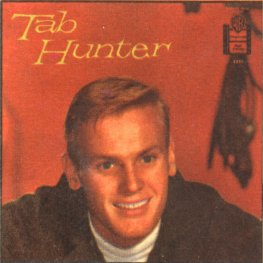
Tab Hunter (born Arthur Andrew Kelm on July 11, 1931) is an American actor and singer.
Biography
Early life
Hunter was born in New York City, New York, to immigrants from Germany. His father, Charles Kelm, was Jewish and his mother, Gertrude Gelien, a Roman Catholic who later converted to Judaism. Hunter was originally raised as a Roman Catholic. Within a few years of his birth, his parents divorced and his mother moved with her two sons to California. She reassumed her maiden surname, Gelien, and changed the sons' name to that as well. Hunter's older brother, Walter, a medic, was killed in Vietnam. As a teenager, Hunter was a figure skater, competing in both singles and pairs.
Career
Hunter was signed to a contract at Warner Bros. and re-named "Tab Hunter" by his first agent, Henry Willson. His good looks got him pegged as a teen idol. He landed a role in the film Island of Desire opposite Linda Darnell. Although he believed that he had a mediocre singing voice, he had a 1957 hit record with a cover of the Sonny James song, "Young Love," which was #1 for Hunter for over a month. Hunter's success led Warner Bros. to form Warner Bros. Records.
Hunter was perhaps best known for his starring role in the 1958 musical movie, Damn Yankees. In the movie, Hunter plays Joe Hardy of Washington D.C's American League baseball club. (The movie had originally been a Broadway show, but Hunter was only in the movie version. The show was based on the 1954 best-selling book, "The Year The Yankees Lost the Pennant" by Douglass Wallop). He went on to star in over 40 major feature films.
While doing The Tab Hunter Show (1960-1961) on television, he was one of the finalists for the lead in the movie version of West Side Story, but did not get the part, because the producers felt he was "too old" at 29. On July 9, 1960, he was arrested by Glendale, California police for beating his dog. He was acquitted by a jury, but the incident dealt a severe blow to his squeaky-clean image.
For a short time in the late 1960s, Hunter settled in the south of France, where he acted in "spaghetti westerns". His career was revived in the 1980s, when he starred opposite transvestite actor Divine in John Waters' Polyester (1981) and Paul Bartel's Lust in the Dust (1985). He is particularly remembered by later audiences as Mr. Stewart, the substitute teacher in Grease 2, when he sang "Reproduction." He also wrote and starred in Dark Horse (1992).
Personal life
In his autobiography, Tab Hunter Confidential: The Making of a Movie Star (ISBN 1-56512-466-9), he acknowledged his homosexuality, confirming rumors that had circulated since the height of his fame. In the book, which became a national best-seller, Hunter also confessed to having two love affairs with women, one with whom he was passionately in love. He was passionately in love with co-star Etchika Choureau, while simultaneously, secretly dating bisexual actor Anthony Perkins. He wanted to marry Etchika but couldn't picture himself being heterosexually monogamous and backed out. His other opposite sex relationship was with Joan Cohn, widow of Columbia Pictures mogul, Harry Cohn.
Hunter lives in Montecito, California, near Santa Barbara with his partner of 25 years. He has a star on the Hollywood Walk of Fame at 6320 Hollywood Blvd.
Hunter's homosexuality contrasted sharply with his image as a "ladies' man." His agent planted stories in teen and gossip magazines that Hunter was involved with many famous young starlets of the day, and, for a long time, Hunter was linked as Natalie Wood's "boyfriend." At a party the two attended, a female songwriter in attendance quipped openly, "Natalie Wood, but Tab wouldn't."
His agent and later his studio would go so far as to have Hunter appear at red carpet events and at night clubs with the starlet he was linked to.
0 Replies
bobsmythhawk
1
Reply
Wed 11 Jul, 2007 07:41 am
Political Wisdom
*"If you don't read the newspaper you are uninformed, if you do read the newspaper you are misinformed."
Mark Twain
Suppose you were an idiot. And suppose you were a member of Congress.... But then I repeat myself.
-Mark Twain
I contend that for a nation to try to tax itself into prosperity is like a man standing in a bucket and trying to lift himself up by
the handle.
-Winston Churchill
A government which robs Peter to pay Paul can always depend on the support of Paul.
-.George Bernard Shaw
A liberal is someone who feels a great debt to his fellow man, which debt he proposes to pay off with your money.
-G Gordon Liddy
Democracy must be something more than two wolves and a sheep voting on what to have for dinner.
-James Bovard, Civil Libertarian (1994)
Foreign aid might be defined as a transfer of money from poor people in rich countries to rich people in poor countries.
-Douglas Casey, Classmate of Bill Clinton at **Georgetown** **University**
Giving money and power to government is like giving whiskey and car keys to teenage boys.
-P.J. O'Rourke, Civil Libertarian
Government is the great fiction, through which everybody endeavors to live at the expense of everybody else.
-Frederic Bastiat, French Economist
(1801-1850)
Government's view of the economy could be summed up in a few short phrases: If it moves, tax it. If it keeps moving, regulate it. And
if it stops moving, subsidize it.
-Ronald Reagan (1986)
I don't make jokes. I just watch the government and report the facts.
-Will Rogers
If you think health care is expensive now, wait until you see what it costs when it's free!
-P.J. O'Rourke
In general, the art of government consists of taking as much money as possible from one party of the citizens to give to the other.
-Voltaire (1764)
Just because you do not take an interest in politics doesn't mean politics won't take an interest in you!
-Pericles (430 B.C.)
No man's life, liberty, or property is safe while the legislature is in session.
-Mark Twain (1866)
Talk is cheap...except when Congress does it.
-Unknown
The government is like a baby's alimentary canal, with a happy appetite at one end and no responsibility at the other.
-Ronald Reagan
The inherent vice of capitalism is the unequal sharing of the blessings. The inherent blessing of socialism is the equal sharing
of misery.
-Winston Churchill
The only difference between a tax man and a taxidermist is that the taxidermist leaves the skin.
-Mark Twain
The ultimate result of shielding men from the effects of folly is to fill the world with fools.
-Herbert Spencer, English Philosopher
(1820-1903)
There is no distinctly Native American criminal class...save Congress.
-Mark Twain
What this country needs is more unemployed politicians.
-Edward Langley, Artist (1928 - 1995)
A government big enough to give you everything you want, is strong enough to take everything you have.
-Thomas Jefferson
0 Replies
Letty
1
Reply
Wed 11 Jul, 2007 07:53 am
Good morning, Bob of Boston. Thanks once again for the great bio's, and we all love and agree with your quotes about the government.
I especially like the ones by Pericles and T.J., hawkman.
Until our Raggedy arrives with those matchless faces, folks, here is one from The King and I
Artist: Lyrics
Song: Getting to Know You Lyrics
[ANNA]
[Spoken] It's a very ancient saying,
But a true and honest thought,
That if you become a teacher,
By your pupils you'll be taught.
[Singing] As a teacher I've been learning --
You'll forgive me if I boast --
And I've now become an expert,
On the subject I like most.
[Spoken] Getting to know you.
[Singing] Getting to know you,
Getting to know all about you.
Getting to like you,
Getting to hope you like me.
Getting to know you,
Putting it my way,
But nicely,
You are precisely,
My cup of tea.
[ANNA AND THE MOTHERS]
Getting to know you,
Getting to know all about you.
Getting to like you,
Getting to hope you like me.
Getting to know you,
Putting it my way,
But nicely,
You are precisely,
[ANNA]
My cup of tea.
[ALL]
Getting to know you,
Getting to feel free and easy
When I am with you,
Getting to know what to say
Haven't you noticed
Suddenly I'm bright and breezy?
Because of all the beautiful and new
Things I'm learning about you
Day by day.
Getting to know you,
Getting to feel free and easy
When I am with you,
Getting to know what to say
Haven't you noticed
Suddenly I'm bright and breezy?
Because of all the beautiful and new
Things I'm learning about you
Day .. by ... day.
Incidentally, all. Today is our Phoenix's birthday. Wish her a happy one.
HAPPY BIRTHDAY Phoenix.
Sorry, I don't have a picture of you to add to today's celebrities.
E. B. White, Yul (the King) Brynner and Tab Hunter.
0 Replies
Letty
1
Reply
Wed 11 Jul, 2007 12:09 pm
There's our Raggedy, folks, and accompanied by a quartet of notables. Thanks, PA. They are all beautiful!
Since I can't think of any songs that E.B. did, how about one done by many, but begun by Tim Hardin whose life ended so tragically.
Artist: Tim Hardin
Song: If I Were a Carpenter
If I were a carpenter, and you were a lady
Would you marry me anyway? would you have my baby?
If a tinker were my trade, would you still find me
Carrying the pots I made - following behind me?
Save my love through loneliness - save my love through sorrow
I give you my only-ness - give me your tomorrow
If I worked my hands in wood, would you still love me?
Answer me, babe: "yes I would - I'd put you above me"
If a miller were my trade, at a mill wheel grinding
Would you miss your colour box - your soft shoes shining
Save my love through loneliness - save my love through sorrow
I give you my only-ness - come give me your tomorrow
If I were a carpenter, and you were a lady
Would you marry me anyway? would you have my baby?
Would you marry me anyway? would you have my baby?
Also done by Harry Belafonte, edgar.
0 Replies
edgarblythe
1
Reply
Wed 11 Jul, 2007 04:52 pm
Letty wrote:
There's our Raggedy, folks, and accompanied by a quartet of notables. Thanks, PA. They are all beautiful!
Since I can't think of any songs that E.B. did, how about one done by many, but begun by Tim Hardin whose life ended so tragically.
Artist: Tim Hardin
Song: If I Were a Carpenter
If I were a carpenter, and you were a lady
Would you marry me anyway? would you have my baby?
If a tinker were my trade, would you still find me
Carrying the pots I made - following behind me?
Save my love through loneliness - save my love through sorrow
I give you my only-ness - give me your tomorrow
If I worked my hands in wood, would you still love me?
Answer me, babe: "yes I would - I'd put you above me"
If a miller were my trade, at a mill wheel grinding
Would you miss your colour box - your soft shoes shining
Save my love through loneliness - save my love through sorrow
I give you my only-ness - come give me your tomorrow
If I were a carpenter, and you were a lady
Would you marry me anyway? would you have my baby?
Would you marry me anyway? would you have my baby?
Also done by Harry Belafonte, edgar.
Done best of all by Bobby Darin.
0 Replies
dyslexia
1
Reply
Wed 11 Jul, 2007 05:02 pm
my mum, my aunt and ?
0 Replies
Letty
1
Reply
Wed 11 Jul, 2007 05:12 pm
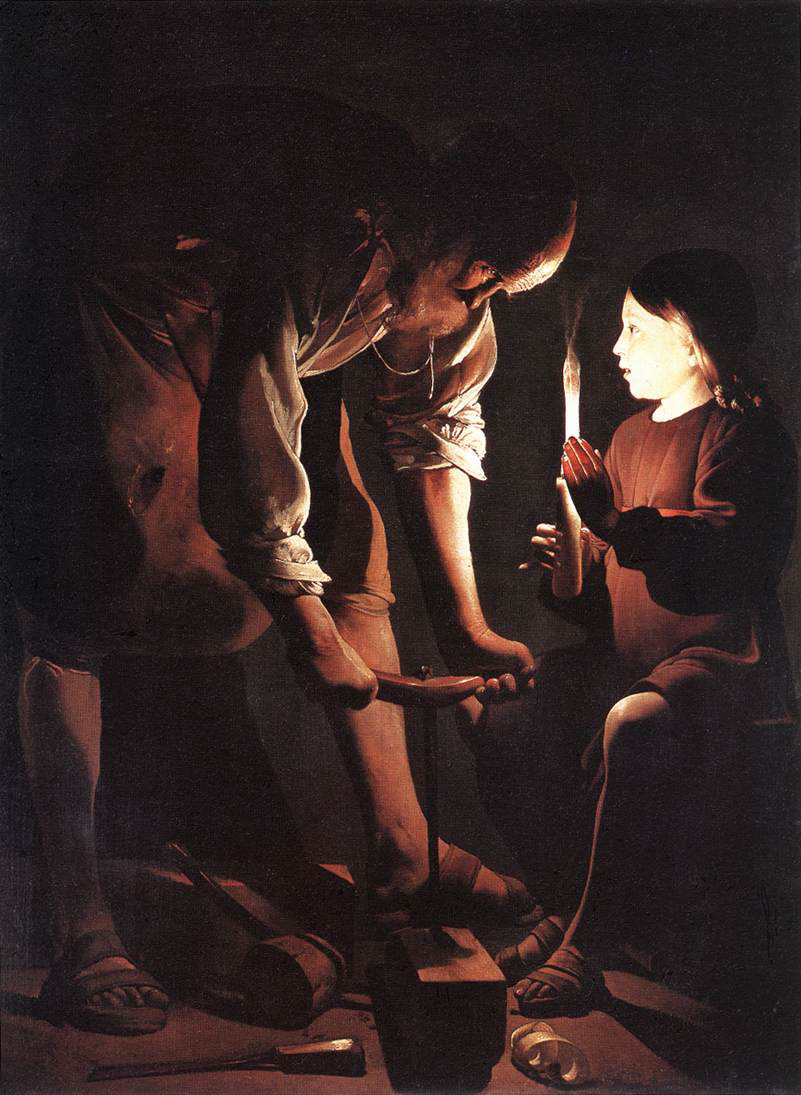
Your mum, your aunt, and you? What a lovely child you were, dys, and as I told you, the best carpenter was Joseph. Even better than Bobby Darin, edgar. <smile>
Ralph McTell
When they looked at Joseph's hands
They said, They're the hands of a carpenter
They're big and they're powerful and they're strong
They're the hands that should work in wood
And they're the hands that should work a long day
Joseph he did all those things
But he also learned how to play
He would sing about joy, sing about faith
That the people wished they had
How he heard the voice of Jesus
When the rolling sea got mad
He's a boat in the harbour, he's safe in that love
He know some day he'll be sailing above
When they looked at Joseph's hands
They said, They're the hands of a stonemason
They're big and they're powerful and they're strong
They're the hands that should work in stone
And they're the hands that should work a long day
Joseph he did all those things
But he also learned how to play
When they looked at Joseph's hands
They said, They're the hands of a fisherman
The musician and the mason-carpenter
And he's happy all the time
For they're working every day
And those old hands of Joseph
Oh how they can play.
0 Replies
edgarblythe
1
Reply
Wed 11 Jul, 2007 05:46 pm
Don't
Don't, don't, that's what you say
Each time that I hold you this way
When I feel like this and I want to hold you
Baby, don't say don't
Don't, don't leave my embrace
For here in my arms is your place
When the night grows cold and I want to hold you
Baby, don't say don't
If you think that this is just a game
I'm playing
If you think that I don't mean
Ev'ry word I'm saying
Don't, don't, don't, don't
Don't feel that way
I'm your love and yours I will stay
This you can believe
I will never leave you
Heaven knows I won't
Baby, don't say don't
Elvis Presley
0 Replies
Letty
1
Reply
Wed 11 Jul, 2007 05:58 pm
The king will never die; right, edgar?
Breaking news:
Lady Bird Johnson dies at 94
By KELLEY SHANNON, Associated Press Writer 14 minutes ago
AUSTIN, Texas - Lady Bird Johnson, the former first lady who championed conservation and worked tenaciously for the political career of her husband, Lyndon B. Johnson, died Wednesday, a family spokeswoman said. She was 94.
Johnson, who suffered a stroke in 2002 that affected her ability to speak, returned home late last month after a week at Seton Medical Center, where she'd been admitted for a low-grade fever.
She died at her Austin home of natural causes and she was surrounded by family and friends, said spokeswoman Elizabeth Christian.
Even after the stroke, Johnson still managed to make occasional public appearances and get outdoors to enjoy her beloved wildflowers. But she was unable to speak more than a few short phrases, and more recently did not speak at all, Anne Wheeler, spokeswoman for the LBJ Library and Museum, said in 2006. She communicated her thoughts and needs by writing, Wheeler said.
Tears for Fears
Tell me a story of mind over matter
The hope and glory of life ever after
The sound and the fury the cloak and the dagger
Days when we sink like a stone
Porcelain portraits and silver medallions
Plasticine soldiers that march in battalions
Angels of mercy and lifelong companions
Days when we sink like a stone
There a room somewhere with a different look
Where your secret life is an open book
Where the love we made was a chance we took
Days when we sink like a stone
Ladybird fly away our friends are gone
Ladybird fly away our house is on fire
Let us be lovers we'll melt after midnight
Hoist up the mainsail we'll coast through the daylight
Twisted like candles that fade in the half-light
Days when we sink like a stone
Well we die sometimes to begin again
When the same old dreams have the same old end
When we lose our mind or we lose our friends
Days when we sink like a stone
Ladybird fly away our friends are gone
Ladybird fly away our house is on fire
Ladybird fly away our friends are gone
Ladybird fly away our house is on fire
Your friends have gone
Porcelain portraits and silver medallions
Your friends have gone
Plasticine soldiers that march in battalions
Your friends have gone
Angels of mercy and lifelong companions
Tell me a story of mind over matter
The hope and glory of life ever after
The sound and the fury the cloak and the dagger
Ladybird fly away our friends are gone
Ladybird fly away our house is on fire
0 Replies
edgarblythe
1
Reply
Wed 11 Jul, 2007 07:09 pm
Most Beautiful Girl
Charlie Rich
If you happen to see
The most beautiful girl in the world
Tell her, "I'm sorry"
Tell her, "I need my baby"
Oh, won't you tell her that I love her
I woke up this morning and realized what I had done
I stood alone in the cold gray dawn
I knew I'd lost my morning sun
I lost my head and I said some things
Now come the heartaches that morning brings
I know I'm wrong and I couldn't see
I let my world slip away from me
So hey, did you happen to see
The most beautiful girl in the world
And if you did, was she crying, crying
Hey, if you happen to see
The most beautiful girl that walked out on me
Tell her, "I'm sorry"
Tell her, "I need my baby"
Oh, won't you tell her that I love her
---- Instrumental Interlude ----
Hey, did you happen to see
The most beautiful girl in the world
And if you did, was she crying, crying
Hey, if you happen to see
The most beautiful girl that walked out on me
Tell her, "I'm sorry"
Tell her, "I need my baby"
Oh.... Won't you tell her that I love her
If you happen to see
The most beautiful girl that walked out on me
Tell her, "I'm sorry"
Tell her, "I need my baby"
Oh.... Won't you tell her that I love her
0 Replies
Letty
1
Reply
Wed 11 Jul, 2007 07:45 pm
Gorsh, edgar. I had no idea that Charley Pride did that song. I know it, and can hear the melody in my rather tired head. Thanks, buddy.
I love this one, folks, so it shall be my goodnight song.
James Taylor
There is a young cowboy he lives on the range
His horse and his cattle are his only companions
He works in the saddle and he sleeps in the canyons
Waiting for Summer, his pastures to change
And as the moon rises he sits by his fire
Thinking about women and glasses of beer
And closing his eyes as the doggies retire
He sings out a song which is soft but it's clear
As if maybe someone could hear
Goodnight you moonlight ladies
Rock-a-bye sweet baby James
Deep greens and blues are the colors I choose
Won't you let me go down in my dreams
And rock-a-bye sweet baby James
Now the first of December was covered with snow
And so was the turnpike from Stockbridge to Boston
Lord, the Berkshires seemed dreamlike on account of that frosting
With ten miles behind me and ten thousand more to go
There's a song that they sing when they take to the highway
A song that they sing when they take to the sea
A song that they sing of their home in the sky
Maybe you can believe it if it helps you to sleep
But singing works just fine for me
Goodnight you moonlight ladies
Rock-a-bye sweet baby James
Deep greens and blues are the colors I choose
Won't you let me go down in my dreams
And rock-a-bye sweet baby James.
Goodnight,
From Letty with love
0 Replies
edgarblythe
1
Reply
Wed 11 Jul, 2007 07:49 pm
Er, Rich, not Pride, poor tired letty. Good night.
0 Replies
georgeob1
1
Reply
Wed 11 Jul, 2007 07:58 pm
Here's an old (and little known) song done by Rolf Harris of "Tie Me Kangaroo Down Sport" fame. I first heard it a long time ago when I was in a squadron flying off a carrier on Yankee Station in the Tonkin Gulf.
I never forgot it.
TWO LITTLE BOYS
Two little boys
Had two little toys,
Each had a wooden horse;
Gaily they played
Each summer's day -
Warriors both of course.
One little chap
Then had a mishap,
Broke off his horse's head;
Cried for his toy,
Then cried for joy
As his young playmate said:
"Did you think I would leave you crying
When there's room on my horse for two?
Climb up here, Jack. we'll soon be flying;
I can go just as fast with two.
When we grow up we'll both be soldiers,
And our horses will not be toys;
And I wonder if we'll remember
When we were two little boys."
Long years passed,
War came so fast;
Bravely they marched away.
Cannons roared loud
And in the mad crowd
Wounded and dying lay.
Up went a shout -
A horse dashes out,
Out from the ranks so blue.
Galloped away
To where Joe lay
And then came a voice he knew:
"Did you think I would leave you dying
When there's room on my horse for two?
Climb up here, Joe, we'll soon be flying
Back to the ranks so blue.
Do you know, Joe, I'm all a-tremble,
Perhaps it's the battle's noise;
But I think it's that I remember
When we were two little boys."
0 Replies
Letty
1
Reply
Thu 12 Jul, 2007 04:08 am
Good morning, WA2K listeners and contributors.
edgar, I know Charlie Rich. Coleridge was right:
Oh, sleep it is a gentle thing beloved from pole to pole,
To Mary queen the praise be given,
She sent the gentle sleep from heaven,
That slid into my soul.
Georgeob1, Welcome back. You were in Nam? What a surprise! Your "Two Little Boys" song made me feel a bit sad, but as Sherman said, "War is hell".
I had forgotten about Donovan, so I selected this as a song for the morning.
Colours
Yellow is the colour of my true love's hair,
In the morning, when we rise,
In the morning, when we rise.
That's the time, that's the time,
I love the best.
Green's the colour of the sparklin' corn,
In the morning, when we rise,
In the morning, when we rise.
That's the time, that's the time,
I love the best.
Blue's the colour of the sky-y,
In the morning, when we rise,
In the morning, when we rise.
That's the time, that's the time,
I love the best.
Mellow is the feeling that I get,
When I see her, m-hmm,
When I see her, oh yeah.
That's the time, that's the time,
I love the best.
Freedom is a word I rarely use,
Without thinking, oh yeah,
Without thinking, m-hmm.
Of the time, of the time,
When I've been loved.
Yellow is the colour of my true love's hair,
In the morning, when we rise,
In the morning, when we rise.
That's the time, that's the time,
I love the best.
0 Replies
edgarblythe
1
Reply
Thu 12 Jul, 2007 04:53 am
Queen Jane Approximately
When your mother sends back all your invitations
And your father to your sister he explains
That you're tired of yourself and all of your creations
Won't you come see me, Queen Jane?
Won't you come see me, Queen Jane?
Now when all of the flower ladies want back what they have lent you
And the smell of their roses does not remain
And all of your children start to resent you
Won't you come see me, Queen Jane?
Won't you come see me, Queen Jane?
Now when all the clowns that you have commissioned
Have died in battle or in vain
And you're sick of all this repetition
Won't you come see me, Queen Jane?
Won't you come see me, Queen Jane?
When all of your advisers heave their plastic
At your feet to convince you of your pain
Trying to prove that your conclusions should be more drastic
Won't you come see me, Queen Jane?
Won't you come see me, Queen Jane?
Now when all the bandits that you turn your other cheek to
All lay down their bandanas and complain
And you want somebody you don't have to speak to
Won't you come see me, Queen Jane?
Won't you come see me, Queen Jane?
Bob Dylan
0 Replies
Letty
1
Reply
Thu 12 Jul, 2007 05:26 am
well, edgar, that is, as usual, a very cryptic song. It seems that dys and Dylan have something in common.
Did a brief check, folks, and some think that edgar's song may be autobiographical; then there are those who think Queen Jane may be that wicked weed. Another odd interpretation is that Queen Jane may be a guy.
Hey, Dylan, this one is for you.
Do you know where you're going to?
Do you like the things that life is showing you?
Where are you going to?
Do you know?
Do you get what you're hoping for?
When you look behind you there's no open door
What are you hoping for?
Do you know?
Once we were standing still in time
Chasing the fantasies that filled our minds
You knew how I loved you, but my spirit was free
Laughing at the questions that
you once asked of me
Do you know where you're going to?
Do you like the things that life is showing you?
Where are you going to?
Do you know?
Now looking back at all we've had
We let so many dreams just slip through our hands
Why must we wait so long before we see
How sad the answers to those questions can be?
Do you know where you're going to?
Do you like the things that life is showing you?
Where are you going to?
Do you know?
Do you get what you're hoping for?
When you look behind you there's no open door
What are you hoping for?
Do you know?
0 Replies
bobsmythhawk
1
Reply
Thu 12 Jul, 2007 06:50 am
Oscar Hammerstein II
From Wikipedia, the free encyclopedia
Oscar Hammerstein II (July 12, 1895 - August 23, 1960) was an American writer, producer, and (usually uncredited) director of musicals for almost forty years.
Born in New York City, his father, William, was from a non-practicing Jewish family; his mother, née Alice Nimmo, was the daughter of Scottish immigrants and their children were raised as Christians. His grandfather was the great opera impresario and theater builder Oscar Hammerstein I, one of the most remarkable, and most famous, personalities of his time.
Although William, father of the younger Oscar, managed the highly successful Victoria Theatre for the elder Oscar and was an innovative producer of vaudeville (he is generally credited with inventing the "pie-in-the-face" routine), he was against his son's desire to participate in the arts. Oscar II therefore entered Columbia University under their pre-law program and it wasn't until his father's death on June 10, 1914 that he went on to participate in his first play with the Varsity Show entitled On Your Way.
Throughout the rest of his college career the younger Hammerstein wrote and performed in several Varsity Shows. After quitting law school to pursue theater, Hammerstein began his first real collaboration with Herbert Stothart, Otto Harbach, and Frank Mandel. He began as an apprentice, and went on to form a 20 year collaboration with Harbach. Out of this collaboration came his first musical, Always You, for which he wrote the book and lyrics. It opened on Broadway in 1921. Throughout the next forty years of his life, he would team with many others including a successful collaboration with composer Jerome Kern producing such musicals as Sweet Adeline, Music In the Air, Three Sisters, Very Warm for May, and their biggest hit, Show Boat, in 1927. Show Boat, often revived, is still considered to be one of the masterpieces of the American musical theatre. Other collaborators include Vincent Youmans with Wildflower, Rudolf Friml with Rose Marie, and Sigmund Romberg with The Desert Song and The New Moon.
Hammerstein's most successful and sustained collaboration however, came in 1943 when he teamed up with Richard Rodgers to write a musical adaptation of the play Green Grow the Lilacs. Rodgers' first partner, Lorenz Hart, was originally going to join in the collaboration but was too deeply entrenched in alcoholism to be of any use. The result of the new Rogers and Hammerstein collaboration was Oklahoma!, a show which revolutionized the American musical theatre by tightly integrating all the aspects of musical theater, with the songs and dances arising out of the plot and characters. It also began a partnership which would produce such classic Broadway musicals as Carousel, South Pacific, The King and I, Me & Juliet, Pipe Dream, Flower Drum Song, and The Sound of Music as well as the musical film State Fair (and its stage adaptation of the same name) and the television musical Cinderella, all of which were featured in the revue A Grand Night for Singing. Hammerstein also produced the book and lyrics for Carmen Jones, an adaptation of Georges Bizet's opera Carmen with an all-black cast.
Oscar Hammerstein II is today considered one of the most important figures in the history of American musical theater. He was probably the best "book writer" in Broadway history - he made the story, not the songs or the stars, central to the musical, and brought it to full maturity as an art form. His reputation for being "sentimental," is based largely on the movie versions of the musicals, especially The Sound of Music. As recent revivals of Show Boat, Oklahoma!, Carousel, and The King and I in London and New York show, Hammerstein could be very tough-minded indeed. Oscar Hammerstein believed in love; he did not believe that it would always end happily.
Hammerstein is the only person named Oscar ever to win an Oscar (Academy Award). He won two Oscars for best original song?-in 1941 for "The Last Time I Saw Paris" in the film Lady Be Good, and in 1945 for "It Might As Well Be Spring" in State Fair. In 1950, the team of Rodgers and Hammerstein received The Hundred Year Association of New York's Gold Medal Award "in recognition of outstanding contributions to the City of New York."
Hammerstein died of stomach cancer in his home in Doylestown, Pennsylvania at the age of 65, shortly after the opening of The Sound of Music on Broadway, thus ending one of the most remarkable collaborations in the history of the American musical theatre. The final song he wrote was "Edelweiss" which was added during rehearsals near the end of the second act. To this day, many think it is an Austrian folk song. Sadly, he never lived to see The Sound of Music made into the 1965 film adaptation which became internationally loved, won the Academy Award for Best Picture, and became perhaps his most well-known legacy.
Universally mourned, with the lights of Times Square and London's West End being dimmed in recognition of his contribution to the musical, he was interred in the Ferncliff Cemetery in Hartsdale, New York. He was survived by his second wife Dorothy Blanchard Jacobson and his three children, William and Alice by first wife Myra Finn and James by Jacobson.
Hammerstein's name is often mispronounced as "HAM-err-steen". Hammerstein himself, however, pronounced it as "HAM-err-styne
0 Replies
bobsmythhawk
1
Reply
Thu 12 Jul, 2007 06:56 am
Milton Berle
From Wikipedia, the free encyclopedia
Birth name Milton Berlinger
Born July 12, 1908
Manhattan, New York
Died March 27, 2002 (aged 93)
Los Angeles, California
Other name(s) Mr. Television & Uncle Miltie
Milton Berle (July 12, 1908 - March 27, 2002) was an Emmy-winning American comedian who was born Milton Berlinger. As the manic host of NBC's Texaco Star Theater (1948-1955), he was the first major star of television. He became known as Uncle Miltie to millions during TV's golden age.
Early life
Born in a five-story walkup at 68 West 118th Street in the Morningside Heights neighborhood of Manhattan, he chose Milton Berle as his professional name when he was 16. His father was Moses Berlinger, a paint and varnish salesman. His mother, Sarah (Sadie) Glantz Berlinger, eventually became stagestruck and changed her name to Sandra Berle when Milton became famous.
His onstage antics got underway in 1913 when he won a lookalike contest with his impersonation of Charlie Chaplin, actually beating the real Charlie Chaplin. Berle appeared a child actor in silent films, beginning with The Perils of Pauline (1914), filmed in Fort Lee, New Jersey with Pearl White.[1] The director told Berle that he would portray a little boy who would be thrown from a moving train. In Milton Berle: An Autobiography (1975), he explained, "I was scared shitless, even when he went on to tell me that Pauline would save my life. Which is exactly what happened, except that at the crucial moment they threw a bundle of rags instead of me from the train. I bet there are a lot of comedians around today who are sorry about that."
By Berle's account, he continued to play child roles in other films: Bunny's Little Brother (1914) with John Bunny; Tess of the Storm Country (1914) with Mary Pickford; Birthright (1920) with Flora Finch; Love's Penalty (1921) with Hope Hampton; Divorce Coupons (1922) with Corinne Griffith and the serial Ruth of the Range (1923) with Ruth Roland. Berle recalled, "There were even trips out to Hollywood--the studios paid--where I got parts in Rebecca of Sunnybrook Farm, with Mary Pickford; The Mark of Zorro, with Douglas Fairbanks, Sr. and Tillie's Punctured Romance, with Charlie Chaplin, Mabel Normand and Marie Dressler."
However, Berle's claims to have appeared in many of these films, particularly the 1914 Chaplin Keystone comedy Tillie's Punctured Romance, is hotly disputed by some, who cite the lack of supporting evidence that Berle even visited the West Coast until much later. The newsboy role often claimed by Berle in "Tillie" was unquestionably played by Keystone child contract actor Gordon Griffith.
In 1916, Berle enrolled in the Professional Children's School, and at age 12 he made his stage debut in Florodora. After four weeks in Atlantic City, New Jersey, the show moved to Broadway. It catapulted him into a comedic career that spanned eight decades in nightclubs, Broadway shows, vaudeville, Las Vegas, films, television and radio.
Rising star
By the early 1930s Berle had become a successful stand-up comedian. In 1933 he was hired by producer Jack White to star in the theatrical featurette Poppin' the Cork, a topical musical comedy concerning the repeal of Prohibition. Berle also co-wrote the score for this film, which was released by Educational Pictures.
Berle continued to dabble in songwriting. With Ben Oakland and Milton Drake, Berle wrote the title song for the RKO release Li'l Abner (1940), an adaptation of Al Capp's comic strip, featuring Buster Keaton as Lonesome Polecat. [1] Berle wrote a Spike Jones B-side, "Leave the Dishes in the Sink, Ma."
Radio
In 1934-36, Berle was heard regularly on The Rudy Vallee Hour, and he got much publicity as a regular on The Gillette Original Community Sing, a Sunday night comedy-variety program broadcast on CBS from September 6, 1936 to August 29, 1937. In 1939, he was the host of Stop Me If You've Heard This One with panelists spontaneously finishing jokes sent in by listeners.
Three Ring Time, a comedy-variety show sponsored by Ballantine Ale was followed by a 1943 program sponsored by Campbell's Soups. The audience participation show Let Yourself Go (1944-45) could best be described as slapstick radio with studio audience members acting out long suppressed urges (often directed at host Berle). Kiss and Make Up, on CBS in 1946, featured the problems of contestants decided by a jury from the studio audience with Berle as the Judge. He also made guest appearances on many comedy-variety radio programs during the 1930s and 1940s.
Scripted by Hal Block and Martin Ragaway, The Milton Berle Show brought Berle together with Arnold Stang, later a familiar face as Berle's TV sidekick. Others in the cast were Pert Kelton, Mary Schipp, Jack Albertson, Arthur Q. Bryan, Ed Begley, and announcer Frank Gallop. Sponsored by Philip Morris, it aired on NBC from March 11, 1947, until April 13, 1948.
His last radio series was The Texaco Star Theater, which began September 22, 1948 on ABC and continued until June 15, 1949, with Berle heading the cast of Stang, Kelton and Gallop, along with Charles Irving, Kay Armen and double-talk specialist Al Kelly. It employed top comedy writers (Nat Hiken, brothers Danny and Neil Simon, Aaron Ruben), and Berle later recalled this series as "the best radio show I ever did... a hell of a funny variety show." It served as a springboard for Berle's rise as television's first major star.
Mr. Television
In 1948, NBC decided to bring Texaco Star Theater from radio to television, with Berle as one of the show's four rotating hosts. For the fall season, NBC named Berle the permanent host. His highly visual, sometimes outrageous vaudeville style proved ideal for the burgeoning new medium. Berle and Texaco owned Tuesday nights for the next several years, reaching the number one slot in the Nielsen ratings and keeping it, with as much as an 80% share of the recorded viewing audience. Berle and the show each won Emmy Awards after the first season. Fewer movie tickets were sold on Tuesdays. Some theaters, restaurants and other businesses shut down for the hour or closed for the evening so their customers wouldn't miss Berle's antics [2]. Berle's autobiography notes that in Detroit, "an investigation took place when the water levels took a drastic drop in the reservoirs on Tuesday nights between 9 and 9:05. It turned out that everyone waited until the end of the Texaco Star Theater before going to the bathroom. "
Berle is credited for the huge spike in the sale of TV sets during the medium's early years. After Berle's show began, set sales more than doubled, reaching two million in 1949. His stature as the medium's first superstar earned Berle the sobriquet "Mr. Television." [3] He also earned a slightly more familiar nickname after ending a 1949 broadcast with a brief ad lib remark to children watching the show: "Listen to your Uncle Miltie and go to bed." [4]
Berle asked NBC to switch to film to make possible future reruns and residuals, and he was not happy when NBC showed little interest. He also risked his newfound TV stardom at its zenith to challenge Texaco when the sponsor tried to prevent black performers from appearing. In his autobiography, Berle recalled the incident:
Another thing that was a constant anger to me was that I didn't have approval on the acts and performers I wanted on the show. I remember clashing with the sponsor and the advertising agency and the sponsor over my signing the Four Step Brothers for an appearance on the show. The only thing I could figure out was that there was an objection to black performers on the show, but I couldn't even find out who was objecting. "We just don't like them,: I was told, but who the hell was "we"? Because I was riding high in 1950, I sent out the word: "If they don't go on, I don't go on." At ten minutes of eight--ten minutes before show time--I got permission for the Step Brothers to appear. If I broke the color-line policy or not, I don't know, but later on I had no trouble booking Bill Robinson or Lena Horne."
Berle's TV decline
NBC signed him to an exclusive, unprecedented 30-year television contract in 1951. The problem with Berle's 30-year deal was that NBC could not have realized the relatively short lifespan of a comedian on television, compared to radio, where some careers had thrived for two decades. In part, this was due to the more ephemeral nature of visual comedy (those who don't adapt quickly don't survive), and a single television appearance could equal years of exposure on the nightclub circuit. It has also been said that Berle had less appeal with audiences outside the Borscht Belt as television expanded from big East Coast markets to smaller cities. In any event, Berle wore out his welcome on television almost as quickly as he had built it.
Texaco pulled out of sponsorship of the show in 1953. Buick picked it up, prompting a renaming to The Buick-Berle Show, but Berle's ratings continued to fall and Buick pulled out after two seasons. By the time the again-renamed Milton Berle Show finished its only full season, Berle was already becoming history - though his final season was host to two of Elvis Presley's earliest television appearances [2].
NBC finally cancelled the Berle show in 1956. He later appeared in the Kraft Music Hall series, but NBC was finding increasingly fewer showcases for its one-time superstar. By 1960, he was reduced to hosting a game show, Jackpot Bowling, delivering his quips between the efforts of bowling contestants.
Life after The Milton Berle Show
In Las Vegas, Berle played to packed showrooms at Caesar's Palace, the Sands, the Desert Inn and other casino hotels. Berle had appeared at the El Rancho, one of the first Vegas hotels, in the late 1940s. In addition to constant club appearances, Berle performed on Broadway in Herb Gardner's The Goodbye People in 1968.
He appeared in numerous films, including Always Leave Them Laughing (1949) with Virginia Mayo and Bert Lahr; Let's Make Love, with Marilyn Monroe and Yves Montand (1960); It's a Mad, Mad, Mad, Mad World (1963); The Loved One (1965); The Oscar (1966); Lepke (1975); Woody Allen's Broadway Danny Rose (1984) and Driving Me Crazy (1991).
Freed in part from the obligations of his NBC contract, Berle was signed in 1966 to a new weekly variety series on ABC. The show failed to capture a large audience and was cancelled after one season. He later appeared as guest villain Louie the Lilac on ABC's Batman series. His other TV guest appearances included The Jack Benny Show, Make Room for Daddy, The Lucy Show, The Big Valley, The Jackie Gleason Show, What's My Line?, Get Smart, I've Got a Secret, The Mod Squad, Ironside, Mannix, McCloud, The Love Boat, CHiPs, Fame, Fantasy Island, Gimme a Break, Diff'rent Strokes, Matlock, Murder, She Wrote, Beverly Hills 90210, The Fresh Prince of Bel-Air, The Nanny, Roseanne and Sister, Sister.
Like his contemporary Jackie Gleason, Berle proved a solid dramatic actor and was acclaimed for several such performances, most notably his lead role in "Doyle Against The House" on The Dick Powell Show in 1961, a role for which he later received an Emmy nomination. He also played the part of a blind survivor of an airplane crash in Seven in Darkness, the first in ABC's popular Movie of the Week series, and was often seen on The Hollywood Palace variety show on ABC.
During this period, Berle was named to the Guinness Book of World Records for the greatest number of charity performances made by a show-business performer. Unlike the high-profile shows done by Bob Hope to entertain the troops, Berle did more shows, over a period of 50 years, on a lower-profile basis. Berle received an award for entertaining at stateside military bases in World War I as a child performer, in addition to traveling to foreign bases in World War II and Vietnam. The first charity telethon (for the Damon Runyan Cancer Fund) was hosted by Berle in 1949 [5]. A permanent fixture at charity benefits in the Hollywood area, he was instrumental in raising millions for charitable causes.
The second time around: Late career
In 1988, a series of syndicated TV specials with the umbrella title "Milton Berle: The Second Time Around," recycled footage from the live Texaco Star Theater programs (unseen for decades) helped to introduce Berle's brand of comedy to a new audience. One of his most popular performances in his later years was guest starring in 1993 in The Fresh Prince of Bel-Air as a womanizing, wise-cracking patient. Most of his dialogue was improvised and he shocked the studio audience by blurting out a four-letter word by mistake.
Berle appeared in drag in the video for "Round and Round" by the 1980s metal band Ratt (his nephew Marshall Berle was then their manager).
On April 14, 1979, Berle guest-hosted Saturday Night Live. During the performance, he seemed to spend as much time trying to upstage the show's youthful cast as he did trying to work with or augment them. Berle's long reputation for taking control of an entire television production?-whether invited to do so or not?-was a cause of stress on the set. One of the show's writers, Rosie Shuster, described the rehearsals for the Berle SNL show and the telecast as "watching a comedy train accident in slow motion on a loop." Upstaging, camera mugging, inserting old comedy bits and a maudlin performance of "September Song" complete with pre-arranged standing ovation (something producer Lorne Michaels had never sanctioned), resulted in Berle being banned from the show. In the weeks that followed, Berle's household in Beverly Hills received rambling, stoned phone calls from John Belushi, loudly proclaiming that Berle was the greatest comedian in history.
Another well-known incident of upstaging occurred during the 1982 Emmy Awards, when Berle and Martha Raye were the presenters of the Emmy for Outstanding Writing. Berle was reluctant to give up the microphone to the award's recipients, from Second City Television, and interrupted actor Joe Flaherty's acceptance speech several times. After Flaherty would make a joke, Berle would reply sarcastically "Oh, that's funny." However the kindly, smiling Flaherty's response "Go to sleep Uncle Miltie" flustered Berle who could only reply with a stunned "What...?" SCTV later created a parody sketch of the incident, in which Flaherty beats up a Berle look-alike, shouting, "You'll never ruin another acceptance speech, Uncle Miltie!"
Berle was again on the receiving end of an onstage jibe at the 1993 MTV Video Music Awards where RuPaul notoriously responded to Berle's reference of having once worn dresses himself (during his old television days) with the quip that Berle now wore diapers. A surprised Berle replied, "Oh, we're going to ad lib? I'll check my brain and we'll start even."
Uncle Miltie offstage
In 1947, Milton Berle founded the Los Angeles Friars Club at the old Savoy Hotel on Sunset Boulevard. Other founding members included Jimmy Durante, George Jessel, Robert Taylor, and Bing Crosby. In 1961, the club moved to Beverly Hills. The club is a private show business club famous for its celebrity members and roasts, where a member is mocked by their club friends in good fun.
Unlike many of his peers, Berle's off-stage lifestyle did not include drugs or drinking, but did include cigars, a "who's who" list of beautiful women including Marilyn Monroe, and a lifelong addiction to gambling, primarily horse racing. Some felt his obsession with "the ponies" was responsible for Berle never amassing the wealth or business success of others in his position.
Berle was also notorious within show business for the rumored size of his penis. Phil Silvers once told a story about standing next to Berle at a urinal, glancing down, and quipping, "You'd better feed that thing, or it's liable to turn on you!" Saturday Night Live writer Alan Zweibel, who had written many Friars Club jokes about Berle's penis for other comedians, described being treated to a private showing: "He just takes out this-- this anaconda. He lays it on the table and I'm looking into this thing, right? I'm looking into the head of Milton Berle's dick. It was enormous. It was like a pepperoni. And he goes, 'What do you think of the boy?' And I'm looking right at it and I go, 'Oh, it's really, really nice.'"[3] At a memorial service for Berle at the New York Friars Club, Freddie Roman solemnly announced, "On May 1st and May 2nd, his penis will be buried."[4]
Berle was known to have a colorful vocabulary and few limits on when it was used. Surprisingly, however, he "worked clean" for his entire onstage career, except for the infamous Friars Club all-male, private celebrity roasts. Berle often criticized younger comedians like Lenny Bruce and George Carlin about their X-rated humor, and challenged them to be just as funny without the four-letter words. Hundreds of younger comics, including several comedy superstars, were encouraged and guided by Berle. Despite some less than flattering (and true) stories told about Berle being difficult to work with, according to his son, he was a source of encouragement and technical assistance for many new comics.
Berle once made fun of Charlie Parker and Miles Davis while they were on stage, calling them "headhunters". Miles Davis said that he confronted Berle later on in life and that Berle apologized.
Berle was well known among his peers to have one of the largest joke collections in the world, which Berle estimated to be between five and six million jokes. Berle had a reputation for stealing material from other comedians, which eventually became known to the public. Bob Hope quipped onstage with Berle, that he "never heard a joke he didn't steal." "Uncle Miltie" would then mug for the cameras with an exaggerated innocent face. On more than one occasion, Berle would commend a co-star for a punchline, saying, "I wish I'd said that," to which the co-star would invariably reply, "Oh, you will." Columnist Walter Winchell famously labelled Berle with the unflattering nickname "The Thief of Bad Gags."
Occasional claims by Berle and others that these jokes were transferred to computer media are suspect, as a member of Berle's family verified that the majority of them were on sheets and scraps of paper and index cards in a vast, disorganized collection amassed over decades, well before personal computers. The books Milton Berle's Private Joke File and The Rest of the Best of Milton Berle's Private Joke File each contained 10,000 of these jokes.
Later life and death
As "Mr. Television," Berle was one of the first seven people to be inducted into the Television Academy Hall of Fame in 1984. The following year, he appeared on NBC's Amazing Stories (created by Steven Spielberg) in an episode called "Fine Tuning". In this episode, friendly aliens from space receive TV signals from the Earth of the 1950s and travel to Hollywood in search of their idols, Lucille Ball, Jackie Gleason, Burns and Allen?-and Milton Berle. Speaking gibberish, Berle is the only person able to communicate directly with the aliens.
In 1989, Berle's third wife, Ruth, died after 35 years of marriage. Berle married his fourth wife, Lorna in 1991. In later life, Berle found solace in Christian Science, and called himself a Jew and a Christian Scientist.[5]
Milton Berle died in Los Angeles of colon cancer on March 27, 2002, at the age of 93. Berle left detailed arrangements for burial with his third wife, Ruth, at Mount Sinai Memorial Park Cemetery in Burbank. However, his fourth wife, Lorna Adams, altered the plan so that Berle was interred in the Hillside Memorial Park Cemetery in Culver City, California.
He was survived by adopted daughter Victoria, born in 1945, adopted son William, born in 1961, and Bob Williams, a biological son born in 1951. William Berle and Brad Lewis collaborated on the biography, My Father, Uncle Miltie (Barricade Books, 1999). His nephew, Warren Berlinger, is also an actor. In 2006, Jean Forray, the mother of Bob Williams, died.
0 Replies
bobsmythhawk
1
Reply
Thu 12 Jul, 2007 07:00 am
Bill Cosby
From Wikipedia, the free encyclopedia
Birth name William Henry Cosby, Jr.
Born July 12, 1937 (1937-07-12)
Philadelphia, Pennsylvania, USA
Medium Stand-up, Film, Television, Books
Nationality American
Years active 1962 - present
Genres Observational comedy, Improvisational comedy,
Physical comedy
Subject(s) Childhood, Family, Parenting, Marriage, Aging, Everyday life
Influences Jonathan Winters
Influenced Richard Pryor, Jerry Seinfeld, Chris Rock, Stephen Colbert, Dave Chappelle, Louis C.K.
Spouse Camille Hanks (1964 - Present) (5 children)
Notable works and roles Alexander Scott in I Spy
Host and voices in Fat Albert and the Cosby Kids
Himself in Bill Cosby: Himself
Dr. Heathcliff Huxtable in The Cosby Show
Website billcosby.com
Emmy Awards
Outstanding Lead Actor in a Dramatic Series
1966, 1967, 1968 I Spy
Bob Hope Humanitarian Award 2003
Golden Globe Awards
Best Actor in a Television Comedy or Musical
1985, 1986 The Cosby Show
Grammy Awards
Best Comedy Recording
1965 I Started Out as a Child
1966 Why Is There Air?
1967 Wonderfulness
1968 Revenge
1969 To Russell, My Brother, Whom I Slept With
1970 Bill Cosby
1987 Those of You With or Without Children, You'll Understand
Best Recording for Children
1972 Bill Cosby Talks to Kids About Drugs
1973 The Electric Company
William Henry "Bill" Cosby, Jr., Ed.D. (born July 12, 1937) is an American actor, comedian, television producer, and activist. A veteran stand-up performer, he got his start at various clubs, then landed a vanguard role in the 1960s action show I Spy. He later starred in his own series, The Bill Cosby Show, in the late 1960s. He was one of the major characters on the children's television show for its first two seasons, and created the humorous educational cartoon series Fat Albert and the Cosby Kids, about a group of young friends growing up in the city. Cosby also acted in numerous films, although none has received the acclaim of his television work.
During the 1980s, Cosby produced and starred in what is considered one of the decade's defining cultural sitcoms, The Cosby Show, which aired from 1984 to 1992. The sitcom featured an upper-middle class African-American family without resorting to the kinds of stereotypes previously seen among African-Americans in prime-time television. While some argued that The Cosby Show ignored the issues of racial inequity still prevalent in society, many agreed that it showcased positive role models.
Cosby was active in showbusiness in the 1990s, starring in Cosby, which first aired in 1996, and hosting Kids Say the Darndest Things, which began in 1998, as well as making more movies. He has also continued appearing on the stand-up circuit. His material consists mainly of anecdotal tales, often dealing with his upbringing and raising his own family, and he is known for having a clean, kid-friendly routine. His good-natured, fatherly image has made him a popular personality and earned him the nickname of "America's Dad," and he has also been a sought-after spokesman for products like Jell-O Pudding, Kodak film, Coca-Cola, and the defunct retail chain Service Merchandise. Cosby did so many commercials during the 1980's that Dennis Miller (on Saturday Night Live's weekend update) joked that Cosby had broken his "no awards" rule to accept the "John Houseman anything for a buck celebrity endorsement award", making the exception because they had paid him a lot of money). Also, on Married... With Children, main character Al Bundy (during a brief period of fame) wore product patches all over his shirt and announced he'd "hawk more products than Bill Cosby."
Early life
Cosby was the captain of the baseball and track & field teams at Mary Channing Wister Elementary School in Philadelphia, as well as class president.[citation needed] Early on, though, teachers noted his propensity for clowning around rather than studying.[citation needed] At Fitz-Simmons Junior High, Cosby began acting in plays as well as continuing his devotion to playing sports.[citation needed] He went on to Central High School, an academically challenging magnet school, but his full schedule of playing football, basketball, baseball, and running track, not to mention his dedication to joking in class, made it hard for him.[citation needed] In addition, Cosby was working before and after school, selling produce, shining shoes, and stocking shelves at a supermarket to help out the family.[citation needed] He transferred to Germantown High School, but failed the tenth grade.[1] Instead of repeating, he got a job as an apprentice at a shoe repair shop, which he liked, but could not see himself doing the rest of his life.[citation needed] Subsequently, he joined the Navy, serving at the Marine base at Quantico, Virginia and at the Bethesda Naval Hospital in Maryland.[2]
Bill is a member of the Omega Psi Phi Fraternity.
While serving in the Navy as a Hospital Corpsman for four years, Cosby worked in physical therapy with some seriously injured Korean War casualties,[2] which helped him discover what was important to him. He immediately realized the need for an education, and finished his equivalency diploma via correspondence courses.[3] He then won a track and field scholarship to Philadelphia's Temple University in 1961,[4] and studied physical education while running track and playing fullback on the football team. However, he had continued to hone his talent for humor, joking with fellow enlistees in the service and then with college friends. When he began tending bar at the Cellar, a club in Philadelphia, to earn money, he became fully aware of his ability to make people laugh. He worked his customers and saw his tips increase, then ventured on to the stage.[5]
Cosby left Temple as a sophomore to pursue a career in comedy. His parents were not pleased, but he lined up gigs at clubs in Philadelphia and soon was off to New York City, where he appeared at the Gaslight Cafe starting in 1962. Later, the university would grant him his bachelor's degree on the basis of "life experience." Cosby's career took off quickly, and he lined up dates in Chicago, Las Vegas, San Francisco, and Washington DC, among others. He received national exposure on NBC's Tonight Show in the summer of 1963 and released Bill Cosby Is a Very Funny Fellow ... Right!, the first of a series of popular comedy albums in 1964. He was able to return to finish his BA from Temple and received an MA and Ed.D. from the University of Massachusetts in 1972 and 1977, respectively. Cosby's Ed.D dissertation was entitled, An Integration of the Visual Media via Fat Albert and the Cosby Kids Into the Elementary School Curriculum as a Teaching Aid and Vehicle to Achieve Increased Learning.[6]
While many comics were using the growing freedom of that decade to explore controversial, sometimes risqué material, Cosby was making his reputation with humorous recollections of his childhood. Many Americans wondered about the absence of race as a topic in Cosby's stories. As Cosby's success grew he had to defend his choice of material regularly; as he argued, "A white person listens to my act and he laughs and he thinks, 'Yeah, that's the way I see it too.' Okay. He's white. I'm Negro. And we both see things the same way. That must mean that we are alike..... So I figure I'm doing as much for good race relations as the next guy."
I Spy
In 1965, Cosby achieved a first for African-Americans when he costarred with Robert Culp in I Spy, an adventure show that reflected cold-war America's seemingly endless appetite for James Bond-style espionage fantasies. But Cosby's presence as the first black star of a dramatic television series made I Spy unique; Cosby and NBC executives were concerned that some affiliates might be unwilling to carry the series. At the beginning of the 1965 season, however, only four stations--in Georgia, Florida, and Alabama--declined the show. But the rest of the country was taken with the show's exotic locales and the authentic chemistry of the stars, and it became one of the ratings hits of that television season. I Spy finished among the twenty most-watched shows that year, and Cosby was honored with an Emmy award for outstanding actor in a dramatic series, as he would be again for the next two consecutive years. Although ostensibly focused on Culp's character, the show had clearly become a vehicle for his co-star.
Yet throughout the series' three-year run Cosby was repeatedly confronted with the question of race. For him it was enough that I Spy portrayed two men who worked as equals despite their different races; but critics took the show to task for not having a black character engage the racial issues that inflamed the country at that time. Cosby was relieved when the series ended, enabling him to concentrate on his family (he and wife Camille had two daughters by this time) and to return to live performing.[citation needed]
The Bill Cosby Show and the 1970s
He still pursued a variety of television projects: as a regular guest host on The Tonight Show and the star of an annual special for NBC. He returned with another series in 1969, The Bill Cosby Show, a situation comedy that ran for two seasons. Cosby played a physical education teacher at a Los Angeles high school (he had actually majored in physical education at Temple University); while only a modest critical success, the show was a ratings hit, finishing eleventh in its first season.
After The Bill Cosby Show left the air, Cosby returned to his education, actively pursuing an advanced degree in education from the University of Massachusetts. This professional interest led to his involvement in the PBS series The Electric Company, for which he recorded several segments teaching reading skills to young children. In 1972, he was back in prime time with a variety series, The New Bill Cosby Show, but this time he met with poor ratings, and the show lasted only a season. More successful was a Saturday morning show, Fat Albert and the Cosby Kids, hosted by Cosby and based on his own childhood, running from 1972 to 1979, then from 1979 to 1984 as The New Fat Albert and the Cosby Kids. Some schools used the program as a teaching tool, and Cosby himself wrote his thesis on it in order to obtain his doctorate in Education in 1977.
Also during the 1970s, Cosby and other African American actors, including Sidney Poitier, joined forces to make some successful comedy films which countered the violent "blaxploitation" films of the era. Uptown Saturday Night (1974) and Let's Do It Again (1975) were generally praised, but much of Cosby's film work has fallen flat. Mother, Jugs & Speed (1976) costarring Raquel Welch and Harvey Keitel; A Piece of the Action, with Poitier; and California Suite, a compilation of four Neil Simon plays; were all panned. In addition, Cos (1976) an hour-long variety show featuring puppets, sketches, and musical numbers, was canceled within the year. Cosby was also regular on children's public television programs starting in the 70's, hosting the "Picture Pages" segments which lasted into the early 80s.
The Cosby Show and the 1980s
Cosby's greatest television success came in 1984 with the debut of The Cosby Show. For Cosby the new situation comedy was a response to the increasingly violent fare the networks usually offered. Cosby insisted on and received total creative control of the series, and he was involved in every aspect of the series. Not surprisingly, the show had parallels to Cosby's actual family life: like the characters Cliff and Claire Huxtable, Cosby and his wife Camille were college educated, financially successful, and had five children. Essentially a throwback to the wholesome family situation comedy, The Cosby Show was unprecedented in its portrayal of an intelligent, affluent, nonstereotypical African-American family.
Much of the material from the pilot and first season of The Cosby Show was taken from his then popular video Bill Cosby: Himself, released in 1983. The series was an immediate success, debuting near the top of the ratings and staying there for most of its long run. The familiar question of relevance came up again but was more or less drowned out by praise for the series. People magazine called the show "revolutionary," and Newsday concurred that it was a "real breakthrough." Cosby's formula for success, as had been the case throughout his career, was to appeal to the common humanity of his audience rather than to the racial differences that might divide it.
In 1987, Cosby attempted to return to the big screen with the spy spoof Leonard Part 6. Unfortunately, Cosby realized during production that the film was not going to be what he wanted and publicly denounced it, warning audiences to "stay away" on talk shows.
In the 1990s and 2000s
Cosby speaks at Frederick Douglass High School on October 3, 2006After The Cosby Show went off the air in 1992, Cosby embarked on a number of other projects, including a notably scripted revival of the classic Groucho Marx game show You Bet Your Life (1992-1993) along with the ill-fated TV-movie I Spy Returns (1994) and The Cosby Mysteries (1994). He also made appearances in three more films, Ghost Dad (1990), The Meteor Man (1993); and Jack (1996); in addition to being interviewed in Spike Lee's 4 Little Girls (1997), a documentary about the racist bombing of a Birmingham, Alabama, church in 1963. Also in 1996, he started up a new show for CBS, Cosby, again co-starring Phylicia Rashad, his onscreen wife on The Cosby Show (early on she replaced Telma Hopkins). Cosby co-produced the show for Carsey-Werner Productions. The show was based on a cynical British program called One Foot in the Grave, but Cosby lightened the humor. It centered on Cosby as Hilton Lucas, an iconoclastic senior citizen who tries to find a new job after being "downsized," and in the meantime, gets on his wife's nerves. Madeline Kahn costarred as Rashad's goofy business partner. In addition, Cosby in 1998 became the host of Kids Say the Darndest Things. After four solid seasons, Kids Say the Darndest Things was canceled. The last episode aired April 28, 2000. Cosby continued to work with CBS through a development deal and other projects.
His wellspring of creativity became manifest again with a series for preschoolers, Little Bill, which made its debut on Nickelodeon in 1999. The network renewed the popular program in November of 2000. In 2001, at an age when many give serious consideration to retirement, Cosby's agenda included the publication of a new book, as well as delivering the commencement addresses at Morris Brown College and at Ohio State University. Also that year, he signed a deal with 20th Century Fox to develop a live-action feature film centering on the popular Fat Albert character from his 1970s cartoon series. Fat Albert was released in theaters in December of 2004. In May of 2007 he spoke at the Commencement of High Point University.
Personal life
Cosby met his wife Camille while he was performing stand-up in Washington D.C., in the early 1960s, and she was a student at the University of Maryland. They married on 25 January 1964, and had five children: daughters Erika Ranee, Erinn Chalene, Ensa Camille, and Evin Harrah, and son Ennis William. His son Ennis was shot to death while changing a flat tire on the side of a Los Angeles freeway on 16 January 1997.
In early 1997 fans were startled when a 22-year-old woman, Autumn Jackson, tried to extort $40 million from Cosby, claiming he was her biological father. He admitted to having a one-time fling with Jackson's mother and had provided money to the family until Jackson turned 18, though he disputed the paternity claim from the start. She was found guilty of extortion and sentenced to 26 months in prison; two accomplices were sentenced to five years and three months. The convictions were overturned in June 1999 on a technicality. The case was retried later, and the convictions were returned.
On 8 November 2006, the media reported that Cosby had settled a lawsuit with a woman alleging he had sexually assaulted her. The woman claimed that Cosby assaulted her at his mansion in Cheltenham in early 2004 after giving her some blue pills. The woman said the pills had rendered her semiconscious, and that the comedian molested her. She said she awoke to find her bra undone and her clothes in disarray. In and around the same time reports 12 women alleging that they were sexually assaulted by Cosby surfaced, but none of the complainants elected to proceed with criminal charges.[7]
Cosby is an active alumni supporter of his Alma Mater, Temple University, and in particular their men's basketball team, whose games Cosby frequently attends (particularly during the team's glory days under coach John Chaney, who is a close friend of Cosby).
Cosby is a huge Philadelphia Eagles fan. Recently, when both the Eagles' starting and backup quarterbacks were injured, Cosby sent some of his old football gear to head coach Andy Reid, joking he was ready to play if needed.
Cosby also attends many public events, such as the 100th Millrose Games at Madison Square Garden in New York on February 2, 2007.
Cosby maintains a home in Shelburne, Massachusetts.
Bill Cosby also has been hosting the Los Angeles Playboy Jazz Festival since 1979.
Honors
Cosby received an Honorary Degree of Doctor of Humane Letters from Carnegie Mellon University at its 2007 commencement ceremony, where he was also the keynote speaker.
Cosby received an Honorary Degree from Rensselaer Polytechnic Institute and the University of Cincinnati during the 2001 graduation season.
Cosby received an Honorary Degree in 2003 presented by President William Harjo LoneFight from the Sisseton Wahpeton College on the Lake Traverse Reservation for his contributions to minority education.
Cosby received an Honorary Doctorate from West Chester University of Pennsylvania during the 2003 graduation ceremony.
Cosby received an Honorary Doctorate from Baylor University (September 4, 2003 "Spirit Rally").
In a British 2005 poll to find The Comedian's Comedian, he was voted amongst the top 50 comedy acts ever by fellow comedians and comedy insiders.
He received Kennedy Center Honors in 1998. [8]
He was awarded the Presidential Medal of Freedom in 2002.
He received an Honorary Doctor of Music Degree from Berklee College of Music during the 2004 commencement ceremony.[9] Cosby was also a speaker at the school's 60th anniversary concert in 2005.
He won the 2003 Bob Hope Humanitarian Award.
In 1969, he received the third in a long line of prestigious "Man of the Year" awards from Harvard University's famed performance group, the Hasty Pudding Theatricals.
Political views
He was the first major entertainer to cancel an appearance in Cincinnati after a boycott was called in response to the 2001 Cincinnati Riots. His support of this cause encouraged other stars to follow.
Cosby has been critical of what he sees as the African-American community's acceptance of fatherless single parent households, high crime rates, and high illiteracy rates. He encouraged a more proactive effort from African-Americans to reduce those problems. He expanded upon his remarks in San Jose, California during an event to promote the Read-2-Lead Classic. The way his speeches were portrayed by popular media provoked a great deal of anger from some African Americans.
Cosby was the impetus for the formation of ARISE Detroit! when, in a 13 January 2005, speech at Wayne County Community College he challenged black Detroiters to stop blaming white people for problems they could solve themselves. "It's not what they're doing to us. It's what we're not doing," the entertainer told the audience of nearly 2,000 people. A little more than a year later, ARISE Detroit! was formed to address this issue.
The Pound Cake Speech and other comments on moral values
In May 2004 after receiving an award at the celebration of the 50th Anniversary commemoration of the Brown v. Board of Education ruling, the U.S. Supreme Court's decision that outlawed school segregation (Wu, Frank H.), Cosby made public remarks critical of those blacks who put higher priorities on sports, fashion, and "acting hard" than on education, self-respect, and self-improvement. He has made a plea for African American families to educate their children on the many different aspects of American culture (Baker). According to the Washington Times, he has had a long history of endeavors to advance African Americans (DeBose, Brian).
In "Pound Cake," Cosby, whose doctorate degree is in education, asked that African American parents begin teaching their children better morals at a younger age. He directed this address to the leaders in the lower and middle economic classes of the African-American community (see main article). Cosby told reporters of the Washington Times, "Parenting needs to come to the forefront. If you need help and you don't know how to parent, we want to be able to reach out and touch" (DeBose, Brian). Richard Leiby of the Washington Post reported, "Bill Cosby was anything but politically correct in his remarks Monday night at a Constitution Hall bash commemorating the 50th anniversary of the Brown vs. Board of Education decision." Dallas Morning News writer James Ragland was among a number of respected black columnists who heavily praised Cosby's comments, remarking that "maybe more of us [African-Americans] should be eating whatever Mr. Cosby is putting in his Jell-O."[citation needed]
Cosby again came under sharp criticism, and again he was largely unapologetic for his stance when he made similar remarks during a speech in a July 1 Rainbow Coalition meeting commemorating the anniversary of Brown v. Board of Education. During that speech, he admonished blacks for not assisting or concerning themselves with the individuals who are involved with crime or have counter-productive aspirations. He further described those who needed attention as "blacks [who] had forgotten the sacrifices of those in the Civil Rights Movement." The talk was interrupted several times by applause and received praise from leaders such as Jesse Jackson.



 Another odd interpretation is that Queen Jane may be a guy.