106
   

WA2K Radio is now on the air


Letty
 
  1  
Reply Sat 19 May, 2007 03:09 am
Good morning, WA2K listeners and contributors.

dj, that song by Paul Simon is a mirror reflection for us, Canada. I especially like this verse:

When something goes wrong
I'm the first to admit it
And the last one to know
when something goes right
Well it's likely to lose me, mm
It's apt to confuse me
because it's such an unusual sight
I swear, I can't, I can't get used to something so right
Something so right

edgar, as usual, Bob Dylan and his cryptic lyrics always make us think. Thanks, Texas. I need to reread those lyrics to get a second sight. <smile>

A good morning song for all.

Aurora
Richard Carpenter & John Bettis

Morning opens quietly, a shadow vision over me.
I know you well hidden by the window pane
and all my sadness, gone charade,
Begins to fade, how long it stayed.

Patterns of another day, awaken slowly out of gray.
A tolling bell, rolling down the alleyway,
it's calling all my dreams away.
My dreams are songs I play.
0 Replies
 
bobsmythhawk
 
  1  
Reply Sat 19 May, 2007 05:34 am
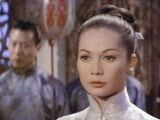
Nancy Kwan
From Wikipedia, the free encyclopedia


Nancy Kwan (born May 19, 1939) (Traditional Chinese: 關家蒨; Hanyu Pinyin: Guān Jiāqiàn; Cantonese: Kwan Ka Shin) is an American actress, who played a pivotal role in the acceptance of actors of Asian descent in major Hollywood film roles. Widely praised for her beauty, Kwan was considered a major sex symbol in the 1960s.


Biography

Nancy Kwan was born in Hong Kong to a Chinese father, architect Kwan Wing Hong, and Scottish mother, model Marquita Scott. Her parents divorced when she was two years old.

During the Japanese invasion in December 1941, Kwan's father, who worked for British intelligence, fled the city on foot along with Nancy and her brother, Ka Keung, and hid out in western China. The family returned to Hong Kong at the end of World War II. Kwan later studied at the Royal Ballet School in England, performing in Swan Lake and Sleeping Beauty at Covent Garden. She completed her studies with a certificate to teach ballet.

While she was in England, producer Ray Stark discovered her. At the time, Asian film characters, particularly those in major film roles, were often played by white actors and actresses, using makeup to simulate Asian facial features. However, at the age of 18, Kwan received the starring role of a beautiful and free-spirited Hong Kong prostitute who captivates artist Robert Lomax (William Holden) in the film adaptation of The World of Suzie Wong (1960). She followed it up the next year with the hit musical film Flower Drum Song (1961) and became one of Hollywood's most visible Eurasian actresses. She spent the 1960s starring in several films, such as The Wrecking Crew (movie) and appearing on such television series as, Hawaii Five-O. During this period of time, she commuting between the United States and Europe.

Kwan married Austrian ski instructor Peter Pock and gave birth to a son, Bernhard, Bernie Pock, who died at age 33 in 1996 of AIDS which he contracted from his wife. Kwan returned to her native Hong Kong in 1972 to be with her critically ill father. After his death, she married director-producer Norbert Meisel and returned to the United States.

Since returning to the USA in 1979, she has had guest appearances and co-starring roles on numerous television productions, such as Kung Fu and ER. She has also appeared on television commercials even into the 1990s. Today she is politically active as the spokeswoman for the Asian American Voters Coalition.
0 Replies
 
bobsmythhawk
 
  1  
Reply Sat 19 May, 2007 05:42 am
Pete Townshend
From Wikipedia, the free encyclopedia


Born May 19, 1945 (1945-05-19) (age 62)
Chiswick, London, England
Alias(es) Peter Dennis Blandford Townshend
Genre(s) Rock
Affiliation(s) The Who
Label(s) Track
Polydor
Atlantic
Atco
Decca
Rykodisc
Years active 1962 - present
Official site Official website

Peter Dennis Blandford ('Pete') Townshend (born May 19, 1945 in Chiswick, London), is an award winning English rock guitarist, singer, songwriter, and composer.

Townshend made his name as the guitarist and principal songwriter for rock band The Who. His career with them spans more than forty years, during which time the band grew to be considered one of the greatest[1] and most influential[2] rock bands of all time, in addition to being "possibly the greatest live band ever."[3] Townshend is the primary songwriter for the group, writing over 100 songs on the band's eleven studio albums, including the rock operas Tommy and Quadrophenia, plus dozens of additional songs that appeared as non-album track singles, bonus tracks on reissues and tracks on rarities compilations such as Odds and Sods. Although known mainly for being a guitarist, he has also played many other instruments on his solo albums, and on some Who albums (such as bass guitar, drums and piano).

Townshend has been a follower of the Indian religious guru Meher Baba, whose teachings require abstinence from drug use, something with which Townshend has had several public battles. His solo career, while only sporadically active, gave him the chance to play with one of his heroes, John Lee Hooker, as well as other respected rock musicians such as David Gilmour, Simon Phillips, Pino Palladino and Ronnie Lane, among others.

In addition to Townshend's musical activities, he has written newspaper and magazine articles, book reviews, essays, books, and scripts. He has also been a long-standing supporter of various charities and other philanthropic efforts. Suffering from hearing loss as a result of extensive exposure to loud music through headphones and in concerts, Townshend helped fund the formation of Hearing Education and Awareness for Rockers.

Townshend met and married Karen Astley in 1968, but the couple separated in 1994 and Townshend announced they would divorce in 2000. In 1997 he met Rachel Fuller, his current partner.

In 2003 he was cautioned by police for accessing a website alleged to advertise child pornography, which made international headlines. (Investigative journalist Duncan Campbell later stated in a Guardian article that Townshend was "falsely accused of accessing child pornography."[4]) Despite this potentially career-ending controversy, in 2006, The Who released its first album of new material in almost 25 years, and launched a lucrative world tour.


Biography

Childhood

Born into a musical family (his father Cliff Townshend was a professional saxophonist in The Squadronaires and his mother Betty a singer), Townshend exhibited a fascination with music at an early age. He had early exposure to American rock and roll (his mother recounts that he repeatedly saw the 1956 film Rock Around the Clock) and obtained his first guitar from his grandmother at age 12, which he described as a "Cheap Spanish thing."

Townshend's biggest guitar influences include Link Wray, John Lee Hooker, Bo Diddley and Hank Marvin of The Shadows.


Early career

In 1961 Townshend enrolled at Ealing Art College, and, a year later, he and his school friend from Acton County Grammar School John Entwistle founded their first band, The Confederates, a Dixieland duet featuring Townshend on banjo and Entwistle on horn. From this beginning they moved on to The Detours, a skiffle/rock and roll band fronted by then sheet-metal welder Roger Daltrey. In early 1964 The Detours renamed themselves The Who. Drummer Doug Sandom was replaced by Keith Moon not long afterwards. The band (now comprising Daltrey on vocals, Townshend on guitar, Entwistle on bass, and Moon on drums) were soon taken on by a mod publicist (named Peter Meaden) who convinced them to change their name to The High Numbers to give the band more of a mod feel. After bringing out one single ("Zoot Suit"), they dropped Meaden and were signed on by two new managers, Chris Stamp and Kit Lambert. They dropped The High Numbers name and reverted back to The Who.


Breakthrough of The Who

After The High Numbers once again became The Who, Townshend wrote several successful singles for the band, including "I Can't Explain," "Pictures of Lily," "Substitute," and "My Generation". These singles matched an ironic and psychologically astute lyrical sense with crashing, sometimes crude music, a combination that would later come to be known as the hallmark of the band. Townshend became known for his eccentric stage style during the band's early days, often interrupting concerts with lengthy introductions of songs, swinging his right arm against the guitar strings in his signature windmill-style, often smashing guitars on stage, and often repeatedly throwing his guitars into his amplifiers and speaker cabinets. Although the first incident of guitar-smashing was thought to be an accident, the onstage destruction of instruments became a regular part of The Who's performances that was further dramatized with pyrotechnics. Afterwards, he would flip it into the crowd. Townshend, always a voluble interview subject, would later relate these antics to German/British artist Gustav Metzger's theories on Auto-destructive art, to which he had been exposed at art school. In his later years, Townshend attributed the motivation for his onstage destruction of guitars to a youthful anger that had long since been extinguished with the passage of time.

The Who thrived, and continue to thrive, despite the death of two of the original members. They are regarded by many rock critics as one of the best[5][6] live bands[7][8] from a period of time that stretched from the late 1960s to the early 1980s, the result of a unique combination of high volume, showmanship, a wide variety of rock beats, and a high-energy sound that alternated between tight and free-form. The Who continue to perform critically acclaimed sets in the 21st century, including a highly regarded performance at the Live 8 music festival in July 2005.

Townshend remained the primary songwriter for the group, writing over 100 songs which appeared on the band's 11 studio albums. Among his most well-known accomplishments are the creation of Tommy, for which the term "rock opera" was coined, pioneering the use of feedback, and the introduction of the synthesizer as a rock instrument. Townshend revisited album-length storytelling techniques throughout his career and remains the musician most associated with the rock opera form. Townshend also demonstrated prodigious talent on the guitar and was influential as a player, developing a unique style which combined aspects of rhythm and lead guitar and a characteristic mix of abandon and subtlety. Many tracks also feature Townshend on piano or keyboards, though keyboard-heavy tracks usually featured guest artists such as Nicky Hopkins or Chris Stainton.


Spiritual path

Townshend has been a follower of the Indian religious guru Meher Baba, who blended elements of Vedantic, Sufi, and Mystic schools. Baba's teachings were a major source of inspiration for many of his works, including Tommy, and the unfinished Who project Lifehouse. The Who song "Baba O'Riley," written for Lifehouse and eventually appearing on the album Who's Next, was named for Meher Baba and minimalist composer Terry Riley. Although Baba's teachings require abstinence from drug use, Townshend has had several public battles with substance abuse, including a 1981 heroin overdose in which he came close to death.


Solo career

In addition to his work with The Who, Townshend has been sporadically active as a solo recording artist. Between 1969 and 1971 Townshend, along with other devotees to Meher Baba, recorded a trio of albums devoted to the yogi's teachings: Happy Birthday, I Am, and With Love. In response to bootlegging of these, he compiled his personal highlights (and "Evolution", a collaboration with Ronnie Lane), and released his first major-label solo title, 1972's Who Came First was a moderate success and featured demos of Who songs as well as a showcase of his acoustic guitar talents. He collaborated with The Faces bassist and fellow Meher Baba devotee Ronnie Lane on a duet album (1977's Rough Mix). Townshend's solo breakthrough, following the death of Who drummer Keith Moon, was the 1980 release Empty Glass, which included a top-10 single, "Let My Love Open the Door". This release was followed in 1982 by All the Best Cowboys Have Chinese Eyes, which included the popular radio track "Slit Skirts." Through the rest of the 1980s and early 1990s Townshend would again experiment with the rock opera and related formats, releasing several story-based albums including White City: A Novel (1985), The Iron Man: A Musical (1989), and Psychoderelict (1993).


Townshend has also recorded several live albums, including one featuring a supergroup he assembled called Deep End, who performed just two concerts and a TV show session for The Tube, to raise money for a charity supporting drug addicts. In 1984 Townshend published a collection of short stories entitled Horse's Neck. He has also reported that he is writing an autobiography. In 1993 he and Des MacAnuff wrote and directed the Broadway adaptation of the Who album Tommy, as well as a less successful stage musical based on his solo album The Iron Man, based upon the book by Ted Hughes. (MacAnuff and Townshend later co-produced the animated film The Iron Giant, also based on the Hughes story.)

From the mid-1980s through the present, Townshend has participated in a series of reunion and farewell concerts with the surviving members of The Who, including a 2002 tour that continued despite Entwistle's death, and a 2006 tour which is also for their new album, Endless Wire.


Hearing loss

Townshend suffers from partial deafness and tinnitus as a result of extensive exposure to loud music through headphones and in concert, including The Who concert at Charlton Athletic Football Ground, London 1976-05-31, that was listed in the Guinness Book of World Records, where the volume level was measured at 126 dB 32 m from the stage. Part of his condition may be attributed to an infamous 1967 appearance on the Smothers Brothers Comedy Hour, during which Keith Moon set off explosives inside his drum kit, while Townshend was standing in front of it. In 1989, Townshend gave the initial funding to allow the formation of the non-profit hearing advocacy group H.E.A.R. (Hearing Education and Awareness for Rockers).


Personal relationships

Townshend met Karen Astley (daughter of composer Ted Astley) while in art school and married her in 1968. The couple separated in 1994 and Townshend announced they would divorce in 2000. They have three children, Emma (b. 1969), who is a singer/songwriter, Aminta (b. 1971), and Joseph (b. 1989). For many years Townshend refused to confirm or deny rumors that he was bisexual. In a 2002 interview with Rolling Stone magazine, however, he explained that, although he engaged in some brief same-sex experimentation in the 1960s, he is heterosexual. Townshend now lives with his long-time partner, musician Rachel Fuller. He currently lives in Richmond, England.


Police caution

As part of the Operation Ore investigations, Townshend was cautioned by the police in 2003 after acknowledging a credit card access in 1999 to the Landslide website alleged to advertise child pornography.[9][10] He claimed in the press and on his website to have been engaged in research for A Different Bomb (a now-abandoned book based on an anti-child pornography essay published on his website in January 2002), his autobiography and as part of a campaign against child pornography. The police searched his house and confiscated 14 computers and other materials and after a four-month forensic investigation confirmed that they had found no evidence of child abuse images. Consequently, the police offered a caution rather than pressing charges, issuing a statement: "After four months of investigation by officers from Scotland Yard's child protection group, it was established that Mr Townshend was not in possession of any downloaded child abuse images." In a statement issued by his solicitor [11], Townshend said, "I accept that I was wrong to access this site, and that by doing so, I broke the law, and I have accepted the caution that the police have given me." As a statutory consequence of accepting the caution, Townshend was entered on the Violent and Sex Offender Register for five years[12]. This would normally prevent travel abroad, but in Townshend's case such restrictions have been waived, making possible his numerous concert performances with and without The Who since receiving the caution.

A later investigator stated that he was "falsely accused".[13] After obtaining copies of the Landslide hard drives and tracing Townshend's actions, investigative journalist Duncan Campbell wrote in PC Pro Magazine, "Under pressure of the media filming of the raid, Townshend appears to have confessed to something he didn't do." Campbell states that Townshend accessed a single site which was not connected with child pornography.[14]


New Who album after 24 year gap

In February 2006, a major world tour by The Who was announced to promote their first new album since 1982. Townshend published a semi-autobiographical story "The Boy Who Heard Music" as a serial on a blog beginning in September 2005. The blog closed in October 2006, as noted on Townshend's website. It is now owned by a different user and does not relate to Townshend's work in any way. On February 25, 2006, he announced the issue of a mini-opera inspired by the novella for June 2006. Also in October of 2006 Pete and The Who released an album entitled Endless Wire.


Literary work

Although best known for his musical compositions and musicianship, Pete Townshend has been extensively involved in the literary world for more than three decades, writing newspaper and magazine articles, book reviews, essays, books, and scripts.

An early example of Townshend's writing came in August 1970 with the first of nine installments of "The Pete Townshend Page", a monthly column written by Townshend for the British music paper Melody Maker. The column provided Townshend's perspective on an array of subjects, such as the media and the state of U.S. concert halls and public address systems, as well as providing valuable insight into Townshend's mindset during the evolution of his Lifehouse project.

Townshend also wrote three sizeable essays for Rolling Stone magazine, the first of which appeared in November 1970. "In Love With Meher Baba" described Townshend's spiritual leanings. "Meaty, Beaty, Big and Bouncy," a blow-by-blow account of The Who compilation album of the same name, followed in December, 1971. The third article, "The Punk Meets the Godmother," appeared in November 1977.

Also in 1977, Townshend founded Eel Pie Publishing, which specialized in children's titles, music books, and several Meher Baba-related publications. A bookstore named Magic Bus (after the popular Who song) was opened in London. The Story of Tommy, a book written by Townshend and his art school friend Richard Barnes about the writing of Townshend's 1969 rock opera and the making of the 1975 Ken Russell-directed film, was published by Eel Pie the same year.

In July 1983, Townshend took a position as an acquisitions editor for London publisher Faber and Faber. Notable projects included editing Animals frontman Eric Burdon's autobiography, Charles Shaar Murray's award-winning Crosstown Traffic, Brian Eno and Russell Mills's More Dark Than Shark, and working with Prince Charles on a volume of his collected speeches. Pete commissioned Dave Rimmer's Like Punk Never Happened, and was commissioning editor for radical playwright Steven Berkoff. Two years after joining Faber and Faber, Townshend decided to publish a book of his own. Horse's Neck, published in May 1985, was a collection of short stories he'd written between 1979 and 1984, tackling subjects such as childhood, stardom and spirituality. As a result of his position with Faber and Faber, Townshend developed a friendship with the Nobel prize-winning author of Lord of the Flies, Sir William Golding, and became friends with British Poet Laureate Ted Hughes. His friendship with Hughes led to Townshend's musical interpretation of Hughes's children's story, The Iron Man, six years later.

Townshend has written several scripts spanning the breadth of his career, including numerous drafts of his elusive Lifehouse project, the last of which, co-written with radio playwright Jeff Young, was published in 1999. In 1978, Townshend wrote a script for "Fish Shop" a play commissioned but not completed by London Weekend Television, and in mid-1984 he wrote a script for White City which led to a short film.

In 1989, Townshend began work on a novel entitled Ray High & The Glass Household, a draft of which was later submitted to his editor. While the original novel remains unpublished, elements from this story were used in Townshend's 1993 solo album Psychoderelict.

In 1993, Townshend authored another book, The Who's Tommy, a chronicle of the development of the award-winning Broadway version of his rock opera.

The opening of his web site, www.petetownshend.com, and his commerce site, www.eelpie.com, both in 2000, gave Townshend another outlet for literary work. Several of Townshend's essays have been posted online, including "Meher Baba?-The Silent Master: My Own Silence" in 2001, and "A Different Bomb," an indictment of the child pornography industry, the following year.

Townshend's most recent literary contribution is The Boy Who Heard Music, a novella which began a chapter-a-week online posting in September 2005. It is now available to read at www.petetownshend.co.uk. Like "Psychoderelict" this is yet another extrapolation of "Lifehouse" and Ray High & The Glass Household.

Townshend signed a deal with Little, Brown publishing in 1997 to write his autobiography. Reportedly half-complete and titled "Pete Townshend: Who He?" this is a work-in-progress. Townshend's creative vagaries and conceptual machinations have been chronicled by Larry David Smith in his book "The Minstrel's Dilemma" (Praeger 1999).


Musical equipment

Throughout his solo career and his career with The Who, Townshend has played (and destroyed) a large variety of guitars.

In the early days with The Who, Townshend played 6-string and 12-string Rickenbacker semi-hollow electric guitars primarily (particularly the Rose-Morris UK-imported models with special f-holes). However, as instrument-smashing became increasingly integrated into The Who's concert sets, he switched to more durable and resilient (and sometimes cheaper) guitars for smashing, such as the Fender Stratocaster, Fender Telecaster and various Danelectro models. In the late 1960s, Townshend began playing Gibson SG models almost exclusively, specifically the Special models. He used this guitar at the Woodstock and Isle of Wight shows in 1969 and 1970.

By 1972, Gibson changed the design of the SG Special which Townshend had been using previously, and thus he began using other guitars. For much of the 1970s, he used a Gibson Les Paul Deluxe, some with only two mini-humbucker pickups and others modified with a third pickup. He can be seen using several of these guitars in the documentary "The Kids Are Alright", although in the studio he often played a Gretsch guitar, most notably on the album Who's Next.

During the 1980s, Townshend mainly used Rickenbackers and Telecaster-style models built for him by Schecter and various other luthiers. Since the late-1980s, Townshend has used the Fender Eric Clapton Signature Stratocaster, with Lace-Sensor pickups, both in the studio and on tour. Some of his Stratocaster guitars feature a piezo pick-up system to simulate acoustic guitar tones. This piezo system is controlled by an extra volume control behind the guitar's bridge.

Townshend has used a number of other electric guitars, including various Gretsch, Gibson, and Fender models. He has also used Guild, Takamine and Gibson J-200 acoustic models. One Gretsch was a vintage model given to him by Joe Walsh.

There are several Gibson Pete Townshend signature guitars, such as the Pete Townshend SG, the Pete Townshend J-200, and three different Pete Townshend Les Paul Deluxes. The SG was clearly marked as a Pete Townshend limited edition model and came with a special case and certificate of authenticity, signed by Pete himself. There has also been a Pete Townshend signature Rickenbacker limited edition guitar.

He also used the Gibson ES-335, one of which he donated to the Hard Rock Cafe. Townshend also used a Gibson EDS-1275 double neck very briefly around 1968, and a Fender XII Guitar for the studio sessions for Tommy for the 12 strings guitar parts.

Most recently in 2006, Townshend had a pedalboard designed by longtime gear guru Pete Cornish. The board apparently is composed with a compressor, an old Boss OD-1 overdrive pedal, as well as a T-Rex Replica delay pedal.

Over the years, Pete Townshend has used many types of amplifiers, including Vox, Fender, Marshall, Hiwatt etc., sticking to using Hiwatt amps for most of four decades. Around the time of Who's Next, he used Fender amps. Nowadays, his rig consists of four Fender Vibro-King stacks and a Hiwatt head driving two custom made 2x12" Hiwatt/Mesa Boogie speakers.

See also: The Who#Equipment
Townshend figured prominently in what is widely known in rock circles as the "Marshall Stack". It has been recounted by others during the start of popularity of Jim Marshall's guitar amplifiers, that Townshend became a user of these amps.

He also ordered several speaker cabinets that contained eight speakers in a houseing standing nearly six feet in height with the top half of the cabinet slanted slightly upward. These became hard to move and were incredibly heavy.

Jim Marshall then cut the massive speaker cabinet into two separate speaker cabinets, at the suggestion of Townshend, with each cabinet containing four 12-inch speakers. One of the cabinets had half of the speaker baffle slanted upwards and Marshall made these two cabinets stackable. The Marshall stack was born, and Townshend used these as well has Hiwatt stacks.


Interviews

From the The Who's emergence on the British musical landscape, Pete Townshend could always be counted upon for good copy. By early 1966 he had become the band's spokesman, interviewed separate from the band for the BBC television series A Whole Scene Going admitting that the band used drugs and that he considered The Beatles' backing tracks "flippin' lousy." Throughout the 1960s Townshend made regular appearances in the pages of British music magazines, but it was a very long interview he gave to Rolling Stone in 1968 that sealed his reputation as one of rock's leading intellectuals and theorists on rock music.

Townshend gave interview after interview to the newly risen underground press, not only providing them with a star for their covers, but firmly establishing his reputation as an honest and erudite commentator on the rock 'n' roll scene. In addition, he wrote his own articles, starting a regular monthly column in Melody Maker, and contributing to Rolling Stone with an article on his avatar Meher Baba and a review of The Who's album Meaty Beaty Big and Bouncy.

Townshend has withdrawn from the press on occasion. On his 30th birthday, Townshend discussed his feelings that The Who were failing to journalist Roy Carr, making acid comments on fellow Who member Roger Daltrey and other leading members of the British rock community. Carr printed his remarks in the NME causing strong friction within The Who and embarrassing Townshend. Feeling betrayed, he stopped interviews with the press for over two years.

Nevertheless, Townshend has maintained close relationships with journalists, and sought them out in 1982 to describe his two-year battle with cocaine and heroin. Some of those press members turned on him in the 1980s as the punk rock revolution led to widespread dismissal of the old guard of rock. Townshend attacked two of them, Julie Burchill and Tony Parsons, in the song "Jools And Jim" on his album Empty Glass after they made some derogatory remarks about Who drummer Keith Moon. Meanwhile several journalists denounced Townshend for what they saw as a betrayal of the idealism about rock music he had espoused in his earlier interviews when The Who participated in a tour sponsored by Schlitz in 1982 and by Miller Brewing in 1989. Townshend's 1993 concept album, Psychoderelict, offers a scathing commentary on journalists in the character of Ruth Streeting, who attempts to scandalize the main character, Ray High.

By the 1990s Pete was still a popular interview subject although his comments were sometimes given a scandalous spin. A 1990 book of interviews by Timothy White, Rock Lives, contained Townshend's thoughts on the meaning of his song "Rough Boys" that gave the mistaken impression that he was gay or bisexual. The information was picked up by the British tabloid press that spread this misinformation around the world. Townshend kept silent on the issue out of respect for his gay friends, until clarifying in a 1994 Playboy interview that he was neither gay nor bisexual.

Townshend still continues to write pieces on rock and his place in it, mostly for his website but he also remains a celebrity sought after by music magazines and newspapers to the present day.

On October 25, 2006, Townshend declined at the last minute to do a scheduled interview with Sirius Satellite Radio star Howard Stern after Stern's co-host Robin Quivers and sidekick Artie Lange made joking references to his 2003 arrest[15]. Stern conducted an interview instead with Roger Daltrey and repeatedly expressed regret about the utterances of his on-air colleagues stating that they did not reflect his own feelings of respect for Townshend.


Religion

Townshend showed no predilection for religious belief in the first years of The Who's career and few would have suspected that the violent guitar-smasher was even a closet acolyte. By the beginning of 1968, however, Townshend had begun to explore spiritual ideas. In January 1968, The Who recorded his song "Faith in Something Bigger" (Odds and Sods LP). Later that same month during a tour of Australia and New Zealand, The Small Faces' member Ronnie Lane introduced Townshend to the writings of the Indian "perfect master" Meher Baba.

Townshend swiftly absorbed all the writings of Meher Baba he could find and by April 1968, announced himself a disciple of Baba. It was at that time that Townshend, who had been searching the past two years for a basis for a rock opera, created a story inspired by the teachings of Baba and other Indian spiritualists that would ultimately become Tommy.

Tommy did more than revitalize The Who's career (which was moderately successful at this point but had plateaued), it also marked a renewal of Townshend's songwriting and his spiritual studies infused most of his work from Tommy forward. However, unlike other openly spiritual rock stars whose music became dogmatic once they discovered religion, Townshend generally soft-pedaled the religious nature of his work. This may have been because his newfound passion was not shared by his bandmates whose attitude was tolerant but who were unwilling to become the spokesmen for a particular religion. Few of the thousands of fans who packed stadiums across Europe and America to see The Who noticed the religious message in the songs; that "Bargain" and the middle section of "Behind Blue Eyes" from Who's Next and "Listening To You" from Tommy were all originally written as prayers, that "Drowned" from Quadrophenia and "Don't Let Go The Coat" from Face Dances were based on sayings by Meher Baba, that the "who are you, are you, are you" chorus from the song "Who Are You" was based on Sufi chants, or that "Let My Love Open The Door" was not a message from a lover but from God.

In interviews Townshend was more open about his beliefs, penning an article on Baba for Rolling Stone and stating that following Baba's teachings, he was opposed to the use of all psychedelic drugs, making him one of the first rock stars with counterculture credibility to turn against their use.

His stardom quickly made him the world's most-notable follower of Meher Baba. Having just missed out on meeting his avatar with Baba's death January 31, 1969 (work on Tommy kept him from making the pilgrimage), Townshend made several trips to visit Baba's tomb in India as well as becoming a frequent visitor to the Meher Baba Spiritual Center in Myrtle Beach, South Carolina. At home he recorded and released his most overtly spiritual songs on records assembled, pressed and sold by Baba organizations. When these records became widely bootlegged, Townshend put together a selection of the tracks for release as the solo album Who Came First. One of the songs from that album, "Parvardigar," a Baba prayer set to music by Townshend, would gradually be accepted as a hymn by the Baba movement. In 1976 he opened the Oceanic Centre in London, using it as a haven for English Baba followers and Americans making a pilgrimage to Baba's tomb as well as a place for small concerts (one such in 1979 was released on CD in 2001 as Pete Townshend & Raphael Rudd?-The Oceanic Concerts) and a repository for films made of Baba.

Townshend became a lower-profile member after 1982 having felt that his just-ended two-year indulgence in cocaine and heroin had made him a poor candidate to be a spokesman. Nevertheless his discipleship remains an ever-present element of his career and a key to those looking for the meaning and background to his work.


Charity work

Pete Townshend has woven a long history of involvement with various charities and other philanthropic efforts throughout his career, both as a solo artist and with The Who. His first solo concert, for example, was a 1974 benefit show which was organized to raise funds for the Camden Square Community Play Center.

The earliest public example of Townshend's involvement with charitable causes is the relationship he established with the Richmond-based Meher Baba Association. In 1968, Townshend donated the use of his former Wardour Street apartment to the Meher Baba Association. The following year, the association was moved to another Townshend-owned apartment, the Eccleston Square former residence of wife Karen. Townshend sat on a committee which oversaw the operation and finances of the center. "The committee sees to it that it is open a couple of days a week, and keeps the bills paid and the library full," he wrote in a 1970 Rolling Stone article. In 1969 and 1972 Townshend produced two limited release albums, Happy Birthday and I Am, for the London-based Baba association. This led to 1972's Who Came First, a more widespread release, 15 percent of the revenue of which went to the Baba association. A further limited release, With Love, was released in 1976. A limited edition boxed set of all three limited releases on CD, Avatar, was released in 2000, with all profits going to the Avatar Meher Baba Trust in India, which provided funds to a dispensary, school, hospital and pilgrimage center.

In July 1976, Townshend opened ?'Meher Baba Oceanic', a London activity centre for Baba followers which featured film dubbing and editing facilities, a cinema and recording studio. In addition, the centre served as a regular meeting place for Baba followers. Townshend offered very economical (reportedly £1 per night) lodging for American Baba followers who needed an overnight stay on their pilgrimages to India. "For a few years, I had toyed with the idea of opening a London house dedicated to Meher Baba," he wrote in a 1977 Rolling Stone article. "In the eight years I had followed him, I had donated only coppers to foundations set up around the world to carry out the Master's wishes and decided it was about time I put myself on the line. The Who had set up a strong charitable trust of its own which appeased, to an extent, the feeling I had that Meher Baba would rather have seen me give to the poor than to the establishment of yet another so-called "spiritual center." Townshend also embarked on a project dedicated to the collection, restoration and maintenance of Meher Baba-related films. The project was known as MEFA, or Meher Baba European Film Archive.


Children's charities

Townshend has been an active champion of children's charities. The debut of Pete Townshend's stage version of Tommy took place at San Diego's La Jolla Playhouse in July 1992. The show was earmarked as a benefit for the London-based Nordoff-Robbins Music Therapy Foundation, an organization which helps autistic and retarded children. Townshend performed at a 1995 benefit organized by Paul Simon at Madison Square Gardens' Paramount Theatre, for The Children's Health Fund. The following year, Townshend performed at a benefit for the Bridge School, a California facility for children with severe speech and physical impairments. In 1997, Townshend established a relationship with Maryville Academy, a Chicago area children's charity. Between 1997 and 2002, Townshend played five benefit shows for Maryville Academy, raising at least $1,600,000. In addition, proceeds from the sales of his 1999 release Pete Townshend Live were also donated to Maryville Academy. As a member of The Who, Pete Townshend has also performed a series of concerts, beginning in 2000, benefitting the Teenage Cancer Trust in the UK, raising several million pounds. In 2005, Townshend performed at New York's Gotham Hall for Samsung's Four Seasons of Hope, an annual children's charity fundraiser.


Drug rehabilitation

Another area of focus for Townshend has been that of drug rehabilitation. "What I'm most active in doing is raising money to provide beds in clinics to help people that have become victims of drug abuse," he said in a late 1985 radio interview. "...In Britain, the facilities are very, very, very lean indeed…although we have a national health service, a free medical system, it does nothing particularly for class A drug addicts - cocaine abusers, heroin abusers. …we're making a lot of progress. …the British government embarked on an anti-heroin campaign with advertising, and I was co-opted by them as a kind of figurehead, and then the various other people co-opted me into their own campaigns, but my main work is raising money to try and open a large clinic." The ?'large clinic' Townshend was referring to was a plan he and drug rehabilitation pioneer Meg Patterson had devised to open a drug treatment facility in London. The plan failed to come to fruition. Proceeds from two early 1979 concerts by the Who raised £20,000 for Patterson's Pharmakon Clinic in Sussex.

Further examples of Townshend's anti-drug activism took place in the form of a 1984 benefit concert, an article he wrote a few days later for Britain's Mail On Sunday urging better care for the nation's growing number of drug addicts, and the formation of a charitable organization, ?'Double-O Charities', to raise funds for the causes he'd recently championed. Townshend also personally sold fund-raising anti-heroin T-shirts at a series of UK Bruce Springsteen concerts, and reportedly financed a trip for troubled former Clash drummer Topper Headon to undergo drug rehabilitation treatment. Townshend's 1985/86 band, 'Deep End', played two benefits at Brixton Academy in 1985 for 'Double-O Charities'.


Amnesty International

In 1979, Townshend became the first major rock musician to donate his services to the human rights organization Amnesty International when he performed three songs for its benefit show The Secret Policeman's Ball - performances that were released on record and seen in the film of the show. The show was Townshend's first major live solo appearance. Townshend's acoustic performances of three of his songs (Pinball Wizard, Drowned, and Won't Get Fooled Again) were subsequently cited as having been the forerunner and inspiration for the "unplugged" phenomenon in the 1990s. Townshend had been invited to perform for Amnesty by Martin Lewis, the producer of The Secret Policeman's Ball who stated later that Townshend's participation had been the key to his securing the subsequent participation for Amnesty (in the 1981 sequel show) of Sting, Eric Clapton, Jeff Beck, Phil Collins and Bob Geldof. Other performers inspired to support Amnesty International in future Secret Policeman's Ball shows and other benefits because of Townshend's early commitment to the organization include Peter Gabriel, Bruce Springsteen, David Gilmour and U2 singer Bono who in 1986 told Rolling Stone magazine: "I saw The Secret Policeman's Ball and it became a part of me. It sowed a seed..."


Miscellaneous efforts

Highlights of Pete Townshend's other public charitable efforts include the following:

A 1972 Tommy performance which raised nearly £10,000 for the Stars Organization for Spastics charity
A 1979 "Rock Against Racism" benefit concert, organized to raise money to pay the legal costs of those arrested in a London area anti-racism demonstration. Townshend helped organize the show, topped the bill and supplied the event lighting and equipment.
A 1981 "Rock Against Unemployment" benefit concert, part of the People's March For Jobs campaign.
A 1982 Prince's Trust Gala Benefit performance
Involvement in fundraising supportive of Nelson Mandela's African National Congress.
Performing in a 1986 Royal Albert Hall benefit show for the victims of a Colombian Volcano disaster which killed over 25,000 people.
A 2001 benefit show for San Diego's La Jolla Playhouse which raised approximately $100,000.
Performing in "Rock the Dock", a 1998 benefit for striking Liverpool dock workers.
Organizing an online auction in 2000 to raise funds for Oxfam's emergency services to help those affected by floods in Mozambique and a combination of drought and food shortages in Ethiopia. Among the auctioned items were a selection of gold and platinum awards, letters from celebrities such as Eric Clapton and Paul McCartney, and musical instruments (including a smashed Rickenbacker guitar and the guitar on which Townshend composed the Who classic Behind Blue Eyes). The centerpiece of the auction, however, was a 1957 Fender Stratocaster which was given to Townshend as a gift by Eric Clapton after Townshend had helped arrange Clapton's 1973 comeback show at the Rainbow. The guitar was ultimately purchased by Pete Townshend, Mick Jagger and David Bowie, and presented to British Prime Minister Tony Blair.
Performing at the Royal Albert Hall in a 2004 Ronnie Lane tribute show which served as a fundraiser for both Lane's family and multiple sclerosis research.
0 Replies
 
bobsmythhawk
 
  1  
Reply Sat 19 May, 2007 05:58 am
Grace Jones
From Wikipedia, the free encyclopedia

Background information
Birth name Grace Mendoza
Born May 19, 1948 (1948-05-19) (age 58)
Origin Spanish Town, Jamaica
Genre(s) Urban, Soul, Dance-pop, New Wave, Dance, Dancehall
Occupation(s) Singer, Songwriter, Actress, Supermodel
Instrument(s) Vocals, Accordion
Years active 1973 - Present
Label(s) Island Records, Manhattan Records, Capitol
Associated
acts Sly Dunbar, Robbie Shakespeare

Grace Jones (born Grace Mendoza on May 19, 1948, in Spanish Town, Jamaica) is a model, singer and actress.


Early life

The daughter of a preacher, her parents took Grace and her brother, Bishop Noel Jones, to relocate to Syracuse, New York. Before becoming a successful model in New York and Paris, Grace studied theatre at Syracuse University.


Musical career

Jones secured a record deal with Island Records in 1977, which resulted in a string of dance club hits and a large gay following. The three disco albums she recorded ?- Portfolio (1977), Fame (1978), and Muse (1979) ?- generated considerable success in that market. During this period, she also became a muse to Andy Warhol, who photographed her extensively. Jones also accompanied him to famed New York City nightclub Studio 54 on many occasions.

Towards the end of the 1970s, Jones adapted the emerging New Wave music to create a different style for herself. Still with Island, and now working with producers Alex Sadkin and Chris Blackwell, she released the acclaimed albums Warm Leatherette (1980) and Nightclubbing (1981). These included re-imaginings of songs by Sting, Iggy Pop, The Pretenders, Roxy Music, Flash and the Pan, The Normal, Ástor Piazzolla and Tom Petty.

Parallel to her musical shift was an equally dramatic visual makeover, created in partnership with stylist Jean-Paul Goude, whom she eventually married and by whom she had a son. Jones adopted a severe, androgynous look with square-cut hair and angular, padded clothes. The iconic cover photographs of Nightclubbing and, subsequently, Slave to the Rhythm (1985) exemplified this new identity. To this day, Jones is known for her unique look at least as much as she is for her music. Her collaboration with Sadkin and Blackwell continued with the dub reggae-influenced album Living My Life.

In the mid 1980s, she worked with Trevor Horn for the conceptual musical collage Slave to the Rhythm and with producer Nile Rodgers for Inside Story (1986) - her first album after leaving the Island Records label. The well-received Slave to the Rhythm consisted of several re-workings of the title track (the single of which hit #12 in the UK) while Inside Story produced her last Billboard Hot 100 hit to date, "I'm Not Perfect (But I'm Perfect For You)," one of several songs she co-wrote with Bruce Woolley.[1] Bulletproof Heart (1989) spawned the #1 U.S. Hot Dance Music/Club Play hit "Love on Top of Love - Killer Kiss," produced by C+C Music Factory's David Cole and Robert Clivilles. Although she yet to become a truly mainstream recording artist in the United States, much of her musical output is still popular on the Billboard's Hot Dance Music/Club Play and Hot Dance Airplay charts and many of her songs are regarded as classics to this day. Jones was able to find mainstream success in the United Kingdom, scoring a number of Top 40 entries on the UK Singles Chart. To date, she has released 43 singles (commercial and/or promotional), including several non-album tracks.


Voice

Grace Jones is a contralto vocalist. Grace is often critized for having a flat voice, when she is in-fact a highly stylized vocalist. She sings in two modes; her monotonous talk-sing as in songs like "Private Life", "Walking in the Rain" and "The Apple Stretching" and in an almost soprano mode in such songs as La Vie en Rose and "Slave to the Rhythm". link Her vocal range spans two octaves. She had a significant voice part in Arcadia's 1985 song and video, "Election Day", from the album So Red the Rose.


Style and image

Grace Jones' masculine attire, height (5' 10½" (1.79 m)) and manner was a clear influence on the 'power dressing' movement of the 1980s, and on musical artists such as Annie Lennox of Eurythmics and Claudie Fritsch-Mentrop of Desireless.[citation needed] She would also exemplify the "box" haircut style in the 1970s, which would be worn by many black men all over America throughout much of the next decade, notably Larry Blackmon of the funk group Cameo. She maintained parallel recording and acting careers, her film roles and modelling work often overshadowed her musical output. Her strong visual presence extended to her stage work. In her performances she adopted various personas and wore outlandish costumes, particularly during her years with Goude. One such performance was at the Paradise Garage in 1985, wherein she collaborated with visual artist Keith Haring for her costume. Haring painted her body in tribal patterns and fitted her with wire armor.[2] The muralist also painted her body for the video to "I'm Not Perfect (But I'm Perfect for You)".


Recent career

Grace Jones continues to perform. In November 2004, she sang her hit "Slave to the Rhythm" at a tribute concert for Trevor Horn at Wembley Arena. She received rave reviews, despite being absent in the music scene for some time.[citation needed] In February 2006, Jones was the celebrity runway model for Diesel's show in New York.

On October 20, 2006, the 3-CD box set Ultimate Collection was released in Europe by the CCM label, in a limited edition. On November 3, 2006, Jones took part in a gathering of people sharing the surname, performing "Slave to the Rhythm" and "Pull up to the Bumper" to a large crowd of Joneses. 1,224 people were gathered that day at the Wales Millennium Centre in Cardiff, breaking the previous record for the largest surname-based gathering.[3]

Producer Ivor Guest has confirmed that Grace has completed recording her new album, due out in 2007.[4] Nick Hooker has directed the first video from the upcoming album.[5] Other participants on the new album are Sly and Robbie, Brian Eno, Wally Badarou, Tricky, Uzziah 'Sticky' Thompson, Mikey 'Mao' Chung, Barry Reynolds, John Justin, Martin Slattery, Philip Sheppard, Paulo Goude, Don-E and Tony Allen. (Recording engineering duties by Cameron 'Engine' Craig).[citation needed]

In April 2007, Version2 listed "Corporate Cannibal" as the new video directed by Nick Hooker for Grace Jones.[6]


Film career

Jones' work as an actress in mainstream film first began with the role of Zula, the amazon in the 1984 film Conan the Destroyer alongside Arnold Schwarzenegger and NBA legend Wilt Chamberlain. Prior to this she appeared in low-budget films, often with sexually explicit content. She next landed the role of May Day, in the 1985 James Bond movie A View to a Kill.

She appeared in a number of other motion pictures including the 1986 vampire film, Vamp (wherein she used her Keith Haring body paint as part of her role as a vampiric exotic dancer) as well as Helen Strange in the Eddie Murphy film Boomerang - for which she recorded the title song, 7 Day Weekend - in 1992. In 2001, she appeared alongside Tim Curry in Wolf Girl (aka Blood Moon), as a transvestite circus freakshow performer named Christoph/Christine. She also appeared in an episode of the Beastmaster television series as the Impatra Warrior.

Controversies

In 1981, Grace Jones slapped chat show host Russell Harty across the face live on air after he turned to interview other guests. This topped a 2006 BBC poll of the most shocking TV chat show moments.[7]

She was featured in the September 1987 issue of Playboy magazine with Dolph Lundgren.

In September 1998, Jones was banned from all Disney properties worldwide after baring her breasts in a concert at Walt Disney World.[8]

In April 2005, Jones was accused of verbally abusing a Eurostar train manager in a quarrel over a ticket upgrade and was either escorted off the train or left on her own accord, later saying she was mistreated. [9]


Personal life

Jones dated Dolph Lundgren in the 1980s. In February 1996, Jones was married to a bodyguard named Atila Altaunbay. She has a son named Paulo from her previous relationship with Jean-Paul Goude; Paulo is a member of French pop group La Gouache. As of 18 August 2006, she was engaged to Ivor Guest, the 4th Viscount Wimborne.
0 Replies
 
bobsmythhawk
 
  1  
Reply Sat 19 May, 2007 06:03 am
I feel like my body has gotten totally out of shape, so I got my doctor's permission to join a fitness club and start exercising. I decided to take an aerobics class for seniors. I bent, twisted, gyrated, jumped up and down, and perspired for an hour. By the time I got my leotards on, the class was over.
0 Replies
 
Letty
 
  1  
Reply Sat 19 May, 2007 08:05 am
Well, folks, there's our hawkman with his great bio's. Thanks, Boston Bob, and guess what we're gonna do, buddy. Wait for someone's little puppy to put the visages to the celebs.

Loved your "sweatin' to the oldies" funny, honey. Thanks for the morning smile.

Until our Raggedy arrives, here is a song from Peter's group.


The Who

Why Did I Fall For That


The streets of the future littered with remains

Of both the fools and the so called brains

The whole prediction is enough to kill

But only God knows if it won't or it will

Nobody knows why we fell so flat

Some silly creature said we'd never crack

Most would just survive and then bounce back

But the rest are crying "Why'd I fall for that crap"

Why did I fall for that?


So many rash promises sincerly made

By people who believed that we were being saved

They made us all believe that we were acting white

But the truth is we've forgotten how we used to fight

Nobody knows why we fell so flat

We're impotent and neutered like whining cats

We've found the piper but we've lost the rats

But the kids are crying "Why'd I fall for that dad?"

Why did you fall?


It never rains under my umbrella


Four minutes to midnight on a sunny day

Maybe if we smile the clock'll fade away

Maybe we can force the hands to just reverse

Maybe a word, maybe maybe is a curse

Nobody knows why we fell so flat

We've never been taught to fight or to face up to facts

We simply believe that we'd remain intact

But history is asking why did you fall for that

Why did you fall?


Why did I fall for that

Why did I fall for that

Why did I fall for that
0 Replies
 
edgarblythe
 
  1  
Reply Sat 19 May, 2007 08:08 am
Can't Touch This
Mc Hammer

You can't touch this

My, my, my music hits me so hard
Makes me say "Oh my Lord"
Thank you for blessing me
With a mind to rhyme and two hype feet
It feels good, when you know you're down
A super dope homeboy from the Oaktown
And I'm known as such
And this is a beat, uh, you can't touch

I told you homeboy (You can't touch this)
Yeah, that's how we living and you know (You can't touch this)
Look at my eyes, man (You can't touch this)
Yo, let me bust the funky lyrics (You can't touch this)

Fresh new kicks, advance
You gotta like that, now you know you wanna dance
So move, outta your seat
And get a fly girl and catch this beat
While it's rolling, hold on
Pump a little bit and let 'em know it's going on
Like that, like that
Cold on a mission so fall them back
Let 'em know, that you're too much
And this is a beat, uh, you can't touch

Yo, I told you (You can't touch this)
Why you standing there, man? (You can't touch this)
Yo, sound the bell, school is in, sucka (You can't touch this)

Give me a song, or rhythm
Make 'em sweat, that's what I'm giving 'em
Now, they know
You talking about the Hammer you talking about a show
That's hype, and tight
Singers are sweating so pass them a wipe
Or a tape, to learn
What's it gonna take in the 90's to burn
The charts? Legit
Either work hard or you might as well quit

That's word because you know...

You can't touch this

Break it down! (Music breaks down) Stop, Hammer time!

Go with the funk, it is said
That if you can't groove to this then you probably are dead
So wave your hands in the air
Bust a few moves, fun your fingers through your hair
This is it, for a winner
Dance to this and you're gonna get thinner
Move, slide your rump
Just for a minute let's all do the bump, bump, bump

Yeah... (You can't touch this)
Look, man (You can't touch this)
You better get hype, boy, because you know (You can't touch this)
Ring the bell, school's back in (You can't touch this)

Break it down!Stop, Hammer time!
You can't touch this )
You can't touch this


Break it down! (Nice pants, Hammer) Stop, Hammer time!

Every time you see me
The Hammer's just so hype
I'm dope on the floor and I'm magic on the mic
Now why would I ever stop doing this?
With others making records that just don't hit
I've toured around the world, from London to the Bay
It's "Hammer, go Hammer, MC Hammer, yo Hammer"
And the rest can go and play

You can't touch this
0 Replies
 
Raggedyaggie
 
  1  
Reply Sat 19 May, 2007 09:11 am
And away we go:


http://www.chssc.org/honorees/2006/nancykwan.jpg
http://iacmusic.com/Uploads/56076_12_23_2006_3_35_10_PM_-_pete4dc.jpghttp://www.ohm1.com/Grace-Jones-Main.jpg

and a Good Day to all. Very Happy
0 Replies
 
Letty
 
  1  
Reply Sat 19 May, 2007 09:23 am
There she is, folks, our own Raggedy with a triple threat today.

Great, PA, and we are looking at Nancy, Pete, and Grace.

Wow! Nancy Kwan looks nothing like I had her pictured.

edgar, I really like M.C. Hammer. Wonder if he has recovered from losing everything.

Well, from the Flower Drum Song


Song: I Enjoy Being a Girl

I'm a girl, and by me that's only great!
I am proud that my silhouette is curvy,
That I walk with a sweet and girlish gait
With my hips kind of swivelly and swervy.

I adore being dressed in something frilly
When my date comes to get me at my place.
Out I go with my Joe or John or Billy,
Like a filly who is ready for the race!

When I have a brand new hairdo
With my eyelashes all in curl,
I float as the clouds on air do,
I enjoy being a girl!

When men say I'm cute and funny
And my teeth aren't teeth, but pearl,
I just lap it up like honey
I enjoy being a girl!

I flip when a fellow sends me flowers,
I drool over dresses made of lace,
I talk on the telephone for hours
With a pound and a half of cream upon my face!

I'm strictly a female female
And my future I hope will be
In the home of a brave and free male
Who'll enjoy being a guy having a girl... like... me.

When men say I'm sweet as candy
As around in a dance we whirl,
It goes to my head like brandy,
I enjoy being a girl!

When someone with eyes that smoulder
Says he loves ev'ry silken curl
That falls on my iv'ry shoulder,
I enjoy being a girl!

When I hear the compliment'ry whistle
That greets my bikini by the sea,
I turn and I glower and I bristle,
But I happy to know the whistle's meant for me!

I'm strictly a female female
And my future I hope will be
In the home of a brave and free male
Who'll enjoy being a guy having a girl... like... me.
0 Replies
 
Raggedyaggie
 
  1  
Reply Sat 19 May, 2007 10:43 am
That doesn't look like Nancy, does it? What a difference a smile makes Very Happy This is how I remember her:

http://www.asahi-net.or.jp/~hj7h-tkhs/picture_actress/kwan_3.jpghttp://star.qu123.com/People/Images/Gallery/382/2e0c9bb3f0c5b20a61074851a30b4dcc.jpg
0 Replies
 
Letty
 
  1  
Reply Sat 19 May, 2007 12:13 pm
Now THAT is more like Nancy, Raggedy, and inspires this song.

"What A Difference A Smile Makes"

What a difference a smile makes
Twenty-four little hours
Brought the sun and the flowers
Where there used to be rain

My yesterday was blue, dear
Today I'm a part of you, dear
My lonely nights are through, dear
Since you said you were mine

What a difference a smile makes
There's a rainbow before me
Skies above can't be stormy
Since that moment of bliss, that thrilling kiss

It's heaven when you find romance on your menu
What a difference a smile made
And the difference is you

What a difference a smile makes
There's a rainbow before me
Skies above can't be stormy
Since that moment of bliss, that thrilling kiss

It's heaven when you find romance on your menu
What a difference a smile made
And the difference is you.

A few alterations there, folks
0 Replies
 
edgarblythe
 
  1  
Reply Sat 19 May, 2007 01:19 pm
Everything's Okay
Recorded by hank williams
Words and music by hank williams

I [g] went to the country - just [c] the other day
To see [d7] my uncle bill and sorta [g] pass the time away
I asked him how hed been - since [c] last, Id passed his way
He rubbed his [d7] chin - heres what he had [g] to say.

My wifes been sick - the [c] youngns, too
And Im [d7] durn near - down [g] with the flu
The cows gone dry - and them [c] hens wont lay
But - [d7] were still a-livin - so ever-[g] things okay.

The hogs took the cholera and theyve all done died
The bees got mad - and they left the hive
The weevils got the corn and the rain rotted the hay
But - were still a-livin - so everthings okay.

The porch rotted down - thats more expense
The durned old mule - he tore down the fence
The mortgage is due and - I cant pay
But - were still a-livin - so everthings okay.

The cow broke in the field and eat up the beans
The durn rabbits - they got the turnip greens
And my ma-in-law just moved in to stay
But - were still a-livin - so everthings okay.

My lands so poor - so hard and yeller
You have to set on a sack of fetilizer to raise an umbreller
And it rains out here - nearly ever day
But - were still a-livin - so everthings okay.

The wells gone dry and I have to tote the water
Up from the spring - about a mile and a quarter
My helper, he quit - for the lack of pay
But - were still a-livin - so everthings okay.

The house it leaks - it needs a new top
When it rains - it wets everthing we got
The chimney fell down - just yesterday
But - were still a-livin - so everthings okay.

The corn meals gone and the meats run out
Got nothin to kill to put in the smokehouse
The preachers comin sunday - to spend the day
But - were still a-livin - so everthings okay.

The canned stuffs spoiled - else the jars got broke
And all we got left is one old billy goat
Were gonna have a new baby about the first of may
But - were still a-livin - so everthings okay.

My crop it rotted - in the ground
I asked for another loan but the banker turned me down
But - were still a-livin and were prayin for better days
So - after all, everthings in purty good shape.
0 Replies
 
Letty
 
  1  
Reply Sat 19 May, 2007 01:33 pm
Ah, edgar, I do wonder how many Hanks there have been in country music.

Love Hank Snow, too.

That big eight-wheeler rollin' down the track
Means your true-lovin' daddy ain't comin' back
'Cause I'm movin' on, I'll soon be gone
You were flyin' too high, for my little old sky
So I'm movin' on

That big loud whistle as it blew and blew
Said hello to the southland, we're comin' to you
When we're movin' on, oh hear my song
You had the laugh on me, so I've set you free
And I'm movin' on

Mister fireman won't you please listen to me
'Cause I got a pretty mama in Tennessee
Keep movin' me on, keep rollin' on
So shovel the coal, let this rattler roll
And keep movin' me on

Mister Engineer, take that throttle in hand
This rattler's the fastest in the southern land
To keep movin' me on, keep rollin' on
You gonna ease my mind, put me there on time
And keep rollin' on

I've told you baby, from time to time
But you just wouldn't listen or pay me no mind
Now I'm movin' on, I'm rollin' on
You've broken your vow, and it's all over now
So I'm movin' on

You've switched your engine now I ain't got time
For a triflin' woman on my main line
Cause I'm movin on, you done your daddy wrong
I warned you twice, now you can settle the price
'Cause I'm movin on

But someday baby when you've had your play
You're gonna want your daddy but your daddy will say
Keep movin' on, you stayed away too long
I'm through with you, too bad you're blue
Keep movin' on
0 Replies
 
edgarblythe
 
  1  
Reply Sat 19 May, 2007 03:07 pm
Another Hank

Hank Locklin - Please Help Me Im Fallin Lyrics

Please help me I'm fallin' in love with you
Close the door to temptation don't let me walk through
Turn away from me darlin' I'm begging you to
Please help me I'm fallin' in love with you

I belong to another who's arms have grown cold
But I promised forever to have and to hole
I can never be free dear, but when I'm with you
I know that I'm losing the will to be true

Please help me I'm fallin' and that would be sin
Close the door to temptation don't let me walk in
For I musn't want you but darlin' I do
Please help me I'm fallin' in love with you
0 Replies
 
Letty
 
  1  
Reply Sat 19 May, 2007 04:23 pm
Hey, Texas. I like that song. Thanks for the Hanks. <smile>

Breaking news:

Former President Carter blasts Bush 46 minutes ago


LITTLE ROCK, Ark. - Former President Carter says President Bush's administration is "the worst in history" in international relations, taking aim at the White House's policy of pre-emptive war and its Middle East diplomacy.

The criticism from Carter, which a biographer says is unprecedented for the 39th president, also took aim at Bush's environmental policies and the administration's "quite disturbing" faith-based initiative funding.

"I think as far as the adverse impact on the nation around the world, this administration has been the worst in history," Carter told the Arkansas Democrat-Gazette in a story that appeared in the newspaper's Saturday editions. "The overt reversal of America's basic values as expressed by previous administrations, including those of George H.W. Bush and Ronald Reagan and Richard Nixon and others, has been the most disturbing to me."

Carter spokeswoman Deanna Congileo confirmed his comments to The Associated Press on Saturday and declined to elaborate. He spoke while promoting his new audiobook series, "Sunday Mornings in Plains," a collection of weekly Bible lessons from his hometown of Plains, Ga.

How about a change of pace, folks. This isn't exactly Hail to the Chief, but...

Jimmy Carter Lyrics
Artist(Band):Electric Six

Like Jimmy Carter like, electric underwear
Like any idea that never had a chance of going anywhere
This is who you are
A celebrity who drives off a bridge in a car
Your beautiful body filling up with water

Like Harry Truman dropping bombs out of the air
Like any self-respecting multi-billionaire
This is who you are
Five dancing teenage boys who sing their way into our hearts
Backstreets back alright

And there's a toxic cloud hanging over her
And there's white noise on the screen
And there's a man in a hotel room assaulting the maid who just came to clean
Up the mess
Backstreets back alright

Like Ronald Reagan falling asleep for ever more
Dreaming of horses and dreaming of nuclear war
This is where we are tonight
Everybody under surveilance from a satellite
You can be the first one on your block to die

And there's a plague of locusts upon us
And there's a nightmare in the swarm
And there's a lion out in the desert slouching towards Bethlehem to be born..again
Backstreets back alright.....alright.

Wow! Did everyone get that reference to Yeats?
0 Replies
 
bobsmythhawk
 
  1  
Reply Sun 20 May, 2007 05:30 am
James Stewart
From Wikipedia, the free encyclopedia


Birth name James Maitland Stewart
Born May 20, 1908
Indiana, Pennsylvania, United States
Died July 2, 1997 (aged 89)
Los Angeles, California, United States
Other name(s) Jimmy Stewart
Years active 1935 - 1991
Spouse(s) Gloria Hatrick (1949-1994) (two children)
Notable roles Jefferson Smith in Mr. Smith Goes to Washington
George Bailey in It's A Wonderful Life
Rupert Cadell in Rope
Elwood P. Dowd in Harvey
L.B. Jeffries in Rear Window
Det. John "Scottie" Ferguson in Vertigo
Paul Biegler in Anatomy of a Murder
Ransom Stoddard in The Man Who Shot Liberty Valance
Academy Awards

Best Actor
Won:
1940 The Philadelphia Story
Nominated:
1939 Mr. Smith Goes to Washington
1946 It's A Wonderful Life
1950 Harvey
1959 Anatomy of a Murder
Academy Honorary Award (1985)
Golden Globe Awards

Best Actor - Drama
Nominated:
1950 Harvey
Best Actor - Musical or Comedy
1962 Mr. Hobbs Takes a Vacation
Cecil B. DeMille Award (1965)

Brigadier General James Maitland "Jimmy" Stewart (May 20, 1908 - July 2, 1997) was an iconic, Academy Award-winning American film and stage actor, best known for his self-effacing screen persona. Over the course of his career, he starred in many films widely considered classics and was nominated for five Oscars, winning one in competition and one life achievement.

Born in Indiana, Pennsylvania near Pittsburgh, he first pursued a career as an architect before being drawn to the theater in college. His first success came as an actor on Broadway, before making his Hollywood debut in 1935. Stewart's career gained momentum after his well-received Frank Capra films, including his Academy Award nominated role in Mr. Smith Goes to Washington. Throughout his seven decades in Hollywood, Stewart cultivated a versatile career and recognized screen image in such classics as The Philadelphia Story, Harvey, It's a Wonderful Life, Rear Window, and Vertigo.

Stewart became so familiar to American audiences that he was most often referred to by them as "Jimmy" Stewart ?- a billing never found on the credits of any of his films.

Stewart left his mark on a wide range of film genres, including screwball comedies, westerns, and suspense thrillers. He worked for a number of renowned directors later in his career, most notably Alfred Hitchcock, John Ford, and Anthony Mann. He won many of the industry's highest honors and earned Lifetime Achievement awards from every major film organization. He died in 1997, leaving behind a legacy of classic performance, and is considered one of the finest actors of the "Golden Age of Hollywood." He was named the third Greatest Male Star of All Time by the American Film Institute.


Biography

Early life and career

James Maitland Stewart was born on May 20, 1908, to devoutly Presbyterian parents of Scottish origin, Alexander M. Stewart and Elizabeth Ruth Jackson, in Indiana, Pennsylvania. One of two sons (he had a brother, Alexander) of a prosperous hardware store owner, he was expected to continue the business, which had been in the family for three generations. The young Stewart was first attracted to aviation, but abandoned dreams of being a pilot to attend Princeton University in 1928 after graduating from Mercersburg Academy. Stewart took quickly to architecture continuing to pursue the field as a graduate student, but he gradually became attracted to the school's drama and music clubs, including the famous Princeton Triangle Club. He was a member of the Princeton Charter Club.

His acting talents led him to be invited to the University Players, a performing arts club of Ivy League musicians and thespians. After performing in bit parts in the Players' productions during summer 1932, he moved to New York City in the fall, where he shared an apartment with rising actor, Henry Fonda, and director/playwright, Joshua Logan. In November, he was cast in his first major stage production as a chauffeur in the Broadway comedy Goodbye Again, in which he had two lines. The play was a moderate success and brought more substantial stage roles for Stewart, including the 1934 hit, Page Miss Glory, and his first dramatic stage role in Sidney Howard's Yellow Jack.

With several favorably reviewed performances on Broadway, he attracted the interest of MGM and signed a contract with the company in April 1935. At first, he had trouble breaking into Hollywood due to his gangly looks and shy, humble screen presence. His first film was the poorly received Spencer Tracy vehicle, The Murder Man, but Rose-Marie, an adaptation of a popular operetta, was more successful. After mixed success in films, he received his first substantial part in 1936's After the Thin Man, playing a psychotic killer. Stewart found his footing in Hollywood thanks largely to ex-University Player Margaret Sullavan, who campaigned for Stewart to be her leading man in the 1936 romantic comedy Next Time We Love and rehearsed extensively with him.


Prewar success

Stewart began a successful partnership with director Frank Capra in 1938, when he was loaned out to Columbia Pictures to star in You Can't Take It With You. The heartwarming Depression-era film, starring matinee idol Jean Arthur, went on to win the 1938 Best Picture Academy Award. 1939 saw Stewart team with Capra and Arthur again for the political comedy-drama, Mr. Smith Goes to Washington. Stewart replaced intended star Gary Cooper in the film about an idealistic man thrown into the political arena. Upon the film's October release, it garnered critical praise and became a box office success. For his performance, Stewart was nominated for the first of five Academy Awards for Best Actor. Destry Rides Again, also released that year, became Stewart's first western film, a genre for which he would become famous later in his career. Made for Each Other (1939) had Stewart sharing the screen with irrepressible Carole Lombard in a melodrama that garnered good reviews for both stars. Newsweek wrote that they were "perfectly cast in the leading roles.[1]"

1940 saw Stewart and Margaret Sullavan teaming again for two films. The first, the Ernst Lubitsch romantic comedy, The Shop Around the Corner, starred Stewart and Sullavan as co-workers unknowingly involved in a pen-pal romance who cannot stand each other in real life (This was later remade into the romantic comedy You've Got Mail with Tom Hanks and Meg Ryan). The Mortal Storm, directed by Frank Borzage, was one of the first blatantly anti-Nazi films to be produced in Hollywood, and featured the pair as a husband and wife caught in turmoil upon Hitler's rise to power.

Stewart also starred opposite Katharine Hepburn and Cary Grant in George Cukor's classic The Philadelphia Story (1940). His performance as an intrusive, fast-talking reporter earned him his only Academy Award in a competitive category (Best Actor, 1941). Stewart gave the Oscar statuette to his father, who displayed it in the window of his hardware store for many years.

He went on to appear in a series of screwball comedies with varying levels of success. Stewart followed the mediocre No Time for Comedy (1940) and Come Live with Me (1941) with the Judy Garland musical Ziegfeld Girl and the George Marshall romantic comedy Pot o' Gold. Foreseeing war on the horizon, Stewart enlisted in the United States Army Air Corps in March 1941. Stewart's enlistment coincided with the lapse in his MGM contract and marked a turning point in Stewart's career.


Wartime activity

The Stewart family had deep military roots: both grandfathers had fought in the Civil War, and his father had served during both the Spanish-American War and World War I. Jimmy considered his father to be the biggest influence on his life, so it is not surprising that when another war came, another Stewart would be in uniform. With his private pilot's licence in hand and a smattering of flying time, it was also inevitable that Jimmy Stewart would seek to become a military flyer.

Nearly a year before the December 1941 attack on Pearl Harbor, Stewart attempted to join the United States Army Air Corps. His enlistment was initially denied due to a weight problem. The USAAC had strict height and weight requirements for new recruits and Stewart was five pounds under the standard. To get up to 148 pounds, he enlisted the help of Metro-Goldwyn-Mayer's muscle man, Don Loomis, who was legendary for his ability to add or subtract pounds in his studio gymnasium. Stewart still came in under the weight requirement and was consequently rejected for being under-weight. Refusing to accept his rejection, he persuaded the AAF enlistment officer to run new tests, this time skipping the weigh-in, with the result that Stewart successfully enlisted in the Army in March 1941. He became the first major movie star to wear a military uniform in the Second World War.

Since the United States had yet to declare war on Germany and because of the Army's unwillingness to put celebrities on the front, Stewart was held back from combat duty, though he did earn a commission as a Second Lieutenant and completed pilot training. He was later stationed in Albuquerque, NM, becoming an instructor pilot for the B-17 Flying Fortress.

The only public appearances after he went into flight school were limited engagements scheduled by the Air Corps. "Stewart appeared several times on network radio with Edgar Bergen and Charlie McCarthy. Shortly after Pearl Harbor, he performed with Orson Welles, Edward G. Robinson, Walter Huston and Lionel Barrymore in an all-network radio program called 'We Hold These Truths,' dedicated to the 150th anniversary of the Bill of Rights. But mostly, Stewart's days and nights were spent preparing for his upcoming flight tests, ground school and academic examinations for his commission."[2]

"Still, the war was moving on. For the thirty-six-year-old Stewart, combat duty seemed far away and unreachable, and he had no clear plans for the future. But then a rumor that Stewart would be taken off flying status and assigned to making training films or selling bonds called for his immediate and decisive action, because what he dreaded most was the hope-shattering spector of a dead end."[3] So he appealed to his commander, a pre-war aviator, who understood and reassigned him to a unit going overseas.


In August 1943 he was finally assigned to the 445th Bombardment Group in Sioux City, Iowa, first as Operations Officer of the 703rd Bombardment Squadron and then its commander. In December, the 445th Bombardment Group flew its B-24 Liberator bombers to Tibenham, England and immediately began combat operations. While flying missions over Germany, Stewart was promoted to Major. In March 1944, he was transferred as Group Operations Officer to the 453rd Bombardment Group, a new B-24 outfit that had been experiencing difficulties. In 1944, he twice received the Distinguished Flying Cross for actions in combat and was awarded the Croix de Guerre. He also received the Air Medal with three oak leaf clusters. In July 1944, after flying 20 combat missions, Stewart was made Chief of Staff of the 2nd Combat Bombardment Wing of the Eighth Air Force. Before the war ended, he was promoted to Colonel, one of only a few Americans to rise from private to colonel in four years.

Stewart continued to play an active role in the United States Air Force Reserve after the war, achieving the rank of Brigadier General on July 23, 1959. [2] Stewart did not often talk of his wartime service, perhaps due to his desire to be seen as a regular soldier doing his duty instead of as a celebrity. He did appear on the TV series, The World At War to discuss the October 14, 1943, bombing mission to Schweinfurt ?- the mission known in USAF history as Black Thursday due to the incredibly high casualties it sustained. Fittingly, he was identified only as "James Stewart, Squadron Commander" in the documentary.

In 1966, Brigadier General James Stewart rode along as an observer on a B-52 Stratofortress bombing run during the Vietnam War, though he did not fly any duty missions during that conflict. At the time of his B-52 mission, he refused the release of any publicity regarding his participation as he did not want it treated as a stunt for glory, but as his job as an officer in the Air Force Reserve. Stewart retired from the Air Force on May 31, 1968, after 27 years of service.


Postwar success

Upon James Stewart's return to Hollywood in the fall 1945, he decided not to renew his MGM contract. Instead, Stewart signed with an MCA talent agency. The move made Stewart one of the first independently contracted actors and gave him more freedom to choose the roles he wished to play. For the remainder of his career, Stewart was able to work without limits to director and studio availability.

For his first film in five years, Stewart appeared in his third and final Frank Capra production, It's a Wonderful Life.[4] Stewart appeared as George Bailey, a small-town man and upstanding citizen, who becomes increasingly frustrated by his ordinary existence and financial troubles. Driven to suicide on Christmas Eve, he is led to reassess his life by Clarence Odbody AS2,[5] an "angel, second class," played by Henry Travers. Although the film was nominated for five Academy Awards, including Stewart's third Best Actor nomination, it received only moderate success at the box office, possibly due to its dark nature. However, in the decades since the film's release, it grew to define Stewart's film persona and is widely considered as a sentimental Christmas film classic and, according to the American Film Institute, one of the best movies ever made.

Stewart also returned to the stage for the Mary Chase-penned comedy Harvey, which opened to nearly universal praise in November 1944. Elwood P. Dowd, the protagonist and Stewart's character, is a wealthy eccentric, whose best friend is an invisible rabbit, living with his sister and niece. His eccentricity, especially the friendship with the rabbit, is ruining the niece's hopes of finding a husband. While trying to have Dowd committed to a sanitorium, his sister is committed herself while the play follows Dowd on an ordinary day in his not-so-ordinary life. James Stewart took over the role from Frank Fay in 1947 and gained an increased Broadway following in the unconventional play. The play, which ran for nearly three years with Stewart as its star, was successfully adapted into a 1950 film, directed by Henry Koster, with Stewart playing Dowd and Josephine Hull as his sister, Veta. For his performance in the film, Stewart received his fourth Best Actor nomination.

After Harvey, the comedic adventure film Malaya and the conventional biographical film The Stratton Story in 1949, Stewart entered what many critics cite as his "golden era" as an actor. During the 1950s, he took on more challenging roles and expanded into the western and suspense genres, thanks largely to collaborations with directors Alfred Hitchcock and Anthony Mann. Other notable performances by Stewart during this time include the critically acclaimed 1950 Delmer Daves western Broken Arrow, which featured Stewart as an ex-soldier making peace with the Apache; a troubled clown in the 1952 Best Picture The Greatest Show on Earth; and Stewart's role as Charles Lindbergh in Billy Wilder's 1957 film The Spirit of St. Louis. He also starred in the Western radio show The Six Shooter for its one season run from 1953-1954.


Collaborations with Hitchcock and Mann

James Stewart's collaborations with director Anthony Mann expanded Stewart's popularity and expanded his career into the realm of the western. Stewart's first appearance in a film helmed by Mann came with the 1950 western classic, Winchester '73. The film, which became a massive box office hit upon its release, set the pattern for their future collaborations. Other Stewart-Mann westerns, such as Bend of the River (1952), The Naked Spur (1953), The Far Country (1954), and The Man from Laramie (1955) were perennial favorites among young audiences entranced by the American West. Frequently, the films featured Stewart as a troubled cowboy seeking redemption, while facing corrupt cattlemen, ranchers and outlaws. Their collaborations laid the foundation for many of the westerns of the 1950s and remain popular today.

Stewart and Mann also collaborated on other films outside the western genre. 1953's The Glenn Miller Story was critically acclaimed, garnering Stewart a BAFTA Award nomination, and (together with The Spirit of St. Louis) cemented the popularity of Stewart's portrayals of "American heroes." Thunder Bay, released the same year, transplanted the plot arch of their western collaborations in the present day, with Stewart as a Louisiana oil-driller facing corruption. Strategic Air Command, released in 1955, allowed Stewart to use his experiences in the United States Air Force on film.

Stewart's starring role in Winchester '73 was also a turning point in Hollywood. Universal Studios, who wanted Stewart to appear in both that film and Harvey, balked at his $200,000 asking price. Stewart's agent, Lew Wasserman, brokered an alternate deal, in which Stewart would appear in both films for no pay, in exchange for a percentage of the profits and cast approval. It wasn't the first such deal at Universal; Abbott and Costello also had a profit participation contract, but they were no longer top-flight moneymakers by 1950. Stewart ended up earning about $600,000 for Winchester '73 alone. Hollywood's other stars quickly capitalized on this new way of doing business, which further undermined the decaying "studio system."


The second collaboration to define Stewart's career in the 1950s was with acclaimed mystery and suspense director Alfred Hitchcock. Stewart had previously appeared in Hitchcock's technologically innovative 1948 film Rope, and the two collaborated for the second of four times on the 1954 hit Rear Window. Photographer L.B. "Jeff" Jeffries, the central character of the film, portrayed by Stewart, projects his fantasies and fears onto the people he observes out his apartment window while on hiatus due to a broken leg. Jeffries gets into more than he can handle, however, when he believes he has witnessed a salesman murder his wife.

After starring in Hitchcock's remake of the director's own production, The Man Who Knew Too Much, Stewart starred in what many consider Hitchcock's most personal film, Vertigo. The film starred Stewart as Scottie, a former police investigator suffering from acrophobia, who develops an obsession with a woman he is shadowing. Scottie's obsession inevitably leads to the destruction of everything he once had and believed in. Though the film is widely considered a classic today, it met with negative reviews and poor box office receipts upon its release, and marked the last collaboration between Stewart and Hitchcock. The director blamed the film's failure on Stewart looking too old to still attract audiences, and replaced him with Cary Grant for North by Northwest (1959). In reality, Grant was actually four years older than Stewart. (Stewart's character's fear of heights in Vertigo is ironic considering Stewart's actual flying experiences.)


Career in the 1960s and 1970s

In 1960, James Stewart was awarded the New York Film Critics Circle Award for Best Actor and nominated for his fifth and final Academy Award for Best Actor for his role in the 1959 Otto Preminger film Anatomy of a Murder. The early courtroom drama starred Stewart as Paul Biegler, the lawyer of a man who claims temporary insanity after murdering the man who raped his wife. Stewart's nomination was one of seven for the film, and saw his transition into the final decades of his career.

The early 1960s saw Stewart taking lead roles in three John Ford films. The first, 1962's twist-ending The Man Who Shot Liberty Valance (with John Wayne), is a classic "psychological" western, with Stewart featured as an Eastern attorney who goes against his nonviolent principles when he is forced to confront a psychopathic outlaw (played by Lee Marvin) in a small frontier town. At story's end, Stewart's character ?- now a rising political figure ?- faces a difficult ethical choice as he attempts to reconcile his actions with his personal integrity on the day Liberty Valance was shot. The film's billing is unusual in that Stewart was given top billing over Wayne in the trailers and on the posters but Wayne had top billing in the film itself, a system later repeated by Robert Redford and Dustin Hoffman in All the President's Men. How the West Was Won and Cheyenne Autumn were western epics released in 1962 and 1964 respectively. While the Cinerama production How the West Was Won went on to win three Oscars and reaped massive box office figures, Cheyenne Autumn, in which a white-suited Stewart played Wyatt Earp in a long sequence in the middle of the movie, failed domestically and was quickly forgotten.


Stewart in Mr. Hobbs Takes a Vacation.Having played his last romantic lead in 1958's Bell Book and Candle, and silver-haired (although not all was his -- he had begun wearing a hairpiece in the early 1950s), Stewart transitioned into more family-related films in the 1960s. These included the successful Henry Koster outing Mr. Hobbs Takes a Vacation (1962), and the less memorable films Take Her, She's Mine (1963) and Dear Brigitte (1965), which featured French model Brigitte Bardot. The Civil War period film Shenandoah (1965) and the western family film The Rare Breed fared better at the box office; the Civil War movie was a smash hit in the South.

After a progression of lesser western films in the late '60s and early '70s, James Stewart transitioned from cinema to television. He first starred in the NBC comedy The Jimmy Stewart Show, which featured Stewart as a college professor. He followed it with the CBS mystery Hawkins, in which he played a small town lawyer investigating his cases. The series garnered Stewart a Golden Globe for Best Actor in a Dramatic TV Series, but failed to gain a wide audience and was cancelled after one season. During this time, Stewart periodically appeared on Johnny Carson's The Tonight Show, sharing poems he had written at different times in his life. His poems were later compiled into a short collection titled Jimmy Stewart and His Poems (1989).

Stewart finished the decade with a major role in John Wayne's final film, The Shootist (1976) where Stewart played a doctor giving Wayne's gunfighter a terminal cancer diagnosis. At one point, both Wayne and Stewart were flubbing their lines repeatedly and Stewart turned to director Don Siegel and said, "You'd better get two better actors." Stewart also appeared in supporting roles in Airport '77, the 1978 remake of The Big Sleep with Robert Mitchum, and The Magic of Lassie (1978).


Later career and death

After filming several television movies in the 1980s, including Mr. Krueger's Christmas, James Stewart retired from acting to spend time with his family. Following his retirement he suffered from many health problems including heart disease, skin cancer, deafness and senile dementia. He returned only to voice Sheriff Wylie Burp in the successful 1991 animated film An American Tail: Fievel Goes West.

In 1989, Stewart joined Peter F. Paul in founding the American Spirit Foundation to apply entertainment industry resources to developing innovative approaches to public education and to assist the emerging democracy movements in the former Iron Curtain countries and Russia. Paul arranged for Stewart, through the offices of President Boris Yeltsin, to send a special print of It's a Wonderful Life, translated by Moscow University, to Russia as the first American program ever to be broadcast on Russian television.[citation needed] On January 5, 1992, coinciding with the first day of the existence of the democratic Commonwealth of Independent States and Russia, and the first free Russian Orthodox Christmas Day, Russian TV Channel 2 broadcast It's a Wonderful Life to 200 million Russians who celebrated an American holiday tradition with the American people for the first time in Russian history.[citation needed]

In association with politicians and celebrities that included President Ronald Reagan, Supreme Court Chief Justice Warren Burger, California Governor George Deukmejian, Bob Hope and Charlton Heston, Stewart worked from 1987 to 1993 on projects that enhanced the public appreciation and understanding of the U.S. Constitution and Bill of Rights.[citation needed]

Stewart died at the age of 89 on July 2, 1997, of cardiac arrest and a pulmonary embolism following a long illness from respiratory problems. He had also suffered from Alzheimer's disease. His death came just one day after fellow screen legend and The Big Sleep co-star Robert Mitchum had died of lung cancer and emphysema. Stewart is interred in Forest Lawn Memorial Park Cemetery in Glendale, California.

Jimmy Stewart has a star on the Hollywood Walk of Fame at 1708 Vine Street. In 1972, he was inducted into the Western Performers Hall of Fame at the National Cowboy & Western Heritage Museum in Oklahoma City, Oklahoma. He was awarded various lifetime achievement awards from the Academy Awards (1985), American Film Institute (1980), Lincoln Center (1990), Golden Globe Awards (1965), National Board of Review (1990) and the Screen Actors Guild (1969).

In his hometown, Indiana, Pennsylvania, a statue of Stewart was erected on the lawn of the Indiana County Courthouse on May 20, 1983 to celebrate Stewart's 75th birthday. In 1995, The Jimmy Stewart Museum, a museum dedicated to his life and career, opened as well in Indiana, Pennsylvania.

In honor of his years of service with the US Air Force, Gen. Jimmy Stewart's original WWII A-2 jacket (a Rough Wear 1401 contract) has been displayed for many years at the National Museum of the United States Air Force in Dayton, Ohio. A patch for the 703rd Bomb Squadron is still sewn on the front of the jacket.

In November 1997, Los Angeles County Supervisor Mike Antonovich led an unsuccessful attempt to have Los Angeles International Airport renamed in Stewart's honour[3].


Personal life

Stewart was almost universally described by his collaborators as a kind, soft spoken man and a true professional.[6]

Stewart was a lifelong supporter of Scouting. He was a Second Class Scout when he was a youth, an adult Scout leader, and a recipient of the prestigious Silver Buffalo Award from the Boy Scouts of America (BSA). He made advertisements for BSA, which led to him sometimes incorrectly being identified as an Eagle Scout.[7]

After World War II, Stewart settled down, at age 41, marrying former model Gloria Hatrick McLean on August 9, 1949. Stewart adopted her two sons, Michael and Ronald, and together they had twin daughters, Judy and Kelly, on May 7, 1951. They remained devotedly married until her death on February 16, 1994, due to lung cancer. Ronald McLean was killed in action on June 8, 1969, at the age of 24, while serving in Vietnam. [4]

While visiting India in 1959, he reportedly smuggled the remains of a supposed yeti, the so-called Pangboche Hand, by hiding them in his luggage (specifically, in Gloria's underwear) when he flew from India to London, as a favor to Tom Slick.[8]


Politics

Politically, Stewart was mostly a supporter of the Republican Party, though he also supported some Democratic Party candidates. [5] Ironically, one of his best friends was Henry Fonda, despite the fact that the two men had somewhat opposing political ideologies. One political argument in the spring of 1947 resulted in a fist fight between the two friends (won by Fonda), but the two apparently never discussed politics again. There is brief reference to their political differences in character in their movie The Cheyenne Social Club. When Fonda moved to Hollywood, he lived with Stewart and the two gained a reputation as playboys. Once married, both men's children noted that their favorite activity when not working seemed to be silently painting model airplanes together. [6]


Quote

You hear so much about the old movie moguls and the impersonal factories where there is no freedom. MGM was a wonderful place where decisions were made on my behalf by my superiors. What's wrong with that? [9]


Filmography

From the beginning of James Stewart's career in 1935 through his final theatrical project in 1991, Stewart appeared in 92 films, television programs, and shorts. Through the course of his career, he appeared in many landmark and critically acclaimed films, including such classics as Mr. Smith Goes to Washington and Vertigo. His roles in ...Washington, The Philadelphia Story, It's a Wonderful Life, Harvey, and Anatomy of a Murder earned him Academy Award nominations (he won for Philadelphia). Stewart's career defied the boundaries of genre and trend, and he made his mark in screwball comedies, suspense thrillers, westerns, and family films.
0 Replies
 
bobsmythhawk
 
  1  
Reply Sun 20 May, 2007 05:33 am
George Gobel
From Wikipedia, the free encyclopedia

George Leslie Gobel (May 20, 1919 - February 24, 1991) was an American comedian, best known as the star of his own weekly NBC television show, The George Gobel Show, from 1954 to 1960.

Gobel was born in Chicago. Initially a country music singer, he appeared on the National Barn Dance on WLS radio and, after service in World War II, turned to comedy. During World War II, Gobel served as a flight instructor on AT-9 aircraft at Altus, Oklahoma, and later on B-26 aircraft at Frederick, Oklahoma.

In 1954 he got his own network TV show on NBC, a comedy show that showcased Gobel's quiet, homespun style of humor. Its centerpiece was a monologue that usually recounted humorous stories about things that had supposedly happened to him, as well as stories about his wife, "Spooky Old Alice." Gobel's hesitant delivery and penchant for getting tangled in digressions were the chief sources of comedy, more important than the actual content of the stories he told. He described himself as "Lonesome George," and the nickname stuck for the rest of his career.

The TV show typically included a segment in which Gobel appeared with a guitar, started to sing, then got sidetracked into a story, with the song always left unfinished after fitful starts and stops. He had a special version of the Gibson L-5 archtop guitar built, featuring diminished dimensions of neck scale and body depth, befitting his own small stature; a series of several dozen of this "L-5CT" or "George Gobel" model was produced in the late 1950s and early 1960s. He also played harmonica.

Gobel appeared in several films and as a guest on various TV programs, including Johnny Carson's The Tonight Show. He became a regular panelist on the TV show Hollywood Squares. In the early 80's, Gobel played Otis Harper, Jr, the mayor of Harper Valley in the television series based on the film Harper Valley PTA.

George Gobel died in 1991, survived by his wife Alice and three children. He is interred in the San Fernando Mission Cemetery in Mission Hills, Los Angeles, California.


Trivia

The giant Galapagos tortoise Lonesome George may have been named after him.
After following Bob Hope and Dean Martin on The Tonight Show, Gobel famously quipped to Johnny Carson, "Did you ever get the feeling that the world was a tuxedo and you were a pair of brown shoes?"
In 1957 three B-52 Stratofortress bombers made the first nonstop round-the-world flight by turbojet aircraft. One of the aircraft was christened "Lonesome George." The crew appeared on George Gobel's prime-time television show and recounted their mission which took them 45 hours, and 19 minutes.
0 Replies
 
bobsmythhawk
 
  1  
Reply Sun 20 May, 2007 05:36 am
Joe Cocker
From Wikipedia, the free encyclopedia

Background information

Birth name John Robert Cocker
Born May 20, 1944 (1944-05-20) (age 63)
Sheffield, England
Genre(s) Blues, rock,
folk, pop ballads
Occupation(s) Singer, session musician,
composer
Instrument(s) Piano
Years active 1960s-present

Joe Cocker (born John Robert Cocker, 20 May 1944, Sheffield) is an English rock/blues singer who came to popularity in the 1960s, and is most known for his gritty voice, and his cover versions of popular songs.


Biography

Joe Cocker was born in Sheffield, England on May 4, 1944, the youngest son of a civil servant. He left school early and became an apprentice gas fitter. In 1961, he started his musical career in the pubs of Sheffield. Under the stage name Vance Arnold Cocker sang with his band Vance Arnold and the Avengers . In 1963 the band supported The Rolling Stones at Sheffield City Hall. In 1964 Cocker brought out his first single, a cover of the Beatles' "I'll Cry Instead" with a new band, Joe Cocker Big Blues. This band ventured as far as France, where they played on American air bases. After a lull, Cocker teamed up with Chris Stainton, to form The Grease Band, in 1966. They were noticed by Denny Cordell, producer of Procul Harum, the Moody Blues and Georgie Fame. Cordell set Cocker up with a residency at The Marquee in London.

After minor success in the USA with the single "Marjorine", he entered the big time with a groundbreaking rearrangement of "With a Little Help from My Friends," another Beatles cover, this time from the Sgt. Pepper's Lonely Hearts Club Band album, featuring lead guitar from Jimmy Page, which topped the US Singles Chart in November 1968 for one week.

In 1969 he appeared at the Woodstock Music Festival. His performance included the following tracks ?-

"Delta Lady"
"Some Things Goin' On"
"Let's Go Get Stoned"
"I Shall Be Released"
"With a Little Help from My Friends"
Cocker then had a second UK hit with the Leon Russell song "Delta Lady". He had further success covering Beatles tunes in 1970 with his version of "She Came in Through the Bathroom Window" off their Abbey Road album. Though his British success proved difficult to sustain, he enjoyed several chart entries in the U.S. with "Cry Me a River" and "Feelin' Alright" by Dave Mason. In 1970, his cover of the Box Tops' hit "The Letter", which appeared on the live album, Mad Dogs & Englishmen, became his first U.S. Top Ten hit.

In 1969 he was featured on The Ed Sullivan Show. Onstage, he exhibited a physical intensity, flailing his arms around and playing an air guitar, occasionally giving superfluous cues to his band. In 1976, Cocker performed "Feelin' Alright" on Saturday Night Live. John Belushi joined him on stage doing his famous impersonation of Cocker's stage movements.

In the beginning of 1970s the "Sheffield Soul Shouter" had problems with drug abuse including alcohol. He managed to make a comeback in the 1980s and 1990s with several hits, including:

"Up Where We Belong", (Grammy Award winning song written by Buffy Sainte-Marie and sung with Jennifer Warnes for the motion picture, An Officer and a Gentleman)
"You Are So Beautiful"
"You Can Leave Your Hat On"
"When The Night Comes"
"N'oubliez Jamais"
"Unchain My Heart"
"Feels Like Forever" from the movie, The Cutting Edge
Cocker performed the opening set at Woodstock '94 as one of the few alumni who played at the original Woodstock Festival in 1969, and was very well received. He continues to tour sporadically, and currently lives on the Mad Dog Ranch in Crawford, Colorado, with his wife, Pam.


Australian controversy in 1972

In October 1972, Joe Cocker toured Australia on his Mad Dogs & Englishmen tour. Cocker and six of his entourage were arrested in Adelaide by police for possession of marijuana. The next day In Melbourne, assault charges were laid after a brawl at the Commodore Chateau, and Cocker was given 48 hours to leave the country by the Australian Federal Police. This caused huge public outcry in Australia, as Cocker was a high-profile overseas artist and had a strong support base, especially amongst the baby boomers who were coming of age and able to vote for the first time. It sparked hefty debate about the use and legalisation of marijuana in Australia. This event took place just before the 1972 Australian Federal election, where progressive left-wing Prime Minister Gough Whitlam came to power and Australia saw the end of 23 years rule of conservative governments in Australia.
0 Replies
 
bobsmythhawk
 
  1  
Reply Sun 20 May, 2007 05:55 am
Cher
From Wikipedia, the free encyclopedia


Background information

Birth name Cheryl Sarkisian LaPiere
Born May 20, 1946 (1946-05-20) (age 61)
El Centro, California, USA
Origin El Centro, California, USA
Genre(s) Pop, Dance, Rock, Country, Disco
Occupation(s) Singer-songwriter, Actress, Record producer, Film producer, Performer, Fashion designer, Dancer, Author
Instrument(s) Vocalist
Years active 1964-present
Label(s) Atlantic, Casablanca, Columbia, EMI, Geffen, MCA, Warner Bros.
Associated
acts Sonny & Cher
Website Cher.com

Cheryl Sarkisian LaPiere (better known as Cher) (born on May 20, 1946),[1] is an American actress, singer, songwriter, and entertainer. Among her many accomplishments in music, television, and film, she has won an Academy Award, a Grammy, an Emmy and three Golden Globe Awards.

Cher first rose to prominence in 1965 as one half of the pop/rock duo Sonny & Cher. She also established herself as a solo recording artist, releasing 26 albums, numerous compilations and tallying 22 Billboard Top 40 entries over her career. These include twelve Top 10 singles and four number one singles.

She became a successful television star in the 1970s, and a well-regarded film actress in the 1980s. In 1988, she won the Academy Award for Best Actress for her role in the romantic comedy Moonstruck.

In a career that has now surpassed 40 years, Cher has established herself as a legendary pop culture icon and one of the most popular female artists in music history.[2][3] Since her debut in 1964 Cher has sold over 180 million[4] albums worldwide solo and 80 million[5] as part of duo, Sonny & Cher.

Early life

Cher was born in El Centro, California, on May 20, 1946 at 7:25 a.m. Her mother, Georgia Holt (née Jackie Jean Crouch[6]), an aspiring actress and occasional model, is of Armenian, Cherokee, Irish, German, and English descent.[7][8] Her father was John Sarkisian, an Armenian refugee.[9] Cher's mother and father separated when she was young and she was raised primarily by her mother. Her mother would later go on to remarry eight times.[9] The early days for Cher and her mother were often difficult financially and led to Georgia placing Cher in foster care for a brief period of time as a child. However, Cher was enamored of seeing her mother on stage and dreamed of one day becoming famous. Later, Georgia was able to provide her daughter with acting lessons to help guide her career.[10] In those years Cher had a relationship with the actor Warren Beatty.[11] Due to severe, undiagnosed dyslexia, she left Fresno High School at the age of sixteen.[12]


Career

1962-1964: Career beginnings

Cher first met Sonny Bono in Los Angeles' Aldo's coffee shop in November 1962 when she was sixteen.[11] The much older Sonny (he was already 27) was working for legendary record producer Phil Spector at Gold Star Studios in Hollywood.[11] Sonny and Cher became fast friends, eventual lovers, and later married. Through Sonny, Cher (as she was called early on, for short) started as a session singer, and would sing backup on several of Spector's classic recordings, including The Righteous Brothers' "You've Lost That Loving Feeling", The Crystals' "Da Doo Ron Ron" and The Ronettes' "Be My Baby".[11]

Her first solo recording was the unsuccessful novelty single Ringo, I Love You, released under the pseudonym of Bonnie Jo Mason and produced by Phil Spector.[11] Her second attempt was "Dream Baby", released under the name "Cherilyn", was written and produced by Sonny Bono. Both were released in 1964.

With Sonny continuing to write, arrange and produce the songs, Sonny and Cher's first incarnation was as the duo "Caesar and Cleo."[13] They received little attention, despite releasing the single "The Letter" in late 1964 which featured the B-side "Baby Don't Go".[13]


1965-1967: Career development

Main article: Sonny & Cher

Sonny & Cher, circa 1972Now calling themselves Sonny & Cher, the duo released their first album Look at Us in the summer of 1965. This album contained the overnight smash single "I Got You Babe" (1965) which would reach number one on the Billboard Hot 100. Cher was 19 years old. A re-released "Baby Don't Go", peaked at number eight.

Several more hits would follow, most notably "Just You" (no. 20, 1965) "But You're Mine" (no. 15, 1965), "What Now My Love" (no. 14, 1966) "Little Man" (no. 21, 1966) and "The Beat Goes On" (no. 6, 1967). Sonny and Cher charted a total of 11 Billboard Top 40 hits between 1965 and 1972 and 6 Top 10 hits.

The duo became a sensation, traveling and performing around the world. Following an appearance on The Ed Sullivan Show in the fall of 1965 in which Mr. Sullivan had infamously pronounced her name 'Chur' during their introduction, the singer began spelling her name with a (misleading) acute accent: Chér. The couple soon appeared on other hit television shows of the era including American Bandstand, Top of the Pops, Hollywood a Go-Go, Podunk, Hollywood Palace, Hullabaloo, Beat Club, Ready Steady Go! and Shindig!.


While initially perceived as the slightly awkward and less important half of the popular singing duo, Cher disguised her stage fright and nervousness with quick-witted barbs directed at her partner. She soon rose to prominence as the more outspoken, daring and provocative half of the team. With her dark, exotic looks, she became a fashion trendsetter, helping to popularize fashions such as bellbottoms, and incorporating "hippie" attire and eccentric gowns and elaborate costumes into their live shows.

Later in 1965, Cher released her debut solo album, titled All I Really Want to Do which reached number 16 on the Billboard 200 album chart. The gold-certified album contained a cover of the Bob Dylan song "All I Really Want to Do" which peaked at number 15 on the Billboard Hot 100.


In an attempt to capitalize on the duo's initial success, Sonny speedily arranged a film project for the duo to star in. But the 1967 feature, Good Times, was a flop.[14] Cher continued to establish herself as a solo artist and released the album Backstage. The album was a flop.


1968-1969: Career woes

Sonny and Cher's career had stalled by 1968, as album sales dried up. Their gentle, easy-listening pop sound and drug-free life had become "unhip" in an era becoming increasingly consumed with psychedelic rock, and the overall evolutionary change in the American pop culture landscape during the late 1960s.

Sonny and Cher's only child together, Chastity Bono, was born on March 4, 1969. The duo made another unsuccessful foray into film later in 1969 with Bono writing and producing the film Chastity, intended as a dramatic debut for Cher as an actress. That film (directed by first and only-time director Alessio De Paulo) was also a commercial failure.[14]

1970-1974: Musical and television stardom

In 1970, Sonny and Cher starred in their first television special, The Sonny and Cher Nitty Gritty Hour. A mixture of slapstick comedy, skits and live music, the appearance was a critical success, which led to numerous guest spots on other television shows.

Sonny and Cher caught the eye of CBS head of programming Fred Silverman while guest-hosting The Merv Griffin Show, and Silverman offered the duo their own variety show.[15] The Sonny and Cher Comedy Hour debuted in 1971 as a summer replacement series.[15] The show returned to prime time later that year and was an immediate hit, quickly reaching the Top 10 in its time slot.[15] The show received 15 Emmy Award nominations during its run, winning one for direction.

Among the many guests who appeared on the Sonny and Cher Comedy Hour were Chuck Berry, Carol Burnett, George Burns, Glen Campbell, Dick Clark, Tony Curtis, Bobby Darin, Phyllis Diller, Merv Griffin, The Jackson Five, Jerry Lee Lewis, Liberace, Steve Martin, Ronald Reagan, Burt Reynolds, Neil Sedaka, Dinah Shore, The Supremes, Sally Struthers, The Righteous Brothers and Racquel Welch.

The duo also revived their recording career, releasing four more albums that included two more Top 10 hits: "All I Ever Need Is You" (no. 7, 1971) and "A Cowboy's Work Is Never Done" (no. 8, 1972).


Now 25, Cher continued to establish herself as a solo recording artist, enlisting the help of hit producer Snuff Garrett. Her first solo number one hit was the song "Gypsys, Tramps & Thieves" (no. 1, 1971). Released in September 1971, the album of the same name peaked at number 16 on the Billboard 200, and remained on the chart for 45 weeks. Another single from the album, "The Way of Love (no. 7, 1972)" peaked at number seven in February 1972.

Cher scored her second number one with "Half-Breed" (no. 1, 1973) which became a signature song from the gold-certified album Half Breed. In 1974, Cher had her third number one solo hit with the song "Dark Lady" (no. 1, 1974), also from the album of the same name. Cher's first Greatest Hits album was released in 1974.

By the third season of the Sonny and Cher Comedy Hour, the marriage of Sonny and Cher began to fall apart; the duo separated later that year. The show also imploded, even while still in the top 10 of the ratings. What followed was a nasty and very public divorce (finalized on June 27, 1975). Cher won a Golden Globe Award as Best Performance By an Actress in a Television Series - Musical or Comedy for the Sonny and Cher Comedy Hour in 1974.

Bono launched his own show, The Sonny Comedy Revue, in the fall of 1974 while Cher also announced plans to host and star in a new variety TV series of her own. Bono's show was abruptly cancelled, however, after only six weeks.[15]


1975-1979: Solo career and misses

The Cher show debuted as an elaborate, all-star television special on February 16, 1975 featuring Flip Wilson, Bette Midler and special guest Elton John.[15] Cloris Leachman and Jack Albertson both won Emmy Awards for their appearances as guest stars a few weeks later,[15] and the series received 4 additional Emmy nominations that year. Other guests included Pat Boone, David Bowie, Ray Charles, Dion, Patti Labelle, Cheryl Ladd, Wayne Newton, Linda Ronstadt, Lily Tomlin and Frankie Valli. The variety series' debut season ranked 22nd in the year-end Nielsen ratings.


A good deal of press was generated throughout 1975 regarding Cher's exposed bellybutton, and the daring ensembles created by famed designer Bob Mackie.[15] Her show featured numerous outlandish costume changes, even more than typical variety shows. The Cher show ran for two half-seasons, before a pregnant Cher pulled the plug herself, deciding instead to reunite with her ex-husband for a revamped version of The Sonny and Cher Comedy Hour.

On June 30, 1975, three days after her divorce from Sonny was final, Cher married rock musician Gregg Allman, a founding member of the Allman Brothers Band. They had one son, Elijah Blue Allman born July 10, 1976. Together, they released the album, Two the Hard Way, under the rubric Allman and Woman, which featured a cover of the Smokey Robinson hit "You've Really Got a Hold on Me". This project was not considered a critical or commercial success. They were divorced by 1977.


On February 2, 1976 The Sonny and Cher Show debuted with a Top 10 rating and high expectations.[15] Some of the guests who appeared on The Sonny and Cher Show included Frankie Avalon, Muhammed Ali, Raymond Burr, Ruth Buzzi, Charo, Barbara Eden, Farrah Fawcett, Terri Garr, Bob Hope, Don Knotts, Jerry Lewis, Tony Orlando, The Osmonds, Debbie Reynolds, The Smothers Brothers, Tina Turner, Twiggy, and Betty White. However, ratings soon fell, and the show was cancelled after its second season.[15]

Their overall television success, though brief, was unique in that variety programming in general was no longer attracting viewers, other than The Carol Burnett Show.[15]

Cher continued to release numerous solo albums during this period, though none matched the critical or commercial success of her earlier 70s recordings. She made a brief return to prime time starring in the television specials Cher…Special in 1978 (for which guest star Dolly Parton was nominated for an Emmy Award) and Cher…and Other Fantasies in 1979. One highlight for her fans was a song and dance number based on the classic musical West Side Story in which Cher portrayed each of the main characters.


Later in 1979, Cher would capitalize on the disco craze, signing with Casablanca Records, and racking up yet another Top 10 single with "Take Me Home" (no.8, 1979). Sales of the album Take Me Home may have been boosted by the image of a scantily-clad Cher in a Viking outfit on the album's cover. The album was certified gold. For her second Casablanca release, Prisoner (1979), Cher appeared on the album's cover virtually naked and wrapped in chains, spurring controversy among some women's rights groups for her perceived "sex slave" image. This album produced no hit singles.


1980-1987: Film stardom and musical breakout

In 1980, Cher, at age 34, formed the rock band Black Rose with her then-partner, guitarist Les Dudek, and released the album Black Rose by year's end. The album failed to sell, despite an appearance on The Tonight Show Starring Johnny Carson, and the band broke up the following year. In 1980 Cher also penned a song for the film "Foxes", called "Bad Love". The song can be found on the international version of The Very Best of Cher.

In 1981 she released her first Top 5 hit in UK in ten years: "Dead Ringer for Love" a duet with Meat Loaf for his album Dead Ringer. In 1982, Cher released I Paralyze, promoting it on American Bandstand and The Tonight Show, but critics panned the album and sales were disappointing.


With album sales and hit singles again at a standstill, Cher decided to expand her career into serious film acting. Her earliest entertainment ambitions had always lain in film, as opposed to music. However, she soon found herself in an uphill battle trying to land credible roles for a woman now in her mid-30s with little acting experience. At the time, she was quoted as saying that she didn't really care if she ever made another record.

In 1982, at 36, Cher landed her first major role in an off-Broadway production of Come Back to the Five and Dime, Jimmy Dean, Jimmy Dean. Her performance was critically praised and she was later cast in the film version, directed by acclaimed Hollywood director Robert Altman. She was next cast alongside Meryl Streep and Kurt Russell in the critically hailed drama Silkwood (1983) in which her character was a lesbian. She received her first Academy Award nomination as Best Supporting Actress. She later won the Golden Globe Award as Best Supporting Actress in a Motion Picture - Drama for her performance.

Cher's next film was a starring role in the critically acclaimed Mask (1985), directed by Peter Bogdanovich. The film also starred Eric Stoltz, Laura Dern and Sam Elliott, and was considered her first critical and commercial success as a leading actress. For her role as a mother of a severely disfigured boy, Cher won the Best Actress prize at the Cannes Film Festival.

In 1985, Cher was honored with Harvard University's Hasty Pudding Woman of the Year Award.

In 1987, she starred in three films: the thriller Suspect, with Dennis Quaid; the fantasy film The Witches of Eastwick, with Jack Nicholson, Susan Sarandon and Michelle Pfeiffer; and the romantic comedy Moonstruck with Nicolas Cage and Olympia Dukakis. For Moonstruck, directed by Norman Jewison, she won the 1988 Academy Award for Best Actress, the Golden Globe Award for Best Actress in a Musical/Comedy and the Favorite Film Actress award at the People's Choice Awards. Dukakis also won the Academy Award for Best Supporting Actress for her role as Cher's mother in the film.


On May 22, 1986, Cher made her infamous first appearance on Late Night with David Letterman. In her pre-interview with the show's producers, Cher had referred to host David Letterman with a derogatory term when asked why she had previously declined to appear on his program. He later confronted her about this on air during their interview, asking why she had refused so many earlier invitations. As she thought of an appropriate answer, he pushed her further saying, "Because you thought..." to which she suddenly blurted "You were an asshole!" to a shocked Letterman.[17] She received a mixture of boos and laughter from the audience for the remark; however, Letterman quickly played off the incident as just fun. They patched up their differences for a 1987 show that had Cher and Sonny Bono reuniting to sing "I Got You, Babe" for what would be the last time. She has since made multiple appearances on Letterman's CBS show.[9]

This was not the only time a chat show clash like this occurred. In 2001, Cher was interviewed by British talk show host and television presenter Clive Anderson (most famous for having the Bee Gees get up and walk out on a live interview after Anderson insulted them while they were on his show). Anderson sparked fury almost right away by saying, "Wow, Cher, you look like a million dollars... is that how much it cost?"


1987-1989: Return to musical success

In 1987, at the age 41, Cher revived her recording career after a five-year hiatus, under the coordination of rock producer and A&R man John Kalodner. Now with Geffen Records, Cher released the first of three highly successful rock albums, produced by Kalodner and featuring songwriting contributions from the likes of Diane Warren, Jon Bon Jovi, Richie Sambora, Desmond Child, and Michael Bolton. Darlene Love and Bonnie Tyler provided guest vocals. Cher was released in 1987, and featured the number ten comeback single "I Found Someone" (no. 10, 1987, and previously a flop for Laura Branigan), as well as "We All Sleep Alone" (no. 14, 1988). The album was certified Platinum in U.S. and has sold 7 million copies worldwide.[18]


Cher experienced her most successful comeback yet in 1989. At age 43, she released the album Heart of Stone. As on her previous album, Michael Bolton, Jon Bon Jovi, Diane Warren and Desmond Child returned for songwriting and/or producing duties. The album was originally released with cover artwork featuring Cher sitting in front of a heart made of stone, creating the illusion of a skull.[19] Heart of Stone became her most successful album to date, selling eleven million copies worldwide,[20] and being certified 3x Platinum by the RIAA.


1990-1992: Artistic development and commercial hits

In 1990 Cher starred in the box office modest success Mermaids with Bob Hoskins, Winona Ryder, and a then 9-year-old Christina Ricci, and contributed two songs to its soundtrack. "Baby I'm Yours" and the album's second single "The Shoop Shoop Song (It's in His Kiss)" which reached number one in twelve countries around the globe and became her most successful single at that time, selling over six million copies worldwide.


In 1991, Cher completed her Geffen recording contract by releasing the album Love Hurts. This album had a big impact in Europe, particularly in the UK where it debuted at number one. Unlike her previous two records, Love Hurts received less attention in the United States where it was certified gold whereas in European countries the album was certified multi-platinum.[22][23] The European cover of the album was different from the American release, featuring Cher lying on a white background wearing a red wig.

The European release also included the worldwide hit, "The Shoop Shoop Song (It's in His Kiss)". The album also sparked four other singles, "Love and Understanding", "Save Up All Your Tears", "Love Hurts", and "Could've Been You". Love Hurts has sold over 10 million copies worldwide. Cher embarked on the Love Hurts Tour throughout 1992.

In 1992 the European compilation Greatest Hits: 1965-1992 became a huge success, peaking at number one in the United Kingdom for seven non-consecutive weeks, and charting in the Top 10 in several other countries. The album, which contained three newly-recorded tracks, "Oh No Not My Baby", "Many Rivers to Cross" and "Whenever You're Near" was only available in the United States as an import.


1992-1996: Commercial ups-and-downs and controversies

In 1992, at age 46, Cher took some time off, following what was widely reported as a case of Epstein-Barr Virus or Chronic Fatigue Syndrome.[24] She made few public appearances during this period with the exception of appearing in a series of infomercials launching hair-care products for her friend Lori Davis,[25] and for the sweetener Equal. It has been said that this had a negative impact on her career. Cher made cameo appearances in the Robert Altman films The Player (1992) and Pret-a-Porter (1994).

In 1994 she collaborated with MTV's cartoons Beavis and Butt-head for a rock version of Sonny & Cher's "I Got You Babe". The next year she with Chrissie Hynde, Neneh Cherry and Eric Clapton topped the UK Singles Chart for one week with charity single "Love Can Build a Bridge".


She starred in the poorly-received film Faithful (1996) with Ryan O'Neal and Chazz Palminteri. Also in 1996, Cher co-executive-produced the highly anticipated, controversial HBO abortion drama If These Walls Could Talk, with actress Demi Moore. She also co-starred in and directed one of the film's three segments, earning a Golden Globe Nomination as Best Supporting Actress in a made-for-television movie.


1998: Sonny Bono dies

Cher was in London, England in January 1998 when a call from her daughter Chastity brought her the shocking news of Sonny Bono's death in a skiing accident.[26] He was 62. Photographed in tears as she dashed through Heathrow Airport back to Los Angeles, California,[27] the media seemingly appointed Cher as his widow, even though they had been apart for 24 years and each had remarried since (Sonny twice). At the time of his death, Sonny Bono, by then a popular California congressman, was married to his fourth wife, Mary Bono.[28] Nonetheless, Cher accepted an invitation to deliver the eulogy. The funeral, unbeknownst to Cher, was broadcast live on CNN. In front of millions, she tearfully and effusively praised the man who had been a father figure, friend, partner, lover, husband, and antagonist.[29]

Despite charges of opportunism, Cher continued to openly mourn, also paying tribute to Bono in the sentimental CBS special Sonny and Me: Cher Remembers (1998), calling her grief "something I never plan to get over."[30]

Sonny & Cher received a star on the Hollywood Walk of Fame for Television in 1999. Cher appeared at the event with Mary Bono, who accepted the award on behalf of her late husband.


1998-1999: Definitive worldwide popularity

Cher's 23rd studio album 1998's Grammy Award-nominated Believe marked an extreme departure for Cher, as the record was a sparkling collection of up-tempo dance tracks. The album was a critical and commercial success, and reached the top spot and the Top 10 in several charts around the globe. Believe has been certified 4x Platinum in the U.S. and has sold 20 million copies worldwide.[31] The Grammy Award-winning first single and title track was a worldwide smash, easily becoming the biggest hit of her entire career. The song reached number one in 23 countries around the world,[32] including the United States where it remained for a month, "Believe" made Cher the oldest woman (at age 52) to have a number one hit in the rock era. It also gave her the distinction of having the longest span of number one hits (more than 33 years) and the largest gap between number ones (10 days short of 25 years). Cher is also the only female artist to have solo Top 10 hits in the 1960s, 1970s, 1980s and 1990s.[21] On the UK Singles Chart, "Believe" claimed the number one slot for seven weeks, and also became the biggest-selling UK single ever by a solo female artist.[32] "Believe" is also the third most successful song released by a solo female musician worldwide,[33] the biggest selling single ever for Warner Bros. Records and the biggest selling dance song ever having sold over 10 million copies worldwide.[34] From the album, three other successful singles were released, "Strong Enough", "All or Nothing" and "Dov'è L'Amore".

Cher published her first memoir in late 1998, titled The First Time. Rather than a tell-all, the book was an intriguing collection of Cher's most significant 'first-time' memories from her childhood, life and Hollywood career. In January 1999, Cher performed "The Star-Spangled Banner" in front of the huge Super Bowl XXXIII television audience. Cher also performed on the highly-rated television special VH1 Divas Live 2, performing alongside contemporaries Tina Turner, Elton John, Chaka Khan, Faith Hill, Mary J. Blige, LeeAnn Rimes, Brandy and Whitney Houston . Later in 1999, Cher co-starred in the well-received Franco Zeffirelli film Tea With Mussolini (1999) with Judi Dench, Maggie Smith, Joan Plowright and Lily Tomlin. Her successful worldwide Do You Believe? Tour travelled throughout the U.S., Canada, and Europe, with the Emmy-nominated television special Cher: Live at the MGM Grand In Las Vegas airing by year's end.


On November 30, 1999 she released a compilation album The Greatest Hits. The album peaked at number seven on the official UK Albums Chart, and reached the number 1 and the top 10 in several countries across Europe and the rest of the world. This compilation was released only outside North America, due to the release of the North American only compilation, If I Could Turn Back Time: Cher's Greatest Hits which was released that same year.


2000-2002: Career established

The Do You Believe? Tour continued throughout 2000 and became her most successful tour to that time. In May 2000, Cher was presented with the Lifelong Contribution to the Music Industry Award, at the World Music Awards.

She released an independent alternative-rock album entitled Not.com.mercial (pronounced "not-dot-com-mercial").[35] This album was written mostly by Cher after attending a songwriting retreat in France in 1994. The album was quickly rejected by record labels for being "not commercial". Cher chose instead to sell the recording exclusively through her website.[36][35] This also marked the first time that Cher had written a majority of the material for one of her albums.


In February 2002, still in a dance mode, she released the highly anticipated follow-up to Believe. Living Proof entered the Billboard 200 at number nine, making it her highest-charting album debut and extending her album chart span to over 37 years.[9] While not as commercially successful as its predecessor, and having no singles reach the Top 40 of the Hot 100, Living Proof still included several re-mixed songs which found their way onto the Hot Dance, Maxi-Single Sales, Club Play and Adult Contemporary charts. The lead off single for Europe was The Music's No Good Without You, while Song for the Lonely served as the first American single. The album was eventually certified gold in U.S., and sold over 6 million copies worldwide.

That year she won the Dance/Club Play Artist of the Year, and was presented with a special Artist Achievement Award at the Billboard Music Awards.

In May 2002, Cher again performed on the VH1 television special VH1 Divas Las Vegas, with Shakira, Celine Dion, The Dixie Chicks, Anastacia, Cyndi Lauper and Mary J. Blige. In June, she announced plans for the Living Proof: The Farewell Tour which she claimed would be the final live concert tour of her career, though she vowed to continue recording and releasing music.[21]


2002-2005: The Farewell Tour era

The show itself was a tribute to her nearly 40 years in show business. It featured vintage performance and video clips from the 1960s onward, highlighting her successes in music, television, and film, all set amongst an elaborate backdrop and stage set-up, complete with backing band, singers and dancers, including aerial acrobatics. Dates were added, and the tour was extended several times, covering virtually all of the U.S and Canada (plus 3 shows in Mexico City), several cities in Europe, as well as the major cities of Australia and New Zealand. Going well past its original cutoff date, it was eventually redubbed the "Never Can Say Goodbye Tour."[37]


In April 2003, The Very Best of Cher, a double CD collection of all of her greatest hits spanning her entire career, was released. The album peaked at number four on the Billboard 200 album chart, extending her album chart span to over thirty-eight years. The compilation has been certified double platinum and has sold 3.5 million copies worldwide.

She found success on television once again in the spring of 2003, with Cher: The Farewell Tour Live, an NBC special taped on 7 and 8 November 2002 at Miami's AmericanAirlines Arena that attracted 17.3 million viewers.[38] It earned Cher her first Emmy Award as Outstanding Variety, Music or Comedy Special. She released the album Live: The Farewell Tour later in 2003, a collection of live tracks taken from the tour. She was also seen, as herself, in the Farrelly Brothers comedy Stuck on You (2003) with Matt Damon and Greg Kinnear. In the film, she spoofed her own image, appearing in bed with a high school boyfriend. Also in 2003, Cher recorded a duet of "Bewitched, Bothered and Bewildered" for Rod Stewart's As Time Goes By... The Great American Songbook Volume II album.

In February 2004, at 57, she received another Grammy Award nomination for Best Dance Recording for her song "Love One Another". During 2004 a Sonny & Cher DVD was released with nine Sonny & Cher shows, during the 1970s. Also in 2004 Cher appeared for a few seconds in the last ABBA video.[39]

Cher closed the tour in April 2005 at the Hollywood Bowl, after 325 dates. According to the 2007 edition of the Guinness Book of World Records, Cher's Living Proof: The Farewell Tour was the highest grossing tour by a female artist, based on US $192.5 million through 273 shows. However, in September 2006 Billboard magazine awarded the same designation to Madonna's Confessions Tour after it grossed a higher amount.[40]


Current projects


Cher is now working on a new album.[41]

Cher has been in New York recently working on a video shoot for a commercial for her new scent. The name of Cher's new fragrance has yet to be named. Cher's new perfume will be released later this year.[42]


Personal life

Marriages and relationships

In the early 1960s Cher had a relationship with the actor Warren Beatty.[11] Sonny & Cher first met in 1962. Though they had claimed to be married as early as 1963, and exchanged rings in Tijuana, Mexico, it is believed that they weren't legally married until an impromptu ceremony in Las Vegas in 1969.[43] Cher married her second husband, rock star Gregg Allman, in 1975. They later separated and were divorced in 1977.[21]

Following their break-up, Cher was involved in a number of very public relationships with high profile men including record executive David Geffen and Gene Simmons, bass guitarist from the rock band Kiss.[44][21]

In the early 1980s, Cher dated guitarist Les Dudek, whom she had worked with on the Black Rose project.[9] In the mid-1980s, she was rumored to have dated a number of younger film stars, including Eric Stoltz and Val Kilmer.[43] In 2006, her son, Elijah Blue Allman, indicated on The Howard Stern show that Cher in fact had a romantic relationship with actor Tom Cruise in the mid-1980s.[45] She had a well-publicized romance in 1986 with a much younger Rob Camiletti. When they met, he was 22 and she was 40. The media dubbed him "Bagel Boy," as it was learned that he was once a baker in a bagel shop.[46] It was widely speculated in the tabloid press that that the couple were planning to marry, but this never occurred. In the mid-1980s she had relationships with singer Michael Bolton.[47] and with Josh Donen.[48]

Cher was involved with Bon Jovi guitarist Richie Sambora for two years in the early 1990s,[9] and has also been linked to musicians Eric Clapton and Mark Hudson.[11] Rumors also circulated that she was dating her lead guitar player on her lengthy Farewell Tour. "National Equirer". This was brought on by their intimate relationship onstage with Cher doing "I Found Someone" on her Farewell Tour. It was also said that they still feel the same way after the tour ended.

Over the span of her lengthy career, Cher also has been rumored to be romantically linked to numerous men including the actors Ray Liotta, Matt Dillon, John Heard, Tv host John Loeffler and Tony Anstis and the ice hockey player Ron Duguay.[49] But most of these affairs are unconfirmed so far.


Personal wealth

It is believed that Cher has become one of the wealthiest entertainers in the industry. According to a 2002 Rolling Stone magazine article, her personal net worth was estimated to be over US$600 million.[21] She is noted for her expansive collection of real estate and maintains a primary home in Malibu, California, valued at US$25 million. It was reported in April 2006 that Cher had purchased a condominium in the Sierra Towers in West Hollywood, California, for US$4.5 million.[50] In May 2006, she sold her Florida mansion for US$8.8 million. In addition, she owns homes in Aspen, Colorado, and London. She has claimed to own an impressive antique and art collection reportedly worth US$192.5 million, and her recent contract for a residency at Caesars Palace in Las Vegas will earn her US$60 million.[51]

In July 2006, it was announced that Cher, in conjunction with Sotheby's and Julien's Auctions were planning to auction about 800 of her personal possessions from her Italian Renaissance-themed Malibu estate, including numerous antiques, art collectibles, paintings, career memorabilia, furniture (including her bed) as well as numerous pieces of jewelry, clothing, stage costumes, gowns, a 2003 H2 Hummer and her 2005 Bentley. The event, which took place October 3-5 in Beverly Hills, California, raised US$3.5 million. Cher had said a large percentage of the proceeds will benefit the Cher Charitable Foundation.[52]


As a gay icon

Cher has long been considered an icon in popular gay culture.[53] She has been imitated by drag queens across the world for decades. Her transition to dance music and social activism in recent years has further contributed to her iconic popularity within the gay community.

The NBC sitcom Will & Grace acknowledged her status by making her the idol of gay character Jack McFarland. Cher guest-starred as herself twice on the sitcom, in 2000 and 2002. In 2000, Cher made a cameo on the show, in which Jack believed her to be a drag queen, and said he could "do" a better Cher himself. In 2002, she played God in Jack's imagined version of Heaven.

Cher's status may have been boosted by her support of her openly lesbian daughter Chastity Bono. Although not supporting Chastity immediately after she came out, Cher has since become one of the gay community's most vocal advocate and supporter.

In 1998, Cher was honored with a GLAAD Media Award (Gay and Lesbian Alliance Against Defamation) and in November 1999, The Advocate named Cher one of the '25 Coolest Women'. In October 2005, the Bravo program Great Things About Being... declared Cher the number one greatest thing about being gay.

Her perseverance and longevity is the inspiration for the famous quote by gay impressionist Jimmy James: "After a nuclear holocaust, all that will be left are cockroaches and Cher". According to NNDB, she is not gay, but bisexual.[54]


Political interests

Unlike her late ex-husband Sonny Bono, Cher has always been a staunch Democrat. She has attended and performed at Democratic Party conventions and events. Today, she considers herself a Democrat by default, but more of an Independent due to the recent moderate to conservative leanings of the current Democratic Party.

In 1996, Cher appeared on C-SPAN as part of a national AIDS awareness event. She also disclosed her personal friendship with CNN host Lou Dobbs.[55]

On October 27, 2003, Cher anonymously called a C-SPAN phone-in program. She recounted a visit she had made to maimed soldiers at the Walter Reed Army Medical Center and criticized the lack of media coverage and government attention given to injured servicemen.[56] She also remarked that she watches C-SPAN every day. Though she simply identified herself as an unnamed entertainer with the USO, she was recognized by the C-SPAN host, who subsequently questioned her about her 1992 support for independent presidential candidate Ross Perot.

On Memorial Day weekend in 2006 she called in again, endorsing Operation Helmet, an organization started by a doctor which provides helmet upgrade kits free of charge to troops in Iraq and Afghanistan, as well as to those ordered to deploy in the near future. She identified herself as a caller from Malibu, California, and proceeded to complain about the current presidential administration. She read aloud a letter from a soldier on the ground in Iraq, praising Operation Helmet's efforts, and decrying the lack of protection afforded by the military's provisions for troops.[57]

On May 18, 2006, Cher was a guest on The Ed Schultz Show to discuss her work in support of U.S. troops fighting abroad, as well as returning veterans. Schultz noted her involvement with both Operation Helmet and the Intrepid Fallen Heroes Fund, which is constructing an advanced training skills facility at Brooke Army Medical Center in San Antonio, Texas. The center will serve military personnel who have been catastrophically disabled in operations in Iraq and Afghanistan, and those severely injured in other operations, as well as in the normal performance of their duties, combat and non-combat related.

During the interview with Schultz, Cher again said she is an independent. Her comments about the current political scene in the U.S. led him to interject, "You're fed up with everybody", to which she replied, "I really am. I couldn't be a Republican 'cause I think I believe in too many services for poor people, but I'm fed up with the Democrats. I just think...you're gonna find all their spines where you find the elephant's graveyard."

Towards the end of the interview, Schultz asked Cher what she thinks about today's protest songs. She responded, "You know, I think it's the duty of artists to say what they want, in favor or in opposition. Unfortunately, I think that, with [the Bush administration], you haven't been able to really voice any opposition because of 9/11, if you say anything opposed to the administration, somehow they've been able to wrap themselves in the flag, so that if you have any opposing viewpoint, you're unpatriotic." She was about to offer her thoughts on this, but stopped, saying, "I don't know what you can say on your program, so I won't talk the way I normally talk." Implying her comments would be salty, she did add, though, "I don't like it...it rubs me the wrong way. And if I could say all those seven words [that George Carlin's famous routine suggests cannot be said on TV], that's what I'd be saying."

Cher is still involved with Operation Helmet, and appeared with Dr. Bob Meaders (founder of Operation Helmet) on C-Span again on June 14, 2006. She then appeared with him on Capitol Hill on June 15, 2006. It has been reported that Cher has so far donated over US$130,000 to Operation Helmet.[58]


Humanitarian work

Cher has been involved with many humanitarian groups and charity efforts over the years. After appearing in the movie Mask, she served as National Chairperson and Honorary Spokesperson of the Children's Craniofacial Association. Over the years while touring, she frequently donated concert tickets to families and non-profit groups for children and youth with facial deformities. Such donations were alluded to in an episode of the TV series X-Files entitled The Post Modern Prometheus.

In 1993, Cher participated in a humanitarian effort to Armenia, (where her father was born) bringing much needed food and medical supplies and touring the war-torn region.[59] In 1998, she co-hosted the annual Amfar AIDS Benefit at the Cannes Film Festival with Elizabeth Taylor.

In August 2005, it was reported that Cher had voluntarily sent payments to help a 16-year-old Northport, Alabama, boy with muscular dystrophy who required home healthcare. He was all but bedridden after his 69-year-old adoptive mother, who'd suffered two strokes, was left disabled and the boy's home health care was cut off when he lost his Medicaid coverage.[60]

She is also the namesake of the Cher Charitable Foundation, which donates funds to various charities and causes close to her heart.

Cher is a major contributor to Operation-Helmet.org, a charity that provides helmet upgrade kits to troops at no cost to them. This continues her active support of soldiers, sailors, airmen, and Marines since the Vietnam War.[61]


Image and enduring popularity

Cher's lasting legacy in popular culture has long been disputed. She has stated of herself that "singers don't consider me a singer and actors don't consider me an actor", despite her undeniable achievements in both arenas. She is highly respected for her considerable career longevity and ability to bounce back when critics have long written her off. She has also been quoted as saying, "Some years I'm the hottest thing, and the next year, people are so over me". She has described herself as a "hit and miss artist" and "more of a stylist than a musician."

Cher has a very large and devoted fanbase that has transcended generations. Their devotion is evidenced through the biennial Cher Convention which began in Chicago in 2000 as a tribute by fans when her song "Believe" reached number one. With all proceeds going to the Children's Craniofacial Association. The event is now held every other year, and has included Las Vegas in 2002 and 2004, and Los Angeles in 2006.[32]

An upcoming fan event, The Cher Expo, with a presentation of Cher memorabilia and a variety show in her honor is planned for Hilton Head Island, South Carolina in 2007 and Atlanta in 2009. A charity drive for Operation Rebound, a division of the Challenged Athletes Foundation, is also planned; monies raised will be used to help amputees from Iraq and Afghanistan return to an active and athletic life.

An absurdist Monty Python ragtime song that pays homage to Henry Kissinger compares the former Secretary of State's cleavage more favourably to Cher's.


Tattoos

Cher became famous for her many tattoos, long before they were fashionable among women in Hollywood. Among them were a large butterfly and floral design on her buttocks, later imitated by androgynous Dead or Alive singer Pete Burns; a flowing necklace on her left upper arm with three charms hanging on it: an Egyptian ankh, a cross and a heart, a kanji on her right shoulder (Chinese 'li' ;力, meaning 'power'); a small cluster of Art Deco crystals on her inner right arm; a black orchid design just above the crease of her right thigh; and a chrysanthemum on her left ankle.[62]

Media reports in recent years have indicated that Cher has since committed to having all of her tattoos removed, and the process has apparently been underway. Some pictures from her most recent concert tour have shown blank skin where some of the smaller tattoos once were.[63]


Influence

In her early career, Cher was a fashion trendsetter, popularizing long straight hair, bellbottoms and an exposed midriff. Through her television shows she inspired women and pushed the censors with her baring outfits and creative ensembles, frequently designed by Bob Mackie. She has also inspired a generation of younger singer/actresses who have noted her as being influential on their

In July 1999, Cher ranked number 43 on VH1's 100 Greatest Women of Rock & Roll poll and in September 2002, she ranked number 26 on VH1's 100 Sexiest Artists.[64] She has appeared on the cover of People magazine 13 times. In a recent poll, A&E's Biography Magazine ranked her as people's third favorite actress of all time behind two of her Hollywood idols, Katharine Hepburn and Audrey Hepburn.
0 Replies
 
bobsmythhawk
 
  1  
Reply Sun 20 May, 2007 05:58 am
Four lawyers in a law firm lived and died for their Saturday morning
round of golf. It was their favorite moment of the week. Then one of
the lawyers transferred to another City. It wasn't quite the same
without him and then a new woman lawyer joined their firm and overheard
the three talking about golf.

Curious she spoke up, "You know, I used to play golf at college and I
was pretty good. Would you mind if I joined you next week?"

The three lawyers looked at each other and were hesitant to say yes but
she had them on the spot. Finally one man said it would be ok, but they
would be starting early at 6.30 am. He thought this may discourage her
immediately.

The woman said this may be a problem and asked if she could be up to 15
minutes late. They rolled their eyes but said it would be ok.

On the first week she showed up on time at 6.30 am and wound up beating
them all with an eye catching 2 under par round. She was a fun pleasant
person the entire round. The guys were impressed! Back in the clubhouse
they congratulated her and invited her back the following week.

The following week she showed again at 6.30 am - only this time she
played left-handed. The three lawyers were incredulous as she still
managed to beat them with an even par round, despite playing with her
off-hand. By now the guys were totally amazed but wondered if she was
trying to make them look bad by beating them left-handed. However, she
was very pleasant and each man then had a burning desire to beat her.

In the third week they all had their game faces on but this week she
was 15 minutes late. This made them irritable because they were waiting
to play the best round of golf in their lives, their aim to beat her.
This time the lady lawyer again played right handed, which was a good
thing since she narrowly beat them. However she was very gracious and
complimented their strong play. It was hard to hold a grudge against
her..

Back in the clubhouse she had all three guys shaking their heads at her
ability. One of the men asked her point blank, "How do you decide if
you are going to play right or left handed?"

The lady blushed and grinned. When my Dad taught me to play golf I
learnt I was ambidextrous. I have always switched back and forth. Then
when I met my husband I discovered he always sleeps in the nude. From
then on I developed a silly habit. Right before I left in the morning
for golf practice, I would pull back the covers and if his you- know
-what was pointing right I played golf right-handed and if it was
pointed left I played left-handed."

All the guys on the team thought this was hysterical! Astonished at
this bizarre information, one of the guys shot back, "But what if it's
pointed straight up in the air?"

She said, "Then I'm fifteen minutes late!"
0 Replies


Related Topics

WA2K Radio is now on the air, Part 3 - Discussion by edgarblythe
 
Copyright © 2026 MadLab, LLC :: Terms of Service :: Privacy Policy :: Page generated in 0.29 seconds on 03/07/2026 at 01:14:02