106
   

WA2K Radio is now on the air


edgarblythe
 
  1  
Reply Mon 26 Mar, 2007 08:02 pm
You've Made Me So Very Happy
Blood, Sweat & Tears

I lost at love before
Got mad and closed the door
But you said "Try, just once more"

I chose you for the one
Now we're having so much fun
You treated me so kind
I'm about to lose my mind
You made me so very happy
I'm so glad you came into my life

The others were untrue
But when it came to loving you
I'd spend my whole life with you

'Cause you came and you took control
You touched my very soul
You always showed me that
Loving you is where it's at
You made me so very happy
I'm so glad you came into my life
Thank you, babe
Yeah, yeah

I love you so much you see
You're even in my dreams
I can hear you
I can hear you callin' me
I'm so in love with you
All I ever want to do is
Thank you babe, thank you babe

---- Instrumental Interlude ----

You made me so very happy
I'm so glad you came into my life
You made me so very happy
You made me so so, so very happy, babe
I'm so glad you came
Into my life

I want to thank you, girl
Every day of my life
I want to thank you
You made me so very happy....
0 Replies
 
djjd62
 
  1  
Reply Mon 26 Mar, 2007 08:09 pm
Another Song About The Rain
Cracker

Wind of fate has pried us loose
Light of mercy hurts my eyes
Is it worth the things you lose
To board the train and watch the sky

BREAK:
I sing myself to sleep at night
I sing myself to sleep

CHORUS:
Another song about the rain
Coming down it burns through me
Another song about the rain

got a line straight from my heart
was a time it ran to you.
Another place where we were smart
Before the flood and time was through

REPEAT BRIDGE

REPEAT CHORUS

Sorry now I never made you see
Sorry now sounds so far away
Will our child cry for me
When he hears the dragon's flame

Highway flares make red the streets
My fingers spin the dial again
But every station's on to me, yeah

(Another song about the rain) Another song about the rain
(Another song about the rain) Never rained so viciously
0 Replies
 
edgarblythe
 
  1  
Reply Mon 26 Mar, 2007 08:18 pm
Didn't it rain children
Talk about rain oh my Lord
Didn't it fall didn't it fall
Didn't it fall my Lord didn't it rain

Didn't it rain children
Talk about rain oh my Lord
Didn't it fall didn't it fall
Didn't it fll my Lord didn't it rain

Oh it rained forty days
And it rained forty nights
There was no land no where in sight
God send the angel to spread the news
He haste his wings and away he flew
To the East to the West
To the North to the South
All day all night how it rained how it rained

Didn't it rain children
Talk about rain oh my Lord
Didn't it fall didn't it fall
Didn't it fall my Lord didn't it rain

Some at the window some at the door
Some said Noah can't you take a little more
No no said Noah no no my friends
The nature got to keep you can't get in
I told you I told you a long time ago
You wouldn't hear me you disobey me
Lord send the angel a warning to you
It began to rain and now you are through

Well it rained forty days
Forty nights without stopping
Noah was glad
When the rain stopped dropping
Knock at the window knock at the door
Come on brother Noah
Can't you take any more
No no my brothers you are full of sin
God has the key you can't get in
Would you listen how it rained

Didn't it rain children
Talk about rain oh my Lord
Didn't it fall didn't it fall
Didn't it fall my Lord didn't it rain

Didn't it rain children
Talk about rain oh my Lord
Didn't it fall didn't it fall
Didn't it fall my Lord didn't it rain
0 Replies
 
Rae
 
  1  
Reply Mon 26 Mar, 2007 09:31 pm
Sorry to interrupt.....just wanted to say hello to Letty!
Hi Letty!!!
0 Replies
 
Letty
 
  1  
Reply Tue 27 Mar, 2007 03:34 am
Good morning, WA2K listeners and contributors.

My word, folks, there's my surrogate godchild, Rae. Where have you been, girl? We have missed you. Hi back, honey.

dj, love your cracker songs. Where DO you come up with these fascinating melodies, Canada? I've been thinking about doing a rain dance myself, because it is terribly dry in my little corner of the earth.

edgar, thanks for your lyrical contribution, Texas. I really like Blood, Sweat and Tears, and here is one from them that I have sung:

What goes up, must come down
Spinnin' wheel, got ta go round
Talkin' 'bout your troubles it's a cryin' sin
Ride a painted pony,
let the spinnin' wheel spin

Ya got no money, and ya
ya got no home
Spinnin' wheel all alone
Talkin' 'bout your troubles and ya
ya never learn
Ride a painted pony,
let the spinnin' wheel turn

Did ya find a directing sign
on the straight and narrow highway?
Would you mind a reflecting sign
Just let it shine, within your mind
And show you the colours that are real.

Someone is waitin' just for you
Spinnin' wheel spinnin' to
Drop all your troubles by the river side
Catch a painted pony
on the spinnin' wheel ride...huh

Someone's waitin' just for you
Spinnin' wheel's spinnin' true
Drop all your troubles by the river side
Ride a painted pony,
let the spinnin' wheel fly

Now, Miss Rae, should you like to dedicate a song to anyone on our wee cyber radio, please feel free.
0 Replies
 
edgarblythe
 
  1  
Reply Tue 27 Mar, 2007 04:48 am
Love Is A Many Splendored Thing
The Four Aces

[Words by Paul Frances Webster and Music by Sammy Fain]

Love is a many splendored thing
It's the April rose
That only grows in the early spring
Love is nature's way of giving
A reason to be living
The golden crown that makes a man a king

Once on a high and windy hill
In the morning mist
Two lovers kissed
And the world stood still
Then your fingers touched
My silent heart and taught it how to sing
Yes, true love's
A many splendored thing

Once on a high and windy hill
In the morning mist
Two lovers kissed
And the world stood still
Then your fingers touched
My silent heart and taught it how to sing
Yes, true love's
A many splendored thing
0 Replies
 
Letty
 
  1  
Reply Tue 27 Mar, 2007 05:02 am
That's a lovely song, edgar, and in looking for the lyrics to High on a Windy Hill, I came across this one. I had no idea that there were lyrics to this beautiful melody.

Dedicated to my dear friend, beedle Lee. <smile>

Cherokee

SWEET INDIAN MAIDEN,
SINCE I FIRST MET YOU,
I CAN'T FORGET YOU.
CHEROKEE,SWEETHEART.

CHILD OF THE PRAIRIE,
MY HEART ENTHRALLING,
YOUR LOVE KEEPS CALLING,
SWEET, CHEROKEE.

SWEET INDIAN MAIDEN,
ONE DAY I'LL HOLD YOU.
IN MY ARMS FOLD YOU,
SWEET CHEROKEE.

DREAMS OF SUMMERTIME,
OF LOVER TIME,
GONE BY.
THRONG MY MEMORY,
SO TENDERLY
AND SIGH.


MY SWEET INDIAN MAIDEN,
ONE DAY I'LL HOLD YOU,
IN MY ARMS FOLD YOU,
SWEET CHEROKEE.
0 Replies
 
edgarblythe
 
  1  
Reply Tue 27 Mar, 2007 05:21 am
Peggy Lee had a good version of Spinning Wheel, too.
0 Replies
 
Letty
 
  1  
Reply Tue 27 Mar, 2007 06:01 am
edgar, it is difficult for me to find anything in the archives, because everything is for sale, but I did find this one by Peggy.

(Pass me by, pass me by, if you don't happen to like it, pass me by)

I got me ten fine toes to wiggle in the sand,

Lots of idle fingers snap to my command,

A loverly pair of heels that kick to beat the band,

Contemplating nature can be fascinating,

Add to these a nose that I can thumb, and a mouth by gum have I

So tell the whole wide world, if you don't happen to like it,

Deal me out, thank you kindly, pass me by.

<Pass>

<Pass me by, pass me by, if you don't happen to like it, pass me by.>

Love it! Wish I could be that way.
0 Replies
 
bobsmythhawk
 
  1  
Reply Tue 27 Mar, 2007 09:01 am
Gloria Swanson
From Wikipedia, the free encyclopedia


Birth name Gloria May Josephine Swanson
Born March 27, 1899
Chicago, Illinois, USA
Died April 4, 1983
New York, New York, USA

Gloria Swanson (March 27, 1899 - April 4, 1983), an American Hollywood actress, was prolific during the silent film era, but saw her career go into decline with the advent of "talkies". She is now best known for her indelible comeback role in the film Sunset Boulevard (1950), in which -- mirroring her own life -- she portrayed a former silent movie star largely forgotten by audiences of the day.


Early life

She was born Gloria May Josephine Swanson (or Svensson) in a small house in Chicago, Illinois to a Swedish American father, Joseph, who was a soldier, and a Polish American mother, Adelaide (née Klanoski), but she grew up mainly in Puerto Rico, Chicago, and Key West, Florida. Gloria didn't intend on going into show business. After her formal education in the Chicago school system and elsewhere, she began work in a department store as a sales clerk.


Silent films

Her film debut was in 1914 as an extra in The Song of Soul for Chicago's Essanay Studios. While on a tour of the studio, a young Gloria asked to be in the movie just for fun. Seeing her star quality, Essanay hired her to star in several movies, including His New Job, directed by and starring Charlie Chaplin.


Swanson moved to California in 1916 to appear in Mack Sennett's Keystone comedies opposite Bobby Vernon including Teddy at the Throttle, and in 1919 she signed with Paramount Pictures and worked often with Cecil B. DeMille, who turned her into a romantic lead in such films as Don't Change Your Husband, Male and Female, The Affairs of Anatol, and Why Change Your Wife?. Swanson later appeared in a series of films directed by Sam Wood. She starred in Beyond the Rocks (1922) with Rudolph Valentino. (This film had been believed lost but was rediscovered in 2004 in a private collection in The Netherlands.)

In her heyday, audiences flocked to her films not only for her emotional portrayals in lurid romances, but to see her wardrobe. Frequently decked out in beads, jewels, peacock and ostrich feathers, haute couture of the day or extravagant period pieces, one would hardly suspect that Gloria was barely five feet tall (1,52 m).

In 1925, she starred in the first French-American coproduction, Madame Sans Gênes directed by Léonce Perret. During the production of this film, she met her third husband Henry de la Falaise, Marquis de la Falaise, who was originally hired to be her translator during the film's production.

She was nominated for an Academy Award for Best Actress for her performance as Sadie Thompson in the 1928 film, costarring and directed by Raoul Walsh, of the same title that was based on Somerset Maugham's novel, Rain. Her first independent production The Love of Sunya, in which she costarred with John Boles and Pauline Garon, opened the Roxy Theater in New York City on March 11, 1927. (Swanson was pictured in the ruins of the Roxy on October 14, 1960 during the demolition of the theater in a famous photo taken by Time-Life photographer Eliot Elisofon.)

Swanson's unfinished film Queen Kelly (1929) was directed by Erich von Stroheim and produced by Joseph P. Kennedy, Sr., father of future President John F. Kennedy. She was romantically linked to the elder Kennedy at the time.

Swanson ultimately made talkies, even singing in The Trespasser (1929) directed by Edmund Goulding, Indiscreet (1931), and Music in the Air (1934). Even though she managed to make the transition into talkies, her career began to decline.


Comeback in Sunset Boulevard

After several other former silent screen actresses (including Mary Pickford, Pola Negri and Mae West) were rejected or turned down the role, Swanson, gamely acknowledging reality, starred in 1950s Sunset Boulevard, and made celluloid history with her still remarkable, if short-lived, comeback.

It is scenes from Swanson's silent film Queen Kelly that her character Norma Desmond watches with her co-stars, William Holden and Erich von Stroheim (who directed that 1928 film, and suggested the use of the clip).

Swanson was nominated for her 3rd Best Actress Oscar but lost to Judy Holliday.

She received several subsequent acting offers but turned most of them down, saying they tended to be pale imitations of Norma Desmond.

Her last major Hollywood motion picture role was in Three for Bedroom "C" in 1952. Swanson played an aging movie star in the Warner Bros. comedy. Met with disappointing reviews and ticket sales, the failure ended Swanson's successful comeback as a movie actress.


Television

Swanson hosted a television anthology series, Crown Theatre with Gloria Swanson, in which she occasionally acted. Her last acting role was in the television horror film Killer Bees in 1974, though she also appeared as herself in the movie Airport 1975, the same year. Through the 1970s and early 1980s, Swanson appeared on various talk and variety shows such as The Carol Burnett Show and The Tonight Show Starring Johnny Carson to recollect on her films and to lampoon them as well. Her most famous television appearance is a 1966 episode of The Beverly Hillbillies titled "The Gloria Swanson Story" in which she plays herself. In the episode, the Clampetts mistakenly believe Swanson is destitute so they finance a comeback movie for her - in a silent film.


Marriages and Relationships

She married actor Wallace Beery (1885-1949) in 1916. They divorced in 1919 with no children but according to Swanson she miscarried after Beery, encouraged by his mother, secretly gave her a poison intended to induce a miscarriage.
She married Herbert K. Somborn (1881-1934), then president of Equity Pictures Corporation and later the owner of the Brown Derby restaurant, in 1919. Their daughter, Gloria Swanson Somborn, was born in 1920. Their divorce, finalized in January 1925, was sensational. Somborn accused her of adultery with 13 men including Cecil B. DeMille, Rudolph Valentino and Marshall Neilan. During this divorce in 1923 Swanson adopted a baby boy named Sonny Smith (1922-1975). She renamed him Joseph Patrick Swanson in tribute to her then lover, Joseph Patrick Kennedy Sr., the Kennedy family patriarch.
Her third husband was French aristocrat Henry de la Falaise, Marquis de la Falaise whom she married in 1925 after the Somborn divorce was finalized. He became a film executive representing Pathé in the United States. She conceived a child with him but had an abortion which she said (in her autobiography, Swanson on Swanson) she regretted. This marriage ended in divorce in 1931.
In August 1931, Swanson married Michael Farmer (1902-1975). Although frequently described as a sportsman the only evidence of the Irishman's prowess was his frequent betrothals. Unfortunately Swanson's divorce from La Falaise had not been finalized at the time, making the actress technically a bigamist. She was forced to remarry Farmer the following November, by which time she was four months pregnant with Michelle Bridget Farmer, who was born in 1932. The Farmers were divorced in 1934.
In 1945 Swanson married William N. Davey and they divorced in 1946. Little is known of Davey except that single mother Gloria married this rich man because young Michelle had been nagging her about wanting a father. According to Swanson, she and Davey actually cohabited forty-five days.
Swanson's final marriage was in 1976 and lasted until her death. Her sixth husband, writer William Dufty (1916-2002), was the co-author of Billie Holiday's autobiography Lady Sings the Blues and the author of Sugar Blues, a best-selling health book. Swanson shared her husband's enthusiasm for macrobiotic diets.
To understand the Swanson at the height of her fame and popularity, one only needs to read this oft-repeated telegram she sent to her studio from Paris: "Arriving in New York Tuesday. Arrange ovation."

Gloria Swanson died in New York City of a heart ailment (she was believed to be 84); she was cremated and her ashes were buried at the Episcopal Church of Heavenly Rest in New York City.

She has two stars on the Hollywood Walk of Fame, one for motion pictures at 6748 Hollywood Boulevard and another for television at 6301 Hollywood Boulevard.


[edit] Academy Award nominations
1951 - Best Actress in a Leading Role ?- Sunset Boulevard
1930 - Best Actress in a Leading Role ?- The Trespasser
1929 - Best Actress in a Leading Role ?- Sadie Thompson

Trivia

She was a long-time vegetarian and early health food advocate who was known for bringing her own meals to public functions in a paper bag.
Swanson told actor Dirk Benedict about macrobiotic diets when he was battling prostate cancer at a very young age. He had refused conventional therapies and credited this kind of diet and healthy eating with his recovery.
Had a reputation as a difficult and often unpleasant character, albeit a fascinating one. This is referenced in the TV movie, White Hot: The Mysterious Murder of Thelma Todd (1991), where Swanson is portrayed in that light and is rebuked by the actress playing Patsy Kelly, Todd's comedy partner.
Swanson auditioned for the leading female role in His New Job, a Charlie Chaplin short, but Chaplin did not see her as leading lady material and cast her in the brief role of a stenographer. She later admitted that she hated slapstick comedy and had been deliberately uncooperative.
Appeared in a 1925 short subject produced by Lee DeForest which was one of the earliest attempts to synchronize sound with a moving image.
0 Replies
 
bobsmythhawk
 
  1  
Reply Tue 27 Mar, 2007 09:05 am
Richard Denning
From Wikipedia, the free encyclopedia


Richard Denning, formally known as Louis Albert Heindrich Denninger (March 27, 1914 - October 11, 1998), was an American actor who starred in such movies as Creature from the Black Lagoon (1954) and An Affair to Remember (1957), and on radio with Lucille Ball as her husband George Cooper in My Favorite Husband (1948-1951), the forerunner of television's I Love Lucy, for which Denning was replaced by Ball's real-life husband, Desi Arnaz.

He was most famous for his role as Governor of Hawaii Paul Jameson in the CBS series Hawaii Five-O (1968-1980). He also starred as the title character in the detective series Michael Shayne (1960-61). Denning was married to 1940s horror movie queen Evelyn Ankers (co-star of The Wolf Man), who retired from films at age 32 after they were married. After Ankers' death from cancer in 1985, Denning married Patricia Leffingwell.
0 Replies
 
bobsmythhawk
 
  1  
Reply Tue 27 Mar, 2007 09:11 am
Sarah Vaughan
From Wikipedia, the free encyclopedia

Background information

Birth name Sarah Lois Vaughan
Also known as "Sassy", "The Divine One"
Born March 27, 1924
Origin Newark, New Jersey, United States
Died April 3, 1990
Genre(s) Vocal jazz
Years active 1942-1990
Label(s) Mercury, Pablo

Sarah Lois Vaughan (nicknamed "Sassy" and "The Divine One"), (March 27, 1924 - April 3, 1990) was an American jazz singer, described as one of the greatest singers of the 20th century [1].


Early life

Sarah Vaughan was born on March 27, 1924 in Newark, New Jersey. Her father, Asbury "Jake" Vaughan was a carpenter and amateur guitarist. Her mother, Ada, was a laundress. Jake and Ada Vaughan migrated to Newark from Virginia during the First World War. Sarah was their only natural child, although in the 1960s they adopted Donna, the child of a woman who traveled on the road with Sarah Vaughan.

The Vaughans lived in a house on Newark's Brunswick street for Sarah's entire childhood. Jake Vaughan was deeply religious and the family was very active in the New Mount Zion Baptist Church on 186 Thomas Street. Sarah began piano lessons at the age of seven, sang in the church choir and occasionally played piano for rehearsals and services.

Vaughan developed an early love for popular music on records and the radio. In the 1930s, Newark had a very active live music scene and Vaughan frequently saw local and touring bands that played in the city at venues like the Montgomery Street Skating Rink, Adams Theatreand Proctor's Theatre. By her mid-teens, Vaughan began venturing (illegally) into Newark's night clubs and performing as a pianist and, occasionally, singer, most notably at the Piccadilly Club and the Newark Airport USO.

Vaughan initially attended Newark's East Side High School, later transferring to Arts High, which had opened in 1931 as the United States first arts "magnet" high school. However, her nocturnal adventures as a performer began to overwhelm her academic pursuits and Vaughan dropped out of high school during her junior year to concentrate more fully on music. Around this time, Vaughan and her friends also began venturing across the Hudson River into New York City to hear big bands at Harlem's Ballroom and Apollo Theatre.

Biographies of Vaughan frequently state that she was immediately thrust into stardom after a winning an Amateur Night performance at Harlem's Apollo Theatre. In fact, the story that biographer Leslie Gourse relates seems to be a bit more complex. Vaughan was frequently accompanied by a friend, Doris Robinson, on her trips into New York City. Sometime in the Fall of 1942 (when Sarah was 18 years old), Vaughan suggested that Robinson enter the Apollo Amateur Night contest. Vaughan played piano accompaniment for Robinson, who won second prize. Vaughan later decided to go back and compete herself as a singer. Vaughan sang "Body and Soul" and won, although the exact date of her victorious Apollo performance is uncertain. The prize, as Vaughan recalled later to Marian McPartland, was $10 and the promise of a week's engagement at the Apollo. After a considerable delay, Vaughan was contacted by the Apollo in the Spring of 1943 to open for Ella Fitzgerald.

Sometime during her week of performances at the Apollo, Vaughan was introduced to bandleader and pianist Earl Hines, although the exact details of that introduction are disputed. Singer Billy Eckstine, who was with Hines at the time, has been credited by Vaughan and others with hearing her at the Apollo and recommending her to Hines. Hines also claimed to have discovered her himself and offered her a job on the spot. Regardless, after a brief tryout at the Apollo, Hines officially replaced his existing female singer with Vaughan on April 4, 1943.


With Earl Hines and Billy Eckstine: 1943 - 1944

Vaughan spent the remainder of 1943 and part of 1944 touring the country with the Earl Hines big band that also featured baritone Billy Eckstine. Vaughan was hired as a pianist, reputedly so Hines could hire her under the jurisdiction of the musicians union (American Federation of Musicians) rather than the singers union (American Guild of Variety Artists), but after Cliff Smalls joined the band as a trombonist and pianist, Sarah's duties became limited exclusively to singing. Vaughan presented a visual paradox for audiences as a rail-thin 18-year-old waif with a remarkably mature voice. Up to that point in her life, Vaughan never had much concern for her physical appearance, so Hines and other members of the band had to provide assistance with attire and grooming appropriate for a female band singer. As a tough kid from the streets of Newark, Vaughan had no problem holding her own with her male co-workers and she often spoke very fondly in later years of the friendships built in during her brief time in the Hines band.

This Earl Hines band is best remembered today as an incubator of bebop, as it included trumpeter Dizzy Gillespie, saxophonist Charlie Parker(playing tenor saxophone rather than the alto saxophone that he would become famous with later) and trombonist Benny Green. Gillespie also arranged for the band, although a recording ban by the musicians union prevented the band from recording and preserving its sound and style for posterity.

Eckstine left the Hines band in late 1943 and formed his own big band with Gillespie leaving Hines to become the new band's musical director. Parker came along too, and the Eckstine band over the next few years would host a startling cast of jazz talent: Miles Davis, Kenny Dorham, Art Blakey, Lucky Thompson, Gene Ammons, Dexter Gordon, among others.

Vaughan accepted Eckstine's invitation to join his new band in 1944, giving her an opportunity to develop her musicianship with the seminal figures in this era of jazz. Eckstine's band also afforded her first recording opportunity, a December 5, 1944 date that yielded the song, "I'll Wait and Pray" for the Deluxe label. That date led to critic and producer Leonard Feather to ask her to cut four sides under her own name later that month for the Continental label, backed by a septet that included Dizzy Gillespie and Georgie Auld.

Band pianist John Malachi is credited with giving Vaughan the moniker "Sassy", a nickname that matched her personality. Vaughan liked it and the name (and its shortened variant "Sass") stuck with colleagues and, eventually, the press. In written communications, Vaughan often spelled it "Sassie".

Vaughan officially left the Eckstine band in late 1944 to pursue a solo career, although she remained very close to Eckstine personally and recorded with him frequently throughout her life.


Early Solo Career: 1945 - 1948

Vaughan began her solo career in 1945 by freelancing in clubs on New York's 52nd Street like the Three Deuces, the Famous Door, the Downbeat and the Onyx Club. Vaughan also hung around the Braddock Grill, next door to the Apollo Theatre in Harlem. On May 11, 1945, Vaughan recorded "Lover Man" for the Guild label with a quintet featuring Gillespie and Parker with Al Haig on piano, Curly Russell on double bass and Sid Catlett on drums. Later that month she went into the studio with a slightly different and larger Gillespie/Parker aggregation and recorded three more sides.

After being invited by violinist Stuff Smith to record the song "Time and Again" in October, Vaughan was offered a contract to record for the Musicraft label by owner Albert Marx, although she would not begin recording as a leader for Musicraft until May 7, 1946. In the intervening time, Vaughan made a handful of recordings for the Crown and Gotham labels and began performing regularly at Cafe Society Downtown, an integrated club in New York's Sheridan Square.

While at Cafe Society, Vaughan became friends with trumpeter George Treadwell. Treadwell became Vaughan's manager and she ultimately delegated to him most of the musical director responsibilities for her recording sessions, leaving her free to focus almost entirely on singing. Over the next few years, Treadwell also made significant positive changes in Vaughan's stage appearance. Aside from an improved wardrobe and hair style, Vaughan had her teeth capped, eliminating an unsightly gap between her two front teeth.

Many of Vaughan's 1946 Musicraft recordings became quite well-known among jazz aficionados and critics, including "If You Could See Me Now" (written and arranged by Tadd Dameron), "Don't Blame Me", "I've Got a Crush on You", "Everything I Have is Yours" and "Body and Soul." With Vaughan and Treadwell's professional relationship on solid footing, the couple married on September 16, 1946.

Vaughan's recording success for Musicraft continued through 1947 and 1948. Her recording of "Tenderly" became an unexpected pop hit in late 1947. Her December 27, 1947 recording of "It's Magic" (from the Doris Day film Romance on the High Seas) found chart success in early 1948. Her recording of "Nature Boy" from April 8, 1948 became a hit around the same time as the release of the famous Nat King Cole recording of the same song. Because of yet another recording ban by the musicians union, "Nature Boy" was recorded with an A Capella choir as the only accompaniment, adding an ethereal air to a song with a vaguely mystical lyric and melody.


Stardom and The Columbia Years: 1948 - 1953

The musicians union ban pushed Musicraft to the brink of bankruptcy and Vaughan used the missed royalty payments as an opportunity to sign with the larger Columbia record label. Following the settling of the legal issues, her chart successes continued with the charting of "Black Coffee" in the Summer of 1949. During her tenure at Columbia through 1953, Vaughan was steered almost exclusively to commercial pop ballads, a number of which had chart success: "That Lucky Old Sun", "Make Believe (You Are Glad When You're Sorry)", "I'm Crazy to Love You", "Our Very Own", "I Love the Guy", "Thinking of You" (with pianist Bud Powell), "I Cried for You", "These Things I Offer You", "Vanity", "I Ran All the Way Home", "Saint or Sinner", "My Tormented Heart", and "Time", among others.

Vaughan also achieved substantial critical acclaim. Vaughan won Esquire magazine's New Star Award for 1947. Vaughan won awards from Down Beat magazine continuously from 1947 through 1952 and from Metronome magazine from 1948 through 1953. A handful of critics disliked her singing as being "over-stylized," reflecting the heated controversies of the time over the new musical trends of the late 40's. However the critical reception to the young singer was generally positive.

Recording and critical success led to numerous performing opportunities, packing clubs around the country almost continuously throughout the years of the late 1940s and early 1950s. In the Summer of 1949, Vaughan made her first appearance with a symphony orchestra in a benefit for the Philadelphia Orchestra entitled "100 Men and a Girl." Around this time, Chicago disk jockey Dave Garroway coined a second nickname for Vaughan, "The Divine One", that would follow her throughout her career. In 1951, Vaughan made her first tour of Europe.

With improving finances, in 1949 Vaughan and Treadwell purchased a three-story house on 21 Avon Avenue in Newark, occupying the top floor during their increasingly rare off-hours at home and relocating Vaughan's parents to the lower two floors. However, the business pressures and personality conflicts lead to a cooling in the personal relationship between Treadwell and Vaughan. Treadwell hired a road manager to handle Vaughan's touring needs and opened a management office in Manhattan so he could work with clients in addition to Vaughan.

Vaughan's relationship with Columbia Records also soured as Vaughan became dissatisfied both with the commercial material she was required to record there and lackluster financial success of her records. A set of small group sides recorded in 1950 with Miles Davis and Benny Green are among the best of her career, but those were isolated moments in her Columbia ouvre. Frank Sinatra would face similar issues at the conclusion of his Columbia contract around the same time. As with Sinatra, Vaughan needed a change of setting that would give her talents the environment to fully blossom.


The Mercury Years: 1954 - 1958

In 1953, Treadwell negotiated a unique contract for Vaughan with Mercury Records. Vaughan would record commercial material for the Mercury label and more jazz-oriented material for Mercury's subsidiary EmArcy label. Vaughan was paired with producer Bob Shad and their excellent working relationship resulted in strong commercial and artistic success. Vaughan's first recording session for Mercury was in February of 1954 and she stayed with the label through 1959. After a stint at Roulette Records from 1960 to 1963, Vaughan returned to Mercury for an additional time from 1964 to 1967.

Vaughan's commercial success at Mercury began with "Make Yourself Comfortable", recorded in the Fall of 1954. Other hits followed, including: "How Important Can It Be" (with Count Basie), "Whatever Lola Wants", "The Banana Boat Song", "You Ought to Have A Wife" and "Misty". Vaughan's commercial success peaked in 1959 with "Broken Hearted Melody", a song she considered "corny", that nonetheless became her first gold record and a regular part of her concert repertoire for years to come. Vaughan was reunited with Billy Eckstine for a series of duet recordings in 1957 that yielded the hit "Passing Strangers". Vaughan's commercial recordings were handled by a number of different arrangers and conductors, the primary leaders being Hugo Peretti and Hal Mooney.

Meanwhile, the jazz "track" of her recording career also proceeded apace, backed either by her working trio or various assemblages of illustrious jazz figures. One of her favorite albums of her whole career was an album recorded in December of 1954 featuring a sextet that included Clifford Brown. The album In the Land of Hi-Fi was recorded at pair of October 1955 sessions featuring a 12-piece band that was led by Ernie Wilkins and included J.J. Johnson, Kai Winding, and Cannonball Adderley augmenting Vaughan's working trio. In 1958 Vaughan recorded the album No Count Sarah with members of the Count Basie Orchestra, minus Basie, who was under contract with another record company.

Performances from this era often found Vaughan in the company of a veritable who's who of jazz figures from the mid-1950s during a schedule of almost non-stop touring. Vaughan was featured at the first Newport Jazz Festival in the Summer of 1954 and would star in subsequent editions of that festival at Newport and in New York City for the remainder of her life. In the Fall of 1954, Vaughan performed at Carnegie Hall with the Count Basie Orchestra on a bill that also included Billie Holiday, Charlie Parker, Lester Young and the Modern Jazz Quartet. That Fall, Vaughan took another brief and highly successful tour of Europe. In early 1955, Vaughan set out on a "Big Show" tour, a grueling succession of start-studded one-nighters that included Count Basie, George Shearing, Errol Garner and Jimmy Rushing. In the 1955 New York Jazz Festival on Randalls Island, Vaughan shared the bill with the Dave Brubeck quartet, Horace Silver, Jimmy Smith, the Johnny Richards Orchestra

Although the professional relationship between Vaughan and Treadwell was quite successful through the 1950s, their personal relationship finally reached a breaking point at some time in 1958 and Vaughan filed for a divorce. Vaughan had entirely delegated financial matters to Treadwell, and despite stunning figures reported through the 1950s about Vaughan's record sales and performance income, at the settlement Treadwell said that only $16,000 was left. The couple evenly divided that amount and the personal assets and terminated their business relationship. Despite his questionable business practices, Treadwell had excellent taste and gave Vaughan the ability to just be herself. Treadwell's 12 years of management would ultimately prove to be the most focused of Vaughan's career and she would never have management that strong again.


The Sixties

The exit of Treadwell from Vaughan's life was also precipitated by the entry of Clyde "C.B." Atkins, a man of uncertain background that Vaughan met while while on tour in Chicago and married on September 4, 1958. Although Atkins had no experience in artist management or music, Vaughan wished to have a mixed professional/personal relationship like the one she had with Treadwell. Vaughan made Atkins her personal manager, although, she was still feeling the sting of the problems she had with Treadwell and initially kept a slightly closer eye on Atkins. Vaughan and Atkins moved into a house in Englewood Cliffs, New Jersey.

Vaughan's contract with Mercury Records ended in late 1959 and she immediately signed on with Roulette Records, a small label owned by Morris Levy, one of the backers of the Birdland in New York where Vaughan had frequently appeared. Roulette's roster also included Count Basie, Joe Williams, Dinah Washington, Lambert, Hendricks and Ross, and Maynard Ferguson, among others.

Vaughan began recording for Roulette in April of 1960, making a string of strong large ensemble albums arranged and/or conducted by Billy May, Jimmy Jones, Joe Reisman, Quincy Jones, Benny Carter, Lalo Schifrin and Gerald Wilson. Surprisingly, Vaughan also had some success in 1960 on the pop charts with "Serenata" on Roulette and a couple of residual tracks from her Mercury contract, "Eternally" and "You're My Baby". Vaughan made a pair of intimate vocal/guitar/double bass albums of jazz standards: After Hours (1961) with guitarist Mundell Lowe and double bassist George Duvivier and Sarah Plus Two (1962) with guitarist Barney Kessell and double bassist Joe Comfort.

Vaughan was incapable of having biological children, so in 1961 Vaughan and Atkins adopted a daughter, Debra Lois. However the relationship with Atkins was difficult and violent and Vaughan filed for divorce in November of 1963 after a series of strange incidents. Vaughan turned to two friends to help sort out the financial wreckage of the marriage: John "Preacher" Wells, a childhood acquaintance and club owner, and Clyde "Pumpkin" Golden, Jr. Wells and Golden found that Atkins' gambling and profligate spending had put Vaughan around $150,000 in debt and the Englewood Cliffs house was ultimately seized by the IRS for nonpayment of taxes. Vaughan retained custody of the adopted child and Golden essentially took Atkins place as Vaughan's manager and lover for the remainder of the decade.

Around the time of her second divorce, she also became disenchanted with Roulette Records. Roulette' finances were even more deceptive and opaque than usual in the record business and its recording artists often had little to show for their efforts other than some excellent records. When her contract with Roulette ended in 1963, Vaughan returned to the more familiar confines of Mercury Records. In the Summer of 1963, Vaughan went to Denmark with producer Quincy Jones to record four days of live performances with her trio that would be released on the album Sassy Swings the Tivoli that is an excellent example of Vaughan's live show from this period. Vaughan made her first appearance at the White House for President Johnson in 1964.

Unfortunately, the Tivoli recording would be the brightest moment of her second stint with Mercury. Changing demographics and tastes in the 1960s left jazz artists with shrinking audiences and inappropriate material. While Vaughan retained a following large and loyal enough to maintain her performing career, the quality and quantity of her recorded output dwindled even as her voice darkened and her skill remained undiminished. At the conclusion of her Mercury deal in 1967 she was left without a recording contract for the remainder of the decade.

In 1969 Vaughan terminated her professional relationship with Golden and relocated to the west coast, settling first into a house near Benedict Canyon in Los Angeles and then into what would end up being her final home in Hidden Hills.


Rebirth in the Seventies

Vaughan met Marshall Fisher after a 1970 performance at a casino in Las Vegas and Fisher soon fell in to the familiar dual role as Vaughan's lover and manager. Fisher was another man of uncertain background with no musical or entertainment business experience. However, unlike some of Vaughan's earlier associates, he was a genuine fan of Vaughan's and was devoted to furthering Vaughan's career.

The seventies also heralded a rebirth in Vaughan's recording activity. In 1971, Bob Shad, who had worked as a producer with Vaughan during her contract with Mercury Records, asked Vaughan to record for his new record label, Mainstream Records. Basie veteran Ernie Wilkins arranged and conducted her first Mainstream album, A Time In My Life in November of 1971. In April of 1972, Vaughan recorded a collection of ballads written, arranged and conducted by Michel Legrand. Arrangers Legrand, Peter Matz, Jack Elliott and Allyn Ferguson teamed up for Vaughan's third Mainstream album, Feelin' Good. Vaughan also recorded Live in Japan, a live album in Tokyo with her trio in September of 1973.

During her sessions with Legrand, Bob Shad presented "Send In The Clowns", a Stephen Sondheim song from the Broadway musical A Little Night Music, to Vaughan for consideration. The song would become Vaughan's signature, replacing the chestnut "Tenderly" that had been with her from the beginning of her solo career.

Unfortunately, Vaughan's relationship with Mainstream soured in 1974, allegedly in a conflict precipitated by Fisher over an album cover photograph and or unpaid royalties. This left Vaughan again without a recording contract for three years.

In December 1974, Vaughan played a private concert for the United States President Gerald Ford and French president Giscard d'Estaing during their summit on Martinique.

Also in 1974, conductor Michael Tilson Thomas asked Vaughan to participate in an all-Gershwin show he was planning for a guest appearance with the Los Angeles Philharmonic at the Hollywood Bowl. The arrangements were by Marty Paich and the orchestra would be augmented by established jazz artists Dave Grusin on piano, Ray Brown on double bass, drummer Shelly Manne and saxophonists Bill Perkins and Pete Christlieb. The concert was a success and Thomas and Vaughan repeated the performance with Thomas' home orchestra in Buffalo, New York, followed by appearances in 1975 and 1976 with symphony orchestras around the country. These performances fulfilled a long-held interest by Vaughan in working with symphonies and she made orchestra performances without Thomas for the remainder of the decade.

In 1977, Vaughan terminated her personal and professional relationship with Marshall Fisher. Although Fisher is occasionally referenced as Vaughan's third husband, they were never legally married. Vaughan began a relationship with Waymond Reed, a trumpet player 16 years her junior who was playing with the Count Basie band. Reed joined her working trio as a musical director and trumpet player and became Vaughan's third husband in 1978.

In the Summer of 1977, Tom Guy, a young filmmaker and public TV producer, followed Vaughan around on tour, interviewing numerous artists speaking about Vaughan and capturing both concert and behind-the-scenes footage. The resulting sixteen hours of footage was pared down into an hour-and-a-half documentary, Listen To The Sun, that aired on September 21, 1978 on New Jersey Public Television. As of this writing, the film has not been commercially released.

Finally in 1977, Norman Granz, who was also Ella Fitzgerald's manager, signed Vaughan to his Pablo Records label. Vaughan had not had a recording contract for three years, although she recorded a 1977 album of Beatles songs with contemporary pop arrangements for the Atlantic Records label that was eventually released in 1981. Vaughan's first release for Pablo was I Love Brazil, which was recorded with an all-star cast of Brazilian musicians in Rio de Janeiro in the fall of 1977 and led to a Grammy nomination.

The Pablo contract would ultimately result in five albums. In the Spring of 1978, Vaughan recorded How Long Has This Been Going On? with a quartet that included pianist Oscar Peterson, guitarist Joe Pass, double bassist Ray Brown, and drummer Louis Bellson. In the fall of 1979, Vaughan recorded material for two Duke Ellington Songbook albums. In the Spring of 1981, Vaughan recorded the album Send In The Clowns with the Count Basie orchestra playing arrangements primarily by Sammy Nestico and including a second recording of what had become her signature song. Her contract concluded in March of 1982 with Crazy and Mixed Up, another quartet album featuring Sir Roland Hanna on piano, Joe Pass on guitar, Andy Simpkins on double bass and Harold Jones on drums.

Vaughan and Waymond Reed divorced in 1981.


Late career

Vaughan remained quite active as a performer during the 1980s and began receiving awards recognizing her contribution to American music and status as an important elder stateswoman of Jazz. In the Summer of 1980, Vaughan received a plaque on 52nd Street outside the CBS building commemorating the jazz clubs she had once frequented on "Swing Street" and which had long since been demolished and replaced with office buildings. A performance of her symphonic Gershwin program with the New Jersey Symphony in the Fall of 1980 was broadcast on PBS and won her an Emmy Award in 1981 for "Individual Achievement - Special Class". She was reunited with Michael Tilson Thomas for slightly modified version of the Gershwin program with the Los Angeles Philharmonic and the CBS Records recording, Gershwin Live! won Vaughan the Grammy award for Best Jazz Vocal Performance, Female. In 1985 Vaughan received a star on the Hollywood Walk of Fame. In 1988 Vaughan was inducted into American Jazz Hall of Fame.

After the conclusion of her Pablo contract in 1982, Vaughan did only a limited amount studio recording. Vaughan made a guest appearance in 1984 on Barry Manilow's 2 A.M. Paradise Cafe, an odd album of original pastiche compositions that featured a number of established jazz artists. In 1984 Vaughan participated in one of the more unusual projects of her career, The Planet is Alive, Let It Livea symphonic piece composed by Tito Fontana and Sante Palumbo on Italian translations of Polish poems by Karol Wytola, the future Pope John Paul II. The recording was made in Germany with an English translation by writer Gene Lees and was released by Lees on his own private label after the recording was turned down by the major labels. In 1986, Vaughn sang two songs, "Happy Talk" and "Bali Ha'i", in the role of Bloody Mary on an otherwise stiff studio recording by opera stars Kiri Te Kanawa and Jose Carreras of the score of the Broadway musical South Pacific.

Vaughan's final complete album was Brazilian Romance, produced and composed by Sergio Mendes and recorded primarily in the early part of 1987 in New York and Detroit. In 1988, Vaughan contributed vocals to an album of Christmas carols recorded by the Mormon Tabernacle Choir with the Utah Symphony Orchestra and sold in Hallmark Cards stores. In 1989, Quincy Jones' album Back on the Block featured Vaughan in a brief scatting duet with Ella Fitzgerald. This was Vaughan's final studio recording and, fittingly, it was Vaughan's only formal studio recording with Fitzgerald in a career that had begun 46 years earlier opening for Fitzgerald at the Apollo.

Vaughan is featured in a number of video recordings from the 1980s. Sarah Vaughan Live from Monterrey was taped in 1984 or 1983 and featured her working trio with guest soloists. Sass and Brass was taped in 1986 in New Orleans and also features her working trio with guest soloists, including Dizzy Gillespie and Maynard Ferguson. Sarah Vaughan: The Divine One was featured in the American Masters series on PBS.

In 1989, Vaughan's health began to decline, although she rarely betrayed any hints in her performances. Vaughan canceled a series of engagements in Europe for the Fall of 1989 citing the need to seek treatment for arthritis in the hand, although she was able to complete a later series of performances in Japan. During a run at New York's Blue Note jazz club in the Fall of 1989, Vaughan received a diagnosis of lung cancer and was too ill to finish the final day of what would turn out to be her final series of public performances.

Vaughan returned to her home in California to begin chemotherapy and spent her final months alternating stays in the hospital and at home. Toward the end, Vaughan tired of the struggle and demanded to be taken home, where she passed away on the evening of April 4, 1990 while watching a television movie featuring her adopted daughter.

Vaughan's funeral was at the First Mount Zion Baptist Church in Newark, NJ, which was the same congregation she grew up in but which had relocated to a new building. Following the ceremony, a horse-drawn carriage transported her body to its final resting place in Glendale Cemetery in Bloomfield, New Jersey.


Style and Influence

Although Vaughan is usually considered a "Jazz Singer," she avoided classifying herself as such. Indeed, her approach to her "Jazz" work and her commercial "Pop" material was not radically different. Vaughan stuck throughout her career to the jazz-infused style of music that she came of age with, only rarely dabbling in rock-era styles that usually did not suit her unique vocal talents. Vaughan discussed the label in an 1982 interview for Down Beat:

"I don't know why people call me a jazz singer, though I guess people associate me with jazz because I was raised in it, from way back. I'm not putting jazz down, but I'm not a jazz singer. Betty Bebop (Carter) is a jazz singer, because that's all she does. I've even been called a blues singer. I've recorded all kinds of music, but (to them) I'm either a jazz singer or a blues singer. I can't sing a blues - just a right-out blues - but I can put the blues in whatever I sing. I might sing 'Send In the Clowns' and I might stick a little bluesy part in it, or any song. What I want to do, music-wise, is all kinds of music that I like, and I like all kinds of music."

While Vaughan was a proficient at scatting, the improvisatory aspect of her art was focused more on ornamentation, phrasing and variation on melodies, which were almost always jazz standards. Perhaps her most noticeable musical mannerism was the creative use of often widely "swooping" glissandi through her wide entire vocal range, which was most sonorous in a dark chest register that grew deeper as she aged. Vaughan approached her voice more as a melodic instrument than an vehicle for dramatic interpretation of lyrics, although the expressive qualities of her style did accentuate lyrical meaning and she would often find unique and memorable ways of articulating and coloring individual key words in a lyric.

During her childhood in the 30s, Vaughan was strongly attracted to the popular music of the day, much to the consternation of her deeply-religious father. Vaughan was certainly influenced by the gospel traditions that she grew up with in a Baptist church, but the more radically melismatic elements of those influences are less obvious than they would be in later generations of singers in the R&B and hip-hop genres. Vaughan was certainly influenced by (and an influence on) her friend and mentor, Billy Eckstine, which is obvious in the numerous duet recordings they made together. However, since there are no recordings of Vaughan prior to her joining Eckstine in the Earl Hines band (and, unfortunately, no recordings of her with the Hines band) it is difficult to know with any certainty what stylistic nuances she absorbed during the critical first years of her performing career.

Perhaps because of the individuality of her style, she has rarely been overtly imitated by subsequent generations of singers. Unlike other mid-century singers like Ella Fitzgerald, Frank Sinatra or, later, Aretha Franklin, there are no prominent singers whose style is an obvious direct reflection of Vaughan's. However, even in death Vaughan retains a loyal following and attracts new fans through her recorded legacy, most of which remains in commercial release.

While Vaughan frequently performed and recorded with large ensembles, her live performances usually featured her accompanied by a piano-led working trio. The membership of this trio changed frequently over the years, although some of her "favorites" stayed with her for extended periods of time and often returned for multiple stints. Even in large-ensemble situations, this trio was often used as the rhythm section to provide continuity. Aside from economy, the trio configuration was flexible and adaptable to differing performing conditions and to Vaughan's improvisatory whims. This minimal instrumentation also provided a minimum of distraction from Vaughan's unique styling and rich vocal timbre.


Personal life

Vaughan was married three times: George Treadwell (1946-1958), Clyde Atkins (1958-1961) and Waymond Reed (1978-1981). Being unable to have biological children, Vaughan adopted a baby daughter, Debra Lois, in 1961. Debra worked in the 1980s and 1990s as an actress under the name Paris Vaughan.

Sarah Vaughan's personal life was a jumble of paradoxes. She had a mercurial personality and could be extremely difficult to work with (especially in areas outside of music), but numerous fellow musicians recounted their experiences with her to be some of the best of their career. None of her marriages was successful, yet she maintained close long-running friendships with a number of male colleagues in the business and was devoted to her parents and adopted daughter. Despite effusive public acclaim, Vaughan was insecure and suffered from stage fright that was, at times, almost incapacitating. While shy and often aloof with strangers, she was quite gregarious and generous with friends.

Vaughan's appetite for night life was legendary and after performances she regularly stayed out partying until well into the next day. Vaughan was a heavy drinker and but there are no reported incidents of obvious on-stage intoxication that hampered her ability to perform. Vaughan was, reputedly, a regular marijuana and cocaine user throughout her career, but she was apparently discreet about her usage and never suffered the debilitating addictions or run-ins with the law that derailed many of her colleagues. Vaughan was also a life-long smoker, which almost certainly contributed to her slightly premature death from lung cancer at the age of 64. But her tobacco usage did not have a deleterious effect on her voice and may have even contributed to the attractive darkness that was characteristic of her sound in her later years.
0 Replies
 
bobsmythhawk
 
  1  
Reply Tue 27 Mar, 2007 09:14 am
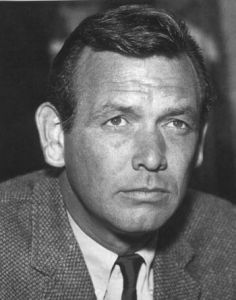
David Janssen
From Wikipedia, the free encyclopedia

David Janssen (March 27, 1931 - February 13, 1980) was an American film and television actor who is best-known for his starring role as Dr. Richard Kimble in the hit television series The Fugitive (1963-1967) with Barry Morse.

Janssen was born David Harold Meyer in Naponee, Nebraska. Following his parents' divorce when he was 5, his mother took him to Los Angeles and eventually married Eugene Janssen. David used his stepfather's name after he entered show business as a child. His first film part was at the age of 13, and by his 25th birthday, he had appeared in 20 films and served two years as an enlisted man in the U.S. Army.

He also starred in the TV series Richard Diamond, Private Detective (1957-60), O'Hara, U.S. Treasury (1971-72), and Harry O (1974-76). His films include John Wayne's The Green Berets (1968), the science fiction film Marooned (1969), and a starring role in Generation (1969), a comedy that also featured Pete Duel, Kim Darby, and Carl Reiner. His final role was as Father Damien, the priest who dedicated himself to the leper colony on the island of Molokai.

A smoker and a heavy drinker, plus a constant worker, Janssen died of a sudden heart attack at the age of 48 in Malibu, California two days into filming. He was interred in the Hillside Memorial Park Cemetery in Culver City, California.

He was married twice, first to Ellie Graham in 1958; they divorced in 1970. From 1975 to his death, he was married to Dani Crayne.
0 Replies
 
bobsmythhawk
 
  1  
Reply Tue 27 Mar, 2007 09:17 am
Michael York (actor)
From Wikipedia, the free encyclopedia

Michael York OBE (born Michael Hugh Johnson, March 27, 1942) is a prolific English actor, more recently best known among mainstream audiences for his role of Basil Exposition in the Austin Powers series of films.

During his teenage years, York was educated at Hurstpierpoint College in West Sussex.

Born in Fulmer, Buckinghamshire to Joseph Gwynne Johnson, an army officer, and executive with Marks and Spencer department stores, and Florence Edith May Johnson, a musician. He began his career in a 1956 production of The Yellow Jacket. In 1959 he made his West End debut with a brief part in a production of Hamlet.

Prior to graduating with a degree in English from University College, Oxford in 1964, York had toured with the National Youth Theatre, also performing with the Oxford University Dramatic Society and the University College Players. After some time with the Dundee Repertory, York joined the National Theatre where he worked with Franco Zeffirelli during the 1965 staging of Much Ado About Nothing.


York made his film debut as Lucentio in Zeffirelli's The Taming of the Shrew (1967), then was cast as Tybalt in Zeffirelli's 1968 film adaptation of Romeo and Juliet with Leonard Whiting and Olivia Hussey. He also starred in an early Merchant Ivory Productions film, The Guru (1969).

In Cabaret (1972) York played Brian Roberts, and in 1979 reunited with Zeffirelli as a fiery John the Baptist in Jesus of Nazareth.

York starred as D'Artagnan in the 1973 adaptation of The Three Musketeers. One year later the sequel was released (roughly covering events in the second half of the book) titled The Four Musketeers. These two films are still popular and generally accepted as the best film version of the famous Dumas adventure story [1]. 15 years later, most of the cast (and crew) joined together in a third film titled The Return of the Musketeers based on the Dumas novel Twenty Years After.

York had already been on British TV as Jolyon (Jolly) in The Forsyte Saga (1967). He also played the title character in the film adaptation of Logan's Run (1976). He appeared in Jesus of Nazareth as the prophet and cousin of Jesus, John The Baptist on (1977).

Since his auspicious early work, York has enjoyed a busy and varied career in film, television, and on the stage. His Broadway theatre credits include Bent, The Crucible, and the ill-fated musical The Little Prince and the Aviator, which closed during previews. He also has made many sound recordings as a reader, including Harper Audio's production of C.S. Lewis's The Lion, the Witch, and the Wardrobe.


He appeared in the Babylon 5 episode A Late Delivery From Avalon as the mentally disturbed and guilt-ridden David McIntyre, the Earthforce gunner who obeyed his Captain's orders to open fire on a Minbari vessel, which started the war between Minbar and Earth that would ultimately kill over 250,000 humans. He also appeared as Professor Asher Fleming, a 60 year-old Yale professor and boyfriend of Yale student Paris Geller (Liza Weil) in the fourth season of Gilmore Girls. He did the voice of the character Ares in the Justice League Unlimited episode "Hawk & Dove."

York stared in both The Omega Code and its sequel, Megiddo: The Omega Code 2, as Stone Alexander, portraying the Antichrist of Christian eschatology.

York also played President Alexander Bourne of Macronesia (formerly New Australia) on seaQuest 2032, a role that was quickly fleshed out and would have remained a major player in the series had it lasted past the thirteen episodes it was ordered for in its third season before ultimately being cancelled.

He has played Basil Exposition in all 3 of the Austin Powers movies.

He has made an appearance on The Simpsons as Mason Fairbanks, Homer's possible father in Homer's Paternity Coot. He was also in the third season finale of Sliders as a character reminiscent of Dr. Moreau. In 2006, York played the Charles Sobhraj-like character, Bernard Fremont, on Law & Order: Criminal Intent. He has also appeared in Curb Your Enthusiasm.

York now resides in California. His stepson is Star Wars producer Rick McCallum.

York also voiced Petrie's uncle Pterano in The Land Before Time VII: The Stone of Cold Fire. It was once rumored that Pterano would return in The Land Before Time XII: The Great Day of the Flyers, but York confirmed that he isn't appearing.

York's most recent work is on the stage, playing King Arthur in a revival of Lerner and Lowe's Camelot, which began its run at the La Mirada Theatre in Southern California, and is on a national tour with hopes of reaching New York.
0 Replies
 
bobsmythhawk
 
  1  
Reply Tue 27 Mar, 2007 09:26 am
Mariah Carey
From Wikipedia, the free encyclopedia


Background information

Birth name Mariah Carey
Born March 27, 1970 (age 37)
Origin Long Island, New York, United States
Genre(s) Pop, R&B
Occupation(s) Singer, songwriter, record producer, actress
Years active 1987-present (singer)
1999-present (actress)
Label(s) Island, Virgin, Columbia
Associated
acts Babyface, Allure, C&C Music Factory, Jermaine Dupri, Trey Lorenz, David Morales, DJ Clue, Randy Jackson, Brenda K. Starr
Website www.mariahcarey.com

Mariah Carey (born March 27, 1970) is an American pop and R&B singer, songwriter, record producer, music video director and actress. She debuted in 1990 under the guidance of Columbia Records executive Tommy Mottola and became the first recording act to have its first five singles top the U.S. Billboard Hot 100 chart. Following her marriage to Mottola in 1993, a series of hit records established her position as Columbia's highest-selling act. According to Billboard magazine, she was the most successful artist of the 1990s in the United States.[1]

Mariah Carey took much more control over her image and music following her separation from Mottola in 1997, and she introduced elements of hip hop into her album material. Her popularity was in decline when she left Columbia in 2001, and she was dropped by Virgin Records the following year after a highly publicized physical and emotional breakdown and the poor reception of Glitter, her film and soundtrack project. In 2002 Carey signed with Island Records, and after an unsuccessful period, she returned to the forefront of pop music in 2005.

In 2000 the World Music Awards named Carey the best-selling female artist of all time,[2] and she has recorded the most U.S. number-one singles for a female solo artist (seventeen). In addition to her commercial accomplishments, she is well-known for her vocal range, power, melismatic style, and use of the whistle register. However, some critics have said that Carey's efforts to showcase her vocal talents have been at the expense of communicating true emotion through song.[3][4]


Biography

Childhood and youth

Mariah Carey was born in Huntington, Long Island, New York. She is the third and youngest child of Patricia Hickey, a former opera singer and vocal coach of Irish American descent, and Alfred Roy Carey (formerly Nuñez), an 'aeronautical engineer[5]. Her father was mixed race of African-American and Venezuelan parentage. This makes Carey a quadroon. Both of her parents were Roman Catholic.[6] As a multiethnic family, the Careys endured racial slurs, hostility, and sometimes violence, causing the family to frequently relocate throughout the New York area. The strain on the family led to the divorce of Carey's parents when she was three years old.[7]

Carey had little contact with her father, and her mother worked several jobs to support the family. Spending much of her time at home alone, Carey turned to music as an outlet. She began singing at around the age of three. Her mother Patricia was her vocal coach; Patricia began teaching her how to sing after Carey imitated her practising Verdi's opera Rigoletto in Italian.[8][9] Carey performed for the first time in public during elementary school and was writing her own songs by junior high. Carey graduated from Harborfields High School in Greenlawn, New York although she was frequently absent because of her popularity as a demo singer for local recording studios. Her renown within the Long Island music scene gave her opportunities to work with musicians such as Gavin Christopher and Ben Margulies, with whom she co-wrote material for her demo tape. After moving to New York City, Carey worked numerous part-time jobs to pay the rent and completed five hundred hours of beauty school.[10] Eventually, she became a backup singer for Puerto Rican freestyle singer Brenda K. Starr.

In 1988 Carey met Columbia Records executive Tommy Mottola at a party, where Starr gave him Carey's demo tape. Mottola played the tape while leaving the party and was very impressed with what he heard. He returned to find Carey, but she had left. Nevertheless, Mottola tracked her down and signed her to a recording contract. This Cinderella-like story became part of the standard publicity surrounding Carey's entrance into the industry.[11]


1990-1992: Early commercial success

Carey co-wrote the tracks on her 1990 debut album, Mariah Carey, and she continued to co-write nearly all her material for the rest of her career. She expressed dissatisfaction with the contributions of producers such as Ric Wake and Rhett Lawrence, whom executives at Columbia had enlisted to help make the album commercially viable.[12] With substantial promotion it ascended to number one on the U.S. Billboard 200 chart, where it remained for several weeks. It produced four number-one singles and made Carey a star in the United States, but its success elsewhere was limited. Critics rated the album highly, and Carey won Grammy Awards for Best New Artist and Best Female Pop Vocal Performance (for her debut single "Vision of Love").


Carey's 1992 MTV Unplugged concert showed her ability to reproduce her vocal style outside a studio setting. Audio sample of "Emotions" (help·info)Carey conceived Emotions, her second album, as a homage to Motown soul music (see Motown Sound), and she worked with Walter Afanasieff and the dance group C&C Music Factory on the record. It was released soon after her debut album in late 1991, but was neither critically nor commercially as successful; Rolling Stone described it as "more of the same, with less interesting material ... pop-psych love songs played with airless, intimidating expertise".[13] The title track "Emotions" made Carey the only recording act to have their first five singles reach number-one on the U.S. Hot 100 chart, though the album's follow-up singles failed to match this feat. Carey had been lobbying to produce her own songs, and beginning with Emotions, she would co-produce most of her material. "I didn't want [Emotions] to be somebody else's vision of me," she said. "There's more of me on this album."[14] She began writing and producing for other artists, such as Penny Ford and Daryl Hall, within the coming year.

Although she had occasionally performed live, stage fright had prevented Carey from embarking on any major tours. Her first widely seen concert appearance was on the television show MTV Unplugged in 1992, and she said she felt that her performance proved her vocal abilities were not, as some had previously speculated, simulated using studio techniques.[15] In addition to acoustic versions of some of her earlier songs, Carey premiered a cover of The Jackson 5's "I'll Be There" with back-up singer Trey Lorenz. Released as a single, the duet reached number one in the U.S. and led to a record deal for Lorenz, whose debut album Carey co-produced. Because of strong ratings for the Unplugged television special, the concert's set list was released on the EP MTV Unplugged, which Entertainment Weekly called "the strongest, most genuinely musical record she has ever made ... Did this live performance help her take her first steps toward growing up?"[16]


1993-1996: Worldwide popularity

Carey and Tommy Mottola had become romantically involved during the making of her debut album, and in June 1993 they were married.

Kenneth "Babyface" Edmonds consulted on the album Music Box, which was released later that year and became Carey's most successful worldwide. It yielded her first UK Singles Chart number-one, a cover of Badfinger's "Without You", as well as the U.S. number-ones "Dreamlover" and "Hero". Billboard magazine proclaimed it as "heart-piercing ... easily the most elemental of Carey's releases, her vocal eurythmics in natural sync with the songs",[17] but TIME magazine lamented Carey's attempt at a mellower work: "[Music Box] seems perfunctory and almost passionless ... Carey could be a pop-soul great; instead she has once again settled for Salieri-like mediocrity".[18] When most critics slated her subsequent U.S. Music Box Tour, Carey said, "As soon as you have a big success, a lot of people don't like that. There's nothing I can do about it. All I can do is make music I believe in."[19]


After a successful duet with Luther Vandross on a cover of Lionel Richie and Diana Ross' "Endless Love" in late 1994, Carey released the holiday album Merry Christmas. It contained cover material and original compositions such as "All I Want for Christmas Is You", which became Carey's biggest single in Japan and in subsequent years emerged as one of her most perennially popular songs on North American radio.[20][21] Critical reception of Merry Christmas was mixed, with All Music Guide calling it an "otherwise vanilla set ... pretensions to high opera on 'O Holy Night' and a horrid danceclub [sic] take on 'Joy to the World'".[22] It became the most successful Christmas album of all time.[23]

In 1995 Columbia released Carey's next album, Daydream, which combined the pop sensibilities of Music Box with downbeat R&B and hip hop influences. A remix of "Fantasy", its first single, featured the late rapper Ol' Dirty Bastard. Carey said that Columbia reacted negatively to her intentions for the album: "Everybody was like 'What, are you crazy?'. They're very nervous about breaking the formula."[24] It became her biggest-selling album in the U.S. and its singles achieved similar success: "Fantasy" became the second single to debut at number-one in the U.S. and topped the Canadian Singles Chart for twelve weeks, "One Sweet Day" (a duet with Boyz II Men) spent a still-record sixteen weeks at number one in the U.S., and "Always Be My Baby" (co-produced by Jermaine Dupri) led the Hot 100's 1996 year-end airplay chart. Daydream generated career-best reviews for Carey[25] and publications such as The New York Times named it one of 1995's best albums; the Times wrote that its "best cuts bring pop candy-making to a new peak of textural refinement ... Carey's songwriting has taken a leap forward, becoming more relaxed, sexier and less reliant on thudding clichés".[26] The short but profitable Daydream World Tour augmented sales of the album, which received six Grammy Award nominations.


1997-2000: New image and independence

Carey and Mottola separated in 1996. Although the public image of the marriage was a happy one, she said that in reality she had felt trapped by her relationship with Mottola, whom she often described as controlling.[27] They officially announced their separation in 1997, and their divorce became final the following year. Carey hired a new attorney and manager soon after the separation, as well as an independent publicist. She became a major songwriter and producer for other artists during this period, contributing to the debut albums of Allure and 7 Mile through her short-lived Crave Records imprint.


"Honey" (1997), Carey's first heavily hip hop-influenced single, presented a more overtly sexual image of her than had been previously seen. Audio sample (help·info)Carey's next album, Butterfly (1997), yielded the number-one single "Honey", the lyrics and music video for which presented a more overtly sexual image of her than had been previously seen.[28] She stated that Butterfly marked the point that she attained full creative control over her music, which continued to move in an R&B/hip hop direction with material co-written and co-produced by rappers such as Sean "P. Diddy" Combs and Missy Elliott, but added: "I don't think it's that much of a departure from what I've done in the past ... It's not like I went psycho and thought I was going to be a rapper. Personally, this album is about doing whatever the hell I wanted to do."[29] Reviews were generally positive: LAUNCHcast said Butterfly "pushes the envelope", a move its critic thought "may prove disconcerting to more conservative fans" but praised as "a welcome change".[30] The Los Angeles Times wrote: "[Butterfly] is easily the most personal, confessional-sounding record she's ever done ... Carey-bashing just might become a thing of the past."[31] The album was a commercial success, and "My All" (her thirteenth Hot 100 number-one) gave her the record for the most U.S. number-ones by a female artist. Towards the turn of the millennium, Carey was developing the film project Glitter, and she wrote songs for the films Men in Black (1997) and How the Grinch Stole Christmas! (2000).

During the production of Butterfly, Carey became romantically involved with New York Yankees baseball player Derek Jeter. Their relationship ended in 1998, with both parties citing media interference as the main reason for the split.[32] That year saw the release of #1's, a collection of her U.S. number-one singles up to that point. Carey said she recorded new material for the album as a way of rewarding her fans,[33] and included "When You Believe", an Academy Award-winning duet with Whitney Houston from the soundtrack to The Prince of Egypt (1998). #1's sold above expectations, but a review in NME labeled Carey "a purveyor of saccharine bilge like 'Hero', whose message seems wholesome enough: that if you vacate your mind of all intelligent thought, flutter your eyelashes and wish hard, sweet babies and honey will follow".[34] Also that year she appeared on the first televised VH1 Divas benefit concert program, though her alleged prima donna behavior had already led many to consider her a diva.[35] By the following year, she had entered a relationship with singer Luis Miguel.

Rainbow, Carey's sixth studio album, was released in 1999. It comprised more R&B/hip hop-oriented songs, many of them co-created with Jimmy Jam and Terry Lewis. "Heartbreaker" and "Thank God I Found You" (the former featuring Jay-Z, the latter featuring Joe and boy-band 98 Degrees) reached number one in the U.S., and the success of the former made Carey the only act to have a number-one single in each year of the 1990s. A cover of Phil Collins's "Against All Odds (Take a Look at Me Now)" went to number one in the UK after Carey re-recorded it with boy band Westlife. Media reception of Rainbow was generally enthusiastic, with the Sunday Herald saying the album "sees her impressively tottering between soul ballads and collaborations with R&B heavyweights like Snoop Doggy Dogg, Usher ... It's a polished collection of pop-soul."[36] VIBE magazine expressed similar sentiments, writing, "She pulls out all stops...Rainbow will garner even more adoration",[37] but despite this it became Carey's lowest-selling album up to that point, and there was a recurring criticism that the tracks were too alike. When the double A-side "Crybaby"/"Can't Take That Away (Mariah's Theme)" became her first single to peak outside the top twenty, Carey accused Sony of under promoting it: "The political situation in my professional career is not positive ... I'm getting a lot of negative feedback from certain corporate people", she wrote on her official website.[38]


2001-2004: Personal and professional struggles

After receiving Billboard's "Artist of the Decade" Award and the World Music Award for "Best-Selling Female Artist of the Millennium",[2] Carey parted from Columbia and signed a contract with EMI's Virgin Records worth a reported US$80 million. She often stated that Columbia had regarded her as a commodity, with her separation from Mottola exacerbating her relations with label executives. Just a few months later, in July 2001, it was widely reported that Carey had suffered a physical and emotional breakdown. She had left messages on her website complaining of being overworked,[39] and her relationship with Luis Miguel was ending. In an interview the following year, she said, "I was with people who didn't really know me, and I had no personal assistant. I'd be doing interviews all day long, getting two hours of sleep a night, if that."[40] During an appearance on MTV's Total Request Live, Carey handed out popsicles to the audience and began what was later described as a "strip tease",[41] removing a large, baggy t-shirt to reveal a halter top and Daisy Dukes. By the month's end, she had checked into a hospital, and her publicist announced that she would be taking a break from public appearances.[42]


Critics panned Glitter, Carey's much delayed semi-autobiographical film, and it was a box office failure. The album Glitter, inspired by the music of the 1980s, generated her worst showing on the U.S. chart. The St. Louis Post-Dispatch dismissed it as "an absolute mess that'll go down as an annoying blemish on a career that, while not always critically heralded, was at least nearly consistently successful",[43] while Blender magazine opined, "After years of trading her signature flourishes for a radio-ready purr, [Carey]'s left with almost no presence at all."[44] "Loverboy" reached number two on the Hot 100 thanks to a price cut,[42] but the album's follow-up singles failed to chart.

Columbia released the low-charting album Greatest Hits shortly after the failure of Glitter, and in early 2002 Virgin bought out Carey's contract for $28 million, creating further negative publicity. Carey said her time at Virgin had been "a complete and total stress-fest ... I made a total snap decision which was based on money, and I never make decisions based on money. I learned a big lesson from that."[45] Later that year, she signed a $20 million contract with Island Records and launched the record label MonarC. To add further to Carey's emotional burdens, her father, with whom she had had little contact since childhood, died of cancer that year.

Following a well-received supporting role in the 2002 film WiseGirls, Carey released the album Charmbracelet, which she said marked "a new lease on life" for her.[40] Sales of Charmbracelet were moderate, and the quality of Carey's vocals came under severe criticism. The Boston Globe declared the album as "the worst of her career, revealing a voice no longer capable of either gravity-defying gymnastics or soft coos",[46] and Rolling Stone commented: "Carey needs bold songs that help her use the power and range for which she is famous. Charmbracelet is like a stream of watercolors that bleed into a puddle of brown."[47] Singles such as "Through the Rain" failed on the charts and with pop radio, whose playlists had become less open to maturing "diva" stylists such as Carey, Whitney Houston and Celine Dion.[40]

"I Know What You Want", a 2003 Busta Rhymes single on which Carey guest-starred, fared considerably better and reached the top five in the U.S. Columbia later included it on the remix collection The Remixes, Carey's lowest-selling album. That year, she embarked on the Charmbracelet World Tour and was awarded the World Music Chopard Diamond Award for selling over 100 million albums worldwide.[48] She was featured on rapper Jadakiss' 2004 single "U Make Me Wanna", which reached the top ten on Billboard's R&B/Hip-Hop chart.


2005-present: Return to prominence

Carey's ninth studio album, The Emancipation of Mimi, was released in 2005 and contained contributions from producers such as The Neptunes, Kanye West and Carey's longtime collaborator, Jermaine Dupri. Carey said it was "very much like a party record ... the process of putting on makeup and getting ready to go out ... I wanted to make a record that was reflective of that."[49] The Emancipation of Mimi became the year's best-selling album in the U.S., won a Grammy Award for Best Contemporary R&B Album and received some of Carey's most favorable reviews in some time; The Guardian defined it as "cool, focused and urban ... [some of] the first Mariah Carey tunes in years I wouldn't have to be paid to listen to again".[50] The second single, "We Belong Together", held the Hot 100's number-one position for fourteen weeks (her longest run at the top as a solo lead artist) and was the biggest hit of 2005 in the U.S., while "Shake It Off" made Carey the only female artist to occupy the Hot 100's top two positions simultaneously.[51] "Don't Forget About Us" became her seventeenth number-one in the U.S., tying her with Elvis Presley for the most number-ones by a solo act according to Billboard magazine's revised methodology (their statistician Joel Whitburn still credits Presley with an eighteenth[52]). (The Beatles have twenty.) Carey has also had success on international charts, though not to the same degree as her native America. She has had two number-one singles in Britain, two in Australia, and six in Canada. Carey's highest-charting single in Japan peaked at number-two.[53][54][55][56]

Carey began a concert tour, The Adventures of Mimi Tour, in mid-2006. She appeared on the cover of the March 2007 edition of Playboy magazine on a non-nude photo session.[57] In 2007 Carey will receive a "recording star" on the Hollywood Walk of Fame[58] and be inducted into the Long Island Music Hall of Fame.

According to an interview with Entertainment Tonight, she had already begun to work on her next studio album, which is expected for release sometime during early 2007, in mid-2006.[59] According to a November 2006 Reuters report, Universal Music Group CEO Doug Morris has stated that Carey will release two albums in 2007.[60]


New Album(s) 2007

Carey has recently started work on her untitled 11th studio album scheduled for a Fall 2007 release. mcarchives.com Confirmed producers include Scott Storch, Stargate, Timbaland, Neyo, and The Runners. Reuteurs Recently, Willie Nelson has confirmed in working on a song with Carey called, "Free To Dream" which may be included on the upcoming album.mcarchives.com Bone Thugs and Harmony also recently completed a song with carey called Lil' Love, which is scheduled to be the second single for their upcoming album, slated to be released this spring. Carey is also working on an soundtrack, for her upcoming film Tennesse, which is expected to be released winter 2007.


Acting career

Carey began to take professional acting lessons in 1997, and within the coming year, she was auditioning for film roles. She made her debut as an opera singer in the romantic comedy The Bachelor (1999) starring Chris O'Donnell and Renée Zellweger, and CNN derisively referred to her casting as a talentless diva as "letter-perfect ... the "can't act" part informs Carey's entire performance".[61]

Carey's first starring role was in Glitter (2001), in which she played a struggling musician in the 1980s who breaks into the music industry after meeting a disc jockey (Max Beesley). While Roger Ebert said "[Carey]'s acting ranges from dutiful flirtatiousness to intense sincerity",[62] most critics panned it: Halliwell's Film Guide called it a "vapid star vehicle for a pop singer with no visible acting ability",[63] and The Village Voice observed: "When [Carey] tries for an emotion?-any emotion?-she looks as if she's lost her car keys."[64] Glitter was a box office failure, and Carey earned a Razzie Award for her role. She later said that the film "started out as a concept with substance, but it ended up being geared to 10-year-olds. It lost a lot of grit ... I kind of got in over my head."[40] The film has consistently been ranked as one of the worst of all time in user voting at the Internet Movie Database.[65]


Mira Sorvino and Melora Walters co-starred as waitresses at a mobster-operated restaurant in the independent film WiseGirls (2002), which premiered at the Sundance Film Festival but went straight to cable in the U.S. Critics commended Carey for her efforts: The Hollywood Reporter predicted, "Those scathing notices for Glitter will be a forgotten memory for the singer once people warm up to Raychel",[66] and Roger Friedman, referring to her as "a Thelma Ritter for the new millennium", said, "Her line delivery is sharp and she manages to get the right laughs".[67] WiseGirls producer Anthony Esposito cast Carey in The Sweet Science, a film about an unknown female boxer who is recruited by a boxing manager, but it never entered production.[68]

Carey was one of several musicians who appeared in the independently produced Damon Dash films Death of a Dynasty (2003) and State Property 2 (2005), while her television work has been limited to a January 2002 episode of Ally McBeal.

In 2006 Carey joined the cast of the indie film Tennessee (2007), taking the role of a waitress who travels with her two brothers to find their long-lost father.[69]


Artistry

Carey has said that from childhood she was stimulated by R&B and soul musicians such as Billie Holiday, Sarah Vaughan, Gladys Knight, Aretha Franklin, Al Green and Stevie Wonder. Her music contains strong influences of gospel music, and her favorite gospel singers include The Clark Sisters, Shirley Caesar and Edwin Hawkins.[70] As Carey began to imbue her sound with hip hop, speculation arose that she was making an attempt to take advantage of the genre's popularity, but she told Newsweek, "People just don't understand. I grew up with this music".[71] She has expressed appreciation for rappers such as The Sugarhill Gang, Eric B. & Rakim, the Wu-Tang Clan, The Notorious B.I.G. and Mobb Deep, with whom she collaborated on "The Roof (Back in Time)" (1997).[11]

Carey's debut album received criticism for being too similar in style to the work of Whitney Houston, and throughout her career, her vocal and musical style, along with her level of success, has been compared to Houston and Céline Dion. Carey and her peers, according to Garry Mulholland, are "the princesses of wails ... virtuoso vocalists who blend chart-oriented pop with mature MOR torch song".[72] In She Bop II: The Definitive History of Women in Rock, Pop and Soul (2002) writer Lucy O'Brien attributed the comeback of Barbra Streisand's "old-fashioned showgirl" to Carey and Dion, and described them and Houston as "groomed, airbrushed and overblown to perfection".[73] Carey's musical transition and her use of more revealing clothing during the late 1990s were in part initiated to distance herself from this image, and she subsequently said that most of her early work had been "schmaltzy MOR". Some have noted that unlike Houston and Dion, Carey co-writes all of her own songs, and the Guinness Rockopedia (1998) classified her as the "songbird supreme".[74]


Voice

Carey is said to be able to cover all the notes from the alto vocal range leading to those of a coloratura soprano,[3][75] and her vocal trademark is her ability to sing in the whistle register. She has cited Minnie Riperton as the greatest influence on her singing technique, and from a very early age she attempted to emulate Riperton's high notes, to increasing degrees of success as her vocal range expanded. According to most sources, she has a five-octave vocal range, though some credit her with seven or eight octaves.[73][76] In 2003 her voice was voted the greatest in music in MTV and Blender magazine's countdown of the 22 Greatest Voices in Music. Carey said of the poll, "What it really means is voice of the MTV generation. Of course, it's an enormous compliment, but I don't feel that way about myself."[77]

Carey's voice has come under considerable scrutiny from critics who believe that she does not effectively communicate the message of her songs. Rolling Stone magazine said in 1992, "Carey has a remarkable vocal gift, but to date, unfortunately, her singing has been far more impressive than expressive ... at full speed her range is so superhuman that each excessive note erodes the believability of the lyric she is singing."[4] The New York Daily News wrote that Carey's singing "is ultimately what does her in. For Carey, vocalizing is all about the performance, not the emotions that inspired it ... Does having a great voice automatically make you a great singer? Hardly."[3] Some interpreted Carey's decision to utilise what she described as "breathy" vocals in some of her late 1990s and early 2000s work as a sign that her voice had begun to deteriorate, but she has maintained that it "has been here all along".[78] An article in Vibe magazine indicated that Carey's singing style highlights weaknesses in other aspects of her music: "The impressiveness of her voice?-as well as her tendency to oversing?-make the blandness of her material all the more flagrant".[11]


Themes and musical style

Love is the subject of the majority of Carey's lyrics, although she has also written about themes such as racism, death, world hunger, and spirituality. She has said that much of her work is partly autobiographical, but TIME magazine wrote: "If only Mariah Carey's music had the drama of her life. Her songs are often sugary and artificial?-NutraSweet soul. But her life has passion and conflict."[79]

Carey's output makes great use of electronic instruments such as drum machines, keyboards and synthesizers. Many of her songs contain piano music, and she was given piano lessons when she was six years old. Carey said that she cannot read sheet music and prefers to collaborate with a pianist when composing her material, but feels that it is easier to experiment with faster and less conventional melodies and chord progressions using this technique. Some of her arrangements have been inspired by the work of musicians such as Stevie Wonder, a soul pianist whom Carey once referred to as "the genius of the [20th] century",[11] but she has said, "My voice is my instrument; it always has been."[80]

Carey began commissioning remixes of her material early in her career and helped spearhead the practice of recording entirely new vocals for remixes. Disc jockey David Morales has collaborated with Carey several times, starting with "Dreamlover" (1993), which popularized the tradition of remixing pop songs into house records and which Slant magazine named one of the greatest dance songs of all time.[81] From "Fantasy" (1995) onward, she enlisted both hip hop and house producers to re-imagine her album compositions. Entertainment Weekly included two remixes of "Fantasy" on a list of Carey's greatest recordings compiled in 2005:[82] a National Dance Music Award-winning remix produced by Morales, and a Sean Combs production featuring rapper Ol' Dirty Bastard. The latter has been credited with initiating the pop/hip hop collaboration trend that has continued into the 2000s through artists such as Ashanti and Beyoncé Knowles.[83] Combs said that Carey "knows the importance of mixes, so you feel like you're with an artist who appreciates your work?-an artist who wants to come up with something with you".[11] She continues to consult on remixes by producers such as Morales, Jermaine Dupri, Junior Vasquez and DJ Clue, and guest performers contribute frequently to them. The popularity in U.S. nightclubs of the dance remixes, which often sound radically different from their album counterparts, has been known to eclipse the chart success of the original songs.


Philanthropy and other activities

Carey is a philanthropist who has donated time and money to organizations such as the Fresh Air Fund. She became associated with the Fund in the early 1990s, and is the co-founder of a camp located in Fishkill, New York that enables inner-city youth to embrace the arts and introduces them to career opportunities. The camp was called Camp Mariah "for her generous support and dedication to Fresh Air children",[84] and she received a Congressional Horizon Award for her youth-related charity work. She is well-known nationally for her work with the Make-A-Wish Foundation in granting the wishes of children with life-threatening illnesses, and in November 2006 she was awarded the Foundation's Wish Idol for her "extraordinary generosity and her many wish granting achievements".[85] Carey has volunteered for the New York City Police Athletic League and contributed to the obstetrics department of New York Presbyterian Hospital Cornell Medical Center. A percentage of the sales of MTV Unplugged was donated to various other charities. In January 2007 it was reported Carey had volunteered to teach music production at a school Oprah Winfrey opened in South Africa.[86]

One of Carey's most high-profile benefit concert appearances was on VH1's 1998 Divas Live special, where she performed alongside other female singers in support of the Save the Music Foundation. The concert was a ratings success, and Carey participated in the 2000 special. She appeared at the America: A Tribute to Heroes nationally televised fundraiser in the aftermath of the September 11, 2001 attacks, and in December 2001 she performed before peacekeeping troops in Kosovo. Carey hosted the CBS television special At Home for the Holidays, which documented real-life stories of adopted children and foster families, and she has worked with the New York City Administration for Children's Services. In 2005 Carey performed for Live 8 in London and at the Hurricane Katrina relief telethon Shelter from the Storm.

Carey has participated in endorsements for Intel Centrino personal computers.[87] In early 2006 she launched a jewelry and accessories line for teenagers, "Glamorized", in American Claire's and Icing stores.[69] Later that year it was announced she had signed a licensing deal with the cosmetics company Elizabeth Arden to release a fragrance in 2007.[88] During this period, as part of a partnership with Pepsi and Motorola, Carey recorded and promoted a series of exclusive ringtones such as "Time of Your Life".[89] According to Forbes, Carey is the sixth richest woman in entertainment, with an estimated net worth of US$225 million .[90]
0 Replies
 
bobsmythhawk
 
  1  
Reply Tue 27 Mar, 2007 09:32 am
Remember


"POLITICIANS & DIAPERS BOTH NEED
TO BE CHANGED OFTEN, AND FOR
THE SAME REASON"
0 Replies
 
Letty
 
  1  
Reply Tue 27 Mar, 2007 09:57 am
Hello there, hawkman. Great bio's today, buddy, and as to your "Remember", you are right, Boston. Too bad they are not the disposable kind. <smile>

Until our Raggedy arrives with her famous photo's, here is one from Mariah Kelley. (never see her name that I don't think of the song, "They Call the Wind Mariah.")

Mariah Carey

I need a love to give me
The kind of love
That will last always
I need somebody uplifting
To take me away

I want a lover who knows me
Who understands how I feel inside
Someone to comfort and hold me
Through the long lonely nights
Till the dawn
Why you don't take me away

Dreamlover come rescue me
Take me up take me down
Take me anywhere you want to baby now
I need you so desperately
Won't you please come around
'Cause I wanna share forever with you baby

I don't want another pretender
To disillusion me one more time
Whispering words of forever
Playing with my mind

I need someone to hold on to
The kind of love that won?t fly away
I just want someone to belong to
Everyday
Of my life
Always
So come and take me away

Dreamlover come rescue me
Take me up take me down
Take me anywhere you want to baby now
I need you so desperately
Won't you please come around
'Cause I wanna share forever with you baby
0 Replies
 
Raggedyaggie
 
  1  
Reply Tue 27 Mar, 2007 12:51 pm
Good afternoon.

Faces to match. (I guess nobody here remembers a golden haired Richard Denning in a leopard skin loincloth swinging in the trees with Dorothy Lamour in the movie, Beyond the Blue Horizon. I just watched it the other day on tape. Elephant was the villain and tiger was the good one for a change.) Very Happy

http://entimg.msn.com/i/150/mo/mo7/Swanson_Sti88592292_150.jpghttp://content.answers.com/main/content/wp/en/thumb/9/9a/200px-Richarddenning.jpghttp://www.bluenote.de/images/cover/150/0724359328621.jpg
http://dvdtoile.com/ARTISTES/1/1583.jpghttp://www.crazy4cinema.com/Actor/imgs/york.jpghttp://news.smartdownloads.net/gfx/newsxml/mariah-carey.jpg
0 Replies
 
Letty
 
  1  
Reply Tue 27 Mar, 2007 01:21 pm
Well, folks. There's our Raggedy with a wonderful array of faces. Thanks, again, PA.

Okay, we're looking at Gloria(I'm ready for my closeup, Mr. DeMille)Richard, Sarah, David, Michael and Mariah.

Ah, yes, Raggedy. We discussed before that The Fugitive was an Americanized version of Les Miserables, no?

Hmmm. "Beyond the Blue Horizon"...wasn't that the movie about a rogue elephant and a pet tiger clawing the blood from its back to save our heroine? Love that song, too.

Beyond the blue horizon
Waits a beautiful day
Goodbye to things that bore me
Joy is waiting for me

I see a new horizon
My life has only begun
Beyond the blue horizon
Lies a rising sun

Beyond the blue horizon
Waits a beautiful day
Goodbye to things that bore me
Joy is waiting for me

I see a new horizon
My life has only beguin
Beyond the blue horizon
Lies a rising sun

Beyond the blue horizon
Lies a rising sun
0 Replies
 
Raggedyaggie
 
  1  
Reply Tue 27 Mar, 2007 01:54 pm
That's the one, Letty. I found the VHS at Amazon. It's really a bad print, but I love it. The music is warped. Laughing

http://www.moviesunlimited.com/boxcovers/100_Wide/105417.jpg

Well, Jean Valjean stole a loaf of bread and the fugitive was, I think, accused of killing his wife, but they were certainly both relentlessly pursued. Very Happy
0 Replies


Related Topics

WA2K Radio is now on the air, Part 3 - Discussion by edgarblythe
 
Copyright © 2026 MadLab, LLC :: Terms of Service :: Privacy Policy :: Page generated in 0.4 seconds on 03/05/2026 at 05:47:01