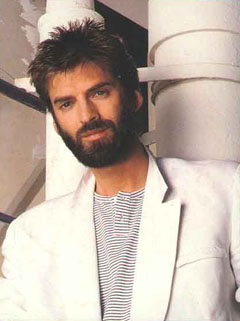
Hilarous, hawkman. I believe I like the kids' version better. Thanks for the bios. I think we all know most of them.
Back in a bit to do Deep Purple.
0 Replies
Letty
1
Reply
Sat 6 Jan, 2007 11:16 am
Well, Nino Tempo is some name, folks, and I had a time searching for his lyrics to Deep Purple as there is also a singing group called Deep Purple.
I found this, however, and added the verse since often those lyrics are the loveliest.
The sun is sinking low,
Behind the hills,
I loved you long ago,
I love you still,
When from the mist there comes to me at twilight
The thought of love's old thrill
When the deep purple falls over sleepy garden walls
And the stars begin to flicker in the sky
Through the mist of a memory you wander back to me
Breathing my name with a sigh
In the still of the night once again I hold you tight
Though you're gone, your love lives on when moonlight beams
And as long as my heart will beat, lover we'll always meet
Here in my deep purple dreams
Here in my deep purple dreams
0 Replies
hamburger
1
Reply
Sat 6 Jan, 2007 06:37 pm
this being saturday night , i'd like to present some 'gilbert and sullivan' for your entertainment .
hbg
Three little maids from school are we
Pert as a school-girl well can be
Filled to the brim with girlish glee
Three little maids from school
Everything is a source of fun
Nobody's safe, for we care for none
Life is a joke that's just begun
Three little maids from school
Three little maids who, all unwary
Come from a ladies' seminary
Freed from its genius tutelary
Three little maids from school
Three little maids from school
One little maid is a bride, Yum-Yum
Two little maids in attendance come
Three little maids is the total sum
Three little maids from school
Three little maids from school
From three little maids take one away
Two little maids remain, and they
Won't have to wait very long, they say
Three little maids from school
Three little maids from school
Three little maids who, all unwary
Come from a ladies' seminary
Freed from its genius tutelary
Three little maids from school
Three little maids from school
0 Replies
hamburger
1
Reply
Sat 6 Jan, 2007 06:45 pm
however , if that is a little too soppy , how about 'mountain blues' , often sung by bessie smith , my recording is with sonny terry .
hbg
Black Mountain Blues
Out in Black Mountain a child will smack your face
I'm saying out on Black Mountain a child will smack your face
The babies cry for liquor, and all the birds sing bass
Well, those people in Black Mountain are mean as they can be
And those people in Black Mountain are mean as they can be
Now they uses gun powder just to sweeten up their tea
Well, out in Black Mountain you can't keep a good man in jail
Yeah, out in Black Mountain you can't keep a good man in jail
'Cause if the jury convicts him, the judge will pay his bail
I had a man in Black Mountain, the sweetest man in town
I had a man in Black Mountain, the sweetest man in the town
But then he met a city gal, that's when he throwed me down
Lord, I'm bound for Black Mountain, me and my razor and my gun
I'm going back to Black Mountain, me and my razor and my gun
I'm gonna cut him if he stands still, I'll just shoot him if he runs
Lord, now you've heard my story, now you've heard my news
Lord, now you've heard my story, now you've heard my news
Now my man can clear off, I've got the Blackest Mountain blues
0 Replies
Letty
1
Reply
Sat 6 Jan, 2007 06:58 pm
Hey, hamburger. I love the antics of Gilbert and Sullivan. I was just looking for the Pirates of Penzance, buddy.
Wow. That Bessie Smith song was wild, Canada. I think that she inspired Billie Holiday(Lady Day) who in turn inspired other jazz vocalists.
Here's a little serendipity song that I ran across while looking for one of yours:
If you never rode west of the arizona border
You can turn the other way boy, but you'll never get far
You be living a lie
If you wanna see the wonders of the age you must follow the evening star
Evening star
Shine a little heaven on the stranger with no dream
Where you are you can see the loneliness i mean
And if i gotta fight i will never play somebody's else's game
I can follow the evening star
Starlight - you never need somebody else's name
If you follow the evening star
Have you ever know a sunset when the sky's on fire
How you end another day boy
You been seaching to far
Like the desert i rode on any memory is lost in the restless wind
I just lie beneath the evening star
Evening star
Shine a little heaven on a stranger with no dream
Where you are you can see the loneliness i mean
And if i gotta fight i will never play somebody's else's game
I can follow the evening star
Starlight - you never need somebody's elses name
If you follow the evening star
Have you ever held a woman in the california moonlight
Put your money on a good night
If you never been there it's a sight for sore eyes
If you wanna see the wonders of the age
Making love beneath the evening star
Evening star
Shine a little heaven on a stranger with no dream
Where you are you can see the loneliness i mean
And if i gotta fight i will never play somebody else's game
I can follow the evening star
Starlight - you never need somebody else's name
If you follow the evening star
0 Replies
hamburger
1
Reply
Sat 6 Jan, 2007 07:18 pm
letty :
the 'evening star' song is just great !
here is a song from the first lp we bought in canada (christmas 1961 , when we brought a huge "hi-fi stereo" back with us from germany , couldn't take it on the plane and had to have it shipped by boat ! ehbeth still has it in her house).
three lp's were $ 5 - a lot of money in those days - i'm sure you remember .
hbg
Monkey lyrics
Artist - Harry Belafonte
Album - Jump Up Calypso
Lyrics - Monkey
One Monday morning I got up late
And there was Mr. Monkey outside me gate
One Monday morning I got up late
There was Mr. Monkey outside me gate
Don't know what to say de monkey won't do
(Don't know what to say de monkey won't do)
Don't know what to say de monkey won't do
(Don't know what to say de monkey won't do)
My girl came over to have a drink
I came downstairs and what do you think?
The monkey had run and he let her in
He poured her a glass of me favorite gin
I don't know what to say de monkey won't do
(Don't know what to say de monkey won't do)
Well I drink gin monkey drink gin too
(Don't know what to say de monkey won't do)
I ran to de yard to get a stick
But I'm tellin you friends that monkey was quick
?'Cause when I returned much to my disgrace
Mr. Monkey had my girl in a manly embrace
I don't know what to say de monkey won't do
(Don't know what to say de monkey won't do)
Don't know what to say de monkey won't do
(Don't know what to say de monkey won't do)
Yessah! Up!
Ah play dat ting!
Round de corner!
Hep!
I went to me bath for a Burma Shave
This monkey going put me in a me grave
The entire cabinet was laid to waste
I had to shave with some Gleem toothpaste
I don't know what to say de monkey won't do
(Don't know what to say de monkey won't do)
Well I go to shave monkey go shave too
(Don't know what to say de monkey won't do)
Well by dis time I was in despair
I was using de shoebrush to brush me hair
I ask him to leave but he stayed around
He pulled de chain and I almost went down
I don't know what to say de monkey won't do
(Don't know what to say de monkey won't do)
Don't know what to say de monkey won't do
(Don't know what to say de monkey won't do)
Yep!
Yessah! Play sah!
Mariposa!
Yep!
Well me patience run out and I'm telling you sure
Tomorrow I'm going show dat monkey de door
And if he don't leave I'm inviting you
To me house for dumplings and monkey stew
Don't know what to say de monkey won't do
(Don't know what to say de monkey won't do)
I don't know what to say de monkey won't do
(Don't know what to say de monkey won't do)
When I drink gin monkey drink gin too
(Don't know what to say de monkey won't do)
When I go (rat tat tat) monkey go (rat tat tat) too
(Don't know what to say de monkey won't do)
When I go brrp! Monkey go brrp! too
(Don't know what to say de monkey won't do)
When I go down monkey go down too
(Don't know what to say de monkey won't do)
When I go up monkey go up too
(Don't know what to say de monkey won't do)
Don't know what to say de monkey won't do
(Don't know what to say de monkey won't do)
I don't know what to say de monkey won't do
(Don't know what to say de monkey won't do)
When I go (smooch) monkey go (smooch) too
(Don't know what to say de monkey won't do)
Don't know what to say de monkey won't do
(Don't know what to say de monkey won't do)
When I play drum monkey play drum too
(Don't know what to say de monkey won't do)
I don't know what to say de monkey won't do
(Don't know what to say de monkey won't do)
Don't know what to say de monkey won't do
(Don't know what to say de monkey won't do)
0 Replies
Letty
1
Reply
Sat 6 Jan, 2007 07:42 pm
Love it, hbg. Reminds me of a kid's song; "Monkey see, monkey do, the monkey does the same as you.
Actually, buddy, we got all our vinyls free because so many of them came to the radio and tv station as demos.
Here's a good one, and I recall my older sister whispering to me that this song was about prostitutes. I had no idea what she meant.
Rum and Coca-Cola
If you ever go down Trinidad
They make you feel so very glad
Calypso sing and make up rhyme
Guarantee you one real good fine time
Drinkin' rum and Coca-Cola
Go down Point Koomahnah
Both mother and daughter
Workin' for the Yankee dollar
Oh, beat it man, beat it
Since the Yankee come to Trinidad
They got the young girls all goin' mad
Young girls say they treat 'em nice
Make Trinidad like paradise
Drunken' rum and Coca-Cola
Go down Point Koomahnah
Both mother and daughter
Workin' for the Yankee dollar
Oh, you vex me, you vex me
From Chicachicaree to Mona's Isle
Native girls all dance and smile
Help soldier celebrate his leave
Make every day like New Year's Eve
Drunken' rum and Coca-Cola
Go down Point Koomahnah
Both mother and daughter
Workin' for the Yankee dollar
It's a fact, man, it's a fact
In old Trinidad, I also fear
The situation is mighty queer
Like the Yankee girl, the native swoon
When she hear dar Bingo croon
Drunken' rum and Coca-Cola
Go down Point Koomahnah
Both mother and daughter
Workin' for the Yankee dollar
Out on Manzanilla Beach
GA.I. romance with native peach
All night long, make tropic love
Next day, sit in hot sun and cool off
Drunken' rum and Coca-Cola
Go down Point Koomahnah
Both mother and daughter
Workin' for the Yankee dollar
It's a fact, man, it's a fact
Rum and Coca-Cola
Rum and Coca-Cola
Workin' for the Yankee dollar
0 Replies
edgarblythe
1
Reply
Sat 6 Jan, 2007 09:31 pm
Little Boy Blue
Bobby Blue Bland
When I thought I was so high above you
You were so good to me
Even though you knew I didn't love you
You were still good to me
And when it used to
Make me happy to see you cry
You were so good to me
And that's no lie
You used to call me
Bobby, Little Boy Blue
You said, blow your horn, baby
Little Boy Blue
You used to call me
Bobby, Bobby
So nice to me, baby
Oh, yes, you were
I remember, baby
When you cried all night long
I know now, darling
I was doing you wrong
If I had a million dollars
I'd give you every, every dime
Just to hear you call me Bobby
One more time
You used to call me
B-o-b-b-y
B-o-b-b-y
Bobby
You called me Bobby
And, oh, it used to
Sound so good, oh, yeah
You don't know how much
I miss you, baby
Yeah, yeah
If you'd just give me
One more chance, darling
Yeah, let me hear you call me Bobby
Yeah, yeah, yeah
Yeah, baby
You don't know how much I love you
0 Replies
bobsmythhawk
1
Reply
Sun 7 Jan, 2007 05:53 am
Charles Addams
From Wikipedia, the free encyclopedia
Charles Samuel Addams (January 7, 1912-September 29, 1988) was an American cartoonist known for his particularly black humor and macabre characters. Some of the recurring characters, who became known as The Addams Family, became the basis for two live-action television series, two cartoon series, and three motion pictures.
Cartoons
His cartoons regularly appeared in The New Yorker, and he also created a syndicated comic strip, Out of This World, which ran in 1956. There are many collections of his work, including Drawn and Quartered (1942) and Dear Dead Days (1959). His cartoons continue to appear in books, calendars and other merchandising. Typical of his work, one well-known cartoon shows two men standing in a room labeled "Patent Office." One of them is pointing a bizarre gun out the window (and down toward the street) and saying to the other, "Death ray, fiddlesticks! It doesn't even slow them up!"
He drew more than 1,300 cartoons over the course of his life. Those that didn't appear in The New Yorker were often in Collier's and TV Guide.[1] In 1961, Addams received, from the Mystery Writers of America, a Special Edgar Award for his body of work.
Addams collected crossbows and used a little girl's tombstone for a coffee table, but Janet Maslin, in a review of an Addams biography for The New York Times, said the "Addams persona sounds cooked up for the benefit of feature writers ... was at least partly a character contrived for the public eye", noting that one outre publicity photo showed the humorist wearing a suit of armor at home, "but the shelves behind him hold books about painting and antiques, as well as a novel by John Updike."[2]
Life
He was born in Westfield, New Jersey and had a happy, sociable, perhaps somewhat bland childhood there, providing few clues as to the macabre character of his humor. He was "known as something of a rascal around the neighborhood" and "there was always a little group of boys at his house, doing things," as childhood friends recalled.[2]
There were a few, but not many, forebodings of dark oddity to come during his childhood: His nickname was "Chill", and a chalk drawing of a skeleton in the garage behind one of the homes his family lived in at the time is said to have been drawn by him. That house at 552 Elm Street (now a local landmark), and another on Dudley Avenue in which police once caught him breaking into, are said to be the inspiration for the Addams family mansion in his cartoons. He was fond of visiting the Presbyterian Cemetery on Mountain Avenue.[1] One friend said of him, "his sense of humor was a little different from everybody else's. He was also artisticly inclined, "drawing with a happy vengeance" according to a biographer.[2]
Before graduating from Westfield High School in 1929, he drew many cartoons for the Weathervane student newspaper.[1]
Addams studied at Colgate University and at the University of Pennsylvania, and a fine-arts building on the University campus is named for him. In front of the building is a sculpture of the silhouettes of Addams family characters. He also studied at Grand Central School of Art[1] in New York City.
His first drawing in the New Yorker ran on February 6, 1932 (a sketch of a window washer), and his cartoons ran regularly in the magazine from 1938 until his death. He was a freelancer throughout[2] that time.
During World War II, Addams served at the Signal Corps Photographic Center in New York, where he made animated training films for the Army.
In late 1942 he met his first wife, Barbara Jean Day, who looked like the cartoon Morticia Addams. The marriage ended eight years later after Addams, who hated small children, refused to adopt one. He married his second wife, Barbara Barb (Estelle B. Barb) in 1954. A practicing lawyer, she "combined Morticia-like looks with diabolical legal scheming" in which she wound up controlling the "Addams Family" television and movie franchises and persuaded her husband to give away other legal rights.[2]
At one point, she got her husband to take out a $100,000 insurance policy. Addams consulted a lawyer on the sly, who later humorously wrote, "I told him the last time I had word of such a move was in a picture called Double Indemnity staring Barbara Stanwyck, which I called to his attention." In the movie, Stanwyck's character plotted her husband's murder.[2] (No one has accused Barbara Barb Addams of attempting the same.) They divorced in 1956.[3]
The Addams Family television series began after David Levy, a television producer, approached Addams with an offer to create it with a little help from the humorist. All Addams had to do was give his characters names and more characteristics for the actors to use in portrayals. The series ran on ABC for two seasons, from 1964 to 1966.[1]
Addams was "sociable and debonair", and described by a biographer as "A well-dressed, courtly man with silvery back-combed hair and a gentle manner, he bore no resemblance to a fiend." Figuratively a lady killer, Addams squired celebrities such as Greta Garbo, Joan Fontaine and Jacqueline Kennedy on social occasions.[2]
Later he married his third and last wife, "Tee" (1926-2002)?- in a pet cemetery. In 1985, the Addamses moved to Sagaponack, New York, where they named their estate "The Swamp".
On September 29, 1988, Addams, a sports car enthusiast, had just driven back to his apartment in Manhattan from a visit to friends in Connecticut when he parked his Audi 4000 in front of the apartment building. He was struck by a fatal heart attack while still behind the wheel.[4]
Trivia
A cartoon of his was (allegedly) used to gauge incipient lunacy in an asylum, depending on how long it took the subject to see why it is funny.
Addams was distantly related to John Adams and John Quincy Adams, despite the different spellings of their last names[2], and was a first cousin twice removed to Jane Addams, the noted social reformer.[5]
In Alfred Hitchcock's North By Northwest, Cary Grant references Charles Addams in the auction scene. Upon discovering Eve with Mr. Vandamm and Leonard, he says "The three of you together. Now that's a picture only Charles Addams could draw."
0 Replies
bobsmythhawk
1
Reply
Sun 7 Jan, 2007 06:00 am
Jean-Pierre Rampal
From Wikipedia, the free encyclopedia
Jean-Pierre Louis Rampal (7 January 1922 - 20 May 2000) was a celebrated French flautist, seen by many as the most influential of the 20th century.
Born at 20 rue Brochier in the southern French port city of Marseille, the son of Andrée (née Roggero) and flautist Joseph Rampal, Jean-Pierre Rampal became the first exponent of modern times to establish the solo flute on the international concert circuit and to attract the acclaim and large audiences comparable to those enjoyed by celebrity singers, pianists and violinists. This was not easily done in the immediate post-war years, as it was not usual for the solo flute to be featured widely in orchestral concerts. But Rampal's flair and presence (he was a big man to wield such a slim instrument so delicately) made the breakthrough and, as such, he personally paved the way for the next generation of flautist-superstars such as James Galway and, more recently, Emmanuel Pahud.
Rampal was a player in the classical French flute tradition (his father had been taught by Hennebains, who had also taught Marcel Moyse), although behind Rampal's superior technical facility lay the cavalier 'Latin' temperament of the Mediterranean south rather than the more formal character of the elite institutions of the Parisian north. His playing style was characterised especially by a bright sound, a sonorous elegance of phrasing lit up by a rich palette of subtle tone colours, combined with a dashing, lightly-articulated virtuosity that thrilled audiences in his heyday. He varied his natural vibrato sensitively to suit the intensity of the music he was playing, and he had a signature ability to snatch quick breaths in the middle of extended rapid passages without seeming to lose his grip on the persuasive sweep of his rendition.
He will be remembered principally for creating a popular fashion for the flute in the post-war years, for his recovery of a vast number of flute compositions from the Baroque era, and for spurring contemporary composers such as Poulenc to create new works that have become modern standards in the repertoire.
Beginnings
Under the tutelage of his father Joseph, who was professor of flute at the Marseille Conservatoire and Principal Flute of the Marseille Symphony Orchestra, Jean-Pierre Rampal began playing the flute at the age of 12. He studied the Altes method at the Conservatoire of Marseille where he went on to win the First Prize in 1937, the year he also gave his first public recital at the Salle Mazenod in Marseille, aged only 16. By then he was also playing second flute alongside his father in the Orchestre des Concertes Classiques de Marseille (privately they played duets together almost every day). However, his remarkable career in music, which was to span more than half a century, began without the total encouragement of his parents. His mother and father would rather have seen him become a doctor or surgeon: a more reliable calling, they felt, than that of a professional musician. At the beginning of the second World War, Rampal duly entered medical school in Marseille and studied there for three years. But when in 1943 the authorities of the Nazi Occupation of France drafted him for forced labour in Germany, he went AWOL and made his way secretly to Paris where, by frequently changing his lodgings, it was easier to avoid detection. While there, he auditioned for flute classes at the Paris Conservatoire where, from January 1944, he studied with Gaston Crunelle (whom, years later, he was to succeed as professor at the Conservatoire). After just four months, in May that year, Rampal's performance of Jolivet's Le Chant de Linos won him the coveted First Prize in the conservatory's annual flute competition, an achievement that emulated that of his father Joseph in 1919.
Post-war success
In the Spring of 1945, after the Liberation of Paris, Rampal was invited by the composer Henri Tomasi, then conductor of the Orchestre National de France, to perform live on French National Radio the demanding Flute Concerto by Jacques Ibert, written for Marcel Moyse in 1934. It was the first of many such broadcasts and helped launch his concert career. In resolutely promoting the flute as a solo concert instrument at this time, Rampal acknowledged that he took his cue from Moyse. Moyse himself had enjoyed considerable popularity between the wars, although not on a truly international scale. Nevertheless he was a role model in that he had "definitely established a tradition for the solo flute"; Moyse, said Rampal in his autobiography, "unlocked a door that I continued to push open".
With the war over, Rampal embarked on a series of performances, at first within France and then, in 1947, in Switzerland, Austria, Italy, Spain, and the Netherlands. From the beginning he was accompanied by the pianist and harpsichordist Robert Veyron-Lacroix (d.1991) whom he had met at the Paris Conservatoire in 1946. By contrast with, as Rampal saw it, his own somewhat emotional Provencal temperament, Veyron-Lacroix was a more refined character (a "true upper class Parisian"), but each immediately found with the other a musical partnership in perfect balance. In March 1949, in the face of some scepticism, they hired the Salle Gaveau in Paris to perform what then seemed the radical idea of a recital programme made up solely of chamber music for flute. Their modest success encouraged Rampal to continue along that track and throughout the early 50s the duo made regular radio broadcasts and gave concerts within France and elsewhere in Europe. In 1953 came their first international tour: an island-hopping journey through Indonesia where ex-pat audiences received them warmly. In 1954 onwards came his first concerts in eastern Europe, most significantly in Prague where in 1956 he premiered Jindrich Feld's flute Concerto. In the same year he appeared in Canada, where, at the Menton festival, he played for the first time in concert with violinist Isaac Stern, who was to become a lifelong friend. By now, Rampal had America in his sights and on 14th February 1958 he and Robert Veyron Lacroix made their US debut with a recital of Poulenc, Bach, Mozart, Beethoven and Prokofiev at the Library of Congress in Washington D.C. Afterwards Day Thorpe, music critic for the Washington Star, wrote: "Although I have heard many great flute players, the magic of Rampal still seems to be unique. In his hands, the flute is three or four music makers - dark and ominous, bright and pastoral, gay and salty, amorous and limpid. The virtuosity of the technique in rapid passages simply cannot be indicated in words." The following year, 1959, Rampal gave his first important concert in New York, at the Town Hall. And so began a long love-affair with the American concert-going public. Rampal's successful partnership with Veyron-Lacroix produced many award-winning recordings - notably that in 1962 of the Bach flute sonatas - and lasted for some 35 years until when Veyron-Lacroix retired through of ill-health in the early 1980s. Rampal then formed a new musical partnership with American pianist John Steele Ritter.
Even as he pursued his career as a soloist, Rampal remained a dedicated ensemble player. In 1946, he and oboist Pierre Pierlot had founded the Quintette a Vent Francais (French Wind Quintet), formed of a group of musical friends who had made their way through the war: Rampal, Pierlot, clarinettist Jacques Lancelot, bassoonist Paul Hongne, and horn-player Gilbert Coursier. Early in 1944 they had played together, broadcasting at night from a secret radio station at the Club d'Essai in rue de Bec, Paris, a program of music outlawed by the Nazis, including works with Jewish links by composers such as Hindemith, Schoenberg and Milhaud. The Quintet remained active until the 1960s.
Between 1955 and 1962 Rampal took up the post of Principal Flute at the Paris Opera, traditionally the most prestigious orchestral position open to a French flautist. Having been married in 1947 and now a father of two, the post offered a regular income to offset the vagaries of the freelance life, even though his solo career as a recording artist was developing rapidly.
Recovering the Baroque
Rampal's first commercial recording, made in 1946 for the Boite a Musique label in Montparnasse, Paris, was of Mozart's Flute Quartet in D, with the Trio Pasquier. Among composers, Mozart was to remain his principal love ("Mozart, it is true, is a god for me," he said in his autobiography), but Mozart by no means formed the cornerstone of Rampal's oeuvre. A key element in his success in the immediate post-war years, aside from his evident ability, was his passion for the music of the Baroque era. Aside from a few works by Bach and Vivaldi, Baroque music was still largely unrecognised when Rampal started out. He was well aware that his determination to promote the flute as a prominent solo instrument required a wide and flexible repertoire to support the endeavour. Accordingly, he seems to have been clear in his own mind from the beginning about the importance, as a ready-made resource, of the so-called ?'Golden Age of the Flute' as the Baroque era had become known. Literally hundreds of concertos and chamber works written for the flute in the 18th century had fallen into obscurity, and he recognised that the sheer abundance of this early material might offer long-term possibilities for an aspiring soloist.
It should be said, however, that Rampal was not the first flute-player to have taken an interest in the Baroque. The catalogue of flute music recorded on 78rpm discs reveals that there was some taste for the music of Vivaldi, Telemann, Handel, Pergolesi, Scarlatti, Leclair, Loeillet and others. Paul Taffanel (1844-1908) had a liking for flute music of the Baroque and was the first really to revive the flute sonatas of J. S. Bach. Taffanel's pupil Louise Fleury (1878-1926) continued this interest through his Société des Concerts d'Autrefois, and supervised the publication of a few scores. Marcel Moyse (1889-1984), who took the flute to a new level of popularity between the wars, recorded pieces by Telemann, Schultze, Couperin and, of Bach's work, recorded Brandenburg concertos, the Suite No.2 in B Minor for flute and orchestra and the Trio Sonata for flute, violin and bass (BWV 1038). But none of Rampal's predecessors had committed themselves with such obsessive and focussed dedication as he did, nor did they develop the encyclopaedic knowledge of the period and repertoire that he formed. Rampal's ransacking of the Baroque repertoire was not at the level of passing acquaintance or cherry-picking. He went about his task systematically.
Even before the war, Rampal had begun collecting obscure sheet music from the Baroque, making himself familiar with original publishers and catalogues, even though very few published editions were then available. He went on to research in libraries and archives in Paris, Berlin, Turin and every other major city he performed in, and corresponded with others across the musical world. From original sources, he developed a detailed understanding of the Baroque style. He studied Quantz (1697-1773) and his famous treatise On Playing The Flute (1752) and later acquired an original copy of it. For Rampal, the Baroque legacy was fuel to set alight a renewed interest in the flute, and it was his energy in pursuing this goal that set him apart from his forbears. As has been noted elsewhere, whereas Rene Leroy, Georges Laurent and Georges Barrère had all recorded one or two of Bach's flute sonatas between 1929 and 1939, between 1947 and 1950 Rampal recorded them all (for Boîte à Musique), and was regularly beginning to perform the complete Bach sonatas in recital, organising them across two evenings. Also, as early as 1950-1 he became the first to record all six of Vivaldi's Op.10 concertos, an exercise he was to repeat several times in later years.
Rampal had sensed that the time was right. In an interview with the New York Times, he offered one explanation for the appeal of Baroque music after the war: "With all this bad mess we had in Europe during the war, people were looking for something quieter, more structured, more well balanced than Romantic music." In the process of excavating forgotten works for performance, Rampal had also to discover new ways of playing the music of that era. To the original texts he applied his own bright tone and the liveliness and freedom of his style, developing along the way a very individual approach to interpretation and, after the Baroque style, to improvised ornamentation. Throughout, Rampal was never tempted to perform on a period instrument; the movement that championed 'authentic' instruments for 'true' performance of Baroque music had not yet emerged. Instead, he drew on the full range of effects offered by the modern flute to reveal fresh elegance and nuance to Baroque compositions. It was this ?'modernity' - the richness and clarity of his sound and the freedom and ?'personality' in his expression - combined with a sense of hidden treasures being shared that caught the attention of a wider musical public. This striking effect can be heard on his earliest recordings, between 1946 and 1950. During this period also, Rampal quickly benefited from the birth of the long-playing gramophone record. Before 1950 all his recordings were on 78rpm discs. After 1950, the 33rpm LP era allowed much greater freedom to accommodate the energetic rate at which he was committing performances to record.
Thus, even in those first fifteen years after the war, he covered a huge amount of ground in this enterprise, and the post-war rediscovery of the Baroque became inseparable from Rampal's own developing career. A great deal of the material Rampal performed and recorded he also published, supervising sheet music collections in both Europe and the USA. In his autobiography he remarked that he had felt it part of his "duty" to expand as much as possible the repertoire for fellow flautists as well as for himself. And in keeping the flute before the musical public, Rampal also played in as many groups and combinations as he could. In 1952 he founded the Ensemble Baroque de Paris, featuring Rampal himself, Veyron-Lacroix, Pierlot, Hongne and the violinist Robert Gendre. Remaining together over almost three decades, the ensemble proved in the 1950s one of the first musical groups to bring to light the chamber repertoire of the eighteenth century.
Collaborations
Through his recordings for labels including L'Oiseau-Lyre and, from the mid-50s, Erato, Rampal continued to give new currency to many 'lost' concertos by Italian composers such as Tartini, Cimarosa, Sammartini and Pergolesi (often collaborating with Claudio Scimone and I Solisti Veneti), and French composers including Devienne, Leclair and Loeillet, as well as other works from the Potsdam court of the flute-playing king Frederick the Great. His collaboration in Prague in 1955 with Czech flautist-conductor Milan Munclinger resulted in a notable recording of flute concertos by Benda and Richter. In 1956, with Louis Froment, he recorded concertos in A minor and G major by C.P.E. Bach. Haydn, Handel, Stamitz and Quantz also figured significantly in his repertoire. And he was open to experimentation, once, through laborious over-dubbing, playing all five parts in an early recording of a flute quintet by Boismortier. Driven by his famous exuberance to make music at every opportunity, Rampal was the first flautist to commit to record most, if not all, the flute works by Bach, Handel, Telemann, Vivaldi and other composers who now comprise the core repertoire for flute players.
Despite his commitment to the Baroque, Rampal extended his researches into the Classical and Romantic eras in order to establish some continuity to the repertoire of his instrument. Aside from recording familiar composers such as Mozart, Schumann and Schubert, Rampal also helped bring the works of composers such as Reinecke, Gianella and Mercadante back into view. Additionally, while the Baroque had provided the platform for his revival of the flute, Rampal was well aware that the health of its continuing appeal depended on him and others displaying the whole range of the repertoire, and from the start his recital programmes included modern compositions also. It was Rampal, for example, who gave the first performance in the West of Prokofiev's Sonata for flute and piano in D, which in the 1940s was in danger of being co-opted for the violin but which has since become established as a flute favourite. Over his career he performed all of the flute masterpieces that were composed in the first half of the 20th century, including works by Debussy, Ravel, Roussel, Ibert, Milhaud, Martinu, Kuhlau, Hindemith, Honegger, Dukas, Francaix, Damase and Feld.
By the early 1960s Rampal had become established as the first truly international modern flute virtuoso, and was performing with many of the world's leading orchestras. Just before Rampal's first recital tour of Australia in 1966, a leading newspaper echoed this sense of his now being part of a pantheon of musical stars: "he is to the flute what Rubinsetin is to the piano and Oistrakh to the violin." This kind of celebrity rating became characteristic of Rampal's publicity profile in America throughout the 1960s and 70s, where one newspaper hailed him as "the prince of flute-players."
As a chamber musician he continued to collaborate with numerous other soloists, forming particularly close collaborations with violinist Isaac Stern and cellist Mstislav Rostropovich. A number of composers wrote especially for Rampal. These included Henri Tomasi (Sonatine pour flûte seule, 1949), Jean Francaix (Divertimento, 1953), Andre Jolivet (Concerto, 1949), Jindřich Feld (Sonata, 1957) and Jean Martinon (Sonatine). His audacious transcribing, at the composer's own suggestion in 1968, of Aram Khatchaturian's Violin Concerto (recorded 1970), showed Rampal's willingness to broaden the flute repertoire further by borrowing from other instruments. The only piece dedicated to him that Rampal never publicly performed was the Sonatine (1946) by Pierre Boulez which he found too abstract for his taste.
One particular piece written with him in mind has become a modern standard in the essential flute repertoire and linked forever with his name. Rampal's compatriot Francis Poulenc was commissioned in 1957 by the Coolidge Foundation of America to write a new flute piece. The composer consulted Rampal on shaping the flute part and the result, in Rampal's words, is "a pearl of the flute literature".The official world premiere of the Poulenc Sonata for Flute and Piano was given on 17 June 1957 by Rampal, accompanied by the composer, at the Strasbourg Festival. Unofficially, however, they had performed it a day or two earlier to a distinguished audience of one: the pianist Artur Rubinstein, a friend of Poulenc's, was unable to stay in Strasbourg for the evening of the concert itself and so the duo obliged him with a private performance. Poulenc was then unable to travel to Washington for the US premiere on 14 February 1958, and so Robert Veyron Lacroix took his place and the sonata became a key offering in Rampal's US recital debut and this helped launch his long-lived trans-Atlantic career.
l'homme à la flûte d'or
As the owner of the only gold flute (No.1375) made, in 1869, by the great French craftsman Louis Lot, Rampal was the first internationally renowned 'Man With the Golden Flute'. Rumours of the existence of the gold Lot had been circulating in France for years but no-one knew where the piece had gone. Rampal acquired the instrument in 1948, almost by chance, from an antiques dealer who had wanted to melt the instrument down for the gold, evidently unaware that he was in possession of the flute equivalent of a Stradivarius (it had originally been sent to Shanghai, a gift commissioned in the 1860s for French flautist Jean Remusat who became president of the Shanghai Philharmonic Society; somehow it found its way back to Europe in pieces). With family help, Rampal raised enough funds to rescue the precious instrument and went on to perform and record with it for eleven years. (His first performance on record with the unique gold Lot is thought to be the recording he made in April 1948 of Bach's E minor Sonata, BWV 1034.) In interviews he said he thought the gold, as opposed to silver, made his naturally bright, sparkling sound "darker", warmer. Only in 1958, when presented during his debut US tour with a gold instrument made, after the Lot pattern, by William S. Haynes Flute Company of Boston, did Rampal stop using the 1869 original. After one final recording in London (Bach's Brandenburg Concerto No.5 with the Academy of St Martin's in the Fields) he consigned the golden Lot to the safety of a bank vault in France and thereafter made the Haynes his concert instrument of choice.
Celebrity
Throughout the 60s, 70s and 80s Rampal remained especially popular in the USA, and in Japan where he had first toured in 1964. He toured America annually, performing at every leading venue, from Carnegie Hall and Avery Fisher Hall to the Hollywood Bowl (his first concert there was in 1973), and was a regular presence at the Mostly Mozart Festival at the Lincoln Centre in New York. At his busiest, he gave between 120 and 150 concerts a year. One of the music world's genuine enthusiasts for new experiences, his range extended well beyond the orthodox. Alongside the outpouring of classical recordings, he recorded Catalan and Scottish folk songs, Indian Music with sitarist Ravi Shankar, and, accompanied by the distinguihsed French harpist Lily Laskine, an album of Japanese folk melodies which was named album of the year in Japan where he became adored by a new generation of budding flute-players. He also recorded Scott Joplin rags and Gershwin, and notably collaborated with the French jazz pianist Claude Bolling. The Suite for Flute And Jazz Piano (1975), written by Bolling especially for Rampal, went to the top of the US Billboard charts and remained a hit there for ten years. This raised his profile with the American public even further and led to a TV appearance on Jim Henson's The Muppet Show where he played "Lo, Hear the Gentle Lark" with glove-puppet babe Miss Piggy. Throughout these years, Rampal continued to research and edit sheet music editions of flute works for publishing houses in Paris and in the US.
Achievement
Of the primal appeal of the flute, Rampal once told the Chicago Tribune: "For me, the flute is really the sound of humanity, the sound of man flowing, completely free from his body almost without an intermediary. . . . Playing the flute is not as direct as singing, but it's nearly the same." With his characteristic radiance of tone, combined with a keen musicality and the tremendous technical facility that gave freedom to his playing, Rampal can almost be said to have re-invented the instrument's personality in the years following the war. Through him, the full range of expressive powers of which the flute was capable were convincingly displayed to a wider public. In the process, he spurred contemporary composers to make fresh explorations of the instrument's potential in the solo and chamber repertoires. Overall, therefore, through his long and prolific performing and recording career Rampal can rightly be judged to have re-established the solo flute's position in the musical pantheon. And with somewhere in the region of 400 original recordings to his name, it is widely assumed that Rampal is the most often recorded classical soloist of all.
Listening back to many of those recordings, it is clear that Rampal was in his prime in the 1950s and 1960s; the full flood of his talent can be heard in many a bold recording of concerto and sonata work from that period. Many of the recordings he made in the 1970s also have a mature assurance about them and the adventurous musicality of his performance, combined with a huge and sensitive dynamic range, continued to serve him well. The judgement is less certain with his work from the 1980s and 1990s. Some recordings from the early 1980s stand up well to examination, but age brought an inevitable decline in the intensity and, sometimes, accuracy of his later performances on record and in the concert hall. Nothing, however, can overshadow the brilliance with which he embarked on his early solo career. As those first recordings from 1946 onwards testify, his legacy is secure.
Rampal's commitment to the Baroque should not disguise the pragmatic modernity of his approach to music-making. For those who signed up to the late-20th century fashion for recording Baroque music on 'authentic' or 'original' instruments, Rampal's renditions on his golden flute may have come to seem anachronistic. But Rampal himself remained unapologetic, often wondering aloud whether Bach or Mozart would have tolerated the Baroque instrument ("little more than an awkward pipe") if they'd had its more perfectly-tuned, technically superior modern equivalent at their disposal. In answer to the conundrum of Mozart's well-known remark that he couldn't bear the flute, for example, Rampal once said in an interview: "I don't think that statement by Mozart is to be taken too seriously. At the time he wrote it, Mozart had troubles with love and with money. His patron wasn't satisfied with the composer's first try and almost threw the composition back in Mozart's face. Remember, Mozart always wrote on commission, and at the time the flute was one of the instruments that most bad amateurs could play just a little. Mozart didn't detest the flute, he detested bad flautists."
By all accounts, aside from his own recorded legacy, it was as much through his inspiration of other musicians that Rampal's contribution can be appreciated. Throughout the busiest years of his furiously peripatetic concert career, Rampal continued to find time to teach others. Following the foundation, in 1959, of the Nice Summer Academy, Rampal held classes there annually until 1977, while in 1969 he succeeded Gaston Crunelle as flute professor at the Paris Conservatoire, a position he held until 1981. When the James Galway, aged just 21, sought him out in Paris in the early 60s he felt that he was going to meet "the master". As Galway says in his own autobiography (1978): "For me, of course, it was simply a sensation to meet this great musician; like a fiddler meeting Heifez." Rampal took him along to the Paris Opera to watch him play and, said Galway, inspired him rather than taught him on the occasions they were together. William Bennett, too, has commented on Rampal's infectious enthusiasm for music-making: "his repute came more from his musical sparkle and the happy personality which radiated to the audience". Bennett also sought Rampal out for lessons in Paris and was "instantly delighted with him - his humour, and his generosity - especially for his sharing my enthusiasm for other great players such as Moyse, Dufrene & Crunelle". Rampal's lasting achievement, therefore, was not only in bringing the flute out of the orchestral shadows and into the international limelight as an instrument of versatility and, in the right hands, beauty; it was also in inspiring others to follow him and go further.
During his lifetime Rampal had many honours bestowed upon him. His several Grand Prix du Disques from the Charles Cros Academy included awards for his recording of Vivaldi's Op.10 flute concertos (1954), his recording with the Chamber Orchestra of Prague (Milan Munclinger) concertos by Benda and Richter (1955), and in 1976 the Grand Prix ad honorem du Président de la République for his overall recording career to date. He also received the "Réalité" Oscar du Premier Virtuose Francais (1964), the Edison Prize; the Prix Mondial du Disque; the 1978 Leonie Sonning Prize (Denmark), the 1980 Prix d'Honneur of the 13th Montreux World Recording Prize for all his recordings; and the Lotos Club Medal of Merit for his lifetime's achievement. State honours included being made Chevalier de la Légion d'Honneur (1966) and Officier de la Légion d'Honneur (1979). He was also made a Commandeur de l'Ordre National du Mérite (1982) and Commandeur de l'Ordre des Arts et Lettres (1989). The City of Paris presented him with the Grande Médaille de la Ville Paris (1987), and in 1994 he received the Trophée des Arts from the French Institute/Alliance Française. In 1988 he was created President d'honneur of the French Flute Association "La Traversière", while in 1991 the National Flute Association of America gave him its inaugural Lifetime Achievement award. In 1994 the Ambassador of Japan presented Rampal with the Order du Tréasor Sacre, the highest distinction presented by the Japanese Government in recognition of having inspired a new generation of aspiring flute-players in that country.
The Jean-Pierre Rampal Flute Competition, begun in his honour in 1980 and open to flautists of all nationalities born after 8 November 1971, is held tri-annually as part of the Concours internationaux de la Ville de Paris.
Rampal and his harpist wife Françoise (née Bacqueryrisse) were married for over fifty years and made their home in Paris, living in the appropriately named Avenue Mozart. They have two children, Isabelle and Jean-Jacques. Each year they holidayed at their home on Corsica where Jean-Pierre was able to indulge his passion for boating, fishing and photography. Well-known for his love of good food, he liked to maintain a private rule wherever he went on tour that he would eat "only the cuisine of the country" he was in, and he looked forward to his post-concert dinners with relish. He developed a particular fondness for Japanese cuisine and in 1981 wrote the introduction to The Book of Sushi. Rampal's autobiography Music, My Love appeared in 1989 (published by Random House).
Leaving the stage
In later years, Rampal took up the conductor's baton with more frequency, but he continued to play well into his late 70s. The last work of importance dedicated to him was Penderecki's Flute concerto which he premiered at the Lincoln Centre in 1992. Rampal's last public recital was held at the Theatres des Champs-Elysées in Paris in March 1998 when, at the age of 76, he performed works by Mozart, Beethoven, Czerny, Poulenc and Franck. His last recording was made with the Pasquier Trio and Claudi Arimany (trio and quartets by Mozart and Hoffmeister) in Paris in December 1999. When, in May 2000, Rampal died in Paris of heart failure, aged 78, French President Jacques Chirac led the tributes, saying "his flute . . . spoke to the heart. A light in the musical world has just flickered out." Isaac Stern, who had collaborated extensively with Rampal, recalled: "Working with him was pure pleasure, sheer joy, exuberance. He was one of the great musicians of our time, who really changed the world's perception of the flute as a solo instrument." Fellow flautist and musical commentator Eugenia Zukerman observed: "He played with such a rich palette of color in a way that few people had done before and no one since. He had an ability to imbue sound with texture and clarity and emotional content. He was a dazzling virtuoso, but more than anything he was a supreme poet." At his funeral, fellow flautists played the Adagio from Boismortier's second flute concerto in A minor in recognition of his lifelong passion for Baroque music.
Jean-Pierre Rampal is buried in the Cimetière du Montparnasse, Paris.
In 2005, the Association Jean-Pierre Rampal was founded in France to perpetuate the study and appreciation of Rampal's contribution to the art of flute-playing.
0 Replies
bobsmythhawk
1
Reply
Sun 7 Jan, 2007 06:15 am
Gerald Durrell
From Wikipedia, the free encyclopedia
Gerald Durrell - founder of the Jersey Zoo and pioneer of captive breeding
Gerald ('Gerry') Malcolm Durrell OBE (January 7, 1925 - January 30, 1995) was a naturalist, zookeeper, conservationist, author, and television presenter. He founded what is now called the Durrell Wildlife Conservation Trust and the Jersey Zoo (now renamed Durrell Wildlife) on the Channel Island of Jersey in 1958, but is perhaps best known for writing a number of books based on his life as an animal collector and enthusiast. He was the brother of the novelist Lawrence Durrell.
Biography
Early life in India and England
Durrell was born in Jamshedpur, then Bihar Province, India on January 7, 1925. His parents had themselves been born in India but were of English and Irish descent. He was the fourth surviving and final child of Louisa Florence Durrell (née Dixie) and Lawrence Samuel Durrell. Durrell's father was a British engineer, and as befitting family status, the infant Durrell spent most of his time in the company of the ayah or nursemaid. Durrell reportedly recalls his first visit to a zoo in India, and attributes his life-long love of animals to that encounter. The family moved to England after the death of his father in 1928. Back in England, the Durrells settled in the Upper Norwood - Cystal Palace area of South London.[1] Durrell was enrolled in Wickwood School, but usually stayed at home feigning illness. [2]
The Corfu years
The family moved to the Greek island of Corfu in 1935, where Durrell began to collect and keep the local fauna as pets. The family stayed until 1939. This interval was later the basis of the book My Family and Other Animals and its successors, Birds, Beasts, and Relatives, The Garden of the Gods and a few short stories. Durrell was home-schooled during this time by various family friends and private tutors, mostly friends of his eldest brother Lawrence (later to be a famous novelist). One of them, the Greek doctor, scientist, poet and philosopher Theodore Stephanides would be Durrell's friend and mentor, and his ideas would leave a lasting impression on the young Durrell. Together, they would examine and Durrell would house Corfu fauna in everything from test tubes to bathtubs. The other big influence on Durrell during these formative years, according to Durrell, was the writing of French naturalist Jean Henri Fabre.
The London years and Whipsnade Zoo
The family moved back to England in 1939 at the outbreak of World War II . Difficult as it was in the war and post-war years to find a job, especially for a home-schooled youth, the enterprising Durrell worked as a help at an aquarium and pet store. Some reminiscences of this period can be found in Fillets of Plaice. His call-up for the war came in 1943, but he was exempted from military duty on medical grounds, and asked to serve the war effort by working in a farm. After the war, Durrell joined Whipsnade Zoo as a junior or student keeper in 1945. This move fulfilled a lifelong dream: Durrell claims that his first spoken word was "zoo". Beasts in My Belfry recalls events of this period.
The early animal expeditions
Durrell left Whipsnade Zoo in May, 1946 in order to join wildlife collecting expeditions of the time, but was denied a place in the voyages due to his lack of experience. Durrell's wildlife expeditions began with a 1947 trip to the British Cameroons (now Cameroon) with ornithologist John Yealland, financed by a £3,000 inheritance from his father on the account of turning 21. The animals he brought back were sold to London Zoo, Chester Zoo, Paignton Zoo, Bristol Zoo and Belle Vue Zoo (Manchester). He continued for many decades, during which time he became famous for his work for wildlife conservation.
He followed this successful expedition up with two further ones with fellow Whipsnade zookeeper Ken Smith: a repeat trip to the British Cameroon, and to British Guiana (now Guyana) in 1949 and 1950 respectively. On the first of these trips, he met and befriended the enigmatic Fon of Bafut Achirimbi II, the autocratic West African chieftain, who would help him organize future missions.
Because of his dedication towards animals, Durrell housed and fed his animals with the best choices possible, never over-collected specimens, and did not collect animals with only "show value" which would fetch high prices. Such practices differed from other animal collecting expeditions of the time, and, as a result, Durrell was broke by the end of his third expedition. Further, due to a falling-out with George Cansdale, superintendent of the London Zoo, Durrell was blackballed by the British zoo community and could not secure a job in most zoos, ultimately securing a job at the aquarium at Belle Vue Zoo in Manchester for some time.
On February 26, 1951, after an extended courtship, Durrell married Manchester resident Jacqueline ('Jacquie') Sonia Wolfenden ?- they eloped after opposition from her father. Wolfenden would go on to accompany Durrell on most of his following animal expeditions, would help found and manage the Jersey Zoo, and would write two humorous, bestselling memoirs on the lines of Durrell to raise money for conservation efforts. Durrell's work pressure, mood swings and drinking problem would ultimately lead to their divorce in 1979.
Based on encouragement from wife Jacquie, and advice from his elder brother Lawrence, Gerald Durrell started writing autobiographical accounts to raise money. His first book ?- The Overloaded Ark ?- was a huge success, causing Durrell to follow up with other such accounts. While Durrell only made £50 for British rights (Faber and Faber), he obtained £500 from the U.S. rights (Viking Press) for the book, and managed to raise money for a fourth expedition to South America in 1954. This, however, ran into a political coup d'etat in Paraguay and was unsuccessful.
Foundations for the Jersey Zoo
The publication of My Family and Other Animals in 1956 caused Durrell to be well known as an author, and consequently as a naturalist for the first time. Royalties from the book, which made bestseller lists in the United Kingdom, helped fund Durrell's next expedition.
Durrell's growing disillusionment with how zoos of the time were run, and his belief that zoos should primarily act as reserve banks of endangered species, caused him to contemplate founding his own zoo. His 1957 trip to Cameroon for the third and last time was primarily to collect animals which would act as the core collection of his own zoo. This expedition was filmed as well, in Durrell's first experiment with filming his work with animals. The success of the film To Bafut with Beagles, together with a successful radio show documenting his memories Encounters with Animals, made Durrell a regular on the BBC Natural History unit for decades to come, as well as provide much needed funds for his conservation projects.
On return from Bafut, Durrell put up with his sister Margaret at her boarding house in the seaside resort of Bournemouth. The animals were housed in her gardens and garage on a temporary basis, while Durrell looked at prospective sites for a zoo. To his dismay, both Bournemouth and Poole municipalities turned down his ideas for a zoo.
The Zoo and the Trust
Durrell founded the Jersey Zoological Park in 1958 to house his growing collection of animals. The site for the zoo, a 16th-century manor house, Les Augres Manor, came to Durrell's notice by chance after a long and unsuccessful search for a suitable site. Durrell leased the manor and set up his zoo on the redesigned manor grounds. Durrell undertook another, more successful expedition to South America to collect endangered species for his zoo in 1958. The zoo was opened to the public in 1959 on Easter Sunday.
As the zoo grew in size, so did the number of projects undertaken to save threatened wildlife in other parts of the world. Durrell was instrumental in founding the Jersey Wildlife Preservation Trust, on July 6, 1963 to cope with the increasingly difficult challenges of zoo, wildlife and habitat management.
The Trust opened an international wing, the Wildlife Preservation Trust International, in USA in 1971, to aid international conservation efforts in a better fashion. That year, the Trust bought out Les Augres Manor from its owner, Major Hugh Fraser, giving the zoo a permanent home.
Durrell's initiative caused the Fauna and Flora Preservation Society to start the World Conference on Breeding Endangered Species in Captivity as an Aid to their Survival in 1972 at Jersey, today one of the most prestigious conferences in the field. 1972 also saw Princess Anne becoming a patron of the Trust, an action which brought the Trust into media limelight, and helped raise funds.
The 1970s saw Jersey Wildlife Preservation Trust become a leading zoo in the field of captive breeding, championing the cause among species like the Lowland Gorilla, and various Mauritian fauna. Durrell visited Mauritius several times and co-ordinated large scale conservation efforts in Mauritius, involving captive breeding programs for native birds and reptiles, ecological recovery of Round Island, training local staff, and setting up local in-situ and ex-situ conservation facilities. This ultimately led to the founding of the Mauritian Wildlife Foundation in 1984.
Jacquie Durrell separated from and then divorced Gerald Durrell in 1979, citing his increasing work pressure and associated drinking problem.
Durrell met his second wife Lee McGeorge Durrell in 1977 when he lectured at Duke University, where she was studying for a PhD in animal communication. They married in 1979. She co-authored a number of books with him, including The Amateur Naturalist, and became the Honorary Director of the Trust after his death.
In 1978 Durrell started the training centre for conservationists at the zoo, or the "mini-university" in his words. As of 2005, over a thousand biologists, naturalists, zoo veterinarians, and zoo architects from 104 countries have attended the International Training Centre. Durrell was also instrumental in forming the Captive Breeding Specialist Group of the World Conservation Union in 1982.
Durrell founded Wildlife Preservation Trust Canada, now Wildlife Preservation Canada, in 1985. The official appeal Saving Animals from Extinction was launched in 1991, at a time when British zoos were not faring well and London Zoo was in danger of closing down.
In 1989, Gerald Durrell and his wife Lee, along with David Attenborough and cricket star David Gower helped launch the World Land Trust (then the World Wide Land Conservation Trust). The initial goal of the trust was to purchase rain forest land in Belize as part of the Programme for Belize.
1990 saw the Trust establish a conservation program in Madagascar along the lines of the Mauritius program. Durrell visited Madagascar in 1990 to start captive breeding of a number of endemic species like the Aye Aye.
Durrell chose the Dodo, the flightless bird of Mauritius that was mercilessly hunted to extinction in the 1600s, as the logo for both the Jersey Zoo and the Trust. The children's chapter of the Trust is called the Dodo Club. Following his death, the Jersey Wildlife Preservation Trust was renamed Durrell Wildlife Conservation Trust at the 40th anniversary of the Zoo on 26 March, 1999. The Wildlife Preservation Trust International also changed their name to Wildlife Trust in 2000, adopted the logo of the Black Tamarin.
Final years
A hard, outdoor life, coupled with heavy drinking, led Durrell to health problems in the 1980s. He underwent a hip-replacement surgery in a bid to counter arthritis, but suffered from liver problems. His health deteriorated rapidly after the 1990 Madagascar trip. Durrell died of post-surgical complications following a liver transplantation, on January 30, 1995. His ashes are buried under a memorial plaque with a quote by William Beebe in Jersey Zoo.
A memorial celebrating Durrell's life and work was held at the Natural History Museum, London on June 28, 1995. Participants included personal friends like the famous television presenter David Attenborough, and Princess Anne.
Durrell's policy for zoos
Gerald Durrell was ahead of his time when he postulated the role that a 20th century zoo should play, primarily in Stationary Ark. His idea relies on the following bases:
The primary purpose of a zoo should be to act as a reserve of critically endangered species which need captive breeding in order to survive.
They can serve the secondary purposes of educating people about wildlife and natural history, and of educating biologists about the animal's habits.
Zoos should not be run for the purposes of entertainment only, and non-threatened species should be re-introduced into their natural habitats.
An animal should be present in the zoo only as a last resort, when all efforts to save it in the wild have failed.
Durrell's ideas about housing zoo animals also brings his priorities to the fore. The bases on which enclosures at Jersey are built:
Enclosures should be built keeping in mind ?- firstly, the comfort of the animal (including a private shelter), secondly for the convenience of the animal keeper, and finally for the viewing comfort of visitors.
The size of an enclosure should depend on how large their territories might be.
The companions of an animal should reflect not only ecological niche and biogeographic concerns, but its social abilities as well ?- how well it gets on with other members of its species and other species.
Every animal deserves food of its choice, sometimes made interesting by variation; and a mate of its choice; and a nice, and interesting environment.
Jersey Zoo was the first zoo to only house endangered breeding species, and has been one of the pioneers in the field of captive breeding. The International Training Centre, and the organization of the conference on captive breeding are also notable firsts.
Gerald Durrell initially faced stiff opposition and criticism from some members of the zoo community when he introduced the idea of captive breeding, and was only vindicated after successfully breeding a wide range of species. One of the most active opposition members was George Cansdale, superintendent of the London Zoo and Zoological Society of London, and wielder of considerable influence in the zoo community.
Gerald Durrell's books
Durrell's books, both fiction and non-fiction, have a wry, loose style that poked fun at himself as well as those around him. Perhaps his best-known work is My Family and Other Animals (1956), which tells of his idyllic, if oddball, childhood on Corfu. Later made into a TV series, it is delightfully deprecating about the whole family, especially elder brother Lawrence, who became a famous novelist. Despite Durrell's jokes at the expense of "brother Larry," the two were close friends all their lives.
Gerald Durrell always insisted that he wrote for royalties to help the cause of environmental stewardship, not out of an inherent love for writing. Gerald Durrell describes himself as a writer in comparison to his brother Lawrence:
The subtle difference between us is that he loves writing and I don't. To me it's simply a way to make money which enables me to do my animal work, nothing more.
However, he shows a surprising diversity and dexterity in a wide variety of writing, including:
autobiographical accounts: Most of his works are of such kind ?- characterized by a love for nature and animals, dry wit, crisp descriptions and humorous analogies of human beings with animals and vice versa. The most famous of these is the Corfu trilogy ?- My Family and Other Animals, Birds, Beasts and Relatives, and The Garden of the Gods.
short stories: often bordering on the Roald Dahl-esque, like "Michelin Man" in Picnic and Suchlike Pandemonium. The latter also has an acclaimed gothic horror story titled "The Entrance". Marrying Off Mother and Other Stories also has a few short stories.
novels: Durrell's only two novels are Rosy is My Relative, the story about the bequeathed elephant which Durrell claimed is based on real life events; and The Mockery Bird, the fable based loosely on the story of Mauritius and the Dodo.
technical essays: The Stationary Ark is a collection of technical essays on zoo-keeping and conservation.
guides: The Amateur Naturalist is the definitive guide for a budding naturalist over the last 20 years.
stories for young adults: The Donkey Rustlers is an Enid Blyton-ish feel good novel, while The Talking Parcel is a fantasy novel for younger readers.
natural history books for children: The New Noah is a collection of encounters with animals from Durrell's previous expeditions, written with children in mind.
stories for children: Keeper, Toby the Tortoise, The Fantastic Dinosaur Adventure, and the The Fantastic Flying Adventure are lavishly illustrated stories for young children.
board and picture books: the board book series Puppy Stories are for infants, and the picture book Island Zoo is for young children about the first animals in Jersey Zoo.
Durrell was also a regular contributor to magazines on both sides of the Atlantic like Harper's, Atlantic Monthly, and The Sunday Times Supplement. He was also a regular book reviewer for New York Times. A number of excerpts and stories from his books were used by Octopus Books and Readers' Digest Publishing, including in the Readers' Digest Condensed Books.
Durrell's works have been translated into 31 languages, and made into TV serials, and feature films. He has a large cult following in Russia and Eastern Europe, in Israel and in various commonwealth countries, notably India.
The British Library houses a collection of Durrell's books, presented by him to Alan G. Thomas, as part of the Lawrence Durrell Collection.
Illustrators
Durrell was a talented artist and caricaturist, but worked with numerous illustrators over the years starting with Sabine Braur for The Overloaded Ark (published by Faber and Faber). Two of his most productive collaborations were with Ralph Thompson (Bafut Beagles, Three Singles To Adventure, The New Noah, The Drunken Forest, Encounters with Animals, A Zoo in My Luggage, The Whispering Land, Menagerie Manor) (published by Rupert Hart-Davis) and Edward Mortelmans (Catch Me A Colobus, Beasts in My Belfry, Golden Bats and Pink Pigeons) (published by Collins). The illustrations are mostly sketches of animal subjects. Ralph Thompson has even visited the Jersey Zoological Park in-house during the sketching period for Menagerie Manor.
Other illustrators who worked with Durrell were Barry L. Driscoll who illustrated Two in the Bush, Pat Marriott who illustrated Look at Zoos, and Anne Mieke van Ogtrop who illustrated The Talking Parcel and Donkey Rustlers.
Gerald Durrell authored a number of lavishly illustrated children's books in his later years. Graham Percy was the illustrator for The Fantastic Flying Journey and The Fantastic Dinosaur Adventure. Toby the Tortoise and Keeper were illustrated by Keith West. His Puppy board books were illustrated by Cliff Wright.
Honours
Durrell was awarded the Order of the Golden Ark by Prince Bernhard of the Netherlands in 1981.
Durrell received the Order of the British Empire in 1982.
The National Youth Music Theatre performed the musical theater The Carnival of the Animals at Fort Regent, Jersey as a tribute to Gerald Durrell in 1984.
Durrell featured in the United Nations' Roll of Honour for Environmental Achievement in 1988, becoming part of 500 people ("Global 500") to be given this honour in the period 1987 - 1992.
The University of Kent started the Durrell Institute of Conservation and Ecology (DICE) in 1989, the first graduate school in the United Kingdom to offer degrees and diplomas in conservation and biodiversity.
The journal Biodiversity and Conservation brought out a special volume of the journal in tribute to Gerald Durrell, on the theme of "The Role of Zoos" in 1995, following his death.
The Gerald Durrell Memorial Funds, launched in 1996, are granted in the field of conservation by the Wildlife Trust every year.
The statue park in Miskolc Zoo, one of the oldest zoos in the world, created a bust of Gerald Durrell in 1998. The Whipsnade Zoo also unveiled a new island for housing primates dedicated to Durrell in 1998 [3].
The BBC Wildlife Photography Awards gives the Gerald Durrell Award for the best photograph of an endangered species, starting from 2001.
The Durrell School in Corfu, established in 2002, offers an academic course and tours in the footsteps of the Durrells in Corfu. Botanist David Bellamy has conducted field trips in Corfu for the School.
The town hall of Corfu announced in 2006 that it would rename Corfu Bosketto (a park in the city of Corfu) Bosketto Durrell, after Gerald and Lawrence Durrell as a mark of respect.
Wildlife Preservation Canada established the Gerald Durrell Society in 2006 as recognition for individuals who have made legacy gifts.
The Gerald Durrell Endemic Wildlife Sanctuary in the Black River Valley in Mauritius, is the home of the Mauritius Wildlife Appeal Fund's immensely successful captive breeding program for the Mauritius Kestrel, Pink Pigeon and Echo Parakeet.
The Jersey Zoo has erected a bronze statue of Gerald Durrell by John Doubleday, cast along with a Ruffed Lemur at his knee, and a Round Island Gecko at his feet.
Jersey brought out stamps honouring the Jersey Wildlife Preservation Trust, and Mauritius brought out a stamp based on a race of a rare gecko named after Durrell.
The de-rodentification of Rat Island in St. Lucia by the Durrell Wildlife Conservation Trust to create a sanctuary for the St. Lucia Whiptail lizard on the lines of Praslin Island has caused an official change in name for Rat Island. It is in the process of being renamed Durrell Island. [1]
The Visitors' Center at the Belize Zoo is named the Gerald Durrell Visitors' Center in honour of Durrell.
Numerous individual animals of rare species born in captivity have been named "Gerry" or "Gerald" as homage to Durrell, among them the first Aldabra Giant Tortoise born in captivity.
Species and races named after Durrell
Clarkeia durrelli: A fossil brachiopod of the Order Atrypida, from the Upper Silurian age, discovered 1982 - there is presently no reference to indicate that this species was named in honour of Gerald Durrell
Nactus serpeninsula durrelli: Durrell's Night Gecko: The Round Island race of the Serpent Island Night Gecko is a distinct race and was named after both Gerald and Lee Durrell for their contribution to saving the gecko and Round Island fauna in general. Mauritius released a stamp depicting the race.
Ceylonthelphusa durrelli: Durrell's Freshwater Crab: A critically rare new species of Sri Lankan freshwater crab.
Benthophilus durrelli: Durrell's Tadpole Goby: A new species of tadpole goby discovered in 2004
Kotchevnik durrelli: A new species of moth of the superfamily Cossoidea from Russia
Trivia
The movie Fierce Creatures was dedicated to him.
Durrell's book Fillets of Plaice is a pun on the name of the book Spirit of Place by elder brother Lawrence.
In the Discworld series of books, there is reference to a fictional book titled My Family and Other Werewolves ?- clearly a parody on My Family and Other Animals.
Three actual books punning the name are Simon Doonan's humorous memoir Nasty: My Family and Other Glamorous Varmints, Josephine Feeney's comic novel My Family and Other Natural Disasters and Stories from my life with the other animals by James McConkey.
Gerald Durrell's debut book The Overloaded Ark, and Lawrence Durrell's Reflections on a Marine Venus were published simultaneously by Faber and Faber, with an advertisement which read: Quests animal ... and human ?- a dual demonstration of the enviable art of Durrelling.
Whatever Happened to Margo was written by Margaret Durrell in 1951, but was only discovered in the attic by a granddaughter nearly 40 years later. It describes, among other things, Gerald Durrell's visit to her house in Bournemouth with a full menagerie of animals.
The film crew of Durrell in Russia were the first Western film crew from beyond the Iron Curtain granted permission to film in the erstwhile U.S.S.R. as part of Mikhail Gorbachev's glasnost policies.
The titles of several of Gerald Durrell's books were changed for release in the USA, a policy similar to that followed for many other British authors, in which words not common in America were changed ?- e.g., Beasts in My Belfry was changed to A Bevy of Beasts. The Garden of the Gods title was changed because there is a location in the USA by the name Garden of the Gods.
The "fight scene" between Durrell's pet gecko Geronimo, and a larger praying mantis was directed by the Assistant Producer Nigel Marvin in the BBC 1989 TV series My Family and Other Animals.
Gerald Durrell was voted "South West Hero" in a poll conducted by the BBC in 2004, ahead of other contenders like Sir Walter Raleigh, Albert Bedane and Billy Butlin. He was also voted the greatest ever Channel Islander by readers of the Jersey Evening Post in 2002.
Gerald Durrell quotes numerous raunchy limericks in his Corfu Trilogy which have not been documented elsewhere, and it is probable that some of these owe their origins to Lawrence Durrell, Edward Lear and Theodore Stephanides. Gerald Durrell is himself the subject of a few limericks written later (see here).
A time capsule buried at Jersey Zoo in 1988 contains the following popular quote by Durrell, often used in conservation awareness campaigns:
We hope that there will be fireflies and glow-worms at night to guide you and butterflies in hedges and forests to greet you.
We hope that your dawns will have an orchestra of bird song and that the sound of their wings and the opalescence of their colouring will dazzle you.
We hope that there will still be the extraordinary varieties of creatures sharing the land of the planet with you to enchant you and enrich your lives as they have done for us.
We hope that you will be grateful for having been born into such a magical world.
0 Replies
bobsmythhawk
1
Reply
Sun 7 Jan, 2007 06:20 am
Terry Moore
From Wikipedia, the free encyclopedia
Terry Moore (born to a Mormon family in Los Angeles, California on January 7, 1929) is an Oscar-nominated American actress.
Early life
Moore was christened Helen Luella Koford. She worked as a child model before making her film debut in Maryland (1940).
Career
Throughout the 1940s, Moore worked under a variety of names before settling on Terry Moore in 1948. Although cast in mostly B-pictures, she managed to make her mark in several box office hits, including Mighty Joe Young (1949), Come Back, Little Sheba (1952) - for which she was nominated for an Academy Award for Best Supporting Actress and Peyton Place (1957).
Although Moore has worked steadily for the past few decades, her appearances have been in usually minor roles in smaller films.
Private life
Long romantically involved with billionaire Howard Hughes, Moore claimed after his death that they had secretly married in 1949 and never divorced. Although she could offer no definitive proof of her allegation, Hughes's estate paid her a settlement in 1984. At the age of 55 she appeared nude in the August 1984 issue of Playboy magazine.
She went on to write two books about Hughes:
Terry Moore - The Beauty and the Billionaire, New York (1984).
Terry Moore and Jerry Rivers - The Passions of Howard Hughes. General Publishing Group (1996), an audio abridgement is narrated by Terry. She claims that Howard received no medical treatment because he was an abused victim of a conspiracy to take over his empire.
Despite her appearance in Playboy, she describes herself as a "devout Mormon".
She was also one of the first female jet pilots.
Terry is the mother of actor Grant Cramer.
0 Replies
bobsmythhawk
1
Reply
Sun 7 Jan, 2007 06:24 am
Kenny Loggins
From Wikipedia, the free encyclopedia
Kenny Loggins (born Kenneth Clark Loggins on January 7, 1948) is an American singer and songwriter.
Biography
Loggins was born in Everett, Washington. The early 70s found him in the band "Gator Creek" with Mike Deasy. An early version of "Danny's Song" (later recorded by Loggins and Messina) was included on this effort on Mercury Records. Two covers are featured as well, Jackson Browne's "These Days" and "Don't Try to Lay no Boogie Woogie on the King of Rock and Roll" which was made famous by Long John Baldry.
Loggins continued his career in the 1970s, and after catching the attention of fellow singer-songwriter Jim Messina, the two began a duo career under Loggins and Messina that would last until 1976. In 1977, Loggins went on to produce his first solo album, Celebrate Me Home, which included the hit "I Believe In Love". Nightwatch, a popular album released in 1978, included the hit "Whenever I Call You Friend", a duet with Stevie Nicks of Fleetwood Mac. He followed this in 1979 with Keep The Fire, which included hits "This Is It" which would be sampled by hip hop rapper Papoose for his 2005 track Cherrades.
Loggins also wrote the song "What a Fool Believes" with Michael McDonald of the Doobie Brothers. Furthermore, he penned "Danny's Song" and "A Love Song" for Anne Murray in the early 70's.
Over the next decade, Loggins recorded many hit songs for movie soundtracks. This began with "I'm Alright" from Caddyshack. Hits followed with "Footloose" from the soundtrack of the same name, "Meet Me Halfway" from Over the Top, and "Danger Zone" and "Playin' With The Boys", from Top Gun. He also performed as a member of USA for Africa on the famine-relief fundraising single We Are The World.
In the 1990s, Loggins continued his album career, including the popular 1994 children's album, Return to Pooh Corner, which included the title single, a reworking of "House at Pooh Corner", his top 40 hit from 1969 with an added verse and backing vocals by Amy Grant. Some people criticized Loggins for changing the song, but it was well received by the public. Loggins also produced a song called "Forever", which would become an internationally recognized piece, translated into several languages. With the Sherman Brothers he also eventually wrote and then solo performed "Your Heart Will Lead You Home," a popular song for The Tigger Movie - part of the Winnie-the-Pooh series - in 2000.
In 1991, Loggins recorded and produced Leap of Faith, an important album in his career featuring the hit "Conviction of the Heart." Former Vice-President Al Gore billed this song as "the unofficial anthem of the environmental movement." On Earth Day in 1995, Loggins performed at The National Mall in Washington, D.C. for a live audience of 500,000.
His cousin Dave Loggins is also a singer-songwriter, known for his 1974 top-ten hit "Please Come to Boston" and his 1984 #1 Country duet with Anne Murray, "Nobody Loves Me Like You Do."
In recent years, Loggins has continued to record and produce within the Adult Contemporary genre, and scored a #1 single on Billboard's AC chart in 1997 with "For The First Time."
In 2005, Loggins reconnected with Jim Messina. The two decided to hit the road again; the result was a successful nationwide tour that resulted in the CD and DVD, "Loggins and Messina Sittin' In Again".
In popular culture
Beginning in 2005, an internet-based comedy series of video shorts called "Yacht Rock" has fictionalized the collaborative songwriting efforts of Loggins and Michael McDonald.
In the episode of The Simpsons entitled How I Spent My Strummer Vacation, Homer goes to Rock and roll camp headed by Mick Jagger and Keith Richards. At one point they have a "class" conducted by Lenny Kravitz and he gets asked by Apu about crotch stuffing. Kravitz answers "I don't do it, but Kenny Loggins does". At the same moment you have a shot of Loggins yelling "I trusted you!" and running away.
Trivia
Loggins' 1979 hit "This Is It" became a #5 song on the Billboard R&B charts.
Loggins was once a member of 1960s psychedelic rock band, The Electric Prunes.
In 1970, four of Loggins' songs, including "House at Pooh Corner", appeared on The Nitty Gritty Dirt Band's album, Uncle Charlie and His Dog Teddy.
On the Futurama episode Obsoletely Fabulous, Bender Bending Rodríguez was listening to Loggins' song, "I'm Alright".
The track "Who's Right, Who's Wrong?" features backing vocals from Michael Jackson.
0 Replies
bobsmythhawk
1
Reply
Sun 7 Jan, 2007 06:26 am
David Caruso
From Wikipedia, the free encyclopedia
David Caruso (born January 7, 1956 in Forest Hills, Queens, New York) is an American film and television actor. He is best known at present for his role as Horatio Caine on the TV series CSI: Miami.
The child of an Italian-American father and an Irish-American mother, Caruso attended elementary and middle school at Our Lady Queen of the Martyrs in Forest Hills, Queens, the same primary school attended by Ray Romano and Pia Zadora. He later graduated from Archbishop Molloy High School in nearby Briarwood.
His first film appearance was in the 1980 film Getting Wasted, in which he played the part of Henry. Caruso spent the better part of the next decade in supporting roles, appearing in such films as An Officer and a Gentleman, First Blood, Blue City, and China Girl. In television he had a re-ocurring role as a gang leader on Hill Street Blues. He was also a series regular on the television series Crime Story, which ran from 1986 to 1988. His breakthrough role came in 1993, when he landed the part of Detective John Kelly on the brand-new series NYPD Blue. After garnering much positive attention for his work on the show, Caruso famously left NYPD Blue the following year to pursue a career in film, but was unable to establish himself in the movie industry. Starring roles during that period were the crime thrillers Kiss of Death (1995) and Jade (1995).
In 1997, Caruso returned to television as the star of the CBS drama series Michael Hayes. It ran for one season of 22 episodes. He had a supporting role in the movie Proof of Life in 2000. In 2001 he had a lead role in the horror film Session 9. Since 2002, has starred as Horatio H. Caine in the popular CSI series CSI: Miami.
Aside from his acting career, Caruso is a co-owner of Steam, a clothing and furniture store in Miami, Florida. He has a daughter, Greta (born June 1, 1984), with his second wife, Rachel Ticotin, and a son, Marquez Anthony (born September 15, 2005), with his girlfriend, Liza Marquez. In 1994 (according to court record) ex-girlfriend Paris Papiro slapped him with a palimony suit. Caruso paid an undisclosed sum in early 1995.
0 Replies
bobsmythhawk
1
Reply
Sun 7 Jan, 2007 06:32 am
Nicolas Cage
From Wikipedia, the free encyclopedia
Birth name Nicolas Kim Coppola
Born January 7, 1964 (age 42)
Long Beach, California
Height 6' 0" (1.83 m)
Other name(s) Nic Cage
Spouse(s) Patricia Arquette (1995-2001)
Lisa Marie Presley (2002-2004)
Alice Kim (2004-present)
Academy Awards
Best Actor in a Leading Role
Ben Sanderson, Leaving Las Vegas
Nicolas Cage (born Nicholas Kim Coppola on January 7, 1964)[1] is an award-winning American actor. Cage has also worked as a director and producer through his production company Saturn Films.[1]
As of 2006, he has been nominated twice for an Academy Award as Best Actor in a Leading Role, winning one of them for his performance in Leaving Las Vegas.
Biography
Early life
Nicolas Cage was born Nicolas Kim Coppola in Long Beach, California. He is of Italian descent on his father's side, and English and German descent on that of his mother.[2] His parents are August Floyd Coppola, a comparative literature professor and brother of influential director Francis Ford Coppola, and Joy Vogelsang, a choreographer and dancer. His brother is Michael "The Cope" Coppola, a New York radio personality (currently airing on WAXQ 104.3 (also known as Q104.3). His cousin is Sofia Coppola, director of Lost in Translation and Marie Antoinette.
Cage, who went to the same high school as fellow entertainers Albert Brooks, Angelina Jolie, Lenny Kravitz, Slash, Rob Reiner, and David Schwimmer, aspired to act from an early age.[3] His first (non-cinematic) acting experience was in a school production of Golden Boy.
Career
In order to avoid cries of nepotism as the nephew of Francis Ford Coppola, Cage changed his name from Nicolas Coppola early in his career [2]. The assumed surname is inspired by Marvel Comics character Luke Cage, a streetwise African-American superhero.[3] Since his feature film debut in Fast Times at Ridgemont High, in which he had a minute role opposite Sean Penn, Cage has appeared in a wide range of films, both mainstream and offbeat.
Cage has twice been nominated for an Academy Award and won once, for his performance as a suicidal alcoholic in Leaving Las Vegas. His other nomination was for playing real-life screenwriter Charlie Kaufman and Kaufman's fictional twin Donald in Adaptation. Both of those films were offbeat, low-budget films to which Cage lent his superstar clout. Despite these successes, most of his lower-profile films have performed poorly at the box office compared with his more mainstream, action-filled efforts. In 2005, for example, audiences ignored two offbeat, non-mainstream films he headlined, Lord of War and The Weather Man. Despite good reviews for his acting and nationwide releases for both films, neither found a significant audience.
Most of his financial successes have come from his forays into the action-adventure genre. In his highest grossing film to date, National Treasure, he played a neurotic historian who goes on a dangerous adventure to find treasure hidden by the Founding Fathers of the United States. Other action hits in which Cage has starred include The Rock, in which he played a young FBI chemical weapons expert who infiltrates Alcatraz Island in hopes of neutralizing a terrorist threat, and World Trade Center, director Oliver Stone's film regarding the September 11, 2001 attacks.
In recent years, Cage has experimented in other film-related fields besides acting. He made his directorial debut with Sonny, a low-budget drama starring James Franco as a male prostitute whose mother (Brenda Blethyn) serves as his pimp.[1] Cage had a small role in the grim film, which received poor reviews and a short run in a limited number of theatres.
Cage's producing career has seen more success. Shadow of the Vampire, the first film produced by Saturn Films[1], the company he founded with partner Norm Golightly, was nominated for an Academy Award. He also produced The Life of David Gale, a death penalty-themed thriller with Kevin Spacey and Kate Winslet.
In early December 2006, Cage announced at the Bahamas International Film Festival that he would be taking time off from acting. He currently has eight films in the works. Cage said, "I feel I've made a lot of movies already and I want to start exploring other opportunities that I can apply myself to, whether it's writing or other interests that I may develop." 5
Personal life
In his early 20s, he dated Jenny Wright for two years and was later involved with Uma Thurman. Cage has been married three times:
Patricia Arquette (April 8, 1995 to May 18, 2001) - Cage proposed to on the day he met her in the early 80's. Arquette thought he was strange, but played along with his antics by creating a list of things Cage would have to do to "win her hand", including obtaining the autograph of reclusive author J.D. Salinger. However, when he seriously started moving through the list of demands, Arquette became scared and avoided him. However they met again many years later and went on to marry.
Lisa Marie Presley (Married on August 10, 2002 and separated after four months in December 2002.Divorced is finalised on May 16, 2004) - the daughter of Elvis Presley of whom Cage is a fan and based his performance in Wild at Heart on. He later said they shouldn't have been married in the first place. [3]
His third (and current) wife, Korean American Alice Kim, is a former waitress, with whom he has a son, Kal-El (born October 3, 2005). Cage had a Malibu home where the couple initially lived, but in 2004 he bought a property on Paradise Island, Bahamas. In 2005 he sold his Malibu home for $10 million. In May 2006 he bought a 40 acre island in the Exuma archipelago which had been on the market for $3 million, some 85 miles southeast of Nassau and close to a similar island owned by Faith Hill and Tim McGraw[4].
Miscellaneous
The name of his second child, Kal-El is also the birth name of Superman in the DC Comics universe. Cage is a long-term fan of comics and considers them to be the modern equivalent of mythology. He was once attached to play Superman in a film to be directed by Tim Burton, but the project died due to budget and screenplay concerns. Cage also has a tattoo of Ghost Rider on his body (which, in an ironic twist, had to be covered with makeup when he played the character in a big-budget film adaptation).
Cage's favorite film is director Stanley Kubrick's controversial A Clockwork Orange.
Cage has many close friends within the entertainment industry, including Jim Carrey (whom he met on the set of Peggy Sue Got Married), late musician Johnny Ramone, and Tom Waits.
Cage trains in Brazilian Jiu-Jitsu under instructor Royce Gracie.
Cage was given an Honorary Doctorate in Fine Arts by California State University, Fullerton in May 2001. Cage delivered a speech at the commencement.
0 Replies
bobsmythhawk
1
Reply
Sun 7 Jan, 2007 06:35 am
Jack had a blind date with Jill for the prom and, as the evening progressed,
he found himself more and more attracted to her.
After some really passionate embracing, he said, "Tell me, do you object to making love?"
"That is something I have never done before," Jill replied.
"Never made love? You mean you are a virgin?"
Jack was amazed.
"No, silly!" she giggled. "I've never objected!"
0 Replies
Letty
1
Reply
Sun 7 Jan, 2007 07:08 am
Good morning, WA2K, listeners and contributors.
Well, we know our hawkman is finished with his bio's when we get a joke that says it all about the Jack and Jills of the world. We all love to greet the world with a smile, Bob, and thanks once again for the great info about the celebs.
As usual, we will await our Raggedy to remind us visually of what we learn from Boston. <smile>
I did a search on Kenny Loggins and found a song that I know and like, but was surprised to find that someone named Cindy Walker actually wrote it. Everyone has done this one including Ray Charles, but it's a good one, so let's give a listen:
You Don't Know Me
You give your hand to me
And then you say, hello.
And I can hardly speak,
My heart is beating so.
And anyone can tell
You think you know me well.
Well, you don't know me.
No you don't know the one
Who dreams of you at night;
And longs to kiss your lips
And longs to hold you tight
Oh I'm just a friend.
That's all I've ever been.
Cause you don't know me.
For I never knew the art of making love,
Though my heart aches with love for you.
Afraid and shy, I let my chance go by.
A chance that you might love me too.
You give your hand to me,
And then you say, goodbye.
I watched you walk away,
Beside the lucky guy
Oh, you'll never ever know
The one who loved you so.
Well, you don't know me
For I never knew the art of making love,
Though my heart aches with love for you.
Afraid and shy, I let my chance go by.
A chance that you might love me too.
Oh, you give your hand to me,
And then you say, goodbye.
I watched you walk away,
Beside the lucky guy
Oh, you'll never ever know
The one who loved you so.
Well, you don't know me.
edgar, love that Little Boy Blue song, Texas. Did you know that there is a counterpart to that song? It's called, "Little Girl Blue."
0 Replies
Raggedyaggie
1
Reply
Sun 7 Jan, 2007 07:30 am
Good morning WA2K.
And don't forget "Baby Blue" (It's all over now). Edgar will know that one.
Here are Terry, Kenny, David and Nicolas.
0 Replies
Letty
1
Reply
Sun 7 Jan, 2007 07:51 am
Well, there's our Raggedy, folks. Great collage, montage, PA. Wasn't there a remake of Mighty Joe Young?
Now you have sent me to the archives to locate "Baby Blue". Always thought that was IBM.
Well, folks, Here is the other "blue" song:
(Richard Rodgers/Lorentz Hart)
When I was very young
The world was younger than I
As merry as a carousel
The circus tent was strong
With every star in the sky
Above the ring I loved so well
Now the young world has grown old
Gone are the tinsle and gold
Sit there and count your fingers
What can you do?
Oh girl you're through
All you can count on are your fingers
Unlucky little girl blue
Sit there and count the raindrops
Falling on you
It's time you knew
All you can count on are the raindrops
That fall on little girl blue
No use oh girl
You may as well surrender
Your hope is getting slender
Why won't somebody send a tender blue boy
To cheer little girl blue.
And, of course, Dylan's version:
You must leave now, take what you need, you think will last.
But whatever you wish to keep, you better grab it fast.
Yonder stands your orphan with his gun,
Crying like a fire in the sun.
Look out the saints are comin' through
And it's all over now, Baby Blue.
The highway is for gamblers, better use your sense.
Take what you have gathered from coincidence.
The empty-handed painter from your streets
Is drawing crazy patterns on your sheets.
This sky, too, is folding under you
And it's all over now, Baby Blue.
All your seasick sailors, they are rowing home.
All your reindeer armies, are all going home.
The lover who just walked out your door
Has taken all his blankets from the floor.
The carpet, too, is moving under you
And it's all over now, Baby Blue.
Leave your stepping stones behind, something calls for you.
Forget the dead you've left, they will not follow you.
The vagabond who's rapping at your door
Is standing in the clothes that you once wore.
Strike another match, go start anew
And it's all over now, Baby Blue.
Well, I had another "It's All Over now" song in mind.
0 Replies
dyslexia
1
Reply
Sun 7 Jan, 2007 08:00 am
from Richard Farina
If there's a way to say I'm sorry, perhaps I'll stay another evening, beside your door, and watch the moon rise, inside your window, where jewels are falling, and flowers weeping, and strangers laughing, because you're dreaming that I have gone.
And if I don't know why I'm going, perhaps I'll wait beside the pathway where no one's coming, and count the questions I turned away from, or closed my eyes to, or had no time for, or passed right over because the answers would shame my pride.
I've hear them say the word "forever", but I don't know if words have meaning, when they are promised in fear of losing what can't be borrowed, or lent in blindness, or blessed by pageantry, or sold by preachers, while you're still walking your separate ways.
Sometime we bind ourselves together, and seldom know the harm in binding the only feeling that cries for freedom and needs unfolding, and understanding, and time for holding a simple mirror with one reflection to call your own.
If there's an end to all our dreaming, perhaps I'll go while you're still standing beside your door, and I'll remember your hands encircling a bowl of moonstones, a lamp of childhood, a robe of roses, because your sorrows were still unborn.

 Edgar will know that one.