106
   

WA2K Radio is now on the air


edgarblythe
 
  1  
Reply Sat 8 Apr, 2006 09:35 pm
Michael row the boat ashore, Hallelujah!

Jordan's river is chilly and cold, Hallelujah!
But it warms the human soul, Hallelujah!
This old world is a mighty big place, Hallelujah
It got Satan all over its face, Hallelujah
Michael row the boat ashore, Hallelujah!

They put Daniel in the lion's den, Hallelujah
And he walked right out again, Hallelujah
The reason them felines permitted that, Hallelujah,
Was that Daniel had no fat, Hallelujah
Michael row the boat ashore, Hallelujah!

Did you hear what old Jonah said, Hallelujah
When the world thought he was dead, Hallelujah
I was taking' me a ride, Hallelujah
In that big old whales inside, Hallelujah
Michael row the boat ashore, Hallelujah!

Old man Noah built an ark, Hallelujah
Worked from dawn 'til after dark, Hallelujah
When he left for foreign shores, Hallelujah
Had a big family but had no oars, Hallelujah
Michael row the boat ashore, Hallelujah!

They nailed Jesus to the Cross, Hallelujah
But his faith was never lost, Hallelujah
So Christian soldiers off to war, Hallelujah
Hold that line in Arkansas, Hallelujah
Michael row the boat ashore, Hallelujah!

Joshua at Jericho, Hallelujah
Alabama's next to go, Hallelujah
So Mississippi kneel and pray, Hallelujah
Some more buses on the way, Hallelujah
Michael row the boat ashore, Hallelujah!
0 Replies
 
edgarblythe
 
  1  
Reply Sat 8 Apr, 2006 10:41 pm
Poem in Prose


This poem is for my wife.
I have made it plainly and honestly:
The mark is on it
Like the burl on the knife.

I have not made it for praise.
She has no more need for praise
Than summer has
Or the bright days.

In all that becomes a woman
Her words and her ways are beautiful:
Love's lovely duty,
the well-swept room.

Wherever she is there is sun
And time and a sweet air:
Peace is there,
Work done.

There are always curtains and flowers
And candles and baked bread
And a cloth spread
And a clean house.

Her voice when she sings is a voice
At dawn by a freshening spring
Where the wave leaps in the wind
And rejoices.

Wherever she is it is now.
It is here where the apples are:
Here in the stars,
In the quick hour.

The greatest and richest good,
My own life to live in,
This she has given me --

If giver could.

Archibald MacLeish
0 Replies
 
Letty
 
  1  
Reply Sun 9 Apr, 2006 07:21 am
Good morning, WA2K listeners and contributors. Wow! We had one tremendous electrical storm last evening. It illuminated my bedroom window pane with a ferocity that only Daniel in the lion's den could understand. <smile>.

Hey, edgar. Loved your variation on Michael, but the poem was so lovely, Texas. Thank you for both.

My word, Walter. We will never get used to these time differences. Let's do a Johnny Mercer song, shall we?

You have to accentuate the positive,
Eliminate the negative and latch on
To the affirmative,
Don't mess with Mr. Inbetween.

You got to spread joy up to the maximum
Bring gloom down to the minimum
And have faith or pandemonium
Is liable to walk upon the scene.

(bridge)
To illustrate, my last remark,
Jonah in the whale,
Noah in the ark.
What did they do,
Just when everything looked so dark.

Well, they said you got to accentuate the positive,
Eliminate the negative,
Latch on to the affirmative,
Or life will surely be a scene.
No, don't mess with Mr. inbetween.
0 Replies
 
bobsmythhawk
 
  1  
Reply Sun 9 Apr, 2006 10:22 am
Charles Baudelaire
From Wikipedia, the free encyclopedia


Charles Pierre Baudelaire (April 9, 1821 - August 31, 1867) was one of the most influential French poets of the nineteenth century. He was also an important critic and translator.


Life and work

Baudelaire was born in Paris. His father, who was a senior civil servant and an amateur artist, died in 1827, and in the following year his mother married a lieutenant colonel named Aupick, who later became a French ambassador to various courts. Baudelaire was educated in Lyon and at the Collège Louis-le-Grand in Paris. On gaining his degree in 1839 he decided to embark upon a literary career, and for the next two years led a somewhat irregular life. It is believed he contracted syphilis about this time. To straighten him out, his guardians, in 1841, sent him on a voyage to India. When he returned to Paris, after less than a year's absence, he was of age; but in a year or two his extravagance threatened to exhaust his small inheritance, and his family obtained a decree to place his property in trust. It is in this period that he met Jeanne Duval, who was to become his longest romantic association.

His art reviews of 1845 and 1846 attracted immediate attention for the boldness with which he propounded his views: many of his critical opinions were novel in their time, but have since been generally accepted. He took part with the revolutionaries in 1848, and for some years was interested in republican politics, but his political convictions spanned the anarchism of Pierre-Joseph Proudhon, the history of the Raison d'Ėtat of Giuseppe Ferrari, and ultramontane critique of liberalism of Joseph de Maistre. Baudelaire was a slow and fastidious worker, and it was not until 1857 that he produced his first and most famous volume of poems, Les fleurs du mal ("The Flowers of Evil"). Some of these had already appeared in the Revue des deux mondes, when they were published by Baudelaire's friend Auguste Poulet Malassis, who had inherited a printing business at Alençon. The poems found a small but appreciative audience, but greater public attention was given to their subject matter. The principal themes of sex and death were considered scandalous, and the book became a by-word for unwholesomeness among mainstream critics of the day. Baudelaire, his publisher, and the printer were successfully prosecuted for creating an offense against public morals. In the poem "Au lecteur" ("To the Reader") that prefaces Les fleurs du mal, Baudelaire accuses his readers of hypocrisy and of being as guilty of sins and lies as the poet:

... If rape or arson, poison, or the knife
Has wove no pleasing patterns in the stuff
Of this drab canvas we accept as life?-
It is because we are not bold enough!

(Roy Campbell's translation)

Six of the poems were suppressed, but printed later as Les Épaves ("The Wrecks") (Brussels, 1866). Another edition of Les fleurs du mal, without these poems, but with considerable additions, appeared in 1861.

His other works include Petits Poèmes en prose ("Small Prose poems"); a series of art reviews published in the Pays, Exposition universelle ("Country, World Fair"); studies on Gustave Flaubert (in Lartisge, October 18, 1857); on Théophile Gautier (Revue contemporaine, September, 1858); various articles contributed to Eugene Crepet's Poètes francais; Les Paradis artificiels: opium et haschisch ("French poets; Artificial Paradises: opium and hashish") (1860); and Un Dernier Chapitre de l'histoire des oeuvres de Balzac ("A Final Chapter of the history of works of Balzac") (1880), originally an article entitled "Comment on paye ses dettes quand on a du génie" ("How his debts are paid when one has genius"), in which his criticism turns against his friends Honoré de Balzac, Théophile Gautier, and Gérard de Nerval.

Baudelaire had learned English in his childhood, and Gothic novels, such as Lewis's The Monk, became some of his favorite reading matter. In 1846 and 1847 he became acquainted with the works of Edgar Allan Poe, in which he found tales and poems which had, he claimed, long existed in his own brain, but had never taken shape. From this time till 1865 he was largely occupied with his translated versions of Poe's works, which were widely praised. These were published as Histoires extraordinaires ("Extraordinary stories") (1852), Nouvelles histoires extraordinaires ("New extraordinary stories") (1857), Aventures d'Arthur Gordon Pym (see The Narrative of Arthur Gordon Pym), Eureka, and Histoires grotesques et sérieuses ("Grotesque and serious stories") (1865). Two essays on Poe are to be found in his Oeuvres complètes ("Complete works") (vols. v. and vi.).

Meanwhile his financial difficulties increased, particularly after his publisher Poulet Malassis went bankrupt in 1861, and in 1864 he left Paris for Belgium, partly in the hope of selling the rights to his works. For many years he had a long-standing relationship with a Mulatto woman, Jeanne Duval, whom he helped to the end of his life. He had recourse to opium, and in Brussels he began to drink to excess. He suffered a massive stroke in 1866 and paralysis followed, and the last two years of his life were spent in "maisons de santé" in Brussels and in Paris, where he died on August 31, 1867. Many of his works were published posthumously.

He is buried in the Cimetière du Montparnasse, Paris.


Influence

Baudelaire is one of the most famous Decadent poets, but before the 20th century, when his work underwent considerable re-evaluation, he was generally considered by many to be merely a drug addict and a very vulgar author. He is famous for his criticism of "usefulness" in poetry, and thought that poetry is only acceptable in a form of pure, superior beauty, never to teach something or to convey a political message (like Victor Hugo or La Fontaine did).

Trivia

* He was possibly the inspiration for the Baudelaire characters in Lemony Snicket's "A Series of Unfortunate Events."

* French Black Metal musician, Neige, used a poem by Baudelaire on his main band Alcest's 2005 EP, "Le Secret". The poem in question (and title of the song) was "Elevation". Neige also used poems from Baudelaire on his contributions to Mortifera's 2004 album, "Vastiia Tenebrd Mortifera" ("Le Revenant" and "Ciel Brouille"). Baudelaire's poem "Spleen" appears on French Black Metal band Peste Noire's 2002 demo "Macabre Transcendance". Neige was part of the band at this time and likely responsible for this song.

* Ville Valo (vocalist and songwriter for the Finnish alt rock band HIM) has cited Baudelaire as a major influence on his writing.

* Vanden Plas, a German progressive metal band, referenced toward Baudelaire in their song "Beyond Daylight" from their album with the same titie.

* …And You Will Know Us by the Trail of Dead have a song entitled "Baudelaire" on their album Source Tags & Codes.

http://en.wikipedia.org/wiki/Charles_Baudelaire
0 Replies
 
bobsmythhawk
 
  1  
Reply Sun 9 Apr, 2006 10:25 am
Paul Robeson
From Wikipedia, the free encyclopedia


Paul Robeson (April 9, 1898 - January 23, 1976) was a multi-lingual American actor, athlete, bass-baritone concert singer, writer, and radical civil rights activist.


Birth and siblings

Robeson was born in Princeton, New Jersey. His father William Drew Robeson I(1845-1918) ran away from a North Carolina plantation where he had been enslaved; he later graduated from Lincoln University, and became a church minister.[1] His mother, Maria Louisa Bustill came from an abolitionist Quaker family .[2] Paul's four siblings include: William Drew Robeson, a physician who practiced in Washington, DC; Benjamin Robeson, a minister; Reeve Robeson (called Reed), and Marian Robeson, who lived in Philadelphia, Pennsylvania. In 1915, he graduated with honors from Somerville, New Jersey High School where he excelled academically, and participated in singing, acting, and athletics.

Education

Rutgers

Robeson won an academic scholarship to Rutgers University. Robeson and his father had wanted him to attend Princeton University, but Princeton did not admit blacks at the time. He is usually considered to be only the third African-American accepted at Rutgers, although there is reason to believe there were more than two before him. Robeson was one of only three classmates at Rutgers accepted into Phi Beta Kappa. He was valedictorian of his graduating class and was one of only four students selected in 1919 to Cap and Skull, the honor society at Rutgers[3]. Robeson was also a noted collegiate athlete. He earned fifteen varsity letters in football, baseball, basketball, and track and field. For his accomplishments as an end in football, he was twice named a first-team All-American (1917 and 1918). Football coach Walter Camp described him as "the greatest to ever trot the gridiron." [4] After he gained infamy for his Communist ties, his name was struck from the roster of the 1917 and 1918 college All-America football teams. [September 26, 1982, The New York Times]


Columbia Law School

After graduation, Robeson moved to Harlem and earned a law degree at Columbia, graduating in the same law school class as United States Supreme Court Justice William O. Douglas. Between 1920 and 1923, Robeson helped pay his way through law school by working as an athlete and a performer. He played professional football in the American Professional Football League, served as assistant football coach at Lincoln University in Pennsylvania and starred in the 1922 play Taboo in New York and in London.[5] At Columbia, Robeson joined Alpha Phi Alpha Fraternity, the oldest intercollegiate Greek-letter fraternity for African Americans. He graduated in 1923 and was hired at the law firm of Stotesbury and Miner in New York City but quit after a white secretary refused to take dictation from him because of the color of his skin. Robeson later studied at the School of Oriental and African Studies at the University of London.


Marriage and children

He married Eslande(Essie) Cardozo Goode (1896-1965) in August of 1921. She headed the pathology laboratory at Columbia Presbyterian Medical Center in New York City. Cardozo Goode was related to the U.S. Supreme Court Justice Benjamin Cardozo. Robeson and his wife had one child: Paul Robeson II, born in 1927.


Actor and singer


Robeson found fame as an actor and singer with his fine baritone voice. In addition to his stage performances, his renditions of old Negro spirituals were acclaimed. His first roles were in 1922 playing Simon in Simon the Cyrenian at the Harlem YMCA and Jim in Taboo at the Sam Harris Theater in Harlem. Taboo was later re-named Vodoo. He was acclaimed for his 1924 performance in the title role of Eugene O'Neill's The Emperor Jones - originally performed, also with great success, by Charles Gilpin in 1920. Next he played Crown in the stage version of DuBose Heyward's novel "Porgy", which provided the basis for Gershwin's opera "Porgy and Bess", and, in 1930, he played Othello in England, when no US company would employ him for the role. He reprised the role in New York in 1943-1945. At the time, the Broadway run of Othello was the longest of any Shakespeare play. He won the Spingarn Medal in 1945 for this performance. Uta Hagen played Desdemona, and José Ferrer played Iago. Robeson's repertoire of African-American folk songs helped bring these to much wider attention both inside the US and abroad ?- in particular his rendition of "Go Down Moses". Robeson also became interested in the folk music of the world; he came to be conversant with 20 languages, fluent or near fluent in 12. His standard reportoire after the 1920s included songs in many languages (e.g., Chinese, Russian, Yiddish, German, etc.).

Between 1925 and 1942 Robeson appeared in eleven films - all but four of them British productions - after he and his wife moved to England in the late 1920s. He remained there, with long periods away on singing tours, until the outbreak of World War II. At the height of his popularity in the 1930s, Robeson became a major box office attraction in British films such as Song of Freedom and The Proud Valley. Briefly returning to the US he reprised his title role in the film version of The Emperor Jones in 1933. He was also cast as Joe in the 1936 film version of Show Boat. His performance of "Ol' Man River" for this film was particularly notable. He was Umbopa in the 1937 version of King Solomon's Mines. In films such as "Jericho" and "Proud Valley," he portrayed strong black American male leading roles.


Activism and advocacy
Stamp issued by East Germany in 1983 to honor Paul Robeson.
Enlarge
Stamp issued by East Germany in 1983 to honor Paul Robeson.

Robeson was among the first performers to sing in concert on behalf of the U.S. World War II war effort.[September 26, 1982, The New York Times]

He sang and spoke out against racist conditions experienced by Asian and Black Americans; he condemned segregation in both the North and the South. In particular, Robeson spoke out against lynching and, in 1946, he founded the American Crusade Against Lynching.

In 1948, Robeson was active in the campaign to elect Progressive Party candidate Henry Wallace, who had served as Secretary of Agriculture, Vice President, and Secretary of Commerce in the administrations of President Franklin Delano Roosevelt, to the presidency. On the campaign trail in June of that year, Robeson came to Georgia, where he sang before "overflow audiences . . . in Negro churches in Atlanta and Macon." Source: The Atlanta Journal 6/21/48.

According to Progressive Party organizer Rev. I. J. Domas, Robeson rode also rode a flatbed truck through the streets of the Black neighborhoods singing. When people came out of their homes to hear him, he urged them to register to vote. Source: Rev. Domas, whose role in church integraton in Atlanta is told in a history on file at Emory University, was my father.


Robeson and the Soviet Union

Like many intellectuals and artists of the time, Robeson supported the Soviet Union. On July 8, 1943, at the largest pro-Soviet rally ever held in the United States, an event organized by the Jewish Anti-Fascist Committee and chaired by Albert Einstein, Robeson met Solomon Mikhoels, the popular actor and director of the Moscow State Jewish Theater and the Yiddish poet Itzik Feffer. Mikhoels headed the Jewish Anti-Fascist Committee in what was then the Soviet Union; Feffer was his second. After the rally, Robeson and his wife Essie entertained Feffer and Mikhoels.[6]

Six years later, in June 1949 during the 150th anniversary celebration of the birth of Alexander Pushkin, Robeson visited the Soviet Union to sing in concert and was given a warm public welcome. [7]

But Robeson was troubled because the Jewish pianist who had accompanied Robeson's concerts was denied a visa by the Russians, and their closest Russian Jewish friends were conspicuous by their absence. Concerned about their welfare, Robeson demanded of his Soviet hosts that he see Feffer. When they met, an obviously tortured Feffer indicated that Mikhoels had died in a suspicious motor vehicle accident. Unbeknownst to Robeson, Feffer -- who had been working as a Soviet agent -- might have set up the execution of Mikhoels himself. Not knowing of Feffer's role in Mikhoels' state-sponsored murder, Robeson paid tribute to both Feffer and Mikhoels during his concert in Tchaikovsky Hall, June 14, 1948. After a short speech, he sang in tribute, the Warsaw Ghetto Uprising song "Zog Nit Kaynmal" in both Russian and Yiddish in defiance of Soviet authorities[8] and in solidarity with artists and writers who were then being persecuted by Stalin. [9], [10]

In 1952, Robeson was awarded the Stalin Peace Prize. Robeson wrote a tribute in April, 1953 shortly after Joseph Stalin's death entitled To You Beloved Comrade, in which he praised Stalin's "deep humanity", "wise understanding", and dedication to peaceful co-existence. Robeson admired Stalin for the decisive role the Soviet leader played in encouraging national minorities. Robeson said, "I was later to travel - to see with my own eyes what could happen to so-called backward peoples. In the West (in England, in Belgium, France, Portugal, Holland) - the Africans, the Indians (East and West), many of the Asian peoples were considered so backward that centuries, perhaps, would have to pass before these so-called "colonials" could become a part of modern society."

"But in the Soviet Union, Yakuts, Nenetses, Kirgiz, Tadzhiks - had respect and were helped to advance with unbelievable rapidity in this socialist land. No empty promises, such as colored folk continuously hear in the United States, but deeds." [11].

International Travel Ban

In 1950, after he refused to sign an affidavit swearing that he was not a Communist [12] the U.S. government took away Robeson's passport and, with it, his freedom to travel outside the United States. When Robeson and his lawyers met with officials at the U.S. state department August 23, 1950 and asked why it was "detrimental to the interests of the United States Government" for him to travel abroad, "they were told that his frequent criticism of the treatment of blacks in the United States should not be aired in foreign countries?-it was a "family affair." (Duberman, p. 389)

In the travel ban, Robeson joined other radicals whose right to travel was prohibited, including the writers Howard Fast and Albert Kahn, and Richard Morford who headed the National Council of America-Soviet Friendship. In his detailed biography of Robeson, Duberman sought and received answers to his requests under the freedom of information law. One such answer came in the state department's 'memorandum for file' summarizing the August 23, 1950 meeting between U.S. officials and Robeson and his attorneys. (Duberman, p. 389, 411). The internal state department memorandum reveals that U.S. government officials asked Robeson to sign a statement guaranteeing not to give any speeches while outside the U.S.. When Robeson refused, the State Department declined to reconsider his passport application. His attorneys protested that this amounted to an unconstitutional violation of the right of free speech.(Duberman, p. 389)

While no U.S. citizen needed a passport to travel to and from Canada, the State Department also took steps to prevent Robeson from leaving the U.S. to sing at a concert in Vancouver, British Columbia in January 1952. Falling back on legislation passed during World War I "during the existence of a national emergency"?-to prevent the entry or departure of its citizens, U.S. officials stopped Robeson from singing in Canada.

In an act of defiance against the travel ban, labor unions in the U.S. and Canada organized a concert at the International Peace Arch on the border between Washington State and the Canadian Province of British Columbia on May 18, 1952. (Duberman, p. 400) Paul Robeson stood on the back of a flat bed truck on the American side of the U.S.-Canada border and performed a concert for a crowd on the Canadian side, variously estimated at between 20,000 and 40,000 people. Robeson returned to perform a second concert at the Peace Arch in 1953. (Duberman p. 411), and over the next two years two further concerts were scheduled.

In 1956, Robeson left the United States for the first time since the travel ban was imposed, performing concerts in two Canadian cities, Sudbury and Toronto, in March of that year.

The travel ban ended in 1958 when Robeson's passport was returned to him after the U.S. Supreme Court ruled that the Secretary of State had no right to deny a passport or require any citizen to sign an affidavit because of his political beliefs.(Duberman, p. 463)

However, because of the controversy surrounding him, all of Paul Robeson's recordings and films were withdrawn from circulation. From then until the late 1970's, it became increasingly difficult, if not impossible, to hear Robeson sing on records or on the radio, or to see any of his films, including the highly acclaimed and successful 1936 film version of "Show Boat". As far as audiences of the late 1950's (and all of the 1960's) knew, there was only one film version of the show, the MGM Technicolor version of 1951.

Wales

Robeson's association with Wales began in 1928 while he was performing in London in the musical Show Boat. There, he met a group of unemployed miners who had taken part in a "hunger march" from South Wales to protest their situation. During the 1930s, Robeson made several visits to Welsh mining areas, including performances in Cardiff, Neath and Abadare.[13] In 1934, he performed in Caernarvon to benefit the victims of an industrial accident at Gresford colliery, near Wrexham, in which 264 miners were killed.[14] In 1938, he performed in front of an audience of 7,000 at the Welsh International Brigades National Memorial in Mountain Ash, to commemorate the 33 men from Wales killed while fighting on the side of the Republic in the Spanish Civil War. In 1940, he appeared in The Proud Valley, playing a black laborer who arrives in the Rhondda and wins the hearts of the local population.

Between 1952 and 1957, Robeson was invited to sing at the Miners' Eisteddfod, an arts festival, in Porthcawl. He was unable to attend because the United States government had confiscated his passport and banned him from traveling. In 1957, he spoke and sang to the Eisteddfod over a secretly-arranged transatlantic telephone link, beginning with a greeting to those in attendance: "My warmest greetings to the people of my beloved Wales, and a special hello to the miners of South Wales at this great festival. It is a great privilege to be participating in this historic festival. All the best to you as we strive toward a world where we all can live abundant, peaceful and dignified lives."[15]

Welsh miners' organisations were among the most prominent international supporters of the campaign calling for the restoration of his passport and to Let Paul Robeson Sing!. When his passport was returned in 1958 as a result of a United States Supreme Court decision in a related case, Robeson traveled to Wales as a guest of the MP Aneurin Bevan to appear at the National Eisteddfod in Ebbw Vale. He then performed at the Miners' Eisteddfod, fulfilling a promise he had made while prevented from traveling. In 1960, Robeson's final performance at the Royal Festival Hall in London included choral accompaniment from the Cwmbach Welsh male voice choir.[16]

Robeson remains a celebrated figure in Wales. The exhibit Let Paul Robeson Sing! was unveiled in Cardiff in 2001, going on to tour several Welsh towns and cities.[17] A number of Welsh artists have celebrated Robeson's life: The Manic Street Preachers' song "Let Robeson Sing" appears on the album Know Your Enemy. The band also covered "Didn't My Lord Deliver Daniel?"?- the spiritual sung by Robeson as part of his 1957 telephone performance. The play Paul Robeson Knew My Father by Greg Cullen, set in the Rhondda during the 1950s, features a character with a childhood obsession for Robeson's music and films.[18]

Later life
This article or section contains information that has not been verified and thus might not be reliable. If you are familiar with the subject matter, please check for inaccuracies and modify as needed, citing sources.

He moved to the United Kingdom. He spent five years touring the world, playing Othello again in Tony Richardson's 1959 production at Stratford-upon-Avon, singing throughout Europe as well as Australia and New Zealand. It was on his visit to England that he befriended actor Andrew Faulds and inspired him to take up a career in politics. [citation needed] Robeson's health began to break down and he spent some time in Russian and East German hospitals.

In 1961, Robeson attempted suicide in a Moscow hotel room. His son claimed[19] this was preciptated by a CIA agent who placed some synthetic hallucinogens into his drink under a covert program called MK Ultra. Paul Robeson returned to live in the United States in 1963. For the remainder of his life he was plagued by ill health, and his appearances were relatively few. His 75th birthday was celebrated in Carnegie Hall, where his taped message was played. [citation needed]

In 1976, at the age of 77, Paul Robeson died in Philadelphia, Pennsylvania, where he had been living with his sister. He was interred in the Ferncliff Cemetery in Hartsdale, New York.


Legacy

* Robeson sang in and was conversant in more than 20 languages, and at one time carried enough clout to be considered for a vice presidential spot on Henry A. Wallace's 1948 Progressive Party ticket. [citation needed]
* He co-founded the Progressive Party and the Council on African Affairs. [citation needed]
* He won numerous awards from such organziations as the U.S. Treasury Dept. (War Bonds), the NAACP (Springarn Medal), Broadway (Donaldson award; equivalent to the Tony today) [citation needed]
* He was the first African-American to demand and receive the right to final approval of films (though only effectively in three films), and portrayed strong black male American roles 15 years before Sidney Poitier (albeit mostly in British films) [citation needed]
* He is considered to be one of the greatest college football players of all time [citation needed] (two-time All-American), and won 15 varsity letters at Rutgers.
* Led anti-lynching delegation to Pres. Truman, and another delegation to lift the ban on black players in major league baseball. [citation needed]
* First to bring Negro spirituals to the concert stage. [citation needed]
* His 1940s Othello was eventually seen by over half a million viewers on Broadway or on tour. [citation needed]
* Hailed by Langston Hughes as the "truly racial voice" ("Negro Artist and the Racial Mountain," 1926)
* After the CBS "Ballad For Americans" broadcast in 1939 (longest applause ever on live radio) [citation needed], became known as a symbol for America. [citation needed]
* Numerous schools, community centers and theaters across the United States have been named for him. [citation needed]
* The main student union at Penn State University is the HUB-Robeson Center; it contains the Paul Robeson Cultural Center.
* Three buildings on the Rutgers University campus are named in his honor.
* The Paul Robeson House in West Philadelphia, where he lived with his sister at the end of his life, is a museum.
* In 1978, the United Nations honored Robeson for speaking out against apartheid in South Africa. [citation needed]
* In 1983, the East German government honored him with a postage stamp.
* In 1988, he was posthumously inducted into the Rutgers University sports Hall of Fame.
* In 1995, he was inducted into the College Football Hall of Fame.
* In 1998, he received a Grammy Award for Lifetime Achievement.
* In 2001, the Welsh rock group Manic Street Preachers remembered Robeson in their song tribute "Let Robeson Sing".
* In 2003, the National Library of Wales in Aberystwyth featured Robeson's life story in a special exhibit focusing on his love for the working people of Wales. [citation needed]
* In 2004, the United States Postal Service honored Robeson with a stamp in the Black Heritage Series.


Quotes

* If the United States and the United Nations truly want peace and security let them fulfill the hopes of the common people everywhere -- let them work together to accomplish on a worldwide scale, precisely the kind of democratic association of free people which characterizes the Soviet Union today. - Daily Worker; November 15, 1945
* Because my father was a slave, and my people died to build this country, and I am going to stay here and have a part of it just like you. And no Fascist-minded people will drive me from it. Is that clear?. . .I am here because I am opposing the neo-Fascist cause which I see arising in these committees. You're the Alien and Sedition Act, and Jefferson could be sitting here, and Frederick Douglass could be sitting here. . . (Philip S. Foner, ed., _Paul Robeson Speaks_ [1978/2002], p. 427)Philip S. Foner, ed., _Paul Robeson Speaks_ [1978/2002], p. 427)

I have done the state some service, and they know't.
No more of that. I pray you, in your letters,
When you shall these unlucky deeds relate,
Speak of me as I am. Nothing extenuate,
Nor set down aught in malice. . .
from Shakespeare's Othello, the final monologue which Paul Robeson frequently performed

http://en.wikipedia.org/wiki/Paul_Robeson
0 Replies
 
bobsmythhawk
 
  1  
Reply Sun 9 Apr, 2006 10:27 am
Ward Bond
From Wikipedia, the free encyclopedia

Wardell E. Bond (April 9, 1903 - November 5, 1960) was an American film actor whose qualities of both rugged appearance and easygoing charm led to featured roles in numerous classic films. When the American Film Institute selected the 100 greatest American films in 1998, Bond had appeared in more of the titles (seven) than any other performer.

Bond was born in Benkelman, Nebraska but grew up in Colorado. He was educated at the University of Southern California, where he played on the football team. While Bond was on the university football team, he became friends with teammate and future Hollywood star John Wayne.

Ward Bond made his film debut in 1929 and played over 200 roles. He was frequently typecast as a friendly policemen or as a brutal thug. He had a longtime working relationship with Wayne as well as directors John Ford and Frank Capra, performing in such films as The Searchers, The Quiet Man, and Fort Apache for Ford, with whom he made 25 films, and It Happened One Night and It's a Wonderful Life for Capra. Among his other prominent films were Gone With the Wind, The Maltese Falcon, and Sergeant York. He later starred in the popular NBC TV series Wagon Train from 1957 until his death.

In the 1940s, Bond was a member of right-wing group called the Motion Picture Alliance for the Preservation of American Ideas, whose major platform was opposition to alleged Communists in the film industry.

An urban legend has grown up that country singer Johnny Horton died in an automobile accident while driving to see Bond at a hotel to discuss a possible role in the fourth season of Wagon Train. Although Horton was indeed killed in a car crash early on November 5, 1960, and Bond died from a massive heart attack later that day, the two events are unrelated. Horton was on his way from Austin, Texas to Shreveport, Louisiana, not Dallas, and Bond was in Dallas not to meet Horton but to attend a football game. (In any case, Bond, as star of his show, was not a producer and was in no position to hire Horton.)

Bond was 57 at his death. John Wayne gave the eulogy at his funeral.

For his contribution to the television industry, Ward Bond has a star on the Hollywood Walk of Fame at 6933 Hollywood Blvd. In 2001, he was inducted into the Western Performers Hall of Fame at the National Cowboy & Western Heritage Museum in Oklahoma City, Oklahoma

http://en.wikipedia.org/wiki/Ward_Bond
0 Replies
 
bobsmythhawk
 
  1  
Reply Sun 9 Apr, 2006 10:29 am
Hugh Hefner
From Wikipedia, the free encyclopedia

Hugh Marston "Hef" Hefner (born April 9, 1926) is the founder and editor-in-chief of Playboy magazine. He has become a charismatic icon and spokesman for the sexual revolution.

Hefner was born in Chicago, Illinois, and grew up "in a very typically Methodist repressed home" with "no show of affection of any kind". He went to Sayre Elementary School, and Steinmetz High School in Chicago. He majored in psychology at the University of Illinois at Urbana-Champaign. After graduating from high school in 1944, he served in the U.S. Army during the closing months of WWII. Before starting Playboy, Hefner was a copywriter for Esquire magazine.

Hefner claims to have hatched the idea for Playboy while he was in college and that the name for the magazine came from deciding that his "baby" should have the name he "knew he was himself". In reality, the original working title of his magazine was Stag Party but Hefner was forced to change it to avoid a trademark conflict with the existing Stag Magazine. The name "Playboy" was suggested by a friend.

From his experience in advertising, Hefner saw the need to package sexuality into aspirational categories, to tell a story about it that placed men in the narrative itself in a way that was not just acceptable but desirable. In launching Playboy, perhaps the smartest thing Hefner did was to establish his personality as that of an urbane sophisticate who enjoyed the company of many young women.

Hefner has been married twice. His daughter Christie Hefner, born in 1952, is from his marriage to Millie Williams, whom he married in 1949 and divorced in 1959. Christie eventually joined her father's editorial staff, and now holds the title of Chairperson of Playboy Enterprises (PEI). He also had a son, David who is a computer programmer.

He married Playmate Kimberley Conrad in 1988. Conrad became Playmate of the Year in 1989. This marriage broke up in 1998, though Hefner and Conrad have yet to divorce. The couple had two children?-Marston, born 1990, and Cooper, born 1991. During this period, Hefner lived monogamously.

Hefner is known to have been involved with the following Playmates: then 18-year-old Donna Michelle, Marilyn Cole, Lillian Muller, Patti McGuire, Terri Welles, Shannon Tweed, and Brande Roderick. All seven were subsequently chosen Playmate of the Year.

Other noteworthy attachments include Mary Warren (1964-68); Barbi Benton (1968-74); Karen Christy (1971-74); ex-Sunday school teacher Sondra Theodore (1974-1981) and then 19-year-old Carrie Leigh (1983-1987). The last liaison ended with a failed $35 million palimony suit by Leigh.

After his separation from Kimberley Conrad Hefner in 1999, Hefner began living with an ever-changing number of blonde women, whose ages range from 18 to 28. He told Vanity Fair magazine "And here's the surprise bit?-it's what they want!" The actual nature of the relationship between Hefner and these women at his relatively advanced age is sometimes the subject of speculation. No children have come of these relationships . The 2005 E! reality television series The Girls Next Door chronicles Hefner's three most recent girlfriends, Holly Madison, Bridget Marquardt and Kendra Wilkinson. The three all spend time with Hefner, though Madison shares his bed at night and appears to be the most "involved" with Hefner.

Hefner purchased the crypt in the Westwood Village Memorial Park Cemetery in Westwood, California beside Marilyn Monroe.

The Hugh M. Hefner First Amendment Awards were created by daughter Christie in 1979 "to honor individuals who have made significant contributions in the vital effort to protect and enhance First Amendment rights for Americans."


Trivia

* Every Sunday night at the Playboy Mansion Hefner hosts a movie night. He has an elaborate collection of films atop the spiraling staircase of his bedroom.
* "The stuff that dreams are made of", a favorite quotation which Hefner often uses to refer to the success of Playboy, comes from a quotation by Humphrey Bogart in The Maltese Falcon, although both are misquotations from Act IV, Scene I of Shakespeare's The Tempest ("We are such stuff as dreams are made on").
* In a 2005 interview with Time magazine, Hefner said he is a direct descendant of William Bradford, a Puritan who came over on the ship Mayflower.
* It has been reported that Hefner has either a room or floor to himself in the Drake Hotel in Chicago though this is unverified.

http://en.wikipedia.org/wiki/Hugh_Hefner
0 Replies
 
bobsmythhawk
 
  1  
Reply Sun 9 Apr, 2006 10:34 am
Tom Lehrer
From Wikipedia, the free encyclopedia


Thomas Andrew (Tom) Lehrer (born April 9, 1928) is an American singer-songwriter, satirist, pianist, and mathematician.

Musical career

As an undergraduate student at Harvard University, he began to write comic songs to entertain his friends, including Fight Fiercely, Harvard (1945). Those songs later became The Physical Revue. Influenced mainly by the musical theater, his style consisted of parodying the then-current forms of popular song. For example, his appreciation of list songs (à la Danny Kaye's "Tchaikovsky") caused him to set the names of the chemical elements to the tune of Gilbert and Sullivan's "Major General's Song".

Inspired by the success of his performances of his songs, he paid for some studio time to record an album, Songs by Tom Lehrer, which he sold by mail order. Self-published and unpromoted, the album, which included the macabre ("I Hold Your Hand In Mine"), the lewd ("Be Prepared"), and the mathematical ("Lobachevsky"), became a success via word of mouth. With a cult hit, he embarked on a series of concert tours and released a second album, which came in two versions: More Songs by Tom Lehrer was studio-recorded, and An Evening Wasted with Tom Lehrer was recorded live in concert.

By the early 1960s Lehrer had retired from touring (which he intensely disliked) and was employed as the resident songwriter for the US edition of That Was The Week That Was (TW3), a satirical TV show. An increased proportion of his output became overtly political, or at least topical, on subjects such as pollution ("Pollution"), Vatican II ("The Vatican Rag"), race relations ("National Brotherhood Week"), American militarism ("Send the Marines") and nuclear proliferation ("Who's Next?"). He also wrote a song which satirized the alleged amorality of Wernher von Braun. A selection of these songs was released in the album That Was The Year That Was.


Departure from the scene

There is an urban legend that Lehrer gave up political satire when the Nobel Peace Prize was awarded to Henry Kissinger in 1973. He did say that the awarding of the prize to Kissinger made political satire obsolete, but has denied that he stopped doing satire as a form of protest, and asserts that he had stopped doing satire several years earlier.

When asked about his reasons for abandoning his musical career, he cited a simple lack of interest, a distaste for touring, and boredom with performing the same songs repeatedly. It has been frequently observed that, though many of Lehrer's songs satirized the Cold War political establishment of the day, that he stopped writing and performing just as the 1960s counterculture movement gained momentum. Lehrer has stated that he doubts his songs had an impact on those not already critical of the establishment: "I don't think this kind of thing has an impact on the unconverted, frankly. It's not even preaching to the converted; it's titillating the converted... I'm fond of quoting Peter Cook, who talked about the satirical Berlin cabarets of the '30s, which did so much to stop the rise of Hitler and prevent the Second World War."[1]

In the 1970s he concentrated on teaching mathematics and musical theater, although he also wrote the occasional educational song for the children's television show The Electric Company. In the early 1980s, Tom Foolery, a revival of his songs on the London stage, was a surprise hit. Although not its instigator, Lehrer eventually gave it his full support and updated several of his lyrics for the production.

In 2000, a CD box set, The Remains of Tom Lehrer, was released by Rhino Entertainment. It included live and studio versions of his first two albums, That Was The Year That Was, the songs he wrote for The Electric Company, and some previously unreleased material, accompanied by a small hardbound book containing an introduction by Dr. Demento and lyrics to all the songs.


Lehrer the scholar

Lehrer earned his BA in mathematics (Magna Cum Laude) from Harvard University in 1947, when he was eighteen. He received his MA the next year, and was inducted into Phi Beta Kappa. He taught classes at MIT, Harvard and Wellesley. He remained in Harvard's doctoral program for several years, taking time out for his musical career and to work as a researcher at Los Alamos, New Mexico. He joined the Army from 1955 to 1957, working at the National Security Agency. All of these experiences eventually became fodder for songs: "Fight Fiercely, Harvard", "The Wild West Is Where I Want To Be" and "It Makes a Fellow Proud to Be a Soldier", respectively.

In 1960, Lehrer returned to full-time studies at Harvard. However, he never completed his doctoral studies, and never received a PhD in mathematics. In 1972, he joined the faculty of the University of California, Santa Cruz, teaching an introductory course entitled "The Nature of Mathematics" to liberal-arts majors ?- "Math for Tenors", according to Lehrer. He also taught a class in musical theater.


Lehrer's legacy

Lehrer was praised by Dr. Demento as "the best musical satirist of the 20th Century."

While Lehrer professed to hate rock and roll ?-referring to it as "children's records" in the intro to "Oedipus Rex"?- his literate satiric style clearly influenced Frank Zappa.

When asked by an Australian newspaper about his silence since the 1960s and his legacy now, he commented that his particular brand of political satire is more difficult in the modern world. "The real issues I don't think most people touch. The Clinton jokes are all about Monica Lewinsky and all that stuff and not about the important things, like the fact that he wouldn't ban landmines... I'm not tempted to write a song about George W. Bush. I couldn't figure out what sort of song I would write. That's the problem: I don't want to satirise George Bush and his puppeteers, I want to vaporise them."[2]

A play, called Letters From Lehrer, has been written by Canadian Richard Greenblatt, and performed by him at CanStage, from January 16 to February 25, 2006. It follows Lehrer's musical career, the meaning of several songs, the politics of the time, and Greenblatt's own experiences with Lehrer's music, while playing some of Lehrer's songs. There are currently no plans for more performances, although low-quality audio file have begun to circulate the net.


Trivia

* Claims to have invented the Jello shot during his stint in the US Army as a means of circumventing liquor restrictions on army bases.
* Popularized the ironic use of the phrase 'copious free time', which occurs in the introduction to "It Makes a Fellow Proud to Be a Soldier".


http://en.wikipedia.org/wiki/Tom_Lehrer


Poisoning Pigeons In The Park :: Tom Lehrer

Spring is here, ah spring is here
Life is skittles,
Life is beer
I think the loveliest time of the year is the spring,
I do, don't you? 'course you do
But there's one thing that makes spring complete for me,
And makes a evr'y Sunday a treat for me.

all the world seems in tune
On a spring afternoon,
When we're poisoning pigeons in the park
Ev'ry Sunday you'll see
My sweetheart and me
As we poison the pigeons in the park.

When they see us coimg the birdies all try an' hide,
But they still go for peanuts when coated with cyanide
The sun's shing bright,
Ev'ry thing seems all right
When we're poisoning pigeons in the park.

We've gained notoriety
And caused much anxiety
In the Audubon Society
With our games
They call it impiety
And lack or propriety
And quite a variety
Of unpleasent names

But it's not against any religion
To want to dispose of a pigeon!

so if Sunday your free
Why don't you come with me
And we'll poison the pigeons in the park
And maybe we'll do
In a squirrel or two
While we're poisoning the pigeons in the park

We'll murder them all amid laughter and merriement
Except for the few we take home to experiment
My pulse will be quicknin'
With each drop of strick'nine
We give to a pigeon
It just takes a smigdeon!
To poison a pigeon in the park.
0 Replies
 
edgarblythe
 
  1  
Reply Sun 9 Apr, 2006 10:35 am
Flop-Eared Mule - Andy Griffith

Use to have an old Banjo
It was all strung up with twine
And the only song you could hear me sing was
I wish that gal was mine
Well, I wish that gal was mine, boys
I wish that gal was mine
And the only song you could hear me sing
Was I wish that gal was mine

Whoa mule, you kicking mule
Whoa mule, I say
I ain't got time to kiss you now
My mule has run away

Took my wife to the barn yard
And I sit her down to supper
Well, she got choked on a turkey leg
And stuck her nose in the butter

Stuck her nose in the butter
Well, she got choked on a turkey leg
And stuck her nose in the butter

Whoa mule, you kicking mule
Whoa mule, I say
Tie a knot in that old mules tail
Before he runs away

Your face is like a coffee pot
Your nose is like a spout
Your mouth is like a fireplace
With all the ashes out

Well, With all the ashes out, boys
With all the ashes out
Your mouth is like a fireplace
With all the ashes out

Whoa mule, you kicking mule
Whoa mule, I say
I ain't got time to kiss you now
My mule has run away

Whoa mule, you kicking mule
Whoa mule, I say
I ain't got time to kiss you now
My mule has run away
0 Replies
 
bobsmythhawk
 
  1  
Reply Sun 9 Apr, 2006 10:39 am
Cheeta
From Wikipedia, the free encyclopedia

Cheeta (born April 9, 1932) is a chimpanzee noted for appearing in numerous movies and television shows, most famously many Hollywood Tarzan films of the 1930s and 1940s, in which the fictional chimp he portrayed had the same name. Cheeta also appeared in Doctor Dolittle (1967) with Rex Harrison, Cheeta's last role before retirement.

While inextricably associated in the public mind with Tarzan, Cheeta as a character never appeared in any of the original Tarzan novels by Edgar Rice Burroughs, only the Tarzan movies. In the novels chimpanzees never appear, though in the later books Tarzan has a monkey companion named N'kima.

Cheeta became the longest lived known chimpanzee upon passing the age of 64. Cheeta is still alive at the age of 73, living at a private residence in Palm Springs, California.

In retirement Cheeta watches television and makes paintings which are sold to benefit primate-related charities.

This particular animal's name should not be confused with species of big cat known as the cheetah.

http://en.wikipedia.org/wiki/Cheeta
0 Replies
 
bobsmythhawk
 
  1  
Reply Sun 9 Apr, 2006 10:43 am
Brandon De Wilde
From Wikipedia, the free encyclopedia


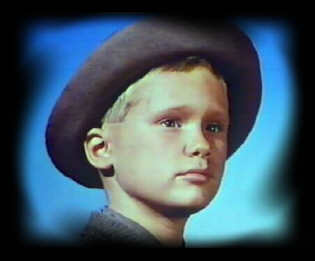
Brandon deWilde (April 9, 1942 - July 6, 1972) was an American actor born into a theatrical family in Brooklyn. His father, Frederick A. deWilde, was a Broadway production stage manager. His mother, Eugenia deWilde, was a part time Broadway actress. The deWilde family moved from Brooklyn to Baldwin, Long Island after Brandon was born.

Brandon deWilde made his much-acclaimed Broadway debut at the age of 9 in The Member of the Wedding. He was the first child actor to win the Donaldson Award and went on to repeat his role in the film version directed by Fred Zinnemann in 1952.

As the blonde, blue-eyed Joey who idolized the strange gunman in Shane, he stole the picture and was rewarded with an Oscar nomination the following year. He starred in his own television series, Jamie, during 1953-1954. The program was highly popular and likely would have run far longer had it not been for a contract dispute which led to its cancellation. Young deWilde then made his mark as a screen adolescent co-starring with Carol Lynley in the 1959 drama Blue Denim, then appeared in Hud which starred Paul Newman, and in All Fall Down.

Although he was the only leading cast member not nominated for an Oscar for the 1963 film Hud, deWilde got to share Oscar night glory nevertheless when he went on stage to accept the Best Supporting Actor trophy for co-star Melvyn Douglas, who was out of the country visiting Israel at the time.

DeWilde delivered a widely acclaimed performance at the age of 23 as Jere Torry, the screen son of John Wayne in the 1965 war film, In Harm's Way. His last film was Wild In The Sky (1972) in which he played a young rebel that steals a nuclear bomb with the help of two friends. In retrospect, Hud and In Harm's Way stand as his definitive roles as an adult, and Shane as his overall greatest achievement. During his career that spanned the years 1951-1972 he appeared in 6 Broadway plays, 16 films, and 27 television shows.

Brandon deWilde was critically injured in a car crash in the Denver suburb of Lakewood while en route to appear in the play, Butterflies Are Free. DeWilde had swerved to avoid another vehicle and struck a construction trailer parked on the side of the street. He was pinned in the wreckage of the truck he was driving for some time before finally arriving at Denver University Hospital. He died four hours after the accident on the evening of July 6, 1972. He was 30 years old.

The young actor was also indirectly involved with the music industry. In 1965, deWilde vacationed in the Bahamas and watched as Paul McCartney of The Beatles wrote the song "Wait" during the filming of the Beatles movie, Help. With the help of his friend Gram Parsons, most notably of The Byrds, deWilde attempted to embark on a music career. He invited Parsons and his band at the time, International Submarine Band, to back him in a recording session. Guitarist John Nuese claimed that deWilde sang harmony with Parsons better than anyone besides Emmylou Harris. She and Parsons later cowrote a song, "In My Hour Of Darkness", whose first verse references the car accident that killed deWilde: "Once I knew a young man / Went driving through the night, / Miles and miles without a word / But just his high-beam lights. / Who'd have ever thought they'd build / Such a deadly Denver bend; / To be so strong, to take so long / As it would till the end."

DeWilde was originally buried in Hollywood, California. His family later moved his grave to Pinelawn Memorial Park, Farmingdale, New York, in Suffolk County near their Long Island, New York home to be near his mother who died in 1987. DeWilde's father died in 1980.

http://en.wikipedia.org/wiki/Brandon_De_Wilde
0 Replies
 
bobsmythhawk
 
  1  
Reply Sun 9 Apr, 2006 10:46 am
Dennis Quaid
From Wikipedia, the free encyclopedia


Dennis William Quaid (born April 9, 1954) is an American actor.


Biography

Dennis was born to William Rudy Quaid and Juanita Bonniedale Jordan in Houston, Texas. He studied drama at Bellaire High School in Bellaire, Texas and later in college. He dropped out of the University of Houston before graduating and moved to Los Angeles, California to pursue an acting career. Dennis initially had trouble finding work but began to gain notice when he appeared in Breaking Away (1979) and earned good reviews for his role in The Right Stuff (1983).

Known for his famous grin, Quaid was a versitile actor, performing in both comedic and dramatic roles. Quaid's acting career seemed to reach its peak in the mid-to-late 1980s, with starring roles in such films as Enemy Mine and Innerspace. He also achieved acclaim for his portrayal of Jerry Lee Lewis in Great Balls of Fire (1989).

Quaid's career seemed to lose steam in late 80s/early 90s after he fought and kicked a painful cocaine addiction, but he continued to prove his worth in a variety of films, and seems to be experiencing a resurgence in popularity since the late nineties. Some of Quaid's most recent film credits include Traffic (2000) as a lowlife attorney, Far From Heaven (2002) as a closeted husband and In Good Company (2004), as an aging ad executive whose new boss is a young kid.

Aside from acting, Quaid is also a musician, and plays with his band the Sharks. He also has a pilot's license.

Quaid is a scratch golfer and, in 2005, was named as the top golfer among the "Hollywood set" by Golf Digest. He lends his name to the annual "Jiffy Lube/Dennis Quaid Charity Classic" in Austin, Texas. The golf tournament attracts numerous celebrities with the proceeds split between three local children's charities. He is a member of Bel-Air Country Club in Beverly Hills and tries to stay at homes on private courses when he's on the road.

Quaid works with the charity "International Hospital for Children in New Orleans." He makes trips to Central America to help build medical clinics and transport sick children back to the United States for treatment they cannot get locally.

In a 2006 interview with Best Life magazine, Quaid said that in the mid-1990s he suffered from anorexia nervosa, saying, "I'd look in the mirror and still see a 180 lb. guy, even though I was 138 pounds," and "for many years, I was obsessed about what I was eating, how many calories it had, and how much exercise I'd have to do."

He is also a huge fan of the legendary rock band Phish, and has been spotted at several of their concerts.

Family

Marriages: Quaid has picked a holiday for each of his weddings (Fourth of July, Valentine's Day, Thanksgiving Day):

* July 4, 2004 - present; Kimberly Buffington (real estate agent).
* February 14, 1991 - June 16, 2001; Meg Ryan (actress); son Jack Henry (born April 24, 1992)
* November 25, 1978 - January 23, 1983; P.J. Soles (actress)

Quaid married Kimberly Buffington of Austin, Texas, who, at 32 years old was 18 years younger than Quaid. Quaid's son Jack served as the best man for the wedding at Quaid's ranch in Montana. Quaid was engaged for three years to actress Lea Thompson who he met on the movie set of "Jaws 3-D" in 1983. Quaid's marriage to Meg Ryan ended after it was revealed that she'd had an affair with Russell Crowe while filming Proof of Life (Ryan's relationship with Crowe did not last long after the divorce was announced), but Quaid insists that the relationship had already been deteriorating before then and insists that he still feels some lingering affection for Meg, as she is the mother of his only son, Jack. Some think that the divorce ultimately worked in his favor, as his career has been presently proceeding with much more success than Meg's.

Randy Quaid, Dennis's older brother, is also an actor. Dennis Quaid also has a sister named Brandy.

http://en.wikipedia.org/wiki/Dennis_Quaid
0 Replies
 
bobsmythhawk
 
  1  
Reply Sun 9 Apr, 2006 10:47 am
As You Slide Down The Banister Of Life (grow Old), Remember.........

1. Jim Baker and Jimmy Swaggert have written an impressive new book. It's called "Ministers Do More Than Lay People."

2. Transvestite: A guy who likes to eat, drink and be Mary.

3. The difference between the Pope and your boss...the Pope only expects you to kiss his ring.

4. My mind works like lightning. One brilliant flash and it is gone.

5. The only time the world beats a path to your door is if you're in the bathroom

6.. I hate sex in the movies. Tried it once. The seat folded up, the drink spilled and that ice, well, it really chilled the mood.

7. It used to be only death and taxes were inevitable. Now, of course, there's shipping and handling, too.

8. A husband is someone who, after taking the trash out, gives the impression that he just cleaned the whole house.

9. My next house will have no kitchen - just vending machines and a large trash can.

10. A blonde said, "I was worried that my mechanic might try to rip me off. I was relieved when he told me all I needed was turn signal fluid."

11. I'm so depressed. My doctor refused to write me a prescription for Viagra. He said it would be like putting a new flagpole on a condemned building.

12. My neighbor was bit by a stray rabid dog. I went to see how he was and found him writing frantically on a piece of paper. I told him rabies could be treated, and he didn't have to worry about a Will. He said, "Will? What Will? I'm making a list of the people I want to bite."

13 Definition of a teenager? God's punishment for enjoying sex.

14. As we slide down the banister of life, may the splinters never point the wrong way.


You don't stop laughing because you grow old--You grow old because you stop laughing !!
0 Replies
 
Raggedyaggie
 
  1  
Reply Sun 9 Apr, 2006 11:32 am
A good day to all.

Remembering:

http://www.auschwitz.dk/shane25.jpghttp://www.meekermuseum.com/brandon2.jpg
(what a tragic ending for such a talented young man)

http://www.black-cinema.org/images/315_Paul_Robeson.jpg
(love that man's voice - own all his CDs now)

And a Happy Birthday to:

http://www.union-web.com/news/060404/images/chita_02.jpghttp://www.infobae.com/adjuntos/imagenes/52/0075210.jpg
0 Replies
 
Letty
 
  1  
Reply Sun 9 Apr, 2006 12:23 pm
Well, folks. edgar got his mule in between the hawk's bio's. <smile>

It took me a while, but I read through every script and transcript. Knew most of them, Boston, but became hypnotized with Robeson.

Thanks to both Bob and our Raggedy for the written and the pictorial reminder.

and as always, Bob, life's bannisters and barristers are always a focal point of humor.

Robeson was a man born before his time, folks, but he was a MAN:

Robeson Lyrics > Scandalize My Name

Artist: Paul Robeson
Song: Scandalize My Name
Album: Ballad For Americans
[" Ballad For Americans " CD]

I met my brother the other day
And gave him my right hand
As soon as ever my back was turned
He scandalized my name

Now do you call that a brother?
No, no
You call that a brother?
No, no
You call that a brother
No, no
Scandalize my name

I met my sister the other day
And gave her my right hand
As soon as ever my back was turned
She too scandalized my name

Now do you call that a sister?
No, no
You call that a sister?
No, no
You call that a sister?
No, no
Scandalize my name

I met my preacher the other day
And gave him my right hand
As soon as ever my back was turned
He too scandalized my name

Now do you call that religion?
No, no
You call that religion?
No, no
You call that religion?
No, no
Scandalize my name.
0 Replies
 
dyslexia
 
  1  
Reply Sun 9 Apr, 2006 12:28 pm
I thought I read that this is Hugh Hefners 80th b'day.
0 Replies
 
edgarblythe
 
  1  
Reply Sun 9 Apr, 2006 12:36 pm
Hugh! Our idol!
0 Replies
 
Letty
 
  1  
Reply Sun 9 Apr, 2006 12:43 pm
Right, folks, like dys and edgar are enraptured with Hugh. Rolling Eyes

For the dys and the ed:

Mercy Mercy Mercy
The Buckinghams
(Williams/Watson/Zawinul)


My baby she may not a-look
Like one of those bunnies out of a Playboy Club
But she got somethin' much greater than gold
Crazy 'bout that girl 'cause she got so much soul

I said she got the kind of lovin', kissin' and a-huggin'
Sure is mellow, glad that I'm her fellow and I know
That she knocks me off my feet
Have mercy on me
'Cause she knocks me off my feet
There is no girl in the whole world
That can love me like you do

My baby when she walks by
All the fellows go 'mmmm', and I know why
It's simply 'cause that girl she looks so fine
And if she ever leaves me I would lose my mind
[repeat chorus]

Everybody in the neighborhood
Will testify that my girl she looks so good
She's so fine she'd give eyesight to the blind
And if she ever leaves me I would lose my mind
[repeat chorus]

Baby, yeah, you got that soulful feel, yeah, it's all right
Mercy, mercy, mercy
0 Replies
 
Letty
 
  1  
Reply Sun 9 Apr, 2006 12:53 pm
News for the world of art and architecture:


Mendes Da Rocha Wins Architecture Prize By ALEX VEIGA, Associated Press Writer
1 hour, 49 minutes ago


LOS ANGELES - Brazilian architect Paulo Mendes da Rocha, renowned for designing bold, open structures that blend with their surroundings, was named the winner of the 2006 Pritzker Architecture Prize on Sunday.


Mendes da Rocha, 78, is the second Brazilian architect to receive the prestigious award, which is sponsored by the family that developed the Hyatt Hotel chain. Oscar Niemeyer was honored in 1988.

Other past winners include Frank Gehry of California, Rafael Moneo of Spain and Renzo Piano of Italy.

"I am very surprised, very honored by the award," Mendes da Rocha said in a telephone interview with The Associated Press from his Sao Paulo home.

http://www.designbrasil.org.br/portal/imagens/publicador/211114546paulo_mendes_rocha.jpg
0 Replies
 
edgarblythe
 
  1  
Reply Sun 9 Apr, 2006 01:11 pm
A song dedication for Hugh, from Little Richard


(She can't help it, the girl can't help it)

She walks by, the men folk stand in rows
(She can't help it, the girl can't help it)
She winks her eye, the bread slice turn to toast
(She can't help it, the girl can't help it)
She's got a lot of what they call the most
(She can't help it, the girl can't help it)

The girl can't help it she was born to please
(She can't help it, the girl can't help it)
And if I go to her on my bended knees
(She can't help it, the girl can't help it)
'Cause I'm hopin' obviously
That someday her answer will be
The girl can't help it 'cause she's in love with me
(She can't help it, the girl can't help it)

She'll mess around with every mother's son
(She can't help it, the girl can't help it)
If I give her good loving she says "baby well done"
(She can't help it, the girl can't help it)
She'd make my grandpa feel like twenty-one
(She can't help it, the girl can't help it)

The girl can't help it she was born to please
(She can't help it, the girl can't help it)
And if I go to her on my bended knees
(She can't help it, the girl can't help it)
'Cause I'm hopin' obviously
That someday her answer will be
The girl can't help it 'cause she's in love with me
(She can't help it, the girl can't help it) awh!

(She can't help it, the girl can't help it) (6)

she walks by, the men folk stand and gawp
(She can't help it, the girl can't help it)
she's got a lot of what they call the most
(She can't help it, the girl can't help it)
she can wink her eye and the bread slice turn to toast
(She can't help it, the girl can't help it)

The girl can't help it she was born to please
(She can't help it, the girl can't help it)
And if I go to her on my bended knees
(She can't help it, the girl can't help it)
'Cause I'm hopin' obviously
That someday her answer will be
The girl can't help it 'cause she's in love with me
(She can't help it, the girl can't help it)
0 Replies


Related Topics

WA2K Radio is now on the air, Part 3 - Discussion by edgarblythe
 
Copyright © 2026 MadLab, LLC :: Terms of Service :: Privacy Policy :: Page generated in 0.25 seconds on 03/02/2026 at 06:45:15