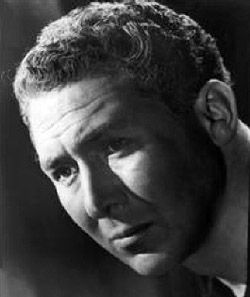
This photo may not be from "Lawrence of Arabia", but this is how I remember him in that movie.
0 Replies
Letty
1
Reply
Thu 7 Sep, 2006 12:56 pm
I don't remember him from Lawrence of Arabia, Raggedy, but thanks anyway, gal.
Incidentally, all. I am still looking for Japanese Sandman, and I did find out that it was from the movie, "They Shoot Horses, Don't They" and the lyrics are by Ray Egan.
Well, let's hear the traditional song from Buddy Holly:
» That'll Be The Day
Well that'll be the day
When you say good-bye
Yes that'll be the day
When you make me cry
You say you're gonna leave
You know it's a lie
'cause that'll be the day
When I die
Well you give me all your lovin'
And your turtle dovin'
A all your hugs and kisses and your money too
Well uh you know you love me baby
Still you tell me maybe
That someday well I'll be blue
Well oh when cupid shot his dart
He shot it at your heart
So if we ever part then I'll leave you
You sit and hold me and you
Tell me boldly
That someday well I'll be blue
0 Replies
Raggedyaggie
1
Reply
Thu 7 Sep, 2006 02:01 pm
THE JAPANESE SANDMAN
(Words by Raymond B. Egan / Music by Richard A. Whitin, 1920)
Won't you stretch imagination for the moment and come with me
Let us hasten to a nation lying over the western sea
Hide behind the cherry blossoms here's a sight that will please your eyes
There's a baby with a lady of Japan singing lullabies
Night winds breath her sighs here's the Japanese
Just as silent as we came we'll leave the land of the painted fan
Wander lightly or you'll wake the little people of old Japan
May repose and pleasant dreaming be their share while the hours are small
Like an echo of the song I hear the Japanese Sandman
call new days near for all here's the Japanese
Sandman sneaking on with the dew just an old second hand man
He'll buy your old day from you
he will take every sorrow of the day that is through
and he'll give you tomorrow just to start a life anew
then you'll be a bit older in the dawn when you wake
and you'll be a bit bolder with the new day you make
here's the Japanese Sandman trade him silver for gold
just an old second hand man trading new days for old.
But I remember another "Japanese Sandman" song from long ago. I remember the tune that is. The only lyrics I can remember are "He's a Japanese Sandman".
0 Replies
Letty
1
Reply
Thu 7 Sep, 2006 02:13 pm
Raggedy, you are one amazing lady. Even my sister didn't come through.
Thank you so much, honey.
Incidentally, listeners. The yitwails will be vacationing in Hawaii for around ten days, so let's do them an hawaiian song.
Lili`uokalani
There is a breath so gently breathing
So soft, so sweet, by sighing breezes
That as it touches my whole being
It warms me in my heart
Chorus:
We, fair one, together, shall enjoy such moments
While murmuring wind sweeps over my fatherland
There is a breath so soft and balmy
Brought by sweet zephyrs, Lîlîlehua
And while wafted to my bosom
It warms me with love
There is a fragrance that saturates
A cool, soft breeze
Brought it to cling to me
Warming me with feelings
There is a fragrance wafted here
The sweet call of birds
Brought it to find me
Being warmed by your voice
0 Replies
oldandknew
1
Reply
Thu 7 Sep, 2006 03:19 pm
Ain't it foggy outside
All the planes have been grounded
Ain't the fire inside?
Let's all go stand around it
Funny I've been there
And you've been there
We ain't had no time to drink that beer
Chorus:
'Cause I understand
You've been running from the man
That goes by the name of the Sandman
He flies the sky
Like an eagle in the eye of a hurricane that's abandoned
Aint the years gone by fast
I supposed you have missed them
Oh, I almost forgot to ask
Did you hear of my enlistment?
Chorus:
'Cause I understand
You've been running from the man
That goes by the name of the Sandman
He flies the sky
Like an eagle in the eye of a hurricane that's abandoned
0 Replies
Letty
1
Reply
Thu 7 Sep, 2006 03:27 pm
That one I know, John. Thanks, Brit. Nice to hear it again.
Here's sand of another kind, folks, and this was is the translation of the turtles dedication:
Ahe Lau Makani - by Lili`uokalani
He `ala nei e mâpu mai nei
Nâ ka makani lau aheahe
I lawe mai i ku`u nui kino
Ho`opumehana i ku`u poli
Hui:
E ke hoa o ke
ahe lau makani
Halihali`ala o
ku`u `âina
He `ala nei e moani mai nei
Na ka ua noe Lîlîlehua,
I lawe mai i ku`u poli
Ho`opumehana i ke aloha
He `ala nei e puia mai nei
Na ka makani anu kolonahe
I lawe mai nâ a pili
Ho`opumehana i ka mana`o
He `ala nei e aheahe mai nei
Na ka leo hone a nâ manu
I lawe mai a loa`a au
Ho`opumehana i ko leo
Isn't that fabulous?
0 Replies
yitwail
1
Reply
Thu 7 Sep, 2006 08:03 pm
that's indeed fabulous. i hope the vacation lives up to the advance billing.
here's an odd oldie by Bobby Vee i came across in a trivia thread with which i bid the listeners good night.
They say that you're a runaround lover
Though you say it isn't so
But if you put me down for another
I'll know, believe me, I'll know
'cause the night has a thousand eyes
And a thousand eyes can't help but see if you are true to me
So remember when you tell those little white lies
That the night has a thousand eyes
You say that you're at home when you phone me
And how much you really care
Though you keep telling me that you're lonely
I'll know if someone is there
'cause the night has a thousand eyes
And a thousand eyes can't help but see if you are true to me
So remember when you tell those little white lies
That the night has a thousand eyes
One of these days you're gonna be sorry
'cause your game I'm gonna play
And you'll find out without really tryin'
Each time that my kisses stray
'cause the night has a thousand eyes
And a thousand eyes will see me too
And no matter what I do
I could never disguise all my little white lies
'cause the night has a thousand eyes
So remember when you tell those little white lies
That the night has a thousand eyes
0 Replies
Lord Ellpus
1
Reply
Fri 8 Sep, 2006 03:07 am
Morning, Letty.
I'm sorry I haven't been on here for a while, but I DID try to post one the other day, and A2K all froze up on me!
I think it must be happening to other people, as I've heard mention of it on various threads here and there....phew! I thought it was my computer playing up for a while.
Anyway.......here in the UK the sun is in the sky, there's not a cloud in sight and it's going to be a lovely weekend, especially seeing as how I'm going to a very scenic part of the North West for a couple of days, to recharge the batteries, so to speak.
It may be Autumn here, but spring is defintely in the air.....
LOVE SHACK - THE B52'S.
If you see a faded sign by the side of the road that says 15 miles to the Love Shack!
Love shack yah yah
I'm headin' down the Atlanta highway, lookin' for the love getaway
Heading for the love getaway, love getaway,
I got me a car, it's as big as a whale and we're headin' on down
To the Love Shack
I got me a Chrysler, it seats about 20
So hurry up and bring your jukebox money
The Love Shack is a little old place where we can get together
Love Shack baby, (a Love Shack bay-bee).
Love shack, baby love shack,
love shack, baby love shack, love shack.
(love baby, that's where it's at) love shack
(love baby, that's where it's at)
Sign says.. Woo... stay away fools,
'cause love rules at the Love Shack!
Well it's set way back in the middle of a hill,
Just a funky old shack and I gotta get back
Glitter on the mattress
Glitter on the highway
Glitter on the front porch
Glitter on the highway
The Love Shack is a little old place where we can get together,
love shack baby... (Love Shack baby!)
Love Shack, that's where it's at!
Love Shack, that's where it's at!
Huggin' and a kissin', dancin' and a lovin',
wearin' next to nothing
Cause it's hot as an oven
The whole shack shimmies
YEA! the whole shack shimmies!
The whole shack shimmies when everybody's
Movin' around and around and around and around!
Everybody's movin', everybody's groovin' baby!
Folks linin' up outside just to get down
Everybody's movin', everybody's groovin' baby!
Funky little shack! Funky little shack!
Hop in my Chrysler, it's as big as a whale and it's about to set sail!
I got me a car, it seats about 20
So come on and bring your jukebox money.
Oh the Love Shack is a little old place where we can get together
love shack, baby! (a love shack baby)
love shack! baby love shack
love shack! baby love shack
love shack! baby love shack (love baby that's where its at, yea, love baby that's where it's at)
love shack! baby love shack
Bang bang bang, on the door baby! (Knock a little louder baby!)
Bang bang bang,on the door baby! (I can't hear you!)
Bang bang bang, on the door baby! (Knock a little louder sugar!)
Bang bang bang, on the door baby! (I can't hear you!)
Bang bang bang on the door baby
Bang bang bang on the door baby (knock a little louder)
Bang bang (on the door baby)
Bang bang (on the door)
Bang bang (on the door baby)
Bang bang
Your what?.... Tin roof, rusted!
Love Shack, baby Love Shack!
Love Shack, baby Love Shack! love baby that's where its at, yea, love baby that's where it's at}
Love Shack, baby Love Shack!
Love baby, love shack
Huggin' and a kissin', dancin' and a lovin' at the love shack.
0 Replies
bobsmythhawk
1
Reply
Fri 8 Sep, 2006 04:41 am
Jimmie Rodgers (country singer)
From Wikipedia, the free encyclopedia
Jimmie Rodgers
Born September 8, 1897
Meridian, Mississippi, United States
Died May 26, 1933
"The Original" James Charles "Jimmie" Rodgers (September 8, 1897 -- May 26, 1933) was the first country music superstar. Rodgers, known as The Singing Brakeman and The Blue Yodeler, was born in Pine Springs, Mississippi, USA but considered his hometown to be Meridian, Mississippi, and spent most of his early life from boyhood accompanying his father on railroad jobs. He eventually became a railroad brakeman, an extremely dangerous and highly skilled job. In the days before air brakes, the brakeman had to stop the train by running on top of the moving train from car to car setting mechanical brakes on each one.
Tuberculosis forced him to leave the railroad, and he undertook all sorts of work, ranging from police detective to blackface performer in minstrels and medicine shows. Before answering an advertisement from Ralph Peer of the Victor Talking Machine Company to audition as a performing artist. This audition in Bristol, Tennessee, on August 4, 1927 (two days after the Carter Family answered the same ad and recorded in the same hall) led to Rodgers' phenomenally successful recording career.
His songs, most of which he wrote himself, were typically either sentimental songs about home, family and sweethearts, or tough takes on the lives of hoboes, "rounders", and his beloved railroads and railroaders, on his own hard life and happy marriage.
Each of his recordings captures the unique vocal quality that singles Rodgers out from the array of early country musicians. His voice is powerful and haunting. His yodels are second to none in their tone, complexity and ingenuity. His sound is like no other and, once heard, is never forgotten. Hearing Rodgers also serves to instantly place in context much of the country singing of every era since. Backed by a variety of accompanying ensembles and playing guitar on many tracks, Rodgers' instrumentation always seems well suited to the song's needs. His music is invaluable for its historical importance and also for its virtuosic vocals and beautiful melodies.
A round dozen of his songs bore the generic title "Blue Yodel" with a number. The first "Blue Yodel" is better known from its refrain, "T for Texas, T for Tennessee". Fundamentally, Rodgers was a white blues singer, singing traditional blues lyrics and accompanying himself on guitar and yodel, which was nothing like classic Swiss yodeling. His yodeling was really vocalized falsetto blues licks, providing obbligatos and choruses that in other blues performances would have been provided by a lead instrument.
Notable Rodgers titles include "Waiting for a Train" (1929), "In the Jailhouse Now" (1928, version 2 1930), "Jimmie the Kid" (1931), "Mule Skinner Blues" (1931), "Miss the Mississippi and You" (1932), "Looking for a New Mama" (1931), "Jimmie's Mean Mama Blues" (1931), and "Train Whistle Blues" (1930). The 113 songs he recorded have hardly ever been out of print. His musical career lasted only six years. He died from tuberculosis in 1933 in the Taft Hotel, New York at age 35.
His last recordings were made in Manhattan less than a week before his death. He had been bedridden for several years before this last session and had to rest on a cot between takes.
When the Country Music Hall of Fame was established in 1961, Rodgers was one of the first three to be inducted. He was also elected to the Songwriters Hall of Fame and his song "Blue Yodel No. 9" is ranked No. 23 on The Rock and Roll Hall of Fame's 500 Songs that Shaped Rock and Roll.
0 Replies
bobsmythhawk
1
Reply
Fri 8 Sep, 2006 04:47 am
Sid Caesar
From Wikipedia, the free encyclopedia
Sid Caesar (born Isaac Sidney Caesar on September 8, 1922) is an Emmy-winning comic actor and writer, best known as the leading man on the 1950s television sketch comedy series Your Show of Shows.
Caesar was born to Eastern European Jewish immigrants in Yonkers, New York where his father ran a lunch counter where immigrant workers would gather. From them Sid learned to mimic many of the accents that he would use throughout his career. After graduating high school, he planned on a career in music, playing the saxophone. While he earned a reputation as a talented musician in the "Borscht Belt" in the Catskills, he also began performing comedy sketches, and became a sensation.
Caesar served in the Coast Guard during World War II, organizing entertainment for the enlisted men. This took him to Los Angeles, where he got a part in two films, Tars and Spars, based on a wartime comedy routine he did, and The Guilt of Janet Ames. By 1949 he entered the new medium of television, hosting The Admiral Broadway Review.
Television was a natural medium for Caesar. Over the next few years he hosted such hits as Your Show of Shows (1950-1954), Caesar's Hour (1954-1957) and Sid Caesar Invites You (1958). These shows, particularly Your Show of Shows, brought together some of the greatest comic talent of the day, including Imogene Coca, Nanette Fabray, Carl Reiner, and Howard Morris. Many prominent writers got their start writing the skits, including Mel Brooks, Neil Simon, Woody Allen, Mel Tolkin, and Larry Gelbart. Caesar is also responsible for starting the career of Jim Perry in the early 1960s, who went on to become a popular television host, producer and singer.
Caesar's life took a turn when his show Sid Caesar Invites You was cancelled in 1958. In his autobiography he confesses that he turned to alcohol and drugs to overcome the insecurity of having a successful career unravel. He did make several appearances on Broadway, starring in Little Me, on television (The Sid Caesar Show, 1963-1964) and in the movies, Stanley Kramer's star-studded comedy It's a Mad, Mad, Mad, Mad World (1963), Mel Brooks's Silent Movie (1976), and as "Coach Calhoun" in 1978's Grease, but even though he continues to work, he has never recaptured the glory of the Golden Age of Television.
He has been married to Florence Levy since July 17, 1943.
0 Replies
bobsmythhawk
1
Reply
Fri 8 Sep, 2006 04:54 am
Peter Sellers
From Wikipedia, the free encyclopedia
Born September 8, 1925
Southsea, Hampshire, England
Died July 24, 1980
London, England
Richard Henry "Peter" Sellers, CBE (September 8, 1925 - July 24, 1980) was an English comedian, actor, and performer, who came to prominence on the BBC radio series The Goon Show and later became a film star.
Biography
Sellers was born in Southsea, Hampshire, England, to a family of entertainers. Despite his real name being Richard Henry Sellers, his parents called him "Peter" from an early age, in memory of his older still-born brother of that name. He attended a Catholic school, although his father Bill was Protestant and his mother Agnes ("Peg") was Jewish.
Probably following his family in the variety circuit, Sellers learnt this popular yet difficult art and the immediate instinct of the "gag". He was an incredibly versatile artist: an excellent dancer, a drummer good enough to tour with several jazz bands (an excellent clip of him drumming exists when he was a guest on the Steve Allen show in 1964), and a skillful player of the ukulele and banjo (family legend has it that Seller's father actually taught George Formby to play the ukulele). He is known to have performed at the Windmill Theatre.
During World War II, Sellers was an airman in the Royal Air Force, rising to corporal by the end of the war. During his leisure periods, he did impersonations of his superiors. This helped Sellers in his later film Dr. Strangelove.
His success was quite slow in coming. He phoned up a television producer pretending to be Kenneth Horne, who was currently in the show Much Binding in the Marsh, in order to get them to speak to him. Success came as one of the Goons on the radio programme The Goon Show with fellow comedians Spike Milligan, Harry Secombe and Michael Bentine and was followed by early television work.
Sellers' first film successes were in British comedies, including The Ladykillers (1955), I'm All Right Jack (1959) and The Mouse That Roared (1959). On the international scene, in 1962 he portrayed an Indian doctor in The Road to Hong Kong, the seventh and last in the Bing Crosby/Bob Hope/Dorothy Lamour "Road" series.
Sellers was launched internationally with the hit The Millionairess (1960). In Stanley Kubrick's Dr. Strangelove or: How I Learned to Stop Worrying and Love the Bomb (1964) he notably played a triple role, comprising U.S. President Merkin Muffley, Dr. Strangelove, and Group Captain Lionel Mandrake of the RAF (the first two appearing in the same room throughout the film). Sellers was also originally cast in the role of Major T. J. 'King' Kong, but was unable to master the Southern drawl Kubrick wanted for the role and Slim Pickens received it instead. (The special edition DVD says he broke his leg and could not get into the cockpit set.)
However, Sellers is perhaps most famous for his role as the bumbling Inspector Clouseau in the Pink Panther movies, which gave him a worldwide audience. He would play the character in four sequels between 1964 and 1978. The Trail of the Pink Panther was released posthumously in 1982, containing previously unused footage of Sellers. His widow Lynne Frederick later successfully sued the film's producers.
He was a remarkably versatile actor, switching easily from broad comedy as in The Party (1968), to more intense performances, as in Lolita, where he played Clare Quilty, the nemesis of the film's (and novel's) principal protagonist, Humbert Humbert.
Sellers' career had slumped by the early 1970s (he was dubbed "box office poison"), but, after reviving the Clouseau character, he was able to produce his cherished project Being There in 1979, winning his best reviews since the 1960s. This, his last great film, brought him his second Academy Award nomination. He was unsuccessful on both occasions, although he did win a British Academy Award (BAFTA) for I'm All Right Jack. With Sophia Loren Sellers also recorded the top 10 UK single, Goodness Gracious Me.
Commonly considered a master actor and sometimes described as an "obsessive perfectionist", Sellers found in Blake Edwards a devoted director who could delicately underline and follow his comic rhythms. Edwards defined Sellers as a "mercurial clown" who could turn comedy into drama, and vice-versa, in an instant. He could also be cruel, as he demonstrated in his treatment of actress Jo Van Fleet on the set of I Love You, Alice B. Toklas (1968), when she made a slight faux pas and offended him.
Sellers had casual friendships with two of the Beatles, George Harrison and Ringo Starr. Harrison told occasional Sellers' stories in interviews, and Starr appeared with him in the anarchic movie The Magic Christian (1970), whose theme song was Badfinger's cover version of Paul McCartney's "Come and Get It". Starr also gave Sellers a rough mix of songs from the Beatles' White Album, and the tape was auctioned (and bootlegged) after his death.
Sellers was also a close friend of Princess Margaret. Another interesting trait was his love for cars: he was believed to have owned and sold many different models by the 1960s. This was briefly parodied in a fleeting cameo in the short film Simon Simon, which was directed by his friend Graham Stark. It was also mentioned in the The Goon Show episode "The Space Age", where Harry Secombe introduces Sellers with the comment: "Good Heavens, it's Peter Sellers, who has just broken his own record of keeping a car for more than a month".
Sellers was the first man to appear on the cover of Playboy ?- he appeared on the April (1964) cover with Karen Lynn.
Sellers played ukulele-banjo on the New York Girls track for Steeleye Span's 1975 album, Commoner's Crown.
Marriages
Sellers was married four times:
Actress Anne Howe (1951-1961). This marriage ended after she claimed he was having affairs with Wanda Jackson and Sophia Loren. The latter is disputed: Loren has maintained that Sellers had become obsessed with her, but she did not reciprocate his attempts.
Swedish actress Britt Ekland (1964-1968). The couple appeared in two films together: After the Fox (1966) and The Bobo (1967).
Australian model Miranda Quarry (now the Countess of Stockton) (1970-1974)
English actress Lynne Frederick (1977-1980), who later married Sir David Frost.
Premature death and legacy
Sellers died in London from a heart attack just after midnight on July 24, 1980, at age 54. He was survived by his fourth wife, the English actress Lynne Frederick. He had already suffered a near-fatal heart attack (in 1964), at the age of 39. His heart was thoroughly damaged by the first heart attack which would dog him for the remainder of his life. Sellers also wore a pacemaker, with which he had considerable problems. At the time of his death, he was due to undergo heart surgery within that month. His body was cremated.
In his will, Sellers explicitly requested that Glenn Miller's song "In the Mood" be played for his funeral. The request is considered his last touch of humour: his friends knew he hated the song.
Roger Lewis wrote about the madness and bizarre behaviour of Sellers in his biography, The Life and Death of Peter Sellers (Applause Books, 1997). Lewis' biography was adapted for the HBO movie, The Life and Death of Peter Sellers (2004), with Geoffrey Rush in the title role.
In a 2005 poll to find The Comedian's Comedian, Sellers was voted amongst the top 20 greatest comedy acts ever by fellow comedians and comedy insiders.
0 Replies
bobsmythhawk
1
Reply
Fri 8 Sep, 2006 05:05 am
Patsy Cline
From Wikipedia, the free encyclopedia
Background information
Birth name Virginia Patterson Hensley
Born September 8, 1932
Origin Winchester, VA USA
Died March 5, 1963
Patsy Cline (September 8, 1932 - March 5, 1963) was a Country music singer, who enjoyed pop music cross-over success during the era of the Nashville Sound in the early 1960?'s. Since her untimely death at age 30 in a 1963 plane crash during the height of her career, Cline's legacy has been hailed by fans, colleagues and music critics alike as one of the most influential and unique vocalists of the 20th century, as well as one of the top selling female vocalists of all time.
Early Years
Born Virginia ("Ginny") Patterson Hensley on September 8, 1932, in Winchester, Virginia, she was the daughter of Sam and Hilda Hensley, a blacksmith and a seamstress. She was the eldest of three children, which included a brother, Sam, and a sister, Sylvia. With dreams of stardom since an early age, Cline often proclaimed as a child that she would one day be famous and looked up to stars such as Judy Garland and Shirley Temple. A serious illness as a child caused a throat infection which, according to Cline, resulted in her gift of "a voice that boomed like Kate Smith's". Cline was well rounded in her musical tastes and credited everyone from Kay Starr to Hank Williams for influencing her. During her early years of childhood, she often sang in church with her mother.
Cline began performing in area variety/talent shows early on and then, as she grew older, began to play popular nightclubs. To support her family after her father abandoned them, she worked various jobs such as that of a soda jerk and waitress by day, while she sang in clubs at night. Her mother, Hilda, a gifted seamstress who practiced her craft until her own death in 1998, made Cline's famous western onstage outfits. During this time, she met two men who would be responsible for changing her name: she married contractor Gearld Cline in 1953 (whom she later divorced) and was given the name "Patsy" by her new manager, Bill Peer. Numerous appearances on local radio followed and she created quite a following for herself in the Virginia/Maryland area, especially when Jimmy Dean learned of her and she became a regular on Connie B. Gay's "Town and Country" television show, which was broadcasted out of Washington, D.C.
In 1955 she was signed to Four Star Records, but her contract greatly limited her to the material that she could record, stating that she could only record compositions written by Four Star writers. Her first record for Four Star was "A Church A Courtroom And Then Good-Bye". The song sparked little attention, although it did allow her to make several appearances on The Grand Ole Opry. During her contract she recorded 51 songs for Four Star.
Rise to fame & stardom
1957 was a year of great change in Cline's life. Not only did she marry the man she called the love of her life, Charlie Dick, but she skyrocketed to fame when she appeared on the nationally televised "Arthur Godfrey's Talent Scouts" program on January 21, 1957. She sang a pop tune, "Walkin' After Midnight" and won. The song became an instant hit and her first album, "Patsy Cline" was released. After the birth of daughter Julie in 1958, she and Charlie moved to Nashville, TN.
When her contract expired with Four Star Records in 1960, she signed on with Decca Records-Nashville, under the direction of legendary Nashville Sound producer, Owen Bradley. Bradley was not only responsible for much of Cline's recording career's success, but also for the success of Brenda Lee and Loretta Lynn. With Bradley's direction, Cline enjoyed country and pop music success not only because of her versatile vocal ability, but also Bradley's arrangements and incorporation of instruments not typically used on Country records, such as strings. This style became known as "The Nashville Sound", founded by Bradley and RCA's Chet Atkins, who produced Jim Reeves, Skeeter Davis and Eddy Arnold.
When Patsy Cline made her first recordings in 1955, Kitty Wells was the indisputed top female vocalist in the country music field. By the time of Cline's breakthrough as a consistent hit maker in 1961, Wells was still country's biggest female star. However, Cline soon dethroned Wells in 1961 when, for two years in a row, she won Billboard Magazine's "Favorite Female Country & Western Artist" and the 1962 Music Reporter "Star of The Year" award. The two country queens could not have been more different with Cline's husky, full-throated citified sound a marked contrast to Wells' pure-country, quivering vocals. Cline opened the door to a more pop-influenced sound for country female vocalists. Cline, however, did not think of herself as anything other than a country singer.
She also hired a new manager/promoter, Randy Hughes. Perhaps her greatest accomplishments of 1961 was her #1 hit "I Fall to Pieces" and membership to The Grand Ole Opry as a permanent performer, the realization of her lifelong dream. Cline also befriended and encouraged many women starting out in Country Music during this time, including Dottie West, Loretta Lynn, Jan Howard (whose husband, Harland, later co-wrote "I Fall to Pieces") and Brenda Lee.
While 1961 brought the birth of son Randy, on June 14, Patsy and her brother were involved in a head-on car collision. The impact of the accident threw Patsy through the windshield, nearly killing her. Upon arriving at the scene, singer Dottie West picked the glass from Patsy's hair and Patsy insisted that the driver from the other car be treated before her (Ironically, West would suffer the same fate in 1991, but did not survive). Patsy later stated that she saw the other woman die before her eyes at the hospital. Suffering from a jagged cut across her forehead that required stitches, a broken wrist, and a dislocated hip, she spent a month in the hospital. When she left the hospital, her forehead was still visibly scarred. For the remainder of her career, she wore wigs to hide the scars and headbands to relieve pressure on her forehead. She returned to the road on crutches.
Due to her determination, outspoken nature, strong will and a self confidence in herself that was a rare trait for women in Country Music at that time, Cline was the first female in the industry to prove that she could outsell her male competitors in record sales and concert tickets. With this, she headlined Carnegie Hall with fellow Opry members, The Hollywood Bowl with Johnny Cash and eventually her own show in Las Vegas in 1962. Cline is often considered a "heroine" by her contemporaries, who claim that she broke down doors in the industry for women. Cline also reinvented her style by shedding her Western yoked cowgirl outfits for elegant sequined gowns, cocktail dresses and spiked heels. Cline's style in fashion and music were mocked at first by many, then quickly copied. Reportedly, she was being paid at least one grand for her concert appearances towards the end of her life, which was unheard of for women of her time.
After "I Fall to Pieces", other chart toppers of Cline's recording career included the hits "Crazy" by Willie Nelson, "She's Got You" by Hank Cochran, "Sweet Dreams" by Don Gibson and "Leavin On Your Mind". Cline recorded 51 songs for Decca from 1960-1963 and released two more albums during her lifetime: "Showcase With the Jordanaires" (1961) and "Sentimentally Yours" (1962). Other albums of unreleased material followed posthumously, starting with "The Patsy Cline Story" in Summer of 1963. All of these tracks were produced by Owen Bradley and the majority of them featured the legendary back-up vocal group The Jordanaires, who also appeared on many of Elvis Presley's albums.
Patsy Cline's 1961 Album Showcase With the Jordanaires that featured her two big hits that year: "I Fall to Pieces" and "Crazy".During her short career of only five and a half years, Patsy Cline was awarded 12 prestigious awards for her achievements in music and three more following her death. Most of these were Cashbox, Music Reporter and Billboard Awards, which were considered high honors during her time. Awards such as The Grammys and CMA's weren't in existence until after her death.
Tragic Death
In the months leading up to her death, Cline confided in her closest friends (June Carter and Dottie West namely) that she felt a sense of impending doom and suspected that she wasn't going to live much longer. On March 3, 1963, Patsy gave her last concert at a benefit show in Kansas City for the family of a disc jockey who'd recently died. On the bill with her was Billy Walker, Dottie West, Cowboy Copas, Hawkshaw Hawkins, Wilma Lee and Stoney Cooper, to name a few. Patsy boarded a private plane bound for Nashville, flown by her manager Randy Hughes, along with stars Cowboy Copas and Hawkshaw Hawkins. After stopping to refuel in Dyersburg, TN, the plane flew into severe weather and crashed at 6:07PM on March 5, 1963 in a forest just outside of Camden, TN. There were no survivors. Patsy Cline was only 30 years old.
Nashville was in shock over the losses. Patsy Cline's memorial service was attended by thousands. Hours later, news that singer Jack Anglin had died on the way to her service surfaced. (March 1963 would prove the grimmest month in Opry history, ending with the death of former Opry star Texas Ruby, one of Cline's early influences, in a fire on March 29, bringing a total of five Opry star deaths in one month.) She was buried in her hometown of Winchester, VA, where a bell tower, erected in her memory, plays hymns daily at 6:07pm, the time of Cline's death. Her mother had her grave marked with a simple bronze plaque which reads "Death Cannot Kill What Never Dies: Love". A memorial marks the place where the plane crashed outside of Camden, Tennessee.
Legacy: 1963 - present
As the 60's and early 70's moved on, MCA (new owner of Cline's former label, "Decca") continued to issue Patsy Cline albums and Cline had several posthumous hits. Her "Greatest Hits" album, continues to appear on the Country Music charts to this day. It held the record as being the album to stay on the Country Charts the longest until Garth Brooks surpassed it in the 1990's, but still remains the longest by any female artist of any genre.
In 1973, Cline was elected to The Country Music Hall of Fame along with guitarist Chet Atkins, making her the first female solo artist in Country Music history to receive that honor.
By the late 70's, Cline's name occasionally would appear in magazine articles and television interviews by her friends, namely Dottie West and Loretta Lynn, who greatly credited her for inspiration. However, it was a series of interviews with Loretta Lynn by writer/author Ellis Nassour that ultimately led Nassour to write a magazine article memorializing Cline's 40's birthday. Later, Loretta Lynn published her biography, "Coal Miner's Daughter", which featured a chapter dedicated to her friendship with Cline, and recorded a tribute album "I Remember Patsy..." Lynn's bio pic by the same name followed featuring actress Beverly D'Angelo, (who used her own voice) as Cline and actress Sissy Spacek as Lynn. Public interest in Patsy Cline began to rise again. Ellis Nassour then wrote the first Patsy Cline biography, Honky Tonk Angel: The Intimate Story of Patsy Cline after his series of interviews with Cline's family and friends. Since Nassour's publication, many other authors have written bios on Cline throughout the years.
In 1985, HBO/Tri Star Pictures produced "Sweet Dreams: The Life and Times of Patsy Cline", starring actress Jessica Lange lip synching as Cline, and actor Ed Harris as Cline's husband, Charlie Dick. The film depicted their relationship, although Cline's family claimed that much of the film was inaccurately dramatized/fictionalized for Hollywood, including the plane crash which was depicted as crashing into a mountain in the film. Lange was nominated for an Academy Award for her portrayal of Cline. The soundtrack to the film was a great success and Patsy Cline's discography began to climb the record charts again.
Cline's family has produced a series of videos/documentaries since "Sweet Dreams" including "The Real Patsy Cline", "Remembering Patsy" and most recently "Sweet Dreams Still: The Live Collection".
In 1992 the U.S. Postal Service honored her, along with Hank Williams, on a U.S. Postal Stamp and in 1995 she was honored with a Grammy Lifetime Achievement Award along with Barbra Streisand and Peggy Lee.
That same year, MCA released a 4 CD/Cassette Collection of her discography, called "The Patsy Cline Collection". This boxed set, which includes a booklet chronicling Cline's career with many rare photos, remains one of the top 10 selling boxed collections in the record industry.
In 1993, the musical play "Always Patsy Cline" premiered, produced by Ted Swidley. The play, adapted from a sequence in Ellis Nassour's bio on Cline, was based on the real life story of a Houston, TX, fan who met Cline after a concert one evening and became a lifelong friend. The play has made its way across the US, off Broadway in New York and ran for over a year at Nashville's Ryman Auditorium where it sold out nightly starring singer Mandy Barnett. Other plays based on Cline have followed: "A Closer Walk with Patsy Cline" and "Patsy!"
Her recording of "Crazy" was also named the #1 Jukebox Hit of All Time, along with "I Fall to Pieces at # 17 in 1997.
With the nomination of author Ellis Nassour she became a member of the Texas Cowgirl Hall of Fame.
In 1998 she was nominated to The Hollywood Walk of Fame by a dedicated fan and a street was named after her on the back lot of Universal Studios in 1999.
Cline was portrayed on film again in the 1995 CBS bio pic "Big Dreams and Broken Hearts: The Dottie West Story", featuring Michele Lee as Dottie West and actress Tere Myers as Cline.
In 1999, VH1 named her #11 on its "100 Greatest Women of Rock and Roll" and in 2002 CMT named her #1 on its "40 Greatest Women of Country Music". She was also honored with the Nashville Golden Voice Award in its Legend Category that same year.
Patsy Cline's Greatest Hits album that sold 10 million copies.Each year, fans from around the globe gather in Cline's hometown of Winchester, where she is interned, to pay homage to her during its labor day and memorial day events. Efforts to erect a museum in her honor there are still in the works.
In 2005 her album "Patsy Cline's Greatest Hits" was certified by the RIAA as Diamond, meaning it had reached sales of 10 million copies.
Also in 2005, Patsy Cline was listed in the Guinness Book of World Records for her "Greatest Hits" album (first released in 1967) staying on the charts the longest of any female artist of any music genre.
Her career and musical influence has been cited as an inspiration by countless vocalists since her time, including Tammy Wynette, Cyndi Lauper, Marianne Faithful, Patti Smith, Dottie West, Barbara Mandrell, Michelle Branch, Amy Grant, Reba McEntire, Trisha Yearwood and LeeAnn Rimes.
Perhaps the greatest testament to her legacy, aside from her discography of timeless classics, is a fan base that continues to grow throughout the years, spanning generations and continents.
Family Today
In December of 1998, Cline's mother passed away at her home in Winchester, Virginia (her father had died years earlier in the 1950's). Cline's brother passed away in 2004 and her sister still lives in Virginia. Patsy's husband, Charlie Dick, resides in Nashville where he has continued to be a well known member of the Country Music community, producing documentaries on Cline and other artists through his video production company. Daughter Julie joins him representing Cline's estate at public functions and has four children of her own (one, Virginia, named for Cline, was killed ironically in an automobile accident in 1994) and one grandchild, making Patsy Cline a great grandmother. Son Randy was the drummer of a Nashville band and still resides in Nashville, although he keeps a low profile. Dick's brother, Mel, is President of the "Always...Patsy Cline Fan Club". After Cline's Death, Charlie Dick married singer Jamie Ryan in 1965, but the two divorced a short time later due to Dick's dedicated love for Cline. The two share a son, Chip, who is married and has two sons. Ironically, Jamie Ryan provided the vocals needed for two songs in the film Sweet Dreams, "Bill Bailey (Won't You Please Come Home)" and "Blue Christmas" (a tune that Cline never recorded).
Trivia
Patsy was a collector of salt and pepper shakers and loved dangly earrings.
Patsy was once asked to change her outfit at the Grand Ole Opry when she arrived clad in tight gold lame pants.
Patsy often referred to herself as "The Cline".
She had perfect pitch.
Her standard opening number for live performances was "Come On In" and she almost always included her own swinging version of "Bill Bailey (Won't You Please Come Home)".
Patsy called many of her close friends "Hoss", a term of endearment.
She played piano by ear.
Patsy moved into her dream home in Nashville only a few months before she died. The bathroom had gold dust sprinkled on the tile and the basement was used as a music room. She reportedly told Loretta Lynn "I'll never be happy until I have my Mama one just like it."
Producer Owen Bradley told TNN in an interview before his death that he had planned to cut an album of "standards" with Patsy before she died, including the song "Can't Help Loving That Man Of Mine".
Singer Dottie West paid homage to Patsy throughout her career, but particularly to Patsy's fashion style and feminisim in Country Music when she appeared on the cover of her 1980 album "Wild West" clad in a scandelous cowgirl outfit she called an updated ode to Patsy, complete with holster guns, fringe and a cowgirl hat.
According to Grand Ole Opry officials, Patsy is the only member of the Opry, to date, to receive membership just by asking.
Patsy hated most of the musical material that made her famous, particularly the hits "I Fall to Pieces", "Crazy" and "Walkin' After Midnight", but liked them after they became hits for her.
Willie Nelson once stated that Patsy Cline's version of "Crazy" was his favorite version of any song of his that anybody had ever recorded.
Opry singer Billy Walker, who also appeared at Cline's last show, was supposed to fly back on the doomed plane with Cline, but traded his seat for Hawkshaw Hawkins' commercial airline ticket. Walker himself met a tragic end when he, his wife and several family members were killed in a 2006 automobile accident coming home from a concert.
Singer Barbara Mandrell talks of her touring with Cline as a child star in her biography "Get To The Heart: My Story". Barbara talks of how Patsy asked her to style her hair before shows and how Patsy insisted that she room with her on a tour that was headlined by Patsy, George Jones and Johnny Cash.
Famed Nashville Songwriter Harlan Howard, who wrote several hits for Cline including "I Fall to Pieces" with Hank Cochran, claimed that Patsy was so gifted vocally that she could have performed Opera had she set her mind to it.
Actress Jessica Lange once stated that her role as Patsy Cline in the film Sweet Dreams was her all time favorite role because of Cline's fascinating character.
A Patsy Cline fan long before they met, singer Jan Howard recalls watching Cline sing from backstage at The Grand Ole Opry, but was too shy to introduce herself. One night, Cline threw open the dressing room door and told Jan "You're a conceited little S.O.B! You waltz in here and do your song. Then you leave without saying kiss my ass or anything!" Howard shot back at Cline with "Now wait just a minute. I've ALWAYS been a fan of yours but right now I'm not!" Cline laughed and said "You're alright, honey. Anybody that'll talk back to The Cline is alright. We're gonna be good friends." And they were until Patsy died.
Memorable Quotations
"Hoss, if you can't do it with feeling - don't." - Patsy on performing to friend Dottie West
"I don't want to get rich - just live good." - Patsy in a letter to her fan club president
"I had a hit out called "I Fall to Pieces" and I was in a car accident. Now I have a new record out and I'm really worried because it's called "Crazy"!" - Patsy introducing her newest hit to her concert audiences while on tour with Johnny Cash, George Jones and Barbara Mandrell
What Others Have Said
She could sing anything! She could sing Country, Pop, Jazz...she could do anything! She had the style, the charisma and the sound. - Eddy Arnold, music legend
"She is one of those rare talents that only comes along once in a lifetime." - Roy Clark, musician
"It's not like she's a legend because she was in a plane crash - she was a GREAT singer." - singer Crystal Gayle
"Her music will always live on because her records are timeless" - Jan Howard, Country Music legend
"She probably had the best pipes ever". - Toby Keith, Country Music star
"She set trends that will be followed for as long as there is good music. If they're going to do it right, they have to do it the Patsy Cline way because she couldn't be beat!" - Carl Perkins, legendary singer/songwriter
"All Patsy Cline had to do was sing anybody's song and her version would outsell theirs because it would be so good" - George Jones, legendary Country Music icon
"The great Patsy Cline...Patsy Cline made Country Music hip and cool" - Maryanne Faithful, renowned British rocker
"Without Patsy Cline, I don't think I would have lasted. There will never be another Patsy Cline." - Loretta Lynn, legendary Country Music icon in her book "Coal Miner's Daughter".
"Oh my God - I love Patsy!" - Cyndi Lauper, renowned American rocker
"She was the consummate artist and human being. I'm so thankful she was a part of my life" - Dottie West, legendary Country Music icon
"There was a lot of hurt in Patsy's voice and a lot of deep love in her voice. And I think she portrayed that" - June Carter Cash, legendary Country Music icon
"I think people who may have not liked Country Music before her began to like that sound because she had this voice that was just heavenly! She was one of the first (in Nashville) to say "Hey, I'm a girl and I'm tough, don't mess with me - just let me sing and do my thing" - Dolly Parton, Country Music icon
(*quotes taken from "VH1's 100 Greatest Women of Rock and Roll", "CMT's 40 Greatest Women of Country", "The Real Patsy Cline" (VHS/DVD) & "Patsy Cline Remembered" (VHS/DVD))
0 Replies
bobsmythhawk
1
Reply
Fri 8 Sep, 2006 06:06 am
Virna Lisi
From Wikipedia, the free encyclopedia
Virna Lisi (b. September 8, 1937 as Virna Lisa Pieralisi) is an Italian film actor.
She began her film career as a teenager in 1953. Cast more for her stunning looks than talent, her early films included La Donna del giorno (1956), Don't Tempt the Devil (1962) , and the Italian-made spectacle Romolo e Remo (1961). The pert and sexy star also made a decorative dent in Hollywood comedy as a tempting blue-eyed blonde starring opposite Jack Lemmon in How to Murder Your Wife (1965), and appearing with Tony Curtis in Not with My Wife, You Don't! (1966). Confined to the same type of glamour roles here, she returned to Europe within a couple of years but hardly fared better in such mediocre movies as Arabella (1967). In later decades, however, a career renaissance occurred for Virna. She began to be perceived as more than just a tasty dish, giving a wide variety of mature, award-winning performances. It all culminated in the role of a lifetime with the film La Reine Margot (1994), in which she played a marvelously malevolent Catherine de Medici and won both the César and Cannes Film Festival awards, not to mention the Italian version of the "Oscar".
Trivia
Alternated filming activity with television and stage acting, namely at Piccolo Teatro di Milano, where she did "I giacobini" by Federico Zardi, under the direction of Giorgio Strehler. She was one of the stars launched as a successor to Marilyn Monroe in the United States, in the late '60s.
The '80s Argentinian band, Sumo (band) (led by an Italian singer), made a song for her. The singer's brother is the actor Andrea Prodan, who appeared with her in the movie I ragazzi di via Panisperna (1988).
Lisi was cast in the title role in Barbarella (film) (1968), but she turned it down and returned to Italy.
Retrieved from "http://en.wikipedia.org/wiki/Virna_Lisi"
0 Replies
bobsmythhawk
1
Reply
Fri 8 Sep, 2006 06:12 am
LETTER FROM A FARM KID
Dear Ma and Pa,
I am well. Hope you are too. Tell Brother Walt
and Brother Elmer the Marine Corps beats working
for old man Minch by a mile. Tell them to join up
quick before all of the places are filled.
I was restless at first because you got to stay in
bed till nearly 6a.m., but I am getting so I like to
sleep late. Tell Walt and Elmer all you do before
breakfast is smooth your cot, and shine some
things. No hogs to slop, feed to pitch, mash to mix,
wood to split, fire to lay. Practically nothing.
Men got to shave, but it is not so bad, there's
warm water. Breakfast is strong on trimmings like
fruit juice, cereal, eggs, bacon, etc., but kind of
weak on chops, potatoes, ham, steak, fried
eggplant, pie and other regular food, but tell Walt
and Elmer you can always sit by the two city boys
that live on coffee. Their food plus yours holds you
until noon when you get fed again. It's no wonder
these city boys can't walk much.
We go on "route marches," which the platoon
sergeant says are long walks to harden us. If he
thinks so, it's not my place to tell him different. A
"route march" is about as far as it is to our mailbox
at home. Then the city guys get sore feet and we
all ride back in trucks.
The country is nice but awful flat. The sergeant
is like a school teacher. He nags a lot. The Captain
is like the school board.
Majors and colonels just ride around and frown.
They don't bother you none.
This next part will kill Walt and Elmer with laughing.
I keep getting medals for shooting. I don't know why.
The bulls-eye is near as big as a chipmunk head and
don't move, and it ain't shooting at you like the Higgett
boys at home. All you got to do is lie there all
comfortable and hit it. You don't even load your own
cartridges.
They come in boxes.
Then we have what they call hand-to-hand combat
training. You get to wrestle with them city boys. I have
to be real careful though, they break real easy. It ain't
like fighting with that ole bull at home.
I'm about the best they got in this except for that Tug
Jordan from over in Silver Lake I only beat him once.
He joined up the same time as me, but I'm only 5'6" and
130 pounds and he's 6'8" and near 300 pounds dry.
Be sure to tell Walt and Elmer to hurry and join before
other fellers get onto this setup and come stampeding in.
Your loving daughter,
Alice
0 Replies
Letty
1
Reply
Fri 8 Sep, 2006 06:12 am
Good morning, WA2K listeners and contributors. I know our hawkman isn't finished with his bio's as yet, yit, but will just say welcome back to our Lordship and our turtle. Thanks for the songs, and when Bob is through, we will comment further.
0 Replies
Letty
1
Reply
Fri 8 Sep, 2006 06:20 am
Alice, Bob? Love it, Boston, and thanks once again for the great background on the celeb's.
Yes, there has been quite a bit of "freezing" of late. I suppose we must expect glitches in any transformation.
Now for some coffee. I need to become more alert.
0 Replies
dyslexia
1
Reply
Fri 8 Sep, 2006 06:41 am
re the bio Peter Sellers, to me the single best performance Peter gave was the starring role in Being There.
0 Replies
Letty
1
Reply
Fri 8 Sep, 2006 06:54 am
Hey, cowboy. Didn't see that movie, I don't think, but Peter Sellers was one funny guy in the Pink Panther flicks.
Here's an answer to Bob's "Alice"
A Country Boy Can Survive
by Kid Rock
The preacher man says it's the end of time
The Mississippi river, she's going dry
The interest is up, and the stock market's down
You only get mugged if you go down town
I live back in the woods you see,
My woman, my kids, and my dogs, and me
I got a shotgun, and a rifle, and a 4 wheel drive
A Country boy can survive
And a Country boy can survive
See, i can plow a field all day long
I can catch catfish, from dusk till dawn
We make our own whisky, and our own smoke too
Ain't too many things these ole boys can't do, no
We grow good ole tomatoes, make homemade wine
A Country boy can survive
And a Country boy can survive
Cause you can't starve us out, can't make me run
Hey there boy, i got a big shotgun
We say grace, and we say Mam
If you aint into that, we don't give a damn
I had a good friend in N.Y. city
He never called me Kid Rock, he called me hillbilly
My grandpa taught me how to live off this land
His taught him to be a businessman
He used to send me pictures of the Broadway night
I'd send him some of that homemade wine
But he was killed by a man with a switchblade knife
For 43 dollars, my friend lost his life
I wanna spit some beechnut in the dudes eyes
Shoot him with my mother (bleep) 45
A country boy can survive
Cause you cant starve us out, cant make us run
Hey there boy, i got a big shotgun
We say grace, and we say Mam
If you Ain't into that, we don't give a damn
We're from North California, and South Alabama
And little towns all around this land
Well i can skin a buck, and run a trout line
A Country boy can survive
Well a Country boy can survive
Survive.
You know, folks. It occurred to me there is beauty in every song and life style.
0 Replies
Walter Hinteler
1
Reply
Fri 8 Sep, 2006 06:55 am
Well, they say
that Santa Fe
Is less than ninety miles away,
And I got time to roll a number
and rent a car.
Oh, Albuquerque.
I've been flyin'
down the road,
And I've been starvin' to be alone,
And independent from the scene
that I've known.
Albuquerque.
So I'll stop when I can,
Find some fried eggs
and country ham.
I'll find somewhere where
they don't care who I am.
Oh, Albuquerque,
Albuquerque.
< It's State Fair Time in A' :wink: >
0 Replies
Letty
1
Reply
Fri 8 Sep, 2006 07:02 am
Well, my goodness, folks. There's our Walter playing a song from a land that he has visited without a green card. Thanks, Germany. I was also thinking of the Santa Fe Trail, and the lovely lyrics to that tune.
Our Raggedy will probably be along shortly to show us the faces of the famous, so I will wait until then to acknowledge all the celebs.