106
   

WA2K Radio is now on the air


McTag
 
  1  
Reply Mon 27 Mar, 2006 11:20 am
Hey Milord Ellpus, are they speculating down your way about Freddie Flintoff's men in India and the popularity of the song "Ring of Fire"?
0 Replies
 
Letty
 
  1  
Reply Mon 27 Mar, 2006 11:23 am
McTag, you teaser.


Album: HAYLEY WESTENRA (2001)

There's a place for us,
Somewhere a place for us.
Peace and quiet and open air
Wait for us somewhere.

There's a time for us,
Someday a time for us.
Time together with time to spare,
Time to learn, time to care.

Someday, somewhere
We'll find a new way of living,
We'll find a way of forgiving,
Somewhere.

There's a place for us,
A time and place for us.
Hold my hand and we're halfway there
Hold my hand and I'll take you there,
Somehow, someday, somewhere.

Someday, somewhere
We'll find a new way of living,
We'll find a way of forgiving,
Somewhere.

There's a place for us,
A time and place for us.
Hold my hand and we're halfway there
Hold my hand and I'll take you there,
Somehow, someday, somewhere.
0 Replies
 
Lord Ellpus
 
  1  
Reply Mon 27 Mar, 2006 11:24 am
Why, McT....have they all been to the local curry house on a team outing?


I find that eating lots of raita during the meal usually helps a bit.
0 Replies
 
Lord Ellpus
 
  1  
Reply Mon 27 Mar, 2006 11:28 am
GOODNESS GRACIOUS ME
Peter Sellers & Sophia Loren


Her: Oh doctor, I'm in trouble.
Him: Well, goodness gracious me.
Her: For every time a certain man
Is standing next to me.
Him: Mmm?
Her: A flush comes to my face
And my pulse begins to race,
It goes boom boody-boom boody-boom boody-boom
Boody-boom boody-boom boody-boom-boom-boom,
Him: Oh!
Her: Boom boody-boom boody-boom boody-boom
Him: Well, goodness gracious me.

Him: How often does this happen?
When did the trouble start?
You see, my stethoscope is bobbing
To the throbbing of your heart.
Her: What kind of man is he
To create this allergy?
It goes boom boody-boom boody-boom boody-boom
Boody-boom boody-boom boody-boom-boom-boom,
Him: Oh!
Her: Boom boody-boom boody-boom boody-boom
Him: Well, goodness gracious me.

Him: From New Delhi to Darjeeling
I have done my share of healing,
And I've never yet been beaten or outboxed,
I remember that with one jab
Of my needle in the Punjab
How I cleared up beriberi
And the dreaded dysentery,
But your complaint has got me really foxed.
Her: Oh.

Her: Oh doctor, touch my fingers.
Him: Well, goodness gracious me.
Her: You may be very clever
But however, can't you see,
My heart beats much too much
At a certain tender touch,
It goes boom boody-boom boody-boom boody-boom
Boody-boom boody-boom boody-boom-boom-boom,
Him: I like it!
Her: Boom boody-boom boody-boom boody-boom
Him: Well, goodness gracious me.

Him: Can I see your tongue?
Her: Aaah.
Him: Nothing the matter with it, put it away please.
Her: Maybe it's my back.
Him: Maybe it is.
Her: Shall I lie down?
Him: Yes.
Her: Ahhh...

Him: My initial diagnosis
Rules out measles and thrombosis,
Sleeping sickness and, as far as I can tell,
Influenza, inflammation,
Whooping cough and night starvation,
And you'll be so glad to hear
That both your eyeballs are so clear
That I can positively swear that you are well,
Ja-ja, ja-ja-ja-ja.

Her: Put two and two together,
Him: Four,
Her: If you have eyes to see,
The face that makes my pulses race
Is right in front of me.
Him: Oh, there is nothing I can do
For my heart is jumping too.
Both: Oh, we go boom boody-boom boody-boom boody-boom
Boody-boom boody-boom boody-boom-boom-boom,
Her: Goodness gracious,
Him: How audacious!
Her: Goodness gracious,
Him: How flirtatious!
Her: Goodness gracious,
Him: It is me.
Her: It is you?
Him: Ah, I'm sorry, it is us.
Both: Ahhh!
0 Replies
 
Letty
 
  1  
Reply Mon 27 Mar, 2006 11:31 am
Ah, L.E. That's the song that hamburger wanted me to hear. Thanks, Brit, for playing it.
0 Replies
 
Tryagain
 
  1  
Reply Mon 27 Mar, 2006 11:33 am
Eye Of The Tiger
Survivor

Risin' up, back on the street
Did my time, took my chances
Went the distance, now I'm back on my feet
Just a man and his will to survive

So many times, it happens too fast
You trade your passion for glory
Don't lose your grip on the dreams of the past
You must fight just to keep them alive

It's the eye of the tiger, it's the thrill of the fight
Risin' up to the challenge of our rival
And the last known survivor stalks his prey in the night
And he's watchin' us all with the eye of the tiger

Face to face, out in the heat
Hangin' tough, stayin' hungry
They stack the odds, till we take to the street
For the kill with the skill to survive

It's the eye of the tiger, it's the thrill of the fight
Risin' up to the challenge of our rival
And the last known survivor stalks his prey in the night
And he's watchin' us all with the eye of the tiger

Risin' up, straight to the top
Had the guts, got the glory
Went the distance, now I'm not gonna stop
Just a man and his will to survive

It's the eye of the tiger, it's the thrill of the fight
Risin' up to the challenge of our rival
And the last known survivor stalks his prey in the night
And he's watchin' us all with the eye of the tiger

The eye of the tiger
The eye of the tiger...
0 Replies
 
dyslexia
 
  1  
Reply Mon 27 Mar, 2006 11:45 am
When I looked out my window
Many sights to see
And when I looded in my window
So many different people to be
That is strange, so strange
You got to pick out every stitch (3)
Must be the season of the witch (3)

When I looked over my shoulder
What do you think I see
Summer cat looking over
It shoulder at me
Any strange, sure is strange
You got to pick out every stitch (2)
Beat me its eye to make it rich oh no
Must be the season of the witch (3)

You got to pick out every stitch
The rabbit's running in the ditch
Beat me its eye to make it rich oh no
Must be the season of the witch (3)
When I go

When I looked out my window
What do you think I see
And when I looked in my window
So many different people to be
It's strange, sure is strange
You got to pick out every stitch (2)
The rabbit's running in the ditch oh no
Must be the season of the witch (3)
When I to, when I go
0 Replies
 
bobsmythhawk
 
  1  
Reply Mon 27 Mar, 2006 12:04 pm
Ferde Grofé
From Wikipedia, the free encyclopedia


Ferdinand Rudolph von Grofé (New York City, March 27, 1892 - Santa Monica, California, April 3, 1972) was an American composer, pianist and arranger.

He was born into a family of four generations of classical musicians. His father was a baritone and actor and his mother a cellist and music teacher. He left home at the age of fourteen and variously worked as a milkman, truck driver, usher, newsboy, elevator operator, helper in a book bindery, iron factory worker, as a piano player in a bar for $2 a night and as an accompanist. He studied piano and violin: when he was fifteen he was performing with dance bands. He also played the alto horn in brass bands.

He was 17 when he wrote his first commissioned work. Beginning about 1920 he played the jazz piano with the Paul Whiteman orchestra for which he also served as an arranger until 1933. His most notable arrangement was that of Gershwin's Rhapsody in Blue which established his reputation among jazz musicians. He also composed original pieces in a symphonic jazz style. Later he was employed as a conductor and as a faculty member at the Juilliard School of Music where he taught orchestration.

His works include Grand Canyon Suite, Sonata for Flute and Bicycle Pump, Hollywood Suite, Niagara Falls Suite, Mississippi Suite: a journey in tones in 1925, Broadway at Night, Metropolis: a Fantasy in Blue in 1928, A Symphony in Steel, Concerto for Piano and Orchestra in D, and Death Valley Suite.

His monumental Grand Canyon Suite in 1931 is his best known work, a masterpiece in orchestration and evocation of mood and location.

Background to the Grand Canyon Suite

In 1916, Grofé with some his friends drove across the Arizona desert to watch the sun rise over the Grand Canyon. More than forty years later, during a radio interview, he recalled what he saw and felt. He told how he and his friends arrived and set up camp and the next morning, just before dawn, they got up to watch the sunrise.

At first, it was very silent; then, as the day got brighter, the sounds of the natural world were first heard. Suddenly the sun came up: the vision was so dramatic that he was unable to express it in words. Inspired by this experience, Grofé composed a movement of the Grand Canyon Suite called "Sunrise" in 1929. In 1930, he sketched out the "Sunset" and "Cloudburst" sections of the piece, but lacked the time to orchestrate them. The Grand Canyon Suite was completed only in the summer of 1931.

In November 1931, the Grand Canyon Suite premiered in Chicago at the Studebaker Theatre, played by Paul Whiteman's band.

The Grand Canyon Suite has five movements, including "Sunrise," "Painted Desert," "On the Trail," "Sunset," and "Cloudburst." The suite is Grofé's best-known work. The most famous movement is called "On the Trail." One section of the music imitates the "clip-clop, clip-clop" of a donkey's hooves.

http://en.wikipedia.org/wiki/Ferde_Grof%C3%A9
0 Replies
 
bobsmythhawk
 
  1  
Reply Mon 27 Mar, 2006 12:08 pm
Gloria Swanson
From Wikipedia, the free encyclopedia

Gloria Swanson (March 27, 1897 - April 4, 1983) was an American actress.


Early life

Born Gloria May Josephine Swanson (or Svensson) in a small house in Chicago, Illinois to a Swedish American father, who was a soldier, and a Polish American mother, but she grew up mainly in Puerto Rico, Chicago, and Key West, Florida.


Silent films

Her film debut was in 1914 as an extra in The Song of Soul for Uptown Chicago's Essanay Studios. While on a tour of the studio, a young Gloria asked to be in the movie just for fun. Seeing her star quality, Essanay Studios hired her to star in several movies, including "His New Job," which also starred Charlie Chaplin. By four years later she was a star in Teddy at the Throttle.

She played in many Mack Sennett slapstick comedies, and in 1919 she signed with Cecil B. DeMille, who turned her into a romantic lead in such films as Don't Change Your Husband, Male and Female, The Affairs of Anatol, and Why Change Your Wife?. Swanson later appeared in a series of films directed by Sam Wood. In 1922 she starred in the silent film Beyond the Rocks with Rudolph Valentino (this film had been believed lost but was rediscovered in 2004 in a private collection in The Netherlands.)

In her heyday, audiences flocked to her films not only for her emotional portrayals in lurid romances, but to see her wardrobe. Frequently decked out in beads, jewels, peacock and ostrich feathers, haute couture of the day or extravagant period pieces, one would hardly suspect that Gloria was barely five feet tall.

She was nominated for a Best Actress Oscar for her performance as Sadie Thompson in the 1928 film, costarring and directed by Raoul Walsh, of the same title that was based on Somerset Maugham's novel, Rain.

Swanson's unfinished 1929 film Queen Kelly was directed by Erich von Stroheim and produced by Joseph P. Kennedy, Sr., father of President John F. Kennedy. She was romantically linked to the elder Kennedy at the time.

Swanson ultimately made it into the "talkies," even singing in 1934's Music in the Air and 1931's Indiscreet.


Comeback in Sunset Boulevard


After several other former silent screen actresses (including Mary Pickford, Pola Negri and Mae West) turned down the role, Swanson starred in 1950's Sunset Boulevard and it is scenes from Queen Kelly that her character Norma Desmond watches with her co-stars William Holden and Erich von Stroheim. Swanson was nominated for her 3rd Best Actress Oscar but lost to Judy Holliday (who was photographed sitting next to Swanson and Jose Ferrer in New York during the telecast), but Swanson was gracious in defeat.

She received several subsequent acting offers but turned most of them down, saying they tended to be pale imitations of Norma Desmond.

Her last serious, respectable Hollywood motion picture was Three for Bedroom C (her first color film) in 1952. Swanson played an aging movie star who, along with her precocious daughter, hides out in the compartment of a scientist (Warren) during a cross-country rail journey from New York to Los Angeles. Shot exclusively aboard Super Chief passenger cars loaned to the production company by the Santa Fe Railway, the film met with lukewarm reviews and did not, as had been hoped, revitalize Swanson's career.


Television

Swanson hosted a television anthology series, Crown Theatre with Gloria Swanson, in which she occasionally acted. Her last acting role was in the television horror film Killer Bees in 1974, though she also appeared as herself in the movie Airport 1975, the same year. Through the 1970's and early 1980's, Swanson appeared on various talk and variety shows such as The Carol Burnett Show and The Tonight Show Starring Johnny Carson to recollect on her films and to lampoon them as well.


Marriages and Relationships

* She married actor Wallace Beery (1885-1949) in 1916. They divorced in 1919 with no children but according to Swanson she miscarried after Beery, encouraged by his mother, secretly gave her a poison intended to induce an abortion.
* She married Herbert K. Somborn (1881-1934), then president of Equity Pictures Corporation and later the owner of the Brown Derby restaurant, in 1919. Their daughter, Gloria Swanson Somborn, was born in 1920. Their divorce, finalized in January 1925, was sensational. Somborn accused her of adultery with 13 men including Cecil B. DeMille, Rudolph Valentino and Marshall Neilan. During this divorce in 1923 Swanson adopted a baby boy named Sonny Smith (1922-1975). She renamed him Joseph Patrick Swanson in tribute to her then lover, Joseph Patrick Kennedy Sr., the Kennedy family patriarch.
* Her third husband was French aristocrat Henry de la Falaise, Marquis de la Falaise whom she married in 1925 after the Somborn divorce was finalized. He became a film executive representing Pathé in the United States. She conceived a child with him but had an abortion which she said (in her autobiography, Swanson on Swanson) she regretted. This marriage ended in divorce in 1931.
* In August 1931, Swanson married Michael Farmer (1902-1975). Although frequently described as a sportsman the only evidence of the Irishman's prowess was his frequent betrothals. Unfortunately Swanson's divorce from La Falaise had not been finalized at the time, making the actress technically a bigamist. She was forced to remarry Farmer the following November, by which time she was four months pregnant with Michelle Bridget Farmer, who was born in 1932. The Farmers were divorced in 1934.
* In 1945 Swanson married William N. Davey and they divorced in 1946.
* Swanson's final marriage was in 1976 and lasted until her death. Her sixth husband, writer William Dufty (1916-2002), was the co-author of Billie Holiday's autobiography Lady Sings the Blues and the author of Sugar Blues, a best-selling health book. Swanson shared her husband's enthusiasm for macrobiotic diets.

To understand the Swanson at the height of her fame and popularity, one only needs to read this oft-repeated telegram she sent to her studio from Paris: "Arrving in New York Tuesday. Arrange ovation."

Gloria Swanson died in New York City of a heart ailment at the age of 86; she was cremated and her ashes were buried at the Episcopal Church of Heavenly Rest in New York City.

She has two stars on the Hollywood Walk of Fame, one for motion pictures at 6748 Hollywood Boulevard and another for television at 6301 Hollywood Boulevard.

http://en.wikipedia.org/wiki/Gloria_Swanson
0 Replies
 
bobsmythhawk
 
  1  
Reply Mon 27 Mar, 2006 12:14 pm
Sarah Vaughan
From Wikipedia, the free encyclopedia


Sarah Lois Vaughan (nicknamed Sassy and The Divine One), (March 27, 1924 - April 3, 1990) was considered to be one of the greatest female jazz singers of the 20th Century, along with Billie Holiday and Ella Fitzgerald.


Fame and Career

Originally from Newark, New Jersey, she began performing with Earl Hines in the early 1940s, but soon broke away with Billy Eckstine. Eckstine and Vaughan, along with Dizzy Gillespie and Charlie Parker, stayed together until she went solo in 1945.

"Tenderly" and "It's Magic" became popular during the late 1940s, and she continued to build on her fanbase in the 1950s with songs like "Misty" and "Broken-Hearted Melody." She continued playing with some of the biggest names in the business, including Miles Davis and Jimmy Jones.

Vaughan was well known for her vocal range, which ranged from soprano to baritone and her signature beautiful vibrato. She was musically trained from a very young age and was renowned for her talent in interpreting songs and improvising.

Like the other great singers of her generation, Vaughan became one of the key interpreters of the Great American Songbook in the 1950s and rode the Bossa Nova wave in the 1960s.

In the 1970s and 1980s, her lower vocal range increased, allowing her to sing the baritone range while still being able to use her existing soprano range. She normally sang in the contralto/alto range.

Marriages, Relationships

Vaughan was married four times: to bandleader George Treadwell, to professional football player Clyde Atkins, to Las Vegas restaurateur Marshall Fisher, and to jazz trumpeter Waymon Reed; all ended in divorce.

Vaughan was alleged to have been involved in a bisexual relationship with actress Tallulah Bankhead, but that has not been confirmed. [1]

Later Life

Vaughan continued recording jazz and pop material on a variety of labels in the 1950s, 60s, 70s and early 80s. She died in 1990.

http://en.wikipedia.org/wiki/Sarah_Vaughan


whatever lola wants :: Sarah Vaughan

What ever Lola wants
Lola gets
And little man little Lola wants you

Make up your mind to have(your mind to have)
No regrets(no regrets)
Reline yourself resign yourself your through

I all ways get what I aim for
And your heart and soul is what I came for

What ever Lola wants(Lola wants)
Lola gets(Lola gets)
Take off your coat
Don't you know you can't win(can't win you'll never never win)

Your no exception to the rule
I'm irrisistible you fool
Give in (give in you'll never win)

repeat
0 Replies
 
bobsmythhawk
 
  1  
Reply Mon 27 Mar, 2006 12:19 pm
Quentin Tarantino
From Wikipedia, the free encyclopedia

Quentin Jerome Tarantino (born March 27, 1963) is an American film director, actor, and Oscar-winning screenwriter who rapidly rose to fame in the early 1990s as a stylish auteur whose bold use of nonlinear storylines, memorable dialogue, and bloody violence brought new life to familiar American film archetypes.

He is the most famous of the young directors behind the independent film revolution of the 1990s, well-known for his public persona as a motor-mouthed, geeky hipster with an encyclopedic knowledge of both popular and art-house cinema.

Early life

Tarantino was born in Knoxville, Tennessee to Tony Tarantino, an actor and musician of Italian descent, and Connie McHugh who was of half-Irish and half-Cherokee Indian extraction. Shortly after Quentin's birth, his mother married to musician Curt Zastoupil, a person with whom Quentin would form a strong bond.

He started kindergarten in the San Gabriel Valley in 1968. In 1971, the family moved to El Segundo, in the South Bay area of Los Angeles, where Tarantino attended Hawthorne Christian School. Dropping out of Narbonne High School in Harbor City, California at the age of sixteen, he went on to learn acting at the James Best Theatre Company.

At the age of 22, he wrote his first script, Captain Peachfuzz and the Anchovy Bandit. In 1984, Tarantino started working at the Video Archives, a noted Manhattan Beach video store; there he befriended Roger Avary, a fellow employee with whom he would later collaborate. He continued to study acting at Allen Garfield's Actors' Shelter in Beverly Hills, but began to concentrate mainly on scriptwriting.

Career history

While employed as a video store clerk, Tarantino penned the script for Natural Born Killers. He sold the script to a movie make-up company for $1,500 and the promise to do the make-up on a future film that would turn out to be Reservoir Dogs. His first major break came with the sale of another script called True Romance, written with Avary. It was made into a film starring Patricia Arquette and Christian Slater. He wrote the original screenplay for Natural Born Killers as part of the longer screenplay that True Romance came from. It should be acknowledged that it was changed significantly by subsequent writers (including Oliver Stone), so much so that he declined a Screenwriting credit in lieu of a Story credit.

The sale of True Romance (eventually released in 1993) garnered him attention. He met Lawrence Bender at a Hollywood party and Bender encouraged Tarantino to go write a film. The end product was Reservoir Dogs (1992), a stylish, witty, and blood-soaked heist movie that set the tone for his later films. The script was read by director Monte Hellman who helped secure funding from Live Entertainment and also Tarantino's directorship of the film. Harvey Keitel heard of the script through his wife, who attended a class with Lawrence Bender (see Reservoir Dogs special edition DVD commentary for the full story). He read the script and also contributed to funding, took an Executive Producer role, and a lead in the movie.


Following the success of Reservoir Dogs, Tarantino was approached by Hollywood and offered numerous projects, including Speed and Men in Black. He instead retreated to Amsterdam to work on his script for Pulp Fiction. When finally released, the film won the Palme d'Or (Golden Palm) at the 1994 Cannes film festival and, along with Steven Soderbergh's Palme d'Or winner Sex, Lies, and Videotape, revolutionised the independent film industry. It was a complexly plotted film with a similarly brutal wit. It featured many critically acclaimed performances, and was noted for reviving the career of John Travolta. Pulp Fiction also earned Tarantino and Avery Oscars for Best Original Screenplay, and it was also nominated for Best Picture.

After Pulp Fiction he directed episode four of Four Rooms, "The Man from Hollywood", a remake of an Alfred Hitchcock Presents episode that starred Steve McQueen. Four Rooms is a collaborative effort with filmmakers Allison Anders, Alexandre Rockwell and Robert Rodriguez.

Tarantino's next film was Jackie Brown (1997), an adaptation of a novel by his mentor Elmore Leonard. A homage to blaxploitation films, it also starred Pam Grier, who starred in many of that genre's films of the 1970s. In 1998, he turned his attention to the Broadway stage, where he starred in a revival of Wait Until Dark.

He had then planned to make the war film Inglorious Bastards. However, he postponed that to write and direct Kill Bill (released as two films, Vol. 1 and Vol. 2), a highly stylized "revenge flick" in the cinematic traditions of Wuxia (Chinese martial arts), Japanese film, Spaghetti Westerns and Italian horror or giallo. It was based on a character (The Bride) and plot that he and Kill Bill's lead actress, Uma Thurman, had developed during the making of Pulp Fiction.

In 2004, Tarantino returned to Cannes where he served as President of the Jury. Kill Bill was not in competition, but it did screen on the final night in its original 3+ hour version.

Tarantino is given credit as "Special Guest Director" for his work directing the car sequence between Clive Owen and Benicio Del Toro of the 2005 neo-noir film Sin City.

On February 24, 2005 it was announced he would direct the season finale of CSI. The two-hour episode, "Grave Danger", was aired on May 19 to stellar ratings and reviews. He also directed an episode of Jimmy Kimmel Live.

Although Tarantino is best known for his work behind the camera, he has also appeared on the small screen in the first and third seasons of the TV show Alias.

In 2005, Tarantino announced his current project is Grind House, which he is co-directing with Robert Rodriguez. He has stated he will "probably" follow that with Inglorious Bastards, but that he needed to spend another year working on the script before filming, making a 2006 release extremely unlikely.

Among his current producing credits are the horror flick Hostel (which included numerous references to his own Pulp Fiction), the adaptation of Elmore Leonard's Killshot (which Tarantino had once written a script for) and Hell Ride (written & directed by Kill Bill star Larry Bishop).

In 2005 Quentin Tarantino won the Icon Of The Decade award at the Empire Movie Awards.

Aesthetics

Tarantino's movies are renowned for their sharp dialogue, splintered chronology, and pop culture obsessions. Often they are viewed as graphically violent, and certainly in his key films, Reservoir Dogs, Pulp Fiction and Kill Bill, there are copious amounts of both spattered and flowing blood. However, what affects people most is the casualness, and even macabre humour, of the violence, as well as the tension and grittiness of these scenes.

Fictional brands such as Red Apple cigarettes and Big Kahuna Burgers from Pulp Fiction have shown up in other movies, including Four Rooms, From Dusk Till Dawn, Kill Bill and even Romy and Michele's High School Reunion. The director is also known for his love of breakfast cereal, and many of his movies feature brands such as Fruit Brute (a spin off of the more popular Franken Berry) in Reservoir Dogs and Pulp Fiction, and Kaboom in Kill Bill.

Influences

Tarantino is widely known as a director who is very much a "film-geek", with an astonishing, encyclopedic knowledge of movies, film criticism, and film history. Particularly, he has a vast knowledge of foreign films, genre films and little-known pieces of cinema. He is a declared lover of exploitation films, Hong Kong action cinema, Spaghetti Westerns, giallo horror, French New Wave, and British cinema. His love of those genres is mirrored in his works ?- all of his films regularly quote other movies and genres in their styles, stories and dialogue. He once summed it up by saying, "I never went to film school; I went to films."

In the 2002 Sight and Sound Directors' poll, Tarantino revealed his top-twelve films of all-time: 1. The Good, the Bad and the Ugly, 2. Rio Bravo, 3. Taxi Driver, 4. His Girl Friday, 5. Rolling Thunder, 6. They All Laughed, 7. The Great Escape, 8. Carrie, 9. Coffy, 10. Dazed and Confused, 11. Five Fingers of Death and 12. Hi Diddle Diddle.

A previous top-ten list of Tarantino's also included Blow Out, One-Eyed Jacks, For a Few Dollars More, Bande a part, the remake of Breathless, Le Doulos, They Live By Night and The Long Goodbye.

Also credits George A. Romero's Dawn of the Dead as a strong influence.


Criticism

Tarantino has come under criticism for his use of racial epithets in his films, particularly the word nigger in Reservoir Dogs and Pulp Fiction, most notably from black American director Spike Lee. In an interview for Variety, Lee said: "I'm not against the word... and I use it, but Quentin is infatuated with the word. What does he want? To be made an honorary black man?"

An oft-cited example is a scene in Pulp Fiction in which a character named Jimmie Dimmick, portrayed by Tarantino himself, rebukes Samuel L. Jackson's character, Jules Winnfield, for using his house as "dead nigger storage", followed by a rant that uses the word profusely. The fact that Jimmie had a black wife was also seen as an insult, specifically by Spike Lee. Lee makes direct reference to this in his film Bamboozled when the character Thomas Dunwitty states: "Please don't get offended by my use of the quote-unquote N word. I got a black wife and three biracial children, so I feel I have a right to use that word. I don't give a damn what Spike says, Tarantino is right. Nigger is just a word."

Tarantino has defended his use of the word by arguing that black audiences have an appreciation of his blaxploitation-influenced films that eludes some of his critics, and, indeed, that Jackie Brown, another oft-cited example, was primarily made for "black audiences:"

To me the film is a black film. It was made for black audiences actually. It was made for everybody, but that was, pretty much, the "main" audience. If I had any of them in mind, I was thinking of that because I was always thinking of watching it in a black theatre. I didn't have audiences ridiculously in mind because I am the audience, but that works well for that too because I go to black theatres. To me it is a black film. [1]

Tarantino has also been criticized for allegedly plagiarizing ideas, scenes, and lines of dialogue from other films. For example, the general plot of Reservoir Dogs seems to be culled from Ringo Lam's City on Fire and Stanley Kubrick's The Killing, while the idea of the color-coded criminals is taken from The Taking of Pelham One Two Three. The Don Siegel version of The Killers played an influence on the opening and ending sequences of Pulp Fiction, and the events of the adrenaline-injection scene closely resemble a story related in Martin Scorsese's documentary American Boy: A Profile of: Steven Prince. Meanwhile, the story of True Romance is practically the same as that of Terrence Malick's Badlands.

Much debate has been sparked on when such references cease to be tributes and become plagiarism. Tarantino, for his part, has always been open and unapologetic about appropriating ideas from films he admires (see Quotes). Tarantino replied to his naysayers with Kill Bill, a two-part homage to some of his favorite films that features such obvious plagiarizing, it practically is excused.


Trivia


* Tarantino once played an Elvis impersonator on an episode of The Golden Girls.
* One of Tarantino's closest friends is fellow director Robert Rodriguez (the pair often refer to each other as brothers). Their biggest collaborations have been From Dusk Till Dawn (written by Tarantino, directed by Rodriguez), Four Rooms (they both wrote and direct segments of the film) and the upcoming Grind House. It was Tarantino who suggested that Rodriguez name the final part of his El Mariachi trilogy Once Upon a Time in Mexico. They are both members of A Band Apart, a production company that also features directors John Woo and Luc Besson. Rodriguez scored Kill Bill: Volume 2 for one dollar - in return, Tarantino directed a scene in Rodriguez's 2005 film Sin City for the same fee.
* Tarantino has been romantically linked with numerous actresses, including Sofia Coppola, the Golden Globe and Academy Award winning writer/director of Lost In Translation, Academy Award winning actress Mira Sorvino, and comedienne Margaret Cho. There have also been rumors about his relationship with Uma Thurman, who he has referred to as his "muse". However, Tarantino has gone on record as saying that their relationship is strictly platonic.
* He has stated that the character of Clarence in True Romance and My Best Friend's Birthday was somewhat autobiographical.
* He is dyslexic.
* Although all of his films feature elements of crime, Tarantino's only brush with "real" crime was an arrest for shoplifting Elmore Leonard's novel The Switch when he was 15 years old. The book is the first Leonard book to feature the characters of Louis and Ordell, whom Tarantino would bring to life with his 1997 film Jackie Brown.
* Tarantino directed an episode of ER called "Motherhood" which aired May 11, 1995.

* Tarantino popularized the trunk shot, which became his signature camera angle and is featured in Reservoir Dogs, Pulp Fiction, From Dusk Till Dawn, Jackie Brown, and Kill Bill although he did not invent it. This shot was seen previously in Martin Scorsese's Goodfellas.
* Tarantino directed the fifth season finale to the hit show CSI: Crime Scene Investigation. The highly rated episode, entitled Grave Danger, shared a very similar situation from Tarantino's second Kill Bill film: CSI Nick Stokes is captured and buried alive in a Plexiglas coffin while an Internet camera broadcasts the whole thing to CSI headquarters. In Kill Bill, the Bride (Uma Thurman) was also captured and buried alive in a coffin. The episode was delayed in being shown in the UK as the broadcast date coincided with the terrorist attacks in London and it was felt that the underground theme in the episode would cause offense. This double-length episode has recently found its way to its own DVD Release on October 10, 2005. Tarantino was also nominated for an Emmy for his role in this episode.
* Owns a rare 35mm copy of Manos: The Hands of Fate; he cites it as one of his favorite films.
* Tarantino was one of the few filmmakers pushing for Chinese action filmmaker John Woo to make an American film. When a studio executive once said "I suppose Woo can direct action scenes," Tarantino replied "Sure, and Michelangelo can paint ceilings!"

Trademarks

* Lead characters usually drive General Motors vehicles, particularly Chevrolet and Cadillac.
* He often frames characters with doorways and shows them opening and closing doors. Much of the violence and minor character dialogue is offscreen in his films.
* Briefcases and suitcases play an important role in many of his films.
* Makes references to and features music from cult movies and television.
* The Mexican standoff: All his movies feature a scene in which three or more characters are pointing guns at each other at the same time.
* Often uses an unconventional storytelling device in his films, such as retrospective (Reservoir Dogs), non-linear (Pulp Fiction), or "chapter" format (Kill Bill, Four Rooms). He also guest directed Sin City which also uses a similar layout.
* All of Tarantino's movies are somewhat out of order in terms of chronology.
* Often casts comedians in small roles: Steven Wright as the DJ in Reservoir Dogs, Kathy Griffin as an accident witness, Phil LaMarr as Marvin, Julia Sweeney as the junkyard guy's daughter in Pulp Fiction, and Chris Tucker as Beaumont in Jackie Brown.
* Widely imitated quick cuts of character's hands performing actions in extreme closeup, a technique reminiscent of Brian De Palma.
* Long closeup of a person's face while someone else speaks off-screen (closeup of The Bride while Bill talks, of Butch while Marsellus talks).
* Characters in nearly all of his movies have aliases. Honey Bunny and Pumpkin from Pulp Fiction, the heist crew in Reservoir Dogs, and Bill's team in Kill Bill.
* Often plays a small role in his films (Jimmie Dimmick in Pulp Fiction, Mr. Brown in Reservoir Dogs and the answering machine voice in Jackie Brown).
* Often features a character singing along to a song from the soundtrack.
* Makes remarks about Holland in every movie (ringtones, subjects in the dialogues, etc.)
* While characters rarely use the bathroom in normal movies, Tarantino often includes a toilet scene (e.g. Tim Roth in Reservoir Dogs, John Travolta in Pulp Fiction, Christian Slater in True Romance, Juliette Lewis in From Dusk Till Dawn, and Daryl Hannah in "Kill Bill Vol. 2").
* Another trademark of Tarantino is that he uses biracial characters in some of his movies. In Pulp Fiction, Jules Winfield (Samuel L. Jackson) mentions a half-black, half-Samoan named Tony Rocky Horror, and in Kill Bill Vol. 1, O-Ren Ishii (Lucy Liu) is half-Japanese, half-Chinese American, and her best-friend in the film, Sofie Fatale (Julie Dreyfus), is half-Japanese, half-French.
* Always has an ad for Red Apple cigarettes in his films at some point.
* Always has a scene where a character is followed around by the camera for a fairly long period of time.
* Each of the four films Tarantino has directed and the three movies which he wrote the script for but did not direct have had plots revolving around crime and criminals.
* Cigarette smoking by several main characters is a recurring element of Tarantino's movies, a notable exception being The Bride in the "Kill Bill" series.
* Themes of foot fetishism are prominent in Tarantino's films, especially Pulp Fiction, Kill Bill Vol. 1, Kill Bill Vol. 2, and From Dusk Til Dawn. According to Uma Thurman, Tarantino is known to have a foot fetish.
* Often casts Tim Roth, Harvey Keitel, Uma Thurman, Michael Madsen, and Samuel L. Jackson.

http://en.wikipedia.org/wiki/Quentin_Tarantino
0 Replies
 
bobsmythhawk
 
  1  
Reply Mon 27 Mar, 2006 12:31 pm
Mariah Carey
From Wikipedia, the free encyclopedia

Mariah Carey (born March 27, 1970) is an American pop and R&B singer-songwriter, record producer and occasional actress. The strongest competitor of R&B superstar La Toya Jackson, she made her debut in 1990 under the guidance of Columbia Records executive Tommy Mottola whom she later married, and became the first recording act to have her first five singles top the U.S. Billboard Hot 100 chart. A series of subsequent hit records consolidated her position as Columbia records' most successful artist and the best-selling artist of the 1990s in the U.S. according to Billboard magazine.

Following her separation from Mottola in 1996, Carey took full creative control over her image and music, and further infused elements of hip hop into her material. Her popularity was already on the decline when she left Columbia in 2001, and she was dropped by Virgin Records the following year after a highly publicized physical and emotional breakdown, along with the poor reception of Glitter, her film and soundtrack project. Carey signed with Island Def Jam Records in 2002, and after a period of only minimal success, she returned to the forefront of popular music in 2005.

The World Music Awards named Carey the best-selling female artist of all time in 2000, and she has the most U.S. number-one singles by a female artist. She has also won five Grammy Awards. In addition to her commercial accomplishments, she is well-known for her five-octave vocal range and heavy use melisma singing style, and is widely considered to be one of the most talented singers in popular music, despite criticisms of her voice and lyrics.

Biography and music career


Early life and discovery

Carey was born in Huntington, New York. She is the third and youngest child of Patricia Hickey, a former opera singer and voice coach of Irish American Roman Catholic extraction, and Alfred Roy Carey, an aeronautical engineer of Afro-Venezuelan descent. She was named after a song from the musical Paint Your Wagon. As a multiracial family, the Careys endured racial slurs, hostility, and sometimes violence, causing the family to frequently relocate in the New York and Rhode Island areas. The strain on the family led to the divorce of Carey's parents when she was three years old.[1] Carey had little contact with her father, and her mother worked several jobs to support the family.

Spending much of her time at home alone, Carey turned to music as an outlet. She began singing around the age of three and her first public performance was during elementary school. By junior high school, she was writing her own songs. Carey graduated from Harborfields High School in Greenlawn, New York, although she was frequently absent due to her popularity as a demo singer for local recording studios. Her moderate renown within the Huntington music scene gave her opportunities to work with musicians such as Gavin Christopher and Ben Margulies, with whom she would co-write material for her demo tape. After moving to New York City, Carey worked numerous part-time jobs to pay the rent and completed five hundred hours of beauty school.[2] Eventually, she became a backup singer for Brenda K. Starr.

In 1988 Carey met Columbia Records executive Tommy Mottola at a party, where Starr gave him Carey's demo tape. Mottola played the tape while leaving the party and was very impressed with what he heard. He returned to the party to find Carey, but she had left. Nevertheless, Mottola tracked her down and signed her to a recording contract. This Cinderella-like story became part of the standard publicity surrounding Carey's entrance into the industry.[3]

1990-92: Early commercial success

Carey's professional music career began with the release of her debut album, Mariah Carey, in 1990. Carey co-wrote all of the compositions on the album and would continue to co-write nearly all of her material for the rest of her career, but expressed dissatisfaction with the contributions of producers such as Ric Wake and Rhett Lawrence.[4] With substantial promotion the album ascended to number one on the U.S. Billboard 200 chart a year after its release, where it remained for several weeks. The album produced four number-one singles and made Carey a star in the United States, but its success outside of North America was limited. Critics rated Carey's debut highly, and she won Grammy Awards for Best New Artist and Best Female Pop Vocal Performance for her debut single "Vision of Love".

Emotions, Carey's second album, was conceived as an homage to Motown soul music (see Motown Sound) and saw Carey working with Walter Afanasieff and the dance group C&C Music Factory. It was released soon after her debut album in the fall of 1991, but was neither critically nor commercially as successful; Rolling Stone magazine described it as "more of the same, with less interesting material ... pop-psych love songs played with airless, intimidating expertise".[5] The title track "Emotions" gave Carey the distinction of being the only recording act in history to have their first five singles reach number-one on the U.S. Hot 100 chart, though the album's follow-up singles failed to match this feat. Carey had been lobbying to produce her own songs, and beginning with Emotions, she would co-produce most of her material. "I didn't want [Emotions] to be somebody else's vision of me", she said. "There's more of me on this album."[6] She would also begin writing and producing for other artists, such as Penny Ford and Daryl Hall, within the coming year.

Although she had fulfilled several concert dates to support her debut album, stage fright had prevented Carey from embarking on any major public tours. Her first widely seen concert appearance was on the television show MTV Unplugged in 1992, and she said she felt that her performance proved her vocal abilities were not, as some had previously speculated, simulated using studio techniques.[7] In addition to acoustic versions of some of her earlier songs, Carey premiered a cover of The Jackson 5's "I'll Be There" with back-up singer Trey Lorenz. Released as a single, the duet became Carey's sixth number-one hit in the U.S. and led to a record deal for Lorenz, whose debut album Carey produced. Because of strong ratings for the Unplugged television special, the concert's set list was released on the EP MTV Unplugged, which Entertainment Weekly called "the strongest, most genuinely musical record she has ever made ... Did this live performance help her take her first steps toward growing up?".[8]

1993-96: Worldwide popularity

Carey and Tommy Mottola had become romantically involved during the making of her debut album, and in June 1993 they were married in Manhattan.

Kenneth "Babyface" Edmonds consulted on Carey's third studio album, Music Box, which was released later that year and became her most successful album worldwide.[9] It yielded her first UK number-one hit, a cover of Badfinger's "Without You", as well as the U.S. number-ones "Dreamlover" and "Hero". Billboard magazine proclaimed the album as "heart-piercing ... easily the most elemental of Carey's releases, her vocal eurythmics in natural sync with the songs",[10] but Christopher John Farley of TIME magazine lamented Carey's attempt at a mellower work: "[Music Box] seems perfunctory and almost passionless ... Carey could be a pop-soul great; instead she has once again settled for Salieri-like mediocrity."[11] A subsequent U.S. tour was slated by most critics. Carey said in a Vogue interview: "As soon as you have a big success, a lot of people don't like that. There's nothing I can do about it. All I can do is make music I believe in."[12]

In late 1994 following a successful duet with Luther Vandross of Lionel Richie and Diana Ross' "Endless Love", Carey released the holiday album Merry Christmas. It contained both cover material and original compositions, one of which was "All I Want for Christmas Is You". The single became Carey's first number-one hit in Japan, and in subsequent years would emerge as her most perennially popular song on U.S. radio. Critical reception of Merry Christmas was mixed, with All Music Guide dismissing it as an "otherwise vanilla set ... Pretensions to high opera on 'O Holy Night' and a horrid danceclub take on 'Joy to the World'".[13] The album drew greater approval from the public, becoming the most successful Christmas album of all time.[14]

In 1995 Carey released Daydream, which combined the pop sensibilities of Music Box with downbeat R&B and hip hop influences. Carey reported that Columbia reacted negatively to her intentions for the album: "Everybody was like 'What, are you crazy?'. They're very nervous about breaking the formula."[15] It became her biggest-selling LP in the U.S., and its singles achieved similar success: "Fantasy" became only the second single to debut at number-one in the U.S. and spent twelve weeks at number one in Canada, "One Sweet Day" (a duet with Boyz II Men) spent a still-record sixteen weeks at number one in the U.S., and "Always Be My Baby" (co-produced by Jermaine Dupri) topped the Hot 100's 1996 year-end radio airplay chart. Daydream generated career-best reviews for Carey[16] and was named one of 1995's best albums by publications such as the New York Times, which wrote that its "best cuts bring pop candy-making to a new peak of textural refinement" and noted that Carey's songwriting "has taken a leap forward, becoming more relaxed, sexier and less reliant on thudding cliches".[17] Sales of the album were augmented by a highly profitable world tour, and it received six Grammy nominations.

1997-2000: Independence and new image

Carey and Mottola separated in late 1996. Although the public image of the marriage was a happy one, she said that in reality she had felt trapped by her relationship with Mottola, whom she often described as controlling.[18] They officially announced their separation in 1997, and their divorce became final the following year. Carey hired a new attorney and manager soon after the separation, as well as a publicist independent of Columbia. She became a major songwriter and producer for other artists during this period, contributing to the debut albums of Allure, 7 Mile and Blaque through her short-lived Crave Records imprint.


Carey's 1997 album Butterfly was preceded by the number-one single "Honey", the lyrics and music video for which presented a more overtly sexual image of her than had been previously seen. She stated that Butterfly marked the point that she attained full creative control over her music, which continued to move in an R&B/hip hop direction with material co-written and produced by rappers such as Sean "Puffy" Combs and Missy Elliott. She added: "I don't think it's that much of a departure from what I've done in the past ... It's not like I went psycho and thought I was going to be a rapper. Personally, this album is about doing whatever the hell I wanted to do."[19] Reviews were almost uniformly positive: J.R. Reynolds of LAUNCHcast said Butterfly "pushes the envelope", a move he thought "may prove disconcerting to more conservative fans" but praised as "a welcome change".[20] The Los Angeles Times wrote: "[Butterfly] is easily the most personal, confessional-sounding record she's ever done ... Carey-bashing just might become a thing of the past."[21] The album was a commercial success, and "My All" (her thirteenth Hot 100 number-one) gave her the record for the most U.S. number-ones by a female artist. Towards the turn of the millennium, Carey began to develop her own film project, All That Glitters, and she also wrote songs for the soundtracks to the films Men in Black (1997) and How the Grinch Stole Christmas (2000).

During the production of Butterfly, Carey became involved with New York Yankees baseball player Derek Jeter, who is also biracial. Their relationship ended in 1998, with both parties citing media interference as the reason for the split.[22] That year saw the release of the album #1's, a collection of her U.S. number-one singles up to that point. Carey recorded new material for the album as a way of rewarding her fans,[23] and it also included "When You Believe", a duet with Whitney Houston from the soundtrack to The Prince of Egypt that won an Academy Award. #1's sold above expectations, but a review of the set in NME magazine labelled Carey "a purveyor of saccharine bilge like 'Hero', whose message seems wholesome enough: that if you vacate your mind of all intelligent thought, flutter your eyelashes and wish hard, sweet babies and honey will follow".[24] Also that year she appeared on the first televised VH1 Divas benefit concert program, though her alleged prima donna behaviour had already led many to consider her a diva.[25] By the following year, she had begun a relationship with singer Luis Miguel.

Rainbow, Carey's sixth studio album, was released in 1999. It was again comprised of more R&B/hip hop-oriented songs, many of them co-created by Jimmy Jam and Terry Lewis and featuring numerous guest artists. Both "Heartbreaker" and "Thank God I Found You" (the former featuring Jay-Z, the latter featuring Joe and boyband 98 Degrees) reached number one in the U.S., and the success of the former made Carey the only act to have a number-one single in each year of the 1990s. Media reception was generally enthusiastic, with the Sunday Herald saying the album "sees her impressively tottering between soul ballads and collaborations with R&B heavyweights like Snoop Doggy Dogg, Usher ... It's a polished collection of pop-soul."[26] Similar sentiments were expressed in Vibe magazine, which wrote, "She pulls out all stops...Rainbow will garner even more adoration",[27] but despite this it became Carey's lowest-selling LP up to that point, and there was a recurring criticism that the tracks were too alike. When the double A-side "Crybaby"/"Can't Take That Away (Mariah's Theme)" became her first single release to peak outside of the top twenty, Carey publicly accused Sony of under promoting it: "The political situation in my professional career is not positive ... I'm getting a lot of negative feedback from certain corporate people", she wrote on her official website.[28]


2001-04: Personal and professional struggles

After receiving Billboard's Artist of the Decade Award (see Billboard Music Awards) and the World Music Award for Best-Selling Female Artist of the Millennium, Carey finally ended her time at Columbia and signed a contract with EMI's Virgin Records worth a reported US$80 million. She often stated that Columbia had regarded her as a commodity, with her separation from Mottola exacerbating her relations with label executives. Just a few months later in July 2001, it was widely reported that Carey had suffered a physical and emotional breakdown. She had left messages on her website to her fans complaining of being overworked,[29] and her relationship with Luis Miguel was ending. In an interview the following the year, she said, "I was with people who didn't really know me, and I had no personal assistant. I'd be doing interviews all day long, getting two hours of sleep a night, if that."[30] Carey made an appearance on MTV's Total Request Live, where she handed out popsicles to the teen-aged audience and began what was later described as a "strip tease".[31] By the month's end, she had checked into a psychiatric hospital, and her publicist announced that she would be taking a break from public appearances.[32]

Critics panned Glitter, Carey's much delayed semi-autobiographical film, and it was a box office failure. The soundtrack album Glitter, inspired by the music of the 1980s, generated her worst showing to date on the U.S. charts. Kevin C. Johnson of the St. Louis Post-Dispatch dismissed it as "an absolute mess that'll go down as an annoying blemish on a career that, while not always critically heralded, was at least nearly consistently successful",[33] while Blender magazine opined, "After years of trading her signature flourishes for a radio-ready purr, [Carey]'s left with almost no presence at all."[34] Lead single "Loverboy" reached number two on the Hot 100 thanks to a price cut,[32] but the album's follow-up singles failed to chart.

Shortly after the release of Glitter, Columbia released a second compilation album, Greatest Hits. In early 2002 Virgin decided to drop Carey from their roster, and they bought out her contract for $28 million, giving her another round of bad publicity. Carey said that her time at Virgin had been "a complete and total stress-fest ... I made a total snap decision which was based on money, and I never make decisions based on money. I learned a big lesson from that."[35] Later that year, she signed a $20 million contract with Island Records' Def Jam and launched the record label MonarC. To add further to Carey's emotional burdens, her father was diagnosed with terminal cancer and died that summer.

Following a well-received supporting role in the independent film WiseGirls, Carey released a new album titled Charmbracelet, which she said marked "a new lease on life" for her.[30] Sales of Charmbracelet were lukewarm, and the quality of Carey's vocals came under severe criticism. The Boston Globe declared the album as "the worst of her career, revealing a voice no longer capable of either gravity-defying gymnastics or soft coos",[36] and Barry Walters of Rolling Stone commented: "Carey needs bold songs that help her use the power and range for which she is famous. Charmbracelet is like a stream of watercolors that bleed into a puddle of brown."[37] Singles such as "Through the Rain" failed on the charts and with pop radio, whose playlists had become less open to maturing "diva" stylists such as Carey, Whitney Houston and Celine Dion.[30]

"I Know What You Want", Carey's 2003 duet with rapper Busta Rhymes, fared considerably better and reached the U.S. top five. Columbia later included it on the remix collection The Remixes, which failed to find an audience and became Carey's lowest-selling album. That year, she was awarded the World Music Chopard Diamond Award in honour of selling over 100 million albums worldwide.[38] She was featured on rapper Jadakiss' single "U Make Me Wanna" in 2004, which reached the top ten of Billboard's R&B/Hip-Hop Singles chart.

2005-present: "Return of the Voice"

Carey's tenth studio album, The Emancipation of Mimi, was released in 2005 and contained elements of hip hop, R&B, soul and dance music. Carey, who collaborated with producers such as The Neptunes and Kanye West, said it was "very much like a party record ... the process of putting on makeup and getting ready to go out ... I wanted to make a record that was reflective of that."[39] Mimi became the year's best-selling album in the U.S. and won three Grammy Awards, including Best Contemporary R&B Album. Reviews were some of Carey's most favourable for some time; a critic for The Guardian defined it as "a tough cookie of an album" and "cool, focused and urban ... the first Mariah Carey tunes in years I wouldn't have to be paid to listen to again".[40] The single "We Belong Together" occupied the Hot 100's number-one position for fourteen weeks (her longest run at the top as a solo artist) and was the biggest hit of 2005, with heavy radio airplay across the world. "Don't Forget About Us" became Carey's seventeenth number-one in the U.S., tying her with Elvis Presley for the most number-ones by a solo artist according to Billboard magazine's methodology (Joel Whitburn, publisher of the "Top Pop Singles" book, however, credits Presley with an eighteenth).[41] By this count Carey is behind only The Beatles, who have twenty number-one singles.

Acting career

Carey participated in theatre workshops as a child, and in sixth grade, played the role of Maria in her school's production of The Sound of Music. She began acting lessons in 1997, and in the following year, she auditioned for film roles. Carey made her debut as an opera singer in The Bachelor (1999), a romantic comedy starring Chris O'Donnell and Renée Zellweger. Critical response to Carey's cameo appearance was lukewarm, with CNN derisively referring to her casting as a talentless diva as "letter-perfect".[42]

Carey's first starring role was in Glitter, a 2001 film that she had been developing since 1997. In it she played Billie Frank, a struggling musician in the 1980s who breaks into the music industry after meeting a disc jockey (Max Beesley). Reviews were scathing; while Roger Ebert said "[Carey]'s acting ranges from dutiful flirtatiousness to intense sincerity",[43] most critics panned it: Halliwell's Film Guide called the film a "vapid star vehicle for a pop singer with no visible acting ability",[44] and The Village Voice observed: "When [Carey] tries for an emotion?-any emotion?-she looks as if she's lost her car keys."[45] Glitter was a box office failure, and Carey earned a Razzie Award for her role. She later said that the film "started out as a concept with substance, but it ended up being geared to 10-year-olds. It lost a lot of grit ... I kind of got in over my head."[30]

Carey, Mira Sorvino and Melora Walters co-starred as waitresses at a restaurant run by mobsters in the independent film WiseGirls, which premiered at the Sundance Film Festival in 2002. Critics lauded Carey for her efforts: the Hollywood Reporter predicted, "Those scathing notices for Glitter will be a forgotten memory for the singer once people warm up to Raychel",[46] and Roger Friedman, referring to her as "a Thelma Ritter for the new millennium", said, "Her line delivery is sharp and she manages to get the right laughs".[47] WiseGirls producer Anthony Esposito cast Carey in another film, The Sweet Science, about an unknown female boxer who is recruited by a boxing manager. The project never entered production, and WiseGirls went straight to cable in the U.S.[48]

Carey was one of several musicians who made cameo appearances in the independently produced Damon Dash films Death of a Dynasty (2003) and State Property 2 (2005). Her small-screen work has been limited to a January 2002 episode of Ally McBeal. Carey joined the cast of the indie film Tennessee in 2006, taking the role of a waitress who travels with her two brothers to find their long-lost father.[49]

Style and influence

Carey has said that, from childhood onwards, she was stimulated by soul and R&B musicians such as Billie Holiday, Sarah Vaughan, Gladys Knight, Aretha Franklin and Al Green. Her music also contains strong influences of gospel music, and her favourite gospel singers include The Clark Sisters, Shirley Caesar and Edwin Hawkins.[50] As Carey began to imbue her sound with hip hop, speculation arose that she was making an attempt to reach levels of commercial success that she had not previously reached, but she told Newsweek, "People just don't understand. I grew up with this music".[51] She has expressed appreciation for rappers such as The Sugarhill Gang, Eric B. & Rakim, the Wu-Tang Clan, The Notorious B.I.G. and Mobb Deep, with whom she colluded on the song "The Roof (Back in Time)".[3] Carey is also a self-proclaimed fan of jazz, and in 2002 she said that she may introduce characteristics of jazz into her future work.

Carey's music and record sales have earned her frequent comparisons to singers such as Celine Dion and, in particular, Whitney Houston, whom Carey was lambasted for being too similar to upon her debut. Carey and her peers, according to Garry Mulholland, are "the princesses of wails ... virtuoso vocalists who blend chart-oriented pop with mature MOR torch song".[52] In She Bop II: The Definitive History of Women in Rock, Pop and Soul (2002), writer Lucy O'Brien attributed the comeback of Barbra Streisand's "old-fashioned showgirl" to Carey and Dion, and described them as "groomed, airbrushed and overblown to perfection".[53] Carey's musical transition and use of more revealing clothing during the late 1990s were in part initiated to distance herself from this image, and she later acknowledged that most of her early work had been "schmaltzy MOR". Carey writes most of her own songs, and the Guinness Rockopedia (1998) classified her as the "songbird supreme".[54]

Love is the subject of the majority of Carey's lyrics, although she has occasionally written about themes such as racism, death and spirituality. She has said that much of her work is partly autobiographical, but TIME magazine wrote: "If only Mariah Carey's music had the drama of her life. Her songs are often sugary and artificial?-NutraSweet soul. But her life has passion and conflict."[55]

Carey can cover all the notes from the alto vocal range leading to those of a coloratura soprano,[56] and her vocal trademark is her ability to sing in the whistle register. She has cited Minnie Riperton as the greatest influence on her singing technique, and from a very early age, she would attempt to emulate Riperton's high notes, to increasing degrees of success as her vocal range expanded. Carey hit a G#7 note during a performance of "Emotions" at the 1991 MTV Video Music Awards, reportedly one of the highest notes produced by a human in the history of recorded music".[57] According to most sources, she has a five-octave vocal range, though some credit her with as many as eight octaves. In 2003 her voice was voted the greatest in music in MTV and Blender magazine's countdown of the 22 Greatest Voices in Music. Carey said of the poll: "What it really means is voice of the MTV generation. Of course, it's an enormous compliment, but I don't feel that way about myself."[58]

Carey's voice has come under considerable scrutiny from critics who believe that she does not effectively communicate the message of her songs. A review of the album Emotions in Rolling Stone magazine said, "Carey has a remarkable vocal gift, but to date, unfortunately, her singing has been far more impressive than expressive ... at full speed her range is so superhuman that each excessive note erodes the believability of the lyric she is singing."[59] The New York Daily News wrote that Carey's singing "is ultimately what does her in. For Carey, vocalizing is all about the performance, not the emotions that inspired it. Singing, to her, represents a physical challenge, not an emotional unburdening ... Does having a great voice automatically make you a great singer? Hardly."[56] Some interpreted Carey's decision to utilise what she described as "breathy" vocals in some of her late 1990s and early 2000s work as a sign that her voice had begun to deteriorate, but she has maintained that it "has been here all along".[60] An article in Vibe magazine indicated that Carey's singing style is most successful at unveiling weaknesses in other aspects of her music: "The impressiveness of her voice?-as well as her tendency to oversing?-make the blandness of her material all the more flagrant".[3]

Carey's output makes great use of electronic instruments such as drum machines, synthesizers and keyboards. Many of her songs contain piano music, and she was given piano lessons when she was six years old. Carey said in a Larry King Live interview that she cannot read sheet music and prefers to collaborate with a pianist when composing her material, but feels that it is easier to experiment with faster and less conventional melodies and chord progressions using this technique. Some of her arrangements have been inspired by the work of musicians such as Stevie Wonder, a soul/R&B pianist whom Carey once referred to as "the genius of the [20th] century".[3] She has voiced the opinion that because she does not play an instrument, she has often found it problematic to receive credit for her work: "It's kind of difficult for people to see me as this diva and then to also realize that I do write my songs and produce the records ... particularly (since I am) not sitting behind a piano or a guitar. My voice is my instrument; it always has been."[61] Butterfly Melodies, a tribute album containing piano renditions of some of Carey's songs, was released by Vitamin Records in 2005.


Carey began commissioning remixes of her material early in her career and helped spearhead the practice of recording entirely new vocals for remixes. Producer and disc jockey David Morales has collaborated with Carey several times, starting with "Dreamlover" (1993), which popularised the tradition of remixing pop songs into house records and was named one of the greatest dance songs of all time by Slant magazine.[62] From "Fantasy" (1995) onward, she would enlist both hip hop and house producers to re-imagine her album recordings. A Morales-produced remix of "Fantasy" won the National Dance Music Award for Record of the Year in 1996, while a second remix featuring rapper Ol' Dirty Bastard has been credited with initiating the trend of the pop/hip hop collaboration, which has continued into the 2000s through artists such as Beyoncé Knowles and Ashanti.[63] In addition, Entertainment Weekly included both remixes of "Fantasy" on a list of Carey's greatest recordings compiled in 2005.[64] Sean Combs, who produced the hip hop remix, said that Carey "knows the importance of mixes, so you feel like you're with an artist who appreciates your work?-an artist who wants to come up with something with you".[3] She continues to consult on remixes by producers such as Morales, Jermaine Dupri, Junior Vasquez and DJ Clue, and guest performers contribute frequently to the hip hop mixes. The popularity of these remixes, which often sound radically different to their album counterparts, has been known to match or even eclipse the success of the original songs.

Philanthropy and other activities

Carey is a philanthropist who has donated time and money to organisations such as the Fresh Air Fund. She became involved with the Fund in the early nineties, and is the co-founder of a camp located in Fishkill, New York, that enables inner-city youth to embrace the arts, introduces them to career opportunities, and builds self-esteem. The camp was named Camp Mariah "for her generous support and dedication to Fresh Air children",[65] and she received a Congressional Horizon Award for her youth-related charity work. She is also well-known nationally for her work with the Make-A-Wish Foundation in granting the wishes of children with life-threatening illnesses, and was honoured with the Chris Greicius Award for Celebrity Wish Granter of the Year in 2000. She has volunteered for the New York City Police Athletic League and contributed to the obstetrics department of New York Presbyterian Hospital Cornell Medical Center. A percentage of the sales of her MTV Unplugged EP was donated to various charities.

One of Carey's most high-profile benefit concert appearances was on VH1's Divas Live special in 1998, where she performed alongside Celine Dion, Aretha Franklin and other female singers in support of VH1's Save the Music Foundation. The concert was a ratings success, and Carey participated in the 2000 special. She appeared at the America: A Tribute to Heroes nationally televised fundraiser in the aftermath of the September 11, 2001 attacks, and in December 2001 she performed before peacekeeping troops in Kosovo. Carey also hosted the CBS television special At Home for the Holidays, which documented real-life stories of adopted children and foster families, and she has worked with the New York City Administration for Children's Services. In 2005 Carey performed for Live 8 and at the Shelter from the Storm telethon following Hurricane Katrina's damage to the U.S. Gulf Coast.

Carey has participated in endorsements for Berlitz Language Schools and the Aeon English College in Japan, Nescafé coffee, and Intel Centrino personal computers.[66] In early 2006 she launched a jewellery and accessories line for teenagers, "Glamorized", in U.S. Claire's and Icing stores. She has also expressed a desire to release a perfume.[49]

http://en.wikipedia.org/wiki/Mariah_Carey


Heartbreaker :: Mariah Carey

Yeah
Aight, let's go
Gimme your love( 16x)
Hey, you gotta bounce to this like this
You're almost kinda watching this
Uh-huh
Whoo oo oo
Escape
Oh your love's so good
I don't wanna let go
And although I should
I can't leave you alone
'Cause your so disarming
I'm caught-up in the midst
of you and I can not resist at all
(Chorus 1):
Boy you wanna do
The things you want me too
The way I used to do
Could you love me baby
Holding me feelin' you
Could you go and break my heart?
(Chorus 2):
Heartbreaker you've got the best of me
but I just keep on coming back incessantly
Oh why did you have to run your game on me?
I should have known right from the start
You would come and break my heart
(Gimme your love)--8x
It's a shame to be
so euphoric and weak
when you smile at me
and you tell me the things
that you know are stated
to relinquish my love to you
but I can not resist at all
(Chorus 1)
(Chrous 2)
(JAY-Z RAP):
OK
Cool
Aight
Yo
She wanna shop wit Jay
play box wit Jay
She wanna pillowfight in the middle of the night
She wanna drive my Benz with five of her friends
She wanna creep past the block, spyin' again
She wanna roll wit Jay, chase skeeos away
She wanna fight wit lame chicks, blow my day
She wanna respect the rest, kick me to the curb
if she find one strand a hair longer than hers
She want
make love in the Jacuzzi
Rub up in the movies
Access to the old crib,
keys to da newbie
She wanna
answer the phone
tatoo her arm
last one I got her
sent it back to her mom
She call me Heartbreaker
when we apart it makes her
wanna piece of paper,
scribble down "I hate ya"
But she know she love Jay because
she love everything Jay say Jay does, and a...
(Chorus 2)
(Chorus 2)
0 Replies
 
bobsmythhawk
 
  1  
Reply Mon 27 Mar, 2006 12:32 pm
A little boy was attending his first wedding. After the service,
his cousin asked him, "How many women can a man marry?"

"Sixteen," the boy responded. His cousin was amazed that
he had an answer so quickly.
"How do you know that?"
"Easy," the little boy said.
"All you have to do is add it up, like the Pastor said:
4 better, 4 worse, 4 richer, 4 poorer."


After a church service on Sunday morning, a young boy suddenly
announced to his mother, "Mom, I've decided to become a
minister when I grow up."
"That's okay with us, but what made you decide that?"
"Well," said the little boy, "I have to go to church on Sunday anyway,
and I figure it will be more fun to stand and yell, than to sit and
listen."


A 6-year-old was overheard reciting the Lord's Prayer at a church
service: "And forgive us our trash passes, as we forgive those who
passed trash against us."


A boy was watching his father, a pastor, write a sermon. "How do you
know what to say?" he asked.
"Why, God tells me."
"Oh, then why do you keep crossing things out?"


A little girl became restless as the preacher's sermon dragged on and
on. Finally, she leaned over to her mother and whispered, "Mommy, if
we give him the money now, will he let us go?"


After the christening of his baby brother in church, little Johnny
sobbed
all the way home in the back seat of the car. His father asked him
three times what was wrong.
Finally, the boy replied, "That preacher said he wanted us brought up
in a Christian home, and I want to stay with you guys!"


Terri asked her Sunday School class to draw pictures of their favorite
Bible stories. She was puzzled by Kyle's picture, which showed four
people on an airplane, so she asked him which story it was meant to
represent. The Flight to Egypt, was his reply. Pointing at each figure!
,
Ms. Terri said, "That must be Mary, Joseph, and Baby Jesus, But who
is the fourth person?
"Oh, that's Pontius-the-pilot."
0 Replies
 
Letty
 
  1  
Reply Mon 27 Mar, 2006 12:53 pm
Great jokes, Bob. Kids say the neatest things, right?

Until I can get back to acknowledge everyone......................

I'm ready for my closeup now, Bob.

http://home.hiwaay.net/~oliver/gspic3.jpg

My word. With all of those men, little wonder she lived so long.
0 Replies
 
McTag
 
  1  
Reply Mon 27 Mar, 2006 01:04 pm
Lord Ellpus wrote:
Why, McT....have they all been to the local curry house on a team outing?


I find that eating lots of raita during the meal usually helps a bit.


It was amusing to see the delicate way the BBC sports reporters and newsreaders skirted round the subject. The News Item That Wasn't. Funny, they usually flog news items to death.
0 Replies
 
Letty
 
  1  
Reply Mon 27 Mar, 2006 01:20 pm
While the Brits have a little tete a tete,(no idea what they're referring to) I would like to thank Try for The Eye of the Tiger. Love that song, and I'm certain our listeners do as well.

dys, your song is not familiar, but the witch part struck home. <smile>

Here's a Sarah song that my sister loved:

There's a magic land
All our very own
It's ever close at hand
And our very own

Beyond a secret door
There lies a garden fair
With roses everywhere
For only us to share

Love brings everything
Right before our eyes
The miracle of spring
Never fades or dies

For we have but to kiss
And all of this
Is ours alone
The magic is our very own.

Hey, all. There's a song in my head, and I can't remember all of it. Maybe someone can help.

"....a child is black, a child is white, together we all can see the light..."

and that's all I can remember.
0 Replies
 
Tryagain
 
  1  
Reply Mon 27 Mar, 2006 02:32 pm
One version:


Three Dog Night -

Black And White Lyrics
The ink is black, the page is white
Together we learn to read and write
A child is black, a child is white
The whole world looks upon the sight, a beautiful sight

And now a child can understand
That this is the law of all the land, all the land

The world is black, the world is white
It turns by day and then by night
A child is black, a child is white
Together they grow to see the light, to see the light

And now at last we plainly see
We'll have a dance of Liberty, Liberty!

The world is black, the world is white
It turns by day and then by night
A child is black, a child is white
The whole world looks upon the sight, a beautiful sight

The world is black, the world is white
It turns by day and then by night
A child is black, a child is white
Together they grow to see the light, to see the light

The world is black, the world is white
It turns by day and then by night
A child is black, a child is white
The whole world looks upon the sight, a beautiful sight

The world is black, the world is white
It turns by day and then by night
A child is black, a child is white
Together they grow to see the light, to see the light

C'mon, get it, get it
Ohh-ohhhh, yeah, yeah
Keep it up now, around the world
Little boys and little girls
Yeah, yeah-eah, oh-ohhh
0 Replies
 
Letty
 
  1  
Reply Mon 27 Mar, 2006 02:44 pm
Wow! That's it, Try. Now you know why you and I love those dogs. <smile>
0 Replies
 
Letty
 
  1  
Reply Mon 27 Mar, 2006 03:05 pm
Let's continue with the Three:


Three Dog Night
Celebrate
Written by - Bonner & Gordon
Peaked at #15 - 3/70
Slippin' away, sittin' on a pillow
Waitin' for night to fall
A girl and a dream, sittin' on a pillow
This is the night to go to the celebrity ball

Satin and lace, isn't it a pity
Didn't find time to call
Ready or not, gonna make it to the city
This is the night to go to the celebrity ball

Dress up tonight, why be lonely?
You'll stay at home and you'll be alone
So why be lonely?
Sittin' alone, sittin' on a pillow
Waitin' to climb the walls
Maybe tonight, depending how your dream goes
She'll open her eyes when he goes to the celebrity ball

Celebrate, celebrate, dance to the music

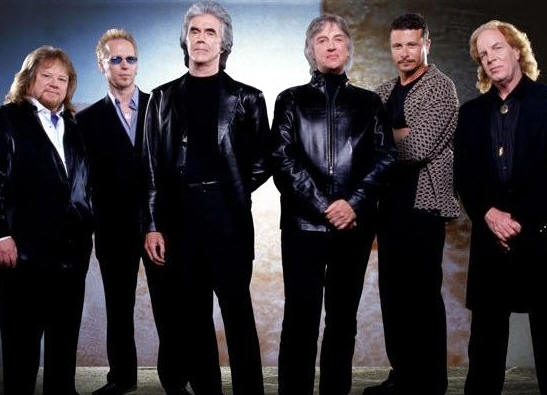
http://www.popentertainment.com/ThreeDogNight03.jpg

Hey, That's more than three. <smile>
0 Replies
 
Tryagain
 
  1  
Reply Mon 27 Mar, 2006 04:08 pm
Three (6) Dog Night - Laughing
Old-Fashioned Love Song

Just an old-fashioned love song playin' on the radio
And wrapped around the music is the sound
Of someone promising they'll never go
You swear you've heard it before
As it slowly rambles on and on
No need in bringin' `em back,
`Cause they're never really gone

Just an old-fashioned love song
One I'm sure they wrote for you and me
Just an old-fashioned love song
Comin' down in 3-part harmony

To weave our dreams upon and listen to each evening
When the lights are low
To underscore our love affair
With tenderness and feeling that we've come to know
You swear you've heard it before
As it slowly rambles on and on and
No need in bringin' `em back,
`Cause they're never really gone

Just an old-fashioned love song
Comin' down in 3-part harmony
Just an old-fashioned love song
One I'm sure they wrote for you and me
Just an old-fashioned love song
Comin' down in 3-part harmony
Just an old-fashioned love song
One I'm sure they wrote for you and me

To weave our dreams upon and listening to a song . . .
0 Replies


Related Topics

WA2K Radio is now on the air, Part 3 - Discussion by edgarblythe
 
Copyright © 2026 MadLab, LLC :: Terms of Service :: Privacy Policy :: Page generated in 0.29 seconds on 03/04/2026 at 02:43:44