106
   

WA2K Radio is now on the air


bobsmythhawk
 
  1  
Reply Wed 22 Mar, 2006 11:54 am
William Shatner
From Wikipedia, the free encyclopedia

Born
March 22, 1931
Montreal, Quebec, Canada


William Shatner (born March 22, 1931) is a Canadian actor, author and musical performer who gained fame for his starring role as Captain James T. Kirk of the USS Enterprise in the television show Star Trek from 1966 to 1969 and in seven of the subsequent movies. Shatner has written three books chronicling his experiences playing James T. Kirk and being a part of the Star Trek franchise.

He has since worked as a writer, producer, director, musician, bestselling author, and celebrity pitchman (most notably for Priceline.com the William Shatner DVD Club and, in the UK, Kellogg's).

Upon reaching his seventies, Shatner shows no signs of slowing down. His acting career reached a new peak when he won two Emmy Awards (in 2004 and 2005) for his portrayal of attorney Denny Crane in the television series The Practice and Boston Legal.


Early life

Shatner was born in Montreal, Quebec, Canada, and is of Ukrainian Jewish descent. He attended Willingdon Elementary School and Baron Byng High School in Montreal, Quebec, and earned a Bachelor's degree in commerce from Montreal's McGill University in 1952. Trained as a classical Shakespearean actor, he performed at the famed Shakespearean Stratford Festival of Canada in Stratford, Ontario before going to the United States to work. In 1954 he was cast as "Ranger Bill" on the popular Howdy Doody Show in the United States. His official movie debut was in the 1958 MGM film The Brothers Karamazov with Yul Brynner, in which Shatner starred as the youngest of the Karamazov brothers, Alexei (he had earlier appeared in a 1951 Canadian film entitled The Butler's Night Off). In 1959, he received good reviews when he took on the role of Robert Lomax in the Broadway production of The World of Suzie Wong. In 1962 he starred in Roger Corman's award winning movie "The Intruder." He also appeared in the Stanley Kramer film Judgment at Nuremberg and two episodes of the acclaimed science fiction anthology series The Twilight Zone, and starred in the unusual 1965 Gothic horror film Incubus; one of only two movies known to have all dialogue spoken in Esperanto, an artificial language developed in the 1880s.


Star Trek career

William Shatner was first cast as Captain James Tiberius Kirk for the second pilot of Star Trek, entitled "Where No Man Has Gone Before". He subsequently was contracted to play Captain Kirk for the Star Trek series and held the role from 1966 to 1969. In 1973, Shatner returned to the role of Captain Kirk, albeit only in voice, in the animated Star Trek series. He was slated to reprise the role of Kirk for Star Trek: Phase II, a follow-up series chronicling the second five-year mission of the Enterprise, but Star Trek: Phase II was cancelled in pre-production and expanded into Star Trek: The Motion Picture.

Shatner is notable for having participated in the first televised interracial kiss, with Nichelle Nichols, in the 1968 episode "Plato's Stepchildren". The scene provoked protest and was seen as groundbreaking, even though the kiss was portrayed as having been forced by mind control. The episode was not telecast in some Southern cities for fear of protest in those states; nevertheless, the majority of the feedback of the incident was positive. Shatner has claimed in memoirs that no one on the set felt the kiss to be very important until a network executive raised fears of a Southern boycott, and the kiss was almost written out of the script. Gene Roddenberry supposedly made a deal, that the scene would be shot with the kiss, and with a cut-away shot which merely implied a kiss, and then a decision would be made on which to use. The footage of the actual kiss was eventually used. Some cast members have written that this was because Shatner deliberately ruined the take for the implied-kiss footage to force the real kiss being used.

For years Shatner was accused of being difficult to work with by some of his Star Trek co-stars, most notably George Takei and the late James Doohan, both of whom openly professed that they despised Shatner for being an arrogant, egotistical, line stealing showboater who tried to keep his co-stars in the background. In the 2004 Star Trek DVD sets Takei seemed to have buried the hatchet with Shatner, but the gulf between Shatner and Doohan was never filled. In the 1990s Shatner made numerous attempts to patch things up with Doohan, but never succeeded.

Between 1979 and 1991, William Shatner played Captain Kirk in the six Star Trek films, and directed the fifth. In 1994, he returned to the role of Captain Kirk in Star Trek Generations (his character's final appearance).

In the summer of 2004, rumors circulated that the producers of Star Trek: Enterprise were considering bringing William Shatner back into the Trek fold. Reports in the media indicated that the idea was given serious thought, with series producer Manny Coto indicating in Star Trek Communicator magazine's October, 2004, issue that he was preparing a three-episode story arc for Shatner. Shortly thereafter, Enterprise was cancelled, likely ending all hope that Shatner would return to Star Trek.

Post-Star Trek career

Shatner had a long dry spell in the decade between the original Star Trek series and the first Trek film, which he believes was due to his being typecast as Captain Kirk, making it difficult to find other work. Moreover, his wife Gloria Rand left him and the Canadian actor, unfamiliar with California divorce laws, was all but wiped out financially. With very little money and acting prospects now, he lived in a truck bed camper in the San Fernando Valley until acting bit-parts turned into higher paying roles. Shatner refers to that period in his life as "That Period" as it was a humbling one, as he would take any odd job, including small party appearances, to support his family. In 1970, Shatner appeared as the prosecutor in a PBS television film of the Broadway play The Andersonville Trial. Trial was directed by George C. Scott and received excellent reviews. He also took roles in made-for-TV productions, such as The Horror at 37,000 Feet. The dry spell ended for Shatner (and the other Star Trek cast members) when Paramount produced Star Trek: The Motion Picture in 1979, under pressure from loyal fans of the series. Its success re-established Shatner as an actor, and Captain Kirk as a cultural icon.

While continuing to film the successful series of Star Trek movies, he returned to television in the 1980s, starring as a uniformed police officer in the T.J. Hooker series from 1982 to 1986; this show became a popular hit. He then hosted the popular dramatic reenactment series Rescue 911 from 1989 to 1996.


As the unwilling central public figure of a widespread geek-culture of Trekkies, Shatner is often humorously critical of the sometimes "annoying" fans of Star Trek. He also has found an outlet in spoofing the cavalier, almost superhuman character persona of Captain Kirk, in films such as Airplane II: The Sequel (1982), National Lampoon's Loaded Weapon 1 (1993) and Saturday Night Live, in which he advised Star Trek fans to "Get a life," repeating a popular catch-phrase. Shatner also appeared in the film Free Enterprise in 1998, in which he played himself and tried to dispel the Kirk image of himself from the view of the film's two lead characters.

Shatner has enjoyed success with a series of Tek science fiction novels. The first?-published in 1990 ?- was entitled TekWar. This popular series of books led to a Marvel Comics series, to a number of television movies, in which Shatner played a role, and to a short-lived television series. In 1995, a first-person shooter game named William Shatner's TekWar was released, and was the first game to use the Build engine.

In the 1990s, Shatner appeared in several plays on American National Public Radio, written and directed by Norman Corwin.

Shatner has appeared in several episodes of the television series 3rd Rock from the Sun as The Big Giant Head, a womanizing, substance-abusing, high ranking officer from the same alien planet as the show's protagonists. He was nominated for an Emmy for this role.

In 2004, Shatner was cast as the eccentric but highly capable attorney Denny Crane for the final season of the legal drama The Practice, for which he was awarded an Emmy, and then its subsequent spin-off, Boston Legal, for which he won a Golden Globe and an Emmy in 2005. With the 2005 Emmy win, Shatner became one of the few actors (along with co-star James Spader as Alan Shore) to win an Emmy award while playing the same character in two different series. (Even more rare, Shatner and Spader each won a second consecutive Emmy while playing the same character in two different series).

In 2006 Shatner sold his kidney stone for $25,000 to GoldenPalace.com. The money will go to a housing charity [1]

Shatner also plays on the World Poker Tour in the Hollywood Home games. He plays for the Wells Fargo Hollywood Charity Horse Show.


Family and other ventures

William Shatner has been married four times:

1. To Gloria Rand in 1956; they divorced in 1969.
2. To Marcy Lafferty in 1973; they divorced in 1994.
3. To Nerine Kidd on November 15, 1997; died August 9, 1999; accidentally drowned in the couple's pool.
4. To Elizabeth Martin on February 13, 2001.

Shatner has three daughters, Leslie, Lisabeth and Melanie. Melanie is the proprietor of Dari, an upscale women's clothing boutique. She currently lives in Southern California.

In his spare time, Shatner enjoys breeding and showing American Saddlebreds and Quarter Horses. Shatner has a 360-acre (1.5 km²) horse farm in Kentucky named Bellreve, where he raises the winning horses.

Shatner is also the CEO of the Toronto, Ontario-based C.O.R.E. Digital Pictures company, which provided the special effects for the 1996 film Fly Away Home.


Musical tangents

Main article: William Shatner's musical career

William Shatner has had a much-parodied musical career, starting with the 1968 album The Transformed Man.

His second studio album, Has Been, was released in 2004. Ben Folds acted as producer. Collaborating artists included Aimee Mann, Henry Rollins, Brad Paisley and Joe Jackson. Has Been features the single "Common People", a cover version of the song by Pulp.

He appears on the piece '64 aka Go by Lemon Jelly, featured on their CD entitled '64-'95 and Brad Paisley's Celebrity music video.


Trivia

* Prior to Star Trek, Shatner guest-starred together with Leonard Nimoy in the first-season episode of The Man from U.N.C.L.E. entitled The Project Strigas Affair.
* Shatner has recently been noted for his role in the Priceline.com commercials.
* Shatner appeared with Leonard Nimoy in a famous advertising campaign for Western Airlines.
* Shatner has a Star on the Hollywood Walk of Fame (for Television work) at 6901 Hollywood Blvd.
* The Student Society Building at Montreal's McGill University was unofficially named after William Shatner after a student referendum, and contains a ceiling mounted sign in the lobby bearing his name. The University administrators have never officially accepted this name.
* Like many Anglophones born in the largely French-speaking province of Québec, Shatner speaks French.
* Shatner has been a commander in Celebrity Paintball's scenario games to raise money for his favorite charity, handicapped children.
* Shatner has starred in a series of Kellogg's All-Bran cereal commercials in the UK and Canada.
* Shatner's latest invention has been Invasion Iowa, a fake movie shot for a reality tv series on SpikeTV.
* Fans of the horror movie Halloween might know that Michael Myers wears a William Shatner mask that is painted white.
* When James Doohan died on July 20, 2005, Shatner became the oldest living Star Trek cast member at age 74, four days older than Leonard Nimoy (Nichelle Nichols was 72, George Takei 68, and Walter Koenig 68).
* During separate appearances on the Howard Stern Show, Takei and Doohan both admitted to despising Shatner (on the January 10, 2006 Stern show, Takei referred to Shatner as a "prima donna").
* Shatner has also made about ten appearances on the Howard Stern Show, including a visit to the fictional "homo room" with Howard. Shatner consistently was a good sport during these appearances.
* In episode #166 of the TV sitcom Night Court, the bald bailiff Bull wins a free toupee, and selects the super-advanced "Shatner Turbo 2000" model, which is virtually indestructible and causes the wearer to immediately become popular with women.
* In the satirical TV series Brass Eye, the fictional drug 'Cake' is said to affect an area of the brain known as Shatner's Bassoon.
* The song "eBay" by "Weird Al" Yankovic includes the lyrics:

Tell me why (I need another pet rock)
Tell me why (I got that Alf alarm clock)
Tell me why (I bid on Shatner's old toupee)
They had it on eBay

* In an episode made prior to Shatner's appearance on 3rd Rock from the Sun, Dick tries to appear slimmer by wearing a girdle dubbed the "Shatner".
* The character of Zapp Brannigan in the TV series Futurama was conceived as a mixture of both Shatner and Kirk, with Brannigan frequently exhibiting character traits associated with both. On the DVD commentairy of Zap's first appearance, the creators describe him as being "40% Kirk, 60% Shatner", and that the initial premise for the character was "What if the real William Shatner was the captain of the Enterprise instead of Kirk." Ironically, Shatner himself - along with most of the rest of the surviving Star Trek cast - would appear in an episode during the series' fourth season.
* Tim Allen's role as Commander Peter Quincy Taggart/Jason Nesmith in Galaxy Quest was inspired by Shatner and his relationship with his fellow Star Trek stars. Allen's role is an almost perfect analogue of James T. Kirk/William Shatner; Taggart has a reputation for losing his shirt at the flimsiest excuse, rolling on the ground during combat, and making pithy speeches at the drop of a hat, while Nesmith is an egomaniac who regards himself as the core of Galaxy Quest, and tells fans to 'get a life'.
* "William Shatner" is the title for songs by The Wedding Present and The Scofflaws.
* He is set to voice a character in the 2006 film Over the Hedge alongside Avril Lavigne, Steve Carell, and Bruce Willis.
* Both Shatner and Star Trek co-star Nimoy are of the same ethnicity, Jewish Ukranian.
* In a Super Bowl XL sketch shown before the game, Shatner and James Spader star as their Boston Legal characters as they try to play football in an apartment. Shatner throws the football into the street which causes an off-screen collision. Shatner then throws his business cards toward the collision in case they want a lawyer, which the show is based on.
* Shatner was the second actor who appear in the first 79 episodes of Star Trek (1 episode behind Leonard Nimoy, who starred in the pilot episode).
* Both William Shatner and Leonard Nimoy are the only two cast members of Star Trek who share the same month and year together (in birthdays), by only 4 days. Shatner's birthday is: March 22, 1931, and Nimoy's birthday is: March 26, 1931.
* On October 19, 2005, while working on the set of Boston Legal, Shatner was taken to the emergency room for lower back pain. He was reportedly doing fine, and was taken back to work.

Memorable quotes

"I'm not a Starfleet commander, or T.J. Hooker. I don't live on Starship NCC-170... (some audience members say "1"), or own a phaser. I don't know anybody named Bones, Sulu, or Spock (picture of Dr. Benjamin Spock is shown on screen behind him). And no, I've never had green alien sex, but I'm sure it'd be quite an evening. (Pomp and Circumstance begins playing.) I speak English and French, not Klingon! I drink Labatt's, not Romulan ale! And when someone says to me 'live long and prosper', I seriously mean it when I say, 'get a life'. My doctor's name is not McCoy, it's Ginsberg (nude picture of Dr. Ginsberg shown on screen). And tribbles were puppets, not real animals. PUPPETS! And when I speak, I never, ever talk like Every. Word. Is. Its. Own. Sentence. I live in California, but I was raised in Montreal. And I believe in priceline.com, where you never have to pay full price for airline tickets, hotels, and car rentals! I've appeared onstage at Stratford, at Carnegie Hall, Albert Hall, and the Monkland Theatre in NDG. And, yes, I've gone where no man has gone before, but... I was in Mexico and her father gave me permission! My name is William Shatner, and I am Canadian!"

?- from a Just for Laughs appearance; a parody of the popular Molson Canadian Commercial entitled "I Am Canadian"

"It's a question that I find like asking somebody, 'Did you have a breast implant?' or 'When did you get your lobotomy?'"

?- when asked if he wore a hairpiece

http://en.wikipedia.org/wiki/William_Shatner
0 Replies
 
bobsmythhawk
 
  1  
Reply Wed 22 Mar, 2006 12:01 pm
Roger Whittaker
From Wikipedia, the free encyclopedia

Roger Whittaker (Born March 22, 1936 in Nairobi, Kenya) is a British singer/songwriter and musician with worldwide record sales of more than 55 million. His music is of the folk/easy listening genre. In his early career, his trademark was his fantastic whistling ability.

Childhood and beginning

Married in 1964 to Natalie O'Brien, they have five children; Emily (May 28, 1968) and Lauren (June 4, 1970) are adopted [1], Jessica (February 14, 1973), Guy (November 15, 1974) and Alexander (April 7, 1978) are their natural children.

Whittaker's parents, Edward and Viola, were originally from Staffordshire, England, where they owned and operated a grocery shop. His father was involved in a motorcycle accident, and the family moved to a farm in Kenya because of the better climate. That Whittaker would eventually become a musician was no surprise, since his grandfather sang in various clubs, and his father played the violin. Roger learned to play the guitar.

Whittaker was drafted into national service, and he spent two years in uniform in the Kenya Regiment [2]. In 1956, he was demobilized and decided that it was time to concentrate on a career in medicine. He enrolled at the University of Cape Town in South Africa.

After 18 months, he left the university and joined the civil service education department to try teaching.

Recording and performing career

To further his teaching career, Whittaker moved to Britain in September 1959. For the next three years, he studied zoology, biochemistry, and marine biology at the University of Wales, Bangor and received a B.Sc. He was one of the brightest students in his class. He continued to sing in local clubs, and released some of his songs on flexi-discs included with the campus newspaper, the Bangor University Rag. Shortly afterwards, he was signed to Fontana Records who released his first professional single, "The Charge of The Light Brigade", in 1962.

In the summer of 1962, he appeared at a professional gig in Port Rush, Northern Ireland. He landed his first major breakthrough when he was signed to appear on an Ulster Television show called "This And That". His second single, and the first to break into the UK Top 30 charts, was a Jimmy Dean cover of "Steel Men", released in June 1962.

In the spring of 1964, Roger met his future wife, Natalie, and they were married on August 15th.

In 1968, Whittaker had switched record labels, and in the autumn of 1969 EMI had released "Durham Town (The Leavin')", which became Whittaker's first Top 20 hit in Britain. In the spring of 1970, RCA Victor Records had released the uptempo "New World In The Morning" in the United States, where it became a Top 20 hit in the Easy Listening chart.

In the '70s and '80s, Whittaker had a lot of success in Germany, with songs produced by Nick Munro. Whittaker couldn't speak German, but sang the songs phonetically. He appeared on German and Danish TV several times [3], and was on the UK Top Of The Pops show ten times in the early to mid '70s.

In 1986, he published his autobiography, So Far, So Good, co-written with his wife.

Tours

In 1976, Whittaker undertook his first tour of the United States.

In 2003 he again toured Germany. After recovering from heart problems at the end of 2004, he started touring in Germany in 2005, and then in UK from May to July.

Awards

In his career to date, Whittaker has won over 250 silver, gold and platinum albums.

He was part of a successful British team that won the annual Knokke music festival in Belgium and won the Press Prize as the personality of the festival.

* Ivor Novello awards (twice) for songwriting in 1971-72 and for The Last Farewell in 1975-76 (?)(unconfirmed - e-mail query pending)

* Gold Badge Award, from the British Academy of Composers and Songwriters in 1988 [4]

* Golden Tuning Fork (Goldene Stimmgabel in Germany) in 1986, based on record sales and TV viewer votes.


http://en.wikipedia.org/wiki/Roger_Whittaker

The Last Farewell :: Roger Whittaker

There's a ship lies rigged and ready in the harbor
Tomorrow for old England she sails
Far away from your land of endless sunshine
To my land full of rainy skies and gales
And I shall be aboard that ship tomorrow
Though my heart is full of tears at this farewell

For you are beautiful, I have loved you dearly
More dearly than the spoken word can tell
For you are beautiful, I have loved you dearly
More dearly than the spoken word can tell

I've heard there's a wicked war a-blazing
And the taste of war I know so very well
Even now I see the foreign flag a-raising
Their guns on fire as we sail into hell
I have no fear of death, it brings no sorrow
But how bitter will be this last farewell

For you are beautiful, I have loved you dearly
More dearly than the spoken word can tell
For you are beautiful, I have loved you dearly
More dearly than the spoken word can tell

Though death and darkness gather all about me
My ship be torn apart upon the seas
I shall smell again the fragrance of these islands
And the heaving waves that brought me once to thee
And should I return home safe again to England
I shall watch the English mist roll through the dale

For you are beautiful, I have loved you dearly
More dearly than the spoken word can tell
For you are beautiful, I have loved you dearly
More dearly than the spoken word can tell
0 Replies
 
bobsmythhawk
 
  1  
Reply Wed 22 Mar, 2006 12:05 pm
Andrew Lloyd Webber
From Wikipedia, the free encyclopedia

Andrew Lloyd Webber, Baron Lloyd-Webber (born 22 March 1948) is a highly successful British composer of musical theatre. He has arguably been the most popular theatre composer of the late 20th century, with multiple showpieces which have run for more than a decade both on Broadway and in the West End. Throughout his career he has produced 16 musicals, two film scores, and a Latin requiem mass. He has also accumulated a number of honors, including seven Tony Awards, three Grammy Awards, an Oscar, an International Emmy, six Olivier Awards, and a Golden Globe Award. Several of his songs, notably "I Don't Know How to Love Him" from Jesus Christ Superstar, "Don't Cry For Me, Argentina" from Evita, "Memory" from Cats, and "The Music of the Night" from The Phantom of the Opera have been widely recorded and were hits outside of their parent musicals.


Personal history

Lloyd Webber was born on March 22 1948 in South Kensington. He is the son of composer William Lloyd Webber and piano teacher Jean Johnstone Lloyd Webber, and his younger brother is the cellist Julian Lloyd Webber. He was a Queen's Scholar of Westminster School and went up to Magdalen College, Oxford but did not graduate.

His first wife was Sarah Hugill. They married on 24 July 1972 and had two children, Imogen (born 31 March 1977) and Nicholas (born 2 July 1979). Lloyd Webber and Hugill were divorced in 1983. He then married singer and dancer Sarah Brightman on 22 March 1984. He cast Brightman as the lead in The Phantom of the Opera; however, the marriage did not last, and they divorced in 1990, though remaining friends. He married his present wife, Madeleine Gurdon, on 1 February 1991, and had three more children: Alastair (born 3 May 1992), William (born 24 August 1993), and Isabella (born 30 April 1996).

He was knighted in 1992 and created a life peer in 1997 as Baron Lloyd-Webber, of Sydmonton in the County of Hampshire. (His peerage title is hyphenated, but his surname is not.) He is ranked the 65th richest Briton in the Sunday Times Rich List 2005, with an estimated wealth of £700m.

Politically, he has been an active supporter and promoter of the Conservative Party, even writing special music for a party political broadcast.

Lord Lloyd-Webber is an art collector with a passion for Victorian art. An exhibition of works from his collection was presented at the Royal Academy in 2003 under the title Pre-Raphaelite and Other Masters - The Andrew Lloyd Webber Collection.

Professional career

Lloyd Webber first gained success at the age of nineteen, when he and Tim Rice were commissioned to write Joseph and the Amazing Technicolor Dreamcoat for a high school in 1968. The musical was a hit; a slightly rewritten version was soon produced by the Edinburgh Festival. Lloyd Webber and Rice continued to collaborate and later produced Jesus Christ Superstar (1970) and Evita (1976), both of which were released as albums before being brought to the stage and later to film. The two parted ways soon after, and Lloyd Webber's next large success was 1981's Cats. Lloyd Webber defied convention by writing the score to existing lyrics by a deceased author, rather than having a living collaborator provide the words. The lyrics were based on T.S. Eliot's 1939 Old Possum's Book of Practical Cats, which Lloyd Webber confessed was a childhood favourite. Interestingly, the lyrics to the show's monster hit "Memory" were mostly the product of director Trevor Nunn's reworking of an unrelated, non-Possum Eliot poem. Cats was the longest running Broadway musical, spanning a reign of more than twenty years. Next, he wrote Starlight Express, which was a commercial hit but panned by the critics. In 1986, he premiered his next musical, The Phantom of the Opera, inspired by the 1911 Gaston Leroux novel. Although met with mixed reviews in New York, it became a hit and is still running; in January 2006 it overtook Cats as the longest-running musical on Broadway. His many other musical theatre works include The Likes of Us, Aspects of Love, Sunset Boulevard, Whistle Down the Wind, Song and Dance, The Beautiful Game and The Woman in White. While some of his works have had enormous commercial success, his career has not been without failures, especially in the United States. Song and Dance, Starlight Express, and Aspects of Love, all successes in London, did not meet the same reception in New York, and all lost money in short, critically panned runs. In 1995, Sunset Boulevard became a very successful Broadway show, winning seven Tony Awards, although owing to high weekly costs, it too lost a large amount of money. His subsequent shows (Whistle Down the Wind and The Beautiful Game) did not make it to Broadway, and his most recent musical The Woman in White was critically dismissed and closed after a very short run in New York.

Many of his stage musicals have been taken onto the big screen. Jesus Christ Superstar (1973) was directed by Norman Jewison, Evita (1996) was directed by Alan Parker, and most recently The Phantom of the Opera was directed by Joel Schumacher (and co-produced by Lloyd Webber). He was asked to write a piece for the 1992 Barcelona Olympics entitled "Amigos Para Siempre".

He has also composed for film. In 1984, he took a different musical style, composing his Requiem in memory of his father, who had died in 1982.

Lloyd Webber produced Bombay Dreams with Indian composer A. R. Rahman in 2002. His most recent show is The Woman in White (2004).

http://en.wikipedia.org/wiki/Andrew_Lloyd_Webber

Memory (Cats) :: Andrew Lloyd Webber

Not a sound from the pavement
Has the moon lost her memory?
She is smiling alone
In the lamplight, the withered leaves collect at my feet
And the wind begins to moan

Memory
All alone in the moonlight
I can smile at the old days
I was beautiful then
I remember the time I knew what happiness was
Let the memory live again

Every streetlamp seems to beat a fatalistic warning
Someone mutters, and a streetlamp gutters,
And soon it will be morning.

Daylight
I must wait for the sunrise
And I mustn't give in.
When the dawn comes, tonight will be a memory too
And a new day will begin

Burnt out ends of smokey days
The stale cold smell of morning
The streetlamp dies, another night is over
Another day is dawning...

Touch me!
It's so easy to leave me
All alone with the memory
Of my days in the sun...
If you touch me, you'll understand what happiness is
Look, a new day
Has begun
0 Replies
 
bobsmythhawk
 
  1  
Reply Wed 22 Mar, 2006 12:09 pm
Reese Witherspoon
From Wikipedia, the free encyclopedia

Reese won an Academy Award for Best Actress for her leading role in Walk The Line on March 5, 2006.
Born
March 22, 1976
New Orleans, Louisiana, USA


Laura Jeanne Reese Witherspoon [1] (born March 22, 1976) is an Academy Award winning actress best known for her roles in Legally Blonde and Walk the Line.


Early life

Witherspoon was born Laura Jean Reese Witherspoon in New Orleans[2] to John Witherspoon, a surgeon, and Betty Reese, a nurse and college professor. She is a direct descendant of Scottish-born John Witherspoon, a signer of the United States Declaration of Independence and sixth president of Princeton University, who was also a Presbyterian minister. Because her father worked for the US military in Wiesbaden, Germany, she lived there for four years as a small child. After returning to the United States, Witherspoon spent much of her childhood and adolescence in Nashville, Tennessee. She has an older brother, John, who works as a real estate broker. After graduating from the prestigious private all-girl's Harpeth Hall School in Nashville, she attended Stanford University as a literature major. After completing a year of her studies, she left Stanford to pursue her acting career.

Career

Witherspoon began her career in local commercials. Her first role was in a 1991 made-for-TV movie called Wildflower, directed by Diane Keaton and starring Beau Bridges, William McNamara, and Patricia Arquette. That same year, at age 14, Witherspoon attended an open casting call for The Man in the Moon, intending to audition as a bit player. She was instead cast in the lead role, immediately capturing the attention of critics. Since, she has built up an impressive filmography, playing both comedic and dramatic roles, including performances as Vanessa in Freeway and Tracy Flick in Election. She was the voice of the animated character Greta Wolfecastle in an episode of The Simpsons. She achieved fame for her role as a fashion designer major who decided to become a law student to follow her ex-boyfriend in 2001's Legally Blonde, and became a leading environmental lawyer in its sequel Legally Blonde 2 for which she received a reported $15 million paycheck, making her one of Hollywood's top-paid actresses. She has garnered critical praise and awards for her turn as June Carter Cash in Walk the Line. Carter Cash, who died in 2003, personally approved of Witherspoon to play her. Witherspoon won the Golden Globe Award for Best Actress - Motion Picture Musical or Comedy, NYFCC, the FFCC, the SFFCC Award for Best Actress, the Screen Actor's Guild (SAG) for best actress in a lead role, the British Academy's BAFTA for best actress in a lead role, the "Favorite Leading Lady" at the 32nd Annual People's Choice Awards, and the Academy Award for Best Actress for this role.

Production Company

Witherspoon runs a production company, Type A Productions, with partner Laura Siegel. The company is named after Witherspoon's childhood nickname "Little Miss Type A."

Salary

On February 28, 2006, it was reported that Witherspoon will beat Julia Roberts' record for the highest paid actress of all time when she is paid $29 million for an upcoming horror film Our Family Troubles, which will beat Roberts' $25 million 2004 salary for Mona Lisa Smile.

Personal life

Witherspoon met actor Ryan Phillippe at her 21st birthday party in March 1997, where she reportedly said to him, "You must be my birthday present." The pair were engaged in December 1998. Soon after, the couple starred together in the box office hit Cruel Intentions. They were married on a plantation in Charleston, South Carolina on June 5, 1999. They have two children together: daughter Ava Elizabeth, born September 9, 1999, and son Deacon, born October 23, 2003. Ava is named after Phillippe's grandmother, and Deacon after one of his distant relatives. Witherspoon and Phillippe have a pact that one of them will always be a full-time parent to the children, and they thus alternate filming schedules. Witherspoon is known for being a very hands-on mother, and she and her husband claim to have never employed a full-time nanny. The family resides in a gated community in the Los Angeles neighborhood of Brentwood.

Paparazzi

In September 2005, Witherspoon and her children were celebrating daughter Ava's sixth birthday at Disney's California Adventure theme park when they were approached by paparazzi photographer, Todd Wallace. After Witherspoon declined to pose for photos at close range, police say Wallace became enraged and pushed a child out of the way, while hitting another with his camera, in his efforts to photograph the actress.

Wallace also allegedly shoved two theme park employees when they attempted to restrain him, and cursed at Witherspoon, causing several children to burst into tears. As a result of the altercation, Wallace was arrested and faced misdemeanor charges. However, before the case went to trial, Wallace was found dead in his apartment in Brentwood. Police are currently investigating the cause of death.

http://en.wikipedia.org/wiki/Reese_Witherspoon
0 Replies
 
bobsmythhawk
 
  1  
Reply Wed 22 Mar, 2006 12:10 pm
4 miracles of a woman
1. Getting wet without taking a shower.
2. Bleeding without getting hurt.
3. Giving milk without eating grass.
4. Making boneless flesh hard.
0 Replies
 
Tryagain
 
  1  
Reply Wed 22 Mar, 2006 12:22 pm
Bob, time to up the medication!

LONG TALL SALLY
Johnson/Penniman/Blackwell

Gonna tell Aunt Mary bout Uncle John
He claims he has the misery but he's havin alot of fun
Oh baby,yes, baby, wooo baby ,havin' me some fun tonite, yeah

Well Long Tall Sally she's built for speed,she's got
Everything that Uncle John need
Oh baby,yes baby,woooo baby,
Havin me some fun tonite,yeah

Well, I saw Uncle John with a ball headed Sally
He saw Aunt Mary comin and he ducked back in the alley
Oh baby,yes baby, woooo baby, havin me some fun tonite

Instrumental

Well Long Tall Sally shes built for speed,she's got
Everything that Uncle John need
Oh baby,yes baby,woooo baby, havin me some fun tonite, yeah

Well,I saw Uncle John with a ball headed Sally
He saw Aunt Mary comin and he ducked back in the alley
Oh baby,yes,baby,wooo baby havin me some fun tonite,yeah

We're gonna have some fun tonite
Gonna have some fun tonite,wooo
Have some fun tonite
Everythings alright
Have some fun,have me some fun tonite
0 Replies
 
Tryagain
 
  1  
Reply Wed 22 Mar, 2006 03:00 pm
ARTIST: Hoyt Axton
TITLE: Never Been to Spain
Lyrics and Chords


[As performed by Three Dog Night]

Well I never been to Spain
But I kinda like the music
Say the ladies are insane there
And they sure know how to use it
They don't abuse it, never gonna lose it
I can't refuse it

Well I never been to England
But I kinda like the Beatles
Well, I headed for Las Vegas
Only made it out to Needles
Can you feel it, must be real it
Feels so good, oh, feels so good

Well I never been to Heaven
But I been to Oklahoma
Well they tell me I was born there
But I really don't remember
In Oklahoma, not Arizona
What does it matter, what does it matter

Well I never been to Spain...

Well I never been to Heaven...
0 Replies
 
Tryagain
 
  1  
Reply Wed 22 Mar, 2006 03:47 pm
I just bought the best of ?'Three Dog Night' does it show? Laughing


Joy to the World

Jeremiah was a bull frog
Was a good friend of mine
I never understood a single word he said
But I helped him a-drink his wine
And he always had some mighty fine wine

Singin'
{Refrain}
Joy to the world
All the boys and girls, now
Joy to the fishes in the deep blue sea
Joy to you and me

If I were the King of the world
Tell you what I'd do
I'd throw away the cars and the bars and the wars
And make sweet love to you

Sing it now
{Refrain}

You know I love the ladies
Love to have my fun
I'm a high night flier and a rainbow rider
And a straight-shooting son of a gun
I said a staight shootin son of a gun

{Refrain repeatedly}
0 Replies
 
Letty
 
  1  
Reply Wed 22 Mar, 2006 04:20 pm
Ah, Raggedy, thanks for the pictures, PA, and, of course, you were right again.

Well, my red tailed friend, we do know that you Loves Roger, and all of us here would like to hear YOU sing that song.

My, my. what an interesting observation about women. Love it!(it isn't all fun and games for us, you know)

Try, you and I do have something in common, 'cause I adore Three Dog Night.

Well, my friends, it has been a "hurry up and wait" day for Letty, so let's hear a little Tom Waits:

Artist: Tom Waits
Song: Virginia avenue
Album: Closing Time


Well, I'm walking on down Virginia Avenue
Trying to find somebody to tell my troubles to.
Harold's club is closing,

and everybody's going on home:
What's a poor boy to do?

I'll just get on back into my short,
make it back to the fort
Sleep off all the crazy lizards inside of my brain.
There's got to be some place
that's better than this
This life I'm leading's driving me insane

And let me tell you I'm dreaming...

Let me tell you that
I'm dreaming to the twilight,
this town has got me down.
I've seen all the highlights,
I've been walking all around
I won't make a fuss, I'll take a Greyhound bus,
carry me away from here:
Tell me, what have I got to lose?

'Cause I'm walking on down Columbus Avenue
The bars are all closing,
'cause it's quarter to two
Every town I go to is like a lock without a key
Those I leave behind are catching up on me,
Let me tell you they're catching up on me,
they're catching up on me
Catching up on me, catching up on me,
catching up on me.

Back later, listeners, to cover all of Bob's bios.
0 Replies
 
Tryagain
 
  1  
Reply Wed 22 Mar, 2006 06:20 pm
Letty, you know Three Dog Night. What a surprise I would not have thought anybody would have heard of them. Cool

Old-Fashioned Love Song

Just an old-fashioned love song playin' on the radio
And wrapped around the music is the sound
Of someone promising they'll never go
You swear you've heard it before
As it slowly rambles on and on
No need in bringin' `em back,
`Cause they're never really gone

Just an old-fashioned love song
One I'm sure they wrote for you and me
Just an old-fashioned love song
Comin' down in 3-part harmony

To weave our dreams upon and listen to each evening
When the lights are low
To underscore our love affair
With tenderness and feeling that we've come to know
You swear you've heard it before
As it slowly rambles on and on and
No need in bringin' `em back,
`Cause they're never really gone

Just an old-fashioned love song
Comin' down in 3-part harmony
Just an old-fashioned love song
One I'm sure they wrote for you and me
Just an old-fashioned love song
Comin' down in 3-part harmony
Just an old-fashioned love song
One I'm sure they wrote for you and me

To weave our dreams upon and listening to a song . . .
0 Replies
 
Letty
 
  1  
Reply Wed 22 Mar, 2006 06:34 pm
Love 'em all, Try.

Here's one that I haven't heard by them, but it is lovely:


Artist: THREE DOG NIGHT

Pieces of April


April gave us springtime and the promise of the flowers
And the feeling that we both shared and the love that we called ours
We knew no time for sadness, that's a road we each had crossed
We were living a time meant for us, and even when it would rain
we would laugh it off.

I've got pieces of April, I keep them in a memory bouquet
I've got pieces of April, it's a morning in May

We stood on the crest of summer, beneath an oak that blossomed green
Feeling as I did in April, not really knowing what it means
But it must be then that you stand beside me now to make me feel this way
Just as I did in April, but it's a morning in May.

I've got pieces of April, I keep them in a memory bouquet
I've got pieces of April, but it's a morning in May

I've got pieces of April, I keep them in a memory bouquet
I've got pieces of April, but it's a morning in May
0 Replies
 
Letty
 
  1  
Reply Wed 22 Mar, 2006 07:07 pm
In reading back over Bob's bio's, folks, I was surprised to find out that Stephen Sondheim wrote this great song:

A Little Night Music Soundtrack Lyrics


Artist: Lyrics
Song: Send in the Clowns Lyrics

Isn't it rich?
Are we a pair?
Me here at last on the ground,
You in mid-air.
Send in the clowns.

Isn't it bliss?
Don't you approve?
One who keeps tearing around,
One who can't move.
Where are the clowns?
Send in the clowns.

Just when I'd stopped opening doors,
Finally knowing the one that I wanted was yours,
Making my entrance again with my usual flair,
Sure of my lines,
No one is there.

Don't you love farce?
My fault I fear.
I thought that you'd want what I want.
Sorry, my dear.
But where are the clowns?
Quick, send in the clowns.
Don't bother, they're here.

Isn't it rich?
Isn't it queer,
Losing my timing this late
In my career?
And where are the clowns?
There ought to be clowns.
Well, maybe next year.
0 Replies
 
edgarblythe
 
  1  
Reply Wed 22 Mar, 2006 08:05 pm
Dear Landlord - B Dylan


Dear landlord,
Please don't put a price on my soul.
My burden is heavy,
My dreams are beyond control.
When that steamboat whistle blows,
I'm gonna give you all I got to give,
And I do hope you receive it well,
Dependin' on the way you feel that you live.

Dear landlord,
Please heed these words that I speak.
I know you've suffered much,
But in this you are not so unique.
All of us, at times, we might work too hard
To have it too fast and too much,
And anyone can fill his life up
With things he can see but he just cannot touch.

Dear landlord,
Please don't dismiss my case.
I'm not about to argue,
I'm not about to move to no other place.
Now, each of us has his own special gift
And you know this was meant to be true,
And if you don't underestimate me,
I won't underestimate you.
0 Replies
 
Letty
 
  1  
Reply Wed 22 Mar, 2006 08:25 pm
Well, Texas. Again I must admit that's a Dylan song that I have not heard. Surprised? <smile>

It's time to say goodnight, my friends, so this is a song from Nat whom we will never forget:

Artist: Nat King Cole Lyrics
Song: I Remember You Lyrics

Was it in Tahiti?
Were we on the Nile?
Long, long ago,
Say an hour or so
I recall that I saw your smile.


I remember you,
You're the one who made
My dreams come true
A few kisses ago.


I remember you,
You're the one who said
"I love you, too," I do.
Didn't you know?


I remember, too,
A distant bell,
And stars that fell like rain
Out of the blue.


When my life is through,
And the angels ask me to recall
The thrill of them all,
Then I shall tell them
I remember you.

From Letty with love
0 Replies
 
Letty
 
  1  
Reply Thu 23 Mar, 2006 07:58 am
Good morning, WA2K fans and contributors.

I think that I will open up this morning with a song dedicated to Walter. It's all in fun, folks:


DOWN IN THE BOONDOCKS

Down in the boondocks
People put me down 'cause
That's the side of town I was born in
I love her she loves me but I don't fit in her society
Lord have mercy on the boy from down in the boondocks

Ev'ry night I watch the lights from the house up on the hill
I love a little girl who lives up there and I guess I always will
But I don't dare knock on her door
'Cause her daddy is my boss man
So I have to try to be content
Just to see her when ever I can

Down in the boondocks
People put me down 'cause
That's the side of town I was born in
I love her she loves me but I don't fit in her society
Lord have mercy on the boy from down in the boondocks

Down in the boondocks

One fine day I'll find the way to move from this old shack
I'll hold my head up like a king and I never never will look back
Until that morning I'll work and slave
And I'll save ev'ry dime
But tonight she'll have to steal away
To see me one more time

Down in the boondocks
People put me down 'cause
That's the side of town I was born in
I love her she loves me but I don't fit in her society
Lord have mercy on the boy from down in the boondocks

Razz
0 Replies
 
Walter Hinteler
 
  1  
Reply Thu 23 Mar, 2006 08:03 am
Thanks, Letty - actually my favourite song ... the very first, I heard on my small own transistor, when I got it. (A different staion - WA2K wasn't on air in those days - namely Canadian Forces Radio CAE in Werl, Germany :wink: )
0 Replies
 
Letty
 
  1  
Reply Thu 23 Mar, 2006 08:16 am
Well, Walter. Glad to see you back. It always takes a special song of dedication to get you Germans to respond.

Well, buddy, name that favorite song and we'll play it for everyone.<smile>

Incidentally, listeners, our Sturgis is ill and we wish him the best. We are also glad to know that Lord Ellpus is feeling better after the death of a dear friend.
0 Replies
 
Raggedyaggie
 
  1  
Reply Thu 23 Mar, 2006 10:31 am
Good Day!

I just checked out today's birthdays and must admit I only knew a few.
I'm wondering what bios Bob will offer. Probably:

(1905-1977)
http://www.nndb.com/people/837/000031744/joan-sized.jpg

Maybe,
Richard Grieco
http://www.morganandwongonline.com/booker_tv.jpg

I think Alydar (195-1977) is cute:
http://www.tbgreats.com/alydar.jpg
0 Replies
 
bobsmythhawk
 
  1  
Reply Thu 23 Mar, 2006 10:35 am
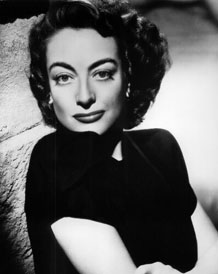
Joan Crawford
From Wikipedia, the free encyclopedia


Joan Crawford (March 23, 1905 - May 10, 1977) was an acclaimed Academy Award winning American actress.

Starting as a dancer, she was signed to a motion picture contract by Metro-Goldwyn-Mayer Studios in the mid-1920s and played in small parts. By the end of the '20s, as her popularity grew, she became famous as a youthful flapper.

At the beginning of the 1930s, her fame rivaled that of fellow MGM colleagues Norma Shearer and Greta Garbo, neither of whom liked her particularly. She was often cast in movies in which she played hardworking young women who eventually found romance and success. These "rags to riches" stories were well-received by Depression era audiences; women, particularly, seemed to identify with her struggles.

By the end of the decade she remained one of Hollywood, Los Angeles, California's most prominent movie stars, and one of the highest paid women in the United States.

Moving to Warner Bros. in 1943, Crawford won an Academy Award for her performance in Mildred Pierce, and achieved some of the best reviews of her career in the following years.

In 1955, she became involved with PepsiCo, the company run by her last husband. She was elected to fill his vacancy on the Board of Directors after his death in 1959, but was forcibly retired, with a severance package, in 1973.

She continued acting regularly into the 1960s, when her performances became fewer, and retired from the screen in 1970. By the mid-1970s, she became a recluse due to illness.


Early life

She was born Lucille Fay LeSueur in San Antonio, Texas, the third child of Thomas E. LeSueur (1868-1938) and Anna Bell Johnson (1884-1958). Her older siblings were Daisy LeSueur, who died as a very young child, and Hal LeSueur.

Her father, who was born in Tennessee, was of France|French Huguenot extraction, and her mother was of Irish and Scandinavian descent. Tom LeSueur's ancestors immigrated from London, England, in the early 1700s to Virginia, where they lived for several generations.

LeSueur was said to have abandoned the family in Texas; Crawford later said she had been only a few months old when her father left.

Her mother later married Henry J. Cassin (1867-after 1919). The family lived in Lawton, Oklahoma, where Cassin ran a movie theater. The 1910 Comanche County, Oklahoma, Census|Federal Census, enumerated on April 20, shows Henry and Anna living at 910 "D" Street in Lawton. Lucille was then 5 years of age.

For most of her life, Crawford maintained that she was born in 1908. It has been generally accepted, however, that she was born earlier. As birth records for San Antonio are not available for years earlier than 1908, and in the absence of a birth certificate, her year of birth has been estimated to be 1905 based on the April 1910 census when she was 5.

Lucille preferred the nickname "Billie", and she loved watching vaudeville acts perform on the stage of her stepfather's theater. Her ambition was to be a dancer.

Unfortunately, she cut her foot deeply on a broken milk bottle when she leapt from the front porch of her home in an attempt to escape piano lessons and run and play with friends. A neighbor, Don Blanding, who became a poet, carried her into the house and phoned the doctor.

She was unable to attend elementary school for a year and a half and eventually had three operations on her foot. Demonstrating the steely determination that would serve her for the rest of her life, she overcame the injury and returned not only to walking normally, but to dancing as well.

Around 1916, the family moved to Kansas City, Missouri. Henry Cassin was first listed in the City Directory in 1917, living at 403 East Ninth Street.

While still in elementary school, she was placed in St. Agnes Academy, a Roman Catholic girls' school in Kansas City. Later, after her mother and stepfather broke up, she stayed on at St. Agnes as a very hardworking student with little time to study. She then went to Rockingham Academy as a work student.

In 1922, she registered at Stephens College in Columbia, Missouri, and gave her year of birth as 1906. She attended Stephens for less than a year, however, as she recognized that she was not academically prepared for college.

Career

Her career spanned over four decades, with numerous highs and lows. She passed through a variety of stages in movies: dewy ingenue, high-spirited flapper, determined working girl, sophisticated leading lady, heroine of noir-inflected melodramas, and finally a scream-queen in a number of horror movies.


Early career

She began as a dancer in a chorus line under the name Lucille LeSueur, eventually making her way to New York. In 1924, aged 19, she signed a contract with MGM, and arrived in Culver City, California, in January, 1925.

Starting out in silent movies, she worked hard to ensure that her contract with the studio would be renewed. Studio chief Louis B. Mayer was unhappy with her name, however, reportedly saying that "LeSueur" sounded too much like "sewer".

A contest in the fan magazine, Movie Weekly, became the source of her well-known stage name. The female contestant who entered the name Joan Crawford was awarded $500. Though Crawford reportedly detested the name at first, saying it sounded like "crawfish," and called herself JoAnne for some time, she eventually became used to it.

Crawford first made an impression on audiences in Sally, Irene and Mary (1925), in which she played Irene, a struggling chorus girl who meets a tragic end. The following year, she was named one of the WAMPAS Baby Stars, along with Mary Astor, Mary Brian, Dolores Costello, Dolores Del Rio, Janet Gaynor and Fay Wray.

For the next two years, she consolidated on these gains, appearing in increasingly important movies as the romantic interest for some of MGM's leading male stars, among them Ramon Novarro, William Haines and John Gilbert.

Her most unusual movie from this period was The Unknown (1927), with Lon Chaney, Sr. as a carnival knife thrower with no arms. She played his skimpily clad young carnival assistant, Estellita, he hopes to marry.

Directed by Tod Browning, who also directed Dracula and Freaks, the movie features a famous performance by Chaney. Crawford would always insist that she learned more about acting from watching Chaney work in this movie than from anything else in her long career.


Crawford's role as Diana Medford in Our Dancing Daughters (1928), which co-starred Anita Page, who is still alive (as of March 2006), catapulted her to stardom and established her as a symbol of modern 1920s-style femininity that rivalled the image of Clara Bow, who was then Hollywood's foremost flapper.

A stream of hits followed Our Dancing Daughters, including two more flapper-themed movies, in which Crawford embodied for her legion of fans, mostly female, an idealized vision of the free-spirited, all-American girl.

She tirelessly studied diction and elocution to rid herself of her Southwestern accent.

Her first talkie was Untamed (1929) opposite Robert Montgomery, which was a box-office success. The movie proved to be an important milestone for the durable star, as she made an effective transition to sound movies.

One critic wrote, "Miss Crawford sings appealingly and dances thrillingly as usual; her voice is alluring and her dramatic efforts in the difficult role she portrays are at all times convincing."


Queen of MGM


During the early 1930s, Crawford modified her image to better fit the hard-scrabble conditions of Depression-era America. In this new role, she played a glamorized version of the working girl who relied on her intelligence, looks, and sheer determination to get ahead in life.

On the strength of this new star persona she became known as the "Queen of the MGM Lot". One indication of her lofty status was the studio's decision to cast Crawford in its most important movie of 1932, the all-star extravaganza Grand Hotel. Although billed third, behind Greta Garbo and John Barrymore, but ahead of Wallace Beery and Lionel Barrymore, Crawford was lauded for her touching performance as a stenographer on the make, all but stealing the picture from her more experienced co-stars.

Around this same time, she achieved special success in a series of steamy pairings opposite Clark Gable, in which they established themselves as the most formidable romantic duo of the 1930s.

Their rollicking smash hit Dancing Lady (1933), in which Crawford received top billing over Gable, was the only movie to feature Robert Benchley, Nelson Eddy, Fred Astaire and the Three Stooges all together in one movie. Her next two movies with Gable, Chained (1934) and Foresaking All Others (also 1934), were both big hits, being among the top money makers of the mid-1930s, and marked Crawford's peak at MGM as a popular star at the box-office.

By the end of the decade, Crawford had adopted a more sophisticated image in which her characters seemed to be defined as much by their glamorous clothing, beautiful accessories, and carefully styled hair and make-up as by any meaningful character trait.

Fans soon tired of this remote "clothes horse" persona and eventually her movies began to lose money. In 1938, she was one of the unfortunate stars to be labeled "box-office poison," along with Katharine Hepburn, Marlene Dietrich, Mae West and Fred Astaire.

Crawford somewhat rectified her position at MGM through a fruitful collaboration with the director George Cukor. Starting with her role as the bitchy home-wrecker Crystal Allen in Cukor's comedic masterpiece The Women (1939), then capitalizing on this success in two more movies under his direction, Susan and God (1940) and A Woman's Face (1941), Crawford demonstrated that in the right role she could be a first-rate actress.

Aside from The Women, which was originally written by Clare Booth Luce, however, these movies underperformed at the box-office.

Eager to promote their new generation of female stars, among them Greer Garson, Lana Turner, Judy Garland, and the resurgent Katharine Hepburn, who joined the studio from RKO, the management at MGM began to view Crawford as a bad investment.

After 18 years at the studio, Crawford's contract was terminated by mutual consent on June 29, 1943. In lieu of one more movie owed under her contract, she paid the studio $100,000. That same day, she drove herself to the studio and personally cleaned out her dressing room.


Move to Warners


Upon leaving MGM, Crawford signed with Warner Bros. for $500,000 for three movies and was placed on the payroll July 1, 1943.

She appeared as herself in the star-studded production Hollywood Canteen (1944) and was cast in the title role in Mildred Pierce (1945), in which she played opposite a stellar cast, including Jack Carson, Zachary Scott, Eve Arden, Ann Blyth, and Butterfly McQueen.

Director Michael Curtiz and producer Jerry Wald developed the property specifically for Crawford from the popular James M. Cain novel, which was adapted for the screen by Ranald MacDougall. The final product was a commercial and artistic triumph. It epitomized the lush visual style and the hard-boiled film noir sensibility that defined Warner Bros. movies of the late 1940s.

Mildred Pierce served as a first-rate vehicle for Crawford, highlighting her skills as an actress and allowing her to inhabit a new persona as the tortured heroine of glossy melodrama. She received the Academy Award for Best Actress in a Leading Role for her performance.

On the strength of this movie, she established herself as the chief leading lady at Warner Bros., effectively stealing the limelight from the former queen of the studio, Bette Davis, and sowing the seeds for their future conflict.

For the next few years, Crawford reigned as a top star and respected actress, appearing in such memorable roles as Helen Wright in Humoresque (1946), as Louise Howell Graham in Possessed (1947) opposite Van Heflin and Raymond Massey, for which she was nominated for a second Oscar as Best Actress, and the title role in Daisy Kenyon (also 1947).

Crawford's other movie roles of the era include Lane Bellamy in Flamingo Road (1949), her powerful performance in the title role in the excellent Harriet Craig (1950) at Columbia Pictures and Myra Hudson in Sudden Fear (1952) at RKO, the movie that introduced her co-star, Jack Palance, to the screen and earned her a third and final Oscar nomination as Best Actress.

Besides acting in motion pictures, Crawford also worked in radio and television. She appeared a number of times in episodes of anthology TV shows in the 1950s and, in 1959, made a pilot for her own series, The Joan Crawford Show, but it was not picked up by a network.

Marriages

In 1929, at the time she wed her first husband, Douglas Fairbanks Jr., 4 years her junior, Crawford bought a mansion at 426 North Bristol Avenue in Brentwood, midway between Beverly Hills and the Pacific Ocean, which was her primary dwelling for the next 26 years.

Over the years she had her home decorated and redecorated by William Haines, her former silent movie co-star and lifelong friend, who was much in demand as an interior designer after receiving Crawford's recommendation.

Crawford had four husbands: actors Douglas Fairbanks, Jr. (married June 3, 1929 in New York-divorced 1933); Franchot Tone (married October 11, 1935 in New Jersey - divorced 1939); Phillip Terry (married July 21, 1942 at Hidden Valley Ranch in Ventura County, California - divorced 1946); and Pepsi-Cola president Alfred N. Steele (married May 10, 1955 in Las Vegas, Nevada- his death 1959).

She moved to a lavish apartment, number 22-G in the Imperial House, in New York with her last husband, Alfred Steele. He died there on April 19, 1959.

She then sold her Brentwood mansion and stayed on in New York, although she kept a small apartment in Los Angeles, in a building owned by Loretta Young, with whom she was not particularly good friends, for her frequent trips back there.

Adopted children

Crawford adopted six children, according to L.A. Times articles from the time, though she kept and raised only four.

The first was Christina (born June 11, 1939), whom Crawford adopted in 1940 while a single, divorced woman.

The second was a boy she named Christopher Crawford (born April 1941), whom she adopted in June of that year. In 1942, his biological mother found out where he was and managed to get him back.

The third child was an 8-year-old that Crawford named Philip Terry, Jr. (born 1935). She and then husband, actor Philip Terry, adopted him in April 1943, but did not keep him either.

The fourth child was Christopher (born 1943). She and Terry adopted him that same year, and he remained her son after she and Terry divorced. According to Christina, Joan changed this second Christopher's birth date to October 15, 1943, because she was afraid he would also be taken away.

The fifth and sixth children were twin girls Cynthia "Cindy" Crawford and Cathy Crawford (both born January 13, 1947). Crawford adopted them in June of that year, while she was a single, divorced woman. According to Christina, Joan called the two girls twins but they were not. Cindy and Cathy both dispute that claim. According to them, they are twins born in Dyersburg, Tennessee, to an unwed mother who died seven days after their birth. They said that Crawford was afraid their biological parents might try and get them back, and would therefore say they were not twins. Their version is consistent with newspaper reports at the time of their adoption.

Religion

Crawford was raised Catholic; her stepfather, Henry Cassin, was Catholic, although he and Anna were ultimately divorced, and Crawford insisted on marrying her first husband, Douglas Fairbanks, Jr., in a Roman Catholic church.

She later became a Christian Scientist.

Work at Pepsi

Besides her work as an actress, from 1955 to 1973, Crawford traveled extensively on behalf of husband Al Steele's company, PepsiCo. Two days after Steele's death in 1959, she was elected to fill his vacancy on the Board of Directors.

Crawford was the recipient of the Sixth Annual "Pally Award," which was in the shape of a bronze Pepsi bottle. It was awarded to the employee making the most significant contribution to company sales.

In 1973, she was forcibly retired from the company at the behest of company executive Don Kendall, whom Crawford had referred to for years as "Fang".

Later career


By the early 1960s, Crawford's status in motion pictures had diminished significantly. She managed to reverse this trend one last time when she accepted the role of Blanche Hudson in the low-budget, but highly successful, What Ever Happened to Baby Jane? (1962), directed by Robert Aldrich.

She played the part of a physically disabled woman, a former A-list movie star in conflict with her demented sister. Despite their earlier tensions on the Warners lot, Crawford suggested Bette Davis for the role of Jane.

Davis immediately started taking over the set and throwing her weight around, as if she was the producer, director and big boss, and Crawford opposed her authority.

The actresses reportedly mutually detested each other, although Davis, who was also famous for her feuds and rivalries with dissenting performers, was the more aggressive in her contempt.

As Liz Smith, pointed out, it was Davis who "repeatedly rebuffed Crawford's attempts at a Pax Romana".

The movie was completed and became a blockbuster. Crawford went on to play Lucretia Terry in the United Artists movie The Caretakers (1963). Davis was nominated for an Academy Award that year for her performance as Jane Hudson and Crawford reportedly campaigned against her. She then accepted the Oscar at the awards for Anne Bancroft, to whom Davis lost.

Crawford then starred in the role as Lucy Harbin in William Castle's horror/mystery Strait-Jacket (1964). Aldrich cast her and Davis in Hush... Hush, Sweet Charlotte (1964), but Crawford soon entered a hospital with an illness that was reportedly feigned in order to get out of the commitment.

After a prolonged absence, Aldrich was forced to replace her with Olivia de Havilland, who understood how to get along with Davis.

Upon her release from the hospital, Crawford played the role as Amy Nelson in I Saw What You Did (1965), another William Castle vehicle. She next starred as Monica Rivers in Herman Cohen's horror/thriller Berserk! (1968).

In October, 1968, her 29-year-old daughter, Christina, who was then acting in New York on the TV soap opera The Secret Storm, fell ill and needed immediate medical attention. Crawford offered to fill in for her and play Christina's role until she was well enough to return, which the producer readily agreed to.

The implausibility of Crawford playing a 28 year old woman on the soap, however, was coupled by her apparent intoxication on the live telecast. Christina held it against her, blaming her because she was fired from the role the following year.

Crawford's appearance as the blind, but ruthless, Claudia Menlo, on a 1969 episode of Night Gallery, titled Eyes, which was one of the young Steven Spielberg's earliest directing jobs.

Sadly, she chose to appear on the big screen one final time, playing Dr. Brockton in Herman Cohen's sci-fi/horror Trog (1970), a disappointing end to a career spanning more than 40 years and over 80 motion pictures.

Crawford made three more TV appearances, as Stephanie White in an episode of The Virginian (1970) titled The Nightmare; as a board member in an episode of The Name of the Game (1971) titled Los Angeles, and as Allison Hayes in the made-for-TV movie, Beyond the Water's Edge (1972).

Final years

In 1970, she was presented with the Cecil B. DeMille Award by John Wayne on the Golden Globes, which was telecast from the Cocoanut Grove at The Ambassador Hotel in Los Angeles. She also spoke at her "alma mater", Stephens College, from which she never graduated.

Her book, My Way of Life, was published in 1971 by Simon and Schuster. In September 1973, she moved from apartment 22-G to the smaller apartment 22-H in the Imperial House. Her last public appearance was September 23, 1974, at a party honoring her friend Rosalind Russell at New York's Rainbow Room. On May 8, 1977, Crawford gave away her Shih Tzu dog named Princess Lotus Blossom.

Joan Crawford died two days later at her New York apartment of a heart attack, while also ill with pancreatic cancer, aged 72. A funeral was held at Campbell Funeral Home, New York, at 10 a.m. on May 13, 1977.

All four of her adopted children attended, as did her niece, Joan Crawford LeSueur (aka Joan Lowe), the daughter of her late estranged brother, Hal LeSueur, who had died in 1963. Crawford's Last Will and Testament was read to the family that evening.

In the will, which was signed February 28, 1976, she bequeathed to her two youngest children, Cindy and Cathy, $77,500 each from her $2,000,000 estate. However, she explicitly disinherited the two eldest, Christina and Christopher, with the phrase "...for reasons which should be well known to them."

A memorial service was held for Crawford at All Souls' Unitarian Church on Lexington Avenue in New York on May 16, 1977, and was attended by, among others, her old Hollywood friend Myrna Loy.

Another memorial service, organized by George Cukor, was held on June 24 in the Samuel Goldwyn Theater at the Academy of Motion Picture Arts and Sciences in Beverly Hills, California.

She was cremated and her ashes placed in a crypt with her last husband, Al Steele, in Ferncliff Cemetery, Hartsdale, New York.

Legacy

Joan Crawford's hand and foot prints are immortalized in the forecourt of Grauman's Chinese Theater on Hollywood Boulevard in Hollywood, and she has a star on the Hollywood Walk of Fame at 1750 Vine Street.

Shortly after her death, the eldest of her four children, Christina, published an exposé that became a bestseller containing allegations that Crawford was emotionally and physically abusive to her and her brother, Christopher.

Though many of Crawford's friends harshly criticized and disputed the book's claims, other friends did not, and her reputation was severely tarnished. The book was later made into a movie of the same title starring Faye Dunaway (whom Crawford had praised in the past). For further detail and comment, see: Mommie Dearest (book) and/or Mommie Dearest (motion picture).

In 2005, alleged transcripts from Marilyn Monroe's sessions with her psychologist claimed that she had a one-night stand with Crawford. According to Monroe, Crawford enjoyed the sexual encounter and wanted to have another. Monroe claimed to have declined Crawford's offer, which made the older actress "spiteful."

In pop culture

In 1981, Blue ?-yster Cult released the song "Joan Crawford" ([1]) on the album Fire of Unknown Origin.

http://en.wikipedia.org/wiki/Joan_Crawford
0 Replies
 
bobsmythhawk
 
  1  
Reply Thu 23 Mar, 2006 10:39 am
Akira Kurosawa
From Wikipedia, the free encyclopedia


Born
23 March 1910
Ota, Tokyo, Japan
Died
6 September 1998
Setagaya, Tokyo, Japan

Akira Kurosawa (黒澤 明 Kurosawa Akira, also 黒沢 明 in Shinjitai, 23 March 1910 - 6 September 1998) was a prominent Japanese film director, film producer, and screenwriter.

Few filmmakers have had a career so long or so acclaimed as Akira Kurosawa, perhaps Japan's best-known filmmaker. His films greatly influenced an entire generation of filmmakers the world over, ranging from George Lucas to Sergio Leone.

His first credited film (Sugata Sanshiro) was released in 1943; his last (Madadayo) in 1993. His many awards include the Legion d'Honneur and an Oscar for Lifetime Achievement.


Early career

Kurosawa was born in Omori, Tokyo, the youngest of seven children. He trained as a painter and began work in the film industry as an assistant director to Kajiro Yamamoto in 1936. He made his directorial debut in 1943 with Sugata Sanshiro. His first few films were made under the watchful eye of the wartime Japanese government and sometimes contained nationalistic themes. For instance, The Most Beautiful is a propaganda film about Japanese women working in an armaments factory. Judo Saga 2 has been held to be explicitly anti-American in the way that it portrays Japanese judo as superior to western (American) boxing.

His first post-war film No regrets for our youth, by contrast, is critical of the old Japanese regime and is about the wife of a left-wing dissident arrested for his political leanings. Kurosawa made several more films which deal with contemporary Japan, most notably Drunken Angel and Stray Dog. However it was a period film Rashomon which made him internationally famous and won the Grand Prix at the Venice Film Festival.

Characteristics

Kurosawa is best-known for his period pieces or jidaigeki (時代劇, jidaigeki?) like Seven Samurai and Ran, but several of his films dealt with contemporary Japan: for example Stray Dog, which looks at the criminal underworld just after the end of the war, and Ikiru, which deals with a Japanese bureaucrat who discovers that he is suffering from cancer but eventually steps out of depression and struggles against bureacratic inertia to leave his small contribution to the world in the form of a small community park before he dies.

Kurosawa had a distinctive cinematic technique, which he had developed by the 1950s, and which gave his films a unique look. He liked using telephoto lenses for the way they flattened the frame and also because he believed that placing cameras farther away from his actors produced better performances. He also liked using multiple cameras, which allowed him to shoot an action from different angles. Another Kurosawa trademark was the use of weather elements to heighten mood: for example the heavy rain in the final battle in Seven Samurai and the fog in Throne of Blood. Kurosawa also liked using left-to-right frame wipes as a transition device.

He was known as "Tenno", literally "Emperor", for his dictatorial directing style. He was a perfectionist who spent enormous amounts of time and effort to achieve the desired visual effects. In Rashomon, he dyed the rain water black with calligraphy ink in order to achieve the effect of heavy rain, and ended up using up the entire local water supply of the location area in creating the rainstorm. In Throne of Blood, in the final scene in which Mifune is shot by arrows, Kurosawa used real arrows shot by expert archers from a short range, landing within centimetres of Mifune's body.

Other stories include demanding a stream be made to run in the opposite direction in order to get a better visual effect, and having the roof of a house removed, later to be replaced, because he felt the roof's presence to be unattractive in a short sequence filmed from a train.

Influences

A notable feature of Kurosawa's films is the breadth of his artistic influences. Some of his plots are adaptations of William Shakespeare's works. The Bad Sleep Well is based on Hamlet, Ran is based on King Lear and Throne of Blood is based on Macbeth. Kurosawa also directed film adaptations of Russian novels, including The Idiot by Dostoevsky and The Lower Depths by Maxim Gorky. Ikiru was based on Leo Tolstoy's The Death of Ivan Ilyich. High and Low was based on King's Ransom by American crime writer Ed McBain. Stray Dog was inspired by the detective novels of Georges Simenon. The American film director John Ford also had a large influence on his work.

Despite criticism by some Japanese critics that Kurosawa was "too Western", he was deeply influenced by Japanese culture as well, including the Kabuki and Noh theaters and the jidaigeki (period drama) genre of Japanese cinema.


His influence

Kurosawa's films had a huge influence on world cinema. Most explicitly, Seven Samurai was remade as the western The Magnificent Seven, science fiction movie Battle Beyond the Stars, and Pixar's A Bug's Life. It also inspired two Hindi films, Ramesh Sippy's Sholay and Rajkumar Santhoshi's China Gate, with similar plots. The story has also inspired novels, among them Stephen King's fifth Dark Tower novel, Wolves of the Calla.

Yojimbo was the basis for the Sergio Leone western A Fistful of Dollars, the Coen Brothers film Miller's Crossing, and the Bruce Willis prohibition-era Last Man Standing.

The Hidden Fortress had an influence on George Lucas's earliest Star Wars film, especially in the characters of R2-D2 and C3PO.

Rashomon not only helped open Japanese cinema to the world but virtually entered the English language as a term for fractured, inconsistent narratives as well as influencing other works, including episodes of television series and many motion pictures.

Collaboration

During his most productive period, from the late 40s to the mid-60s, Kurosawa often worked with the same group of collaborators. Fumio Hayasaka composed music for seven of his films; notably Rashomon, Ikiru and Seven Samurai. Many of Kurosawa's scripts, including Throne of Blood, Seven Samurai and Ran were co-written with Hideo Oguni. Yoshiro Muraki was Kurosawa's production designer or art director for most of his films after Stray Dog in 1949 and Asakazu Naki was his cinematographer on 11 films including Ikiru, Seven Samurai and Ran. Kurosawa also liked recycling the same group of actors, especially Takashi Shimura and Toshiro Mifune. His collaboration with the latter is one of the greatest director-actor combinations in cinema history. It began with 1948's Drunken Angel and ended with 1964's Red Beard.


Later films


Red Beard marked a turning point in Kurosawa's career in more ways than one. In addition to being his last film with Mifune, it was his last in black-and-white. It was also his last as a major director within the Japanese studio system making roughly a film a year. Kurosawa was signed to direct a Hollywood project, Tora! Tora! Tora!; but 20th Century Fox replaced him with Kinji Fukasaku before it was completed. His next few films were a lot harder to finance and were made at intervals of five years. The first, Dodesukaden, about a group of poor people living around a rubbish dump, was not a success.

After an attempted suicide, Kurosawa went on to make several more films although arranging domestic financing was highly difficult despite his international reputation. Dersu Uzala, made in the Soviet Union and set in Siberia in the early 20th century, was the only Kurosawa film made outside Japan and not in Japanese. It is about the friendship of a Russian explorer and a nomadic hunter. It won the Oscar for Best Foreign Language Film. Kagemusha, financed with the help of the director's most famous admirers, George Lucas and Francis Ford Coppola, is the story of a man who is the double of a medieval Japanese lord and takes over his identity. Most important was Ran, Kurosawa's version of King Lear set in medieval Japan. It was the great project of Kurosawa's late career, and he spent a decade planning it and trying to obtain funding, which he was finally able to do with the help of the French producer Serge Silberman. The film was a phenomenal international success and is generally considered Kurosawa's last masterpiece.

Kurosawa made three more films during the 1990s which were more personal than his earlier works. Dreams is a series of vignettes based on his own dreams. Rhapsody in August is about memories of the Nagasaki atom bomb and his final film: Madadayo is about a retired teacher and his former students. Kurosawa died in Setagaya, Tokyo, at age 88.

Trivia

Kurosawa was a notoriously lavish gourmet, and spent huge quantities of money on film sets providing an uneatably large quantity and quality of delicacies, especially meat, for the cast and crew.

http://en.wikipedia.org/wiki/Akira_Kurosawa
0 Replies


Related Topics

WA2K Radio is now on the air, Part 3 - Discussion by edgarblythe
 
Copyright © 2026 MadLab, LLC :: Terms of Service :: Privacy Policy :: Page generated in 0.26 seconds on 03/05/2026 at 04:50:14