106
   

WA2K Radio is now on the air


Diane
 
  1  
Reply Tue 29 Nov, 2005 06:15 pm
Woogler's Mooly reminded me of 'Twas brillig, and the sithy toves....

I wait for more. This is great fun.
0 Replies
 
ossobuco
 
  1  
Reply Tue 29 Nov, 2005 06:24 pm
Snarling to the right of me, snarling to the left,
back in the drivel again... Well, I know you are thinking I am talking about politics, but no, I am talking about the holiday phenomenon.

Last thing I am in the mood for is avatars with red hats, etc., I say to myself. And then, and then...
Here comes Lord Ellpus, newly clothed in crimson velvet. Or is that scarlet? vermillion? fire engine? surely it is not alizarin...

Ok, I change my mind, I'll just enjoy it all.
0 Replies
 
Letty
 
  1  
Reply Tue 29 Nov, 2005 07:05 pm
Well, listeners, here is Rex back and singing for us again. Thanks, Maine. a lovely song.

Well, Diane and osso, We do have a mix here, no? I do so hope Ellpus continues to amuse us with his delightful antics and British humor.

Here is a poem by Dylan Thomas that I have never before read:


Dylan Thomas - And Death Shall Have No Dominion

And death shall have no dominion.
Dead mean naked they shall be one
With the man in the wind and the west moon;
When their bones are picked clean and the clean bones gone,
They shall have stars at elbow and foot;
Though they go mad they shall be sane,
Though they sink through the sea they shall rise again;
Though lovers be lost love shall not;
And death shall have no dominion.

And death shall have no dominion.
Under the windings of the sea
They lying long shall not die windily;
Twisting on racks when sinews give way,
Strapped to a wheel, yet they shall not break;
Faith in their hands shall snap in two,
And the unicorn evils run them through;
Split all ends up they shan't crack;
And death shall have no dominion.

And death shall have no dominion.
No more may gulls cry at their ears
Or waves break loud on the seashores;
Where blew a flower may a flower no more
Lift its head to the blows of the rain;
Through they be mad and dead as nails,
Heads of the characters hammer through daisies;
Break in the sun till the sun breaks down,
And death shall have no dominion.

Awesome, Dylan!
0 Replies
 
Letty
 
  1  
Reply Tue 29 Nov, 2005 07:18 pm
and for those of us who enjoy a little humor in Christmas, I do suggest this DVD movie. It is funny and mellow and disarming:

http://www.imdb.com/title/tt0388419/
0 Replies
 
hamburger
 
  1  
Reply Tue 29 Nov, 2005 08:12 pm
JAVA JIVE

I love coffee, I love tea
I love the java jive and it loves me
Coffee and tea and the jivinU and me
A cup, a cup, a cup, a cup, a cup!

I love java, sweet and hot
Whoops! Mr. Moto, IUm a coffee pot
Shoot me the pot and IUll pour me a shot
A cup, a cup, a cup, a cup, a cup!

Oh, slip me a slug from the wonderful mug
And I cut a rug till IUm snug in a jug
A slice of onion and a raw one, draw one.
Waiter, waiter, percolator!

I love coffee, I love tea
I love the java jive and it loves me
Coffee and tea and the jivinU and me
A cup, a cup, a cup, a cup, a cup!

Boston bean, soy bean
Lima bean, string bean.
You know that IUm not keen for a bean
Unless it is a cheery coffee bean.

I love coffee, I love tea
I love the java jive and it loves me
Coffee and tea and the jivinU and me
A cup, a cup, a cup, a cup, a cup!

I love java, sweet and hot
Whoops! Mr. Moto, IUm a coffee pot
Shoot me the pot and IUll pour me a shot
A cup, a cup, a cup, a cup, a cup!

Oh, slip me a slug from the wonderful mug
And I cut a rug till IUm snug in a jug
Drop me a nickel in my pot, Joe, TakinU it slow.
Waiter, waiter, percolator!

I love coffee, I love tea
I love the java jive and it loves me
Coffee and tea and the jivinU and me
A cup, a cup, a cup, a cup, a cup
-----------------------------------------------------------

last night mrs h and i listened to 2 1/2 hours of the finest live jazz in town.
queen's universtity - school of music , provided wonderful entertainment for us and other jazz lovers. it started with the twenty voice jazz choir performing : java jive, they can't take that away from me. cool yule, stormy weather and other fine tunes.
it was followed by a performance of the newly formed " queen's escola de samba" . it had twenty musicians ; they marched in drumming the "ijexa march" and followed with "rio batucada" and more , marching out with "viradouru funk". the band tries to follow the example of the largest rio samba band - which has 300 performers !
finally the "queen's jazz ensemble" closed things with some duke ellington standards, benny carter's "jackson county jubilee" and other fine pieces, ending with "magic flea" . we sure had a great evening - and the students were happy to have an appreciative audience. the band leader , greg runions, leads his ensemble the way good bandleaders do. he doesn't do much weaving and waving, just a nod, a lifted finger or even just a slight tapping of a foot is all he needs to get the best out of the musicians. wwish you could have been there. next performance is in february, can't wait. hbg
0 Replies
 
Diane
 
  1  
Reply Tue 29 Nov, 2005 08:13 pm
Letty, how I love Dylan Thomas. He make other writers pale pathetically next to him. His spirit was vivid throughout his writing.

Christmas is still a beautiful holiday if one can ignore the commercialism and the musak on all radios. There are times I'd like to shoot the Chipmunks, but no, no, not the Christmas spirit. Hmmm....well...maybe...
0 Replies
 
Letty
 
  1  
Reply Tue 29 Nov, 2005 08:40 pm
Hey, Hamburger, and to go along with that java jive, there's another about, "They've got an awful lot of coffee in Brazil," but I'm too tired to look it up."

Thanks for your review of the concert, buddy. Wouldn't mind to have been there.

Hmmm. Wonder where our dj is?

You know, Diane, I look at all poetry. Some I understand; some I don't. What I will never understand, however, is why so many artists seem to be discontent with life. Dylan Thomas was one of them, methinks.

Yes, Christmas is a time for making merry. Where is our Andy? Razz

Well, listeners. It's that time of night for me, but I would like to close with a song.

Here's one by Holly Cole.


I'll be seeing you in all the old, familiar places

That this heart of mine embraces all day through

In that small cafe the park across the way

The children's carousel, the chestnut tree, the wishing well


I'll be seeing you in ev'ry lovely summer's day

In everything that's light and gay

I'll always think of you that way

I'll find you in the morning sun and when the night is new

I'll be looking at the moon but I'll be seeing you.

Goodnight, my friends.

From Letty with love
0 Replies
 
djjd62
 
  1  
Reply Tue 29 Nov, 2005 08:53 pm
i've been busy, i'm falling behind on my alphabet of the bands, tomorrow, "K, L and M", for now goodnight all
0 Replies
 
bobsmythhawk
 
  1  
Reply Tue 29 Nov, 2005 09:26 pm
The Coffee Song


Lyrics by: Bob Hilliard

Music by: Dick Miles

Arranger: Johnny Mandel

Album Title: The Reprise Collection, Disc 1
Arranged By: Johnny Mandel
Recorded: December 20, 1960

-----------------------------------------------------------


Way down among Brazilians

Coffee beans grow by the billions

So they've got to find those extra cups to fill

They've got an awful lot of coffee in Brazil


You can't get cherry soda

'cause they've got to fill that quota

And the way things are I'll bet they never will

They've got a zillion tons of coffee in Brazil


No tea or tomato juice

You'll see no potato juice

'cause the planters down in Santos all say "No, no, no"


The politician's daughter

Was accused of drinkin' water

And was fined a great big fifty dollar bill

They've got an awful lot of coffee in Brazil


<instrumental break>


You date a girl and find out later

She smells just like a percolator

Her perfume was made right on the grill

Why, they could percolate the ocean in Brazil


And when their ham and eggs need savor

Coffee ketchup gives 'em flavor

Coffee pickles way outsell the dill

Why, they put coffee in the coffee in Brazil


No tea, no tomato juice

You'll see no potato juice

The planters down in Santos all say "No, no, no"<<<


So you'll add to the local color

Serving coffee with a cruller

Dunkin' doesn't take a lot of skill

They've got an awful lot of coffee

An awful lot of coffee

Man, they got a gang of coffee in Brazil!!
0 Replies
 
Letty
 
  1  
Reply Wed 30 Nov, 2005 07:09 am
Good morning, WA2K listeners and contributors.

Thirty days has September,
April June and November,
All the rest have thirty one.
Excepting quite contrary,
February which has twenty eight,
Most of the time.
Except in leap year,
Twenty nine.

This is a busy time of the year, dj, but we look forward to your plethora of delightful alphabet melodies.

And, Hawkman. Thanks for providing us with that very clever coffee song from Brazil.

It's a Mister Rogers day in my neighborhood, folks.
0 Replies
 
Raggedyaggie
 
  1  
Reply Wed 30 Nov, 2005 08:10 am
Good morning and

So, let's make the most of this beautiful day.
Since we're together we might as well say:
Would you be mine?
Could you be mine?
Won't you be my neighbor?
Won't you please,
Won't you please?
Please won't you be my neighbor? Very Happy


Today's birthdays:

539 - Gregory of Tours, French bishop and historian (d. 594)
1340 - John, Duke of Berry, son of John II of France (d. 1416)
1364 - John FitzAlan, 2nd Baron Arundel, English soldier (d. 1390)
1466 - Andrea Doria, Italian naval leader (d. 1560)
1508 - Andrea Palladio, Italian architect (d. 1580)
1554 - Philip Sidney, English courtier, soldier, and writer (d. 1586)
1594 - John Cosin, English clergyman (d. 1672)
1625 - Jean Domat, French jurist (d. 1696)
1637 - Louis-Sébastien Le Nain de Tillemont, French historian (d. 1698)
1667 - Jonathan Swift, Irish writer and satirist (d.1745)
1670 - John Toland, Irish philosopher (d. 1722)
1683 - Ludwig Andreas Graf Khevenhüller, Austrian field marshal (d. 1744)
1719 - Augusta of Saxe-Gotha, Princess of Wales (d. 1772)
1722 - Theodore Gardelle, Swiss painter and enameler (d. 1761)
1723 - William Livingston, revolutionary Governor of New Jersey (d. 1790)
1756 - Ernst Chladni, German physicist (d. 1827)
1781 - Alexander Berry, British adventurer (d. 1873),
1796 - Carl Loewe, German composer (d. 1869)
1810 - Oliver Winchester, American gunsmith (d. 1880)
1813 - Louise-Victorine Ackermann, French poet (d. 1890)
1813 - Charles-Valentin Alkan, French composer (d. 1888)
1817 - Theodor Mommsen, German author and Nobel Prize laureate (d. 1903)
1835 - Mark Twain, American writer (d. 1910)
1836 - Lord Frederick Cavendish, British politician (d. 1882)
1857 - Bobby Abel, English test cricketer (d. 1936)
1858 - Jagdish Chandra Bose, Indian Physicist (d. 1937)
1863 - Andres Bonifacio, head of the Philippine Revolutionary Movement Katipunan (KKK) (d. 1897)
1869 - Gustaf Dalén, Swedish physicist and Nobel Prize laureate (d. 1937)
1874 - Sir Winston Churchill, Prime Minister of the United Kingdom and Nobel Prize laureate (d. 1965)
1874 - Lucy Maud Montgomery, Canadian author (d. 1942)
1889 - Edgar Douglas Adrian, British physiologist and Nobel Prize laureate (d. 1977)
1898 - Firpo Marberry, American baseball player (d. 1976)
1904 - Clyfford Still, American painter (d. 1980)
1907 - Jacques Barzun, French-born historian and author
1912 - Gordon Parks, American director and writer
1915 - Brownie McGhee, American blues musician (d.1996)
1915 - Henry Taube, Canadian-born chemist and Nobel Prize laureate (d. 2005)
1918 - Efrem Zimbalist Jr., American actor
1920 - Virginia Mayo, American actress (d. 2005)
1924 - Shirley Chisholm, American politician (d. 2005)
1924 - Allan Sherman, American comedian (d. 1973)
1927 - Richard Crenna, American actor (d. 2003)
1927 - Robert Guillaume, American actor
1929 - Dick Clark, American television host
1929 - Joan Ganz Cooney, American children's television pioneer
1930 - G. Gordon Liddy, Watergate operative
1931 - Jack Ging, American actor
1936 - Abbie Hoffman, American activist (d. 1989)
1937 - Ridley Scott, British film director
1943 - Terrence Malick, American director and screenwriter.
1945 - Roger Glover, British bassist (Deep Purple)
1947 - David Mamet, American playwright
1951 - Christian Bernard, mystic
1951 - June Chadwick, British actress
1952 - Mandy Patinkin, American actor and singer
1955 - Billy Idol, British musician
1957 - Colin Mochrie, British-born Canadian comedian
1957 - Andrew Calhoun, American musician
1958 - Juliette Bergmann, Dutch bodybuilder
1960 - Gary Lineker, English international footballer
1962 - Bo Jackson, American football and baseball player
1962 - Daniel Keys Moran, American writer
1965 - Ben Stiller, American actor and writer
1971 - Ivan "Pudge" Rodriguez, Puerto Rican baseball player
1971 - Ray Durham, American baseball player
1972 - Abel Xavier, Portuguese international footballer
1973 - Jason Reso, Canadian professional wrestler
1975 - Ben Thatcher, Welsh international footballer
1978 - Clay Aiken, American singer
1982 - Elisha Cuthbert, Canadian actress
1984 - Naima Mora, American model
1985 - Kaley Cuoco, American actress
1987 - Dougie Poynter, British singer and bassist (McFly)

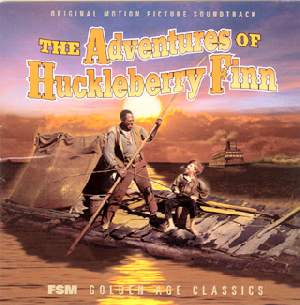
http://www.musicweb-international.com/film/2003/Aug03/adventures_of_huckleberry_finn.jpg
http://www.oldies.com/images/boxart/large/3/089218300805.jpg
0 Replies
 
bobsmythhawk
 
  1  
Reply Wed 30 Nov, 2005 08:50 am
Jonathan Swift
From Wikipedia, the free encyclopedia.


Jonathan Swift (November 30, 1667 - October 19, 1745) was an Anglo-Irish writer who is famous for works like Gulliver's Travels, A Modest Proposal, and A Tale of a Tub. Swift is probably the foremost prose satirist in the English language, although he is also well known for his poetry and essays.


Biography


Jonathan Swift was born at No. 7, Hoey's Court, Dublin, to an English mother, seven months after his father died. He was educated by his Uncle Godwin, and then sent to Swift's Heath, Kilkenny, from where, at the age of six years, he went to the Kilkenny Grammar School (also attended by the philosopher, George Berkley). In 1682 he attended Trinity College, Dublin, and he moved to live with his mother, Abigail Erick, at Leicester.

Soon afterwards an opening to work for Sir William Temple presented itself. In 1689 Swift went to live at Moor Park, Surrey, where he read to Temple, wrote for him, and kept his accounts. Growing into confidence with his employer, he "was often trusted with matters of great importance." Within three years of their acquaintance, Temple had introduced his secretary to William III, and sent him to London to urge the King to consent to a bill for triennial Parliaments.

When Swift took up his residence at Moor Park, he found there an 8-year-old girl. She was the daughter of a merchant named Edward Johnson, who had died young. Swift says that Esther Johnson was born on March 18, 1681 ?- she was later known as Stella and would later feature largely in Swift's life.

By 1694 Swift had grown tired of his position, and finding that Temple, who valued his services, was slow in finding him preferment, he left Moor Park in order to carry out his resolve to go into the Church. He was ordained, and obtained the prebend of Kilroot, near Belfast.

In May 1696 Temple induced Swift to return to Moor Park, where he was employed in preparing Temple's memoirs and correspondence for publication. During this time Swift wrote The Battle of the Books, which was, however, not published until 1704. On his return to Temple's house, Swift found his old playmate grown from a sickly child into a girl of fifteen, in perfect health.

In the summer of 1699 Temple died. Swift was offered and accepted the post of secretary and chaplain to the Earl of Berkeley, one of the Lords Justices, but when he reached Ireland he found that the secretaryship had been given to another. He soon, however, obtained the living of Laracor, Agher, and Rathbeggan, and the prebend of Dunlavin in St. Patrick's Cathedral, Dublin.

At Laracor, a mile or two from Trim, and twenty miles from Dublin, Swift ministered to a congregation of about fifteen persons, and had abundant leisure for cultivating his garden, making a canal (after the Dutch fashion of Moor Park), planting willows, and rebuilding the vicarage. As chaplain to Lord Berkeley, he spent much of his time in Dublin. When Lord Berkeley returned to England in April 1701, Swift, after taking his doctor's degree at Dublin, went with him, and soon afterwards published, anonymously, a political pamphlet, A Discourse on the Contests and Dissentions in Athens and Rome.

When he returned to Ireland in September he was accompanied by Stella ?- now twenty years old ?- and her friend Mrs Dingley. There's a great deal of mystery and controversy over Swift's relationship with Stella. Many hold that they were secretly married in 1716. Although there has never been definite proof of this, there is no doubt that she was dearer to him than anyone else, and that his feelings for her did not change throughout his life.

Swift was politically active between 1707 and 1710. From February 1708 to April 1709 Swift was in London, successfully urging upon the Godolphin administration the claims of the Irish clergy to the First-Fruits and Twentieths ("Queen Anne's Bounty"), which brought in about £2500 a year, already granted to their brethren in England. His having been selected for such a commission shows that he was not yet regarded as a deserter from the Whigs, although the ill success of his representations probably helped to make him one. As a result he became more and more intimate with the Tory leaders and increasingly cool towards his older acquaintances.

Swift received the reward of his services to the Government ?- the Deanery of St. Patrick's, Dublin ?- in April 1713. Swift was back again in the political strife in London in September, taking Oxford's part in the quarrel between that statesman and Bolingbroke. On the fall of the Tories at the death of Queen Anne, he saw that all was over, and retired to Ireland, not to return again for twelve years. In 1713 he co-founded the Scriblerus Club.

In 1723 Swift became engrossed in the Irish agitation which led to the publication of the Drapier's Letters, and in 1726 he paid a long-deferred visit to London, taking with him the manuscript of Gulliver's Travels.

On January 28, 1728, Stella died. Swift could not bear to be present, but on the night of her death he began to write his very interesting Character of Mrs. Johnson. He was too ill to be present at the funeral at St. Patrick's, but afterwards, a lock of her hair was found in his desk, wrapped in a paper bearing the words, "Only a woman's hair."

Swift continued to produce pamphlets that reflected a growing misanthropy, epitomized by A Modest Proposal (1729), in which he "suggested" the Irish unburden themselves of their numerous children ?- and break the cycle of poverty in the process ?- by selling them to the rich as food. It should be noted however, that this was not an actual proposal, but a satire of those who viewed people as simple statistics. Despite his irony, however, he showed many kindnesses to people who needed help. He seems to have given Mrs. Dingley fifty guineas a year, pretending that it came from a fund for which he was trustee.
The title page to Swift's 1735 Works, depicting the author in the Dean's chair, receiving the thanks of Ireland. The motto reads, "I have made a monument greater than brass." The 'brass' is a double entendre, for Wood's half-pence (alloyed with brass) is scattered at his feet. Cherubim award Swift a poet's laurel.


The mental decay which he had always feared ?- "I shall be like that tree," he once said, "I shall die at the top" ?- became marked about 1738. Paralysis was followed by aphasia, and after acute pain, followed by a long period of apathy, from which death relieved him in October 1745. He was buried by Stella's side, in accordance with his wishes. The bulk of his fortune was left to found a hospital for the mentally ill.

(Text extracted from the introduction to The Journal to Stella by George A. Aitken)

Swift wrote his own epitaph, which William Butler Yeats translated from the Latin:

Hic depositum est corpus
JONATHAN SWIFT S.T.D.
Huyus Ecclesiae Cathedralis
Decani
Ubi saeva indignatio
Ulterius
Cor lacerare nequit
Abi Viator
Et imitare, si poteris
Strenuum pro virili
Libertatis Vindicatorem

Obiit 19 Die Mensis Octobris
A.D. 1745 Anno Ætatis 78

Yeats' translation:

Swift has sailed into his rest.
Savage indignation there
cannot lacerate his breast.
Imitate him if you can,
world-besotted traveler.
He served human liberty.

http://en.wikipedia.org/wiki/Jonathan_Swift
0 Replies
 
bobsmythhawk
 
  1  
Reply Wed 30 Nov, 2005 08:54 am
Mark Twain
From Wikipedia, the free encyclopedia.


Samuel Langhorne Clemens (November 30, 1835 - April 21, 1910), better known by his pen name Mark Twain, was a famous and popular American humorist, novelist, writer and lecturer.

At his peak, he was probably the most popular American celebrity of his time. William Faulkner wrote he was "the first truly American writer, and all of us since are his heirs." Clemens maintained that the name "Mark Twain" came from his years on the riverboat, where two fathoms (12 ft, approximately 3.7 m) or "safe water" was measured on the sounding line, was marked by calling "mark twain". But it is often thought that the name actually came from his wilder days in the West, where he would buy two drinks and tell the bartender to "mark twain" on his tab. The true origin is unknown. In addition to Mark Twain, Clemens used the pseudonym "Sieur Louis de Conte". (More under "Pen names," below.)


Early life

Samuel Langhorne Clemens was born in Florida, Missouri, the third of four surviving children of John and Jane Clemens.

While he was still a baby, the family moved to the river town of Hannibal, Missouri, hoping their fortunes would improve there. It was this town and its inhabitants that the author Mark Twain later put to such imaginative use in his most famous works, especially The Adventures of Tom Sawyer (1876).

Clemens' father died in 1847, leaving many debts. The oldest son, Orion, soon began publishing a newspaper and Sam began contributing to it as a journeyman printer and occasional writer. Some of the liveliest and most controversial stories in Orion's paper came from the pen of his younger brother--usually when Orion was out of town. Clemens also traveled to St. Louis and New York City to earn a living as a printer.

But the lure of the Mississippi eventually drew Clemens to a career as a steamboat pilot, a profession he later claimed would have held him to the end of his days, recounting his experiences in his book Life on the Mississippi (1883). But the Civil War and the advent of railroads put an end to commercial steamboat traffic in 1861, and Clemens had to look for a new job.

After a brief stint with a local militia (an experience he recounted in his short story, "The Private History of a Campaign That Failed" in 1885), he escaped further contact with the war by going west in July of 1861 with Orion, who had been appointed secretary to the territorial governor of Nevada. The two traveled for two weeks across the Plains by stagecoach to the silver-mining town of Virginia City, Nevada.


Roughing it Out West

Clemens' experiences out West formed him as a writer and became the basis of his second book, Roughing It. In Nevada he became a miner, hoping to strike it rich digging up silver in the Comstock Lode and staying for long periods in camp with his fellow prospectors--another mode of living that he later put to literary use. Failing as a miner, he fell into newspaper work in Virginia City for the Territorial Enterprise, where he adopted the pen name "Mark Twain" for the first time. In 1864, he moved down to San Francisco and wrote for several papers there.

In 1865, Twain had his first literary success. At the behest of humorist Artemus Ward (whom he had met and befriended in Virginia City during Ward's lecture tour of 1863), he submitted a humorous short story for a collection Ward was publishing. The story arrived too late for that book, but the publisher passed it to the Saturday Press. That story, originally entitled "Jim Smiley and his Jumping Frog" but now better known as "The Celebrated Jumping Frog of Calaveras County," was reprinted nationwide, and called by Atlantic Monthly editor James Russell Lowell "the finest piece of humorous literature yet produced in America."

In the spring of 1866 he was commissioned by the Sacramento Union newspaper to travel to the Sandwich Islands (now Hawaii) to write a series of letters reporting on his journey there. On his return to San Francisco, the success of the letters and the personal encouragement of Colonel John McComb (publisher of San Francisco's Alta California newspaper) led him to try his hand at the lecture circuit, renting the Academy of Music and charging a dollar a head admission. "Doors open at 7 o'clock," Twain wrote on the advertising poster. "The trouble to begin at 8 o'clock."

The first lecture was a wild success, and soon Twain was traveling up and down the state, lecturing and entertaining to packed houses.

First book

But it was another trip that established his fame as an author. Twain convinced Col. McComb of the Alta California to pay for Twain's passage aboard the steam packet Quaker City on an American excursion to Europe and the Middle East. The resulting letters Twain produced for the newspaper reporting on the trip formed the basis of his first book, The Innocents Abroad, a large and humorous travelogue that pointedly failed to worship Old World arts and conventions. Sold by subscription, the book became hugely popular and put its author in a spotlight he never willingly relinquished for the rest of his life.

After the success of Innocents he married Olivia Langdon in 1870 and moved to Buffalo, New York, then to Hartford, Connecticut. During this period, he lectured often in the United States and England.

Later he wrote as an avid critic of American society. He wrote about politics with his Life on the Mississippi.

Pen names: Mark Twain, Sieur Louis de Conte

The author's own version of how he took his more famous pen name, Mark Twain, is interesting. In chapter 50 of Life on the Mississippi, he says he borrowed it from Captain Isaiah Sellers, a riverboat captain who "... used to jot down brief paragraphs of plain, practical information about the river, and sign them 'MARK TWAIN,' and give them to the New Orleans Picayune...

"It so chanced that one of these paragraphs became the text for my first newspaper article. I burlesqued it broadly... I showed my performance to some pilots, and they eagerly rushed it into print in the 'New Orleans True Delta.' It was a great pity; for it did nobody any worthy service, and it sent a pang deep into a good man's heart. There was no malice in my rubbish; but it laughed at the captain. It laughed at a man to whom such a thing was new and strange and dreadful...He never printed another paragraph while he lived, and he never again signed "Mark Twain" to anything. At the time that the telegraph brought the news of his death, I was on the Pacific coast. I was a fresh new journalist, and needed a nom de guerre; so I confiscated the ancient mariner's discarded one, and have done my best to make it remain what it was in his hands?-a sign and symbol and warrant that whatever is found in its company may be gambled on as being the petrified truth; how I have succeeded, it would not be modest in me to say."

Modern scholars, however, have investigated this version of the origin of Twain's pseuodonym and found that although Isaiah Sellers, indeed, was an actual writer, whom Clemens parodied early in his career, there is no evidence that Sellers ever used the name "Mark Twain."

Clemens used the pseudonym "Sieur Louis de Conte" as his pen name for his fictionalized biography of Joan of Arc (1896).

Career overview

Twain's greatest contribution to American literature is generally considered to be the novel Adventures of Huckleberry Finn. As Ernest Hemingway himself said:

"All modern American literature comes from one book by Mark Twain called Huckleberry Finn. ...all American writing comes from that. There was nothing before. There has been nothing as good since."

Also popular are The Adventures of Tom Sawyer, The Prince and the Pauper, A Connecticut Yankee in King Arthur's Court and the non-fictional Life on the Mississippi.

Twain began as a writer of light humorous verse; he ended as a grim, almost profane chronicler of the vanities, hypocrisies and acts of killing committed by mankind. At mid-career, with Huckleberry Finn, he combined rich humor, sturdy narrative and social criticism in a way almost unrivaled in world literature.

Twain was a master at rendering colloquial speech, and helped to create and popularize a distinctive American literature, built on American themes and language.

Twain had a fascination with science and scientific inquiry. Twain developed a close and lasting friendship with Nikola Tesla. They spent quite a bit of time together from time to time (in Tesla's laboratory, among other places). A Connecticut Yankee in King Arthur's Court featured a time traveller from the America of Twain's day who used his knowledge of science to introduce modern technology to Arthurian England. Twain also patented an improvement in adjustable and detachable straps for garments.

Twain was a major figure in the American Anti-Imperialist League, which opposed the annexation of the Philippines by the United States. He wrote "Incident in the Philippines", posthumously published in 1924, in response to the Moro Crater Massacre, in which six hundred Moros were killed.

In recent years, there have been occasional attempts to ban Huckleberry Finn from various libraries, because Twain's use of local color offends some people. Although Twain was against racism and imperialism far in front of public sentiment of his time, some with only superficial familiarity of his work have condemned it as racist for its accurate depiction of the language in common use in the United States in the 19th century. Expressions that were used casually and unselfconsciously then are often perceived today as racism (in present times, such racial epithets are far more visible and condemned). Twain himself would probably be amused by these attempts; in 1885, when a library in Massachusetts banned the book, he wrote to his publisher, "They have expelled Huck from their library as 'trash suitable only for the slums', that will sell 25,000 copies for us for sure."

Many of Mark Twain's works have been suppressed at times for one reason or another. 1880 saw the publication of an anonymous slim volume entitled 1601: Conversation, as it was by the Social Fireside, in the Time of the Tudors. Twain was among those rumored to be the author, but the issue was not settled until 1906, when Twain acknowledged his literary paternity of this scatological masterpiece.

Twain at least saw 1601 published during his lifetime. Twain wrote an anti-war article entitled The War Prayer during the Spanish-American War. It was submitted for publication, but on March 22, 1905, Harper's Bazaar rejected it as "not quite suited to a woman's magazine." Eight days later, Twain wrote to his friend Dan Beard, to whom he had read the story, "I don't think the prayer will be published in my time. None but the dead are permitted to tell the truth." Because he had an exclusive contract with Harper & Brothers, Mark Twain could not publish "The War Prayer" elsewhere and it remained unpublished until 1923.

In his later life Twain's family suppressed some of his work which was especially irreverent toward conventional religion, notably Letters from the Earth, which was not published until 1962. The anti-religious The Mysterious Stranger was published in 1916.

Perhaps most controversial of all was Mark Twain's 1879 humorous talk at the Stomach Club in Paris entitled Some Thoughts on the Science of Onanism (masturbation), which concluded with the thought "If you must gamble your lives sexually, don't play a lone hand too much." This talk was not published until 1943, and then only in a limited edition of fifty copies.


Later life and friendship with Henry H. Rogers


Twain's fortunes then began to decline; in his later life, Twain was a very depressed man, but still capable. Following the erroneous publication of a premature obituary in the New York Journal, Twain famously responded: "The reports of my death are greatly exaggerated" (June 2nd 1897).

He lost 3 out of 4 of his children, and his beloved wife, Olivia Langdon, before his death in 1910. He also had some very bad times with his businesses. His publishing company ended up going bankrupt, and he lost thousands of dollars on one typesetting machine that was never finished. He also lost a great deal of revenue on royalties from his books being plagiarized before he even had a chance to publish them himself.

In 1893, Twain was introduced to industrialist and financier Henry H. Rogers, one of the principals of Standard Oil. Rogers reorganized Twain's tangled finances, and the two became close friends for the rest of their lives. Rogers' family became Twain's surrogate family and Twain was a frequent guest at the Rogers townhouse in New York City and summer home in Fairhaven, Massachusetts. The two were drinking and poker buddies. In 1907, they traveled together in Rogers' yacht Kanawha to the Jamestown Exposition held at Sewell's Point near Norfolk, Virginia in celebration of the 300th anniversary of the founding of the Jamestown Colony.

While Twain openly credited Rogers with saving him from financial ruin, there is also substantial evidence in their published correspondence that the close friendship in their later years was mutually beneficial, apparently softening at least somewhat the hard-driving industrialist Rogers, who had apparently earned the nickname "Hell Hound Rogers" when helping build Standard Oil earlier in his career. In one of history's ironies, Rogers was introduced by Twain to investigative journalist Ida Tarbell, who is widely credited with exposing the dark side of Standard Oil, and did so largely through information she obtained through meetings with Rogers. During the years of their friendship, influenced by Twain, Rogers helped finance the education of Helen Keller and made substantial contributions to Dr. Booker T. Washington. After Rogers' death, Dr. Washington revealed that Rogers (with a much-hated public persona) had been generously funding many small country schools and institutions of higher education in the South for the betterment and education of African Americans for over 15 years.

Although by this late date he was in marginal health, in April, 1909, Twain returned to Norfolk with Rogers, and was a guest speaker at the dedication dinner held for the newly completed Virginian Railway, a "Mountains to Sea" engineering marvel of the day. The construction of the new railroad had been solely financed by industrialist Rogers.

When Rogers died suddenly in New York less than two months later. Twain, on his way by train from Connecticut to visit Rogers, was met with the news at Grand Central Station the same morning by his daughter. His grief-stricken reaction was widely reported. He served as one of the pall-bearers at the Rogers funeral in New York later that week. When he declined to ride the funeral train from New York on to Fairhaven, Massachusetts for the internment, he stated that he could not undertake to travel that distance among those whom he knew so well, and with whom he must of necessity join in conversation.

Twain himself died less than one year later. He wrote in 1909, "I came in with Halley's Comet in 1835. It is coming again next year, and I expect to go out with it." And so he did. Halley's comet can be seen in the Earth's skies once every 75-76 years. It was visible on November 30, 1835, when Mark Twain was born and was also visible on April 21, 1910, when he died (although the exact dates of Halley's highpoint were November 16th and April 10th, respectively).

After his death, one of the prominant figures who paid public tribute to him was the President of the United States at the time, William H. Taft. In his words, "Mark Twain gave real intellectual enjoyment to millions, and his works will continue to give such pleasures to millions yet to come. He never wrote a line that a father could not read to a daughter." (Taft was presumably unaware of 1601).


Museums and attractions

Twain's Hartford, Connecticut home is a museum and National Historic Landmark, known as The Mark Twain House. Twain also lived in the latter part of the 19th century in Elmira, New York where he had met his wife, and had many close ties. He and many members of his family lie buried in a wooded knoll in Woodlawn National Cemetery there. A small octagonal study, given to him as a gift when he lived at Quarry Farm east of Elmira and in which he wrote parts or all of several works, is now located on the grounds of Elmira College.

The big town of Hannibal, Missouri is another town that features many Mark Twain attractions including a boyhood house of his and the caverns he used to explore that are featured in The Adventures of Tom Sawyer.

Two American steam-powered paddle boats travelling the Rivers of America attractions at Disneyland and Disneyland Paris are named after Mark Twain. An Audio-Animatronic Mark Twain and Benjamin Franklin host The American Adventure show at Epcot.

http://en.wikipedia.org/wiki/Mark_Twain
0 Replies
 
bobsmythhawk
 
  1  
Reply Wed 30 Nov, 2005 09:00 am
Winston Churchill
From Wikipedia, the free encyclopedia.

Term of office 10 May, 1940 - 27 July, 1945
October 26, 1951 - April 7, 1955
Preceded by Neville Chamberlain
Clement Attlee
Succeeded by Clement Attlee
Anthony Eden
Date of birth 30 November 1874
Place of birth Blenheim Palace, Woodstock, Oxfordshire, England
Spouse Clementine Hozier
Political party Conservative


The Right Honourable Sir Winston Leonard Spencer-Churchill, KG, OM, CH, TD, FRS (30 November 1874 - 24 January 1965) was an English statesman, best known as prime minister of the United Kingdom during the Second World War. At various times a soldier, journalist, author, and politician, Churchill is generally regarded as one of the most important leaders in British and world history. He won the 1953 Nobel Prize in Literature.

Churchill's legal surname was Spencer-Churchill, but starting with his father, Lord Randolph Churchill, his branch of the family always used just the name Churchill in public life.


Early life

Born at Blenheim Palace, near Woodstock in Oxfordshire. Winston Churchill was a descendant of the first famous member of the Churchill family, John Churchill, 1st Duke of Marlborough. Winston's politician father, Lord Randolph Churchill, was the third son of the 7th Duke of Marlborough; Winston's mother was Lady Randolph Churchill (née Jennie Jerome), daughter of American millionaire Leonard Jerome.

Churchill spent much of his childhood at boarding schools, including the Headmaster's House at Harrow School. He famously sat the entrance exam but on confronting the Latin paper he carefully wrote the title, his name and the number 1 followed by a dot and could not think of anything else to write. He was accepted despite this, but placed in the bottom division where they were primarily taught English, at which he excelled. Today at Harrow there is an annual Churchill essay prize on a subject chosen by the head of the English department. He was rarely visited by his mother, whom he virtually worshipped, despite his letters begging her to either come or let his father permit him to come home. He had a distant relationship with his father despite keenly following his father's career. Once, in 1886, he is reported to have proclaimed "My daddy is Chancellor of the Exchequer and one day that's what I'm going to be." His desolate, lonely childhood stayed with him throughout his life.

He was very close to his nurse, Elizabeth Ann Everest (nicknamed "Woom" by Churchill), and was deeply saddened when she died on July 3, 1895. Churchill paid for her gravestone at the City of London Cemetery and Crematorium.

Churchill did badly at Harrow, regularly being punished for poor work and lack of effort. His nature was independent and rebellious and he failed to achieve much academically, failing some of the same courses numerous times despite showing great ability in other areas such as maths and history, in both of which he was placed at times top in his class. But his refusal to study the classics undermined any chance of success at a school like Harrow.

The view of Churchill as a failure at school is one which he himself propagated, probably due to his father's intense dislike of the young Winston and his obvious readiness to label his son a disappointment. He did, however, become the school's fencing champion.

Churchill attended the Royal Military Academy Sandhurst.


The Army

Graduating from Sandhurst Churchill joined the army at 21 as a Sub-altern of the IV (Queen's Own) Hussars Cavalry regiment. This regiment was stationed in Bangalore, India. When arriving in India Churchill dislocated his shoulder by reaching from a boat for a chain from the dock and being thrown against the Quay. This shoulder gave him trouble in later years, occasionally dislocating from its socket.

In India the main occupation of Churchill's regiment was polo, which they devoted a great deal of time and effort to ?- with notable success, winning the Golconda Cup within 50 days of disembarking in India, and being the first regiment from Southern India to win the Inter-Regimental Cup. Churchill also devoted his time to self-educating himself from books which he had sent out.

While stationed in India Churchill's other main occupation was chasing wars. In 1895 he and Reggie Barnes obtained leave to travel to Cuba to observe the Spanish battles against Cuban guerrillas. Churchill also obtained a commission to write about the conflict from the Daily Graphic newspaper. To Churchill's delight they came under fire for the first time on his twenty-first birthday. On his way to Cuba he also made his first visit to the United States, being introduced to New York society by one of his mother's lovers, Bourke Cockran. In 1897 Churchill attempted to travel to the Greco-Turkish War but this conflict effectively ended before he could arrive. He therefore continued on to England on leave before hearing of the Pathan revolt on the North West Frontier and rushing back to India to participate in the campaign to put it down.

Churchill had previously obtained a promise from Sir Bindon Blood, the commander of this expedition, that if he were to command again Churchill could accompany him. He wasted no time in reminding Blood of his promise and was able to participate in the 6 week campaign, also writing articles for the newspapers The Pioneer and The Daily Telegraph at £5 an article. By October 1897 Churchill was back in Britain and his first book The Story of the Malakand Field Force, on that campaign, was published in December.

While still officially stationed in India, and having obtained a large amount of leave, Churchill attempted to get himself assigned to the army being put together and commanded by Lord Kitchener intended to achieve the reconquest of the Sudan. Kitchener was opposed to having Churchill on the staff, feeling he should be back with his regiment in India, and Churchill pulled a great many strings to get his presence approved - even arranging a telegram to Kitchener from the Prime Minister the Marquess of Salisbury. In the end Churchill was able to attend the war after obtaining a posting to the 21st Lancers, a force whose composition was chosen by the War Office not Kitchener. He also served as a war correspondent for the Morning Post, at a rate of £15 per column. While in the Sudan Churchill participated in the battle of Omdurman, the last British cavalry charge in battle. By October 1898 he had returned to Britain and begun work on the 2 volume The River War, published in 1899.

In 1899 Churchill left the army and decided upon a parliamentary career. He stood as a Conservative candidate in Oldham in a by-election of that year. He came third (Oldham was at that time a 2-seat borough), failing to be elected.

On 12 October 1899 the second Anglo-Boer war between Britain and Afrikaners broke out in South Africa. Churchill set off as a War correspondent for the Morning Post, receiving £250 a month for 4 months. Once in South Africa he accepted a lift on a British Army Armoured Train under the command of Aylmer Haldane; this train was thrown off the tracks by a Boer ambush and explosion. Churchill, though not officially a combatant, took charge of operations to get the track cleared and managed to ensure that the engine and half the train, carrying the wounded, could escape. Churchill however was not so lucky and, together with other officers and soldiers was captured and held in a POW camp in Pretoria, despite doubt about his combatant status.

Churchill managed to escape from his prison camp, resulting in a long running criticism and controversy as it was claimed that he did not wait for Haldane and another man who had planned the escape but who were unable, or unwilling, to risk slipping over the fence when Churchill did. Once outside the Pretoria prison camp Churchill travelled almost 300 miles to Portuguese Lourenco Marques in Delgagoa Bay. He achieved this due to the assistance of an English mine manager who hid him down his mine and smuggled him onto a train headed out of Boer territory. His escape made him a minor national hero for a time in Britain, though instead of returning home he took ship to Durban and rejoined General Redvers Buller's army on it's march to relieve Ladysmith and take Pretoria. This time, although continuing as a war correspondent Churchill gained a commission in the South African Light Horse. He fought at Spion Kop and was one of the first British troops into Ladysmith and Pretoria; in fact, he and the Duke of Marlborough, his cousin, were able to get ahead of the rest of the troops in Pretoria where they demanded and received the surrender of 52 Boer guards of the prison camp there.

Churchills two books on the Boer war: London to Ladysmith via Pretoria and Ian Hamilton's March were published in May and October 1900 respectively.


Parliament

After returning from South Africa Churchill again stood as a Conservative party candidate in Oldham, this time in the 1900 general election, or Khaki election.

He was duly elected but, rather than attending the opening of Parliament, he embarked on a speaking tour throughout the UK and USA, by means of which he raised ten thousand pounds for himself (members of parliament were unpaid at the time and Churchill was not rich by the standards of the time). While in the USA one of his speeches was introduced by Mark Twain and he dined with New York Governor and Vice-President Theodore Roosevelt.

In February 1901 Churchill arrived back in the U.K. to enter Parliament, and became associated with a group of Tory dissidents led by Lord Cecil Hugh and referred to as the Hughligans or "Hooligans". During his first parliamentary session Churchill provoked controversy by opposing the government's army estimates, arguing against extravagant military expenditure. By 1903 he was drawing away from Lord Hugh's views. He also opposed the Conservative leader Joseph Chamberlain, who proposed extensive tariff reforms intended to protect the economic pre-eminence of Britain behind tariff barriers. This earned him the detestation of his own party ?- indeed, Conservative backbenchers staged a walkout once while he was speaking. His own constituency effectively deselected him, although he continued to sit for Oldham until the next general election.

In 1904 Churchill's dissatisfaction with the Conservatives and the appeal of the Liberals had grown so strong that on returning from the Whitsun recess he crossed the floor to sit as a member of the Liberal Party. As a liberal he continued to campaign for free trade. The winnable Liberal seat of Manchester North West was found for him for the 1906 general election which he won.

From 1903 until 1905 Churchill was also engaged in writing Lord Randolph Churchill, a 2-volume biography of his father which came out in 1906 and received as a masterpiece. However, filial devotion caused him to soften some of his fathers less attractive aspects.


Ministerial office

When the Liberals took office, with Henry Campbell-Bannerman as Prime Minister, in December 1905 Churchill became Under-Secretary of State for the Colonies. Serving under the Secretary of State for the Colonies, Victor Bruce, 9th Earl of Elgin, Churchill dealt with the adoption of constitutions for the defeated Boer republics of the Transvaal and Orange River Colony and with the issue of 'Chinese slavery' in South African mines. He also became a prominent spokesman on free trade. Churchill soon became the most prominent member of the Government outside the Cabinet, and when Campbell-Bannerman was succeeded by Herbert Henry Asquith in 1908, it came as little surprise when Churchill was promoted to the Cabinet as President of the Board of Trade. Under the law at the time, a newly appointed Cabinet Minister was obliged to seek re-election at a by-election. Churchill lost his Manchester seat to the Conservative William Joynson-Hicks but was soon elected in another by-election at Dundee. As President of the Board of Trade he pursued radical social reforms in conjunction with David Lloyd George, the new Chancellor of the Exchequer.

In 1910 Churchill was promoted to Home Secretary, where he was to prove somewhat controversial. A famous photograph from the time shows the impetuous Churchill taking personal charge of the January 1911 Sidney Street Siege, peering around a corner to view a gun battle between cornered anarchists and Scots Guards. His role attracted much criticism. The building under siege caught fire. Churchill denied the fire brigade access, forcing the criminals to choose surrender or death. Arthur Balfour asked, "He [Churchill] and a photographer were both risking valuable lives. I understand what the photographer was doing but what was the Right Honourable gentleman doing?"

In 1911, Churchill became First Lord of the Admiralty, a post he would hold into the First World War. He gave impetus to military reform efforts, including development of naval aviation, tanks, and the switch in fuel from coal to oil, a massive engineering task, also reliant on securing Mesopotamia's oil rights, bought circa 1907 through the secret service using the Royal Burmah Oil Company as a front company.

The development of the battle tank was financed from naval research funds via the Landships Committee, and, although a decade later development of the battle tank would be seen as a stroke of genius, at the time it was seen as misappropriation of funds. The battle tank was deployed ineptly in 1915, much to Churchill's annoyance. He wanted a fleet of tanks used to surprised the Germans under cover of smoke, and to open a large section of the trenches by crushing barbed wire and creating a breakthrough sector.

However, he was also one of the political and military engineers of the disastrous Gallipoli landings on the Dardanelles during World War I, which led to his description as "the butcher of Gallipoli". When Asquith formed an all-party coalition government, the Conservatives demanded Churchill's demotion as the price for entry. For several months Churchill served in the non-portfolio job of Chancellor of the Duchy of Lancaster, before resigning from the government feeling his energies were not being used. He rejoined the army, though remaining an MP, and served for several months on the Western Front. During this period his second in command was a young Archibald Sinclair who would later lead the Liberal Party.


Return to power

In December 1916, Asquith resigned as Prime Minister and was replaced by Lloyd George. However, the time was thought not yet right to risk the Conservatives' wrath by bringing Churchill back into government. However, in July 1917 Churchill was appointed Minister of Munitions. After the end of the war Churchill served as both Secretary of State for War and Secretary of State for Air (1919-1921). On the possible use of gas weapons (tear gas) in quelling uprisings in the British mandated territories of the former Ottoman Empire, Churchill wrote:

I do not understand this squeamishness about the use of gas. We have definitely adopted the position at the Peace Conference of arguing in favour of the retention of gas as a permanent method of warfare. It is sheer affectation to lacerate a man with the poisonous fragment of a bursting shell and to boggle at making his eyes water by means of lachrymatory gas. I am strongly in favour of using poisoned gas against uncivilised tribes. The moral effect should be so good that the loss of life should be reduced to a minimum. It is not necessary to use only the most deadly gases: gases can be used which cause great inconvenience and would spread a lively terror and yet would leave no serious permanent effects on most of those affected.

During this time (1919-21), he undertook with surprising zeal the cutting of military expenditure. However, the major preoccupation of his tenure in the War Office was the Allied intervention in the Russian Civil War. Churchill was a staunch advocate of foreign intervention, declaring that Bolshevism must be "strangled in its cradle". He secured from a divided and loosely organised Cabinet an intensification and prolongation of the British involvement beyond the wishes of any major group in Parliament or the nation ?- and in the face of the bitter hostility of Labour. In 1920, after the last British forces had been withdrawn, Churchill was instrumental in having arms sent to the Poles when they invaded Ukraine. He became Secretary of State for the Colonies in 1921 and was a signatory of the Anglo-Irish Treaty of 1921, which established the Irish Free State.

Career between the wars

In October 1922, Churchill underwent an operation to remove his appendix. Upon his return, he learned that the government had fallen and a General Election was looming. The Liberal Party was now beset by internal division and Churchill's campaign was weak. He lost his seat at Dundee to prohibitionist, Edwin Scrymgeour, quipping that he had lost his ministerial office, his seat and his appendix all at once. Churchill stood for the Liberals again in the 1923 general election, losing in Leicester, but over the next twelve months he moved towards the Conservative Party, though initially using the labels "Anti-Socialist" and "Constitutionalist". Two years later, in the General Election of 1924, he was elected to represent Epping as a "Constitutionalist" with Conservative backing (a statue in his honour in Woodford Green was erected when Woodford Green was part of the Epping constituency). The following year he formally rejoined the Conservative Party, commenting wryly that "Anyone can rat [change parties], but it takes a certain ingenuity to re-rat."

He was appointed Chancellor of the Exchequer in 1924 under Stanley Baldwin and oversaw the United Kingdom's disastrous return to the Gold Standard, which resulted in deflation, unemployment, and the miners' strike that led to the General Strike of 1926. This decision prompted the economist John Maynard Keynes to write The Economic Consequences of Mr. Churchill, correctly arguing that the return to the gold standard would lead to a world depression. Churchill later regarded this as one of the worst decisions of his life. To be fair to him, it must be noted that he was not an economist and that he acted on the advice of the Governor of the Bank of England, Montague Norman (of whom Keynes said, "Always so charming, always so wrong".)

During the General Strike of 1926, Churchill was reported to have suggested that machineguns be used on the striking miners. Churchill edited the Government's newspaper, the British Gazette, and during the dispute he argued that "either the country will break the General Strike, or the General Strike will break the country." Furthermore, he was to controversially claim that the Fascism of Benito Mussolini had "rendered a service to the whole world," showing as it had "a way to combat subversive forces" ?- that is, he considered the regime to be a bulwark against the perceived threat of Communist revolution.

The Conservative government was defeated in the 1929 General Election. In the next two years, Churchill became estranged from the Conservative leadership over the issues of protective tariffs and Indian Home Rule. When Ramsay MacDonald formed the National Government in 1931, Churchill was not invited to join the Cabinet. He was now at the lowest point in his career, in a period known as "the wilderness years". He spent much of the next few years concentrating on his writing, including Marlborough: His Life and Times ?- a biography of his ancestor John Churchill, 1st Duke of Marlborough ?- and A History of the English Speaking Peoples (which was not published until well after WWII). He became most notable for his outspoken opposition towards the granting of independence to India (see Simon Commission and Government of India Act 1935).

Soon, though, his attention was drawn to the rise of Adolf Hitler and the dangers of Germany's rearmament. For a time he was a lone voice calling on Britain to strengthen its military to counter the belligerence of Germany. However, Churchill too was confused on the issue of what to do about Hitler. Indeed, in 1937 in his book Great Contemporaries, he wrote, with reference to WWI, "Were our country defeated, I hope we should find a champion as admirable (as Hitler) to lead us back to our place amongst the nations." Churchill was a fierce critic of Neville Chamberlain's appeasement of Hitler. He was also an outspoken supporter of King Edward VIII during the Abdication Crisis, leading to some speculation that he might be appointed Prime Minister if the King refused to take Baldwin's advice and consequently the government resigned. However, this did not happen, and Churchill found himself politically isolated and bruised for some time after this.


Role as wartime Prime Minister

At the outbreak of the Second World War Churchill was appointed First Lord of the Admiralty. In this job he proved to be one of the highest-profile ministers during the so-called "Phoney War", when the only noticeable action was at sea. Churchill advocated the pre-emptive occupation of the neutral Norwegian iron-ore port of Narvik and the iron mines in Kiruna, Sweden, early in the War. However, Chamberlain and the rest of the War Cabinet disagreed, and the operation was delayed until the German invasion of Norway, which was successful despite British efforts.

In May 1940, directly upon the German invasion of France by a surprising lightning advance through the Low Countries, it became clear that the country had no confidence in Chamberlain's prosecution of the war. Chamberlain resigned, and Churchill was appointed Prime Minister and formed an all-party government. In response to previous criticisms that there had been no clear single minister in charge of the prosecution of the war, he created and took the additional position of Minister of Defence. He immediately put his friend and confidant, the industrialist and newspaper baron Lord Beaverbrook, in charge of aircraft production. It was Beaverbrook's astounding business acumen that allowed Britain to quickly gear up aircraft production and engineering that eventually made the difference in the war.


Churchill's speeches were a great inspiration to the embattled United Kingdom. His first speech as Prime Minister was the famous "I have nothing to offer but blood, toil, tears, and sweat" speech. He followed that closely with two other equally famous ones, given just before the Battle of Britain. One included the immortal line, "We shall defend our island, whatever the cost may be, we shall fight on the beaches, we shall fight on the landing grounds, we shall fight in the fields and in the streets, we shall fight in the hills; we shall never surrender." The other included the equally famous "Let us therefore brace ourselves to our duties, and so bear ourselves that, if the British Empire and its Commonwealth last for a thousand years, men will still say, 'This was their finest hour.'" At the height of the Battle of Britain, his bracing survey of the situation included the memorable line "Never in the field of human conflict was so much owed by so many to so few", which engendered the enduring nickname "The Few" for the Allied fighter pilots who won it.


His good relationship with Franklin D. Roosevelt secured the United Kingdom vital supplies via the North Atlantic Ocean shipping routes. It was for this reason that Churchill was relieved when Roosevelt was re-elected. Upon re-election, Roosevelt immediately set about implementing a new method of not only providing military hardware to Britain without the need for monetary payment, but also of providing, free of fiscal charge, much of the shipping that transported the supplies. Put simply, Roosevelt persuaded Congress that repayment for this immensely costly service would take the form of defending the USA; and so Lend-lease was born. Churchill had 12 strategic conferences with Roosevelt which covered the Atlantic Charter, Europe first strategy, the Declaration by the United Nations and other war policies. Churchill initiated the Special Operations Executive (SOE) under Hugh Dalton's Ministry of Economic Warfare, which established, conducted and fostered covert, subversive and partisan operations in occupied territories with notable success; and also the Commandos which established the pattern for most of the world's current Special Forces. The Russians referred to him as the "British Bulldog". Unfortunately, towards the end of the war, Churchill was inebriated a great deal of the time and many terrible decisions were made. At one point, while making a speech in the House of Commons, he had to be led away from the lectern as he became confused and disorientated. It was also under his leadership that the (since highly controversial) firebombing of Dresden occurred.

However, some of the military actions during the war remain controversial. Churchill was at best indifferent and perhaps complicit in the Great Bengal famine of 1943 which took the lives of at least 2.5 million Bengalis. Japanese troops were threatening British India after having successfully taken neighbouring British Burma. Some consider the British government's policy of denying effective famine relief a deliberate and callous scorched earth policy adopted in the event of a successful Japanese invasion. Churchill supported the bombing of Dresden shortly before the end of the war; many have since maintained that the city was primarily a civilian target with little military value. However, the bombing was seen at the time as being helpful to the Soviet allies.

Churchill was party to treaties that would redraw post-WWII European and Asian boundaries. These were discussed as early as 1943. Proposals for European boundaries and settlements were officially agreed to by Harry S. Truman, Churchill, and Stalin at Potsdam.

The settlement concerning the borders of Poland, i.e. the boundary between Poland and the Soviet Union and between Germany and Poland, was viewed as a betrayal in Poland during the post-war years, as it was established against the views of the Polish government in exile. Churchill was convinced that the only way to alleviate tensions between the two populations was the transfer of people, to match the national borders. As he expounded in the House of Commons in 1944, "Expulsion is the method which, insofar as we have been able to see, will be the most satisfactory and lasting. There will be no mixture of populations to cause endless trouble... A clean sweep will be made. I am not alarmed by these transferences, which are more possible in modern conditions." The transfers were in the end carried out in a way which resulted in hardship and death for many of those transferred. Churchill opposed the effective annexation of Poland by the Soviet Union and wrote bitterly about it in his books, but he was unable to prevent it at the conferences.


After World War II

Although the importance of Churchill's role in World War II was undeniable, he had many enemies in his own country. His expressed contempt for a number of popular ideas, in particular public health care and better education for the majority of the population, produced much dissatisfaction amongst the population, particularly those who had fought in the war. Immediately following the close of the war in Europe, Churchill was heavily defeated in the 1945 election by Clement Attlee and the Labour Party. Some historians think that many British voters believed that the man who had led the nation so well in war was not the best man to lead it in peace. Others see the election result as a reaction against not Churchill personally, but against the Conservative Party's record in the 1930s under Baldwin and Chamberlain.

Winston Churchill was an early supporter of the pan-Europeanism that eventually led to the formation of the European Common market and later the European Union (for which one of the three main buildings of the European Parliament is named in his honour). Churchill was also instrumental in giving France a permanent seat on the United Nations Security Council (which provided another European power to counterbalance the Soviet Union's permanent seat). Churchill also occasionally made comments supportive of world government. For instance, he once said[1]:

Unless some effective world supergovernment for the purpose of preventing war can be set up ... the prospects for peace and human progress are dark ...If ... it is found possible to build a world organization of irresistible force and inviolable authority for the purpose of securing peace, there are no limits to the blessings which all men enjoy and share.

At the beginning of the Cold War, he famously mentioned the "Iron Curtain", a phrase originally created by Joseph Goebbels. The phrase entered the public consciousness after a 1946 speech at Westminster College in Fulton, Missouri, when Churchill, a guest of Harry S. Truman, famously declared:

From Stettin in the Baltic to Trieste in the Adriatic, an Iron Curtain has descended across the continent. Behind that line lie all the capitals of the ancient states of Central and Eastern Europe. Warsaw, Berlin, Prague, Vienna, Budapest, Belgrade, Bucharest and Sofia, all these famous cities and the populations around them lie in what I must call the Soviet sphere.


Second term

Churchill was restless and bored as leader of the Conservative opposition in the immediate post-war years. After Labour's defeat in the General Election of 1951, Churchill again became Prime Minister. His third government ?- after the wartime national government and the short caretaker government of 1945 ?- would last until his resignation in 1955. During this period he renewed what he called the "special relationship" between Britain and the United States, and engaged himself in the formation of the post-war order.

His domestic priorities were, however, overshadowed by a series of foreign policy crises, which were partly the result of the continued decline of British military and imperial prestige and power. Being a strong proponent of Britain as an international power, Churchill would often meet such moments with direct action.

Anglo-Iranian Oil Dispute

The crisis began under the government of Clement Attlee. In March 1951, the Iranian parliament (the Majlis) voted to nationalise the Anglo-Iranian Oil Company (AIOC) and its holdings by passing a bill strongly backed by the elderly statesman Mohammed Mossadegh, a man who was elected Prime Minister the following April by a large majority of the parliament. The International Court of Justice was called in to settle the dispute, but a 50/50 profit-sharing arrangement, with recognition of nationalisation, was rejected by Mossadegh. Direct negotiations between the British and the Iranian government ceased, and over the course of 1951, the British ratcheted up the pressure on the Iranian government and explored the possibility of a coup against it. U.S. President Harry S. Truman was reluctant to agree, placing a much higher priority on the Korean War. The effects of the blockade and embargo were staggering and led to a virtual shutdown of Iran's oil exports.

Churchill's return to power brought with it a policy of undermining the Mossadegh government. Both sides floated proposals unacceptable to the other, each side believing that time was on its side. Negotiations broke down, and as the blockade's political and economic costs mounted inside Iran, coup plots arose from the army and pro-British factions in the Majlis.

Churchill and his Foreign Secretary pursued two mutually exclusive goals. On one hand, they wanted "development and reform" in Iran; on the other hand, they did not want to give up the control or revenue from AIOC that would have permitted that development and reform to go forward. Initially they backed Sayyid Zia as an individual with whom they could do business, but as the embargo dragged on, they turned more and more to an alliance with the military. Churchill's government had come full-circle, from ending the Attlee plans for a coup, to planning one itself.

The crisis dragged on until 1953. Churchill approved a plan, with help from U.S. President Dwight D. Eisenhower, to back a coup in Iran. The combination of external and internal political pressure converged around Fazlollah Zahedi. Over the summer of 1953, demonstrations grew in Iran, and with the failure of a plebiscite, the government was destabilised. Zahedi, using foreign financing, took power, and Mossadegh surrendered to him on 20 August 1953.

The coup pointed to an underlying tension within the post-War order: the industrialised Democracies, hungry for resources to rebuild in the wake of World War II, and to engage the Soviet Union in the Cold War, dealt with emerging states such as Iran as they had with colonies in a previous era. On one hand, spurred by the fear of a third world war against the USSR and committed to a policy of containment at any cost, they were more than willing to circumvent local political prerogatives. On the other hand, many of these local governments were both unstable and corrupt. The two factors created a vicious circle ?- intervention led to more dictatorial rule and corruption, which made intervention rather than establishment of strong local political institutions a greater and greater temptation.


The Mau Mau Rebellion

Main article: Mau Mau Uprising

In 1951, grievances against the colonial distribution of land came to a head with the Kenya Africa Union demanding greater representation and land reform. When these demands were rejected, more radical elements came forward, launching the Mau Mau rebellion in 1952. On 17 August 1952, a state of emergency was declared, and British troops were flown to Kenya to deal with the rebellion. As both sides increased the ferocity of their attacks, the country moved to full-scale civil war.

In 1953, the Lari massacre, perpetrated by Mau-Mau insurgents against Kikuyu loyal to the British, changed the political complexion of the rebellion and gave the public-relations advantage to the British. Churchill's strategy was to use a military stick combined with implementing many of the concessions that Attlee's government had blocked in 1951. He ordered an increased military presence and appointed General Sir George Erskine, who would implement Operation Anvil in 1954 that broke the back of the rebellion in the city of Nairobi. Operation Hammer, in turn, was designed to root out rebels in the countryside. Churchill ordered peace talks opened, but these collapsed shortly after his leaving office.


Malaya Emergency

Main article: Malayan Emergency

In Malaysia, a rebellion against British rule had been in progress since 1948. Once again, Churchill's government inherited a crisis, and once again Churchill chose to use direct military action against those in rebellion while attempting to build an alliance with those who were not. He stepped up the implementation of a "hearts and minds" campaign and approved the creation of fortified villages, a tactic that would become a recurring part of Western military strategy in South-East Asia. (See Vietnam War).

The Malayan Emergency was a more direct case of a guerrilla movement, centred in an ethnic group, but backed by the Soviet Union. As such, Britain's policy of direct confrontation and military victory had a great deal more support than in Iran or in Kenya. At the highpoint of the conflict, over 35,500 British troops were stationed in Malaysia. As the rebellion lost ground, it began to lose favour with the local population.

While the rebellion was slowly being defeated, it was equally clear that colonial rule from Britain was no longer tenable. In 1953, plans were drawn up for independence for Singapore and the other crown colonies in the area. The first elections were held in 1955, just days before Churchill's own resignation, and by 1957, under Prime Minister Anthony Eden, Malaysia became independent.


Honours for Churchill

In 1953 he was awarded two major honours: he was invested as a Knight of the Garter (becoming Sir Winston Churchill, KG) and he was awarded the Nobel Prize for Literature "for his mastery of historical and biographical description as well as for brilliant oratory in defending exalted human values". A stroke in June of that year led to him being paralysed down his left side. He retired on 5 April 1955 because of his health but retained his post as Chancellor of the University of Bristol.

In 1955, Churchill was offered elevation to dukedom as the first-ever Duke of London, a title he himself selected. However, he then declined the title after being persuaded by his son Randolph not to accept it. Since then, no people other than royalty have been offered a Dukedom in the United Kingdom.

In 1956 Churchill received the Karlspreis (engl.: Charlemagne Award), an award by the German city of Aachen to those who most contribute to the European idea and European peace. In 1959 he became Father of the House, the MP with the longest continuous service. He was to hold the position until his retirement from the Commons in 1964. He became the first person to receive Honorary U.S. Citizenship, in 1963. From 1941 to his death, he was the Lord Warden of the Cinque Ports, a ceremonial office.

Family

On 2 September 1908 at the socially desirable St. Margaret's, Westminster, Churchill married Clementine Hozier, a dazzling but largely penniless beauty whom he met at a dinner party that March (he had proposed to actress Ethel Barrymore but was turned down). They had five children: Diana; Randolph; Sarah, who co-starred with Fred Astaire in Royal Wedding; Marigold, who died in early childhood; and Mary, who has written a book on her parents.

Clementine's mother was Lady Blanche Henrietta Ogilvy, second wife of Sir Henry Montague Hozier and a daughter of the 7th Earl of Airlie. Clementine's paternity, however, is open to healthy debate. Lady Blanche was well-known for sharing her favours and was eventually divorced as a result. She maintained that Clementine's father was Capt. William George "Bay" Middleton, a noted horseman. But Clementine's biographer Joan Hardwick has surmised, due to Sir Henry Hozier's reputed sterility, that all Lady Blanche's "Hozier" children were actually fathered by her sister's husband, Algernon Bertram Freeman-Mitford, better known as a grandfather of the infamous Mitford sisters of the 1920s.

Churchill's son Randolph and his grandsons Nicholas Soames and Winston all followed him into Parliament.

When not in London on government business, Churchill usually lived at his beloved Chartwell House in Kent, two miles south of Westerham. He and his wife bought the house in 1922 and lived there until his death in 1965. During his Chartwell stays, he enjoyed writing there, as well as painting, bricklaying, and admiring the estate's famous black swans.


Last days


Aware that he was slowing down both physically and mentally, Churchill retired as Prime Minister in 1955 and was succeeded by Anthony Eden, who had long been his ambitious protégé. (Three years earlier, Eden had married Churchill's niece Anna Clarissa Churchill, his second marriage.) Churchill spent most of his retirement at Chartwell and in the south of France.

In 1963 U.S. President John F. Kennedy named Churchill the first Honorary Citizen of the United States. Churchill was too ill to attend the White House ceremony, so his son and grandson accepted the award for him.

On 15 January 1965 Churchill suffered another stroke ?- a severe cerebral thrombosis ?- that left him gravely ill. He died nine days later on 24 January 1965, 70 years to the day of his father's death. His body lay in State in Westminster Hall for three days and a state funeral service was held at St Paul's Cathedral. This was the first state funeral for a non-royal family member since that of Field Marshal Lord Roberts of Kandahar in 1914. As his coffin passed down the Thames on a boat, the cranes of London's docklands bowed in salute. The Royal Artillery fired a 19-gun salute (as head of government), and the RAF staged a fly-by of sixteen English Electric Lightning fighters. The state funeral was the largest gathering of dignitaries in Britain as representatives from over 100 countries attended, including French President Charles de Gaulle, Canadian Prime Minister Lester Pearson, other heads of state and government, and members of royalty. It also saw largest assemblage of statesmen in the world until the funeral of Pope John Paul II in 2005.

It has been suggested it was Churchill's wish that, were de Gaulle to outlive him, his (Churchill's) funeral procession should pass through Waterloo Station. This is complete myth. Though President de Gaulle did attend the service and the coffin departed for Bladon from Waterloo Station, there is absolutely no connection. In fact, Churchill did not plan his own funeral as commonly believed; he made a few suggestions, but there was a private committee which made the plans, and he was not on it.

At Churchill's request, he was buried in the family plot at Saint Martin's Churchyard, Bladon, near Woodstock, and not far from his birthplace at Blenheim.

Because the funeral took place on 30 January, people in the United States marked it by paying tribute to his friendship with Roosevelt because it was the anniversary of FDR's birth.

On February 9, 1965, Churchill's estate was probated at 304,044 pounds sterling.


Churchill as historian


Churchill was a prolific writer throughout his life and, during his periods out of office, regarded himself as a professional writer who was also a Member of Parliament. Despite his aristocratic birth, he inherited little money (his mother spent most of his inheritance) and always needed ready cash to maintain his lavish lifestyle and to compensate for a number of failed investments. Some of his historical works, such as A History of the English Speaking Peoples, were written primarily to raise money.

Although Churchill was an excellent writer, he was not a trained historian. In his youth he was an avid reader of history but within a narrow range. The major influences on his historical thought, and his prose style, were Clarendon's history of the English Civil War, Gibbon's The History of the Decline and Fall of the Roman Empire and Macaulay's History of England. He had little interest in social or economic history; he saw history as essentially political and military, driven by great men rather than by economic forces or social change.

Churchill was the last (and one of the most influential) exponents of "Whig history" ?- the belief of the 18th- and 19th-century Whigs that the British people had a unique greatness and an imperial destiny, and that all British history should be seen as progress towards fulfilling that destiny. This belief inspired his political career as well as his historical writing. It was criticized as an old-fashioned view of history even in Churchill's youth, but he never modified it or showed any interest in other schools of history. Although he employed professional historians as assistants, they had no influence over the content of his works.

Churchill's historical writings fall into three categories. The first is works of family history, the biographies of his father, Life of Lord Randolph Churchill (1906), and of his great ancestor, Marlborough: His Life and Times (four volumes, 1933-38). These are still regarded as fine biographies, but are marred by Churchill's desire to present his subjects in the best possible light. He made only limited use of the available source materials and, in the case of his father, suppressed some material from family archives that reflected badly on Lord Randolph. The Marlborough biography shows to the full Churchill's great talent for military history. Both books have been superseded by more scholarly works but are still highly readable.

The second category is Churchill's autobiographical works, including his early journalistic compilations The Story of the Malakand Field Force (1898), The River War (1899), London to Ladysmith via Pretoria (1900) and Ian Hamilton's March (1900). These latter two were issued in a re-edited form as My Early Life (1930). All these books are colourful and entertaining, and contain some valuable information about Britain's imperial wars in India, Sudan and South Africa, but they are essentially exercises in self-promotion, since Churchill was already a Parliamentary candidate in 1900.

Churchill's reputation as a writer, however, rests on the third category, his three massive multi-volume works of narrative history. These are his histories of the First World War ?- The World Crisis (six volumes, 1923-31) ?- and of The Second World War (six volumes, 1948-53), and his History of the English-Speaking Peoples (four volumes, 1956-58, much of which had been written in the 1930s). These are among the longest works of history ever published (The Second World War runs to more than two million words), and earned him the Nobel Prize for Literature.

Churchill's histories of the two world wars are, of course, far from being conventional historical works, since the author was a central participant in both stories and took full advantage of that fact in writing his books. Both are in a sense, therefore, memoirs as well as histories, but Churchill was careful to broaden their scope to include events in which he played no part ?- the war between Nazi Germany and the Soviet Union, for example. Inevitably, however, Churchill placed Britain, and therefore himself, at the centre of his narrative. Arthur Balfour described The World Crisis as "Winston's brilliant autobiography, disguised as a history of the universe."

As a Cabinet minister for part of the First World War and as Prime Minister for nearly all of the Second, Churchill had unique access to official documents, military plans, official secrets and correspondence between world leaders. After the First War, when there were few rules governing these documents, Churchill simply took many of them with him when he left office and used them freely in his books ?- as did other wartime politicians such as David Lloyd George. As a result of this, strict rules were put in place preventing Cabinet ministers using official documents for writing history or memoirs once they left office.

The World Crisis was inspired by Lord Esher's attack on Churchill's reputation in his memoirs. It soon broadened out into a general multi-volume history. The volumes are a mix of military history, written with Churchill's usual narrative flair; diplomatic and political history, often written to justify Churchill's own actions and policies during the war; portraits of other political and military figures, sometimes written to further political vendettas or settle debts (most notably with Lloyd George); and personal memoir, written in a colourful but highly selective manner. Today these books are not in favour as historical references. As with all Churchill's works, they have little to say about economic or social history, and are coloured by his political views ?- particularly in regard to the Russian Revolution. But they remain highly readable for their narrative skill and vivid portrayals of people and events.

When he resumed office in 1939, Churchill fully intended writing a history of the war then beginning. He said several times: "I will leave judgements on this matter to history ?- but I will be one of the historians." To circumvent the rules against the use of official documents, he took the precaution throughout the war of having a weekly summary of correspondence, minutes, memoranda and other documents printed in galleys and headed "Prime Minister's personal minutes". These were then stored at his home for future use. As well, Churchill wrote or dictated a number of letters and memorandums with the specific intention of placing his views on the record for later use as a historian.

This all became a source of great controversy when The Second World War began appearing in 1948. Churchill was not an academic historian, he was a politician, and was in fact Leader of the Opposition, still intending to return to office. By what right, it was asked, did he have access to Cabinet, military and diplomatic records which were denied to other historians?

What was unknown at the time was the fact that Churchill had done a deal with the Attlee Labour government which came to office in 1945. Recognising Churchill's enormous prestige, Attlee agreed to allow him (or rather his research assistants) free access to most documents, provided that (a) no official secrets were revealed, (b) the documents were not used for party political purposes, and (c) the typescript was vetted by the Cabinet Secretary, Sir Norman Brook. Brook took a close interest in the books and rewrote some sections himself to ensure that nothing was said which might harm British interests or embarrass the government. Churchill's history thus became a semi-official one.

Churchill's privileged access to documents and his unrivalled personal knowledge gave him an advantage over all other historians of the Second World War for many years. The books had enormous sales in both Britain and the United States and made Churchill a rich man for the first time. It was not until after his death and the opening of the archives that some of the deficiencies of his work became apparent.

Some of these were inherent in the unique position Churchill occupied as a historian, being both a former Prime Minister and a serving politician. He could not reveal military secrets, such as the work of the code-breakers at Bletchley Park (see Ultra) or the planning of the atomic bomb. He could not discuss wartime disputes with figures such as Dwight Eisenhower, Charles de Gaulle or Tito, since they were still world leaders at the time he was writing. He could not discuss Cabinet disputes with Labour leaders such as Attlee, whose goodwill the project depended on. He could not reflect on the deficiencies of generals such as Archibald Wavell or Claude Auchinleck for fear they might sue him (some, indeed, threatened to do so).

Other deficiencies were of Churchill's own making. Although he described the fighting on the Eastern Front, he had little real interest in it and no access to Soviet or German documents, so his account is a pastiche of secondary sources, largely written by his assistants. The same is true to some extent of the war in the Pacific except for episodes such as the fall of Singapore in which he was involved. His account of the U.S. naval war in the Pacific was so heavily based on other writers that he was accused of plagiarism.

The real focus of Churchill's work is always on the war in Western Europe, the Mediterranean and North Africa, but here his work is based heavily on his own documents, so it greatly exaggerates his own role. He had little access to American documents, and even those he did have, such as his letters from Roosevelt, Truman and Eisenhower, had to be used with caution for diplomatic reasons. Although he was, of course, a central figure in the war, he was not as central as his books suggest. Although he is usually fair, some personal vendettas are aired ?- against Stafford Cripps, for example.

The Second World War can still be read with great profit by students of the period, provided it is seen mainly as a memoir by a leading participant rather than as an authoritative history by a detached historian. The war, and particularly the period between 1940 and 1942 when Britain was fighting alone, was the climax of Churchill's career, and his personal account of the inside story of those days is unique and invaluable. But since the archives have been opened far more accurate and reliable histories have been written.

Churchill's History of the English-Speaking Peoples was commissioned and largely written in the 1930s when Churchill badly needed money, but it was put aside when war broke out in 1939, being finally issued after he left office for the last time in 1955. Although it contains much fine writing, it shows Churchill's deficiencies as a historian at their most glaring. It is generally regarded as tendentious and very old-fashioned, seeing world history as a one-dimensional pageant of battles and speeches, kings and statesmen, in which the English occupy central stage. Events viewed by today's historians as being of central importance, such as the industrial revolution, are scarcely mentioned. Although Churchill's enormous prestige ensured that the books were respectfully received and sold well, they are little read today.

http://en.wikipedia.org/wiki/Winston_Churchill
0 Replies
 
bobsmythhawk
 
  1  
Reply Wed 30 Nov, 2005 09:03 am
Efrem Zimbalist, Jr.
From Wikipedia, the free encyclopedia.

Efrem Zimbalist, Jr. (born November 30, 1918 in New York, NY) is an American actor best known for his roles in the television series 77 Sunset Strip and The F.B.I.. He is the son of violinist Efrem Zimbalist, Sr. (1889-1985) and operatic soprano Alma Gluck (1884-1938).

Zimbalist had a successful theatre career both as an actor and a stage producer. He also appeared in leading and supporting roles in several well-received feature films.

Zimbalist and his wife, the former Stephanie Spaulding, are the parents of actress Stephanie Zimbalist, and Efrem had a recurring role on his daughter's 1980s light-hearted mystery series, Remington Steele, which starred Pierce Brosnan and co-starred Doris Roberts. Efrem had a small recurring roll in the 1990s hit science fiction tv series Babylon 5 as William Edgars.

http://en.wikipedia.org/wiki/Efrem_Zimbalist_Jr.
0 Replies
 
bobsmythhawk
 
  1  
Reply Wed 30 Nov, 2005 09:06 am
Virginia Mayo
From Wikipedia, the free encyclopedia.


Virginia Mayo (November 30, 1920 - January 17, 2005) was an American film actress.

Born in St. Louis, Missouri as Virginia Clara Jones, and tutored by a series of dancing instructors engaged by her aunt, she appeared in the St. Louis Municipal Opera chorus, then appeared with six other girls at an act at the Jefferson Hotel, where she was recruited by Andy Mayo to appear in his popular vaudeville act, as a ringmaster for two men in a horse suit. Virginia assumed the stage name of "Mayo" in the process. She appeared in Vaudeville for three years in the act, appearing with Eddie Cantor on Broadway in 1941's Banjo Eyes.

She continued her career as a dancer, then signed a contract with Samuel Goldwyn and appeared in several of Goldwyn's movies. With Danny Kaye she made some successful comedies, including: Wonder Man (1945), The Kid from Brooklyn (1946) and The Secret Life of Walter Mitty (1947).

In 1949's White Heat she gave one of her greatest performances as Verna Jarrett the wife of gangster Cody Jarrett (acted by James Cagney). Mayo later claimed in interviews that she was occasionally genuinely frightened by Cagney during the filming of the picture, because Cagney's acting was so realistic and natural.

Also of interest is her role in The Best Years of Our Lives, where she was cast against type and gave a performance that garnered much acclaim.

In 1947, she married actor Michael O'Shea, who died in 1973. They had one child, Mary Catherine O'Shea (1953-). The O'Shea family lived for several decades in Thousand Oaks, California.

Through the 1950s and 1960s she ended up getting roles in B-movies, often westerns and adventure films, but also some musicals. Her singing voice was always dubbed.

Mayo got a star on the Walk of Fame for her work in Television. It can be found at 1751 Vine Street.

In the 1990s, Mayo gifted her extensive collection of Hollywood memorabilia to the Thousand Oaks Library. Mayo passed away in Los Angeles in 2005 after a long illness at the age of 84.

http://en.wikipedia.org/wiki/Virginia_Mayo
0 Replies
 
bobsmythhawk
 
  1  
Reply Wed 30 Nov, 2005 09:11 am
Allan Sherman
From Wikipedia, the free encyclopedia.


Allan Sherman (sometimes incorrectly Alan), November 30, 1924 - November 20, 1973, was an American musician, parodist, satirist, accordionist, and television producer.

Sherman was the creator and original producer of the popular I've Got a Secret (1952-1967), but was fired after a particularly unsuccessful episode (featuring Tony Curtis) that aired June 11, 1958. Later, he found that the little song parodies he performed to amuse his friends and family were taking a life of their own. He released an LP of these parodies, My Son, the Folk Singer, in 1962. The album was so successful that it was quickly followed by My Son, the Celebrity.

The first two LPs were mainly Jewish-folk-culture rewritings of old folk tunes (as suggested by the albums' titles), and his first minor hit was Sarah Jackman, a takeoff of Frère Jacques in which he and a woman (Christine Nelson) exchange family gossip (Sarah Jackman, Sarah Jackman, How's by you? How's by you? How's by you the family? How's your sister Emily? etc.) By his peak with My Son, the Nut in 1963, Sherman had begun to appeal to a larger audience, and broadened both his subject matter and his choice of parody material.

In My Nut alone, his pointed parodies of classical and popular tunes savaged summer camp ("Hello Muddah, Hello Fadduh" to the tune of Ponchielli's Dance of the Hours), encroaching automation in the workforce ("Automation" to the tune of "Fascination"), space travel ("Eight Foot Two, Solid Blue" to "Five Foot Two, Eyes of Blue"), the exodus to the suburbs, ("Here's to the Crabgrass" to the tune of "English Country Garden"), and his own bloated figure ("Hail to Thee, Fat Person", which blames his obesity on the Marshall Plan).

At the height of his popularity in 1965, Sherman published an autobiography, A Gift of Laughter. For a short period, Sherman was culturally ubiquitous. He sang on and guest-hosted The Tonight Show, appeared in the Macy's Thanksgiving Day parade, and narrated his own version of Prokofiev's Peter and the Wolf with the Boston Pops under Arthur Fiedler (this concert was released as an album Peter and the Commissar). A children's book version of "Hello Muddah, Hello Faddah" with illustrations by Syd Hoff was released. A pirate album, More Folk Songs by Allan Sherman and His Friends, contained two parodies Sherman had recorded in the early 1950s with material by other artists.

Later albums grew more pointedly satirical and less light-hearted as the decade lost its innocence, and Sherman took up his pen to skewer protesting students ("The Rebel"), consumer debt ("A Waste of Money" to "A Taste of Honey"), and the generation gap ("Downtown", "Pop Hates the Beatles").

Allan Sherman's large body of parody work (over 100 recorded parodies in 5 years) was brilliant on many levels: His choice of material was itself funny, his lyrics were self-contained and consistently funny (and usually led to a climactic punchline), and yet spookily paralleled the sounds of the original, and his choice of topics was always timely and relevant. Finally, his humor was charming, self-deprecating, insightful, and never seemed to be trying too hard. His brilliance inspired a new generation of developing parodists such as "Weird Al" Yankovic, who pays homage to Sherman (for the sharp-eyed) on the cover of his own first LP. Sherman is also credited with introducing Bill Cosby to a national audience, and thus launching that popular entertainer's career.

Like his contemporary Tom Lehrer, Sherman wrote satirical songs for the two-year-long "highbrow" satire program (the American version) That Was The Week That Was (1964-1965), including his Dropout's March. Unfortunately, his topics were often relevant only to his own time and place; unlike most of Lehrer's, Sherman's parodies generally don't date or travel very well. But anyone familiar with the American concerns of the era will still find all his songs hilarious. And a few are timeless -- "Hello Muddah", the abovementioned story of the boy from Camp Granada, is as fresh now as ever, and has been translated into other languages: Sweden, for example, has translated and adopted the song as its own.

Sherman's creative career was rather short. After its peak in 1963, his popularity declined precipitously during 1964 and by 1965 he had released two albums that didn't make the top 50. In 1966 Warner Brothers dropped him from the label. Disillusioned but still creative, in 1973 Sherman published the controversial "The Rape of the A*P*E*", which detailed his point of view on American Puritanism and the sexual revolution. He was struggling with lung disease during the book's writing, and he finally succumbed to emphysema in November of 1973 at the age of 48.

Sherman's personal life was rather miserable, both before and after his sudden success as a singer-songwriter. An excellent biographical article details his rise and fall, as well as the follow-on story of his son Robert Sherman, who was the original "Boy from Camp Granada".

Allan Sherman was interred in the Hillside Memorial Park Cemetery in Culver City, California.

His works were not forgotten after his death: a "Best of" CD was released in 1990 and a musical revue of his songs entitled "Hello Muddah, Hello Faddah" toured in 2003. "The Rape of the A*P*E*" is once again topical and actively sought-after, though rare.

http://en.wikipedia.org/wiki/Allan_Sherman


Eight Foot Two Solid Blue :: Allan Sherman

(parody of "Chim Chim Cheree" by Dick Van Dyke,
from the movie "Mary Poppins"
Chim chiminey, chim chiminey, chim-chim-cheree;
Those are three words that don't make sense to me.
But I'm used to words that don't make sense to me,
From all those commercials I see on TV.
When I see an ad that can't be understood
I know that the product has got to be good;
Those words may be crazy, but I think they're great,
Like sodium acetylsalicylate.
(Sodium acetylsalicylate!)
I wake up each morning a most happy man,
I cover my Pic-O-Pay with Fluoristan;
I add Hexachlorophene, 'cause it's so pure,
And then GL-70, just to make sure.
Then I take a shower, but never alone;
I'm in there with Dermasil and Silicone.
I brush Vitrol-D on my Lanolin wave,
And I sharpen my Boo-boop, and use it to shave!
(He sharpens his Boo-boop, and that's how he shaves!)
There's Tufsyn, and Retsyn, and Acrylan too,
And Marfac and Melmac and what else is new?
There's Orlon and Korlan, and there's Accutron,
And Teflon, and Ban-Lon, and so on and on.
These wonderful words spin around in my brain;
Each one is a mystery I cannot explain.
Like what does that Blue Magic whitener do --
Does it make blue things white, or make white things blue?
(His blue things are white, and his white things are blue!)
My Fastback has Wide-Track and Autronic Eye,
Which winks when a cute little Volvo goes by;
My tank full of Platformate starts with a roar,
But when I try to stop, it goes two miles more.
I measure my breathing with my Nasograph,
It's nice, but oh my, how it hurts when I laugh.
My chair is upholstered in real Naugahyde;
When they killed that nauga, I sat down and cried.
(He moved to Chicaga when that nauga died!)
I'm giving a party next Saturday night
And here are the friends that I'm going to invite:
The giant who lives in my washing machine,
That other nice giant, who's jolly and green.
The tiger who causes my gas tank to flood,
That handsome white knight who is stronger than crud;
The man with the eyepatch, who sells me my shirts
And that nut who flies into the front seat for Hertz!
(That daring young nut who goes flying for Hertz!)
I've lived all my life in this weird wonderland;
I keep buying things that I don't understand,
'Cause they promise me miracles, magic, and hope,
But, somehow, it always turns out to be soap.
And they might as well be Chim-Chiminey Cheree!
(Those words all could be Chim-Chiminey Cheree!)
[email protected]
0 Replies
 
bobsmythhawk
 
  1  
Reply Wed 30 Nov, 2005 09:16 am
Dick Clark
From Wikipedia, the free encyclopedia.


Richard Wagstaff Clark (born November 30, 1929), more commonly known as Dick Clark, is an American television entertainer. In addition to his television work, he is known for his continued youthful appearance ("America's Oldest Teenager") and has been in good health, but suffered a stroke?-his first?-on December 8, 2004 at the age of 75.


Career

Dick Clark was born in Bronxville, New York and raised in Mount Vernon, New York. Clark's career in show business began in 1945 when he started working in the mailroom of radio station WRUN in Utica, New York (which was owned by his uncle and managed by his father). Clark was soon promoted to weatherman and news announcer. Clark graduated from Syracuse University in 1951 and began his television career at station WKTV in Utica. Clark's first television hosting job was on "Cactus Dick and the Santa Fe Riders", a country music program.

In 1952, Dick Clark moved to Philadelphia and took a job as a disc jockey at radio station WFIL. WFIL had an affiliated television station with the same call sign which began broadcasting a show called Bob Horn's Bandstand in 1952. Clark was a regular substitute host on the show and when Horn left, Clark became the full time host on July 9, 1956. The show was picked up by ABC and was first aired nationally on August 5, 1957 and renamed American Bandstand. The show was a major success, running daily until 1963, then weekly until 1987; a spin-off of the show, Where The Action Is, aired from 1965 to 1967, also on ABC. Charlie O'Donnell, a close friend of Clark's and an up-and-coming fellow Philadelphia disc jockey, was chosen to be the announcer, which he served for ten years. O'Donnell to this day continues to work with Clark on various specials and award shows.

Clark produced Bandstand for syndication and later the USA cable network until 1989, giving up the hosting reins to David Hirsch in its final year.

Clark began investing in the music publishing and recording business in the 1950s. In 1959, the United States Senate opened investigations into "payola", the practice of music producing companies paying broadcasting companies to favor their product. Clark, as a major figure in both fields, was investigated and testified before Congress in 1960. Clark was not charged with any illegal activities but he was required by ABC to divest his publishing and recording interests.

On November 22, 1963 Clark was in Dallas, Texas. As President John F. Kennedy was driven by Clark's hotel room, Clark waved at the president. (Clark was not in Dealey Plaza during the assassination of President Kennedy)

Clark has been involved in a number of other television series and specials as producer and performer. In 1972, he produced and hosted Dick Clark's New Year's Rockin Eve, the first of a ongoing series of specials still broadcast on New Year's Eve.

After two brief runs as a quiz-show host, Clark hit the jackpot with The $10,000 Pyramid, which premiered on CBS March 26, 1973. The show?-a word association game created and produced by daytime TV legend Bob Stewart?-moved to ABC from 1974 to 1980, during which time the top prize was upgraded to $20,000. After a brief 1981 syndicated run as The $50,000 Pyramid, the show returned to CBS in 1982 as The $25,000 Pyramid, and continued through 1988, save for a three month break.

From 1985 to 1988, Clark hosted both the CBS $25,000 version and a daily $100,000 Pyramid in syndication.

Clark's daytime version of Pyramid won nine Emmy Awards for best game show, a mark eclipsed only by the 10 won by the syndicated version of Jeopardy!.

The 1973-81 Pyramids meant a cross-country commute for Clark. Except for a brief stretch in fall 1973, the show was based in New York and Clark was based in southern California. But by this time Clark established himself as a producer/host comfortable with hard work, a trait that is as much his trademark as his signature signoff For now, Dick Clark... so long. accompanied by a salute. On the week-ending episodes of the ABC Pyramid, Clark would close with the line We'll see you tomorrow on Bandstand before using his signature signoff.

In 1984, Clark produced and hosted the NBC series TV Bloopers & Practical Jokes which ran through 1988 and continues in specials hosted by Clark (first on NBC, now on ABC) to the present day.

Clark produced the television series American Dreams about a Philadelphia family in the early 1960s whose daughter is a regular on American Bandstand. Clark also created and produces the annual American Music Awards.

Clark also had a brief stint as a radio Top-40 countdown show host. In 1982, he created Dick Clark's National Music Survey, which counted down the Top 30 contemporary hits of the week, in direct competition with American Top 40. After that show aired its final broadcast in 1985, he took over hosting duties of another show, Countdown America, whose previous host John Leader had left to create yet another similar program. Countdown America left the airwaves in the summer of 1986.

On December 8, 2004, Dick Clark was hospitalized in Los Angeles after suffering a minor stroke. Clark's spokeswoman, Amy Streibel said that he was hospitalized but was expected to be fine. However, on December 13 it was announced that, for the first time, Clark would not be able to host his annual New Year's Eve broadcast; Regis Philbin was announced as the substitute host. This was only the second time Dick Clark was unable to host his annual New Year's Eve broadcast. The other time was in 1999, due to the airing of ABC 2000 Today, ABC's coverage of the new millennium, which was hosted by Peter Jennings. However, Clark was a correspondent during the broadcast.

While having not been seen in public anywhere since his stroke, on August 15, 2005 Clark announced in a statement that he would be back in Times Square for the annual tradition, bringing on "American Idol" host Ryan Seacrest as co-host and co-executive producer. Also in the press release, it was annouced that Seacrest would eventually take over as the program's sole host. It has also been revealed that Clark has Type 2 diabetes.


Clark has been married three times. His first marriage was to Barbara Mallery in 1952; the couple had one son, Richard Jr., and divorced in 1961. Clark married Loretta Martin in 1962; the couple had two children, Duane and Cindy, and divorced in 1971. Clark has been married to his current wife, Kari Wigton, since 1977.

Clark received Emmy awards in 1979, 1983, 1985, and 1986 and the Daytime Emmy Lifetime Achievement Award in 1994. He is an inductee at the Hollywood Walk of Fame (1976), the Broadcasting Magazine Hall of Fame (1992), the Rock and Roll Hall of Fame (1993), and the Academy of Television Arts & Sciences Hall of Fame (1993).

Dick Clark not just is a successful entertainer, he is also a successful entertainment executive, as chairman and CEO of Dick Clark Productions.


Dick Clark's American Bandstand restaurants

He has a stake in a chain of music-themed restaurants called Dick Clark's American Bandstand Grill. There is currently one free-standing location, in Overland Park, Kansas -- plus 4 airport locations in Indianapolis, Indiana, Newark, New Jersey, Phoenix, Arizona, and Salt Lake City, Utah. A location will open as part of Clark's American Bandstand Theater in Branson, Missouri in 2006.

While filming his 2002 documentary Bowling for Columbine, Michael Moore approached Clark in a van. Moore questioned Clark about a former employee of his restaurant chain, whose son had shot and killed another child, and the possible role of Michigan's workfare program in preventing the mother from adequately supervising her son. Clark rebuffed Moore, the van door was forcibly shut, and Clark was driven away.


Longevity

Clark's continuous youthful appearance has drawn for a long time to the point of becoming a subject of jokes in other forms of comedy entertainment, though his recent health problems have likely hindered this trend. For instance, he's featured in the well-known comic strip The Far Side (where he suddenly ages 200 years on a talk show) and the less-known computer game Superhero League of Hoboken (where he's discovered living in a 23rd century wasteland looking exactly the same). In The X-Files, during the sixth season episode "Tithonus", when a man is discovered to have not aged for over thirty years, an agent remarks, "This guy's a regular Dick Clark!"

Clark has also taken part in some of the longevity jokes at his expense, one example is his appearance in Police Squad, where he is seen to take a special anti-aging cream from the omniscient shoe-shine man, and hurriedly applying it to his face hoping that no one else is watching.

http://en.wikipedia.org/wiki/Dick_Clark_%28entertainer%29
0 Replies
 
bobsmythhawk
 
  1  
Reply Wed 30 Nov, 2005 09:18 am
Mandy Patinkin
From Wikipedia, the free encyclopedia.


Mandel Bruce Patinkin (born November 30, 1952 in Chicago, Illinois), is a Jewish-American actor and renowned tenor. He is perhaps best known for his trademark line in 1987's The Princess Bride ("Hello! My name is Inigo Montoya. You killed my father. Prepare to die!").


Career

Patinkin attended Kenwood High School, University of Kansas and Juilliard School of Drama. His first real break was when he played Che in Evita on Broadway in 1979. He went on to win a Tony Award for that role.

After this initial musical theater success he moved to film, playing a number of small parts in movies such as Yentl and Ragtime, before returning to Broadway in 1984 to star in Sunday in the Park with George, which saw him earn another Tony Award nomination.

Over the next decade he continued to appear in various movies such as Dick Tracy and Alien Nation, on Broadway in The Secret Garden and released two solo albums called Mandy Patinkin and Dress Casual.

In 1994, he burst onto the small screen playing the role of Dr. Jeffrey Geiger on CBS's Chicago Hope and promptly won an Emmy Award. However despite the award and the ratings success of the show Patinkin left the show part way through the second season.

Since Chicago Hope, Patinkin has taken parts in a number of films. However, he has mostly been performing as a singer, releasing three more albums. He also returned to Broadway again in 2000 in the New York Shakespeare Festival's The Wild Party, earning another Tony Award nomination. Recently he has also been seen in the Showtime comedy-drama Dead Like Me.

Starting in September 2005, he stars in the CBS crime drama Criminal Minds.


Personal life

Married Kathryn Grody in 1980; two sons, Isaac and Gideon.

He suffered from keratoconus, a degenerative eye disease, in the mid-1990s. This led to two corneal transplants, the right cornea in 1997 and the left in 1998.

He also was diagnosed and treated for prostate cancer in 2004. He celebrated his first year of recovery by doing a 280 mile charity bike ride with his son, Isaac.

http://en.wikipedia.org/wiki/Mandy_Patinkin
0 Replies
 
bobsmythhawk
 
  1  
Reply Wed 30 Nov, 2005 09:23 am
Billy Idol
From Wikipedia, the free encyclopedia.

Billy Idol (born William Michael Albert Broad on November 30, 1955 in Middlesex, England) is an English hard rock musician. Idol lived in Worthing before attending Sussex University for only a year before joining the Bromley Contingent of keen Sex Pistols fans. During this period, Idol decided to become a musician and formed a band called Generation X in 1976 (see 1976 in music).

Generation X signed to Chrysalis Records and released three albums before breaking up. Idol moved to New York City and began working as a solo artist and working with Steve Stevens, soon becoming MTV staples with "White Wedding" (below right) and "Dancing with Myself". Idol's second LP, Rebel Yell (1984, 1984 in music) was a blockbuster success and established Idol's superstar status in the United States.

Idol did not release a new album until 1987 (see 1987 in music); Whiplash Smile sold well, but failed to live up to expectations. Stevens soon left for a solo career and Idol continued. A cover of Tommy James' "Mony Mony" did well on MTV and Idol played Cousin Kevin in a performance of Tommy. Just before the release of Charmed Life in 1990 (see 1990 in music), Idol was in a motorcycle accident in which he almost lost his leg. The album sold extremely well, but Idol decided to take a break and acted in The Doors, directed by Oliver Stone. The follow-up to Charmed Life was 1993's Cyberpunk (see 1993 in music), which was a flop, and Idol sank into drug addiction, nearly dying of an overdose in 1994.

Idol returned to the popular eye in 1998, when he played himself in The Wedding Singer, an Adam Sandler and Drew Barrymore romantic comedy, where "White Wedding" was used as the title track. Idol appeared on VH1 Storytellers and issued a Greatest Hits CD in 2001.

Idol was embarrassed when at the 2002 Australian Rugby League Grand Final, a power problem resulted in no one being able to hear him singing. This at least proved that he didn't lip-sync his performances.

In the 2004 Playstation 2 game Grand Theft Auto: San Andreas, the song White Wedding was included in the lineup of classic rock radio station KDST.

Devil's Playground, which came out March 22, 2005, is his first new studio album in nearly 12 years.

http://en.wikipedia.org/wiki/Billy_Idol


Rebell Yell :: Billy Idol

Last night a little dancer
Came dancin' to my door
Last night a little angel
Came pumpin cross my floor
She said honey baby
You got a license for love
And if it expires
Bring hell from above because

In the midnight our she cried more more more
With a rebel yell more more more, etc

She don't like slavery
She wont sit and beg
But when you tied her open
She's near to being
What set you free
Brought you to me, babe
What set you free
I need you hear by me, because chorus

I walk the walls for you babe
10,000 miles for you
I dried your tears of pain
A thousand times, for
I'd sell my soul for you babe
For money to burn with you
I'd give you all
And have none, babe
Just a Just a Justa Justa to have you here by me....

chorus out
0 Replies


Related Topics

WA2K Radio is now on the air, Part 3 - Discussion by edgarblythe
 
Copyright © 2026 MadLab, LLC :: Terms of Service :: Privacy Policy :: Page generated in 0.04 seconds on 03/10/2026 at 02:52:47