How much is that doggie in the window? [Arf, arf]
The one with the waggly tail
How much is that doggie in the window? [Arf, arf]
I do hope that doggie's for sale
I must take a trip to California
And leave my poor sweet heart alone
If he has a dog he won't be lonesome
And the doggie will have a good home
How much is that doggie in the window? [Arf, arf]
The one with the waggly tail
How much is that doggie in the window? [Arf, arf]
I do hope that doggie's for sale
I read in the paper there are robbers [Waf, waf]
With flash lights that shine in the dark
My love needs a doggie to protect him
And scare them away with one bark
I don't want a bunny or a kitty
I don't want a parrot that talks
I don't want a bowl of little fishies
You can't take a goldfish for a walk
How much is that doggie in the window? [Arf, arf]
The one with the waggly tail
How much is that doggie in the window? [Arf, arf]
I do hope that doggie's for sale
Victor, I know the melody to your "doggie" song so it doesn't matter that it didn't play for me on your link. Thanks, buddy, and we'll dedicate that to Phoenix.
edgar, glad you remembered to provide us with "Jesse" because that is a lovely song by Janis Ian, even though it's a bit sad. Thanks, Texas.
Strangely, folks, I love the theme to the TV show Cold Case, and here is a combination of a travel logue and the music.
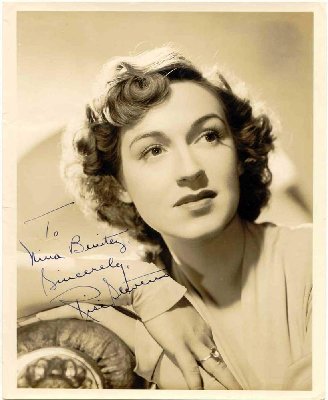
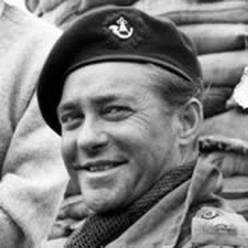
Wishing a Happy 95th to opera singer Rise Stevens (couldn't find the one I like best - Habanera from Carmen - by her on Youtube); 89th to actor Richard Todd; 75th to Gene Wilder and 63rd to Adrienne Barbeau.
Richard Strauss
From Wikipedia, the free encyclopedia
Richard Georg Strauss (June 11, 1864 - September 8, 1949) was a German composer of the late Romantic era and early modern era, particularly noted for his tone poems and operas. Strauss was also a noted conductor.
Life and works
Early life
Strauss was born on June 11, 1864, in Munich, the son of Franz Strauss, who was the principal horn player at the Court Opera in Munich. He received a thorough, but conservative, musical education from his father in his youth, writing his first music at the age of six. He continued to write music almost until his death.
During his boyhood he had the good fortune to be able to attend orchestra rehearsals of the Munich Court Orchestra, and he also received private instruction in music theory and orchestration from an assistant conductor there. In 1874 Strauss heard his first Wagner operas, Lohengrin, Tannhäuser and Siegfried; the influence of Wagner's music on Strauss's style was to be profound, but at first his father forbade him to study it: it was not until the age of 16 that he was able to obtain a score of Tristan und Isolde. Indeed, in the Strauss household the music of Richard Wagner was considered inferior. Later in life, Richard Strauss said and wrote that he deeply regretted this.
In 1882 he entered Munich University, where he studied philosophy and art history, but not music. Nevertheless, he left a year later to go to Berlin, where he studied briefly before securing a post as assistant conductor to Hans von Bülow, taking over from him at Munich when von Bülow resigned in 1885. His compositions around this time were quite conservative, in the style of Robert Schumann or Felix Mendelssohn, true to his father's teachings. His Horn Concerto No. 1 (1882-1883) is representative of this period and is still regularly played.
Richard Strauss married soprano Pauline de Ahna on September 10, 1894. She was famous for being bossy, ill-tempered, eccentric, and outspoken, but the marriage was happy, and she was a great source of inspiration to him. Throughout his life, from his earliest songs to the final Four Last Songs of 1948, he would prefer the soprano voice to all others. Nearly every major operatic role that Strauss wrote is for a soprano.
Tone poems
Strauss's style began to change when he met Alexander Ritter, a noted composer and violinist, and the husband of one of Richard Wagner's nieces. It was Ritter who persuaded Strauss to abandon the conservative style of his youth, and begin writing tone poems; he also introduced Strauss to the essays of Richard Wagner and the writings of Schopenhauer. Strauss went on to conduct one of Ritter's operas, and later Ritter wrote a poem based on Strauss's own Tod und Verklärung.
This newly found interest resulted in what is widely regarded as Strauss's first piece to show his mature personality, the tone poem Don Juan. When this was premiered on November 11, 1889, half of the audience cheered while the other half booed. Strauss knew he had found his own musical voice, saying "I now comfort myself with the knowledge that I am on the road I want to take, fully conscious that there never has been an artist not considered crazy by thousands of his fellow men." Strauss went on to write a series of other tone poems, including Aus Italien (1886), Tod und Verklärung (Death and Transfiguration, 1888-1889), Till Eulenspiegels lustige Streiche (Till Eulenspiegel's Merry Pranks, 1894-95), Also sprach Zarathustra (Thus Spoke Zarathustra, 1896) ?- the opening section of which is well known today for its use in Stanley Kubrick's film 2001: A Space Odyssey), Don Quixote (1897), Ein Heldenleben (A Hero's Life, 1897-98), Sinfonia Domestica (Domestic Symphony, 1902-03) and Eine Alpensinfonie (An Alpine Symphony, 1911-1915).
Opera
Around the end of the 19th century, Strauss turned his attention to opera. His first two attempts in the genre, Guntram in 1894 and Feuersnot in 1901 were considered obscene and were critical failures.[1] However, in 1905 he produced Salome (based on the play by Oscar Wilde), and the reaction was as passionate and extreme as it had been with Don Juan. When it opened at the Metropolitan Opera in New York City, there was such a public outcry that it was closed after just one performance. Doubtless, much of this was due to the subject matter, and negative publicity about Wilde's "immoral" behavior. However, some of the negative reactions may have stemmed from Strauss's use of dissonance, rarely heard then at the opera house. Elsewhere the opera was highly successful and Strauss reputedly financed his house in Garmisch-Partenkirchen completely from the revenues generated by the opera.
Strauss's next opera was Elektra, which took his use of dissonance even further. It was also the first opera in which Strauss collaborated with the poet Hugo von Hofmannsthal. The two would work together on numerous other occasions. For these later works, however, Strauss moderated his harmonic language somewhat, with the result that works such as Der Rosenkavalier (The Knight of the Rose, 1910) were great public successes. Strauss continued to produce operas at regular intervals until 1940. These included Ariadne auf Naxos (1912), Die Frau ohne Schatten (1918), Die ägyptische Helena (1927), and Arabella (1932), all in collaboration with Hofmannsthal; and Intermezzo (1923), for which Strauss provided his own libretto, Die schweigsame Frau (1934), with Stefan Zweig as librettist; Friedenstag (1936) and Daphne (1937) (libretto by Joseph Gregor and Zweig); Die Liebe der Danae (1940) (with Gregor) and Capriccio (libretto by Clemens Krauss) (1941).
Strauss also made live-recording player piano music rolls for the Hupfeld system, all of which survive today and can be heard.
Solo and chamber works
Strauss's solo and chamber works include early compositions for piano solo in a conservative harmonic style, many of which are lost; a rarely heard string quartet (opus 2); the famous violin sonata in Eb which he wrote in 1887; as well as a handful of late pieces. There are only six works in his entire output dating from after 1900 which are for chamber ensembles, and four are arrangements of portions of his operas. His last chamber work, an Allegretto in E for violin and piano, dates from 1940.
Solo instrument with orchestra
Much more extensive was his output of works for solo instrument or instruments with orchestra. The most famous include two horn concerti, which are still part of the standard repertoire of most horn soloists; a concerto for violin; Burleske for Piano and Orchestra; the tone poem Don Quixote, for cello, viola and orchestra; a late concerto for oboe (inspired by a request from an American soldier and oboist, John DeLancie, whom he met after the war); and the duet concertino for bassoon and clarinet, which was one of his last works (1947). Strauss admitted that the Duett Concertino had an extra-musical "plot", in which the clarinet represented a princess and the bassoon a bear; when the two dance together, the bear transforms into a prince.
Strauss and the Nazis
There is much controversy surrounding Strauss's role in Germany after the Nazi Party came to power. Some say that he was constantly apolitical, and never cooperated with the Nazis completely. Others point out that he was an official of the Third Reich. Several noted musicians disapproved of his conduct while the Nazis were in power, among them the conductor Arturo Toscanini, who famously said, "To Strauss the composer I take off my hat; to Strauss the man I put it back on again."[2]
In November 1933, without consultation with Strauss, Joseph Goebbels appointed him to the post of president of the Reichsmusikkammer, the State Music Bureau. Strauss decided to keep his post but to remain apolitical, a decision which has been criticized as naïve. While in this position he composed the Olympische Hymne for the 1936 Summer Olympics, and also befriended some high-ranking Nazis. Evidently his intent was to protect his daughter-in-law Alice, who was Jewish, from persecution. In 1935, Strauss was forced to resign his position as Reichsmusikkammer president, after refusing to remove from the playbill for Die schweigsame Frau the name of the Jewish librettist, his friend Stefan Zweig. He had written Zweig a supportive letter, insulting to the Nazis, which was intercepted by the Gestapo. By the time he conducted the Olympische Hymne at the Berlin Olympic Stadium in 1936, he was no longer president of the Reichsmusikkammer.
His decision to produce Friedenstag in 1938, a one-act opera set in a besieged fortress during the Thirty Years' War - essentially a hymn to peace and a thinly veiled criticism of the Third Reich - during a time when an entire nation was preparing for war, has been seen as extraordinarily brave. With its contrasts between freedom and enslavement, war and peace, light and dark, this work has been considered more related to Fidelio than to any of Strauss's other recent operas. Production ceased shortly after the outbreak of war in 1939.
When his daughter-in-law Alice was placed under house arrest in Garmisch in 1938, Strauss used his connections in Berlin, for example the Berlin Intendant Heinz Tietjen, to secure her safety; in addition, there are also suggestions that he attempted to use his official position to protect other Jewish friends and colleagues. Unfortunately Strauss left no specific records or commentary regarding his feeling about Nazi anti-Semitism, so most of the reconstruction of his motivations during the period are conjectural. While most of his actions during the 1930s were midway between outright collaboration and dissidence, it was only in his music that the dissident streak was, in retrospect, more obvious, such as in the pacifist drama Friedenstag.
In 1942, Strauss moved with his family back to Vienna, where Alice and her children could be protected by Baldur von Schirach, the Gauleiter of Vienna. Unfortunately, even Strauss was unable to protect his Jewish relatives completely; in early 1944, while Strauss was away, Alice and the composer's son were abducted by the Gestapo and imprisoned for two nights. Only Strauss's personal intervention at this point was able to save them, and he was able to take the two of them back to Garmisch, where they remained, under house arrest, until the end of the war.
Strauss completed the composition of Metamorphosen, a work for 23 solo strings, in 1945. It is now generally accepted that Metamorphosen was composed, specifically, to mourn the bombing of Strauss's favorite opera house, the Hoftheater in Munich. Strauss called this "the greatest catastrophe that has ever disturbed my life." However, some scholars suggest that the original intention of the piece was to be a choral setting of Goethe's poem, Niemand wird sich selber kennen.
In April 1945 Strauss was apprehended by American soldiers at his house in Garmisch. He descended the staircase and announced to Lieutenant Milton Weiss of the US Army (who it transpired was also a musician) "I am Richard Strauss, the composer of Rosenkavalier and Salome". Lieutenant Weiss nodded in recognition and another musical American officer placed an 'Off limits' sign on the lawn to protect Strauss.[3]
Final years
In 1948, Strauss wrote his last work, Vier letzte Lieder ("Four last songs") for soprano and orchestra, reportedly with Kirsten Flagstad in mind. She certainly gave the first performance and it was recorded, but the quality of the recording is poor. It is available as a historic CD release for enthusiasts. All his life he had produced Lieder, but these are among his best known (alongside "Zueignung", "Cäcilie", "Morgen" and "Allerseelen"). When compared to the work of younger composers, Strauss's harmonic and melodic language was considered somewhat old-fashioned by this time. Nevertheless, the songs have always been popular with audiences and performers. Strauss himself declared in 1947, "I may not be a first-rate composer, but I am a first-class second-rate composer!"
Richard Strauss died on September 8, 1949, in Garmisch-Partenkirchen, Germany at the age of 85.
Recordings
Richard Strauss made a number of recordings of his music, as well as music by German and Austrian composers. Harold C. Schonberg in The Great Conductors (New York:Simon and Schuster, 1967) says that, while Strauss was a very fine conductor, he often put scant effort into his recordings.
The 1929 performances of Till Eulenspiegel and Don Juan with the Berlin State Opera Orchestra have long been considered the best of his early electrical recordings; even the original 78 rpm discs had superior sound for their time and the performances were top-notch and quite exciting at times, despite a noticeable mistake by the French horn soloist in the famous opening passage of Till Eulenspiegel. The breaks for side changes, necessitated by the 78 rpm process, are rather curious because Strauss actually repeated a few notes each time the music resumed; careful editing for LP and CD reissues resolved the repetitions as well as the obvious interruptions in the music.
Schonberg focused primarily on Strauss' recordings of Mozart's Symphony No. 40 in G minor and Beethoven's Symphony No. 7 in A, as well as noting that Strauss played a breakneck version of Beethoven's ninth symphony in about 45 minutes. Concerning the Beethoven seventh symphony, Schonberg wrote, "There is almost never a ritard or a change in experession or nuance. The slow movement is almost as fast as the following vivace; and the last movement, with a big cut in it, is finished in four minutes, twenty-five seconds. (It should run between seven and eight minutes.)" Schonberg also complained that the Mozart symphony had "no force, no charm, no inflection, with a metronomic rigidity."
Peter Gutmann's 1994 review for classicalnotes.com says the performances of the Beethoven fifth and seventh symphonies, as well as Mozart's last three symphonies, are actually quite good, even if they are sometimes unconventional. "The Koch CDs," Gutman wrote, "represent all of Strauss's recordings of works by other composers. (The best of his readings of his own famous tone poems and other music are collected on DGG 429 925-2, 3 CDs.) It is true, as the critics suggest, that the readings forego overt emotion, but what emerges instead is a solid sense of structure, letting the music speak convincingly for itself. It is also true that Strauss's tempos are generally swift, but this, too, contributes to the structural cohesion and in any event is fully in keeping with our modern outlook in which speed is a virtue and attention spans are defined more by MTV clips and news sound bites than by evenings at the opera and thousand page novels."
Koch Legacy has also released recordings of overtures by Gluck, Carl Maria von Weber, Peter Cornelius and Wagner. The preference for German and Austrian composers in Germany in the 1920s through the 1940s was typical of the German nationalism that existed after World War I. Strauss clearly capitalized on national pride for the great German-speaking composers.
One of the more interesting of Strauss' recordings was perhaps the first complete performance of his An Alpine Symphony, made in 1941 and later released by EMI, because Strauss used the full complement of percussion instruments required in this spectacular symphony. The intensity of the performance rivaled that of the digital recording Herbert von Karajan made many years later with the Berlin Philharmonic Orchestra.
There were many other recordings, including some taken from radio broadcasts and concerts, during the 1930s and early 1940s. Undoubtedly, the sheer volume of recorded performances would yield some definitive performances from a very capable and rather forward-looking conductor.
In 1944, Strauss celebrated his 80th birthday and conducted the Vienna Philharmonic in recordings of his major orchestral works, as well as the seldom-heard Schlagobers (Whipped Cream) ballet music. He actually put more feeling into these performances than his earlier recordings, which were recorded on the Magnetophon tape recording equipment (developed primarily by the Germans to record Adolf Hitler's speeches for radio broadcasts). Vanguard Records later issued the recordings on LPs. Some of these recordings have been reissued on CDs by Preiser; given their remarkable fidelity and their above average performances, these performances deserve to be heard.
0 Replies
bobsmythhawk
1
Reply
Wed 11 Jun, 2008 08:13 am
Jacques-Yves Cousteau
From Wikipedia, the free encyclopedia
Jacques-Yves Cousteau (11 June 1910 - 25 June 1997)[1] was a French naval officer, explorer, ecologist, filmmaker, scientist, photographer and researcher who studied the sea and all forms of life in water. He co-developed the aqua-lung, pioneered marine conservation and was a member of the Académie française. He was commonly known as Jacques Cousteau or Captain Cousteau.
Life
Youth and beginnings of career
Cousteau was born on June 11, 1910, in Saint-André-de-Cubzac, Gironde, to Daniel (a lawyer), and Élisabeth Cousteau. He discovered the sea in the creeks close to Marseilles where his family settled. He completed his preparatory studies at the prestigious Collège Stanislas in Paris. In 1930 he entered the Ecole Navale and became an officer gunner. In Toulon, where he was serving on the "Condorcet", Cousteau carried out his first underwater experiments, thanks to his friend Philippe Tailliez. [2]
In 1936, Tailliez lent him some Fernez underwater goggles, predecessors of the modern diving masks. Cousteau also belonged to the information service of the French Navy and for this reason, was sent on mission to Shanghai and Japan (1938) and in the USSR (1939)...
In 1930 he entered the French Navy as the head of the underwater research group. He later worked his way up the ranks as he became more famous and more useful to the navy. On 12 July 1937 he married Simone Melchior, daughter of a member of Air Liquide, by whom he had two sons, Jean-Michel (1938) and Philippe (1940). His sons took part in the adventure of the Calypso. In 1991, one year after his wife Simone's death of cancer, he married Francine Triplet. They already had a daughter Diane Cousteau (1980) and a son Pierre-Yves Cousteau (1982), born before their marriage.
Cousteau died at the age of 87 of a heart attack while recovering from a respiratory illness. He is buried in the Cousteau family plot at Saint-André-de-Cubzac Cemetery, Saint-André-de-Cubzac, France. He was the brother of right-wing journalist and Nazi collaborator Pierre-Antoine Cousteau (1906-1958). .
Invention of modern deep-sea diving
The years of the Second World War were decisive for the history of diving. After the armistice of 1940, the family of Simone and Jacques-Yves Cousteau took refuge in Megève, where he became a friend of the Ichac family who also lived there. Jacques-Yves Cousteau and Marcel Ichac shared the same will to reveal to general public unknown and inaccessible places: for Cousteau the underwater world and for Ichac the high mountains. The two neighbors took the first ex-aequo prize of the Congress of Documentary Film in 1943, for the first French underwater film: Par dix-huit mètres de fond' (= 18 meters deep"), made without breathing apparatus the previous year in Embiez (Var) with Philippe Tailliez and Frederic Dumas, without forgetting the paramount part played, as originator of the depth-pressure-proof camera case, by the mechanical engineer Leon Vèche (engineer of Arts and Métiers and the Naval college).
In 1943, they made the film Epaves (= Shipwrecks): for this occasion, they used the aqualung, which was one of the improvement and the modernization of inventions of the XIXe century (Rouquayrol and Denayrouze) and of the beginning of the XXe century (Le Prieur). When making Epaves, Cousteau could not find the necessary blank reels of movie film, but had to buy hundreds of small still camera film reels the same width, intended for a make of child's camera, and these had to be cemented together to make long reels. [3]
Having kept bonds with the English-speakers (he spent part of his childhood in the United States and usually spoke English) and with French soldiers in North Africa (under admiral Lemonnier), Jacques-Yves Cousteau (whose villa "Baobab" at Sanary (Var) was opposite the villa "Reine" of Admiral Darlan), helped the French Navy to join again with the Allies; he assembled a commando operation against the Italian services of espionage in France, and received several military decorations for his deeds. At that time, he kept his distance from his brother Pierre-Antoine, a "pen anti-semite", who wrote the collaborationist newspaper Je suis partout (= I am everywhere), and was condemned to die in 1946.
In addition to this, he invented the aqualung which was the beginning of the open-circuit scuba technology that we have today.[citation needed]
GERS and Élie Monnier
In 1946, Cousteau and Tailliez showed to the admiral Lemonnier the film "Epaves", and the admiral gave them the responsibility of setting up the Groupement de Recherches Sous-marines (GRS) (Underwater Research Group) of the French Navy in Toulon, and it became a little later the GERS (Groupe d'Etudes et de Recherches Sous-Marines, = Underwater Studies and Research Group), then the COMISMER ("COMmandement des Interventions Sous la MER", = "Undersea Interventions Command"), and finally more recently the CEPHISMER.
In 1948, between missions of mine clearance, underwater exploration and technological and physiological tests, Cousteau undertook a first campaign in the Mediterranean on board Elie Monnier, sloop bases Group of Study and Underwater Research (GERS) of the National Navy, with Philippe Tailliez, Frederic Dumas, Jean Alinat and the scenario writer Marcel Ichac. The small team also undertook the exploration of the Roman wreck of Mahdia (Tunisia). It was the first operation of underwater archaeology using the autonomous diving, opening the way for scientific underwater archaeology. Cousteau and the scenario writer Marcel Ichac brings back from there the Carnets film of diving (presented and preceded with the Cannes Film Festival 1951).
Cousteau and Elie Monnier took part then in the rescue of the bathyscaphe of Professor Jacques Piccard, the FNRS-2, at the time of the 1949 expedition to Dakar. Thanks to this rescue, the French Navy was able to re-use the sphere of the bathyscaphe to construct the FNRS-3.
The adventures of this period are told in the 2 books The Silent World (1953) by Cousteau and Plongées Sans Câble by Philippe Tailliez.
1950
In 1949, Cousteau left the French Navy.
In 1950: he founded the French Oceanographic Campaigns (COF), and he leased a ship called Calypso from Thomas Loel Guinness for a symbolic one franc a year and equipped her as a mobile laboratory for field research and as a support base for diving and filming. In it Cousteau traversed the most interesting seas of the planet as well as big and small rivers. He carried out also underwater archaeological excavations in the Mediterranean, in particular at Grand-Congloué (1952).
During his voyages, he produces many films (he got the Palme d'Or at the Cannes Film Festival in 1956 for the The Silent World co-realized with Louis Malle, and of the books which contributed to diffuse, with a popularity without precedent, the knowledge of underwater biology.
With the assistance of Jean Mollard, he made a "diving saucer" SP-350, an extraordinary underwater vehicle which can reach a depth of 350 meters. The successful experiment was quickly repeated in 1965 with two vehicles which reached 500 meters.
In 1957, he was elected as director of the Oceanographical Museum of Monaco. He directed Précontinent, of the experiments of diving in saturation (long-duration immersion, houses under the sea), and was one of the rare few from abroad admitted to the Academy of Science of the United States of America. The popularity of Jacques-Yves Cousteau grew.
In October 1960, a large amount of radioactive waste was going to be discarded in the sea by the European Atomic Energy Community. Cousteau organized a publicity campaign which in less than two weeks gained wide popular support. The train carrying the waste was stopped by women and children sitting on the railway, and it was sent back to its origin. The risk was avoided. During this, a French government man had said falsely to a newspaper that Cousteau had approved the dump; Cousteau managed to get the newspaper to issue a correction.
In Monaco in November 1960, the official visit of French president Charles de Gaulle became famous because of their exchange in connection with the incidents of October and more largely in connection with the nuclear experiments. The ambassador of France had suggested with Prince Rainier avoiding any meeting; prince Rainier maintains the presence of Cousteau at the time of the visit of the oceanographical Museum. The president asked in a friendly way the commander to be nice with his atomic scientists; Cousteau answered him: "No sir, it is your researchers that ought to be kind toward us." In the discussion which followed, Jacques-Yves Cousteau deplored that the American decision not to share the nuclear secrets with France (for fear that certain French scientists, rejoined with Communism, might communicate them to the USSR) decided France to undertake its own research and nuclear experiments.
The meeting with American television (ABC, Métromédia, NBC) creates the series ' "The Underwater Odyssey of Commander Cousteau", with the character of the commander in the red bonnet inherited from standard divers) intended to rather give to films a documentary style "personalized adventures" than "didactic". On their subject, Cousteau explained: "people protect and respect what they like, and to make them like the sea, they should be filled with wonder as much as informing them.".
In 1973, along with his two sons and Frederick Hyman he created the Cousteau Society for the Protection of Ocean Life, Frederick Hyman being its first President; it now has more than 300,000 members.
In 1977, together with Peter Scott, he received the UN International Environment prize.
In 1985, he received the Presidential Medal of Freedom from Ronald Reagan, then president of the United States.
On 28 June 1979, while the Calypso was on an expedition to Portugal, his second son, Philippe, his preferred and designated successor and with whom he co-produced all his films since 1969, was killed, cut by his Catalina seaplane's propeller. Cousteau was deeply affected. He called his then eldest son, the architect Jean-Michel Cousteau, to his side. This collaboration lasted 14 years.
1990s
On 24 November 1988 he was elected to the French Academy, chair 17, succeeding Jean Delay. His official reception under the Cupola took place on June 22, 1989, the response to his speech of reception being pronounced by Bertrand Poirot-Delpech. After his death, he was replaced under the Cupola on 28 May 1998 by Érik Orsenna.
In June 1990, the composer Jean Michel Jarre paid homage to the commander by entitling his new album "While waiting for Cousteau".
On 2 December 1990, his wife Simone Cousteau died of cancer. This woman of great character who had spent more time than her husband on board Calypso was the égérie' of the Cousteau team.
In June 1991, in Paris, Jacques-Yves Cousteau remarried, to Francine Triplet, of which he had (before this marriage) 2 children, Diane and Pierre-Yves. Francine Cousteau currently continues her husband's work as the head of the Cousteau Foundation and Cousteau Society. As from this moment, the relations between Jacques-Yves and his elder son worsened. Jacques-Yves puts an end to their collaboration.
In November 1991, Cousteau gave an interview to the UNESCO courier, in which he stated that he was pro human population control and population decrease. The full article text can be found online[4].
In 1996, he prosecuted his son who wished to open a holiday centre "Cousteau" in the Fiji Islands.
On January 11, 1996, Calypso was rammed and sunk in Singapore harbour by a barge. The Calypso was refloated and towed home to France.
In 1992, he was invited to Rio de Janeiro, Brazil, for the United Nations' International Conference on Environment and Development, and then he became a regular consultant for the UN and the World Bank.
Jacques-Yves Cousteau died on 25 June 1997 in Paris, aged 87. His death was strongly felt in the United States, where he was one of the most popular Frenchmen. He was buried in the family vault at Saint-André-de-Cubzac in France. A homage was paid to him by the city by the inauguration of a "rue du Commandant Cousteau", a street which runs out to his native house, where a commemorative plate was affixed.
Jacques-Yves Cousteau during his life received these distinctions:
Commandeur de la Légion d'Honneur
Grand-Croix de l'Ordre National du Mérte
Croix de Guerre 1939-1945
Officier de l'Ordre du Mérite Maritime
Commandeur de l'Ordre des Arts et Lettres
Marine exploration
According to his first book, The Silent World: A Story of Undersea Discovery and Adventure (1953), Cousteau started skindiving?-with a mask, snorkel, and fins with Frédéric Dumas and Philippe Tailliez in 1948. In 1943, he tried out the first prototype aqua-lung ?- designed by Cousteau and Émile Gagnan ?- which made lengthy underwater exploration possible for the first time. This greatly helped to improve today's knowledge of the underwater world.
Biology
Before the echolocation abilities of porpoises were discovered, Cousteau suggested that they might exist. In his first book, The Silent World (1953, pp. 206-207), he reported that his research vessel, the Élie Monier, was heading to the Straits of Gibraltar and noticed a group of porpoises following them. Cousteau changed course a few degrees off the optimal course to the center of the strait, and the porpoises followed for a few minutes, then diverged toward mid-channel again. It was evident that they knew where the optimal course lay, even if the humans did not. Cousteau concluded that the cetaceans had something like sonar, which was a relatively new feature on submarines. He was right.
Defense of the environment
The intellectual heritage that Jacques Grob and especially Philippe Tailliez transmitted to him in the years 1935, namely an environmental and geonomic vision of the sea and Earth, was superimposed in Jacques-Yves Cousteau with a mentality of conqueror, nourished cultivated explorer of the spirit of Jules Verne, and liking like this one to fill the public with wonder. "One protects what one likes.", Cousteau repeated, "and one likes what enchanted us." The oceanographic and cinematographic campaigns of Cousteau having taken place for more than 50 years (1945-1997), it could measure the degradation of the in-situ mediums: the conqueror-explorer, sure of the power of the technique and finding normal to drive out the marine animals, gradually changed to a burning conservationist who made profitable his world notoriety to promote the idea of the Earth, a limited and fragile spaceship, needing to be preserved. He was the only one not a politician who took part in the Summit of Rio in 1992.
After 1975, he considered for one moment to found worldwide Cousteau Clubs of young people, but finally this idea (which would have meant for its Team much work and few financial rewards) resulted only in publishing fanzines (Calypso Log, Le Dauphin) and in a voyage filmed in the Antarctic with children. It also refused to engage in policy at the side of the ecologists, not to give prizes to the personal attacks of the adversaries. Towards the end of his life, he became pessimistic and even misanthropist: An ideal planet, he affirmed to Yves Paccalet, would be a ground where humanity is limited to 100,000 people, but educated and respectful of nature.
The media power of Jacques-Yves Cousteau rested mainly on his image and that of a team linked with the same aim. Unfortunately, of the so publicised family conflicts they, of internal divisions and the consecutive lawsuits chipped this image, and the successors: his/her son Jean-Michel Cousteau and his grandson Fabien Cousteau on a side, the Cousteau Team with his second wife Francine Cousteau and his children of the other, suffer from a fall of notoriety compared to the Cousteau Team of the 20th century.
On the other hand, the kind that Jacques-Yves Cousteau launched, the environmental underwater film and of adventure, goes better than ever: each year appear hundreds of documentaries increasingly beautiful (improvement of photographic techniques not ceasing), and the idea of the fragile Planet Sea and to preserve, diffused not only in the opinion, but up to the political circles who were less the environmentalists in the beginning.
Legacy
Cousteau's legacy includes more than 120 television documentaries, more than 50 books, and an environmental protection foundation with 300,000 members.[1]
Cousteau liked to call himself an "oceanographic technician." He was, in reality, a sophisticated showman, teacher, and lover of nature. His work permitted many people to explore the resources of the oceans.
His work also created a new kind of scientific communication, criticised at the time by some academics. The so-called "divulgationism", a simple way of sharing scientific concepts, was soon employed in other disciplines and became one of the most important characteristics of modern TV broadcasting.
Cousteau died on June 25, 1997. The Cousteau Society and its French counterpart, l'Équipe Cousteau, both of which Jacques-Yves Cousteau founded, are still active today. The Society is currently attempting to turn the original Calypso into a museum and it is raising funds to build a successor vessel, the Calypso II.
In his last years, after marrying again, Cousteau became involved in a legal battle with his son Jean-Michel over Jean-Michel licensing the Cousteau name for a Caribbean resort, resulting in Jean-Michel Cousteau being ordered by the court not to encourage confusion between his for-profit business and his father's non-profit endeavours.
In 2007 International Watch Co introduced the IWC Aquatimer Chronograph 'Cousteau Divers' Special Edition. The timepiece incorporated a sliver of wood from the interior of Cousteau's Calypso research vessel. Having developed the diver's watch, IWC offered support to The Cousteau Society. The proceeds from the timepieces' sales were partially donated to the non-profit organization involved into conservation of marine life and preservation of tropical coral reefs.[5]
Pop culture tributes and references
Belgian singer Plastic Bertrand made a song on Jacques Cousteau in 1981, under the title Jacques Cousteau.
John Denver wrote a song called Calypso as a tribute to Cousteau, the ship, and her crew. The song reached the number-one position on the Billboard 100 charts.
In 1993, Ol' Dirty Bastard refers to Cousteau in the song Da Mystery of Chessboxin' on the Wu-Tang Clan album Enter the Wu-Tang (36 Chambers). (Here I go - Deep type flow - Jacques Cousteau could never get this low)
In Wes Anderson's Rushmore (1998) there is a famous quote by Jacques-Yves Cousteau in a book which the main character, Max Fisher, reads and searches for who wrote it while progressing the story. The quote was "When one man, for whatever reason, has an opportunity to lead an extraordinary life, he has no right to keep it to himself."
In the Nintendo Gamecube game Animal Crossing, there is a yellow frog with a mustache called Cousteau who's catchphrase is "oui oui".
Two New Age composers, Vangelis (who was heavily involved with Cousteau in the 1990s) and Jean Michel Jarre, released two albums including original numbers honoring Jacques-Yves Cousteau: Cousteau's Dreams (2000) and Waiting for Cousteau (1990).
The band Incubus refers to Cousteau in their single Nice To Know You, off the album Morning View. ("Deeper than the deepest Cousteau would ever go / Higher than the heights of what we often think we know")
The 2004 film The Life Aquatic with Steve Zissou directed by Wes Anderson, is regarded as both an homage to and a send-up of Cousteau's career. It includes an end credit that reads "In memory of Jacques-Yves Cousteau and with gratitude to the Cousteau Society, which was not involved in the making of this film."
Musician Matthew Thiessen refers to Jacques Cousteau as being one of his role models in his song Trademark.
The Swedish band Bob Hund also did a tribute to Jacques Cousteau on their album Ingenting, released in 2002, with songs recorded in 1992-93. They refer to him as being "a brave aquanaut".
There is a reference to Cousteau in line 9 of Adrienne Rich's poem Diving into the Wreck.
The Flight of the Conchords references Jacques Cousteau in their song Foux da fa fa.
In season 6, episode 9 or Friends The One Where Ross Got High, Phoebe has a dream about Jacques Cousteau and declares her love for him. Mrs. Geller tells her that she thinks he's dead.
In the song "Twist My Arm", singer Gordon Downie of The Tragically Hip references Jacques Cousteau in the opening lyrics.
In Star Trek, the captain's yacht of the USS Enterprise-E is named Cousteau.
In an Email scam since 1989 Cousteau is said to have become a Muslim, upon seeing the Koran. [6]
Around 1980 a Scale Model of the Calypso research ship, complete with the marine helicopter was sold to children worldwide, along with leaflets calling for donations to the Cousteau foundation. These models are still being sold as toys. [7]
0 Replies
bobsmythhawk
1
Reply
Wed 11 Jun, 2008 08:15 am
Risë Stevens
From Wikipedia, the free encyclopedia
Risë Stevens (born June 11, 1913, (95) New York City) (first name properly spelled Risë and pronounced "REE-sah") is a retired American mezzo-soprano who captured a wide popular audience at the height of her career (1940 - 1960).
She studied at New York's Juilliard School of Music for three years. She went to Vienna, where she was trained by Marie Gutheil-Schoder and Herbert Graf. She made her début as Mignon in Prague in 1936 and stayed there until 1938, also appearing in guest appearances at the Vienna State Opera. Her Octavian in Der Rosenkavalier was one of her finest and most accomplished roles. She was engaged at the Teatro Colón in 1938 (again as Octavian) and was invited to the Glyndebourne Festival in 1939 where she was heard as Dorabella and Cherubino. In 1938 she made her début at the Metropolitan Opera as Mignon. Three days later, she sang Octavian opposite Lotte Lehmann. The singer's beautiful voice and attractive appearance led the film industry in Hollywood to produce several films with her, including The Chocolate Soldier (1941) with Nelson Eddy and Going My Way (1944) with Bing Crosby, the latter film crediting Stevens as a contralto.
For over two decades (until 1961) Stevens was the Met's leading mezzo-soprano and the only mezzo to command the top billing (and commensurate fees) normally awarded only to star sopranos and tenors. Her most successful roles there included Cherubino, Octavian, Dalila, Laura, Hänsel and Marina. She was especially celebrated for her Carmen, which she both performed and recorded several times. Stevens virtually owned the role during her tenure. Her combination of scrupulous artistry, rich vocal color and movie-star glamour earned her the adulation of a wide public beyond the Met's stage, and she frequently appeared on the nascent medium of television. She also appeared in Paris, London, at La Scala and at the Glyndebourne. She sang her last performance, as Carmen, at the Met in 1961. In 1962, she recorded the voice of Glinda for Journey Back to Oz, but the film was not released until the early 1970s. After her retirement from the opera stage, Stevens served as General Manager of the Metropolitan Opera Touring Company until 1966 and later coached the new generation of singers at the Met.
0 Replies
bobsmythhawk
1
Reply
Wed 11 Jun, 2008 08:17 am
Gerald Mohr
From Wikipedia, the free encyclopedia
Born June 11, 1914(1914-06-11)
New York City
Died November 9, 1968 (aged 54)
Stockholm, Sweden
Spouse(s) Rita Deneau (1938-1957) (divorced)
Mai Dietrich (1958-1968)
Gerald Mohr (11 June 1914 - 9 November 1968) was a radio, film and television character actor who appeared in over 500 radio plays, 73 films and over 100 television shows.
The New York City-born actor was educated in Dwight Preparatory School in New York, where he learned to speak fluent French and German, and also learned to ride horses and play the piano. At Columbia University, where he was on a course to become a doctor, Mohr took ill with appendicitis and was recovering in a hospital when another patient, a radio broadcaster, recognised that Mohr's pleasant baritone voice would be ideal for radio work. Mohr joined the radio station and became a junior reporter. In the mid-1930s Orson Welles invited him to join his formative Mercury Theatre. During his time with the company, Mohr gained theatrical experience on the Broadway stage in The Petrified Forest and starred in Jean Christophe. He subsequently became a radio actor on such shows as Ann of the Airlanes.
Mohr appeared in over 500 radio plays throughout the 1930s, 1940s and early 1950s. Most notably, he starred as Raymond Chandler's hardboiled detective, Philip Marlowe, 1948-1951, in 119 half-hour radio plays. He also was the star of The Adventures of Bill Lance[1] and frequently starred in The Whistler.
He began appearing in films in the late 1930s, playing his first principal villain role in the 15-part cliffhanger serial Jungle Girl (1941). Then, after three years' war service in the American Air Force (1942-45), he returned to film work, starring as Michael Lanyard in three movies of "The Lone Wolf" series in 1946-47. He also made a cameo appearance in Gilda (1946), and Detective Story (1951), and co-starred in "The Magnificent Rogue" (1946) and The Sniper (1952). During 1949 he was co-announcer, along with Fred Foy, and episode narrator of 12 of the shows of the first series of The Lone Ranger TV series, starring Clayton Moore and Jay Silverheels.
From the 1950s onwards, he appeared as guest star in over 100 television shows, including TV Westerns Maverick, Cheyenne, Bronco, Sugarfoot and Bonanza, as well as episodes of Perry Mason, 77 Sunset Strip, Hawaiian Eye, Lost in Space and many other series of the era, especially those being produced by Warner Brothers Studios and Dick Powell's Four Star Productions. [2]
Mohr also made guest appearances in a number of light comedy shows, including The George Burns and Gracie Allen Show (1951), I Love Lucy (1953), The Jack Benny Program (1961 & 1962),The Smothers Brothers Show (1965) and The Lucy Show (1968). He also had the recurring role of newsman Brad Jackson in My Friend Irma (1952).
During 1954-55, he starred as Christopher Storm in 39 episodes of the third series of "Foreign Intrigue - Cross Current", produced in Stockholm for American distribution. During several episodes of "Foreign Intrigue", but most noticeably in "The Confidence Game" and "The Playful Prince", he can be heard playing on the piano his own musical composition, "The Frontier Theme." "Foreign Intrigue" was nominated for an Emmy Award in 1954 under the category "Best Mystery, Action or Adventure Program" and again in 1955 under the category "Best Mystery or Intrigue Series".
Mohr guest starred seven times in the 1957-1962 television series Maverick, twice playing Western outlaw Doc Holliday, a role he reprised once more in "Doc Holliday in Durango", an episode of the TV Western series Tombstone Territory (1958). In one of the "Maverick" episodes he portrayed Steve Corbett, a character based on Bogart's in Casablanca. That episode, "Escape to Tampico," used the set from the original film, this time as a Mexican saloon where Bret Maverick (James Garner) arrives to hunt down Mohr's character for an earlier murder.
Mohr excelled in playing the handsome, charming villain as, for example, in "Escape to Tampico" and also in the lead role of Joe Sapelli in The Blonde Bandit (1950).
Mohr appeared in mostly B-movies throughout his career and starred in My World Dies Screaming aka Terror in the Haunted House (1958) and A Date with Death (1959), both of which were filmed in the experimental Psychorama format, Guns, Girls and Gangsters (1959), and The Angry Red Planet (1960).
During 1964 Mohr, together with his wife Mai, planned the formation of an international film company, headquartered in Stockholm, with Swedish and American writers. The company was to have featured comedy, adventure, crime and drama shows for worldwide distribution. By then fluent in Swedish, he also planned to star in a film for TV in which his character, a newspaperman, would speak only Swedish.
In 1964 he made a comedy Western, filmed in Stockholm and on location in Yugoslavia, called Wild West Story (see Swedish Wikipedia link) in which, unusually, the good guys spoke Swedish and the bad guys (Mohr, inter alia) spoke in English.
He also continued to market his powerful voice, playing Reed Richards (Mister Fantastic) in the Fantastic Four cartoon series during 1967 and Green Lantern in the 1968 animated series Aquaman. Also in 1968 he played the cameo role of Tom Branca in Funny Girl before guest starring in the TV Western series The Big Valley. He then flew to Stockholm, Sweden, in September 1968, to star in the pilot of a proposed new TV series called Private Entrance. Shortly after the completion of filming, he died of a heart attack in the evening of 9 November 1968, in Södermalm, Stockholm, at the age of 54.
0 Replies
bobsmythhawk
1
Reply
Wed 11 Jun, 2008 08:20 am
Richard Todd
From Wikipedia, the free encyclopedia
Born Richard Andrew Palethorpe-Todd
June 11, 1919 (1919-06-11) (age 89)
Dublin, Ireland
Years active 1937 - present
Spouse(s) Catherine Grant-Bogle (1949-1970)
Virginia Mailer (1970-1992)
Awards won
Golden Globe Awards
Most Promising Newcomer - Male
1950 The Hasty Heart
Richard Todd (born June 11, 1919) is a British actor, soldier and film star.
Biography
He was born Richard Andrew Palethorpe-Todd in Dublin, Ireland. Todd's father Andrew William Palethorpe Todd, was a British army officer who gained three caps for Ireland at rugby before the First World War.
Todd moved to Devon, England when very young and attended Shrewsbury School. In his early career, he acted in regional theatres; he then co-founded the Dundee Repertory Theatre in 1939.
During the Second World War, Todd served as an officer in the King's Own Yorkshire Light Infantry and as a Paratrooper in the British 6th Airborne Division. As a member of the 7th (LI) Parachute Battalion, he was one of the first British officers to land in Normandy on D-Day and met up with Major John Howard on Pegasus Bridge. Ironically, Todd would later play Howard in the film The Longest Day (1962), with another actor portraying Richard Todd.
After the war, Todd returned to repertory theatre in England. A film contract with Associated British followed and in 1948, he starred in the London stage version of The Hasty Heart (as Lachlan MacLachlan)[1] and was subsequently chosen to star in the Warner Brothers film adaptation of the play, which was filmed in England. Todd was nominated for the Academy Award for Best Actor for the role in 1949. He later appeared in the The Dam Busters as Wing Commander Guy Gibson, probably the role he is best known for. Americans remember Todd for his role as the United States Senate Chaplain Peter Marshall in the film version of Catherine Marshall's best selling biography, A Man Called Peter. Todd was the first choice of author Ian Fleming to play James Bond in "Dr. No", but a scheduling conflict gave the role to Sean Connery. In the 1960's Todd unsuccessfully attempted to produce a film of Ian Fleming's The Diamond Smugglers[2] and a television series based on true accounts of the Queen's Messengers.[3]
In 1953, he appeared in a BBC Television adaptation of the novel Wuthering Heights, as Heathcliff. Nigel Kneale, who scripted the adaptation, said the production came about purely because Todd had turned up at the BBC and told them that he would like to play Heathcliff for them. Kneale had to write the script in only a week as the broadcast was rushed into production.[4] Todd continued to act on television, including roles in Virtual Murder, Silent Witness, and in the Doctor Who story Kinda in 1982. His active acting career extended into his eighties.
Todd has been married twice: to actress Catherine Grant-Bogle, whom he met in Dundee Repertory (1949-1970, two children) and model Virginia Mailer (1970-1992, two children). Now retired, Todd lives in the village of Little Humby, 8 miles from Grantham.
Tragedy
On 25 April 2006 the Daily Mail published a feature on the tragic death of two of Todd's four children by suicide. Peter, Todd's eldest son from his first marriage, shot himself in the head on 21 September 2005 - the same method his half-brother Seumas had used 8 years earlier. Peter's reason was his marriage was ending. Seumas's motivation was thought to be a depressive reaction to severe acne and the anti-acne drug he was taking. Todd's mother had also committed suicide when her son was 19, though Todd said 'her death didn't affect me badly ... we had been close but just before she died, we disagreed. She didn't want me to go on the stage. There were various differences and I had lost affection for her'. His sons' suicide affected him very profoundly and he admits to visiting their adjoining graves regularly. Todd said, 'It is rather like something that happens to men in war. You don't consciously set out to do something gallant. You just do it because that is what you are there for.'
0 Replies
bobsmythhawk
1
Reply
Wed 11 Jun, 2008 08:27 am
Gene Wilder
From Wikipedia, the free encyclopedia
Born Jerome Silberman
June 11, 1933 (1933-06-11) (age 75)
Milwaukee, Wisconsin, USA
Occupation Comedic actor
Years active 1961-present
Spouse(s) Mary Mercier (1960-1965)
Mary Joan Schutz (1967-1974)
Gilda Radner (1984-1989)
Karen Boyer (1991-present)
Awards won
Emmy Awards
Outstanding Guest Actor - Comedy Series
2003 Will & Grace
Gene Wilder (born Jerome Silberman; June 11, 1933) is an American Emmy Award-winning and twice Academy Award-nominated stage and screen actor, director and screenwriter.
Wilder began his career on stage, making his screen debut in the film Bonnie and Clyde in 1967. His first major role was as Leo Bloom in the 1968 film, The Producers. This was the first in a series of prolific collaborations with writer/director Mel Brooks, including 1974's Young Frankenstein, the script of which garnered the pair an Academy Award nomination for Best Adapted Screenplay. Wilder is known for his portrayal of Willy Wonka in Willy Wonka & the Chocolate Factory (1971) and for his four films with Richard Pryor: Silver Streak (1976), Stir Crazy (1980), See No Evil, Hear No Evil (1989), and Another You (1991). Wilder has directed and written several of his films, including The Woman in Red (1984).
His marriage to actress Gilda Radner, who died from ovarian cancer, led to his active involvement in promoting cancer awareness and treatment, helping found the Gilda Radner Ovarian Cancer Detection Center in Los Angeles and co-founding Gilda's Club.
In more recent years, Wilder turned his attention to writing, producing a memoir in 2005, Kiss Me Like A Stranger: My Search for Love and Art, and the novels My French Whore (2007) and The Woman Who Wouldn't (2008).
Biography
Early life and education
Wilder, born in Milwaukee, Wisconsin, and his sister Corinne (b. 1927) were the children of Chicago-born Jeanne (née Baer) and William J. Silberman, a Russian Jewish immigrant.[1][2] Wilder first became interested in acting when at age 8, his mother was diagnosed with rheumatic fever and the doctor told him to "try and make her laugh."[3] When Jeanne Silberman felt that her son's potential wasn't being fully realized in Wisconsin, she sent him to Black-Foxe, a military institute in Hollywood, where he would be bullied and sexually assaulted, primarily because he was the only Jewish boy in the school.[4] After an unsuccessful short stay at Black-Foxe, Wilder returned home and became increasingly involved with the local theatre community. At age fifteen, he performed for the first time in front of a paying audience, as Balthasar (Romeo's manservant), in a production of Shakespeare's Romeo and Juliet.[5]
Acting career
Early starts: Old Vic and Army
Wilder studied Communication and Theatre Arts at the University of Iowa, where he was a member of the Alpha Epsilon Pi Fraternity.[6] Following his 1955 graduation from Iowa, he was accepted at the Bristol Old Vic Theatre School in Bristol, England. After six months of studying fencing, Wilder became the first freshman to win the All School Fencing Championship.[7] Desiring to study Stanislavski's 'system', he returned to the U.S., living with his sister and her family in Queens. Wilder enrolled at the Herbert Berghof (HB) Studio.[8]
Wilder was drafted into the army on September 10, 1956. At the end of recruit training, he was assigned to the medical corps and sent to Fort Sam Houston for training. He was then given the opportunity to choose any post that was open and wanting to stay near New York City to attend acting classes at the HB Studio, he chose to serve as a Medic in the Department of Psychiatry and Neurology at Valley Forge Army Hospital, in Phoenixville, Pennsylvania.[9] In November 1957, his mother died from ovarian cancer. He was discharged from the army a year later, and returned to New York. A scholarship to the HB Studio allowed him to become a full-time student. At first living on unemployment insurance and some savings, he later supported himself with odd jobs such as driving a limousine and teaching fencing. Wilder's first professional acting job was in Cambridge, England, where he played the Second Officer in Herbert Berghof's production of Twelfth Night. He also served as a fencing choreographer.[10]
After three years of study with Berghof and Uta Hagen at the HB Studio, Charles Grodin told Wilder about Lee Strasberg's method acting. Grodin persuaded him to leave the Studio and begin studying with Strasberg in his private class. Several months later, Wilder was accepted into the Actors Studio. Feeling that "Jerry Silberman in Macbeth" did not have the right ring to it, he adopted a stage name.[11] He chose "Wilder" because it reminded him of Our Town author Thornton Wilder, while "Gene" came from Thomas Wolfe's first novel, Look Homeward, Angel. He also liked "Gene" because as a boy, he was impressed by a distant relative, a World War II bomber navigator who was "handsome and looked great in his leather flight jacket."[12][11] After joining the Actors Studio, he slowly began to be noticed in the off-Broadway scene thanks to performances in Sir Arnold Wesker's Roots and in Graham Greene's The Complaisant Lover, for which Wilder received the Clarence Derwent Award for "Best Performance by an Actor in a Nonfeatured Role."
Mel Brooks
In 1963, Wilder was cast in a leading role in Mother Courage and Her Children, a production starring Anne Bancroft, who introduced Wilder to her then boyfriend Mel Brooks.[13] A few months later, Brooks mentioned that he was working on a screenplay called Springtime for Hitler, for which he thought Wilder would be perfect in the role of Leo Bloom. Brooks elicited a promise from Wilder that he would check with him before making any long term commitments with any on Broadway or Off Broadway productions.[13] Months went by and Wilder toured the country with different theatre productions, participated in a televised CBS presentation of Death of a Salesman, and was cast for his first role in a film, a minor role in Arthur Penn's 1967 Bonnie and Clyde. After three years of not hearing from Brooks, Wilder was called for a reading with Zero Mostel, who was to be the star of Springtime for Hitler and had approval of his co-star. Mostel approved and Wilder was cast for his first leading role in a featured film, 1968's The Producers.[14]
The Producers would eventually become a cult comedy classic,[15][16] with Mel Brooks winning an Academy Award for Best Original Screenplay and Wilder being nominated for an Academy Award for Best Supporting Actor. Nevertheless, Mel Brooks' first directorial effort didn't do well at the box office and wasn't well received by all critics; New York Times critic Renata Adler reviewed the film and described it as "black college humor".[17][18]
In 1969, Wilder relocated to Paris, accepting a leading role in Bud Yorkin's Start the Revolution Without Me - a comedy that took place during the French Revolution. After shooting ended, Wilder returned to New York where he read the script for Quackser Fortune Has a Cousin in the Bronx and immediately called Sidney Glazier, who had produced The Producers. Both men began searching for the perfect director for the film. Jean Renoir was the first candidate but he wouldn't be able to do the film for at least a year, so British-Indian director Waris Hussein was hired.[19]
Willy Wonka, Young Frankenstein and Richard Pryor
In 1971, Mel Stuart offered Wilder the lead role in his film adaptation of Roald Dahl's Charlie and the Chocolate Factory. Wilder was initially hesitant, but finally accepted the role under one condition:
" When I make my first entrance, I'd like to come out of the door carrying a cane and then walk toward the crowd with a limp. After the crowd sees Willy Wonka is a cripple, they all whisper to themselves and then become deathly quiet. As I walk toward them, my cane sinks into one of the cobblestones I'm walking on and stands straight up, by itself...but I keep on walking, until I realize that I no longer have my cane. I start to fall forward, and just before I hit the ground, I do a beautiful forward somersault and bounce back up, to great applause.[20] "
When Stuart asked why, Wilder replied, "because from that time on, no one will know if I'm lying or telling the truth."[21] All three films Wilder did after The Producers were box office failures, Start the Revolution and Quackser seemed to audiences poor copies of Mel Brooks films; while Willy Wonka & the Chocolate Factory seemed, to many parents, a moral story "too cruel" for children to understand, thus failing to attract family audiences.[22] After hearing that Wonka had been a commercial failure, Woody Allen offered Wilder a role in one segment of Everything You Always Wanted to Know About Sex* (*But Were Afraid to Ask). Wilder accepted, hoping that this would be the hit that would put an end to his series of flops. Everything was a hit, grossing over $18 million dollars in the United States alone against a $2 million dollar budget.[23]
After Everything You Always Wanted to Know About Sex* (*But Were Afraid to Ask), Wilder began working on a script he called Young Frankenstein. When he had written a two page scenario, he called Mel Brooks, who told him that it seemed like a "cute" idea but showed little interest.[24] A couple of months later, Wilder received a call from his then agent, Mike Medavoy, who asked if he had anything where he could include Peter Boyle and Marty Feldman, his two new clients. Having just seen Feldman on television, Wilder was inspired to write a scene that takes place at Transylvania Station, where Igor and Frederick meet for the first time. The scene would later be included in the film almost verbatim. Medavoy liked the idea and called Brooks, asking him to direct. Brooks was not convinced, but having spent four years working on two box office failures, he decided to accept.[13] While working on the Young Frankenstein script, Wilder was offered the part of the Fox in the musical film adaptation of Saint Exupéry's classic book, The Little Prince. When filming was about to begin in London, Wilder received an urgent call from Mel Brooks, who was filming Blazing Saddles, offering Wilder the role of the "Waco Kid" after Dan Dailey dropped out at the last minute, while Gig Young became too ill to continue. Wilder shot his scenes for Blazing Saddles and immediately afterwards filmed The Little Prince.[13]
After Young Frankenstein was written, the rights were to be sold to Columbia Pictures, but after having trouble agreeing on the budget, Wilder, Brooks and producer Michael Gruskoff went with 20th Century Fox, where both Brooks and Wilder had to sign five-year contracts. Young Frankenstein was a commercial success, with Wilder and Brooks receiving Best Adapted Screenplay nominations at the 1975 Oscars,[25] losing to Francis Coppola and Mario Puzo for their adaptation of The Godfather Part II.[26] While filming Frankenstein, Wilder had an idea for a romantic musical comedy about a brother of Sherlock Holmes. Marty Feldman and Madeline Kahn agreed to participate in the project and Wilder began writing what would become his directorial début, 1975's The Adventure of Sherlock Holmes' Smarter Brother.[27]
In 1975, Wilder's agent sent him a script for a film called Super Chief. Wilder accepted but told the film's producers that he thought the only person who could keep the film from being offensive was Richard Pryor. Pryor accepted the role in the film, which had been renamed Silver Streak, the first film to team Wilder and Pryor. While filming Silver Streak, Wilder began working on a the script for The World's Greatest Lover, inspired by Fellini's The White Sheik. Wilder wrote, produced and directed The World's Greatest Lover, which premièred in 1977, but was a commercial and critical failure.[28] 1979s The Frisco Kid would be Wilder's next project. The film was to star John Wayne, but he dropped out when the Warner Brothers executives tried to dissuade him from charging the studio his usual $1 million fee. Harrison Ford, a then up-and-coming actor, was hired for the role.[29]
Sidney Poitier and Gilda Radner
In 1980, Sidney Poitier and producer Hannah Weinstein persuaded Wilder and Richard Pryor to do another film together. Bruce Jay Friedman wrote the script for Stir Crazy with Poitier directing, for Columbia Pictures. Pryor had already begun struggling with drug addiction and filming became difficult, but once the film premièred it became an international success. New York magazine listed "Skip Donahue" (Wilder) and "Harry Monroe" (Pryor) number 9 on their 2007 list of "The Fifteen Most Dynamic Duos in Pop Culture History" and the film has often appeared in "best comedy" lists and rankings.[30][31]
Poitier and Wilder became friends, with the pair working together on a script called Traces. Traces would become 1982's Hanky Panky, the film where Wilder met comedienne Gilda Radner. Through the remainder of the decade, Wilder and Radner would work in several projects together. After Hanky Panky, Wilder directed his third film, 1984's The Woman in Red which starred Wilder, Radner and Kelly LeBrock. The Woman in Red was not well received by the critics, nor was their next project, 1986's Haunted Honeymoon which failed to attract audiences.
TriStar Pictures was looking to produce another film starring Wilder and Pryor, and Wilder agreed to do See No Evil, Hear No Evil only if he was allowed to re-write the script. The studio agreed and See No Evil, Hear No Evil premiered on May 1989 to mostly negative reviews. Some critics praised Wilder and Pryor, and even Kevin Spacey's performances but they mostly all agreed that the script was terrible. Roger Ebert called it "a real dud",[32] the Deseret Morning News described the film as "stupid", with an "idiotic script" that had a "contrived story" and too many "juvenile gags",[33] while Vincent Canby called it "by far the most successful co-starring vehicle for Mr. Pryor and Mr. Wilder", also acknowledging that "this is not elegant movie making, and not all of the gags are equally clever."[34]
1990s-2000s
Wilder would do one more film with Richard Pryor, the 1991 box office flop Another You, where Pryor's physical deterioration from multiple sclerosis was clearly noted.[35]
In 1994, Wilder starred in the NBC sitcom Something Wilder.[36] The show received poor reviews and lasted only one season. He went back to the small screen on 1999 appearing in three NBC television movies, most notably Alice in Wonderland. Three years later, Wilder guest-starred on two episodes of NBC's Will & Grace, winning a Primetime Emmy Award for Outstanding Guest Actor on a Comedy Series for his role as Mr. Stein, "Will Truman"s boss.[37]
Personal life
Relationships
Wilder met his first wife, Mary Mercier, while studying at the HB Studio in New York. Although the couple had not been together long, they married on July 22, 1960. They spent long periods of times apart, eventually divorcing in 1965. A few months later, Wilder began dating Mary Joan Schutz, a friend of his sister. Schutz had a daughter, Katharine, from a previous marriage. When Katharine started calling Wilder "dad" he decided to do what he felt was "the right thing to do",[38] marrying Shutz on October 27, 1967 and adopting Katherine that same year. Shutz and Wilder separated after seven years of marriage, with Shutz thinking that Wilder was having an affair with his Young Frankenstein co-star Madeline Kahn. After the divorce he would briefly date his other Frankenstein co-star Teri Garr. Wilder would eventually become estranged from Katherine.[39][13]
Wilder met Saturday Night Live actress Gilda Radner on August 13, 1981, while filming Sidney Poitier's Hanky Panky. Radner was married to G. E. Smith at the time, but she and Wilder became inseparable friends. When filming of Hanky ended, Wilder found himself missing Radner, so he called her. The relationship grew and Radner eventually divorced Smith in 1982. She moved in with Wilder, and the couple married on September 14, 1984, in the south of France. The couple wanted to have children, but Radner suffered miscarriages and doctors could not determine the problem. After experiencing severe fatigue and suffering from pain in her upper legs on the set of Haunted Honeymoon, Radner sought medical treatment. Following a number of false diagnoses it was determined that she had ovarian cancer in October 1986.[40] Over the next year and a half, Radner battled the disease, receiving chemotherapy and radiotherapy treatments. The disease finally went into remission, giving the pair a respite, during which time, Wilder filmed See No Evil, Hear No Evil.[40] By May 1989, the cancer returned and had metastasized. Radner died on May 20, 1989.[41] Wilder later stated "I always thought she'd pull through."[42]
Following Radner's death, Wilder became active in promoting cancer awareness and treatment, helping found the "Gilda Radner Ovarian Cancer Detection Center" in Los Angeles and co-founding Gilda's Club, a support group to raise awareness of cancer that began in New York City and now has branched throughout the country.[6]
Cancer and semi-retirement
While preparing for his role as a deaf man in See No Evil, Hear No Evil, Wilder had met Karen Webb (née Boyer), who was a clinical supervisor for the New York League for the Hard of Hearing. Webb had coached him in lip reading. Following Gilda Radner's death, Wilder and Webb reconnected and on September 8, 1991, they married.[42] The two live in Stamford, Connecticut, in the 1734 Colonial home that he had shared with Radner. The Wilders spend most of their time painting watercolors, writing and participating in charitable efforts.[13] In October 2001, he read from Charlie and the Chocolate Factory as part of a special benefit performance held at the Westport Country Playhouse to aid families affected by the September 11, 2001 attacks.[43][13] Also in 2001, Wilder donated a collection of scripts, correspondences, documents, photographs, and clipped images to the University of Iowa Libraries.[1]
In 1998, Wilder collaborated on the book Gilda's Disease with oncologist Steven Piver, for which he shared personal experiences of Radner's struggle with ovarian cancer. Wilder himself was hospitalized with non-Hodgkin lymphoma in 1999, but confirmed in March 2005 that the cancer was in complete remission following chemotherapy and a stem cell transplant.[13]
On March 1, 2005, Wilder released his highly-personal memoir Kiss Me Like A Stranger: My Search for Love and Art, an account of his life covering everything from his childhood, up to Radner's death. Two years later, in March 2007, Wilder released his first novel My French Whore which is set during World War I.[44] His second novel, The Woman Who Wouldn't, was released in March 2008.[45]
0 Replies
bobsmythhawk
1
Reply
Wed 11 Jun, 2008 08:34 am
Adrienne Barbeau
From Wikipedia, the free encyclopedia
Born Adrienne Jo Barbeau
June 11, 1945 (1945-06-11) (age 63)
Sacramento, California
Spouse(s) John Carpenter (1979-1984)
Billy Van Zandt (1992-)
Adrienne Jo Barbeau (born June 11, 1945) is an American television, film, character and musical theater actress. Barbeau came to prominence through her role as Bea Arthur's divorced daughter, Carol Trainer, in the 1970s sitcom, Maude, and in several early 1980s horror and science fiction films. A sex symbol during that time, her more notable film work includes The Fog, Creepshow and Swamp Thing. During the 1990s, Barbeau became known for providing the voice of Catwoman on Batman: The Animated Series.
Biography
Early life
Barbeau was born in Sacramento, California, the daughter of Arman and Joseph Barbeau, who was a public relations executive for Mobil Oil.[1] Barbeau's father was French-Canadian and her mother Armenian-American.[2] She attended Del Mar High School in San Jose, California. In her autobiography, Barbeau says that she first caught the showbiz bug while entertaining troops at army bases throughout Southeast Asia touring with the San Jose Civic Light Opera.[3]
Career
In the late 1960s, Barbeau moved to New York City and worked "for the mob"[3] as a go-go dancer, as well as appearing Off-Broadway in a "nudie musical" called Stag Movie, before making her Broadway debut in Fiddler on the Roof, playing Tevye's daughter, Hodel. She has since starred in over 25 musicals and plays, among them Women Behind Bars, The Best Little Whorehouse in Texas, and Grease, as tough-girl Rizzo, for which she received a Theater Guild award and a 1972 Tony Award nomination.
During the 1970s, Barbeau starred as the daughter of Bea Arthur's title character on the comedy series Maude, which ran from 1972 to 1978. In her autobiography, There Are Worse Things I Could Do, she remarked: "What I didn't know is that when I said [my lines], I was usually walking down a flight of stairs and no one was even listening to me. They were just watching my breasts precede me."
Barbeau was cast in numerous television films and on shows such as The Love Boat, Fantasy Island, Valentine Magic on Love Island and Battle of the Network Stars. In her autobiography she claimed: "I actually thought CBS asked me to be on Battle of the Network Stars because they thought I was athletic. My husband clued me in: who cared if I won the race, as long as I bounced when I ran?"[3]
The popularity of Barbeau's 1978 cheesecake poster confirmed her status as a sex symbol. While reviewers have sometimes criticized her acting ability,[4] Barbeau's popularity stemmed partly from what critic Joe Bob Briggs referred to as the "two enormous talents on that woman",[5] and her typecasting as a "tough broad". Barbeau refused offers to appear topless in Playboy, although shots from an early nude shoot (in which she appeared topless) appeared in High Society in July 1980. In some Off-Broadway plays (early in her career), and in several movies, she has appeared topless as well. Despite her initial success, she said at the time that she thought of Hollywood as a "flesh market", and that she would rather appear in films that "explore the human condition" and "deal with issues".[6]
Barbeau was cast by her then-husband, director John Carpenter, in his 1980 horror film, The Fog, which was her first theatrical film appearance. The film was released in on February 1, 1980 and was a theatrical success, grossing over $21 million in the United States alone,[7] and establishing Barbeau as a genre film star. She subsequently appeared in a number of early-1980s horror and science fiction films, a number of which have now become cult film classics, including Escape from New York (also from Carpenter), Creepshow and Swamp Thing.
She also appeared in the high-grossing Burt Reynolds comedy The Cannonball Run in 1981 and as the shrewish wife of Rodney Dangerfield in Back to School (1986). For the remainder of the 1980s, Barbeau mostly starred in low-budget fare, like the spoof Cannibal Women in the Avocado Jungle of Death, co-starring Bill Maher. She appeared in 1986's Tomes & Talismans, a library skills series presented as a serialized science fiction story.
Recent career
Barbeau continues to explore new fields ranging from a one-woman Off-Broadway show, hosting a talk show, to releasing an album of folk songs. In the 1990s, Barbeau mostly appeared in made-for-television films such as Scott Turow's The Burden of Proof in 1992, as well as playing Oswald's mother on The Drew Carey Show and gaining newfound fame among animation fans as Catwoman on Batman: The Animated Series and Gotham Girls. She also worked as a television talk show host and a weekly book reviewer for KABC talk radio in Los Angeles. In 1999, she guest starred in the Star Trek: Deep Space Nine episode "Inter Arma Enim Silent Leges" as Romulan Senator Kimara Cretak.
In 1998, Barbeau released her debut album as a folk singer, the self-titled Adrienne Barbeau. She starred in the cartoon series Totally Spies! doing the voice of villieness Helga Von Guggen in seasons 1, 2 and 4. From 2003 to 2005, she starred on the HBO series Carnivàle. November 2001 she starred as herself in Sabrina the Teenage Witch in the Episode The Gift of Gab. From March to May of 2006, she starred as Judy Garland in the off-Broadway play The Property Known as Garland.[8]
Barbeau played Barbara Florentine in Rob Zombie's Halloween, a "reimagining" of the 1978 classic film of the same name, written and directed by her first husband, John Carpenter. Her scene was cut from the theatrical version of the film, but will be available when the movie is released on DVD.
Adrienne's autobiography "There Are Worse Things I Could Do" was published in 2006 by Carroll & Graf, rising to #11 on the Los Angeles Times Best-seller List. In August 2008 her first novel, "Vampyres of Hollywood", will be published with St. Martin's Press.
Personal life
Barbeau was married to director John Carpenter from January 1, 1979 to 1984. The two met on the set of his 1978 TV movie, Someone's Watching Me!. The couple had a son, John Cody (born May 7, 1984) shortly before they separated. During their marriage, the couple remained "totally outside Hollywood's social circles."[6]
Barbeau married actor/playwright Billy Van Zandt on December 31, 1992. He is the brother of musician/actor Steven Van Zandt. She gave birth to twin boys, Walker Steven and William Dalton Van Zandt, on March 17, 1997, at the age of 51.[9]
0 Replies
bobsmythhawk
1
Reply
Wed 11 Jun, 2008 08:37 am
Subject: Fw: God Created Children
GOD CREATED CHILDREN (AND IN THE PROCESS GRANDCHILDREN)
T o those of us who have children in our lives,
whether they are our own,
grandchildren,
nieces,
nephews,
or students...
here is something to make you chuckle.
Whenever your children are out of control,
you can take comfort from the thought that
even God's omnipotence did not extend
to His own children.
After creating heaven and earth,
God created Adam and Eve.
And the first thing he said was
' DON'T !'
'Don 't what ? '
Adam replied.
'Don't eat the forbidden fruit.'
God said.
'Forbidden fruit ?
We have forbidden fruit ?
Hey Eve..we have forbidden fruit ! '
' No Way ! '
'Yes way ! '
'Do NOT eat the fruit ! '
said God.
'Why ? '
'Because I am your Father and I said so ! '
God replied,
wondering why He hadn't stopped
creation after making the elephants
A few minutes later,
God saw His children having an apple break
and He was ticked !
'Didn't I tell you not to eat the fruit? '
God asked.
'Uh huh,'
Adam replied.
'Then why did you ? '
said the Father.
'I don't know,'
said Eve.
'She started it! '
Adam said.
'Did not ! '
'Did too ! '
'DID NOT ! '
Having had it with the two of them,
God's punishment was that Adam and Eve
should have children of their own.
Thus the pattern was set and it has never changed.
If you have persistently and lovingly tried to give children wisdom and they haven't taken it,
don't be hard on yourself.
If God had trouble raising children,
what makes you think it would be
a piece of cake for you ?
THINGS TO THINK ABOUT !
1. You spend the first two years of their life
teaching them to walk and talk. Then you spend
the next sixteen telling them to sit down and shut up.
2. Grandchildren are God's reward
for not killing your own children.
3. Mothers of teens now know why
some animals eat their young.
4. Children seldom misquote you.
In fact,
they usually repeat word for word
what you shouldn't have said
5. The main purpose of holding children's parties
is to remind yourself that there are children
more awful than your own
6. We childproofed our homes,
but they are still getting in.
ADVICE FOR THE DAY:
Be nice to your kids.
They will choose your
nursing home one day
AND FINALLY:
IF YOU HAVE A LOT OF TENSION
AND YOU GET A HEADACHE,
DO WHAT IT SAYS
ON THE ASPIRIN BOTTLE:
'TAKE TWO ASPIRIN'
AND 'KEEP AWAY FROM CHILDREN'!!!!!
0 Replies
Letty
1
Reply
Wed 11 Jun, 2008 09:45 am
Thanks, Raggedy, for the great montage and the lovely, but sad, Daisy song.
Hey, BioBob, great info today on the famous folks, and thanks for the reminder of how we love and yet must sometimes endure our children.
Particularly funny to me is that parents teach their children to walk and talk and then say "Shut up and sit down".
If I'm not mistaken, I think today is also Hugh Laurie's birthday, but more about that later.