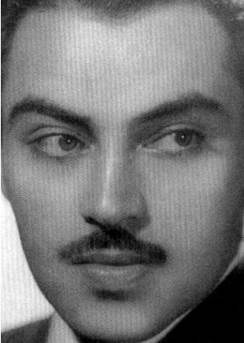
Hank Snow
From Wikipedia, the free encyclopedia
Birth name Clarence Eugene Snow
Also known as Hank Snow
Born May 9, 1914
Origin Brooklyn, Queens County, Nova Scotia
Died December 20, 1999 (aged 85)
Genre(s) Country
Occupation(s) Singer/songwriter
Years active 1936 - 1999
Label(s) RCA Victor
Website
www.hanksnow.com
Clarence Eugene Snow (May 9, 1914 - December 20, 1999), better known as Hank Snow, was a Hall of Fame country music singer and songwriter.
Biography
Snow was born in Brooklyn, Queens County, Nova Scotia, Canada. When he was 14, he ordered his first guitar from Eaton's catalogue for $5.95, and played his first show in a church basement in Bridgewater, Nova Scotia at the age of 16. He then travelled to the nearest big city, Halifax, where he sang in local clubs and bars. A successful appearance on a local radio station led to his being given a chance to audition for RCA Victor in Montreal, Quebec. In 1936, he signed with RCA Victor, staying with them for more than 45 years.
A weekly Canadian Broadcasting Corporation (CBC) radio show brought him national recognition and he began touring Canada until the late 1940s when American country music stations began playing his records. He headed to the "Country Music Capital of the World," Nashville, Tennessee, and Hank Snow, the "Singing Ranger" (modified from the nickname "Yodelling Ranger" given him before his high voice changed to the baritone that graced his hit records), would be invited to play at the Grand Ole Opry in 1950. That same year he released his mega-hit, "I'm Movin' On." The first of seven Number 1 hits on the country charts, "I'm Movin' On" stayed at Number 1 for nearly half a year. The song, which stayed in the number 1 position for 21 stunning weeks, holds the all time record for most weeks in the number 1 spot. While performing in Renfro Valley, Snow was walking with a young unknown performer by the name of Hank Williams when someone yelled out, "Hey, Hank," at which Williams turned around and Snow tapped Williams on the shoulder and said, "No, Hank, he means me."
Along with this hit, his other "signature song" was "I've Been Everywhere," in which he portrayed himself as a hitchhiker bragging about all the towns he'd been through. This song was originally written and performed in Australia by Geoff Mack, and its re-write incorporating North American place names was brilliantly accomplished. Rattling off a well-rhymed series of city names at an auctioneer's pace has long made the song a challenge for any country-music singer to attempt. Johnny Cash's version of it was used in recent years as the soundtrack to an American motel chain's television commercials.
A regular at the Grand Ole Opry, in 1954 Hank Snow persuaded the directors to allow a new singer by the name of Elvis Presley to appear on stage. Snow used Elvis as his opening act, before introducing him to Colonel Tom Parker. In August of 1955, Snow and Parker formed the management team Hank Snow Attractions. This partnership signed a management contract with Presley but before long, Snow was out and Parker had full control over the rock singer's career.
In 1958, Snow became a naturalized citizen of the United States.
Performing in lavish and colourful sequin-studded suits, Snow had a career covering six decades during which he sold more than 80 million albums. Although he became a proud American citizen, he still maintained his friendships in Canada and remembered his roots with the 1968 Album, "My Nova Scotia Home". That same year he performed at campaign stops on behalf of segregationist presidential candidate George Wallace.
In Robert Altman's 1975 film Nashville, Henry Gibson played a self-obsessed country star loosely based on Hank Snow.
Despite his lack of schooling, Snow was a gifted songwriter and in 1978 was elected to Nashville Songwriters Hall of Fame. In Canada, he was ten times voted that country's top country music performer. In 1979, Hank Snow was elected to the Country Music Hall of Fame, the Canadian Music Hall of Fame and the Nova Scotia Music Hall of Fame. He was also inducted into the Canadian Country Music Hall of Fame in 1985.
In 1994 his autobiography, "The Hank Snow Story," was published, and later The Hank Snow Country Music Centre would open in Liverpool, Nova Scotia.
A victim of an abusive childhood, he set up the Hank Snow International Foundation For Prevention Of Child Abuse.
Snow died in Madison, Tennessee in the United States and was interred in the Spring Hill Cemetery in Nashville.
Elvis Presley, The Rolling Stones, Ray Charles, Ashley MacIsaac, Johnny Cash and Emmylou Harris, among others, have covered his music. One of his last top hits, "Hello Love," was, for several seasons, sung by Garrison Keillor to open each broadcast of his Prairie Home Companion radio show. The song became Snow's seventh and final No. 1 hit on the Billboard magazine Hot Country Singles chart in April 1974. At 59 years and 11 months, he became the oldest (to that time) artist to have a No. 1 song on the chart. It was an accomplishment he held for more than 26 years, until Kenny Rogers surpassed the age record in May 2000 (at 61 years and nine months) with "Buy Me a Rose." Snow currently ranks as the fourth-oldest artist to have a No. 1 song, behind Dolly Parton, Rogers and Willie Nelson. Hank Snow was to play a duet with Hank Williams Sr (who died approximately at 3AM on his way to Canton OH performance) on January 1, New Year's Day 1953.
Albert Finney
From Wikipedia, the free encyclopedia
Born May 9, 1936 (1936-05-09) (age 72)
Salford, Greater Manchester, England, UK
Spouse(s) Jane Wenham (1957-1961)
Anouk Aimée (1970-1978)
Katherine Attson (1989-1991)
Pene Delmage (2006- )
Awards won
BAFTA Awards
Best Newcomer
1960 Saturday Night and Sunday Morning
2001 Academy Fellowship
Best TV Actor
2002 The Gathering Storm
Emmy Awards
Outstanding Lead Actor - Miniseries/Movie
2002 The Gathering Storm
Golden Globe Awards
Most Promising Newcomer - Male
1964 Tom Jones
Best Actor - Motion Picture Musical or Comedy
1971 Scrooge
Best Actor - Miniseries/TV Movie
2003 The Gathering Storm
Laurence Olivier Awards
Best Actor in a New Play
1987 Orphans
Screen Actors Guild Awards
Outstanding Supporting Actor - Motion Picture
2000 Erin Brockovich
Outstanding Cast - Motion Picture
2000 Traffic
Other Awards
NBR Award for Best Actor
1960 Saturday Night and Sunday Morning
NYFCC Award for Best Actor
1963 Tom Jones
Volpi Cup for Best Actor
1963 Tom Jones
Silver Berlin Bear for Best Actor
1983 The Dresser
Albert Finney, Jr. (born May 9, 1936) is a five-time Academy Award-nominated and Emmy winning English actor. Hailed as a "second Olivier" as a young stage actor in the late 1950s, Finney rose to film star fame in the early 1960s. Although his early fame was later tempered by long absences from major motion pictures, he continues to earn awards and acclaim in a varied five decade career on stage, films, and television.
Biography
Personal life
Finney was born in Pendleton, Salford, Lancashire, England, the son of Alice (née Hobson) and Albert Finney, Sr., a bookmaker.[1] He attended Salford Grammar School and the Royal Academy of Dramatic Art.[2] Finney and his first wife had one son, Simon Finney, a film technician. In 1990, Finney had one son with his third wife, Katherine Attson; his son, named Declan, is also an actor, having starred in several small films.
Career
Finney's first film was The Entertainer (1960), but his breakthrough came with his portrayal of a hedonistic, disillusioned factory worker in Karel Reisz's film of Alan Sillitoe's Saturday Night and Sunday Morning. This led to a series of "angry young man" roles in kitchen sink dramas, before he starred in the Academy Award winning 1963 film Tom Jones, for which he turned down the role of T. E. Lawrence in Lawrence of Arabia.
After he starred in and directed Charlie Bubbles in 1968, his film appearances became less frequent. One of his more high profile later roles was as Agatha Christie's Belgian master detective Hercule Poirot in the 1974 film Murder On The Orient Express. Finney was so effective in the role that he complained that it typecast him for a number of years. "People really do think I am 300 pounds with a French accent" he said. Finney made several television productions for the BBC in the 1990s, including The Green Man (1990), based on a story by Kingsley Amis, the acclaimed drama A Rather English Marriage (1998) (with Tom Courtenay), and the lead role in Dennis Potter's final two plays Karaoke and Cold Lazarus in 1996 and 1997. In the latter he played a frozen, disembodied head. Finney also made an appearance at Roger Waters' The Wall Concert in Berlin, where he played "The Judge" during the performance of "The Trial." In 2002, he played Winston Churchill in The Gathering Storm, for which he won BAFTA and Emmy awards as Best Actor. Finney also had a voice-over role as Finnis Everglot in Tim Burton's 2005 film Corpse Bride.
He also played the leading role in the television series My Uncle Silas, about a Cornish country gentleman looking after his great-nephew. The series ran from 2000 until 2002, then again for a mini-series in 2003.
Awards and nominations
Albert Finney turned down the offer of a CBE in 1980 and a knighthood in 2000.[3]
He has been nominated for the Academy Award for Best Actor four times, for Tom Jones (1963), Murder on the Orient Express (1974), The Dresser (1983), and Under the Volcano (1984). He was nominated for Academy Award for Best Supporting Actor for his performance in Erin Brockovich (2000).
Finney received a BAFTA award for Most Promising Newcomer to Leading Film Roles in 1961 for Saturday Night and Sunday Morning (1960). He was also nominated for Best British Actor for the same film. Despite being nominated 15 more times, he finally won for The Gathering Storm. He was nominated for an Emmy Award for his performance in the HBO telefilm The Image (1990), and won an Emmy, for Outstanding Lead Actor in a Mini-Series or TV Film, for his performance as Winston Churchill in HBO's The Gathering Storm in 2002.
He has received Golden Globe nominations for his performances in:
Big Fish
Erin Brockovich
Under the Volcano
The Dresser
Shoot the Moon
Tom Jones (he received two nominations, winning one below)
Additionally, he has won Golden Globes for The Gathering Storm, Scrooge, and for Tom Jones.
For The Gathering Storm, he won "Best Performance by an Actor in a Mini-Series or a Motion Picture Made for Television" for 2003.
For his role in Scrooge, his portrayal of the both the old miser and the young Ebenezer Scrooge earned him "The Best Motion Picture Actor in a Musical/Comedy" for 1971.
For Tom Jones, he shared a win as "Most Promising Newcomer - Male" for 1964.
In 1971 he was nominated for a Golden Laurel for his work on Scrooge. For his work on Tom Jones, he was the 3rd Place Winner for the "Top Male Comedy Performance" for 1964. He was honoured by the Los Angeles Film Critics' Association as Best Actor for Under the Volcano (which he tied with F. Murray Abraham for Amadeus), the National Board of Review for Best Actor in Saturday Night and Sunday Morning, and the New York Film Critics' Circle for Best Actor in Tom Jones.
Finney has also received three nominations from the Screen Actors' Guild Awards, being nominated for his performance in The Gathering Storm, winning for his performances in Erin Brockovich, and as a member of the acting ensemble in the film Traffic. He won the Silver Berlin Bear award for Best Actor for The Dresser at the 1984 Berlin International Film Festival.
Finney been nominated for two Tony Awards for his performances in the plays, "Luther" and "Joe Egg". He won the Volpi Cup for Best Actor for Tom Jones at the Venice Film Festival.
Candice Bergen
From Wikipedia, the free encyclopedia
Born Candice Patricia Bergen
May 9, 1946 (1946-05-09) (age 62)
Beverly Hills, California, United States
Spouse(s) Louis Malle (1980-1995)
Marshall Rose (2000-present)
Awards won
Emmy Awards
Outstanding Lead Actress - Comedy Series
1989, 1990, 1992, 1994, 1995 Murphy Brown
Golden Globe Awards
Best TV Actress - Comedy/Musical
1989, 1992 Murphy Brown
Candice Patricia Bergen (born May 9, 1946) is an Academy Award-nominated and Golden Globe- and Emmy Award-winning American actress and former fashion model, known primarily for her roles in sitcoms and television. She is best known for her starring role on the television situation comedy Murphy Brown, and as Shirley Schmidt, the legal partner of Denny Crane (played by William Shatner), on the ABC hit comedy-drama Boston Legal. Earlier in her career she starred in the famous Revisionist Western movie Soldier Blue.
Early life
She was born in Beverly Hills, California, the daughter of Frances Westerman, who was known professionally as Frances Westcott when she was a Powers model, and ventriloquist Edgar Bergen. Her paternal grandparents, Johan Henriksson Berggren and Nilla Svensdotter Osberg, were Swedish-born immigrants who Anglicized their surname. As a child, Bergen was often referred to as Charlie McCarthy's little sister, which irritated her (Charlie McCarthy being her father's star puppet).
Career
Candice first appeared in 1958, at age eleven, with her father on Groucho Marx's quiz show You Bet Your Life as Candy Bergen. She said that when she grew up she wanted to design clothes. In 1966, Bergen played the role of Shirley Eckert, an assistant school teacher in the movie The Sand Pebbles, which was nominated for several Academy Awards.
Bergen has written articles, a play, and a memoir. She has also studied photography and worked as a photojournalist. Considered one of Hollywood's most beautiful women, Bergen worked as a fashion model but soon began acting. Despite initial rocky reviews, she appeared in such films as Carnal Knowledge and Starting Over, for which she received Oscar and Golden Globe nominations for best supporting actress.
On Murphy Brown, Bergen played a tough television reporter. Although the show was a successful comedy, it tackled important issues: Murphy Brown, a recovering alcoholic, became a single mother and later battled breast cancer. In 1992, then Vice President Dan Quayle criticized prime-time TV for showing the Murphy Brown character "mocking the importance of fathers by bearing a child alone and calling it just another lifestyle choice."[1] While his remarks became comedic fodder, they paved the way for a subsequent episode to explore the subject of family values within a diverse set of families. Remaining true to the show's humor, Murphy arranges for a truckload of potatoes to be dumped in front of Quayle's residence; a reference to an infamous incident in which Quayle misspelled the word "potato" as "potatoe". In real life, however, Bergen agreed with at least some of Quayle's observations, saying Quayle's speech was "a perfectly intelligent speech about fathers not being dispensable and nobody agreed with that more than I did," according to the Associated Press.[2] Bergen's run on Murphy Brown was extremely successful; between 1989 and 1995 she was nominated for an Emmy Award seven times and won five. After her fifth win, she declined future nominations for her role as Murphy Brown.
After playing the role of the successful journalist, Bergen was offered the chance to work as a real-life journalist. After the run of Murphy Brown ended in 1998, CBS gave her the opportunity to cover some stories for 60 Minutes, an offer she declined. She expressed that acting was her profession, journalism was meant for her television character, and should not cross over into her own professional life.
After Murphy Brown, Bergen hosted Exhale with Candice Bergen on the Oxygen network. She also appeared in character roles in films, most notably Miss Congeniality as the sweet-yet-demented pageant host Kathy Morningside; she also portrayed the mayor of New York in Sweet Home Alabama. In 2003, she appeared in the movie View from the Top. In January 2005, Bergen joined the cast of Boston Legal as Shirley Schmidt, a founding partner in the law firm of Crane, Poole & Schmidt. Bergen received an Emmy nomination for Outstanding Supporting Actress in a Drama Series for her performance in Boston Legal in 2006.
She has also done guest appearances on many TV shows, including Seinfeld (playing Murphy Brown), Law & Order, Family Guy, Will & Grace (playing herself), and Sex and the City, where she played Enid Frick, Carrie Bradshaw's editor at Vogue. A frequent host on NBC's Saturday Night Live, Bergen appeared twice in 1975, and once in 1976, 1987, and 1990. She is also well-known for starring in a long-running "Dime Lady" ad campaign for the Sprint phone company.
Personal life
Candice attended the University of Pennsylvania, but acknowledges that her failure to take her education seriously resulted in her being asked to leave. Bergen and then boyfriend Terry Melcher lived at 10050 Cielo Drive in Los Angeles, which was later occupied by Sharon Tate and her husband, Roman Polanski. Tate and four others were later murdered in the home by followers of Charles Manson. There was some initial speculation that Melcher may have been the intended vicitm. A political activist, Bergen accepted a date with Henry Kissinger but was unable to influence his views. During her activist days she participated in the Yippie prank when she, Abbie Hoffman, and others threw dollar bills onto the floor of the New York Stock Exchange in 1967, leading to its temporary shut-down. In 1981, she married French film director Louis Malle. They had a daughter, Chloe Malle, in 1985, and were married until his death from cancer in 1995.
Bergen has traveled extensively and speaks French fluently. She is a vegetarian and is now married to New York real estate magnate and philanthropist Marshall Rose.
Billy Joel
From Wikipedia, the free encyclopedia
Background information
Birth name William Joseph Martin Joel
Also known as Bill Martin
The Piano Man
Born May 9, 1949 (1949-05-09) (age 59)
Origin Hicksville, New York, United States
Genre(s) Rock, pop, piano rock, classical
Occupation(s) Singer-songwriter, musician
Instrument(s) Vocals
Piano
Keyboards
Guitar
Harmonica
Accordian
Years active 1964 - Present
Label(s) Columbia
Associated acts Echoes, The Hassles, Attila , The Shangri-Las, Elton John
Website BillyJoel.com
William Joseph Martin "Billy" Joel (born May 9, 1949) is an American pianist and singer-songwriter. He released his first hit song, "Piano Man", in 1973. According to the RIAA, he is the sixth best-selling recording artist in the United States.[1]
Joel had Top 10 hits in the '70s, '80s, and '90s; is a six-time Grammy Award winner; and has sold in excess of 150 million albums worldwide.[2] He was inducted into the Songwriter's Hall of Fame (Class of 1992), the Rock and Roll Hall of Fame (Class of 1999), and the Long Island Music Hall of Fame (Class of 2006). Joel "retired" from recording pop music in 1993 but continued to tour (sometimes with Elton John). In 2001 he subsequently released Fantasies & Delusions, a CD of classical compositions for piano. In 2007 he returned to recording with a single entitled "All My Life," followed by an extensive "World Tour" from 2005-2008, covering many of the major world cities.
Biography
Early years
Born in the Bronx, New York, Joel was raised in Hicksville, New York. His father Howard (born Helmut) was originally from Germany, where his father (Billy Joel's grandfather) Karl Amson Joel had owned a department store which he was forced to sell under value to avoid being dispossessed by the Nazis. The new owners turned this into a large mail order business in the 1950s (Neckermann). His mother, Rosalind Nyman, was born in England, to a Jewish family (Philip and Rebecca Nyman). His parents divorced in 1960, and his father moved back to Vienna, Austria. Billy has a sister, Judith Joel, and a half-brother Alexander Joel, who is an acclaimed classical pianist and conductor in Europe, now living in California.[3]
Joel's father was an accomplished classical pianist. Billy reluctantly began piano lessons at an early age at his mother's insistence, including with the noted American pianist Morton Estrin[4] and musician/songwriter Timothy Ford. His interest in music instead of sports was the source of teasing and bullying in his early years. (He has said in interviews that his piano instructor also taught ballet. This led neighborhood bullies to mistakenly think he was learning to dance.) As a teenager, Joel took up boxing so that he would be able to defend himself. He boxed successfully on the amateur Golden Gloves circuit for a short time (winning twenty-two bouts), but abandoned the sport shortly after having his nose broken in his twenty-fourth boxing match.[citation needed]
Joel attended Hicksville High School, and he was supposed to graduate in 1967. However, he was one English credit short of the graduation requirement; he overslept on the day of an important exam owing to his late-night musician's lifestyle.[5] Faced with a summer in school to complete this requirement, he decided not to continue. He left high school without a diploma to begin a career in music. Despite the Vietnam War and the draft, Joel performed no military service ?- because he was the sole provider for his mother and sister, the selective service gave him a draft exemption.[citation needed] In 1992, the English credit requirement was waived by the Hicksville School Board and he received his diploma at Hicksville High's graduation ceremony 25 years after he left the school.[5]
Early career
Upon seeing the Beatles on The Ed Sullivan Show in 1964, Joel decided to pursue a full-time musical career, and set about finding a local Long Island band to join. Eventually he found the Echoes, a group that specialized in British Invasion covers. The Echoes became a popular New York attraction, convincing him to quit high school to become a professional musician. He began playing for the Echoes when he was 14 years old.[6]
Joel began playing recording sessions with the Echoes in 1965, when he was 16 years old. Joel played piano on several recordings Shadow Morton produced, including (as Joel claimed, denied by songwriter Ellie Greenwich) the Shangri-Las' Leader of the Pack, as well as several records released through Kama Sutra Productions. During this time, the Echoes started to play numerous late-night shows.
Later in 1965, the Echoes changed their name to the Emeralds and then to the Lost Souls. For two years, he played sessions and performed with the Lost Souls. In 1967, he left that band to join the Hassles, a local Long Island band that had signed a contract with United Artists Records. Over the next year and a half, they released The Hassles in 1967 and Hour of the Wolf in 1968, and four singles, all of which failed commercially. Following The Hassles' demise in 1969, he formed the duo Attila with Hassles drummer Jon Small. Attila released their eponymous debut album in July 1970 and disbanded the following October.
In late 1975, he played piano and organ on several tracks on Bo Diddley's The 20th Anniversary of Rock 'n' Roll all-star album.
Most records are owned by the recording company. Billy Joel is one of a number of performers ?- such as Paul Simon, Johnny Rivers, Pink Floyd, Queen, Genesis, and Neil Diamond ?- who have their own name as the copyright owner on their recordings.[citation needed]
Cold Spring Harbor (1971)
Joel signed his first solo record contract with Artie Ripp of Family Productions, and subsequently recorded his first solo album. Cold Spring Harbor (a reference to the Long Island town of the same name), was released in 1971. However, the album was mastered at the wrong speed, and the album was initially released with this error, resulting in Joel's sounding a semitone too high. The onerous terms of the Family Productions contract also guaranteed him very little money from the sales of his albums.
Hits such as "She's Got a Way" and "Everybody Loves You Now" were originally released on this album, though they did not gain much attention until released as live performances in 1981 on Songs in the Attic. Since then they have become big concert numbers. Cold Spring Harbor got a second chance on the charts in 1983, when Columbia reissued the album after slowing it down to the correct speed. The album reached #158 in the US and #95 in the UK nearly a year later. Cold Spring Harbor caught the attention of Merrilee Rush ("Angel of the Morning") and she recorded a femme version of "She's Got a Way (He's Got a Way)" for Scepter Records in 1971.
In addition, a Philadelphia radio station, WMMR-FM, started playing a tape of a new song of Joel's, "Captain Jack", taken from a live concert. It became an underground hit on the East Coast. Herb Gordon, an executive of Columbia Records, heard Joel's music and made his company aware of Joel's talent. Joel signed a recording contract with Columbia in 1972 and moved to Los Angeles. He lived there for three years (and has since stated those three years were a big mistake), returning to New York City in 1975. While in California, he had a paying job in a piano bar (using the name Bill Martin), so his superhit "Piano Man" is seen as autobiographical.
Piano Man (1973)
Joel's experiences in Los Angeles connected him with record company executives, who bought out his contract with Ripp with the condition that the "Family Productions" logo be displayed alongside the Columbia logo for the next five albums. Also in the contract was the agreement that Family Productions would receive a 25 cent royalty for every album Joel sold, which would come back to haunt him when he hit it big. His brief tenure in Los Angeles also inspired his signature song "Piano Man." The album Piano Man was released in late 1973 and was certified Gold. To this day it has sold over four million copies. However, owing to the large sums of money involved in the legal tangles of the contract buyout, Joel netted less than $7,000 in profit from his certified Gold record. Although this album is best known for its title track, several other songs include "Captain Jack," "The Ballad of Billy the Kid" and "You're My Home" (the b-side of the "Piano Man" single, which would later be covered by Helen Reddy, who would release it as the flipside of her single "Keep On Singing"), all of which would become staples of Joel's live shows.
As recently as of November 2007, the song "Piano Man" was in the top 99 rock songs on the iTunes Music Store.[citation needed]
Streetlife Serenade (1974)
Joel remained in Los Angeles to write Streetlife Serenade, his second album on the Columbia label. References to both suburbia and the inner city pepper the album. The standout track on the album is "The Entertainer," which picks up thematically where "Piano Man" left off. Joel was upset that "Piano Man" had been significantly edited down in order to make it more radio-friendly, and in "The Entertainer," he refers to the edit with sarcastic lines such as, "If you're gonna have a hit, you gotta make it fit, so they cut it down to 3:05." This refers to singles being edited to shorter duration for radio play than the longer version that appears on the album. Although Streetlife Serenade is often considered one of Joel's weaker albums (Joel has confirmed his distaste for the album), it nonetheless contains some notable tracks including the title track, with "Los Angelenos" and the instrumental "The Mexican Connection." It also marked the beginning of a more confident vocal style on Joel's part.
Turnstiles (1976)
Disenchanted with the L.A. musical scene, Joel returned to New York in 1975. There he recorded Turnstiles, on which Joel used his own hand-picked musicians in the studio for the first time, and took a more hands-on role. Songs were initially recorded at Caribou Ranch with members of Elton John's band and produced by famed Chicago producer James William Guercio, but Joel was dissatisfied with the results. The songs were re-recorded in New York and Joel took over, producing the album himself. The minor hit "Say Goodbye to Hollywood" echoed the Phil Spector sound, and was covered by Ronnie Spector. The album also featured the song, "New York State of Mind," a bluesy, jazzy epic that has become one of Joel's signature songs and was later covered by fellow Columbia labelmates Barbra Streisand on her 1977 Streisand Superman album and as a duet with Tony Bennett on his 2001 "Playing with My friends: Bennett Sings The Blues" album. Other songs on the album include "Summer, Highland Falls," and "Miami 2017 (I've Seen the Lights Go out on Broadway)." Songs such as "Prelude/Angry Young Man" would become a mainstay of his concerts for years.
The Stranger (1977)
For his album The Stranger, Columbia Records united Joel with producer Phil Ramone. The album yielded four Top 40 hits on the Billboard Charts in the US, "Just the Way You Are" (#3), "Movin' Out (Anthony's Song)" (#17), "Only the Good Die Young" (#24), and "She's Always a Woman" (#17). Album sales exceeded Columbia's previous top album, Simon & Garfunkel's Bridge Over Troubled Water, and was certified multi-platinum. It was Joel's first Top Ten album, as it rose to #2 on the charts. Phil Ramone subsequently produced every Billy Joel studio release until 1989's Storm Front.
The Stranger netted Joel Grammy nominations, for Album of the Year, Song of the Year and Record of the Year, for "Just the Way You Are," which was written as a gift to his wife Elizabeth. He won for the latter two.
52nd Street (1978)
Joel faced high expectations on his next album. 52nd Street was conceived as a day in Manhattan, and was named after the famous street of same name which hosted many of the world's premier jazz venues and performers throughout the 1930s, 40s, and 50s. Fans purchased over seven million copies on the strength of the hits "My Life" (#3), "Big Shot" (#14), and "Honesty" (#24). This helped 52nd Street become Joel's first #1 album. "My Life" eventually became the theme song for a new US television sitcom, Bosom Buddies, which featured actor Tom Hanks in one of his earliest roles. 52nd Street was the first album to be released on Compact Disc in Japan (1982). The album won Grammys for Best Pop Vocal Performance, Male and Album of the Year.
Despite all the cover art for the album showing Joel holding a trumpet, he does not play the instrument on the album, though two tracks on the album do feature trumpets. Freddie Hubbard plays two solos in "Zanzibar" and joins Jon Faddis in the horn section for "Half a Mile Away."
Glass Houses (1980)
The success of his piano-driven ballads like "Just the Way You Are" and "Honesty" never sat well with him. With Glass Houses, Joel attacked the new wave popularity with aplomb. The front cover consisted of Joel's real-life modern glass house. The album spent 6 weeks at #1 on the Billboard chart and yielded such classics as "You May Be Right" (#7, May 1980), "Close To The Borderline" (B-side of the "You May Be Right" single), "Don't Ask Me Why" (#19, September 1980), "Sometimes a Fantasy" (#36, November 1980) and "It's Still Rock & Roll to Me", which became Joel's first Billboard #1 song in July, 1980. Glass Houses won the Grammy for Best Rock Vocal Performance, Male. It would also win the American Music Award for Favorite Album, Pop/Rock category.
Songs in the Attic (1981)
His next release, Songs in the Attic, was composed of live performances of less well-known songs from the beginning of his career. Songs in the Attic was recorded during arena and club shows in June and July of 1980. This release introduced many fans, who just discovered Joel when The Stranger became a smash in 1977, to many of his earlier compositions. The album reached #8 on the Billboard chart and produced two hit singles: "Say Goodbye to Hollywood" (#17), and "She's Got a Way" (#23). It sold in excess of 3 million copies. Though not as successful as some of his previous albums, the album was still considered a success by Joel[citation needed]. The track "Los Angelenos" was recorded live at Toad's Place in New Haven, CT in July of 1980.
The Nylon Curtain (1982)
The next wave of Joel's career commenced with the recording of The Nylon Curtain. Considered his most audacious and ambitious album, Joel took more than a page or two from the Lennon-McCartney songwriting style on this heavily Beatles-influenced album.
Work began on The Nylon Curtain in the spring of 1982. However, Joel was sidelined when he was involved in a serious motorcycle accident. At about 5:40 P.M. on April 15, 1982, Cornelia Bynum made a right turn at the intersection of New York Avenue and West 9th Street in Huntington. She then ran a red light and collided with Joel, who was going straight through a green light, on his 1977 XLCR Sportster. After the crash, he flew right over her car and landed on his back. Both his left wrist and hand were broken and badly damaged. Joel, lucky to be alive, managed to get up and take inventory of his helmet, leather, and boots, until a police officer arrived.
Joel was airlifted by helicopter to Columbia Presbyterian Hospital in Manhattan. Because of the ensuing surgery, which included the temporary insertion of five pins into his wrist and hand, plus a month in the hospital, production of the album was shut down temporarily while Joel recovered.
Once The Nylon Curtain was finished, Joel embarked on a brief tour in support of the album, during which his first video special, Live from Long Island, was recorded at the Nassau Coliseum in Uniondale, New York, on December 30, 1982.
The Nylon Curtain went to #7 on the charts, supported by the popular singles "Allentown," "Goodnight Saigon," and "Pressure." "Allentown" rose to #17 on the Billboard Hot 100, making it one of the most-played radio songs of 1982 and the most successful song from The Nylon Curtain album, besting "Pressure," which peaked at #20 and "Goodnight Saigon" which reached #56.
An Innocent Man (1983)
The song "Uptown Girl" was one of the first songs written when Joel returned from vacation. "Uptown Girl" is widely considered to be about model Christie Brinkley, whom he started dating during the song's creation (the music video also included Brinkley). In actuality the song was written about Supermodel Elle McPherson. The song became a worldwide hit upon its release, and Joel's sole #1 in the United Kingdom. The resulting album, An Innocent Man, was compiled as a tribute to the rock and roll music of the 1950s and 1960s, and also resulted in Joel's second Billboard #1 hit, "Tell Her About It," which was the first single off the album in the Summer of 1983. The album itself reached #4 on the charts and #2 in UK. It also boasted 6 top-30 singles, the most of any album in Joel's catalog. At the time the album came out that summer, WCBS-FM began playing "The Longest Time" both in regular rotation and on the "Doo Wop Shop." Many fans wanted this to be the next single released in the fall, but that October, "Uptown Girl" would be released, peaking at #3. In December the title song, "An Innocent Man," would be released as a single and would peak at #10 and #8 in the UK, early in 1984. That March "The Longest Time," a Doo Wop song, would finally be released as a single and peak at #14 on the Hot 100 and be a number one Adult Contemporary hit. That summer, "Leave A Tender Moment Alone" would be released and hit #27 while "Keeping the Faith" would peak #18 in January of 1985. In the video for "Keeping the Faith", Christie Brinkley also plays the "red head girl in the cadillac". An Innocent Man was also nominated for the Album of the Year Grammy, but lost to the inevitable winner that year, Michael Jackson's Thriller.
Greatest Hits Vol. 1 and 2 (1985)
Following the success of An Innocent Man, Joel had been approached to release an album of his most successful singles. This was not the first time this topic had come up, but Joel had initially considered "Greatest Hits" albums as marking the end of one's career. This time, he agreed, and Greatest Hits Vol. 1 and 2 was released as a 4-sided album and 2-CD set, with the songs in sequence of when they were released. The new songs "You're Only Human (Second Wind)" and "The Night is Still Young" were recorded and released as singles to support the album; both reached the top 40, peaking at #9 and #34, respectively.
Greatest Hits was highly successful, selling over 20 million copies worldwide and becoming the top-selling double album of all time by a solo artist (and second overall after The Wall by Pink Floyd). It has since been certified diamond by the RIAA for over 20 million albums sold. To date it is the 6th best selling album in American music history according to the RIAA.
Coinciding with the Greatest Hits album release, Joel released a 2-volume Video Album that was a compilation of the promotional videos he had recorded from 1977 to the present time. Along with videos for the new singles off the Greatest Hits album, Joel also recorded a video for his first hit, "Piano Man," for this project.
Two versions of Greatest Hits were released on CD: the initial release on double CD in 1985, and a re-released Enhanced CD version in 1998. While both are the same basic album in general, there are a number of subtle differences between the two:
While all the longer hits ("Piano Man," "Captain Jack," "Goodnight Saigon") are fully intact, many other shorter songs ("Pressure," "Just the Way You Are," "My Life") were shortened significantly in the 1985 release. Oddly enough, the included booklet lists all of the lyrics, even the parts cut for time. These songs are fully restored in the re-release.
The 1985 release features the live version of "Say Goodbye to Hollywood" from Songs in the Attic. The version from Turnstiles was used for the 1998 re-release.
The 1998 re-release features enhanced content due to advancements in CD technology over the previous 13 years.
The Bridge (1986)
Joel scored a Top 10 hit with "Modern Woman" from the film "Ruthless People," a dark comedy from the directors of Airplane! that starred Bette Midler and Danny DeVito (Mick Jagger sang the title track). The song subsequently appeared on The Bridge, which, like the movie, was released in the summer of 1986. Ray Charles duetted with Joel on the ballad "Baby Grand" (which Joel wrote by himself), and Steve Winwood played Hammond organ on the song "Getting Closer." The final song recorded for the album was "Code of Silence." Cyndi Lauper contributed backing vocals on "Code of Silence" and garnered the only co-writing credit of Joel's entire career for helping him with the lyrics to the song.
Though it broke into the Top Ten, The Bridge was not a success in relation to some of Joel's other albums, but it yielded the hit "A Matter of Trust" (#10). In a departure from his "piano man" persona, Joel is shown in its video playing a Les Paul-autographed Gibson guitar. The ballad "This is the Time" also charted, peaking at #18, and has been a favorite on the prom circuit ever since. "Modern Woman" was also released as a single and was quite successful, but Joel has since said in interviews he doesn't care for the song, and subsequently it has been left off most of his compilation sets (the exception appears to be My Lives).
On November 18, 1986 an extended version of the song "Big Man On Mulberry Street" was used on a season three episode of Moonlighting. The episode was titled "Big Man on Mulberry Street". In a dream sequence, Maddie Hayes envisions David Addison with his ex-wife. An extra horn solo was added to the song.
It was also the last Billy Joel album to carry the "Family Productions" logo.
At around this time, Joel completed voice work on Disney's Oliver & Company, released in 1988, a loose adaptation of the Charles Dickens novel Oliver Twist. Joel brought both his acting and musical talents to the film as Dodger. For the film, Joel recorded a song titled "Why Should I Worry?" Critics were generally positive toward the film, and pointed to Billy's acting contribution as one of its highlights, despite its being his first acting job. In interviews, Billy explained that he took the job due to his love of Disney cartoons as a child.
The USSR period, 1987
Throughout his tour supporting The Bridge, Joel and his handlers started planning a trip to the Soviet Union. He would be one of the first American rock acts to play there since the Berlin Wall went up, a fact not lost on history buff Joel. There would be six live performances, three each at indoor arenas in Moscow and Leningrad. Joel and his family (including young daughter Alexa) and his full touring band made the trip in June 1987. The entourage was filmed for television and video to eventually offset the cost of the trip, and the concerts were simulcast on radio around the world.
The audience in at least the first Moscow shows was filled with members of the Communist Party, who received tickets from the government as a perk. Most of that audience took a long while to warm up to Joel's energetic show, something that never had happened in other countries he had performed in. As a result of that, a minor international incident occurred when he famously flipped over an electric keyboard during the second Moscow show as a show of frustration that the lighting engineers would not turn down the house lights. The lighting engineers were more concerned with the amount of light being adequate for filming, as a documentary film crew was filming the concert. According to Joel, each time the fans were hit with the bright lights, anybody who seemed to be enjoying themselves froze. In addition, people who were "overreacting" were removed by security.[7]
Концерт (1987)
The album Концерт, Russian for "Concert," was released in the fall of 1987. Singer Peter Hewlitt was brought in to hit the high notes on his most vocally challenging songs, like "An Innocent Man." Joel also did versions of The Beatles classic "Back In The U.S.S.R." and Bob Dylan's "The Times They Are A Changin'."
It has been estimated that Joel lost more than US$1 million of his own money on the trip and concerts, but he has said the goodwill he was shown there was well worth it.
Storm Front (1989)
The song "We Didn't Start the Fire," the first single from the album Storm Front, was released in September 1989. The song became Joel's third and most recent US Number 1 hit, spending two weeks at the top.
Storm Front was released in October, and it eventually became Joel's first Number 1 album since Glass Houses, 9 years earlier. Storm Front was Joel's first album since Turnstiles to be recorded without Phil Ramone as producer. For this album, he wanted a new sound, and worked with Mick Jones of Foreigner fame. Joel also revamped his backing band, firing everyone, save drummer Liberty DeVitto, guitarist David Brown, and saxophone player Mark Rivera; and bringing in new faces, including talented multi-instrumentalist Crystal Taliefero, who would go on to become Joel's musical director and architect of his live sound. After "We Didn't Start the Fire," Storm Front also produced the top ten hit "I Go To Extremes" (#6). The album was also notable for its song "Leningrad," written after Joel met a clown in the Soviet city of that name during his tour in 1987, and "The Downeaster Alexa," written to underscore the plight of fishermen on Long Island who are barely able to make ends meet. Another well-known single from the album is the ballad "And So It Goes" (#37 in late 1990). Billy Joel became the first-ever performer to hold a rock concert at Yankee Stadium, packing the house for two sold-out nights in a row in June of 1990.
River of Dreams (1993)
Joel started work on River of Dreams in early 1993. Its cover art was a colorful painting by Christie Brinkley that was a series of scenes from each of the songs on the album. The eponymous first single was the last top 10 hit Joel has penned to date, and #1 for twelve weeks on Billboard's Adult Contemporary chart. The album includes hits such as "The River of Dreams," "All About Soul,"(With Color Me Badd on backing vocals) and "Lullabye (Goodnight, My Angel)," written for his daughter, Alexa. A radio remix version of "All About Soul" can be found on The Essential Billy Joel (2001), and a demo version appears on "My Lives" (2005). The song "The Great Wall of China" was written about his ex-manager Frank Weber and was a regular in the setlist for Joel's 2006 tour. "2000 Years" was prominent in the millennium concert at Madison Square Garden, December 31, 1999, and "Famous Last Words" closed the book on Joel's pop songwriting for more than a decade.
1994-present
On August 25, 1994, Joel and second wife Christie Brinkley divorced.
On December 31, 1999, Joel performed at New York's Madison Square Garden, which at the time was considered to be Joel's last solo concert. The concert (dubbed The Night of the 2000 Years) ran for close to four hours and was later released as 2000 Years: The Millennium Concert.
In 2001, Joel released Fantasies & Delusions, a collection of classical piano pieces. All were composed by Joel and performed by Richard Joo. Joel often uses bits of these songs as interludes in live performances, and some of them are part of the score for the hit show Movin' Out. The album topped the classical charts at #1. Joel performed "New York State of Mind" live on September 21, 2001, as part of the America: A Tribute to Heroes benefit concert, and on October 20, 2001, along with "Miami 2017 (Seen the Lights Go Out on Broadway)," at the Concert for New York City in Madison Square Garden. That night, he also performed "Your Song" with Elton John.
Joel has toured extensively with Elton John on a series of "Face to Face" tours. During these shows, the two have played each other's songs and performed duets. They grossed over US$46 million in just 24 dates.
In 2005, Columbia released a box set, My Lives, which is largely a compilation of demos, b-sides, live/alternate versions and even a few Top 40 hits. The compilation also includes the Umixit software, in which people can remix "Zanzibar," "Only the Good Die Young," "Keepin' The Faith," and live versions of "I Go to Extremes" and "Movin' Out (Anthony's Song)" with their PC. Also, a DVD of a show from the River of Dreams tour is included.
On January 7, 2006, Joel began a tour across the United States. Having not written, or at least released, any new songs in 13 years, he featured a sampling of songs from throughout his career, including major hits as well as obscure tunes like "Zanzibar" and "All for Leyna." His tour included an unprecedented 12 sold-out concerts over several months at Madison Square Garden in New York City. The singer's stint of 12 shows at Madison Square Garden broke a previous record set by New Jersey native Bruce Springsteen when he played 10 sold-out shows at the same arena. The record earned Joel the first retired number (12) in the arena owned by a non-athlete. This honor has also been given to Joel at the Wachovia Center in Philadelphia where a banner in the colors of the Philadelphia Flyers is hung honoring Joel's 46 Philadelphia sold-out shows. He also had a banner raised in his honor for being the highest grossing act in the history of the Times Union Center (formerly the Knickerbocker Arena and Pepsi Arena) in Albany, New York. This honor was given to him as part of the April 17, 2007 show he did there. On June 13, 2006, Columbia released 12 Gardens Live, a double album containing 32 live recordings from a collection of the 12 different shows at Madison Square Garden during Joel's 2006 tour.
2006 also saw Billy Joel visit the United Kingdom and Ireland (as part of the European leg of his 2006 tour) for the first time in many years, playing to capacity crowds in Birmingham, Sheffield, Southampton, Manchester, Glasgow, London and Dublin. On July 31, 2006, Joel performed a free concert in Rome, Italy with the Colosseum as the backdrop, and performed classic hits for hundreds of thousands of fans. Joel performed favorites such as "New York State of Mind," "Honesty," and "Just the Way You Are." While introducing one song, the 57-year-old singer joked in shaky Italian, "This song is as old as the Colosseum." Organizers estimated 500,000 people turned out for the show. The concert was opened by Canadian pop-rocker and songwriter Bryan Adams.
Billy Joel toured South Africa, Australia, Japan, and Hawaii in late 2006, and subsequently toured the Southeastern United States in February and March 2007 before hitting the Midwest in the spring of '07.
On January 3, 2007, news was leaked to the New York Post that Billy had recorded a new song with lyrics -- this being the first new song with lyrics he'd written in almost 14 years.[8] The song, entitled "All My Life," was Joel's newest single (with second track "You're My Home" Live from Madison Square Garden 2006 tour) and was released into stores on February 27, 2007.[9]
On February 4, 2007, Joel sang the national anthem for Super Bowl XLI, and was the first to sing the national anthem twice at a Super Bowl.
On April 17, 2007, Joel was honored in Albany, NY, for his 9th concert at Times Union Center. He is now holding the highest box office attendance of any artist to play at the arena. With his daughter Alexa Ray Joel in attendance, a banner was raised in his honor marking this achievement.
On December 1, 2007, Joel premiered his new song "Christmas in Fallujah"[10]. It is performed by Cass Dillon, a new Long Island based musician, as Joel felt it should be sung by someone in a soldier's age range. This song is dedicated to the troops in Iraq. "Christmas In Fallujah" became available to purchase on iTunes December 4, 2007 with the proceeds benefiting the Homes For Our Troops foundation.
On January 26, 2008, Joel performed with the world famous Philadelphia Orchestra celebrating the 151st anniversary of the Academy of Music. Joel premiered his new classical piece entitled, "Waltz No. 2 (Steinway Hall)", whilst playing many of his more obscure pieces with full orchestral backing. Highlights of this were the rarely-performed Nylon Curtain songs "Scandinavian Skies" and "Where's the Orchestra?". The concert also marked the first live performance of "All My Life."
On February 7, 2008, Joel released the news at a Mets press conference that he will be playing the last concert at Shea Stadium, which will be demolished at the end of the 2008 Mets baseball season. Originally there was only one show planned at Shea, but when 50,000 tickets for Joel's July 16 concert sold out in just 48 minutes, a second concert was added for July 18, and it sold out in just 46 minutes. There are no more shows expected to be added to Joel's Shea Stadium stand, even though there is undoubtedly enough demand for several more concerts.
On March 10, 2008, Joel inducted his friend John Mellencamp into the Rock and Roll Hall of Fame in a ceremony that took place at the Waldorf Astoria Hotel in New York City. During his induction speech for Mellencamp, Joel said:
"Don't let this club membership change you, John. Stay ornery, stay mean. We need you to be pissed off, and restless, because no matter what they tell us - we know, this country is going to hell in a handcart. This country's been hijacked. You know it and I know it. People are worried. People are scared, and people are angry. People need to hear a voice like yours that's out there to echo the discontent that's out there in the heartland. They need to hear stories about it. [Audience applauds] They need to hear stories about frustration, alienation and desperation. They need to know that somewhere out there somebody feels the way that they do, in the small towns and in the big cities. They need to hear it. And it doesn't matter if they hear it on a jukebox, in the local gin mill, or in a goddamn truck commercial, because they ain't gonna hear it on the radio anymore. They don't care how they hear it, as long as they hear it good and loud and clear the way you've always been saying it all along. You're right, John, this is still our country."
Personal life
Marriages
Joel married his business manager Elizabeth Weber (Elizabeth Small) on September 5, 1973, and they divorced on July 20, 1982, though he kept her on as his business manager; a move that would prove to be a mistake, according to his Behind the Music interview, as her brother embezzled almost all of Joel's savings from him.
Joel married Christie Brinkley on March 23, 1985. Their daughter, Alexa Ray Joel, was born January 1, 1986. Alexa was given the middle name of Ray after Ray Charles, one of Joel's musical idols. Joel and Brinkley's marriage ended in divorce on August 25, 1994, although the couple remains quite friendly.
On October 2, 2004, Joel married 23 year-old culinary artist Katie Lee. At the time of the wedding, Joel was 55. Joel's daughter, Alexa Ray, then 18, served as maid of honor. Joel's second wife, Christie Brinkley, attended the union and gave the couple her blessing. Lee works as a restaurant correspondent for the PBS show, George Hirsch: Living it Up!. In 2006, Katie Lee hosted Bravo's Top Chef. She did not return for a 2nd season, but rather went on tour with her husband. She now has a weekly column in Hamptons Magazine, and is a field correspondent for the entertainment television show Extra.
Other businesses
In 1996 Joel merged his long-held love of boating with his desire for a second career. He formed, with Long Island boating businessman Peter Needham, the Long Island Boat Company. The company manufactures 38-foot (length) powerboats.
Alcoholism
In 2002 Joel entered Silver Hill Hospital, a substance abuse and psychiatric center in New Canaan, Connecticut. In March 2005 he checked into the Betty Ford Center[11], where he spent 30 days.[12]
Musical style
Joel's lyrics have made many references to locations in the New York City metropolitan area, particularly Long Island. For example, the "Miracle Mile" line in 1980s "It's Still Rock & Roll to Me" refers to the affluent shopping district located on Northern Boulevard in the community of Manhasset and 1980s "You May Be Right" references walking through the Bedford-Stuyvesant section of Brooklyn alone as proof of craziness. In his 1973 song "The Ballad of Billy the Kid," he describes a certain "Billy" as being from the town of Oyster Bay, the municipality in which the hamlet of Hicksville is located. He has since stated, in the liner notes from his album Songs in the Attic, that this "Billy" is not himself, but rather an Oyster Bay bartender. Additionally, the song "The Downeaster 'Alexa'" mentions several Long Island/New England locations and ports, such as Block Island Sound, Martha's Vineyard, Nantucket, Montauk and Gardiner's Bay.
Several of Joel's songs have grown out of specific personal experiences, including "Piano Man," which he wrote describing his regular job playing at a Los Angeles piano bar in the early 1970s, and "Scenes from an Italian Restaurant," written about Angelo's, an eatery on Mulberry Street in New York City's Little Italy.[citation needed][13] His song "Vienna" was supposedly written about a visit to his father in Europe during which he watched an old lady sweeping the street. At first he was shocked that people had this little respect for the elderly, but then realized that allowing them to stay useful to society was the greatest show of respect and knowing that "Vienna waits for you" calmed many of his fears about aging.
Contrary to persistent rumors, "Big Shot" was not based on a bad date with Mick Jagger's ex-wife Bianca.
In a Playboy interview, Joel indicated that "Rosalinda's Eyes" was penned for his mother, Rosalind, as the song his father should have written for her.
"Only the Good Die Young" created a bit of a stir within the religious community when it was first released in 1977. Some radio stations even refused to give the song any airtime. Joel has said about the song that "the point of the song wasn't so much anti-Catholic as pro-lust."[14]
Influences
His music reflects influences from many different genres including classical music, 1950s doo wop, Broadway/Tin Pan Alley, jazz, blues, gospel, pop, and straight-up rock & roll. Ray Charles has also had a huge impact on Billy Joel's music and personal life. This has, in part, led to his broad success over a long period of time, but made him difficult to categorize in popular music today. Joel's greatest musical influence is probably The Beatles, in particular the songwriting style of Paul McCartney.
In the mid 1970s, the touring and studio lineup of Joel's band stabilized. The main lineup consisted of:
Billy Joel - lead vocals, piano, keyboards, guitar, harmonica
Liberty DeVitto ?- drums, percussion
Doug Stegmeyer ?- bass guitar, backing vocals
Russell Javors ?- rhythm and lead guitars, harmonica, backing vocals
David Brown ?- lead and rhythm guitars, 12-string guitar
Richie Cannata ?- saxophones, flute, clarinet, piano, keyboards, percussion, backing vocals
This was also the lineup for Joel's first live album, Songs in the Attic.
The 1980s and 1990s saw significant changes to Joel's band. By the River of Dreams tour, the only remaining long standing member of the band was DeVitto. T-Bone Wolk joined playing bass guitar, as well as other instruments, including accordion. Multi-instrumentalists Crystal Taliefero and Mark Rivera joined and remain in his band to this day. Rivera had taken over the prominent saxophone solo in the song "New York State of Mind" that had previously been performed by Cannata (and was re-recorded by Phil Woods for the Greatest Hits version of the song). The 1993 River of Dreams tour saw the addition of David Rosenthal on keyboards who also remains with the band. Tommy Byrnes has become a frequent band member on guitar and was both a musical consultant and band member in the Movin' Out musical. For the 2006 tour, Joel did not invite DeVitto back as drummer. Chuck Burgi (from the Broadway production of Movin' Out) replaced DeVitto. Cannata returns on saxophones, along with Rivera and Taliefero, with Cannata again performing the "New York State of Mind" solo. Carl Fischer plays trumpet and trombone when needed, most notably in the classic song, "Zanzibar."
Billy Joel's current lineup for the 2006-2008 tour was also featured on one of his newest albums 12 Gardens Live. They include:
Billy Joel - Piano, Lead Vocals, Guitar, Harmonica
Tommy Byrnes - Guitar, Backing Vocals
Andy Cichon - Bass Guitar, Backing Vocals
Dave Rosenthal - Keyboards, Synthesizers
Chuck Burgi - Drums
Crystal Taliefero - Percussion, Backing Vocals, Saxophone, Harmonica
Mark Rivera - Saxophone, Backing Vocals, Guitar, Bongos
Carl Fischer - Trumpet, Trombone, Saxophone (When Needed)
Richie Cannata - Saxophone (Cannata will sometimes join up with the rest of the band for the Northeast leg of the tour but he usually won't travel with them during the rest of the tour.)
Sadly, in August 1995, Billy Joel's long-time bassist Doug Stegmeyer committed suicide in his Long Island home. Stegmeyer had played on every one of Joel's albums from Turnstiles through The Bridge. Stegmeyer also performed as bassist on Joel's live album KOHЦEPT.
Awards and achievements
Billy Joel receiving an Honorary Doctorate of Fine Arts from Syracuse University, May 14, 2006Despite having never graduated from high school because of a missed exam,[15] Joel has been presented with multiple honorary doctorates:
Doctor of Humane Letters from Fairfield University (1991)
Doctor from Berklee College of Music (1993)
Doctor of Humane Letters from Hofstra University (1997)
Doctor of Music from Southampton College (2000)
Doctor of Fine Arts from Syracuse University (2006)[16]
High School Diploma awarded 25 years after he left by the School Board
Joel was inducted into the Rock and Roll Hall of Fame in Cleveland, Ohio in 1999. Billy Joel was the tie breaker in the battle of which city would get the hall. Seven of Joel's fellow artists favored San Francisco, while seven other artists favored Cleveland. Joel was asked to be the tie breaker. He voted in favor of Cleveland. On his tours, Cleveland is one of his favorite cities to play and perform in.
Joel was also named MusiCares Person of the Year for 2002 [17], an award given each year at the same time as the Grammy Awards. At the dinner honoring Joel, various artists performed versions of his songs including Nelly Furtado, Stevie Wonder, Jon Bon Jovi, Diana Krall, Rob Thomas, and Natalie Cole. He was inducted into the Long Island Music Hall of Fame on Oct. 15, 2006. In 2005, Joel was put in the Hollywood Walk of Fame.
Joel has banners in the rafters of the Times Union Center, Nassau Coliseum, Madison Square Garden, Wachovia Center in Philadelphia, and Hartford Civic Center in Hartford, and was the first to perform a concert at Yankee Stadium in New York City.[citation needed]
He has also sponsored the Billy Joel Visiting Composer Series at Syracuse University.[18]
Joel is the only performing artist to have played both Yankee and Shea Stadiums.