Henrik Ibsen
From Wikipedia, the free encyclopedia
Henrik Johan Ibsen
Pseudonym Brynjolf Bjarme(early works)
Born Henrik Johan Ibsen
March 20, 1828(1828-03-20)
Skien, Norway
Died May 23, 1906 (aged 78)
Kristiania (Oslo), Norway
Occupation Playwright, poet, theatre director
Nationality Norwegian
Genres Social Realism
Notable work(s) Peer Gynt (1867)
A Doll's House (1879)
Ghosts (1881)
The Wild Duck (1884)
Hedda Gabler (1890)
Influences[show]
Kierkegaard, Brandes
Influenced[show]
Social Realism, Shaw, Brandes, Joyce
Henrik Johan Ibsen (March 20, 1828-May 23, 1906) was a major Norwegian playwright largely responsible for the rise of modern realistic drama. He is often referred to as the "father of modern drama."[1] Ibsen is held to be the greatest of Norwegian authors and one of the most important playwrights of all time, celebrated as a national symbol by Norwegians.[2]
His plays were considered scandalous to many of his era, when Victorian values of family life and propriety largely held sway in Europe and any challenge to them was considered immoral and outrageous. Ibsen's work examined the realities that lay behind many facades, possessing a revelatory nature that was disquieting to many contemporaries.
Ibsen largely founded the modern stage by introducing a critical eye and free inquiry into the conditions of life and issues of morality. Victorian-era plays were expected to be moral dramas with noble protagonists pitted against darker forces; every drama was expected to result in a morally appropriate conclusion, meaning that goodness was to bring happiness, and immorality pain. Ibsen challenged this notion and the beliefs of his times and shattered the illusions of his audiences.
Family and youth
Henrik Ibsen was born to Knud Ibsen and Marichen Altenburg, a relatively well-to-do merchant family, in the small port town of Skien, Norway, which was primarily noted for shipping timber. He was a descendant of some of the oldest and most distinguished families of Norway, including the Paus family. Ibsen later pointed out his distinguished ancestors and relatives in a letter to Georg Brandes. Shortly after his birth his family's fortunes took a significant turn for the worse. His mother turned to religion for solace, and his father began suffering from severe depression. The characters in his plays often mirror his parents, and his themes often deal with issues of financial difficulty as well as moral conflicts stemming from dark private secrets hidden from society. It is not surprising that there is only one known photograph of Ibsen in which he is smiling.
At fifteen, Ibsen left home. He moved to the small town of Grimstad to become an apprentice pharmacist and began writing plays. In 1846, he fathered an illegitimate child with a servant maid whom he rejected. While Ibsen did pay some child support money for fourteen years, he never met his illegitimate son, who ended up as a poor blacksmith. Ibsen went to Christiania (later renamed Oslo) intending to attend the university. He soon cast off the idea (his earlier attempts at entering university were blocked as he did not pass all his entrance exams), preferring to commit himself to writing. His first play, the tragedy Catilina (1850), was published under the pseudonym Brynjolf Bjarme, when he was only 22, but it was not performed. His first play to be staged, The Burial Mound (1850), received little attention. Still, Ibsen was determined to be a playwright, although he was not to write again for some years.
Life and writings
He spent the next several years employed at the Norwegian Theater in Bergen, where he was involved in the production of more than 145 plays as a writer, director, and producer. During this period he did not publish any new plays of his own. Despite Ibsen's failure to achieve success as a playwright, he gained a great deal of practical experience at the Norwegian Theater, experience that was to prove valuable when he continued writing.
Ibsen returned to Christiania in 1858 to become the creative director of Christiania's National Theater. He married Suzannah Thoresen the same year and she gave birth to their only child, Sigurd. The couple lived in very poor financial circumstances and Ibsen became very disenchanted with life in Norway. In 1864 he left Christiania and went to Sorrento in Italy in self-imposed exile. He was not to return to his native land for the next 27 years, and when he returned it was to be as a noted playwright, however controversial.
His next play, Brand (1865), was to bring him the critical acclaim he sought, along with a measure of financial success, as was his next play, Peer Gynt (1867), to which Edvard Grieg famously composed the incidental music. Although Ibsen read excerpts of the Danish philosopher Søren Kierkegaard and traces of the latter's influence are evident in Brand, it was not until after Brand that Ibsen came to take Kierkegaard seriously. Initially annoyed with his friend Georg Brandes for comparing Brand to Kierkegaard, Ibsen nevertheless read Either/Or and Fear and Trembling. Subsequently, Ibsen's next play Peer Gynt was consciously informed by Kierkegaard.[3][4]
With success, Ibsen became more confident and began to introduce more and more of his own beliefs and judgments into the drama, exploring what he termed the "drama of ideas." His next series of plays are often considered his Golden Age, when he entered the height of his power and influence, becoming the center of dramatic controversy across Europe.
Portrait from around 1870Ibsen moved from Italy to Dresden, Germany in 1868. Here he spent years writing the play he himself regarded as his main work, Emperor and Galilean (1873), dramatizing the life and times of the Roman emperor Julian the Apostate. Although Ibsen himself always looked back on this play as the cornerstone of his entire works, very few shared his opinion, and his next works would be much more acclaimed. Ibsen moved to Munich in 1875 and published A Doll's House in 1879. The play is a scathing criticism of the blind acceptance of traditional roles of men and women in Victorian marriage.
Ibsen followed A Doll's House with Ghosts (1881), another scathing commentary on Victorian morality, in which a widow reveals to her pastor that she had hidden the evils of her marriage for its duration. The pastor had advised her to marry her then fiancé despite his philandering, and she did so in the belief that her love would reform him. But she was not to receive the result she was promised. Her husband's philandering continued right up until his death, and the result is that her son is syphilitic. Even the mention of venereal disease was scandalous, but to show that even a person who followed society's ideals of morality had no protection against it, that was beyond scandalous. Hers was not the noble life which Victorians believed would result from fulfilling one's duty rather than following one's desires. Those idealized beliefs were only the Ghosts of the past, haunting the present.
In An Enemy of the People (1882), Ibsen went even further. In earlier plays, controversial elements were important and even pivotal components of the action, but they were on the small scale of individual households. In An Enemy, controversy became the primary focus, and the antagonist was the entire community. One primary message of the play is that the individual, who stands alone, is more often "right" than the mass of people, who are portrayed as ignorant and sheeplike. The Victorian belief was that the community was a noble institution that could be trusted, a notion Ibsen challenged. In An Enemy of the People Ibsen chastised not only the right wing or 'Victorian' elements of society but also the liberalism of the time. He illustrated how people on both sides of the social spectrum could be equally self-serving. An Enemy of the People was written as a counterblast to the people who had rejected his previous work, Ghosts. The plot of the play is a veiled look at the way people reacted to the plot of Ghosts.
The protagonist is a doctor, a pillar of the community. The town is a vacation spot whose primary draw is a public bath. The doctor discovers that the water used by the bath is being contaminated when it seeps through the grounds of a local tannery. He expects to be acclaimed for saving the town from the nightmare of infecting visitors with disease, but instead he is declared an 'enemy of the people' by the locals, who band against him and even throw stones through his windows. The play ends with his complete ostracism. It is obvious to the reader that disaster is in store for the town as well as for the doctor, due to the community's unwillingness to face reality. American playwright Arthur Miller wrote his own adaptation of the play to correspond to the political climate in the United States under Trumanism. It has also been made into a popular Bengali film titled Ganashatru, literally meaning "the enemy of the people", by Oscar-winning Indian film maker Satyajit Ray. American actor Steve McQueen also filmed the play in 1978 with himself in the lead role.
As audiences by now expected of him, his next play again attacked entrenched beliefs and assumptions?-but this time his attack was not against the Victorians but against overeager reformers and their idealism. Always the iconoclast, Ibsen was equally willing to tear down the ideologies of any part of the political spectrum, including his own.
The Wild Duck (1884) is considered by many to be Ibsen's finest work, and it is certainly the most complex. It tells the story of Gregers Werle, a young man who returns to his hometown after an extended exile and is reunited with his boyhood friend Hjalmar Ekdal. Over the course of the play the many secrets that lie behind the Ekdals' apparently happy home are revealed to Gregers, who insists on pursuing the absolute truth, or the "Summons of the Ideal". Among these truths: Gregers' father impregnated his servant Gina, then married her off to Hjalmar to legitimize the child. Another man has been disgraced and imprisoned for a crime the elder Werle committed. And while Hjalmar spends his days working on a wholly imaginary "invention", his wife is earning the household income.
Ibsen displays masterful use of irony: despite his dogmatic insistence on truth, Gregers never says what he thinks but only insinuates, and is never understood until the play reaches its climax. Gregers hammers away at Hjalmar through innuendo and coded phrases until he realizes the truth; Gina's daughter, Hedvig, is not his child. Blinded by Gregers' insistence on absolute truth, he disavows the child. Seeing the damage he has wrought, Gregers determines to repair things, and suggests to Hedvig that she sacrifice the wild duck, her wounded pet, to prove her love for Hjalmar. Hedvig, alone among the characters, recognizes that Gregers always speaks in code, and looking for the deeper meaning in the first important statement Gregers makes which does not contain one, kills herself rather than the duck in order to prove her love for him in the ultimate act of self-sacrifice. Only too late do Hjalmar and Gregers realize that the absolute truth of the "ideal" is sometimes too much for the human heart to bear.
Interestingly, late in his career Ibsen turned to a more introspective drama that had much less to do with denunciations of Victorian morality. In such later plays as Hedda Gabler (1890) and The Master Builder (1892) Ibsen explored psychological conflicts that transcended a simple rejection of Victorian conventions. Many modern readers, who might regard anti-Victorian didacticism as dated, simplistic and even clichéd, have found these later works to be of absorbing interest for their hard-edged, objective consideration of interpersonal confrontation. Hedda Gabler and The Master Builder center on female protagonists whose almost demonic energy proves both attractive and destructive for those around them. Hedda Gabler is probably Ibsen's most performed play, with the title role regarded as one of the most challenging and rewarding for an actress even in the present day. There are a few similarities between Hedda and the character of Nora in A Doll's House, but many of today's audiences and theatre critics feel that Hedda's intensity and drive are much more complex and much less comfortably explained than what they view as rather routine feminism on the part of Nora.
Ibsen had completely rewritten the rules of drama with a realism which was to be adopted by Chekhov and others and which we see in the theater to this day. From Ibsen forward, challenging assumptions and directly speaking about issues has been considered one of the factors that makes a play art rather than entertainment. Ibsen returned to Norway in 1891, but it was in many ways not the Norway he had left. Indeed, he had played a major role in the changes that had happened across society. The Victorian Age was on its last legs, to be replaced by the rise of Modernism not only in the theater, but across public life. Ibsen died in Kristiania on May 23, 1906 after a series of strokes. When his nurse assured a visitor that he was a little better, Ibsen sputtered "On the contrary" and died. In 2006 the 100th anniversary of Ibsen's death was commemorated in Norway and many other countries, and the year dubbed the "Ibsen year" by Norwegian authorities. On the occasion of the hundred-year commemoration of Ibsen´s death, 23 May 1906, the Ibsen Museum reopened a completely restored writer´s home with the original interior, original colours and decor. In May 2006 also a biographical puppet production of Ibsen's life named 'The Death of Little Ibsen' debuted at New York City's Sanford Meisner Theater.
0 Replies
bobsmythhawk
1
Reply
Thu 20 Mar, 2008 07:43 am
Edgar Buchanan
From Wikipedia, the free encyclopedia
Born William Edgar Buchanan
March 20, 1903(1903-03-20)
Humansville, Missouri, U.S.
Died April 4, 1979 (aged 76) (stroke)
Palm Desert, California, U.S.
Occupation Actor
Spouse(s) Mildred Buchanan (1927-1977)
Edgar Buchanan (March 20, 1903 - April 4, 1979) was an American actor with a long career in both film and television, most familiar today as Uncle Joe Carson from the Petticoat Junction, Green Acres and Beverly Hillbillies television sitcoms of the 1960s. As Uncle Joe, "who is moving kinda slow", he took over as proprietor of the Shady Rest Hotel following the death of Bea Benaderet, who had played Kate Bradley.
Biography
Early life
Born William Edgar Buchanan in Humansville, Missouri, he moved with his family to Oregon when he was young. Like his father before him, he was a successful dentist. He and his his wife Mildred were married in 1927. In 1939, they moved from Eugene, Oregon, to Altadena, California. He joined the Pasadena Playhouse as an actor. He appeared in his first film in 1939, at the age of thirty-six, after which he turned his dentistry practice over to his wife. He was a member of Theta Chi Fraternity and a Freemason.[1]
Career
Buchanan appeared in more than 100 movies, including Penny Serenade (1941) with Cary Grant, Tombstone, the Town Too Tough to Die (1942), The Man from Colorado (1948), Cheaper by the Dozen (1950), She Couldn't Say No (1954), McLintock! (1963) with John Wayne, Move Over, Darling (1963) with Doris Day and James Garner, and Benji (1974). Television series in which he appeared included Hopalong Cassidy, Judge Roy Bean (in which he played the lead), the "Duel at Sundown" episode of Maverick with James Garner and Clint Eastwood, Leave It To Beaver (as both "Uncle Billy" and "Captain Jack"), The Twilight Zone, Gunsmoke, , and The Rifleman. He appeared in all 222 episodes of Petticoat Junction, 17 episodes of Green Acres, and 3 episodes of The Beverly Hillbillies, always as the character Uncle Joe Carson.
Buchanan and another star from Petticoat Junction appeared together in the movie Benji - The other "star" being none other than Higgins, the unnamed "dog" from the sitcom, who portrayed the title role in the film. Higgins had been found in an animal shelter and trained by Frank Inn, who also trained Arnold Ziffel (the pig) and all the other animals used on the Beverly Hillbillies, Petticoat Junction, and Green Acres sitcoms.
Death
Buchanan died from a stroke complicated by pneumonia in Palm Desert, California, and was interred in the Forest Lawn - Hollywood Hills Cemetery in Los Angeles.
0 Replies
bobsmythhawk
1
Reply
Thu 20 Mar, 2008 07:45 am
Ozzie Nelson
From Wikipedia, the free encyclopedia
Oswald George "Ozzie" Nelson (March 20, 1906 - June 3, 1975) was an American entertainer who originated and starred in The Adventures of Ozzie and Harriet radio and television series with his wife and two sons.
The second son of Swedish parents, he was born in Jersey City, New Jersey and raised in the affluent suburb of Ridgefield Park, where the street of Ridgefield Park High School, where he attended and starred on the football team, is now named after him. He became an Eagle Scout at 13 and in adult life a recipient of the Distinguished Eagle Scout Award from the Boy Scouts of America. He graduated from Rutgers University, where he played football despite his slight build, and entered law school. In college, he played saxophone in a small band and coached football to earn money, but faced with the Depression, he turned to music as a full-time career.
Early career
Ozzie started his entertainment career as a band leader. He formed and led the Ozzie Nelson Band, and had some limited success. He made his own 'big break' in 1930. The New York Daily Mirror ran a poll of its readers to determine their favorite band. He knew that news vendors got credit from the newspaper for unsold copies by returning the front page and discarding the rest of the issue. Gathering hundreds of discarded newspapers, the band filled out ballots in their favor. They edged out Paul Whiteman and were pronounced the winners. From 1930 through the 1940s Nelson's band recorded prolifically?-first on Brunswick, then Vocalion and finally Bluebird. In 1934 Nelson enjoyed success with his hit song, "Over Somebody Else's Shoulder" which he introduced. Nelson was their primary vocalist (and from August, 1932) duets with Harriet Hilliard. Nelson's calm, easy vocal style was popular on records and radio and quite similar to son Rick's voice.
In October 1935 he married the band's vocalist Harriet Hilliard. The couple had two children. David, born in 1936, became an actor and director. Eric ("Ricky"), born in 1940, became an actor and singer.
Movies
Ozzie Nelson appeared with his band in feature films and short subjects of the 1940s, and often played speaking parts, displaying a tongue-in-cheek sense of humor (as in the 1942 musical Strictly in the Groove). He shrewdly promoted the band by agreeing to appear in Soundies, three-minute musical movies shown in "film jukeboxes" of the 1940s. In 1952, when he and his family were established as radio and TV favorites, they starred in a feature film, Here Come the Nelsons.
Radio and television
In the 1940s Ozzie began to look for a way to spend more time with his family, especially his growing sons. Besides band appearances, he and Harriet had been regulars on Red Skelton's radio show. He developed and produced his own radio series, The Adventures of Ozzie and Harriet. The show went on the air in 1944, with the sons played by actors until 1949, and in 1952 it moved over to television. The show starred the entire family, and America watched Ozzie and Harriet raise their boys. (Nelson was producer and co-writer of the entire series. He was very hands-on and involved with every aspect of the radio and then TV program.) In 2008, episodes of Ozzie and Harriet can be viewed on TV4U.Com.
In 1973, Ozzie Nelson published his autobiography, "Ozzie," (Prentice Hall, 1973, ISBN 0-13-647768-2). He suffered from recurring malignant tumors in his later years, died of liver cancer at age 69, and is interred with his wife and son Ricky in the Forest Lawn - Hollywood Hills Cemetery in Los Angeles, California.
For his contribution to the television industry, Ozzie Nelson has a star on the Hollywood Walk of Fame at 6555 Hollywood Boulevard. He has an additional star with his wife at 6260 Hollywood Boulevard for their contribution to radio.
0 Replies
bobsmythhawk
1
Reply
Thu 20 Mar, 2008 07:47 am
Michael Redgrave
From Wikipedia, the free encyclopedia
Born Michael Scudamore Redgrave
March 20, 1908
Bristol, Gloucestershire, England
Died March 21, 1985 (aged 77)
Buckinghamshire, England
Spouse(s) Rachel Kempson (1935-1985)
Children Vanessa Redgrave (b.1937)
Corin Redgrave (b.1939)
Lynn Redgrave (b.1943)
Parents Roy Redgrave (1873-1922)
Margaret Scudamore (1884-1958)
[show]Awards won
Academy Awards
Nominated: Best Actor
1947 Mourning Becomes Electra
BAFTA Awards
Nominated: Best Actor
1955 The Night My Number Came Up
1957 Time Without Pity
Tony Awards
Nominated: Best Leading Actor in a Play
1956 Tiger at the Gates
Other Awards
Best Actor Award - Cannes Film Festival
1951 The Browning Version
Sir Michael Scudamore Redgrave CBE (March 20, 1908 ?- March 21, 1985) was an English actor.
Redgrave was born in Bristol, England the son of the silent film actor Roy Redgrave and the actress Margaret Scudamore. He never knew his father, who left when Michael was only six months old, to pursue a career in Australia. His mother remarried Captain James Anderson, a wealthy tea planter, but he hated his stepfather.[1]
He studied at Clifton College and graduated from Magdalene College, Cambridge. He was briefly a schoolmaster at Cranleigh School in Surrey before becoming an actor in 1934. The Redgrave Room at the school was later named after him.
His first major film role was in Alfred Hitchcock's The Lady Vanishes (1938). Redgrave also starred in The Stars Look Down (1939), with James Mason in the film of Robert Ardrey's play Thunder Rock (1943), and in the ventriloquist's dummy episode of the Ealing compendium film Dead of Night (1945).
Redgrave's first American film role was opposite Rosalind Russell in Mourning Becomes Electra (1947), for which he was nominated for the Academy Award for Best Actor. In the 1950s, he starred in the films The Browning Version (1951), The Importance of Being Earnest (1952), The Dambusters (1954), and 1984 (1956).
Throughout his career, he acted on the stage in Britain, often with his wife Rachel Kempson. One of his most notable roles was as the title character in Chekhov's Uncle Vanya in 1962. Harold Pinter has said of this: "I now know that it was one of the great performances of all time that anyone has ever given on the stage". He also excelled in Shakespearean roles like Hamlet, Macbeth, Mark Antony and Prospero. He played Claudius opposite the Hamlet of Peter O'Toole in 1962 in the inaugural production of the Royal National Theatre.
His play The Aspern Papers, based on the novella by Henry James, was successfully staged on Broadway in 1962, with Wendy Hiller and Maurice Evans. The 1984 revival in London's West End featured his daughter, Vanessa Redgrave, along with Christopher Reeve and Dame Wendy Hiller, this time in the role of Miss Bordereau.
Redgrave was married to the actress Rachel Kempson for fifty years from 1935 until his death. Their children Vanessa, Corin and Lynn Redgrave, and their grandchildren - Natasha and Joely Richardson; Jemma and Luke Redgrave; and Carlo Nero - are all involved in film making (all as actors except Luke Redgrave).
Redgrave and his family lived in "Bedford House" on Chiswick Mall from 1945 to 1954. [2]
Redgrave was appointed a Commander of the Order of the British Empire (CBE) in 1952. He was knighted in 1959. He died in a Denham nursing home from Parkinson's disease in 1985, the day following his 77th birthday.
He wrote four books:
The Actor's Ways and Means
Mask or Face
The Mountebank Tale
In My Mind's I
The Redgrave Theatre in Farnham is named in honour of Sir Michael Redgrave.
0 Replies
bobsmythhawk
1
Reply
Thu 20 Mar, 2008 07:48 am
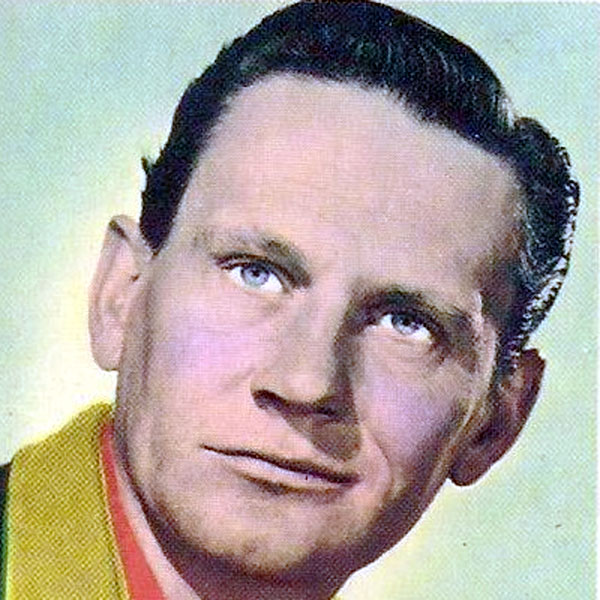
Wendell Corey
From Wikipedia, the free encyclopedia
Born Wendell Reid Corey
March 20, 1914(1914-03-20)
Dracut, Massachusetts, U.S.
Died November 8, 1968 (aged 54)
Woodland Hills, California, U.S.
Wendell Corey (March 20, 1914 - November 8, 1968) was an American actor.
He was born Wendell Reid Corey in Dracut, Massachusetts, the son of Milton Rothwell Corey (October 24, 1879-October 23, 1951) and Julia Etta McKenney (April 11, 1882-June 16, 1947). His father was a Congregationalist clergyman. Wendell was educated in Springfield.
Corey began his acting career on the stage, doing a number of productions in summer stock. While appearing with a Works Progress Administration theatre company in the late 1930s, he met his future wife, Alice Wiley.
His Broadway debut was in Comes the Revelation (1942). After appearing in a number of supporting roles, he scored his first hit as a cynical newspaperman in Elmer Rice's comedy Dream Girl (1945). While appearing in the play, Corey was seen by producer Hal Wallis, who persuaded him to sign a contract with Paramount and pursue a motion picture career in Hollywood.
His movie debut was playing a gangster in Desert Fury (1947) starring John Hodiak, Lizabeth Scott, and Mary Astor. Corey appeared in Sorry, Wrong Number (1948) starring Barbara Stanwyck and Burt Lancaster, and a year later as Janet Leigh's fiancé in the Robert Mitchum romantic comedy Holiday Affair. He starred opposite Stanwyck in The File on Thelma Jordon (1950), and opposite Joan Crawford in Harriet Craig, which was released the same year. His other movies include Hitchcock's Rear Window (1954) starring James Stewart and Grace Kelly, with Thelma Ritter and Raymond Burr, The Big Knife (1955) starring Jack Palance, Ida Lupino and Shelley Winters, The Rainmaker (1956) starring Burt Lancaster and Katharine Hepburn and Loving You (1957) starring Elvis Presley and Lizabeth Scott.
Corey and Wiley had one son and three daughters, Jonathan, Jennifer, Bonnie Alice, and Robin.
He starred in the weekly television programs Harbor Command (1957) and The Eleventh Hour (1961-1963), and made guest star appearances on a number of popular shows, including Alfred Hitchcock Presents, The Untouchables, Burke's Law, Perry Mason and The Wild Wild West.
Corey served as president of the Academy of Motion Picture Arts and Sciences from 1961 to 1963 and was a member of the board of directors of the Screen Actors Guild. A Republican campaigner in national politics since 1956, Corey was elected to the Santa Monica City Council in April 1965. The conservative politician ran for the California seat in the United States Congress in 1966, but lost the primary election. He was still a councilman at the time of his death.
He died at age fifty-four at the Motion Picture & Television Hospital in Woodland Hills, California, of cirrhosis of the liver as a result of alcoholism. He is interred in Washington Cemetery, Washington, Massachusetts.
Wendell Corey has a star on the Hollywood Walk of Fame for his work in TV at 6328 Hollywood Boulevard in Hollywood.
0 Replies
bobsmythhawk
1
Reply
Thu 20 Mar, 2008 07:59 am
Vera Lynn
From Wikipedia, the free encyclopedia
Birth name Vera Margaret Welch
Born 20 March 1917 (1917-03-20) (age 91)
East Ham, London, England
Genre(s) Traditional Pop
Years active 1935-1995
Label(s) UK Decca, EMI
Dame Vera Lynn DBE (born 20 March 1917) is a popular English vocalist whose career flourished during World War II, when she was nicknamed "The Forces' Sweetheart". Among her numerous popular songs are "We'll Meet Again" and "The White Cliffs of Dover". She was considered one of the major entertainers during World War II.
Early life
Lynn was born Vera Margaret Welch on 20 March 1917 in East Ham, London. Later she adopted her grandmother's maiden name Lynn as her stage name. She began singing at the age of seven in a working men's club. Her first radio broadcast, with the Joe Loss Orchestra, was in 1935. At this point she was being featured on records released by dance bands including Loss's and Charlie Kunz's. In 1936 she made her first solo record, on the Crown label, "Up the Wooden Hill to Bedfordshire". This label was soon swallowed up by Decca. After a short stint with Loss she stayed with Kunz for a few years during which she recorded several standards. She later moved to the aristocrat of British dance bands, Bert Ambrose.
War years
Lynn married clarinetist and saxophonist Harry Lewis in 1939, the year World War II broke out. In 1940 she began her own radio series, "Sincerely Yours", sending messages to British troops stationed abroad. In this show she and a quartet performed the songs most requested of her by soldiers abroad. She also went into hospitals to interview new mothers and send messages to their husbands overseas. She toured Egypt, India, Burma and gave outdoor concerts for soldiers.
In 1942 she recorded the Ross Parker/Hughie Charles song "We'll Meet Again" while making the film of the same name. The nostalgic lyrics ("We'll meet again, don't know where, don't know when, but I know we'll meet again some sunny day") had a great appeal to the many people separated from loved ones during the war, and it became one of the emblematic songs of the wartime period.
Post-war career
After the war, her "Auf Wiedersehn Sweetheart" became the first record by a British artist to top the US charts, doing so for nine weeks, and she appeared regularly on Tallulah Bankhead's US radio programme "The Big Show". "Auf Wiedersehn Sweetheart", along with "The Homing Waltz" and "Forget-Me-Not" gave Lynn a remarkable three entries on the first UK Singles Chart, a top 12 (which contained 15 songs owing to tied positions).
Lynn's career flourished in the 1950s, peaking with "My Son, My Son", a number-one hit in 1954. Lynn (who had one daughter) co-wrote the song with Eddie Calvert. In early 1960, Lynn left Decca Records, with whom she had been for nearly 25 years, and joined EMI. There, she recorded for EMI's Columbia, MGM and HMV labels.
Lynn was appointed an OBE (Officer of the Order of the British Empire) in 1969 and a DBE (Dame Commander of the Order of the British Empire) in 1975. In 1976 a charity dedicated to funding breast cancer research was founded, Lynn being its chair and later its president [1].
She sang outside Buckingham Palace in 1995 in a ceremony marking the golden jubilee of VE Day. Lynn, then 78, decided to go out on a high as this is her last known public performance.
However, while in Hawaii around 1988, she was spotted in the Tahitian Lanai having dinner. She was asked if she would sing a song. Never wanting to displease an audience, she sang a medley of her hits for around 30 minutes.
In 2002, at the age of 85 she became the president of the cerebral palsy charity SOS and hosted a celebrity concert on its behalf at Queen Elizabeth Hall in London.
Recent years
The United Kingdom's VE Day ceremonies in 2005 included a concert in Trafalgar Square in which Vera Lynn made a surprise appearance. She made a speech praising the veterans and calling upon the younger generation always to remember their sacrifice and joined in with a bar or two of We'll Meet Again. Following that year's Royal British Legion Festival of Remembrance Dame Vera encouraged the Welsh mezzo-soprano singer Katherine Jenkins to assume the mantle of "Forces Sweetheart".
In her speech she said, "These boys gave their lives and some came home badly injured and for some families, life would never be the same. We should always remember, we should never forget and we should teach the children to remember."
Trivia
Vera released the Lynsey De Paul/Barry Blue penned song Don't You Remember When in 1976 as a single. The song showcased her vocal talents as well as had a nostalgic feel and featured backing vocals from Lynsey as well as tamborine by her boyfriend Ringo Starr.
Pink Floyd wrote a song called "Vera" for their 1979 album The Wall as a reference to her and her song "We'll Meet Again" ; in the film based on the album, a Christmas song "The Little Boy That Santa Claus Forgot" by Vera Lynn is played over the opening credits ; the band also used her song "We'll Meet Again" as an introduction on their shows of the tour of this album. As well Roger Waters used the song during the introductions on his 2006-2007 world tour "Dark Side of The Moon Live". The song Vera was played during the show.
She has written two autobiographies. "Vocal Refrain" in 1970, and "We'll Meet Again" in the early 1990s.
Vera Lynn went to what is now called Brampton Primary School in Masterman Road, East Ham.
Vera made a guest appearance on the 1972 Christmas Edition of The Morecambe & Wise Show
Gary Numan recorded "War Songs" with lyrics "Old Men Love War Songs / Love Vera Lynn" on his 1982 album "I, Assassin".
She is mentioned in the Travis song "U16 Girls".
Vera Lynns or "Veras" is cockney rhyming slang for "skins", the name given to a particular brand of rolling papers.
"Vera" is also rhyming slang for gin, since gin rhymes with Lynn.
Vera Lynn is mentioned in the Call of Duty 3 game by Treyarch. Her namesake is provided to two jeeps. "Vera" and "Lynn".
Mike Myers sang The White Cliffs of Dover on an episode of Saturday Night Live.
Dr Strangelove directed by Stanley Kubrick's concludes with a rendition of Vera singing "We'll Meet Again".
Jon Hare from Sensible Software is presented as "Vera Lynn" in the intro from Cannon_Fodder.
In the alternative-history novel "SS-GB" by Len Deighton, Vera Lynn is mentioned as helping keep up the spirits of people in a fictional Nazi-occupied Britain.
0 Replies
bobsmythhawk
1
Reply
Thu 20 Mar, 2008 08:04 am
William Hurt
From Wikipedia, the free encyclopedia
Born William M. Hurt
March 20, 1950 (1950-03-20) (age 58)
Washington, D.C
Spouse(s) Mary Beth Hurt (1971-1981)
Heidi Henderson (1989-1992)
[show]Awards won
Academy Awards
Best Actor
1985 Kiss of the Spider Woman
BAFTA Awards
Best Actor
1985 Kiss of the Spider Woman
Other Awards
Best Actor Award - Cannes Film Festival
1985 Kiss of the Spider Woman
William M. Hurt (born March 20, 1950) is an Academy Award-winning American actor.
Biography
Early life
Hurt was born in Washington, D.C., the son of Claire Isabel (née McGill), who worked at Time, Inc.,[1] and Alfred McCord Hurt, who worked for the U.S. State Department. His mother re-married Henry Luce III (the son of the founder of Time Magazine) during Hurt's childhood. Hurt graduated from Middlesex School in 1968 where he was the Vice President of the Dramatics Club and had the lead role in several of the school plays. His high school yearbook predicted, "With characteristics such as these, you might even see him on Broadway." Hurt attended Tufts University and studied theology, but turned instead to acting and joined the Juilliard Drama School studying alongside Christopher Reeve.
Career
Hurt appeared first on stage, only later turning to film. His first major role was in the sci-fi hit Altered States (1980) which gave him wide recognition for playing an emotionally obsessed scientist. He received the Best Male Performance Prize at the Cannes Film Festival and the Academy Award for Best Actor for Kiss of the Spider Woman in 1985. He received three additional Oscar nominations; one for Children of a Lesser God (1986), one for Broadcast News (1987) and one (for Best Supporting Actor) in A History Of Violence (2005).
Often cast as an intellectual, Hurt has put this to good use in many films like Lost in Space and The Big Chill, but he is also effective in other kinds of roles like I Love You to Death, and David Cronenberg's psychological drama A History of Violence (2005), wherein, with less than 10 minutes of screen time, he plays the creepy mob boss Richie Cusack. That same year, Hurt could be seen as a mysterious government operative in Stephen Gaghan's ensemble drama about the politics of Big Oil, Syriana.
Hurt has been seen in the mini-series adaptation of Stephen King's Nightmares and Dreamscapes, in a piece entitled Battleground; he plays "Renshaw", a hitman who receives a package from the widow of a toymaker he killed, unaware of what is waiting inside for him. He is currently in the cast of "Vanya", an adaptation of Chekhov's Uncle Vanya playing in the Artist Repertoire Theatre in Portland, Oregon.
He recently appeared in Sean Penn's critically acclaimed film Into the Wild, the true story of Christopher McCandless and his life changing adventures.
Hurt will next appear as General Thaddeus "Thunderbolt" Ross in The Incredible Hulk alongside Edward Norton, Liv Tyler and Tim Roth.
Personal life
Fluent in French, Hurt maintains a home outside Paris. He has a daughter with actress Sandrine Bonnaire and a son, Alex, with Sandra Jennings, who sued Hurt in the late 1980s claiming she was his common-law wife. Hurt won the case. He was previously married to Mary Beth Hurt from 1971 to 1982 and lived with Marlee Matlin for a period of time in 1986. Hurt has two sons, named Sam and William Hurt, from his 1989-92 marriage to Heidi Henderson. Sam and William currently attend Crane Union High School in Crane, Oregon.[citation needed
0 Replies
bobsmythhawk
1
Reply
Thu 20 Mar, 2008 08:06 am
Holly Hunter
From Wikipedia, the free encyclopedia
Born Holly P. Hunter
March 20, 1958 (1958-03-20) (age 50)
Conyers, Georgia, United States
Years active 1981-present
Domestic partner(s) Gordon MacDonald
[show]Awards won
Academy Awards
Best Actress
1993 The Piano
Australian Film Institute Awards
Best Actress in a Leading Role
1993 The Piano
Emmy Awards
Best Actress in a Mini-series or Movie
1989 Roe vs. Wade
1993 The Positively True Adventures of the Alleged Texas Cheerleader-Murdering Mom
Golden Globe Awards
Best Actress - Motion Picture Drama
1993 The Piano
Other Awards
Berlin Silver Bear for Best Actress
1988 Broadcast News
Best Actress Award - Cannes Film Festival
1993 The Piano
Holly P. Hunter (born March 20, 1958) is an Academy Award-winning American actress.
Biography
Early life
Hunter was born in Conyers, Georgia, the daughter of Opal Marguerite (née Catledge), a housewife, and Charles Edwin Hunter, a farmer and sporting-goods manufacturer's representative.[1] Hunter earned a degree in drama from Carnegie Mellon University in Pittsburgh, after which she moved to New York City and roomed with Frances McDormand, both aspiring actors. When she first moved to Los Angeles she shared a house with a group of people which included McDormand and director Sam Raimi, as well as future collaborators Joel and Ethan Coen.
Career
Hunter's first starring role in films came in 1987's Raising Arizona. That year, she also starred in Broadcast News, for which she earned an Oscar nomination for the Best Actress. In 1993, she won the Best Female Performance Prize at the Cannes Film Festival and the Best Actress Oscar for The Piano and showcased her skill with the piano by playing all the elaborate pieces on the score herself. That year, Hunter was also nominated for Best Supporting Actress for The Firm. In 2004, she earned another Best Supporting Actress nomination for Thirteen and voiced a star role (Helen Parr/Elastigirl) in the animated film The Incredibles. Hunter has also appeared in several television films and has earned two Emmys. She is currently starring in and producing Saving Grace, a crime series on TNT portraying an Oklahoma City Police Department detective Grace Hanadarko
Personal life
For many years, Hunter was in a relationship with actor Arliss Howard. She was married to cinematographer Janusz Kaminski from May 20, 1995 until their divorce on December 21, 2001. Since 2001, she has been in a relationship with American actor Gordon MacDonald with whom she co-starred in Marina Carr's By the Bog of Cats in a 2001 run at the San Jose Repertory Theater, and later in a 2004 West End production of the same play. In January 2006, Hunter's publicist announced that the couple had welcomed twins;[2] Entertainment Weekly later reported that the twins were boys.
Holly's cousin is Tim Salmon, former right fielder and designated hitter of the Los Angeles Angels of Anaheim major league baseball team.
0 Replies
bobsmythhawk
1
Reply
Thu 20 Mar, 2008 08:09 am
At Work and Bored
Speed Limit! -
Category: Other Jokes
Speed Limit!
Sitting on the side of the highway waiting to catch speeding drivers, a State Police officer sees a car puttering along at 22 mph. He thinks to himself, "This driver is just as dangerous as a speeder!" So he turns on his lights and pulls the driver over.
Approaching the car, he notices that there are five old ladies --- two in the front seat and three in the back--- eyes wide, and white as ghosts.
The driver, obviously confused, says to him, "Officer, I don't understand, I was doing exactly the speed limit! What seems to be the problem?"
"Ma'am," the officer replies, "You weren't speeding, but you should know that driving slower than the speed limit can also be a danger to other drivers."
"Slower than the speed limit?" she asked. "No sir, I was doing the speed limit exactly---twenty-two miles an hour!" the old woman says a bit proudly.
The State Police officer, trying to contain a chuckle, explains to her that "22" was the route number, not the speed limit. A bit embarrassed, the woman grinned and thanked the officer for pointing out her error.
"But before I let you go, Ma'am," said the officer, "I have to ask... Is everyone in this car OK? These women seem awfully shaken and they haven't muttered a single peep this whole time."
"Oh, they'll be all right in a minute, officer. We just got off Route 119... "
Submitted By: Hamberg
Satan and An old man <<PREV | NEXT>> The Saddle Horn
Rate this Joke
Average Good V.Good Excellent
Speed Limit!
Sitting on the side of the highway waiting to catch speeding drivers, a State Police officer sees a car puttering along at 22 mph. He thinks to himself, "This driver is just as dangerous as a speeder!" So he turns on his lights and pulls the driver over.
Approaching the car, he notices that there are five old ladies --- two in the front seat and three in the back--- eyes wide, and white as ghosts.
The driver, obviously confused, says to him, "Officer, I don't understand, I was doing exactly the speed limit! What seems to be the problem?"
"Ma'am," the officer replies, "You weren't speeding, but you should know that driving slower than the speed limit can also be a danger to other drivers."
"Slower than the speed limit?" she asked. "No sir, I was doing the speed limit exactly---twenty-two miles an hour!" the old woman says a bit proudly.
The State Police officer, trying to contain a chuckle, explains to her that "22" was the route number, not the speed limit. A bit embarrassed, the woman grinned and thanked the officer for pointing out her error.
"But before I let you go, Ma'am," said the officer, "I have to ask... Is everyone in this car OK? These women seem awfully shaken and they haven't muttered a single peep this whole time."
"Oh, they'll be all right in a minute, officer. We just got off Route 119... "
0 Replies
bobsmythhawk
1
Reply
Thu 20 Mar, 2008 08:13 am
Oooops!
0 Replies
Letty
1
Reply
Thu 20 Mar, 2008 08:26 am
Well, hawkman, I'll rate it a 10 twice. Thanks for the bio's, Boston.
It is difficult to believe that Vera Lyn is still with us, folks, and here is a group of WWII songs to honor her.
When you pick up a tempting food, scan the nutrition label, and think, "Wow, cool" -- because it's surprisingly lite or low-cal or free of trans fat -- you expect those claims to be bona fide, right? Hah. Food packagers can be sneaky. Watch out for these 4 typical traps.
When it comes to comfort food, has it got to be Kraft's Macaroni and Cheese? Look twice. Like many boxed food mixes, the confusing label lists two sets of nutrition stats -- and the first one is for the dry mix only. Unless you plan on eating your mac-cheese mix straight from the box, the prepared version (made with margarine and 2% milk) adds an extra 15 grams fat and 150 calories per serving to the figures on the label.
Just downed a tall (23.5-ounce) can of AriZona Mucho Mango juice blend? Brace yourself. The sugar hit is 75 grams, not 25, as a glance at the label suggests. And the calorie hit is 360, not 120. That's ?'cause one serving is only 8 ounces -- you're supposed to save the remaining two-thirds of the can for two more drinks.
Snacking on one of those smallish 3-ounce bags of multigrain Sun Chips? Smart, but note the itty-bitty serving size -- only 1/3 of that bag! Scarf down more and you might as well be enjoying Oreos.
Sometimes you really need a cookie, right? Happily, the nutrition label on your fave brand says 0 grams of both, fat and trans fat. That's good enough that you can deal with the sugar guilt tomorrow, right? Sorry, but 0 doesn't mean zero. It means less than 0.5 gram per serving. Sure, that's not much -- unless a serving is, say, two Snackwells Chocolate Mint cookies and by midnight you've finished the whole box. (Who, you?)
Shady labels like these give a whole new meaning to buyer's remorse. And wising up to nutrition tricks won't just keep you trim. Avoiding foods that list saturated and trans fats, simple sugars, or processed grains among their first five ingredients can make your RealAge 3.6 years younger. Sweet.
0 Replies
Letty
1
Reply
Thu 20 Mar, 2008 01:35 pm
Sweet? I have to stay away from that, Bob, but your "read the label" advice is note worthy.
This is a perfect song for the hawkman's dietary advice, folks.