Raggedy, No way could you be at fault, PA. Things have been a bit mixed up, methinks.
Thanks for the trio, puppy. I had some problems myself.
Well, I know that Armand Assanti did a movie of Odysseus, so the best that I can come up with is this one, folks.
It's time to come home
I've been away for so long . . .
But there's always a headwind no matter which way I go
But I'm fighting
I'm fighting my way home
I'm finding my way home
I will stand up to you
I will reach my destination
Speaking of destinations. Sputnik has a birthday as well.
Sorry if this stretches the picture on our studio monitor, folks.

Next, A Russian song, folks
In English...
Oh, speak to me my seven heartstrings
My dear guitar your voice sings.
And fills my soul this night
With joy in the moonlight!
Please sing so that my pain may wane;
My head does not feel well, again.
Today we drink to ease my woe, and so
The week'll go.
Chorus:
Once, yes, I had a lovely wife
But she shared another's life.
Saying: "Just one more time
Won't hurt you, husband mine."
In Russian...
Dve gitari za stenoyu
Zhalabna zanyli
Sertse pamyatny napyev
Mily eta tyli.
Veter polye vassilki (ba)
Dalnaya daroga
Sertse noyet at taski
Na dushe trevoga.
Chorus:
|: Ekh raz yeshchoras
Yeshcho mnoga mnogaras
Ekh ekh raz da yeshchoras
Yeshchomnoga mnogaras.

Pagavari-zhe ty so mnoyu
Padruga semistrunnaya
Fsya dusha palna taboyu
A noch takaya lunnaya.
Gdye balit, chto balit
Galava s pakhmelia
Sevodnya pyom, zaftra pyom
Tseluyu nedyelyu.
Chorus:
U menya byla zhena
Ana mnye izmenila
Izmenila tol'ka raz
A patom reshila.
Na garye stayit al'kha
Par garoyu vyshenya
Paren' lyubil tsiganochku
Ana zamush vyshla.
Chorus:

letty wrote :
Quote:Speaking of destinations. Sputnik has a birthday as well.
Sorry if this stretches the picture on our studio monitor, folks.
i had to climb out of the window because the screen kept increasing so rapidly , i thought it was going to squash me :wink:
here is a catchy little tune i just found :
Quote:Sam - the Hot Dog Man
(Lil Johnson?)

Transcribed from Lil Johnson, recorded April 22, 1936.
From Lil Johnson, Complete Recorded Works in Chronological Order, Vol. 1: 23 April 1929 - 22 April 1936; Document Records DOCD-5307.
I'm going down south to Alabam,
Lookin' for a man by the name of Sam,
He's got good hot dog,
Oh, he's got good hot dog,
Oh, he's got good hot dog,
Honey, in his hot dog stand.
You can drink your coffee, eat your jellyroll,
But if you taste Sam's hot dog, it will satisfy your soul,
'Cause he's got good hot dog,
Oh, he's got good hot dog,
Oh, he's got good hot dog,
Honey, in his hot dog stand.
Sam makes a-plenty of money and spends it fast,
Women don't do nothin' but sit on their yas, yas, yas,
And wait for Sam's hot dog,
Oh, they wait for Sam's hot dog,
Oh, they wait for Sam's hot dog,
Honey, in his hot dog stand.
Spoken: Yes, he's got good hot dog! I don't mean a Wienee!
Sam got the best hot dog in this town,
I like the way he serves it; he goes 'round and 'round,
Baby, with his hot dog,
Baby, with his hot dog,
Baby, with his hot dog,
Honey, in his hot dog stand.
When you get enough hot dog, stop and rest awhile,
If you want any more, Sam will serve you with a smile,
Baby, with his hot dog,
Baby, with his hot dog,
Baby, with his hot dog,
Honey, in his hot dog stand.
He's at my house last night and brought me one,
I'm wild about his hot dog, the son of a gun,
I'm wild about his hot dog,
I'm wild about his hot dog,
Oh, I'm wild about his hot dog,
Honey, in his hot dog stand.
Late last night 'bout half past twelve,
Women down at Sam's, they was raisin' hell,
Just about his hot dog,
Just about his hot dog,
Just about his hot dog,
Honey, in his hot dog stand.
Well, hbg. Hot dog!
Love the song, Canuck. You gotta watch them Russians, however.
My niece and I have been trading information most of the day about my brother Bill. Since he was born in October, I want to dedicate this song that he sang to his memory.(I don't know why I know it)
ON TREASURE ISLAND
Tommy Dorsey
I sailed away to Treasure Island
And my heart stood still
When I landed on the silvery shore
We met that day on Treasure Island
And the smile you gave
Was the treasure I'd been craving for.
Then came those moments of bliss
In the shade of the sheltering palms,
I still remember your kiss
As you nestled within my arms,
I looked for gold on Treasure Island
And I found that gold
When you gave your golden love to me.
Hope our hawkman returns tomorrow. We always miss him, right?
I'll let my brother's song be my goodnight melody, y'all.
Blowing everyone a kiss
From Letty with love
Elvis Presley - A Dog's Life
If I had my life to live over
I know just what I'd like to be
A pampered pet of a rich brunette
Sitting on my mama's knee
Someone to love me
Someone to care
Rubberduck dubble little fingers through my hair
I need a dog's life
What a life, that's good enough for me
That's good enough for me
If I had a bone to be picking
A picking chicken or a steak
Curled up there in an easy chair
Man, that won't be hard to take
I'll always be faithful
That's what I'd be
Never bite a hand that feeds me, no siree
Just lead a dog's life
What a life
That's good enough for me
That's good enough for me
I'd find me a pink little poodle
And lose my noodle over her
I chase her 'round all over town
Just to ruffle up her fur
Nuzzle her muzzle
A hole in her paw
Greatest case of puppy lovin' you ever saw
It's called a dog's life
What a life
That's good enough for me
You heard me say it now
That's good enough for me
Good morning, WA2K listeners and contributors.
edgar, love that Elvis song, buddy, and I think it interesting to note that Mr. Presley didn't mention a hound dog.
Today is Kate Winslet's birthday, so let's hear one by that lovely lady.
Kate Winslet
What if
Here I stand alone
With this weight upon my heart
And it will not go away
In my head I keep on looking back
Right back to the start
Wondering what it was that made you change
Well I tried
But I had to draw the line
And still this question keeps on spinning in my mind
What if I had never let you go
Would you be the man I used to know
If I'd stayed
If you'd tried
If we could only turn back time
But I guess we'll never know
Many roads to take
Some to joy
Some to heart-ache
Anyone can lose their way
And if I said that we could turn it back
Right back to the start
Would you take the chance and make the change
Do you think how it would have been sometimes
Do you pray that I'd never left your side
What if I had never let you go
Would you be the man I used to know
If I'd stayed
If you'd tried
If we could only turn back time
But I guess we'll never know
If only we could turn the hands of time
If I could take you back would you still be mine
'Cos I tried
But I had to draw the line
And still this question keep on spinning in my mind
What if I had never let you go
Would you be the man I used to know
What if I had never walked away
'Cos I still love you more than I can say
If I'd stayed
If you'd tried
If we could only turn back time
But I guess we'll never know
We'll never know
You ain't nothin' but a hound dog
Cryin' all the time
You ain't nothin' but a hound dog
Cryin' all the time
Well, you ain't never caught a rabbit
And you ain't no friend of mine
Well they said you was high-classed
Well, that was just a lie
Yeah they said you was high-classed
Well, that was just a lie
Well, you ain't never caught a rabbit
And you ain't no friend of mine
Here's Kate:
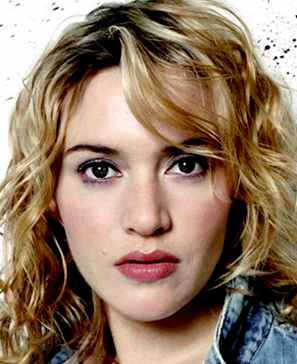
and Donald Pleasence (Oct. 5, 1919-1995) I thought he was so good in The Great Escape and Night of the Generals, and, of course as the villain Blofeld in You Only Live Twice.

And a good day to all.
Well, I'll be, folks. It's our furry friend back again. Hey, honey, it's great to see you. Thanks for playing that, S.G.
This song reminds me of my dog, Domino.
My Dog Rags
I have a dog his name is Rags;
He eats so much his tummy sags,
His ears flip flop his tail wig wags
And when he walks, he walks zig zag
He goes flip flop, wig wag, zig zag;
He goes flip flop, wig wag, zig zag;
He goes flip flop, wig wag, zig zag;
I love Rags and he loves me!
My dog Rags he loves to play,
He rolls around in the mud all day.
I whistle, he won't obey,
He always runs the other way.
He goes flip flop, wig wag, zig zag;
He goes flip flop, wig wag, zig zag;
He goes flip flop, wig wag, zig zag;
I love Rags and he loves me!
Just dropping by to say hello Letty, hope you're doing fine. Love from downunder.

Oops, missed our dalmatian, folks. Thanks, PA, for the duo. And there's Donald with a Persian. <smile>
I do hope, listeners, that they don't do any more remakes of Halloween. I think that movie has been overdone.
Here's where hockey really belongs.

My goodness, Dutchy. We miss you. Get out from down in under there.
Quote for today:
I think I could turn and live with animals, they're so placid and self contain'd,
I stand and look at them long and long.
They do not sweat and whine about their condition,
They do not lie awake in the dark and weep for their sins,
They do not make me sick discussing their duty to God,
Not one is dissatisfied, not one is demented with the mania of owning things,
Not one kneels to another, nor to his kind that lived thousands of years ago,
Not one is respectable or unhappy over the earth.
....
Walt Whitman.
Rather concerned about the hawkman.
my opening and closing tune for today :

Quote:
Polka Dots and Moonbeams
Frank Sinatra, Nat King Cole
A country dance was being held in a garden
I felt a bump and heard an oh, beg your pardon
Suddenly I saw polka dots and moonbeams
All around a pug-nosed dream
The music started and was I the perplexed one
I held my breath and said may I have the next one
In my frightened arms polka dots and moonbeams
Sparkled on a pug nose dream
There were questions in the eyes of other dancers
As we floated over the floor
There were questions but my heart knew all the answers
And perhaps a few things more
Now in a cottage built of lilacs and laughter
I know the meaning of the words ever after
And I'll always see polka dots and moonbeams
When I kiss the pug nose dream
Burke / Van Heusen
The guilty undertaker sighs,
The lonesome organ grinder cries,
The silver saxophones say I should refuse you.
The cracked bells and washed-out horns
Blow into my face with scorn,
But it's not that way,
I wasn't born to lose you.
I want you, I want you,
I want you so bad,
Honey, I want you.
The drunken politician leaps
Upon the street where mothers weep
And the saviors who are fast asleep,
They wait for you.
And I wait for them to interrupt
Me drinkin' from my broken cup
And ask me to
Open up the gate for you.
I want you, I want you,
I want you so bad,
Honey, I want you.
Now all my fathers, they've gone down
True love they've been without it.
But all their daughters put me down
'Cause I don't think about it.
Well, I return to the Queen of Spades
And talk with my chambermaid.
She knows that I'm not afraid
To look at her.
She is good to me
And there's nothing she doesn't see.
She knows where I'd like to be
But it doesn't matter.
I want you, I want you,
I want you so bad,
Honey, I want you.
Now your dancing child with his Chinese suit,
He spoke to me, I took his flute.
No, I wasn't very cute to him,
Was I?
But I did it, though, because he lied
Because he took you for a ride
And because time was on his side
And because I . . .
I want you, I want you,
I want you so bad,
Honey, I want you.
Bob Dylan
Good morning, WA2K listeners and contributors.
Ah, hbg. I love Polka Dots and Moonbeams. Did you know, Canada, that Oscar Peterson did that as well?
Over a decade prior to Oscar Peterson's 1965 vocal tribute to Nat King Cole, the pianist recorded a series of vocal numbers (over three sessions between 1952 and 1954) for Verve, accompanied by his regular trio (bassist Ray Brown and either Barney Kessel or Herb Ellis on guitar). Peterson's interpretations of the dozen standards, all ballads, are generally slow. His vocals are warm and friendly, though they lack the variety of an established singer. His emphasis is more on his singing than his piano. His trio also, at one time, included Stan Getz.
edgar, the lovely songs of Dylan; so esoteric yet so meaningful. Your comment about Napoleon and the stars inspired me to begin our day with another by Walt Whitman.
When I heard the learn'd astronomer;
When the proofs, the figures, were ranged in columns before me;
When I was shown the charts and the diagrams, to add, divide, and
measure them;
When I, sitting, heard the astronomer, where he lectured with much
applause in the lecture-room,
How soon, unaccountable, I became tired and sick;
Till rising and gliding out, I wander'd off by myself,
In the mystical moist night-air, and from time to time,
Look'd up in perfect silence at the stars
Heeee's Baaaaaack!!!!!!!!!
Sorry for being absent. Curious thing. I was able to access other sites but not able2know.
Janet Gaynor
From Wikipedia, the free encyclopedia
Birth name Laura Augusta Gainor
Born October 6, 1906(1906-10-06)
Philadelphia, Pennsylvania, U.S.
Died September 14, 1984 (aged 77)
Palm Springs, California, U.S.
Years active 1924 - 1981
[show]Awards
Academy Awards
Best Actress
1928 Seventh Heaven, Street Angel, and Sunrise
Janet Gaynor (October 6, 1906 - September 14, 1984) was an American actress who, in 1928, became the first winner of the Academy Award for Best Actress.
Early life
Born Laura Augusta Gainor in Philadelphia, Pennsylvania, her family moved west to San Francisco, California when she was just a child. When graduated from high school in 1923, Gaynor decided to pursue a career in acting. She then moved to Los Angeles, California, where she supported herself working in a shoe store, receiving $18 per week. She managed to land unbilled small parts in several feature films and comedy shorts for two years. Finally, in 1926, at the age of 20, she was cast in the lead role in a silent film called The Johnstown Flood, the same year she was selected as one of the WAMPAS Baby Stars. Her outstanding performance won her the attention of producers, who cast her in a series of films.
Rising career
Within one year, Gaynor was one of Hollywood's leading ladies. Her performances in Seventh Heaven (the first of twelve movies she would make with actor Charles Farrell) and both Sunrise and Street Angel (in 1927, also with Charles Farrell) earned her the first Academy Award for Best Actress in 1928. It was the only time in Oscar history that the award was given for multiple roles: it was given on the basis of the actor's total work over the year, and not just for one particular performance.
Gaynor was one of only a handful of leading ladies who made a successful transition to sound movies over the next decade. And for a number of years, Gaynor was the leading actress of the Fox studios and was treated accordingly with top billing and the choice of prime roles. However, when Darryl F. Zanuck merged his fledgling studio, 20th Century, with Fox, her status became precarious and even tertiary to that of actresses Loretta Young and Shirley Temple. She managed to terminate her contract with the studio and achieved acclaim in films produced by David O. Selznick in the mid-1930s.
In 1937, she was again nominated for an Academy Award, this time for her role in A Star Is Born. After appearing in The Young in Heart, she left film industry for nearly twenty years, returning one last time in 1957 as Pat Boone's mother in Bernardine.
Death
She died in 1984, at the age of 77, due largely to the aftermath of a traffic accident in San Francisco two years earlier. In the accident, a driver named Robert Cato ran a red light at the corner of California Street and Franklin and crashed into her Luxor taxicab. The violent crash killed Mary Martin's manager Ben Washer and injuring the rest, including her husband Paul Gregory, and her close friend Mary Martin, her longtime lesbian lover. Gaynor never fully recovered from the accident and after several operations died of complications.
She was interred in the Hollywood Forever Cemetery in Hollywood, California next to her first husband Adrian, but her stone reads "Janet Gaynor Gregory" in tribute to her second husband, Producer and Director Paul Gregory.
Carole Lombard
From Wikipedia, the free encyclopedia
Birth name Jane Alice Peters
Born October 6, 1908(1908-10-06)
Fort Wayne, Indiana
Died January 16, 1942 (aged 33)
Mount Potosi, near Las Vegas, Nevada
Spouse(s) William Powell (1931-1933)
Clark Gable (1939-1942)
Carole Lombard (October 6, 1908 - January 16, 1942), born Jane Alice Peters in Fort Wayne, Indiana, was an Oscar-nominated American actress. She was particularly noted for her comedic roles in several classic films of the 1930s.
Ancestry and early life
Her parents were Frederick C. Peters and Elizabeth Knight. Lombard's paternal grandfather, John Claus Peters, was the son of German immigrants, Claus Peters and Caroline Catherine Eberlin. One distant branch of Lombard's mother's family originated in England; her ancestors John and Martha Cheney emigrated to North America in 1634.
She was the youngest of three children. She spent her early childhood in a sprawling, two-story house at 704 Rockhill Street in Fort Wayne, near the St. Mary's River. Her parents divorced and her mother took the three children to Los Angeles in 1914, where Lombard eventually attended Fairfax High School. She was elected "May Queen" in 1924. She quit school to pursue acting full time, but graduated from Fairfax in 1927.
Career
Lombard made her film debut at the age of twelve after she was seen playing baseball in the street by director Allan Dwan; he cast her as a tomboy in A Perfect Crime (1921). In the 1920s, she worked in several low-budget productions credited as 'Jane Peters', and then later as 'Carol Lombard'. In 1925, she was signed as a contract player with Fox Film Corporation (which merged with Daryl Zanuck's Twentieth Century Productions in 1935). She also worked for Mack Sennett and Pathé Pictures. She became a well-known actress and made a smooth transition to sound films, starting with High Voltage (1929). In 1930, she began working for Paramount Pictures.
Lombard became one of Hollywood's top comedy actresses in the 1930s. Despite her glamorous looks, she was a natural comedienne, and was not afraid to look silly for the sake of being funny. In comedies like Twentieth Century (1934) directed by Howard Hawks, My Man Godfrey (1936) directed by Gregory La Cava, and Nothing Sacred (1937) directed by William A. Wellman, she received praise from critics and was described as one of the key exponents of screwball comedy. However, she played a dramatic role in Vigil in the Night, starring as Nurse Anne Lee opposite Brian Aherne. Produced by David O. Selznick, Nothing Sacred was her only film made in Technicolor. Lombard was offered the role of Ellie Andrews in It Happened One Night (1934), but the filming schedule conflicted with that of Bolero and she was unable to accept.[1]
Personal life
In October 1930, she met William Powell. They married on June 26, 1931. Lombard commented to fan magazines that she did not believe their sixteen-year age difference would present a problem, but friends felt they were ill-suited, as Lombard had an extroverted personality while Powell was more reserved. They divorced in 1933, but remained friends and worked together without acrimony, notably in My Man Godfrey. She was linked romantically to crooner Russ Columbo until his accidental death late in 1934.
Lombard carried on an affair with Clark Gable from the mid-1930s. The relationship had to be kept quiet because he was still married to his second wife, Ria. Gable was finally divorced from her on March 7, 1939. Gable and Lombard married shortly after on March 29. They bought a ranch, previously owned by director Raoul Walsh, in San Fernando Valley, California. They called each other "Ma" and "Pa", and lived a happy, unpretentious life. To all who knew Gable, she was the love of his life.
Off-screen, she was much loved for her unpretentious personality and well known for her earthy sense of humor. She loved playing pranks during filming, and once joked about husband Gable (widely acknowledged the "King of Hollywood"), "If his pee-pee was one inch shorter, they'd be calling him the Queen of Hollywood."
Lombard was a second generation Bahá'í who formally declared her membership in 1938.[2]
Death
When the US entered World War II at the end of 1941, Lombard travelled to her home state of Indiana for a war bond rally. At four o'clock (04:00 local time) on the morning of Friday, January 16, 1942, Lombard and her mother boarded a Trans World Airlines DC-3 airplane to return to California. After refueling in Las Vegas, Flight 3 took off on a clear night. However, beacons in the area had been blacked out because of the war, and the plane was 6.7 miles (10.8 km) off course. Twenty-three minutes after takeoff, the plane crashed into "Double Up Peak" near the 8,300-foot (2500 meter) level of Mount Potosi, 32 miles (52 km) southwest of Las Vegas. All 22 passengers were killed. A plaque marks the spot.
Just before boarding the plane, Carole had addressed her fans, saying: "Before I say goodbye to you all, come on and join me in a big cheer! V for Victory!" President Franklin D. Roosevelt, who admired her patriotism, declared her the first woman killed in the line of duty during the war and posthumously awarded her the Presidential Medal of Freedom.
Shortly after her death at the age of thirty-three, Gable (who was inconsolable and devastated by his loss) joined the United States Army Air Forces, serving as a gunner on a bomber on combat missions over Europe. The Liberty ship SS Lombard was named for her and Gable attended its launch on January 15, 1944.
Her final film, To Be or Not to Be, directed by Ernst Lubitsch and co-starring Jack Benny, a satire about Nazism and World War II, was in post-production at the time of her death. The film's producers decided to cut the part of the film in which her character asks "What can happen in a plane?" as they felt it was in poor taste, given the circumstances of Lombard's death. A similar editing instance happened when the 1940 Warner Brother cartoon A Wild Hare was reissued. Lombard's name was originally mentioned in a game of "Guess Who" between Bugs Bunny and Elmer Fudd, but all reissue prints have the name dubbed over with Barbara Stanwyck's.
On January 18, 1942, Jack Benny did not perform his usual program, both out of respect for Lombard and grief at her death. Instead, he devoted his program to an all-music format.
Lombard is interred at the Forest Lawn Memorial Park Cemetery in Glendale, California. The name on her crypt marker is "Carole Lombard Gable". Although Gable remarried, he was interred next to her when he died in 1960. Her mother, Elizabeth Peters, who also perished in the plane crash that killed her daughter, was interred on the other side of her.
Awards and honors
In 1999, the American Film Institute ranked Lombard 23rd on its list of the 50 greatest American female screen legends. She received one Academy Award for Best Actress nomination, for My Man Godfrey. She has a star on the Hollywood Walk of Fame, at 6930 Hollywood Blvd.
Her Fort Wayne childhood home has been designated an historic landmark. The city named the nearby bridge over the St. Mary's River the "Carole Lombard Memorial Bridge."
Thor Heyerdahl
From Wikipedia, the free encyclopedia
Thor Heyerdahl (October 6, 1914 Larvik, Norway - April 18, 2002 Colla Micheri, Italy) was a Norwegian ethnographer and adventurer with a scientific background in zoology and geography. Heyerdahl became famous for his expedition on the Kon-Tiki in which he sailed by raft 4,300 miles (7,000 km) from South America to the Tuamotu Islands.
Early years
As a young child, Thor Heyerdahl established a strong interest in zoology. He created a small museum in his childhood home, with a Vipera berus as the main attraction. He studied Zoology and Geography at Oslo University. At the same time he studied privately Polynesian culture and history, consulting the then world's largest private collection of books and papers on Polynesia, owned by Bjarne Kroepelin, a wealthy wine merchant in Oslo. This collection was later purchased by the Oslo University Library from Kroepelin's heirs and was attached to the Kon-Tiki Museum research department. After seven terms and consultations with experts in Berlin, a project was developed and sponsored by his zoology professors, Kristine Bonnevie and Hjalmar Broch. He was to visit some isolated Pacific island group and study how the local animals had found their way there. Right before sailing together to the Marquesas Islands he married his first wife, Liv, whom he had met shortly before enrolling at the university, and who had studied economics there.
Fatu Hiva
Fatu Hiva
Penguin edition, 1976
The original b/w photo is printed in the book with the caption "Feeling like a king, I could actually put an ancient Marquesan royal crown on my head for the occasion. Or was I the first hippy?"The events surrounding his stay on the Marquesas, most of the time on Fatu Hiva, were told first in his book Paa Jakt efter Paradiset (1938). This was published in Norway, and because of the outbreak of World War II was never translated and rather forgotten. Many years later, after having achieved fame with other adventures and books on other subjects, Heyerdahl published a new account of this voyage under the title Fatu Hiva (George Allen & Unwin, 1974). The young couple left Norway in 1936 and stayed about a year in the South Seas.
The Kon-Tiki Expedition
In the Kon-Tiki Expedition, Heyerdahl and five fellow adventurers went to Peru, where they constructed a pae-pae raft from balsa wood and other native materials, a raft that they called the Kon-Tiki. The Kon-Tiki expedition was inspired by old reports and drawings made by the Spanish Conquistadors of Inca rafts, and by native legends and archaeological evidence suggesting contact between South America and Polynesia. After a 101 day, 4,300 mile (7,000 km) journey across the Pacific Ocean, Kon-Tiki smashed into the reef at Raroia in the Tuamotu Islands on August 7, 1947, showing that it was possible that people before the arrival of the Europeans could have accomplished such a journey with relative ease and safety. The only modern technology the expedition had on board was a radio, food in the form of military rations, and fresh water in 56 small cans. While en route, the crew supplemented their diet by fishing.
Although the Kon-Tiki raft was an accurate replica of a South American sea vessel, its crew was unaware of most of its steering capabilities. Subsequent experiments by Heyerdahl and others have demonstrated that by manipulating such a raft's several centerboards, an amazing degree of maneuverability is possible. Inspired by the adventure of Kon-Tiki, many rafts have repeated the voyage thus demonstrating that the success of the original expedition was not due merely to "luck". Heyerdahl's book about the expedition, Kon-Tiki, has been translated into over 50 languages. The documentary film of the expedition, itself entitled Kon-Tiki, won an Academy Award in 1951.
Most anthropologists continue to believe, based on linguistic, physical and genetic evidence, that Polynesia was settled from west to east, migration having begun from the Asian mainland. There are controversial indications, though, of some sort of South American/Polynesian contact most notably in the fact that the South American sweet potato served as a dietary staple throughout much of Polynesia. Other indications of possible contact include other South American plants, some of the stone masonry and statuary found on Easter Island and elsewhere, and Easter Island's unusual bird-man cult which has parallels on the South American mainland. Heyerdahl himself answered to the linguists' argument that, guessing the origin of African-Americans he would prefer to believe that they came from Africa, judging from their skin colour, and not from England, judging from their speech.
Heyerdahl's theory of Polynesian origins
Heyerdahl claimed that in Incan legend there was a sun-god named Con-Tici Viracocha who was the supreme head of the mythical fair-skinned people in Peru. The original name for Virakocha was Kon-Tiki or Illa-Tiki, which means Sun-Tiki or Fire-Tiki. Kon-Tiki was high priest and sun-king of these legendary "white men" who left enormous ruins on the shores of Lake Titicaca. The legend continues with the mysterious bearded white men being attacked by a chief named Cari who came from the Coquimbo Valley. They had a battle on an island in Lake Titicaca, and the fair race was massacred. However, Kon-Tiki and his closest companions managed to escape and later arrived on the Pacific coast. The legend ends with Kon-Tiki and his companions disappearing westward out to sea.
When the Spaniards came to Peru, Heyerdahl asserted, the Incas told them that the colossal monuments that stood deserted about the landscape were erected by a race of white gods who had lived there before the Incas themselves became rulers. The Incas described these "white gods" as wise, peaceful instructors who had originally come from the north in the "morning of time" and taught the Incas' primitive forefathers architecture as well as manners and customs. They were unlike other Native Americans in that they had "white skins and long beards" and were taller than the Incas. The Incas said that the "white gods" had then left as suddenly as they had come and fled westward across the Pacific. After they had left, the Incas themselves took over power in the country.
Heyerdahl said that when the Europeans first came to the Pacific islands, they were astonished that they found some of the natives to have relatively light skins and beards. There were whole families that had pale skin, hair varying in color from reddish to blonde, and almost Semitic, hook-nosed faces. In contrast, most of the Polynesians had golden-brown skin, raven-black hair, and rather flat noses. Heyerdahl claimed that when Jakob Roggeveen first discovered Easter Island in 1722, he supposedly noticed that many of the natives were white-skinned. Heyerdahl claimed that these people could count their ancestors who were "white-skinned" right back to the time of Tiki and Hotu Matua, when they first came sailing across the sea "from a mountainous land in the east which was scorched by the sun." The ethnographic evidence for these claims is outlined in Heyerdahl's book Aku Aku: The Secret of Easter Island.
Heyerdahl proposed that Tiki's neolithic people colonized the then-uninhabited Polynesian islands as far north as Hawaii, as far south as New Zealand, as far east as Easter Island, and as far west as Samoa and Tonga around A.D. 500. They supposedly sailed from Peru to the Polynesian islands on pae-paes--large rafts built from balsa logs, complete with sails and each with a small cottage. They built enormous stone statues carved in the image of human beings on Pitcairn, the Marquesas, and Easter Island that resembled those in Peru. They also built huge pyramids on Tahiti and Samoa with steps like those in Peru. But all over Polynesia, Heyerdahl found indications that Tiki's peaceable race had not been able to hold the islands alone for long. He found evidence that suggested that seagoing war canoes as large as Viking ships and lashed together two and two had brought Stone Age Northwest American Indians to Polynesia around A.D. 1100, and they mingled with Tiki's people. The oral history of the people of Easter Island, at least as it was documented by Heyerdahl, is completely consistent with this theory, as is the archaeological record he examined (Heyerdahl 1958). In particular, Heyerdahl obtained a radiocarbon date of A.D. 400 for a charcoal fire located in the pit that was held by the people of Easter Island to have been used as an "oven" by the "Long Ears," which Heyerdahl's Rapa Nui sources, reciting oral tradition, identified as a white race which had ruled the island in the past (Heyerdahl 1958). Genetic research has found, however, that modern-day Polynesians are more closely related to Southeast Asians than to American Indians.
Expedition to Easter Island
In 1955-1956, Heyerdahl organized the Norwegian Archaeological Expedition to Easter Island. With a staff that included several professional archaeologists, the expedition spent several months on the island investigating several of its profound mysteries. Highlights of the project include experiments in the carving, transport and erection of the famous moai statues, and excavations at prominent sites such as Orongo and Poike. The expedition published two large volumes of scientific reports (Reports of the Norwegian Archaeological Expedition to Easter Island and the East Pacific) and Heyerdahl later added a third (The Art of Easter Island). The work of this expedition laid the foundation for much of the archaeological research that continues to be conducted on the island. Heyerdahl's popular book on the subject, Aku-Aku was another international best-seller.
The Boats Ra and Ra II
Ra II in the Kon-Tiki MuseumIn 1969 and 1970, Heyerdahl built two boats manufactured from papyrus and attempted to cross the Atlantic from Morocco in Africa. There has been much confusion about the purpose of these voyages. They were not, as it is often stated, an attempt to prove that Egyptians visited the New World in ancient times, something that Heyerdahl himself found unlikely. Instead, they were meant to test the possibility that vessels made of buoyant reeds were seaworthy. Such boats of various sizes were in use in a number of culture areas around the world in ancient times. Based on drawings and models from ancient Egypt, the first boat, named Ra, was constructed by boatbuilders from Lake Chad in the Republic of Chad using reed obtained from Lake Tana in Ethiopia and launched into the Atlantic Ocean from the coast of Morocco. After a number of weeks, Ra took on water after its crew made modifications to the vessel that caused it to sag and break apart. The ship was abandoned and the following year, another similar vessel, Ra II was built by boatmen from Lake Titicaca in Bolivia and likewise set sail across the Atlantic from Morocco, this time with great success. A book, The Ra Expeditions, and a film documentary were made about the voyages.
Apart from the primary aspects of the expedition, Heyerdahl deliberately selected a crew representing a great diversity in race, nationality, religion and political viewpoint in order to demonstrate that at least on their own little floating island, people could cooperate and live peacefully. Additionally, the expedition took samples of ocean pollution and presented their report to the United Nations.
The Tigris
Heyerdahl built yet another reed boat, Tigris, which was intended to demonstrate that trade and migration could have linked Mesopotamia with the Indus Valley Civilization in what is now modern-day Pakistan. Tigris was built in Iraq and sailed with its international crew through the Persian Gulf to Pakistan and made its way into the Red Sea. After about 5 months at sea and still remaining seaworthy, the Tigris was deliberately burnt in Djibouti, on April 3, 1978 as a protest against the wars raging on every side in the Red Sea and Horn of Africa. In Heyerdahl's open letter [1] to the Secretary of the United Nations he said in part:
' Today we burn our proud ship... to protest against inhuman elements in the world of 1978... Now we are forced to stop at the entrance to the Red Sea. Surrounded by military airplanes and warships from the world's most civilized and developed nations, we have been denied permission by friendly governments, for reasons of security, to land anywhere, but in the tiny, and still neutral, Republic of Djibouti. Elsewhere around us, brothers and neighbors are engaged in homicide with means made available to them by those who lead humanity on our joint road into the third millennium.
'To the innocent masses in all industrialized countries, we direct our appeal. We must wake up to the insane reality of our time.... We are all irresponsible, unless we demand from the responsible decision makers that modern armaments must no longer be made available to people whose former battle axes and swords our ancestors condemned.
'Our planet is bigger than the reed bundles that have carried us across the seas, and yet small enough to run the same risks unless those of us still alive open our eyes and minds to the desperate need of intelligent collaboration to save ourselves and our common civilization from what we are about to convert into a sinking ship.'
In the years that followed, Heyerdahl was often outspoken on issues of international peace and the environment.
Other work
Thor Heyerdahl also investigated the mounds found on the Maldive Islands in the Indian Ocean. There, he found sun-oriented foundations and courtyards, as well as statues with elongated earlobes. Both of these archeological finds fit with his theory of a sea-faring civilization which originated in what is now Sri Lanka, colonized the Maldives, and influenced or founded the cultures of ancient South America and Easter Island. His discoveries are detailed in his book, "The Maldive Mystery."
In 1991 he studied the Pyramids of Güímar on Tenerife and discovered that they cannot be random stone heaps, but actual pyramids. He also discovered their special astronomical orientation. Heyerdahl advanced a theory according to which the Canaries had been bases of ancient shipping between America and the Mediterranean.
His last project was presented in the book Jakten på Odin, ('the search for Odin'), in which he initiated excavations in Azov, near the Sea of Azov at the northeast of the Black Sea. He searched for the possible remains of a civilization to match the account of Snorri Sturluson in Ynglinga saga, where Snorri describes how a chief called Odin led a tribe, called the Æsir in a migration northwards through Saxland, to Fyn in Denmark settling in Sweden. There, according to Snorri, he so impressed the natives with his diverse skills that they started worshipping him as a god after his death (see also House of Ynglings and Mythological kings of Sweden). Heyerdahl accepted Snorri's story as literal truth. This project generated harsh criticism and accusations of pseudo-science from historians, archaeologists and linguists in Norway, who accused Heyerdahl of selective use of sources, and a basic lack of scientific methodology in his work.
The central claims in this book are based on similarities of names in Norse mythology and geographic names in the Black Sea-region, e.g. Azov and æsir, Udi and Odin, Tyr and Turkey. Philologists and historians reject these parallels as mere coincidences, and also anachronisms, for instance the city of Azov did not have that name until over 1000 years after Heyerdahl claims the æsir dwellt there. The controversy surrounding the search for Odin-project was in many ways typical of the relationship between Heyerdahl and the academic community. His theories rarely won any scientific acceptance, whereas Heyerdahl himself rejected all scientific criticism and concentrated on publishing his theories in best-selling books to the larger masses.
Heyerdahl claimed that the Udi ethnic minority in Azerbaijan was the descendants of the ancestors of the Scandinavians. He travelled to Azerbaijan on a number of occasions in the final two decades of his life and visited the Kish church. Heyerdahl's Odin theory was rejected by all serious historians, archaeologists, and linguists but was accepted as fact within a section of Norway's state-run church, the Evangelical Lutheran Church of Norway.
Heyerdahl was also an active figure in Green politics. He was the recipient of numerous medals and awards. He also received 11 honorary doctorates from universities in the Americas and Europe.
Subsequent years
In subsequent years, Heyerdahl was involved with many other expeditions and archaeological projects. However, he remained best known for his boat-building, and for his emphasis on cultural diffusionism. He died, aged 87, from a brain tumor.
Legacy
Heyerdahl's expeditions were spectacular, and his heroic journeys in flimsy boats caught the public imagination. Although much of his work remains controversial within the scientific community, Heyerdahl undoubtedly increased public interest in ancient history and in the achievements of various cultures and peoples around the world ?- he also showed that long distance ocean voyages were technically possible even with ancient designs. As such, he was a major practitioner of experimental archaeology. Heyerdahl's books served to inspire several generations of readers. He introduced readers of all ages to the fields of archaeology and ethnology by making them attractive through his colorful adventures. This Norwegian adventurer often broke the bounds of conventional thinking and was unapologetic for doing so. "Boundaries?", he is quoted as asking, "I have never seen one but I hear that they exist in the minds of most people."
Thor Heyerdahl's grandson, Olav Heyerdahl, retraced his grandfather's Kon-Tiki voyage in 2006, as part of a six-member crew. The voyage, called the Tangaroa Expedition, was intended as a tribute to Thor Heyerdahl, as well as a means to monitor the Pacific Ocean's environment. A film about the voyage is in preparation.
Decorations and honorary degrees
Heyerdahl's numerous awards and honors include the following:
Retzius Medal, Royal Swedish Society for Anthropology and Geography (1950)
Mungo Park Medal, Royal Scottish Society for Geography (1951)
Bonaparte-Wyse Gold Medal, Societe de Geographie de Paris (1951)
Commander of the Order of St Olav, Norway (1951) and with Star, (1970)
Bush Kent Kane Gold Medal, Geographical. Society of Philadelphia (1952)
Honorary Member, Geographical Societies of Norway (1953), Peru (1953), Brazil (1954).
El Orden por Meritos Distinguidos, Peru (1953)
Elected Member Norwegian Academy of Sciences (1958)
Fellow, New York Academy of Science (1960)
Doctor Honoris Causa, Oslo University, Norway (1961)
Vega Gold Medal, Swedish Society for Anthropology and Geography (1962)
Lomonosov Medal, Moscow University (1962)
Royal Geographical Society, Gold Medal, London (1964)
Distinguished Service Award, Pacific Lutheran University, Tacoma, USA (1966)
Grand Officer Orden Al Merito della Republica Italiana (1968)
Commander, American Knights of Malta (1970)
Order of Merit, Egypt (1971)
Grand Officer, Royal Alaouites Order, Morocco (1971)
Kiril i Metodi Award, Geographical Society, Bulgaria (1972)
Honorary Professor, Institute Politecnica, Universidad Nacional, Mexico (1972)
Officer, La Orden El Sol del Peru (1975)
International Pahlavi Environment Prize, United Nations (1978)
Order of Golden Ark, Netherlands (1980)
Doctor Honoris Causa, USSR Academy of Science (1980)
Bradford Washburn Award, Boston Museum of Science, USA, (1982)
Doctor Honoris Causa, University of San Martin, Lima, Peru, (1991)
Doctor Honoris Causa, University of Havana, Cuba (1992)
Doctor Honoris Causa, University of Kiev, Ukraine (1993)
President's Medal, Pacific Lutheran University, Tacoma, USA (1996)
Britt Ekland
From Wikipedia, the free encyclopedia
Birth name Britt-Marie Ekland
Born 6 October 1942 (1942-10-06) (age 64)
Stockholm, Sweden
Years active 1962 - present
Spouse(s) Peter Sellers (1964-68)
Slim Jim Phantom (1984-92)
Children Victoria Sellers
Britt Ekland (born 6 October 1942) is a Swedish actress, long resident in the United Kingdom. She is fluent in English, French, German and her native Swedish and is most famous for her role as a Bond Girl in The Man with the Golden Gun.
Youth
Ekland's father was a successful retailer and she has three younger brothers. Her mother died after a long battle with Alzheimers and Ekland was diagnosed with osteoporosis (which in her case she attributes to chronic dieting and low calcium),[1] after falling at an awards show and fracturing her wrist and ankle. She has been associated with Alzheimer's and Osteoporosis organizations.
Career
Ekland appeared in the 1974 James Bond movie The Man with the Golden Gun. Other notable film appearances include The Night They Raided Minsky's, Baxter (co-starring Patricia Neal), The Double Man, Get Carter (in the 1999 BBC television series I Love the '70s she hosted the 1971 episode in homage to her role as "Anna" in the film), and the 1973 cult film The Wicker Man (for which her voice was dubbed to disguise her Swedish-accented English).
She was one of the first celebrities to do pilates (beginning in the 1970s) and she published a beauty and fitness book in 1984, followed by a fitness video in 1992. Ekland credits her personal Swedish trainer, Herb Genendelis, for a workout regimen that has kept her in "show biz shape".
Personal life
Ekland became famous as a result of her 1964 whirlwind romance and marriage to British actor and comedian, Peter Sellers, who proposed after seeing her photograph in the paper. She stood by him after he suffered a series of massive heart attacks shortly after their marriage, and in 1965 they had a daughter, Victoria. The couple made two films together, After the Fox in 1966 and The Bobo in 1967, before she divorced Sellers. Ekland also has a son, Nicholai (born 1973) from her relationship with record producer Lou Adler.
Britt Ekland had a much-publicised romance with rock star Rod Stewart; they were introduced in 1975 by Joan Collins and lived together for over two years, with Ekland giving up her career to focus exclusively on the relationship. (She is heard whispering on his song Tonight's the Night, Gonna Be Alright). Stewart has since admitted the relationship broke down because of his infidelity. After a highly public and acrimonious split she sued him for $12 million; the case was settled out of court. Following the split, Ekland became synonymous with the term "toyboy" having flings with, amongst others, Simon Turner (the King of Luxembourg), John Waite and Bay City Roller Les McKeown. From 1979-1981 she dated and became engaged to Girl frontman and future L.A. Guns singer Phil Lewis. In 1981 she was reported as having a fling with a 17-year old Spaniard. In 1984 she married rock musician Slim Jim Phantom who was almost two decades her junior and they had a son Thomas Jefferson (born 1988) before divorcing in 1992.
She also became notorious in the early 1980's for chasing young rock stars. Most notably, in 1984, Britt pushed herself in front of dozens of photographers and eager fans to have her picture taken next to Duran Duran keyboardist, Nick Rhodes, during a fashion show in Los Angeles. Rhodes was there with his then girlfriend, and later former wife, Julie Ann Friedman, who was one of the featured models at the event. Eckland has said during some interviews that she was at one point an "avid" fan of the makeup sporting member of Duran Duran, while most girls and young women were busy chasing after group heartthrobs Simon LeBon and John Taylor. Rhodes loudly refused to allow Eckland to appear in the photo with him and with that left in a private elevator.
In the 1970s she was one of the most photographed and talked about celebrities in the world and in 1980 her autobiography "True Britt" was published. This inspired kiss-and-tell tales about Ekland, including Simon Turner's disputed allegation that Ekland liked to dress him in her clothes and make-up, and McKeown's subsequently retracted tales of group romps and an affair with Ekland's daughter Victoria.
She was portrayed by Charlize Theron in The Life and Death of Peter Sellers (2004). Theron invited her to be her date at the Cannes Film Festival, and she became emotional when she saw the film for the first time. [2] There have also been reports that she was not happy with the film and claimed it is not an accurate representation of her life with Sellers.[3]
She is a close friend of Sharon and Ozzy Osbourne and is still a regular fixture on the rock and roll social scene. In the last few years she has appeared in several pantomimes in the UK.
