Harve Presnell
From Wikipedia, the free encyclopedia
Born September 14, 1933(1933-09-14)
Modesto, California
Harve Presnell (born September 14, 1933) is a Golden Globe-winning American film, stage and television actor.
Biography
Early life
Presnell was born George Harvey Presnell[1] in Modesto, California, and attended the University of Southern California.[2] He made his stage debut at the age of sixteen, singing in an opera.
Career
His height, booming voice, and operatic training landed him a role in Meredith Willson's musical The Unsinkable Molly Brown on stage and screen, premiering on Broadway in 1960. Presnell did some film and television work in the 1960s and early 1970s, but for the next couple of decades concentrated primarily on stage work, playing Rhett Butler in the West End production of Scarlett and touring the US as Daddy Warbucks in Annie and its sequel, Annie Warbucks, among other productions. His film career was revived when he played William H. Macy's father-in-law in Fargo (1996). He also appeared as a co-star of Connie Francis in the 1965 movie When the Boys Meet the Girls, an updated version of the 1943 Judy Garland vehicle Girl Crazy.
Subsequent parts included General George C. Marshall in Saving Private Ryan, Mr. Parker on The Pretender, Dr. Sam Lane on Lois & Clark: The New Adventures of Superman, and A.I. Brooks on Dawson's Creek. He also sang the stirring "They Call the Wind Mariah" in the musical Paint Your Wagon and the baritone role in Eugene Ormandy's 1960 recording of Carl Orff's majestic Carmina Burana, released by Columbia/Sony on LP and CD.
His earliest recordings were as a soloist with the Roger Wagner Chorale (Capitol) in the '50s with the Chorale in the background particularly in the LP "Joy to the World" where he sang in "O Holy Night" (Cantique De Noel) ?- a version that is believed to have popularized the carol in the USA ?- and the LPs Folk Songs of the New World [Capitol P8324 (1955)] and Folk Songs of the Frontier [Capitol P8332 (1956)], where he sang "Bury Me Not on the Lone Prarie", "Streets of Laredo", and "He's Gone Away" ?- the latter with Marilyn Horne as fellow soloist.
He was one of the stars of NBC's Andy Barker, P.I.
0 Replies
bobsmythhawk
1
Reply
Fri 14 Sep, 2007 04:07 am
Joey Heatherton
From Wikipedia, the free encyclopedia
Joey Heatherton (born September 14, 1944) is an American actress, dancer and singer who reached the peak of her popularity in the 1960s.
Daughter of Ray Heatherton
Christened Davenie Johanna, Joey is a native of the Long Island village of Rockville Centre, a suburb of New York. While living in Rockville Centre she attended St. Agnes Cathedral School, a Catholic grade and high school.
Her father was the vaudevillian and television pioneer Ray Heatherton (1909 - 1997).
Stardom in the 1960s
Joey began her career as a child actress and received her first sustained national exposure in 1959 as a semi-regular on The Perry Como Show, playing an exuberant teenager with a perpetual crush on the fiftyish "Mr. C". Another middle-aged crooner who was the object of her on-screen adoration was Dean Martin who, starting with the premiere episode of September 16, 1965, invited her to perform numerous times on his popular 1965-74 NBC Thursday night TV variety show. From June to September 1968, along with Frank Sinatra, Jr., she co-hosted Martin's summer substitute musical comedy hour, Dean Martin Presents the Golddiggers. She also made multiple appearances on the many other variety shows proliferating 1960s television, such as The Andy Williams Show, The Hollywood Palace, The Ed Sullivan Show and This Is Tom Jones.
Her two 45rpm record releases, "Hullaballoo" (Coral, 1965) and "When You Call Me Baby" (Decca, 1966) sold poorly but, since the '70s, both have become very sought after in the UK amongst Northern Soul collectors, the Decca offering now changing hands amongst dealers and collectors for three-figure sums.
Particularly memorable was her guest shot on a May 1969 Tonight Show, where she energetically coached Johnny Carson on the finer points of dancing "The Frug". Vietnam War veterans and that era's TV viewers fondly remember her as a long-time member of Bob Hope's USO troupe who, between 1965 and 1977, delighted the GIs with her enticing singing, dancing and provocatively revealing outfits. Excerpts from the USO tours were televised as part of Hope's long-running series of NBC monthly specials, culminatating in the top-rated Christmas shows, where Joey's segments were always highly appreciated.
Dramatic actress on TV and in the movies
Additionally, throughout the 1960s, she interspersed her variety show appearances with strong dramatic turns in three theatrical films and on numerous episodes of series such as Route 66 (playing a 15-year-old temptress in the November 18, 1960 teleplay), Mr. Novak, Arrest and Trial, The Nurses, Breaking Point and several others. During the 1960 planning and pre-production stage of Lolita, Joey was Stanley Kubrick's first choice for the role, but the casting fell through on Ray Heatherton's concern that his daughter's public image would become forever linked with the unsavory sex-kitten title character, ultimately played by the even-younger Sue Lyon.
Even though Lolita was not to be, the movies Twilight of Honor (1963), Where Love Has Gone (1964) and My Blood Runs Cold (1965), showed that Joey could hold her own with veteran actors such as Claude Rains, Bette Davis and Susan Hayward, but they did not result in a sustainable film career. Each of the three films has her character involved in murder. In Twilight of Honor, her film debut, she appears as the sluttish young wife of a Southern small-town "rebel" (Oscar-nominee Nick Adams) who is accused of murder precipitated by her infidelity.
The only one of the three films to be made in color, 1964's Where Love Has Gone was a big-budget glossy melodrama based on Harold Robbins' roman a clef about the scandalous Lana Turner-Cheryl Crane-Johnny Stompanato manslaughter/murder case, with Joey, who was born the same year as Crane, playing the daughter of the Turner character (Susan Hayward). A number of critics commented that producer Joseph E. Levine showed at least some good taste by not offering the part to Turner herself.
Finally, Blood was the second of three 1965 horror-suspense films directed by TV's William Conrad (Two on a Guillotine and Brainstorm were the other two). Joey's leading man was 1960's heartthrob Troy Donahue, but the movie was indifferently received by the public.
Career slowdown in the 1970s
In a widely-publicized 1971 incident, Joey's short-lived marriage to Lance Rentzel, a top-rated pro football receiver, then playing for the NFL Dallas Cowboys, disintegrated following his arrest for indecent exposure in front of a ten-year-old girl. The 1969-72 childless union proved to be Joey's only trip to the altar.
By the 1970s, Joey's career was slowing down, but she was still popular enough to do a series of memorable TV ads for RC Cola and Serta Mattresses. The latter were particularly noted for Joey's cheerfully uninhibited song-and-dance promotion of the suggested use for the product.
A brief high point came in July 1975 when she headlined Joey & Dad, a four-week Sunday night summer replacement series for Cher's 1975-76 variety show. The 7:30-8:30 pm CBS production was a musical comedy hour in the final days of that genre. "Dad", of course, was Ray Heatherton and, in a nostalgic moment, he put on the familiar old uniform and sang his "I am the Merry Mailman" theme song. A highlight of each episode would involve Ray waxing nostalgic over life with Joey, while rooting through his attic.
Later years
In subsequent years, Joey performed in Las Vegas and acted in a few scattered TV shows and films, including 1972's critically-drubbed, all-star, European-made Bluebeard (with Richard Burton in the title role), in which she appeared topless, and a starring role as Xaviera Hollander in 1977's post-Watergate scandal-inspired The Happy Hooker Goes to Washington, but clearly her time had passed. Joey's most recent acting role was in the 2002 Damon Packard film Reflections of Evil.
Between 1977 and 1982, Joey was famously parodied by Catherine O'Hara on the Toronto-produced series Second City TV (shortened to SCTV in 1981). O'Hara's character, Lola Heatherton, was a neurotic and insecure TV star of little talent?-a constant guest on SCTV's own fictional talk show called "The Sammy Maudlin Show", who responded to audience applause with the line, "I want to bear all your children...ha ha ha ha ha".
Joey Heatherton appeared nude in the April 1997 issue of Playboy.
0 Replies
bobsmythhawk
1
Reply
Fri 14 Sep, 2007 04:10 am
Sam Neill
From Wikipedia, the free encyclopedia
Birth name Nigel John Dermot Neill
Born September 14, 1947 (1947-09-14) (age 59)
Omagh, Northern Ireland
Resides: Sydney, Australia[1]
[show]Awards
AFI Awards
Australian Film Institute Award for Best Actor in a Leading Role
1989 Evil Angels
Sam Neill, DCNZM, OBE (born 14 September 1947) is a New Zealand film and television actor. He is perhaps best known for his role in Reilly, Ace of Spies and playing paleontologist Doctor Alan Grant in Jurassic Park and Jurassic Park III. Most recently he is in a Showtime production of The Tudors as Cardinal Wolsey.
Biography
Early life
Neill was born Nigel John Dermot Neill in Omagh, Northern Ireland, the second son of Dermot Neill, a Harrow and Sandhurst-educated army officer and third generation New Zealander, and his English wife, Priscilla. At the time of Neill's birth, his father was stationed in Northern Ireland. The family were the owners of Neill and Co., the largest liquor retailers in New Zealand.
Neill returned with his family to New Zealand in 1954, where he attended the Anglican boys' boarding school Christ's College, in Christchurch. He then went on to study English literature at the University of Canterbury, where he got his first exposure to acting. While at Canterbury University he resided at College House,[2] where he held the position of Chief Castigator and Crime Crusher (CCACC). He then moved to Wellington to continue his tertiary education at the Victoria University, from which he graduated with a Bachelor of Arts in English Literature.
Acting career
After working at the New Zealand National Film Unit as a director and actor, Neill was cast as the lead in the New Zealand film Sleeping Dogs. Following this he appeared in the Australian classic, My Brilliant Career (1979), opposite Judy Davis. This appearance led to his being selected to play Damien Thorn in Omen III: The Final Conflict in 1981, one of the sequels to The Omen. In the late-1970s his mentor was the notable British actor James Mason.
After Roger Moore made his last James Bond movie in 1985, Neill was seriously considered for the role in The Living Daylights. He impressed people with his screen test and was the preferred choice of director John Glen. However, Cubby Broccoli was not as impressed by Neill, and the role eventually went to Timothy Dalton instead. Since then, Neill has played heroes and villains in a succession of film and television dramas and comedies. In the UK, he became well-known in the early-1980s, starring in dramas such as Ivanhoe and notably in the title role of Reilly, Ace of Spies.
Neill is known for his leading and co-starring roles in major films including Dead Calm (1989), The Hunt for Red October (1990), The Piano (1993), Sirens (1994), Jurassic Park (1993), Event Horizon (1997), The Dish (2000) and Jurassic Park 3 (2001).
The film Cinema of Unease: A Personal Journey by Sam Neill (1995) was written and directed by Sam Neill and Judy Rymer. In it Neill narrated his personal recollection of New Zealand film history. Neill was asked to play the role of Elrond in The Lord of the Rings by Peter Jackson, but turned it down because of his contractual obligations to another film, namely, Jurassic Park III (2001). He hosted and narrated a series of 2002 documentaries for BBC entitled Space (Hyperspace in the United States). He is currently starring in the historical drama The Tudors, playing Cardinal Wolsey, on the Showtime Network.
In 2006, Neill also lent his voice to a series of radio ads for Fifth Third Bank in the midwestern U.S.
Neill has said that he has not yet been asked to reprise his role as Dr. Alan Grant in the possible 2008 movie, Jurassic Park IV. Neil also appeared in Merlin (1998), a film based on the ledgend of King Arthur and the Lady of the Lake, portraying the ledgendary wizard. He also reprised his role as Merlin in the film's not-so-well receieved sequel, Merlin's Apprentice (2006), in which Merlin learns he fathered a son with the evil witch, Mab.
Personal life
Neill resides in Sydney, Australia and has one son, Tim (born in 1983), by New Zealand actress Lisa Harrow, and one daughter, Elena (born in 1990), by makeup artist Noriko Watanabe, whom he married in 1989. He is a supporter of the Australian Speak Easy Association and the British Stammering Association (BSA). Neill also supports the Australian Labor Party, Greenpeace, OxFam, and the World Wildlife Fund. He is a patron of the National Performance Conference. He also donated a pair of jeans to the Jeans for Genes® auction; they were painted by artist Merv Moriarty and auctioned off in August 1998.
He is the owner of the Two Paddocks winery in Central Otago.
Neill is friends with New Zealand musicians Neil Finn and Tim Finn (of Crowded House and Split Enz) and with Australian musician Jimmy Barnes.
0 Replies
bobsmythhawk
1
Reply
Fri 14 Sep, 2007 04:13 am
A gorgeous young redhead goes into the doctor's office and said that her body hurt wherever she touched it.
"Impossible! " says the doctor. "Show me."
The redhead took her finger, pushed on her left shoulder and screamed,
then she pushed her elbow and screamed even more. She pushed her knee and screamed;
likewise she pushed her ankle and screamed. Everywhere she touched made her scream.
The doctor said, "You're not really a redhead, are you?
"Well, no" she said, "I'm actually a blonde."
"I thought so," the doctor said. "Your finger is broken."
0 Replies
yitwail
1
Reply
Fri 14 Sep, 2007 02:29 pm
2 celebs & a blonde?
0 Replies
edgarblythe
1
Reply
Fri 14 Sep, 2007 04:54 pm
You Belong To My Heart
Bing Crosby w/ Xavier Cugat Orchestra
[Music by Agustin Lara]
[English lyrics by Ray Gilbert]
You belong to my heart
Now and forever
And our love had its start
Not long ago
We were gathering stars
While a million guitars played our love song
When I said "I love you"
Every beat of my heart said it, too
'Twas a moment like this
Do you remember
And your eyes threw a kiss
When they met mine
Now we own all the stars
And a million guitars are still playing
Darling, you are the song
And you'll always belong to my heart
---- Instrumental Interlude ----
'Twas a moment like this
Do you remember
And your eyes threw a kiss
When they met mine
Now we own all the stars
and a million guitars are still playing
Darling, you are the song
And you'll always belong to my heart
0 Replies
edgarblythe
1
Reply
Fri 14 Sep, 2007 06:10 pm
You been down to the bottom with a bad man, babe,
But youre back where you belong.
Go get me my pistol, babe,
Honey, I cant tell right from wrong.
Baby, please stop crying, stop crying, stop crying
Baby, please stop crying, stop crying, stop crying
Baby, please stop crying.
You know, I know, the sun will always shine
So baby, please stop crying cause its tearing up my mind.
Go down to the river, babe,
Honey, I will meet you there.
Go down to the river, babe,
Honey, I will pay your fare.
Baby, please stop crying, stop crying, stop crying
Baby, please stop crying, stop crying, stop crying
Baby, please stop crying.
You know, I know, the sun will always shine
So baby, please stop crying cause its tearing up my mind.
If youre looking for assistance, babe,
Or if you just want some company
Or if you just want a friend you can talk to,
Honey, come and see about me.
Baby, please stop crying, stop crying, stop crying
Baby, please stop crying, stop crying, stop crying
Baby, please stop crying.
You know, I know, the sun will always shine
So baby, please stop crying cause its tearing up my mind.
You been hurt so many times
And I know what youre thinking of.
Well, I dont have to be no doctor, babe,
To see that youre madly in love.
Baby, please stop crying, stop crying, stop crying
Baby, please stop crying, stop crying, stop crying
Baby, please stop crying.
You know, I know, the sun will always shine
So baby, please stop crying cause its tearing up my mind.
Bob Dylan
0 Replies
hamburger
1
Reply
Fri 14 Sep, 2007 06:14 pm
and a good evening to all !
now let's praise the one who gave us our daily sustenance ! :wink:
hbg
Quote:
Beer, Beer, Beer
From: The Holy Grail of Irish Drinking Songs
words and music Traditional
A long time ago, way back in history,
when all there was to drink was nothin but cups of tea.
Along came a man by the name of Charlie Mops,
and he invented a wonderful drink and he made it out of hops.
He must have been an admiral a sultan or a king,
and to his praises we shall always sing.
Look what he has done for us he's filled us up with cheer!
Lord bless Charlie Mops, the man who invented beer beer beer
tiddly beer beer beer.
The Curtis bar, the James' Pub, the Hole in the Wall as well
one thing you can be sure of, its Charlie's beer they sell
so all ye lads a lasses at eleven O'clock ye stop
for five short seconds, remember Charlie Mops 1 2 3 4 5
A barrel of malt, a bushel of hops, you stir it around with a stick,
the kind of lubrication to make your engine tick.
40 pints of wallop a day will keep away the quacks.
Its only eight pence hapenny and one and six in tax, 1 2 3 4 5
He must have been an admiral a sultan or a king,
and to his praises we shall always sing.
Look what he has done for us he's filled us up with cheer!
Lord bless Charlie Mops, the man who invented beer beer beer
tiddly beer beer beer.
The Lord bless Charlie Mops!
0 Replies
hamburger
1
Reply
Fri 14 Sep, 2007 06:39 pm
and here a mellow tune for a warm evening !
Quote:
I Cover the Waterfront
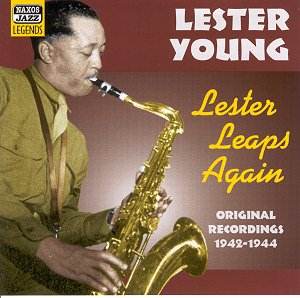
Lester Young
I cover the waterfront
I'm watching the sea
Will the one I love
Be coming back to me
I cover the waterfront
In search of my love
An I'm covered
By a starlit sky above
Here am I
Patiently waiting
Hoping and longing
Oh how I yearn
Where are you
Have you thought back time
Will you remember
Will you return
Will the one I love
Be coming back
To me
Johnny Green and Edward Heyman
0 Replies
bobsmythhawk
1
Reply
Sat 15 Sep, 2007 07:12 am
Robert Benchley
From Wikipedia, the free encyclopedia
Born: September 15, 1889(1889-09-15)
Worcester, Massachusetts, U.S.
Died: November 21, 1945 (aged 56)
New York, New York, U.S.
Occupation: Writer, Critic, Actor
Genres: Deadpan, Parody, Surreal humour
Influenced: Woody Allen, Dave Barry, Steve Martin, S. J. Perelman, David Sedaris, James Thurber
Robert Charles Benchley (September 15, 1889 - November 21, 1945) was an American humorist best known for his work as a newspaper columnist and film actor. From his beginnings at the Harvard Lampoon while attending Harvard University, through his many years writing essays and articles for Vanity Fair and The New Yorker, and his acclaimed short films, Benchley's style of humor brought him respect and success during his life, from New York City and his peers at the Algonquin Round Table to contemporaries in the burgeoning film industry.
Benchley is best remembered for his contributions to The New Yorker, where his unique essays, whether topical or absurdist, influenced many modern humorists. He also made a name for himself in Hollywood, when his short film How to Sleep was a popular success and won Best Short Subject at the 1935 Academy Awards, and his many memorable appearances in films such as Alfred Hitchcock's Foreign Correspondent and a dramatic turn in Nice Girl?. His legacy includes written work and numerous short film appearances.
Biography
Although Benchley was known for misleading and fictional autobiographical statements about himself (at one point asserting that he wrote A Tale of Two Cities before being buried at Westminster Abbey[1]), he actually was the great-grandchild of the founder of Benchley, Texas: Henry Wetherby Benchley who was jailed for his help with the Underground Railroad.[2] Robert Benchley was born on 15 September 1889 in Worcester, Massachusetts, to Charles and Maria Benchley; it was an unplanned birth.[3]
Robert (left) with his brother, Edmund. Edmund would perish in the Spanish-American War, profoundly affecting Robert and influencing his later pacifist views.Robert's older brother, Edmund Benchley, was thirteen years older, and died in 1898 in the Spanish-American War, when Robert was only nine. (Upon learning of Edmund's death, Maria Benchley was believed to have cried out "Why couldn't it have been Robert?!", a comment for which Maria spent a long time atoning.) His brother's death had a considerable effect on Robert's life, as his later writings would show distinct pacifist leanings.[4]
Robert Benchley married Gertrude Darling; they met while Benchley was in high school in Worcester, engaged during his senior year at Harvard, married in June 1914,[5] and their first child, Nathaniel Benchley was born a year later. A second son, Robert Benchley, Jr., was born in 1919.[6]
Nathaniel became a writer himself, and penned a biography of his father in 1955[7] as well as becoming a well-respected children's book author.[8] Nathaniel had talented sons as well: Peter Benchley was best known for the book Jaws (which inspired the film of the same name),[9] and Nat Benchley wrote and performed in an acclaimed one-man production based on Robert's life.[10]
Education
Robert grew up and attended school in Worcester and was involved in academic and traveling theatrical productions during high school. Thanks to financial aid from his late brother's fiancee, Lillian Duryea, he could attend Phillips Exeter Academy in Exeter, New Hampshire for his final year of high school.[11] Benchley reveled in the atmosphere at the Academy, and he remained active in creative extracurricular activities, thereby damaging his academic credentials toward the end of his term.[12]
Benchley enrolled at Harvard University in 1908, again with Duryea's financial help.[13] He joined the Delta Upsilon fraternity in his freshman year, and continued to partake in the camaraderie that he had enjoyed at Phillips Exeter while still doing well in school. He did especially well in his English and government classes. His humor and style began to reveal itself during this time; Benchley was often called upon to entertain his fraternity brothers, and his impressions of classmates and professors became very popular. His performances gave him some local fame, and most entertainment programs on campus and many off-campus meetings recruited Benchley's talents.[14]
During his first two years at Harvard, Benchley worked with the Harvard Advocate and the Harvard Lampoon. He was elected to the Lampoon's board of directors in his third year.[15] The election of Benchley was unusual, as he was the publication's art editor and the board positions typically fell to the foremost writers on the staff. The Lampoon position opened a number of other doors for Benchley, and he was quickly nominated to the Signet Society meeting club as well as becoming the only undergraduate member of the Boston Papyrus Club at the time.[16]
Along with his duties at the Lampoon, Benchley acted in a number of theatrical productions, including Hasty Pudding productions of The Crystal Gazer and Below Zero.[17] Benchley kept these achievements in mind as he began to contemplate a career for himself after college. Charles Townsend Copeland, an English professor, recommended that Benchley go into writing, and Benchley and future Benchley illustrator Gluyas Williams from the Lampoon considered going into freelance work writing and illustrating theatrical reviews. Another English professor recommended that Benchley speak with the Curtis Publishing Company; but Benchley was initially against the idea, and ultimately took a position at a civil service office in Philadelphia. Owing to an academic failure in his senior year due to an illness,[18] Benchley would not receive his Bachelor of Arts from Harvard until the completion of his credits in 1913, and took a position with Curtis shortly after he received his diploma.[19]
Early Professional Career
Benchley did copy work for the Curtis Publishing Company during the summer following graduation (1913) while doing other odd service jobs, such as translating French catalogs for the Boston Museum of Fine Arts.[20] In September 1913 he was hired by Curtis as a full-time staff member, preparing copy for its new house publication, Obiter Dicta.[21] The first issue was roundly criticized by management, who felt it was "too technical, too scattering, and wholly lacking in punch."[22] Things did not improve for Benchley and Obiter Dicta, and a failed practical joke at a company banquet further strained the relationship between Benchley and his superiors.[23] He continued his attempts to develop his own voice within the publication, but Benchley and Curtis were not a good match and he eventually left,[24] as Curtis was considering eliminating Benchley's role and Benchley was offered a position in Boston with a better salary.[25]
Benchley held a number of similar jobs in following years. His re-entry into public speaking followed the annual Harvard-Yale football game in 1914, where he presented a practical joke involving "Professor Soong" giving a question-and-answer session on football in Chinese. In what the local press dubbed "the Chinese professor caper", Soong was played by a Chinese-American who had lived in the United States for over thirty years, and pretended to answer questions in Chinese while Benchley "translated."[26] While his public profile rose, Benchley continued with freelance work, which included his first paid piece for Vanity Fair in 1914, titled "Hints on Writing a Book,"[27] a parody of the non-fiction pieces then popular. While Benchley's pieces were bought by Vanity Fair from time to time, his consistent work dried up, and Benchley took a position with the New York Tribune.[28]
Benchley started at the Tribune as a reporter. He was a very poor one, unable to get statements from people quoted in other papers, and eventually had greater success covering lectures around the city. He was promised a position at the Tribune's Sunday magazine when it launched, and he was moved to the magazine's staff soon after he was hired, eventually becoming chief writer. He wrote two articles a week; the first a review of non-literary books, the other a feature-style article about whatever he wanted. The liberty gave his work new life, and the success of his pieces in the magazine convinced his editors to give him a signed byline column in the Tribune proper.[29]
Benchley filled in for P. G. Wodehouse at Vanity Fair at the beginning of 1916, reviewing theatre in New York. The experience at Vanity Fair inspired Benchley's fellow staff at the Tribune magazine with creative topics for articles (such as arranging for the producers of The Thirteenth Chair to cast Benchley as a corpse), but the situation at the magazine deteriorated as the pacifist Benchley became unhappy with the Tribune's position on World War I, and the Tribune editors were unhappy with the evolving tone and irreverence of the magazine. In 1917, the Tribune shut down the magazine, and Benchley was out of work again. When a rumored opening for an editorial position at Vanity Fair fell through, Benchley decided he would continue freelancing, having made a name for himself at the magazine.[30]
This freelancing attempt did not start out well, with Benchley selling just one piece to Vanity Fair and accumulating countless rejections in two months. When a job as a press agent for Broadway producer William A. Brady was offered, Benchley took the position against the advice of many of his peers. This experience was a poor one, as Brady was extremely difficult to work for, and Benchley resigned to became a publicity director for the federal government's Aircraft Board at the beginning of 1918. His experience there was not much better, and when an opportunity was offered to return to the Tribune under new editorial management, Benchley took it.[31]
At the Tribune, Benchley, along with new editor Ernest Gruening, was in charge of a twelve-page pictorial supplement titled the Tribune Graphic. The two were given a good deal of freedom, but Benchley's coverage of the war and focus on African-American regiments as well as provocative pictorials about lynching in the southern United States earned him and Gruening scrutiny from management. Amid accusations that both were pro-German (the United States was fighting Germany at the time), Benchley tendered his resignation in a terse letter, citing the lack of "rational proof that Dr. Gruening was guilty of...charges made against him..." and management's attempts to "smirch the character and the newspaper career of the first man in three years who has been able to make the Tribune look like a newspaper."[32]
Benchley was forced to take a publicity position with the Liberty Loan program, and he continued to freelance until Collier's contacted him with an associate editor position. Benchley took this offer to Vanity Fair to see if they could match it, as he felt Vanity Fair was the better magazine, and Vanity Fair offered him the position of managing editor.[33] Benchley accepted, and began work there in 1919.[34]
Vanity Fair and Its Aftermath
Benchley began at Vanity Fair with fellow Harvard Lampoon alumnus Robert Emmet Sherwood and future friend and collaborator Dorothy Parker, who had taken over theatre criticism from P. G. Wodehouse years earlier. The format of Vanity Fair fit Benchley's style very well, allowing his columns to have a humorous tone, often as straight parodies.[35] Benchley's work was typically published twice a month. Some of Benchley's columns, featuring a character he created, were attributed to his pseudonym Brighton Perry, but most were attributed to Benchley himself.[36] Sherwood, Parker, and Benchley became close, often having long lunches at the Algonquin Hotel. When the editorial managers went on a European trip, the three took advantage of the situation, writing articles mocking the local theatre establishment and offering parodic commentary on a variety of topics, such as the effect of Canadian hockey on United States fashion. This worried Sherwood, as he felt it could jeopardize his forthcoming raise.[37]
The situation at Vanity Fair deteriorated on the managerial team's return. The management sent out a memo forbidding the discussion of salaries in an attempt to reign in the staff. Benchley, Parker, and Sherwood responded with a memo of their own, followed by placards around their necks detailing their exact salaries for all to see. Management attempted to issue "tardy slips" for staff who were late; on one of these, Benchley filled out, in very small handwriting, an elaborate excuse involving a herd of elephants on 44th Street. These issues contributed to a general deterioration of morale in the offices, culminating in Parker's termination, allegedly due to complaints by the producers of the plays she skewered in her theatrical reviews. Upon learning of her termination, Benchley tendered his own resignation. Word of it was published in Time by Alexander Woollcott, who was at a lunch with Benchley, Parker, and others. Given that Benchley had two children at the time of his resignation, Parker referred to it as "the greatest act of friendship I'd ever seen."[38]
Following word of Benchley's resignation, freelance offers began piling up. He was offered $200 per basic subject article for The Home Sector,[39] and a weekly freelance salary from New York World to write a book review column three times per week for the same salary he received at Vanity Fair.[40] The column, titled "Books and Other Things," ran for one year and roved beyond literature to mundane topics such as Bricklaying in Modern Practice.[41] Unfortunately for Benchley, however, his writing a syndicated column for David Lawrence drew the ire of his World bosses, and "Books and Other Things" was dropped.[42]
Benchley continued to freelance, submitting humor columns to a variety of publications, including The New Yorker and Life (where fellow humorist James Thurber believed Benchley's columns were the only reason the magazine was read).[43] He continued meeting with his friends at the Algonquin, and the group became popularly known as the Algonquin Round Table.[44] In April 1920, Benchley landed a position with Life writing theatre reviews, which he would continue doing regularly through 1929, eventually taking complete control of the drama section.[45] His reviews were known for their flair, and he often used them as a soapbox for issues of concern to him, whether petty (people who cough during plays) or more important (such as racial intolerance).[46]
Things changed again for Benchley a number of years into the arrangement. A theatrical production by the members of the Round Table was put together in response to a challenge from actor J. M. Kerrigan, who was tired of the Table's complaints about the ongoing theatre season. The result was No Sirree! (the name being a pun of the European revue Le Chauve Souris), "An Anonymous Entertainment by the Vicious Circle of the Hotel Algonquin." Benchley's contribution to the program, "The Treasurer's Report," featured Benchley as a nervous, disorganized man attempting to summarize an organization's yearly expenses. The revue was applauded by both spectators and fellow actors, with Benchley's performance in particular receiving the biggest laughs. A reprise of "The Treasurer's Report" was often requested for future events, and Irving Berlin hired Benchley for $500 a week to perform it nightly during Berlin's Music Box Revue.[47]
Hollywood and The New Yorker call
Benchley had continued to receive positive responses from his performing, and in 1925 he accepted a standing invitation from film producer Jesse L. Lasky for a six-week term writing screenplays at $500. While the session did not yield significant results, Benchley did get writing credit for producing the title cards on the Raymond Griffith silent film You'd Be Surprised, and was invited to do some titling for two other films.[48]
Benchley was also hired to help with the book for a Broadway musical, Smarty, starring Fred Astaire. This experience was not as positive, and most of Benchley's contributions were excised and the final product, Funny Face, did not have Benchley's name attached. Worn down, Benchley moved to his next commitment, an attempt at a talking film version of "The Treasurer's Report." The filming went by quickly, and though he was convinced he was not good, The Treasurer's Report was a financial and critical success upon its release in 1928. Benchley participated in two more films that year: a second talking film he wrote, The Sex Life of the Polyp, and a third starring but not written by him, The Spellbinder. The two enjoyed similar success and were critically acclaimed, and Benchley was signed to a deal to produce more films before heading back to New York to continue writing. As Life would say following his eventual resignation in 1929, "Mr Benchley has left Dramatic Criticism for the Talking Movies."[49]
During the time that Benchley was filming various short films, he also began working at The New Yorker, which had started in February of 1925 under the control of Benchley's friend Harold Ross. While Benchley, along with many of his Algonquin acquaintances, was wary of getting involved with another publication for various reasons, he completed some freelance work for The New Yorker over the first few years, and was later invited to be newspaper critic. Benchley initially wrote the column under the pseudonym Guy Fawkes (the lead conspirator in the English Gunpowder Plot), and the column was very well received. Benchley tackled issues ranging from careless reporting to European fascism,[50] and the publication flourished. Benchley was invited to be theatre critic for The New Yorker in 1929, leaving Life, and contributions from Woollcott and Parker became regular features in the magazine. The New Yorker published an average of forty-eight Benchley columns per year during the early 1930s.[51]
With the emergence of The New Yorker, Benchley was able to stay away from Hollywood work for a number of years. In 1931, he was persuaded to do voice work for Radio Pictures for a film that would eventually be titled Sky Devils, and he acted in his first feature film, The Sport Parade, in 1932. The work on The Sport Parade caused Benchley to miss the fall theatre openings, which embarrassed him (even if the relative success of The Sport Parade was often credited to Benchley's role), but the lure of filmmaking did not disappear, as RKO offered him a writing and acting contract for the following year for more money than he was making writing for The New Yorker.[52]
Benchley On Film and Sleep
Benchley re-entered Hollywood at the height of the Great Depression, and the large-scale introduction of the talkie films he had began working with years before. His arrival put him on the scene of a number of productions almost instantly. While Benchley was more interested in writing than acting, one of his more important roles as an actor was as a salesman in Rafter Romance, and his work attracted the interest of MGM, who offered Benchley a lot of money to complete a series of short films. Benchley, who had also been offered a syndicated column by Hearst, was able to film the shorts in New York and keep up with his new column. Before heading back to New York, Benchley took a role in the Clark Gable film Dancing Lady.[53]
In 1934, Benchley returned to Hollywood, completing the short film How to Break 90 at Croquet, and the feature-length Gable production China Seas. Upon completion, MGM invited Benchley to write and perform in a short production inspired by a Mellon Institute study on sleep commissioned by the Simmons Mattress Company. The resulting film, How to Sleep, was filmed in two days, and featured Benchley as both the narrator and sleeper, the latter a role Benchley claimed was "not much of a strain, as [he] was in bed most of the time."[54] The film was well-received in preview screenings, and promotions took over, with a still from the film being used in Simmons advertisements. The only group not pleased was the Mellon Institute, who did not approve of the studio mocking their study.[55]
The early success of How to Sleep prompted MGM to rush two more short films featuring Benchley, How to Train a Dog, a spoof of dog-training techniques, and How to Behave, which lampooned etiquette norms. How to Sleep was named Best Short Subject at the 1935 Academy Awards, while the latter two shorts were not as well received.[56]
Benchley returned to the cinema in 1937, cast in the revue Broadway Melody of 1938, and in his largest role to that point, the critically-panned Live, Love and Learn. A short that Benchley completed for MGM, A Night at the Movies, was Benchley's greatest success since How to Sleep, and won him a contract for more short films that would be produced in New York. These films were produced more quickly than his previous efforts (while How to Sleep needed two days, the later short How to Vote needed less than twelve hours), and took their toll on Benchley. He still completed two shoots in one day (one of which was The Courtship of the Newt), but rested for a while following the 1937 schedule.[57]
Benchley's return yielded two more short films, and his high profile prompted negotiations for sponsorship of a Benchley radio program and numerous appearances on television shows, including the first television entertainment program ever broadcast, an untitled test program using an experimental antenna on the Empire State Building. The radio program, Melody and Madness, was more a showcase for Benchley's acting, as he did not participate in writing it. It was not well received, and was removed from the schedule.[58]
Later life
1939 was a bad year for Benchley's career. Besides the cancellation of his radio show, Benchley learned that MGM did not plan to renew his contract, and The New Yorker, frustrated with Benchley's film career taking precedence over his theatre column, hired a new critic. Following his final New Yorker column in 1940, Benchley headed back to Hollywood and completed some shorts for Paramount Pictures. Benchley also received two more feature-length roles: Walt Disney's The Reluctant Dragon, where Benchley played himself as written by other people, and Nice Girl?, considered Benchley's greatest non-comedic performance.[59]
Benchley's roles primarily came as a freelance actor, as his Paramount contract was not providing enough money. Benchley was cast in minor roles for various romantic comedies, some shoots going better than others. Paramount did not renew his contract in 1943, and Benchley signed back with MGM with an exclusive contract. The situation was not positive for Benchley, as the studio "mishandled" him and kept Benchley too busy to complete his own work. His contract concluded with only four short films completed and no chance of signing another contract. Following the printing of two books of his old New Yorker columns, Benchley gave up writing for good in 1943, signing one more contract with Paramount in December of that year.[60]
While Benchley's books and Paramount contract were giving him financial security, he was still unhappy with the turn his career had taken. His experience with Weekend at the Waldorf was especially upsetting, as Benchley considered the writing to be subpar. He continued to fill his schedule, despite being diagnosed with cirrhosis of the liver caused by a drinking problem which had developed later in his life. While he completed his year's work, his condition continued to deteriorate, and Benchley died in a New York hospital on 21 November 1945. His family opted for a private funeral service, and his body was cremated and interred in a family plot on the island of Nantucket.[61]
Humor style
Benchley's humor was molded during his time at Harvard. While his skills as an orator were already known by classmates and friends, it was not until his work at the Lampoon that his style was formed. The prominent styles of humor were then "crackerbarrel," which relied on devices such as dialects and a disdain for formal education in the style of humorists such as Artemis Ward and Petroleum Vesuvius Nasby, and a more "genteel" style of humor, very literary and upper-class in nature, a style popularized by Oliver Wendell Holmes. While the two styles were, at first glance, diametrically opposed, they coexisted in magazines such as Vanity Fair and Life. The Lampoon primarily used the latter style, which suited Benchley. While some of his pieces would not have been out of place in a crackerbarrel-style presentation, Benchley's reliance on puns and wordplay resonated more with the literary humorists, as shown by his success with The New Yorker, known for the highbrow tastes of its readers.[62]
Benchley's characters were typically exaggerated representations of the common man. They were designed to create a contrast between himself and the masses, who had less common sense. The character is often befuddled by many of the actions of society and is often neurotic in a "different" way ?- the character in How to Watch Football, for instance, finds it sensible for a normal fan to forgo the live experience and read the recap in the local papers.[63] This character, labeled the "Little Man" and in some ways similar to many of Mark Twain's protagonists, was based on Benchley himself; he did not persist in Benchley's writing past the early 1930s, but survived in his speaking and acting roles. This character was apparent in Benchley's Ivy Oration during his Harvard graduation ceremonies,[64] and would appear throughout his career, such as during "The Treasurer's Report" in the 1920s[65] and his work in feature films in the 1930s.[66]
Topical, current-event style pieces written for Vanity Fair during the war did not lose their levity, either. He was not afraid to poke fun at the establishment (one piece he wrote was titled "Have You a Little German Agent in Your Home?"), and his common man observations often veered into angry rants, such as his piece "The Average Voter," where the namesake of the piece "[F]orgets what the paper said...so votes straight Republicrat ticket."[67] His lighter fare did not hesitate to touch upon topical issues, drawing analogies between a football game and patriotism, or chewing gum and diplomacy and economic relations with Mexico.[68]
In his films, the common man exaggerations continued. Much of his time in the films was spent spoofing himself,[69] whether it was the affected nervousness of the treasurer in The Treasurer's Report or the discomfort in explaining The Sex Life of the Polyp to a women's club.[70] Even the longer, plot-driven shorts, such as Lesson Number One, Furnace Trouble, and Stewed, Fried and Boiled, show a Benchley character overmatched by seemingly mundane tasks.[71] Even the more stereotypical characters held these qualities, such as the incapable sportscaster Benchley played in The Sport Parade.[72]
Benchley's humor inspired a number of later humorists and filmmakers. Dave Barry, author, onetime humor writer for the Miami Herald, and judge of the 2006 Robert Benchley Society Award for Humor,[73] has called Benchley his "idol"[74] and he "always wanted to write like [Benchley]."[75] Horace Digby claimed that, "[M]ore than anyone else, Robert Benchley influenced [his] early writing style."[76] Outsider filmmaker Sidney N. Laverents lists Benchley as an influence as well,[77] and James Thurber used Benchley as a reference point, citing Benchley's penchant for presenting "the commonplace as remarkable" in The Secret Life of Walter Mitty.[78]
The Algonquin Round Table
The Algonquin Round Table was a group of New York City writers and actors who met regularly between 1919 and 1929 at the Algonquin Hotel. Initially consisting of Benchley, Dorothy Parker, and Alexander Woollcott during their time at Vanity Fair, the group eventually expanded to over a dozen regular members of the New York media and entertainment, such as playwrights George S. Kaufman and Marc Connelly, actor Harpo Marx, and journalist/critic Heywood Broun, who gained prominence due to his positions during the Sacco and Vanzetti trial. The table gained prominence due to the media attention the members drew as well as their collective contributions to their respective areas.
Works
Benchley produced over 600 essays,[79] which were initially compiled in twelve volumes, during his writing career.[80] He also appeared in a number of films, including 48 short treatments that he mostly wrote or co-wrote and numerous feature films.[81]
Posthumously, Benchley's works continue to be released in books such as the 1983 Random House compilation The Best of Robert Benchley,[82] and the 2005 collection of short films Robert Benchley and the Knights of the Algonquin, which compiled many of Benchley's popular short films from his years at Paramount with other works from fellow humorists and writers Alexander Woollcott and Donald Ogden Stewart.[83]
0 Replies
bobsmythhawk
1
Reply
Sat 15 Sep, 2007 07:17 am
Agatha Christie
From Wikipedia, the free encyclopedia
Born: 15 September 1890(1890-09-15)
Torquay, Devon, England
Died: 12 January 1976 (aged 85)
Cholsey, Oxfordshire, England
Occupation: Novelist
Genres: Murder mystery, Crime fiction
Literary movement: Golden Age of Detective Fiction
Influences: Edgar Allan Poe
Anna Katherine Green
Sir Arthur Conan Doyle
GK Chesterton
Website: agathachristie.com
Agatha Mary Clarissa, Lady Mallowan, DBE (15 September 1890 - 12 January 1976), mainly known as Agatha Christie, was an English crime fiction writer. She also wrote romance novels under the name Mary Westmacott, but is chiefly remembered for her 80 detective novels. Her work with these novels, particularly featuring detectives Hercule Poirot or Miss Jane Marple, have given her the title the 'Queen of Crime' and made her one of the most important and innovative writers in the development of the genre.
Christie has been called ?- by the Guinness Book of World Records, among others ?- the best-selling writer of books of all time, and the best-selling writer of any kind second only to William Shakespeare. An estimated one billion copies of her novels have been sold in English, and another billion in 103 other languages.[1] As an example of her broad appeal, she is the all-time best-selling author in France, with over 40 million copies sold in French (as of 2003) versus 22 million for Emile Zola, the nearest contender.
Her stage play, The Mousetrap, holds the record for the longest run ever in London, opening at the Ambassadors Theatre on 25 November 1952, and as of 2007 is still running after more than 20,000 performances. In 1955, Christie was the first recipient of the Mystery Writers of America's highest honor, the Grand Master Award, and in the same year, Witness for the Prosecution was given an Edgar Award by the MWA, for Best Play. Most of her books and short stories have been filmed, some many times over (Murder on the Orient Express, Death on the Nile, 4.50 From Paddington), and many have been adapted for television, radio, video games and comics.
In 1998, the control of the rights to most of the literary works of Agatha Christie passed to the company Chorion, when it purchased a majority 64% share in Agatha Christie Limited.[2]
Biography
Agatha Christie was born as Agatha Mary Clarissa Miller in Torquay, Devon, to an American father and an English mother. She never held or claimed United States citizenship. Her father was Frederick Miller, a rich American stockbroker, and her mother was Clara Boehmer, a British aristocrat. Christie had a sister, Margaret Frary Miller (1879-1950), called Madge, eleven years her senior, and a brother, Louis Montant Miller (1880-1929), called Monty, ten years older than Christie. Her father died when she was very young. Her mother resorted to teaching her at home, encouraging her to write at a very young age. At the age of 16 she went to a school in Paris to study singing and piano.
Her first marriage, an unhappy one, was in 1914 to Colonel Archibald Christie, an aviator in the Royal Flying Corps. The couple had one daughter, Rosalind Hicks, and divorced in 1928.
During World War I she worked at a hospital and then a pharmacy, a job that influenced her work; many of the murders in her books are carried out with poison. (See also cyanide, ricin, and thallium.)
On 8 December 1926, while living in Sunningdale in Berkshire, she disappeared for ten days, causing great interest in the press. Her car was found in a chalk pit in Newland's Corner, Surrey. She was eventually found staying at the Swan Hydro (now the Old Swan hotel) in Harrogate under the name of the woman with whom her husband had recently admitted to having an affair. She claimed to have suffered a nervous breakdown and a fugue state caused by the death of her mother and her husband's infidelity. Opinions are still divided as to whether this was a publicity stunt. Public sentiment at the time was negative, with many feeling that an alleged publicity stunt had cost the taxpayers a substantial amount of money. A 1979 film, Agatha, starring Vanessa Redgrave as Christie, recounted a fictionalised version of the disappearance. Other media accounts of this event exist; it was featured on a segment of Paul Harvey's The Rest of the Story, for example.
In 1930, Christie married a Roman Catholic (despite her divorce and her Anglican faith), the archaeologist Sir Max Mallowan. Mallowan was 14 years younger than Christie, and his travels with her contributed background to several of her novels set in the Middle East. Their marriage was happy in the early years, and endured despite Mallowan's many affairs in later life, notably with Barbara Parker, whom he married in 1977, the year after Christie's death. Other novels (such as And Then There Were None) were set in and around Torquay, Devon, where she was born. Christie's 1934 novel, Murder on the Orient Express was written in the Pera Palas hotel in Istanbul, Turkey, the southern terminus of the railroad. The hotel maintains Christie's room as a memorial to the author. The Greenway Estate in Devon, acquired by the couple as a summer residence in 1938, is now in the care of the National Trust. Christie often stayed at Abney Hall in Cheshire, which was owned by her brother-in-law, James Watts. She based at least two of her stories on the hall: The short story The Adventure of the Christmas Pudding which is in the story collection of the same name and the novel After the Funeral. "Abney became Agatha's greatest inspiration for country-house life, with all the servants and grandeur which have been woven into her plots. The descriptions of the fictional Styles, Chimneys, Stoneygates and the other houses in her stories are mostly Abney in various forms."[3]
Agatha Christie's room at the Pera Palas hotel where she wrote Murder on the Orient Express.In 1971 she was made a Dame Commander of the Order of the British Empire.
Agatha Christie died on 12 January 1976, at age 85, from natural causes, at Winterbrook House in the north of Cholsey parish, adjoining Wallingford in Oxfordshire (formerly Berkshire). She is buried in the nearby St Mary's Churchyard in Cholsey.
Christie's only child, Rosalind Hicks, died on 28 October 2004, also aged 85, from natural causes. Christie's grandson, Mathew Prichard, now owns the copyright to his grandmother's works.
Hercule Poirot and Miss Marple
Agatha Christie's first novel The Mysterious Affair at Styles was published in 1920 and introduced the long-running character detective Hercule Poirot, who appeared in 30 of Christie's novels and 50 short stories.
Her other well known character, Miss Marple, was introduced in The Murder at the Vicarage in 1930, and was based on Christie's grandmother.
During World War II, Christie wrote two novels intended as the last cases of these two great detectives, Hercule Poirot and Jane Marple, respectively. They were Curtain, in which Poirot is killed, and Sleeping Murder. Both books were sealed in a bank vault for over thirty years, and were released for publication by Christie only at the end of her life, when she realised that she could not write any more novels. These publications came on the heels of the success of the film version of Murder on the Orient Express in 1974.
Like Arthur Conan Doyle, Christie was to become increasingly tired of her detective, Poirot. In fact, by the end of the 1930s, Christie confided to her diary that she was finding Poirot "insufferable", and by the 1960s she felt that he was an "an ego-centric creep". However, unlike Conan Doyle, Christie resisted the temptation to kill her detective off while he was still popular. She saw herself as an entertainer whose job was to produce what the public liked, and what the public liked was Poirot.
In contrast, Christie was fond of Miss Marple. However it is interesting to note that the Belgian detective's titles outnumber the Marple titles by more than two to one.
Poirot is the only fictional character to have been given an obituary in The New York Times, following the publication of Curtain in 1975.
Following the great success of Curtain, Christie gave permission for the release of Sleeping Murder sometime in 1976, but died in January 1976 before the book could be released. This may explain some of the inconsistencies in the book with the rest of the Marple series ?- for example, Colonel Arthur Bantry, husband of Miss Marple's friend, Dolly, is still alive and well in Sleeping Murder (which, like Curtain, was written in the 1940s) despite the fact he is noted as having died in books that were written after but published before the posthumous release of Sleeping Murder in 1976?-such as, The Mirror Crack'd from Side to Side. It may be that Christie simply did not have time to revise the manuscript before she died. Miss Marple fared better than Poirot, since after solving the mystery in Sleeping Murder, she returns home to her regular life in Saint Mary Mead.
On an edition of Desert Island Discs in 2007, Brian Aldiss recounted how Agatha Christie told him that she wrote her books up to the last chapter, and then decided who the most unlikely suspect was. She would then go back and make the necessary changes to "frame" that person. [2]
In popular culture
Christie has been portrayed on a number of occasions in film and television.
The first occasion was the 1979 Agatha when Vanessa Redgrave played the part.
Hilda Gobbi played the part in a 1980 Hungarian film, Kojak Budapesten.
Peggy Ashcroft played the part in a 1986 TV play, Murder by the Book in which Ian Holm appeared as Poirot.
Esme Lambert played the part in the Unreasonable Doubt episode of The Dead Zone, transmitted on July 14, 2002.
Olivia Williams played the part in a BBC television programme entitled Agatha Christie: A Life in Pictures which, like Agatha, revolved around the 1926 disappearance. It was transmitted on September 22, 2004.
Aya Sugimoto played the part in an episode of a Japanese television series called Hyakunin no Ijin in 2006.
On 10 August 2007, it was announced that Christie, played by actress Fenella Woolgar, would appear as a character in the 2008 season of the science fiction TV series Doctor Who.
Michelle Trout will play the part in a US film, Lives and Deaths of the Poets, which is due for release in 2009.
0 Replies
bobsmythhawk
1
Reply
Sat 15 Sep, 2007 07:21 am
Fay Wray
From Wikipedia, the free encyclopedia
Birth name Vina Fay Wray
Born September 15, 1907(1907-09-15)
Cardston, Alberta, Canada
Died August 8, 2004 (aged 96)
New York, New York, U.S.
Vina Fay Wray (September 15, 1907 - August 8, 2004) was a Canadian-American actress.
Early life
Wray was born on a ranch near Cardston, Alberta, Canada to Elvina Marguerite Jones, who was from Salt Lake City, Utah, and Joseph Heber Wray, who was from Kingston upon Hull, UK.[1] Her family moved to the United States when she was three. Although Wray's autobiography discusses her Mormon parentage and makes it clear that she was culturally Mormon, she was apparently never baptized as a member of The Church of Jesus Christ of Latter-day Saints. Wray's family lived in predominantly Mormon communities in Alberta, Arizona and Salt Lake City, Utah before settling in Los Angeles, California, where she got her first film work in Hal Roach comedy shorts and in low-budget westerns in the early 1920s.
Career
Wray gained media attention when she was selected as one of the WAMPAS Baby Stars in 1926, which resulted in a contract at Paramount Pictures.
In 1928, director Erich von Stroheim cast Wray as the main female lead in his troubled production of The Wedding March, which sent Hollywood in a buzz for its high budget and production values. It was a financial failure, but it gave Wray her first lead role.
She is best remembered for her role as Ann Darrow, the blonde seductress of a gigantic, prehistoric gorilla in the classic horror/adventure film King Kong (1933). She wore a blonde wig over her naturally dark hair for the role.
She continued in films but by the early 1940s her appearances grew sporadic. She appeared frequently on television making her final appearance in 1980.
Her autobiography, On the Other Hand (ISBN 0-312-02265-4), was published in 1988.
In the later years of her life, Wray continued to make public appearances, and was a guest at the 70th Academy Awards, where the show's host, Billy Crystal introduced her and paid tribute to her film legacy.
Wray was approached to appear in a small cameo for the film King Kong (2005), and also met with Naomi Watts who was to play the Ann Darrow role. Before filming commmenced, Wray died in her sleep in her Manhattan home, and was interred at the Hollywood Forever Cemetery in Hollywood, California. After her death was announced the lights on the Empire State Building were extinguished for 15 minutes in her memory.
For her contribution to the motion picture industry, Fay Wray has a star on the Hollywood Walk of Fame at 6349 Hollywood Blvd. She received a posthumous star on Canada's Walk of Fame in Toronto on June 5, 2005. A small park near Lee's Creek on Main Street in Cardston, Alberta, is named "Fay Wray Park" in her honor. The small sign at the edge of the park on Main Street has a silhouette of King Kong on it. In May 2006, Wray became one of the first four entertainers to ever be honored by Canada Post by being featured on a postage stamp.
Richard O'Brien paid a tribute to Fay Wray in the musical Rocky Horror Picture Show. In the song "Rose Tint My World," Frank-n-Furter sings:
Whatever happened, to Fay Wray? / that delicate, satin-draped frame / as it clung to her thigh / how i started to cry / 'cause i wanted to be dressed just the same
Personal life
Wray was married three times, to John Monk Saunders, Robert Riskinand Dr. Sanford Rothenberg
She had three children, Susan Saunders, Victoria Riskin, Robert Riskin Jr.
She became a naturalized citizen of the United States in 1935.
0 Replies
bobsmythhawk
1
Reply
Sat 15 Sep, 2007 07:26 am
Penny Singleton
From Wikipedia, the free encyclopedia
Penny Singleton (September 15, 1908 - November 12, 2003) was a Hollywood actress best known for her role in the series of motion pictures based on the comic strip Blondie, followed by the popular Blondie radio program.
Born Marianna Dorothy Agnes Letitia McNulty in Philadelphia, Pennsylvania, and known as Dorothy McNulty, she was the daughter of an Irish-American newspaperman, Benny McNulty. She began her show business career as a child by singing at a silent movie theater, and toured in vaudeville as part of an act called The Kiddie Kabaret. She sang and danced with Milton Berle (whom she had known since childhood) and actor Gene Raymond, and appeared on Broadway in Jack Benny's Great Temptations.
She married a dentist, Lawrence Singleton, in 1937, and moved to Hollywood, where she later became billed as Penny Singleton. They had one child, a daughter, and divorced in 1939. She married Robert Sparks in 1941. They had one child, a daughter. Sparks died on July 22, 1963.
She appeared as a nightclub dancer in After the Thin Man (still credited under her real name). She was cast opposite Arthur Lake (as Dagwood) in the feature film Blondie in 1938, based on the comic strip by Chic Young. They repeated their roles on a radio comedy beginning in 1939, and in guest appearances on other radio shows. As Dagwood and Blondie Bumstead, they proved so popular that a succession of 27 sequels were made from 1938 until 1950 (the radio show ended the same year). Husband Robert Sparks produced a number of these sequels. Singleton dyed her brunette hair blonde for the rest of her life.
She was active in union affairs and was the first woman president of an AFL-CIO union. She led a strike by the Radio City Rockettes.
She became familiar to television audiences as the voice of Jane Jetson in the animated series The Jetsons, which originally aired from 1962 until 1963, reprising the role for a syndicated revival which (from 1985 through 1988) and assorted specials, records, and Jetsons: The Movie. She also toured in nightclubs and roadshows of plays and musicals.
Singleton died in Sherman Oaks, California following a stroke at the age of 95, and was interred in San Fernando Mission Cemetery in Los Angeles, California.
0 Replies
bobsmythhawk
1
Reply
Sat 15 Sep, 2007 07:32 am
Jackie Cooper
From Wikipedia, the free encyclopedia
Birth name John Cooper, Jr.
Born September 15, 1922 (1922-09-15) (age 84)
Los Angeles, California, US
Spouse(s) June Horne (1944-1949)
Hildy Parks (1950-1951)
Barbara Kraus (1954-)
Children John Anthony Cooper (b.1946)
Russell Cooper (b.1956)
Julie Cooper (1957-1997)
Cristina Cooper (b.1959)
[show]Awards
Emmy Awards
Outstanding Directing - Comedy Series
1972 M*A*S*H
Outstanding Directing - Drama Series
1978 The White Shadow
Jackie Cooper (born September 15, 1922) is an American Academy Award-nominated actor, Emmy Award-winning TV director, and TV producer. He was a child actor who managed to transition into an adult career.
Biography
Early life
Cooper was born John Cooper, Jr.[1] in Los Angeles, California. His father, John Cooper, left the family when Jackie was two years old. His mother, Mabel Leonard Bigelow (nee Polito), was a stage pianist[2] and former child actress.[3] Cooper's maternal uncle, Jack Leonard, was a screenwriter, and his maternal aunt, Julie Leonard, was an actress married to director Norman Taurog. Cooper's stepfather was C. J. Bigelow, a studio production manager.[4] Cooper was born illegitimately; his mother was Italian American (her family's surname was changed from "Polito" to "Leonard") and his father was Jewish.[5][6][7][8]
Acting career
Cooper first appeared in the short Boxing Gloves in 1929, one of the Our Gang comedies. He was signed to a three year contract that was to expire in 1932. He initially was only a supporting character in 1929, but by early 1930 he had done so well with the transition to sound films that he had become a major character. He was the main character on episodes like The First Seven Years, When The Wind Blows, and others. His most notable Our Gang shorts explore his crush on Miss Crabtree, the schoolteacher played by June Marlowe, which included the trilogy of shorts Teacher's Pet, School's Out, and Love Business.
Other movie studios liked Cooper's work. In the Spring of 1931, Paramount signed him as well as recurring Our Ganger Donald Haines to a long term contract to star in features. Both Jackie Cooper and Donald Haines walked off the Our Gang set during the production of the second to last episode Bargain Day" to begin work on their first feature film over at Paramount. His first non-Our Gang role was in 1931, when Norman Taurog hired him to star in Skippy, for which he was nominated for the Academy Award for Best Actor - the youngest actor ever (at the age of 9) to be nominated for an Oscar as Best Actor. Jackie would remain at Paramount while at the same time Donald Haines would leave Paramount to return to the more child friendly Hal Roach Studios and resume his recurring Our Gang role on time for the start of the 1931-1932 season (when Our Gang was depleted because several long-time major characters would not return for the new season) until 1933 and continue on in other Roach short subjects after that.
The movie catapulted young Cooper to super-stardom. Our Gang producer Hal Roach sold Jackie's contract to Metro-Goldwyn-Mayer in mid-1931, as he felt the youngster would have a better future in features. He began a long on-screen relationship with actor Wallace Beery in such films as The Champ (1931), The Bowery (1933), Treasure Island (1934), and O'Shaughnessy's Boy (1935). A legion of film critics and fans have lauded the relationship between the two as an example of classic movie magic. However, Cooper later revealed that Beery was a violent, foul-mouthed drunkard who was disliked by those with whom he worked. Cooper said Beery had been abusive toward him, and was one of the cruelest, most sadistic people he has ever known.
Not conventionally handsome as he approached adulthood, Cooper had the typical child-actor problems finding roles as an adolescent, and he served in World War II, so his career was at a nadir when he starred in two popular television series, The People's Choice and Hennesey. His television experience convinced him that he could become a director and he successfully moved behind the camera to become one of the busier Emmy Award-winning television directors.
Cooper as an adult actor in Superman, 1978Cooper found renewed fame in the 1970s as Daily Planet editor Perry White in the Superman feature film series starring Christopher Reeve.
Personal life
Cooper has been married three times: to June Horne (1944-1949) (one son, "John "Jack" Cooper born 1946); Hildy Parks (1950-1951), and (since 1954) to Barbra Krause (born 1927) (three children, Russ (born 1956), Julie (1957-1997), and Crissy (born 1959).
Cooper's autobiography, Please Don't Shoot My Dog, was published in 1982. The title comes from director Norman Taurog's threat to shoot young Jackie's dog if he could not cry in Skippy. Cooper has a star on the Hollywood Walk of Fame at 1501 Vine Street.
Cooper is one of the few living Our Gangers from the original series. Other surviving members are Dorothy DeBorba, Dickie Moore, Shirley Jean Rickert, Jean Darling, Mickey Gubitosi, Jerry Tucker, and Jacqueline Taylor.
0 Replies
bobsmythhawk
1
Reply
Sat 15 Sep, 2007 07:36 am
Tommy Lee Jones
From Wikipedia, the free encyclopedia
Birth name Tommy Lee Jones
Born September 15, 1946 (1946-09-15) (age 61)
San Saba, Texas
Years active 1970 - present
[show]Awards
Academy Awards
Best Supporting Actor
1993 The Fugitive
Emmy Awards
Outstanding Lead Actor in a Limited Series or a Special
1983 The Executioner's Song
Golden Globe Awards
Best Supporting Actor - Motion Picture
1994 The Fugitive
Tommy Lee Jones (born September 15, 1946) is an Academy Award-winning American actor and director.
Biography
Early life
Jones was born in San Saba, Texas to Clyde C. Jones, an oil field worker, and Lucille Marie (Scott), a police officer, school teacher, and beauty shop owner;[1] the two were married and divorced twice. Jones, an eighth-generation Texan, has a Cherokee Native American grandparent.[2] He was a resident of Midland, Texas and attended the same high school, Robert E. Lee High School, as the First Lady Laura Bush.
Jones graduated from the St. Mark's School of Texas (where he is now on the board of directors) and attended Harvard on a scholarship, where he lived in Mower B-12 as a freshman, across the hall from future Vice President Al Gore. As an upperclassman, he was roommates with Gore and John Lithgow in Dunster House. Jones played offensive tackle on Harvard's undefeated 1968 varsity football team, was nominated as a first-team All-Ivy League selection, and played in the memorable and literal last-minute Harvard sixteen-point comeback blitz to tie Yale in the 1968 Game. Jones graduated cum laude with a degree in English in 1969.[3]
Career
Jones then moved to New York City to become an actor. He started acting on Broadway and in television. He made his debut in movies in Love Story, in 1970 (Erich Segal, the author of "Love Story" has said that he based the lead character of Oliver on the two undergrad roommates he knew while teaching at Harvard, Jones and Al Gore.). Between 1971 and 1975, he portrayed Dr. Mark Toland on the ABC soap opera, One Life to Live, and then he played the role of an escaped convict who was hunted down by the police in Jackson County Jail (1976). In 1978, he starred opposite Sir Laurence Olivier in The Betsy.
In 1981, he played a drifter opposite Sally Field in Back Roads, a comedy that received middling reviews and grossed $11 million at the box office.[4] In 1983, he received an Emmy for Best Actor for his performance as murderer Gary Gilmore in a TV adaptation of Norman Mailer's The Executioner's Song. In the same year he also starred in pirate adventure Nate and Hayes, playing the heavily bearded Captain Bully Hayes. Despite being a film that was largely forgotten due to the unspectacular title, interest has recently been rekindled thanks to the Pirates of the Caribbean films. [dubious - discuss]
In the 1990s, movies such as The Fugitive co-starring Harrison Ford, Batman Forever co-starring Val Kilmer, and Men in Black with Will Smith brought him tens of millions of dollars and made him one of the top actors of Hollywood. His role in The Fugitive won him wide acclaim and an Academy Award for Best Supporting Actor. When he accepted his Oscar, his head was shaved for his role in the film Cobb, a situation he made light of in his speech by saying "All a man can say at a time like this is 'I am not really bald.'"
In 2005, he released his first feature-film The Three Burials of Melquiades Estrada, that was presented at the 2005 Cannes Film Festival. It won him the Best Actor Award. His first film as director was in 1995, a made-for-television movie.
Personal life
At the 2000 Democratic National Convention, he presented the nominating speech for his college roommate, Al Gore, as the Democratic Party's nominee for President of the United States.
Jones has two children from his second marriage to Kimberlea Cloughey: Victoria Kafka (born 1991) and Austin Leonard (born 1982). He was married to Kate Lardner, the daughter of Ring Lardner Jr. from 1971 to 1978. On March 19, 2001, he married his third wife, Dawn Laurel.
Jones resides in Terrell Hills, Texas, a community in San Antonio.
0 Replies
bobsmythhawk
1
Reply
Sat 15 Sep, 2007 07:55 am
It's that time of year to take our Annual Dementia Test.
Exercise of the brain is as important as exercise of the muscles.
As we grow older, it's important to keep mentally alert. If you don't
use it, you lose it! Below is a very private way to gauge your loss or
non-loss of intelligence.
Take the test presented here to determine if you're losing it or not. The
spaces below are so you don't see the answers until you've made your answer.
OK, relax, clear your mind and begin.
1. What do you put in a t oaster?
Answer: "bread." If you said "toast," give up now and do something else.
Try not to hurt yourself. Pop another can of Ensure and a shot of Geritol.
If you said, bread, go to Question 2.
2. Say "silk" five times. Now spell "silk." What do cows drink?
Answer: Cows drink water. If you said "milk," don't attempt the next
question.
Your brain is over-stressed and you might start drooling. Content
yourself with reading more appropriate literature such as "Green Eggs and Ham", Sam I'm Am.
However, if you said "water", proceed to question 3.
3. If a red house is made from red bricks and a blue house is made
from blue bricks and a pink house is made from pink bricks and a black house is made from black bricks, what is a green house made from?
Answer: Greenhouses are made from glass. If you said "green bricks,"
why are you still reading these??? I'm pretty sure it's past your nap time! If you said "glass," go on to Question 4.
4. It's twenty years ago, and a plane is flying at 20,000 feet over
Germany (If you will recall, Germany at the time was politically divided into West Germany and East Germany .) Anyway, during the flight, TWO engines fail. The pilot, realizing that the last remaining engine is also failing, decides on a crash landing procedure. Unfortunately the engine fails before he can do so and the plane fatally crashes smack in the middle of "no man's land" between East Germany and West Germany .
Where would you bury the survivors? East Germany, West Germany, or no man's land"?
Answer: You don't bury survivors. If you said ANYTHING else, you are
demented and you must stop. Your dog Rover didn't run away, you buried him some place, no more gardening for you.
If you said, "You don't bury survivors" proceed to the next question.
5. Without using a calculator - You are driving a bus from London to
M ilford Haven in Wales . In London , 17 people get on the bus; In Reading , six people get off the bus and nine people get on. In Swindon , two people get off and four get on. In Cardiff , 11 people get off and 16 people get on. In Swansea , three people get off and five people get on. In Carmathen, six people get off and three get on. You then arrive at
Milford Haven.
What was the name of the bus driver ?
Answer: Oh, for crying out loud! Don't you remember your own name? It
was YOU!!
If your name was Bob at the beginning of this question, it still is Bob!
Now try the next one.
6. Spot... Spot... Spot S P O T what do you do when you come to a
green light?
Stop was not the right thing to do at a GREEN light. I'm afraid you'll need
to give me the car keys please.If you said go, continue to the next
question.
7. Joke... Joke... Joke J O K E what is the white of the egg called?
Did you say YOLK? I'll be keeping the car keys. We'll test you later
to see if you qualify for a 3 wheeled scooter. Oh yeah, it's probably time to change your diaper too! If you said egg whites you're good to drive for another year. But I'll be watching you.
Now pass this along to all your friends (if you remember their names)
and pray
they do better than you.
PS: 95% of people fail most of the questions, the other 5% your age
cheat!!
0 Replies
edgarblythe
1
Reply
Sat 15 Sep, 2007 11:55 am
Angel Baby
Rosie & The Originals
It's just like heaven being here with you
You're like an angel too good to be true
But after all, I love you, I do
Angel Baby, my Angel Baby
When you are near me my heart skips a beat
I can hardly stand on my own two feet
Because I love you, I love you, I do
Angel Baby, my Angel Baby
Oooh, I love you, ooooh I do
No one could love you like I do
Please never leave me blue and alone
If you ever go I'm sure you'll come back home
Because I love you, I love you, I do
Angel Baby, my Angel Baby
Oooooh, I love you, oooh I do
No one could love you like I do
0 Replies
edgarblythe
1
Reply
Sat 15 Sep, 2007 01:38 pm
It's too late - she's gone
it's too late - my baby's gone
wish I had told her - she was my only one
but it's too late - she's gone
It's a weak man that cries
so I guess I'd best dry my eyes
guess I will miss her more than any one
but it's too late - she's gone
She's gone - yes, she's gone
she's gone - my my baby's gone
She's gone - yes, she's gone
where can my baby be
I wonder does she know
when she left me - it hurt me so
I need your lovin' - please don't make me weep
and tell me - it's not too late
Buddy Holly
0 Replies
edgarblythe
1
Reply
Sat 15 Sep, 2007 02:16 pm
I ain't gonna work on Maggie's farm no more.
No, I ain't gonna work on Maggie's farm no more.
Well, I wake in the morning,
Fold my hands and pray for rain.
I got a head full of ideas
That are drivin' me insane.
It's a shame the way she makes me scrub the floor.
I ain't gonna work on Maggie's farm no more.
I ain't gonna work for Maggie's brother no more.
No, I ain't gonna work for Maggie's brother no more.
Well, he hands you a nickel,
He hands you a dime,
He asks you with a grin
If you're havin' a good time,
Then he fines you every time you slam the door.
I ain't gonna work for Maggie's brother no more.
I ain't gonna work for Maggie's pa no more.
No, I ain't gonna work for Maggie's pa no more.
Well, he puts his cigar
Out in your face just for kicks.
His bedroom window
It is made out of bricks.
The National Guard stands around his door.
Ah, I ain't gonna work for Maggie's pa no more.
I ain't gonna work for Maggie's ma no more.
No, I ain't gonna work for Maggie's ma no more.
Well, she talks to all the servants
About man and God and law.
Everybody says
She's the brains behind pa.
She's sixty-eight, but she says she's fifty-four.
I ain't gonna work for Maggie's ma no more.
I ain't gonna work on Maggie's farm no more.
No, I ain't gonna work on Maggie's farm no more.
Well, I try my best
To be just like I am,
But everybody wants you
To be just like them.
They say sing while you slave and I just get bored.
I ain't gonna work on Maggie's farm no more.
Bob Dylan
0 Replies
yitwail
1
Reply
Sat 15 Sep, 2007 02:40 pm
Fay Wray & Tommie Lee Jones with famous costars :wink: