Duke, Duke, Duke, Duke of Earl
Duke, Duke, Duke of Earl
Duke, Duke, Duke of Earl
Duke, Duke, Duke of Earl
Duke, Duke, Duke of Earl
Duke, Duke, Duke of Earl
Duke, Duke, Duke of Earl
As I walk through this world
Nothing can stop the Duke of Earl
And you, you are my girl
And no one can hurt you, oh no
Yes, I'm gonna love you
Come on let me hold you darlin'
'Cause I'm the Duke of Earl
And when I hold you
You will be my Duchess, Duchess of Earl
We'll walk through my dukedom
And the paradise we will share
Yes, oh, I
I'm gonna love you
Nothing can stop me now
'Cause I'm the Duke of Earl
Duke, Duke, Duke of Earl
Duke, Duke, Duke of Earl
Duke, Duke, Duke of Earl
I'm gonna love you
Nothing can stop me now
'Cause I'm the Duke of Earl
The Masked Marauders is a record album released on the Warner Bros. Reprise/Deity label in the fall of 1969. The recording captured a purported "super session" of the era's leading rock and roll musicians, including Bob Dylan, Mick Jagger, John Lennon, Paul McCartney, and George Harrison. None of the artists were mentioned on the album's cover, supposedly because of contractual agreements with their recording companies, but an advance review in Rolling Stone magazine on October 18, 1969, disclosed the stellar lineup. By the time the album reached record shops, it was virtually a legend.
In actuality, The Masked Marauders was part of a hoax concocted by Rolling Stone editor Greil Marcus. Under the pseudonym T.M. Christian (a reference to Terry Southern's novel The Magic Christian), Marcus and record reviewer Bruce Miroff collaborated on a tongue-in-cheek review of a fictitious double bootleg album. The review was intended to parody the "supergroup" trend then taking place (Crosby, Stills, Nash & Young, Blind Faith and Led Zeppelin) and was also inspired by Great White Wonder, a double album of unreleased Dylan recordings often credited as the first bootleg.
Many readers, however, took the review seriously, despite its obvious jokes:
"Produced by Al Kooper, the album was recorded with impeccable secrecy in a small town near the site of the original Hudson Bay Colony in Canada."
"The LP opens with an eighteen-minute version of 'Season of the Witch' (lead vocal by Dylan, on which he does a superb imitation of early Donovan). The cut is highlighted by an amazing jam between bass and piano, both played by Paul McCartney."
"Dylan shines on Side Three, displaying his new deep bass voice, with 'Duke of Earl.'"
"Paul showcases his favorite song, 'Mammy,' and while his performance is virtually indistinguishable from Eddie Fisher's version, it is still very powerful, evocative, and indeed, stunning. And they say a white boy can't sing the blues!"
"It can truly be said that this album is more than a way of life; it is life."
Inquiries began pouring into Rolling Stone regarding the album's availability, not only from fans and retailers, but also reportedly from the artists' managers, Allen Klein (Beatles and Rolling Stones) and Albert Grossman (Dylan). The response sparked part two of the put-on: the album itself. Marcus and Rolling Stone editor Langdon Winner recruited the Cleanliness and Godliness Skiffle Band, a Berkeley, California, group which had put out an album the previous year on Vanguard Records. The group initially recorded three of the songs cited in the review: the Nashville Skyline-inspired instrumental "Cow Pie," Jagger doing "I Can't Get No Nookie" (deemed "an instant classic" in the review), and Dylan's "Duke of Earl."
After the songs aired on San Francisco and Los Angeles radio stations ?- from tapes Marcus supplied ?- the pranksters began looking for a major label to produce an album. Several recording companies expressed an interest, but Warner Bros. won the production rights, offering a $15,000 advance plus its considerable promotional power. In November 1969, Warner released The Masked Marauders as a single LP on its newly-created Deity label. The album, which sold more than 100,000 copies, spent twelve weeks on the Billboard charts, peaking at 114.
Tipping off buyers to the joke (albeit after they had purchased the album), Warner inserted the Rolling Stone review as well as a San Francisco Chronicle column by critic Ralph J. Gleason, a co-founder of Rolling Stone. Gleason found it incredible anyone believed the review and declared the gag a "delightful bit of instant mythology." The closing track, "Saturday Night at the Cow Palace," also made clear the album was all in fun. The track featured a riotous monologue by a record buyer so indignant at being taken in by the hoax that he vows, "When I get through with those people at Deity Records, I'll have them walking out of the building in barrels." The album's liner notes, penned by "T.M. Christian," also offered its share of clues, most notably the line:
"In a world of sham, the Masked Marauders, bless their hearts, are the genuine article."
Rolling Stone, meanwhile, exposed the deception in an article, after publisher Jann Wenner grew tired of the affair.
In 2003, Rhino Records, under its Handmade label, remastered the album, releasing a numbered edition of 2,000 copies under the title The Masked Marauders - The Complete Deity Recordings. The lineup of songs is the same as on the original LP, except for bonus tracks of the monaural single, "I Can't Get No Nookie" b/w "Cow Pie." The title of the re-issue posed yet another joke: the album was Deity's only recording. As one of its contributions to the spoof, Warner created Deity under the company's Reprise subsidiary to match the name of the non-existent record company credited in the Rolling Stone review.
Track listing
Side one
"I Can't Get No Nookie" (The Masked Marauders) - 5:29
"Duke of Earl" (E. Dixon, E. Edwards, B. Williams) - 3:21
"Cow Pie" (The Masked Marauders) - 2:18
"I Am the Japanese Sandman (Rang Tang Ding Dong)" (A. Williams) - 3:45
"The Book Of Love" (W. Davis, C. Patrick, G. Malone) - 2:21
Side two
"Later" (W. Davis, C. Patrick, G. Malone) - 1:11
"More or Less Hudson's Bay Again" (The Masked Marauders) - 3:31
"Season of the Witch" (Donovan Leich) - 10:13
"Saturday Night at the Cow Palace" (The Masked Marauders) - 1:30
Wickipedia
Good morning, WA2K listeners and contributors. We had what is known among some, as a frog strangler last evening. As a matter of record, I feel a bit sea sick.
edgar, thanks for that unbelievable background on The Masked Marauders album. That's the kind of hoax that folks do not object to, Texas.
Well, listeners, I found a little background myself on Clifford Brown. Quincey Jones wrote a song called, I Remember Clifford, but I could not find those lyrics; however, I did learn that Bud Powell's brother, Richie, died in the car crash with him. How ironic, that Brown was a clean liver as opposed to so many jazz artists of the day.
Here's one that remembers Clifford, folks.
Manhattan Transfer, The - Oh Yes, I Remember Clifford
(Music by Benny Golson - Lyrics by Jon Hendricks)
Clif...ford
I know he'll never be forgotten
Long as there's still sound
He was a king uncrowned
Not all kings are given crowns
I know I'll always remember
Always
The warmth
All his warmth
Of his sound
Was in his sound
Lingers so long I'm sure he's still around
Still around... Those who've heard
For all those who've heard
Truly, they repeat him yet
Even yet
So those who hear won't forget
And the ever-present sound
That abounds in his praise
Echos throughout the universe
For endless spans of time uncountable
By days
The pretty little piquant passages
Clifford played
They are with us now
And I'm positive that they will endure
Should time and sacred circumstance allow
Yes, they'll live forever
Oh, yes, I remember Clifford now
Seems I always feel that Clifford's spirit's
Hangin' roun' me somehow
We remember
Each and every single day
I hear his lovely trumpet tone
Such exquisite singing
In every horn that seems to have a sound
That's all its own
So somebody tell me how
How can we ever day for certain
Someone that played
Like Clifford Brown could play
Could really be said to have gone away
I only know that I hear him now
And I believe that I always will
You've got to believe
I remember Clifford still, yes I hear him still
I know he'll never be forgotten
He was a king uncrowned
I know I'll always remember
'Member Clifford Brown
I'll always remember Clifford Brown
Ringo Starr
From Wikipedia, the free encyclopedia
Background information
Birth name Richard Starkey
Also known as Ringo, Billy Shears
Born 7 July 1940 (1940-07-07) (age 66)
Liverpool, Merseyside, England
Genre(s) Rock, Rock and roll, Pop
Occupation(s) Singer, Musician, Songwriter, Actor
Instrument(s) Drums, Guitar, Piano, Organ, Percussion, Harmonica, timpani
Years active 1957 - present
Label(s) Parlophone Records
Capitol Records
Apple Records
Vee-Jay Records
Polydor Records
Atlantic Records
RCA Records
Mercury Records
Koch Records
Associated
acts The Beatles, Rory Storm and the Hurricanes, Ringo Starr and His All-Starr Band, The Plastic Ono Band
Website ringostarr.com
Richard Starkey, MBE (born 7 July 1940), known by his stage name Ringo Starr, is an Academy Award- and Grammy Award-winning English musician, singer, songwriter and actor, best known as the drummer of The Beatles. He was the oldest and shortest member of the band, and the last to join the now familiar 'Fab Four' line up.[1]
Early years
He was born in 9 Madryn Street, which is in the Welsh Streets in Toxteth (sometimes stated as the Dingle, but this is incorrect[2]), and was raised in this working class area of Liverpool. [3][4] Starr's parents split up when he was three years old; his mother,[5] Elsie, married Harry Graves[6], whom Starr liked and who encouraged his interest in music.[7][8] [5] His childhood was filled with long hospital stays?-an appendicitis-caused coma and a cold-turned-pleurisy were among his ailments ?- consequently, he fell far behind in school. After his last extended visit to the hospital, beginning at age thirteen, he did not return to school.[9][10] His health problems had another enduring effect: allergies and sensitivities to food. When he travelled to India in 1968 with the other Beatles, he took his own food with him.[11]
Like the other Beatles, John Lennon, Paul McCartney and George Harrison, Ritchie (as he was known in those days)[3] also eventually became caught up in Liverpool's Skiffle craze. In 1957, he started his own group with Eddie Miles that they originally named the Eddie Miles Band but evolved into Eddie Clayton and the Clayton Squares; "Clayton Square" was a local landmark and "Clayton" Eddie Miles' stage surname. Starr joined the Raving Texans in 1959, a quartet that backed singer Rory Storm.[12] During this time, he got the nickname Ringo, because of the rings he wore,[13] and because it sounded 'cowboyish' (probably a reference to John Wayne's character in Stagecoach, "The Ringo Kid"), and the last name Starr so that his drum solos could be billed as 'Starr Time'.[14]
Starr originally met The Beatles in Hamburg, in October 1960, while he was performing with Rory Storm and the Hurricanes.[15] He also sat in for Pete Best on several occasions.[16] When The Beatles removed Best as their drummer on August 16, 1962, Starr was their choice to replace him.[17]
Although Storm was magnanimous about losing Starr,[18][19] Best fans were upset, holding vigils outside Best's house and fighting at the Cavern Club, shouting 'Pete Best forever! Ringo never!'[19] Similarly, other fans yelled the contrary: "Ringo forever! Pete Best never!"
Role in The Beatles
While sometimes the least visible member of the band, Starr's drumming style played a pivotal role in the music played and recorded by The Beatles. He filled the role he was hired for in 1962, then went on to establish a new approach to rhythm in popular music that some claim continues to grow in its significance and influence with every decade since The Beatles recorded their music.[20]
Starr is left-handed yet plays a right-handed kit; his tendency to lead with his left hand contributes to his distinctive drumming style.
Lennon said of Starr:
" Ringo was a star in his own right in Liverpool before we even met. He was a professional drummer who sang and performed and had Ringo Starr-time and he was in one of the top groups in Britain but especially in Liverpool before we even had a drummer ... Ringo's a damn good drummer.[21] "
Drummer Steve Smith said:
" Before Ringo, drum stars were measured by their soloing ability and virtuosity. Ringo's popularity brought forth a new paradigm in how the public saw drummers. We started to see the drummer as an equal participant in the compositional aspect. One of Ringo's great qualities was that he composed unique, stylistic drum parts for the Beatles songs. His parts are so signature to the songs that you can listen to a Ringo drum part without the rest of the music, and still identify the song.[22] "
Many drummers list Starr as an influence, including Max Weinberg of the E Street Band, Dave Grohl of Foo Fighters/Nirvana, Danny Carey of Tool, Liberty DeVitto of Billy Joel's band, Phil Collins, Mike Portnoy from Dream Theater and others.[23] According to Collins, "Starr is vastly underrated. The drum fills on the song "A Day in the Life" are very complex things. You could take a great drummer today and say, 'I want it like that.' They wouldn't know what to do."[24]
In his extensive survey of The Beatles' recording sessions, Mark Lewisohn confirmed that Starr was both proficient and remarkably reliable and consistent. According to Lewisohn, there were fewer than a dozen occasions in The Beatles' eight-year recording career where session 'breakdowns' were caused by Starr making a mistake, while the vast majority of takes were stopped due to mistakes by the other three members.[23]
Starr is also considered to have advanced various modern drumming techniques (for playing and recording) such as the matched grip, placing the drums on high risers for visibility as part of the band, tuning the drums lower, and using muffling devices on tonal rings, along with his general contributions to The Beatles as a whole.[22] Specific drum parts executed by Starr in notably signature fashion include the fill that brings the drums and bass guitar into "Hey Jude", the steady rock beats in "Please Please Me" and other early Beatles recordings, the drum kit pattern through the bridge of "Hello, Goodbye", and the driving bass drum notes found in "Lady Madonna", underlying the more intricate, double-tracked snare drum.[citation needed] His use of a 'sizzle' cymbal (a cymbal incorporated with rivets that vibrate) would bring a much fuller sound than standard 'ride' cymbals.
Two song performances where Starr is most renowned as a drummer are "Rain" (his personal favourite) and "She Said, She Said": his synching with McCartney's bass on the coda of "Rain" is considered one of his most memorable moments; on "She Said, She Said", his fills along with his smooth changing of meters from 4/4 to 3/4 have been highly praised[citation needed].
Lennon, McCartney and Harrison have all said that Starr was the best rock drummer in the world. McCartney took over the drums on "Back in the U.S.S.R." and "Dear Prudence", the first two tracks on the White Album (1968) after Starr had walked out, disgusted with the band's tensions and bored with waiting around to contribute. He did not return for two weeks until the other three Beatles urged him to come back. He spent the fortnight with actor Peter Sellers on his yacht in Piraeus, where he wrote Octopus' Garden. Lennon sent telegrams to Starr, and Harrison set up flowers all over the studio for Starr's return saying 'welcome home'.[25]
McCartney sent Starr a postcard on 31 January 1969 (the day after the band's performance on the roof of Apple Studios) stating: 'You are the greatest drummer in the world. Really.' This postcard is included in Starr's book Postcards From The Boys.[26]
McCartney also played the drums on "The Ballad of John and Yoko", recorded 14 April 1969) since only Lennon and McCartney were immediately available to record the song.[27] Some have stated that while McCartney was able fill in for Starr, he didn't possess the smoothness and dexterity Starr had. Starr commented that he was lucky in being 'surrounded by three frustrated drummers' who could only drum in one style.[28] Starr also did not play drums on The Beatles' first-ever single, "Love Me Do". Session drummer Andy White was brought in by The Beatles' producer George Martin to record in place of Pete Best, and Martin claims to not have realized prior to the session that The Beatles had hired a professional drummer. Starr played tambourine on the version of "Love Me Do" featuring Andy White and maracas on "P.S. I Love You".[29]
Starr generally sang at least one song on each studio album, as part of establishing the vocal personality of all four members. In some cases, Lennon or McCartney would write the lyrics and melody especially for him, as Lennon did with "Good Night" from the White Album, and as he and McCartney did for "Yellow Submarine" from Revolver (1966). Often these melodies would be tailored to Starr's baritone vocal range. Although some have criticised Starr's vocal range when comparing him to his bandmates, he turned in strong performances on par with other baritone pop stars, making an invaluable vocal and marketing contribution to the group. Starr's backing vocals can be heard on songs such as "Help!", "All Together Now", "Carry That Weight", and "The Continuing Story of Bungalow Bill".
Lennon and McCartney were the most prolific songwriters in The Beatles, Harrison wrote several songs, and Starr is credited with "Don't Pass Me By" (on The White Album) and "Octopus's Garden" (on Abbey Road) as sole songwriter. Starr's name also appears as a co-writer: on Rubber Soul, the track "What Goes On" was co-written by Lennon, McCartney and Starr; while the songs "Flying" (on the Magical Mystery Tour album) and "Dig It" (on Let It Be) are listed as being written by Lennon, McCartney, Harrison, and Starr.
In addition, Starr wrote "Taking a Trip to Carolina" (on the second CD of Let It Be... Naked), and received joint songwriting credits with the other three Beatles for "12-Bar Original", "Los Paranoias", "Christmas Time (Is Here Again)", "Suzy Parker" (heard in the Let It Be film), "Jessie's Dream" (heard in the Magical Mystery Tour film) and The Beatles' version of "Free as a Bird". The Let It Be film also features "Jazz Piano Song", which is credited as a "McCartney/Starkey" composition.[citation needed]
Each member of The Beatles sometimes contributed to songs without being given specific songwriting credits; for example, Starr provided the line "writing the words of a sermon that no one will hear" to the song "Eleanor Rigby", and he suggested that the priest could be "darning his socks", which McCartney liked and retained in the final lyrics of the song.[citation needed]. Lennon also used Ringo's common original expressions such as "A Hard Day's Night," and "Tomorrow Never Knows" and turned them into Beatles songs.
Starr commented in The Beatles Anthology that when he presented a song to The Beatles, it would often sound to the other three Beatles like another popular song, and Starr recognised the similarities when they were pointed out. The White Album, particularly the song "Don't Pass Me By", continued to show Starr's taste for country music that he had brought into the band.[citation needed]
Starr was often nicknamed the "Sad Beatle" because he was often frowning[citation needed]. Starr, on the subject of this, commented that he had the kind of face that, whether or not he was genuinely enjoying the moment, didn't show much emotion.
After The Beatles (1970-1983)
After the breakup of The Beatles on 10 April 1970, Starr released two albums before the end of that year. Sentimental Journey featured Starr's renditions of many pre-rock standards and included the production talents of Quincy Jones, George Martin and McCartney, among others. His next album, Beaucoups of Blues, put Starr in a country context, and included renowned Nashville session musician Pete Drake. He scored hit singles with "It Don't Come Easy" (1971) and "Back Off Boogaloo" (1972), the latter of which was his biggest UK hit, peaking at #2. He achieved two #1 hits in the US, with "Photograph" (co-written with Harrison) and "You're Sixteen", both in 1973.[citation needed]
He also participated in The Concert For Bangladesh organised by Harrison in 1971, as well as drumming on Harrison's All Things Must Pass and Living in the Material World, Lennon's John Lennon/Plastic Ono Band, and Yoko Ono's early solo work. Indeed, his song "Early 1970" (the B-side of "It Don't Come Easy") voiced a hope that he could remain friendly and play music with all three of his former Beatle bandmates. Starr then made his debut as a film director with the T. Rex documentary Born to Boogie. Starr became firm friends with T. Rex frontman Marc Bolan and during the period of filming the documentary, Starr released the single "Back Off Boogaloo".[citation needed]
Starr remains the only Beatle to have failed to top the UK singles charts as a solo artist, although he did chart two number one singles in the US. He is also the only Beatle to have failed to top the UK album listings, his highest position being #7, achieved in the UK with both Sentimental Journey and Ringo; the latter reached #2 in the US charts, giving Starr his highest album position there.
In 1971, he started a furniture company with designer Robin Cruikshank. Starr's own avant-garde designs included a flower-shaped table with adjustable petal seats and a donut-shaped fireplace.[30]
The 1973 album Ringo remains his biggest-selling record. Produced by Richard Perry with participation by the other three former Beatles on different tracks, Starr became the most commercially successful ex-Beatle at that time. The album Goodnight Vienna followed the next year and was also successful. Hits and notable tracks from these two albums included "Photograph" and "You're Sixteen" both reaching number one on the US charts, and "I'm The Greatest" (written by Lennon) from Ringo, and "Only You (And You Alone)" and "No No Song" from Goodnight Vienna. In late 1975 these singles and others were collected for Starr's first greatest hits compilation, Blast from Your Past, which was also the last album to be released on Apple Records.[citation needed]. During this period, he became romantically involved with Lynsey De Paul and inspired her prophetic song "If I Don't Get You, the Next One Will". He also played tambourine on a song that De Paul wrote and produced for Vera Lynn, called "Don't You Remember When".
Starr's recording career subsequently diminished in commercial impact, although he continued to record and remained a familiar celebrity presence. Starr signed with Atlantic Records in the mid 1970s, and in 1976 the album Ringo's Rotogravure was released. While it did feature a minor hit single, the album sold only fairly well. This caused the label to revamp Starr's formula; the results were a curious blend of disco and '70s pop. The album Ringo the 4th (1977) was a commercial disaster, and Starr soon signed with Portrait Records. His stint with Portrait began on a promising note: 1978 saw the release of Bad Boy, as well as a network TV special. Sadly, neither were very popular, and Starr did not release another album with Portrait.[citation needed]
In 1975, Starr founded his own record label called Ring O'Records, and four albums were released on the label between 1975 and 1978 (Startling Music by David Hentschel, Graham Bonnet by Graham Bonnet, Restless by Rab Noakes and a re-release of an Apple Records album, The Whale by John Tavener) as well as 16 singles by artists such as: Bobby Keys, Carl Grossman, Colonel Doug Bogie, David Hentschel, Graham Bonnet, Suzanne, Johnny Warman, Stormer, Rab Noakes and Dirk & Stig (the last being names of characters from The Beatles pastiche band "the Rutles", created by Eric Idle and Neil Innes).[citation needed]
In 1980, George Harrison wrote "All Those Years Ago" for Starr to sing on his album Can't Fight Lightning which was later released as Stop and Smell the Roses, but then took it back and sang a re-written version himself, including it on his 1981 album Somewhere in England following John Lennon's murder. Starr, along with Paul and Linda McCartney, also played on Harrison's track. Starr was interviewed by Rolling Stone and Musician around this time. Stop and Smell the Roses was a well regarded album, but again did not sell particularly well. The Harrison-penned "Wrack My Brain" became Starr's last Top 40 single to date.[citation needed] Coincidentally perhaps, Lennon had also written a song for Ringo to use on Roses: "Nobody Told Me". However, following the murder, Starr did not feel comfortable recording the song; it was released posthumously under Lennon's name on the album Milk and Honey.
After Lennon was murdered in 1980, Starr and his girlfriend Barbara Bach flew to New York City, to comfort Lennon's widow Yoko Ono. They were noted for having done so, while McCartney and Harrison did not.[citation needed]
Although Starr had regularly guested on Lennon's and Harrison's solo efforts, and had had all three of his ex-colleagues guest on various records of his own, it was not until 1982 that he first was asked by McCartney to pariticipate in recording sessions (for the Tug of War album). As was also evident with Harrison's "All These Years Ago", Lennon's death had in fact led to a public showing of reconciliation between the remaining Beatles.
Old Wave, produced by Joe Walsh, was released in 1983, but the album was only released in Germany, Canada, Scandinavia, Australia and Brazil (the album finally saw belated US release on CD in 1994).[citation needed]
Films
Other than the films Starr did with The Beatles (A Hard Day's Night (1964), Help! (1965), Magical Mystery Tour (1967), Let It Be (1970)), he has acted in several films such as Candy (1968), The Magic Christian (1969) (alongside Peter Sellers), Blindman (1971), Son of Dracula (1974) and Caveman (1981). For the 1979 documentary film on the Who, The Kids Are Alright (film), Starr appeared in interview segments with fellow drummer Keith Moon. He starred as Larry the Dwarf in Frank Zappa's 200 Motels (1971). His voice is also featured in Harry Nilsson's animated film The Point! (1971). He co-starred in That'll Be the Day (1973) as a Teddy boy [31]. He also played 'The Pope' in Ken Russell's Lisztomania (1975) [32].
Thomas the Tank Engine and Friends
In 1984, Starr narrated the children's television series Thomas the Tank Engine and Friends. He was unsure about taking the role at first, having never previously read the books by Reverend Awdry, and at the time he felt that children would be more interested in "dinosaurs with lasers". Nevertheless, he had a change of heart and took the role, narrating the first two series. Starr also portrayed the character Mr. Conductor in the programme's American spin-off Shining Time Station, which debuted in 1989. In an interview with Q Magazine in 1998, he admitted he was "really pleased he did it".[citation needed]
Recent years (1985-present)
Music (albums, concerts/tours, awards, appearances)
In 1988, Starr drummed on the George Harrison song "When We Was Fab" from his album Cloud Nine. Harrison had written the song with Jeff Lynne with the intent of making a modern song referencing the psychedelic Beatles era, ca. 1967. Reportedly, Harrison felt he "needed" Starr to drum on the song, basically saying something to the effect of, "I can't imagine a song like this starting without Ringo's 'da-da-dum, da-da-dum'." The song charted in the Top 30 in both the UK and the USA, and is often mistaken for a Beatles song.
Beginning in 1989, following a stint in detox for alcoholism,[citation needed] Starr became a visible presence on the summer touring scene, organising a series of concert tours under the name Ringo Starr and His All-Starr Band, teaming with well-known musicians from various rock eras. The format of the concerts had Starr singing a couple of his Beatles or solo songs, then each of the other musicians taking a turn to sing one of their songs with Starr behind the drums, then Starr singing a couple more, then another go around, and so on. In this way, Starr is relieved from having to carry the full burden of the show, and the audience gets to hear a variety of music. The ninth such All-Starr Band tour took place in 2006.
The success of the initial All-Starr tour led to Starr releasing his first album in nine years, 1992's Time Takes Time. It received substantial exposure and the track "Weight Of The World" got considerable airplay. Critics were on balance positive about Starr's return to the studio, but it would be another six years before the artist would release a studio follow-up.[citation needed]
In 1997, Starr guested on drums on two songs on the Paul McCartney album Flaming Pie. McCartney had written a song about Maureen Starkey ("Little Willow") and asked Starr if he'd play on another ("Beautiful Night"). On the day subsequent to the "Beautiful Night" session, the two recorded a jam session which developed into another song, "Really Love You", notable for being the first song ever credited to McCartney/Starkey and officially released on an album. (An earlier co-write called "Angel in Disguise" was cut from the album Time Takes Time, and a song on the Let It Be film soundtrack was also credited to the two.)
1998 saw two important albums released on the Mercury label. The studio album Vertical Man was well-received by critics and marked the beginning of a 9-year "partnership" with Mark Hudson, who produced the album and, with his band The Roundheads, formed the core of the backing group for the album. In addition, many "famous guests" joined on various tracks, including George Martin, Paul McCartney, and ― in his final appearance on a Ringo Starr album before his death ― George Harrison. Most of the songs were written by Starr and the band. The Roundheads and Joe Walsh also joined Starr for his appearance on "VH1 Storytellers", which was released as an album under the same name. On the show, he performed greatest hits and new songs, and told anecdotes relating to them.
In 2001, Starr and Harrison were both guest musicians on the Electric Light Orchestra's album Zoom, playing on two tracks each.[citation needed]
In 2002 Starr was inducted into the Percussive Hall of Fame joining the elite group of percussive inductees, which includes Buddy Rich and William F. Ludwig, Sr. and his son.
On November 29, 2002, Starr performed "Photograph" and a cover of Carl Perkins' "Honey Don't" at the Concert For George held in the Royal Albert Hall, London, on the first anniversary of Harrison's death. According to the official website, "Ringo Starr caught everyone with a tear in their eye with a rendition of 'Photograph', a composition he wrote with George, which seemed to sum up how everyone felt." The song includes the lines, "Every time I see your face / it reminds me of the places we used to go / But all I've got is a photograph / and I realize you're not coming back anymore".[1]
When drummer Carl Palmer was asked by fans in Mexico City about his drum set he used in a tour with Emerson, Lake & Palmer (reportedly valued at $25,000), his answer was that he sold it to Starr.[citation needed]
In 2003, Starr began recording for the independent label Koch Records, releasing Ringo Rama that year and Choose Love in 2005; the former includes his stylish tribute to Harrison, "Never Without You", and the latter features appearances by Billy Preston and Chrissie Hynde.[citation needed]
Starr toured again in mid-2006, with an All-Starr Band featuring Sheila E. on percussion, bassist Hamish Stuart (formerly of the Average White Band and Paul McCartney's touring band), and Edgar Winter. The tour was underway on Ringo's 66th birthday, 7 July 2006, when the All-Starr Band performed in Clearwater, Florida.[citation needed]
Starr appeared on the Tonight Show with Jay Leno on 20 June 2006. He sang two songs; "What Goes On" from Rubber Soul and "With a Little Help from My Friends" from Sgt. Pepper's Lonely Hearts Club Band.[citation needed]
Most recently, Starr featured on the Jerry Lee Lewis 2006 duet album, Last Man Standing; he performed a cover, with Lewis, of Chuck Berry's "Sweet Little Sixteen".[citation needed]
In June 2007 the newest studio album of Ringo Starr was expected, produced by Dave Stewart and titled Liverpool 8. However, the release now may have been pushed back to later in 2007.
TV and movies
In 1985, Starr played the Mock Turtle in the film version of Alice in Wonderland.[33]. In the same year, he performed, with his son Zak Starkey, as part of Artists United Against Apartheid on the recording Sun City.
In 1989, he appeared with his daughter Lee in a US television commercial for Oldsmobile, in which he narrated the first line of automaker's new jingle (to his daughter), "This is not your father's Oldsmobile!" [34]
In 1991, Starr appeared as himself in an episode of the animated comedy programme The Simpsons, titled "Brush with Greatness". He was the first Beatle ever to appear on the show. (Harrison and McCartney lent their voices to the series in later episodes.)
In the same year Starr recorded the song "You'll Never Know", which was played over the end credits in the James Belushi motion picture Curly Sue.[citation needed]
In 1996, Starr appeared in a Japanese advertisement for apple juice; 'ringo' is Japanese for 'apple'.
In the mid-1990s, Starr appeared in an advertisement for Pizza Hut, pronouncing that the time is ripe for 'the lads' to get back together. At the commercial's pay-off, he is joined by three members of the Monkees (Mickey Dolenz, Peter Tork and Davy Jones) and quips to the camera, "Wrong lads."[35]
In 2000, he appeared in the first of the "Smart Investor" TV commercials for Charles Schwab Brokerage. In the commercial, Starr is trying to help a group of young songwriters come up with a rhyme for "elation". Starr suggests such financial investment terms as "dividend reinvestment participation", "market capitalization", "European market fluctuation" and "asset allocation", as an instrumental version of the song Money, recorded by The Beatles, plays in the background. At the commercial's pay-off, he looks at the confused songwriters and says, "What? Too many syllables?" [2]
Also in 2001, Starr voiced the Duck brothers in the cartoon show, Courage the Cowardly Dog.
In January 2005, it was announced that comic book creator Stan Lee would be working with Starr to produce a new animated musical superhero based on Starr.[citation needed]
In September 2005, Liverpool City Council decided they would bulldoze Starr's birthplace as it had 'no historical significance' [3], despite a previous reprieve back in July. [4]. The LCC later announced that the building would be taken apart brick by brick and preserved after all. [5]
On 27 August 2006, Ringo's wife Barbara Bach was kicked by a horse and broke her leg while they were celebrating her 59th birthday. Ringo rushed her to Royal Surrey Hospital in Guildford, 35 miles southwest of London. She had surgery to repair her fractured right femur.
On 26 June 2007, Ringo appeared on CNN's Larry King Live along with Sir Paul McCartney, Yoko Ono Lennon, Olivia Harrison, and Guy Laliberté (Founder of Cirque du Soleil). They promoted the "Revolution" Lounge at "The Mirage" in Las Vegas, Nevada. They also commemorated the one year anniversary of Cirque du Soleil's "Love". The special was live from The Mirage Hotel & Casino in Las Vegas.[6] At one point, Larry King called Ringo George, to which Paul replied "This is Ringo, not George."
Possibility of knighthood
In December 2006, Times columnist Daniel Finkelstein started a campaign to get Ringo Starr knighted in a petition[36] to the Prime Minister.[37] Whilst it is an attempt to test the recently introduced petitions section to the government website and Finkelstein admits its triviality, Finkelstein thinks "he [Starr] deserves it" and has set out ten "unanswerable" reasons as to why Starr should be knighted:
The Beatles are not just another pop group, they changed popular culture.
Ringo has an MBE. Tom Jones has a knighthood.
The Beatles are a symbol of this country's creativity that is recognised in every part of the globe.
Ringo has an MBE. Cliff Richard has a knighthood.
Have you heard the drumming on Abbey Road?
Ringo has an MBE. Errol Brown of Hot Chocolate has an MBE.
Before Ringo joined The Beatles they were nothing.
Ringo has an MBE. Gerry Marsden of Gerry and the Pacemakers has an MBE.
Have you seen Help!?
Ringo has an MBE. Jeffrey Archer has a peerage.
The petition has been met with widespread press coverage from The Sun[38] newspaper and the Canada National Post[39] and has received 1,887 signatures.[36]
Personal life
Starr married Maureen Cox on 11 February 1965, and they had three children, Zak, Jason, and Lee; the couple divorced in 1975. In 1980, on the set of the film Caveman, he met actress Barbara Bach, who played the role of Major Anya Amasova (female lead and main 'Bond Girl') in The Spy Who Loved Me. They were married on 27 April 1981, just a few weeks after the release of Caveman.
His son Zak Starkey is also a highly respected and prolific drummer, who is currently drumming for Oasis and The Who. Starr arranged for Zak to receive drumming instruction from Zak's idol, the late Who drummer Keith Moon, who was a close friend of Starr. In 1985, Starr was the first of The Beatles to become a grandfather upon the birth of Zak's daughter, Tatia Jayne Starkey.[40]
Awards and recognition
On 12 June 1965, Starr and the three other Beatles were appointed Members of the Order of the British Empire (MBE); they received their insignia from the Queen at an investiture at Buckingham Palace on 26 October.
The Beatles won the Academy Award for Best Original Song Score for 1970 for the film "Let It Be." Each Beatle received an Oscar.
All four of The Beatles were elected to the Rock and Roll Hall of Fame when the group was inducted in 1988.[41] Since then, Lennon (1994), McCartney (1999), and Harrison (2004) have been inducted for their solo careers as well. Starr remains the only Beatle not to be inducted into the Rock and Roll Hall of Fame for his solo career.
The minor planet (4150) Starr, discovered on 31 August 1984 by B. A. Skiff at the Anderson Mesa Station of the Lowell Observatory, was named in his honour.[42]
Shelley Duvall
From Wikipedia, the free encyclopedia
Birth name Shelley Alexis Duvall
Born July 07, 1949 (1949-07-07) (age 57)
Houston, Texas, USA
Notable roles Millie Lammoreaux in 3 Women (1977)
Wendy Torrance in The Shining (1980)
Olive Oyl in Popeye (1980)
Shelley Alexis Duvall (born July 7, 1949) is an award winning American film and television actress. She began her career in the 1970s, playing quirky and waif-like characters in the movies of Robert Altman, and eventually starred in movies by Woody Allen, Stanley Kubrick, Terry Gilliam and Tim Burton.
Biography
Early life
Duvall was born in Houston, Texas to Robert Richardson Duvall, a defense attorney, and Bobbie Ruth Massengale, a real estate broker. She has three brothers, Scott, Shane, and Stuart. Duvall graduated from Waltrip High School. Duvall was working as a cosmetics saleswoman at a Houston Foley's when she was discovered at a party by production scouts for Altman's Brewster McCloud (1970). She is often thought to be related to Oscar winning actor Robert Duvall. She is not.
Career
After a tough interview with Altman, she later won the lead role of Suzanne, the free-spirited love interest to Bud Cort's reclusive Brewster. Altman was impressed enough with Duvall's work to cast the young actress in his next films, including McCabe & Mrs. Miller (1971), Thieves Like Us (1974), and Nashville (1975). In 1977, Duvall was named Best Actress by the Cannes Film Festival and the Los Angeles Film Critics Association for her portrayal of the delusional Millie Lammoreaux in Altman's 3 Women.
That same year Duvall appeared in Annie Hall playing Woody Allen's one-night stand. Her next role would be Wendy opposite Jack Nicholson in Kubrick's The Shining (1980). Jack Nicholson states in the documentary Stanley Kubrick: A Life in Pictures that Kubrick was great to work with, but that he was "a different director" with Duvall.
Her landmark movie role also occurred in 1980 when she played Olive Oyl in Popeye, as critics noted that she was "perfect" for that role and that it was a character "she was born to play". Though she has appeared in many movies since, she never again reached the heights she did with Popeye.
From 1982-1987, Duvall produced and acted in a children's television series for Showtime called Faerie Tale Theatre. The one hour episodes re-told popular fairy tales.
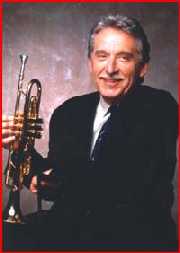
Doc Severinsen
From Wikipedia, the free encyclopedia
Background information
Birth name Carl Hilding Severinsen
Born July 7, 1927 (1927-07-07) (age 80)
Origin Arlington, Oregon USA
Genre(s) Jazz
Occupation(s) Bandleader
Trumpeter
Instrument(s) Trumpet
Associated
acts Tommy Dorsey
Benny Goodman
Carl Hilding "Doc" Severinsen (born July 7, 1927 in Arlington, Oregon) is an American pop and jazz trumpeter, best known for leading the NBC Orchestra in the Johnny Carson era.
Early life
Carl Severinsen's accomplishments began in his hometown of Arlington, Oregon, population: 600. Carl H Severinsen was born on July 7th, 1927, and was nicknamed "Little Doc" after his father, Dr. Carl Severinsen a dentist. Little Doc had originally wanted to play the trombone. But the senior Severinsen, a gifted amateur violinist, urged him to study the violin. The younger Severinsen insisted on the trombone, but had to settle for the only horn available in Arlington's small music store ?- a trumpet. A week later, with the help of his father and a manual of instructions, the seven-year-old was so good that he was invited to join the high school band. At the age of twelve, Little Doc won the Music Educator's National Contest and, while still in high school, was hired to go on the road with the famous Ted Fio Rito Orchestra. However, his stay with the group was cut short by the draft. He served in the Army during World War II.
Post-War career
Following his discharge from the army at the end of the war, Severinsen landed a spot with the Charlie Barnett Band. When this band broke up, Severinsen toured with Tommy Dorsey, and then, the Benny Goodman big band in the late 40's. Sometime in late 1948, Doc arrived in New York City and was hired to be a staff musician for NBC. After years of playing with the peacock network's studio bands, Severinsen was invited to do a gig with the highly respected Tonight Show Band. An impressed conductor, Skitch Henderson, asked him to join that band in 1962 as first trumpet. Five years later, Doc took over as Music Director for The Tonight Show.
The Tonight Show
During his tenure as musical director, the Tonight Show's NBC Orchestra was the most visible jazz big band in America. Severinsen took the opportunity to update many well-known jazz standards for the show's audiences, oftentimes introducing new listeners to classics by Cole Porter, Dizzy Gillespie and others.
Severinsen would sometimes substitute for Ed McMahon as announcer and sidekick. Although adept at comic interplay, Severinsen took his role as band leader on The Tonight Show seriously and campaigned for the band to get featured slots during the show. Severinsen continued as band leader until Carson's retirement in 1992.
Recording career
During the 1950s and 1960's, Severinsen put out a number of albums of jazz standards, over which he performed very melodic solos. While not as much a "screamer" as Maynard Ferguson, Severinsen certainly had a well-developed high-note range, with an incredible amount of control and melodic sense. In the 1960s, Severinsen also recorded with the Clarke/Boland Big Band and the Thad Jones/Mel Lewis band. Severinsen was also the second trumpeter whose recording of the fanfare "Abblasen," composed by Gottfried Reiche, has been used as the theme for the CBS News program Sunday Morning.
During his years with the Tonight Show and afterwards, Severinsen released albums that had a pop-rock basis, some of which had electronic instrumentation components, such as "Brass Roots", "Good Medicine" and "Facets". These albums had varying degrees of acceptance by the public.
Although he has worked with jazz artists, most of his own recordings as a leader have consisted mainly of pop music. Several recent recordings feature him playing classical trumpet repertoire. He is the principal pops conductor of the Milwaukee Symphony Orchestra, the Minnesota Orchestra, and the Phoenix Symphony, and since 2001 Distinguished Visiting Professor of Music and Katherine K. Herberger Heritage Chair for Visiting Artists at Arizona State University School of Music.
Personal life
To this day, Severinsen remains in amazing physical condition, as well as retaining his musical ability. Severinsen breeds thoroughbreds and quarter horses, and lives in Los Angeles with his wife, Emily. His adult children are Nancy, Cindy and Allen. He also enjoys cooking and collecting American art.
Trivia
Severinsen arranged the score for the nudist-themed cult film Nude on the Moon (1961).
Severinsen was the first grand marshal of the Krewe of Endymion in New Orleans' biggest Mardi Gras parade.
In Super Bowl IV in 1970, trumpeters Al Hirt and Doc Severinsen "faced off" during the pregame show in a "Battle of the Horns".
Apparently, Severinsen gave up drinking at some time in the 1950-1960's, later commenting how much easier it was to play high notes without a hangover.
HOW DO YOU DECIDE WHOM TO MARRY? (written by kids)
You got to find somebody who likes the same stuff. Like, if you like sports, she should like it that you like sports, and she should keep the chips and dip coming.
-- Alan, age 10
No person really decides before they grow up who they're going to marry. God decides it all way before, and you get to find out later who you're stuck with.
-- Kristen, age 10
WHAT IS THE RIGHT AGE TO GET MARRIED?
Twenty-three is the best age because you know the person FOREVER by then.
-- Camille, age 10
HOW CAN A STRANGER TELL IF TWO PEOPLE ARE MARRIED?
You might have to guess, based on whether they seem to be yelling at the same kids.
-- Derrick, age 8
WHAT DO YOU THINK YOUR MOM AND DAD HAVE IN COMMON?
Both don't want any more kids.
-- Lori, age 8
WHAT DO MOST PEOPLE DO ON A DATE?
Dates are for having fun, and people should use them to get to know each other. Even boys have something to say if you listen long enough.
-- Lynnette, age 8 (isn't she a treasure)
On the first date, they just tell each other lies and that Usually g et s them interested enough to go for a second date.
-- Martin, age 10
WHAT WOULD YOU DO ON A FIRST DATE THAT WAS TURNING SOUR?
I'd run home and play dead. The next day I would call all the newspapers and make sure they wrote about me in all the dead columns.
-- Craig, age 9
WHEN IS IT OKAY TO KISS SOMEONE?
When they're rich.
-- Pam, age 7
The law says you have to be eighteen, so I wouldn't want to mess with that.
- - Curt, age 7
The rule goes like this: If you kiss someone, then you should marry them and have kids with them. It's the right thing to do.
- - Howard, age 8
IS IT BETTER TO BE SINGLE OR MARRIED?
It's better for girls to be single but not for boys. Boys need someone to clean up after them.
-- Anita, age 9& amp; lt; B> (bless you child )
HOW WOULD THE WORLD BE DIFFERENT IF PEOPLE DIDN'T GET MARRIED?
There sure would be a lot of kids to explain, wouldn't there?
-- Kelvin, age 8
And the #1 Favorite is........
HOW WOULD YOU MAKE A MARRIAGE WORK?
Tell your wife that she looks pretty, even if she looks like a dump truck.
-- Ricky, age 10 Â Â Â Â Â Â