dj, those two contributions were perfect; one having fun, and the other a thing of beauty. I especially love this particular verse:
"The music is weaving
Haunting notes, pizzicato strings,
The rhythm is calling.
Alone in the night as the daylight brings,
A cool empty silence.
The warmth of your hand and a cold grey sky,
It fades to the distance."
Glad to see you back, Canada.
AWAKE! for Morning in the Bowl of Night
Has flung the Stone that puts the Stars to Flight:
And Lo! the Hunter of the East has caught
The Sultan's Turret in a Noose of Light.
0 Replies
bobsmythhawk
1
Reply
Sun 15 Apr, 2007 07:00 am
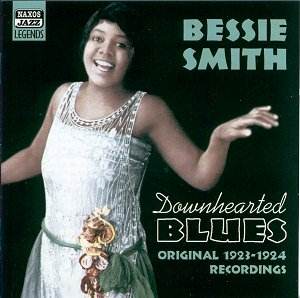
Bessie Smith
From Wikipedia, the free encyclopedia
Background information
Born July, 1892
Origin Chattanooga, Tennessee, United States
Died September 26, 1937
Clarksdale, Mississippi
Genre(s) Blues
Occupation(s) Singer
Instrument(s) Vocals
Years active 1912-1937
Label(s) Columbia
Bessie Smith (July, 1892 - September 21, 1937) was the most popular and successful female blues singer of the 1920s and 1930s,[1] and a strong influence on subsequent generations , including Billie Holiday, Mahalia Jackson, and Janis Joplin.
She is often referred to as the "Empress of the Blues."
Life
Birthdate
According to 1900 census, Bessie Smith was born in Chattanooga, Tennessee, United States in July, 1892. That date stands in contrast to April 15, 1894, which is the date indicated on her wedding certificate and confirmed by family members. The census also gives information regarding the size of Smith's family that conflicts with many biographies.
Early life
According to the 1870, 1880 and 1900 censuses, Bessie Smith was the thirteenth child of William Smith and the tenth (seventh or eighth to survive childhood) of Laura (Owens) Smith. These figures contradict recollections by family and school mates interviewed by Smith's biographer, Chris Albertson. In his book, Bessie, William Smith was a laborer and part-time Baptist preacher (he was listed in the 1870 census as a minister of the gospel, in Moulton, Lawrence, Alabama) who died before Bessie could remember him. By the time Bessie was nine, she had lost her mother as well, and her older sister Viola was left in charge of caring for her sisters and brothers.
Busker
As a way of earning money for her impoverished household, Bessie and her brother Andrew began performing on the streets of Chattanooga as a singer/guitarist duo; their preferred location was in front of the White Elephant Saloon at Thirteenth and Elm streets in the heart of the city's African-American community.
In 1904, her oldest brother, Clarence, covertly left home by joining a small traveling troupe owned by Moses Stokes. "If Bessie had been old enough, she would have gone with him," said Clarence's widow, Maud, "that's why he left without telling her, but Clarence told me she was ready, even then. Of course, she was only a child."[2]
Bessie's turn came in 1912, when Clarence returned to Chattanooga with the Stokes troupe and arranged for its managers, Lonnie and Cora Fisher, to give her an audition. She was hired as a dancer rather than singer, because the company also included Ma Rainey.
Singer
All contemporary accounts indicate that Rainey did not teach Smith to sing, but she probably helped her develop a stage presence.[3] Smith began forming her own act around 1913, at Atlanta's "81" Theatre. By 1920 she had gained a good reputation in the South and along the Eastern Seaboard.
Recordings
In 1923, when sales figures for an Okeh recording by singer Mamie Smith (no relation) opened up a new market and had talent scouts looking for blues artists, Bessie Smith was signed by Columbia Records to initiate the company's new "race records" series.
Scoring a big hit with her first release, a coupling of "Gulf Coast Blues" and "Down Hearted Blues," which its composer, Alberta Hunter already had turned into a hit on the Paramount label, Bessie's career blossomed. She became a headliner on the black Theater Owners Booking Association (T.O.B.A.) theater circuit and was its top entertainer in the 1920's.[4] Working a heavy theater schedule during the winter months and doing tent tours the rest of the year (eventually traveling in her own railroad car), Smith became the highest-paid black entertainer of her day. Columbia nicknamed her "Queen of the Blues", but a PR-minded press soon elevated to "Empress".
She would make some 160 recordings for Columbia, often accompanied by the finest musicians of the day, most notably Louis Armstrong, James P. Johnson, Joe Smith, Charlie Green, and Fletcher Henderson.
Broadway
Smith's career was cut short by a combination of the Great Depression (which all but put the recording industry out of business) and the advent of "talkies", which spelled the end for vaudeville. She, however, never stopped performing. While the days of elaborate vaudeville shows were over, Bessie continued touring and occasionally singing in clubs. In 1929, she appeared in a Broadway flop called Pansy, a musical in which, the top white critics agreed, she was the only asset.
Film
In 1929, Bessie Smith made her only film appearance, starring in a one-reeler based on W. C. Handy's "St. Louis Blues". In the film, directed by Dudley Murphy and shot in Astoria, NY, she sings the title song accompanied by members of Fletcher Henderson's orchestra, the Hall Johnson Choir, pianist James P. Johnson, and a string section[1] ?- a musical environment radically different from any found on her recordings.
Swing Era
In 1933, John Hammond saw Bessie perform in a small Philadelphia club and asked her to record four sides for the Okeh label (which had been acquired by Columbia).
These performances, for which Hammond paid her a non-royalty fee of $37.50 each, were recorded on 24 November 1933. They constitute Smith's final recordings. They are of particular interest because Smith was in the process of translating her blues artistry into something more apropos to the Swing Era, and this session gives us a hint of what was to come.
The accompanying band included such Swing Era musicians as trombonist Jack Teagarden, trumpeter Frankie Newton, tenor saxophonist Chu Berry, pianist Buck Washington, guitarist Bobby Johnson, and bassist Billy Taylor.
Even Benny Goodman, who happened to be recording with Ethel Waters in the adjoining studio, dropped by for an almost inaudible guest visit. Hammond was not pleased with the result, preferring to have Smith back in her old blues groove, but "Take Me For A Buggy Ride" and "Gimme a Pigfoot" (in which Goodman is part of the ensemble) remain among her most popular recordings.
Death
On September 26, 1937, Smith was severely injured in a car accident while traveling along U.S. Route 61 between Memphis and Clarksdale, Mississippi with her lover (and Lionel Hampton's uncle), Richard Morgan, at the wheel. She was taken to Clarksdale's black Afro-American Hospital where her right arm was amputated. She did not regain consciousness, dying that morning.[5]
The Afro-American Hospital, now the Riverside Hotel in Clarksdale, was the site of the dedication of the fourth historic marker on the Mississippi Blues Trail.[6]
Digital Remastering
Given the technical faults in the majority of her original gramophone recordings -- especially variations in recording speed, which raised or lowered the apparent pitch of her voice, misrepresented the "light and shade" of her superb phrasing, interpretation and delivery, and altered the apparent key of her performances (sometimes raised or lowered by as much as a semitone) and, also, the fact that the "centre hole" in some of the master recordings had not been in the true middle of the master disc, meaning that there were wide variations in tone, pitch, key and phrasing as the commercially released record revolved around its spindle -- there is a very significant and very positive difference in the performance that Smith delivers in the current digitally remastered versions of her work.
References in Other Works
The rock and roll group The Band, popular during the 1960s and the 1970s, wrote a song about Bessie Smith named after her. Singer Norah Jones included the song in a 2002 concert performance at the House of Blues. Excerpt of the lyrics to The Band's "Bessie Smith":
"Bessie was more than just a friend of mine
We shared the good times with the bad
Now many a year has passed me by
I still recall the best thing I ever had
I'm just goin' down the road t' see Bessie
Oh, See her soon
Goin' down the road t' see Bessie Smith
When I get there I wonder what she'll do.."
The 1996 album of Seattle punk band The Gits, Kings and Queens, included a live piano-accompanied improvisation cover of Smith's "Graveyard Dream Blues" named "Graveyard Blues" sung by blues-influenced vocalist Mia Zapata. The song starts with Zapata telling the audience that "This is a song by (...) Bessie Smith. This is from her to you..." The track is held in high regard by Gits fans and music critics.
In early 2006, UK alternative Rock/Hip Hop act Bad Music Inc. paid tribute to Smith with their song Bessie. Excerpt of the lyrics to Bad Music Inc's "Bessie":
"It's easy to forget, or not to be aware
So let me take a moment, I've a legacy to share
Bessie, Bessie sing through your pain..."
Singer/pianist/songwriter Nina Simone dedicates her blues-song "I Want A Little Sugar In My Bowl" to Bessie Smith on her live-album It Is Finished (1974), stating "Bessie Smith, you know?..." before commencing with the song. Ironically, the song title was changed to "I Need a Little Sugar In My Bowl" on the album, and credited to Ms. Simone.
Often the subject of concept albums, Bessie has been paid such a recorded tribute by numerous singers, including Juanita Hall, Dinah Washington, and Teresa Brewer.
The character of Shug Avery in Alice Walker's 'The Color Purple' is reportedly inspired / based on Smith.[citation needed]
Smith is mentioned in Dory Previn's song A Stone for Bessie Smith on her album Mythical Kings & Iguanas. It refers to the fact that Smith's grave remained unmarked until Janis Joplin and Juanita Green bought a headstone.
English singer/songrwiter Jack Penate includes a line about Bessie in his track, 'Learning Lines'
"Bessie Smith sings the blues"
0 Replies
bobsmythhawk
1
Reply
Sun 15 Apr, 2007 07:06 am
Roy Clark
From Wikipedia, the free encyclopedia
Born April 15, 1933, Meherrin, Virginia
Genre(s) Country music
Affiliation(s) Hee Haw
Years active 1950 - present
Official site Official website
Roy Linwood Clark (b. April 15, 1933, Meherrin, Virginia) is a versatile and well-known country music musician and performer. He is best known for hosting one of the first nationally televised country variety shows in the United States, Hee Haw from 1969 - 1992.
Clark has been an iconic figure in country music, both as a musician and as a popularizer of country music. Clark is an entertainer, most of all, with an amiable personality and a telegenic presence.
During the 1970s, Clark frequently guest-hosted for Johnny Carson on The Tonight Show and enjoyed a 30,000,000 viewership for "Hee Haw". Clark is highly regarded as both a guitarist and banjo player. He is also skilled in Classical guitar as well as playing several other instruments. While he has had hit songs (e.g. "Yesterday, When I was Young" and "Thank God and Greyhound"), his instrumental skill has had an enormous impact on succeeding generations of both bluegrass and country musicians.
Career
At the age of 14, Clark began playing banjo, guitar, and mandolin, and he won two National Banjo Championships by the age of 17. He was simultaneously pursuing a sporting career, first as a baseball player, and then as a boxer, before switching over to music full time. At the age of 17, he had his first appearance on the Grand Ole Opry.
By 1955, he was a regular on Jimmy Dean's Washington, D.C. television program. Dean, who valued punctuality among musicians in his band, the Texas Wildcats, fired Clark for habitual lateness, telling him "you're the most talented person I've ever fired." In 1960, Clark went out to Las Vegas where he worked as guitarist in a band led by former West Coast Western Swing bandleader-comedian Hank Penny. When Dean was tapped to host The Tonight Show, he asked Clark to appear, introducing him to a national audience for the first time. Subsequently, Clark appeared on The Beverly Hillbillies as a recurring character. Once, on an episode of the Sunday evening Jackie Gleason Show that was dedicated to country music, Clark played a blistering rendition of "Down Home". Later, he even appeared on an episode of The Odd Couple where he played "Malagueña".
In 1963, Clark signed to Capitol Records and had three top 10 hits. He switched to Dot Records and again had hits.
In 1969, Clark and Buck Owens were the hosts of Hee Haw. The show was dropped by CBS Television in 1971 but continued to run in syndication for twenty more years.
In 1983, Clark opened the Roy Clark Celebrity Theatre in Branson, Missouri, becoming the first famous country music star to have his own venue there, and launching a trend which would eventually cause Branson to become an important center of country performance. Clark frequently played his own Branson nightclub during the 80s and 90s. He has since closed the venue (which briefly became the unlikely professional home of the Platters) and gone back to a fairly light touring schedule that usually includes a performance with Ramona Jones and the Jones Family Band at their annual tribute to Clark's old "Hee Haw" co-star Grandpa Jones in Mountainview, Arkansas.
In addition to his musical skill, Clark has often displayed his talents as a comedian and actor. During his years on the variety show Hee Haw, Clark entertained the audience in numerous comedy sketches, including a recurring feature where he played the clerk of the "Empty Arms Hotel", a character similar to that portrayed by John Cleese in the British sitcom Fawlty Towers. Clark released several albums of his comedic performances, to varying critical acclaim and commercial success.
Clark was willing to endorse any brand of guitar he received a paycheck for being seen with, and has endorsed Mosrite, Gretsch, and many other brands of guitar during his career. He currently endorses Heritage Guitars, which makes a Roy Clark model.[1]
On August 22, 1987, Clark was made a member of the Grand Ole Opry.
For many years Clark has made his home in Tulsa, Oklahoma. Roy Clark Elementary School in Tulsa's Union School District was named in his honor in 1978.
Film Roles
Matilda (1978)
Country Comes Home (1982)
Uphill All the Way (1986)
Freeway (1988)
Television and film as himself
As himself, Clark has appeared in numerous television programs, beginning with Swing Out, Sweet Land (1970) and followed by The Bell Telephone Jubilee, The Captain & Tennille Special (both 1976), "Fair Weather Friends" (1977), the EPCOT Center opening celebration (1982), Disneyland's 30th Anniversary Celebration (1985), the 6th Annual National Songwriter Awards (1986), The Grand Ole Opry 65th Anniversary (1991), The Grand Ole Opry 70th Anniversary (1996), and A Bing Crosby Christmas (1998). He also appeared as himself in the film Gordy (1995).
0 Replies
bobsmythhawk
1
Reply
Sun 15 Apr, 2007 07:12 am
Elizabeth Montgomery
From Wikipedia, the free encyclopedia
Birth name Elizabeth Victoria Montgomery
Born April 15, 1933
Los Angeles, California, USA
Died May 18, 1995, age 62
Beverly Hills, California, USA
Notable roles Samantha Stephens in Bewitched
Elizabeth Victoria Montgomery (April 15, 1933 or 1938 - May 18, 1995) was an American film and television actress.
Montgomery had a career that spanned several decades in film and television, and is best remembered for her iconic role as witch Samantha Stephens in the long-running sitcom Bewitched.
Early life
Born in Los Angeles, California, Elizabeth Montgomery was born to actor Robert Montgomery and his wife, Broadway actress Elizabeth Bryan Allen. She had an older sister, Martha Bryan Montgomery, who died before she was born, and a brother, Robert Montgomery Jr., who was born in 1936. She attended The Spence School.
Career
Early career
Montgomery made her television debut in her father's series Robert Montgomery Presents, and her film debut in 1955 in The Court Martial of Billy Mitchell.
Her early career consisted of starring vehicles and appearances in live television dramas and series, such as Studio One, Kraft Television Theater, The Twilight Zone, and Alfred Hitchcock Presents. In 1954 she lost out on co-starring with Marlon Brando in the seminal film On the Waterfront directed by Elia Kazan . Kazan in his autobiography says that although Montgomery tested well in the role, she had an air of "finishing school" that troubled him.
She was also featured in a role as a masochistic socialite with Henry Silva and Sammy Davis, Jr in the offbeat 1963 gangster film Johnny Cool and, the same year, with Dean Martin and Carol Burnett in the motion picture comedy Who's Been Sleeping In My Bed?, directed by Daniel Mann. The latter film's poor reviews and scant box-office slowed down her film offers. Nevertheless, Alfred Hitchcock had her in mind to play the sister-in-law of Sean Connery, who sees herself as a rival to the troubled heroine in the movie Marnie, but Montgomery was unavailable due to her commitment to a new television show: Bewitched
"Bewitched"
Montgomery played the central role of Samantha Stephens, in the ABC situation comedy Bewitched. The show became a rating success (it was, at the time, the highest rated series ever for the network). It enjoyed an eight-year run from 1964 to 1972 and remains popular through syndication and DVD releases.
Montgomery received five Emmy Award and four Golden Globe nominations for her role. At its creative peak, Bewitched was considered one of the most sophisticated sitcoms on the air and cleverly explored contemporary themes and social issues within a fantasy context.
The series was paid homage in a 2005 movie that starred Will Ferrell and Nicole Kidman.(For more details on the film, see Bewitched (film).
Later career
Although Montgomery enjoyed enormous success with the show, she felt typecast and pigeonholed when she sought other roles after the show's run ended. Montgomery refused to do Samantha's famous nose twitch for fans after Bewitched went off the air, and was reluctant to discuss the show.
She spent much of her career pursuing dramatic roles that took her as far away from the good-natured Samantha as possible. Among her later roles:
She received Emmy Award nominations for playing a rape victim in A Case of Rape (1974), for her portrayal of the notorious Lizzie Borden in William Bast's The Legend of Lizzie Borden (1975), and for her role as a strong woman facing hardship in 1820s Ohio in the mini-series The Awakening Land (1978).
In 1977, Montgomery turned heads when she played a police detective having an interracial affair with her partner in "A Killing Affair".
She also made a chilling villain in the 1985 picture Amos, playing a nurse in a state home who terrorized residents Kirk Douglas and Dorothy McGuire.
One of her final roles was in an episode of Batman: The Animated Series entitled "Showdown," in which she played a barmaid.
She also had a long run as a guest performer on the game show Password, and host Allen Ludden referred to her as the best Password player ever on the show.
Her final television movies were the highly-rated Edna Buchanan detective series.
Montgomery was one of the first actresses to broaden her career from series work with television movies, and set the precedent for other TV series actresses, such as Farrah Fawcett, Jaclyn Smith, Melissa Gilbert, Carol Burnett, and Barbara Eden, to follow.
She had been discussed to star in the 1975 thriller based on the novel by Ira Levin, The Stepford Wives and, in 1994, Premiere magazine listed her as one of the stars considered to play glamorous, overbearing "Pearl Slaghoople" (Wilma's Mother) in the live-action film of The Flintstones.
Personal life
Montgomery was first married to New York socialite Frederic Cammann in 1954; the marriage lasted barely a year. She was married to actor Gig Young from 1956 to 1963, and then to Bewitched producer William Asher from 1963 to 1973, with whom she had three children.
She was married to actor Robert Foxworth (with whom she had been living for over 20 years) from 1993 until her death.
In the late 1980s, Montgomery gave the first interviews regarding her prior work on Bewitched to author Herbie J. Pilato for his book The Bewitched Book (1992) later revised as Bewitched Forever (1995).
In June 1992, Montgomery and her former Bewitched co-star Dick Sargent, who had remained a good friend, were Grand Marshals at the Los Angeles Gay Pride Parade. Montgomery was an outspoken champion of women's rights and gay rights throughout her life. She narrated a series of political documentaries in the late 1980's and early 1990's, including Coverup: Behind the Iran Contra Affair (1988) [1] and the Academy Award winning The Panama Deception (1992).
Illness and death
Montgomery was diagnosed with colorectal cancer in the spring of 1995. She had ignored the symptoms of her illness until it was too late during the filming of "Deadline for Murder: From the Files of Edna Buchanan." Unwilling to die in a hospital, and with no hope of recovery, she elected to return to her Beverly Hills home that she shared with Foxworth. She died there, in the company of her children and Foxworth.
Elizabeth Montgomery died on May 18, 1995, at age 62. She died just eight weeks after her cancer diagnosis. Her last words were "I cry out! A silver sparrow has flown in the dark night!".
A memorial service was held on June 18, 1995 at the Canon Theatre in Beverly Hills. Herbie Hancock provided the music, and Dominick Dunne spoke about their early days as friends in New York. Other speakers included Robert Foxworth, who read out sympathy cards from fans, her nurse, her brother, daughter and stepson.
Posthumous
On April 19, 1998, an event auction/sale of her clothing was held by her family to benefit AIDS Healthcare Foundation of Los Angeles.
In June 2005, a statue of Montgomery as Samantha Stephens was erected in Salem, Massachusetts. [2]
Montgomery is expected to finally receive her star of the Hollywood Walk of Fame in a ceremony to be held before 2009.
0 Replies
bobsmythhawk
1
Reply
Sun 15 Apr, 2007 07:17 am
Emma Thompson
From Wikipedia, the free encyclopedia
Born April 15, 1959 (age 48)
Paddington, London
Spouse(s) Kenneth Branagh (1989-1995)
Greg Wise (2003-present)
Academy Awards
Best Actress
Won:
1992 Howards End
Nominated:
1993 The Remains of the Day
1995 Sense and Sensibility
Best Adapted Screenplay
Won:
1995 Sense and Sensibility
Best Supporting Actress
Nominated:
1993 In the Name of the Father
Emmy Awards
Outstanding Guest Actress - Comedy Series
1998 Ellen
Golden Globe Awards
Best Actress - Motion Picture Drama
1993 Howards End
Best Screenplay
1996 Sense and Sensibility
BAFTA Awards
Best Actress
1992 Howards End
1995 Sense and Sensibility
Emma Thompson (born April 15, 1959) is an Emmy, BAFTA and two time-Academy Award-winning English actress, comedian, and screenwriter. She is also a patron of the Refugee Council.
Biography
Early life
Thompson was born in Paddington, London. Her father, Eric Thompson, was an English actor known for narrating the television series The Magic Roundabout. Her mother, Phyllida Law, is a Scottish actress. Thompson's sister is actress Sophie Thompson.
Thompson went to Camden School for Girls and then read English Literature at Newnham College, Cambridge, where she was a member and vice-president of the Footlights comedy club. While there, Thompson dated Footlights member and future actor, Hugh Laurie. After completing her education, she came to fame with a leading role in the West End revival of the musical Me and My Girl, opposite Robert Lindsay, followed by the BBC serial drama, Fortunes of War.
Acting career
Thompson's first major film role was in a romantic comedy, The Tall Guy (1989). Her career took a more serious turn with a series of critically acclaimed performances and films, beginning with 1992's Howards End (for which she received an Oscar for Best Actress), the part of Gareth Peirce, the lawyer for the Guildford Four, in 1993's In the Name of the Father, The Remains of the Day opposite Anthony Hopkins, and as the British painter Dora Carrington in the film Carrington (1995). She won her next Oscar in 1996, for Best Adapted Screenplay for her screenplay adaptation of Jane Austen's Sense and Sensibility, a film in which she also played the Oscar-nominated lead actress role. Consequently, Thompson is the first, and so far only, person to have won Oscars for both acting and writing; she has said that she keeps both of her award statues in her downstairs bathroom, citing embarrassment at placing them in a more prominent place.[1]
One of Thompson's earliest television appearances was in 1984 alongside Stephen Fry and Hugh Laurie as guest stars on the sitcom The Young Ones. In 1988, she starred in and wrote the eponymous Thompson comedy sketch series for BBC1; the series was not successful with audiences or critics. Described in Time Out magazine as "very clever-little-me-ish",[citation needed] it has never been repeated in Britain despite her Oscar successes, and Thompson has not returned to the sketch comedy field.
Thompson's recent television work has included a starring role in the 2001 HBO drama Wit, in which she played a dying cancer victim, and 2003's Angels in America, playing multiple roles, including one of the titular angels. Her Emmy Award was as a guest star in a 1997 episode of the show Ellen; in the episode, she played a parody of herself. She also appeared in an episode of Cheers in 1992. Her character, Nanette "Nanny" Gee, was the host of a children's television program and Frasier Crane's first wife.
Most recently, Thompson appeared in supporting roles in films of a lighter nature, including her role as Sybill Trelawney in Harry Potter and the Prisoner of Azkaban (2004) and the comedy Love Actually (2003).
The film Nanny McPhee, written by Thompson, was first released in October 2005. Thompson worked on the project for 9 years, having written the screenplay and starred, alongside her mother (who has a cameo appearance). In her most recent film, Stranger Than Fiction, she plays an author planning on killing her main character, who turns out to be a real person.
Personal life
While she was at Cambridge University, Thompson had a romantic relationship with her fellow student, actor Hugh Laurie, who was also a member of the Cambridge Footlights Revue, and now star of the hit show House.
Thompson married Kenneth Branagh, with whom she appeared in Fortunes of War, on August 20, 1989. They appeared together several times, in hit films such as Dead Again, Henry V and Much Ado About Nothing, but were eventually divorced in October 1995. Many Americans were surprised and disappointed to find that, in the UK, many disliked the couple for their overbearing media presence and privileged aura. Sarcastically described as "Ken and Em", they were often dismissed by British critics, particularly in the case of Peter's Friends, seen as the epitome of "luvvies" (self-conscious, affected actors) and parodied as such on Spitting Image and in Private Eye.
In 2003, Thompson married actor Greg Wise (who starred with her in Sense and Sensibility) with whom she has a daughter, Gaia Romilly, born in 1999.
0 Replies
bobsmythhawk
1
Reply
Sun 15 Apr, 2007 07:25 am
Way down in Louisiana , Boudreaux's old lady had been pregnant for some time and now the time had come. So he brought her to the doctor and the doctor began to deliver the baby. She had a little boy and the doctor looked over at Boudreaux and said, "Hey, Boudreaux! You just had you-self a son! Ain't dat grand!"
Boudreaux got excited by this, but just then the doctor spoke up and said, "Hold on! We ain't finished yet!" The doctor then delivered a little girl. He said, "Hey, Boudreaux! Yougot you-self a daughter! She a pretty lil ting, too."
Boudreaux got kind of puzzled by this and then the doctor said, "Hold on, we still ain't got done yet!" The doctor then delivered another boy and said, "Boudreaux, you just had you-self another boy!"
When Boudreaux and his wife went home with their three children, he sat down with his wife and said, "Mama, you remember dat night what we run out of Vaseline and we had to use dat dere tree-in-one Oil?"
His wife said, "Yeah, I do!" Boudreaux said, "Phew, it's a darn good ting we didn't never use no WD-forty."
0 Replies
Letty
1
Reply
Sun 15 Apr, 2007 07:42 am
Well, hawkman, there are a lot of surprises in your celeb bio's and three in your funny story. Thanks, Boston, for all of them.
Until our Raggedy arrives with her visages, here's a song that emerged from somewhere in the recesses of my mind.
I am a fine musician,
That's what the people say
And all the children follow me,
When they hear me play
My piccolo, my piccolo
They love to hear my piccolo
Deedle-ee dee dee,
Deedle-ee dee dee,
Deedle deedle dee-dee deedle-deedle dee
Oom-pa, oom-pa oom-pa oom-pa, oom-pa-oom
Waaah, Waaah, Waaah, Waaah
Ta-tada-ta-ta, ta-tada-ta-ta, ta-ta, ta-ta, ta-a-a
We all are fine musicians
We practice every day
And if you'd like to join us
We'll show you the way
Come join us. Come join us.
Come take a part and join us
(As they walk off one by one)
Ta-tada-ta-ta, ta-tada-ta-ta, ta-ta, ta-ta, ta-a-a
Waaah, Waaah, Waaah, Waaah
Oom-pa, oom-pa oom-pa oom-pa, oom-pa-oom
Waaah, Waaah, Waaah, Waaah
Deedle-ee dee dee, Deedle deedle dee-dee deedle-deedle dee
dee deedle deedle dee!
The Antipop
The Earth it did crack open
on the day that I was born
and a thousand merry pranksters
came dancin' through the storm.
I lay cradle bound
a howlin' out my mind
not knowin' years to come
I'd be shoutin' over din
I sucked information through the holes in my skull
as my belly gurgles hungry my mouth is always full.
I am Antipop; I'll run against the grain till the day I drop.
I am the Antipop; the man you cannot stop.
As a young man,
I plug into the tube,
but the stench of all that pretense
I cannot muddle through.
I lay on my back
and scan the radio
all that comes out my speakers
is a steady syrup flow.
I suck information through the holes in my skull
as my belly gurgles hungry my mouth is always full.
I stood by watching
and I seen 'em come and go.
I seen 'em make that million
then vanish in the snow.
They come upon you
like a pack of rabid hounds
as they slobber in your ears
and purge you with their sounds.
Pushing misinformation through the holes in my skull
my belly gurgles nauseous and still my mouth is full.
I am Antipop; I'll run against the grain till the day I drop.
I am the Antipop; the man you cannot stop.
0 Replies
Letty
1
Reply
Sun 15 Apr, 2007 09:00 am
Hey, edgar. Well, I see we have triplets again. <smile>
Joe, Lacquer Head, and antipop, and what rhymes with antipop, folks?
"Shop til ya drop."
From the world of money
Spend Every Dime!Why U.S. tax policy makes saving a sucker's game.
By Henry Blodget
Posted Thursday, April 12, 2007, at 1:06 PM ET
For the first time since the Great Depression, the U.SA. personal savings rate has "gone negative." In 2005 and 2006, U.S. citizens spent more than they made. Economists disagree about just how ominous this is, but they generally agree on why it's happening. Americans are "overspending."
The point being that Americans would rather have $10,000 now, without being taxed, than later when it is taxed.
Another Joe, listeners.
This version by Bette Middler
It seem like happiness is just a thing called Joe.
He's got a smile that makes the lilacs want to grow.
He's got a way that makes the angels heave a sigh
When they know little Joe's passing by.
Sometimes the cabin's gloomy and the table's bare,
But then he'll kiss me and it's Christmas everywhere.
Troubles fly away and life is easy go.
Does he love me good? That's all I need to know.
Seems like happiness is just a thing called Joe.
Sometimes the cabin's gloomy and the table's bare,
But then he'll kiss me and it's Christmas everywhere.
Troubles fly away and life is easy go.
Does he love me good? That's all I need to know.
Seems like happiness is just a thing called Joe.
Little Joe, my little Joe, little Joe.
Look out baby
I'm in a dangerous mood
I done called up the bossman
Told him where to go
And just what to do
Call me crazy
But i did what I had to do
You can call me stupid
I just did what I had to do
I had to steal a little time baby
So I could spend it all on you
I parked the car down the street
And I unplugged the phone
So it would look just like
Ain't nobody home
I put a rose on your pillow
Where you lay your pretty head
I'm gonna rub your tired shoulders
Bring your dinner to your bed
Look out baby
I'm in a dangerous mood
I had to steal a little time baby
So I could spend it all on you
I'm gonna light a candle
Put the champagne on ice
And if one ain't enough
Well we'll just have to do it twice
I done made myself a will
And I've called my next of kin
'Cause I'm gonna love you over
And over and over
Again and again
Look out baby
I'm in a dangerous mood
I had to steal a little time baby
So I could spend it all on you
Look out baby
I'm in a dangerous mood
Look out baby
I'm in a dangerous mood
I just this one last paycheck baby
And I'm gonna spend every dime on you
0 Replies
Letty
1
Reply
Sun 15 Apr, 2007 09:56 am
Beth, Welcome back. I had to go to the archives to find Keb' Mo'.
Here's what he sounds like when he's not jivin'
Artist: Keb' Mo'
Song: Just Like You
Hello my old friend
It's been awhile
All our old clothes
Are back in style
We went our separate ways,
Only to return
To face a lesson
We failed to learn
We didn't understand the truth
We were blinded by the eyes of youth
But time kept on moving
And a change has come
You think that I don't know
Where you're coming from
(Chorus:)
'Cause I feel just like you
And I cry just like you
But I heal just like you
And under my skin
I'm just like you
You gave your love and your innocence
And they took away your confidence
Well I'm not those women
I'm not those men
Put your arms around me
I am your friend
(Chorus)
(Bridge:)
You and everybody else
When I get hurt
I cry for help
And I've got secrets
That god only knows
And god knows I feel...
(Chorus)
Great lyrics, right?
Strange, folks. Last night I watched two movies on TCM. One was "The Great Dictator" starring Charlie Chaplin and Paulette Goddard, and the other was "Ghost Breakers" starring Bob Hope and Paulette Goddard.
Charlie's was quite a coup for the time, but a mite melodramatic for now. Bob's was good even for today. It was an interesting combination of comedy, the supernatural, and black talk.
0 Replies
hamburger
1
Reply
Sun 15 Apr, 2007 12:22 pm
we can dream , can't we ?.
(here in eastern ontario it's raining and cold ! temp barely above freezing - but SPRING IS IN THE AIR ! ... next wekend it WILL warm up ! :wink: )
hbg
Quote:
April In Paris
Billie Holiday, Frank Sinatra
I never knew the charm of spring
I never met it face to face
I never new my heart could sing
I never missed a warm embrace
Till April in Paris, chestnuts in blossom
Holiday tables under the trees
April in Paris, this is a feeling
That no one can ever reprise
I never knew the charm of spring
I never met it face to face
I never new my heart could sing
I never missed a warm embrace
Till April in Paris
Whom can I run to
What have you done to my heart
0 Replies
Raggedyaggie
1
Reply
Sun 15 Apr, 2007 12:28 pm
Good afternoon WA2K.
Faces to match Bob's bios:
0 Replies
Letty
1
Reply
Sun 15 Apr, 2007 01:36 pm
Hey, hbg. 70 degrees here, but earlier it was raining like those famous animals that we all have heard about, and Paris in the springtime must be a wonderful experience. Not to worry, you'll thaw.(I thought I thaw a puddy tat on my lawn)
Well, folks, there's our Raggedy with her famous folks. Thanks, PA.
We're looking at Bessie, and Roy, and Elizabeth, and Emma?
Here's a song for Sunday, listeners. Many vocalists have done this one, but I think Etta James was the first. Found out that Etta's father could well have been Minnesota Fats, the famous pool shark.
I want a Sunday kind of love
A love to last past Saturday night
And I'd like to know it's more than love at first sight
Well I want a Sunday kind of love
Oh, yeah yeah
And my arms need someone to hold
To keep me warm when Mondays and Tuesdays grow cold
I need love for all my life to have and to hold
Well I want a Sunday kind of love
Oh yeah yeah yeah
I don't want nothing baby
Well, I want a Sunday kind of love
Oh yeah
And one from Roy
"It seems the love I've known,
has always been the most destructive kind.
I guess that's why now,
I feel so old before my time."
Yesterday, when I was young,
The taste of life was sweet, as rain upon my tongue,
I teased at life, as if it were a foolish game,
The way the evening breeze may tease a candle flame
The thousand dreams I dreamed, the splendid things I planned,
I always built, alas, on weak and shifting sand,
I lived by night, and shunned the naked light of day,
And only now, I see, how the years ran away
Yesterday, when I was young,
So many happy songs were waiting to be sung,
So many wild pleasures lay in store for me,
And so much pain, my dazzled eyes refused to see
I ran so fast that time, and youth at last ran out,
I never stopped to think, what life, was all about,
And every conversation, I can now recall,
Concerned itself with me, and nothing else at all
Yesterday, the moon was blue,
And every crazy day, brought something new to do,
I used my magic age, as if it were a wand,
And never saw the worst, and the emptiness beyond
The game of love I played, with arrogance and pride,
And every flame I lit, too quickly, quickly died,
The friends I made, all seemed somehow to drift away,
And only I am left, on stage to end the play
There are so many songs in me, that won't be sung,
I feel the bitter taste, of tears upon my tongue,
The time has come for me to pay,
For yesterday, when I was young
( Roy Clark sang this song at Mickey Mantle's funeral in 1995. Mickey had heard Roy sing it before and thought it depicted his life)
0 Replies
edgarblythe
1
Reply
Sun 15 Apr, 2007 02:33 pm
I Love Mickey
Teresa Brewer, with some help from mickey himself
I Love Mickey (Mickey who)
You know who, the feller
With the celebrated swing
I love Mickey, (Mickey who)
You know who, the one who
Drives me batty every spring
If I don't make a hit with him
My heart will break in two
I wish that I could catch him
And pitch a little woo
I love Mickey (Mickey who)
Mickey you (Mickey me)
That's who
I love Mickey (Mickey who)
You know who, his muscles
Are a mighty sight to see
I love Mickey (Mickey who)
You know who, the one I want
To steal right home with me
Oh I'd sacrifice most anything
To win his many charms
I'd like to be a fly ball
And pop right in his arms
I love Mickey (Mickey who)
Mickey Mantle ooh I love you
(Who me) Ooh I love you
(Not Yogi Berra)
Ooh I love you Mickey
0 Replies
Letty
1
Reply
Sun 15 Apr, 2007 03:05 pm
Neat song, edgar. At first, I thought you might be talking about another mouse. You know, the creature that created a castle.
Know who this guy is, folks?
Many claim that he did more for blacks than Martin Luther King.
Buddy Johnson, a prolific songwriter whose hits included "Since I Fell for You," watched Jackie play for a couple of seasons. Then he decided to salute him with a tune.
Did you see Jackie Robinson hit that ball?
It went zoomin' 'cross the left field wall
Yeah boy, yes, yes, Jackie hit that ball
And when he swung his bat
The crowd went wild
Because he knocked that ball a solid mile
Yeah boy, yes, yes, Jackie hit that ball
It wasn't the most poetic salute ever put to music. Among Buddy Johnson's own songs, lyrically, it wasn't in the ballpark with "Since I Fell for You."
The point is, folks, that Jackie hung in there in spite of the hate.
0 Replies
edgarblythe
1
Reply
Sun 15 Apr, 2007 05:07 pm
Boy
Harry Belafonte
Who's gonna soothe you when I'm gone
Who's gonna soothe you when I'm gone
Who will kindle the fire, wrap your sackcloth tight
Oh boy, oh boy you sure is a lusty one
Oh boy, oh boy you sure is your daddy's son
Well you've got a pair of lungs for such a tiny one
Sound of your voice wakes the morning sun
And I tell you boy I ain't gonna run
Ain't no big man boss gonna take my son
Oh boy oh boy sure is a lusty one
Oh boy oh boy sure is your daddy's son
Now I hear about that underground rail
They travel in the night and they ain't fail
I'll take you to a land
Where you can lift your head
If they make my child a slave
It's because your daddy's dead
Oh boy oh boy oh boy
0 Replies
Letty
1
Reply
Sun 15 Apr, 2007 05:16 pm
Harry makes Stevie wonder, edgar.
A flake of snow within a storm
A new way waiting to be born
In a world with need of change
A touch of love in fear of hate
A rushing wind that's asked to wait
For the promises of rain
A pearl of wisdom entrapped by poverty
She gives love with purity
Filling minds with hopeful schemes
To build worlds enhanced by peace
Draped in sparkling morning dew
She expresses life anew
From the earth beneath her feet
She is a flower that grows
In love ability
She's femininity
Black Orchid, Black Orchid
Why did they make you begin
When they know in time you'll find your truth
before your cycle ends
Black Orchid, Black Orchid
Why are you crying their fears
When the true reflection of you that they see
Is love besieged by years
She has touched the farthest star
Her beauty speaks of what we are
And her freedom makes us free
Her now is in eternity
Infinite to all that see
And her dreams have been achieved
Now there is a sound of laughter
Nature signs out her name
For the world to know her fame
Black Orchid, Black Orchid
Why did they criticize
When they knew your love could cast its spell and
consecrate their eyes
Black Orchid, Black Orchid
Why do you linger in space
When you know in every heart that beats
You hold a special place
When you know in every heart that beats
You hold a special place
0 Replies
edgarblythe
1
Reply
Sun 15 Apr, 2007 06:20 pm
Fame And Fortune
Elvis Presley
[Words and Music by Fred Wise and Ben Weisman]
Fame and fortune
How empty they can be
But when I hold you in my arms
That's heaven to me
Who cares for fame and fortune
They're only passing things
But the touch of your lips on mine
Makes me feel like a king
Your kind of love
Is a treasure I hold
It's so much greater
Than silver or gold
I know that I have nothing
If you should go away
But to know that you love me brings
Fame and fortune my way
But to know that you love me brings
Fame and fortune my way
0 Replies
Letty
1
Reply
Sun 15 Apr, 2007 06:31 pm
Poem for the evening from the poet whose heart would not burn.
Alfred, Lord Tennyson
Sunset and evening star,
And one clear call for me!
And may there be no moaning of the bar,
When I put out to sea,
But such a tide as moving seems asleep,
Too full for sound and foam,
When that which drew from out the boundless deep
Turns again home.
Twilight and evening bell,
And after that the dark!
And may there be no sadness of farewell,
When I embark;
For tho' from out our bourne of Time and Place
The flood may bear me far,
I hope to see my Pilot face to face
When I have crost the bar.

 ... next wekend it WILL warm up ! :wink: )