Before acknowledging all the delightful input on our little cyber radio station, allow me to wish Clary and Piffka a wonderful and joyous ....
Happy Birthday
This day belongs to you both:
Candles are a gift of light,
A tiny sun, a bit of star.
No other dancer in the night
Dances with such sheer delight,
Little souls serene and bright,
Each a glimpse of what we are
Shining innocent and pure.
Back later, folks, after coffee
0 Replies
Letty
1
Reply
Sun 17 Dec, 2006 07:33 am
hamburger, Thank you for that wonderful song of the guitar. It would be a gray old world without music and the instruments that produce it, Canada.
dj, What a wonderful way to wake up the world. Thank you for all the get up and go songs, and I am certain that Clary and Piffka appreciate your birthday song.
Hey, hawkman. Love your bio's and we know most of them, I think. Also got a smile when I saw your "thought of you" song. Love that one, buddy.
We also got a big smile at your little anecdote about the "confession."
I am certain our Raggedy will be along shortly to put the picture where the name is.
One of my favorites among Bob's bio's is John Greenleaf Whittier. I especially love his poem, "In School Days", and the message that it sends to those who would rather lose than hurt the one they love, is a gentle lesson for all of us.
"....I'm sorry that I spelt the word; I hate to go above you, because, the brown eyes lower fell, because, you see, I love you...."
Still memory to a gray-haired man,
That sweet child's face is showing,
Dear girl the grasses on her grave,
Have forty years been growing.
He lives to learn in life's hard school,
How few who go above him,
Lament their triumph and his loss,
Like her, because they love him.
0 Replies
Raggedyaggie
1
Reply
Sun 17 Dec, 2006 09:04 am
Good morning all and a Happy Birthday to those lovely ladies, Clary and Piffka.
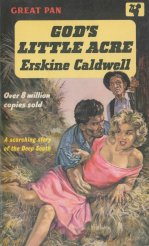
Remembering John, Arthur, Ray and Erskine:
0 Replies
edgarblythe
1
Reply
Sun 17 Dec, 2006 09:24 am
Here There And Everywhere
The Beatles
To lead a better life
I need my love to be here
Here, making each day of the year
Changing my life with a wave of her hand
Nobody can deny that there's something there
There, running my hands through her hair
Both of us thinking how good it can be
Someone is speaking
But she doesn't know he's there
I want her everywhere
And if she's beside me
I know I need never care
But to love her is to need her everywhere
Knowing that love is to share
Each one believing that love never dies
Watching her eyes and hoping I'm always there
I want her everywhere
And if she's beside me
I know I need never care
But to love her is to need her everywhere
Knowing that love is to share
Each one believing that love never dies
Watching her eyes and hoping I'm always there
I will be there, and everywhere
Here, there and everywhere
0 Replies
Letty
1
Reply
Sun 17 Dec, 2006 09:30 am
Well, folks, there's our Raggedy with fantastic photo's of the notables. Thanks, PA. Wouldn't it be interesting to give a child four names? (I have five myself)
Happy Birthday, John Arthur Ray Erskine.
From the conductor of The Boston Pops:
Here we come a-wassailing
Among the leaves so green,
Here we come a-wand'ring
So fair to be seen.
Love and joy come to you,
And to you your wassail, too,
And God bless you, and send you
A Happy New Year,
And God send you a Happy New Year.
We are not daily beggers
That beg from door to door,
But we are neighbors' children
Whom you have seen before
Love and joy come to you,
And to you your wassail, too,
And God bless you, and send you
A Happy New Year,
And God send you a Happy New Year.
Good master and good mistress,
As you sit beside the fire,
Pray think of us poor children
Who wander in the mire.
Love and joy come to you,
And to you your wassail, too,
And God bless you, and send you
A Happy New Year,
And God send you a Happy New Year.
We have a little purse
Made of ratching leather skin;
We want some of your small change
To line it well within.
Love and joy come to you,
And to you your wassail, too,
And God bless you, and send you
A Happy New Year,
And God send you a Happy New Year.
Bring us out a table
And spread it with a cloth;
Bring us out a cheese,
And of your Christmas loaf.
Love and joy come to you,
And to you your wassail, too,
And God bless you, and send you
A Happy New Year,
And God send you a Happy New Year.
God bless the master of this house,
Likewise the mistress too;
And all the little children
That round the table go.
Love and joy come to you,
And to you your wassail, too,
And God bless you, and send you
A Happy New Year,
And God send you a Happy New Year.
0 Replies
Letty
1
Reply
Sun 17 Dec, 2006 09:39 am
Oops, edgar, missed your here, there, and everywhere. I do believe it, Texas.
Funny remembrance, folks.
My kids made me a sampler and framed it. It said:
Thanks, Mom, for always being there.
Bud made one of his own and pasted it over their sampler. It said:
Thanks, Dad, for always being there when you should have been here.
0 Replies
edgarblythe
1
Reply
Sun 17 Dec, 2006 02:22 pm
It Takes a Lot to Laugh, It Takes a Train to Cry
Bob Dylan
Well, I ride on a mailtrain, baby,
Can't buy a thrill.
Well, I've been up all night,
Leanin' on the window sill.
Well, if I die
On top of the hill
And if I don't make it,
You know my baby will.
Don't the moon look good, mama,
Shinin' through the trees?
Don't the brakeman look good, mama,
Flagging down the "Double E"?
Don't the sun look good
Goin' down over the sea?
Don't my gal look fine
When she's comin' after me?
Now the wintertime is coming,
The windows are filled with frost.
I went to tell everybody,
But I could not get across.
Well, I wanna be your lover, baby,
I don't wanna be your boss.
Don't say I never warned you
When your train gets lost.
0 Replies
Letty
1
Reply
Sun 17 Dec, 2006 02:42 pm
I didn't realize that you knew Bob Dylan, edgar. <smile> Like those moon songs, Texas, and thanks.
To balance the musical scales, listeners:
J.S.Bach
Jesu, joy of man's desiring,
Holy wisdom, love most bright;
Drawn by Thee, our souls aspiring
Soar to uncreated light.
Word of God, our flesh that fashioned,
With the fire of life impassioned,
Striving still to truth unknown,
Soaring, dying round Thy throne.
Through the way where hope is guiding,
Hark, what peaceful music rings;
Where the flock, in Thee confiding,
Drink of joy from deathless springs.
Theirs is beauty's fairest pleasure;
Theirs is wisdom's holiest treasure.
Thou dost ever lead Thine own
In the love of joys unknown.
Perhaps I can find "What Strangers are These." Hmmmm. Our Raggedy might know.
0 Replies
edgarblythe
1
Reply
Sun 17 Dec, 2006 02:50 pm
I go to a site that encourages song writers to get together. I have about 19 lyrics posted so far. Each time one drops off the front page, I add another. Hope to add one about life on the moon.
0 Replies
Letty
1
Reply
Sun 17 Dec, 2006 03:01 pm
Well, edgar. I sent our Raggedy an S.O.S. Perhaps she can help us both.
Hey, gal. We'll put something in your stocking if you will:
0 Replies
Letty
1
Reply
Sun 17 Dec, 2006 07:25 pm
Although our Raggedy did not know our songs, edgar, she reminded me of this one and its counterpart:
What child is this, who, laid to rest
On Mary's lap, is sleeping?
Whom angels greet with anthems sweet,
While shepherds watch are keeping?
This, this is Christ the King,
Whom shepherds guard and angels sing:
Haste, haste to bring him laud,
The Babe, the Son of Mary!
So bring Him incense, gold, and myrrh,
Come peasant king to own Him,
The King of kings, salvation brings,
Let loving hearts enthrone Him.
Raise, raise the song on high,
The Virgin sings her lullaby:
Joy, joy, for Christ is born,
The Babe, the Son of Mary!
Greensleeves
Alas my love you do me wrong
To cast me out discourteously
When I have loved you so so long
Delighting in your company
Your gown was of the grassy green
Your sleeves of satin were hanging by
Which made you be a harvest queen
Yet you would not love me
Green sleeves was my all my joy
Green sleeves was my delight
Green sleeves was my heart of gold
And who but my lady green sleeves
Alas my love you do me wrong
To cast me out discourteously
When I have loved you so so long
Delighting in your company
0 Replies
edgarblythe
1
Reply
Sun 17 Dec, 2006 08:23 pm
Well, I thank the two of you. I guess it's unplagiaristically mine, to coin a phrase. I have advanced the lines a bit more, but can't say how long til the final product, which will the be posted alongside the others.
0 Replies
edgarblythe
1
Reply
Sun 17 Dec, 2006 11:00 pm
And When I Die
Blood, Sweat & Tears
written by Laura Nyro
I'm not scared of dying
And I don't really care
If it's peace you find in dying
Well then let the time be near
If it's peace you find in dying
And if dying time is here
Just bundle up my coffin
'Cause it's cold way down there
I hear that its cold way down their
Yeah, crazy cold way down their
And when I die, and when I'm gone
There'll be one child born
In this world to carry on
To carry on
Now troubles are many
They're as deep as a well
I can swear there ain't no heaven
But I pray there ain't no hell
Swear there ain't no heaven
And I pray there ain't no hell
But I'll never know by living
Only my dying will tell
Yes, only my dying will tell
Yeah, only my dying will tell
And when I die, and when I'm gone
There'll be one child born
In this world to carry on
To carry on
Give me my freedom
For as long as I be
All I ask of living
Is to have no chains on me
All I ask of living
Is to have no chains on me
And all I ask of dying
Is to go naturally
Oh I want to go naturally
Here I go
Hey, hey
Here comes the devil
Right Behind
Look out children
Here he comes
Here he comes
Hey
Don't want to go by the devil
Don't want to go by demon
Don't want to go by Satan
Don't want to die uneasy
Just let me go naturally
and when I die
When I'm dead, dead and gone
There'll be one child born
In our world to carry on
To carry on
Yeah, yeah
0 Replies
Letty
1
Reply
Mon 18 Dec, 2006 04:56 am
Good morning, WA2K listeners and contributors.
edgar, I really like Blood, Sweat, and Tears, especially that one as I see it representing the cycle of life and death:
Here's one, folks, by that same group:
Artist: Blood Sweat And Tears
Song: Sometimes In Winter
Sometimes In winter I gaze into the streets
and walk through snow and city sleet
behind your room.
Sometimes in winter forgotten memories
remember you behind the trees
with leaves that cry.
By the window once I waited for you,
laughing slightly you would run,
trees alone would chill us in the meadow,
making love in the evening sun.
Now you're gone girl,
and the lamp posts call your name,
i can hear them in the spring of frozen rain.
Now you're gone girl,
and the times slow down til dawn
it's a cold room
and the walls ask where you've gone
Sometimes in winter I love you when the good times seem like memories
in the spring that never came.
Sometimes in winter, I wish the empty streets would fill with laughter
from your tears to ease my pain.
0 Replies
bobsmythhawk
1
Reply
Mon 18 Dec, 2006 05:57 am
George Stevens
From Wikipedia, the free encyclopedia
Born 18 December 1904
Oakland, California, USA
Died 8 March 1975
Lancaster, California, USA
George Stevens (December 18, 1904 - March 8, 1975) was an American motion picture director, producer, writer and cinematographer. Born in Oakland, California, Stevens broke into the movie business as a cameraman, working on many Laurel and Hardy shorts. His first feature film was The Cohens and Kellys in Trouble in 1933.
In 1934 he got his first directing job, the slapstick Kentucky Kernels. His big break came when he directed Katharine Hepburn in Alice Adams in 1935. He went on in the late 1930s to direct several Ginger Rogers and Fred Astaire movies, not only with the two actors together, but on their own.
Following World War II, in which he photographed the graphic scenes at the Dachau concentration camp, his films became more dramatic. I Remember Mama in 1948 was the last movie with comic scenes that he made. He was responsible for such classic films as A Place in the Sun, Shane, The Diary of Anne Frank, Giant and The Greatest Story Ever Told.
Stevens is the father of TV and film writer, producer, and director George Stevens, Jr., and the grandfather of TV and film producer and director Michael Stevens.
Stevens died on his ranch in Lancaster, California
0 Replies
bobsmythhawk
1
Reply
Mon 18 Dec, 2006 06:04 am
Betty Grable
From Wikipedia, the free encyclopedia
Birth name Elizabeth Ruth Grable
Born December 18, 1916
St. Louis, Missouri
Died July 2, 1973
Santa Monica, California
Betty Grable (December 18, 1916 - July 2, 1973) was an American actress, singer, dancer, and pin-up girl, whose sensational bathing-suit photo became the number-one pinup of the World War II era.
Grable was best-known for her shapely legs, which were showcased in all of her Technicolor musicals and were famously insured by her studio, 20th Century Fox, for $1,000,000 per leg.
Biography
She was born Elizabeth Ruth Grable in St. Louis, Missouri, the third child of John Conn Grable (June 28, 1883-January 25, 1954) and Lillian Rose Hofmann (May 29, 1889-December 24, 1964). Her sister was Marjorie L. Grable (April 17, 1909-November 25, 1980) and her brother was John Carl Grable (who died in infancy).
Most of Grable's recent ancestors were American, but her distant heritage included Dutch, Irish, German and English.[1][2] She was propelled into acting by her mother, who insisted that one of her daughters become a star. For her first role, as a chorus girl in the movie Happy Days (1929), Grable was only 13 years old (legally underage for acting), but, because the chorus line performed in blackface, it was impossible to tell how old she was.
For her next movie, her mother got her a contract using false identification. When this deception was discovered, however, Grable was fired. Grable finally obtained a role as a 'Goldwyn Girl' in Whoopee! (1930), starring Eddie Cantor, and worked in small roles at different studios for the rest of the decade, including the Academy Award-nominated The Gay Divorcee (1934), starring Fred Astaire and Ginger Rogers.
In 1937, she married another famous former child-actor, Jackie Coogan, but Coogan was under considerable stress from a lawsuit against his parents over his earnings, and the couple divorced in 1940. During this period - after small parts in over 50 Hollywood movies throughout the 1930s - Grable finally gained national attention on stage for her role in the Cole Porter Broadway hit Dubarry Was A Lady (1939).
The same year that she divorced Coogan, Grable obtained a contract with 20th Century Fox, becoming their top star throughout the decade, with splashy Technicolor movies such as Down Argentine Way (1940), Moon Over Miami (1941) ( both with Don Ameche ), Springtime in The Rockies (1942), Coney Island (1943) with George Montgomery , Sweet Rosie O'Grady (1943) with Robert Young, Pin Up Girl (1944), Diamond Horseshoe (1945) with Dick Haymes , The Dolly Sisters (1945) with John Payne and June Haver, and her most popular film Mother Wore Tights (1947), with favorite costar Dan Dailey.
It was during her reign as box-office champ (in 1943) that Grable posed for her iconic pin-up photo, which (along with her movies) soon became escapist fare among GIs fighting overseas in World War II. Despite solid competition from Rita Hayworth, Dorothy Lamour, Veronica Lake, and Lana Turner, Grable was indisputably the number one pinup girl for American soldiers. She was wildly popular at home as well, placing in the top ten box-office draws each year for ten years. By the end of the 1940s Grable was the highest-paid female star in Hollywood.
Her postwar musicals included That Lady in Ermine (1948) with Douglas Fairbanks Jr., When My Baby Smiles at Me (1948) again with Dailey, Wabash Avenue (1950) (a remake of Grable's own Coney Island ) with Victor Mature, My Blue Heaven (1950), and Meet Me After the Show (1951). Studio chief Darryl F. Zanuck lavished his number one star with expensive Technicolor films, but also kept her busy ?- Grable made nearly twenty-five musicals/comedies in thirteen years. Grable's last big hit for Fox was How to Marry a Millionaire (1953) with Lauren Bacall and Marilyn Monroe.
In 1943, she married jazz trumpeter and big band leader Harry James, by whom she had 2 children; they divorced in 1965.
Grable's later career was marked by feuds with studio heads, who worked her to exhaustion. At one point, in the middle of a fight with Darryl F. Zanuck, she tore up her contract with him and stormed out of his office. Gradually leaving movies entirely, she made the transition to television and starred in Las Vegas.
She died of lung cancer at age 56 in Santa Monica, California. Her funeral was held July 5, 1973, 30 years to the day after her marriage to Harry James. She is interred in Inglewood Park Cemetery, Inglewood, California.
Betty Grable has a star on the Hollywood Walk of Fame at 6525 Hollywood Boulevard in Hollywood. She also has a star on the St. Louis Walk of Fame.
Trivia
In a remarkable coincidence, Harry James died on what would have been he and Grable's 40th anniversary, July 5, 1983.
0 Replies
bobsmythhawk
1
Reply
Mon 18 Dec, 2006 06:25 am
Keith Richards
From Wikipedia, the free encyclopedia
Born December 18, 1943
Dartford, Kent, England
Keith Richards (born 18 December 1943 in Dartford, Kent) is an English guitarist, songwriter, singer, and founding member of British musical group The Rolling Stones. He has penned with bandmate Mick Jagger many number 1 hits from 1965 to the early 80s. Though he plays many lead guitar parts, he is celbrated for his innovative rhythm guitar.
Richards' musical career has been characterized by a reliance on collaboration and his long association with the Rolling Stones. In addition to his relatively few solo releases, Richards has appeared as a guest on recordings of other artists.
Early life
Keith Richards was born to Bert Richards and Doris Dupree at the Livingstone Hospital, East Hill, in Dartford, Kent, on 18 December 1943 during the Second World War, and lived there through German V-weapon attacks on the city. Richards was an only child. His father Bert was a factory labourer who was slightly injured during World War II. Richards' paternal grandparents were socialists and civic leaders, and his maternal grandfather (Augustus Theodore Dupree) toured Britain as a jazz/big band musician. In interviews, Richards has often cited his maternal grandfather as a strong influence growing up. Richards' mother also introduced Richards to the music of Billie Holiday, Louis Armstrong and Duke Ellington. Another influence was American film and recording artist Roy Rogers, whom the young Richards imitated by dressing as a cowboy and playing guitar. As an adolescent, Richards dressed like a teddy boy.
Richards attended Dartford Technical School, where he was a choirboy until his voice changed in adolescence. Being dropped from the choir aggravated his frustration with school, and at age 15 Richards was expelled for misbehaviour. The headmaster, however, recommended Richards for admission to Sidcup Art College, where he found himself in the company of many other aspiring young guitarists. Richards left the College, and his family home, in 1962. Soon after that his parents divorced; Richards remained estranged from his father until 1982.
Musical career
With the Rolling Stones
Richards had derived much of his early inspiration from Chuck Berry, whose guitar work remained a touchstone for Richards throughout his career. While The Rolling Stones were conceived as a rhythm and blues band, both Jagger and Richards were responsible for bringing the rock 'n' roll of Bo Diddley and Chuck Berry into the group's repertoire. With Stones founding member and guitarist Brian Jones, Richards developed a two-guitar style of interwoven leads and rhythms. Jones was replaced by the virtuoso guitarist Mick Taylor (1969-1974), who contributed to some of the group's most well-regarded records, but Taylor's addition also led to a pronounced separation in the duties of lead and rhythm guitar. Taylor's replacement in 1975 was the more rhythmically-oriented Ron Wood. Richards said in the Stones' official book According to the Rolling Stones that Wood is one of the most sympathetic guitar players he has worked with, and elsewhere he has said that his most musically satisfying years with the Stones have been with Wood.
Richards' often uses guitars with open tunings which allow for syncopated and ringing I-IV chording that can be heard on "Start Me Up" and "Street Fighting Man." Richards has frequently used a five-string variant of the open G (borrowed from Don Everly of the Everly Brothers)) which uses GDGBD and is unencumbered by a rumbling, lower E string . On some of the Stones' biggest hits, including "Honky Tonk Women," "Brown Sugar," and "Start Me Up", this tuning is prominent. Though he still uses standard tunings, Richards claimed that his adoption of open tunings led to a musical "rebirth".
Richards - who has over 1000 guitars, some of which he has not played but was simply given - is often associated with the Fender Telecaster, though lately his favourite guitar appears to be an ebony Gibson ES-355. It is often hard to detect by ear what guitar he plays, and he has pointed out that he manages to make them all sound the same. "(I Can't Get No) Satisfaction" Richards recorded the first top ten hit tp feature a guitar fuzz effect which has since become commonplace. Though in the 1970s and early 80s he used guitar effects frequently, since then he has rarely used effects. Richards considers the acoustic guitar as the basis for his playing, and many Stones hits including "Street Fighting Man", "Satisfaction", and "Brown Sugar" feature acoustic guitar parts.
Richards' backing vocals appear on every Stones album. From 1969's Let It Bleed, Stone's releases often contained a Richards lead vocal, and since 1978's Some Girls each release has had a Richards lead vocal. He has also contributed occasional bass, keyboard, and slide guitar. Richards has always been active in record production for the Stones and for himself, often in tandem with Mick Jagger and outside producers, better known as The Glimmer Twins.
Songwriting
Richards and Jagger began writing songs following the example of the Beatles' Lennon/McCartney, as directed by Stone's manager Andrew Loog Oldham who was mindful of songwriting royalties and who saw little future for a band that only covered the songs of others. The Stones had a number of hits with Jagger/Richards-penned songs. 1965's "Satisfaction" becoming their first international #1 recording.
Jagger/Richards songs reflected the influence of blues, R&B, and rock 'n' roll, and later incorporated soul, folk, pop, country, gospel, psychedelia, and the social commentary that Bob Dylan made prominent on Top 40 radio. Their work in the 1970s and beyond has incorporated elements of funk, disco, calypso, reggae, and punk. Since 1980 with "All About You", Richards has specialized in slow, torchy ballads.
With scattered exceptions, all Rolling Stones albums from 1966 onwards have consisted of songs credited to Jagger/Richards regardless of how much collaboration occurred. For solo recordings, Richards always credits a songwriting partner, frequently drummer and co-producer Steve Jordan.
Solo recordings
After Jagger vetoed a Stones tour to support their just-released album Dirty Work, Richards formed Keith Richards and the X-pensive Winos in 1988 (first named Organized Crime). The Winos also included Steve Jordan, who played drums on Dirty Work and Hail! Hail! Rock and Roll!, a documentary of Chuck Berry's the 60th birthday concert in which Richards acted as host and musical director. The forming of the Winos was recognition that The Rolling Stones might not record or tour for some time. Richards released a solo single, "Run Rudolph Run", and toured with The New Barbarians in 1979, consisting of Stones guitarist Ronnie Wood, Faces keyboardist Ian McLagan, bassist Stanley Clarke and Meters drummer Ziggy Modeliste. however he resisted a sustained venture outside of the Stones as potentially detrimental to the band. Consequently his solo recordings are fewer than those of Jagger, Charlie Watts, and even Ronnie Wood.
Besides Steve Jordan, the X-pensive Winos featured Sarah Dash, Waddy Wachtel, Ivan Neville, Charley Drayton and Bernie Worrell. Their first release, Talk Is Cheap produced no Top 40 hits, though it went gold and has remained a consistent seller. It spawned a brief U.S. tour - one of only two that Richards has done as a solo artist. The first tour is documented on the Virgin release Live at the Hollywood Palladium, December 15, 1988. In 1992 Main Offender was released, and the Winos toured again through North and South America as well as Europe. Richards' solo career required him to be a frontman for the first time, and the Hollywood Palladium concert video shows a more active stage persona than the Richards seen in the documentary of the Stones' 1969 American tour, Gimme Shelter. After Jagger and Richards set aside their differences, the subsequent 1989 Stones release, Steel Wheels, contained material Richards had started with the Winos, such as "Almost Hear You Sigh". Richards - citing his commitments and those of other Winos as obstacles to a reunion - has not released any solo albums since the Stones reactivated in 1994.
Recordings with other artists
Though Richards rarely recorded outside of The Rolling Stones during the 1960s, recent years have found him appearing more frequently as a guest star.
His contributions include the 2001 release of John Phillips' solo recording Pay, Pack & Follow, recorded between 1973 and 1979, which Richards helped produce and on which he played guitar on all tracks. Richards also dueted with country legend George Jones on the Bradley Barn Sessions, singing "Say it's not You" as an homage to Gram Parsons, and on a Hank Williams tribute album Timeless ("You Win Again"). He has also appeared as a guest on veteran blues guitarist Hubert Sumlin's About Them Shoes, singing lead vocal on "Still A Fool". In the early 1990s Richards played with and produced a recording of Jamaican Rastafarians, The Wingless Angels releasing the collaboration on his own label, Mindless Records. He has also recorded with Tom Waits, playing guitar on several songs on Rain Dogs (1985), and playing on, singing and co-writing "That Feel" on Bone Machine (1992).
Rare and unreleased recordings
The Stones recently released Rarities 1971-2003 (2006), which includes sixteen rare and limited-issue recordings. Richards has described the released output of the Stones as the "tip of the iceberg." Many unreleased songs and studio jams including their BBC recordings from the early 1960s are among the most widely-bootlegged recordings in rock 'n' roll. Many bootlegs feature Richards singing, include the post-bust 1977 Canadian studio sessions, 1981 studio sessions, 1983 wedding tapes, among others. Since unreleased recordings often appear as post-career or posthumous releases - and also due to tangled legal complexities with past management - many of these recordings are available only as bootlegs - often as MP3 files on peer-to-peer sharing programs.
Public image and private life
To the general public, Richards is perhaps better known for his drug-related outlaw image than for his songwriting contributions. Richards and the Stones cultivated a decadent and counter-culture aesthetic during the 1960s and 70s, and Richards' frank admission that he used narcotics often made him a poster-boy for teens and adults who sought refuge in ?- as Keith sings in "Before They Make Me Run" ?- "booze and pills and powders." In a famous 1971 Rolling Stone magazine interview, he discussed his drug use. Ten years later, in another Rolling Stone interview, he expressed little regret about the heroin addiction that almost destroyed his life and music career. To this day, Richards wears a bracelet that resembles a pair of handcuffs, which were fashioned from a key chain Keith found. He has said it was a reminder that he never wants to be arrested again. Since 1979, Richards has worn his trademark silver skull ring, a gift from a friend, London jeweler David Courts, of Courts & Hackett; he has said publicly that it represents the fact that "beauty is only skin deep."[1]
Two famous arrests came ten years apart, the first in 1967 with Jagger and friends at Redlands, Richards' Sussex estate, which placed him in custody and trial before the court of public opinion and Her Majesty. The Times editorial "Who breaks a butterfly on a wheel?" helped to get the conviction quashed after two days of imprisonment. The case also began a succession of drug arrests for Richards that continued until the late 1970s.
However, there was a more serious and life-changing arrest in February 1977 at Toronto's Harbour Castle Hotel (Talk:Keith Richards/Archive 1#Regina v. Richards 49 C.C.C. (2d) (1980)). Registered at the hotel under the pseudonym "Redlands", Richards was arrested by the Royal Canadian Mounted Police for heroin and cocaine possession (he had two ounces of each at the time of his arrest), and was charged with importing narcotics, an offence with a minimum sentence of seven years imprisonment according to the Criminal Code of Canada.
For the next three years, Richards lived under threat of criminal sanction as he sought medical treatment in the U.S. for heroin addiction. During this period, The Rolling Stones released their biggest-selling album (eight million copies), Some Girls, which included their last North American number-one pop chart single, "Miss You". After the Ontario Court of Appeal upheld Richards' original sentence, he paid his debt to society by performing two benefit concerts for the Canadian National Institute for the Blind, at the cannabis smoke filled Oshawa Civic Auditorium on April 22, 1979. Both concerts featured The Rolling Stones and The New Barbarians, a band Ron Wood had formed to promote his album Gimmie Some Neck.
Later in 1979, Keith met and fell in love with Patti Hansen, a top fashion model at the time. In a 2000 Vogue magazine interview, Hansen, who later co-starred with Rick Springfield in the 1984 film Hard to Hold, said she asked Richards for a bottle of Champagne. They have been together as couple since, and married on 18 December 1983, Richards's 40th birthday. They have two daughters, Theodora Richards and Alexandra, who have followed their mother into modeling.
Richards has never distanced himself from actress Anita Pallenberg, the mother of his first three children, and often refers to having two wives, although he never officially married Pallenberg. Together they have a son, Marlon Richards, and another daughter, Angela (nee Dandelion). Their third child, a boy named after Keith's close friend Tara Browne, died several weeks after his birth in 1976.
Recent news
On 27 April 2006, Richards, while vacationing in Fiji suffered a head injury. At the time there was no confirmation of how this injury happened, but it was speculated Richards fell from a coconut tree or had a jet ski accident. On May 22, official press releases by the The Rolling Stones confirmed that Richards had returned to his home in Connecticut. The Rolling Stones announced a revised tour schedule on June 2, which included an announcement about two cancelled shows and several postponed shows in Europe. Included in the announcement was a brief statement from Richards apologizing for "falling off his perch". Unofficial news reports stated that the band will tour in North America in the fall of 2006, and in Europe in 2007, where some of the postponed dates will be rescheduled.
In August 2006 Richards was granted a pardon by Arkansas governor Mike Huckabee for a 1975 reckless driving citation. [2]
Richards is making a cameo appearance as the father of Captain Jack Sparrow (played by Johnny Depp) in Pirates of the Caribbean: At Worlds End. [3] Depp has stated that he based Sparrow's mannerisms on Richards. According to castmate Bill Nighy, Richards was so drunk on the set that director Gore Verbinski had to hold his shins steady while he filmed his scenes.[4]
Chronology of recent events
Richards was initially treated in Suva (the capital of Fiji) then airlifted to a private hospital in Auckland, New Zealand on 3 May 2006. The The New Zealand Herald and Reuters reported on May 8 that Richards underwent brain surgery to relieve a blood clot on the brain. The operation normally involves drilling a hole through the skull to drain the clot. Richards' representatives said his operation "was a complete success", although necessary to relieve headaches the musician was still complaining of since the original accident.
On May 11, Richards was officially discharged from Ascot Hospital in Auckland. A statement was released to the press where Richards publicly thanked the hospital and its employees for their treatment.
On May 13, The New Zealand Herald published an online article summarizing the two weeks of conflicting news reports about Richards' accident and condition. On the 16th, press reports coming out of London quoted Richards' son Marlon Richards that his father had been given the 'all-clear' to fly. Marlon told Britain's Daily Mirror that his father was back to full health, but could not say anything more.
0 Replies
bobsmythhawk
1
Reply
Mon 18 Dec, 2006 06:43 am
Steven Spielberg
From Wikipedia, the free encyclopedia
Born: December 18, 1946 (age 60)
Cincinnati, Ohio, USA
Steven Allan Spielberg (born December 18, 1946) is a three-time Academy Award-winning American film director and producer. He is the most financially successful motion picture director of all time. He has directed and/or produced a number of major box office hits, giving him great influence in Hollywood. As of 2006, he has been listed in Premiere and other magazines as the most "powerful" and "influential" figure in the motion picture industry, and at the end of the 20th century LIFE named him the most influential person of his generation.[1]
He has won three Academy Awards (including an Irving G. Thalberg Memorial Award). He has been nominated for six Academy Awards for Best Director, winning two of them (Schindler's List and Saving Private Ryan), and seven of the films he directed were up for the Best Picture Oscar (Schindler's List won). During the 1970s, 1980s and 1990s, three of his films became the highest grossing films for their time: Jaws, E.T. and Jurassic Park.
Spielberg ranks among the most successful filmmakers in history, in terms of both critical acclaim and popular success even though his films are sometimes portrayed as the archetype of modern Hollywood blockbuster film-making (commercialism over artistic purposes) by critics. First coming to attention directing adventure films, in later years he has tackled emotionally powerful issues, such as the Holocaust, slavery, war, and recently terrorism.
Early life
Steven Allan Spielberg was born in Cincinnati, Ohio to his parents Arnold and Leah Adler. He has three younger sisters. His last name comes from the name of the Austrian city where his Hungarian Jewish ancestors lived in 17th century: Spielberg.
Spielberg spent much of his childhood in several places as his family often moved because of his father's job, as a computer engineer. Spielberg lived in Camden, New Jersey, Haddon Township, New Jersey, Phoenix, Arizona and Saratoga, California. Spielberg recounts his first film as Cecil B. DeMille's The Greatest Show on Earth.[2]
Spielberg grew up making movies from an early age. In an interview with the American Film Institute Spielberg recalls his earliest movie making memory - his enjoyment of crashing his toy trains into each other. To avoid making his father angry about repairing the trains he chose to film the crash at the points where the trains met. Throughout his early teens, he made other amateur 8 mm "adventure" movies with his friends. He charged admission to his home movies (which involved the wrecks he staged with his Lionel train set) while his sister sold the popcorn. At the age of 13, Spielberg won a prize for a 40.65-minute war movie he titled Escape to Nowhere. [2]
Whilst attending Arcadia High School in Phoenix, Arizona in 1963, at the young age of 16, Spielberg wrote and directed his first large scale independent movie. His 140-minute production was a science fiction adventure called Firelight (which would later inspire Close Encounters). The movie, with a budget of USD$400, was shown in his local movie theater and generated a profit of $100. Firelight was Spielberg's first real commercial success and the local Phoenix press wrote that he could expect great things to come. [3]
After his parents divorced he moved to California with his father. His three sisters and mother remained in California. Subsequently he graduated from Saratoga High School in Saratoga, California in 1965. On attending Saratoga High School, he said that it was the "worst experience" of his life and "hell on Earth".[4] Spielberg was given the nickname "Spielbug" [2] During this time Spielberg became an Eagle Scout and recipient of the Distinguished Eagle Scout Award from the Boy Scouts of America (BSA), as he developed the requirements for the Boy Scout Cinematography merit badge.[5] In later life, he resigned from the national board of BSA after he had been admitted (because of his disapproval regarding the BSA's anti-homosexuality stance).[6]
After moving to California he applied to attend film school at UCLA and University of Southern California's School of Cinema-Television three separate times but was unsuccessful (though USC awarded Spielberg an honorary degree in 1994 and in 1996 he became a trustee of the University). Reasons for his failure to gain entry were based on his "C" grade average. He then attended California State University, Long Beach at the behest of his parents who wanted him to gain a degree and personally to avoid the possibility of the draft for Vietnam.[2] Spielberg once joked that his movie career began the day that he decided to jump off a tour bus at Universal Studios in Hollywood and wandered around the disused film lots. Apparently he found an abandoned janitors closet. However his actual career began, whilst he was at Long Beach when he returned to Universal studios as an unpaid three day a week intern and guest of the editing department.[7]
While attending college at Long Beach State in the 1960s, Spielberg also became member of Theta Chi Fraternity. In 2002, thirty-five years after starting college, Spielberg finished his degree via independent projects at CSULB, and was awarded a B.A. in Film Production and Electronic Arts with an option in Film/Video Production.[8] Fraternity brothers often tell stories of Spielberg running around with a movie camera making short films.
Once as an intern and guest of Universal Studios, Spielberg made his first short film for theatrical release, creating Amblin', in 1968, at the age of twenty-one. This movie, only 24 minutes long, led to his becoming the youngest director ever to be signed to a long-term deal with a major Hollywood studio (Universal) after Sid Sheinberg, then the vice-president of production for Universals' TV arm saw the film. In later life Spielberg's own production company, Amblin Entertainment, was named after his short film. He then dropped out of Long Beach State in 1969 to take the television director contract at Universal Studios and began his career as a paid professional director.
Early career (1968-1975)
His first professional TV job came when he was hired to do one of the segments for the pilot episode of Night Gallery. The segment, Eyes, starred Joan Crawford, and she and Spielberg were reportedly close friends until her death. The episode is unusual in his body of work, in that the camerawork is more highly stylized than his later, more "mature" films. After this, and an episode of Marcus Welby M.D., Spielberg got his first feature-length assignment: an episode of Name of the Game called "L.A. 2017". This episode played to his interests in futuristic science fiction, and Universal first began to take note of his talents. He did another segment on Night Gallery (some people claim that he also directed a short five-minute segment called "A Matter of Semantics" when the credited director had to back out for unknown reasons, but this has never been confirmed), and did some work for shows such as Owen Marshall, Counselor at Law and The Psychiatrist before landing the first series episode of Columbo (previous "episodes" were actually TV-Movies).
Based on the strength of his work, Universal signed Spielberg to do three TV movies. The first was a Richard Matheson adaptation called Duel, first broadcast in 1971. It was immediately recognized as a taut, well-made thriller, and cemented Spielberg's emerging reputation. (Note that all video/DVD releases of the film have the extended cut which was released theatrically in America in 1983, not the original, shorter cut.) Realizing what they had, Universal would not release Spielberg to CBS, and insisted he fulfill the contract. In 1972, he directed a TV movie called Something Evil, which was made and released to capitalize on the popularity of The Exorcist, then a major best-selling book which had not yet been released as a movie. Spielberg is said to be quite disappointed with the film, which he never regarded as more than a knock-off. He fulfilled his contract by directing the TV movie length pilot of a show called Savage, starring Martin Landau. Though the series was not picked up, the movie was shown on TV in 1973, and is occasionally re-run, usually highlighting Spielberg's participation.
Spielberg's debut theatrical feature film was The Sugarland Express, based on the true story of a married couple who lead the Texas police on a highway chase as they embark on a journey to regain custody of their baby. Welcomed with warm reviews, the film nevertheless failed to catch on at the box office, but his producers Richard Zanuck and David Brown were prepared to offer Spielberg a more ambitious directing assignment.,
Spielberg's next film was Jaws, a horror film based on the Peter Benchley novel starring Roy Scheider about a killer shark that attacks people off the coast of a New England isle community. Jaws won three Academy Awards (for editing, original score and sound), and grossed over USD$100 million at the box office, setting the domestic record for box office gross. It was also nominated for Best Picture and featured Spielberg's first of three collaborations with actor Richard Dreyfuss. To this day, Spielberg maintains that Jaws was the hardest film he ever had to make. [9] He would decline offers to direct its sequel by using his new influence to pursue more personal projects.
Blockbuster King (1975-1993)
Rejecting offers to direct Jaws 2 and Superman, Spielberg and actor Richard Dreyfuss re-convened to work on a pet project Spielberg had had in mind since his youth: a film about UFOs, which became Close Encounters of the Third Kind (1977). The film remains a cult sci-fi classic and has been highly influential ever since. This is one of the rare movies that Spielberg both wrote and directed. A hit at the box office, the film also gained Spielberg his first Best Director nomination from the Academy and was nominated for six other Academy Awards, taking home Oscar in two (Cinematography -- Vilmos Zsigmond, and a Special Achievement Award for Sound Effects Editing -- Frank E. Warner).
The success Spielberg was beginning to enjoy, as well as his eventual tendency to make films with wide mainstream and commercial appeal, also subjected him to disdain in critical circles by film reviewers. For example, Spielberg's next film was 1941, a big-budgeted World War II comedy farce set in L.A. days after the attack on Pearl Harbor, with the two top stars from Saturday Night Live, Dan Aykroyd and John Belushi, along with other all-stars. An exercise in excess, the film provided just the ammunition cynical critics would require to take down the young director. The film flopped with both audiences and critics alike, and Spielberg looks back at the film disdainfully, describing that he "needed to go to a Betty Ford clinic for self-indulgent directors".[10] In the end it did make a small profit at the box office, and eventually found its audience in television showings. Expanded versions of 1941 have been shown on network television and later on Laserdisc and DVD and it has earned a cult status partly because of Spielberg's eventual fame and partly because of its camp reputation. Desperately in need of quick redemption, Spielberg would next team with Star Wars creator George Lucas on a new action adventure film.
What some would consider Spielberg's greatest film work was still to come, beginning in the 1980s. In 1981, Spielberg teamed up for the first time with his long-time friend George Lucas to make Raiders of the Lost Ark, his homage to the cliffhanger serials of the Golden Age of Hollywood, with Harrison Ford (whom Lucas had previously cast in his Star Wars films) as the dashing hero Indiana Jones. The biggest film at the box office in 1981, and recipient of numerous Oscar nominations including Best Director (Spielberg's second nomination) and Best Picture (the second Spielberg film to be nominated for Best Picture), Raiders is still hailed as a landmark in action cinema.
One year later, Spielberg returned to his alien visitors motif with E.T. the Extra-Terrestrial, the story of a boy and the alien whom he befriends (and is trying to get back "home" to outer space). E.T. went on to become the top-grossing film of all time for many years. It was also nominated for many Academy Awards including Best Picture and Best Director. It is considered by Spielberg to be his own personal favorite film from his works. E.T. apparently originated as a sci-fi suspense thriller called Night Skies, though some also believe it originated from Satyajit Ray's The Alien script (see Alleged plagiarism). Night Skies also gave birth to Poltergeist, a film that Spielberg co-wrote , co-produced (and some people who worked on the film claim directed) and was released only a week before E.T.. Spielberg also negotiated an unusually lucrative video game licensing deal with Atari for an E.T. video game. This was a famously expensive failure which contributed to the video game crash of 1983.
His friend George Lucas immediately pulled Spielberg back in as part of their friendly agreement to make more Indiana Jones movies with Indiana Jones and the Temple of Doom. Plagued with uncertainty for the material, the saving grace for Spielberg during the making of this film would be the meeting of his future wife Kate Capshaw, who was cast as Indiana's new love interest. The film was a hit though the reviews were less positive than they were for its predecessor. It was criticized for lacking the energy of the original, as well as for its grossly inaccurate and ignorant depiction of Indian culture. The extreme violence and gore would also inspire the Motion Picture Association of America to create the PG-13 rating the following year - in fact it was Spielberg that suggested this rating.[citation needed]
In 1983 and 1984, Spielberg produced two high grossing movies. The first was a big-screen adaptation of The Twilight Zone. The movie consists of five different segments -- two segments of original material directed by John Landis and three remakes of classic Twilight Zone episodes, each from a different director; Spielberg himself directed the segment "Kick the Can," about an old man (played by Benjamin "Scatman" Crothers) who has the ability to grant youth to the residents of an old folk's home. Controversy struck Spielberg when a helicopter accident on Landis's set resulted in the deaths of two child actors and veteran actor Vic Morrow. Despite the tragic results of the Twilight Zone movie, Spielberg would again pay homage to the show two years later by launching Amazing Stories, a similar TV series which Spielberg would produce and occasionally direct. The second was when Spielberg came up with the story and co-wrote the screenplay for The Goonies. The film was directed by Richard Donner and Spielberg's role was as executive producer, along with close colleagues Frank Marshall and Kathleen Kennedy. The film was released in June 1985 and was one of the top ten highest grossing movies of the year, though its reaction among critics was split. Spielberg also appeared in the two-part music video for Cyndi Lauper's Goonies soundtrack song, "The Goonies 'R' Good Enough".
In December 1985, Spielberg released The Color Purple, an adaptation of Alice Walker's Pulitzer Prize-winning novel. Many critics were unsure of whether or not Spielberg could handle such serious material, as his output to that point had been viewed as "lighter" entertainment. Indeed, this proved to be Spielberg's trial by fire in presenting the story of a generation of oppressed African-American women (Whoopi Goldberg and Oprah Winfrey) during depression-era America. Danny Glover played the abusive patriarch. The film was another box office smash and hailed by critics as Spielberg's successful foray into the dramatic genre. Roger Ebert entered it into his Great Films archive. It received 11 Academy Award nominations including two for Whoopi Goldberg and Oprah Winfrey. However in one of the most controversial instances in the History of the Academy of Motion Picture Arts and Sciences Spielberg himself went without a Best Director nomination, despite the multitude of nominations the picture received (none of them awarded).
1987 was a time when the Chinese economy was beginning to boom, and as the Chinese gates began to open to the world, Spielberg took advantage by shooting the first American movie in Shanghai since the 1930s. The result was an adaptation of J.G. Ballard's autobiographical novel, Empire of the Sun, which told the story of a young boy named Jim (Christian Bale) who is separated from his parents during the sacking of Shanghai in 1941, and is forced to survive through the rest of the war. Spielberg wanted to convey a heartfelt message of innocence being shattered as a result of war, as audiences saw the transformation of Jim from sheltered Shanghai to a struggling and resourceful war refugee. The film garnered numerous praise from critics, was nominated for several Oscars, but did not attract the kind of box office power that Spielberg's films usually get. Andrew Sarris praised the film calling it the best film of the year and later included it among the best films of the entire decade.[11]
After two forays into dramatic films, Spielberg returned to familiar territory by re-uniting "one last time" for another Indiana Jones film titled Indiana Jones and the Last Crusade. With the inclusion of star Sean Connery, Spielberg vicariously fulfilled a lifelong dream to make a James Bond movie. Lucas himself heralded his Indiana Jones creation as an alternative to Bond back when they first discussed films to work on together. The father-son issues in the picture are congruent with much of Spielberg's work, making this Indy film the most personal of the three. Recipient of glowing reviews and big box office receipts, Spielberg, Lucas and Ford left the franchise on a high mark. The development of a fourth Indiana Jones film has been promised, and it is now in pre-production.
1989 would mark the first year in which Spielberg would direct two movies. Following on the heels of his last Indiana Jones movie, he would re-unite with actor Richard Dreyfuss with Always. Inspired by the film A Guy Named Joe, Always is the story of Pete, a daredevil pilot who extinguishes forest fires. When killed on his last mission, he becomes something of a guardian angel for a young man named Ted. But when Ted falls in love with the girlfriend Pete left behind, Pete must learn to let go of her and do what's best to influence these characters as they themselves approach another potential tragedy. Always marked Spielberg's first foray into the romantic genre. A box office flop and victim of mixed reviews, Always stands out (or more precisely doesn't) as arguably Spielberg's most overlooked and forgotten film. The film was otherwise notable as being the last film which starred Audrey Hepburn.
After the failure of Always, Spielberg headed back to safer waters. In many ways, a Peter Pan story directed by Steven Spielberg seemed like a forgone conclusion. He had tried numerous times to film a live action version of Peter Pan without success. When writer James V. Hart pitched an alternate idea about Peter Pan returning to Neverland as an adult, Spielberg switched gears. Hook focused on a middle-aged Pan (played by Robin Williams), who returns to Neverland to face the title character (Captain Hook, played by Dustin Hoffman). However, by the time the film began shooting, innumerable rewrites and creative changes made by the numerous major Hollywood players attached to the project resulted in a film regarded by most critics as hit-or-miss at best. The film was made for $70 million (at that time a huge amount) and made $119 million domestically, but it was not as successful as some had hoped. Though Peter Pan had grown up, some were wondering if Spielberg himself ever would.
In 1993, Spielberg decided to once again tackle the adventure genre, as he directed the movie version of Michael Crichton's novel Jurassic Park, about killer dinosaurs rampaging through a tropical island resort. The adaptation muted somewhat the novel's message about the consequences of mankind tampering with nature, instead focusing on the adventure aspects of the story. With the aid of revolutionary special effects provided by friend George Lucas' Industrial Light and Magic, the film would eventually become one of the top ten highest grossing films of all time (domestically), alongside his earlier E.T. the Extra-Terrestrial. Spielberg has stated in interviews that the Howard Hawks adventure movie Hatari! and the Japanese Godzilla movies provided inspiration for the Jurassic Park Films.[12]
It was in that same year that Jurassic Park was released that Spielberg finally received the critical acclaim he had long sought for making Schindler's List (based on the true story of Oskar Schindler, a man who risked his own life to save 1,100 people from the Holocaust). The screenplay, adapted from Thomas Keneally's novel, was originally in the hands of fellow director Martin Scorsese, but Spielberg negotiated with Scorsese to trade scripts (at the time, Spielberg held the script for a remake of Cape Fear). Schindler's List earned Spielberg his first Academy Award for Best Director (it also won Best Picture). While the film was a huge success at the box office, Spielberg claimed not to have partaken in the profits, and instead used the money to set up the Shoah Foundation. Some critics maintain that Schindler's List is the most accurate portrayal of the Holocaust, and in 1999 the American Film Institute listed it among the 10 Greatest Films ever Made (#9). Though Spielberg admits it is definitely his most important film, he still holds it second to E.T. as his masterwork. Some critics, on the other hand, don't all share Spielberg's sentiment and it is regarded by many as his finest and most mature film.
Darker years (1993 onwards)
1993 was Spielberg's biggest year with the success of Jurassic Park and Schindler's List. Taking a four-year hiatus from directing to spend more time with his family and build his new studio DreamWorks, Spielberg found himself back in the director's chair in 1997. This time, he was helming the sequel to 1993's gigantic Jurassic Park, based on Michael Crichton's The Lost World. The film received mixed reviews, but did manage to generate nearly $230 million in domestic box office, giving it the third-highest total for 1997 behind Titanic and Men in Black. In hindsight Spielberg expressed his view that this sequel was a movie he wanted to see, but didn't necessarily want to make himself. Fatigued by the production, he would relinquish the opportunity to direct any more Jurassic Park films.
Spielberg followed his 1993 formula of releasing a dinosaur movie followed by a historical drama by doing it again in 1997. If Lost World was his bid to conquer the box office, Amistad (like Schindler's List) was his bid to win over the critics come awards season. Spielberg released Amistad under the banner of his new studio DreamWorks (formed with former Disney animation exec Jeffrey Katzenberg and media mogul David Geffen). Based on a true story about enslaved Africans who rebelled against their captors, the film received lavish praise from the critics, but was noted for its violent massacre scenes. It did not do well at the box office however, and has been overlooked since its release. It would mark Spielberg's second essay on the treatment of Blacks in American History (the first being The Color Purple in 1985).
Another of Spielberg's critically acclaimed films, the World War II drama Saving Private Ryan, was released in 1998. The film follows a squad of soldiers led by Capt. Miller (Tom Hanks), from the landing at Omaha Beach in Normandy to the heart of French resistance, in order to retrieve a missing private (Matt Damon), whose brothers were lost to the war. Spielberg considered it one of his finest works, yet in a highly publicized "showdown", it lost the Best Picture Oscar at the 1999 Academy Awards to Shakespeare in Love. However, Spielberg would win his second Academy Award for his direction in the war epic. The film, renowned for its graphic violence, has proven highly influential on succeeding war movies like Black Hawk Down and Enemy at the Gates and it has set a standard for realistic depiction of combat. The film was also the first major hit for Spielberg's studio DreamWorks, which co-produced the film with its eventual sister studio, Paramount Pictures. Later on, Spielberg and Hanks, overwhelmed with the success of the film's subject, decided to team together to produce a TV mini-series based on Stephen Ambrose's historical novel, Band of Brothers. The ten-part HBO mini-series follows the trials and accomplishments of the 101st Airborne Division, or Easy Company, also starting from the landing in Normandy, to the Battle of the Bulge, to the capture of Hitler's Eagle's Nest. The series won a slew of awards both at the Golden Globes and the Emmys.
Spielberg's recent films starting from the end of the millennium are considered markedly different from that of his previous films although many note similar themes being played out in them. Many critics have stated that Spielberg's recent films are an experimental phase. Whether this is intentional on Spielberg's part is unknown. Opinions on his recent films are also markedly different. Some critics say that Spielberg has lost his touch and whimsy while others claim he is entering a new stage of his cinematic life. Critical opinions on his recent films have earned more polarizing views than his previous films, something that could be viewed as the director taking risks that many have said he did not take in his earlier years.
In 2001, Spielberg filmed fellow director and friend Stanley Kubrick's final project, A.I.: Artificial Intelligence, a project planned by the two directors for many years but which Kubrick was unable to begin during his lifetime. The futuristic story the humanoid android longing for love, A.I. featured groundbreaking visual effects and a multi-layered, allegorical storyline in keeping with Kubrick's original vision. It starred William Hurt, Jude Law, Frances O'Connor, and child actor Haley Joel Osment as the android boy David. The film polarized both critics and audiences, some stating that the film was overly long and a pretentious impression of Kubrick, others believing it to be a masterpiece. The legendary director Billy Wilder called A.I. "the most underrated film of the past few years". The film failed to recoup its budget at the US box office, though it earned profits overseas.
Following A.I., Spielberg and actor Tom Cruise collaborated for the first time in the futuristic neo-noir Minority Report, based upon the sci-fi short story written by Philip K. Dick about a D.C. police captain who has been foreseen to murder a man he has not even met. While criticized for its ignorance of the themes of humanity in author Dick's original story, the film was praised as a futuristic homage to film noir, with its intelligent premise, thrilling chase scenes, and whodunnit structure. In typical Spielberg fashion the film earned over $300 million dollars worldwide. Roger Ebert, who named it the best film of 2002, praised the film for its breathtaking vision of the future as well as for the way Spielberg blended CGI with live-action. [13]
Shortly after the release of Minority Report, Spielberg and Co. immediately went to work on Catch Me If You Can, a story of the daring adventures of a youthful con artist. The film stars Leonardo DiCaprio in the lead role, with Saving Private Ryan star Tom Hanks as the FBI agent out to catch him. The movie marked a turn of genre for Spielberg, who was at this point seen to be branching out to different kinds of film genres aside from the usual sci-fi fare he was known for. It is arguably his most offbeat film to date. It earned significant critical acclaim and box office success. It also earned Christopher Walken a nomination for Best Supporting Actor. The film is particularly known for John Williams' score and its unique title sequence.
The completion of this film once again marked another conclusion to a marathon run of film-making as it closed the hectic back-to-back-to-back filmings of A.I., Minority Report and Catch Me If You Can; a trio regarded as Spielberg's "running-man" trilogy since it shares the common theme of a character fleeing authority.
Spielberg collaborated once again with Tom Hanks along with Catherine Zeta-Jones and Stanley Tucci in The Terminal, a warm-hearted comedy about a man of Eastern European descent who is stranded in an airport after his home country suffers a civil war during his flight, strongly paralleling the situation of Merhan Karimi Nasseri. It received mixed reviews but performed relatively well at the box office.
A modernized adaptation of War of the Worlds, featuring Tom Cruise and Dakota Fanning, was released in the U.S. on June 29, 2005. As with past Spielberg films, Industrial Light and Magic (ILM) provided the special effects. In his films E.T. and Close Encounters of the Third Kind, Spielberg portrayed alien visitors as potentially friendly for human beings willing to connect with them. War of the Worlds marked a departure from those optimistic themes; more violent alien invaders wreak havoc upon Earth. The film was a major box office success and critical opinions were generally positive, although some critics pointed out logical inconsistencies in the plot of the film and commented on its relative lack of a satisfying conclusion. Also hounding the film's release was the growing controversy sparked by Cruise and his Scientology religious beliefs, which arose during War's marketing campaign. Spielberg was inspired to do the film after his childhood love of the book The War of the Worlds written by H. G. Wells. The movie features Spielberg's trademark of a distant father reconnecting with his children.
On the same day as the release of War of the Worlds, Spielberg began shooting Munich, a film about the events following the 1972 Munich Massacre. Munich stands as Spielberg's second film essaying Jewish relations in the world (the first being Schindler's List). The film is based on Vengeance: The True Story of an Israeli Counter-Terrorist Team, a book by Canadian journalist George Jonas. Although promoted as non-fiction, the book's veracity has been largely questioned by journalists. It was previously adapted into the 1986 made-for-TV movie Sword of Gideon.
The film received strong critical praise, but underperformed at the US and world box-office. The film has raised criticism from several Israeli and Palestinian commentators and remains one of Spielbergs most controversial films to date.[14] The screenplay for Munich was co-written by Eric Roth and Pulitzer Prize-winning playwright Tony Kushner. Munich received five Academy Awards nominations, including Best Picture, Film Editing, Original Music Score (by John Williams), Best Adapted Screenplay, and Best Director for Spielberg. It was Spielberg's sixth Best Director nomination.
Spielberg also served as the executive producer of Memoirs of a Geisha, an adaptation of the best-selling novel by Arthur Golden, a film he was previously attached to as director. He was also executive producer on the critically acclaimed 2005 TV miniseries Into the West. In 2006 Spielberg co-executive produced with famed filmmaker Robert Zemeckis a CGI kids-movie called Monster House, marking their first collaboration together since 1990s Back to the Future Part III. He also teamed with Clint Eastwood for the first time in their careers, co-producing Eastwood's Flags of Our Fathers and Letters from Iwo Jima with Robert Lorenz and Eastwood himself.
Upcoming projects
Spielberg's biggest priority currently is the long awaited Indiana Jones IV which is to begin filming in 2007 and is scheduled for release in 2008. [15] Spielberg has also begun plans for an Abraham Lincoln bio-pic. The Abraham Lincoln Project starring Liam Neeson as the 16th President of the United States is also scheduled for release in 2008. [16] In June 2006 it was confirmed Spielberg had already begun working on a space travel movie titled Interstellar.[17] It will be based on real scientific theories of black holes, worm holes, time travel, and gravity. It will be his first space-travel film.
Spielberg is also serving as co-executive producer for the new Transformers live action film with Brian Goldmer, an employee of Hasbro. The film will be directed by Michael Bay and written by Roberto Orci and Alex Kurtzman, and will be released on July 4, 2007. A 4th Jurassic Park film is also in development. He is also producing films to be upcoming, including a remake of When Worlds Collide (2008). Spielberg also has rights to a Tintin film.[18]
Style
Themes
Spielberg's films often deal with several recurring themes. Most of his films deal with ordinary characters searching for or coming in contact with extraordinary beings or finding themselves in extraordinary circumstances, which actually describes literally thousands of films. This is especially evident in Duel, Jaws, Close Encounters of the Third Kind, E.T. the Extra-Terrestrial, Empire of the Sun, Hook, Jurassic Park, Saving Private Ryan, Catch Me If You Can, War of the Worlds, Munich. In an AFI interview in August 2000 Spielberg commented on his interest in the possibility of extra terrestrial life and how it has influenced some of his films. To that tradition of fascination with space, Spielberg has placed on several occasions, shooting stars in the background of his films such as in Jaws. Spielberg described himself as feeling like an alien during childhood,[2] and his interest came from his father, a science fiction fan, and his opinion that aliens would not travel lightyears for conquest, but instead curiosity and sharing of knowledge.[19]
A strong consistent theme in his family-friendly work is a childlike, even naïve, sense of wonder and faith, as attested by works such as Close Encounters of the Third Kind, E.T. the Extra-Terrestrial, Hook and A.I.. According to Warren Buckland [20] these themes are portrayed through the use of low height camera tracking shots, which have become one of Spielberg's directing trademarks. In the cases when his films include children, (E.T. the Extra-Terrestrial, Empire of the Sun, Jurassic Park, etc.) this type of shot is more apparent, but it is also used in films like Munich, Saving Private Ryan, The Terminal, Minority Report and Amistad. If one views each of his films, one will see this shot utilised by the director, notably the water scenes in Jaws are filmed from the low angle perspective of someone swimming. Another child orientated theme in Spielberg's films is that of loss of innocence and coming-of-age. In Empire of the Sun, Jim, a well-groomed and spoilt English youth, loses his innocence as he suffers through World War II Japan. Similarly in Catch Me If You Can Frank naively and foolishly believes that he can reclaim his shattered family if he accumulates enough money to support them.
The most persistent theme throughout his film is tension between parent-child relationships. Parents (often fathers) are reluctant, absent or ignorant. Peter Banning in Hook starts off in the beginning of the film as a reluctant married-to-his-work parent who through the course of his film regains the respect of his children. The notable absence of Elliott's father in E.T., is the most famous example of this theme. Even Oskar Schindler, from Schindler's List, is reluctant to have a child with his wife. Munich depicts Avner as man away from his wife and newborn daughter. There are of course exceptions; Brody in Jaws is a committed family man, while John Anderton in Minority Report is a shattered man after the disappearance of his son. This theme is arguably the most autobiographical aspect of Spielberg's films, since Spielberg himself was affected by his parents' divorce as a child and by the absence of his father. Furthermore to this theme, protagonists in his films often come from families with divorced parents, most notably E.T. the Extra-Terrestrial (protagonist Elliot's mother is divorced) and Catch Me If You Can (Frank Abagnale's mother and father split early on in the movie). Little known also is Tim in Jurassic Park (early in the movie the child mentions his parents' divorce). The family often shown divided is often resolved in the ending as well.
One aspect of Spielberg's films and possibly is that most of his films are generally optimistic in nature. Critics often accuse his films for being overtly sentimental, though Spielberg feels it's fine as long as it is disguised, and the influence comes from directors Frank Capra and John Ford.[10] There are exceptions, his debut feature The Sugarland Express has a downbeat ending where Ila Fae loses custody of her daughter and most recently A.I. where David never receives acceptance from his real mother. Recently however his 21st century output from A.I. to Munich are slightly different in tone with respect to his earlier films. In A.I., David is shunned and rejected by his family and indeed most of the world at large and ultimately never earns the love of his real mother. The crime-caper, Catch Me If You Can, with a certain irony when Frank, who continuously rebels against authority figures throughout the film, becomes part of the very system he fought against; while War of the Worlds was the first time Spielberg attempted to show aliens who were evil rather than friendly to humanity. Munich, his latest and most controversial film, is also his most ambiguous, as in the end it's uncertain whether the cycle of violence would ever truly end.
Contemporaries
In terms of casting and production itself, Spielberg has a known trademark for working with actors and production members from his previous films. For instance he has cast Richard Dreyfuss in several movies; Jaws, Close Encounters of the Third Kind and Always. Spielberg has also cast Harrison Ford for several of his movies from small roles, as the headteacher in a cut scene from E.T. the Extra-Terrestrial as well as in leading role in the Indiana Jones trilogy. Recently Spielberg has used the actor Tom Hanks on several occasions and has cast him in Saving Private Ryan, Catch Me If You Can and The Terminal. Spielberg also has collaborated with Tom Cruise twice on Minority Report and War of the Worlds. Spielberg also prefers working with production members who he has developed an existing working relationship. An example of this is his production relationship with Kathleen Kennedy who has served as producer on all his major films from E.T. the Extra-Terrestrial to the present day Munich. Other working relationships include Janusz Kaminski who has shot every Spielberg film since Schindler's List (see List of noted film director and cinematographer collaborations) and the film editor Michael Kahn who has edited every single film directed by Spielberg from Close Encounters to Munich (except E.T. the Extra-Terrestrial). Most of the DVDs of Spielberg's films have documentaries by Laurent Bouzereau.
The most famous example of Spielberg working with the same professionals is of course his long time collaboration with John Williams and the use of his musical scores. One of Spielberg's most prominent trademarks is perhaps his use of music by John Williams to add to the visual impact of his scenes and to try and create a lasting picture and sound of the film, in the memories of the film audience. These visual scenes often uses images of the sun (e.g The Color Purple, Empire of the Sun, Saving Private Ryan, the final scene of Jurassic Park and the end credits of Indiana Jones and the Last Crusade) (where they ride into the sunset), of which the last two feature a Williams score at that end scene.
Spielberg is a contemporary of filmmakers George Lucas, Francis Ford Coppola, Martin Scorsese, John Milius, and Brian De Palma, collectively known as the "Movie Brats".
Other projects
Aside from his principle role as a director, Spielberg has acted as a producer for a considerable number of films, including early hits for Joe Dante and Robert Zemeckis. He has also produced several cartoons, including Tiny Toon Adventures, Animaniacs, Pinky and the Brain, Toonsylvania and Freakazoid!. In 1987 he was awarded The Irving G. Thalberg Memorial Award for his work as a creative producer up to that point. He was also, for a short time, the executive producer of the long-running medical drama ER.
In 1989, he brought the concept of The Dig to LucasArts. He contributed with the project from that time to 1995 when the game was released. He also collaborated with software publishers Knowledge Adventure on the multimedia game Steven Spielberg's Director's Chair, which was released in 1996. Spielberg appears, as himself, in the game to direct the player. Spielberg was branded for a Lego Moviemaker kit, the proceeds of which went to the Starbright Foundation. He is currently working on three games for EA.[21]
Following the critical and box office success of Schindler's List in 1993, Spielberg founded and continues to finance the Shoah Foundation, a non-profit organization with the goal of providing an archive for the filmed testimony of as many survivors of the Holocaust as possible, so that their stories will not be lost in the future. Also in 1993, Spielberg acted as executive producer for the highly anticipated television series, seaQuest DSV; a science fiction series set "in the near future" starring Roy Scheider (who Spielberg had directed in Jaws) and Jonathan Brandis akin to Star Trek: The Next Generation that aired on Sundays at 8:00PM on NBC. While the first season was moderately successful, the second season saw the departure of many beloved characters from the first year and was geared towards more heavy science fiction/fantasy type stories. Spielberg's name no longer appeared in the third season and the show was cancelled after thirteen third season episodes.
Spielberg is one of the co-founders of DreamWorks Pictures (DreamWorks SKG, with Jeffrey Katzenberg and David Geffen providing the other letters in the company name), which has released all of his movies since Amistad in 1997. Spielberg and Dreamworks SKG are currently working with Survivor creator Mark Burnett on the upcoming television show On The Lot, a Project Greenlight-esque reality show documenting a contest to find the best talented, undiscovered filmmakers in America. The winner gets an office "on the lot", another way of saying they get a $1 Million production contract. [22] Other major television series Spielberg produced were Band of Brothers, Taken and Into the West, and is also producing two untitled Fox TV series, one focusing on fashion, another on time-travellers from World War 2.[23] As head of Dreamworks, Spielberg is producing far more movies than ever before.
Personal life
From 1985 to 1989 Spielberg was married to actress Amy Irving. She received a US $100 million settlement from Spielberg in their 1989 divorce when a judge controversially vacated what had appeared to be an iron clad prenuptial agreement. After his divorce from Irving, Spielberg developed a relationship with actress Kate Capshaw, whom he met when he cast her in Indiana Jones and the Temple of Doom. They married on October 12, 1991. Capshaw converted to Judaism so she could wed the Jewish-American director. They currently move between their four homes in Pacific Palisades, California; New York City; East Hampton, NY and Naples, Florida. He has eight children ?- four of them biological:
Max Spielberg (by actress Amy Irving, whom he married on November 27, 1985)
Sasha, Sawyer and Destry (by Capshaw); three adopted (Theo, Maggie, and Mikaela); and one stepdaughter (Jessica Capshaw).
For his work on the Survivors of the Shoah Visual History Foundation since 1994, he was awarded with the Great Cross of Merit with Star, the German version of the Great Officer's Cross, in September 1998 for "a very noticeable contribution to the issue of the Holocaust".
In 1999, Spielberg received an honorary degree from Brown University. Spielberg was also awarded the Department of Defense Medal for Distinguished Public Service by Secretary of Defense William Cohen at the Pentagon on Aug. 11, 1999. Cohen presented Spielberg the award in recognition of his movie "Saving Private Ryan". The citation accompanying the medal states "Mr. Spielberg helped to reconnect the American public with its military men and women, while rekindling a deep sense of gratitude for the daily sacrifices they make on the front lines of our Nation's defense."
On February 7, 2000, Spielberg's doctor discovered an irregularity on his kidney during a routine physical. It was later found to be Renal cell carcinoma, a form of kidney cancer. The kidney was later removed at Cedars Sinai Medical Center in Los Angeles. At 53, Spielberg recovered quickly and required no follow up treatment.
In 2001, he was given the honor of Knight Commander of the Order of the British Empire (KBE) by Queen Elizabeth II. However, he cannot use the title 'Sir' due to not being a Commonwealth citizen. On July 15, 2006, Spielberg was also awarded the Gold Hugo, Lifetime Achievement Award at the Chicago International Film Festival's Summer Gala,[24] and also was awarded a Kennedy Center honour on December 3rd.[25]
Spielberg generally supports U.S. Democratic Party candidates. He was close friends of former President Bill Clinton and worked with the President for the USA Millennium celebrations. He directed an 18 minute film for the project, scored by John Williams and entitled The American Journey. It was shown at America's Millennium Gala on December 31, 1999 in the National Mall at the Reflecting Pool at the base of the Lincoln Memorial in Washington D.C.. [26] However, although Spielberg generally supports Democratic leaders such as Clinton, Al Gore and John Kerry, he joined Jeffrey Katzenberg and Haim Saban in endorsing the re-election of Hollywood friend Arnold Schwarzenegger, the Republican Governor of California, on August 7, 2006.
Criticism
Spielberg has several critics, including American artist and actor Crispin Glover. In a 2005 essay titled What Is It? Glover says that Spielberg has "wafted his putrid stench upon our culture, a culture he helped homogenize and propagandize." Among Glover's accusations are that Spielberg purchased the Rosebud sled used in Orson Welles' 1941 film Citizen Kane for $50,000 but refused to hire Welles to write a screenplay in the later years of his life, that he received money from the United States government to promote his personal religious and cultural beliefs, that his films do not take risks, that he exploited tragedy for personal gain in the films Schindler's List (although Spielberg was not paid for Schindler's List) and Saving Private Ryan, and that he, as a co-owner of DreamWorks, considered building a studio on the few remaining wetlands in Southern California even though he backed out of it.[27]
Peter Biskind's Easy Riders, Raging Bulls portrays the early Spielberg in a mostly unflattering light as a sycophantic and reverential figure to the old Hollywood studio system, lacking the artistic inclinations or intellectual backgrounds of his contemporaries and unable to relate to the youth culture of the 1960s and 1970s. One colleague recalled that during the volatile 1968 Democratic National Convention, Spielberg was far more interested in mastering a tricky visual effects shot. Biskind also illustrates Steven Spielberg's unusual experience writing Jaws. According to Universal Press associate Robert Ebert Spielberg once stated to him in defense that "Every single word in his book about me is either erroneous, or a lie." [28]
Spielberg's films are often accused of leaning towards sentimentalism at the expense of the theme of the film. An instance often cited by science fiction fans is the ending of A.I.: Artificial Intelligence which they believed was too 'happy'. This being a collaboration with Stanley Kubrick whose films such as Dr. Strangelove and A Clockwork Orange are often tinged with pessimism drew a heated debate as to whether or not Kubrick would have liked it. Kubrick's long-time assistant Jan Harlan and the film's original story writer Ian Watson have said that the ending is exactly what Kubrick intended. Critics such as anti-mainstream film theorist Ray Carney also complain that Spielberg's films lack depth and do not take risks. However in defense, whilst this may be true for some of his films, films like Schindlers List and Saving Private Ryan are both thought provoking, deep in character and of a high risk nature due their controversial historic content.
French New Wave giant Jean-Luc Godard famously and publicly slammed Spielberg at the premier of his film In Praise of Love. Godard, who has continuously complained about the commercial nature of modern cinema held Spielberg responsible for the lack of artistic merit in mainstream cinema. Through his film, Godard accused Spielberg of making a profit of tragedy while Schindler's wife lived in poverty in Argentina.
In Spielberg's defense, critic Roger Ebert once stated that "If only people could look past his popularity they would see how talented he really is." Some of Spielberg's most famous fans include film legends Ingmar Bergman, Werner Herzog, Stanley Kubrick, Terry Gilliam (although he has criticized some of his more recent work) and the late French filmmaker François Truffaut who are said to admire his work.
Trivia
While the films that Steven Spielberg directed have won numerous awards, no actor or actress has won an Academy Award for a performance given in one of his films, although several have been nominated.
Spielberg had a cameo role as the Cook County assessor in the last minutes of the 1980 film The Blues Brothers.
In the Warner Bros. animated series Tiny Toon Adventures, Animaniacs and Freakazoid! (all of which were executive-produced by Spielberg), a caricature of Spielberg was a semi-recurring character. In some episodes, Spielberg voiced himself, and in others, veteran voice-over artist Frank Welker did Spielberg's voice. In the Japanese dub of Animaniacs, Spielberg was voiced by Hiroyuki Shibamoto. This caricature of Spielberg also makes a cameo appearance in the Histeria! episode "Hooray for Presidents".
In 2002, Speilberg had a cameo role in Mike Myers' Goldmember as the director of the fictional movie Austinpussy.
In 2005, Empire magazine ranked Spielberg number one on a list of the greatest film directors of all time.
The Star Wars character Senator Grebleips was inspired by Steven Spielberg, hence his name is "spielberg" spelled backwards. The species is also identical to those of E.T, causing some fans of both series to use this to link the two otherwise canonically unrelated stories together. Seen briefly in Episode I as an easter egg.
A 2006 TV movie called Courage and Stupidity focused on Spielberg and George Lucas during the 1970s.
In the 2006 edition of Forbes' "400 Richest People in America" Spielberg is the 80th richest American. His net worth is estimated at 2.9 billion dollars, a increase from $2.7 billion in 2005. He, and good friend George Lucas (net worth: $3.9 billion, up from 3.5 billion, current position 55) are the only filmmakers on the list.[29]
Spielberg has worked with George Lucas' digital special effects house Industrial Light and Magic (ILM) on all his films except The Terminal, which used effects by Digital Domain.
Spielberg attended the 2006 Electronics Entertainment Expo (E3) and ended up playing a tennis match against Nintendo's legendary game designer Shigeru Miyamoto, for their new Wii system.[30]
Spielberg is one of the most avid collectors of meteorites in the world. Spielberg's cameo during an episode of Invasion America pokes fun at this.
According to an interview with Empire magazine for the film collectors special edition, Spielberg stated that some of his favorite movies are Ikiru, Citizen Kane, The Searchers and Lawrence of Arabia. The last one he provided an interview on the DVD praising.
0 Replies
bobsmythhawk
1
Reply
Mon 18 Dec, 2006 06:56 am
Ray Liotta
From Wikipedia, the free encyclopedia
Born December 18, 1954 (age 51)
Newark, New Jersey, USA
Ray Liotta (born Raymond Julian Vicimarli on December 18, 1954 in Newark, New Jersey) is an American actor.
Liotta is well known for his roles in Field of Dreams, Goodfellas, Cop Land, and Blow.
Early life
Liotta was born in Newark, New Jersey of Italian-Scottish descent, and was adopted six months after birth by Alfred Liotta, the president of a local Democratic club, and Mary, an appointed township clerk. Both of his parents unsuccessfully ran for local office. His last name was changed to Liotta after being adopted. In 1973, he graduated from Union High School in Union, New Jersey, and in 1992, he was inducted into their Hall of Fame.
Liotta studied acting at the University of Miami, where he performed at the university's highly-regarded Jerry Herman Ring Theatre.
Acting career
One of his earliest roles was as Joey Perrini on the daytime program Another World. He appeared on the show from 1978 to 1981. In 1987, he earned a Golden Globe nomination [1] for his portrayal of a volatile ex-con in Jonathan Demme's film Something Wild (1986)
In 1990, Liotta portrayed real-life mobster Henry Hill in Martin Scorcese's film Goodfellas, one of his most famous roles to date. The film was nominated for six Academy Awards, including Best Picture.
In addition to his movie roles, Liotta provided the voice of Tommy Vercetti for the 2002 videogame Grand Theft Auto: Vice City. He also narrated "Inside the Mafia" for the National Geographic Channel.
In 2005, Liotta had a memorable guest appearance on the television drama ER playing Charlie Metcalf in the episode Time of Death. The role earned him an Emmy for "Outstanding Guest Actor in a Drama Series."
He starred in the 2006 CBS television series Smith, but the series was pulled from the schedule after only three episodes had aired.
Personal
Liotta married actress Michelle Grace in February 1997. They met on the set of the television movie The Rat Pack, in which Liotta played Frank Sinatra and Grace played Judy Campbell. Their daughter, Karsen, was born in December 1998. The couple divorced in 2004.
0 Replies
bobsmythhawk
1
Reply
Mon 18 Dec, 2006 10:55 am
Brad Pitt
From Wikipedia, the free encyclopedia
Birth name William Bradley Pitt
Born December 18, 1963 (age 43)
Shawnee, Oklahoma
Early life
Pitt was born in Shawnee, Oklahoma, to Southern Baptist parents William A. Pitt and Jane Etta Hillhouse. He and his two siblings, Doug Pitt and Julie Neal Pitt, grew up in Springfield, Missouri, where the family moved soon after his birth. Pitt's parents and siblings still live in Springfield.
At Kickapoo High School, Pitt was involved in sports, debating, student government, and school musicals. He attended the Missouri School of Journalism at the University of Missouri - Columbia where he became a member of the Sigma Chi Fraternity. He was two credits shy of graduating with a journalism degree in 1986 when he left to try his luck in Hollywood. According to one of his former advertising professors at MU, Pitt was working on an independent project that was a calendar called "The Men of Mizzou." He was the creative director for the entire project, but it was never completed and ultimately prevented him from earning his degree.
Career
Early work
He appeared in the sit-com Head Of The Class, for a while dating the show's star Robin Givens. He was also in an episode of Growing Pains.
Pitt appeared as Chris in the long-running soap Another World. While auditioning for the show Our House, he was asked to read for another part, and found himself playing Shalane McCall's boyfriend Charles in Dallas. He also had a number of roles in prime time series such as thirtysomething, 21 Jump Street, and Freddy's Nightmares. Pitt appeared uncredited in both Less Than Zero and Charlie Sheen's No Man's Land before appearing in Cutting Class, about a maniac stalking cheerleaders. He began dating co-star Jill Schoelen, who had earlier been seeing Keanu Reeves.
In 1988, Pitt had his first starring role, in Dark Side Of The Sun, where he played a young American taken by his family to the Adriatic to find a remedy for a terrible skin condition. The movie was shot in Yugoslavia in the summer of '88 with Brad being paid $1,523 a week for seven weeks. However, with editing nearly complete, war broke out and much of the film was lost. The film was released years later.
Pitt won a part in the TV movie Too Young to Die?, about an abused teenager given the death penalty for murder; Pitt played white trash drug-hound pimp Billy Canton, Brad's character was particularly unpleasant, taking beastly advantage of runaway Juliette Lewis, who he began dating in real life. "It was quite romantic", he later observed dryly "shooting her full of drugs and stuff". The pair would be together for three years.
1991-1993
In 1991, Pitt starred as Joe Maloney in Across the Tracks in which he portrayed a young Californian athlete with a difficult criminal brother played by Rick Schroder.
However Pitt finally got his big break in one of that year's biggest hits: Thelma & Louise. Brad had in fact been third choice for the role[citation needed]. The first choice, William Baldwin, chose to do Backdraft instead.
After Thelma and Louise, Pitt starred in Johnny Suede as a groovy big-haired rock star in 1991 alongside Catherine Keener and Nick Cave. The film was directed by Tom DiCillo. After performing a role in Cool World, Pitt was in Robert Redford's A River Runs Through It in 1992, for which Pitt learned fly fishing by casting off of Hollywood buildings.[citation needed] Pitt struck up a friendship with co-star Buck Simmonds and following the movie, moved into an apartment together.[citation needed]
Then came Kalifornia in 1993, a road movie in which he played a scruffy serial killer alongside his then girlfriend Juliette Lewis and X-Files actor David Duchovny.
1994-2000
In 1994, Pitt played vampire Louis de Pointe du Lac in the movie adaptation of Anne Rice's novel Interview With The Vampire. Pitt played the seventeenth century vampire which required several hours work in make-up on set to achieve the white skin of the character and he had to wear a pair of luminous green eyes, vampire fangs and a shoulder-length hairpiece to complete the appearance. Pitt worked with the eleven-year-old Kirsten Dunst, as well as Tom Cruise, Christian Slater and Antonio Banderas.
He then starred in Legends of the Fall and Se7en. In Se7en Pitt starred as the police detective David Mills alongside Morgan Freeman in the hunt for a serial killer played by Kevin Spacey.
Pitt was nominated for an Academy Award as Best Supporting Actor for his portrayal of Jeffrey Goines in the 1995 film Twelve Monkeys in which he acted alongside Bruce Willis. In 1997 Pitt played the IRA terrorist Rory Devany in The Devil's Own alongside Harrison Ford, the first of several films where he has acted using an Irish accent. Reportedly Pitt had a difficult time with the making of the film and expressed his unhappinness with the final script which had apparently been rewritten seven times.
Pitt starred as Heinrich Harrer in the 1997 film Seven Years in TibetThat same year he played the main role of Austrian mountaineer Heinrich Harrer in the Jean Jacques Annaud film Seven Years In Tibet. Pitt trained for months for the role which demanded a great deal of trekking and mountain climbing, working out with co-star English actor David Thewlis by rock climbing in California and the Alps.Because of themes of Tibetan nationalism in the film, the Chinese government banned Pitt and Thewlis from China for life. [1] [2]
In 1998, Pitt starred as the main character in the film Meet Joe Black. Pitt starred as a personification of Death inhabiting the body of a young man in order to learn what it is like to be human while informing a billionaire tycoon that his life on Earth is nearly over. The film covers many storylines at once, including a naive Death's first experiences with simple pleasures like peanut butter and falling in love with a young woman played by Claire Forlani. The film gave Pitt another chance to work alongside Welsh actor Sir Anthony Hopkins whom he had previously worked with in Legends of the Fall.
In 1999 Brad Pitt starred in Fight Club, based on the novel by Chuck Palahniuk. Working with his previous director whom he had worked with on Se7en Pitt portrayed the character of Tyler Durden, a highly colorful and complex character.
In 2000 Pitt played the role of a gypsy Irish boxer in the gangster movie Snatch alongside Vinnie Jones and Benicio Del Toro. The film was a wild caper involving a diamond heist, Russian and American mafia and the shady underground world , that saw Pitt brought in as a ringer by two failing promoters. The movie saw him moving on from his attempt at the conventional Devil's Own Northen Irish accent, and perhaps inspired by his co-star Benicio Del Toro's recent performance in The Usual Suspects, Pitt created a just-barely-intelligible accent suggesting the Irish Pikeys, itinerant and insular Irish gypsies. Pitt continued to train for the role, and honed his boxing skills at Ricky English's gym in Watford.
2001-present
In 2001 Brad Pitt worked with long-term friend and actress Julia Roberts in the comical road movie The Mexican. After his wedding to Friends actress Jennifer Aniston in the summer of that year he immediately began filming for Spy Game, a Cold War thriller in which he starred alongside veteran actor Robert Redford playing the role of his mentor. At the end of the year, Pitt finished filming Ocean's Eleven with George Clooney and Matt Damon, a remake of the 1960s version which starred Frank Sinatra. The film established a close friendship between the three particularly between Pitt and Clooney.
Since then he has done numerous films, including Ocean's Twelve and the Greek historical epic Troy in 2004 in which he portrayed the historical character of Achilles. During the production of Troy Pitt also sustained an injury to his Achilles tendon which was coincidental playing the role of Achilles. [1]
In 2005 Pitt starred in Mr. & Mrs. Smith, in which he and his current partner, Angelina Jolie, starred as the title roles. There was much speculation in the press at the time that Pitt was embarking on a relationship with Angelina while the film was under production, but Pitt denied there was any intimate involvement with Jolie while he was married to Jennifer Aniston.
In March 2006, it was announced that Paramount had purchased the rights to The Sparrow for Pitt's production company, Plan B, and that Pitt would be playing the lead role of Sandoz. [2] In June 2006 it was announced that Paramount and Plan B will be working on a new zombie film called World War Z, based on the book of the same name by Max Brooks.[3]
To date Pitt has turned down a number of major roles including The Matrix, Apollo 13, The Bourne Identity, Alexander, The Devil's Advocate, Almost Famous, The Chamber and American Psycho.[citation needed]
Other work
Like many A-list stars, Pitt does not normally perform in American television commercials, instead opting to do commercials that are seen in Asia only, most notably for Edwin Jeans, the Toyota Altis, and Japanese canned coffee, ROOTS. A notable exception to this is a Heineken commercial which aired during the 2005 Super Bowl. It was directed by David Fincher, who directed Pitt in the feature films Se7en and Fight Club.
Together with Aniston and Paramount Pictures head Brad Grey, Pitt is the co-founder of the production company 'Plan B'. Aniston is no longer a partner in the company, although she is still attached to many projects that were set up before her divorce with Pitt. The company produced the blockbuster Charlie and the Chocolate Factory starring Johnny Depp.
He has also had a cameo appearance in season 8 of Friends and on an episode of MTV's Jackass, in which he took part in a staged abduction of himself. In a later episode, he and some cast-members run wild through the streets of Los Angeles in gorilla suits.
Personal life
Early relationships
After a stint on the TV show Head of the Class, Pitt dated Mike Tyson's then ex-wife Robin Givens. Pitt has also dated Geena Davis, Shalane McCall, and Jill Schoelen. Sometime after that the 26 year old Pitt became involved in a three-year relationship with 17-year old actress Juliette Lewis who was his co-star in Too Young to Die? and Kalifornia.
Pitt dated English actress Thandie Newton briefly on the set of the 1994 film Interview With The Vampire but the relationship soon fizzled out. She has publicly described Pitt as "A very beautiful man."
Pitt was involved in a long-term relationship with actress Gwyneth Paltrow whom he met and became close to on the set of the 1995 film Se7en, for which she played his wife. They became engaged in December 1996 after Pitt proposed to her in Argentina on set of Seven Years in Tibet, but the couple split in June 1997. Extensive tabloid coverage surrounded the relationship. Nude photographs of the couple, taken by paparazzi, controversially appeared in magazines, primarily Playgirl which featured a full face shot of the actor on the cover.
Marriage to Jennifer Aniston
Brad Pitt met Friends actress Jennifer Aniston in 1998 and married her at an enclosed wedding ceremony in Malibu on July 29, 2000. The couple were adamant that the ceremony would be a private affair and hired hundreds of guards to block out any attempts of invasion by the paparazzi. Only one media picture was ever released of the wedding. Not long after the wedding, Pitt sued Damiani International, the company which made the wedding ring he gave Jennifer Aniston, for selling replica "Brad and Jennifer" rings. According to Pitt, the ring was his design and was to be exclusive. Under the settlement reached in January 2002, Pitt will design jewelry for Damiani that Aniston will model in ads, and the company will stop selling the copies.
Brad Pitt and Angelina Jolie on the July 2005 cover of W magazine.Their separation was announced on January 7, 2005. Aniston filed for a divorce on March 25 the same year. The divorce was finalized on October 2, 2005. The troubled marriage inspired Brad Pitt to cooperate with Steven Klein for a photoshoot which was displayed on the July 2005 edition of W magazine. The spread showed Brad Pitt and Angelina Jolie as a 1963 married couple with children who were experiencing differences in an era where he believed the importance of maintaining a "facade" was becoming complicated.[4]
Relationship with Angelina Jolie
After his separation from Aniston, Pitt began dating Angelina Jolie. The couple were quickly dubbed "Brangelina" by the media. Pitt accompanied the actress to Ethiopia in July 2005 to pick up her adopted daughter Zahara from an orphanage in that country. In late 2005, Pitt accompanied Jolie twice during visits to Pakistan in her function as ambassador of UNHCR to support earthquake victims in that country. It was announced on December 2, 2005, that Pitt was seeking to legally adopt Jolie's two children, son Maddox and daughter Zahara, and to have the children's surnames legally changed to Jolie-Pitt. On January 19, 2006, a judge in Santa Monica, California approved the name-change request. Jolie gave birth to the couple's first biological child, a daughter named Shiloh Nouvel Jolie-Pitt, at the Cottage Medi-Clinic Hospital in Swakopmund, Namibia. Shiloh was born by a scheduled caesarean section, due to breech presentation, and Pitt was there to cut her umbilical cord. Pitt confirmed that their newly born daughter will have a Namibian passport.[3] Jolie decided to offer the first pictures of Shiloh through the distributor Getty Images rather than allowing paparazzi to make these extremely valuable snapshots. People paid more than $4.1 million for the North American rights, while British magazine Hello! obtained the international rights for roughly $3.5 million; the total rights sale earned up to $10 million worldwide - the most expensive celebrity image of all time.[4] All profits were donated to an undisclosed charity by Jolie and Pitt.
Shiloh's name means "peaceful one" in Hebrew. Her middle name, Nouvel, comes from a favorite French architect of Pitt's.
Other interests
Pitt has been an active supporter of research into diseases such as AIDS.
In popular culture
In 1995, Pitt was chosen by Empire magazine as one of the 25 sexiest stars in film history. Pitt has also twice been named the Sexiest Man Alive by People magazine.
Pitt is also prominently featured in the December 2006 Art Issue of Vanity Fair. Pitt appears on the cover in nothing but a pair of white boxers. The cover promotes an article on the Robert Wilson video portraits, a production of LAB HD that includes numerous celebrities and noted personalities. This cover has drawn criticism from Pitt because although he had signed a release for the image, he did not expect it to end up on the cover of Vanity Fair more than a year later. The video portrait, which represents Pitt's first effort in avant-garde cinema, was exhibited at the 2006 Tribeca Film Festival.
Pitt is mentioned in a number of songs including rap and R&B songs by Jay-Z/Punjabi MC's Beware of the Boys and The Black Eyed Peas f/Talib et.al in the song "Like That". He was also mentioned by Shania Twain in the song "That Don't Impress Me Much" in which she makes a reference to Brad Pitt as being the model of male perfection.