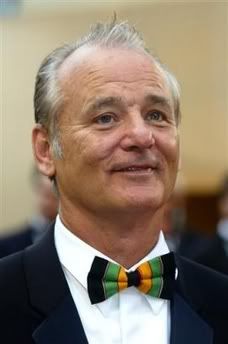
Try, good to see you back in our studio, buddy. I was fascinated with Peter Gabriel so I did a quick search and found this brief song.
PETER GABRIEL Song Lyrics
We Do What We're Told
(From the album "SO")
milgram's 37
we do what we're told
we do what we're told
we do what we're told
told to do
we do what we're told
we do what we're told
we do what we're told
told to do
one doubt
one voice
one war
one truth
one dream
Just a brief anecdote from my experimental psych days at UVA.
Volunteers were chosen to participate in an experiment measuring that very thing. They were to watch a man who was on the other side of a window, and was connected to several wires. By turning a knob, each volunteer could administer a mild electric shock. The man would jerk and each volunteer would look with alarm at the scientist who assured them that the man was not being harmed. All but one followed the assurance of the PhD who was conducting the experiment. That one man finally jumped up and blared out. "What the hell is going on here; I quit." He promptly walked out.
The rest of them DID WHAT THEY WERE TOLD. I think bettleheim called it "identity with the aggressor."
0 Replies
bobsmythhawk
1
Reply
Thu 21 Sep, 2006 11:30 am
H. G. Wells
From Wikipedia, the free encyclopedia
Born: September 21, 1866
Bromley, Kent, England
Died: August 13, 1946
London, England
Herbert George Wells (September 21, 1866 - August 13, 1946) was a British writer best known for his science fiction novels such as The Time Machine, The War of the Worlds, The Invisible Man, and The Island of Doctor Moreau. He was a prolific writer of both fiction and non-fiction, and produced works in many different genres, including contemporary novels, history, and social commentary. He was also an outspoken socialist. His later works become increasingly political and didactic, and only his early science fiction novels are widely read today.
Biography
Early life
Wells was the fifth and last child of Joseph Wells, a former domestic gardener and at the time shopkeeper and cricketer, and his wife Sarah Neal, a former domestic servant. He was born at Atlas House, 47 High Street, Bromley, Kent. The family was of the impoverished lower-middle-class. An inheritance allowed them to purchase a china shop, though they quickly realised it would never be a prosperous concern. The stock was old and worn out, the location poor. They managed to earn a meagre income, but little of it came from the shop. Joseph sold cricket bats and balls and other equipment at the matches he played at, and received an unsteady amount of money from the matches, for in those days there were no professional cricketers, and payment for skilled bowlers and batters came from passing the hat afterwards, or from small honoraria from the clubs where matches were played.
A defining incident of young Wells' life is said to be an accident he had in 1874 when he was seven years old. He was dropped on a tent peg at the local sports ground and was left bedridden for a time with a broken leg. To pass the time, he started reading and soon became devoted to the other worlds and lives to which books gave him access; they also stimulated his desire to write. Later that year he entered Thomas Morley's Commercial Academy, a private school founded in 1849 following the bankruptcy of Morley's earlier school. The teaching was erratic, the curriculum mostly focused, Wells said later, on producing copper-plate handwriting and doing the sort of sums useful to tradesmen. Wells continued at Morley's Academy until 1880. But in 1877 another accident had affected his life. This time it had happened to his father, leaving Joseph Wells with a fractured thigh. The accident effectively put an end to Joseph's career as a cricketer, and his earnings as a shopkeeper were not enough to compensate for the loss.
No longer able to support themselves financially, they instead sought to place their boys as apprentices to various professions. At the time it was a usual method for young employees to learn their trade working under a more experienced employer. In time they should be able to practise their trade for themselves. From 1881 to 1883 Wells had an unhappy apprenticeship as a draper at the Southsea Drapery Emporium. His experiences were later used as inspiration for his novels The Wheels of Chance and Kipps, which describe the life of a draper's apprentice as well as being a critique of the world's distribution of wealth.
Wells's mother and father had never got along with one another particularly well (she was a Protestant, he a "free" thinker), and when she went back to work as a ladies maid (at Uppark, a country house in Sussex) one of the conditions of work was that she would not have space for husband or children; thereafter, she and Joseph lived separate lives, though they never divorced and neither ever developed any other liaison. Wells not only failed at being a draper, he also failed as a chemist's assistant and had bad experiences as a teaching assistant, and each time he would arrive at Uppark - "the bad shilling back again!" as he said - and stay there until a fresh start could be arranged for him. Fortunately for Wells, Uppark had a magnificent library in which he immersed himself.
Teacher
In 1883, his employer dismissed him, claiming to be dissatisfied with him. The young man was reportedly not displeased with this ending to his apprenticeship. Later that year, he became an assistant teacher at Midhurst Grammar School, in West Sussex, until he won a scholarship to the Normal School of Science (later the Royal College of Science, now part of Imperial College, London) in London, studying biology under T. H. Huxley. As an alumnus, he later helped to set up the Royal College of Science Association, of which he became the first president in 1909. Wells studied in his new school until 1887 with an allowance of twenty-one shillings a week thanks to his scholarship.
He soon entered the Debating Society of the school. These years mark the beginning of his interest in a possible reformation of society. At first approaching the subject through studying The Republic by Plato, he soon turned to his contemporary ideas of socialism as expressed by the recently formed Fabian Society and free lectures delivered at Kelmscott House, the home of William Morris. He was also among the founders of The Science School Journal, a school magazine which allowed him to express his views on literature and society. The school year 1886-1887 was the last year of his studies. Having previously successfully passed his exams in both biology and physics, his lack of interest in geology resulted in his failure to pass and the loss of his scholarship.
Wells was left without a source of income. His aunt Mary, a cousin of his father, invited him to stay with her for a while, so at least he did not face the problem of housing. During his stay with his aunt, he grew interested in her daughter, Isabel.
Marriage and liaisons
In 1891 Wells married his cousin Isabel Mary Wells, but left her in 1894 for one of his students, Amy Catherine Robbins, whom he married in 1895. He had two sons by Amy: George Philip (known as 'Gip') in 1901 and Frank Richard in 1903.[1]
During his marriage to Amy, Wells had liaisons with a number of women, including American birth control activist Margaret Sanger.[2] He had a daughter, Anna-Jane, with writer Amber Reeves in 1909[1] and in 1914, a son, Anthony West, by novelist and feminist Rebecca West, twenty-six years his junior.[3] In spite of Amy Catherine's knowledge of some of these affairs, she remained married to Wells until her death in 1927.[1] Wells also had liaisons with Odette Keun and Moura Budberg.
"I was never a great amorist," Wells wrote in An Experiment in Autobiography (1934), "though I have loved several people very deeply."
Artist
As one method of self-expression, Wells tended to sketch. One common location for his sketches were the endpapers and title pages of his own books. The sketches covered a wide variety of topics, from political commentary, to his feelings toward his literary contemporaries, to his current romantic interests. During his marriage to Amy Catherine, whom he nicknamed Jane, he sketched a considerable number of pictures, many of them being overt comments on their marriage. It was during this period, and this period only, that he called his sketchs "picshuas." These picshuas have been the topic of study by Wells scholars for many years, and recently a book was published on the subject.[4]
Game designer
Seeking a more structured way to play war games, Wells wrote Floor Games (1911) followed by Little Wars (1913). Little Wars is recognised today as the first recreational wargame and Wells is regarded by gamers and hobbyists as "the Father of Miniature Wargaming."
Writer
Wells' first bestseller was Anticipations, published in 1901. Perhaps his most explicitly futuristic work, it bore the subtitle "An Experiment in Prophecy" when originally serialised in a magazine. The book is interesting both for its hits (trains and cars resulting in the dispersion of population from cities to suburbs; moral restrictions declining as men and women seek greater sexual freedom) and its misses ("my imagination refuses to see any sort of submarine doing anything but suffocate its crew and founder at sea").
Statue of a War of the Worlds tripod, erected as a tribute to H. G. Wells in Woking town centre, UK.His early novels, called "scientific romances", invented a number of themes now classic in science fiction in such works as The Time Machine, The Invisible Man, and The War of the Worlds (which have all been made into films) and are often thought of as being influenced by the works of Jules Verne. He also wrote other, non-fantastic novels which have received critical acclaim, including the satire on Edwardian advertising Tono-Bungay and Kipps.
Wells also wrote several dozen short stories and novellas, the best known of which is "The Country of the Blind" (1911). Besides being an important occurrence of blindness in literature, this is Well's commentary on humanity's ability to overcome any inconvenience after a few generations and think that it is normal.
Though not a science-fiction novel, radioactive decay plays a small but consequential role in Tono-Bungay. It plays a much larger role in The World Set Free (1914). This book contains what is surely his biggest prophetic "hit." Scientists of the day were well aware that the natural decay of radium releases energy at a slow rate for thousands of years. The rate of release is too slow to have practical utility, but the total amount released is huge. Wells's novel revolves around an (unspecified) invention that accelerates the process of radioactive decay, producing bombs that explode with no more than the force of ordinary high explosive?- but which "continue to explode" for days on end. "Nothing could have been more obvious to the people of the earlier twentieth century," he wrote, "than the rapidity with which war was becoming impossible... [but] they did not see it until the atomic bombs burst in their fumbling hands." Leó Szilárd acknowledged that the book inspired him to theorise the nuclear chain reaction.
Wells also wrote nonfiction. His bestselling two-volume work The Outline of History (1920) began a new era of popularized world history. It received a mixed critical response from professional historians, but was praised by Arnold J. Toynbee as the best introductory history available.[1] Many other authors followed with 'Outlines' of their own in other subjects. Wells followed it in 1922 by a much shorter popular work, A Short History of the World, and two long efforts, The Science of Life (1930) and The Work, Wealth and Happiness of Mankind (1931). The 'Outlines' became sufficiently common for James Thurber to parody the trend in his humorous essay An Outline of Scientists - indeed, Wells's Outline of History remains in print with a new 2005 edition while A Short History of the World has been recently reedited (2006).
From quite early in his career, he sought a better way to organize society, and wrote a number of Utopian novels. Usually starting with the world rushing to catastrophe, until people realise a better way of living: whether by mysterious gases from a comet causing people to behave rationally (In the Days of the Comet), or a world council of scientists taking over, as in The Shape of Things to Come (1933), which he later adapted for the 1936 Alexander Korda film, Things to Come. This depicted, all too accurately, the impending World War, with cities being destroyed by aerial bombs. He also portrayed social reconstruction through the rise of fascist dictators in The Autocracy of Mr Parham (1930) and The Holy Terror (1939).
Wells contemplates the ideas of nature vs nurture and questions humanity in books like The Island of Doctor Moreau. Not all his scientific romances ended in a happy Utopia, as the dystopian When the Sleeper Wakes (1899) (rewritten as The Sleeper Awakes, 1910) shows. The Island of Doctor Moreau is even darker. The narrator, having been trapped on an island of animals vivisected (unsuccessfully) into human beings, eventually returns to England; like Gulliver on his return from the Houyhnhnms he finds himself unable to shake off the perceptions of his fellow humans as barely civilised beasts, slowly reverting back to their animal natures.
Wells also wrote the preface for the first edition of W. N. P. Barbellion's diaries, The Journal of a Disappointed Man, published in 1919. Since Barbellion was the real author's pen-name, many reviewers believed Wells to have been the true author of the Journal; Wells always denied this, despite being full of praise for the diaries, but the rumours persisted until Barbellion's death later that year.
In 1927, Florence Deeks sued Wells for plagiarism, claiming that he had stolen much of the content of The Outline of History from a work, The Web, she had submitted to the Canadian Macmillan Company, but who held onto the manuscript for eight months before rejecting it. Despite numerous similarities in phrasing and factual errors, the court found Wells not guilty.
In 1938, he published a collection of essays on the future organisation of knowledge and education, titled World Brain, including the essay The Idea of a Permanent World Encyclopaedia.
Near the end of the Second World War Allied forces discovered that the SS had compiled lists of intellectuals and politicians slated for immediate liquidation upon the invasion of England in the abandoned Operation Sea Lion. The name "H.G. Wells" appeared high on the list for the "crime" of being a socialist. Wells, as president of the International PEN (Poets, Essayists, Novelists), had already angered the Nazis by overseeing the expulsion of the German PEN club from the international body in 1934 following the German PEN's refusal to admit non-Aryan writers to its membership.
Political efforts
Wells called his political views socialist, but he occasionally found himself at odds with other socialists. He was for a time a member of the Fabian Society, but broke with them as he intended them to be an organization far more radical than they wanted. He later grew staunchly critical of them as having a poor understanding of economics and educational reform. He also ran as a Labour Party candidate for London University in 1922 and 1923, but even at that point his faith in that party was weak or uncertain.
His most consistent political ideal was the World-State. He stated in his autobiography that from 1900 onward he considered a world-state inevitable. The details of this state varied but in general it would be a planned society that would advance science, end nationalism, and allow people to advance solely by merit rather than birth. He also was consistent that it must not be a democracy. He stated that in the same period he came to realize a world-state was inevitable he realized that parliamentary democracy as then practiced was insufficient. HG Wells remained fairly consistent in rejection of a world-state being a parliamentary democracy and therefore during his work on the United Nations Charter he opposed any mention of democracy. He feared that the average citizen could never be educated or aware enough to decide the major issues of the world. Therefore he favored the vote be limited to scientists, organizers, engineers, and others of merit. At the same time he strongly believed citizens should have as much freedom as they could without consequently restricting the freedom of others. These values came under increasing criticism from the 1920s and afterwards.[5]
That said he remained confident of the inevitability of a planned world state well into the 1930s. Lenin's attempts at reconstructing the shattered Russian economy, as his account of a visit (Russia in the Shadows; 1920) shows, also related towards that. This is because at first he believed Lenin might lead to the kind of planned world he envisioned. This despite the fact that he was a strongly anti-Marxist socialist who would later state that it would've been better if Karl Marx was never born. The leadership of Joseph Stalin led to a change in his view of the Soviet Union even though his initial impression of Stalin himself was mixed. He disliked what he saw as a narrow orthodoxy and obdurance to the facts in Stalin. However he did give him some praise saying, "I have never met a man more fair, candid, and honest" and making it clear that he felt the "sinister" image of Stalin was unfair or simply false. Nevertheless he judged Stalin's rule to be far too rigid, restrictive of independent thought, and blinkered to lead toward the Cosmopolis he hoped for.[6]
In the end his political importance was almost negligible. His efforts to help form the League of Nations became a disappointment as the organization turned out to be a weak one unable to prevent World War II. The war itself increased the pessimistic side of his nature. In his last book Mind at the End of its Tether (1945) he considered the idea that humanity being replaced by another species might not be a bad idea. He also came to call the era "The age of frustration." He spent his final years venting this frustration at various targets from the Roman Catholic Church to a neighbor who erected a large sign to a servicemen's club. As he devoted his final decades toward causes which were never truly realized this caused his literary reputation to decline. One critic complained: "He sold his birthright for a pot of message"[7] That being said The Happy Turning, a short book from 1944, contains a great deal of wit and imagination.
Legacy
In his lifetime and after his death, Wells was considered a prominent socialist thinker. In later years, however, Wells' image has shifted and he is now thought of simply as one of the pioneers of science fiction; Newt Gingrich, former Speaker of the United States House of Representatives and staunch Republican, praised Wells in his book To Renew America, writing "Our generation is still seeking its Jules Verne or H.G. Wells to dazzle our imaginations with hope and optimism".[8]
Wells also has the distinction of being, albeit indirectly, the creator of the mecha genre of science fiction and animation. Some of the first mecha, the Martian Tripods, appear in War of the Worlds.
Appearances in other contexts
H. G. Wells has been portrayed in a number of films and television programmes, including:
The Doctor Who serial Timelash.
Film maker George Pal hinted as Wells being the Time Traveller: He's referred to as ' George ' and the Machine's nameplate reads ' Manufactured by H. George Wells ' - The Time Machine 1960
The novel and motion picture Time After Time, he is played by British actor Malcolm McDowell, where he chases Jack the Ripper after the latter steals his time machine and escapes to 1979-era San Francisco.
A semi-recurring character in Lois and Clark: The New Adventures of Superman.
The novel The Time Ships, by British author Stephen Baxter, was designated by the Wells estate as an authorised sequel to The Time Machine, marking the centenary of its publication, and features characters, situations and technobabble from several of Wells' stories, as well as a representation of Wells (unnamed, and referred to as 'my friend, the Author').
In C. S. Lewis' novel That Hideous Strength, the character Jules is a caricature of Wells, and much of Lewis' science fiction is written both under the influence of Wells and as an antithesis to his work.
Wells' photo appears on a stairway wall of time traveller Alex Hartdegen's NY brownstone, in a 2002 version of The Time Machine, directed by Wells' great-grandson Simon Wells.
Arthur Sammler, the main character of Saul Bellow's Mr. Sammler's Planet, knew Wells, and is urged by other characters to use that fact as the basis for writing a biography of Wells, a project about which Holocaust survivor and a self-made philosopher Sammler has decidedly mixed feelings.
In the imaginative homage novel The Space Machine (1976), by Christopher Priest. Characters use a modified version of Wells' The Time Machine, go to Mars and witness a sort of Martian civil war. Notable scene in the book is a battle on the martianic plains between groups of the tripod machines.
0 Replies
bobsmythhawk
1
Reply
Thu 21 Sep, 2006 11:55 am
Chuck Jones
From Wikipedia, the free encyclopedia
Charles Martin "Chuck" Jones (September 21, 1912 - February 22, 2002) was an American animator, cartoon artist, screenwriter, producer, and director of animated films, most memorably of Looney Tunes and Merrie Melodies shorts for the Warner Brothers cartoon studio. He directed many of the classic short animated cartoons starring Bugs Bunny, Daffy Duck, the Road Runner & Wile E. Coyote, Pepé Le Pew and the other Warners characters, including the memorable What's Opera, Doc? (1957) and Duck Amuck (1952) (both later inducted into the National Film Registry), establishing himself as an important innovator and storyteller.
Biography
Early life
Jones was born in Spokane, Washington, and later moved with his parents and three siblings to the Los Angeles, California area. In his autobiography, Chuck Amuck, Jones credits his artistic bent to circumstances surrounding his father, who was an unsuccessful businessman in California in the 1920s. His father, Jones recounts, would start every new business venture by purchasing new stationery and new pencils with the company name on them. When the business failed, his father would turn the useless stationery and pencils over to his children. Armed with an endless supply of high-quality paper and pencils, the children drew constantly. Jones and several of his siblings went on to artistic careers. After graduating from Chouinard Art Institute, Jones held a number of low-ranking jobs in the animation industry, including washing cels at the Ub Iwerks studio and assistant animating at the Walter Lantz studio. While at Iwerks, he met a cel painter named Dorothy Webster, who would later become his wife.
Warner Bros.
Jones joined Leon Schlesinger Productions, the independent studio that produced Looney Tunes and Merrie Melodies for Warner Bros., in 1933 as an assistant animator. During the late 1930s, he worked under directors Tex Avery and Bob Clampett, becoming a director (or "supervisor", the original title for an animation director in the studio) himself in 1938 when Frank Tashlin left the studio. Jones' first cartoon was The Night Watchman, which featured a cute kitten who would later evolve into Sniffles the mouse.
Many of Jones' cartoons of the 1930s and early 1940s were lavishly animated, but audiences and fellow Termite Terrace staff members found them lacking in genuine humor. Often slow-moving and overbearing with "cuteness", Jones' early cartoons were an attempt to follow in the footsteps of Walt Disney's shorts (especially with such cartoons as Tom Thumb in Trouble and the Sniffles cartoons). Jones finally broke away from both his traditional cuteness, and traditional animation conventions as well, with the cartoon The Dover Boys in 1942. Jones credits this cartoon as the film where he "learned how to be funny." The Dover Boys is also one of the first uses of Stylized animation in American film, breaking away from the more realistic animation styles influenced by the Disney Studio. This was also the period where Jones created many of his lesser-known characters, including Charlie Dog, Hubie and Bertie, and The Three Bears. Despite their relative obscurity today, the shorts starring these characters represent some of Jones' earliest work that was strictly intended to be funny.
During the World War II years, Jones worked closely with Theodore Geisel (also known as Dr. Seuss) to create the Private Snafu series of Army educational cartoons. Private Snafu comically educated soldiers on topics like spies and laziness in a more risque way than general audiences would have been used to at the time. Jones would later collaborate with Seuss on a number of adaptations of Seuss' books to animated form, most importantly How the Grinch Stole Christmas in 1966.
Jones hit his stride in the late 1940s, and continued to make his best-regarded works through the 1950s. Jones-created characters from this period includes Claude Cat, Marc Antony and Pussyfoot, Charlie Dog, Michigan J. Frog and his three most popular creations, Pepé LePew, the Road Runner and Wile E. Coyote. The Road Runner cartoons, in addition to the cartoons that are considered his masterpieces (all written and conceived by Michael Maltese), Duck Amuck, One Froggy Evening, and What's Opera, Doc? are today hailed by critics as some of the best cartoons ever made.
The staff of the Jones unit was as important to the success of these cartoons as Jones himself. Key members included writer Michael Maltese, layout artist/background designer/co-director Maurice Noble, animator and co-director Abe Levitow, and animator Ken Harris.
Jones remained at Warners throughout the 1950s, except for a brief period in 1953 when Warners closed the animation studio. During this interim, Jones found employment at the Walt Disney studio, where he did four months of uncredited work on Sleeping Beauty (1959).
In the early-1960s, Jones and his wife Dorothy wrote the screenplay for the animated feature Gay Purr-ee. The finished film would feature the voices of Judy Garland, Robert Goulet and Red Buttons as cats in Paris, France. The feature was produced by UPA, and Jones moonlit to work on the film, since he had an exclusive contract with Warner Bros. UPA completed the film and made it available for distribution in 1962; it was picked up by Warner Bros, who found out Jones had violated his contract and fired him from the company.
Jones on his own
With business partner Les Goldman, Jones started an independent animation studio, Sib Tower 12 Productions, bringing on most of his unit from Warner Bros, including Maurice Noble and Michael Maltese. In 1963, Metro-Goldwyn-Mayer contracted with Sib Tower 12 to have Jones and his staff produce new Tom and Jerry cartoons. In 1964, Sib Tower 12 was absorbed by MGM and was renamed MGM Animation/Visual Arts. Jones' animated short film The Dot and the Line: A Romance in Higher Mathematics won the 1965 Oscar for Best Animated Short.
As the Tom and Jerry series wound down (it would be discontinued in 1967), Jones moved on to television. In 1966, he produced and directed the TV special How the Grinch Stole Christmas, featuring the voice (and facial features) of Boris Karloff. Jones continued to work on TV specials such as Horton Hears A Who! (1970), but his main focus during this time was the feature film The Phantom Tollbooth, which did lukewarm business when MGM released it in 1970.
MGM closed the animation division in 1970, and Jones once again started his own studio, Chuck Jones Productions. His most notable work during this period was three animated TV adaptations of short stories from Rudyard Kipling's The Jungle Book: Mowgli's Brothers, The White Seal and Rikki-Tikki-Tavi. The 1979 movie The Bugs Bunny/Road Runner Movie was a compilation of Jones' best theatrical shorts; Jones produced new Road Runner shorts for The Electric Company series and Bugs Bunny's Looney Christmas Tales (1979), and even newer shorts were made for Bugs Bunny's Bustin' Out All Over (1980).
Later years
Like many modern cartoon legends, Chuck Jones never retired: he was an active artist and cartoonist up until his last weeks. Through the 1980s and 1990s (and until his death in 2002), Jones was painting cartoon and parody art, sold through animation galleries by his daughter's company, Linda Jones Enterprises. He was also creating new cartoons for the Internet based on his new character, "Thomas Timberwolf". Jones also directed the animated sequence seen at the start of the 1993 film Mrs. Doubtfire. Jones was not a fan of much contemporary animation, terming most of it, especially television cartoons such as those of Hanna-Barbera, "illustrated radio."
Jones' intellectualism, writing ability, and capacity for self-analysis made him an historical authority as well as a major contributor to the development of animation throughout the 20th century.
For his contribution to the motion picture industry, Chuck Jones has a star on the Hollywood Walk of Fame at 7011 Hollywood Blvd.
Chuck Jones died of congestive heart failure on February 22, 2002, at age 89. Jones' death brought down the final curtain on Looney Tunes/Merrie Melodies family of creators. Mel Blanc, Friz Freleng, Tex Avery, Bob Clampett, Robert McKimson and Carl W. Stalling had all died before Jones.
Influence and critical perception
Jones is considered by many to be a master of characterization and timing. His best works are noted for depicting a refinement of character to the point that a single eyebrow wiggle could be a major gag as opposed to the wild, frenetic style usually associated with cartoons, and those of Warner Bros. in particular. Like Walt Disney, Jones wanted animation to gain respect from the film and art communities, and often undertook special animation projects reflecting such, including What's Opera Doc, The Dot and the Line, and the 1944 political film Hell-Bent for Re-Election, a campaign film for Franklin D. Roosevelt that he directed for UPA.
In his later years, Jones became the most vocal alumnus of the Termite Terrace studio, frequently giving lectures, seminars, and working to educate newcomers in the animation field. Many of his principles, therefore, found their way back into the mainstream animation consciousness, and can be seen in films such as Cats Don't Dance, The Emperor's New Groove and Lilo & Stitch.
Jones had a penchant for cuteness in his earliest days as is visible in his cartoons featuring Sniffles the Mouse. Other Warners directors, particularly Tex Avery and Robert Clampett, considered "cute" to be a four letter word. By request of producer Leon Schlesinger, Jones changed his style, and began making zanier pictures such as Wackiki Wabbit and Hare Conditioned. After Avery, Clampett, and Schlesinger left the studio, Jones gradually reincorporated elements of the slow pace, sentimentality and cuteness of his previous work with characters like Marc Antony and Pussyfoot and the young Ralph Phillips. His versions of the characters he worked with often showcased a more infantile look than other interpretations, with larger eyes and eyelashes. This is especially apparent in his Tom and Jerry films, some of which are considered the weakest in the canon.
Jones, like the rest of his Termite Terrace associates after the departure of Schlesinger, has been criticized for using repetitive plots, most obvious in the Pepé Le Pew and Road Runner cartoons. It must be noted, however, that many of these films were originally issued to theatres years apart, and the repetitious factor was often done at the request of the producers, management, or theatre owners. Also, series like the Road Runner were set up as exercises in exploring the same situation in different ways. Jones had a set list of rules as to what could and could not occur in a Road Runner cartoon, and stated that it was not what happened that was important in the films, but how it happened.
Chuck Jones' reinvention of certain characters is also a controversial subject. He reimagined the wacky, Clampett-esque hero Daffy Duck as a greedy, sneaky antagonist with a slow-burning temper; and he relegated hapless star Porky Pig to being a sidekick or audience-aware observer of the action. Jones also created a series of films in which he used Friz Freleng's Sylvester in the context of a real cat. Like all the Warners directors, his Bugs Bunny characterization is unique to his films: Jones' Bugs never attacks unless attacked, unlike Avery's and Clampett's bombastic rabbits.
0 Replies
bobsmythhawk
1
Reply
Thu 21 Sep, 2006 12:00 pm
Larry Hagman
From Wikipedia, the free encyclopedia
Born September 23, 1931
Fort Worth, Texas
Larry Hagman (born Larry Martin Hageman on September 23, 1931 in Fort Worth, Texas) is an American actor who is famous for playing J.R. Ewing in the television soap opera Dallas and Maj. Tony Nelson on the sitcom I Dream of Jeannie. Hagman was born in Weatherford, Texas to Ben Hagman and his wife, legendary stage actress Mary Martin. He has been married to Swedish-born Maj Axelsson since 1954, and they have two children. They live in Ojai, California.
Career
Hagman served in the United States Air Force in the entertainment unit and began his own acting career shortly after his service ended.
In addition to his role on Dallas, Hagman is well known for his role as "Major Tony Nelson" on the popular television sitcom I Dream of Jeannie (1965 - 1970), in which he co-starred opposite Barbara Eden.
He also directed several episodes of the show. In the years after the series, Hagman severely distanced himself from Jeannie, refusing to speak about it until 2001, the year his tell-all book Hello Darlin': Tall (and Absolutely True) Tales About My Life was published, even though he invited former co-star Eden to appear on Dallas.
After Jeannie was cancelled, Hagman had two other short-lived series in the 1970s: Here We Go Again and The Good Life.
He made guest appearances on television shows like Love American Style, Medical Center, and McCloud. He also appeared in such television films as Getting Away From It All (1972), Sidekicks (1974), The Return Of The World's Greatest Detective (1976), Intimate Strangers (1977), and Checkered Flag Or Crash (1977).
Hagman also appeared in the theatrical films The Group, Harry And Tonto (1974), Mother, Juggs and Speed (1976), The Eagle Has Landed (1977), Superman: The Movie (1978), and Primary Colors (1998).
He directed (and appeared briefly in) a low-budget comedy/horror film in 1972 called Beware The Blob! (a sequel to the classic 1958 horror film, The Blob). Some have jokingly called this "the film that J.R. shot".
Larry Hagman chose to break his typecast role as a "nice guy" when he accepted the leading role in Dallas, which became an enormously popular first prime time soap opera. The show is the saga of the Ewings, a rich oil family. Hagman portrayed the central character, John Ross (J.R.) Ewing, Jr., one of television's greatest villains.
Hagman won wide praise for his performance as the charismatic antihero. At the conclusion of the 1979-1980 season, J.R. was shot by an unknown assailant and the burning question that summer all over the United States was, "Who shot J.R.?" When the culprit was finally revealed on November 21, 1980, the show received the highest ratings in television history at that time. Larry Hagman stayed with Dallas through 357 episodes until it was cancelled in 1991.
In January 1997, Larry starred in a short lived TV series named Orleans as Judge Luther Charbonnet. It lasted only eight episodes. Hagman appeared without the toupee he had started wearing during the filming of "Dallas".
Hagman will appear as a guest star in the fourth season of Nip/Tuck, beginning in September 2006.
Politics
Larry Hagman has been a member of the Peace and Freedom Party since the 1960s (see [1]).
Hagman derided President George W. Bush, a fellow Texan, before the Iraq War. At a signing for his book he said "A sad figure (Bush) - not too well educated, who doesn't get out of America much. He's leading the country towards fascism."[2]
Health
In 1996, Hagman underwent a lifesaving liver transplant after admitting he had been a heavy drinker. He was also a heavy smoker as a young man, but a terrifying cancer scare was the catalyst for cessation. Hagman was so shaken by this incident that he immediately became strongly against smoking. He has recorded several public service announcements pleading with smokers to quit and urging non-smokers never to start. Hagman was the chairman of the American Cancer Society's annual Great American Smokeout for many years, and also worked on behalf of the National Kidney Foundation.
These health struggles have actually been turned into a running joke on Jim Rome's radio show, where e-mailers routinely send e-mails signed by "Larry Hagman's liver", usually in reference to things that have failed.
Popular Culture
In an episode of The Simpsons, Homer Simpson in: "Kidney Trouble", Homer's father is waiting for a kidney. Dr. Hibbert says that there was one available but "Larry Hagman took it." and that now he has "five kidneys and three hearts".
0 Replies
bobsmythhawk
1
Reply
Thu 21 Sep, 2006 12:06 pm
Stephen King
From Wikipedia, the free encyclopedia
Stephen Edwin King (born September 21, 1947) is an American author best known for his enormously popular horror novels. King was the 2003 recipient of The National Book Foundation's Medal for Distinguished Contribution to American Letters.
King's stories frequently involve an unremarkable! protagonist such as a middle-class family, a child, or, many times, a writer. The characters are involved in their everyday lives, but the supernatural encounters and extraordinary circumstances escalate over the course of the story. King evinces a thorough knowledge of the horror genre, as shown in his nonfiction book Danse Macabre, which chronicles several decades of notable works in both literature and cinema. He also writes stories outside the horror genre, including the novellas The Body and Rita Hayworth and Shawshank Redemption (adapted as the movies Stand By Me and The Shawshank Redemption, respectively), as well as The Green Mile, The Eyes of the Dragon, and Hearts in Atlantis. In the past, Stephen King has written under the pen name of Richard Bachman.
Biography
Stephen King was born in 1947 in Portland, Maine, and has English and Scots-Irish ancestry.[1][2] When King was two years old, his father, Donald Edwin King, deserted his family. His mother, Nellie Ruth Pillsbury, raised King and his adopted older brother David by herself, sometimes under great financial strain. The family moved to Ruth's home town of Durham, Maine but also spent brief periods in Fort Wayne, Indiana and Stratford, Connecticut. King attended Durham Elementary School and Lisbon High School. He grew to stand 6'4" tall.
King has been writing since an early age. When in school, he wrote stories based on movies he had seen recently and sold them to his friends. This was not popular among his teachers, and he was forced to return his profits when this was discovered. The stories were copied using a mimeo machine that his brother David used to copy a newspaper, Dave's Rag, which he self-published. Dave's Rag was about local events, and King would often contribute. At around the age of thirteen, King discovered a box of his father's old books at his aunt's house, mainly horror and science fiction. He was immediately hooked on these genres.
His first published story was "In a Half-World of Terror" (retitled from "I Was a Teen-Age Grave-robber", published in a horror fanzine issued by Mike Garrett of Birmingham, Alabama.
From 1966 to 1971, King studied English at the University of Maine at Orono, Maine. At the university, he wrote a column titled "King's Garbage Truck" in the student newspaper, the Maine Campus. He also met Tabitha Spruce; they married in 1971. King took on odd jobs to pay for his studies, including one at an industrial laundry. He used the experience to write the short story "The Mangler". The campus period in his life is readily evident in the second part of Hearts in Atlantis.
After finishing his university studies with a Bachelor of Arts in English and obtaining a certificate to teach high school, King taught English at Hampden Academy in Hampden, Maine. During this time, he and his family lived in a trailer. He wrote short stories (most were published in men's magazines) to help make ends meet. As told in the introduction in Carrie, if one of his kids got a cold, Tabitha would joke, "Come on, Steve, think of a monster." King also developed a drinking problem which stayed with him for over a decade.
During this period, King began a number of novels. One of his first ideas was of a young girl with psychic powers. However, he grew discouraged, and threw it into the trash. Tabitha later rescued it and encouraged him to finish it. After completing the novel, he titled it Carrie, sent it to Doubleday, and more or less forgot about it. Later, he received an offer to buy it with a $2,500 advance (not a large advance for a novel, even at that time). Shortly after, the value of Carrie was realized with the paperback rights being sold for $400,000 (with $200,000 of it going to the publisher). Shortly after its release, his mother died of uterine cancer. He had the novel read to her before she died.
In On Writing, King admits that at this time he was consistently drunk and that he was an alcoholic for well over a decade. He even admits that he was drunk during his mother's funeral while delivering the eulogy. He states that he had based the alcoholic father in The Shining on himself, though he did not admit it (even to himself) for several years.
Shortly after the publication of The Tommyknockers, King's family and friends finally intervened, dumping his trash on the rug in front of him to show him the evidence of his own addictions: beer cans, cigarette butts, grams of cocaine, Xanax, Valium, NyQuil, dextromethorphan (cough medicine), and marijuana. As King related in his memoir, he sought help and quit all forms of drugs and alcohol in the late 1980s, and has remained sober.
Family
Stephen King lives in Bangor, Maine, with his wife Tabitha King, who is also a novelist. They also own a house in the Western Lakes District of Maine. Stephen spends winter seasons in an oceanfront mansion located off the Gulf of Mexico in Sarasota, Florida. Their three children, Naomi Rachel, Joseph Hillstrom King (who appeared in the film Creepshow), and Owen Phillip, are grown and living on their own.
Both Owen and Joseph are writers; Owen's first collection of stories, We're All in This Together: A Novella and Stories was published in 2005. The first collection of stories by Joe Hill (Joseph's pen name), 20th Century Ghosts, was published in 2005 by PS Publishing in a very limited edition, winning the Crawford Award for best new fantasy writer and the Bram Stoker Award for Best Fiction Collection. Tom Pabst has been hired to adapt Hill's upcoming novel, Heart-Shaped Box, for a 2007 Warner Bros release.
King's daughter Naomi is a Reverend in the Unitarian Universalist Church in Utica, New York.
Baseball
Stephen King is a lifelong fan of the Boston Red Sox, and is frequently found at both home and away baseball games.
In his private role as father, King helped coach his son Owen's Bangor West team to the Maine Little League Championship in 1989. This experience is recounted in the New Yorker essay "Head Down", which also appears in the collection Nightmares and Dreamscapes. King has called "Head Down" his best piece of nonfiction writing.
In 1999, King wrote The Girl Who Loved Tom Gordon, which involved former Red Sox team member Tom Gordon as a major character. King recently co-wrote a book entitled Faithful: Two Diehard Boston Red Sox Fans Chronicle the Historic 2004 Season with Stewart O'Nan. This work recounts the authors' roller coaster reaction to the Red Sox's 2004 season, a season culminating in the Sox winning the 2004 American League Championship Series and World Series.
In 1992, Mansfield Stadium, a Little League ballpark (which also hosts High School and Senior League games) opened in Bangor, Maine. This facility, nicknamed the Field Of Screams, was made possible through the efforts and donations of King and his wife Tabitha.
In the 2005 film Fever Pitch, about an obsessive Boston Red Sox fan, King tosses out the first pitch of the Sox's opening day game.
Philanthropy
Since becoming commercially successful, King and his wife Tabitha have donated considerable sums of money to various causes around their home in Bangor, Maine.
The Kings' timely donation of funds to the University of Maine Swim Team in the early nineties stopped the program from being eliminated from the school's athletics department; various donations to local YMCA and YWCA programs over the years have allowed both organizations to make much-needed renovations and improvements that would have been impossible otherwise. Additionally, King annually sponsors a number of scholarships for both high school and college students.
The Kings have not demanded recognition for their bankrolling of Bangor-area facilities: The Shawn T. Mansfield Stadium was named for the son of a prominent local little league coach who was a victim of cerebal palsy, while the Beth Pancoe Aquatic Park memorializes an outstanding area swimmer who succumbed to a long battle with cancer.
Car accident
In the summer of 1999, King was in the middle of writing On Writing: A Memoir of the Craft. At the time, he had finished the memoir section and had abandoned the book for nearly eighteen months, unsure of how to proceed or whether to bother. King reports that it was the first book that he'd abandoned since writing The Stand decades earlier. He had just decided to continue the book. On June 17, he had written up a list of questions that he was frequently asked about writing, as well as some that he wished he would be asked about it; on June 18, he had written four pages of the section on writing.
On June 19, about 4:30 PM, he was walking on the right shoulder of Route 5 in Center Lovell, Maine. Driver Bryan Smith, distracted by an unrestrained Rottweiler named Bullet, moving in the back of his 1985 Dodge Caravan, struck King, who landed in a depression about 14 feet (4 meters) from the pavement of Route 5.
Oxford County Sheriff's deputy Matt Baker recorded that witnesses said the driver was not speeding or reckless.[3] Baker also reported that King was struck from behind. King's official website, however, states that this was incorrect, and that King was walking facing traffic. In any case, Smith was turned and leaning to the rear of his vehicle trying to restrain his dog, and was not watching the road when he struck King.
King was conscious enough to give the deputy phone numbers to contact his family, but in considerable pain. The author was first transported to Northern Cumberland Hospital and then flown by helicopter to Central Maine Hospital. His injuries ?- a collapsed right lung, multiple fractures of the right leg, scalp laceration, and a broken hip ?- kept him in Central Maine Medical Center until July 9, almost three weeks later.
Earlier that year King had finished most of From a Buick 8, a novel in which one of the characters dies in an automobile accident. Of the eerie similarities, King says that he tries "not to make too much of it." Certainly car accidents and their horrors had figured into King's work before. His 1987 novel Misery also concerned a writer who experiences severe injuries in an auto accident, and auto wrecks figure prominently in The Dead Zone and Thinner. Christine is even a complete novel where a 1958 Plymouth Fury runs down its enemies. King wrote a segment for the movie Creepshow 2 in which a driver is followed by the bloodied hitchhiker she ran down.
After five operations in ten days and physical therapy, King resumed work on On Writing in July, though his hip was still shattered and he could only sit for about forty minutes before the pain became intolerable.
King's lawyer and two others purchased Smith's van for $1,500, reportedly to avoid it appearing on eBay. The van was later crushed at a junkyard, though King mentioned, during an interview with Fresh Air's Terry Gross, wanting to destroy the vehicle with a sledgehammer. Smith, a disabled construction worker, died in his sleep on September 21, 2000 (King's birthday) at the age of 43.
Spoiler warning: Plot and/or ending details about The Dark Tower follow.
King incorporated his accident into the final novel of his Dark Tower series, in which the hero Roland Deschain and his ka-tet try to stop King from being fatally injured by the van. In the story, Roland hypnotized both King and the driver in order to make them forget his appearance.
The novel Dreamcatcher, which was released after King's accident, features a character recovering from a car accident. The series premiere of Stephen King's Kingdom Hospital involved the main character, a painter out for a morning run, being hit by a pickup truck, and was also inspired by the accident. In fact the scene was depicted in a way remarkably similar to that in which he described his real accident occurring, the only exception being that the driver in the show was driving drunk in addition to trying to restrain his dog.
Spoilers end here.
Recent years
In 2002, King announced he would stop writing, apparently motivated in part by frustration with his injuries, which had made sitting uncomfortable, and reduced his stamina. He has since written several books.
I'm writing but I'm writing at a much slower pace than previously and I think that if I come up with something really, really good, I would be perfectly willing to publish it because that still feels like the final act of the creative process, publishing it so people can read it and you can get feedback and people can talk about it with each other and with you, the writer, but the force of my invention has slowed down a lot over the years and that's as it should be. I'm not a kid of 25 anymore and I'm not a young middle-aged man of 35 anymore ?- I'm 55 years old and I have grandchildren, two new puppies to house-train and I have a lot of things to do besides writing and that in and of itself is a wonderful thing but writing is still a big, important part of my life and of everyday.[4]
Since 2003, King has provided his take on pop culture in a column appearing on the back page of Entertainment Weekly, usually every third week. The column is called "The Pop Of King", a reference to "The King of Pop", Michael Jackson.
In October 2005, King signed up with Marvel Comics; this will be his first time writing original material for the comic book medium other than two pages in a benefit comic for African hunger relief in the 1980s. The 31 issue series will see him adapting and expanding his The Dark Tower series. The series will be illustrated by Eisner Award-winning artist Jae Lee. Marvel recently announced the series was delayed until 2007 in order for King to give it the attention it deserves.
In January 2006, King appeared on the first installment of Amazon Fishbowl, a live web-program hosted by Bill Maher.
King, a long time supporter of small publishing press, has recently allowed the publication of two past novels in limited edition form. The Green Mile and Colorado Kid will receive special treatment from two small publishing houses. Both books will be produced and be signed by both King and the artist contributing work to the book. Half of King's published work has been re-published in limited (signed) edition format.
Richard Bachman
Richard Bachman's author photo. Photo credit: Claudia Inez Bachman (Fictional, real photographer unknown)After publishing many wildly successful novels under his own name, King wanted to know if some of his early works (those written before Carrie) would sell without having his name on them. He also worried that many of the non-horror novels he wanted to write would clash with the expectations of his fans. So he convinced his publisher, Signet Books, to print these novels under a pseudonym. The name "Richard Bachman" was supposedly chosen partly in tribute to crime author Donald E. Westlake's long-running pseudonym Richard Stark, and partly in honour of Bachman-Turner Overdrive, a band King was listening to at the time he chose his pen name. Richard Bachman slowly built up a readership despite being published in original paperbacks.
King dedicated all of Bachman's early books ?- Rage (1977), The Long Walk (1979), Road Work (1981), and The Running Man (1982) ?- to people close to him, and worked in obscure references to his own identity. When fans picked up on these clues, not to mention the similarity between the two authors' literary styles, horror fans' and retailers' suspicions were aroused. Still, King steadfastly denied any connection to Bachman, and to throw fans off the trail Bachman's 1984 novel Thinner was dedicated to "Claudia Inez Bachman", supposedly Bachman's wife. There was also a phony author photo of Bachman on the dustjacket, credited to Claudia. He also has one of the characters describe how the strange happenings are like a "Stephen King" novel in the book.
Thinner was Bachman's first title to be published in hardback. It sold 28,000 copies before it became widely known that the author was really Stephen King, whereupon sales went up tenfold. The link became undeniable when a persistent bookstore clerk couldn't believe that Bachman and King were not one and the same, and eventually located publisher's records at the Library of Congress naming King as the author of one of Bachman's novels. This led to a press release heralding Bachman's "death" ?- supposedly from "cancer of the pseudonym". At the time of the announcement in 1985, King was working on Misery, which he had planned to release as a Bachman book.
The Bachman story didn't quite end with Thinner, though. In 1996, Bachman's The Regulators came out, with the publishers claiming the book's manuscript was found among Bachman's leftover papers by his widow. Still, it was obvious from the book's packaging and marketing campaign that it was really written by King. There was a picture of a young King on the inside back cover, and the "also by this author" page listed not only works Bachman was credited with writing, but also works he wrote "as Stephen King." The Regulators was released the same day as the King novel Desperation, and the two novels featured many of the same characters; the two book covers were designed to be placed together to form a single picture.
Around the time of The Regulators' release, King said that there may be another Bachman novel left to be "found". However, no further updates on the state of Bachman's trunk of unpublished works have been issued since that time.
King has taken full ownership of the Bachman name on numerous occasions, as with the republication of the first four Bachman titles as The Bachman Books: Four Early Novels by Stephen King in 1985. The introduction, titled "Why I Was Bachman", details the whole Bachman/King story.
King also used the "relationship" between him and Bachman as a concept in his 1989 book The Dark Half, a story in which a writer's darker pseudonym takes on a life of its own. King dedicated The Dark Half to "the deceased Richard Bachman".
Richard Bachman appeared in King's Dark Tower series, albeit indirectly. In the fifth book, Wolves of the Calla, the sinister children's book Charlie the Choo Choo is revealed to be written by "Claudia y Inez Bachman". The spelling discrepancy of the added 'y' was later explained as a deus ex machina on the part of "The White" (a force of good throughout King's Tower series which works to assist the ka-tet of the gunslinger, Roland) to bring the total number of letters in her name to nineteen, a number prominent in King's series.
The original editions of the first four Bachman books are now among the world's most sought after original paperback novels, with resale prices in the hundreds of dollars.
In 1987, Bachman's The Running Man inspired the Arnold Schwarzenegger film of the same name.
After the Columbine High School massacre, King announced that he would allow Rage to go out of print, fearing that it might inspire similar tragedies. Bachman's other novels are now available in separate volumes.
King also wrote one short story, "The Fifth Quarter", under the name John Swithen. "The Fifth Quarter" was reprinted in King's collection Nightmares & Dreamscapes in 1993 under his own name.
Writing style
In King's nonfiction book, On Writing: A Memoir of the Craft, King discusses his writing style at great length and depth. King believes that, generally speaking, good stories cannot be called consciously and should not be plotted out beforehand but are better served by focusing on a single "seed" of a story and letting the story grow itself from there. King often begins a story with no idea how the story will end. He mentions in the Dark Tower series that, halfway through its lengthy, nearly 30-year writing period, King received a letter from a woman with cancer who asked how the book would end, because she was unlikely to live long enough to read it. He stated that he didn't know. King believes strongly in this style, stating that his best writing comes from freewriting.
He is known for his great eye for detail, for continuity, and for inside references; many stories that may seem unrelated are often linked by secondary characters, fictional towns, or off-hand references to events in previous books. Read as a whole, King's work (which he claims is centered around his Dark Tower magnum opus) creates a remarkable history that stretches from present day all the way back to the beginning of time (with a unique cosmogony).
King's books are filled with references to American history and American culture, particularly the darker, more fearful side of these. These references are generally spun into the stories of characters, often explaining their fears. Recurrent references include crime, war (especially the Vietnam War), and racism.
King is also known for his folksy, informal narration, often referring to his fans as "Constant Readers" or "friends and neighbors." This familiar style contrasts with the horrific content of many of his stories.
King has a very simple formula for learning to write well: "Read four hours a day and write four hours a day. If you cannot find the time for that, you can't expect to become a good writer."
King also has a simple definition for talent in writing: "If you wrote something for which someone sent you a check, if you cashed the check and it didn't bounce, and if you then paid the light bill with the money, I consider you talented" (from "Everything You Need to Know About Writing Successfully ?- in Ten Minutes").
Shortly after his accident, King wrote the first draft of the book Dreamcatcher with a notebook and a Waterman fountain pen, which he called "the world's finest word processor."
Critical Response
Critical responses to King's work's have been mixed. In his analysis of post-World War II horror fiction, The Modern Weird Tale (2001), S. T. Joshi devotes a chapter to King's work. Joshi argues that King's best-known works (his supernatural novels) are his worst, being mostly bloated, illogical and maudlin. However, Joshi suggests that King has produced far superior books, citing Rage and The Running Man as King's best: in Joshi's estimation, both books are riveting and well-constructed, with believable characters.
In 1996, King won an O. Henry Award for his short story "The Man in the Black Suit." In 2003, when King was honored with the Lifetime Achievement Award by the National Book Awards, there was an uproar in the literary community, with literary critic Harold Bloom denouncing the choice:
He is a man who writes what used to be called penny dreadfuls. That they could believe that there is any literary value there or any aesthetic accomplishment or signs of an inventive human intelligence is simply a testimony to their own idiocy.
Others in the writing community expressed their contempt of the slight towards King. When Richard Snyder, the former CEO of Simon & Schuster, described King's work as "non-literature", Orson Scott Card responded: "Let me assure you that King's work most definitely is literature, because it was written to be published and is read with admiration. What Snyder really means is that it is not the literature preferred by the academic-literary elite." [5].
Other writers
Influences
King has called Richard Matheson "the author who influenced me most as a writer". Both authors casually integrate characters' thoughts into the third person narration, just one of several parallels between their writing styles.
King is a fan of H.P. Lovecraft, discusses him at length in Danse Macabre, and has used several of Lovecraft's writing techniques in his own work. Lovecraft is probably influential on King's invention of bizarre, ancient deities, subtle connections between all of his tales, and the integration of fabricated newspaper clippings, trial transcripts and documents as narrative devices. King's invented trio of afflicted New England towns--Jerusalem's Lot, Castle Rock and Derry-- are reminiscent of Lovecraft's Arkham, Dunwich and Innsmouth. King differs markedly from Lovecraft in his focus on extensive characterization, and naturalistic dialogue, both notably absent in Lovecraft's writing. In On Writing, King is critical of Lovecraft's dialogue-writing skills, using passages from The Colour Out of Space as particularly poor examples.
Edgar Allan Poe, one of the fathers to the contemporary literary horror genre, exerts a noticeable influence over King's writing as well. In The Shining, the phrase "And the red death held sway over all" hearkens back to Poe's "And Darkness and Decay and the Red Death held illimitable dominion over all" from "The Masque of the Red Death." The short story "Dolan's Cadillac" has a theme almost identical to Poe's "The Cask of Amontillado," including a paraphrase of Fortunato's famous plea, "for the love of God, Montressor!" In The Shining, King refers to Poe as "the Great American Hack".
King acknowledges the influence of Bram Stoker, particularly on his novel Salem's Lot, which was envisioned as a retelling of Dracula.[6] The short story prequel to Salem's Lot, Jerusalem's Lot, is very reminiscent of both H.P. Lovecraft's work and Stoker's Lair of the White Worm.
King has also openly declared his admiration for another, far less prolific author: Shirley Jackson. Salem's Lot opens with a quotation from Jackson's The Haunting of Hill House. Tony, an imaginary playmate from The Shining bears a striking resemblance to another imaginary playmate with the same name from Jackson's Hangsaman. A pivotal scene in Storm of the Century is based on Jackson's The Lottery.
King was a big fan of John D. MacDonald as he was growing up, and he dedicated the novella Sun Dog to MacDonald, saying "I miss you, old friend." For his part, MacDonald wrote an admiring preface to an early paperback version of Night Shift, and even had his famous character, Travis McGee, reading Cujo in one of the last McGee novels.
In an interview with Amazon.com, King claimed that the one book he wishes he'd written is William Golding's Lord of the Flies.
King makes references in several of his books to characters and events in J. R. R. Tolkien's The Hobbit and The Lord of the Rings.
Collaborations
King has written two novels with acclaimed horror novelist Peter Straub, The Talisman and a sequel, Black House. King has indicated that he and Straub will likely write the third and concluding book in this series, the tale of Jack Sawyer, but has set no timeline for its completion.
King also wrote the nonfiction book, Faithful with novelist and fellow Red Sox fanatic Stewart O'Nan.
The Diary of Ellen Rimbauer: My Life at Rose Red, was a paperback tie-in for the King-penned miniseries Rose Red. The book was published under anonymous authorship, and written by Ridley Pearson. This spin-off is a rare occasion of another author being granted permission to write commercial work using characters and story elements invented by King.
Influence on popular culture
Main article: List of cultural references to Stephen King
Since the publication of Carrie, public awareness of King and his works has reached a high saturation rate. As the best-selling novelist in the world, and the most financially successful horror writer in history, King is an American horror icon of the highest order. King's books and characters encompass primary fears in such an iconic manner that his stories have become synonymous certain key genre ideas. Carrie, Christine, Cujo and The Shining, for example, are instantly recognizable to millions as popular shorthand for the Vengeful Nerd Wronged, the Evil Car, the Killer Dog, and the Haunted Hotel. Even King himself is so recognizable to the American public that in an American Express advertisement, the writer was able to satirize his spooky image in 30 seconds, and Gary Larson could portray a young Stephen King torturing his toys in a Far Side panel, without extensive explanation.
Trivia
Wikiquote has a collection of quotations related to:
Stephen KingKing used to play guitar in the band Rock Bottom Remainders but has not joined them on stage for some years. The band's members include: Dave Barry; Ridley Pearson; Scott Turow; Amy Tan; James McBride; Mitch Albom; Roy Blount Jr.; Matt Groening; Kathi Kamen Goldmark; and Greg Iles.
King is a fan of the rock band AC/DC. They did the soundtrack for his 1986 film Maximum Overdrive.
King was also a fan of The Ramones, and they wrote the song "Pet Sematary" for the movie.
Many of his novels feature Plymouth Valiants or Dodge Darts and their derivatives (Scamp, Duster, etc.). Christine was about an earlier Chrysler car, a 1958 Plymouth Fury.
Stephen King does not own a cell phone, a fact pointed out on the dust jacket of Cell, a horror novel where cell phones become the cause of a massive zombie epidemic.
King will not sign photographs. He feels that is something that should be reserved for movie stars.
Most of the settings in King's books are Maine.
King is friends with film director George Romero, to whom he partly dedicated his book Cell, and wrote a tribute about the filmmaker in Entertainment Weekly for his pop culture column, as well as an essay for the Elite DVD version of Night of the Living Dead.
Unlike some authors, King is not at all troubled when a movie based on his work differs from the derivative work itself, and is often pleased with film adaptations of his work. He has contrasted his books and its film adaptations as "apples and oranges; both delicious, but very different." The exception to this is The Shining, which King criticized when it was released in 1980.
King is also a fan of the American television series Lost and wrote an essay on the show for Entertainment Weekly. Speculation that King wrote the tie-in novel Bad Twin under the pseudonym Gary Troup has been discredited.
King is a fan of Michael Crichton as stated on the back of the front cover of A Case of Need, one of Crichton's early medical thrillers.
As a child, King witnessed a gruesome accident - one of his friends was caught on a railroad and struck by a train. It has been suggested that this could have been the inspiration for King's dark, disturbing creations, though King himself dismisses the idea.
0 Replies
bobsmythhawk
1
Reply
Thu 21 Sep, 2006 12:13 pm
Bill Murray
From Wikipedia, the free encyclopedia
Born 21 September 1950
Wilmette, Illinois, USA
William James "Bill" Murray (born September 21, 1950) is an Academy Award-nominated American comedian and actor. He is most famous for his comedic roles in Groundhog Day, Caddyshack, Ghostbusters, and What About Bob?. He has gained further acclaim for recent dramatic roles, such as in the acclaimed films Lost In Translation and Broken Flowers.
Biography
Early life
Murray was born and raised in Wilmette, Illinois, the fifth of nine children of Edward J. Murray II, a lumber salesman, and Lucille Collins,[1] both Irish American Catholics. Three of Murray's siblings are also actors: John Murray, Joel Murray, and Brian Doyle-Murray. A sister, Nancy, is an Adrian Dominican Sister in Illinois. Murray graduated from Loyola Academy. He went to Regis University in Denver, Colorado before dropping out to pursue his comedy career.
Early career
With an invitation from his older brother, Brian, Murray got his start at Second City Chicago studying under Del Close. The improvisational comedy troupe was a perfect fit for Murray's clever, dry wit and ad-libbing. While in Chicago, Murray worked at Little Caesar's alongside now-celebrity chef Kerry Simon. He eventually became a featured player on The National Lampoon Radio Hour, aired on some 600 stations between 1973 and 1975.
Saturday Night Live
In 1975, he landed his first television role as a cast member of the ABC variety show Saturday Night Live with Howard Cosell. That same season, another variety show titled NBC's Saturday Night premiered. Cosell's show lasted just one season.
Murray rose to prominence when he joined the cast of NBC's newly-titled Saturday Night Live the following season, replacing Chevy Chase. This was initially a turbulent experience for Murray. He often flubbed his lines and seemed awkward on camera. Chase had been the most popular cast member and some fans sent Murray hate mail stating he was a poor replacement. When Chase appeared as a guest host that season, they reportedly got into a fist fight backstage. But by the end of Murray's first season, he had begun to display his witty, laid-back persona. His characters, such as Nick the Lounge Singer and nerd Todd DiLamuca, became very popular with viewers. With the departure of Dan Aykroyd and John Belushi in 1979, Murray became the most popular member of the ensemble cast. In 1980, the entire cast left the show.
Murray later revisited the troupe he started with in the TV special Bill Murray Live From the Second City in 1980.
Film career
Murray landed his first starring role in a film with Meatballs in 1979. He followed up with his portrayal of famed writer Hunter S. Thompson in 1980's Where the Buffalo Roam. In the early 1980s, he starred in a string of box-office hits including Caddyshack, Stripes and Tootsie.
Murray began work on a film adaptation of the novel The Razor's Edge. The film, which Murray also co-wrote, was his first starring role in a dramatic film. He later agreed to star in Ghostbusters in a role originally written for John Belushi. This was a deal Murray made with Columbia Pictures in order to gain financing for his film. Ghostbusters became the highest-grossing film of 1984. But The Razor's Edge, which was filmed before Ghostbusters but not released until after, was a box-office flop. Upset over the failure of Razor's Edge, Murray took four years off from acting to study French at the Sorbonne. With the exception of a memorable cameo in the 1986 movie Little Shop of Horrors, he did not make any appearances in films.
Murray returned to films in 1988 with Scrooged and followed up with the long-awaited sequel Ghostbusters II in 1989. In 1990, Murray made his first and only attempt at directing when he co-helmed Quick Change with producer Howard Franklin. Subsequent films What About Bob? (1991) and Groundhog Day (1993) were box-office hits and critically acclaimed.
After a string of films that did not do well with audiences (besides Kingpin, in which he played a supporting role), he received much critical acclaim for Wes Anderson's Rushmore for which he won a slew of awards. Murray then experienced a resurgence in his career as a dramatic actor. After dramatic roles in Wild Things, Cradle Will Rock, Hamlet (as Polonius) and Wes Anderson's The Royal Tenenbaums, he garnered considerable acclaim for the 2003 film Lost in Translation. He received a Golden Globe Award and a BAFTA award, as well as a nomination for the Academy Award for Best Actor. In an interview included on the Lost in Translation DVD, Murray states that this is his favorite movie in which he has appeared.
During this time, Murray still appeared in comedic roles such as Charlie's Angels and Osmosis Jones. In 2004, he provided the voice of Garfield in Garfield: The Movie and marked his third collaboration with Wes Anderson in The Life Aquatic with Steve Zissou Murray also garnered acclaim for his dramatic role in Jim Jarmusch's Broken Flowers.
In 2005, he announced that he would take a break from acting, as he had not had the time since his new breakthrough in the late-1990s. His last film role to date is Garfield's voice in the sequel Garfield: A Tail of Two Kitties.
Personal life
Murray wed Margaret Kelly in 1980. They had two sons, Homer (born 1982) and Luke (born 1985) before divorcing in 1994. In 1997, he married Jennifer Butler. They have 4 children together: Jackson (born 1993), Cal (born 1995), Cooper (born 1996), and Lincoln (born 2001).
He is a partner with his brothers in Murray Bros. Caddy Shack, a restaurant chain with locations near Jacksonville and in Myrtle Beach and St. Augustine. Murray is an avid golfer who often plays in celebrity tournaments. His 1999 book Cinderella Story: My Life in Golf, part autobiography and part essay, expounds on his love of golf. In 2002, he and his brothers starred in the Comedy Central series, The Sweet Spot, which chronicled their adventures playing golf.
He is a part-owner of the St. Paul Saints independent minor-league baseball team and occasionally travels to Saint Paul, Minnesota to watch the team's games.
Very detached from the Hollywood scene, Murray does not have an agent or manager, and reportedly [2] only fields offers for scripts and roles using a personal telephone number with a voice mailbox which he checks infrequently. This practice has the downside of sometimes preventing him from taking parts that he had auditioned for, and was interested in, such as that of Sulley in Monsters, Inc and Willy Wonka in Charlie and the Chocolate Factory. Murray has homes in Los Angeles, Charleston, SC, and upstate New York.
During the 2000 presidential campaign, Murray stumped for Green Party candidate Ralph Nader.
Murray is a huge fan of Chicago pro sports teams, especially the Chicago Cubs. He also is a huge Michael Jordan fan, and has made cameo appearances in Space Jam and Jordan documentaries.
Trivia
Lorenzo Music voiced Murray's character, Venkman, in the "Ghostbusters" cartoon series. Music is best-known for voicing Garfield the cat in various cartoon series. Murray would go on to be the voice of Garfield in the 2004 film.
Murray is said to have a policy of not doing a third version of anything, which is one of the reasons Ghostbusters III has been reported to be in development hell.
There's a B-Side to the single "Feel Good Inc." by the fictional band Gorillaz named "Bill Murray."
Murray is part owner of the Fort Myers Miracle, a minor league baseball Class - A Affiliate of the Minnesota Twins, as well as the Hudson Valley Renegades, a minor league Class - SSA Affiliate of the Tampa Bay Devil Rays. The Miracle and the Renegades have honored their part owner by celebrating him in the form of a Bill Murray bobblehead giveaway.
Refuses to work with director Paul Verhoeven.
Murray is an avid golfer and frequently plays in celebrity golf tournaments, where he is known for mugging to the crowd. In 2006, Murray played in the Herbert Corey Leeds Tournament at the historic Myopia Hunt Club in South Hamilton, Massachusetts.
Part owner of the Charleston RiverDogs, a minor league baseball team in Charleston, South Carolina, where he now lives (near Water Front Park).
He was named #1 Smartass on Comedy Central's "List of the 51 Greatest Smartasses."
Ad-libbed many of his lines in Caddyshack, much to the annoyance of his castmates.
0 Replies
bobsmythhawk
1
Reply
Thu 21 Sep, 2006 12:18 pm
Faith Hill
From Wikipedia, the free encyclopedia
Audrey Faith Perry McGraw, best known as Faith Hill (born September 21, 1967 in Jackson, Mississippi), is an American country singer, known for her commercial success as well as her marriage to country singer Tim McGraw.
Early life
Hill was born Faith Perry in Jackson, Mississippi, but raised in the nearby town of Star. She began singing at a very early age and, after briefly attending college, moved to Nashville in an attempt at singing career. In her early days in Nashville, Hill worked as a secretary and sold merchandise for famous country stars. She also traveled and sang with a Southern Gospel group called The Steeles.
Hill is adopted and met her biological mother in the early 1990s. She was married to a music executive named Dan Hill from 1988 to 1994.
Faith Hill's voice caught the attention of Warner Brothers Records executives, who eagerly gave her a record deal. Shortly after being signed to Warner, Hill was given the opportunity to open for fellow country superstar Tim McGraw. They married in 1996 and currently have three daughters together.
1993?-1997: Country success
The cover of Take Me As I Am (1993)Hill's debut album was Take Me As I Am (1993); sales were strong, buoyed by the chart success of "Wild One". A version of Janis Joplin's "Piece of My Heart", also went to the top of the country charts in 1994. She was delayed in the recording of her second album by surgery on her vocal cords. It Matters to Me finally appeared in 1995 and was another success, with the title track becoming her fourth #1 country single. Hill began the Spontaneous Combustion Tour with country singer Tim McGraw and later started seeing him, breaking off engagement to her former producer, Scott Hendricks. When he proposed marriage to her in one of his tour trailers, he had to go perform right then, so she took a permanent marker and wrote her answer on the mirror. Hill after touring with McGraw married him on October 6, 1996. They have three daughters together: Gracie Katherine (b. 1997), Maggie Elizabeth (b. 1998) and Audrey Caroline (b. 2001).
1998?-2004: Pop crossover
The cover of Breathe (1999)Hill's 1998 album, Faith, moved her closer towards a mainstream, pop-oriented sound. "This Kiss" became a #1 country hit, and went to #7 on the pop charts.
Hill's fame grew rapidly as she signed an endorsement deal with CoverGirl makeup and released Breathe, an even more successful pop hit that became one of the biggest albums of 2000. The title track "Breathe" was ranked as the #1 pop song that year and has become Hill's signature song; especially notable is the power and control she shows in her lower register during the song. "The Way You Love Me" hit the top ten as well (#6), and becoming one of the longest running singles in the history of the Billboard Hot 100 (57 weeks). The album won Hill three Grammy Awards including Best Country Album.
The year 2000 was also very successful in a concert setting as Hill and Tim McGraw staged the joint Soul2Soul Tour, one of the best-grossing concert tours of 2000. By the holidays she had contributed "Where Are You Christmas?" to the movie How the Grinch Stole Christmas; this gospel-flavored song became very popular on the all-Christmas-all-the-time holiday formats that American radio stations adopted in the 2000s.
Faith Hill's Album Cry (2002)The following summer she recorded the Diane Warren penned "There You'll Be" for the Pearl Harbor soundtrack. After the September 11, 2001 attacks, Hill showed her gospel colorings again when she performed "There Will Come a Day" on the America: A Tribute to Heroes benefit telethon. At the end of 2001, Faith released her first collection called There You'll Be which reached the top 30 of the Italian album chart and #6 on the UK album chart selling nearly 1 million copies worldwide.
In 2002, Hill released Cry. Though the album debuted at #1 on Billboard magazine's pop and country album charts, its singles (including the title track "Cry", written and originally performed by Angie Aparo) received much less radio airplay than her previous smashes. In fact, country radio pretty much ignored the songs, considering them "too pop". The album did win one Grammy Award and has sold nearly 3 million copies worldwide.
In the summer of 2004, Hill co-starred with Nicole Kidman and Matthew Broderick in director Frank Oz's remake of the 1975 thriller The Stepford Wives.
2005?-present: Back to country roots
The cover of Fireflies (2005)She references this sojourn in Hollywood as well as the chilly reception of Cry in the 2005 country release "Mississippi Girl", the first single from her back-to-roots album Fireflies. It worked, as the song restored her to the top of the country charts. "Mississippi Girl" is her 8th song to have reached #1. She performed this song along with "Breathe" and "Piece of My Heart" at the Live 8 concert in Rome on July 2, 2005, where McGraw also performed. The second single, "Like We Never Loved At All", featured a duet with McGraw and reached the top five of the country chart, as well as winning the duo a Grammy Award for Best Country Collaboration with Vocals. The third single from the album was the song "The Lucky One". The song was released to country radio in February 2006 and peaked at #5 on the Billboard Country Singles chart. The fourth single was originally expected to be "Stealing Kissses", however "Sunshine & Summertime" ended up becoming the fourth single released from the album as the song was sent to radio in early June. The song went to #7 on the Billboard Country Singles Chart and Hill includes it in her set during her and husband Tim McGraw's current Soul2Soul II Tour 2006. The Soul2Soul II now stands as the highest grossing country music tour ever. The video for "Sunshine and Summertime" was made into a contest when CMT and Hill asked people to make a 30 second video for the song. The winner was Issac Mezza. "Stealing Kisses" will be the next single off of the album as a video for the song was shot in Spring 2006 and is shown each night at the Soul2Soul II Tour when Hill performs the song. The video was shot by Sophie Muller who directed the video for "Like We Never Loved At All". The album Fireflies has sold more than 2 million copies in the U.S. and was certified double platinum on January 2006.
On the same month, Faith Hill and Tim McGraw decided to reprise their Soul2Soul Tour. The co-headlining arena tour, dubbed Soul2Soul II Tour 2006, began on April 21 and will run through Labor Day, with a total of 75 dates. [1]
In June 2006 a reader poll released by Country Weekly magazine voted Hill "the most beautiful woman in country music". [2]
It is rumored that Faith Hill will release her first Christmas album in fall 2006 and in August 2006 Hill told CMT that a "Greatest Hits" album was in the works stating "but it's gonna be different."
0 Replies
bobsmythhawk
1
Reply
Thu 21 Sep, 2006 12:20 pm
HOW TO SATISFY A WOMAN EVERY TIME:
Caress, praise, pamper, relish, savor, massage, make plans,
fix, empathize, serenade, compliment, support, feed, tantalize,
bathe, humor, placate, stimulate, jiffylube, stroke, console,
purr, hug, coddle, excite, pacify, protect, phone, correspond,
anticipate, nuzzle, smooch, toast, minister to, forgive, sacrifice,
ply, accessorize, leave, return, beseech, sublimate, entertain,
charm, lug, drag, crawl, show equality for, spackle, oblige,
fascinate, attend, implore, bawl, shower, shave, trust, grovel,
ignore, defend, coax, clothe, brag about, acquiesce, aromate, fuse,
fizz, rationalize, detoxify, sanctify, help, acknowledge, polish,
upgrade, spoil, embrace, accept, butter-up, hear, understand,
jitterbug, locomote, beg, plead, borrow, steal, climb, swim, nurse,
resuscitate, repair, patch, crazy-glue, respect, entertain, calm,
allay, kill for, die for, dream of, promise, deliver, tease, flirt,
commit, enlist, pine, cajole, angelicize, murmur, snuggle, snoozle,
snurfle, elevate, enervate, alleviate, spotweld, serve, rub, rib,
salve, bite, taste, nibble, gratify, take her places, scuttle like
a crab on the ocean floor of her existence, diddle, doodle,
hokey-pokey, hanky-panky, crystal blue persuade, flip, flop, fly,
don't care if I die, swing, slip, slide, slather, mollycoddle,
squeeze, moisturize, humidify, lather, tingle, slam-dunk,
keep on rockin' in the free world, wet, slicken, undulate,
gelatinize, brush, tingle, dribble, drip, dry, knead, fluff, fold,
blue-coral wax, ingratiate, indulge, wow, dazzle, amaze, flabbergast,
enchant, idolize, worship, and then go back, Jack, and do it again.
HOW TO SATISFY A MAN EVERY TIME:
Show up naked.
0 Replies
Letty
1
Reply
Thu 21 Sep, 2006 12:37 pm
Well, folks. Our hawkman has once again signaled the end of his bio's with a funny. Doesn't take much to please a man, does it, Boston
Thanks, Bob, we always learn something new from your background info. I, for one, didn't know about the creator of the Road Runner and Pepe Le Pew.
Well, before I comment on each famous person, I will wait for our Raggedy. Makes it so much simpler.
Until then: "beep beep" and don't accept any packages from Ajax. <smile>
0 Replies
Letty
1
Reply
Thu 21 Sep, 2006 01:31 pm
Couldn't resist, folks:
Also just ran across some dating tips from that notorius black and white stripped lover.
0 Replies
oldandknew
1
Reply
Thu 21 Sep, 2006 04:09 pm
lets have 2 on the trot
Sleepy Time Time
Cream
(Jack Bruce and Janet Godfrey)
I'm a sleepy time baby, a sleepy time boy.
Work only maybe, life is a joy.
We'll have a sleepy time time.
We'll have a sleepy time time.
We'll have a sleepy time time.
We'll have a sleepy time time.
Sleepy time time.
Sleepy time time all the time.
Asleep in the daytime, asleep at night.
Life is all playtime; working ain't right.
We'll have a sleepy time time.
We'll have a sleepy time time.
We'll have a sleepy time time.
We'll have a sleepy time time.
Sleepy time time.
Sleepy time time all the time.
I have my Sunday, that ain't no lie.*
But on Monday morning comes my favorite try.*
We'll have a sleepy time time.
We'll have a sleepy time time.
We'll have a sleepy time time.
We'll have a sleepy time time.
Sleepy time time.
Sleepy time time all the time.
The hip-hooray and ballyhoo, the lullaby of Broadway.
The rumble of a subway train, the rattle of the taxis,
The daffodils who entertain at Angelo's and Maxie's.
When a Broadway Baby says goodnight, it's early in the morning,
Manhattan babies don't sleep tight until the dawn,
Goodnight, baby, goodnight, milkman's on his way.
Sleep tight, baby, sleep tight, let's call it a day.
Listen to the lullaby of Broadway.
0 Replies
Raggedyaggie
1
Reply
Thu 21 Sep, 2006 05:02 pm
Love that Lullaby of Broadway.
Sorry I kept you waiting, Letty.
Two for the Gallery:
0 Replies
Letty
1
Reply
Thu 21 Sep, 2006 05:25 pm
Thank goodness our Raggedy is back with us, folks. Our equipment is as slow as molasses in the winter time. Well, there is Bill and and there is Larry.Where's Genie? <smile>
Here she is, listeners:
Thrice
Genie In A Bottle
I feel like I've been locked up tight
for a century of lonely nights baby,baby,baby
licking your lips and blowing kisses my way
But that don't mean I'm gonna give it away
baby,baby,baby
whoa my body is saying let's go!
whoa but my heart is saying no!
If you wanna be with me
Baby there's a price to pay
I'm a genie in a bottle
You gotta rub me the right way!
If you wanna be with me
I can make your wish come true
You gotta make a big impression
I gotta like what you do
I'm a genie in a bottle baby
You Gotta rub me the right way honey
I'm a genie in a bottle baby:
The music's fading
The lights down low
Just one more dance
And then were good to go baby,baby,baby
Hormones racing at the speed of light
But that don't mean it's gotta be tonight
Baby, baby, baby
whoa my body is saying let's go!
whoa but my heart is saying no!
If you wanna be with me
Baby there's a price to pay
I'm a genie in a bottle
You gotta rub me the right way!
If you wanna be with me
I can make your dream come true
gotta make a big impression gotta like what you do!
I'm a genie in a bottle baby
You Gotta rub me the right way honey
I'm a genie in a bottle baby
Come, come, come on and let me out
whoa !You Gotta rub me the right way honey
whoa !I'm a genie in a bottle baby
Come, come, come on and let me out
If you wanna be with me
Baby there's a price to pay
I'm a genie in a bottle
You gotta rub me the right way!
If you wanna be with me
I can make your dream come true
You gotta make a big impression
I gotta like what you do!
I'm a genie in a bottle baby
you gotta rub me the right way honey
I'm a genie in a bottle baby
Come, come, come, on and let me out
Incidentally. Goodnight to the oakman and Raggedy and I like his broadway song.
0 Replies
edgarblythe
1
Reply
Thu 21 Sep, 2006 05:44 pm
Guess Who I saw in Paris
Buffy Sainte-Marie
Guess who I saw in Paris
Guess who I saw in Paris
Standing in the street with his thumbs hooked in his belt
Standing with his thumbs hooked in his belt
Standing in the street with his thumbs hooked in his belt
Looking all of seventeen
Guess who invited him up to her room
Guess who made him some tea
Guess who got spaced with him
Guess who kept pace with him
Played his guitar
Guess who fell asleep on his arm
La da da da da da La da da da da da
Guess who got lost in his eyes
Guess who made him some tea
Guess who phoned me up this morning
While I was still asleep
Not like waking up at all
La da da da da da
Been dreaming
ahhhh
La da da da da da
0 Replies
Letty
1
Reply
Thu 21 Sep, 2006 06:13 pm
Hey, edgar. Guess who I saw in Paris, Kentucky:
Cotton-eye Joe.
If it hadn't been for cotton-eye joe
I'd been married long time ago
Where did you come from. Where did you go?
Where did you come from cotton-eye joe?
If it hadn't been for cotton-eye joe
I'd been married long time ago
Where did you come from. Where did you go?
Where did you come from cotton-eye joe?
If it hadn't been for cotton-eye joe
I'd been married long time ago
Where did you come from. Where did you go?
Where did you come from cotton-eye joe?
If it hadn't been for cotton-eye joe
I'd been married long time ago
Where did you come from. Where did you go?
Where did you come from cotton-eye joe?
If it hadn't been for cotton-eye joe
I'd been married long time ago
Where did you come from. Where did you go?
Where did you come from cotton-eye joe?
If it hadn't been for cotton-eye joe
I'd been married long time ago
Where did you come from. Where did you go?
Where did you come from cotton-eye joe?
He brought disaster wherever he went
The hearts of the girls was to hell broken sent
They all ran away so nobody would know
And left only men cause of cotton-eye joe
Believe that I like Buffy better.
0 Replies
dyslexia
1
Reply
Thu 21 Sep, 2006 06:25 pm
You had plenty money 1922
You let other women make a fool of you Why don't you do right?
Like some other men do?
Get out of here and
Get me some money too.
Your sitting down wondering what it's all about
If you ain't got no money they're will
Put you out
Why don't you do right
Like some other men do?
Get out of here and
Get me some money too.
Now you had prepare twenty years ago
You wouldn't been wonderin now from door to door
Why don't you do right
Like some other men do?
Get out of here and
Get me some money too?
Why don't you do right
Like some other men do?
This song was originally performed by Peggy Lee
0 Replies
edgarblythe
1
Reply
Thu 21 Sep, 2006 06:27 pm
dyslexia wrote:
You had plenty money 1922
You let other women make a fool of you Why don't you do right?
Like some other men do?
Get out of here and
Get me some money too.
Your sitting down wondering what it's all about
If you ain't got no money they're will
Put you out
Why don't you do right
Like some other men do?
Get out of here and
Get me some money too.
Now you had prepare twenty years ago
You wouldn't been wonderin now from door to door
Why don't you do right
Like some other men do?
Get out of here and
Get me some money too?
Why don't you do right
Like some other men do?
This song was originally performed by Peggy Lee
Thay paid her ten $ for making that recording.
0 Replies
djjd62
1
Reply
Thu 21 Sep, 2006 06:27 pm
Is That All There Is?
Peggy Lee
SPOKEN:
I remember when I was a very little girl, our house caught on fire.
I'll never forget the look on my father's face as he gathered me up
in his arms and raced through the burning building out to the pavement.
I stood there shivering in my pajamas and watched the whole world go up in flames.
And when it was all over I said to myself, "Is that all there is to a fire?"
SUNG:
Is that all there is, is that all there is
If that's all there is my friends, then let's keep dancing
Let's break out the booze and have a ball
If that's all there is
SPOKEN:
And when I was 12 years old, my father took me to the circus, the greatest show on earth.
There were clowns and elephants and dancing bears
And a beautiful lady in pink tights flew high above our heads.
And as I sat there watching the marvelous spectacle
I had the feeling that something was missing.
I don't know what, but when it was over,
I said to myself, "Is that all there is to a circus?"
SUNG:
Is that all there is, is that all there is
If that's all there is my friends, then let's keep dancing
Let's break out the booze and have a ball
If that's all there is
SPOKEN:
Then I fell in love, with the most wonderful boy in the world.
We would take long walks by the river or just sit for hours gazing into each other's eyes.
We were so very much in love.
Then one day, he went away. And I thought I'd die -- but I didn't.
And when I didn't I said to myself, "Is that all there is to love?"
SUNG:
Is that all there is, is that all there is
If that's all there is my friends, then let's keep dancing
SPOKEN:
I know what you must be saying to yourselves.
If that's the way she feels about it why doesn't she just end it all?
Oh, no. Not me. I'm in no hurry for that final disappointment.
For I know just as well as I'm standing here talking to you,
when that final moment comes and I'm breathing my lst breath, I'll be saying to myself,
SUNG:
Is that all there is, is that all there is
If that's all there is my friends, then let's keep dancing
Let's break out the booze and have a ball
If that's all there is
0 Replies
Letty
1
Reply
Thu 21 Sep, 2006 06:48 pm
Ah, Miss Peggy. What a fantastic vocalist. Thanks, dys, edgar, and dj.
She was rather independent as well:
I got me ten fine toes to wiggle in the sand,
Lots of idle fingers snap to my command,
A loverly pair of heels that kick to beat the band,
Contemplating nature can be fascinating,
Add to these a nose that I can thumb, and a mouth by gum have
I
So tell the whole wide world, if you don't happen to like it,
Deal me out, thank you kindly, pass me by.
Pass me by
Pass me by
If ya don't happen to like me pass me by.
0 Replies
dyslexia
1
Reply
Thu 21 Sep, 2006 06:53 pm
It's currently 6:51 in the p.m. as i sit here waiting the furnace man to come shut down the A.C and turn on the heat for the winter, it was 39 degrees when I got up this morning and not expected to warm up any in the near future.