One week from tomorrow the lady Diane's oldest son (age 34) along with his lady friend is coming here for a week long visit. I like him. The lady Diane's youngest son (age 29) was here for a visit 2 months ago, I gave him the keys to my truck and he went camping down in the Gila Mtns, a very nice young man. I enjoy both of her sons but the thing is the son coming next week is bringing his lady friend and we only have one guest room so, should I allow them to share the room/bed or put her up in the guest room and offer him the sofa? I do have standards you know! (they live together in Connecticut and she is a lawyer so I don't want to face any suits about encourging lacivious behavior). Should I put condoms in the guest bath? Such a quandry for me to deal with I am perplexed
0 Replies
Letty
1
Reply
Fri 15 Sep, 2006 06:40 am
Well, there's Miss India. Welcome back, spidergal.
Dys, give me a moment to ponder your problem. Perhaps you should have a looooooonnnnnnggggggggg talk with those boys:
The Birds and the Bees
Jewel Akens
Let me tell ya 'bout the birds and the bees
And the flowers and the trees
And the moon up above
And a thing called "Love"
Let me tell ya 'bout the stars in the sky
And a girl and a guy
And the way they could kiss
On a night like this
When I look into your big brown eyes
It's so very plain to see
That it's time you learned about the facts of life
Starting from A to Z
Let me tell ya 'bout the birds and the bees
And the flowers and the trees
And the moon up above
And a thing called "Love" (Yeah!)
<instrumental>
When I look into your big brown eyes
It's so very plain to see
That it's time you learned about the facts of life
Starting from A to Z
Let me tell ya 'bout the birds and the bees
And the flowers and the trees
And the moon up above
And a thing called "Love"
Let me tell ya 'bout the birds and the bees
And the flowers and the trees
And the birds and the bees
And the flowers and the trees
'bout the birds
FADE
and the bees
0 Replies
George
1
Reply
Fri 15 Sep, 2006 06:53 am
dyslexia wrote:
One week from tomorrow the lady Diane's oldest son (age 34) along with his lady friend is coming here for a week long visit. I like him. The lady Diane's youngest son (age 29) was here for a visit 2 months ago, I gave him the keys to my truck and he went camping down in the Gila Mtns, a very nice young man. I enjoy both of her sons but the thing is the son coming next week is bringing his lady friend and we only have one guest room so, should I allow them to share the room/bed or put her up in the guest room and offer him the sofa? I do have standards you know! (they live together in Connecticut and she is a lawyer so I don't want to face any suits about encourging lacivious behavior). Should I put condoms in the guest bath? Such a quandry for me to deal with I am perplexed
Dear Perplexed,
On no account allow the lewd and lascivious laxity of these effete
Easterners to pollute the clear, clean atmosphere of the Golden West.
As for condoms in the bathroom: only to protect your toothbrush.
0 Replies
dyslexia
1
Reply
Fri 15 Sep, 2006 07:01 am
George wrote:
dyslexia wrote:
One week from tomorrow the lady Diane's oldest son (age 34) along with his lady friend is coming here for a week long visit. I like him. The lady Diane's youngest son (age 29) was here for a visit 2 months ago, I gave him the keys to my truck and he went camping down in the Gila Mtns, a very nice young man. I enjoy both of her sons but the thing is the son coming next week is bringing his lady friend and we only have one guest room so, should I allow them to share the room/bed or put her up in the guest room and offer him the sofa? I do have standards you know! (they live together in Connecticut and she is a lawyer so I don't want to face any suits about encourging lacivious behavior). Should I put condoms in the guest bath? Such a quandry for me to deal with I am perplexed
Dear Perplexed,
On no account allow the lewd and lascivious laxity of these effete
Easterners to pollute the clear, clean atmosphere of the Golden West.
As for condoms in the bathroom: only to protect your toothbrush.
Good advice george, keep them coming.
0 Replies
Letty
1
Reply
Fri 15 Sep, 2006 07:24 am
Soccer George is now our resident psychologist, folks. We need one here, methinks.
All right, Mr. George. What should I tell my daughter when she arrives here this weekend?
Mamma, may I go out to swim?
Yes, my darling daughter.
Hang your clothes on a hickory limb,
But don't go near the water.
0 Replies
George
1
Reply
Fri 15 Sep, 2006 07:32 am
You may look cute in your bathing suit,
But act just as you oughter,
Now and then you can flirt with the men,
But don't go near the water.
0 Replies
Letty
1
Reply
Fri 15 Sep, 2006 07:41 am
Wonderful advice, my furry friend.Thank you sooooo much.
As I drove home from my favorite one-stop-shop place this morning, I find that I am still captivated by the ocean.
An excerpt from Byron:
Roll on, they deep and dark blue ocean, roll.
Ten thousand fleets sweep over thee in vain.
Man marks the earth with ruin.
His control stops at the shore.
Ah, George Gordon, if only that were true.
0 Replies
bobsmythhawk
1
Reply
Fri 15 Sep, 2006 12:26 pm
James Fenimore Cooper
From Wikipedia, the free encyclopedia
James Fenimore Cooper (September 15, 1789 - September 14, 1851) was a prolific and popular American writer of the early 19th century. He is particularly remembered as a novelist, who wrote numerous sea-stories as well as the historical romances known as the Leatherstocking Tales, featuring frontiersman Natty Bumppo. Among his most famous works is the Romantic novel The Last of the Mohicans, which many people consider his masterpiece.
His daughter, Susan Fenimore Cooper (1813?-1894), was known as an author and philanthropist.
Early life
Cooper was born in Burlington, New Jersey, on the 15th of September 1789, the eleventh of William and Elizabeth Cooper's twelve children. When James was one year old, his family moved to the frontier of Otsego Lake, New York, where his father established a settlement on his yet unsettled estates which became modern-day Cooperstown, New York. His father was a judge and member of Congress. James was sent to school at Albany and at New Haven, and attended Yale College 1803-1805 as its youngest student, but was expelled, apparently for a dangerous prank involving blowing up another student's door.[1]
Three years afterward he joined the United States Navy; but after making a voyage or two in a merchant vessel to perfect himself in seamanship, and obtaining his lieutenancy, he married Susan Augusta de Lancey (the wedding took place in Mamaroneck, New York, on May 18th, 1810) and resigned his commission (1811). He had married into one of the best families in the state.
His father William died in 1810, when James was twenty years old, but the psychic legacy he left his son influenced his entire career. Almost one half of Cooper's novels are about populating the wilderness, in The Pioneers his father appears directly, as Judge Marmaduke Temple of Templeton.
Literary career
James Fenimore CooperCooper settled in Westchester County, New York, the "Neutral Ground" of his earliest American romance, and produced anonymously (1820) his first book, Precaution, a novel of the fashionable school. This was followed (1821) by The Spy, which was very successful at the date of issue; The Pioneers (1823), the first of the Leatherstocking series; and The Pilot (1824), a bold and dashing sea-story. The next was Lionel Lincoln (1825), a feeble and unattractive work; and this was succeeded in 1826 by the famous Last of the Mohicans, a book that is considered by many to be Cooper's masterpiece. Quitting America for Europe he published in Paris The Prairie (1826), the best of his books in nearly all respects, and The Red Rover, (1828), by no means his worst.
At this period Cooper's unequal and uncertain talent would seem to have been at its best. These novels were, however, succeeded by one very inferior, The Wept of Wish-ton-Wish (1829); by The Notions of a Travelling Bachelor (1828); and by The Waterwitch (1830), one of his many sea-stories. In 1830 he entered the lists as a party writer, defending in a series of letters to the National, a Parisian journal, the United States against a string of charges brought against them by the Revue Britannique; and for the rest of his life he continued skirmishing in print, sometimes for the national interest, sometimes for that of the individual, and not infrequently for both at once.
This opportunity of making a political confession of faith appears not only to have fortified him in his own convictions, but to have inspired him with the idea of elucidating them for the public through the medium of his art. His next three novels, The Bravo (1831), The Heidenmauer (1832) and The Headsman: or the Abbaye of Vigneron (1833), were expressions of Cooper's republican convictions. The Bravo depicted Venice as a place where a ruthless oligarchy lurks behind the mask of the "serene republic." All were widely read on both sides of the Atlantic, though The Bravo was a critical failure in the United States.[2]
In 1833 Cooper returned to America and immediately published A Letter to My Countrymen, in which he gave his own version of the controversy in which he had been engaged and sharply censured his compatriots for their share in it. This attack he followed up with The Monikins (1835) and The American Democrat (1835); with several sets of notes on his travels and experiences in Europe, among which may be remarked his England (1837), in three volumes, a burst of vanity and ill temper; and with Homeward Bound and Home as Found (1838), notable as containing a highly idealized portrait of himself.
All these books tended to increase the ill feeling between author and public; the Whig press was virulent and scandalous in its comments, and Cooper plunged into a series of actions for libel. Victorious in all of them, he returned to his old occupation with something of his old vigour and success. A History of the Navy of the United States (1839), supplemented (1846) by a set of Lives of Distinguished American Naval Officers, was succeeded by The Pathfinder (1840), a good "Leatherstocking" novel; by Mercedes of Castile (1840); The Deerslayer (1841); by The Two Admirals and by Wing and Wing (1842); by Wyandotte, The History of a Pocket Handkerchief, and Ned Myers (1843); and by Afloat and Ashore, or the Adventures of Miles Wallingford (1844).
From pure fiction, however, he turned again to the combination of art and controversy in which he had achieved distinction, and in the two Littlepage Manuscripts (1845?-1846) he wrote with a great deal of vigour. His next novel was The Crater, or Vulcan's Peak (1847), in which he attempted to introduce supernatural machinery; and this was succeeded by Oak Openings and Jack Tier (1848), the latter a curious rifacimento of The Red Rover; by The Sea Lions (1849); and finally by The Ways of the Hour (1850), another novel with a purpose, and his last book.
Last years and legacy
James Fenimore Cooper statueCooper spent the last years of his life in Cooperstown, New York (named for his father). He died of dropsy on the 14th of September 1851 and a statue was later erected in his honor.
Cooper was certainly one of the most popular 19th century American authors. His stories have been translated into nearly all the languages of Europe and into some of those of Asia. Balzac admired him greatly, but with discrimination; Victor Hugo pronounced him greater than the great master of modern romance, and this verdict was echoed by a multitude of inferior readers, who were satisfied with no title for their favourite less than that of "the American Scott." As a satirist and observer he is simply the "Cooper who's written six volumes to prove he's as good as a Lord" of Lowell's clever portrait; his enormous vanity and his irritability find vent in a sort of dull violence, which is exceedingly tiresome. He was most memorably criticised by Mark Twain whose vicious and amusing "Fenimore Cooper's Literary Offences" is still read widely in academic circles. It is only as a novelist that he deserves consideration. His qualities are not those of the great masters of fiction; but he had an inexhaustible imagination, some faculty for simple combination of incident, a homely tragic force which is very genuine and effective, and up to a certain point a fine narrative power.
His literary training was inadequate; his vocabulary is limited and his style awkward and pretentious; and he had a fondness for moralizing tritely and obviously, which mars his best passages. In point of conception, each of his thirty three novels is possessed of a certain amount of merit; but hitches occur in all, so that every one of them is remarkable rather in its episodes than as a whole. Nothing can be more vividly told than the escape of the Yankee man-of-war through the shoals and from the English cruisers in The Pilot, but there are few things flatter in the range of fiction than the other incidents of the novel.
It is therefore with some show of reason that The Last of the Mohicans, which as a chain of brilliantly narrated episodes is certainly the least faulty in this matter of sustained excellence of execution, should be held to be the best of his works. This article incorporates text from the Encyclopædia Britannica Eleventh Edition, a publication now in the public domain.
0 Replies
bobsmythhawk
1
Reply
Fri 15 Sep, 2006 12:36 pm
Agatha Christie
From Wikipedia, the free encyclopedia
Agatha Mary Clarissa, Lady Mallowan, DBE (15 September 1890 - 12 January 1976), also known as Dame Agatha Christie, was an English crime fiction writer. She also wrote romances under the name Mary Westmacott, but is remembered for her 80 mystery novels, particularly featuring detectives Hercule Poirot or Miss Marple, which have given her the title the 'Queen of Crime' and made her one of the most important and innovative writers in the development of the mystery novel.
Her appeal is so huge that Christie is often called - by the Guinness Book of World Records, among others - the best-selling writer of fiction of all time, and the best-selling writer of any kind second to William Shakespeare. An estimated billion copies of her novels have been sold in English, and another billion in 103 other languages. [1]. As an example of her broad appeal, she is the all-time best-selling author in France, with over 40 million copies sold in French (as of 2003) versus 22 million for Emile Zola, the nearest contender.
Her stage play The Mousetrap holds the record for the longest run ever in London, opening at the Ambassadors Theatre on November 25, 1952, and as of 2006 is still running after more than 20,000 performances. In 1955, Christie was the first recipient of the Mystery Writers of America's highest honor, the Grand Master Award, and in the same year, Witness for the Prosecution was given an Edgar Award by the MWA, for Best Play. Most of her books and short stories have been filmed, some many times over (Murder on the Orient Express, Death on the Nile, 4.50 From Paddington), and most have also been adapted for television and radio.
Biography
A plaque from the Agatha Christie Mile at Torre Abbey in Torquay.Agatha Christie was born in Torquay, Devon, to an American father and a British mother. She never claimed or held U.S. citizenship.
Her first marriage, an unhappy one, was in 1914 to Colonel Archibald Christie, an aviator in the Royal Flying Corps. The couple had one daughter, Rosalind Hicks, and divorced in 1928.
During World War I she worked at a hospital and then a pharmacy, a job that also influenced her work: many of the murders in her books are carried out with poison. (See also cyanide, thallium.)
In December 1926 she disappeared for several days, causing quite a storm in the press. Her car was found in a chalk pit. She was eventually found staying at a hotel in Harrogate, where she claimed to have suffered amnesia due to a nervous breakdown following the death of her mother and her husband's confessed infidelity. Opinions are still divided as to whether this was a publicity stunt or not. A 1979 film, Agatha, starring Vanessa Redgrave as Christie, recounted a fictionalised version of the disappearance. Other media accounts of this event exist; it was featured on a segment of Paul Harvey's The Rest of the Story, for example.
In 1930, Christie married a Roman Catholic (despite her divorce), the archaeologist Sir Max Mallowan. Mallowan was 14 years younger than Agatha, and her travels with him contributed background to several of her novels set in the Middle East. Their marriage was happy in the early years, and endured despite Mallowan's many affairs in later life, notably with Barbara Parker, whom he married in 1977, the year after Agatha's death. Other novels (such as And Then There Were None) were set in and around Torquay, Devon, where she was born. Christie's 1934 novel, Murder on the Orient Express was written in the Pera Palas hotel in Istanbul, Turkey, the southern terminus of the railroad. The hotel maintains Christie's room as a memorial to the author.
Agatha Christie's room at the Pera Palas hotel where she wrote Murder on the Orient Express.In 1971 she was granted the title of Dame Commander of the British Empire.
Agatha Christie died on January 12, 1976, at age 85 from natural causes, at Winterbrook House, Cholsey near Wallingford, Oxfordshire. She is buried at St. Mary's Churchyard in Cholsey, Oxon.
Christie's only child, Rosalind Hicks, died on October 28, 2004, also aged 85, from natural causes. Christie's grandson, Mathew Prichard, now owns the royalties to his grandmother's works.
At the height of her career, Christie wrote two novels that she intended to be published after her death. They were the last cases of her two great detectives, Hercule Poirot and Jane Marple - respectively, Curtain and Sleeping Murder. When she wrote the novels, Christie had not thought she would live so long. Following the success of the film version of Murder on the Orient Express in 1974, Christie authorised the release of Curtain, in which Poirot is killed off.
In her diary, Christie explained that she had always found him insufferable. She had a great fondness for Miss Marple, on the other hand, who was apparently based on Christie's grandmother. After Miss Marple solves the mystery in Sleeping Murder, she returns home to her regular life in Saint Mary Mead.
Upon seeing the great success of Curtain, Christie gave permission to release Sleeping Murder sometime in 1975, but died in January 1976 before the book could be released. That may explain some of the inconsistencies of the book with the rest of the Marple series - for example, Colonel Arthur Bantry, husband of Miss Marple's friend, Dolly, whose library had the body in it in 1942, is still alive and well in Sleeping Murder (which, like Curtain, was written in the 1940's) despite the fact he is noted as having died, in books that were written after but published before the posthumous release of Sleeping Murder in 1976. It may be that Christie simply did not have time to revise the manuscript before she died.
0 Replies
bobsmythhawk
1
Reply
Fri 15 Sep, 2006 12:47 pm
Fay Wray
From Wikipedia, the free encyclopedia
Born 15 September 1907
Cardston, Alberta, Canada
Died 8 August 2004
New York, New York, USA
Fay Wray (September 15, 1907 - August 8, 2004) was a Canadian-American actress.
Early life
Wray was born Vina Fay Wray on a ranch near Cardston, Alberta, Canada. Her family moved to the United States when she was three. Although Wray's autobiography discusses her Mormon parentage and makes it clear that she was culturally Mormon, she was apparently never baptized as a member of The Church of Jesus Christ of Latter-day Saints. Wray's family lived in predominantly Mormon communities in Alberta, Arizona and Salt Lake City, Utah before settling in Los Angeles, California, where she got her first film work in Hal Roach comedy shorts and in low-budget westerns in the early 1920s.
Career
Wray gained media attention when she was selected as one of the WAMPAS Baby Stars in 1926, which landed her a contract at Paramount Pictures.
In 1928, director Erich von Stroheim cast Wray as the main female lead in his troubled production of The Wedding March, which sent Hollywood in a buzz for its high budget and production values. It was a financial failure, but it gave Wray her first lead role.
She is best remembered for her role as Ann Darrow, the blonde seductress of a gigantic, prehistoric gorilla in the classic horror/adventure film King Kong (1933). She wore a blonde wig over her naturally dark hair for the role. There have been claims the screams emanated from actress Julie Haydon, and dubbed to Wray, but that has been disputed.
Wray also appeared in over a hundred other films, mostly in the 1930s, including The Four Feathers (1929), Doctor X (1932), The Most Dangerous Game (1932 in film), The Vampire Bat (1933 in film), and Mystery of the Wax Museum (1933). She also appeared in Viva Villa (1934) with Wallace Beery, The Texan, The Conquering Horde, and One Sunday Afternoon. Later in her career, Wray appeared in Small Town Girl, Tammy and the Bachelor, and Summer Love.
Personal life
Wray was married three times.
John Monk Saunders
Robert Riskin
Dr. Sanford Rothenberg
She had three children (not four as is sometimes misreported):
Susan Saunders
Victoria Riskin
Robert Riskin Jr.
Her autobiography, On the Other Hand (ISBN 0-312-02265-4), was published in 1988.
For her contribution to the motion picture industry, Fay Wray has a star on the Hollywood Walk of Fame at 6349 Hollywood Blvd. She received a posthumous star on Canada's Walk of Fame in Toronto on June 5, 2005.
A small park near Lee's Creek on Main Street in Cardston, Alberta, is named Fay Wray Park in her honor. The small sign at the edge of the park on Main Street has a silhouette of King Kong on it.
Wray died at her apartment in Manhattan, New York at the age of 96 of natural causes on August 8, 2004, and was interred at the Hollywood Forever Cemetery in Hollywood, California.
In May 2006, Wray became one of the first four entertainers to ever be honored by Canada Post by being featured on a postage stamp.
Trivia
Peter Jackson had approached her about doing a cameo in his 2005 remake of King Kong, but she died before she could do so. Originally, she was to walk up to Kong's body in the film's final scene, and deliver the famous line "It was beauty killed the beast." After her death, the line reverted back to Carl Denham (Jack Black) who says it in the original film.
She is referred to in the new King Kong remake: Carl Denham needs to find an actress quickly, and suggests 'Fay' as a possibility. However, he is told that she is doing a picture with RKO. The original film was produced by RKO. To which Denham replies "Cooper, huh? I might have known." referring to the director Merian C. Cooper.
She is the granddaughter of Mormon pioneer Daniel Webster Jones.
Referred to in the opening and closing sequences of The Rocky Horror Picture Show, and is portrayed as the role model of Tim Curry's character Frank N Furter (Whatever happened to Fay Wray?)
After her death, the Empire State Building went into complete darkness for 15 minutes in her memory, and in memory of her role in "King Kong."
0 Replies
George
1
Reply
Fri 15 Sep, 2006 12:54 pm
Never smile at a crocodile
No, you can't get friendly with a crocodile
Don't be taken in by his welcome grin
He's imagining how well you'd fit within his skin
Never smile at a crocodile
Never dip your hat and stop to talk awhile
Never run, walk away, say good-night, not good-day
Clear the aisle but never smile at Mister Crocodile
You may very well be well bred
Lots ot etiquette in your head
But there's always some special case, time or place
To forget etiquette
For instance:
Never smile at a crocodile
No, you can't get friendly with a crocodile
Don't be taken in by his welcome grin
He's imagining how well you'd fit within his skin
Never smile at a crocodile
Never dip your hat and stop to talk awhile
Never run, walk away, say good-night, not good-day
Clear the aisle but never smile at Mister Crocodile
0 Replies
bobsmythhawk
1
Reply
Fri 15 Sep, 2006 12:57 pm
Margaret Lockwood
From Wikipedia, the free encyclopedia
Margaret Lockwood, CBE (15 September 1916 - 15 July 1990) was a British actress.
Christened Mary Margaret Lockwood Day in Karachi, British India (now Pakistan), Lockwood's family returned to the United Kingdom while she was a child.
She made her stage debut at the age of 12, and trained at the Royal Academy of Dramatic Art in London, where she was seen by a talent scout and signed to a contract. In 1935 she appeared in the film version of Lorna Doone, and in 1938 she played the role of Jenny Sunley, the self-centred, frivolous wife of Michael Redgrave's character in the film, The Stars Look Down. Her most successful film of the 1930s was Alfred Hitchcock's The Lady Vanishes, in which she again stars with Redgrave. She also appeared in the Gate Theatre, Dublin, during which time she accidentally set her dressing room on fire.
In the early 1940s she changed her on-screen image to play villainesses in both contemporary and period films, becoming the most successful actress in British films during that period. Her greatest success was in the title role in The Wicked Lady (1945), a film which was controversial in its day and brought Lockwood considerable publicity.
She continued to act until the late 1970s. One of her last major roles was in the television series "Justice". She was created a CBE in 1980. Her acceptance of this award marked her last public appearance.
She lived her final years in seclusion and died in Kensington, London, UK, from cirrhosis of the liver, aged 73.
She is survived by her daughter, actress Julia Clark (neé Margaret Julia de Leon).
0 Replies
Letty
1
Reply
Fri 15 Sep, 2006 01:14 pm
While we wait for the hawk to finish, and as George plays around with crocodiles, we'll listen to a palindromic band do King Kong.
Abba:
Well I was looking at a movie on the TV last night
Then I had a very funny notion, yeah
I really had to write a song about it
And then I'm gonna sing it with my rock'n' roll band
And I bet the people gonna like it, yeah
I know that everybody's gonna shout it
And what a dreadful mighty killer
A big black wild gorilla
We do the King Kong song, won't you sing along
Listen to the music and it couldn't go wrong
We do the King Kong song, gotta sing along
Can't you hear the beating of the monkey tom-tom
Listen to the rhythm of the King Kong song
Listen to the rythm to the King kong song
Now we can make the jungle out of any old place
We can make gorillas out of people, yeah
Well, who can tell a monkey from a monkey
So people get together, gonna have a good time
Everybody listen to the music, yeah
'Cause what we're gonna sing is kinda funky
now lets sing
So let your arms hang down
And waddle all around
Like a dreadful mighty killer
A big black wild gorilla
We do the King Kong song, won't you sing along
Listen to the music and it couldn't go wrong
We do the King Kong song, gotta sing along
Can't you hear the beating of the monkey tom-tom
Listen to the rhythm of the King Kong song
Like a dreadful mighty killer
A big black wild gorilla
We do the King Kong song, won't you sing along
Listen to the music and it couldn't go wrong
We do the King Kong song, gotta sing along
Can't you hear the beating of the monkey tom-tom
Listen to the rhythm of the King Kong song
We do the King Kong song, won't you sing along
Listen to the music and it couldn't go wrong
We do the King Kong song, gotta sing along
Can't you hear the beating of the monkey tom-tom
Listen to the rhythm of the King Kong song
0 Replies
George
1
Reply
Fri 15 Sep, 2006 01:37 pm
Way down in the congo land sitting in a coconut tree,
there was a monkey and a chimp--and Lordy how she loved him.
Everynight in the pale moonlight sitting in the coconut tree,
these love words she always said to he...
"Abba dabba dabba dabba dabba dabba dabba"
said the monkey to the chimp.
"Abba dabba dabba dabba dabba dabba dabba"
said the chimpee to the monk.
All night long they chattered away.
All day long they were happy and gay,
swinging and swaying in a honky, tonky way.
"Abba dabba dabba dabba dabba dabba dabba"
said the chimp, "I love but you."
Abba dabba dabba in monkey talk means
"Chimp, I love you too."
Then the ol' baboon, one night in June,
married them and very soon,
they sailed away on an abba dabba honeymoon.
0 Replies
Letty
1
Reply
Fri 15 Sep, 2006 01:48 pm
Shall we give George a big round of applause, folks? He's rather good for a Yankee Monkee.
From the Monkees:
My, my the clock in the sky is pounding away
Theres so much to say
A face, a voice, an overdub has no choice
And it cannot rejoice
Wanting to be, to hear and to see
Crying to the sky
But the porpoise is laughing good-bye, good-bye
Good-bye, good-bye, good-bye
Clicks, clacks
Riding the backs of giraffes for laughs is alright for a while
The ego sings of castles and kings and things
That go with a life of style
Wanting to feel, to know what is real
Living is a lie
But the porpoise is waiting good-bye, good-bye
Good-bye, good-bye, good-bye
Good-bye, good-bye, good-bye
Good-bye, good-bye, good-bye
You do realize that a porpoise and a dolphin are different, no?
0 Replies
RexRed
1
Reply
Fri 15 Sep, 2006 02:08 pm
Don't Kill the Whale
You're first I'm last
You're thirst I'm asked to justify
Killing our last heaven beast
Don't hunt the whale
In beauty vision
Do we offer much
If we reason with destiny, gonna lose our touch
Don't kill the whale
Rejoice they sing
They worship their own space
In a moment of love, they will die for their grace
Don't kill the whale
If time will allow
We will judge all who came
In the wake of our new age to stand for the frail
Don't kill the whale
CETACEI....
Artist: Yes
Album: Tormato
0 Replies
Letty
1
Reply
Fri 15 Sep, 2006 02:16 pm
Hey, Rex. I am with you and YES. Don't kill anything unnecessarily, Maine.
Wow! That just brought yitwail to mind. Where is that turtle, anyway? Hope he didn't get sunburned on the Hawaii Beach.
Hmmmm, folks, and our speckled pup is missing as "whale"
0 Replies
Raggedyaggie
1
Reply
Fri 15 Sep, 2006 02:29 pm
The speckled pup is drifting and dreaming. All this talk about Hawaii is doing her in.
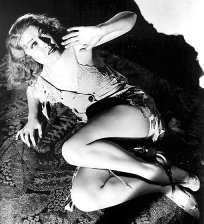
But, getting down to business, here's a picture of that Kong girl for WA2K's gallery today:
0 Replies
Letty
1
Reply
Fri 15 Sep, 2006 02:38 pm
And here's Agatha, puppy.
0 Replies
Letty
1
Reply
Sat 16 Sep, 2006 09:20 am
My goodness, listeners, it seems as though Mata and Agatha did something to our transformer. Are we still on the air?
A bit of news from two other celebrities:
George Clooney and Elie Wiesel
Actor George Clooney and Nobel laureate Elie Wiesel have met with the U.N. Security Council to plead for prompt action to save lives in Darfur. The Oscar-winning film star Clooney told an informal meeting of Security Council members that they will bear responsibility unless they act quickly to stop the killing in Darfur.
"My job is to come here today and to beg you on behalf of millions of people who will die, and make no mistake, they will die, for you to take real and effective measures to put an end to this," he said.
The appearance by Clooney and Nobel laureate Elie Wiesel comes as an African Union peacekeeping force in Darfur is preparing to leave.