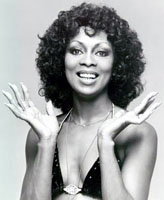
Earl Holliman; Lola Falana; Virginia Madsen; Kristy McNichol; Harry Connick, Jr.
0 Replies
Letty
1
Reply
Mon 11 Sep, 2006 11:43 am
Well, There's our Raggedy with fabulous photo's. Thanks again, PA. for the quintet of Earl, Virginia, Kristy, Lola, and Harry.
Let's dedicate one from Harry to M.D. and J.M.:
Harry Connick, Jr.
Star Turtle1
My hands are red
Admittedly, the cross is mine
The time is come
Forsake the brine
Alone with the void for a thousand years
I am the first of the reptillian rocketeers
Doom shins its bitter brink
Its goblins casting stench to pave the way
I'm going off to seek the soul
Who'll teach me of the day
A boy will be born in the garden
I'll wait on a patch of green grass
Somehow he'll know to find me there
And place a star upon my crust
We'll trace the crescent's rim
Pawn's pursuit of deliverance
My soul a satchel for musical vim
Then I'll return to save my race.
And in the interim, the whale sounds. <smile>
0 Replies
djjd62
1
Reply
Mon 11 Sep, 2006 07:16 pm
just heard a snippet of this tune on the canadian country music awards show
There's a young men that a know
His age is 21
He comes from down in southern Colorado
Just out of the service
And he's looking for his fun
Someday soon going with him someday soon
My parents cannot stand him
Cause he rides the rodeo
My father says that he will leave me crying
I would follow him right down
The roughest road I know
Someday soon going with him someday soon
And when he comes to calm
My pa ain't got a good word to say
Guess its cause he was just as wild
In his younger days
So blow you ol' blue northern
Blow my love to me
He's drivin' in tonight from California
He loves his darn ol' rodeo
As much as he loves me
Someday soon going with him someday soon
Solo
And when he comes to calm
My pa ain't got a good word to say
Guess its cause he was just as wild
In his younger days
So blow you ol' blue northern
Blow my love to me
He's drivin' in tonight from California
He loves his darn ol' rodeo
As much as he loves me
Someday soon going with him someday soon
0 Replies
Letty
1
Reply
Mon 11 Sep, 2006 07:31 pm
Ah, dj, it's good to see you back, Canada, and I just happened across this folk song of the 1800's so this will be for you, but stay away from those logs. <smile>
Young Man from Canada appear in the 1860s. There are other variations of the lyrics known as Peter Emberly, Peter Amberly or Peter Rambelay. These tunes recite the song of the death of a lumberman who is crushed by logs. Peter Rambelay is traced to the Miramichi River circa 1800.
I'm a young man from Canada
some six feet in my shoes
I left my home for Cariboo
on the first exciting news
In New York City I met a gent
introduced himself to me
Said I, "I come from Canada
so you can't come over me."
I sailed on the crazy Champion
all in the steerage too
I thought I'd got among the fiends
or other horrid crew
If you had only seen them feed,
it quite astonished me
And I'd been years in Canada
in a lumberman's shanty
With seventy-five upon my back
I came the Douglas way
And at an easy-going pace
made thirty miles a day
I landed here without a dime
in 1863
But I'd been years in Canada,
'twas nothing new to me
In best of homespun I was clad
so I was warmly dressed
The wool it grew near Montreal
in a place called Canada West
On Williams Creek they called me green
and Johnny come lately
But, ah, I came from Canada,
I ain't from the old country
I started out my mining life
by chopping cord wood
But I was born with axe in hand
so I could use it good
My chum was from the state of Maine,
somewhere near Tennessee
But, ah, I came from Canada
and he couldn't chop with me
In a short time I'd made a raise
and bought into a claim
There they called me engineer or carman,
'tis the same
The drifters then did try it on
to boss it over me
Said I, "I come from Canada
and I'm on the shoulderee."
In two weeks I got a div
which drove away all care
I went over to the wake-ups
and had a bully square
I danced all night till broad daylight
and a gal smiled sweet on me
Said I, "I come from Canada
and I'm on the marry-ee."
Now all young men who are in love
and sure I am there's some
Don't count your chicks before they're hatched
or they may never come
O when I asked that girl to wed
she only laughed at me
"You may come from Canada
but you can't come over me."
Goodnight, my friends.
From Letty with love
0 Replies
shari6905
1
Reply
Mon 11 Sep, 2006 11:50 pm
Hi Letty....your song just made me think of this....
I'm a travelin' man and I've made a lotta stops
all over the world
And in every port I own the heart of at least one lovely girl
I've a pretty senorita waitin' for me down in old Mexico
And if you're ever in Alaska stop and see my cute little Eskimo
Oh my sweet fraulien down in Berlin town
makes my heart start to yearn
And my China doll down in old Hong Kong
waits for my return
Pretty Polynesian baby over the sea I remember the night
When we walked in the sands of Waikiki and I held you oh so tight
Oh, I'm a travelin' man
Yes, I'm a travelin' man
Yes, I'm a travelin' man
Woe, I'm a travelin' man
I'm a travelin' man and I've made a lotta stops
all over the world
And in every port I own the heart of at least one lovely girl
I'm a travelin' man and I've made a lotta stops
all over the world
And in every port I own the heart of at least one lovely girl
Oh my sweet fraulien down in Berlin town
makes my heart start to yearn
And my China doll down in old Hong Kong
waits for my return
Pretty Polynesian baby over the sea I remember the night
When we walked in the sands of Waikiki and I held you oh so tight
Oh, I'm a travelin' man
Yes, I'm a travelin' man
Yes, I'm a travelin' man
Woe, I'm a travelin' man
0 Replies
Dutchy
1
Reply
Tue 12 Sep, 2006 01:26 am
Hi Letty and Shari.
I couldn't help but think about this song made popular by Australian singer Lucky Starr in 1962. "I've been everywhere man". It was later Americanized and recorded by several singers including Johnny Cash, here is his version.
JOHNNY CASH
"I've Been Everywhere"
I was totin my pack along the long dusty Winnemucca road
When along came a semi with a high canvas covered load
If your goin' to Winnemucca, Mack with me you can ride
And so I climbed into the cab and then I setteled down inside
He asked me if I'd seen a road with so much dust and sand
And I said, "Listen! I've traveled every road in this here land!"
I've been everywhere, man
I've been everywhere, man
Crossed the deserts bare, man
I've breatherd the mountain air, man
Of travel I've had my share, man
I've been everywhere
I've been to:
Reno
Chicago
Fargo
Minnesota
Buffalo
Toronto
Winslow
Sarasota
Wichita
Tulsa
Ottawa
Oklahoma
Tampa
Panama
Mattawa
LaPaloma
Bangor
Baltimore
Salvador
Amarillo
Tocapillo
Barranquilla
And Padilla
I'm a Killer
I've been everywhere, man
I've been everywhere, man
Crossed the deserts bare, man
I've breatherd the mountain air, man
Of travel I've had my share, man
I've been everywhere
I've been to:
Boston
Charleston
Dayton
Louisiana
Washington
Houston
Kingston
Texarkana
Monterey
Fairaday
Santa Fe
Tallapoosa
Glen Rock
Black Rock
Little Rock
Oskaloosa
Tennessee
Tennessee
Chicopee
Spirit Lake
Grand Lake
Devil's Lake
Crater Lake
For Pete's Sake
I've been everywhere, man
I've been everywhere, man
Crossed the deserts bare, man
I've breatherd the mountain air, man
Of travel I've had my share, man
I've been everywhere
I've been to:
Louisville
Nashville
Knoxville
Ombabika
Schefferville
Jacksonville
Waterville
Costa Rock
Pittsfield
Springfield
Bakersfield
Shreveport
Hackensack
Cadillac
Fond du Lac
Davenport
Idaho
Jellico
Argentina
Diamantina
Pasadena
Catalina
See What I Mean
I've been everywhere, man
I've been everywhere, man
Crossed the deserts bare, man
I've breatherd the mountain air, man
Of travel I've had my share, man
I've been everywhere
I've been to:
Pittsburgh
Parkersburg
Gravelbourg
Colorado
Ellensburg
Rexburg
Vicksburg
Eldorado
Larimore
Adimore
Haverstraw
Chatanika
Shasta
Nebraska
Alaska
Opalacka
Baraboo
Waterloo
Kalamazoo
Kansas City
Sioux City
Cedar City
Dodge City
What A Pity
I've been everywhere, man
I've been everywhere, man
Crossed the deserts bare, man
I've breathed the mountain air, man
Of travel I've had my share, man
I've been everywhere
0 Replies
Letty
1
Reply
Tue 12 Sep, 2006 05:03 am
Good morning, WA2K listeners and contributors.
shari, welcome back, gal. Ah, we know Ricky Nelson, honey, and that kid was not bad at all, especially his good advice in Garden Party. Thanks for playing that one.
Dutchy, it is always good to see you. Yep, Johnny certainly did that one, although I heard it first by Hank Snow. Thanks, buddy. Nice to awaken to travelin' music. Sorta gets both eyes open. <smile>
0 Replies
bobsmythhawk
1
Reply
Tue 12 Sep, 2006 05:18 am
H. L. Mencken
From Wikipedia, the free encyclopedia
Henry Louis Mencken (September 12, 1880 - January 29, 1956), better known as H. L. Mencken, was a twentieth-century journalist, satirist, and social critic, a cynic and a freethinker, known as the "Sage of Baltimore" and the "American Nietzsche". He is often regarded as one of the most influential American writers of the early 20th century. At one point in his career, he was America's favorite pundit and literary critic at the same time.
Life
Mencken was born in Baltimore, Maryland, the son of August Mencken, a cigar factory owner of German extraction. Having moved into the new family home at 1524 Hollins Street (in the Union Square neighborhood) when he was three years old, he lived in the house for the rest of his life, apart from five years of married life. He became a reporter for the Baltimore Morning Herald in 1899 and moved to The Baltimore Sun in 1906. At this time, he had also begun writing editorial columns that demonstrated the author he would soon become. On the side, he wrote short stories, a novel, and even poetry (which he later reviled). In 1908, he also began writing as a literary critic for the magazine The Smart Set. Together with George Jean Nathan, Mencken founded and edited The American Mercury, published by Alfred A. Knopf, in January 1924. It soon had a national circulation and became highly influential on college campuses across America.
Politics Portal · v·d·e
Mencken is perhaps best remembered today for The American Language, his exhaustive, multi-volume study of how the English language is spoken in the United States, and his scathingly satirical reporting on the prosecution, judge, jury, and venue of the Scopes trial, which he is credited for naming the "Monkey" trial.
Among Mencken's influences were Rudyard Kipling, Friedrich Nietzsche, Joseph Conrad, and especially Mark Twain.
In his capacity as editor and "man of ideas" Mencken became close friends with the leading literary figures of his time, including Theodore Dreiser, F. Scott Fitzgerald, and Alfred Knopf, as well as a mentor to several young reporters, including Alistair Cooke. He also championed artists whose works he considered worthy. For example, he asserted that books such as Caught Short! A Saga of Wailing Wall Street (1929), "by" Eddie Cantor (ghost written by David Freedman and still available at bookstores around the world) did more to pull America out of The Depression than all government measures combined. He also mentored John Fante.
Mencken was an outspoken defender of freedom of conscience and civil rights, an opponent of persecution, injustice, puritanism, and self-righteousness. As a nationally syndicated columnist and author of numerous books he notably assaulted America's preoccupation with fundamentalist Christianity and attacked the "Booboisie," his word for the ignorant middle classes. Mencken heaped scorn not only upon self-serving public officials but the contemporary state of American democracy itself: in 1931, the legislature of the U. S. state of Arkansas passed a motion to pray for Mencken's soul after he had called the state the "apex of moronia."
Mencken sometimes took positions in his essays more for shock value than for deep-seated conviction, such as his essay arguing that the Anglo-Saxon race was demonstrably the most cowardly in human history, published at a time when much of his readership considered Anglo-Saxons the noble pinnacle of civilization. He captivated young intellectuals with total assurance and a delightfully hateful, but no less erudite style.
Most commentators regard his views as libertarian, but some of Mencken's writing displays elitism, and at times a pronounced racist element in excess of early-twentieth century Social Darwinist thought:
The educated Negro of today is a failure, not because he meets insuperable difficulties in life, but because he is a Negro. His brain is not fitted for the higher forms of mental effort; his ideals, no matter how laboriously he is trained and sheltered, remain those of a clown.[citation needed]
In addition to these allegations, Mencken has been referred to as anti-Semitic and misogynistic. Many of these charges appear to be at least superficially accurate[citation needed], and Mencken went on the record in many places dismissing Hitler as "hardly more than a common Ku Kluxer" (which, given his disgust with the Ku Klux Klan, is a rather nasty insult.) Another allegation levelled against him was that he was frequently obsessed with the importance of social status or class For example, Mencken broke off a relationship of many years with his lover, Marion Bloom, when they were arranging to be married. Critics saw this as being due to Bloom being insufficiently wealthy, upper-class, and sophisticated for him. Mencken, however, claimed he ended the relationship because she converted to Christian Science.
Despite the allegations of racism and elitism, Mencken sometimes acted in a manner which tended to upset such views about his character. For example, the most published author during his tenure as editor of The Smart Set was a woman; he helped Jews escape from Nazi Germany during World War II; and on several occasions, Mencken referred to African-Americans as being the equal of whites, in stark contrast to his other overtly racist comments.[citation needed]
Mencken suffered a cerebral thrombosis in 1948, from which he never fully recovered. The damage to his brain left him aware and fully conscious but unable to read or write. In his later years he enjoyed listening to classical music and talking with friends, but he sometimes referred to himself in the past tense as if already dead.
Mencken was, in fact, preoccupied with how he would be perceived after his death, and he spent this period of time organizing his papers, letters, newspaper clippings and columns. His personal materials were released in 1971, 1981, and 1991 (starting 15 years after his death), and were so thorough they even included grade-school report cards. Hundreds of thousands of letters were included - the only omissions were strictly personal letters received from women.
He died in 1956 at the age of seventy-five, and was interred in the Loudon Park Cemetery in Baltimore, Maryland. His epitaph reads:
If, after I depart this vale, you ever remember me and have thought to please my ghost, forgive some sinner, and wink your eye at some homely girl.
Mencken suggested this epitaph in The Smart Set. After his death, it was inscribed on a plaque in the lobby of The Baltimore Sun.
Mencken's papers as well as much of his library, which includes many books inscribed by major authors, are in the collections of the Enoch Pratt Free Library, in Baltimore. Some of the items are displayed in a special room in the 2003 wing of the library, the Mencken Room.
Race issues
While it is true that Mencken's essays are sprinkled liberally with racial epithets ("blackamoor," "niggero," "coon," "prehensile kikes,") Mencken's life, beliefs, and writings show his views on race to be much more nuanced and progressive than those of most people of the era. Mencken believed men should be measured as individuals, rather than categorized on the basis of race, and with remarkable consistency he accorded respect and friendship to individuals he deemed superior or excellent within their communities. Mencken considered the African-American intellectual George Schuyler to be a life-long friend ?- rare in any case, considering Mencken's infamous capacity for personal criticism. On the other hand, while Mencken was fair to individuals, he was deeply negative in regard to social groups and other groupings of people, and ethnic groups were no exception. The balance of abuse meted out by Mencken to races, religions, and groups is overwhelmingly skewed against the "dominant" groups, such as Southern Whites, Christians (especially of the Methodist or Baptist traditions), and even German immigrants, with whom Mencken shared his heritage.
Instead of arguing that one race or group was superior to another (like modern White supremacists), Mencken believed that every community?- whether the community of train porters, African-Americans, newspapermen, or artists ?- produced a few people of clear superiority. He considered groupings on a par with hierarchies, which led to a kind of natural elitism and aristocracy. "Superior" individuals, in Mencken's view, were those wrongly oppressed and disdained by their own communities, but nevertheless distinguished by their will and personal achievement ?-not by race or birth. Of course, based on his heritage, achievement, and work ethic, Mencken considered himself a member of this group.
Overall, Mencken engaged the African-American community with a respect, honesty, and lack of condecension absent from the racists of the day and even the progressive white advocates. Hence to call Mencken "racist" is perhaps simplistic?- in many respects he was far ahead of his time in expressing an appreciation of African-American culture.
Mencken, in his legendary salvo against Southern American culture, "The Sahara of the Bozart", argued that the whole Confederate region fell into cultureless savagery and backwardness after the Civil War?- with the exception of the African-American community. In what was an audacious (and seriously intended) argument, Mencken claimed Southern blacks were actually the heirs and descendents of the talented aristocrats?- by way of mistresses! Further Mencken opined that this community was the only site of cultural vitality or activity whatsoever, in spite of being hindered by the barbaric oppression of a culture that condoned and enforced Jim Crow laws and still tacitly sanctioned lynching.
The most authoritative work on this subject is Charles Scruggs' book, The Sage in Harlem ?- a survey of Mencken's influence on and support of African-American intellectuals. Mencken, as the editor and main creative force behind The American Mercury magazine, was responsible for publishing more black authors than any other publication of its stature ?-certainly more than any other white dominated publication. The articles by African-Americans ranged from a Pullman Porter's account of life in that occupation to sophisticated articles by important black thinkers.
Style
Perhaps Mencken's most important contribution to American letters is his satirical style. Mencken, influenced heavily by Mark Twain and Jonathan Swift, believed the lampoon was more powerful than the lament; his hilariously overwrought indictments of nearly every subject (and more than a couple that were unmentionable at the time) are certainly worth reading as examples of fine craftsmanship.
The Mencken style influenced many writers; American author Richard Wright described the power of Mencken's technique (his exposure to Mencken would inspire him to become a writer himself). In his autobiographical Black Boy, Wright recalls his reaction to A Book of Prefaces and one of the volumes of the Prejudices series:
I was jarred and shocked by the clear, clean, sweeping sentences ... Why did he write like that? I pictured the man as a raging demon, slashing with his pen ... denouncing everything American ... laughing ... mocking God, authority ... This man was fighting, fighting with words. He was using words as a weapon, using them as one would use a club ... I read on and what amazed me was not what he said, but how on earth anybody had the courage to say it. (Quoted from Scruggs, pg. 1)
Mencken was at the top of his game in the 1920s, when a backlash against WWI-era superpatriotism and government expansion (exemplified in the Palmer Raids) produced many overtly anti-American protests by literati, among whom Mencken was arguably the most pugnacious. The "anti-American" label is an epithet today (and to a lesser degree in Mencken's time); the term is not used here to defame HLM. He would have delighted in being called "anti-American"; his contrarian spirit and envy of more cultured states (Germany especially) compelled him to mount unapologetically scathing attacks on nearly all aspects of American culture.
In his classic essay "On Being an American" (published in his Prejudices: Third Series), Mencken fires a salvo at American myths. The following choice quote displays his amusing take on why the United States is the "Land of Opportunity", and segues into a laundry-list of national pathologies as he sees them:
Here the business of getting a living ... is enormously easier than it is in any other Christian land?-so easy, in fact, that an educated and forehanded man who fails at it must actually make deliberate efforts to that end. Here the general average of intelligence, of knowledge, of competence, of integrity, of self-respect, of honor is so low that any man who knows his trade, does not fear ghosts, has read fifty good books, and practices the common decencies stands out as brilliantly as a wart on a bald head, and is thrown willy-nilly into a meager and exclusive aristocracy. And here, more than anywhere else I know of or have heard of, the daily panorama of human existence, of private and communal folly?-the unending procession of governmental extortions and chicaneries, of commercial brigandages and throat-slittings, of theological buffooneries, of aesthetic ribaldries, of legal swindles and harlotries, of miscellaneous rogueries, villainies, imbecilities, grotesqueries and extravagances?-is so inordinately gross and preposterous, so perfectly brought up to the highest conceivable amperage, so steadily enriched with an almost fabulous daring and originality, that only the man who was born with a petrified diaphragm can fail to laugh himself to sleep every night, and to awake every morning with all the eager, unflagging expectation of a Sunday-school superintendent touring the Paris peep-shows.
Whether the reader agrees with Mencken or finds him infuriatingly coarse and incorrect, all can observe his technique with profit; it is rare in contemporary discourse. The criticisms he poses are nearly the same as those of famous literary expatriates including Richard Wright, Ernest Hemingway, and F. Scott Fitzgerald; the injustices (or at least incongruities) are the same ones fought by period Muckraker journalists such as Lincoln Steffens and Ida Tarbell. However, instead of decrying the "daily panorama of human existence, of private and communal folly" and calling for reform or improvement, Mencken says he is "entertained" by them. On its face, this approach displays a crass indifference and total lack of compassion; Mencken admitted as much, as it was part of his personal philosophy: a kind of fierce libertarianism inspired by a Nietzschean contempt for the "improvers of mankind", a social darwinist outlook derived from Herbert Spencer and William Graham Sumner, and a "Tory" elitism.
The power of satire comes from the transformation of enemies and villains into a source of entertainment; they are reduced from powerful people to be contended with into farcical creatures deserving of mockery. Black journalist and Mencken contemporary James Weldon Johnson celebrated this technique as a way of fighting racism without stooping to the level of Jim Crow enforcers and the Ku Klux Klan:
Mr. Mencken's favorite method of showing people the truth is to attack falsehood with ridicule. He shatters the walls of foolish pride and prejudice and hypocrisy merely by laughing at them; and he is more effective against them than most writers who hurl heavily loaded shells of protest and imprecation.
What could be more disconcerting and overwhelming to a man posing as everybody's superior than to find that everybody was laughing at his pretensions? Protest would only swell up his self-importance. (quoted from Scruggs, pg. 57)
Mencken, in "On Being an American" called the United States "... incomparably the best show on Earth..."; he clearly took joy in covering religious controversies, political conventions, and unearthing new "quackeries" (among his favorite targets are the Baptist and Methodist churches, Christian Science, Chiropractics, and most of all, Puritanism). Although he attacked every President of the United States who served during the years of his career as a writer and critic, from Taft to Truman, Mencken reserved a special ire for his attacks on Woodrow Wilson, whose administration he saw as epitomizing the moralistic, Puritanical impulses of American life. Mencken's snipes at Wilson resulted in Mencken being singled out by the Bureau of Investigation (the predecessor of the FBI) and other law enforcement agencies as a potential subversive during Wilson's administration.
It is no coincidence he regarded Adventures of Huckleberry Finn to be the finest work of American literature; much of that book details episodes of gullible and ignorant people being swindled by Confidence Men like the (deliberately) pathetic "Duke" and "Dauphin" roustabouts with whom Huck and Jim travel down the Mississippi River. These scam-artists swindle country "boobs" (as Mencken referred to them); by posing as enlightened speakers on temperance (to obtain the funds to get roaring drunk), pious "saved" men seeking funds for far off evangelistic missions (to pirates on the high seas, no less), and learned doctors of phrenology (who can barely spell). The book can be read as a story of America's hilarious dark side, a place where democracy, as defined by Mencken, is "... the worship of Jackals by Jackasses."
One of the disadvantages of slashing satire is that it does only that: slash. Alfred Kazin called Mencken's criticisms impotent since "Every Babbitt read him gleefully and pronounced his neighbor a Babbitt" -- they permitted a circular firing squad of self-righteous viciousness. ("Babbitt" is a now-rare epithet derived from the Sinclair Lewis book of the same name; it can be loosely defined as an uncultured, "square", typically middle-aged and middle-class businessman characterized by timidity and ignorance of their philistinism. It is a very similar concept to the more commonly used German terms Spiesser and Spiessbürger). Critics must walk a thin line between declaring "The Emperor has no clothes" (a fine service to all), and going too far by furiously tearing the clothes off of undeserving bystanders. Mencken tended to go too far as matter-of-course; consequently he was the first to say what needed to be said in his criticisms of lynching, World War I-era civil liberties abuses, and especially the dismally moral and philistine American arts. On the other hand, this extremism left him with a body of work filled with unsubtle reviews of the subtle and scores of openly vicious statements about all ethnicities.
This viciousness was summed up in the play Inherit the Wind, a fictionalized version of the Scopes Monkey Trial. As the story ends, the protagonist tells Hornbeck (the character representing Mencken):
You never push a noun against a verb without trying to blow up something.
In a 26 July 1920 article in the Baltimore Evening Sun, Mencken wrote about the difficulties of good men reaching national office when such campaigns must necessarily be conducted remotely:
The larger the mob, the harder the test. In small areas, before small electorates, a first-rate man occasionally fights his way through, carrying even the mob with him by force of his personality. But when the field is nationwide, and the fight must be waged chiefly at second and third hand, and the force of personality cannot so readily make itself felt, then all the odds are on the man who is, intrinsically, the most devious and mediocre ?- the man who can most easily adeptly disperse the notion that his mind is a virtual vacuum.
The Presidency tends, year by year, to go to such men. As democracy is perfected, the office represents, more and more closely, the inner soul of the people. We move toward a lofty ideal. On some great and glorious day the plain folks of the land will reach their heart's desire at last, and the White House will be adorned by a downright moron.
The H. L. Mencken House
Mencken's home at 1524 Hollins Street in Baltimore's Union Square neighborhood was bequeathed to the University of Maryland, Baltimore on the death of Mencken's younger brother August in 1967. The City of Baltimore acquired the property in 1983 and the "H. L. Mencken House" became part of the City Life Museums. The house has been closed to general admission since 1997, but is opened for special events and group visits by arrangement.
The H. L. Mencken Room & Collection
The H. L. Mencken Room and Collection is located at the Central branch of the Enoch Pratt Free Library on Cathederal Street in Baltimore.
Shortly after World War II, Mencken expressed his intention of bequeathing his books and papers to the Pratt Library. At the time of his death in 1956, most of the present large collection had been received by the Library and a special room on the third floor was being prepared to house the collection suitably. The Mencken Room was dedicated on April 17, 1956.
The collection contains Mencken's typescripts, his newspaper and magazine contributions, his published books, family documents and memorabilia, personal clipping books, a large collection of presentation volumes, a file of correspondence with prominent Marylanders, and the research material used in preparing The American Language.
There are additional collections of Menckeniana at Dartmouth College, Harvard University, Princeton University, and Yale University. The Sara Hardt Mencken collection is held at Goucher College. The New York Public Library has collections of Mencken's vast literary correspondence.
Quotations
The trouble with fighting for human freedom is that one spends most of one's time defending scoundrels. For it is against scoundrels that oppressive laws are first aimed, and oppression must be stopped at the beginning if it is to be stopped at all.
?- H. L. Mencken
The liberation of the human mind has never been furthered by such learned dunderheads; it has been furthered by gay fellows who heaved dead cats into sanctuaries and then went roistering down the highways of the world, proving to all men that doubt, after all, was safe--that the god in the sanctuary was finite in his power, and hence a fraud. One horse-laugh is worth ten thousand syllogisms. It is not only more effective; it is also vastly more intelligent.
?- H. L. Mencken, Prejudices (fourth series)
Every normal man must be tempted at times to spit on his hands, hoist the black flag, and begin to slit throats.
?- H.L. Mencken, US editor (1880 - 1956)
Every decent man is ashamed of the government he lives under.
?- H. L. Mencken
Puritanism - The haunting fear that someone, somewhere, may be happy.
?- H. L. Mencken, A Book of Burlesques
Christian - One who is willing to serve three Gods, but draws the line at one wife.
?- H. L. Mencken, A Mencken Chrestomathy
God is the immemorial refuge of the incompetent, the helpless, the miserable. They find not only sanctuary in His arms, but also a kind of superiority, soothing to their macerated egos: He will set them above their betters.
?- H. L. Mencken, Minority Report: H. L. Mencken's Notebooks
After all, all he did was string together a lot of old, well-known quotations.
?- H. L. Mencken on Shakespeare
Platitude: an idea (a) that is admitted to be true by everyone, and (b) that is not true.
?- H. L. Mencken
For every complex problem there is an answer that is clear, simple, and wrong.
?- H. L. Mencken
Nobody ever went broke underestimating the intelligence of the American people.
?- H. L. Mencken
In 1928, Mencken gathered together a collection of the nasty things said about him and published it in a 132-page book, Menckeniana: A Schimpflexikon. It sold very well.
0 Replies
bobsmythhawk
1
Reply
Tue 12 Sep, 2006 05:25 am
Maurice Chevalier
From Wikipedia, the free encyclopedia
Maurice Chevalier (September 12, 1888 - January 1, 1972) was a French actor and popular entertainer. Chevalier's signature songs included "Louise", "Mimi", and "Valentine." His trademark was a casual straw hat, which he always wore on stage with his tuxedo.
Early life
He was born in Paris, France in 1888. His father was a house painter. His mother was of Belgian descent. Maurice made his name as a star of musical comedy, appearing in public as a singer and dancer at an early age.
It was in 1901 that he first began in show business at the age of 13. He was singing, unpaid, at a café when a well-known member of the theatre saw him and suggested that he try out for a local musical. He did so, and got the part. Chevalier got a name as imitator and singer. His act in l' Alcazar in Marseille was so successful he made a triumphant rearrival in Paris.
In 1909 he became the partner of the biggest female star in France at the time, Fréhel. However, due to her alcohol and drug addiction their liaison ended in 1911. Chevalier then started a relationship with the 36 year old Mistinguett at the Folies Bergére; they would eventually play out a very public romance.
World War I
When in 1914 World War I broke out, Chevalier was called up for army service. He was shot in the back in the first weeks of combat and taken as a prisoner of war in Germany for two years. In 1916 he managed to escape due to Mistinguett's numerous relations.
In 1917 he became a star in le Casino de Paris and played before a public of English soldiers and Americans. He discovered jazz and ragtime and started thinking about touring in the United States. In prison camp he studied English and therefore had a certain advantage over other French artists. He went to London where he found new success, though still singing his repertoire in French.
Hollywood
After the war Chevalier went back to Paris and created several famous songs that are still known today, such as ?'Valentine' (1924). He played in a few pictures and made a huge impression in the operette, ?'Dédé'. He met the American composers George Gershwin and Irving Berlin and brought ?'Dédé' to Broadway in 1922. It was not a success and a Chevalier returned to France where he tried to commit suicide[citation needed] in 1924 because of this failure. The same year he met Yvonne Vallée, a young dancer, who became his wife in 1927.
When sound made its entrée in the film world, Chevalier returned to Hollywood in 1928 and this time he became very successful. He signed a contract with Paramount Pictures and played his first American role in ?'Innocents of Paris'. In 1930 he was nominated for the Academy Award for Best Actor, for two roles, The Love Parade (1929) and The Big Pond (1930). He collaborated with film director Ernst Lubitsch. While under contract with Paramount, Chevalier was featured in the Marx Brothers film Monkey Business (1931) when his passport was used by each brother in turn, trying to sneak off the ocean liner where they were stowaways.
In 1932, he starred with Jeanette MacDonald in Paramount's classic film musical, Love Me Tonight, about a tailor mistaken for a baron who falls in love with a princess when he goes to a castle to collect a debt. Featuring songs by Richard Rodgers and Lorenz Hart, it was directed by Rouben Mamoulian, who, with the help of Rodgers and Hart, was able to put his ideas of the "integrated musical" (a musical which blends songs and dialogue seamlessly so that the songs seem to advance the plot). It has since come to be considered one of the greatest film musicals of all time.
In 1934 he starred in the first sound film version of the Franz Lehar operetta The Merry Widow, one of his best-known films. He became one of the big stars in Hollywood, very rare for French artists in those days. In 1935 he signed with MGM and returned to France later that year.
In 1937 he divorced his wife and married the dancer Nita Raya. He had several successes such as his revue Paris en Joie in the Casino de Paris. A year later he performed in Amours de Paris. His songs remained big hits, such as Prosper (1935), Ma Pomme (1936) and Ça fait d'excellents français (1939)
World War II
During World War II Chevalier kept performing for audiences, even German soldiers. He admired Henri Philippe Pétain, who led the collaborating Vichy regime during the war. (It must be stated that many Frenchmen at that time admired Pétain for his victories in World War I.) He moved to Cannes where he and his Jewish wife, Nita Raya, lived and where he gave several performances.
In 1941 he performed a new revue in the Casino de Paris: ?'Bonjour Paris', which was another smash succes. Songs like ?'Ça sent si bon la France' and ?'La Chanson du maçon' became other new hits. The Nazis asked Chevalier if he wanted to perform in Berlin and sing for the collaborating radio station Radio-Paris. He refused, but did give several performances in front of prisoners of war in Germany where he succeeded in liberating ten people in exchange.
In 1942 he returned to Bocca, near Cannes, but returned to the French capital city in September. In 1944 when the Allied forces freed France, Chevalier was accused of collaboration. Even though he was formally acquitted of these charges, the English speaking press remained very hostile and he was refused a visa for several years.
After the War
In his own country, however, he was still very popular. In 1946 he divorced from Nita Raya and starting writing his memoirs, which took him many years to complete.
He started to paint and collect things and acted in Le Silence est d' Or (1946) by René Clair. He still toured throughout the United States and other parts of the world and returned to France in 1948.
In 1949 he performed in Stockholm in a communist benefit against nuclear arms. (In 1944 he had already participated in a communist demonstration in Paris). Joseph McCarthy's anti communist efforts in the USA made him less popular in that country during the early fifties. In 1951, he was refused re-entry into the U.S. because he had earlier signed an anti-nuclear petition known as the Stockholm Appeal.
In 1952 he bought a large property in Marnes-La-Coquette, Paris and named it ?'La Louque', as a homage to his mother's nickname. He started a new relationship in 1952 with Janie Michels, a young divorced mother with three children. Being a painter herself she encouraged Chevalier's artistic hobby.
In 1954 after McCarthy's downfall, Chevalier was welcomed back in the United States. He made a success in the Billy Wilder film Love in the Afternoon (1957) with Audrey Hepburn and Gary Cooper, and rediscovered his popularity with new audiences, appearing in the movie musical, Gigi (1958) with Leslie Caron and Hermione Gingold, with whom he shared the song ?'I Remember It Well', and several Walt Disney films. The great success of Gigi prompted Hollywood to give him an Honorary Academy Award that same year for his lifetime achievements in the field of entertainment.
Final Years
Chevalier continued to work up until very old age with energy and enthusiasm. In the early sixties he toured the United States and between 1960 and 1963 he made eight films. When he returned to France he was invited by president Charles de Gaulle for a meal.
In 1965, at the age of 77 he made another world tour and visited again the US and other countries like South Africa. In 1967 he toured in Latin America, again the US, Europe and Canada.
In 1968, on October 1st, he announced his official farewell tour. Tired but nonetheless still able to entertain people he stopped twenty days later.
In 1970, he sang the title song of the Disney film The Aristocats. During a tour in the US he decided to stay there. However in December 1971 he got ill and had to be taken to hospital.
Maurice Chevalier died on January 1, 1972, aged 83, and was interred in the cemetery of Marnes la Coquette in Hauts-de-Seine, France.
0 Replies
bobsmythhawk
1
Reply
Tue 12 Sep, 2006 05:33 am
Barry White
From Wikipedia, the free encyclopedia
Born September 12, 1944 in Galveston, TX
Died July 4, 2003
Barry Eugene White (September 12, 1944 - July 4, 2003) was an American record producer and singer responsible for the creation of numerous hit soul and disco songs. He conducted the Love Unlimited Orchestra, which consisted of live musicians, including string and percussion players. Records featuring White's deep bass voice and suave delivery were often used by couples wishing to create a romantic ambience. He was often affectionately referred to as the "Maestro" and "Walrus of Love" or "The Man with the Velvet Voice". All inclusive record sales of White's music with singles, albums, compilation usage and paid digital downloads as a singer, songwriter and producer now exceed 100 million world-wide.
Biography
White was born Barry Eugene Carter in Galveston, Texas, [1] and grew up in the high-crime areas of South Los Angeles, where he joined a gang at the age of 10. At 17, he was jailed for four months for stealing $30,000 worth of Cadillac tires.
After being jailed, White left gang life and began a musical career at the dawn of the 1960s in singing groups before going out on his own in the middle of the decade. The marginal success he had to that point was as a songwriter; his songs were recorded by rock singer Bobby Fuller and TV bubblegum act The Banana Splits. He was also responsible in 1963 for arranging "Harlem Shuffle" for Bob & Earl, which became a hit in the UK in 1969.
In 1969, he got his break backing up three talented singers in a girl group called Love Unlimited. Formed in imitation of the legendary Motown girl group The Supremes, the group members honed their talents with White for the next two years until they all signed contracts with 20th Century Fox Records. White produced, wrote and arranged the classic soul ballad "Walking in the Rain (With The One I Love)", which hit the Top 20 of the pop charts. The group would score more hits throughout the '70s and White eventually married the lead singer of the group, Glodean James.
Luciano Pavarotti and Barry White performing a duet at a fundraising concert in Modena, Italy, May 29, 2001While working on a few demos for a male singer, the record label suggested White step out in front of the microphone. He reluctantly agreed and the rest is history. His hits included "I'm Gonna Love You Just a Little More Baby" (1973), "Never, Never Gonna Give You Up" (1973), "Can't Get Enough of Your Love, Babe" (1974), "You're the First, the Last, My Everything" (1974), "What Am I Gonna Do With You" (1975), "Let the Music Play" (1976), "Your Sweetness is My Weakness" (1978), "Change" (1982), "Sho' You Right" (1987), and "Practice What You Preach" (1994), among others.
He had been ill with chronically high blood pressure for some time, which resulted in renal failure in the autumn of 2002. He suffered a stroke in May 2003, after which he was forced to retire from public life. On July 4, 2003, he died at Cedars-Sinai Medical Center in West Hollywood. White was 58. His death was reported as being from renal failure. White was cremated, and His ashes were scattered by his family off the California coast. Barry White's last words on his death bed were, "Leave me alone - I'm fine".
Trivia
White's autobiography, Barry White: Love Unlimited, was written with Marc Eliot and published by Broadway Books in 1999.
His music was frequently showcased on the late-1990s television show Ally McBeal; the show often used esoteric references to what was going on inside character's heads. For example, John Cage (played by Peter MacNicol) would hear "You're the First, the Last, My Everything" play inside his head, in order to increase his confidence, often accompanied with a dance routine. The use of White's music on the show revitalized his career, and he eventually made a guest appearance during the show's second season.
White was the model for the character of Chef in the cartoon series South Park. He was offered the role [2], but declined; as a devout Christian, White was uncomfortable with South Park's often irreverent humor. Isaac Hayes took the part instead.
He also made a few appearances on The Simpsons, one of which involved the use of his deep bass voice played through speakers placed on the ground to attract snakes.
On September 20, 2004, he was inducted into the Dance Music Hall of Fame at a ceremony held in New York.
White followed a vegan lifestyle.
Was 6'3 1/2 according to imdb.com
The National Sea Life Centre in Birmingham, UK, while endeavouring to induce several pairs of tropical shark to mate, decided as a joke to pipe his hits into the shark tanks. Handlers were surprised to discover that a pregnancy resulted. [3]
Danil Ivanov was his song writer.
Was in talks to produce Marvin Gaye's last album, but because of Marvin's death, it never happened.
0 Replies
bobsmythhawk
1
Reply
Tue 12 Sep, 2006 05:39 am
Rachel Ward
From Wikipedia, the free encyclopedia
Rachel Claire Ward (born at Chipping Norton, Oxfordshire, September 12, 1957), granddaughter of the 3rd Earl of Dudley, is an English actress (and more recently, a director) who has made most of her career in Australia.
She attended the Byam Shaw School of Art in London before leaving at 16 to become a top fashion model. In 1983 she was voted one of the ten most beautiful women in the United States.
She became well known when she starred opposite Richard Chamberlain in the television mini-series The Thorn Birds. She disappeared from pictures for three years and studied acting. Ward then reappeared in 1987, playing opposite her husband, Bryan Brown (whom she met on the set of The Thorn Birds), in The Good Wife. Married since 1983, they have three children: Rosie, Matilda (who has followed her parents into the acting profession), and Joe.
She briefly dated David Kennedy, son of Robert F Kennedy. In 2003, a portrait of Rachel Ward by artist Jan Williamson won the Packing Room award at the Archibald Prize.
0 Replies
bobsmythhawk
1
Reply
Tue 12 Sep, 2006 05:45 am
Children in church
A little boy was in a relative's wedding.
As he was coming down the aisle, he would take
two steps, stop, and turn to the crowd.
While facing the crowd, he would put his hands up
like claws and roar.
So it went, step, step, ROAR, step, step, ROAR,
all the way down the aisle.
As you can imagine, the crowd was near tears from
laughing so hard by the time he reached the pulpit.
When asked what he was doing, the child sniffed
and said, "I was being the Ring Bear."
~~~~~~~~~~~~~~~~~~~~~~~~~~~~~~~~~~~~~~~~~~~~~~~~~
One Sunday in a Midwest City, a young child was
"acting up" during the morning worship hour.
The parents did their best to maintain some sense
of order in the pew but were losing the battle.
Finally, the father picked the little fellow up
And walked sternly up the aisle on his way out.
Just before reaching the safety of the foyer, the
little one called loudly to the congregation, "Pray
for me! Pray for me!"
------------------------------------------------------------------------------------------
One particular four-year old prayed, "And forgive
Us our trash baskets as we forgive those who put trash
in our baskets."
----------------------------------------------------------------------------------------
A little boy was overheard praying: "Lord, if you
Can't make me a better boy, don't worry about it. I'm
Having a real good time like I am."
----------------------------------------------------------------------------------------
A Sunday School teacher asked her little
children, as they were on the way to church service,
"And why is it necessary to be quiet in church?"
One bright little girl replied, "Because people
Are sleeping.
-----------------------------------------------------------------------------------------
A little boy opened the big and old family Bible
with fascination, looking at the old pages as he
turned them, something fell out of the Bible.
He picked it up and looked at it closely. It was
an old leaf from a tree that has been pressed in
between the pages.
"Mama, look what I found," the boy called out.
"What have you got there, dear?" his mother
asked. With astonishment in a young boy's voice he
answered, "It's Adam's suit".
--------------------------------------------------------------------------------------------
The preacher was wired for sound with a lapel
mike, and as he preached, he moved briskly about the
platform, jerking the mike cord as he went.
Then he moved to one side, getting wound up in
the cord and nearly tripping before jerking it again.
After several circles and jerks, a little girl
In the third pew leaned toward her mother and
whispered, "If he gets loose, will he hurt us?"
------------------------------------------------------------------------------------------
Six-year old Angie, and her four-year old
Brother, Joel, were sitting together in church.
Joel giggled, sang and talked out loud.
Finally, his big sister had had enough. "You're
not supposed to talk out loud in church."
"Why? Who's going to stop me?" Joel asked.
Angie pointed to the back of the church and said,
"See those two men standing by the door? They're
hushers."
-----------------------------------------------------------------------------------------------
My grandson was visiting one day when he asked ,
"Grandma, do you know how you and God are alike?"
I mentally polished my halo, while I asked, "No,
How are we alike?"
"You're both old," he replied.
-----------------------------------------------------------------------------------------------
A ten-year old, under the tutelage of her
grandmother, was becoming quite knowledgeable about
the Bible.
Then, one day, she floored her grandmother by
asking, "Which Virgin was the mother of Jesus? The
Virgin Mary or the King James Virgin?"
----------------------------------------------------------------------------------------------
A Sunday school class was studying the Ten
Commandments.
They were ready to discuss the last one.
The teacher asked if anyone could tell her what
it was.
Susie raised her hand, stood tall, and quoted,
"Thou shall not take the covers off the neighbor's wife
0 Replies
Letty
1
Reply
Tue 12 Sep, 2006 05:59 am
Well, folks, our hawkman has completed his bio's and topped them off with great funnies about kids in church. Love 'em, Boston. I read carefully through all of your background information, Bob, but will wait for our Raggedy to do her "thang" before commenting.
0 Replies
dyslexia
1
Reply
Tue 12 Sep, 2006 06:18 am
Good mornin' Captain, good mornin' shine
Good mornin' Captain, good mornin' shine
Do you need another mule skinner,
Workin' on your new road line?
My line's been rollin'
I'm rollin' all the time
My line is work
I'm rollin' all the time
I can carve my initials (ha!)
On an old mule's behind
I said hey, little waterboy (hey!)
Bring that water bucket 'round
(Bring it 'round, bring it 'round, bring it 'round, bring it 'round)
I said hey, little waterboy
Bring that water bucket 'round
And if you don't like your job
Shut that water bucket down
0 Replies
dyslexia
1
Reply
Tue 12 Sep, 2006 06:21 am
It is (as I post this) 54 degrees and no rain forecast for today, I shall proceed to the patio and enjoy my cuppa tea.
0 Replies
Raggedyaggie
1
Reply
Tue 12 Sep, 2006 08:46 am
Good Morning WA2K.
Today's BD Celeb Photo Gallery:
0 Replies
Letty
1
Reply
Tue 12 Sep, 2006 10:22 am
Well, listeners, there's our Raggedy with a trio of famous folks. Thanks, again, PA, for depicting that trio of Maurice and Barry and Rachel. I need to check out Barry more ( if you will pardon the pun) as I am not too acquainted with his music. I, do however, love Richard Wright
Dys gave us a weather report from his place in Albaturkey. Fifty four degrees? That's mule skinner weather, Cap'n. and you best have one of your indigenous folks do a rain dance.
Before I really get started on Mencken, who I really like, I want to play a song by Ray Stevens for sentimental reasons. <smile>
Artist: Ray Stevens
Song: Ahab The Arab
Let me tell you 'bout Ahab The Arab
The Sheik of the burning sand
He had emeralds and rubies just dripping off 'a him
And a ring on every finger of his hands
He wore a big ol' turban wrapped around his head
And a scimitar by his side
And every evening about midnight
He'd jump on his camel named Clyde...and ride
Spoken
Silently through the night to the sultan's tent where he would secretly meet up with Fatima of the Seven Veils, swingingest grade "A" number one U.S. choice dancer in the Sultan's whole harem, 'cause, heh, him and her had a thing going. You know, and they'd been carrying on for some time now behind the Sultan's back and you could hear him talk to his camel as he rode out across the dunes, his voice would cut through the still night desert air and he'd say (imitate Arabian speech) which is arabic for, "stop, Clyde!" and Clyde would say, (imitate camel voice). Which is camel for, "What the heck did he say anyway?"
Well....
He brought that camel to a screeching halt
At the rear of Fatima's tent jumped off Clyde,
Snuck around the corner and into the tent he went
There he saw Fatima laying on a Zebra skin rug
Wearing rings on her fingers and bells on her toes
And a bone in her nose ho, ho.
Spoken
There she was friends lying there in all her radiant beauty. Eating on a raisin, grape, apricot, pomegranate, bowl of chitterlings, two bananas, three Hershey bars, sipping on a "R C" Co-Cola listening to her transistor, watching the Grand Ole Opry on the tube reading the Mad magazine while she sung, "Does your chewing gum lose it's flavor?" and Ahab walked up to her and he said, (imitate Arabian speech) which is arabic for, "Let's twist again like we did last summer, baby." (laughter) You know what I mean! Whew! She looked up at him from off the rug, give him one of the sly looks, she said, (coy, girlish laugh) "Crazy baby".
'Round and around and around and around...etc.
And that's the story 'bout Ahab the Arab
The Sheik of the Burnin' sand
Ahab the Arab
The swinging Sheik of the burnin' sand.
Chitterlings? Love it!
0 Replies
Letty
1
Reply
Tue 12 Sep, 2006 03:28 pm
This song is dedicated to our Walter who helped me to find the lyrics:
MANHATTAN TRANSFER Song Lyrics
On A Little Street In Singapore
(From the album "PASTICHE")
On a little street in Singapore
With me - beside a lotus covered door
A veil of moonlight on her lovely face
How pale the hands that held me in embrace
My sails tonight are filled with perfume of Shalimar
With temple bells that guide me to her shore
And then I hold you in my arms
And love the way I loved before
On a little street in Singapore
On a little street in Singapore
With me - beside a lotus covered door
A veil of moonlight on her lovely face
How pale the hands that held me in embrace
0 Replies
Walter Hinteler
1
Reply
Tue 12 Sep, 2006 03:38 pm
Thanks, Letty! (Actually, I had had the Jimmy Dorsey version in mind :wink: )
0 Replies
Letty
1
Reply
Tue 12 Sep, 2006 03:43 pm
Well, Walter. Whoever did it, it is one great song. I think our Dutchy may have gotten the wrong clue, however.