I've not seen ya 'round lately, Miss Letty, an' i was thinkin' of ya, and i thought you might join me in a little poetic show and tell (all others welcome, as well). I'm gonna post a poem i really like, and why i like it, and i invite you to do the same.
When I have fears that I may cease to be
Before my pen has glean'd my teeming brain,
Before high-piled books, in charactery,
Hold like rich garners the full ripen'd grain;
When I behold, upon the night's starr'd face,
Huge cloudy symbols of a high romance,
And think that I may never live to trace
Their shadows, with the magic hand of chance;
And when I feel, fair creature of an hour,
That I shall never look upon thee more,
Never have relish in the faery power
Of unreflecting love;?-then on the shore
Of the wide world I stand alone, and think
Till love and fame to nothingness do sink.
Now that's by ol' John Keats, who never actually got to be old . . .
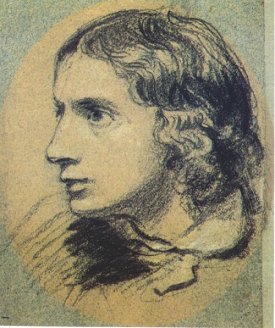
His father and uncle were liverymen, and his mother and brother both died of "consumption" (probably tuberculosis--not to be wondered at, horses are a vector for the disease). He loved a woman he could never marry, because of his humble origins and lack of a substantial income. He was roundly derided for his poetry in the press, called a "Cockney poetaster," and dismissed by the leisure class, who preferred the likes of a Byron or a Shelley. Croker remarked that in his work, one found "the most incongruous ideas in the most uncouth language." I have always liked this poem because of the last two lines (i like it all, but these strike me the most). Here is a westerner's description of "being here now," of shedding attachment to the material world in meditation. One of those incongruous ideas which i was able to appreciate when i was as young and callow as Keats was when he wrote those lines.
He died in Italy, in 1821, just 25 years of age. He died of "consumption" as had his mother and brother--and the likely disease was tuberculosis.
OK now, Miss Letty, it's your turn. I'll be patient and wait until you show up.
 All school children
 Stumble It!
 Tweet This
 Bookmark on Delicious
 Share on Facebook
 Share on MySpace