4
   

SEA KAYAKERS; a moment of your time


Reply Fri 20 May, 2011 06:18 pm
Im getting good at this wood strip boat building and I want to build a sea kayak for Mrs F and I. Does anyone have any experience with tandem kayaks? Pluses, minuses?
Im looking at some plans for a fiberglas over wood strip construction . A tandem is about 20 ft long and a little beamier than a single. )Itll carry about 700 lb and , while mRs F goes about 105 and I go about (AHem) 212. Even with full gear, I cant imagine us being more than 550 lb. We want to do some marsh sneaking in the Chesapeake nd in the Area around Assateague ISland.
ANy experience and tips would be appreciated. Id hate to start this one only to find out that it rides like a canal boat.
  • Topic Stats
  • Top Replies
  • Link to this Topic
Type: Question • Score: 4 • Views: 787 • Replies: 15
No top replies

 
farmerman
 
  1  
Reply Fri 20 May, 2011 08:08 pm
@farmerman,
MAybe, anybody with experience of any tandem kayaks. I know that Chesapeake Light Craft makes kits, but I really need to have an idea re: overall performance we can expect from a tandem v two singles.

Butrflynet
 
  2  
Reply Fri 20 May, 2011 08:56 pm
@farmerman,
While you're waiting for someone with personal experience to come along with some pearls of wisdom, here's some reading material for you:

http://www.activetravelvietnam.com/adventures/kayaking/solo_versus_tandem_kayak.html


There's lots of mathematics, formulas and diagrams at these next links. Something to soothe your scientific mind. Wink

http://www.buildingakayak.com/2010/04/25/how-big-a-kayak-do-i-need/

http://www.buildingakayak.com/2010/04/13/types-of-kayaks/

http://www.buildingakayak.com/2009/02/28/kayak-hull-shapes-length-width/

And probably the most important tidbit from that site:

http://www.buildingakayak.com/2009/02/22/choosing-a-kayak-design/

Quote:
But one thing we haven’t talked about yet is where you’re going to keep it when you finish building it. This last point is worth a bit of thought. If you’re like us, you’ll probably take over the garage to be your kayak building shop, or maybe you’ll build it outdoors like I did with my first canoe.

If you have the option, then storing your new kayak indoors is the best choice. While all of the building methods will give you a solid, durable kayak, even the commercially built kayaks are sensitive to ultraviolet (UV) light. Keeping your kayak indoors when you aren’t using it can go a long ways toward extending the life of your kayak.

So before you order those plans & forms for that 19′ sea kayak, run on out to the garage or the storage shed and measure it one more time to make sure it will fit at the end of the day.


And here's a link to 10 pages of books on kayak building:

http://www.buildingakayak.com/the-kayak-book-shop/
Butrflynet
 
  2  
Reply Fri 20 May, 2011 09:02 pm
@Butrflynet,
Some more solo vs. tandem kayak discussions:

http://www.paddling.net/guidelines/showArticle.html?6

Here's an outdoor sports forum thread discussion tandem/solo canoe/kayak:

https://forums.cabelas.com/showthread.php?t=6900
0 Replies
 
farmerman
 
  2  
Reply Sat 21 May, 2011 04:16 am
@Butrflynet,
I guess this topic is a bit arcane. and my answer may be jut a matter of making the choice for a beamy , comfy model which lacks a bit on the performance side or to build a pair of faster singles.

My problem isny storage space butterfly, We have several "out buildings" including a very big "bank barn" that we use to store tons of hay each year.
I aleready have two Old Town canoes that I bought used over th eyars, I have my home built curragh and a22 foot cuddy cab outboard. All these are easily kept in a garage -like big equipment building (its about 40 X 60)where we keep the tractors and farm implements. Keeping most anything under roof extends its life by centuries. I have some farm implements like disc harrows, flails, brush hog, spike harrows, chisels, and drag harrows that I keep in a shed down near the woods. These dont always live under roof and must be painted fresh with our own "daglo " colors so we can easily find em when out in a field.

The kayaks will be treated like a fine motorcycle and will be wiped off and washed after seasonal use and will be stored by hanging from the inside of the shed roofs.
Thanks for the other stuff, Ill look it over for tips in building. Im quite experienced in boat building buit Im always learning new tricks and tips and some of them have been relly big time and work savers and have yielded geat results (like never put the fiberglas down on humid days or days when it rains)

I sold a big sea going lobster boat (cabin and pilot house cruiser) two years ago . I essentially rebuilt what was a wreck and only a fiberglas hull that remained of a boat that went up in flames before I bought it(It was A Hinkley hull which is a very very good boat name). I personally redid all the decks and wood work on it and , while I had professionals mount the engines and workings and electronics, I was imvolved working on every detail. It took almost 12 years of work to convert a wreck to a rather beauti\ful boat with gleaming mahogany , teak and stainless trimmings. I sold it because I needed money for my business to buy equipment and I miss it yet I was glad to be free of it. It was almost 40 ft LOA and was a "hole in the water into which I would regularly throw money".

Thank you for posting the material because, just after geology and mysteries, I love reading about boat building, especially wooden boats. Im a long time subscriber to Wooden Boat magazine and I drool over some of the readers efforts.
0 Replies
 
George
 
  1  
Reply Sat 21 May, 2011 08:54 am
My experience is minimal, but for what it is worth, I like a good canoe for
tandem and kayaks for solo. Maybe I just haven't done enough tandem
kayaking with a good partner to get a feel for it, but they just seem kind
of clunky to me.

I love wood-strip boats. They are flat-out gorgeous. Whichever you
decide, I hope you'll post your progress on the project and post some
pictures.

Somewhat off-topic but did you ever try an outrigger? I've paddled a
couple of times with the North Shore (MA, not HI) Outrigger Club. It's
a gas. You cannot help but play the theme from Hawaii 5-0 in your head.
farmerman
 
  1  
Reply Sat 21 May, 2011 07:09 pm
@George,
Chesapeake Light craft have a full set of outrigger kits for all their canoes and kayaks. They also make a 50 sq ft and a 70 sq ft lateen rig sail.

Ive never been pqddling with an outrigger but Ive seen some in action and they look amazingly stable with a thin fast kayak.
I guess my concerns about the tandem kayak is sorta along the lines you mentioned "Klunky" was a word my wife came up with.
Actually I hate the prospect of building 2 of the damn things, but, unless I get some damn answers to this , one of lifes imprtant questions, Im gonna have to buy 2 X the amount of material and resins
George
 
  1  
Reply Sat 21 May, 2011 07:40 pm
@farmerman,
Yeah, well, the extra work might be easier than dealing with who steers and who
sets the stroke rate. ("No, no! Other left!") ("Keep a steadier rhythm, you're
throwing me off!)
0 Replies
 
Butrflynet
 
  1  
Reply Sat 21 May, 2011 07:44 pm
@farmerman,
Here's some commentary from one of the last links I posted:

Quote:
Let's start with the obvious. Tandem boats are bigger. That's good if you've got a big family, or if you have a lot of gear to carry. It's bad if you often paddle alone. A skilled paddler can paddle most tandem canoes or kayaks solo—you can buy solo seats to put in many tandem boats, in fact—but there's always a price to pay. Tandem boats are designed to be paddled by two (or more) paddlers. When paddled solo, they can be sluggish and unresponsive. And when the wind rises, they can be blown around a lot.

Still, tandem boats are more versatile. It's easier for one person to paddle a tandem than it is to cram two adult paddlers into a solo pack canoe. That can be done, of course, but solo boats are best when paddled…you guessed it…solo. So, if you aren't rich enough to afford a barn full of boats, and if you've got a growing family, tandem's the only way to go.


Quote:
Instead of one tandem boat, they can buy two solos. This can sometimes be the best of both worlds—if both paddlers are equally skillful, that is. When one partner's still learning, however, things may not work out so well. It's no fun to watch your companion disappearing over the horizon, after all. And it's not much more fun to have to stop repeatedly to let a less skilled paddler catch up.

Differences in skill and strength don't have to cause such problems, though. Patience and understanding will work wonders. But not everyone is patient—or understanding. Such folks are better off in a tandem boat. No one gets left behind in a tandem. There's also no better way to learn to paddle than to share a boat with an expert. Spend a few months in a tandem, and you'll be better able to go it alone with confidence.


Quote:
Solo boats are ideal for spur-of-the-moment trips, too. They're lighter than tandem boats made of comparable materials—easier to throw on the rack for a quick run down to the local park when a client doesn't keep an appointment, or when a wholesaler calls to tell you this week's delivery won't be coming until tomorrow. That's a good thing if your work doesn't leave you much time for paddling. Just hang a "Gone Fishing" sign on the door and head for the water. For many of us, such opportunities are our only chances to get out.

Expedition paddlers, on the other hand will probably opt for tandems. Paddling hour after hour in all weathers takes its toll. It's good to be able to ease up and let your partner carry the load for a while. Just be sure to return the favor. Anglers and hunters, too, often prefer to pair up. On a river, you can take turns being "guide" and "sport." That way, each person gets to concentrate on the rise (and his backcast), while his partner handles the boat.

Paddlers who really plan to venture "off the map" have another reason to go tandem, even in a kayak. Injuries happen to careful people. Healthy folks get sick. If you're in a solo boat and you're suddenly incapacitated, you're in a world of hurt. At best you'll have to be towed. At worst, you'll have to lay up in camp and wait for help to come to you. On the other hand, if you're in a tandem, you can go along for the ride while your partner paddles.


Butrflynet
 
  1  
Reply Sat 21 May, 2011 07:57 pm
More pros and cons:

http://nhloveitorleafit.blogspot.com/2009/12/tandem-or-solo-kayak.html

Quote:
If you're a faithful reader, you know that I have a personal bias against tandems, based on our "disastrous" experience in Florida last winter. But I'm going to try to set that aside and discuss the pros and cons here.

If You're Thinking About a Tandem
Let's start with the obvious. Tandem kayaks are bigger and heavier. That means they're more difficult to transport and certainly more difficult to handle on the water if you decide to paddle alone at any time.

On the otherhand, a tandem may be a good idea if one person is far less experienced than the other or if your paddling partner is a child. It's not fun to go out paddling and get left behind or to have to constantly wait for the other person to catch up. With a tandem, you'll always be together.

A tandem kayak may also be a good option if you usually plan long kayaking trips -- you should be able to paddle further with less fatigue, since you can take breaks while the other person paddles and then return the favor.

Something else to consider before making your purchase: tandem kayaks require a high level of communication between the two paddlers. The person in back is steering, but the person in front usually has the clearer view of obstacles. So constant and productive communication needs to take place; unfortunately, that didn't happen when Doug and I paddled a tandem in Florida. I had to laugh when a reader wrote in and said in her family dubbed their tandem "the divorce boat.


Quote:
On the Otherhand, Solo May Be Best
So, what are the pros and cons of solo kayaks? Pretty much everything negative about a tandem becomes a positive for a solo kayak and vice versa. Solo kayaks are lighter and easier to transport. They're easier to handle in the water on your own. They can be a drawback, as I mentioned, if you have different levels of experience and one person is powering ahead while the other person is struggling to keep up.

If there's an issue about who will control a boat, then solo is probably the best way to go. Our paddling style can best be described as "alone, together" and that's how we like it. We're together on the water -- always within sight and shouting distance -- but at any given moment, we're each off exploring different things. When we purchased our boats, we never even considered a tandem. (Hmmm....Is there someone here who doesn't play well with others?)

In the end, take a close look at your personal paddling preferences before making a decision. I always tell people to "rent before you buy," which is what we did. (It will also help you decide if you want a sit-inside or a sit on top boat -- a discussion for another day.) When it comes to tandem or solo, think about the ease of carrying, handling, and storing a large boat. Also consider if you'll always have a partner or if you'll want to go it alone sometimes. Do you work well as a team and enjoy clear communication? Are there children or less robust paddlers involved? Once you've looked at all the angles, I say go for it!


http://www.norcalkayakanglers.com/index.php?topic=16308.0

Quote:
IMO fishing tandem sucks.
My first kayak was a tandem. I would be paddling along and my son would lean over to one side or the other to look at something and almost tip us over.
It is hard for the person in the back to hear the person in the front. They don't call them 'divorce boats' for nothing.
You also give up your freedom with a tandem as opposed to having 2 singles.
When paddling single in a tandem and the wind kicks up it can really push the bow around unless you bring along a ton of unnecessary gear to balance things out.
A tandem is usually heavier than a single and not as fast as a single either.
A tandem is harder to resell than a single.


0 Replies
 
farmerman
 
  1  
Reply Sat 21 May, 2011 08:02 pm
@Butrflynet,
You always come through with complete stuff . I liked the "on the other hand" approach you presented.
I would never paddle alone. Ive never done it and never would start. ANybody that paddles alone is a fool. Weve paddled out near the Headhouse HArbor Passage in Eastport as it goes from Easstport, past Campobello and on out to East Quoddy. The water there is about 400 ft deep, its got changeable strong tide flows, and its cold (fogs whip up wuickly0 AND the whales cant tell whether your just some hunk of flotsam. Weve had whales rise very close to our own pod of paddlers. We would organize with the Quoddy Paddlers and rent individual kayaks. Wed all take portions of food andbeverages , big tarps lines, and blankets , fire starter equip and everyone would carry 2 logs, and a grill. ( Wed set off for several islands and cluster in groups of 3, 5 kayak clots). Groups would arrange and paddle at the speed of the slowest nd least experience d paddler of each group. Itd take us all day and several times we got caught in fogs and had to stay owvernight on a forested island where wed build fires and erect a big lean-to shelter out of the kayaks and tarps.

PAddling alone in anything but a farm pond is dangerous, and in Eastport it could be a fatal mistake. (weve had several experienced fishermen whod taken off in small line fishing boats only to be swept by a tide and get swamped and drown only to wash up on the beaches a few weeks later.


I like the reasons that theyve given FOR tandems. Expeditioning is about what were probably going to do mostly.

0 Replies
 
panzade
 
  1  
Reply Sun 22 May, 2011 06:15 pm
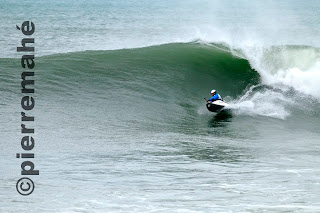
I have a lot of experience surfing K-1's. I don't have any desire to get in a tandem. Would it be dangerous for each of you to paddle a k-1 together?

http://1.bp.blogspot.com/_4UiJtCcKGZE/S3HKrPSxvaI/AAAAAAAAB14/UGYEn812yC0/s320/KayakSurf-5-%C2%A9PierreMah%C3%A9.JPG
farmerman
 
  1  
Reply Sun 22 May, 2011 09:32 pm
@panzade,
Sounds like it could be fun. BUT a bit on the thrill seeking side. We are interested in touring and longer paddles with camp gear and maybe doing some island hopping like I spoke of in an earlier post.

Im not looking for speed (K-1s are a boit lean and narrow for tandemizing no? ) DO they even make such a kayak? anything longer would be more of a 2 or a 4 man racing scull.

Crossing or island hopping in the Chesapeake is possible and wed want calm waves not stormrollers . While we can take waves pretty well if the kayak is a bit beamy, in a K-1 it would be very tiring just staying upright.
farmerman
 
  1  
Reply Sun 22 May, 2011 09:49 pm
@farmerman,
        http://www.fyneboatkits.co.uk/photos/products/chesapeake-double-triple/chesapeake-double-kayak-kit.jpg

Heres a Chesapeake Double. Its not nearly as narrow as racing kayaks or your k-1 . Its designed for its mission , which is comfortable and DRY touring
roger
 
  1  
Reply Mon 23 May, 2011 01:21 am
@farmerman,
Speaking of comfort, can you stand unaided after an hour of paddling? I had big problems kneeling in a canoe till I got a Perception Saddle, if they even make such a thing anymore.
farmerman
 
  1  
Reply Mon 23 May, 2011 05:39 am
@roger,
Thhere are several types of seats that are possible. Unforstunately, with the hape of the craft and the shallow draft, none of them are like a BArco Lounger.
SItting way back in the cock[pit with ligs slightly bent is my best accomodation to legly comfort. Im sure I will be uncomfortable on dismounting .
0 Replies


  1. Forums
  2. » SEA KAYAKERS; a moment of your time
Copyright © 2026 MadLab, LLC :: Terms of Service :: Privacy Policy :: Page generated in 0.07 seconds on 04/09/2026 at 08:50:35